

CONSORT 2010 Statement: Updated Guidelines for Reporting Parallel Group Randomised Trials
Open accessThe DOI matches its Crossref record; 43 of the 43 references it cites were found in a registry or an index; 5 of the 23 sources its claims cite were checked for support.
Abstract
DOAJ is a unique and extensive index of diverse open access journals from around the world, driven by a growing community, committed to ensuring quality content is freely available online for everyone.
Overview
CoChat Summary
## TL;DR
CONSORT 2010 is an updated reporting guideline for randomized controlled trials, created to improve completeness, clarity, and transparency in trial reporting. It keeps the focus on parallel-group, two-arm trials but provides a 25-item checklist, a flow diagram, and updated explanation/elaboration material.
## Key findings
- The update was developed by 31 members of the CONSORT 2010 Group at a meeting in Montebello, Canada, in January 2007, followed by seven major iterations and additional feedback cycles before finalization.
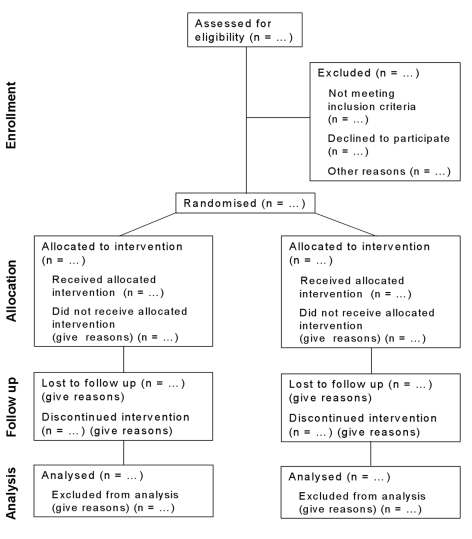
- CONSORT 2010 includes a 25-item checklist and a flow diagram; the paper states the flow diagram was not modified except for one word.
- The guideline was refined using a CONSORT database containing more than 700 studies as empirical support, and the paper notes that more than 400 journals around the world have explicitly supported CONSORT.
- The revision added or clarified several reporting items, including structured abstract reporting, trial design and allocation ratio, changes after trial commencement, selective outcome reporting, trial registration, protocol availability, and funding.
## Methods
- This is a guideline development/revision paper, not an empirical trial; the CONSORT Group met to update the 2001 CONSORT statement using accumulated methodological evidence and expert discussion.
- The group assigned members to synthesize evidence for checklist items, then used teleconferences, meetings, and iterative drafts to revise the statement and the accompanying explanation/elaboration document.
- The main analysis was consensus-based appraisal of checklist items against methodological evidence; the paper does not report a statistical analysis of original participant data.
## Limitations
- The paper states that CONSORT 2010 is not a guideline for designing, conducting, or analyzing trials; it addresses only the reporting of what was done and what was found.
- The guideline focuses predominantly on two-group, parallel randomized controlled trials, although many items apply more broadly; other designs may need additional CONSORT extensions.
- Evident from the text: as a reporting guideline, it can be misused if authors report what the checklist suggests rather than what was actually done; the authors explicitly warn against this and advise checking protocols, trial registers, and regulatory websites.
Model-written summary. Check it against the paper before relying on it.
Integrity signals
Registry
Cites
Statistics
Figures
Verification
Claims the paper makes
5 Valid · 0 Not valid · 11 Not checked · 5 Own results and interpretations
Every source the paper cites for this claim was checked and supports it.
In the paper
“However, randomised trials can yield biased results if they lack methodological rigour [1].”
§ CONSORT 2010 Statement: Updated Guidelines for Reporting Parallel Group Randomised Trials > Introduction
What the sources say
- Supportedcites [1] Jüni P Altman DG Egger M 2001 Systematic reviews in health care: assessing the quality of controlled clinical trials. BMJ 323 42 46 11440947 PMC1120670 source
The Conclusions section of our copy states there is 'ample evidence that many trials are methodologically weak and increasing evidence that deficiencies translate into biased findings of systematic reviews,' and the 'Empirical evidence of bias' section reports that biases 'do occur in practice, distorting the results of clinical trials,' with inadequate or unclear allocation concealment exaggerating treatment effects (combined ratio of odds ratios 0.70, 95% CI 0.62 to 0.80) across four methodological studies. This directly supports the attributed paraphrase that randomised trials can yield biased results when methodologically deficient. (LLM, conf=0.92)
plainstates a possible cause- Asserted: passes — The authors put it forward as true.
- Checkable: passes — It can be checked against evidence.
- Load-bearing: passes — The paper’s conclusions depend on it.
- Based: passes — The paper gives a reason why it holds.
- Supported
The cited sources support only part of this claim — read each source’s verdict below.
In the paper
“Empirical evidence suggests that authors often ignore, in the conduct and reporting of their trial, what they stated in the protocol. [4],[22]”
§ CONSORT 2010 Statement: Updated Guidelines for Reporting Parallel Group Randomised Trials > Changes in CONSORT 2010 > Box 2. Noteworthy Specific Changes in CONSORT 2010 Statement
What the sources say
- Partly supportedcites [4] Dwan K Altman DG Arnaiz JA Bloom J Chan AW 2008 Systematic review of the empirical evidence of study publication bias and outcome reporting bias. PLoS ONE 3 e3081 doi: 10.1371/journal.pone.0003081 18769481 PMC2518111 sourceExperimental — accuracy not yet measured
The Results (Publication and trial findings; page unavailable) report that 40–62% of trials had major discrepancies between protocol-specified primary outcomes and published articles, supporting the claim about reporting. The review compares protocols with publications; it does not establish that authors ignored protocols during trial conduct or that the discrepancies were intentional. (LLM, conf=0.84)
- Not checked yetcites [22] Chan AW Hróbjartsson A Haahr MT Gøtzsche PC Altman DG 2004 Empirical evidence for selective reporting of outcomes in randomized trials: comparison of protocols to published articles. JAMA 291 2457 2465 15161896 source
hedged- Asserted: passes — The authors put it forward as true.
- Checkable: passes — It can be checked against evidence.
- Load-bearing: passes — The paper’s conclusions depend on it.
- Based: passes — The paper gives a reason why it holds.
- Partly supported
Every source the paper cites for this claim was checked and supports it.
In the paper
“Empirical evidence points toward funding source sometimes being associated with estimated treatment effects [30].”
§ CONSORT 2010 Statement: Updated Guidelines for Reporting Parallel Group Randomised Trials > Changes in CONSORT 2010 > Box 2. Noteworthy Specific Changes in CONSORT 2010 Statement
What the sources say
- Supportedcites [30] Lexchin J Bero LA Djulbegovic B Clark O 2003 Pharmaceutical industry sponsorship and research outcome and quality: systematic review. BMJ 326 1167 1170 12775614 PMC156458 source
The section on funding source and clinical-trial outcomes reports that 13 of 16 studies found industry-sponsored research favoured the sponsor’s product. The paper also reports different estimated risks of venous thromboembolism in industry-funded and non-industry-funded studies, directly supporting the qualified claim that funding source is sometimes associated with estimated treatment effects. (LLM, conf=0.91)
hedgedstates an association- Asserted: passes — The authors put it forward as true.
- Checkable: passes — It can be checked against evidence.
- Load-bearing: passes — The paper’s conclusions depend on it.
- Based: passes — The paper gives a reason why it holds.
- Supported
The cited sources support only part of this claim — read each source’s verdict below.
In the paper
“We also eliminated text on “how the success of blinding (masking) was assessed” because of a lack of empirical evidence supporting the practice as well as theoretical concerns about the validity of any such assessment [23],[24].”
§ CONSORT 2010 Statement: Updated Guidelines for Reporting Parallel Group Randomised Trials > Changes in CONSORT 2010 > Box 2. Noteworthy Specific Changes in CONSORT 2010 Statement
What the sources say
- Partly supportedcites [23] Sackett DL 2007 Commentary: Measuring the success of blinding in RCTs: don't, must, can't or needn't? Int J Epidemiol 36 664 665 17675306 sourceExperimental — accuracy not yet measured
Sackett’s commentary (pp. 664–665) argues that tests of blinding can give invalid answers because they cannot distinguish loss of blinding from hunches about treatment efficacy. This supports the citing sentence’s concern about validity, but the paper does not explicitly establish a lack of empirical evidence supporting the practice. (LLM, conf=0.78)
- Not checked yetcites [24] Schulz KF Grimes DA 2002 Blinding in randomised trials: hiding who got what. Lancet 359 696 700 11879884 source
plain- Asserted: passes — The authors put it forward as true.
- Checkable: passes — It can be checked against evidence.
- Load-bearing: passes — The paper’s conclusions depend on it.
- Based: passes — The paper gives a reason why it holds.
- Partly supported
In the paper
“While those statements improved the reporting quality for some randomised controlled trials [9],[10], many trial reports still remain inadequate [2].”
§ CONSORT 2010 Statement: Updated Guidelines for Reporting Parallel Group Randomised Trials > Introduction
What the sources say
- Not checked yetcites [2] Chan AW Altman DG 2005 Epidemiology and reporting of randomised trials published in PubMed journals. Lancet 365 1159 1162 15794971 source
plain- Asserted: passes — The authors put it forward as true.
- Checkable: passes — It can be checked against evidence.
- Load-bearing: passes — The paper’s conclusions depend on it.
- Based: passes — The paper gives a reason why it holds.
9 more claims
Create a free account to see all 21 claims and to verify the 18 references still open.
- Probably not a substantial claim. 6
- It may state two separate claims as one. 1
Claims other papers make about this one
Each is checked against this paper’s own text: does it say what the citing paper says it does?
The source backs part of the claim, not all of it — or backs it for a different population, condition or comparison.
In the citing paper
“Compliance with GATHER is not an indicator of a study's quality.”
From Guidelines for accurate and transparent health estimates reporting: the GATHER statement (2016) · cites this paper as [18]
Experimental — accuracy not yet measuredThe source backs part of the claim, not all of it — or backs it for a different population, condition or comparison.
In the citing paper
“The Consolidated Standards of Reporting Trials (CONSORT) 2010 Statement 4 currently suggests in Item 5 that authors should report on 'The interventions for each group with sufficient details to allow replication, including how and when they were actually administered'.”
From Better reporting of interventions: template for intervention description and replication (TIDieR) checklist and guide (2014) · cites this paper as [4]
Experimental — accuracy not yet measuredThe cited source says what the claim attributes to it.
In the citing paper
“After extensive team discussions, the investigators decided to follow the approach of Maher et al [58], who devised a risk of bias assessment tool based on the CONSORT (Consolidated Standards of Reporting Trials) checklist [51].”
From Voice-Based Conversational Agents for the Prevention and Management of Chronic and Mental Health Conditions: Systematic Literature Review (2021) · cites this paper as [51]
The cited source says what the claim attributes to it.
In the citing paper
“Reporting issues have led to the creation of reporting checklists in other fields, such as the Consolidated Standards of Reporting Trials (CONSORT) checklist for randomized controlled trials [95].”
From The NASSS (Non-Adoption, Abandonment, Scale-Up, Spread and Sustainability) framework use over time: A scoping review (2025) · cites this paper as [95]
The cited source says what the claim attributes to it.
In the citing paper
“The results are reported in accordance with the CONSORT guidelines (Schulz et al., 2010).”
From Exercise combined with Acceptance and Commitment Therapy for chronic pain: One-year follow-up from a randomized controlled trial (2024) · cites this paper as Schulz et al., 2010
3 more claims about this paper
Create a free account to see every claim other papers make about this one.
Citations
Cites
Preferred Reporting Items for Systematic Reviews and Meta-Analyses: the PRISMA statement
Moher, D., Liberati, A., Tetzlaff, J., Altman, D. G., & for the PRISMA Group (2009) · BMJ · doi:10.1136/bmj.b2535 · Cited by 83,823
Self-citationPreferred Reporting Items for Systematic Reviews and Meta-Analyses: The PRISMA Statement
Moher, D., Liberati, A., Tetzlaff, J., Altman, D. G., & The PRISMA Group (2009) · PLoS Medicine · doi:10.1371/journal.pmed.1000097 · Cited by 64,042
Self-citationPreferred reporting items for systematic reviews and meta-analyses: the PRISMA Statement.
(2009) · PubMed Central · Cited by 44,859
Self-citationElm, E. V., Altman, D. G., Egger, M., Pocock, S. J., Gøtzsche, P. C., & Vandenbroucke, J. P. (2007) · BMJ · doi:10.1136/bmj.39335.541782.ad · Cited by 10,766
Self-citationMoher, D., Hopewell, S., Schulz, K. F., Montori, V., Gotzsche, P. C., Devereaux, P. J., Elbourne, D., Egger, M., & Altman, D. G. (2010) · BMJ · doi:10.1136/bmj.c869 · Cited by 8,883
Self-citationSchulz (1995) · doi:10.1001/jama.1995.03520290060030 · Cited by 5,634
Moher, D., Schulz, K. F., & Altman, D. G. (2001) · The Lancet · doi:10.1016/s0140-6736(00)04337-3 · Cited by 5,373
Self-citationMoher, D., Pham, B., Jones, A., Cook, D. J., Jadad, A. R., Moher, M., Tugwell, P., & Klassen, T. P. (1998) · The Lancet · doi:10.1016/s0140-6736(98)01085-x · Cited by 3,560
Self-citationConsort 2010 statement: extension to cluster randomised trials
Campbell, M. K., Piaggio, G., Elbourne, D. R., Altman, D. G., & for the CONSORT Group (2012) · BMJ · doi:10.1136/bmj.e5661 · Cited by 3,510
Self-citationAssessing the quality of controlled clinical trials
Jüni, P., Altman, D. G., & Egger, M. (2001) · BMJ · doi:10.1136/bmj.323.7303.42 · Cited by 3,309
Self-citation
Cited by
Hoffmann, T. C., Glasziou, P. P., Boutron, I., Milne, R., Perera, R., Moher, D., Altman, D. G., Barbour, V., Macdonald, H., Johnston, M., et al. (2014) · BMJ · doi:10.1136/bmj.g1687 · Cited by 10,548
Self-citationMoher, D., Hopewell, S., Schulz, K. F., Montori, V., Gotzsche, P. C., Devereaux, P. J., Elbourne, D., Egger, M., & Altman, D. G. (2010) · BMJ · doi:10.1136/bmj.c869 · Cited by 8,883
Self-citationUsing Big Data to Emulate a Target Trial When a Randomized Trial Is Not Available: Table 1.
Hernán, M. A., & Robins, J. M. (2016) · American Journal of Epidemiology · doi:10.1093/aje/kwv254 · Cited by 3,115
The COMET Handbook: version 1.0
Williamson, P. R., Altman, D. G., Bagley, H., Barnes, K. L., Blazeby, J. M., Brookes, S. T., Clarke, M., Gargon, E., Gorst, S., Harman, N., et al. (2017) · Trials · doi:10.1186/s13063-017-1978-4 · Cited by 2,011
Self-citationGuidelines for accurate and transparent health estimates reporting: the GATHER statement
Stevens, G. A., Alkema, L., Black, R. E., Boerma, J. T., Collins, G. S., Ezzati, M., Grove, J. T., Hogan, D. R., Hogan, M. C., Horton, R., et al. (2016) · The Lancet · doi:10.1016/s0140-6736(16)30388-9 · Cited by 1,798
Gu, J., Strauss, C., Bond, R., & Cavanagh, K. (2015) · Clinical Psychology Review · doi:10.1016/j.cpr.2015.01.006 · Cited by 1,712
Boutron, I., Altman, D. G., Moher, D., Schulz, K. F., Ravaud, P., & for the CONSORT NPT Group* (2017) · Annals of Internal Medicine · doi:10.7326/m17-0046 · Cited by 1,538
Self-citationA call for transparent reporting to optimize the predictive value of preclinical research
Landis, S. C., Amara, S. G., Asadullah, K., Austin, C. P., Blumenstein, R., Bradley, E. W., Crystal, R. G., Darnell, R. B., Ferrante, R. J., Fillit, H., et al. (2012) · Nature · doi:10.1038/nature11556 · Cited by 1,196
Compression for venous leg ulcers
O'Meara, S., Cullum, N., Nelson, E. A., & Dumville, J. C. (2012) · Cochrane Database of Systematic Reviews · doi:10.1002/14651858.cd000265.pub3 · Cited by 929
Mid-urethral sling operations for stress urinary incontinence in women
Ford, A. A., Rogerson, L., Cody, J. D., Aluko, P., & Ogah, J. A. (2017) · Cochrane Database of Systematic Reviews · doi:10.1002/14651858.cd006375.pub4 · Cited by 691
Mercieca-Bebber, R., King, M. T., Calvert, M. J., Stockler, M. R., & Friedlander, M. (2018) · Patient Related Outcome Measures · doi:10.2147/prom.s156279 · Cited by 659
Core outcome set–STAndards for reporting: the COS-STAR statement
Kirkham, J. J., Gorst, S., Altman, D. G., Blazeby, J. M., Clarke, M., Devane, D., Gargon, E., Moher, D., Schmitt, J., Tugwell, P., et al. (2016) · PLOS Medicine · doi:10.1371/journal.pmed.1002148 · Cited by 650
Self-citationLi, X., Yang, G., Li, X., Zhang, Y., Yang, J., Chang, J., Sun, X., Zhou, X., Guo, Y., Xu, Y., et al. (2013) · PLoS ONE · doi:10.1371/journal.pone.0060338 · Cited by 603
Wu, B. U., Hwang, J. Q., Gardner, T. H., Repas, K., Delee, R., Yu, S., Smith, B., Banks, P. A., & Conwell, D. L. (2011) · Clinical Gastroenterology and Hepatology · doi:10.1016/j.cgh.2011.04.026 · Cited by 554
Molenaar, C. J. L., Minnella, E. M., Coca-Martinez, M., ten Cate, D. W. G., Regis, M., Awasthi, R., Martínez-Palli, G., López-Baamonde, M., Sebio-Garcia, R., Feo, C. V., et al. (2023) · JAMA Surgery · doi:10.1001/jamasurg.2023.0198 · Cited by 539
Avidan, M. S., Maybrier, H. R., Abdallah, A. B., Jacobsohn, E., Vlisides, P. E., Pryor, K. O., Veselis, R. A., Grocott, H. P., Emmert, D. A., Rogers, E. M., et al. (2017) · The Lancet · doi:10.1016/s0140-6736(17)31467-8 · Cited by 496
Cutland, C. L., Lackritz, E. M., Mallett-Moore, T., Bardají, A., Chandrasekaran, R., Lahariya, C., Nisar, M. I., Tapia, M. D., Pathirana, J., Kochhar, S., et al. (2017) · Vaccine · doi:10.1016/j.vaccine.2017.01.049 · Cited by 459
van Ballegooijen, W., Cuijpers, P., van Straten, A., Karyotaki, E., Andersson, G., Smit, J. H., & Riper, H. (2014) · PLoS ONE · doi:10.1371/journal.pone.0100674 · Cited by 409
“It is recommended to include clear instructions for reporting adherence rates in the CONSORT statement [58].”
Guidelines for accurate and transparent health estimates reporting: the GATHER statement
Stevens, G. A., Alkema, L., Black, R. E., Boerma, J. T., Collins, G. S., Ezzati, M., Grove, J. T., Hogan, D. R., Hogan, M. C., Horton, R., et al. (2016) · PLOS Medicine · doi:10.1371/journal.pmed.1002056 · Cited by 424
Catalá-López, F., Hutton, B., Núñez-Beltrán, A., Page, M. J., Ridao, M., Macías Saint-Gerons, D., Catalá, M. A., Tabarés-Seisdedos, R., & Moher, D. (2017) · PLOS ONE · doi:10.1371/journal.pone.0180355 · Cited by 396
Self-citationGonçalves, J. P. B., Lucchetti, G., Menezes, P. R., & Vallada, H. (2015) · Psychological Medicine · doi:10.1017/s0033291715001166 · Cited by 394
Lie, D. A., Lee-Rey, E., Gomez, A., Bereknyei, S., & Braddock, C. H. (2011) · Journal of General Internal Medicine · doi:10.1007/s11606-010-1529-0 · Cited by 385
Michie, S., West, R., Sheals, K., & Godinho, C. A. (2018) · Translational Behavioral Medicine · doi:10.1093/tbm/ibx019 · Cited by 377
“The upcoming CONSORT extension on psychological and social interventions [45] will mitigate this problem, but there will still be important TBM page 221 of 224 gaps.”
Interventions for preventing and treating pelvic and back pain in pregnancy
Pennick, V., & Liddle, S. D. (2013) · Cochrane Database of Systematic Reviews · doi:10.1002/14651858.cd001139.pub3 · Cited by 364
Guidelines for Reporting Pre-clinical In Vitro Studies on Dental Materials
Faggion, C. M. (2012) · Journal of Evidence Based Dental Practice · doi:10.1016/j.jebdp.2012.10.001 · Cited by 368
Effectiveness of motor interventions in infants with cerebral palsy: a systematic review
Morgan, C., Darrah, J., Gordon, A. M., Harbourne, R., Spittle, A., Johnson, R., & Fetters, L. (2016) · Developmental Medicine & Child Neurology · doi:10.1111/dmcn.13105 · Cited by 362
Van Strydonck, D. A. C., Slot, D. E., Van der Velden, U., & Van der Weijden, F. (2012) · Journal of Clinical Periodontology · doi:10.1111/j.1600-051x.2012.01883.x · Cited by 353
Haw, J. S., Galaviz, K. I., Straus, A. N., Kowalski, A. J., Magee, M. J., Weber, M. B., Wei, J., Narayan, K. M. V., & Ali, M. K. (2017) · JAMA Internal Medicine · doi:10.1001/jamainternmed.2017.6040 · Cited by 354
Chawes, B. L., Bønnelykke, K., Stokholm, J., Vissing, N. H., Bjarnadóttir, E., Schoos, A.-M. M., Wolsk, H. M., Pedersen, T. M., Vinding, R. K., Thorsteinsdóttir, S., et al. (2016) · JAMA · doi:10.1001/jama.2015.18318 · Cited by 337
“The intervention resulted in a significant increase in maternal serum vitamin D level in the treatment group (mean [SD] at randomization vs postpartum: vitamin D3 group, 31 ng/mL [10] at randomization vs 43 ng/mL [14] postpartum; control group, 31 ng/mL [10] at randomization vs 29 ng/mL [13] postpartum; mean between-g…”
Common pitfalls in statistical analysis: Intention-to-treat versus per-protocol analysis
Ranganathan, P., Pramesh, C., & Aggarwal, R. (2016) · Perspectives in Clinical Research · doi:10.4103/2229-3485.184823 · Cited by 296
“The CONSORT guidelines for reporting of “parallel group randomized controlled trials” recommend that both ITT and PP analyses should be reported for all planned outcomes to allow readers to interpret the effect of an intervention.[3]”
Exercise therapy for fatigue in multiple sclerosis
Heine, M., van de Port, I., Rietberg, M. B., van Wegen, E. E., & Kwakkel, G. (2015) · Cochrane Database of Systematic Reviews · doi:10.1002/14651858.cd009956.pub2 · Cited by 307
Interventions for preventing and treating low-back and pelvic pain during pregnancy
Liddle, S. D., & Pennick, V. (2015) · Cochrane Database of Systematic Reviews · doi:10.1002/14651858.cd001139.pub4 · Cited by 320
Szaszi, B., Palinkas, A., Palfi, B., Szollosi, A., & Aczel, B. (2018) · Journal of Behavioral Decision Making · doi:10.1002/bdm.2035 · Cited by 322
Chatterjee, S., Naik, S., John, S., Dabholkar, H., Balaji, M., Koschorke, M., Varghese, M., Thara, R., Weiss, H. A., Williams, P., et al. (2014) · The Lancet · doi:10.1016/s0140-6736(13)62629-x · Cited by 315
Mid-urethral sling operations for stress urinary incontinence in women
Ford, A. A., Rogerson, L., Cody, J. D., & Ogah, J. (2015) · Cochrane Database of Systematic Reviews · doi:10.1002/14651858.cd006375.pub3 · Cited by 309
Orkin, A. M., Gill, P. J., Ghersi, D., Campbell, L., Sugarman, J., Emsley, R., Steg, P. G., Weijer, C., Simes, J., Rombey, T., et al. (2021) · JAMA · doi:10.1001/jama.2021.9941 · Cited by 299
Self-citationvon Allmen, R. S., Weiss, S., Tevaearai, H. T., Kuemmerli, C., Tinner, C., Carrel, T. P., Schmidli, J., & Dick, F. (2015) · PLOS ONE · doi:10.1371/journal.pone.0140817 · Cited by 299
Randomized controlled trials – a matter of design
Siepmann, T., Spieth, P. M., Kubasch, A. S., Penzlin, A. I., Illigens, B. M.-W., & Barlinn, K. (2016) · Neuropsychiatric Disease and Treatment · doi:10.2147/ndt.s101938 · Cited by 292
Intention to treat and per protocol analysis in clinical trials
Tripepi, G., Chesnaye, N. C., Dekker, F. W., Zoccali, C., & Jager, K. J. (2020) · Nephrology · doi:10.1111/nep.13709 · Cited by 284
Spielmans, G. I., Berman, M. I., Linardatos, E., Rosenlicht, N. Z., Perry, A., & Tsai, A. C. (2013) · PLoS Medicine · doi:10.1371/journal.pmed.1001403 · Cited by 275
“(14) Whether or not the placebo was described as identical to the study drug in terms of at least two of the following three criteria: taste, appearance, and smell [22].”
Singh, N. A., Quine, S., Clemson, L. M., Williams, E. J., Williamson, D. A., Stavrinos, T. M., Grady, J. N., Perry, T. J., Lloyd, B. D., Smith, E. U. R., et al. (2012) · Journal of the American Medical Directors Association · doi:10.1016/j.jamda.2011.08.005 · Cited by 274
CONSORT 2010 statement: extension checklist for reporting within person randomised trials
Pandis, N., Chung, B., Scherer, R. W., Elbourne, D., & Altman, D. G. (2017) · BMJ · doi:10.1136/bmj.j2835 · Cited by 257
Self-citationEffectiveness of E-self-help interventions for curbing adult problem drinking: a meta-analysis
Riper, H., Spek, V., Boon, B., Conijn, B., Kramer, J., Martin-Abello, K., & Smit, F. (2011) · Journal of Medical Internet Research · doi:10.2196/jmir.1691 · Cited by 240
Arnold, B. F., Null, C., Luby, S. P., Unicomb, L., Stewart, C. P., Dewey, K. G., Ahmed, T., Ashraf, S., Christensen, G., Clasen, T., et al. (2013) · BMJ Open · doi:10.1136/bmjopen-2013-003476 · Cited by 256
Adams, V., Mathisen, B., Baines, S., Lazarus, C., & Callister, R. (2013) · Dysphagia · doi:10.1007/s00455-013-9451-3 · Cited by 254
Transcutaneous electrical nerve stimulation (TENS) for neuropathic pain in adults
Gibson, W., Wand, B. M., & O'Connell, N. E. (2017) · Cochrane Database of Systematic Reviews · doi:10.1002/14651858.cd011976.pub2 · Cited by 247
Barrowclough, C., Haddock, G., Wykes, T., Beardmore, R., Conrod, P., Craig, T., Davies, L., Dunn, G., Eisner, E., Lewis, S., et al. (2010) · BMJ · doi:10.1136/bmj.c6325 · Cited by 245
A systematic review and meta‐analysis of perineural dexamethasone for peripheral nerve blocks
Albrecht, E., Kern, C., & Kirkham, K. R. (2015) · Anaesthesia · doi:10.1111/anae.12823 · Cited by 246
Comparison of protocols and registry entries to published reports for randomised controlled trials
Dwan, K., Altman, D. G., Cresswell, L., Blundell, M., Gamble, C. L., & Williamson, P. R. (2011) · Cochrane Database of Systematic Reviews · doi:10.1002/14651858.mr000031.pub2 · Cited by 243
Self-citationStevens, A., Shamseer, L., Weinstein, E., Yazdi, F., Turner, L., Thielman, J., Altman, D. G., Hirst, A., Hoey, J., Palepu, A., et al. (2014) · BMJ · doi:10.1136/bmj.g3804 · Cited by 242
Self-citationPilot Studies: A Critical but Potentially Misused Component of Interventional Research
Kistin, C., & Silverstein, M. (2015) · JAMA · doi:10.1001/jama.2015.10962 · Cited by 239
CONSORT extension for reporting N-of-1 trials (CENT) 2015 Statement
Vohra, S., Shamseer, L., Sampson, M., Bukutu, C., Schmid, C. H., Tate, R., Nikles, J., Zucker, D. R., Kravitz, R., Guyatt, G., et al. (2015) · BMJ · doi:10.1136/bmj.h1738 · Cited by 239
Self-citationAlshryda, S., Mason, J., Sarda, P., Nargol, A., Cooke, N., Ahmad, H., Tang, S., Logishetty, R., Vaghela, M., McPartlin, L., et al. (2013) · Journal of Bone and Joint Surgery · doi:10.2106/jbjs.l.00908 · Cited by 234
Jeffcoate, W. J., Bus, S. A., Game, F. L., Hinchliffe, R. J., Price, P. E., & Schaper, N. C. (2016) · The Lancet Diabetes & Endocrinology · doi:10.1016/s2213-8587(16)30012-2 · Cited by 234
Dressings for the prevention of surgical site infection
Dumville, J. C., Gray, T. A., Walter, C. J., Sharp, C. A., Page, T., Macefield, R., Blencowe, N., Milne, T. K., Reeves, B. C., & Blazeby, J. (2016) · Cochrane Database of Systematic Reviews · doi:10.1002/14651858.cd003091.pub4 · Cited by 206
Piper, M. E., Bullen, C., Krishnan-Sarin, S., Rigotti, N. A., Steinberg, M. L., Streck, J. M., & Joseph, A. M. (2020) · Nicotine & Tobacco Research · doi:10.1093/ntr/ntz110 · Cited by 230
Bernardy, K., Klose, P., Welsch, P., & Häuser, W. (2018) · European Journal of Pain · doi:10.1002/ejp.1121 · Cited by 217
Piqueras, M., Marco, E., Coll, M., Escalada, F., Ballester, A., Cinca, C., Belmonte, R., & Muniesa, J. (2013) · Journal of Rehabilitation Medicine · doi:10.2340/16501977-1119 · Cited by 220
Garcia, L. M., Birckhead, B. J., Krishnamurthy, P., Sackman, J., Mackey, I. G., Louis, R. G., Salmasi, V., Maddox, T., & Darnall, B. D. (2021) · Journal of Medical Internet Research · doi:10.2196/26292 · Cited by 218
Park, L. G., Howie-Esquivel, J., Chung, M. L., & Dracup, K. (2014) · Patient Education and Counseling · doi:10.1016/j.pec.2013.10.027 · Cited by 213
Linde, K., Sigterman, K., Kriston, L., Rucker, G., Jamil, S., Meissner, K., & Schneider, A. (2015) · The Annals of Family Medicine · doi:10.1370/afm.1719 · Cited by 196
Essential Epidemiology: An Introduction for Students and Health Professionals
Webb, P. M., & Bain, C. (2012) · Cited by 209
Tricco, A. C., Soobiah, C., Berliner, S., Ho, J. M., Ng, C. H., Ashoor, H. M., Chen, M. H., Hemmelgarn, B., & Straus, S. E. (2013) · Canadian Medical Association Journal · doi:10.1503/cmaj.130451 · Cited by 209
Preclinical research in Rett syndrome: setting the foundation for translational success
Katz, D. M., Berger-Sweeney, J. E., Eubanks, J. H., Justice, M. J., Neul, J. L., Pozzo-Miller, L., Blue, M. E., Christian, D., Crawley, J. N., Giustetto, M., et al. (2012) · Disease Models & Mechanisms · doi:10.1242/dmm.011007 · Cited by 206
Traditional suburethral sling operations for urinary incontinence in women
Rehman, H., Bezerra, C. A., Bruschini, H., Cody, J. D., & Aluko, P. (2017) · Cochrane Database of Systematic Reviews · doi:10.1002/14651858.cd001754.pub4 · Cited by 204
Simulation methods to estimate design power: an overview for applied research
Arnold, B. F., Hogan, D. R., Colford, J. M., & Hubbard, A. E. (2011) · BMC Medical Research Methodology · doi:10.1186/1471-2288-11-94 · Cited by 198
İnce, G., Gürsoy, H., İpçi, Ş. D., Cakar, G., Emekli‐Alturfan, E., & Yılmaz, S. (2015) · Journal of Periodontology · doi:10.1902/jop.2015.140612 · Cited by 196
Bray, J. J. H., Foster‐Davies, H., Salem, A., Hoole, A. L., Obaid, D. R., Halcox, J. P. J., & Stephens, J. W. (2021) · Diabetes Obesity and Metabolism · doi:10.1111/dom.14399 · Cited by 194
A systematic scoping review of adherence to reporting guidelines in health care literature
Thabane, L., Samaan, Mbuagbaw, L., Kosa, S., Debono, B., Dillenburg, Zhang, Fruci, V., Dennis, & Bawor (2013) · Journal of Multidisciplinary Healthcare · doi:10.2147/jmdh.s43952 · Cited by 192
Ganoderma lucidum (Reishi mushroom) for cancer treatment
Jin, X., Ruiz Beguerie, J., Sze, D. M.-Y., & Chan, G. C. (2016) · Cochrane Database of Systematic Reviews · doi:10.1002/14651858.cd007731.pub3 · Cited by 167
Onakpoya, I., Spencer, E., Heneghan, C., & Thompson, M. (2014) · Nutrition, Metabolism and Cardiovascular Diseases · doi:10.1016/j.numecd.2014.01.016 · Cited by 190
Restoring invisible and abandoned trials: a call for people to publish the findings
Doshi, P., Dickersin, K., Healy, D., Vedula, S. S., & Jefferson, T. (2013) · BMJ · doi:10.1136/bmj.f2865 · Cited by 190
Newby, J. M., Mackenzie, A., Williams, A. D., McIntyre, K., Watts, S., Wong, N., & Andrews, G. (2013) · Psychological Medicine · doi:10.1017/s0033291713000111 · Cited by 181
Replication and reproducibility in spinal cord injury research
Steward, O., Popovich, P. G., Dietrich, W. D., & Kleitman, N. (2012) · Experimental Neurology · doi:10.1016/j.expneurol.2011.06.017 · Cited by 186
Rentsch, C. A., Birkhäuser, F. D., Biot, C., Gsponer, J. R., Bisiaux, A., Wetterauer, C., Lagranderie, M., Marchal, G., Orgeur, M., Bouchier, C., et al. (2014) · European Urology · doi:10.1016/j.eururo.2014.02.061 · Cited by 188
Kosmala, W., Holland, D. J., Rojek, A., Wright, L., Przewlocka-Kosmala, M., & Marwick, T. H. (2013) · Journal of the American College of Cardiology · doi:10.1016/j.jacc.2013.06.043 · Cited by 183
Probiotics and oral health: A systematic review
Seminario-Amez, M., Lopez-Lopez, J., Estrugo-Devesa, A., Ayuso-Montero, R., & Jane-Salas, E. (2017) · Medicina Oral Patología Oral y Cirugia Bucal · doi:10.4317/medoral.21494 · Cited by 181
Perlman, K., Benrimoh, D., Israel, S., Rollins, C., Brown, E., Tunteng, J.-F., You, R., You, E., Tanguay-Sela, M., Snook, E., et al. (2019) · Journal of Affective Disorders · doi:10.1016/j.jad.2018.09.067 · Cited by 182
Dressings for the prevention of surgical site infection
Dumville, J. C., Walter, C. J., Sharp, C. A., & Page, T. (2011) · Cochrane Database of Systematic Reviews · doi:10.1002/14651858.cd003091.pub2 · Cited by 182
Blood pressure levels and brain volume reduction: a systematic review and meta-analysis
Beauchet, O., Celle, S., Roche, F., Bartha, R., Montero-Odasso, M., Allali, G., & Annweiler, C. (2013) · Journal of Hypertension · doi:10.1097/hjh.0b013e32836184b5 · Cited by 180
Kuzmanovic Pficer, J., Dodic, S., Lazic, V., Trajkovic, G., Milic, N., & Milicic, B. (2017) · PLOS ONE · doi:10.1371/journal.pone.0171296 · Cited by 181
End-of-life care pathways for improving outcomes in caring for the dying
Chan, R. J., Webster, J., & Bowers, A. (2016) · Cochrane Database of Systematic Reviews · doi:10.1002/14651858.cd008006.pub4 · Cited by 174
Cash Transfers and Temptation Goods
Evans, D. K., & Popova, A. (2017) · Economic Development and Cultural Change · doi:10.1086/689575 · Cited by 175
A neurofeedback video game (MindLight) to prevent anxiety in children: A randomized controlled trial
Schoneveld, E. A., Malmberg, M., Lichtwarck-Aschoff, A., Verheijen, G. P., Engels, R. C. M. E., & Granic, I. (2016) · Computers in Human Behavior · doi:10.1016/j.chb.2016.05.005 · Cited by 174
Huynh, N. T., Desplats, E., & Almeida, F. R. (2016) · Sleep Medicine Reviews · doi:10.1016/j.smrv.2015.02.002 · Cited by 171
Mumme, K., & Stonehouse, W. (2015) · Journal of the Academy of Nutrition and Dietetics · doi:10.1016/j.jand.2014.10.022 · Cited by 170
Bowler, J. O., Mackintosh, B., Dunn, B. D., Mathews, A., Dalgleish, T., & Hoppitt, L. (2012) · Journal of Consulting and Clinical Psychology · doi:10.1037/a0029932 · Cited by 164
Interventions for the treatment of metastatic extradural spinal cord compression in adults
George, R., Sundararaj, J. J., Govindaraj, R., Chacko, A. G., & Tharyan, P. (2015) · Cochrane Database of Systematic Reviews · doi:10.1002/14651858.cd006716.pub3 · Cited by 147
Baeriswyl, M., Kirkham, K. R., Jacot-Guillarmod, A., & Albrecht, E. (2017) · British Journal of Anaesthesia · doi:10.1093/bja/aex191 · Cited by 164
Rheims, S., Perucca, E., Cucherat, M., & Ryvlin, P. (2011) · Epilepsia · doi:10.1111/j.1528-1167.2010.02915.x · Cited by 163
Harvey, R. J., Snidvongs, K., Kalish, L. H., Oakley, G. M., & Sacks, R. (2018) · International Forum of Allergy & Rhinology · doi:10.1002/alr.22093 · Cited by 163
Rössler, R., Junge, A., Bizzini, M., Verhagen, E., Chomiak, J., aus der Fünten, K., Meyer, T., Dvorak, J., Lichtenstein, E., Beaudouin, F., et al. (2018) · Sports Medicine · doi:10.1007/s40279-017-0834-8 · Cited by 160
Hull, L., Athanasiou, T., & Russ, S. (2017) · Annals of Surgery · doi:10.1097/sla.0000000000002013 · Cited by 158
Evidence-based vector control? Improving the quality of vector control trials
Wilson, A. L., Boelaert, M., Kleinschmidt, I., Pinder, M., Scott, T. W., Tusting, L. S., & Lindsay, S. W. (2015) · Trends in Parasitology · doi:10.1016/j.pt.2015.04.015 · Cited by 157
Porter, S., McConnell, T., McLaughlin, K., Lynn, F., Cardwell, C., Braiden, H., Boylan, J., Holmes, V., & the Music in Mind Study Group (2017) · Journal of Child Psychology and Psychiatry · doi:10.1111/jcpp.12656 · Cited by 153
Hoffmann, T., Glasziou, P., Boutron, I., Milne, R., Perera, R., Moher, D., Altman, D., Barbour, V., Macdonald, H., Johnston, M., et al. (2016) · Das Gesundheitswesen · doi:10.1055/s-0041-111066 · Cited by 153
Self-citationAnterior Cruciate Ligament Reconstruction Recovery and Rehabilitation: A Systematic Review
Glattke, K. E., Tummala, S. V., & Chhabra, A. (2021) · Journal of Bone and Joint Surgery · doi:10.2106/jbjs.21.00688 · Cited by 191
Michelson, M., & Reuter, K. (2019) · Contemporary Clinical Trials Communications · doi:10.1016/j.conctc.2019.100443 · Cited by 152
Avoidable waste of research related to inadequate methods in clinical trials
Yordanov, Y., Dechartres, A., Porcher, R., Boutron, I., Altman, D. G., & Ravaud, P. (2015) · BMJ · doi:10.1136/bmj.h809 · Cited by 152
Self-citation“Extrauterine growth restriction” and “postnatal growth failure” are misnomers for preterm infants
Fenton, T. R., Cormack, B. E., Goldberg, D. L., Nasser, R., Alshaikh, B. N., Eliasziw, M., Hay, W. W., Hoyos, A. B., Anderson, D. M., Bloomfield, F. H., et al. (2020) · Journal of Perinatology · doi:10.1038/s41372-020-0658-5 · Cited by 179
Metadata
- Authors
- Schulz, K. F., Altman, D. G., Moher, D., & for the CONSORT Group
- Affiliations
- Family Health International 360 (US)
- University of Oxford (GB)
- University of Ottawa (CA)
- Corresponding author
- Schulz, Kenneth F.
- Venue
- PLoS Medicine
- Publisher
- Public Library of Science (PLoS)
- Published
- 2010-03-24
- Volume
- 7
- Issue
- 3
- Pages
- e1000251
- ISSN
- 1549-1277 (ISSN-L)
- 1549-1676
- PMC
- PMC2844794
- OpenAlex
- W2008023699
- Semantic Scholar
- 433614cfe2dec7be6e55cd7ecc785f94ca74bbea
- Cited by
- 2,296
- References
- 43
- Citations by year
- 2026: 47 · 2025: 180 · 2024: 265 · 2023: 221 · 2022: 204 · 2021: 208 · 2020: 194 · 2019: 156 · 2018: 97 · 2017: 126 · 2016: 108 · 2015: 100 · 2014: 107 · 2013: 106 · 2012: 85
- FWCI
- 75.58
- Type
- journal article
- Language
- en
- Open access
- gold
- doi.org
- Locations
- PLoS Medicine (publishedVersion, cc-by)
- PubMed Central (publishedVersion, cc-by)
- PubMed (publishedVersion)
- RePEc: Research Papers in Economics (submittedVersion, cc-by)
- DOAJ (DOAJ: Directory of Open Access Journals) (submittedVersion, cc-by-sa)
- Figshare (submittedVersion, cc-by)
- Funders
- University of Pennsylvania
- Johns Hopkins University
- University of Ottawa
- Ottawa Hospital Research Institute
- McMaster University
- Janssen Scientific Affairs
- Cancer Research UK
- National Institute for Health and Care Research
- University of Oxford
- Institut National de la Santé et de la Recherche Médicale
- Johns Hopkins Bloomberg School of Public Health
- University of California, Irvine
- Canadian Institutes of Health Research
- Medical Research Council
- Topics
- Physical Sciences › Mathematics › Statistics and Probability › Statistical Methods in Clinical Trials
- Social Sciences › Decision Sciences › Statistics, Probability and Uncertainty › Meta-analysis and systematic reviews
- Social Sciences › Sociology and Political Science › Delphi Technique in Research
- Keywords
- CONSORT 2010, reporting guidelines, clinical trial reporting, clinical trial registration
- MeSH terms
- Health Planning Guidelines, Humans, Randomized Controlled Trials as Topic
About these checks
Registry, retraction, Cites and statistics results are computed, not judged, with one exception: a printed reference that no index lists is read once by a model before it counts as a citation error. Claims are extracted by a model and kept only when their quote appears verbatim in the text; each cited source is then checked, with a model’s help, for whether it says what the claim relies on. Those verdicts can be wrong — read the claim’s quote and the cited source before relying on one.
The claim verdicts this report counts are experimental: their accuracy is not yet measured.
A language model drew the claims from the paper on 2026-10-11, under version 3 of the claim definition (model deepseek-v4.1-flash, prompt extract-v3).
A second model labelled each claim on 2026-10-11 (model jev-1.13-20260917, definition revision gold-guideline-v0.2).
Cited sources are checked with a language model’s help (qwen3.8-omni-flash and gpt-6-sol).
Statistics and arithmetic are recomputed, not judged.
Confidence bands are shown only for fields calibrated on our annotated test set. None is calibrated yet, so no band is shown.
What counts as a claim ›How we measure confidence ›How we check this ›
Are you an author, or do you see a problem with this page? Request a review
Data sources
Bibliographic data: Semantic Scholar, OpenAlex, Crossref.
Contains information from the Semantic Scholar Academic Graph Datasets, made available under the ODC Attribution License (ODC-BY 1.0).
Semantic Scholar’s data is described in: Kinney, R., et al. (2023). The Semantic Scholar Open Data Platform. arXiv:2301.10140.
