

CONSORT 2010 Statement: Updated Guidelines for Reporting Parallel Group Randomised Trials
Open accessThe DOI matches its Crossref record; 43 of the 43 references it cites were found in a registry or an index; 5 of the 23 sources its claims cite were checked for support.
Abstract
DOAJ is a unique and extensive index of diverse open access journals from around the world, driven by a growing community, committed to ensuring quality content is freely available online for everyone.
Overview
CoChat Summary
## TL;DR
CONSORT 2010 is an updated reporting guideline for randomized controlled trials, created to improve completeness, clarity, and transparency in trial reporting. It keeps the focus on parallel-group, two-arm trials but provides a 25-item checklist, a flow diagram, and updated explanation/elaboration material.
## Key findings
- The update was developed by 31 members of the CONSORT 2010 Group at a meeting in Montebello, Canada, in January 2007, followed by seven major iterations and additional feedback cycles before finalization.
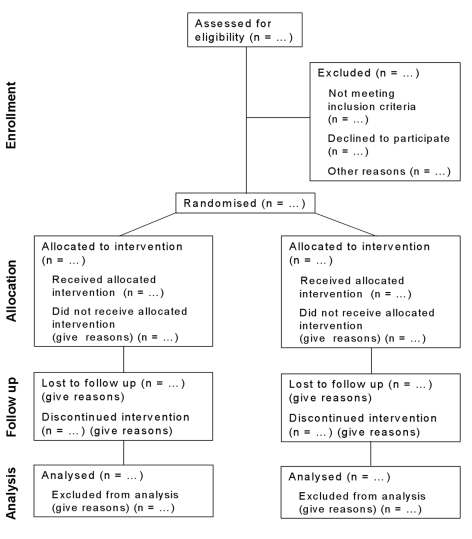
- CONSORT 2010 includes a 25-item checklist and a flow diagram; the paper states the flow diagram was not modified except for one word.
- The guideline was refined using a CONSORT database containing more than 700 studies as empirical support, and the paper notes that more than 400 journals around the world have explicitly supported CONSORT.
- The revision added or clarified several reporting items, including structured abstract reporting, trial design and allocation ratio, changes after trial commencement, selective outcome reporting, trial registration, protocol availability, and funding.
## Methods
- This is a guideline development/revision paper, not an empirical trial; the CONSORT Group met to update the 2001 CONSORT statement using accumulated methodological evidence and expert discussion.
- The group assigned members to synthesize evidence for checklist items, then used teleconferences, meetings, and iterative drafts to revise the statement and the accompanying explanation/elaboration document.
- The main analysis was consensus-based appraisal of checklist items against methodological evidence; the paper does not report a statistical analysis of original participant data.
## Limitations
- The paper states that CONSORT 2010 is not a guideline for designing, conducting, or analyzing trials; it addresses only the reporting of what was done and what was found.
- The guideline focuses predominantly on two-group, parallel randomized controlled trials, although many items apply more broadly; other designs may need additional CONSORT extensions.
- Evident from the text: as a reporting guideline, it can be misused if authors report what the checklist suggests rather than what was actually done; the authors explicitly warn against this and advise checking protocols, trial registers, and regulatory websites.
Model-written summary. Check it against the paper before relying on it.
Integrity signals
Registry
Cites
Statistics
Figures
Verification
Claims the paper makes
5 Valid · 0 Not valid · 11 Not checked · 5 Own results and interpretations
Every source the paper cites for this claim was checked and supports it.
In the paper
“However, randomised trials can yield biased results if they lack methodological rigour [1].”
§ CONSORT 2010 Statement: Updated Guidelines for Reporting Parallel Group Randomised Trials > Introduction
What the sources say
- Supportedcites [1] Jüni P Altman DG Egger M 2001 Systematic reviews in health care: assessing the quality of controlled clinical trials. BMJ 323 42 46 11440947 PMC1120670 source
The Conclusions section of our copy states there is 'ample evidence that many trials are methodologically weak and increasing evidence that deficiencies translate into biased findings of systematic reviews,' and the 'Empirical evidence of bias' section reports that biases 'do occur in practice, distorting the results of clinical trials,' with inadequate or unclear allocation concealment exaggerating treatment effects (combined ratio of odds ratios 0.70, 95% CI 0.62 to 0.80) across four methodological studies. This directly supports the attributed paraphrase that randomised trials can yield biased results when methodologically deficient. (LLM, conf=0.92)
plainstates a possible cause- Asserted: passes — The authors put it forward as true.
- Checkable: passes — It can be checked against evidence.
- Load-bearing: passes — The paper’s conclusions depend on it.
- Based: passes — The paper gives a reason why it holds.
- Supported
The cited sources support only part of this claim — read each source’s verdict below.
In the paper
“Empirical evidence suggests that authors often ignore, in the conduct and reporting of their trial, what they stated in the protocol. [4],[22]”
§ CONSORT 2010 Statement: Updated Guidelines for Reporting Parallel Group Randomised Trials > Changes in CONSORT 2010 > Box 2. Noteworthy Specific Changes in CONSORT 2010 Statement
What the sources say
- Partly supportedcites [4] Dwan K Altman DG Arnaiz JA Bloom J Chan AW 2008 Systematic review of the empirical evidence of study publication bias and outcome reporting bias. PLoS ONE 3 e3081 doi: 10.1371/journal.pone.0003081 18769481 PMC2518111 sourceExperimental — accuracy not yet measured
The Results (Publication and trial findings; page unavailable) report that 40–62% of trials had major discrepancies between protocol-specified primary outcomes and published articles, supporting the claim about reporting. The review compares protocols with publications; it does not establish that authors ignored protocols during trial conduct or that the discrepancies were intentional. (LLM, conf=0.84)
- Not checked yetcites [22] Chan AW Hróbjartsson A Haahr MT Gøtzsche PC Altman DG 2004 Empirical evidence for selective reporting of outcomes in randomized trials: comparison of protocols to published articles. JAMA 291 2457 2465 15161896 source
hedged- Asserted: passes — The authors put it forward as true.
- Checkable: passes — It can be checked against evidence.
- Load-bearing: passes — The paper’s conclusions depend on it.
- Based: passes — The paper gives a reason why it holds.
- Partly supported
Every source the paper cites for this claim was checked and supports it.
In the paper
“Empirical evidence points toward funding source sometimes being associated with estimated treatment effects [30].”
§ CONSORT 2010 Statement: Updated Guidelines for Reporting Parallel Group Randomised Trials > Changes in CONSORT 2010 > Box 2. Noteworthy Specific Changes in CONSORT 2010 Statement
What the sources say
- Supportedcites [30] Lexchin J Bero LA Djulbegovic B Clark O 2003 Pharmaceutical industry sponsorship and research outcome and quality: systematic review. BMJ 326 1167 1170 12775614 PMC156458 source
The section on funding source and clinical-trial outcomes reports that 13 of 16 studies found industry-sponsored research favoured the sponsor’s product. The paper also reports different estimated risks of venous thromboembolism in industry-funded and non-industry-funded studies, directly supporting the qualified claim that funding source is sometimes associated with estimated treatment effects. (LLM, conf=0.91)
hedgedstates an association- Asserted: passes — The authors put it forward as true.
- Checkable: passes — It can be checked against evidence.
- Load-bearing: passes — The paper’s conclusions depend on it.
- Based: passes — The paper gives a reason why it holds.
- Supported
The cited sources support only part of this claim — read each source’s verdict below.
In the paper
“We also eliminated text on “how the success of blinding (masking) was assessed” because of a lack of empirical evidence supporting the practice as well as theoretical concerns about the validity of any such assessment [23],[24].”
§ CONSORT 2010 Statement: Updated Guidelines for Reporting Parallel Group Randomised Trials > Changes in CONSORT 2010 > Box 2. Noteworthy Specific Changes in CONSORT 2010 Statement
What the sources say
- Partly supportedcites [23] Sackett DL 2007 Commentary: Measuring the success of blinding in RCTs: don't, must, can't or needn't? Int J Epidemiol 36 664 665 17675306 sourceExperimental — accuracy not yet measured
Sackett’s commentary (pp. 664–665) argues that tests of blinding can give invalid answers because they cannot distinguish loss of blinding from hunches about treatment efficacy. This supports the citing sentence’s concern about validity, but the paper does not explicitly establish a lack of empirical evidence supporting the practice. (LLM, conf=0.78)
- Not checked yetcites [24] Schulz KF Grimes DA 2002 Blinding in randomised trials: hiding who got what. Lancet 359 696 700 11879884 source
plain- Asserted: passes — The authors put it forward as true.
- Checkable: passes — It can be checked against evidence.
- Load-bearing: passes — The paper’s conclusions depend on it.
- Based: passes — The paper gives a reason why it holds.
- Partly supported
In the paper
“While those statements improved the reporting quality for some randomised controlled trials [9],[10], many trial reports still remain inadequate [2].”
§ CONSORT 2010 Statement: Updated Guidelines for Reporting Parallel Group Randomised Trials > Introduction
What the sources say
- Not checked yetcites [2] Chan AW Altman DG 2005 Epidemiology and reporting of randomised trials published in PubMed journals. Lancet 365 1159 1162 15794971 source
plain- Asserted: passes — The authors put it forward as true.
- Checkable: passes — It can be checked against evidence.
- Load-bearing: passes — The paper’s conclusions depend on it.
- Based: passes — The paper gives a reason why it holds.
9 more claims
Create a free account to see all 21 claims and to verify the 18 references still open.
- Probably not a substantial claim. 6
- It may state two separate claims as one. 1
Claims other papers make about this one
Each is checked against this paper’s own text: does it say what the citing paper says it does?
The source backs part of the claim, not all of it — or backs it for a different population, condition or comparison.
In the citing paper
“Compliance with GATHER is not an indicator of a study's quality.”
From Guidelines for accurate and transparent health estimates reporting: the GATHER statement (2016) · cites this paper as [18]
Experimental — accuracy not yet measuredThe source backs part of the claim, not all of it — or backs it for a different population, condition or comparison.
In the citing paper
“The Consolidated Standards of Reporting Trials (CONSORT) 2010 Statement 4 currently suggests in Item 5 that authors should report on 'The interventions for each group with sufficient details to allow replication, including how and when they were actually administered'.”
From Better reporting of interventions: template for intervention description and replication (TIDieR) checklist and guide (2014) · cites this paper as [4]
Experimental — accuracy not yet measuredThe cited source says what the claim attributes to it.
In the citing paper
“After extensive team discussions, the investigators decided to follow the approach of Maher et al [58], who devised a risk of bias assessment tool based on the CONSORT (Consolidated Standards of Reporting Trials) checklist [51].”
From Voice-Based Conversational Agents for the Prevention and Management of Chronic and Mental Health Conditions: Systematic Literature Review (2021) · cites this paper as [51]
The cited source says what the claim attributes to it.
In the citing paper
“Reporting issues have led to the creation of reporting checklists in other fields, such as the Consolidated Standards of Reporting Trials (CONSORT) checklist for randomized controlled trials [95].”
From The NASSS (Non-Adoption, Abandonment, Scale-Up, Spread and Sustainability) framework use over time: A scoping review (2025) · cites this paper as [95]
The cited source says what the claim attributes to it.
In the citing paper
“The results are reported in accordance with the CONSORT guidelines (Schulz et al., 2010).”
From Exercise combined with Acceptance and Commitment Therapy for chronic pain: One-year follow-up from a randomized controlled trial (2024) · cites this paper as Schulz et al., 2010
3 more claims about this paper
Create a free account to see every claim other papers make about this one.
Citations
Cites
Preferred Reporting Items for Systematic Reviews and Meta-Analyses: the PRISMA statement
Moher, D., Liberati, A., Tetzlaff, J., Altman, D. G., & for the PRISMA Group (2009) · BMJ · doi:10.1136/bmj.b2535 · Cited by 83,823
Self-citationPreferred Reporting Items for Systematic Reviews and Meta-Analyses: The PRISMA Statement
Moher, D., Liberati, A., Tetzlaff, J., Altman, D. G., & The PRISMA Group (2009) · PLoS Medicine · doi:10.1371/journal.pmed.1000097 · Cited by 64,042
Self-citationPreferred reporting items for systematic reviews and meta-analyses: the PRISMA Statement.
(2009) · PubMed Central · Cited by 44,859
Self-citationElm, E. V., Altman, D. G., Egger, M., Pocock, S. J., Gøtzsche, P. C., & Vandenbroucke, J. P. (2007) · BMJ · doi:10.1136/bmj.39335.541782.ad · Cited by 10,766
Self-citationMoher, D., Hopewell, S., Schulz, K. F., Montori, V., Gotzsche, P. C., Devereaux, P. J., Elbourne, D., Egger, M., & Altman, D. G. (2010) · BMJ · doi:10.1136/bmj.c869 · Cited by 8,883
Self-citationSchulz (1995) · doi:10.1001/jama.1995.03520290060030 · Cited by 5,634
Moher, D., Schulz, K. F., & Altman, D. G. (2001) · The Lancet · doi:10.1016/s0140-6736(00)04337-3 · Cited by 5,373
Self-citationMoher, D., Pham, B., Jones, A., Cook, D. J., Jadad, A. R., Moher, M., Tugwell, P., & Klassen, T. P. (1998) · The Lancet · doi:10.1016/s0140-6736(98)01085-x · Cited by 3,560
Self-citationConsort 2010 statement: extension to cluster randomised trials
Campbell, M. K., Piaggio, G., Elbourne, D. R., Altman, D. G., & for the CONSORT Group (2012) · BMJ · doi:10.1136/bmj.e5661 · Cited by 3,510
Self-citationAssessing the quality of controlled clinical trials
Jüni, P., Altman, D. G., & Egger, M. (2001) · BMJ · doi:10.1136/bmj.323.7303.42 · Cited by 3,309
Self-citation
Cited by
Items 301–400 of 1,021
García‐Hermoso, A., Hormazábal‐Aguayo, I., Fernández‐Vergara, O., González‐Calderón, N., Russell‐Guzmán, J., Vicencio‐Rojas, F., Chacana‐Cañas, C., & Ramírez‐Vélez, R. (2020) · Scandinavian Journal of Medicine & Science in Sports · doi:10.1111/sms.13537 · Cited by 62
Quadratus lumborum block for analgesia after caesarean section: a randomised controlled trial
Irwin, R., Stanescu, S., Buzaianu, C., Rademan, M. E., Roddy, J., Gormley, C., & Tan, T. C. H. (2019) · Anaesthesia · doi:10.1111/anae.14852 · Cited by 62
CONSORT 2010 statement: extension checklist for reporting within person randomised trials
Pandis, N., Chung, B., Scherer, R. W., Elbourne, D. R., & Altman, D. G. (2019) · British Journal of Dermatology · doi:10.1111/bjd.17239 · Cited by 66
Self-citationJohansson, R., Town, J. M., & Abbass, A. A. (2014) · PeerJ · doi:10.7717/peerj.548 · Cited by 82
Alginate dressings for treating pressure ulcers
Dumville, J. C., Keogh, S. J., Liu, Z., Stubbs, N. C., Walker, R., & Fortnam, M. (2015) · Cochrane Database of Systematic Reviews · doi:10.1002/14651858.cd011277.pub2 · Cited by 71
Jo, J. K., Jeong, S. J., Oh, J. J., Lee, S. W., Lee, S., Hong, S. K., Byun, S., & Lee, S. E. (2018) · The Journal of Urology · doi:10.1016/j.juro.2017.12.060 · Cited by 61
Albrecht, É., Reynvoet, M., Fournier, N., & Desmet, M. (2019) · Anaesthesia · doi:10.1111/anae.14650 · Cited by 61
Practice-Based Research: Another Pathway for Closing the Research–Practice Gap
Crooke, P. J., & Olswang, L. B. (2015) · Journal of Speech Language and Hearing Research · doi:10.1044/2015_jslhr-l-15-0243 · Cited by 77
Imamura, M., Alamino, S., Hsing, W. T., Alfieri, F. M., Schmitz, C., & Battistella, L. R. (2016) · Journal of Rehabilitation Medicine · doi:10.2340/16501977-2148 · Cited by 64
Zidan, N., Sims, C. S., Fenn, J., Williams, K., Griffith, E. H., Early, P. J., Mariani, C. L., Muñana, K. R., Guevar, J., & Olby, N. J. (2018) · Journal of Veterinary Internal Medicine · doi:10.1111/jvim.15086 · Cited by 63
Louw, A., Diener, I., Landers, M. R., Zimney, K., & Puentedura, E. J. (2016) · Journal of Spine Surgery · doi:10.21037/jss.2016.12.04 · Cited by 59
Handa, S., Okuyama, H., Yamamoto, H., Nakamura, S., & Kato, Y. (2020) · Clinical Breast Cancer · doi:10.1016/j.clbc.2020.01.004 · Cited by 59
Park, L. G., Howie-Esquivel, J., Whooley, M. A., & Dracup, K. (2015) · European Journal of Cardiovascular Nursing · doi:10.1177/1474515114537024 · Cited by 59
Bahammam, M. A. (2018) · Clinical Oral Investigations · doi:10.1007/s00784-018-2397-y · Cited by 59
Brownson, R. C., Roux, A. V. D., & Swartz, K. (2013) · Annual Review of Public Health · doi:10.1146/annurev-publhealth-112613-011646 · Cited by 60
de Vries, H. J. C., de Laat, M., Jongen, V. W., Heijman, T., Wind, C. M., Boyd, A. C., de Korne-Elenbaas, J., van Dam, A. P., van der Loeff, M. F. S., Bruisten, S. M., et al. (2021) · The Lancet Infectious Diseases · doi:10.1016/s1473-3099(21)00625-3 · Cited by 61
Aguiar, I. D. C., de Freitas, W. R., Santos, I., Apostólico, N., Nacif, S. R., Urbano, J. J., Fonsêca, N. T., Thuler, F., Ilias, E. J., Kassab, P., et al. (2014) · Multidisciplinary Respiratory Medicine · doi:10.1186/2049-6958-9-43 · Cited by 77
Is suicide assessment harmful to participants? Findings from a randomized controlled trial
Harris, K. M., & Goh, M. T. (2017) · International Journal of Mental Health Nursing · doi:10.1111/inm.12223 · Cited by 58
Skin care for healthy babies at term: A systematic review of the evidence
Cooke, A., Bedwell, C., Campbell, M., McGowan, L., Ersser, S. J., & Lavender, T. (2017) · Midwifery · doi:10.1016/j.midw.2017.10.001 · Cited by 65
Sethi, N. J., Nielsen, E. E., Safi, S., Feinberg, J. B., Gluud, C. N., & Jakobsen, J. C. (2018) · PLoS ONE · doi:10.1371/journal.pone.0193924 · Cited by 66
To test or to estimate? P ‐values versus effect sizes
Dunkler, D., Haller, M., Oberbauer, R., & Heinze, G. (2020) · Transplant International · doi:10.1111/tri.13535 · Cited by 57
Rösner, S., Englbrecht, C., Wehrle, R., Hajak, G., & Soyka, M. (2018) · Cochrane Database of Systematic Reviews · doi:10.1002/14651858.cd010703.pub2 · Cited by 54
Rowe, L. S., Jouriles, E. N., & McDonald, R. (2014) · Behavior Therapy · doi:10.1016/j.beth.2014.11.003 · Cited by 76
Individual and Composite Study Endpoints: Separating the Wheat from the Chaff
Goldberg, R. J., Gore, J. M., BARTON, B. A., & Gurwitz, J. H. (2014) · The American Journal of Medicine · doi:10.1016/j.amjmed.2014.01.011 · Cited by 63
Mathews, B., Yang, C., Lehman, E. B., Mincemoyer, C. C., Verdiglione, N., & Levi, B. H. (2017) · PLoS ONE · doi:10.1371/journal.pone.0177777 · Cited by 68
Pérez-Lacasta, M. J., Martínez‐Alonso, M., García, M., Sala, M., Perestelo‐Pérez, L., Vidal, C., Codern‐Bové, N., Feijoo-Cid, M., Toledo‐Chávarri, A., Cardona, À., et al. (2019) · PLoS ONE · doi:10.1371/journal.pone.0214057 · Cited by 76
Placebo effects in allergen immunotherapy—An EAACI Task Force Position Paper
Pfaar, O., Agache, I. O., Bergmann, K., Bindslev‐Jensen, C., Bousquet, J. J., Creticos, P. S., Devillier, P., Durham, S. R., Hellings, P. W., Kaul, S., et al. (2021) · Allergy · doi:10.1111/all.14331 · Cited by 62
McGowan, I., Cranston, R., Duffill, K., Siegel, A., Engstrom, J. C., Nikiforov, A., Jacobson, C. E., Rehman, K. K., Elliott, J. E., Khanukhova, E., et al. (2015) · PLoS ONE · doi:10.1371/journal.pone.0125363 · Cited by 59
Common Methodological Problems in Randomized Controlled Trials of Preventive Interventions
Steeger, C. M., Buckley, P. R., Pampel, F. C., Gust, C. J., & Hill, K. G. (2021) · Prevention Science · doi:10.1007/s11121-021-01263-2 · Cited by 63
Gürcan, M., & Atay, S. (2021) · European Journal of Cancer Care · doi:10.1111/ecc.13491 · Cited by 74
Macías-Cortés, E. D. C., Llanes-González, L., Aguilar-Faisal, L., & Asbún‐Bojalil, J. (2015) · PLoS ONE · doi:10.1371/journal.pone.0118440 · Cited by 69
RetractedGraphics and statistics for cardiology: designing effective tables for presentation and publication
Boers, M. (2018) · Heart · doi:10.1136/heartjnl-2017-311581 · Cited by 56
Breast cancer: from “maximum tolerable” to “minimum effective” treatment
Veronesi, U., Stafyla, V. K., Luini, A., & Veronesi, P. (2012) · Frontiers in Oncology · doi:10.3389/fonc.2012.00125 · Cited by 63
Self-Help for Medically Unexplained Symptoms: A Systematic Review and Meta-Analysis
van Gils, A., Schoevers, R. A., Bonvanie, I. J., Gelauff, J. M., Roest, A. M., & Rosmalen, J. G. M. (2016) · Psychosomatic Medicine · doi:10.1097/psy.0000000000000325 · Cited by 55
Warner, N., & Murphy, M. F. (2021) · Drug and Alcohol Review · doi:10.1111/dar.13362 · Cited by 72
Kirst, S., Diehm, R., Bögl, K., Wilde-Etzold, S., Bach, C., Noterdaeme, M. A., Poustka, L., Ziegler, M. D., & Dziobek, I. (2022) · Behaviour Research and Therapy · doi:10.1016/j.brat.2022.104068 · Cited by 75
A randomized saline-controlled trial of NASHA hyaluronic acid for knee osteoarthritis
Arden, N., Åkermark, C., Andersson, M., Todman, M. G., & Altman, R. D. (2013) · Current Medical Research and Opinion · doi:10.1185/03007995.2013.855631 · Cited by 64
Single-injection or Continuous Femoral Nerve Block for Total Knee Arthroplasty?
Albrecht, É., Morfey, D., Chan, V. W. S., Gandhi, R., Koshkin, A., Chin, K. J., Robinson, S., Frascarolo, P., & Brull, R. (2013) · Clinical Orthopaedics and Related Research · doi:10.1007/s11999-013-3192-3 · Cited by 55
Generation and Dietary Modulation of Anti-Inflammatory Electrophilic Omega-3 Fatty Acid Derivatives
Cipollina, C., Salvatore, S. R., Muldoon, M. F., Freeman, B. Α., & Schopfer, F. J. (2014) · PLoS ONE · doi:10.1371/journal.pone.0094836 · Cited by 62
Consistency of Reported Outcomes After Arthroscopic Management of Femoroacetabular Impingement
Hetaimish, B. M., Khan, M., Crouch, S., Simunovic, N., Bedi, A., Mohtadi, N. G. H., Bhandari, M., & Ayeni, O. R. (2013) · Arthroscopy The Journal of Arthroscopic and Related Surgery · doi:10.1016/j.arthro.2012.11.011 · Cited by 61
Heinrichs, J., Lodewyks, C. L., Neilson, C. J., Abou-Setta, A. M., & Grocott, H. P. (2018) · Canadian Journal of Anesthesia/Journal canadien d anesthésie · doi:10.1007/s12630-018-1143-x · Cited by 55
Neurally adjusted ventilatory assist in acute respiratory failure: a randomized controlled trial
Kacmarek, R. M., Villar, J., Parrilla, D., Alba, F., Solano, R., Liu, S., Montiel, R., Rico-Feijoó, J., Vidal, Á., Ferrando, C., et al. (2020) · Intensive Care Medicine · doi:10.1007/s00134-020-06181-5 · Cited by 55
Patti, A., Zangla, D., Şahin, F. N., Cataldi, S., Lavanco, G., Palma, A., & Fischietti, F. (2021) · Medicine · doi:10.1097/md.0000000000025289 · Cited by 155
Wang, L.-Q., Chien, W. T., Yip, L. K., & Karatzias, T. (2016) · Neuropsychiatric Disease and Treatment · doi:10.2147/ndt.s123239 · Cited by 54
Outcome Measures of Chinese Herbal Medicine for Hypertension: An Overview of Systematic Reviews
Wang, J., & Xiong, X. (2012) · Evidence-based Complementary and Alternative Medicine · doi:10.1155/2012/697237 · Cited by 57
Moore, B., Woodcock, S., & Dudley, D. A. (2021) · British Journal of Educational Psychology · doi:10.1111/bjep.12422 · Cited by 79
Garcia, L. M., Birckhead, B. J., Krishnamurthy, P., Mackey, I. G., Sackman, J., Salmasi, V., Louis, R. G., Maddox, T., & Darnall, B. D. (2021) · Journal of Pain · doi:10.1016/j.jpain.2021.12.002 · Cited by 65
Perry, L., Hamilton, S., Williams, J., & Jones, S. (2012) · Worldviews on Evidence-Based Nursing · doi:10.1111/j.1741-6787.2012.00255.x · Cited by 72
Dusch, N., Goranova, D., Herrle, F., Niedergethmann, M., & Kienle, P. (2013) · Colorectal Disease · doi:10.1111/codi.12211 · Cited by 54
Yanju, B., Yang, L., Hua, B., Hou, W., Shi, Z., Li, W., Li, C., Chen, C., Liu, R., Qin, Y., et al. (2013) · Supportive Care in Cancer · doi:10.1007/s00520-013-2063-5 · Cited by 60
Núñez, M., Sastre, S., Núñez, E., Lozano, L., Nicodemo, C., & Segur, J. M. (2012) · Arthroscopy The Journal of Arthroscopic and Related Surgery · doi:10.1016/j.arthro.2011.11.034 · Cited by 60
Group psychotherapy for eating disorders: A meta‐analysis
Grenon, R., Schwartze, D., Hammond, N. G., Ivanova, I. V., Mcquaid, N., Proulx, G., & Tasca, G. A. (2017) · International Journal of Eating Disorders · doi:10.1002/eat.22744 · Cited by 73
Dadds, M. R., English, T., Wimalaweera, S., Schollar‐Root, O., & Hawes, D. J. (2019) · Journal of Child Psychology and Psychiatry · doi:10.1111/jcpp.13023 · Cited by 66
Wild, J., El-Salahi, S., Esposti, M. D., & Thew, G. R. (2020) · PLoS ONE · doi:10.1371/journal.pone.0241704 · Cited by 63
Fusion or Not for Degenerative Lumbar Spinal Stenosis: A Meta-Analysis and Systematic Review
Hao, J. (2018) · Pain Physician · doi:10.36076/ppj.2018.1.1 · Cited by 58
Are Sample Sizes Clear and Justified in RCTs Published in Dental Journals?
Koletsi, D., Fleming, P. S., Seehra, J., Bagos, P. G., & Pandis, N. (2014) · PLoS ONE · doi:10.1371/journal.pone.0085949 · Cited by 52
Peiperl, L., Morgan, C. A., Moodie, Z., Li, H., Russell, N. D., Graham, B. S., Tomaras, G. D., Rosa, S. C. D., McElrath, M. J., & the NIAID HIV Vaccine Trials Network (2010) · PLoS ONE · doi:10.1371/journal.pone.0013579 · Cited by 56
Sharing Individual Participant Data (IPD) within the Context of the Trial Reporting System (TRS)
Zarin, D. A., & Tse, T. (2016) · PLOS Medicine · doi:10.1371/journal.pmed.1001946 · Cited by 53
Strooband, K. F. B., de Rosnay, M., Okely, A. D., & Veldman, S. L. C. (2020) · Journal of Developmental & Behavioral Pediatrics · doi:10.1097/dbp.0000000000000779 · Cited by 88
Lindsley, K., Fusco, N., Li, T., Scholten, R., & Hooft, L. (2022) · Journal of Clinical Epidemiology · doi:10.1016/j.jclinepi.2022.01.012 · Cited by 52
Konstantinou, P., Ioannou, M., Melanthiou, D., Georgiou, K., Almas, I., Gloster, A. T., Kassianos, A. P., & Karekla, M. (2023) · Journal of Contextual Behavioral Science · doi:10.1016/j.jcbs.2023.08.004 · Cited by 53
Lehner, A., Staub, K., Aldakak, L., Eppenberger, P., Rühli, F. J., Martin, R. D., & Bender, N. (2020) · Nutrition Reviews · doi:10.1093/nutrit/nuaa060 · Cited by 63
Defining near-complete response following (chemo)radiotherapy for rectal cancer: systematic review
Custers, P. A., Geubels, B. M., Beets, G. L., Lambregts, D. M. J., van Leerdam, M. E., van Triest, B., & Maas, M. (2022) · British journal of surgery · doi:10.1093/bjs/znac372 · Cited by 52
Bousquet, P., Calderón, M. A., Demoly, P. M., Larenas‐Linnemann, D. E., Passalacqua, G., Bachert, C., Brożek, J., Canonica, G. W., Casale, T. B., Fonseca, J., et al. (2010) · Journal of Allergy and Clinical Immunology · doi:10.1016/j.jaci.2010.09.017 · Cited by 53
Määttä, S., Lehto, R., Nislin, M. A., Ray, C., Erkkola, M., Sajaniemi, N. K., & Roos, E. (2015) · BMC Public Health · doi:10.1186/s12889-015-1744-z · Cited by 68
Straube, S., Harden, M., Schröder, H., Arendacka, B., Fan, X., Moore, R. A., & Friede, T. (2016) · Pain · doi:10.1097/j.pain.0000000000000640 · Cited by 51
Blue-Light Therapy for Acne Vulgaris: A Systematic Review and Meta-Analysis
Scott, A. M., Stehlik, P., Clark, J. M., Zhang, D., Yang, Z., Hoffmann, T., Mar, C. D., & Glasziou, P. (2019) · The Annals of Family Medicine · doi:10.1370/afm.2445 · Cited by 62
Feys, F., Bekkering, G. E., Singh, K., & Devroey, D. (2014) · Systematic Reviews · doi:10.1186/2046-4053-3-14 · Cited by 51
“In 1996, the CONSORT statement was publicly disseminated to improve reporting of clinical trials - 17 years later, we found that zero papers report on a recommended minimum set of blindingrelated items [17].”
Effects of Brief Mood-Improving Interventions on Immunity: A Systematic Review and Meta-Analysis
Ayling, K., Sunger, K., & Vedhara, K. (2019) · Psychosomatic Medicine · doi:10.1097/psy.0000000000000760 · Cited by 54
West, G., Snowling, M. J., Lervåg, A., Worster, E., Duta, M. D., Hall, A., McLachlan, H., & Hulme, C. (2021) · Journal of Child Psychology and Psychiatry · doi:10.1111/jcpp.13415 · Cited by 78
Schumacher, S. G., Sohn, H., Qin, Z. Z., Gore, G. C., Davis, J. L., Denkinger, C. M., & Pai, M. (2016) · PLoS ONE · doi:10.1371/journal.pone.0151073 · Cited by 56
Al-Aqeel, S., Abanmy, N. O., AlShaya, H., & Almeshari, A. (2018) · Systematic Reviews · doi:10.1186/s13643-018-0727-4 · Cited by 59
Guerra, F., Pasqualotto, D., Rinaldo, F., Mazur, M., Corridore, D., Nofroni, I., Ottolenghi, L., & Nardi, G. M. (2019) · International Journal of Dental Hygiene · doi:10.1111/idh.12371 · Cited by 58
A randomised controlled trial of the pectoral nerves‐2 (PECS‐2) block for radical mastectomy
Jabari, A. A., Robertson, M., El‐Boghdadly, K., & Albrecht, É. (2019) · Anaesthesia · doi:10.1111/anae.14769 · Cited by 53
Gallo, V., Egger, M., McCormack, V., Farmer, P. B., Ioannidis, J. P. A., Kirsch‐Volders, M., Matullo, G., Phillips, D. H., Schoket, B., Strömberg, U., et al. (2011) · Journal of Clinical Epidemiology · doi:10.1016/j.jclinepi.2011.07.010 · Cited by 55
Sims, M. T., Henning, N. M., Wayant, C. C., & Vassar, M. (2016) · Scandinavian Journal of Trauma, Resuscitation and Emergency Medicine · doi:10.1186/s13049-016-0331-3 · Cited by 51
The ProCESS/ARISE/ProMISe Methodology Writing Committee (2013) · Intensive Care Medicine · doi:10.1007/s00134-013-3024-7 · Cited by 50
Chan, J. Y. C., Chan, T. K., Wong, M. P. F., Cheung, R. S. M., Yiu, K. K. L., & Tsoi, K. K. F. (2020) · International Journal of Geriatric Psychiatry · doi:10.1002/gps.5314 · Cited by 50
Ni, X., Tian, T., Chen, D., Liu, L., Li, X., Li, F., Liang, F., & Zhao, L. (2020) · Integrative Cancer Therapies · doi:10.1177/1534735420980825 · Cited by 59
Schlagenhauf, U., Rehder, J., Gelbrich, G., & Jockel‐Schneider, Y. (2020) · Journal of Periodontology · doi:10.1002/jper.19-0393 · Cited by 61
Ferreira, N. D. S., GOLLO, E. K. F., Boscato, N., Arias, A., & Silva, E. J. N. L. (2020) · Brazilian Oral Research · doi:10.1590/1807-3107bor-2020.vol34.0069 · Cited by 50
A brief guide to the science and art of writing manuscripts in biomedicine
Forero, D. A., López‐León, S., & Perry, G. L. (2020) · Journal of Translational Medicine · doi:10.1186/s12967-020-02596-2 · Cited by 58
“Reporting guidelines It is important to follow published guidelines for the reporting of studies in clinical research, such as STROBE for observational studies [49], STROBE-ME for molecular epidemiology studies [50], STREGA for genetic association studies [51], PRISMA for systematic reviews and meta-analyses [52], TRI…”
A pilot randomized controlled trial of acupuncture at the Si Guan Xue for cancer pain
Lam, T.-Y., Lu, L., Ling, W. M., & Lin, L. (2017) · BMC Complementary and Alternative Medicine · doi:10.1186/s12906-017-1838-5 · Cited by 49
“The reporting of the study complied with the requirements of the CONSORT 2010 statement [8].”
Richards, D. A., Coulthard, V., Borglin, G., & on behalf of the REFLECTION review team (2014) · Worldviews on Evidence-Based Nursing · doi:10.1111/wvn.12039 · Cited by 49
Considerations for the clinical use of contrast agents for cellular MRI in regenerative medicine
Modo, M., Kolosnjaj‐Tabi, J., Nicholls, F. J., Ling, W., Wilhelm, C., Debarge, O., Gazeau, F., & Clémеnt, O. (2013) · Contrast Media & Molecular Imaging · doi:10.1002/cmmi.1547 · Cited by 53
OxMaR: Open Source Free Software for Online Minimization and Randomization for Clinical Trials
O’Callaghan, C. A. (2014) · PLoS ONE · doi:10.1371/journal.pone.0110761 · Cited by 53
Emdin, C. A., Odutayo, A., Hsiao, A. J., Shakir, M., Hopewell, S., Rahimi, K., & Altman, D. G. (2015) · BMJ · doi:10.1136/bmj.h117 · Cited by 48
Self-citationde Oliveira, A. M., Lourenço, T. G. B., & Colombo, A. P. V. (2021) · Journal of Periodontology · doi:10.1002/jper.21-0078 · Cited by 56
Effects of Acupuncture in Ischemic Stroke Rehabilitation: A Randomized Controlled Trial
Li, L., Zhu, W., Lin, G., Chen, C., Tang, D., Lin, S., Weng, X., Xie, L., Lu, L., & Li, W. (2022) · Frontiers in Neurology · doi:10.3389/fneur.2022.897078 · Cited by 48
Stebler, K., Martin, R., Kirkham, K. R., Lambert, J., Sede, A. D., & Albrecht, É. (2019) · British Journal of Anaesthesia · doi:10.1016/j.bja.2019.04.053 · Cited by 48
Vidot, H., Cvejic, E., Finegan, L. J., Shores, E. A., Bowen, D. G., Strasser, S. I., McCaughan, G. W., Carey, S., Allman-Farinelli, M., & Shackel, N. A. (2019) · Nutrients · doi:10.3390/nu11081810 · Cited by 48
Proceedings of the second international molecular pathological epidemiology (MPE) meeting
Ogino, S., Campbell, P. T., Nishihara, R., Phipps, A. I., Beck, A. H., Sherman, M. E., Chan, A. T., Troester, M. A., Bass, A. J., Fitzgerald, K. C., et al. (2015) · Cancer Causes & Control · doi:10.1007/s10552-015-0596-2 · Cited by 50
Soicher, R. N., Becker‐Blease, K. A., & Bostwick, K. C. P. (2020) · Cognitive Research Principles and Implications · doi:10.1186/s41235-020-00255-0 · Cited by 70
“CONSORT guidelines were originally adopted as minimal reporting criteria for RCTs in medical research (Schulz et al. 2010).”
Khatter, A., Naughton, M., Dambha‐Miller, H., & Redmond, P. (2021) · Learned Publishing · doi:10.1002/leap.1403 · Cited by 55
Loebenberg, G., Oldham, M., Brown, J., Dinu, L. M., Michie, S., Field, M., Greaves, F., & Garnett, C. V. (2023) · Journal of Medical Internet Research · doi:10.2196/46523 · Cited by 54
Kumpu, M., Kekkonen, R. A., Korpela, R., Tynkkynen, S., Järvenpää, S., Kautiainen, H., Allen, E. K., Hendley, J. O., Pitkäranta, A., & Winther, B. (2015) · Beneficial Microbes · doi:10.3920/bm2014.0164 · Cited by 47
van Doorn, E., Liu, H., Ben-Yedidia, T., Hassin, S., Visontai, I., Norley, S., Frijlink, H. W., & Hak, E. (2017) · Medicine · doi:10.1097/md.0000000000006339 · Cited by 48
Donk, R. D., Verbeek, A. L. M., Verhagen, W. I. M., Groenewoud, H., Hosman, A. J. F., & Bartels, R. (2017) · PLoS ONE · doi:10.1371/journal.pone.0183603 · Cited by 48
Johnson, B. J., Zarnowiecki, D. M., Hendrie, G. A., Mauch, C. E., & Golley, R. K. (2018) · Obesity Reviews · doi:10.1111/obr.12702 · Cited by 53
Balvardi, S., Pecorelli, N., Castelino, T., Niculiseanu, P., Alhashemi, M., Liberman, A. S., Charlebois, P., Stein, B., Carli, F., Mayo, N. E., et al. (2020) · Annals of Surgery · doi:10.1097/sla.0000000000003919 · Cited by 54
Metadata
- Authors
- Schulz, K. F., Altman, D. G., Moher, D., & for the CONSORT Group
- Affiliations
- Family Health International 360 (US)
- University of Oxford (GB)
- University of Ottawa (CA)
- Corresponding author
- Schulz, Kenneth F.
- Venue
- PLoS Medicine
- Publisher
- Public Library of Science (PLoS)
- Published
- 2010-03-24
- Volume
- 7
- Issue
- 3
- Pages
- e1000251
- ISSN
- 1549-1277 (ISSN-L)
- 1549-1676
- PMC
- PMC2844794
- OpenAlex
- W2008023699
- Semantic Scholar
- 433614cfe2dec7be6e55cd7ecc785f94ca74bbea
- Cited by
- 2,296
- References
- 43
- Citations by year
- 2026: 47 · 2025: 180 · 2024: 265 · 2023: 221 · 2022: 204 · 2021: 208 · 2020: 194 · 2019: 156 · 2018: 97 · 2017: 126 · 2016: 108 · 2015: 100 · 2014: 107 · 2013: 106 · 2012: 85
- FWCI
- 75.58
- Type
- journal article
- Language
- en
- Open access
- gold
- doi.org
- Locations
- PLoS Medicine (publishedVersion, cc-by)
- PubMed Central (publishedVersion, cc-by)
- PubMed (publishedVersion)
- RePEc: Research Papers in Economics (submittedVersion, cc-by)
- DOAJ (DOAJ: Directory of Open Access Journals) (submittedVersion, cc-by-sa)
- Figshare (submittedVersion, cc-by)
- Funders
- University of Pennsylvania
- Johns Hopkins University
- University of Ottawa
- Ottawa Hospital Research Institute
- McMaster University
- Janssen Scientific Affairs
- Cancer Research UK
- National Institute for Health and Care Research
- University of Oxford
- Institut National de la Santé et de la Recherche Médicale
- Johns Hopkins Bloomberg School of Public Health
- University of California, Irvine
- Canadian Institutes of Health Research
- Medical Research Council
- Topics
- Physical Sciences › Mathematics › Statistics and Probability › Statistical Methods in Clinical Trials
- Social Sciences › Decision Sciences › Statistics, Probability and Uncertainty › Meta-analysis and systematic reviews
- Social Sciences › Sociology and Political Science › Delphi Technique in Research
- Keywords
- CONSORT 2010, reporting guidelines, clinical trial reporting, clinical trial registration
- MeSH terms
- Health Planning Guidelines, Humans, Randomized Controlled Trials as Topic
About these checks
Registry, retraction, Cites and statistics results are computed, not judged, with one exception: a printed reference that no index lists is read once by a model before it counts as a citation error. Claims are extracted by a model and kept only when their quote appears verbatim in the text; each cited source is then checked, with a model’s help, for whether it says what the claim relies on. Those verdicts can be wrong — read the claim’s quote and the cited source before relying on one.
The claim verdicts this report counts are experimental: their accuracy is not yet measured.
A language model drew the claims from the paper on 2026-10-11, under version 3 of the claim definition (model deepseek-v4.1-flash, prompt extract-v3).
A second model labelled each claim on 2026-10-11 (model jev-1.13-20260917, definition revision gold-guideline-v0.2).
Cited sources are checked with a language model’s help (qwen3.8-omni-flash and gpt-6-sol).
Statistics and arithmetic are recomputed, not judged.
Confidence bands are shown only for fields calibrated on our annotated test set. None is calibrated yet, so no band is shown.
What counts as a claim ›How we measure confidence ›How we check this ›
Are you an author, or do you see a problem with this page? Request a review
Data sources
Bibliographic data: Semantic Scholar, OpenAlex, Crossref.
Contains information from the Semantic Scholar Academic Graph Datasets, made available under the ODC Attribution License (ODC-BY 1.0).
Semantic Scholar’s data is described in: Kinney, R., et al. (2023). The Semantic Scholar Open Data Platform. arXiv:2301.10140.
