

World Health Organization Global Estimates and Regional Comparisons of the Burden of Foodborne Disease in 2010
Open accessThe DOI matches its Crossref record; 38 of the 40 references it cites were found in a registry or an index; 6 of the 25 sources its claims cite were checked for support.
Abstract
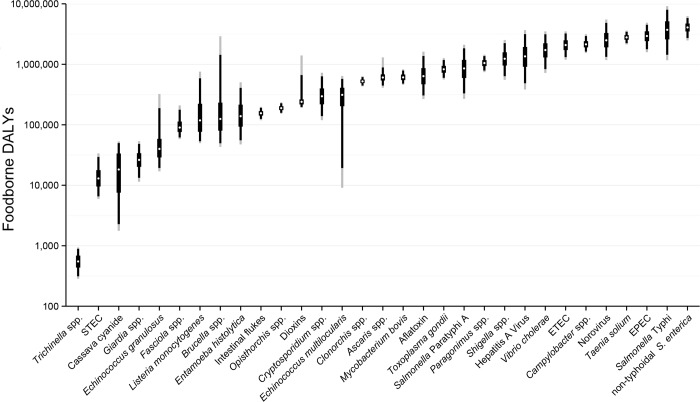
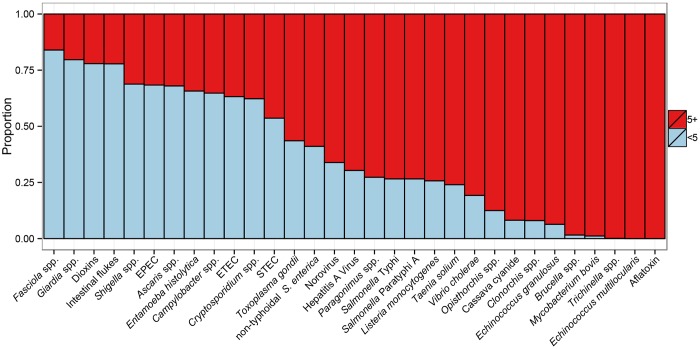
The global burden of foodborne disease caused by 31 hazards in 2010 was 33 million DALYs; children under five years old bore 40% of this burden.
Overview
CoChat Summary
## TL;DR
The WHO Foodborne Disease Burden Epidemiology Reference Group estimated that 31 foodborne hazards caused 600 million illnesses, 420,000 deaths, and 33 million DALYs worldwide in 2010. The burden was concentrated in low-income regions and in children under 5, with diarrheal disease agents—especially norovirus, Campylobacter spp., and non-typhoidal Salmonella enterica—accounting for most illness and death.
## Key findings
- Thirty-one hazards caused an estimated 600 million (95% UI 420–960 million) illnesses, 420,000 (95% UI 310,000–600,000) deaths, and 33 million (95% UI 25–46 million) DALYs in 2010.
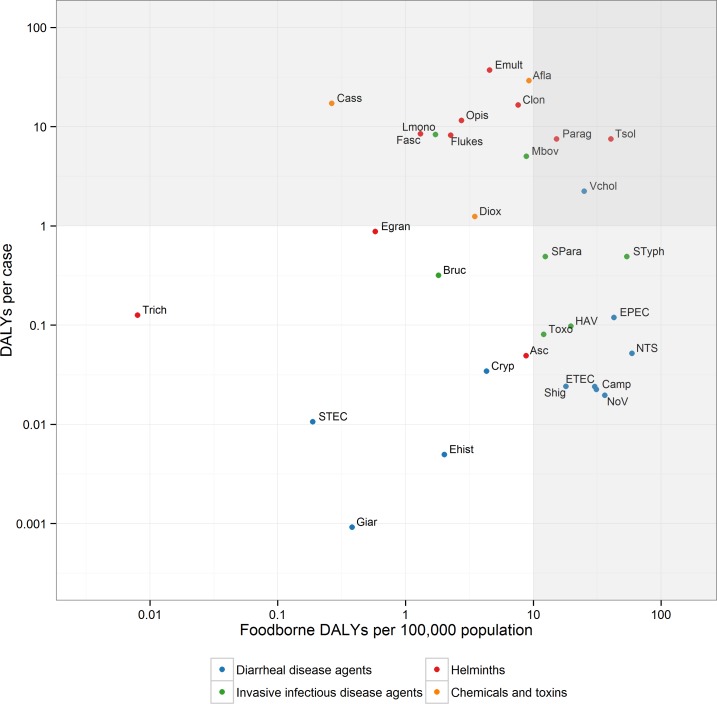
- Diarrheal disease agents accounted for 550 million illnesses and 230,000 deaths; the most frequent illness agents were norovirus (120 million cases) and Campylobacter spp. (96 million cases).
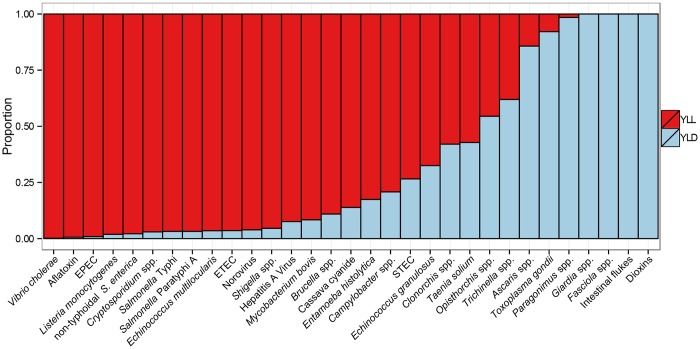
- Non-typhoidal Salmonella enterica caused 59,000 deaths and 4.0 million DALYs; other major death causes included Salmonella Typhi (52,000 deaths), Taenia solium (28,000), hepatitis A virus (28,000), and aflatoxin (20,000; 95% UI 8,000–51,000).
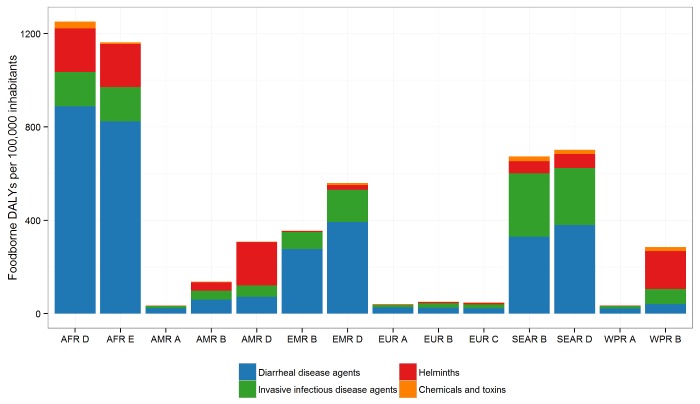
- 40% of the foodborne disease burden was borne by children under 5; the highest burden per 100,000 population was in AFR D (1,300 DALYs) and AFR E (1,200 DALYs), with SEAR B (690), SEAR D (710), and EMR D (570) also high.
## Methods
- The study was a WHO FERG global burden estimation using 31 selected foodborne hazards identified on the basis of high incidence/mortality and data availability.
- It estimated incidence, duration, mortality, YLLs, YLDs, and DALYs for 2010 using systematic reviews, other literature, surveillance data, and expert inputs; estimates were made at country level (194 countries) and then presented at subregional level because of uncertainty.
- For attribution, 12 hazards were judged 100% foodborne; for the other 19 hazards, the authors used structured expert elicitation (Cooke’s Classical Method) to estimate the foodborne fraction, and propagated uncertainty with Monte Carlo simulation in R.
## Limitations
- The paper states its estimates are limited by data gaps and attribution uncertainty; for most hazards, the 95% DALY uncertainty interval ranged from one-fourth to four times the median.
- The authors say the estimates are conservative (underestimates rather than overestimates) because they focused on a subset of more than 100 potential hazards, excluded some hazards or outcomes, and could not always include all relevant disease outcomes.
- They note that country-level estimates were not reliable enough to present, so results are shown at subregion level; this follows from the text and is not presented as a separate explicit limitation.
Model-written summary. Check it against the paper before relying on it.
Integrity signals
Registry
Cites
Statistics
Figures
Verification
Claims the paper makes
5 Valid · 5 Not valid · 16 Not checked · 102 Own results and interpretations
The cited sources that could be checked couldn’t confirm or dispute this claim.
In the paper
“Contaminants in food were not even included as risk factors in previous studies of the global burden of all diseases [3].”
§ World Health Organization Global Estimates and Regional Comparisons of the Burden of Foodborne Disease in 2010 > Introduction
What the sources say
- Could not verifycites [3] Lim SS, Vos T, Flaxman AD, Danaei G, Shibuya K, Adair-Rohani H, et al A comparative risk assessment of burden of disease and injury attributable to 67 risk factors and risk factor clusters in 21 regions, 1990–2010: a systematic analysis for the Global Burden of Disease Study 2010. Lancet. 2012; 380(9859): 2224– 60. 10.1016/S0140-6736(12)61766-8 23245609 PMC4156511 sourceExperimental — accuracy not yet measured
The Discussion describes dietary risk factors such as sodium intake and diets low in fruits or vegetables, but does not address contaminants in food. Searches for food contaminants, foodborne disease, and specific contaminants found no passage establishing whether previous global burden studies included them as risk factors. Page numbers were not available in our copy. (LLM, conf=0.73)
plain- Asserted: passes — The authors put it forward as true.
- Checkable: passes — It can be checked against evidence.
- Load-bearing: passes — The paper’s conclusions depend on it.
- Based: passes — The paper gives a reason why it holds.
- Could not verify
Every source the paper cites for this claim was checked and supports it.
In the paper
“Inclusion of these outcomes would likely considerably increase the burden of enteric infections [43].”
§ World Health Organization Global Estimates and Regional Comparisons of the Burden of Foodborne Disease in 2010 > Introduction > Limitations
What the sources say
- Supportedcites [43] Haagsma JA, Siersema PD, De Wit NJ, Havelaar AH. Disease burden of post-infectious irritable bowel syndrome in The Netherlands. Epidemiol Infect. 2010; 138: 1650– 6. 10.1017/S0950268810000531 20223049 source
The DISCUSSION of our copy states that the annual non-fatal burden of PI-IBS (over 2300 YLD) 'almost doubl[es] the total non-fatal burden of disease for the selected pathogens' and that ignoring PI-IBS in burden-of-disease studies results in an underestimation; it further concludes that including PI-IBS in estimates for the selected bacterial pathogens 'might still underestimate the burden of disease of foodborne disease'. The RESULTS quantify this (Salmonella +86%, Campylobacter +92%, Shigella +151% when PI-IBS is included), and the Abstract repeats the underestimation point, so the hedged claim that including functional bowel disorders would considerably increase the burden of enteric infections is stated by the source. The source's own scope is three bacterial pathogens in The Netherlands (with norovirus PI-IBS discussed as comparable to Campylobacter), which the citing sentence generalises to enteric infections, but the paper itself makes that extrapolation. (LLM, conf=0.85)
hedgedstates a possible cause- Asserted: passes — The authors put it forward as true.
- Checkable: passes — It can be checked against evidence.
- Load-bearing: unclear — It is unclear whether the paper’s conclusions depend on it.
- Based: passes — The paper gives a reason why it holds.
- Supported
A result the paper states — it cites no source for it, so there is none to check. The quote shows it is in the paper.
In the paper
“Foodborne diarrheal disease agents, particularly non-typhoidal Salmonella enterica, caused 230,000 (95% UI 160,000–320,000) deaths”
§ World Health Organization Global Estimates and Regional Comparisons of the Burden of Foodborne Disease in 2010 > Summary Points
plainstates a cause- Asserted: passes — The authors put it forward as true.
- Checkable: passes — It can be checked against evidence.
- Load-bearing: unclear — It is unclear whether the paper’s conclusions depend on it.
- Based: passes — The paper gives a reason why it holds.
A result the paper states — it cites no source for it, so there is none to check. The quote shows it is in the paper.
In the paper
“the burden of Opisthorchis spp. was concentrated in the SEAR B region”
§ World Health Organization Global Estimates and Regional Comparisons of the Burden of Foodborne Disease in 2010 > Summary Points
plainstates an association- Asserted: passes — The authors put it forward as true.
- Checkable: passes — It can be checked against evidence.
- Load-bearing: unclear — It is unclear whether the paper’s conclusions depend on it.
- Based: passes — The paper gives a reason why it holds.
A result the paper states — it cites no source for it, so there is none to check. The quote shows it is in the paper.
In the paper
“The burden of aflatoxin was high in the AFR D, Western Pacific (WPR) B and SEAR B subregions”
§ World Health Organization Global Estimates and Regional Comparisons of the Burden of Foodborne Disease in 2010 > Summary Points
plain- Asserted: passes — The authors put it forward as true.
- Checkable: passes — It can be checked against evidence.
- Load-bearing: unclear — It is unclear whether the paper’s conclusions depend on it.
- Based: passes — The paper gives a reason why it holds.
48 more claims
Create a free account to see all 128 claims and to verify the 5 references still open.
- Probably not a substantial claim. 63
- It may state two separate claims as one. 28
Claims other papers make about this one
Each is checked against this paper’s own text: does it say what the citing paper says it does?
The source backs part of the claim, not all of it — or backs it for a different population, condition or comparison.
In the citing paper
“The FERG found that hazards accounted for around 420,000 deaths in LMIC, imposing a burden of around 33 million DALY lost each year (Havelaar et al., 2015).”
From Burden of foodborne disease in low-income and middle-income countries and opportunities for scaling food safety interventions (2023) · cites this paper as Havelaar et al., 2015
Experimental — accuracy not yet measuredThe source backs part of the claim, not all of it — or backs it for a different population, condition or comparison.
In the citing paper
“Children aged under 5 years were disproportionately affected.This group makes up 9% of the world's population, yet they experience 38% of all FBD, represent 30% of deaths related to FBD, and bear 40% of global DALY lost from FBD (Havelaar et al., 2015).”
From Burden of foodborne disease in low-income and middle-income countries and opportunities for scaling food safety interventions (2023) · cites this paper as Havelaar et al., 2015
Experimental — accuracy not yet measuredThe cited source says what the claim attributes to it.
In the citing paper
“This paper, which represents the work of more than 60 experts over a period of 10 years, can be considered the most definitive and comprehensive guide to the health burden of FBD (Havelaar et al., 2015).”
From Burden of foodborne disease in low-income and middle-income countries and opportunities for scaling food safety interventions (2023) · cites this paper as Havelaar et al., 2015
The cited source says what the claim attributes to it.
In the citing paper
“Although LLMICs bear a high burden of foodborne disease [2]”
From Food Safety Knowledge, Attitude, and Practices (KAP) of Urban Consumers in Low-Income and Lower-Middle-Income Countries (LLMICs): A Scoping Review (2026) · cites this paper as [2]
Citations
Cites
R: A Language and Environment for Statistical Computing
R Core Team (2025) · doi:10.32614/r.manuals · Cited by 352,181
Lim, S. S., Vos, T., Flaxman, A. D., Danaei, G., Shibuya, K., Adair-Rohani, H., AlMazroa, M. A., Amann, M., Anderson, H. R., Andrews, K. G., et al. (2012) · The Lancet · doi:10.1016/s0140-6736(12)61766-8 · Cited by 11,805 · cited 1×
“Contaminants in food were not even included as risk factors in previous studies of the global burden of all diseases [3].”
BackgroundMurray, C. J. L., Vos, T., Lozano, R., Naghavi, M., Flaxman, A. D., Michaud, C., Ezzati, M., Shibuya, K., Salomon, J. A., Abdalla, S., et al. (2012) · The Lancet · doi:10.1016/s0140-6736(12)61689-4 · Cited by 8,888
Foodborne illness acquired in the United States—Major pathogens
Scallan, E., Hoekstra, R. M., Angulo, F. J., Tauxe, R. V., Widdowson, M.-A., Roy, S. L., Jones, J. L., & Griffin, P. M. (2011) · Emerging Infectious Diseases · doi:10.3201/eid1701.p11101 · Cited by 7,657 · cited 1×
“Several high-income countries have published national estimates of FBD. Estimates of food-related illnesses and deaths in the USA were reported in the late 1990s [28] and updated to cover the period 2000 – 2008 [29,30].”
BackgroundSelf-citationFood-Related Illness and Death in the United States
Mead, P. S., Slutsker, L., Dietz, V., McCaig, L. F., Bresee, J. S., Shapiro, C., Griffin, P. M., & Tauxe, R. V. (1999) · Emerging Infectious Diseases · doi:10.3201/eid0505.990502 · Cited by 7,235
Global mortality, disability, and the contribution of risk factors: Global Burden of Disease Study
Murray, C. J., & Lopez, A. D. (1997) · The Lancet · doi:10.1016/s0140-6736(96)07495-8 · Cited by 4,492 · cited 1×
“The DALY measure combines the years of life lost (YLL) due to premature death and the years lived with disability (YLD) from a disease or condition, for varying degrees of severity, making time the common metric for death and disability [20].”
BackgroundSelected major risk factors and global and regional burden of disease
Ezzati, M., Lopez, A. D., Rodgers, A., Vander Hoorn, S., & Murray, C. J. (2002) · The Lancet · doi:10.1016/s0140-6736(02)11403-6 · Cited by 3,594
Kirk, M. D., Pires, S. M., Black, R. E., Caipo, M., Crump, J. A., Devleesschauwer, B., Döpfer, D., Fazil, A., Fischer-Walker, C. L., Hald, T., et al. (2015) · PLoS Medicine · doi:10.1371/journal.pmed.1001921 · Cited by 1,625 · cited 2×
“Detailed descriptions of methods to estimate incidence and mortality of all 31 hazards can be found in papers in the collection on enteric diseases [11], parasitic diseases [18], and chemicals and toxins [19].”
BackgroundMethodSelf-citationSalomon, J. A., Vos, T., Hogan, D. R., Gagnon, M., Naghavi, M., Mokdad, A., Begum, N., Shah, R., Karyana, M., Kosen, S., et al. (2012) · The Lancet · doi:10.1016/s0140-6736(12)61680-8 · Cited by 1,322
Global burden of aflatoxin-induced hepatocellular carcinoma: A risk assessment
Liu, Y., & Wu, F. (2010) · Environmental Health Perspectives · doi:10.1289/ehp.0901388 · Cited by 1,224
Research works printed but not linked: 2
- Gibb H, Devleesschauwer B, Bolger PM, Bellinger D, Wu F, Ezendam J, et al WHO estimates of the global and regional burden from chemicals and toxins in food, 2010. F1000Research. In Press. PMC4755404 26918123
- Devleesschauwer B, Haagsma JA, Angulo FJ, Bellinger D, Cole D, Döpfer D, et al Methodological Framework for World Health Organization Estimates of the Global Burden of Foodborne Disease. PLoS ONE 10: e0142498 10.1371/journal.pone.0142498 PMC4668830 26633883 · DOI · Paper page
Cited by
Items 501–600 of 2,051
AB5 Enterotoxin-Mediated Pathogenesis: Perspectives Gleaned from Shiga Toxins
Biernbaum, E. N., & Kudva, I. T. (2022) · Toxins · doi:10.3390/toxins14010062 · Cited by 32
dessouky, Y. E., Elsayed, S. W., Abdelsalam, N. A., Saif, N. A., Álvarez‐Ordóñez, A., & Elhadidy, M. (2022) · Gut Pathogens · doi:10.1186/s13099-022-00517-w · Cited by 35
Rahman, R., Scharff, R. L., & Wu, F. (2023) · Risk Analysis · doi:10.1111/risa.14132 · Cited by 25
High relative humidity pre-harvest reduces post-harvest proliferation of Salmonella in tomatoes
Devleesschauwer, B., Marvasi, M., Giurcanu, M. C., Hochmuth, G. J., Speybroeck, N., Havelaar, A. H., & Teplitski, M. (2017) · Food Microbiology · doi:10.1016/j.fm.2017.04.003 · Cited by 28
Self-citationThe ADP-Ribosylating Toxins of Salmonella
Cheng, R. A., & Wiedmann, M. (2019) · Toxins · doi:10.3390/toxins11070416 · Cited by 32
The importance of estimating the burden of disease from foodborne transmission of Trypanosoma cruzi
Robertson, L. J., Havelaar, A. H., Keddy, K. H., Devleesschauwer, B., Sripa, B., & Torgerson, P. R. (2024) · PLoS neglected tropical diseases · doi:10.1371/journal.pntd.0011898 · Cited by 27
Self-citationAbdelshafy, A. M., Younis, H. A., Osman, A. I., Hussein, S. M., El‐Ela, A. S. A., Mahmoud, E., Elsherbiny, O., & Rashwan, A. K. (2025) · Food Frontiers · doi:10.1002/fft2.541 · Cited by 28
Yang, W., Zhang, M., Zhou, J., et al. (2017) · Foodborne Pathogens and Disease · doi:10.1089/fpd.2016.2223 · Cited by 24
“C ampylobacter jejuni , a Gram-negative pathogenic bacterium, is the most common cause of bacterial foodborne infections worldwide (Allos, 2001; Havelaar et al. , 2015).”
Devi, A., Mahony, T. J., Wilkinson, J. M., et al. (2018) · Journal of Global Antimicrobial Resistance · doi:10.1016/j.jgar.2018.09.011 · Cited by 24
Salmonella on Australian cage egg farms: Observations from hatching to end of lay
McWhorter, A. R., & Chousalkar, K. K. (2019) · Food Microbiology · doi:10.1016/j.fm.2019.103384 · Cited by 25
Enfermedades transmitidas por Alimentos (Etas); Una Alerta para el Consumidor
Fernández, S., Marcía-Fuentes, J. A., Bu, J., Garcia, Y. B., Chávez, V., Montoya, H. L., Varela, I., Cardona, J. R., Lagos, S., & Areche, F. O. (2021) · Ciencia Latina Revista Científica Multidisciplinar · doi:10.37811/cl_rcm.v5i2.433 · Cited by 51
“Sobre la base de la mortalidad infantil y de adultos, 14 países tienen diferentes cargas de eta, con la mayor proporción en las subregiones de África, seguidas de las subregiones en el sudeste de Asia y la subregión del Mediterráneo Oriental (Havelaar et al., 2015; Gutiérrez, 2009).”
BackgroundLamy-Besnier, Q., Chaffringeon, L., Lourenço, M., Payne, R. B., Trinh, J. T., Schwartz, J. A. J., Sulakvelidze, A., & Debarbieux, L. (2021) · Microbiology Spectrum · doi:10.1128/spectrum.00497-21 · Cited by 23
Whole genome sequencing reveals great diversity of Vibrio spp in prawns at retail
Janecko, N., Bloomfield, S. J., Palau, R., & Mather, A. E. (2021) · Microbial Genomics · doi:10.1099/mgen.0.000647 · Cited by 32
“The true global burden of illness attributed to Vibrio exposure is underestimated and poorly understood due to the limited detection and surveillance of vibriosis [1–3].”
Han, Y., Wang, J., Zhang, S., Yang, S., Wang, X., Han, Y., Shen, Z., & Xu, X. (2021) · Food Microbiology · doi:10.1016/j.fm.2021.103933 · Cited by 25
Alhashim, L. A., Alshahrani, N. Z., Alshahrani, A. M., Khalil, S. N., Alrubayii, M. A., Alateeq, S. K., & Zakaria, O. M. (2022) · International Journal of Environmental Research and Public Health · doi:10.3390/ijerph19074322 · Cited by 26
Sabeq, I. I., Awad, D. A. B., Hamad, A. M. A., Nabil, M., Aboubakr, M., Abaza, M., Fouad, M., Hussein, A. F. A., Shama, S., Ramadan, H. H., et al. (2022) · Transboundary and Emerging Diseases · doi:10.1111/tbed.14553 · Cited by 32
Zhou, Y., Wan, Q., Bao, H., et al. (2022) · Frontiers in Microbiology · doi:10.3389/fmicb.2022.929005 · Cited by 24
Mhone, A. L., Makumi, A., Odaba, J., Guantai, L., Gunathilake, K. M. D., Loignon, S., Ngugi, C. W., Akhwale, J. K., Moineau, S., & Svitek, N. (2022) · Viruses · doi:10.3390/v14081788 · Cited by 24
Raquel Hurtado, C., Barh, D., Weimer, B. C., Viana, M. V. C., Profeta, R., Sousa, T. J., Aburjaile, F. F., Quino, W., de Souza, R. P., Mestanza, O., et al. (2022) · Antibiotics · doi:10.3390/antibiotics11091170 · Cited by 29
Perspectives on food safety across traditional market supply chains in Nigeria
Nordhagen, S., Onuigbo-Chatta, N., Lambertini, E., Wenndt, A. J., & Okoruwa, A. (2023) · Food and Humanity · doi:10.1016/j.foohum.2023.06.018 · Cited by 35
DeFlorio, W., Liu, S., Arcot, Y., Ulugun, B., Wang, X., Min, Y., Cisneros‐Zevallos, L., & Akbulut, M. E. S. (2023) · Food Research International · doi:10.1016/j.foodres.2023.113227 · Cited by 26
Barrett, K. E. (2016) · The Journal of Physiology · doi:10.1113/jp272227 · Cited by 23
“Foodborne infections with Salmonella have been with us for millennia, and they continue to represent one of the most prevalent causes of infectious diarrhoeal diseases as well as imposing the greatest disease burden (Batz et al. 2013; Batz et al. 2014; Havelaar et al. 2015; Cummings et al. 2016).”
BackgroundHoffman, T., Rock, K., Mugizi, D. R., et al. (2016) · Infection Ecology & Epidemiology · doi:10.3402/iee.v6.32442 · Cited by 24
Hankel, J., Popp, J., Meemken, D., et al. (2018) · PLoS ONE · doi:10.1371/journal.pone.0204483 · Cited by 24
Bythwood, T., Soni, V. K., Lyons, K., Hurley-Bacon, A., Lee, M. D., Hofacre, C. L., Sánchez, S., & Maurer, J. J. (2019) · Frontiers in Sustainable Food Systems · doi:10.3389/fsufs.2019.00020 · Cited by 33
Aflatoxin Binders in Foods for Human Consumption—Can This be Promoted Safely and Ethically?
Ahlberg, S., Grace, D., Okoth, S., & Lindahl, J. F. (2019) · Toxins · doi:10.3390/toxins11070410 · Cited by 26
Effectiveness of Consumers Washing with Sanitizers to Reduce Human Norovirus on Mixed Salad
Anfruns-Estrada, E., Bottaro, M., Pintó, R. M., Guix, S., & Bosch, A. (2019) · Foods · doi:10.3390/foods8120637 · Cited by 25
Food Security, Environmental Health, and the Economy in Mexico: Lessons Learned with the COVID-19
Monroy‐Torres, R., Valencia, E. C., Hernández-Luna, M., Caldera-Ortega, A., Muñoz, A. H. S., Linares-Segovia, B., Medina-Jiménez, A. K., Castillo-Chávez, A., Jiménez-Garza, O., Méndez-Pérez, M., et al. (2021) · Sustainability · doi:10.3390/su13137470 · Cited by 28
Abdoli, A., & Maspi, N. (2018) · Frontiers in Medicine · doi:10.3389/fmed.2018.00011 · Cited by 24
Zoonoses: Blurred lines of emergent disease and ecosystem health
United Nations Environment Programme (2016) · doi:10.18356/2bcb8eff-en · Cited by 25
Sibanda, T., Ntuli, V., Neetoo, H., Habib, I., Njage, P. M. K., Kunadu, A. P., Andoh-Odoom, A. H., Coorey, R., & Buys, E. M. (2023) · International Journal of Food Science & Technology · doi:10.1111/ijfs.16540 · Cited by 24
Ali, A. S., Gari, S. R., Goodson, M. L., Walsh, C., Dessie, B. K., & Ambelu, A. B. (2023) · Environmental Health Insights · doi:10.1177/11786302231181307 · Cited by 24
Shrestha, S., Malla, B., & Haramoto, E. (2024) · Environmental Research · doi:10.1016/j.envres.2024.119156 · Cited by 27
Progress in 2D MXenes: Synthesis, Structural Properties, and Technological Applications
Mehlawat, S., Panda, S., Dhariwal, N., Sanger, A., & Kumar, A. (2025) · ACS Applied Nano Materials · doi:10.1021/acsanm.5c03097 · Cited by 27
Scallan, E., Griffin, P. M., McLean, H. Q., & Mahon, B. E. (2018) · Epidemiology and Infection · doi:10.1017/s0950268818000882 · Cited by 25
Aviv, G., Cornelius, A., Davidovich, M., et al. (2019) · The Journal of Infectious Diseases · doi:10.1093/infdis/jiz235 · Cited by 23
Nationwide Hospital-Based Seroprevalence of Hepatitis A and Hepatitis E Virus in Bangladesh
Khan, A. I., Uzzaman, M. S., Islam, M. T., et al. (2020) · Annals of Global Health · doi:10.5334/aogh.2574 · Cited by 23
Kaur, R., Arora, N., Rawat, S. S., et al. (2021) · Expert Review of Vaccines · doi:10.1080/14760584.2021.1974298 · Cited by 23
Cohen, H., Adani, B., Cohen, E., Piscon, B., Azriel, S., Desai, P., Bähre, H., McClelland, M., Rahav, G., & Gal‐Mor, O. (2021) · Gut Microbes · doi:10.1080/19490976.2021.1997294 · Cited by 22
Chen, G., Wang, Z., Deng, M. G., et al. (2021) · Sensors and Actuators B Chemical · doi:10.1016/j.snb.2021.131289 · Cited by 23
Uddin, M. B., Alam, M. N., Hasan, M., Hossain, S. M. B., Debnath, M., Begum, R., Samad, M. A., Hoque, S. F., Chowdhury, M. S. R., Rahman, M. M., et al. (2022) · Antibiotics · doi:10.3390/antibiotics11010097 · Cited by 30
Militao, E. M. A., Salvador, E. M., Silva, J. P., Uthman, O. A., Vinberg, S., & Macassa, G. (2022) · Sustainability · doi:10.3390/su14148710 · Cited by 36
Zhao, J., Cheng, H., Wang, Z., Fu, P. P., Guo, Y., & Yang, S. (2022) · Foodborne Pathogens and Disease · doi:10.1089/fpd.2022.0028 · Cited by 25
“According to the World Health Organization (WHO), foodborne diseases occur in * 600 million people worldwide each year, resulting in 420,000 deaths (Havelaar et al. , 2015).”
Attribution Analysis of Household Foodborne Disease Outbreaks in China, 2010–2020
Cheng, H., Zhao, J., Zhang, J., Wang, Z., Liu, Z., Ma, X., Liang, J., Li, W., Fu, P., Yang, S., et al. (2023) · Foodborne Pathogens and Disease · doi:10.1089/fpd.2022.0070 · Cited by 22
“According to the World Health Organization, * 600 million people worldwide suffer from foodborne diseases caused by the consumption of unclean food each year, resulting in * 420,000 deaths (World Health Organization, 2015).”
Mechanism of microbial spore inactivation through electromagnetic radiations: a review
Sharma, P., Venugopal, A. P., Sutar, P. P., Xiao, H., & Zhang, Q. (2023) · Journal of Future Foods · doi:10.1016/j.jfutfo.2023.11.004 · Cited by 25
Grote, A., Piscon, B., Manson, A. L., Adani, B., Cohen, H., Livny, J., Earl, A. M., & Gal‐Mor, O. (2024) · Cell Host & Microbe · doi:10.1016/j.chom.2023.12.001 · Cited by 26
Travelers’ Diarrhea in Children
Ashkenazi, S., Schwartz, E., & O’Ryan, M. (2016) · The Pediatric Infectious Disease Journal · doi:10.1097/inf.0000000000001145 · Cited by 23
Where food safety meets nutrition outcomes in livestock and fish value chains: a conceptual approach
Häsler, B., Domínguez-Salas, P., Fornace, K., Garza, M., Grace, D., & Rushton, J. (2017) · Food Security · doi:10.1007/s12571-017-0710-2 · Cited by 30
“Diarrhoeal diseases are one of the main causes of morbidity and mortality from infectious diseases (Murray et al. 2012) and the global burden of food-borne disease in 2010 was estimated at 33 million Disability Adjusted Life Years (Havelaar et al. 2015).”
Alamdary, S. Z., Bakhshi, B., & Soudi, S. (2018) · PLoS ONE · doi:10.1371/journal.pone.0196941 · Cited by 27
Integrated food safety and nutrition assessments in the dairy cattle value chain in Tanzania
Häsler, B., Msalya, G. M., Garza, M., Fornace, K., Eltholth, M. M., Kurwijila, L. R., Rushton, J., & Grace, D. (2018) · Global Food Security · doi:10.1016/j.gfs.2018.05.003 · Cited by 23
Bailey, R. A., Kranis, A., Psifidi, A., Watson, K., Rothwell, L. M., Hocking, P. M., Kaiser, P., Stevens, M. P., & Avendaño, S. (2018) · Poultry Science · doi:10.3382/ps/pey295 · Cited by 21
From hatch to egg grading: monitoring of Salmonella shedding in free-range egg production systems
McWhorter, A. R., & Chousalkar, K. K. (2019) · Veterinary Research · doi:10.1186/s13567-019-0677-4 · Cited by 23
Esan, O. B., Perera, R., McCarthy, N. D., Violato, M., & Fanshawe, T. R. (2020) · Journal of Infection · doi:10.1016/j.jinf.2020.05.027 · Cited by 26
First multilocus sequence typing (MLST) of Giardia duodenalis isolates from humans in Romania
Costache, C. A., Kalmár, Z., Colosi, H. A., Baciu, A. M., Opriş, R. V., Györke, A., & Colosi, I. A. (2020) · Parasites & Vectors · doi:10.1186/s13071-020-04248-2 · Cited by 26
Gender considerations in One Health: a framework for researchers
Galié, A., McLeod, A., Campbell, Z. A., Ngwili, N., Terfa, Z., & Thomas, L. F. (2024) · Frontiers in Public Health · doi:10.3389/fpubh.2024.1345273 · Cited by 31
Ensuring egg safety: Salmonella survival, control, and virulence in the supply chain
Li, L., McWhorter, A. R., & Chousalkar, K. K. (2024) · Comprehensive Reviews in Food Science and Food Safety · doi:10.1111/1541-4337.70075 · Cited by 30
Emerging Technologies and Integrated Strategies for Microbial Detection and Control in Fresh Produce
Elbehiry, A., Marzouk, E., Alzaben, F. A., Almuaither, A., Abead, B., Alamri, M., Almuzaini, A. M., & Abu-Okail, A. (2025) · Microorganisms · doi:10.3390/microorganisms13071447 · Cited by 31
“E. coli and L. monocytogenes were responsible for additional outbreaks, including those with high morbidity and mortality [14,18].”
Xing, L., Cheng, M., Wang, S., Jiang, J., Li, T., Zhang, X., Yang, J., Tian, Y., & Liu, W. (2025) · Frontiers in Microbiology · doi:10.3389/fmicb.2025.1636622 · Cited by 30
Kolenda, R., Burdukiewicz, M., Wimonć, M., Aleksandrowicz, A., Ali, A., Szabó, I., Tedin, K., Scott, J. B., Pickard, D., & Schierack, P. (2020) · Applied and Environmental Microbiology · doi:10.1128/aem.02177-20 · Cited by 27
Disrupting Irreversible Bacterial Adhesion and Biofilm Formation with an Engineered Enzyme
Mayton, H. M., Walker, S. L., & Berger, B. W. (2021) · Applied and Environmental Microbiology · doi:10.1128/aem.00265-21 · Cited by 26
Petersen, M., Ma, L., & Lu, X. (2021) · International Journal of Food Microbiology · doi:10.1016/j.ijfoodmicro.2021.109263 · Cited by 23
Multidrug-resistant Salmonella enterica serovars isolated from frozen chicken carcasses
Elshebrawy, H. A., Abdel-Naeem, H. H. S., Mahros, M. A., Elsayed, H., Imre, K., Herman, V., Morar, A., & Sallam, K. I. (2022) · LWT · doi:10.1016/j.lwt.2022.113647 · Cited by 23
Du, P., Liu, X., Liu, Y., Li, R., Lü, X., Cui, S., Wu, Y., Fanning, S., & Bai, L. (2022) · mSystems · doi:10.1128/msystems.00253-22 · Cited by 23
Chea, R., Nguyen‐Viet, H., Tum, S., Unger, F., Lindahl, J. F., Grace, D., Chhay, T., Koam, S., Vor, S., Huy, S., et al. (2022) · PLoS ONE · doi:10.1371/journal.pone.0270425 · Cited by 29
Kandeel, M. K., Jalil, A. T., Lafta, M. H., Ziyadullaev, S., & Mustafa, Y. F. (2022) · Microchemical Journal · doi:10.1016/j.microc.2022.108121 · Cited by 21
An allergist's approach to food poisoning
Patel, P., Komorowski, A. S., & Mack, D. P. (2022) · Annals of Allergy Asthma & Immunology · doi:10.1016/j.anai.2022.10.021 · Cited by 24
Performing food safety inspections
Barnes, J., Smith, J. C., Ross, K., & Whiley, H. (2024) · Food Control · doi:10.1016/j.foodcont.2024.110329 · Cited by 34
A hyperendemic focus of Taenia solium transmission in the Banke District of Nepal
Sah, K., Poudel, I., Subedi, S., et al. (2017) · Acta Tropica · doi:10.1016/j.actatropica.2017.07.022 · Cited by 22
Rajiuddin, S. M., Jensen, T., Hansen, T. B., & Schultz, A. C. (2020) · Food and Environmental Virology · doi:10.1007/s12560-020-09437-x · Cited by 22
He, T., Li, J., Liu, L., et al. (2020) · RSC Advances · doi:10.1039/d0ra03833d · Cited by 22
A subcellular atlas of Toxoplasma reveals the functional context of the proteomePreprint
Barylyuk, K. V., Kořený, L., Ke, H., Butterworth, S. W., Crook, O. M., Lassadi, I., Gupta, V., Tromer, E. C., Mourier, T., Stevens, T. J., et al. (2020) · bioRxiv (Cold Spring Harbor Laboratory) · doi:10.1101/2020.04.23.057125 · Cited by 22
“Toxoplasmosis ( Toxoplasma gondii ) occurs as chronic infections in ~30% of the human population and can cause life-threatening congenital toxoplasmosis, fetal malformation and abortion, blindness, and encephalitis (Havelaar et al., 2015).”
BackgroundYang, X., Hussain, W., Chen, Y., Xu, P.-W., Yang, X., Wang, H., Zhang, X., Fu, Q., & Wang, S. (2024) · Food Control · doi:10.1016/j.foodcont.2024.110888 · Cited by 24
Evolution of hepatitis A virus seroprevalence among HIV-positive adults in Taiwan
Lee, Y.-L., Lin, K., Cheng, C., Li, C.-W., Yang, C., Tsai, M., Tang, H.-J., Lin, T., Wang, N., Lee, Y., et al. (2017) · PLoS ONE · doi:10.1371/journal.pone.0186338 · Cited by 20
Self-citationNear-Complete Genome Sequences of Several New Norovirus Genogroup II Genotypes
Chhabra, P., Aswath, K., Collins, N., Ahmed, T., Olórtegui, M. P., Kosek, M. N., Cebelinski, E. A., Cooper, P. J., Bucardo, F., López, M. R., et al. (2018) · Genome Announcements · doi:10.1128/genomea.00007-18 · Cited by 22
Jahid, I. K., Mizan, M. F. R., Myoung, J., & Ha, S. (2018) · Biofouling · doi:10.1080/08927014.2018.1519069 · Cited by 23
“Foodborne disease outbreaks are globally important, resulting in considerable morbidity and mortality (Havelaar et al. 2015).”
BackgroundAntibacterial peptides from seafood: A promising weapon to combat bacterial hazards in food
Tong, J., Zhang, Z., Wu, Q., Huang, Z., Malakar, P. K., Chen, L., Liu, H., Pan, Y., & Zhao, Y. (2021) · Food Control · doi:10.1016/j.foodcont.2021.108004 · Cited by 23
Rahman, M. M., Azad, M. O. K., Uddain, J., Adnan, M., Ali, M. C., Al-Mujahidy, S. M. J., Roni, M. Z. K., Rahman, M. S., Islam, J., Rahman, M. H., et al. (2021) · Foods · doi:10.3390/foods10061325 · Cited by 25
Bajpai, V. K., Bahuguna, A., Kumar, V., Khan, I., Alrokayan, S., Khan, H. A., Simal‐Gándara, J., Xiao, J., Na, M., Sonwal, S., et al. (2021) · Food Chemistry · doi:10.1016/j.foodchem.2021.131392 · Cited by 21
Ramatla, T. A., Tawana, M., Onyiche, T. E., Lekota, K. E., & Thekisoe, O. M. M. (2022) · International Journal of Microbiology · doi:10.1155/2022/8952669 · Cited by 25
“Nontyphoidal Salmonella (NTS) is responsible for the most important public health problemworldwide including South Africa, and accounts for food-borne illnesses with an estimated 94 million cases globally [3, 4].”
BackgroundWang, Z., Lu, Q., Mao, X., et al. (2022) · Animals · doi:10.3390/ani12223191 · Cited by 21
Marin, C., Vega, S., & Marco-Jiménez, F. (2016) · Vector-Borne and Zoonotic Diseases · doi:10.1089/vbz.2016.1950 · Cited by 21
“It was estimated that nontyphoidal Salmonella causes around 59,153 deaths each year worldwide (Havelaar et al. 2015).”
Impact of food and water-borne diseases on European population health
Cassini, A., Colzani, E., Kramarz, P., Kretzschmar, M., & Takkinen, J. (2016) · Current Opinion in Food Science · doi:10.1016/j.cofs.2016.06.002 · Cited by 26
Microbiological risk assessment
Cassini, A., Hathaway, S. C., Havelaar, A. H., Koopmans, M., Koutsoumanis, K., Messens, W., Müller‐Seitz, G., Nørrung, B., Rizzi, V., & Scheutz, F. (2016) · EFSA Journal · doi:10.2903/j.efsa.2016.s0507 · Cited by 23
Self-citationsourceR: Classification and source attribution of infectious agents among heterogeneous populations
Miller, P., Marshall, J. C., French, N. P., et al. (2017) · PLoS Computational Biology · doi:10.1371/journal.pcbi.1005564 · Cited by 21
Cazzola, H., Lemaire, L., Acket, S., Prost, É., Duma, L., Erhardt, M., Čechová, P., Trouillas, P., Mohareb, F. R., Rossi, C., et al. (2020) · mSphere · doi:10.1128/msphere.00702-20 · Cited by 22
Derrick, J., Hollinghurst, P., O’Brien, S. J., Elviss, N. C., Allen, D. J., & Iturriza‐Gómara, M. (2021) · International Journal of Food Microbiology · doi:10.1016/j.ijfoodmicro.2021.109151 · Cited by 24
Oduori, D. O., Kwoba, E. N., Thomas, L. F., Grace, D., & Mutua, F. K. (2022) · Foodborne Pathogens and Disease · doi:10.1089/fpd.2021.0043 · Cited by 28
“The burden due to aflatoxins has also been shown to be high in some African countries, including Nigeria (Havelaar et al., 2015).”
BackgroundInfluentialA trait‐based framework for predicting foodborne pathogen risk from wild birds
Smith, O. M., Olimpi, E. M., Navarro-González, N., Cornell, K. A., Frishkoff, L. O., Northfield, T. D., Bowles, T. M., Edworthy, A. B., Eilers, J., Fu, Z., et al. (2021) · Ecological Applications · doi:10.1002/eap.2523 · Cited by 21
“We used generalized Tukey HSD tests in the multcomp package in R (Hothorn et al., 2008) to examine differences in categorical predictor variables that had high support (were included in models with <2 ΔAICc) and improved model fit (likelihood ratio tests).”
MethodSpread of Antibiotic Resistance in Food Animal Production Systems
Gebreyes, W. A., Wittum, T. E., Habing, G. G., Alali, W. Q., Usui, M., & Suzuki, S. (2017) · Elsevier eBooks · doi:10.1016/b978-0-12-385007-2.00004-8 · Cited by 31
Madilo, F. K., Islam, M. N., Letsyo, E., Roy, N., Klutse, C. M., Quansah, E., Darku, P. A., & Amin, M. B. (2023) · Heliyon · doi:10.1016/j.heliyon.2023.e17795 · Cited by 21
“parahaemolyticus, Staphylococcus aureus, Bacillus species and Listeria monocytogenes (found in undercooked meats, vegetables, unpasteurized milk, and soft cheese) which are linked to foodborne diseases [6].”
BackgroundKnowledge and self-reported food safety practices among meat consumers in Ilorin, Nigeria.
Odetokun, I. A., Afolaranmi, Z. M., Nuhu, A. A., Borokinni, B. O., Ghali-Mohammed, I., Cisse, H., & Alhaji, N. B. (2022) · Dialogues in Health · doi:10.1016/j.dialog.2022.100039 · Cited by 20
“This represents an alarming annual loss of 33 million years of healthy life (i.e., disability-adjusted life years or DALYs), which is comparable to the burden of major infectious diseases (such as tuberculosis, malaria, and HIV/AIDS) [1].”
BackgroundMošovská, S., Medvecká, V., Valík, Ľ., Mikulajová, A., & Zahoranová, A. (2023) · Scientific Reports · doi:10.1038/s41598-023-38892-2 · Cited by 21
Ayoub, H., Kumar, M. S., Dubal, Z. B., Bhilegaonkar, K. N., Nguyen‐Viet, H., Grace, D., Thapliyal, S., Sanjumon, E. S., Sneha, E. N. P., Premkumar, D., et al. (2025) · Foods · doi:10.3390/foods14040555 · Cited by 26
“Foodborne disease (FBD) is a major public health issue with a global health burden comparable to that of malaria, tuberculosis, or HIV/AIDS; nearly two-thirds of this burden is due to bacterial pathogens [8].”
Mutmainna, I., Tahir, D., Gareso, P. L., et al. (2025) · International Journal of Biological Macromolecules · doi:10.1016/j.ijbiomac.2025.144205 · Cited by 20
Application Progress of Carbon Quantum Dot Composites in Fluorescent Detection of Food Safety
Li, R., Yue, J., Zhu, F., et al. (2025) · Journal of Food Science · doi:10.1111/1750-3841.70299 · Cited by 20
Conceptualizing sustainable diets in Vietnam: Minimum metrics and potential leverage points
Mayton, H. M., Beal, T., Rubin, J., Sanchez, A., Heller, M., Hoey, L., de Haan, S., Duong, T. T., Huynh, T. T. T., Burra, D. D., et al. (2020) · Food Policy · doi:10.1016/j.foodpol.2020.101836 · Cited by 28
Gutema, F. D., Abdi, R. D., Agga, G. E., et al. (2021) · International Journal of Food Contamination · doi:10.1186/s40550-021-00082-1 · Cited by 20
“Consumption of contaminated food of animal origin is associated with potential food safety risks and a major source of FBD. Salmonella and Shiga toxin-producing E. coli are major causes of FBD (Havelaar et al. 2015).”
BackgroundInfluentialPhylogenomic analysis of Salmonella Indiana ST17, an emerging MDR clonal group in China
Sun, R.-Y., Guo, W.-Y., Zhang, J.-X., Wang, M.-G., Wang, L., Lian, X.-L., Ke, B.-X., Sun, J. G., Ke, C., Liu, Y.-H., et al. (2022) · Journal of Antimicrobial Chemotherapy · doi:10.1093/jac/dkac243 · Cited by 20
Deng, S., Liu, S., Li, X. R., Liu, H., Li, F., Liu, K., Zeng, H., Zeng, X., & Xin, B. (2022) · Journal of Agricultural and Food Chemistry · doi:10.1021/acs.jafc.2c02890 · Cited by 26
True to type? EU-style date marking and the valuation of perishable food
D’Amato, A., Goeschl, T., Lorè, L., & Zoli, M. (2022) · Food Policy · doi:10.1016/j.foodpol.2022.102381 · Cited by 27
Metadata
- Authors
- Havelaar, A. H., Kirk, M. D., Torgerson, P. R., Gibb, H. J., Hald, T., Lake, R. J., Praet, N., Bellinger, D. C., de Silva, N. R., Gargouri, N., Speybroeck, N., Cawthorne, A., Mathers, C., Stein, C., Angulo, F. J., Devleesschauwer, B., & on behalf of World Health Organization Foodborne Disease Burden Epidemiology Reference Group
- Affiliations
- Utrecht University (NL)
- Australian National University (AU)
- University of Zurich (CH)
- Technical University of Denmark (DK)
- New Zealand Institute for Public Health and Forensic Science (NZ)
- Instituut voor Tropische Geneeskunde (BE)
- Boston Children's Hospital (US)
- UCLouvain (BE)
- World Health Organization (CH)
- Centers for Disease Control and Prevention (US)
- Ghent University (BE)
- Corresponding author
- Havelaar, Arie H.
- ORCID
- Venue
- PLoS Medicine
- Publisher
- Public Library of Science (PLoS)
- Published
- 2015-12-03
- Volume
- 12
- Issue
- 12
- Pages
- e1001923
- ISSN
- 1549-1277 (ISSN-L)
- 1549-1676
- PMC
- PMC4668832
- OpenAlex
- W2186140012
- Cited by
- 2,067
- References
- 40
- Citations by year
- 2026: 220 · 2025: 251 · 2024: 235 · 2023: 267 · 2022: 217 · 2021: 219 · 2020: 206 · 2019: 153 · 2018: 149 · 2017: 90 · 2016: 51 · 2015: 3
- FWCI
- 130.65
- Type
- journal article
- Language
- en
- Open access
- gold
- doi.org
- Licence
- Locations
- PLoS Medicine (publishedVersion, cc-by)
- Europe PMC (PubMed Central) (publishedVersion, cc-by)
- PubMed Central (publishedVersion, cc-by)
- PubMed (publishedVersion)
- EUR Research Repository (Erasmus University Rotterdam) (publishedVersion, cc-by)
- Zurich Open Repository and Archive (University of Zurich) (acceptedVersion, cc-by)
- ResearchOnline (Glasgow Caledonian University) (acceptedVersion, cc-by)
- Ghent University Academic Bibliography (Ghent University) (submittedVersion, other-oa)
- EUR Research Repository (Erasmus University Rotterdam) (submittedVersion, other-oa)
- CGSPace A Repository of Agricultural Research Outputs (Consultative Group for International Agricultural Research) (submittedVersion, other-oa)
- Digital Access to Libraries (submittedVersion, other-oa)
- DOAJ (DOAJ: Directory of Open Access Journals) (submittedVersion, cc-by-sa)
- Utrecht University Repository (Utrecht University) (submittedVersion, other-oa)
- ANU Open Research (Australian National University) (submittedVersion)
- Technical University of Denmark, DTU Orbit (Technical University of Denmark, DTU) (submittedVersion, cc-by)
- Bristol Research (University of Bristol) (submittedVersion, cc-by)
- Rivm (National Institute for Public Health and the Environment) (submittedVersion)
- Zurich Open Repository and Archive (University of Zurich) (submittedVersion, cc-by)
- Zurich Open Repository and Archive (University of Zurich)
- Funders
- World Health Organization
- University of Pittsburgh
- Institute for Health Metrics and Evaluation
- Topics
- Life Sciences › Agricultural and Biological Sciences › Food Science › Salmonella and Campylobacter epidemiology
- Life Sciences › Agricultural and Biological Sciences › Food Science › Food Safety and Hygiene
- Health Sciences › Medicine › Infectious Diseases › Viral gastroenteritis research and epidemiology
- Keywords
- food poisoning, disease burden, disability-adjusted life years, food safety hazards, diarrheal disease, norovirus, Campylobacter, non-typhoidal Salmonella, Salmonella typhi, Taenia solium, hepatitis A virus, parasitic helminths, child mortality, regional comparison, food safety policy
- MeSH terms
- Foodborne Diseases, Humans, Global Health, World Health Organization, Incidence, Prevalence, Cost of Illness, Quality-Adjusted Life Years
About these checks
Registry, retraction, Cites and statistics results are computed, not judged, with one exception: a printed reference that no index lists is read once by a model before it counts as a citation error. Claims are extracted by a model and kept only when their quote appears verbatim in the text; each cited source is then checked, with a model’s help, for whether it says what the claim relies on. Those verdicts can be wrong — read the claim’s quote and the cited source before relying on one.
The claim verdicts this report counts are experimental: their accuracy is not yet measured.
A language model drew the claims from the paper on 2026-10-10, under version 3 of the claim definition (model deepseek-v4.1-flash, prompt extract-v3).
A second model labelled each claim on 2026-10-10 (model jev-1.13-20260917, definition revision gold-guideline-v0.2).
Cited sources are checked with a language model’s help (gpt-6-sol and qwen3.8-omni-flash).
Statistics and arithmetic are recomputed, not judged.
Confidence bands are shown only for fields calibrated on our annotated test set. None is calibrated yet, so no band is shown.
What counts as a claim ›How we measure confidence ›How we check this ›
Are you an author, or do you see a problem with this page? Request a review
Data sources
Bibliographic data: Semantic Scholar, OpenAlex, Crossref.
Contains information from the Semantic Scholar Academic Graph Datasets, made available under the ODC Attribution License (ODC-BY 1.0).
Semantic Scholar’s data is described in: Kinney, R., et al. (2023). The Semantic Scholar Open Data Platform. arXiv:2301.10140.
