

World Health Organization Global Estimates and Regional Comparisons of the Burden of Foodborne Disease in 2010
Open accessThe DOI matches its Crossref record; 38 of the 40 references it cites were found in a registry or an index; 6 of the 25 sources its claims cite were checked for support.
Abstract
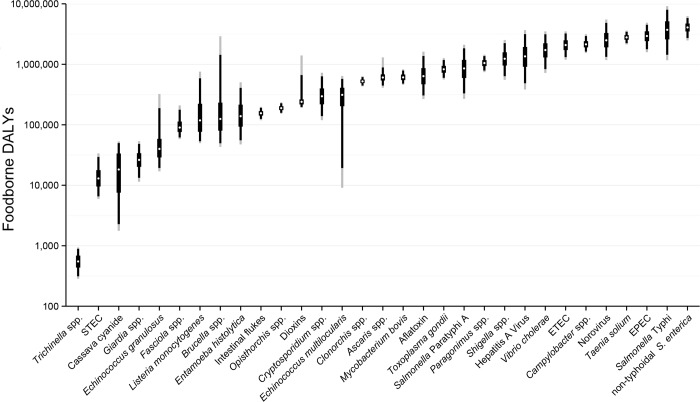
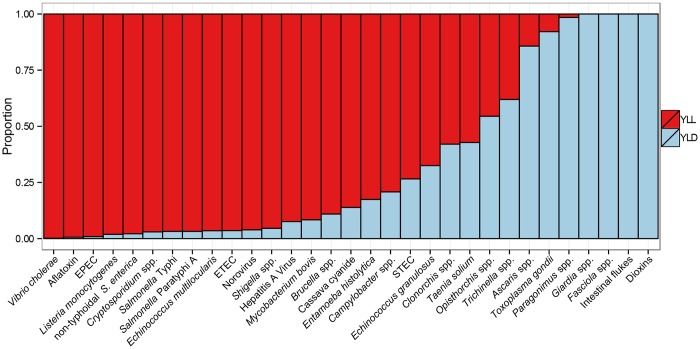
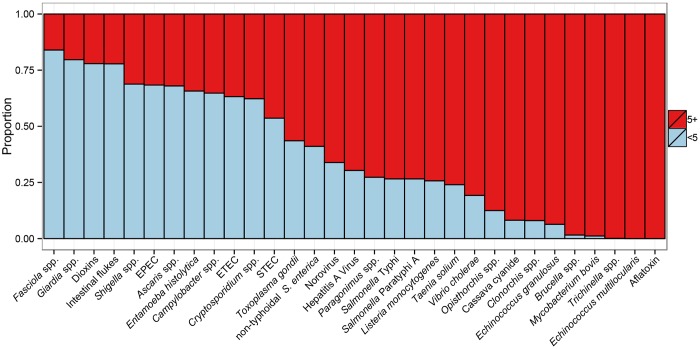
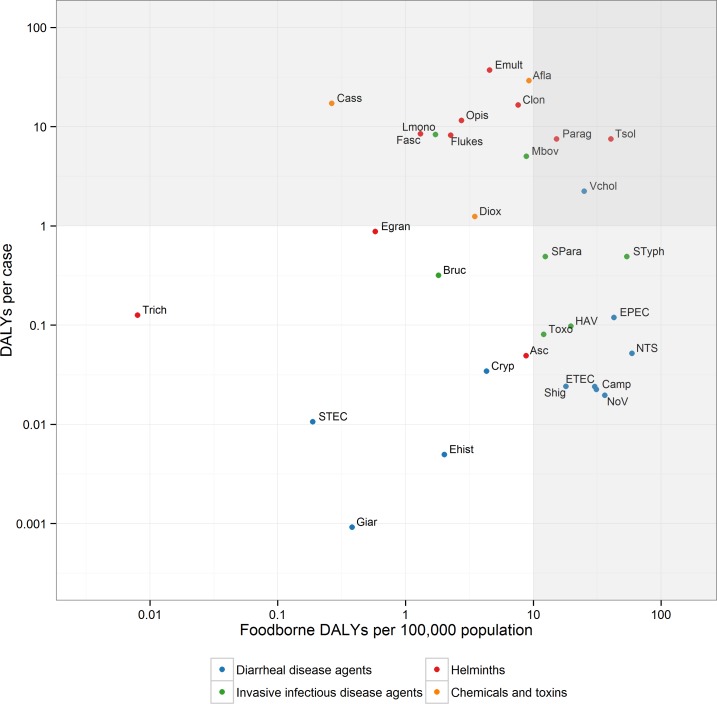
The global burden of foodborne disease caused by 31 hazards in 2010 was 33 million DALYs; children under five years old bore 40% of this burden.
Overview
CoChat Summary
## TL;DR
The WHO Foodborne Disease Burden Epidemiology Reference Group estimated that 31 foodborne hazards caused 600 million illnesses, 420,000 deaths, and 33 million DALYs worldwide in 2010. The burden was concentrated in low-income regions and in children under 5, with diarrheal disease agents—especially norovirus, Campylobacter spp., and non-typhoidal Salmonella enterica—accounting for most illness and death.
## Key findings
- Thirty-one hazards caused an estimated 600 million (95% UI 420–960 million) illnesses, 420,000 (95% UI 310,000–600,000) deaths, and 33 million (95% UI 25–46 million) DALYs in 2010.
- Diarrheal disease agents accounted for 550 million illnesses and 230,000 deaths; the most frequent illness agents were norovirus (120 million cases) and Campylobacter spp. (96 million cases).
- Non-typhoidal Salmonella enterica caused 59,000 deaths and 4.0 million DALYs; other major death causes included Salmonella Typhi (52,000 deaths), Taenia solium (28,000), hepatitis A virus (28,000), and aflatoxin (20,000; 95% UI 8,000–51,000).
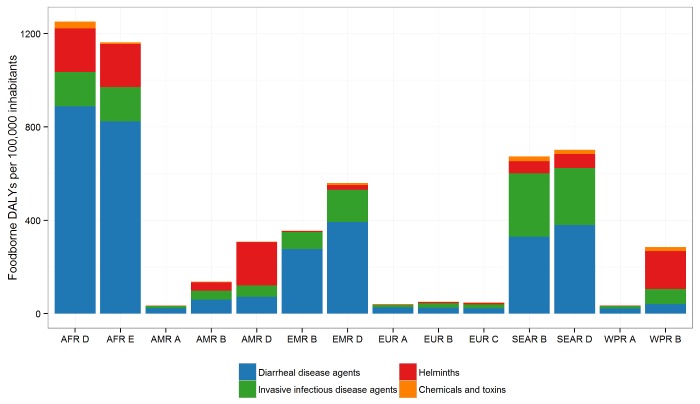
- 40% of the foodborne disease burden was borne by children under 5; the highest burden per 100,000 population was in AFR D (1,300 DALYs) and AFR E (1,200 DALYs), with SEAR B (690), SEAR D (710), and EMR D (570) also high.
## Methods
- The study was a WHO FERG global burden estimation using 31 selected foodborne hazards identified on the basis of high incidence/mortality and data availability.
- It estimated incidence, duration, mortality, YLLs, YLDs, and DALYs for 2010 using systematic reviews, other literature, surveillance data, and expert inputs; estimates were made at country level (194 countries) and then presented at subregional level because of uncertainty.
- For attribution, 12 hazards were judged 100% foodborne; for the other 19 hazards, the authors used structured expert elicitation (Cooke’s Classical Method) to estimate the foodborne fraction, and propagated uncertainty with Monte Carlo simulation in R.
## Limitations
- The paper states its estimates are limited by data gaps and attribution uncertainty; for most hazards, the 95% DALY uncertainty interval ranged from one-fourth to four times the median.
- The authors say the estimates are conservative (underestimates rather than overestimates) because they focused on a subset of more than 100 potential hazards, excluded some hazards or outcomes, and could not always include all relevant disease outcomes.
- They note that country-level estimates were not reliable enough to present, so results are shown at subregion level; this follows from the text and is not presented as a separate explicit limitation.
Model-written summary. Check it against the paper before relying on it.
Integrity signals
Registry
Cites
Statistics
Figures
Verification
Claims the paper makes
5 Valid · 5 Not valid · 16 Not checked · 102 Own results and interpretations
The cited sources that could be checked couldn’t confirm or dispute this claim.
In the paper
“Contaminants in food were not even included as risk factors in previous studies of the global burden of all diseases [3].”
§ World Health Organization Global Estimates and Regional Comparisons of the Burden of Foodborne Disease in 2010 > Introduction
What the sources say
- Could not verifycites [3] Lim SS, Vos T, Flaxman AD, Danaei G, Shibuya K, Adair-Rohani H, et al A comparative risk assessment of burden of disease and injury attributable to 67 risk factors and risk factor clusters in 21 regions, 1990–2010: a systematic analysis for the Global Burden of Disease Study 2010. Lancet. 2012; 380(9859): 2224– 60. 10.1016/S0140-6736(12)61766-8 23245609 PMC4156511 sourceExperimental — accuracy not yet measured
The Discussion describes dietary risk factors such as sodium intake and diets low in fruits or vegetables, but does not address contaminants in food. Searches for food contaminants, foodborne disease, and specific contaminants found no passage establishing whether previous global burden studies included them as risk factors. Page numbers were not available in our copy. (LLM, conf=0.73)
plain- Asserted: passes — The authors put it forward as true.
- Checkable: passes — It can be checked against evidence.
- Load-bearing: passes — The paper’s conclusions depend on it.
- Based: passes — The paper gives a reason why it holds.
- Could not verify
Every source the paper cites for this claim was checked and supports it.
In the paper
“Inclusion of these outcomes would likely considerably increase the burden of enteric infections [43].”
§ World Health Organization Global Estimates and Regional Comparisons of the Burden of Foodborne Disease in 2010 > Introduction > Limitations
What the sources say
- Supportedcites [43] Haagsma JA, Siersema PD, De Wit NJ, Havelaar AH. Disease burden of post-infectious irritable bowel syndrome in The Netherlands. Epidemiol Infect. 2010; 138: 1650– 6. 10.1017/S0950268810000531 20223049 source
The DISCUSSION of our copy states that the annual non-fatal burden of PI-IBS (over 2300 YLD) 'almost doubl[es] the total non-fatal burden of disease for the selected pathogens' and that ignoring PI-IBS in burden-of-disease studies results in an underestimation; it further concludes that including PI-IBS in estimates for the selected bacterial pathogens 'might still underestimate the burden of disease of foodborne disease'. The RESULTS quantify this (Salmonella +86%, Campylobacter +92%, Shigella +151% when PI-IBS is included), and the Abstract repeats the underestimation point, so the hedged claim that including functional bowel disorders would considerably increase the burden of enteric infections is stated by the source. The source's own scope is three bacterial pathogens in The Netherlands (with norovirus PI-IBS discussed as comparable to Campylobacter), which the citing sentence generalises to enteric infections, but the paper itself makes that extrapolation. (LLM, conf=0.85)
hedgedstates a possible cause- Asserted: passes — The authors put it forward as true.
- Checkable: passes — It can be checked against evidence.
- Load-bearing: unclear — It is unclear whether the paper’s conclusions depend on it.
- Based: passes — The paper gives a reason why it holds.
- Supported
A result the paper states — it cites no source for it, so there is none to check. The quote shows it is in the paper.
In the paper
“Foodborne diarrheal disease agents, particularly non-typhoidal Salmonella enterica, caused 230,000 (95% UI 160,000–320,000) deaths”
§ World Health Organization Global Estimates and Regional Comparisons of the Burden of Foodborne Disease in 2010 > Summary Points
plainstates a cause- Asserted: passes — The authors put it forward as true.
- Checkable: passes — It can be checked against evidence.
- Load-bearing: unclear — It is unclear whether the paper’s conclusions depend on it.
- Based: passes — The paper gives a reason why it holds.
A result the paper states — it cites no source for it, so there is none to check. The quote shows it is in the paper.
In the paper
“the burden of Opisthorchis spp. was concentrated in the SEAR B region”
§ World Health Organization Global Estimates and Regional Comparisons of the Burden of Foodborne Disease in 2010 > Summary Points
plainstates an association- Asserted: passes — The authors put it forward as true.
- Checkable: passes — It can be checked against evidence.
- Load-bearing: unclear — It is unclear whether the paper’s conclusions depend on it.
- Based: passes — The paper gives a reason why it holds.
A result the paper states — it cites no source for it, so there is none to check. The quote shows it is in the paper.
In the paper
“The burden of aflatoxin was high in the AFR D, Western Pacific (WPR) B and SEAR B subregions”
§ World Health Organization Global Estimates and Regional Comparisons of the Burden of Foodborne Disease in 2010 > Summary Points
plain- Asserted: passes — The authors put it forward as true.
- Checkable: passes — It can be checked against evidence.
- Load-bearing: unclear — It is unclear whether the paper’s conclusions depend on it.
- Based: passes — The paper gives a reason why it holds.
48 more claims
Create a free account to see all 128 claims and to verify the 5 references still open.
- Probably not a substantial claim. 63
- It may state two separate claims as one. 28
Claims other papers make about this one
Each is checked against this paper’s own text: does it say what the citing paper says it does?
The source backs part of the claim, not all of it — or backs it for a different population, condition or comparison.
In the citing paper
“The FERG found that hazards accounted for around 420,000 deaths in LMIC, imposing a burden of around 33 million DALY lost each year (Havelaar et al., 2015).”
From Burden of foodborne disease in low-income and middle-income countries and opportunities for scaling food safety interventions (2023) · cites this paper as Havelaar et al., 2015
Experimental — accuracy not yet measuredThe source backs part of the claim, not all of it — or backs it for a different population, condition or comparison.
In the citing paper
“Children aged under 5 years were disproportionately affected.This group makes up 9% of the world's population, yet they experience 38% of all FBD, represent 30% of deaths related to FBD, and bear 40% of global DALY lost from FBD (Havelaar et al., 2015).”
From Burden of foodborne disease in low-income and middle-income countries and opportunities for scaling food safety interventions (2023) · cites this paper as Havelaar et al., 2015
Experimental — accuracy not yet measuredThe cited source says what the claim attributes to it.
In the citing paper
“This paper, which represents the work of more than 60 experts over a period of 10 years, can be considered the most definitive and comprehensive guide to the health burden of FBD (Havelaar et al., 2015).”
From Burden of foodborne disease in low-income and middle-income countries and opportunities for scaling food safety interventions (2023) · cites this paper as Havelaar et al., 2015
The cited source says what the claim attributes to it.
In the citing paper
“Although LLMICs bear a high burden of foodborne disease [2]”
From Food Safety Knowledge, Attitude, and Practices (KAP) of Urban Consumers in Low-Income and Lower-Middle-Income Countries (LLMICs): A Scoping Review (2026) · cites this paper as [2]
Citations
Cites
R: A Language and Environment for Statistical Computing
R Core Team (2025) · doi:10.32614/r.manuals · Cited by 352,181
Lim, S. S., Vos, T., Flaxman, A. D., Danaei, G., Shibuya, K., Adair-Rohani, H., AlMazroa, M. A., Amann, M., Anderson, H. R., Andrews, K. G., et al. (2012) · The Lancet · doi:10.1016/s0140-6736(12)61766-8 · Cited by 11,805 · cited 1×
“Contaminants in food were not even included as risk factors in previous studies of the global burden of all diseases [3].”
BackgroundMurray, C. J. L., Vos, T., Lozano, R., Naghavi, M., Flaxman, A. D., Michaud, C., Ezzati, M., Shibuya, K., Salomon, J. A., Abdalla, S., et al. (2012) · The Lancet · doi:10.1016/s0140-6736(12)61689-4 · Cited by 8,888
Foodborne illness acquired in the United States—Major pathogens
Scallan, E., Hoekstra, R. M., Angulo, F. J., Tauxe, R. V., Widdowson, M.-A., Roy, S. L., Jones, J. L., & Griffin, P. M. (2011) · Emerging Infectious Diseases · doi:10.3201/eid1701.p11101 · Cited by 7,657 · cited 1×
“Several high-income countries have published national estimates of FBD. Estimates of food-related illnesses and deaths in the USA were reported in the late 1990s [28] and updated to cover the period 2000 – 2008 [29,30].”
BackgroundSelf-citationFood-Related Illness and Death in the United States
Mead, P. S., Slutsker, L., Dietz, V., McCaig, L. F., Bresee, J. S., Shapiro, C., Griffin, P. M., & Tauxe, R. V. (1999) · Emerging Infectious Diseases · doi:10.3201/eid0505.990502 · Cited by 7,235
Global mortality, disability, and the contribution of risk factors: Global Burden of Disease Study
Murray, C. J., & Lopez, A. D. (1997) · The Lancet · doi:10.1016/s0140-6736(96)07495-8 · Cited by 4,492 · cited 1×
“The DALY measure combines the years of life lost (YLL) due to premature death and the years lived with disability (YLD) from a disease or condition, for varying degrees of severity, making time the common metric for death and disability [20].”
BackgroundSelected major risk factors and global and regional burden of disease
Ezzati, M., Lopez, A. D., Rodgers, A., Vander Hoorn, S., & Murray, C. J. (2002) · The Lancet · doi:10.1016/s0140-6736(02)11403-6 · Cited by 3,594
Kirk, M. D., Pires, S. M., Black, R. E., Caipo, M., Crump, J. A., Devleesschauwer, B., Döpfer, D., Fazil, A., Fischer-Walker, C. L., Hald, T., et al. (2015) · PLoS Medicine · doi:10.1371/journal.pmed.1001921 · Cited by 1,625 · cited 2×
“Detailed descriptions of methods to estimate incidence and mortality of all 31 hazards can be found in papers in the collection on enteric diseases [11], parasitic diseases [18], and chemicals and toxins [19].”
BackgroundMethodSelf-citationSalomon, J. A., Vos, T., Hogan, D. R., Gagnon, M., Naghavi, M., Mokdad, A., Begum, N., Shah, R., Karyana, M., Kosen, S., et al. (2012) · The Lancet · doi:10.1016/s0140-6736(12)61680-8 · Cited by 1,322
Global burden of aflatoxin-induced hepatocellular carcinoma: A risk assessment
Liu, Y., & Wu, F. (2010) · Environmental Health Perspectives · doi:10.1289/ehp.0901388 · Cited by 1,224
Research works printed but not linked: 2
- Gibb H, Devleesschauwer B, Bolger PM, Bellinger D, Wu F, Ezendam J, et al WHO estimates of the global and regional burden from chemicals and toxins in food, 2010. F1000Research. In Press. PMC4755404 26918123
- Devleesschauwer B, Haagsma JA, Angulo FJ, Bellinger D, Cole D, Döpfer D, et al Methodological Framework for World Health Organization Estimates of the Global Burden of Foodborne Disease. PLoS ONE 10: e0142498 10.1371/journal.pone.0142498 PMC4668830 26633883 · DOI · Paper page
Cited by
Items 2,001–2,051 of 2,051
Park, D. W., Yun, H. B., Jo, Y. G., Park, J. H., Kim, H., Lee, H. H., Cho, S., Lee, M. G., Jeong, H. J., Kang, I. S., et al. (2026) · Foodborne Pathogens and Disease · doi:10.1177/15353141261469385
Proposal to validate Listeria swaminathanii sp. nov. and reassign the type strain to UTK S2-0008
Carlin, C. R., Hudson, L. K., Chaggar, H. K., et al. (2026) · Microbiology Spectrum · doi:10.1128/spectrum.04139-25
Lâm, S., Bett, B., Moodley, A., Mutua, F. K., Thomas, L. F., & Grace, D. (2026) · Science in One Health · doi:10.1016/j.soh.2026.100166
“Africa experiences the world's greatest burden of zoonotic diseases [1], bacterial antimicrobial resistance [2], and foodborne illnesses [3], many of which arise where human activity disrupts animal populations and shared ecosystems.”
Wu, R., Kaur, S., Payne, M., et al. (2026) · Antimicrobial Agents and Chemotherapy · doi:10.1128/aac.00310-26
“It is the leading bacterial cause of gastroenteritis in the world, impacting 96 million people annually by the estimation of the World Health Organization (WHO) (5–7).”
Gichuyia, C. M., Thomas, L. F., Onono, J. O., Bor, N., Odinga, C. O., & Fèvre, E. M. (2026) · Frontiers in Sustainable Food Systems · doi:10.3389/fsufs.2026.1851633
Gomes, S. R. M., de Souza, H. C. A., Portes, A. B., Conte‐Júnior, C. A., & Panzenhagen, P. (2026) · Frontiers in Nutrition · doi:10.3389/fnut.2026.1897467
Market-source pathogens in traditional food markets, 2000–25: a systematic review and meta-analysis
Tong, H., Afzal, S., Mukhtar, M. U., Sulaimon, N., Shanawany, E. E. E., Bold, B., Bayasgalan, C., Zhang, B., Liu, L., Zheng, J., et al. (2026) · The Lancet Global Health · doi:10.1016/j.langlo.2026.104016 · Cited by 1
Ndraha, N., Aditya, S., Amaliyah, S., Damayanti, E., & Frediansyah, A. (2026) · Microbial Risk Analysis · doi:10.1016/j.mran.2026.100385
Balah, A., Ibrahim, M.-T., Shehu, A. I., Yakubu, M., Abubakar, S., & Abdullahi, U. (2026) · European Journal of Microbiology and Infectious Diseases. · doi:10.5455/ejmid.20260411093603
Foodborne disease burden in Sweden with a One Health perspective
Halawa, I., Omazic, A., & Guo, J. (2026) · iScience · doi:10.1016/j.isci.2026.117023
Genome-wide definition of the CosR regulon and DNA-binding properties in Campylobacter jejuniPreprint
Chiti, E., Odorici, T., Noszka, M., Muraszko, J., Zannoni, A., Zawilak-Pawlik, A. M., Vannini, A., & Roncarati, D. (2026) · bioRxiv (Cold Spring Harbor Laboratory) · doi:10.64898/2026.08.04.742711 · Cited by 1
Almrwani, A. A., Al-Johny, B. O., Shaibah, A. A., Qumusani, A., & Al-Maaqar, S. M. (2026) · Polish Journal of Microbiology · doi:10.33073/pjm-2026-013
“In line with current clinical and microbiological guidance, antimicrobial management of multidru-gresistant Salmonella and Shigella should be individualized based on disease severity, patient risk factors, and local susceptibility patterns (Havelaar et al. 2015; Tilahun et al. 2025).”
Plant‐Derived Nanoparticles (PDNPs) in Food Safety and Preservation: Pros and Cons
Ahmed, M. S., Hasan, M. M., & Yeasmin, M. Z. (2026) · eFood · doi:10.1002/efd2.70202 · Cited by 1
Norvivor, F. A., Peprah, E. K., Bosompem, M. B., Totime, S., & Semanu, B. A. (2026) · Frontiers in Public Health · doi:10.3389/fpubh.2026.1907787 · Cited by 1
Wu, Y., Xu, Q., Qin, Z.-H., Wu, X., Hu, Z., Yang, W., Ren, P.-Y., Tian, Y.-Y., Lin, Z., & Xian, Y. (2026) · Acta Pharmacologica Sinica · doi:10.1038/s41401-026-01896-5 · Cited by 1
Genet, M., Genet, M., Malede, A., Azanaw, J., Wubie, Z., Yirdaw, G., Mengistu, A., Dagnew, G., Yohannes, L., & Asefa, D. (2026) · Environmental Health Insights · doi:10.1177/11786302261479216
“10,11 Sub-Saharan Africa bears a considerable share of this burden, with unsafe food and poor hygiene practices contributing to recurrent outbreaks of diarrheal diseases and cholera.”
de Oliveira, T. B., Cortez, D. G., Lima, F. P., et al. (2026) · RECIMA21 - Revista Científica Multidisciplinar · doi:10.47820/recima21.v7i8.8893
Virulence and Antimicrobial Resistance in Campylobacter jejuni and Campylobacter coli
Kang, M., Lee, J., & Song, H. (2026) · Antibiotics · doi:10.3390/antibiotics15090830
Antonopoulos, A., Elson, L., Krücken, J., Thielecke, M., Mutebi, F., Yapi, R. B., Fillinger, U., Feldmeier, H., Nyangacha, R. M., Swar, N.-R. K., et al. (2026) · BMC Global and Public Health · doi:10.1186/s44263-026-00318-2
“…parasitic diseases with substantial morbidity, DALYs have been used extensively to estimate disease burden for many infections, including soil-transmitted helminths (STHs) [33], schistosomiasis [34], echinococcosis [35], fascioliasis [36], toxocariasis [37], and ectoparasites such as scabies [38].”
Alfaifi, S., Alotaibi, N., Alhumaidan, O. A., Alsufyani, A. T., Otto, S. J. G., & Mukhtar, L. E. (2026) · Research Square · doi:10.21203/rs.3.rs-10508679/v1
Tariq, M. R., Liang, Y., Wang, H., Lin, H., Zheng, C., Tang, X., Liu, Y., Qin, J. G., Lu, G., & Wang, F. (2026) · Foods · doi:10.3390/foods15173107
Reyes-Blas, M., Torres-Rivera, K., Caquías-López, D., Batista-Cruz, P., Passalacqua-Montes, I., & Bailón-Ruiz, S. J. (2026) · Foundations · doi:10.3390/foundations6030033
Zhao, W., Wang, Y., Li, W., et al. (2026) · Research Square · doi:10.21203/rs.3.rs-10519636/v1
Huang, Y., Chen, W., Mao, W., et al. (2026) · Sensors and Actuators B Chemical · doi:10.1016/j.snb.2026.140813
Portable centrifugal microfluidics system for on-site detection of foodborne pathogens
Kim, S. J., Jeong, Y., Han, C. S., Han, S., Nam, H. C., Lee, J., Kang, T., Jung, J., Lee, S.-W., Choi, B. G., et al. (2026) · Talanta · doi:10.1016/j.talanta.2026.130589
Azeem, A., Khan, M. K., Mahmood, M. S., Abbas, R. Z., Ali, S., Ashraf, M. U., Mughal, M. A. S., Abbas, Z., Afresham, S., Latif, M., et al. (2026) · Microbial Risk Analysis · doi:10.1016/j.mran.2026.100392 · Cited by 1
Doğan, N. (2026) · IntechOpen eBooks · doi:10.5772/intechopen.1016359
Zhang, Q., He, J., Zhu, Z., et al. (2026) · Frontiers in Public Health · doi:10.3389/fpubh.2026.1896637
“A 2015 WHO global assessment of 31 food-borne diseases revealed that the global burden of brucellosis reached as high as 124,884 Disability-adjusted Life Years ( DALYs ) (6).”
Li, X., Li, Y., Sun, S., et al. (2026) · Analytical Chemistry · doi:10.1021/acs.analchem.6c04448
Jadhav, H. B., Das, M., Das, A., Altaf, A., Alaskar, K. M., & Mugabi, R. (2026) · Food Science & Nutrition · doi:10.1002/fsn3.72377
“Food safety may be affected by shifting weather patterns that affect crop growth, pest prevalence, and livestock disease transmission (Havelaar et al. 2015).”
Chakroborty, A., & Shamsi, S. (2026) · Journal of Nutrition · doi:10.1016/j.tjnut.2026.101835
Huang, S., Lu, A., Yusha, X., Tang, Y., & Li, T. (2026) · Journal of Food Protection · doi:10.1016/j.jfp.2026.100928
Predicting Food Safety Problems Among Catering Service Operators Using Longitudinal Regulatory Data
Wang, W.-H., Li, Y.-Q., Guo, Y., Zhou, Z.-W., & Peng, S.-J. (2026) · Journal of Food Protection · doi:10.1016/j.jfp.2026.100929
Dantroliya, S., Chavan, M., Mittra, D., Pandit, R., Tomley, F. M., Blake, D. P., Koringa, P., Joshi, C. K., Shekh, S., Joshi, C., et al. (2026) · Frontiers in Antibiotics · doi:10.3389/frabi.2026.1875259
Agriculture-Driven Emergence and Spread of Bacterial Zoonotic Diseases
Siengsanan‐Lamont, J., Zubaidah, Y., Xuan, S. D., & Utomo, B. (2026) · Journal of Public Health and Preventive Medicine · doi:10.64904/20260907
“The WHO Foodborne Disease Burden Epidemiology Reference Group estimated that 600 million infections and 33 million disability-adjusted life years (DALYs) are caused by foodborne diseases each year, resulting in 420,000 deaths, including 125,000 children under five years of age [22] .”
Dunga, K. E., Aseibai, E. R., Etim, N. G., Ogwu, M. C., Promise, V. I., Alum, E. U., & Izah, S. C. (2026) · Frontiers in Public Health · doi:10.3389/fpubh.2026.1918334
Zoma, B. S., Evariste, B., Somda, N. S., Gampene, M. T., Soma, D., Diarra, F. B. J., Sore, S., Nikiema, M. E. M., Sana, A., Belem, S., et al. (2026) · Microbiology Research · doi:10.3390/microbiolres17100190
Riwayati, I., Hartati, I., & Sam, T. H. (2026) · Advances in computational intelligence and robotics book series · doi:10.4018/979-8-2600-1975-7.ch009
Asefa, W., Tassew, H., Demlie, T. B., et al. (2026) · Veterinary Medicine and Science · doi:10.1002/vms3.71246
“Ethiopia is located in sub-Saharan Africa, a region with a high burden of foodborne diseases, with E. coli being one of the leading causes of foodborne illnesses, and disability adjusted life years (Havelaar et al. 2015 ).”
Douas, L. (2026) · International Journal of Innovative Technologies in Social Science · doi:10.31435/ijitss.3(51).2026.6572
Molecular recognition elements for food safety biosensing: Advances, challenges, and perspectives
Yang, H., Wang, X., Wang, M., Zhang, L., Wu, S., Ding, M., Wen, H., Wang, Y., Yi, X., Chen, J., et al. (2026) · Trends in Food Science & Technology · doi:10.1016/j.tifs.2026.106125
Lee, G., & Kim, S. (2026) · International Journal of Environmental Health Research · doi:10.1080/09603123.2026.2739935
A Look at E. coli Contamination in Homemade Cheeses across Kabul's Districts
Ahmadi, S. A. (2026) · Journal of Natural Science Review · doi:10.62810/jnsr.v4i3.432
“Contaminated foods of animal origin, particularly milk and dairy products, are recognized as important vehicles for the transmission of pathogenic microorganisms to humans (De Buyser et al., 2001; Havelaar et al., 2015).”
Losséni, D. A. O., Tankoano, A., Drabo, S., Sanou, D. O., Ouattara, L., & Sawadogo‐Lingani, H. (2026) · Sciences Naturelles et Appliquées · doi:10.64707/revstsna.v45i01.2303
Поняття та види адміністративних процедур у сфері виробництва, обігу та контролю харчових продуктів
Pieshkov, V. V. (2026) · Public Law · doi:10.32782/2306-9082/2026-64-1
Cao, L., Xiao, Y., Gong, Y., Lan, M., Zhang, Y., Liu, J., & Li, B. (2026) · Analytica Chimica Acta · doi:10.1016/j.aca.2026.346362
Borges, M., Pista, Â., & Silveira, L. (2026) · Microorganisms · doi:10.3390/microorganisms14102231
“Food-and waterborne diseases (FWDs) remain a significant global public health burden and an obstacle to socio-economic development [6,7].”
Montilla, M., Bastidas, J. A. O., Fajardo, H. A. R., López, A. M. M., Tique, S., Cruz, D. P. R., Vega, E. C., Pavas-Escobar, N., Vargas, L. N. O., Farfán, J. P., et al. (2026) · PLOS Global Public Health · doi:10.1371/journal.pgph.0006492
Wang, P., Khan, M. U., Zhen, L., Liu, H., Li, M., Zhou, H., & Chen, Z. (2026) · Critical Reviews in Food Science and Nutrition · doi:10.1080/10408398.2026.2735669
İnce, S. S., Ünal, A., & Akan, M. (2026) · Poultry Science · doi:10.1016/j.psj.2026.107930
Metadata
- Authors
- Havelaar, A. H., Kirk, M. D., Torgerson, P. R., Gibb, H. J., Hald, T., Lake, R. J., Praet, N., Bellinger, D. C., de Silva, N. R., Gargouri, N., Speybroeck, N., Cawthorne, A., Mathers, C., Stein, C., Angulo, F. J., Devleesschauwer, B., & on behalf of World Health Organization Foodborne Disease Burden Epidemiology Reference Group
- Affiliations
- Utrecht University (NL)
- Australian National University (AU)
- University of Zurich (CH)
- Technical University of Denmark (DK)
- New Zealand Institute for Public Health and Forensic Science (NZ)
- Instituut voor Tropische Geneeskunde (BE)
- Boston Children's Hospital (US)
- UCLouvain (BE)
- World Health Organization (CH)
- Centers for Disease Control and Prevention (US)
- Ghent University (BE)
- Corresponding author
- Havelaar, Arie H.
- ORCID
- Venue
- PLoS Medicine
- Publisher
- Public Library of Science (PLoS)
- Published
- 2015-12-03
- Volume
- 12
- Issue
- 12
- Pages
- e1001923
- ISSN
- 1549-1277 (ISSN-L)
- 1549-1676
- PMC
- PMC4668832
- OpenAlex
- W2186140012
- Cited by
- 2,067
- References
- 40
- Citations by year
- 2026: 220 · 2025: 251 · 2024: 235 · 2023: 267 · 2022: 217 · 2021: 219 · 2020: 206 · 2019: 153 · 2018: 149 · 2017: 90 · 2016: 51 · 2015: 3
- FWCI
- 130.65
- Type
- journal article
- Language
- en
- Open access
- gold
- doi.org
- Licence
- Locations
- PLoS Medicine (publishedVersion, cc-by)
- Europe PMC (PubMed Central) (publishedVersion, cc-by)
- PubMed Central (publishedVersion, cc-by)
- PubMed (publishedVersion)
- EUR Research Repository (Erasmus University Rotterdam) (publishedVersion, cc-by)
- Zurich Open Repository and Archive (University of Zurich) (acceptedVersion, cc-by)
- ResearchOnline (Glasgow Caledonian University) (acceptedVersion, cc-by)
- Ghent University Academic Bibliography (Ghent University) (submittedVersion, other-oa)
- EUR Research Repository (Erasmus University Rotterdam) (submittedVersion, other-oa)
- CGSPace A Repository of Agricultural Research Outputs (Consultative Group for International Agricultural Research) (submittedVersion, other-oa)
- Digital Access to Libraries (submittedVersion, other-oa)
- DOAJ (DOAJ: Directory of Open Access Journals) (submittedVersion, cc-by-sa)
- Utrecht University Repository (Utrecht University) (submittedVersion, other-oa)
- ANU Open Research (Australian National University) (submittedVersion)
- Technical University of Denmark, DTU Orbit (Technical University of Denmark, DTU) (submittedVersion, cc-by)
- Bristol Research (University of Bristol) (submittedVersion, cc-by)
- Rivm (National Institute for Public Health and the Environment) (submittedVersion)
- Zurich Open Repository and Archive (University of Zurich) (submittedVersion, cc-by)
- Zurich Open Repository and Archive (University of Zurich)
- Funders
- World Health Organization
- University of Pittsburgh
- Institute for Health Metrics and Evaluation
- Topics
- Life Sciences › Agricultural and Biological Sciences › Food Science › Salmonella and Campylobacter epidemiology
- Life Sciences › Agricultural and Biological Sciences › Food Science › Food Safety and Hygiene
- Health Sciences › Medicine › Infectious Diseases › Viral gastroenteritis research and epidemiology
- Keywords
- food poisoning, disease burden, disability-adjusted life years, food safety hazards, diarrheal disease, norovirus, Campylobacter, non-typhoidal Salmonella, Salmonella typhi, Taenia solium, hepatitis A virus, parasitic helminths, child mortality, regional comparison, food safety policy
- MeSH terms
- Foodborne Diseases, Humans, Global Health, World Health Organization, Incidence, Prevalence, Cost of Illness, Quality-Adjusted Life Years
About these checks
Registry, retraction, Cites and statistics results are computed, not judged, with one exception: a printed reference that no index lists is read once by a model before it counts as a citation error. Claims are extracted by a model and kept only when their quote appears verbatim in the text; each cited source is then checked, with a model’s help, for whether it says what the claim relies on. Those verdicts can be wrong — read the claim’s quote and the cited source before relying on one.
The claim verdicts this report counts are experimental: their accuracy is not yet measured.
A language model drew the claims from the paper on 2026-10-10, under version 3 of the claim definition (model deepseek-v4.1-flash, prompt extract-v3).
A second model labelled each claim on 2026-10-10 (model jev-1.13-20260917, definition revision gold-guideline-v0.2).
Cited sources are checked with a language model’s help (gpt-6-sol and qwen3.8-omni-flash).
Statistics and arithmetic are recomputed, not judged.
Confidence bands are shown only for fields calibrated on our annotated test set. None is calibrated yet, so no band is shown.
What counts as a claim ›How we measure confidence ›How we check this ›
Are you an author, or do you see a problem with this page? Request a review
Data sources
Bibliographic data: Semantic Scholar, OpenAlex, Crossref.
Contains information from the Semantic Scholar Academic Graph Datasets, made available under the ODC Attribution License (ODC-BY 1.0).
Semantic Scholar’s data is described in: Kinney, R., et al. (2023). The Semantic Scholar Open Data Platform. arXiv:2301.10140.
