

World Health Organization Global Estimates and Regional Comparisons of the Burden of Foodborne Disease in 2010
Open accessThe DOI matches its Crossref record; 38 of the 40 references it cites were found in a registry or an index; 6 of the 25 sources its claims cite were checked for support.
Abstract
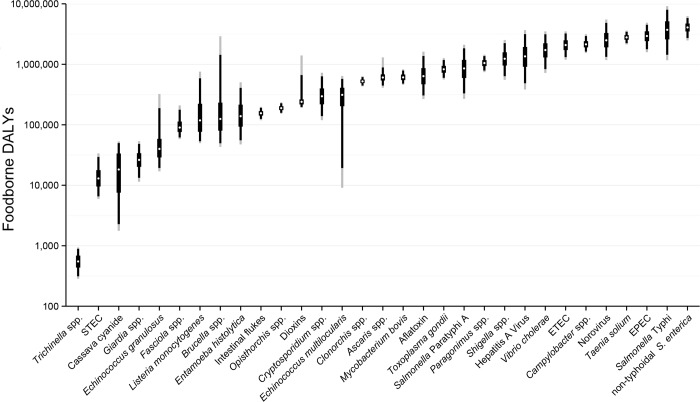
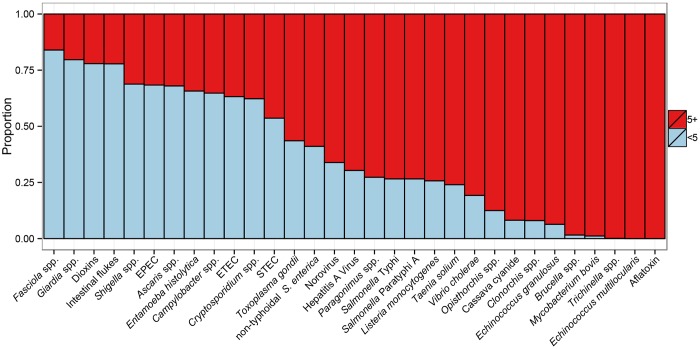
The global burden of foodborne disease caused by 31 hazards in 2010 was 33 million DALYs; children under five years old bore 40% of this burden.
Overview
CoChat Summary
## TL;DR
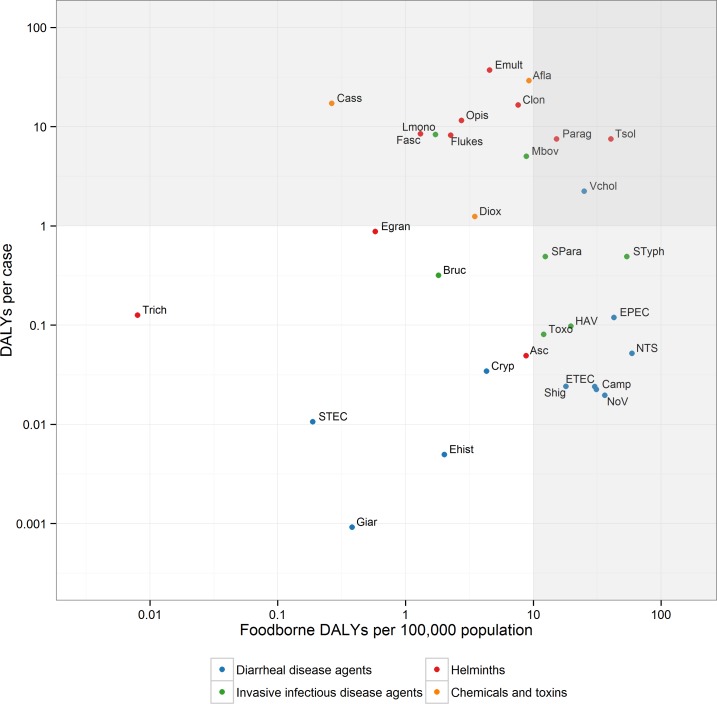
The WHO Foodborne Disease Burden Epidemiology Reference Group estimated that 31 foodborne hazards caused 600 million illnesses, 420,000 deaths, and 33 million DALYs worldwide in 2010. The burden was concentrated in low-income regions and in children under 5, with diarrheal disease agents—especially norovirus, Campylobacter spp., and non-typhoidal Salmonella enterica—accounting for most illness and death.
## Key findings
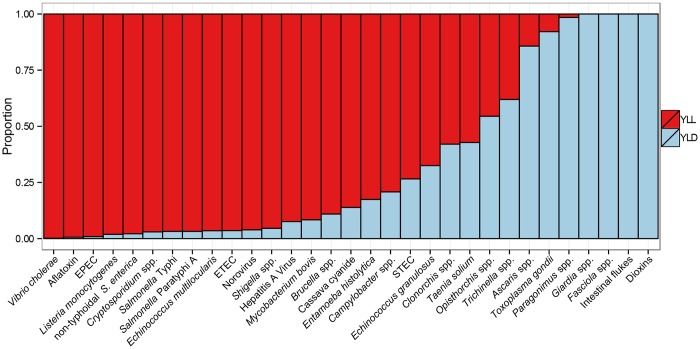
- Thirty-one hazards caused an estimated 600 million (95% UI 420–960 million) illnesses, 420,000 (95% UI 310,000–600,000) deaths, and 33 million (95% UI 25–46 million) DALYs in 2010.
- Diarrheal disease agents accounted for 550 million illnesses and 230,000 deaths; the most frequent illness agents were norovirus (120 million cases) and Campylobacter spp. (96 million cases).
- Non-typhoidal Salmonella enterica caused 59,000 deaths and 4.0 million DALYs; other major death causes included Salmonella Typhi (52,000 deaths), Taenia solium (28,000), hepatitis A virus (28,000), and aflatoxin (20,000; 95% UI 8,000–51,000).
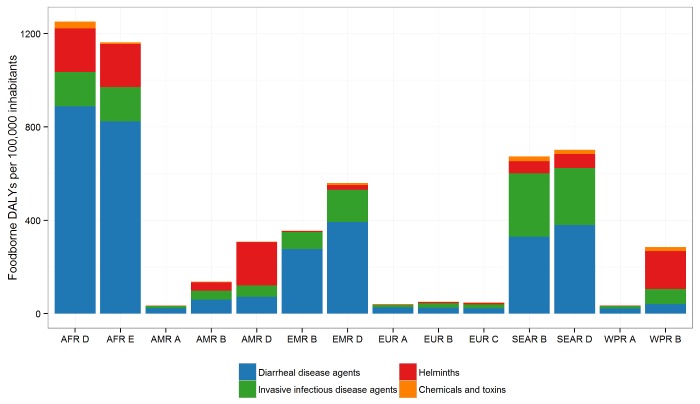
- 40% of the foodborne disease burden was borne by children under 5; the highest burden per 100,000 population was in AFR D (1,300 DALYs) and AFR E (1,200 DALYs), with SEAR B (690), SEAR D (710), and EMR D (570) also high.
## Methods
- The study was a WHO FERG global burden estimation using 31 selected foodborne hazards identified on the basis of high incidence/mortality and data availability.
- It estimated incidence, duration, mortality, YLLs, YLDs, and DALYs for 2010 using systematic reviews, other literature, surveillance data, and expert inputs; estimates were made at country level (194 countries) and then presented at subregional level because of uncertainty.
- For attribution, 12 hazards were judged 100% foodborne; for the other 19 hazards, the authors used structured expert elicitation (Cooke’s Classical Method) to estimate the foodborne fraction, and propagated uncertainty with Monte Carlo simulation in R.
## Limitations
- The paper states its estimates are limited by data gaps and attribution uncertainty; for most hazards, the 95% DALY uncertainty interval ranged from one-fourth to four times the median.
- The authors say the estimates are conservative (underestimates rather than overestimates) because they focused on a subset of more than 100 potential hazards, excluded some hazards or outcomes, and could not always include all relevant disease outcomes.
- They note that country-level estimates were not reliable enough to present, so results are shown at subregion level; this follows from the text and is not presented as a separate explicit limitation.
Model-written summary. Check it against the paper before relying on it.
Integrity signals
Registry
Cites
Statistics
Figures
Verification
Claims the paper makes
5 Valid · 5 Not valid · 16 Not checked · 102 Own results and interpretations
The cited sources that could be checked couldn’t confirm or dispute this claim.
In the paper
“Contaminants in food were not even included as risk factors in previous studies of the global burden of all diseases [3].”
§ World Health Organization Global Estimates and Regional Comparisons of the Burden of Foodborne Disease in 2010 > Introduction
What the sources say
- Could not verifycites [3] Lim SS, Vos T, Flaxman AD, Danaei G, Shibuya K, Adair-Rohani H, et al A comparative risk assessment of burden of disease and injury attributable to 67 risk factors and risk factor clusters in 21 regions, 1990–2010: a systematic analysis for the Global Burden of Disease Study 2010. Lancet. 2012; 380(9859): 2224– 60. 10.1016/S0140-6736(12)61766-8 23245609 PMC4156511 sourceExperimental — accuracy not yet measured
The Discussion describes dietary risk factors such as sodium intake and diets low in fruits or vegetables, but does not address contaminants in food. Searches for food contaminants, foodborne disease, and specific contaminants found no passage establishing whether previous global burden studies included them as risk factors. Page numbers were not available in our copy. (LLM, conf=0.73)
plain- Asserted: passes — The authors put it forward as true.
- Checkable: passes — It can be checked against evidence.
- Load-bearing: passes — The paper’s conclusions depend on it.
- Based: passes — The paper gives a reason why it holds.
- Could not verify
Every source the paper cites for this claim was checked and supports it.
In the paper
“Inclusion of these outcomes would likely considerably increase the burden of enteric infections [43].”
§ World Health Organization Global Estimates and Regional Comparisons of the Burden of Foodborne Disease in 2010 > Introduction > Limitations
What the sources say
- Supportedcites [43] Haagsma JA, Siersema PD, De Wit NJ, Havelaar AH. Disease burden of post-infectious irritable bowel syndrome in The Netherlands. Epidemiol Infect. 2010; 138: 1650– 6. 10.1017/S0950268810000531 20223049 source
The DISCUSSION of our copy states that the annual non-fatal burden of PI-IBS (over 2300 YLD) 'almost doubl[es] the total non-fatal burden of disease for the selected pathogens' and that ignoring PI-IBS in burden-of-disease studies results in an underestimation; it further concludes that including PI-IBS in estimates for the selected bacterial pathogens 'might still underestimate the burden of disease of foodborne disease'. The RESULTS quantify this (Salmonella +86%, Campylobacter +92%, Shigella +151% when PI-IBS is included), and the Abstract repeats the underestimation point, so the hedged claim that including functional bowel disorders would considerably increase the burden of enteric infections is stated by the source. The source's own scope is three bacterial pathogens in The Netherlands (with norovirus PI-IBS discussed as comparable to Campylobacter), which the citing sentence generalises to enteric infections, but the paper itself makes that extrapolation. (LLM, conf=0.85)
hedgedstates a possible cause- Asserted: passes — The authors put it forward as true.
- Checkable: passes — It can be checked against evidence.
- Load-bearing: unclear — It is unclear whether the paper’s conclusions depend on it.
- Based: passes — The paper gives a reason why it holds.
- Supported
A result the paper states — it cites no source for it, so there is none to check. The quote shows it is in the paper.
In the paper
“Foodborne diarrheal disease agents, particularly non-typhoidal Salmonella enterica, caused 230,000 (95% UI 160,000–320,000) deaths”
§ World Health Organization Global Estimates and Regional Comparisons of the Burden of Foodborne Disease in 2010 > Summary Points
plainstates a cause- Asserted: passes — The authors put it forward as true.
- Checkable: passes — It can be checked against evidence.
- Load-bearing: unclear — It is unclear whether the paper’s conclusions depend on it.
- Based: passes — The paper gives a reason why it holds.
A result the paper states — it cites no source for it, so there is none to check. The quote shows it is in the paper.
In the paper
“the burden of Opisthorchis spp. was concentrated in the SEAR B region”
§ World Health Organization Global Estimates and Regional Comparisons of the Burden of Foodborne Disease in 2010 > Summary Points
plainstates an association- Asserted: passes — The authors put it forward as true.
- Checkable: passes — It can be checked against evidence.
- Load-bearing: unclear — It is unclear whether the paper’s conclusions depend on it.
- Based: passes — The paper gives a reason why it holds.
A result the paper states — it cites no source for it, so there is none to check. The quote shows it is in the paper.
In the paper
“The burden of aflatoxin was high in the AFR D, Western Pacific (WPR) B and SEAR B subregions”
§ World Health Organization Global Estimates and Regional Comparisons of the Burden of Foodborne Disease in 2010 > Summary Points
plain- Asserted: passes — The authors put it forward as true.
- Checkable: passes — It can be checked against evidence.
- Load-bearing: unclear — It is unclear whether the paper’s conclusions depend on it.
- Based: passes — The paper gives a reason why it holds.
48 more claims
Create a free account to see all 128 claims and to verify the 5 references still open.
- Probably not a substantial claim. 63
- It may state two separate claims as one. 28
Claims other papers make about this one
Each is checked against this paper’s own text: does it say what the citing paper says it does?
The source backs part of the claim, not all of it — or backs it for a different population, condition or comparison.
In the citing paper
“The FERG found that hazards accounted for around 420,000 deaths in LMIC, imposing a burden of around 33 million DALY lost each year (Havelaar et al., 2015).”
From Burden of foodborne disease in low-income and middle-income countries and opportunities for scaling food safety interventions (2023) · cites this paper as Havelaar et al., 2015
Experimental — accuracy not yet measuredThe source backs part of the claim, not all of it — or backs it for a different population, condition or comparison.
In the citing paper
“Children aged under 5 years were disproportionately affected.This group makes up 9% of the world's population, yet they experience 38% of all FBD, represent 30% of deaths related to FBD, and bear 40% of global DALY lost from FBD (Havelaar et al., 2015).”
From Burden of foodborne disease in low-income and middle-income countries and opportunities for scaling food safety interventions (2023) · cites this paper as Havelaar et al., 2015
Experimental — accuracy not yet measuredThe cited source says what the claim attributes to it.
In the citing paper
“This paper, which represents the work of more than 60 experts over a period of 10 years, can be considered the most definitive and comprehensive guide to the health burden of FBD (Havelaar et al., 2015).”
From Burden of foodborne disease in low-income and middle-income countries and opportunities for scaling food safety interventions (2023) · cites this paper as Havelaar et al., 2015
The cited source says what the claim attributes to it.
In the citing paper
“Although LLMICs bear a high burden of foodborne disease [2]”
From Food Safety Knowledge, Attitude, and Practices (KAP) of Urban Consumers in Low-Income and Lower-Middle-Income Countries (LLMICs): A Scoping Review (2026) · cites this paper as [2]
Citations
Cites
R: A Language and Environment for Statistical Computing
R Core Team (2025) · doi:10.32614/r.manuals · Cited by 352,181
Lim, S. S., Vos, T., Flaxman, A. D., Danaei, G., Shibuya, K., Adair-Rohani, H., AlMazroa, M. A., Amann, M., Anderson, H. R., Andrews, K. G., et al. (2012) · The Lancet · doi:10.1016/s0140-6736(12)61766-8 · Cited by 11,805 · cited 1×
“Contaminants in food were not even included as risk factors in previous studies of the global burden of all diseases [3].”
BackgroundMurray, C. J. L., Vos, T., Lozano, R., Naghavi, M., Flaxman, A. D., Michaud, C., Ezzati, M., Shibuya, K., Salomon, J. A., Abdalla, S., et al. (2012) · The Lancet · doi:10.1016/s0140-6736(12)61689-4 · Cited by 8,888
Foodborne illness acquired in the United States—Major pathogens
Scallan, E., Hoekstra, R. M., Angulo, F. J., Tauxe, R. V., Widdowson, M.-A., Roy, S. L., Jones, J. L., & Griffin, P. M. (2011) · Emerging Infectious Diseases · doi:10.3201/eid1701.p11101 · Cited by 7,657 · cited 1×
“Several high-income countries have published national estimates of FBD. Estimates of food-related illnesses and deaths in the USA were reported in the late 1990s [28] and updated to cover the period 2000 – 2008 [29,30].”
BackgroundSelf-citationFood-Related Illness and Death in the United States
Mead, P. S., Slutsker, L., Dietz, V., McCaig, L. F., Bresee, J. S., Shapiro, C., Griffin, P. M., & Tauxe, R. V. (1999) · Emerging Infectious Diseases · doi:10.3201/eid0505.990502 · Cited by 7,235
Global mortality, disability, and the contribution of risk factors: Global Burden of Disease Study
Murray, C. J., & Lopez, A. D. (1997) · The Lancet · doi:10.1016/s0140-6736(96)07495-8 · Cited by 4,492 · cited 1×
“The DALY measure combines the years of life lost (YLL) due to premature death and the years lived with disability (YLD) from a disease or condition, for varying degrees of severity, making time the common metric for death and disability [20].”
BackgroundSelected major risk factors and global and regional burden of disease
Ezzati, M., Lopez, A. D., Rodgers, A., Vander Hoorn, S., & Murray, C. J. (2002) · The Lancet · doi:10.1016/s0140-6736(02)11403-6 · Cited by 3,594
Kirk, M. D., Pires, S. M., Black, R. E., Caipo, M., Crump, J. A., Devleesschauwer, B., Döpfer, D., Fazil, A., Fischer-Walker, C. L., Hald, T., et al. (2015) · PLoS Medicine · doi:10.1371/journal.pmed.1001921 · Cited by 1,625 · cited 2×
“Detailed descriptions of methods to estimate incidence and mortality of all 31 hazards can be found in papers in the collection on enteric diseases [11], parasitic diseases [18], and chemicals and toxins [19].”
BackgroundMethodSelf-citationSalomon, J. A., Vos, T., Hogan, D. R., Gagnon, M., Naghavi, M., Mokdad, A., Begum, N., Shah, R., Karyana, M., Kosen, S., et al. (2012) · The Lancet · doi:10.1016/s0140-6736(12)61680-8 · Cited by 1,322
Global burden of aflatoxin-induced hepatocellular carcinoma: A risk assessment
Liu, Y., & Wu, F. (2010) · Environmental Health Perspectives · doi:10.1289/ehp.0901388 · Cited by 1,224
Research works printed but not linked: 2
- Gibb H, Devleesschauwer B, Bolger PM, Bellinger D, Wu F, Ezendam J, et al WHO estimates of the global and regional burden from chemicals and toxins in food, 2010. F1000Research. In Press. PMC4755404 26918123
- Devleesschauwer B, Haagsma JA, Angulo FJ, Bellinger D, Cole D, Döpfer D, et al Methodological Framework for World Health Organization Estimates of the Global Burden of Foodborne Disease. PLoS ONE 10: e0142498 10.1371/journal.pone.0142498 PMC4668830 26633883 · DOI · Paper page
Cited by
Kotloff, K. L., Riddle, M. S., Platts-Mills, J. A., Pavlinac, P., & Zaidi, A. K. M. (2018) · The Lancet · doi:10.1016/s0140-6736(17)33296-8 · Cited by 577
Bacteriophage Applications for Food Production and Processing
Moye, Z. D., Woolston, J., & Sulakvelidze, A. (2018) · Viruses · doi:10.3390/v10040205 · Cited by 575
The Role of Bacterial Biofilm in Antibiotic Resistance and Food Contamination
Abebe, G. M. (2020) · International Journal of Microbiology · doi:10.1155/2020/1705814 · Cited by 406
“+erefore, illness and death from diseases caused by contaminated food are a continuing threat to public health and a major impediment to socioeconomic development worldwide [24].”
BackgroundRecent advances in the application of metabolomics for food safety control and food quality analyses
Li, S., Tian, Y., Jiang, P., Lin, Y., Liu, X., & Yang, H. (2021) · Critical Reviews in Food Science and Nutrition · doi:10.1080/10408398.2020.1761287 · Cited by 394
“Foodborne pathogens have become one of the major concerns in the food sector, but there has been no reduction in the incidence of foodborne diseases despite of advances in analytical tools and establishments of food laws (Havelaar et al. 2015).”
BackgroundLiu, Y., Zhou, H., Hu, Z., Yu, G., Yang, D., & Zhao, J. (2017) · Biosensors and Bioelectronics · doi:10.1016/j.bios.2017.02.032 · Cited by 388
Adesogan, A. T., Havelaar, A. H., McKune, S. L., Eilittä, M., & Dahl, G. E. (2020) · Global Food Security · doi:10.1016/j.gfs.2019.100325 · Cited by 379
Self-citationBarylyuk, K., Koreny, L., Ke, H., Butterworth, S., Crook, O. M., Lassadi, I., Gupta, V., Tromer, E., Mourier, T., Stevens, T. J., et al. (2020) · Cell Host & Microbe · doi:10.1016/j.chom.2020.09.011 · Cited by 339
Lemon, S. M., Ott, J. J., Van Damme, P., & Shouval, D. (2018) · Journal of Hepatology · doi:10.1016/j.jhep.2017.08.034 · Cited by 336
“For example, Havelaar et al. (2015) 79 used incidence-based DALYs whereas models applied by the GBD collaborators 78 utilized sero-prevalence of antibodies or antigens for HAV.”
MethodCassini, A., Colzani, E., Pini, A., Mangen, M.-J. J., Plass, D., McDonald, S. A., Maringhini, G., van Lier, A., Haagsma, J. A., Havelaar, A. H., et al. (2018) · Eurosurveillance · doi:10.2807/1560-7917.es.2018.23.16.17-00454 · Cited by 328
“Another burden of disease study based on incidence is the World Health Organization (WHO) Food-borne Disease Burden Epidemiology Reference Group (FERG) [8, 49] .”
BackgroundSelf-citationLiver diseases: epidemiology, causes, trends and predictions
Gan, C., Yuan, Y., Shen, H., Gao, J., Kong, X., Che, Z., Guo, Y., Wang, H., Dong, E., & Xiao, J. (2025) · Signal Transduction and Targeted Therapy · doi:10.1038/s41392-024-02072-z · Cited by 310
Zhuang, J., Zhao, Z., Lian, K., Yin, L., Wang, J., Man, S., Liu, G., & Ma, L. (2022) · Biosensors and Bioelectronics · doi:10.1016/j.bios.2022.114167 · Cited by 295
Foodborne viruses: Detection, risk assessment, and control options in food processing
Bosch, A., Gkogka, E., Le Guyader, F. S., Loisy-Hamon, F., Lee, A., van Lieshout, L., Marthi, B., Myrmel, M., Sansom, A., Schultz, A. C., et al. (2018) · International Journal of Food Microbiology · doi:10.1016/j.ijfoodmicro.2018.06.001 · Cited by 285
“At lower temperatures like those typically used for pasteurization, both HAV and MNV showed inactivation rates> 3.5 log10 after 1min at 72 °C in water (Hewitt et al., 2009).”
InfluentialPanel, E. B., Koutsoumanis, K., Allende, A., Alvarez‐Ordóñez, A., Bover‐Cid, S., Chemaly, M., Davies, R., De Cesare, A., Herman, L., Hilbert, F., et al. (2020) · EFSA Journal · doi:10.2903/j.efsa.2020.5967 · Cited by 280
Metagenomics-enabled microbial surveillance
Ko, K. K. K., Chng, K. R., & Nagarajan, N. (2022) · Nature Microbiology · doi:10.1038/s41564-022-01089-w · Cited by 279
Wang, X., Biswas, S., Paudyal, N., Pan, H., Li, X., Fang, W., & Yue, M. (2019) · Frontiers in Microbiology · doi:10.3389/fmicb.2019.00985 · Cited by 277
Burden of foodborne diseases: think global, act local
Pires, S. M., Desta, B. N., Mughini-Gras, L., Mmbaga, B. T., Fayemi, O. E., Salvador, E. M., Gobena, T., Majowicz, S. E., Hald, T., Hoejskov, P. S., et al. (2021) · Current Opinion in Food Science · doi:10.1016/j.cofs.2021.01.006 · Cited by 253
Self-citationThe global burden of disease study 2013: What does it mean for the NTDs?
Herricks, J. R., Hotez, P. J., Wanga, V., Coffeng, L. E., Haagsma, J. A., Basáñez, M.-G., Buckle, G., Budke, C. M., Carabin, H., Fèvre, E. M., et al. (2017) · PLOS Neglected Tropical Diseases · doi:10.1371/journal.pntd.0005424 · Cited by 240
Hald, T., Aspinall, W., Devleesschauwer, B., Cooke, R., Corrigan, T., Havelaar, A. H., Gibb, H. J., Torgerson, P. R., Kirk, M. D., Angulo, F. J., et al. (2016) · PLOS ONE · doi:10.1371/journal.pone.0145839 · Cited by 242
Self-citationMa, Y., Ding, S., Fei, Y., Liu, G., Jang, H., & Fang, J. (2019) · Food Control · doi:10.1016/j.foodcont.2019.106712 · Cited by 240
Cai, C., Mo, J., Lu, Y., Zhang, N., Wu, Z., Wang, S., & Nie, S. (2021) · Nano Energy · doi:10.1016/j.nanoen.2021.105833 · Cited by 236
The influence of surface chemistry on the kinetics and thermodynamics of bacterial adhesion
Oh, J. K., Yegin, Y., Yang, F., Zhang, M., Li, J., Huang, S., Verkhoturov, S. V., Schweikert, E. A., Perez-Lewis, K., Scholar, E. A., et al. (2018) · Scientific Reports · doi:10.1038/s41598-018-35343-1 · Cited by 232
Surveillance of foodborne disease outbreaks in China, 2003–2017
Li, W., Pires, S. M., Liu, Z., Ma, X., Liang, J., Jiang, Y., Chen, J., Liang, J., Wang, S., Wang, L., et al. (2020) · Food Control · doi:10.1016/j.foodcont.2020.107359 · Cited by 228
Giardia: an under-reported foodborne parasite
Ryan, U., Hijjawi, N., Feng, Y., & Xiao, L. (2019) · International Journal for Parasitology · doi:10.1016/j.ijpara.2018.07.003 · Cited by 224
Wilking, H., Thamm, M., Stark, K., Aebischer, T., & Seeber, F. (2016) · Scientific Reports · doi:10.1038/srep22551 · Cited by 224
Zinsstag, J., Kaiser-Grolimund, A., Heitz-Tokpa, K., Sreedharan, R., Lubroth, J., Caya, F., Stone, M., Brown, H., Bonfoh, B., Dobell, E., et al. (2023) · The Lancet · doi:10.1016/s0140-6736(22)01595-1 · Cited by 217
Hoffmann, S., Devleesschauwer, B., Aspinall, W., Cooke, R., Corrigan, T., Havelaar, A., Angulo, F., Gibb, H., Kirk, M., Lake, R., et al. (2017) · PLOS ONE · doi:10.1371/journal.pone.0183641 · Cited by 218
Self-citationPrioritisation of food-borne parasites in Europe, 2016
Bouwknegt, M., Devleesschauwer, B., Graham, H., Robertson, L. J., van der Giessen, J. W., & participants, T. E.-F. W. (2018) · Eurosurveillance · doi:10.2807/1560-7917.es.2018.23.9.17-00161 · Cited by 214
Self-citationKaushik, S., Tiwari, U. K., Pal, S. S., & Sinha, R. K. (2019) · Biosensors and Bioelectronics · doi:10.1016/j.bios.2018.11.006 · Cited by 212
Hu, J., Jiang, Y.-Z., Tang, M., Wu, L.-L., Xie, H.-Y., Zhang, Z.-L., & Pang, D.-W. (2019) · Analytical Chemistry · doi:10.1021/acs.analchem.8b05154 · Cited by 210
Persistent Infection and Long-Term Carriage of Typhoidal and Nontyphoidal Salmonellae
Gal-Mor, O. (2018) · Clinical Microbiology Reviews · doi:10.1128/cmr.00088-18 · Cited by 209
Awino, F. B., & Apitz, S. E. (2024) · Integrated Environmental Assessment and Management · doi:10.1002/ieam.4774 · Cited by 197
“The World Health Or - ganization (WHO) report of 2010 presented an annual esti - mate of 600 million foodborne illnesses and 420 000 deaths (Havelaar et al., 2015), whereas, in 2015, it ascribed the death of more than 2 million people including children to harmful food and water microbial and…”
BackgroundCheng, R. A., Eade, C. R., & Wiedmann, M. (2019) · Frontiers in Microbiology · doi:10.3389/fmicb.2019.01368 · Cited by 194
Recent Updates on Outbreaks of Shiga Toxin-Producing Escherichia coli and Its Potential Reservoirs
Kim, J.-S., Lee, M.-S., & Kim, J. H. (2020) · Frontiers in Cellular and Infection Microbiology · doi:10.3389/fcimb.2020.00273 · Cited by 182
Emerging Point-of-care Technologies for Food Safety Analysis
Choi, J. R., Yong, K. W., Choi, J. Y., & Cowie, A. C. (2019) · Sensors · doi:10.3390/s19040817 · Cited by 180
Six decades of lateral flow immunoassay: from determining metabolic markers to diagnosing COVID-19
G. Andryukov, B., 1 Somov Research Institute of Epidemiology and Microbiology, V., & 2 Far Eastern Federal University (FEFU), V. (2020) · AIMS Microbiology · doi:10.3934/microbiol.2020018 · Cited by 179
Public health risks associated with food‐borne parasites
(BIOHAZ), E. P. O. B. H., Koutsoumanis, K., Allende, A., Alvarez‐Ordóñez, A., Bolton, D., Bover‐Cid, S., Chemaly, M., Davies, R., De Cesare, A., Herman, L., et al. (2018) · EFSA Journal · doi:10.2903/j.efsa.2018.5495 · Cited by 171
Self-citationNatural history, clinical manifestations, and pathogenesis of hepatitis A.
Shin, E.-C., & Jeong, S.-H. (2018) · Cold Spring Harbor Perspectives in Medicine · doi:10.1101/cshperspect.a031708 · Cited by 170
“The number of global hepatitis A cases was ∼1.4 million with 27,731 deaths in 2010 (Havelaar et al. 2015).”
BackgroundInfluentialMathipa, M. G., & Thantsha, M. S. (2017) · Gut Pathogens · doi:10.1186/s13099-017-0178-9 · Cited by 167
Odeyemi, O. A., Sani, N. A., Obadina, A. O., Saba, C. K. S., Bamidele, F. A., Abughoush, M., Asghar, A., Dongmo, F. F. D., Macer, D., & Aberoumand, A. (2019) · Food Research International · doi:10.1016/j.foodres.2018.10.030 · Cited by 168
Leigh, S., Uhlig, F., Wilmes, L., Sanchez‐Diaz, P., Gheorghe, C. E., Goodson, M. S., Kelley‐Loughnane, N., Hyland, N. P., Cryan, J. F., & Clarke, G. (2023) · The Journal of Physiology · doi:10.1113/jp281951 · Cited by 167
Grace, D. (2023) · Food Security · doi:10.1007/s12571-023-01391-3 · Cited by 159
“This paper, which represents the work of more than 60 experts over a period of 10 years, can be considered the most definitive and comprehensive guide to the health burden of FBD (Havelaar et al., 2015).”
BackgroundInfluentialThomas, K. M., de Glanville, W. A., Barker, G. C., Benschop, J., Buza, J. J., Cleaveland, S., Davis, M. A., French, N. P., Mmbaga, B. T., Prinsen, G., et al. (2019) · International Journal of Food Microbiology · doi:10.1016/j.ijfoodmicro.2019.108382 · Cited by 178
Devleesschauwer, B., Haagsma, J. A., Angulo, F. J., Bellinger, D. C., Cole, D., Döpfer, D., Fazil, A., Fèvre, E. M., Gibb, H. J., Hald, T., et al. (2015) · PLOS ONE · doi:10.1371/journal.pone.0142498 · Cited by 148
Self-citationBonah, E., Huang, X., Aheto, J. H., & Osae, R. (2019) · Journal of Food Science and Technology · doi:10.1007/s13197-019-04143-4 · Cited by 160
Recent progress on microfluidic biosensors for rapid detection of pathogenic bacteria
Xing, G., Zhang, W., Li, N., et al. (2021) · Chinese Chemical Letters · doi:10.1016/j.cclet.2021.08.073 · Cited by 146
Bessonov, K., Laing, C., Robertson, J. A., Yong, I., Ziebell, K. A., Gannon, V. P. J., Nichani, A., Arya, G., Nash, J. H. E., & Christianson, S. (2021) · Microbial Genomics · doi:10.1099/mgen.0.000728 · Cited by 185
Liguori, J., Trübswasser, U., Pradeilles, R., Port, A. L., Landais, E., Talsma, E. F., Lundy, M., Béné, C., Bricas, N., Laar, A. K., et al. (2021) · Global Food Security · doi:10.1016/j.gfs.2021.100606 · Cited by 187
“In 2010, foodborne hazards accounted for 600 million cases of foodborne disease and were estimated to be responsible for 420, 000 deaths annually in LMICs (Havelaar et al., 2015).”
Antimicrobial Resistance in Nontyphoidal Salmonella
McDermott, P. F., Zhao, S., & Tate, H. P. (2018) · Microbiology Spectrum · doi:10.1128/microbiolspec.arba-0014-2017 · Cited by 172
The sources and transmission routes of microbial populations throughout a meat processing facility
Zwirzitz, B., Wetzels, S. U., Dixon, E. D., Stessl, B., Zaiser, A., Rabanser, I., Thalguter, S., Conrady, B., Roch, F., Strachan, C. R., et al. (2020) · npj Biofilms and Microbiomes · doi:10.1038/s41522-020-0136-z · Cited by 174
Trends of foodborne diseases in China: lessons from laboratory-based surveillance since 2011
Liu, J., Bai, L., Li, W., Han, H., Fu, P., Ma, X., Bi, Z., Yang, X., Zhang, X., Zhen, S., et al. (2017) · Frontiers of Medicine · doi:10.1007/s11684-017-0608-6 · Cited by 153
Winkler, A. S., Brux, C. M., Carabin, H., das Neves, C. G., Häsler, B., Zinsstag, J., Fèvre, E. M., Okello, A. L., Laing, G., Harrison, W. E., et al. (2025) · The Lancet · doi:10.1016/s0140-6736(25)00627-0 · Cited by 198
Faour‐Klingbeil, D., & Todd, E. C. D. (2019) · International Journal of Environmental Research and Public Health · doi:10.3390/ijerph17010070 · Cited by 167
DeFlorio, W., Liu, S., White, A. R., Taylor, T. M., Cisneros‐Zevallos, L., Min, Y., & Scholar, E. M. A. (2021) · Comprehensive Reviews in Food Science and Food Safety · doi:10.1111/1541-4337.12750 · Cited by 137
“The WHO reports that globally, about 60% of foodborne illnesses and about 65% of foodborne deaths are ascribed to bacterial pathogens (Havelaar et al., 2015).”
BackgroundMicrofluidic paper-based aptasensor devices for multiplexed detection of pathogenic bacteria
Somvanshi, S. B., Ulloa, A. M., Zhao, M., Liang, Q., Barui, A. K., Lucas, A., Jadhav, K. M., Allebach, J. P., & Stanciu, L. (2022) · Biosensors and Bioelectronics · doi:10.1016/j.bios.2022.114214 · Cited by 150
Estes, M. K., Ettayebi, K., Tenge, V. R., Murakami, K., Karandikar, U. C., Lin, S., Ayyar, B. V., Cortes-Penfield, N. W., Haga, K., Neill, F. H., et al. (2019) · Viruses · doi:10.3390/v11070638 · Cited by 153
Christopher, J. A., Stadler, C., Martin, C. E., Morgenstern, M., Pan, Y., Betsinger, C. N., Rattray, D. G., Mahdessian, D., Gingras, A.-C., Warscheid, B., et al. (2021) · Nature Reviews Methods Primers · doi:10.1038/s43586-021-00029-y · Cited by 129
Quantitative microbial risk assessment of Greywater on-site reuse
Shi, K.-W., Wang, C.-W., & Jiang, S. C. (2018) · Science of The Total Environment · doi:10.1016/j.scitotenv.2018.04.197 · Cited by 129
Detection of Foodborne Pathogens by Surface Enhanced Raman Spectroscopy
Zhao, X., Li, M., & Xu, Z. (2018) · Frontiers in Microbiology · doi:10.3389/fmicb.2018.01236 · Cited by 138
Global disease burden of pathogens in animal source foods, 2010
Li, M., Havelaar, A. H., Hoffmann, S., Hald, T., Kirk, M., Torgerson, P. R., & Devleesschauwer, B. (2019) · PLoS ONE · doi:10.1371/journal.pone.0216545 · Cited by 150
Self-citationLivestock health and disease economics: a scoping review of selected literature
Kappes, A. J., Tozooneyi, T., Shakil, G. S., Railey, A. F., McIntyre, K. M., Mayberry, D., Rushton, J., Pendell, D. L., & Marsh, T. L. (2023) · Frontiers in Veterinary Science · doi:10.3389/fvets.2023.1168649 · Cited by 197
Phage Biocontrol Applications in Food Production and Processing
Vikram, A., Woolston, J., & Sulakvelidze, A. (2020) · Current Issues in Molecular Biology · doi:10.21775/cimb.040.267 · Cited by 161
Pu, H., Lin, L., & Sun, D. (2019) · Comprehensive Reviews in Food Science and Food Safety · doi:10.1111/1541-4337.12432 · Cited by 137
Ranjbar, R., Masoudimanesh, M., Dehkordi, F. S., Jafari, N. J., & Rahimi, E. (2017) · Antimicrobial Resistance and Infection Control · doi:10.1186/s13756-016-0163-y · Cited by 124
Ding, H., Gao, Y., Deng, Y. L., Lamberton, P. H. L., & Lu, D. (2017) · Parasites & Vectors · doi:10.1186/s13071-017-1970-6 · Cited by 133
Thomas, G., Gil, T. P., Müller, C. T., Rogers, H. J., & Berger, C. N. (2023) · Food Microbiology · doi:10.1016/j.fm.2023.104389 · Cited by 147
“In 2010, the WHO attributed norovirus to 120 million of a total of 600 million global cases of illnesses caused by foodborne pathogens (Havelaar et al., 2015).”
Gilbert, W., Thomas, L. F., Coyne, L., & Rushton, J. (2020) · animal · doi:10.1016/j.animal.2020.100123 · Cited by 149
Wdowiak, M., Paczesny, J., & Raza, S. (2022) · Pharmaceutics · doi:10.3390/pharmaceutics14091936 · Cited by 129
Food safety in Vietnam: where we are at and what we can learn from international experiences
Nguyen-Viet, H., Tuyet-Hanh, T. T., Unger, F., Dang-Xuan, S., & Grace, D. (2017) · Infectious Diseases of Poverty · doi:10.1186/s40249-017-0249-7 · Cited by 117
Murakami, K., Tenge, V. R., Karandikar, U. C., Lin, S., Ramani, S., Ettayebi, K., Crawford, S. E., Zeng, X., Neill, F. H., Ayyar, B. V., et al. (2020) · Proceedings of the National Academy of Sciences · doi:10.1073/pnas.1910138117 · Cited by 131
Foodborne Illness Acquired in the United States—Major Pathogens, 2019
Walter, E. S., Cui, Z., Tierney, R., Griffin, P. M., Hoekstra, R. M., Payne, D. C., Rose, E. B., Devine, C. J., Namwase, A. S., Mirza, S. A., et al. (2025) · Emerging infectious diseases · doi:10.3201/eid3104.240913 · Cited by 222
Muniandy, S., Teh, S. J., Appaturi, J. N., Thong, K. L., Lai, C. W., Ibrahim, F., & Leo, B. F. (2019) · Bioelectrochemistry · doi:10.1016/j.bioelechem.2019.02.005 · Cited by 115
Abutaleb, A., & Kottilil, S. (2020) · Gastroenterology Clinics of North America · doi:10.1016/j.gtc.2020.01.002 · Cited by 135
Are we overestimating risk of enteric pathogen spillover from wild birds to humans?
Smith, O. M., Snyder, W. E., & Owen, J. P. (2020) · Biological reviews/Biological reviews of the Cambridge Philosophical Society · doi:10.1111/brv.12581 · Cited by 126
“…. . . . . . . . . . . . . . . . . . . . . . . . . . . . . . . . . . . . . . . . . . . . . . . . . . 679 I. INTRODUCTION Enteric pathogens cause millions of illnesses and hundreds of thousands of deaths worldwide each year (Scallan et al., 2011; Batz, Hoffmann & Morris, 2012; Havelaar et al., 2015).”
BackgroundAdane, M., Teka, B., Gismu, Y., Halefom, G., & Ademe, M. (2018) · PLOS ONE · doi:10.1371/journal.pone.0196919 · Cited by 112
Krishnan, A., Kloehn, J., Lunghi, M., Chiappino-Pepe, A., Waldman, B. S., Nicolas, D., Varesio, E., Hehl, A. B., Lourido, S., Hatzimanikatis, V., et al. (2020) · Cell Host & Microbe · doi:10.1016/j.chom.2020.01.002 · Cited by 115
Better together– Salmonella biofilm-associated antibiotic resistance
Aleksandrowicz, A., Carolak, E., Dutkiewicz, A., Błachut, A., Waszczuk, W., & Grzymajło, K. (2023) · Gut Microbes · doi:10.1080/19490976.2023.2229937 · Cited by 139
Poor livestock keepers: ecosystem–poverty–health interactions
Grace, D., Lindahl, J. F., Wanyoike, F. N., Bett, B., Randolph, T., & Rich, K. M. (2017) · Philosophical Transactions of the Royal Society B Biological Sciences · doi:10.1098/rstb.2016.0166 · Cited by 134
Norovirus Illnesses in Children and Adolescents
Shah, M. P., & Hall, A. J. (2018) · Infectious Disease Clinics of North America · doi:10.1016/j.idc.2017.11.004 · Cited by 125
Carbon Nanomaterial-Based Electrochemical Biosensors for Foodborne Bacterial Detection
Muniandy, S., Teh, S. J., Thong, K. L., Thiha, A., Dinshaw, I. J., Lai, C. W., Ibrahim, F., & Leo, B. F. (2019) · Critical Reviews in Analytical Chemistry · doi:10.1080/10408347.2018.1561243 · Cited by 109
Halloysite nanotubes for food packaging application: A review
Deshmukh, R. K., Kumar, L., & Gaikwad, K. K. (2023) · Applied Clay Science · doi:10.1016/j.clay.2023.106856 · Cited by 112
Miki, T., Goto, R., Fujimoto, M., Okada, N., & Hardt, W. (2017) · Cell Host & Microbe · doi:10.1016/j.chom.2016.12.008 · Cited by 118
“Diarrhea caused by infection with enteropathogenic bacteria is of global concern for human health (Havelaar et al., 2015; Kirk et al., 2015).”
Grace, D., Wu, F., & Havelaar, A. H. (2020) · Journal of Dairy Science · doi:10.3168/jds.2020-18323 · Cited by 132
“For many years, information on health effects of FBD was not available or was limited to selected HIC, such as the United States, Canada, and the Netherlands (Scal-lan et al., 2011; Thomas et al., 2013; Havelaar et al., 2015).”
BackgroundInfluentialSelf-citationLive and Wet Markets: Food Access versus the Risk of Disease Emergence
Naguib, M. M., Li, R., Ling, J., Grace, D., Nguyen-Viet, H., & Lindahl, J. F. (2021) · Trends in Microbiology · doi:10.1016/j.tim.2021.02.007 · Cited by 106
Makinde, O. M., Ayeni, K. I., Sulyok, M., Krska, R., Adeleke, R. A., & Ezekiel, C. N. (2020) · Comprehensive Reviews in Food Science and Food Safety · doi:10.1111/1541-4337.12533 · Cited by 133
Gambushe, S. M., Zishiri, O. T., & Zowalaty, M. E. E. (2022) · Infection and Drug Resistance · doi:10.2147/idr.s365269 · Cited by 152
Lin, K., Chen, G., Lee, Y.-L., Huang, Y., Cheng, A., Sun, H., Chang, S., Liu, C.-E., & Hung, C. (2017) · World Journal of Gastroenterology · doi:10.3748/wjg.v23.i20.3589 · Cited by 112
Gibb, H. J., Barchowsky, A., Bellinger, D., Bolger, P. M., Carrington, C., Havelaar, A. H., Oberoi, S., Zang, Y., O’Leary, K., & Devleesschauwer, B. (2019) · Environmental Research · doi:10.1016/j.envres.2018.12.062 · Cited by 104
Self-citationShiga toxin-induced haemolytic uraemic syndrome and the role of antibiotics: a global overview
Kakoullis, L., Papachristodoulou, E., Chra, P., & Panos, G. Z. (2019) · Journal of Infection · doi:10.1016/j.jinf.2019.05.018 · Cited by 117
Pang, X., Song, X., Chen, M., Tian, S., Lu, Z., Sun, J. Y., Li, X., Lu, Y., & Yuk, H. (2022) · Comprehensive Reviews in Food Science and Food Safety · doi:10.1111/1541-4337.12922 · Cited by 108
Wang, Z., Yao, X., Wang, R., et al. (2019) · Biosensors and Bioelectronics · doi:10.1016/j.bios.2019.02.061 · Cited by 103
Wertheim-Heck, S., Raneri, J. E., & Oosterveer, P. (2019) · Environment and Urbanization · doi:10.1177/0956247819858019 · Cited by 102
Andryukov, B. G., Besednova, N. N., Владимирович, Р. Р., Zaporozhets, T. S., & Efimov, T. A. (2020) · Biosensors · doi:10.3390/bios10020011 · Cited by 116
Plasmid-Mediated Colistin Resistance in Salmonella enterica: A Review
Lima, T., Domingues, S., & Silva, G. (2019) · Microorganisms · doi:10.3390/microorganisms7020055 · Cited by 116
Does urbanization make emergence of zoonosis more likely? Evidence, myths and gaps
Ahmed, S., Dávila, J. D., Allen, A., Haklay, M., Tacoli, C., & Fèvre, E. M. (2019) · Environment and Urbanization · doi:10.1177/0956247819866124 · Cited by 113
Shivaprasad, D. P., Taneja, N. K., Lakra, A., & Sachdev, D. (2020) · Food Chemistry · doi:10.1016/j.foodchem.2020.128171 · Cited by 113
Consumer Exposure to Antimicrobial Resistant Bacteria From Food at Swiss Retail Level
Jans, C., Sarno, E., Collineau, L., Meile, L., Stärk, K. D. C., & Stephan, R. (2018) · Frontiers in Microbiology · doi:10.3389/fmicb.2018.00362 · Cited by 116
Parasites in Food: From a Neglected Position to an Emerging Issue
Robertson, L. J. (2018) · Advances in food and nutrition research · doi:10.1016/bs.afnr.2018.04.003 · Cited by 113
“…in recent years to compare different foodborne parasites with risk-ranking exercises and also establishing the actual burden due to foodborne parasites (see, for example, FAO/WHO, 2014; Hald et al., 2016; Havelaar et al., 2015; Kirk et al., 2015; Robertson et al., 2014; Torgerson et al., 2015).”
BackgroundFood irradiation: an effective but under-utilized technique for food preservations
Mshelia, R. D.-Z., Dibal, N. I., & Chiroma, S. M. (2022) · Journal of Food Science and Technology · doi:10.1007/s13197-022-05564-4 · Cited by 111
A one health approach to vaccines against Toxoplasma gondii
Innes, E. A., Hamilton, C. M., Garcia, J. L., Chryssafidis, A. L., & Smith, D. W. (2019) · Food and Waterborne Parasitology · doi:10.1016/j.fawpar.2019.e00053 · Cited by 112
“Some new research looking at measuring impact of disease has now highlighted T. gondii as one of the most important food borne pathogens in Europe and USA (Batz et al., 2012; Torgerson and Mastroiacovo, 2013; Havelaar et al., 2015).”
Background
Metadata
- Authors
- Havelaar, A. H., Kirk, M. D., Torgerson, P. R., Gibb, H. J., Hald, T., Lake, R. J., Praet, N., Bellinger, D. C., de Silva, N. R., Gargouri, N., Speybroeck, N., Cawthorne, A., Mathers, C., Stein, C., Angulo, F. J., Devleesschauwer, B., & on behalf of World Health Organization Foodborne Disease Burden Epidemiology Reference Group
- Affiliations
- Utrecht University (NL)
- Australian National University (AU)
- University of Zurich (CH)
- Technical University of Denmark (DK)
- New Zealand Institute for Public Health and Forensic Science (NZ)
- Instituut voor Tropische Geneeskunde (BE)
- Boston Children's Hospital (US)
- UCLouvain (BE)
- World Health Organization (CH)
- Centers for Disease Control and Prevention (US)
- Ghent University (BE)
- Corresponding author
- Havelaar, Arie H.
- ORCID
- Venue
- PLoS Medicine
- Publisher
- Public Library of Science (PLoS)
- Published
- 2015-12-03
- Volume
- 12
- Issue
- 12
- Pages
- e1001923
- ISSN
- 1549-1277 (ISSN-L)
- 1549-1676
- PMC
- PMC4668832
- OpenAlex
- W2186140012
- Cited by
- 2,067
- References
- 40
- Citations by year
- 2026: 220 · 2025: 251 · 2024: 235 · 2023: 267 · 2022: 217 · 2021: 219 · 2020: 206 · 2019: 153 · 2018: 149 · 2017: 90 · 2016: 51 · 2015: 3
- FWCI
- 130.65
- Type
- journal article
- Language
- en
- Open access
- gold
- doi.org
- Licence
- Locations
- PLoS Medicine (publishedVersion, cc-by)
- Europe PMC (PubMed Central) (publishedVersion, cc-by)
- PubMed Central (publishedVersion, cc-by)
- PubMed (publishedVersion)
- EUR Research Repository (Erasmus University Rotterdam) (publishedVersion, cc-by)
- Zurich Open Repository and Archive (University of Zurich) (acceptedVersion, cc-by)
- ResearchOnline (Glasgow Caledonian University) (acceptedVersion, cc-by)
- Ghent University Academic Bibliography (Ghent University) (submittedVersion, other-oa)
- EUR Research Repository (Erasmus University Rotterdam) (submittedVersion, other-oa)
- CGSPace A Repository of Agricultural Research Outputs (Consultative Group for International Agricultural Research) (submittedVersion, other-oa)
- Digital Access to Libraries (submittedVersion, other-oa)
- DOAJ (DOAJ: Directory of Open Access Journals) (submittedVersion, cc-by-sa)
- Utrecht University Repository (Utrecht University) (submittedVersion, other-oa)
- ANU Open Research (Australian National University) (submittedVersion)
- Technical University of Denmark, DTU Orbit (Technical University of Denmark, DTU) (submittedVersion, cc-by)
- Bristol Research (University of Bristol) (submittedVersion, cc-by)
- Rivm (National Institute for Public Health and the Environment) (submittedVersion)
- Zurich Open Repository and Archive (University of Zurich) (submittedVersion, cc-by)
- Zurich Open Repository and Archive (University of Zurich)
- Funders
- World Health Organization
- University of Pittsburgh
- Institute for Health Metrics and Evaluation
- Topics
- Life Sciences › Agricultural and Biological Sciences › Food Science › Salmonella and Campylobacter epidemiology
- Life Sciences › Agricultural and Biological Sciences › Food Science › Food Safety and Hygiene
- Health Sciences › Medicine › Infectious Diseases › Viral gastroenteritis research and epidemiology
- Keywords
- food poisoning, disease burden, disability-adjusted life years, food safety hazards, diarrheal disease, norovirus, Campylobacter, non-typhoidal Salmonella, Salmonella typhi, Taenia solium, hepatitis A virus, parasitic helminths, child mortality, regional comparison, food safety policy
- MeSH terms
- Foodborne Diseases, Humans, Global Health, World Health Organization, Incidence, Prevalence, Cost of Illness, Quality-Adjusted Life Years
About these checks
Registry, retraction, Cites and statistics results are computed, not judged, with one exception: a printed reference that no index lists is read once by a model before it counts as a citation error. Claims are extracted by a model and kept only when their quote appears verbatim in the text; each cited source is then checked, with a model’s help, for whether it says what the claim relies on. Those verdicts can be wrong — read the claim’s quote and the cited source before relying on one.
The claim verdicts this report counts are experimental: their accuracy is not yet measured.
A language model drew the claims from the paper on 2026-10-10, under version 3 of the claim definition (model deepseek-v4.1-flash, prompt extract-v3).
A second model labelled each claim on 2026-10-10 (model jev-1.13-20260917, definition revision gold-guideline-v0.2).
Cited sources are checked with a language model’s help (gpt-6-sol and qwen3.8-omni-flash).
Statistics and arithmetic are recomputed, not judged.
Confidence bands are shown only for fields calibrated on our annotated test set. None is calibrated yet, so no band is shown.
What counts as a claim ›How we measure confidence ›How we check this ›
Are you an author, or do you see a problem with this page? Request a review
Data sources
Bibliographic data: Semantic Scholar, OpenAlex, Crossref.
Contains information from the Semantic Scholar Academic Graph Datasets, made available under the ODC Attribution License (ODC-BY 1.0).
Semantic Scholar’s data is described in: Kinney, R., et al. (2023). The Semantic Scholar Open Data Platform. arXiv:2301.10140.
