

World Health Organization Global Estimates and Regional Comparisons of the Burden of Foodborne Disease in 2010
Open accessThe DOI matches its Crossref record; 38 of the 40 references it cites were found in a registry or an index; 6 of the 25 sources its claims cite were checked for support.
Abstract
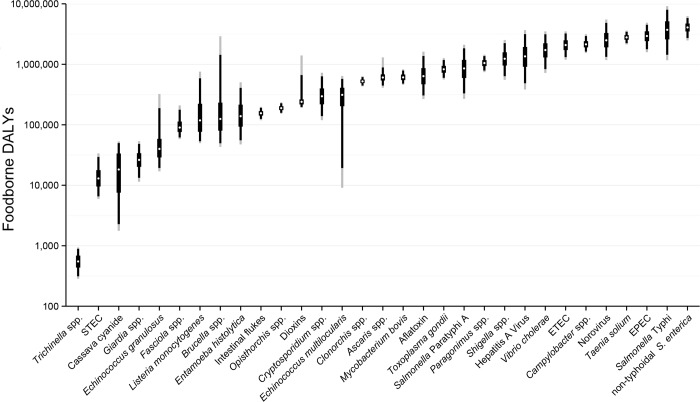
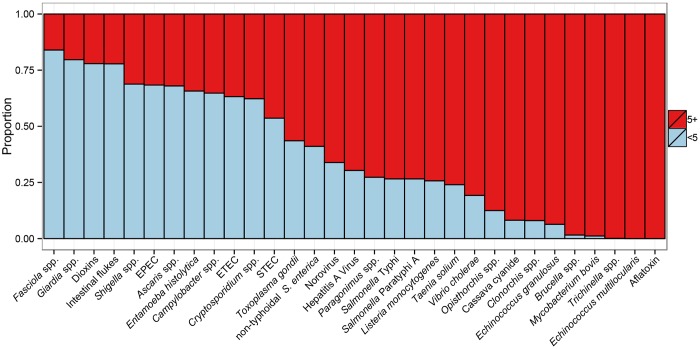
The global burden of foodborne disease caused by 31 hazards in 2010 was 33 million DALYs; children under five years old bore 40% of this burden.
Overview
CoChat Summary
## TL;DR
The WHO Foodborne Disease Burden Epidemiology Reference Group estimated that 31 foodborne hazards caused 600 million illnesses, 420,000 deaths, and 33 million DALYs worldwide in 2010. The burden was concentrated in low-income regions and in children under 5, with diarrheal disease agents—especially norovirus, Campylobacter spp., and non-typhoidal Salmonella enterica—accounting for most illness and death.
## Key findings
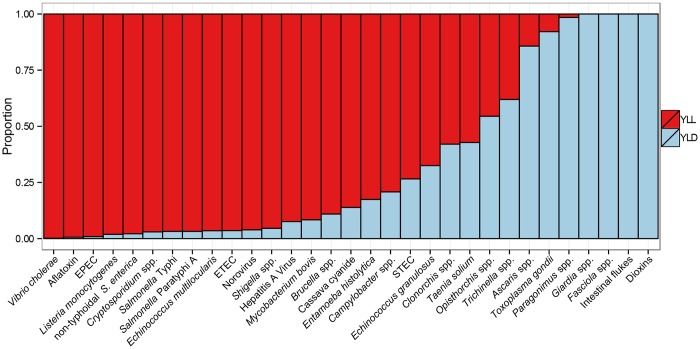
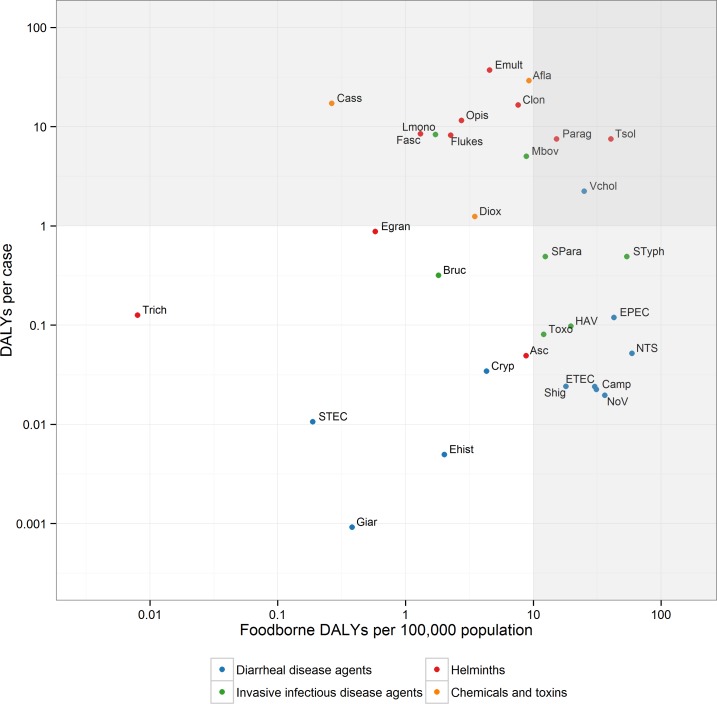
- Thirty-one hazards caused an estimated 600 million (95% UI 420–960 million) illnesses, 420,000 (95% UI 310,000–600,000) deaths, and 33 million (95% UI 25–46 million) DALYs in 2010.
- Diarrheal disease agents accounted for 550 million illnesses and 230,000 deaths; the most frequent illness agents were norovirus (120 million cases) and Campylobacter spp. (96 million cases).
- Non-typhoidal Salmonella enterica caused 59,000 deaths and 4.0 million DALYs; other major death causes included Salmonella Typhi (52,000 deaths), Taenia solium (28,000), hepatitis A virus (28,000), and aflatoxin (20,000; 95% UI 8,000–51,000).
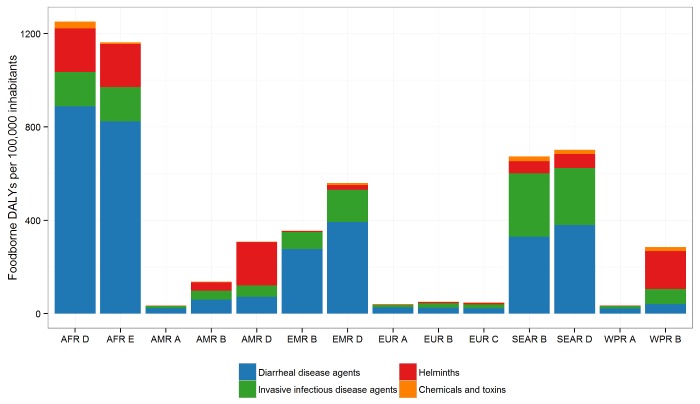
- 40% of the foodborne disease burden was borne by children under 5; the highest burden per 100,000 population was in AFR D (1,300 DALYs) and AFR E (1,200 DALYs), with SEAR B (690), SEAR D (710), and EMR D (570) also high.
## Methods
- The study was a WHO FERG global burden estimation using 31 selected foodborne hazards identified on the basis of high incidence/mortality and data availability.
- It estimated incidence, duration, mortality, YLLs, YLDs, and DALYs for 2010 using systematic reviews, other literature, surveillance data, and expert inputs; estimates were made at country level (194 countries) and then presented at subregional level because of uncertainty.
- For attribution, 12 hazards were judged 100% foodborne; for the other 19 hazards, the authors used structured expert elicitation (Cooke’s Classical Method) to estimate the foodborne fraction, and propagated uncertainty with Monte Carlo simulation in R.
## Limitations
- The paper states its estimates are limited by data gaps and attribution uncertainty; for most hazards, the 95% DALY uncertainty interval ranged from one-fourth to four times the median.
- The authors say the estimates are conservative (underestimates rather than overestimates) because they focused on a subset of more than 100 potential hazards, excluded some hazards or outcomes, and could not always include all relevant disease outcomes.
- They note that country-level estimates were not reliable enough to present, so results are shown at subregion level; this follows from the text and is not presented as a separate explicit limitation.
Model-written summary. Check it against the paper before relying on it.
Integrity signals
Registry
Cites
Statistics
Figures
Verification
Claims the paper makes
5 Valid · 5 Not valid · 16 Not checked · 102 Own results and interpretations
The cited sources that could be checked couldn’t confirm or dispute this claim.
In the paper
“Contaminants in food were not even included as risk factors in previous studies of the global burden of all diseases [3].”
§ World Health Organization Global Estimates and Regional Comparisons of the Burden of Foodborne Disease in 2010 > Introduction
What the sources say
- Could not verifycites [3] Lim SS, Vos T, Flaxman AD, Danaei G, Shibuya K, Adair-Rohani H, et al A comparative risk assessment of burden of disease and injury attributable to 67 risk factors and risk factor clusters in 21 regions, 1990–2010: a systematic analysis for the Global Burden of Disease Study 2010. Lancet. 2012; 380(9859): 2224– 60. 10.1016/S0140-6736(12)61766-8 23245609 PMC4156511 sourceExperimental — accuracy not yet measured
The Discussion describes dietary risk factors such as sodium intake and diets low in fruits or vegetables, but does not address contaminants in food. Searches for food contaminants, foodborne disease, and specific contaminants found no passage establishing whether previous global burden studies included them as risk factors. Page numbers were not available in our copy. (LLM, conf=0.73)
plain- Asserted: passes — The authors put it forward as true.
- Checkable: passes — It can be checked against evidence.
- Load-bearing: passes — The paper’s conclusions depend on it.
- Based: passes — The paper gives a reason why it holds.
- Could not verify
Every source the paper cites for this claim was checked and supports it.
In the paper
“Inclusion of these outcomes would likely considerably increase the burden of enteric infections [43].”
§ World Health Organization Global Estimates and Regional Comparisons of the Burden of Foodborne Disease in 2010 > Introduction > Limitations
What the sources say
- Supportedcites [43] Haagsma JA, Siersema PD, De Wit NJ, Havelaar AH. Disease burden of post-infectious irritable bowel syndrome in The Netherlands. Epidemiol Infect. 2010; 138: 1650– 6. 10.1017/S0950268810000531 20223049 source
The DISCUSSION of our copy states that the annual non-fatal burden of PI-IBS (over 2300 YLD) 'almost doubl[es] the total non-fatal burden of disease for the selected pathogens' and that ignoring PI-IBS in burden-of-disease studies results in an underestimation; it further concludes that including PI-IBS in estimates for the selected bacterial pathogens 'might still underestimate the burden of disease of foodborne disease'. The RESULTS quantify this (Salmonella +86%, Campylobacter +92%, Shigella +151% when PI-IBS is included), and the Abstract repeats the underestimation point, so the hedged claim that including functional bowel disorders would considerably increase the burden of enteric infections is stated by the source. The source's own scope is three bacterial pathogens in The Netherlands (with norovirus PI-IBS discussed as comparable to Campylobacter), which the citing sentence generalises to enteric infections, but the paper itself makes that extrapolation. (LLM, conf=0.85)
hedgedstates a possible cause- Asserted: passes — The authors put it forward as true.
- Checkable: passes — It can be checked against evidence.
- Load-bearing: unclear — It is unclear whether the paper’s conclusions depend on it.
- Based: passes — The paper gives a reason why it holds.
- Supported
A result the paper states — it cites no source for it, so there is none to check. The quote shows it is in the paper.
In the paper
“Foodborne diarrheal disease agents, particularly non-typhoidal Salmonella enterica, caused 230,000 (95% UI 160,000–320,000) deaths”
§ World Health Organization Global Estimates and Regional Comparisons of the Burden of Foodborne Disease in 2010 > Summary Points
plainstates a cause- Asserted: passes — The authors put it forward as true.
- Checkable: passes — It can be checked against evidence.
- Load-bearing: unclear — It is unclear whether the paper’s conclusions depend on it.
- Based: passes — The paper gives a reason why it holds.
A result the paper states — it cites no source for it, so there is none to check. The quote shows it is in the paper.
In the paper
“the burden of Opisthorchis spp. was concentrated in the SEAR B region”
§ World Health Organization Global Estimates and Regional Comparisons of the Burden of Foodborne Disease in 2010 > Summary Points
plainstates an association- Asserted: passes — The authors put it forward as true.
- Checkable: passes — It can be checked against evidence.
- Load-bearing: unclear — It is unclear whether the paper’s conclusions depend on it.
- Based: passes — The paper gives a reason why it holds.
A result the paper states — it cites no source for it, so there is none to check. The quote shows it is in the paper.
In the paper
“The burden of aflatoxin was high in the AFR D, Western Pacific (WPR) B and SEAR B subregions”
§ World Health Organization Global Estimates and Regional Comparisons of the Burden of Foodborne Disease in 2010 > Summary Points
plain- Asserted: passes — The authors put it forward as true.
- Checkable: passes — It can be checked against evidence.
- Load-bearing: unclear — It is unclear whether the paper’s conclusions depend on it.
- Based: passes — The paper gives a reason why it holds.
48 more claims
Create a free account to see all 128 claims and to verify the 5 references still open.
- Probably not a substantial claim. 63
- It may state two separate claims as one. 28
Claims other papers make about this one
Each is checked against this paper’s own text: does it say what the citing paper says it does?
The source backs part of the claim, not all of it — or backs it for a different population, condition or comparison.
In the citing paper
“The FERG found that hazards accounted for around 420,000 deaths in LMIC, imposing a burden of around 33 million DALY lost each year (Havelaar et al., 2015).”
From Burden of foodborne disease in low-income and middle-income countries and opportunities for scaling food safety interventions (2023) · cites this paper as Havelaar et al., 2015
Experimental — accuracy not yet measuredThe source backs part of the claim, not all of it — or backs it for a different population, condition or comparison.
In the citing paper
“Children aged under 5 years were disproportionately affected.This group makes up 9% of the world's population, yet they experience 38% of all FBD, represent 30% of deaths related to FBD, and bear 40% of global DALY lost from FBD (Havelaar et al., 2015).”
From Burden of foodborne disease in low-income and middle-income countries and opportunities for scaling food safety interventions (2023) · cites this paper as Havelaar et al., 2015
Experimental — accuracy not yet measuredThe cited source says what the claim attributes to it.
In the citing paper
“This paper, which represents the work of more than 60 experts over a period of 10 years, can be considered the most definitive and comprehensive guide to the health burden of FBD (Havelaar et al., 2015).”
From Burden of foodborne disease in low-income and middle-income countries and opportunities for scaling food safety interventions (2023) · cites this paper as Havelaar et al., 2015
The cited source says what the claim attributes to it.
In the citing paper
“Although LLMICs bear a high burden of foodborne disease [2]”
From Food Safety Knowledge, Attitude, and Practices (KAP) of Urban Consumers in Low-Income and Lower-Middle-Income Countries (LLMICs): A Scoping Review (2026) · cites this paper as [2]
Citations
Cites
R: A Language and Environment for Statistical Computing
R Core Team (2025) · doi:10.32614/r.manuals · Cited by 352,181
Lim, S. S., Vos, T., Flaxman, A. D., Danaei, G., Shibuya, K., Adair-Rohani, H., AlMazroa, M. A., Amann, M., Anderson, H. R., Andrews, K. G., et al. (2012) · The Lancet · doi:10.1016/s0140-6736(12)61766-8 · Cited by 11,805 · cited 1×
“Contaminants in food were not even included as risk factors in previous studies of the global burden of all diseases [3].”
BackgroundMurray, C. J. L., Vos, T., Lozano, R., Naghavi, M., Flaxman, A. D., Michaud, C., Ezzati, M., Shibuya, K., Salomon, J. A., Abdalla, S., et al. (2012) · The Lancet · doi:10.1016/s0140-6736(12)61689-4 · Cited by 8,888
Foodborne illness acquired in the United States—Major pathogens
Scallan, E., Hoekstra, R. M., Angulo, F. J., Tauxe, R. V., Widdowson, M.-A., Roy, S. L., Jones, J. L., & Griffin, P. M. (2011) · Emerging Infectious Diseases · doi:10.3201/eid1701.p11101 · Cited by 7,657 · cited 1×
“Several high-income countries have published national estimates of FBD. Estimates of food-related illnesses and deaths in the USA were reported in the late 1990s [28] and updated to cover the period 2000 – 2008 [29,30].”
BackgroundSelf-citationFood-Related Illness and Death in the United States
Mead, P. S., Slutsker, L., Dietz, V., McCaig, L. F., Bresee, J. S., Shapiro, C., Griffin, P. M., & Tauxe, R. V. (1999) · Emerging Infectious Diseases · doi:10.3201/eid0505.990502 · Cited by 7,235
Global mortality, disability, and the contribution of risk factors: Global Burden of Disease Study
Murray, C. J., & Lopez, A. D. (1997) · The Lancet · doi:10.1016/s0140-6736(96)07495-8 · Cited by 4,492 · cited 1×
“The DALY measure combines the years of life lost (YLL) due to premature death and the years lived with disability (YLD) from a disease or condition, for varying degrees of severity, making time the common metric for death and disability [20].”
BackgroundSelected major risk factors and global and regional burden of disease
Ezzati, M., Lopez, A. D., Rodgers, A., Vander Hoorn, S., & Murray, C. J. (2002) · The Lancet · doi:10.1016/s0140-6736(02)11403-6 · Cited by 3,594
Kirk, M. D., Pires, S. M., Black, R. E., Caipo, M., Crump, J. A., Devleesschauwer, B., Döpfer, D., Fazil, A., Fischer-Walker, C. L., Hald, T., et al. (2015) · PLoS Medicine · doi:10.1371/journal.pmed.1001921 · Cited by 1,625 · cited 2×
“Detailed descriptions of methods to estimate incidence and mortality of all 31 hazards can be found in papers in the collection on enteric diseases [11], parasitic diseases [18], and chemicals and toxins [19].”
BackgroundMethodSelf-citationSalomon, J. A., Vos, T., Hogan, D. R., Gagnon, M., Naghavi, M., Mokdad, A., Begum, N., Shah, R., Karyana, M., Kosen, S., et al. (2012) · The Lancet · doi:10.1016/s0140-6736(12)61680-8 · Cited by 1,322
Global burden of aflatoxin-induced hepatocellular carcinoma: A risk assessment
Liu, Y., & Wu, F. (2010) · Environmental Health Perspectives · doi:10.1289/ehp.0901388 · Cited by 1,224
Research works printed but not linked: 2
- Gibb H, Devleesschauwer B, Bolger PM, Bellinger D, Wu F, Ezendam J, et al WHO estimates of the global and regional burden from chemicals and toxins in food, 2010. F1000Research. In Press. PMC4755404 26918123
- Devleesschauwer B, Haagsma JA, Angulo FJ, Bellinger D, Cole D, Döpfer D, et al Methodological Framework for World Health Organization Estimates of the Global Burden of Foodborne Disease. PLoS ONE 10: e0142498 10.1371/journal.pone.0142498 PMC4668830 26633883 · DOI · Paper page
Cited by
Items 701–800 of 2,051
Parasitic Contamination of Fresh Leafy Green Vegetables Sold in Northern Lebanon
Safadi, D. E., Osman, M., Hanna, A., Hajar, I., Kassem, I. I., Khalife, S., Dabboussi, F., & Hamzé, M. (2023) · Pathogens · doi:10.3390/pathogens12081014 · Cited by 16
Abdo, A. I., McWhorter, A. R., Hasse, D., Schmitt‐John, T., & Richter, K. (2023) · Antibiotics · doi:10.3390/antibiotics12091371 · Cited by 20
Interplay of two small RNAs fine-tunes hierarchical flagella gene expression in Campylobacter jejuni
König, F., Svensson, S. L., & Sharma, C. M. (2024) · Nature Communications · doi:10.1038/s41467-024-48986-8 · Cited by 18
“Three quarters of the predicted targets for full-length CJnc230 overlapped with predictions for the shorter, more abundant 88-nt version, which has an almost two-fold longer single-stranded RNA region and also larger pool of predicted targets (Supplementary Datasets 1 and 2, Fig.1dandSupplementaryFig.2a).”
BackgroundMethodInfluentialMilazzo, A., Giles, L. C., Zhang, Y., KOEHLER, A. P., Hiller, J. E., & Bi, P. (2017) · Epidemiology and Infection · doi:10.1017/s095026881700139x · Cited by 17
Vohra, P., Bugarel, M., Turner, F. S., Loneragan, G. H., Hope, J. C., Hopkins, J., & Stevens, M. P. (2017) · Applied and Environmental Microbiology · doi:10.1128/aem.02262-17 · Cited by 17
Samad, A., Abbas, F., Ahmad, Z., Tanveer, Z., Ahmad, I., Patching, S. G., Nawaz, N., Asmat, T. M., Raziq, A., Asadullah, et al. (2018) · Journal of Food Safety · doi:10.1111/jfs.12540 · Cited by 18
Dermauw, V., Carabin, H., Ganaba, R., et al. (2018) · American Journal of Tropical Medicine and Hygiene · doi:10.4269/ajtmh.18-0294 · Cited by 16
Kuang, D., Zhang, J., Xu, X., et al. (2018) · Foodborne Pathogens and Disease · doi:10.1089/fpd.2018.2468 · Cited by 16
Bacterial species to be considered in quality assurance of mice and rats
Hansen, A. K., Nielsen, D. S., Krych, Ł., & Hansen, C. H. F. (2019) · Laboratory Animals · doi:10.1177/0023677219834324 · Cited by 20
Microfluidic droplet application for bacterial surveillance in fresh-cut produce wash waters
Harmon, J. B., Gray, H. K., Young, C. C., & Schwab, K. J. (2020) · PLoS ONE · doi:10.1371/journal.pone.0233239 · Cited by 16
Effectiveness of Conventional Crop Improvement Strategies vs. Omics
Qamar, M. T. U., Faryad, A., Bari, A., Zahid, B., Zhu, X.-T., & Chen, L. (2020) · Springer eBooks · doi:10.1007/978-3-030-49732-3_11 · Cited by 17
Application of Bacteriophages on Shiga Toxin-Producing Escherichia coli (STEC) Biofilm
Mangieri, N., Foschino, R. C., & Picozzi, C. (2021) · Antibiotics · doi:10.3390/antibiotics10111423 · Cited by 19
Microbial Inactivation by Pulsed Electric Fields
Delso, C., Martínez, J. M., Cebrián, G., Condón, S., Raso, J., & Álvarez, I. (2022) · Food engineering series · doi:10.1007/978-3-030-70586-2_5 · Cited by 25
Holohan, N., Wallat, M., Luu, T. H. Y., Clark, E., Truong, D. T. Q., Dang-Xuan, S., Vu, H. T. K., Truong, D. V., Huy, H. T., Nguyen‐Viet, H., et al. (2022) · Frontiers in Veterinary Science · doi:10.3389/fvets.2022.816279 · Cited by 19
Differentiation of Campylobacter fetus subspecies by proteotyping
Emele, M. F., Karg, M., Hotzel, H., Bloois, L. V. D. G., Groß, U., Bader, O., & Zautner, A. E. (2019) · European Journal of Microbiology and Immunology · doi:10.1556/1886.2019.00006 · Cited by 19
Berrios‐Rodriguez, A., Olanya, O. M., Ukuku, D. O., Niemira, B. A., Orellana, L. E., Mukhopadhyay, S., Cassidy, J. M., & Boyd, G. (2019) · LWT · doi:10.1016/j.lwt.2019.108805 · Cited by 19
Ncoko, P., Jaja, I. F., & Oguttu, J. W. (2020) · Veterinary World · doi:10.14202/vetworld.2020.1363-1371 · Cited by 23
Pathogenicity and virulence of Campylobacter jejuni : What do we really know?
Omole, Z., Dorrell, N., Elmi, A., Nasher, F., Gundogdu, O., & Wren, B. W. (2024) · Virulence · doi:10.1080/21505594.2024.2436060 · Cited by 24
“According to the World Health Organisation, C. jejuni is responsible for 96 million cases of enteric infection globally each year and in low socio-economic environments C. jejuni infection remains a frequent cause of death in infants [13].”
Akwongo, C. J., Borrelli, L., Houf, K., Fioretti, A., Peruzy, M. F., & Murru, N. (2025) · BMC Veterinary Research · doi:10.1186/s12917-024-04462-5 · Cited by 22
Zhang, J., Fu, Y., Fong, C. Y., Hua, H., Li, W., & Khoo, B. L. (2025) · Lab on a Chip · doi:10.1039/d4lc00795f · Cited by 17
Cressey, P. J., Lake, R., Thornley, C., & Campbell, D. (2019) · Foodborne Pathogens and Disease · doi:10.1089/fpd.2018.2576 · Cited by 15
Self-citationRussell, K., Smith, J., Bremner, A., Chintoan‐Uta, C., Vervelde, L., Psifidi, A., & Stevens, M. P. (2021) · BMC Genomics · doi:10.1186/s12864-021-07748-2 · Cited by 17
Moon, Y., Han, S., Son, J. W., et al. (2021) · Food Control · doi:10.1016/j.foodcont.2021.108378 · Cited by 15
Proposal of a new method for the risk scoring and categorization of Brazilian food services
Viera, F. D., Stedefeldt, E., Scheffer, P. A., Machado, L. V., Mucinhato, R. M. D., de Castro, A. K. F., Lima, T. A. D. S., da Cunha, D. T., & Saccol, A. L. D. F. (2022) · Food Research International · doi:10.1016/j.foodres.2022.111127 · Cited by 15
Lin, Z., Qin, X., Li, J., Aslam, M. Z., Sun, T., Li, Z., Wang, X., & Dong, Q. (2022) · Food Research International · doi:10.1016/j.foodres.2022.111132 · Cited by 22
Carhuaricra, D., Luis Luna, E., Cueva, C. L. R., Gonzales, C. G. D., Raúl Rosadio, A., Setúbal, J. C., & Lenin Maturrano, H. (2022) · Microorganisms · doi:10.3390/microorganisms10091726 · Cited by 16
Abukhattab, S., Hosch, S., Abu-Rmeileh, N. M. E., Hasan, S., Vonaesch, P., Crump, L., Hattendorf, J., Daubenberger, C., Zinsstag, J., & Schindler, T. (2023) · Applied and Environmental Microbiology · doi:10.1128/aem.00658-23 · Cited by 22
El-Sayyad, G. S., Elkodous, M. A., El‐Bastawisy, H. S., & Rouby, W. M. A. E. (2023) · BMC Microbiology · doi:10.1186/s12866-023-03016-3 · Cited by 16
“But it’s becoming more and more obvious that every aspect of drinking-water availability and quality has the potential to be significant and has to be taken into account [11].”
BackgroundLogue, C. M., Cesare, A. D., Lahti, E. T., Chemaly, M., Payen, C., LeJeune, J., & Zhou, K. (2023) · Advances in food and nutrition research · doi:10.1016/bs.afnr.2023.11.001 · Cited by 18
Madjdian, D. S., van Asseldonk, M., Ilboudo, G., Dione, M. M., Ouedraogo, A.-A., Roesel, K., Grace, D., Talsma, E. F., Knight-Jones, T., & de Vet, E. (2024) · Food Control · doi:10.1016/j.foodcont.2024.110510 · Cited by 25
Assoua, J. E., Bomdzele, É. J., Omosehin, O. O., Binuomote, S. O., Osabuohien, E. S. C., Enwa, S., & Okunade, S. (2024) · World Food Policy · doi:10.1002/wfp2.12068 · Cited by 21
Adoption of milk safety practices: evidence from dairy farmers in Ethiopia
Feyisa, B. W., Haji, J., & Mirzabaev, A. (2024) · Agriculture & Food Security · doi:10.1186/s40066-024-00479-z · Cited by 18
“According to the 2010 global burden of foodborne diseases estimate, diarrheal disease is the most serious in terms of the annual number of deaths and illnesses caused by pathogens associated with it [22].”
BackgroundSingle-tube detection of a foodborne bacterial pathogen using user-friendly portable device
Zheng, L., Fan, B., Fu, Y., Jia, W. P., Ye, Y., Gui, Y., Zhang, S., Wei, Y., Yin, J., Li, J., et al. (2024) · Biosensors and Bioelectronics · doi:10.1016/j.bios.2024.117035 · Cited by 16
Evaluation of lemongrass and ginger essential oils to inhibit Listeria monocytogenes in biofilms
dos Reis‐Teixeira, F. B., de Sousa, I. P., Alves, V. F., et al. (2019) · Journal of Food Safety · doi:10.1111/jfs.12627 · Cited by 15
Vohra, P., Chaudhuri, R. R., Mayho, M., Vrettou, C., Chintoan‐Uta, C., Thomson, N. R., Hope, J. C., Hopkins, J., & Stevens, M. P. (2019) · BMC Genomics · doi:10.1186/s12864-018-5319-0 · Cited by 17
Drinić, M., Raninger, A., Zraunig, A., Astelbauer, F., Leitsch, D., Obwaller, A., Walochnik, J., Greger, H., & Duchêne, M. (2019) · International Journal for Parasitology Drugs and Drug Resistance · doi:10.1016/j.ijpddr.2019.08.001 · Cited by 14
Rahimi, S., Kathariou, S., Fletcher, O. J., & Grimes, J. L. (2019) · Poultry Science · doi:10.1016/j.psj.2019.09.008 · Cited by 15
Les maladies microbiennes d’origine alimentaire
Dubois‐Brissonnet, F., & Guillier, L. (2020) · Cahiers de Nutrition et de Diététique · doi:10.1016/j.cnd.2019.12.001 · Cited by 18
Wainaina, E., Otieno, C. A., Kamau, J., Nyachieo, A., & Lowther, S. A. (2020) · BMC Public Health · doi:10.1186/s12889-020-8401-x · Cited by 20
Diab, M., Zaki, R. S., Ibrahim, N. A., & Abd El Hafez Mohamed, S. (2019) · Journal of World s Poultry Research · doi:10.36380/scil.2019.wvj35 · Cited by 15
Heimesaat, M. M., Schmidt, A.-M., Mousavi, S., Escher, U., Tegtmeyer, N., Weßler, S., Gadermaier, G., Briza, P., Hofreuter, D., Bereswill, S., et al. (2020) · Gut Microbes · doi:10.1080/19490976.2020.1770017 · Cited by 17
Subedi, P., Paxman, J. J., Wang, G., et al. (2021) · Antioxidants and Redox Signaling · doi:10.1089/ars.2020.8218 · Cited by 15
Diversity and Resistance Profiles of Human Non-typhoidal Salmonella spp. in Greece, 2003–2020
Μellou, K., Gkova, M., Panagiotidou, E., Tzani, M., Sideroglou, T., & Mandilara, G. D. (2021) · Antibiotics · doi:10.3390/antibiotics10080983 · Cited by 16
Wu, R., Meng, B., Corredig, M., et al. (2021) · Food Microbiology · doi:10.1016/j.fm.2021.103921 · Cited by 15
Phage Biocontrol Applications in Food Production and Processing
Vikram, A., Woolston, J., & Sulakvelidze, A. (2020) · Caister Academic Press eBooks · doi:10.21775/9781913652517.08 · Cited by 15
Zhou, S., Wang, L., Wang, Y., Ma, H., Yan, B., Guo, K., Yan, Q., Fan, H., & Xiang, J. (2022) · ACS Sustainable Chemistry & Engineering · doi:10.1021/acssuschemeng.2c02357 · Cited by 15
Campylobacter Gastroenteritis Among Under-Five Children in Southwest Ethiopia
Nigusu, Y., Abdissa, A., & Tesfaw, G. (2022) · Infection and Drug Resistance · doi:10.2147/idr.s354843 · Cited by 16
Mashak, Z. (2018) · Jundishapur Journal of Microbiology · doi:10.5812/jjm.62288 · Cited by 15
Marín, C., Martelli, F., Rabie, A., et al. (2018) · Vector-Borne and Zoonotic Diseases · doi:10.1089/vbz.2018.2295 · Cited by 15
“It has been estimated that nontyphoidal Salmonella causes around 59,153 deaths each year worldwide (Havelaar et al. 2015).”
Wu, R., Xing, X., Corredig, M., et al. (2019) · Food Microbiology · doi:10.1016/j.fm.2019.05.020 · Cited by 15
Christopher, A., Sarkar, D., & Shetty, K. (2021) · Antibiotics · doi:10.3390/antibiotics10020109 · Cited by 16
Espunyes, J., Cabezón, Ó., Dias‐Alves, A., Miralles, P., Ayats, T., & Cerdà‐Cuéllar, M. (2021) · BMC Veterinary Research · doi:10.1186/s12917-021-02784-2 · Cited by 22
Crump, J. A., & Wain, J. R. (2016) · Elsevier eBooks · doi:10.1016/b978-0-12-803678-5.00394-5 · Cited by 16
Ssemanda, J. N., den Besten, H. M. W., van Wagenberg, C. P. A., & Zwietering, M. H. (2024) · International Journal of Food Microbiology · doi:10.1016/j.ijfoodmicro.2024.110637 · Cited by 15
Han, L., Zang, T., Tan, L., Liang, D., Long, T., Liu, X., Shen, X., Ren, H., Li, Z., Lu, Z., et al. (2023) · Journal of Nanobiotechnology · doi:10.1186/s12951-023-02256-9 · Cited by 16
“Globally, food-borne diseases are considered as a major public health concern and bring a socioeconomic burden due to their severe mortality [1].”
BackgroundSun, D., Gou, H., Zhang, Y., Li, J., Dai, C., Shen, H., Chen, K., Wang, Y., Pan, P., Zhu, T., et al. (2025) · Autophagy · doi:10.1080/15548627.2025.2462511 · Cited by 14
“Typhimurium, a non-typhoidal serovar, is an important foodborne pathogen worldwide, with the highest number of deaths [3].”
Nguyen, H. L., & Nguyen, T. B. N. (2026) · Sustainability · doi:10.3390/su18073621 · Cited by 17
Brown, S. M., Nguyen‐Viet, H., Grace, D., Chhay, T., Samkol, P., Huy, S., Pov, S., & Young, M. F. (2022) · BMJ Open · doi:10.1136/bmjopen-2021-054940 · Cited by 16
Barrón-Montenegro, R., Rivera, D., Serrano, M. J., García, R., Álvarez, D. M., Benavides, J. A., Arredondo, F., Álvarez, F. P., Bastías, R., Ruíz, S., et al. (2022) · Frontiers in Cellular and Infection Microbiology · doi:10.3389/fcimb.2022.897171 · Cited by 14
Charity, O. J., Acton, L., Bawn, M., Tassinari, E., Thilliez, G. J. A., Chattaway, M. A., Dallman, T. J., Petrovska, L., & Kingsley, R. A. (2022) · Microbial Genomics · doi:10.1099/mgen.0.000897 · Cited by 15
“An estimated 78 million human infections per year contribute to 4 million disability adjusted life years, more than any other food-borne pathogen or chemical agent [13].”
Nawawi, W. N. F. W., Ramoo, V., Chong, M. C., & Abdullah, K. L. (2022) · International Food Research Journal · doi:10.47836/ifrj.29.6.01 · Cited by 19
Li, J., Khan, S. A., Gu, J., Filipe, C. D. M., Didar, T. F., & Li, Y. (2023) · Angewandte Chemie · doi:10.1002/ange.202300828 · Cited by 14
Economic costs related to foodborne disease in Burkina Faso and Ethiopia in 2017
van Wagenberg, C. P. A., & Havelaar, A. H. (2023) · Frontiers in Sustainable Food Systems · doi:10.3389/fsufs.2023.1227430 · Cited by 21
Self-citationHouseholds’ Attitudes Towards Food Safety Guidance in Riyadh, Saudi Arabia
(2023) · International Journal of Agriculture and Biosciences · doi:10.47278/journal.ijab/2023.075 · Cited by 14
Yao, T., Zeng, X., Zou, Y., et al. (2024) · Food Bioscience · doi:10.1016/j.fbio.2024.104175 · Cited by 14
Sun, R.-Y., Fang, L., Dai, J.-J., Chen, K., Ke, B., Sun, J. G., Ke, C., Chan, E. W., Liu, Y.-H., Chen, S., et al. (2024) · mSystems · doi:10.1128/msystems.01164-23 · Cited by 15
Yu, Y.-C., Wang, Z., Ji, X., Williamson, E. J., Cordoba, H. M., Gómez, A. M. U., Deering, A. J., Chiu, G. T. ‐., Allebach, J. P., & Stanciu, L. (2024) · Microchimica Acta · doi:10.1007/s00604-024-06633-5 · Cited by 16
“According to the World Health Organization (WHO), foodborne pathogens are responsible for 600 million cases and 420,000 deaths worldwide each year [3].”
Adaptations and metabolic evolution of myzozoan protists across diverse lifestyles and environments
Waller, R. F., & Carruthers, V. B. (2024) · Microbiology and Molecular Biology Reviews · doi:10.1128/mmbr.00197-22 · Cited by 14
Beyene, A. M., Alemayehu, Y. A., Gizachew, M., Yousef, A. E., Dessalegn, B., Bitew, A. B., Melese, A. A., Gobena, W., Christian, K., & Gelaw, B. (2024) · PLoS neglected tropical diseases · doi:10.1371/journal.pntd.0012646 · Cited by 16
Smith, J. C., Ross, K., & Whiley, H. (2016) · International Journal of Environmental Research and Public Health · doi:10.3390/ijerph13121218 · Cited by 15
Crotta, M., Georgiev, M., & Guitián, J. (2016) · Food Control · doi:10.1016/j.foodcont.2016.12.024 · Cited by 14
“INTRODUCTION 1 Campylobacter is a major cause of foodborne disease worldwide (Havelaar et al., 2015).”
BackgroundGyawali, P., Croucher, D., & Hewitt, J. (2018) · Environmental science and pollution research international · doi:10.1007/s11356-018-2869-2 · Cited by 15
Ford, L., Ingle, D. J., Glass, K., et al. (2019) · Emerging infectious diseases · doi:10.3201/eid2509.181811 · Cited by 14
Self-citationDang, Y., Hao, L., Li, X., et al. (2020) · LWT · doi:10.1016/j.lwt.2020.110825 · Cited by 14
Wang, R., Li, X., & Cheng, Y. (2021) · Environmental Science and Pollution Research · doi:10.1007/s11356-021-15462-5 · Cited by 14
Keleş, E., Hassan-Kadle, M. A., Osman, M. M., et al. (2021) · BMC Infectious Diseases · doi:10.1186/s12879-021-06594-7 · Cited by 14
Ngwili, N., Thomas, L. F., Githigia, S. M., et al. (2021) · Parasitology Research · doi:10.1007/s00436-021-07380-9 · Cited by 14
Liu, Y., Li, X., Sheng, J., et al. (2022) · Coatings · doi:10.3390/coatings12050671 · Cited by 14
Rojas, J. D., Reynolds, N. D., Pike, B. L., Espinoza, N., Kuroiwa, J. M. Y., Jani, V., Ríos, P., Nunez, R. G., Yori, P. P., Bernal, M., et al. (2019) · American Journal of Tropical Medicine and Hygiene · doi:10.4269/ajtmh.18-0994 · Cited by 14
Wang, S., Fu, L., Chen, G., Xiao, H., Pan, D., Shi, R., Yang, L., & Sun, G. (2020) · Food Science & Nutrition · doi:10.1002/fsn3.1532 · Cited by 19
“Meanwhile, FERG report (Havelaar et al., 2015) suggests 1 in 10 people in the region where China is located develop foodborne diseases each year.”
BackgroundKotian, A., Aditya, V., Jazeela, K., Karunasagar, I., Karunasagar, I., & Deekshit, V. K. (2020) · Research in Microbiology · doi:10.1016/j.resmic.2020.06.002 · Cited by 14
Microbial foodborne outbreaks in Africa: a systematic review
Sosah, F. K., & Donkor, E. S. (2025) · International Health · doi:10.1093/inthealth/ihaf058 · Cited by 13
After the project is over: Measuring longer-term impacts of a food safety intervention in Senegal
Leavens, L., Bauchet, J., & Ricker-Gilbert, J. E. (2021) · World Development · doi:10.1016/j.worlddev.2021.105414 · Cited by 15
“We started by taking the number of DALYs (per 100,000 people) attributed to aflatoxin-induced liver cancer in Senegal, 28, and subtracted off the US equivalent, 40 0.04 (Havelaar et al. 2015).”
MethodInfluentialSpatial and temporal dynamics of microbiomes and resistomes in broiler litter stockpiles
Gupta, C. L., Avidov, R., Kattusamy, K., Saadi, I., Varma, V. S., Blum, S. E., Zhu, Y., Zhou, X., Su, J., Laor, Y., et al. (2021) · Computational and Structural Biotechnology Journal · doi:10.1016/j.csbj.2021.11.020 · Cited by 17
Pfluger, B. A., Smith, H. V., Weber, A. M., Ibrahim, H., Doumbia, L., Boré, A., Cissoko, A., Douyon, S., Koné, K., Sangaré, L., et al. (2022) · Nutrients · doi:10.3390/nu14030609 · Cited by 14
“Inadequate fulfilling of these needs is the case in many rural settings in low-and middle-income countries (LMICs) where complementary foods are in limited supply, unsafe (e.g., with high levels of mycotox-ins), and not accessible nor affordable for timely introduction [10–13].”
BackgroundEpidemiological Impact of GII.17 Human Noroviruses Associated With Attachment to Enterocytes
Estienney, M., Tarris, G., Abou-Hamad, N., Rouleau, A., Boireau, W., Chassagnon, R., Ayouni, S., Daval-Frérot, P., Martin, L., Bouyer, F., et al. (2022) · Frontiers in Microbiology · doi:10.3389/fmicb.2022.858245 · Cited by 16
“Studies conducted in other parts of the world have reported similar figures, ranking it as the fifth foodborne hazard in terms of disability-adjusted life years (Belliot et al., 2014; Havelaar et al., 2015).”
BackgroundRegional Codex Guidelines and Their Potential To Impact Food Safety in Traditional Food Markets
DeWaal, C. S., Okoruwa, A., Yalch, T., et al. (2022) · Journal of Food Protection · doi:10.4315/jfp-22-052 · Cited by 13
Shedleur-Bourguignon, F., Duchemin, T., Thériault, W. P., Longpré, J., Thibodeau, A., Hocine, M. N., & Fravalo, P. (2023) · Microorganisms · doi:10.3390/microorganisms11010133 · Cited by 14
Risk ranking of foodborne diseases in Denmark: Reflections on a national burden of disease study
Pires, S. M., Redondo, H. G., Pessoa, J., Jakobsen, L. S., & Thomsen, S. T. (2023) · Food Control · doi:10.1016/j.foodcont.2023.110199 · Cited by 18
Kanaan, M. H. G., Salim, I. D., Tarek, A. M., & Abdullah, S. S. (2023) · International Journal of One Health · doi:10.14202/ijoh.2023.150-158 · Cited by 40
“Foodborne infections, a global public health concern, have become increasingly prevalent [1, 2], resulting in extreme morbidity and mortality [3, 4].”
BackgroundResultInfluentialWang, F., Ye, F., Tang, W., et al. (2024) · Food Control · doi:10.1016/j.foodcont.2024.110629 · Cited by 13
Diseases Transmitted to Humans through Foodborne Microbes in the Global South
Oduoye, M. O., Akilimali, A., Karim, K. A., Moradeyo, A. A., Zubairu, A. Z., Muzata, D., Christopher, G. U., Chipinga, J., Simiyu, B. W., & Isiko, I. (2024) · Springer eBooks · doi:10.1007/978-981-97-2428-4_18 · Cited by 22
Wang, C., Wang, X., Hao, J., Kong, H., Zhao, L., Li, M., Zou, M., & Liu, G. (2024) · Antibiotics · doi:10.3390/antibiotics13100959 · Cited by 15
“Salmonella can survive in a variety of animal hosts, including poultry, livestock, and pets, which increases the risk of human infection with Salmonella [3–5].”
BackgroundProgress on the prevention of poultry Salmonella with natural medicines
Zhang, Y., Liu, J., Pan, Y., Shi, K., Mai, P., Li, X., & Shen, S. (2024) · Poultry Science · doi:10.1016/j.psj.2024.104603 · Cited by 14
“Poultry meat and eggs are important carriers of Salmonella (Havelaar et al., 2015).”
Havelaar, A. H., & Swart, A. (2016) · Epidemics · doi:10.1016/j.epidem.2016.11.004 · Cited by 15
Self-citationSmith, H. G., Bean, D. C., Hawkey, J., Clarke, R. H., Loyn, R., Larkins, J., Hassell, C. J., Valcanis, M., Pitchers, W., & Greenhill, A. R. (2020) · Applied and Environmental Microbiology · doi:10.1128/aem.01312-20 · Cited by 14
Ipte, P. R., & Satpati, A. K. (2020) · Biophysical Chemistry · doi:10.1016/j.bpc.2020.106456 · Cited by 13
Gui, Z.-C., Li, X., Liu, M.-L., Peng, Z.-D., Cheng, Y., Nasir, Z. A., Alcega, S. G., & Coulon, F. (2022) · Ecotoxicology and Environmental Safety · doi:10.1016/j.ecoenv.2022.113689 · Cited by 14
Larkins, A., Bruce, M., Bari, C. D., Devleesschauwer, B., Pigott, D. M., & Ash, A. L. (2022) · PLoS neglected tropical diseases · doi:10.1371/journal.pntd.0010567 · Cited by 16
Self-citationPaving the way forward: Escherichia coli bacteriophages in a One Health approach
Oliveira, A., Días, C., Oliveira, R., Almeida, C., Fuciños, P., Sillankorva, S., & Oliveira, H. (2023) · Critical Reviews in Microbiology · doi:10.1080/1040841x.2022.2161869 · Cited by 19
“Among E. coli infections, ETEC is the pathovar that caused the most cases of foodborne illness (86 million cases), followed by EPEC (23 million cases) and STEC (1.2 million cases) (Havelaar et al. 2015; WHO 2015).”
BackgroundInfluential
Metadata
- Authors
- Havelaar, A. H., Kirk, M. D., Torgerson, P. R., Gibb, H. J., Hald, T., Lake, R. J., Praet, N., Bellinger, D. C., de Silva, N. R., Gargouri, N., Speybroeck, N., Cawthorne, A., Mathers, C., Stein, C., Angulo, F. J., Devleesschauwer, B., & on behalf of World Health Organization Foodborne Disease Burden Epidemiology Reference Group
- Affiliations
- Utrecht University (NL)
- Australian National University (AU)
- University of Zurich (CH)
- Technical University of Denmark (DK)
- New Zealand Institute for Public Health and Forensic Science (NZ)
- Instituut voor Tropische Geneeskunde (BE)
- Boston Children's Hospital (US)
- UCLouvain (BE)
- World Health Organization (CH)
- Centers for Disease Control and Prevention (US)
- Ghent University (BE)
- Corresponding author
- Havelaar, Arie H.
- ORCID
- Venue
- PLoS Medicine
- Publisher
- Public Library of Science (PLoS)
- Published
- 2015-12-03
- Volume
- 12
- Issue
- 12
- Pages
- e1001923
- ISSN
- 1549-1277 (ISSN-L)
- 1549-1676
- PMC
- PMC4668832
- OpenAlex
- W2186140012
- Cited by
- 2,067
- References
- 40
- Citations by year
- 2026: 220 · 2025: 251 · 2024: 235 · 2023: 267 · 2022: 217 · 2021: 219 · 2020: 206 · 2019: 153 · 2018: 149 · 2017: 90 · 2016: 51 · 2015: 3
- FWCI
- 130.65
- Type
- journal article
- Language
- en
- Open access
- gold
- doi.org
- Licence
- Locations
- PLoS Medicine (publishedVersion, cc-by)
- Europe PMC (PubMed Central) (publishedVersion, cc-by)
- PubMed Central (publishedVersion, cc-by)
- PubMed (publishedVersion)
- EUR Research Repository (Erasmus University Rotterdam) (publishedVersion, cc-by)
- Zurich Open Repository and Archive (University of Zurich) (acceptedVersion, cc-by)
- ResearchOnline (Glasgow Caledonian University) (acceptedVersion, cc-by)
- Ghent University Academic Bibliography (Ghent University) (submittedVersion, other-oa)
- EUR Research Repository (Erasmus University Rotterdam) (submittedVersion, other-oa)
- CGSPace A Repository of Agricultural Research Outputs (Consultative Group for International Agricultural Research) (submittedVersion, other-oa)
- Digital Access to Libraries (submittedVersion, other-oa)
- DOAJ (DOAJ: Directory of Open Access Journals) (submittedVersion, cc-by-sa)
- Utrecht University Repository (Utrecht University) (submittedVersion, other-oa)
- ANU Open Research (Australian National University) (submittedVersion)
- Technical University of Denmark, DTU Orbit (Technical University of Denmark, DTU) (submittedVersion, cc-by)
- Bristol Research (University of Bristol) (submittedVersion, cc-by)
- Rivm (National Institute for Public Health and the Environment) (submittedVersion)
- Zurich Open Repository and Archive (University of Zurich) (submittedVersion, cc-by)
- Zurich Open Repository and Archive (University of Zurich)
- Funders
- World Health Organization
- University of Pittsburgh
- Institute for Health Metrics and Evaluation
- Topics
- Life Sciences › Agricultural and Biological Sciences › Food Science › Salmonella and Campylobacter epidemiology
- Life Sciences › Agricultural and Biological Sciences › Food Science › Food Safety and Hygiene
- Health Sciences › Medicine › Infectious Diseases › Viral gastroenteritis research and epidemiology
- Keywords
- food poisoning, disease burden, disability-adjusted life years, food safety hazards, diarrheal disease, norovirus, Campylobacter, non-typhoidal Salmonella, Salmonella typhi, Taenia solium, hepatitis A virus, parasitic helminths, child mortality, regional comparison, food safety policy
- MeSH terms
- Foodborne Diseases, Humans, Global Health, World Health Organization, Incidence, Prevalence, Cost of Illness, Quality-Adjusted Life Years
About these checks
Registry, retraction, Cites and statistics results are computed, not judged, with one exception: a printed reference that no index lists is read once by a model before it counts as a citation error. Claims are extracted by a model and kept only when their quote appears verbatim in the text; each cited source is then checked, with a model’s help, for whether it says what the claim relies on. Those verdicts can be wrong — read the claim’s quote and the cited source before relying on one.
The claim verdicts this report counts are experimental: their accuracy is not yet measured.
A language model drew the claims from the paper on 2026-10-10, under version 3 of the claim definition (model deepseek-v4.1-flash, prompt extract-v3).
A second model labelled each claim on 2026-10-10 (model jev-1.13-20260917, definition revision gold-guideline-v0.2).
Cited sources are checked with a language model’s help (gpt-6-sol and qwen3.8-omni-flash).
Statistics and arithmetic are recomputed, not judged.
Confidence bands are shown only for fields calibrated on our annotated test set. None is calibrated yet, so no band is shown.
What counts as a claim ›How we measure confidence ›How we check this ›
Are you an author, or do you see a problem with this page? Request a review
Data sources
Bibliographic data: Semantic Scholar, OpenAlex, Crossref.
Contains information from the Semantic Scholar Academic Graph Datasets, made available under the ODC Attribution License (ODC-BY 1.0).
Semantic Scholar’s data is described in: Kinney, R., et al. (2023). The Semantic Scholar Open Data Platform. arXiv:2301.10140.
