

World Health Organization Global Estimates and Regional Comparisons of the Burden of Foodborne Disease in 2010
Open accessThe DOI matches its Crossref record; 38 of the 40 references it cites were found in a registry or an index; 6 of the 25 sources its claims cite were checked for support.
Abstract
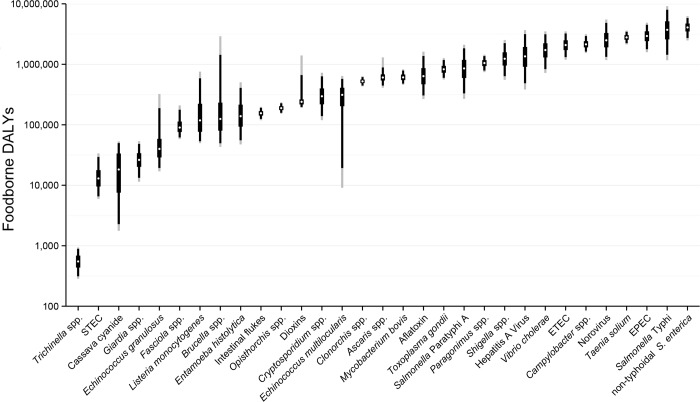
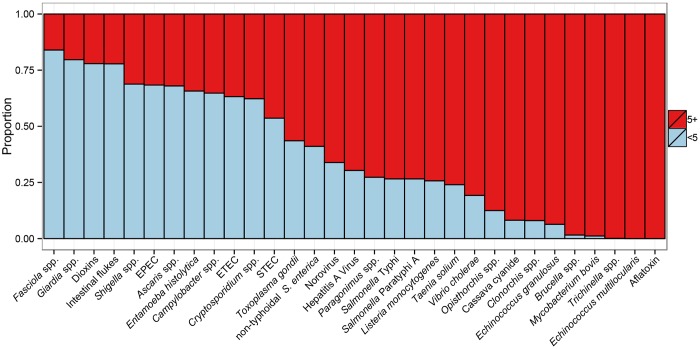
The global burden of foodborne disease caused by 31 hazards in 2010 was 33 million DALYs; children under five years old bore 40% of this burden.
Overview
CoChat Summary
## TL;DR
The WHO Foodborne Disease Burden Epidemiology Reference Group estimated that 31 foodborne hazards caused 600 million illnesses, 420,000 deaths, and 33 million DALYs worldwide in 2010. The burden was concentrated in low-income regions and in children under 5, with diarrheal disease agents—especially norovirus, Campylobacter spp., and non-typhoidal Salmonella enterica—accounting for most illness and death.
## Key findings
- Thirty-one hazards caused an estimated 600 million (95% UI 420–960 million) illnesses, 420,000 (95% UI 310,000–600,000) deaths, and 33 million (95% UI 25–46 million) DALYs in 2010.
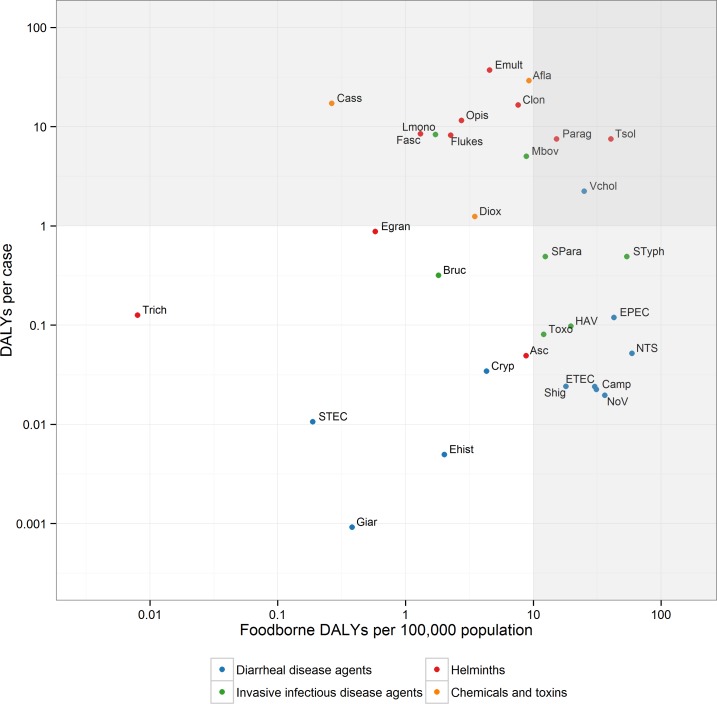
- Diarrheal disease agents accounted for 550 million illnesses and 230,000 deaths; the most frequent illness agents were norovirus (120 million cases) and Campylobacter spp. (96 million cases).
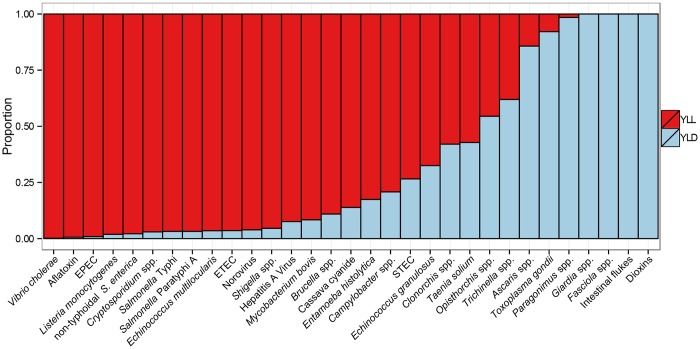
- Non-typhoidal Salmonella enterica caused 59,000 deaths and 4.0 million DALYs; other major death causes included Salmonella Typhi (52,000 deaths), Taenia solium (28,000), hepatitis A virus (28,000), and aflatoxin (20,000; 95% UI 8,000–51,000).
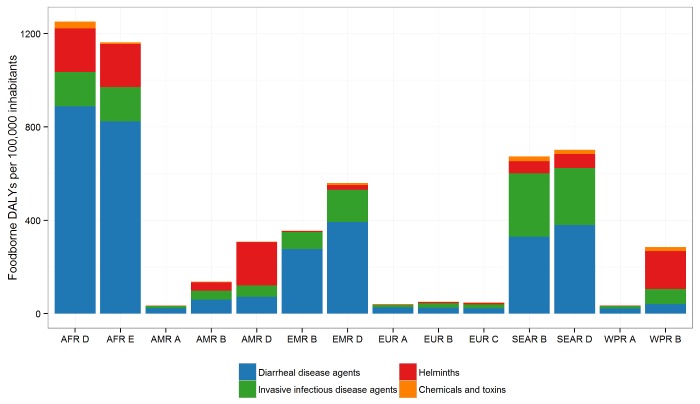
- 40% of the foodborne disease burden was borne by children under 5; the highest burden per 100,000 population was in AFR D (1,300 DALYs) and AFR E (1,200 DALYs), with SEAR B (690), SEAR D (710), and EMR D (570) also high.
## Methods
- The study was a WHO FERG global burden estimation using 31 selected foodborne hazards identified on the basis of high incidence/mortality and data availability.
- It estimated incidence, duration, mortality, YLLs, YLDs, and DALYs for 2010 using systematic reviews, other literature, surveillance data, and expert inputs; estimates were made at country level (194 countries) and then presented at subregional level because of uncertainty.
- For attribution, 12 hazards were judged 100% foodborne; for the other 19 hazards, the authors used structured expert elicitation (Cooke’s Classical Method) to estimate the foodborne fraction, and propagated uncertainty with Monte Carlo simulation in R.
## Limitations
- The paper states its estimates are limited by data gaps and attribution uncertainty; for most hazards, the 95% DALY uncertainty interval ranged from one-fourth to four times the median.
- The authors say the estimates are conservative (underestimates rather than overestimates) because they focused on a subset of more than 100 potential hazards, excluded some hazards or outcomes, and could not always include all relevant disease outcomes.
- They note that country-level estimates were not reliable enough to present, so results are shown at subregion level; this follows from the text and is not presented as a separate explicit limitation.
Model-written summary. Check it against the paper before relying on it.
Integrity signals
Registry
Cites
Statistics
Figures
Verification
Claims the paper makes
5 Valid · 5 Not valid · 16 Not checked · 102 Own results and interpretations
The cited sources that could be checked couldn’t confirm or dispute this claim.
In the paper
“Contaminants in food were not even included as risk factors in previous studies of the global burden of all diseases [3].”
§ World Health Organization Global Estimates and Regional Comparisons of the Burden of Foodborne Disease in 2010 > Introduction
What the sources say
- Could not verifycites [3] Lim SS, Vos T, Flaxman AD, Danaei G, Shibuya K, Adair-Rohani H, et al A comparative risk assessment of burden of disease and injury attributable to 67 risk factors and risk factor clusters in 21 regions, 1990–2010: a systematic analysis for the Global Burden of Disease Study 2010. Lancet. 2012; 380(9859): 2224– 60. 10.1016/S0140-6736(12)61766-8 23245609 PMC4156511 sourceExperimental — accuracy not yet measured
The Discussion describes dietary risk factors such as sodium intake and diets low in fruits or vegetables, but does not address contaminants in food. Searches for food contaminants, foodborne disease, and specific contaminants found no passage establishing whether previous global burden studies included them as risk factors. Page numbers were not available in our copy. (LLM, conf=0.73)
plain- Asserted: passes — The authors put it forward as true.
- Checkable: passes — It can be checked against evidence.
- Load-bearing: passes — The paper’s conclusions depend on it.
- Based: passes — The paper gives a reason why it holds.
- Could not verify
Every source the paper cites for this claim was checked and supports it.
In the paper
“Inclusion of these outcomes would likely considerably increase the burden of enteric infections [43].”
§ World Health Organization Global Estimates and Regional Comparisons of the Burden of Foodborne Disease in 2010 > Introduction > Limitations
What the sources say
- Supportedcites [43] Haagsma JA, Siersema PD, De Wit NJ, Havelaar AH. Disease burden of post-infectious irritable bowel syndrome in The Netherlands. Epidemiol Infect. 2010; 138: 1650– 6. 10.1017/S0950268810000531 20223049 source
The DISCUSSION of our copy states that the annual non-fatal burden of PI-IBS (over 2300 YLD) 'almost doubl[es] the total non-fatal burden of disease for the selected pathogens' and that ignoring PI-IBS in burden-of-disease studies results in an underestimation; it further concludes that including PI-IBS in estimates for the selected bacterial pathogens 'might still underestimate the burden of disease of foodborne disease'. The RESULTS quantify this (Salmonella +86%, Campylobacter +92%, Shigella +151% when PI-IBS is included), and the Abstract repeats the underestimation point, so the hedged claim that including functional bowel disorders would considerably increase the burden of enteric infections is stated by the source. The source's own scope is three bacterial pathogens in The Netherlands (with norovirus PI-IBS discussed as comparable to Campylobacter), which the citing sentence generalises to enteric infections, but the paper itself makes that extrapolation. (LLM, conf=0.85)
hedgedstates a possible cause- Asserted: passes — The authors put it forward as true.
- Checkable: passes — It can be checked against evidence.
- Load-bearing: unclear — It is unclear whether the paper’s conclusions depend on it.
- Based: passes — The paper gives a reason why it holds.
- Supported
A result the paper states — it cites no source for it, so there is none to check. The quote shows it is in the paper.
In the paper
“Foodborne diarrheal disease agents, particularly non-typhoidal Salmonella enterica, caused 230,000 (95% UI 160,000–320,000) deaths”
§ World Health Organization Global Estimates and Regional Comparisons of the Burden of Foodborne Disease in 2010 > Summary Points
plainstates a cause- Asserted: passes — The authors put it forward as true.
- Checkable: passes — It can be checked against evidence.
- Load-bearing: unclear — It is unclear whether the paper’s conclusions depend on it.
- Based: passes — The paper gives a reason why it holds.
A result the paper states — it cites no source for it, so there is none to check. The quote shows it is in the paper.
In the paper
“the burden of Opisthorchis spp. was concentrated in the SEAR B region”
§ World Health Organization Global Estimates and Regional Comparisons of the Burden of Foodborne Disease in 2010 > Summary Points
plainstates an association- Asserted: passes — The authors put it forward as true.
- Checkable: passes — It can be checked against evidence.
- Load-bearing: unclear — It is unclear whether the paper’s conclusions depend on it.
- Based: passes — The paper gives a reason why it holds.
A result the paper states — it cites no source for it, so there is none to check. The quote shows it is in the paper.
In the paper
“The burden of aflatoxin was high in the AFR D, Western Pacific (WPR) B and SEAR B subregions”
§ World Health Organization Global Estimates and Regional Comparisons of the Burden of Foodborne Disease in 2010 > Summary Points
plain- Asserted: passes — The authors put it forward as true.
- Checkable: passes — It can be checked against evidence.
- Load-bearing: unclear — It is unclear whether the paper’s conclusions depend on it.
- Based: passes — The paper gives a reason why it holds.
48 more claims
Create a free account to see all 128 claims and to verify the 5 references still open.
- Probably not a substantial claim. 63
- It may state two separate claims as one. 28
Claims other papers make about this one
Each is checked against this paper’s own text: does it say what the citing paper says it does?
The source backs part of the claim, not all of it — or backs it for a different population, condition or comparison.
In the citing paper
“The FERG found that hazards accounted for around 420,000 deaths in LMIC, imposing a burden of around 33 million DALY lost each year (Havelaar et al., 2015).”
From Burden of foodborne disease in low-income and middle-income countries and opportunities for scaling food safety interventions (2023) · cites this paper as Havelaar et al., 2015
Experimental — accuracy not yet measuredThe source backs part of the claim, not all of it — or backs it for a different population, condition or comparison.
In the citing paper
“Children aged under 5 years were disproportionately affected.This group makes up 9% of the world's population, yet they experience 38% of all FBD, represent 30% of deaths related to FBD, and bear 40% of global DALY lost from FBD (Havelaar et al., 2015).”
From Burden of foodborne disease in low-income and middle-income countries and opportunities for scaling food safety interventions (2023) · cites this paper as Havelaar et al., 2015
Experimental — accuracy not yet measuredThe cited source says what the claim attributes to it.
In the citing paper
“This paper, which represents the work of more than 60 experts over a period of 10 years, can be considered the most definitive and comprehensive guide to the health burden of FBD (Havelaar et al., 2015).”
From Burden of foodborne disease in low-income and middle-income countries and opportunities for scaling food safety interventions (2023) · cites this paper as Havelaar et al., 2015
The cited source says what the claim attributes to it.
In the citing paper
“Although LLMICs bear a high burden of foodborne disease [2]”
From Food Safety Knowledge, Attitude, and Practices (KAP) of Urban Consumers in Low-Income and Lower-Middle-Income Countries (LLMICs): A Scoping Review (2026) · cites this paper as [2]
Citations
Cites
R: A Language and Environment for Statistical Computing
R Core Team (2025) · doi:10.32614/r.manuals · Cited by 352,181
Lim, S. S., Vos, T., Flaxman, A. D., Danaei, G., Shibuya, K., Adair-Rohani, H., AlMazroa, M. A., Amann, M., Anderson, H. R., Andrews, K. G., et al. (2012) · The Lancet · doi:10.1016/s0140-6736(12)61766-8 · Cited by 11,805 · cited 1×
“Contaminants in food were not even included as risk factors in previous studies of the global burden of all diseases [3].”
BackgroundMurray, C. J. L., Vos, T., Lozano, R., Naghavi, M., Flaxman, A. D., Michaud, C., Ezzati, M., Shibuya, K., Salomon, J. A., Abdalla, S., et al. (2012) · The Lancet · doi:10.1016/s0140-6736(12)61689-4 · Cited by 8,888
Foodborne illness acquired in the United States—Major pathogens
Scallan, E., Hoekstra, R. M., Angulo, F. J., Tauxe, R. V., Widdowson, M.-A., Roy, S. L., Jones, J. L., & Griffin, P. M. (2011) · Emerging Infectious Diseases · doi:10.3201/eid1701.p11101 · Cited by 7,657 · cited 1×
“Several high-income countries have published national estimates of FBD. Estimates of food-related illnesses and deaths in the USA were reported in the late 1990s [28] and updated to cover the period 2000 – 2008 [29,30].”
BackgroundSelf-citationFood-Related Illness and Death in the United States
Mead, P. S., Slutsker, L., Dietz, V., McCaig, L. F., Bresee, J. S., Shapiro, C., Griffin, P. M., & Tauxe, R. V. (1999) · Emerging Infectious Diseases · doi:10.3201/eid0505.990502 · Cited by 7,235
Global mortality, disability, and the contribution of risk factors: Global Burden of Disease Study
Murray, C. J., & Lopez, A. D. (1997) · The Lancet · doi:10.1016/s0140-6736(96)07495-8 · Cited by 4,492 · cited 1×
“The DALY measure combines the years of life lost (YLL) due to premature death and the years lived with disability (YLD) from a disease or condition, for varying degrees of severity, making time the common metric for death and disability [20].”
BackgroundSelected major risk factors and global and regional burden of disease
Ezzati, M., Lopez, A. D., Rodgers, A., Vander Hoorn, S., & Murray, C. J. (2002) · The Lancet · doi:10.1016/s0140-6736(02)11403-6 · Cited by 3,594
Kirk, M. D., Pires, S. M., Black, R. E., Caipo, M., Crump, J. A., Devleesschauwer, B., Döpfer, D., Fazil, A., Fischer-Walker, C. L., Hald, T., et al. (2015) · PLoS Medicine · doi:10.1371/journal.pmed.1001921 · Cited by 1,625 · cited 2×
“Detailed descriptions of methods to estimate incidence and mortality of all 31 hazards can be found in papers in the collection on enteric diseases [11], parasitic diseases [18], and chemicals and toxins [19].”
BackgroundMethodSelf-citationSalomon, J. A., Vos, T., Hogan, D. R., Gagnon, M., Naghavi, M., Mokdad, A., Begum, N., Shah, R., Karyana, M., Kosen, S., et al. (2012) · The Lancet · doi:10.1016/s0140-6736(12)61680-8 · Cited by 1,322
Global burden of aflatoxin-induced hepatocellular carcinoma: A risk assessment
Liu, Y., & Wu, F. (2010) · Environmental Health Perspectives · doi:10.1289/ehp.0901388 · Cited by 1,224
Research works printed but not linked: 2
- Gibb H, Devleesschauwer B, Bolger PM, Bellinger D, Wu F, Ezendam J, et al WHO estimates of the global and regional burden from chemicals and toxins in food, 2010. F1000Research. In Press. PMC4755404 26918123
- Devleesschauwer B, Haagsma JA, Angulo FJ, Bellinger D, Cole D, Döpfer D, et al Methodological Framework for World Health Organization Estimates of the Global Burden of Foodborne Disease. PLoS ONE 10: e0142498 10.1371/journal.pone.0142498 PMC4668830 26633883 · DOI · Paper page
Cited by
Items 301–400 of 2,051
Toxoplasma oocysts in the soil of public places worldwide: a systematic review and meta-analysis
Maleki, B., Ahmadi, N., Olfatifar, M., Gorgipour, M., Taghipour, A., Abdoli, A., Khorshidi, A., Foroutan, M., & Mirzapour, A. (2020) · Transactions of the Royal Society of Tropical Medicine and Hygiene · doi:10.1093/trstmh/traa133 · Cited by 51
Bisht, V., Das, B., Hussain, A., Kumar, V., & Navani, N. K. (2024) · npj Science of Food · doi:10.1038/s41538-024-00304-8 · Cited by 53
“The above grim situation is further compounded by WHO data that 7 .”
BackgroundMigura‐García, L., Ramos, R., & Cerdà‐Cuéllar, M. (2016) · Journal of Wildlife Diseases · doi:10.7589/2016-03-051 · Cited by 49
Arya, G., Holtslander, R., Robertson, J. A., Yoshida, C., Harris, J. E., Parmley, E. J., Nichani, A., Johnson, R. P., & Poppe, C. (2017) · Current Clinical Microbiology Reports · doi:10.1007/s40588-017-0057-7 · Cited by 49
IntracellularSalmonellametabolism
Bumann, D., & Schothorst, J. (2017) · Cellular Microbiology · doi:10.1111/cmi.12766 · Cited by 51
Function of serine protease HtrA in the lifecycle of the foodborne pathogen Campylobacter jejuni
Boehm, M., Simson, D., Escher, U., Schmidt, A.-M., Bereswill, S., Tegtmeyer, N., Backert, S., & Heimesaat, M. M. (2018) · European Journal of Microbiology and Immunology · doi:10.1556/1886.2018.00011 · Cited by 48
Dang-Xuan, S., Nguyen-Viet, H., Unger, F., Pham-Duc, P., Grace, D., Tran-Thi, N., Barot, M., Pham-Thi, N., & Makita, K. (2017) · International Journal of Public Health · doi:10.1007/s00038-016-0921-x · Cited by 41
“Nontyphoidal Salmonella spp. are one of the most important causes of foodborne disease (Havelaar et al. 2015).”
BackgroundAlarcón, P., Domínguez-Salas, P., Fèvre, E. M., & Rushton, J. (2021) · Frontiers in Sustainable Food Systems · doi:10.3389/fsufs.2021.642635 · Cited by 60
Yu, W., Guo, J., Liu, Y., Xue, X., Wang, X., Wei, L. S., & Ma, J. (2023) · Foods · doi:10.3390/foods12163128 · Cited by 57
Oh, E., Kim, J.-C., & Jeon, B. (2016) · Virulence · doi:10.1080/21505594.2016.1197471 · Cited by 46
Bauchet, J., Prieto, S., & Ricker-Gilbert, J. E. (2020) · American Journal of Agricultural Economics · doi:10.1111/ajae.12106 · Cited by 56
Saeed, B. Q., Osaili, T. M. I., & Taha, S. (2021) · Food Control · doi:10.1016/j.foodcont.2021.108024 · Cited by 53
Kirkwood, M., Vohra, P., Bawn, M., Thilliez, G. J. A., Pye, H. V., Tanner, J. R., Chintoan‐Uta, C., Branchu, P., Petrovska, L., Dallman, T. J., et al. (2021) · Communications Biology · doi:10.1038/s42003-021-02013-4 · Cited by 38
Occurrence of Salmonella in the Cattle Production in France
Bonifait, L., Thépault, A., Baugé, L., et al. (2021) · Microorganisms · doi:10.3390/microorganisms9040872 · Cited by 41
Achache, M., Boumlasy, S. E., Bouchta, D., & Choukairi, M. (2025) · TrAC Trends in Analytical Chemistry · doi:10.1016/j.trac.2025.118502 · Cited by 46
Andryukov, B. G., Lyapun, I. N., Matosova, E. V., & Somova, L. M. (2020) · Современные технологии в медицине · doi:10.17691/stm2020.12.6.09 · Cited by 41
Akshay, S. D., Deekshit, V. K., Raj, J. R. M., & Maiti, B. (2023) · ACS Infectious Diseases · doi:10.1021/acsinfecdis.3c00408 · Cited by 42
Nasheri, N., Petronella, N., Ronholm, J., Bidawid, S., & Corneau, N. (2017) · Frontiers in Microbiology · doi:10.3389/fmicb.2017.00073 · Cited by 48
“NoV is the most frequent cause of infectious gastroenteritis worldwide (Scallan et al., 2011; Havelaar et al., 2015).”
BackgroundBachand, N., Ravel, A., Leighton, P. A., Stephen, C., Ndao, M., Avard, E., & Jenkins, E. (2019) · Parasites & Vectors · doi:10.1186/s13071-019-3408-9 · Cited by 53
Characteristics of Settings and Etiologic Agents of Foodborne Disease Outbreaks — China, 2020
Li, H., Li, W., Dai, Y., Jiang, Y., Liang, J., Wang, S., Zhuang, M., Huang, Z. Y. X., Xu, L., Xue, B., et al. (2021) · China CDC Weekly · doi:10.46234/ccdcw2021.219 · Cited by 44
Bedane, T. D., Agga, G. E., & Gutema, F. D. (2022) · Scientific Reports · doi:10.1038/s41598-022-17671-5 · Cited by 40
Nguyen, A. T. L., Tran, B. X., Le, H. T., Le, X. T. T., Do, K. N., Do, H. T., Vu, G. T., Nguyen, L. H., Latkin, C. A., Ho, C. S. H., et al. (2018) · International Journal of Environmental Research and Public Health · doi:10.3390/ijerph15102101 · Cited by 39
Occurrence of Toxoplasma gondii on Raw Leafy Vegetables in Gaza, Palestine
Dardona, Z. W., Al-Hindi, A. I., Hafidi, M., Boumezzough, A., & Boussaa, S. (2020) · Journal of Food Protection · doi:10.4315/jfp-20-160 · Cited by 42
Herneisen, A. L., Li, Z., Chan, A. W., Moreno, S. N. J., & Lourido, S. (2022) · eLife · doi:10.7554/elife.80336 · Cited by 39
“Introduction Apicomplexan parasites cause persistent mortality and morbidity worldwide through diseases including malaria, toxoplasmosis, and cryptosporidiosis (Havelaar et al., 2015).”
BackgroundRisk Benefit Assessment of foods: Key findings from an international workshop
Pires, S. M., Boué, G., Boobis, A. R., Eneroth, H., Hoekstra, J., Membré, J., Persson, I. M., Poulsen, M., Ruzante, J. M., van Klaveren, J., et al. (2018) · Food Research International · doi:10.1016/j.foodres.2018.09.021 · Cited by 48
Diversified sources for human infections by Salmonella enterica serovar newport
Pan, H., Xin Min, Z. H. O. U., Chai, W., Paudyal, N., Li, S., Zhou, X., Zhou, K., Wu, Q., Wu, B., Li, G., et al. (2018) · Transboundary and Emerging Diseases · doi:10.1111/tbed.13099 · Cited by 39
“Among the top three S. enterica serovars for human infec- tions, the incidence of S. Newport infections in the US has increased by 27% from 1996 to 2001, while serovar Typhimurium and Enteri- tidis have decreased by 16% and 1% respectively (Havelaar et al., 2015).”
BackgroundLiang, T., Zhou, P., Zhou, B., Xu, Q., Zhou, Z., Wu, X., Aguilar, Z. P., & Xu, H. (2019) · Journal of Dairy Science · doi:10.3168/jds.2018-15736 · Cited by 39
Opsteegh, M., Spano, F., Aubert, D., Balea, A., Burrells, A., Cherchi, S., Cornelissen, J. B. W. J., Dam‐Deisz, C., Guitián, J., Györke, A., et al. (2019) · International Journal for Parasitology · doi:10.1016/j.ijpara.2019.01.005 · Cited by 39
Rapid and Sensitive Nano-Immunosensors for Botulinum
Cheng, H.-P., & Chuang, H.-S. (2019) · ACS Sensors · doi:10.1021/acssensors.9b00644 · Cited by 39
Cohen, E., Rahav, G., & Gal‐Mor, O. (2020) · Genome Biology and Evolution · doi:10.1093/gbe/evaa048 · Cited by 39
No food security without food safety: Lessons from livestock related research
Vipham, J., Amenu, K., Alonso, S., Ndahetuye, J. B., Zereyesus, Y. A., Nishimwe, K., Bowers, E., Maier, D. E., Sah, K., Havelaar, A. H., et al. (2020) · Global Food Security · doi:10.1016/j.gfs.2020.100382 · Cited by 48
Self-citationHuman Intestinal Enteroids to Evaluate Human Norovirus GII.4 Inactivation by Aged-Green Tea
Randazzo, W., Costantini, V., Morantz, E. K., & Vinjé, J. (2020) · Frontiers in Microbiology · doi:10.3389/fmicb.2020.01917 · Cited by 40
“Generally, similar inactivation levels have been recorded for Tulane virus by RT-qPCR compared to infectivity in cell culture, unlike previous findings based on MNV and FCV exposed to thermal and chlorine treatments (Knight et al., 2016).”
ResultDetection of Norovirus Variant GII.4 Hong Kong in Asia and Europe, 2017−2019
Chan, M. C. W., Roy, S., Bonifacio, J., et al. (2020) · Emerging infectious diseases · doi:10.3201/eid2701.203351 · Cited by 39
SARS-CoV-2 transmission via aquatic food animal species or their products: A review
Godoy, M., Kibenge, M., & Kibenge, F. S. B. (2021) · Aquaculture · doi:10.1016/j.aquaculture.2021.736460 · Cited by 41
Salmonella and the Inflammasome: Battle for Intracellular Dominance
Crowley, S. M., Knodler, L. A., & Vallance, B. A. (2016) · Current topics in microbiology and immunology · doi:10.1007/978-3-319-41171-2_3 · Cited by 52
The role of livestock products for nutrition in the first 1,000 days of life
Alonso, S., Domínguez-Salas, P., & Grace, D. (2019) · Animal Frontiers · doi:10.1093/af/vfz033 · Cited by 55
Transforming Agriculture in Southern Africa: Constraints, Technologies, Policies and Processes
Sikora, R. A., Terry, E. R., Vlek, P. L. G., & Chitja, J. (2019) · Routledge eBooks · doi:10.4324/9780429401701 · Cited by 45
Rivera-Mendoza, D., Martínez‐Flores, I., Santamaría, R. I., Lozano, L., Bustamante, V. H., & Pérez‐Morales, D. (2020) · Frontiers in Microbiology · doi:10.3389/fmicb.2020.513070 · Cited by 44
Imprinted Polymers as Synthetic Receptors in Sensors for Food Safety
Arreguin-Campos, R., Jiménez-Monroy, K. L., Diliën, H., Cleij, T. J., van Grinsven, B., & Eersels, K. (2021) · Biosensors · doi:10.3390/bios11020046 · Cited by 43
The Burden of Zoonoses in Kyrgyzstan: A Systematic Review
Counotte, M. J., Minbaeva, G., Usubalieva, J., Abdykerimov, K. K., & Torgerson, P. R. (2016) · PLoS neglected tropical diseases · doi:10.1371/journal.pntd.0004831 · Cited by 45
Self-citationQin, X., Li, B., Li, L., Wang, F., Jia, S., Xie, Y., & Zhong, C. (2023) · Food Bioscience · doi:10.1016/j.fbio.2023.103258 · Cited by 38
Epidemiology, Cost, and Risk Analysis of Foodborne Disease
Hoffmann, S., & Scallan, E. (2017) · Elsevier eBooks · doi:10.1016/b978-0-12-385007-2.00002-4 · Cited by 59
Yan, C., Gui, Z.-C., & Wu, J.-T. (2020) · Environmental Science and Pollution Research · doi:10.1007/s11356-020-11180-6 · Cited by 36
Norovirus-Specific Memory T Cell Responses in Adult Human Donors
Malm, M., Tamminen, K., Vesikari, T., & Blazevic, V. (2016) · Frontiers in Microbiology · doi:10.3389/fmicb.2016.01570 · Cited by 39
“Norovirus infections occur early in life (Hinkula et al., 1995; Nurminen et al., 2011) and antibody seroprevalence reaches almost 100% by adulthood (Jing et al., 2000; CarmonaVicente et al., 2015).”
BackgroundBenitez, A. D. N., Martins, F. D. C., Mareze, M., et al. (2017) · PLoS ONE · doi:10.1371/journal.pone.0180906 · Cited by 36
Norovirus in shellfish: An overview of post-harvest treatments and their challenges
Gyawali, P., Fletcher, G. C., McCoubrey, D.-J., & Hewitt, J. (2019) · Food Control · doi:10.1016/j.foodcont.2018.12.049 · Cited by 36
Final Consumer Options to Control and Prevent Foodborne Norovirus Infections
Guix, S., Pintó, R. M., & Bosch, A. (2019) · Viruses · doi:10.3390/v11040333 · Cited by 36
Kim, B. S., Kim, H., & Kang, S. (2019) · Food Control · doi:10.1016/j.foodcont.2019.106758 · Cited by 40
Shen, H., Chen, H., Ou, Y., Huang, T., Chen, S., Zhou, L., Zhang, J., Hu, Q., Zhou, Y., & Ma, W. (2020) · BMC Microbiology · doi:10.1186/s12866-020-01886-5 · Cited by 38
Point-of-Need Diagnostics for Foodborne Pathogen Screening
Campbell, V. R., Carson, M. S., Lao, A., Maran, K., Yang, E. J., & Kamei, D. T. (2020) · SLAS TECHNOLOGY · doi:10.1177/2472630320962003 · Cited by 37
Li, W., Cui, Q., Bai, L., Fu, P., Han, H., Liu, J., & Guo, Y. (2021) · Foodborne Pathogens and Disease · doi:10.1089/fpd.2020.2908 · Cited by 46
“F oodborne disease is a worldwide important public health problem, leading to high burden of disease and considerable socioeconomic impact (Havelaar et al. , 2015).”
Mapping the scientific knowledge of antimicrobial resistance in food-producing animals
Torres, R. T., Carvalho, J., Fernandes, J. M., Palmeira, J. D., Cunha, M. V., & Fonseca, C. M. D. (2021) · One Health · doi:10.1016/j.onehlt.2021.100324 · Cited by 48
Nordhagen, S., Lee, J., Onuigbo-Chatta, N., Okoruwa, A., Monterrosa, E., Lambertini, E., & Pelto, G. H. (2022) · Foods · doi:10.3390/foods11020225 · Cited by 36
“…with 31 high ‐ risk microbial and chemical hazards are responsible for an estimated 600 million illnesses and 420,000 premature deaths annually [3], mostly among those living in low ‐ and middle ‐ income countries (LMICs) [4,5] who make up about 75% of deaths (but only 41% of the global…”
BackgroundInfluentialIdentification of intestinal and fecal microbial biomarkers using a porcine social stress model
Nguyen, T. Q., Martínez-Álvaro, M., Lima, J., Auffret, M. D., Rutherford, K., Simm, G., Dewhurst, R. J., Baima, E. T., & Roehe, R. (2023) · Frontiers in Microbiology · doi:10.3389/fmicb.2023.1197371 · Cited by 40
Food safety in informal public markets in Kenya: perceptions of stakeholders in the food chain
Kuboka, M., Grace, D., Artursson, K., Lindahl, J. F., Carlsson, G. E., & Mutua, F. K. (2024) · Frontiers in Sustainable Food Systems · doi:10.3389/fsufs.2024.1411318 · Cited by 54
Antimicrobials in Livestock Farming and Resistance: Public Health Implications
Trinchera, M., Gaetano, S. D., Sole, E., Midiri, A., Silvestro, S., Mancuso, G., Catalano, T., & Biondo, C. (2025) · Antibiotics · doi:10.3390/antibiotics14060606 · Cited by 69
“The WHO Foodborne Diseases Epidemiology Reference Group (WHO FERG) estimated that 600 million infections and 33 million disability-adjusted life years (DALYs) are caused by foodborne diseases each year, resulting in 420,000 deaths, including 125,000 children under five years of age [74].”
Kang’ethe, E. K., Sirma, A., Murithi, G., Mburugu, C., Ouko, E. O., Korhonen, H. J. T., Nduhiu, G., Mung'atu, J. K., Joutsjoki, V. V., Lindfors, E., et al. (2017) · Food Quality and Safety · doi:10.1093/fqsafe/fyx018 · Cited by 39
Travel-associated hepatitis A in Europe, 2009 to 2015
Beauté, J., Westrell, T., Schmid, D., et al. (2018) · Eurosurveillance · doi:10.2807/1560-7917.es.2018.23.22.1700583 · Cited by 35
Nguyen‐Viet, H., Dang-Xuan, S., Pham-Duc, P., Roesel, K., Hường, N. M., Luu-Quoc, T., Hưng, P. V., Nga, N. T. D., Lapar, L., Unger, F., et al. (2018) · Global Food Security · doi:10.1016/j.gfs.2018.12.003 · Cited by 43
Current and Emerging Technologies for the Detection of Norovirus from Shellfish
Gyawali, P., Sanjaya, K. C., Beale, D. J., & Hewitt, J. (2019) · Foods · doi:10.3390/foods8060187 · Cited by 35
Rapid detection of foodborne bacterial pathogens using visual high‐throughput microfluidic chip
Jin, Z., Ding, G., Li, G., Yang, G., Han, Y., Hao, N., Deng, J. H., Zhang, Y., Zhang, W., & Li, W. (2020) · Journal of Chemical Technology & Biotechnology · doi:10.1002/jctb.6331 · Cited by 35
Ascorbic Acid Changes Growth of Food-Borne Pathogens in the Early Stage of Biofilm Formation
Przekwas, J., Wiktorczyk-Kapischke, N., Budzyńska, A., et al. (2020) · Microorganisms · doi:10.3390/microorganisms8040553 · Cited by 35
Novel opportunities for NGS-based one health surveillance of foodborne viruses
Desdouits, M., de Graaf, M., Strubbia, S., Munnink, B. B. O., Kroneman, A., Guyader, F. S. L., & Koopmans, M. (2020) · One Health Outlook · doi:10.1186/s42522-020-00015-6 · Cited by 41
Agricultural intensification heightens food safety risks posed by wild birds
Smith, O. M., Edworthy, A. B., Taylor, J. M., Jones, M. S., Tormanen, A., Kennedy, C. M., Fu, Z., Latimer, C. E., Cornell, K. A., Michelotti, L. A., et al. (2020) · Journal of Applied Ecology · doi:10.1111/1365-2664.13723 · Cited by 39
“…gastroenteritis worldwide: Campylobacter spp., E. coli and Salmonella spp. (Carlson, Franklin, Hyatt, Pettit, & Linz, 2011; Hald et al., 2016; Havelaar et al., 2015; Morishita, Aye, Ley, & Harr, 1999; Smith, Snyder, & Owen, 2020); and faecal contamination of produce by birds has been linked…”
Gray, J. A., Chandry, P. S., Kaur, M., Kocharunchitt, C., Bowman, J. P., & Fox, E. M. (2021) · International Journal of Food Microbiology · doi:10.1016/j.ijfoodmicro.2021.109247 · Cited by 39
Tao, D., Zhang, D., Hu, R., Rundensteiner, E. A., & Feng, H. (2021) · Scientific Reports · doi:10.1038/s41598-021-00766-w · Cited by 42
Xu, Y., Zhou, X., Jiang, Z., Qi, Y., Ed‐Dra, A., & Yue, M. (2021) · Antibiotics · doi:10.3390/antibiotics10101156 · Cited by 34
Beyene, A. M., Gezachew, M., Mengesha, D., Yousef, A. E., & Gelaw, B. (2022) · PLoS ONE · doi:10.1371/journal.pone.0265271 · Cited by 42
Mu, Y., Li, R., Du, P., Zhang, P., Li, Y., Cui, S., Fanning, S., & Bai, L. (2022) · Engineering · doi:10.1016/j.eng.2022.05.006 · Cited by 41
National molecular tracing network for foodborne disease surveillance in China
Li, W., Wu, S., Fu, P., Liu, J., Han, H., Bai, L., Pei, X., Li, N., Liu, X., & Guo, Y. (2017) · Food Control · doi:10.1016/j.foodcont.2017.12.032 · Cited by 37
Identification of Biological Hazards in Produce Consumed in Industrialized Countries: A Review
Li, M., Baker, C. A., Danyluk, M. D., Belanger, P. L., Boelaert, F., Cressey, P. J., Gheorghe, M. C., Polkinghorne, B., Toyofuku, H., & Havelaar, A. H. (2018) · Journal of Food Protection · doi:10.4315/0362-028x.jfp-17-465 · Cited by 36
Self-citationNadi, Z. R., Salehı, T. Z., Tamai, I. A., Foroushani, A. R., Sillanpää, M. E. T., & Dallal, M. M. S. (2020) · Microchemical Journal · doi:10.1016/j.microc.2020.104660 · Cited by 45
Shrestha, S., Malla, B., & Haramoto, E. (2023) · The Science of The Total Environment · doi:10.1016/j.scitotenv.2023.169334 · Cited by 38
Güran, H. Ş., Mann, D., & Alali, W. Q. (2016) · Food Control · doi:10.1016/j.foodcont.2016.08.038 · Cited by 34
Fontannaz-Aujoulat, F., Frost, M., & Schlundt, J. (2019) · Food Control · doi:10.1016/j.foodcont.2019.02.016 · Cited by 36
Gahamanyi, N., Song, D., Yoon, K.-Y., Mboera, L. E. G., Matee, M. I., Mutangana, D., Amachawadi, R. G. G., Komba, E. V. G., & Pan, C. (2021) · Frontiers in Microbiology · doi:10.3389/fmicb.2021.622275 · Cited by 44
Analysis of consumer food purchase data used for outbreak investigations, a review
Møller, F. T., Mølbak, K., & Ethelberg, S. (2018) · Eurosurveillance · doi:10.2807/1560-7917.es.2018.23.24.1700503 · Cited by 34
Bhupathi, P., A-Elgadir, T. M. E., Ali, R. H. M., et al. (2023) · Critical Reviews in Analytical Chemistry · doi:10.1080/10408347.2023.2274050 · Cited by 33
Jokelainen, P., Murat, J. B., & Nielsen, H. V. (2017) · European Journal of Clinical Microbiology & Infectious Diseases · doi:10.1007/s10096-017-3152-z · Cited by 33
Joffré, E., Nicklasson, M., Álvarez-Carretero, S., Xiao, X., Sun, L., Nookaew, I., Zhu, B., & Sjöling, Å. (2019) · Scientific Reports · doi:10.1038/s41598-018-36414-z · Cited by 34
Yang, E., Liao, W., Lin, Q., An, H., Li, D., Wei, F., & Duan, Y. (2020) · Analytical Chemistry · doi:10.1021/acs.analchem.9b05608 · Cited by 33
Witte, S., Zinsli, L. V., Gonzalez-Serrano, R., Matter, C. I., Loessner, M. J., van Mierlo, J. T., & Dunne, M. (2021) · Computational and Structural Biotechnology Journal · doi:10.1016/j.csbj.2021.06.001 · Cited by 35
Liu, J., Li, Y., Dong, L., Wang, Y., & Wei, S. (2022) · The Science of The Total Environment · doi:10.1016/j.scitotenv.2022.153997 · Cited by 33
Translational Control during Calicivirus Infection
Royall, E., & Locker, N. (2016) · Viruses · doi:10.3390/v8040104 · Cited by 37
Li, W., Li, Y., Liu, Y., Shi, X., Jiang, M., Lin, Y., Qiu, Y., Zhang, Q., Chen, Q., Zhou, L., et al. (2017) · Frontiers in Microbiology · doi:10.3389/fmicb.2017.02090 · Cited by 35
Yasir, M., Nawaz, A., Ghazanfar, S., Okla, M. K., Chaudhary, A. K., Al, W. H., Ajmal, M., AbdElgawad, H., Ahmad, Z., Abbas, F., et al. (2022) · Brazilian Journal of Biology · doi:10.1590/1519-6984.259449 · Cited by 43
New insights into the global burden of noroviruses and opportunities for prevention
Hall, A. J., Glass, R. I., & Parashar, U. D. (2016) · Expert Review of Vaccines · doi:10.1080/14760584.2016.1178069 · Cited by 40
“In 2015, the World Health Organization (WHO) released the first global estimates of the burden of foodborne disease [8].”
Explaining Consumer Safe Food Handling Through Behavior-Change Theories: A Systematic Review
Young, I., Reimer, D., Greig, J. D., Meldrum, R. J., Turgeon, P., & Waddell, L. A. (2017) · Foodborne Pathogens and Disease · doi:10.1089/fpd.2017.2288 · Cited by 37
“F oodborne illness has a significant burden on human health worldwide (Havelaar et al. , 2015).”
Lin, K., Hsieh, S., Sun, H., Lo, Y., Sheng, W., Chuang, Y., Cheng, A., Pan, S., Chen, G., Hung, C., et al. (2018) · Hepatology · doi:10.1002/hep.29780 · Cited by 33
“7 million illnesses and 28,000 deaths in 2010 worldwide.((1)) Effective prevention strategies, including improvement of sanitation and provision of HAV vaccination, have shifted several countries from high HAV endemicity to low endemicity.”
BackgroundAl‐Rifai, R. H., Chaabna, K., Denagamage, T., & Alali, W. Q. (2019) · Zoonoses and Public Health · doi:10.1111/zph.12631 · Cited by 42
“According to the (WHO) estimates in 2010, the median annual global number of non‐typhoidal salmonello‐ sis was 78.7 million foodborne illnesses and over 59 thousand deaths (Havelaar et al., 2015).”
BackgroundInfluentialRahimi, S., Kathariou, S., Fletcher, O. J., et al. (2019) · Poultry Science · doi:10.3382/ps/pez436 · Cited by 32
Sharif, N., Nobel, N. U., Sakib, N., Liza, S. M., Khan, S. T., Billah, B., Parvez, M. A. K., Haque, A., Talukder, A. A., & Dey, S. K. (2020) · The Pediatric Infectious Disease Journal · doi:10.1097/inf.0000000000002637 · Cited by 32
Opsteegh, M., Dam‐Deisz, C., de Boer, P., Decraeye, S., Faré, A., Hengeveld, P. D., Luiten, R. G. M., Schares, G., van Solt-Smits, C. B., Verhaegen, B., et al. (2020) · International Journal for Parasitology · doi:10.1016/j.ijpara.2020.04.001 · Cited by 31
Low, H. Z., Böhnlein, C., Sprotte, S., Wagner, N., Fiedler, G., Kabisch, J., & Franz, C. M. A. P. (2020) · Frontiers in Microbiology · doi:10.3389/fmicb.2020.602444 · Cited by 39
Ly, T. D. A., Castaneda, S., Hoang, V. T., Dao, T. L., & Gautret, P. (2021) · Vaccine · doi:10.1016/j.vaccine.2021.01.035 · Cited by 34
Luo, M., Zhou, D.-D., Shang, A., Gan, R., & Li, H. (2021) · Trends in Food Science & Technology · doi:10.1016/j.tifs.2021.05.006 · Cited by 34
Bukachi, S. A., Ngutu, M., Muthiru, A. W., Lépine, A., Kadiyala, S., & Domínguez-Salas, P. (2021) · BMC Nutrition · doi:10.1186/s40795-021-00441-3 · Cited by 35
Worku, W., Ormago, M. D., & Menjetta, T. (2022) · PLoS ONE · doi:10.1371/journal.pone.0262308 · Cited by 46
Health and economic burden of Campylobacter
Devleesschauwer, B., Bouwknegt, M., Mangen, M.-J. J., & Havelaar, A. H. (2016) · Elsevier eBooks · doi:10.1016/b978-0-12-803623-5.00002-2 · Cited by 44
“To date, the most comprehensive assessment of the global burden of campylobacteri-osis is the one performed by the Foodborne Disease Burden Epidemiology Reference Group (FERG) of the WHO (Havelaar et al., 2015).”
InfluentialSelf-citationMoore, M. D., Bobay, B. G., Mertens, B. S., & Jaykus, L. (2016) · mSphere · doi:10.1128/msphere.00298-16 · Cited by 31
Metadata
- Authors
- Havelaar, A. H., Kirk, M. D., Torgerson, P. R., Gibb, H. J., Hald, T., Lake, R. J., Praet, N., Bellinger, D. C., de Silva, N. R., Gargouri, N., Speybroeck, N., Cawthorne, A., Mathers, C., Stein, C., Angulo, F. J., Devleesschauwer, B., & on behalf of World Health Organization Foodborne Disease Burden Epidemiology Reference Group
- Affiliations
- Utrecht University (NL)
- Australian National University (AU)
- University of Zurich (CH)
- Technical University of Denmark (DK)
- New Zealand Institute for Public Health and Forensic Science (NZ)
- Instituut voor Tropische Geneeskunde (BE)
- Boston Children's Hospital (US)
- UCLouvain (BE)
- World Health Organization (CH)
- Centers for Disease Control and Prevention (US)
- Ghent University (BE)
- Corresponding author
- Havelaar, Arie H.
- ORCID
- Venue
- PLoS Medicine
- Publisher
- Public Library of Science (PLoS)
- Published
- 2015-12-03
- Volume
- 12
- Issue
- 12
- Pages
- e1001923
- ISSN
- 1549-1277 (ISSN-L)
- 1549-1676
- PMC
- PMC4668832
- OpenAlex
- W2186140012
- Cited by
- 2,067
- References
- 40
- Citations by year
- 2026: 220 · 2025: 251 · 2024: 235 · 2023: 267 · 2022: 217 · 2021: 219 · 2020: 206 · 2019: 153 · 2018: 149 · 2017: 90 · 2016: 51 · 2015: 3
- FWCI
- 130.65
- Type
- journal article
- Language
- en
- Open access
- gold
- doi.org
- Licence
- Locations
- PLoS Medicine (publishedVersion, cc-by)
- Europe PMC (PubMed Central) (publishedVersion, cc-by)
- PubMed Central (publishedVersion, cc-by)
- PubMed (publishedVersion)
- EUR Research Repository (Erasmus University Rotterdam) (publishedVersion, cc-by)
- Zurich Open Repository and Archive (University of Zurich) (acceptedVersion, cc-by)
- ResearchOnline (Glasgow Caledonian University) (acceptedVersion, cc-by)
- Ghent University Academic Bibliography (Ghent University) (submittedVersion, other-oa)
- EUR Research Repository (Erasmus University Rotterdam) (submittedVersion, other-oa)
- CGSPace A Repository of Agricultural Research Outputs (Consultative Group for International Agricultural Research) (submittedVersion, other-oa)
- Digital Access to Libraries (submittedVersion, other-oa)
- DOAJ (DOAJ: Directory of Open Access Journals) (submittedVersion, cc-by-sa)
- Utrecht University Repository (Utrecht University) (submittedVersion, other-oa)
- ANU Open Research (Australian National University) (submittedVersion)
- Technical University of Denmark, DTU Orbit (Technical University of Denmark, DTU) (submittedVersion, cc-by)
- Bristol Research (University of Bristol) (submittedVersion, cc-by)
- Rivm (National Institute for Public Health and the Environment) (submittedVersion)
- Zurich Open Repository and Archive (University of Zurich) (submittedVersion, cc-by)
- Zurich Open Repository and Archive (University of Zurich)
- Funders
- World Health Organization
- University of Pittsburgh
- Institute for Health Metrics and Evaluation
- Topics
- Life Sciences › Agricultural and Biological Sciences › Food Science › Salmonella and Campylobacter epidemiology
- Life Sciences › Agricultural and Biological Sciences › Food Science › Food Safety and Hygiene
- Health Sciences › Medicine › Infectious Diseases › Viral gastroenteritis research and epidemiology
- Keywords
- food poisoning, disease burden, disability-adjusted life years, food safety hazards, diarrheal disease, norovirus, Campylobacter, non-typhoidal Salmonella, Salmonella typhi, Taenia solium, hepatitis A virus, parasitic helminths, child mortality, regional comparison, food safety policy
- MeSH terms
- Foodborne Diseases, Humans, Global Health, World Health Organization, Incidence, Prevalence, Cost of Illness, Quality-Adjusted Life Years
About these checks
Registry, retraction, Cites and statistics results are computed, not judged, with one exception: a printed reference that no index lists is read once by a model before it counts as a citation error. Claims are extracted by a model and kept only when their quote appears verbatim in the text; each cited source is then checked, with a model’s help, for whether it says what the claim relies on. Those verdicts can be wrong — read the claim’s quote and the cited source before relying on one.
The claim verdicts this report counts are experimental: their accuracy is not yet measured.
A language model drew the claims from the paper on 2026-10-10, under version 3 of the claim definition (model deepseek-v4.1-flash, prompt extract-v3).
A second model labelled each claim on 2026-10-10 (model jev-1.13-20260917, definition revision gold-guideline-v0.2).
Cited sources are checked with a language model’s help (gpt-6-sol and qwen3.8-omni-flash).
Statistics and arithmetic are recomputed, not judged.
Confidence bands are shown only for fields calibrated on our annotated test set. None is calibrated yet, so no band is shown.
What counts as a claim ›How we measure confidence ›How we check this ›
Are you an author, or do you see a problem with this page? Request a review
Data sources
Bibliographic data: Semantic Scholar, OpenAlex, Crossref.
Contains information from the Semantic Scholar Academic Graph Datasets, made available under the ODC Attribution License (ODC-BY 1.0).
Semantic Scholar’s data is described in: Kinney, R., et al. (2023). The Semantic Scholar Open Data Platform. arXiv:2301.10140.
