

Potentially modifiable lifestyle factors, cognitive reserve, and cognitive function in later life: A cross-sectional study
Open accessThe DOI matches its Crossref record; 39 of the 39 references it cites were found in a registry or an index.
Abstract
BACKGROUND: Potentially modifiable lifestyle factors may influence cognitive health in later life and offer potential to reduce the risk of cognitive decline and dementia. The concept of cognitive reserve has been proposed as a mechanism to explain individual differences in rates of cognitive decline, but its potential role as a mediating pathway has seldom been explored using data from large epidemiological studies. We explored the mediating effect of cognitive reserve on the cross-sectional association between lifestyle factors and cognitive function in later life using data from a population-based cohort of healthy older people. METHODS AND FINDINGS: We analysed data from 2,315 cognitively healthy participants aged 65 y and over in the Cognitive Function and Ageing Study Wales (CFAS-Wales) cohort collected in 2011-2013. Linear regression modelling was used to investigate the overall associations between five lifestyle factors-cognitive and social activity, physical activity, diet, alcohol consumption, and smoking-and cognition, adjusting for demographic factors and chronic conditions. Mediation analysis tested for indirect effects of the lifestyle factors on cognition via cognitive reserve. After controlling for age, gender, and the presence of chronic conditions, cognitive and social activity, physical activity, healthy diet, and light-to-moderate alcohol consumption were positively associated with cognitive function, together accounting for 20% (95% CI 17%-23%) of variance in cognitive test scores. Cognitive reserve was an important mediator of this association, with indirect effects via cognitive reserve contributing 21% (95% CI 15%-27%) of the overall effect on cognition. The main limitations of the study derive from the cross-sectional nature of the data and the challenges of accurately measuring the latent construct of cognitive reserve. CONCLUSIONS: Cross-sectional associations support the view that enhancing cognitive reserve may benefit cognition, and maintenance of cognitive health may be supported by a healthy and active lifestyle, in later life.
Overview
The claims and statistics of this paper haven’t been checked yet.
Free: it reads the open-access text and checks the first 5 claims that cite a source we can check. Create a free account to check every claim.
Integrity signals
Registry
Cites
Statistics
Figures
Verification
Claims the paper makes
The claims and statistics of this paper haven’t been checked yet.
Free: it reads the open-access text and checks the first 5 claims that cite a source we can check. Create a free account to check every claim.
Claims other papers make about this one
Each is checked against this paper’s own text: does it say what the citing paper says it does?
The cited source says what the claim attributes to it.
In the citing paper
“The small effect size is unsurprising given the range of factors that contribute to maintaining healthy cognitive function [119, 120].”
From Social Isolation and Cognitive Function in Later Life: A Systematic Review and Meta-Analysis (2019) · cites this paper as [120]
The cited source says what the claim attributes to it.
In the citing paper
“and that other lifestyle factors may contribute to the maintenance of cognitive health [119, 120]”
From Social Isolation and Cognitive Function in Later Life: A Systematic Review and Meta-Analysis (2019) · cites this paper as [120]
Self-check
Percentages, sums and reported differences re-computed from the paper’s own numbers.
The self-check needs the paper’s full text.
Citations
Cites
Folstein, M. F., Folstein, S. E., & McHugh, P. R. (1975) · Journal of Psychiatric Research · doi:10.1016/0022-3956(75)90026-6 · Cited by 88,282
SPSS and SAS procedures for estimating indirect effects in simple mediation models
Preacher, K. J., & Hayes, A. F. (2004) · Behavior Research Methods, Instruments, & Computers · doi:10.3758/bf03206553 · Cited by 17,383
Reconsidering Baron and Kenny: myths and truths about mediation analysis
Zhao, X., Lynch, J. G., & Chen, Q. (2010) · Journal of Consumer Research · doi:10.1086/651257 · Cited by 12,583 · cited 1×
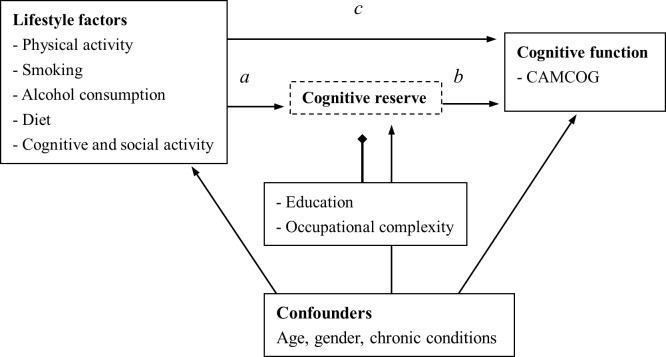
“To investigate the potential 270 mediating effect of cognitive reserve on the association between lifestyle factors and 271 cognitive function, three pathways (a, b, c) were estimated using linear regression modelling 272 and adjusting for age, gender and chronic conditions (Fig 1) [24].”
MethodWhat is cognitive reserve? Theory and research application of the reserve concept
STERN, Y. (2002) · Journal of the International Neuropsychological Society · doi:10.1017/s1355617702813248 · Cited by 3,951 · cited 2×
“trajectories of cognitive health and rates of cognitive decline [10].”
BackgroundPotential for primary prevention of Alzheimer's disease: an analysis of population-based data
Norton, S., Matthews, F. E., Barnes, D. E., Yaffe, K., & Brayne, C. (2014) · The Lancet Neurology · doi:10.1016/s1474-4422(14)70136-x · Cited by 2,466 · cited 2×
“relationships between exposures and outcomes and examine additional variables 265 hypothesised to be on the causal pathway [22, 23].”
BackgroundResultSelf-citationAn active and socially integrated lifestyle in late life might protect against dementia
Fratiglioni, L., Paillard-Borg, S., & Winblad, B. (2004) · The Lancet Neurology · doi:10.1016/s1474-4422(04)00767-7 · Cited by 2,135
Hertzog, C., Kramer, A. F., Wilson, R. S., & Lindenberger, U. (2008) · Psychological Science in the Public Interest · doi:10.1111/j.1539-6053.2009.01034.x · Cited by 1,495
Brain foods: The effects of nutrients on brain function.
Gómez-Pinilla, F. (2008) · Nature Reviews Neuroscience · doi:10.1038/nrn2421 · Cited by 1,372 · cited 1×
“networks and hence enhancing cognitive reserve, resulting in greater resilience against the 126 effects of developing neuropathology [13,14].”
BackgroundLeisure-time physical activity at midlife and the risk of dementia and Alzheimer's disease
Rovio, S., Kåreholt, I., Helkala, E.-L., Viitanen, M., Winblad, B., Tuomilehto, J., Soininen, H., Nissinen, A., & Kivipelto, M. (2005) · The Lancet Neurology · doi:10.1016/s1474-4422(05)70198-8 · Cited by 1,054 · cited 1×
“Targeting 104 potentially-modifiable lifestyle factors could have positive benefits for cognitive health in 105 later life and serve as a counterweight to elevated genetic risk [8].”
BackgroundBrain reserve and dementia: a systematic review
VALENZUELA, M. J., & SACHDEV, P. (2006) · Psychological Medicine · doi:10.1017/s0033291705006264 · Cited by 932 · cited 2×
“that place complex demands, is a key determinant of level of cognitive reserve [11,12].”
Background
Cited by
Alzheimer Disease Genetics Consortium (ADGC), Kunkle, B. W., The European Alzheimer’s Disease Initiative (EADI), Cohorts for Heart and Aging Research in Genomic Epidemiology Consortium (CHARGE), Genetic and Environmental Risk in AD/Defining Genetic, P. A. E. R. F. A. D. C. (., Grenier-Boley, B., Sims, R., Bis, J. C., Damotte, V., Naj, A. C., et al. (2019) · Nature Genetics · doi:10.1038/s41588-019-0358-2 · Cited by 2,946
Social Isolation and Cognitive Function in Later Life: A Systematic Review and Meta-Analysis
Evans, I. E. M., Martyr, A., Collins, R., Brayne, C., & Clare, L. (2019) · Journal of Alzheimer’s Disease · doi:10.3233/jad-180501 · Cited by 531
Self-citationB cells in autoimmune and neurodegenerative central nervous system diseases
Sabatino, J. J., Pröbstel, A.-K., & Zamvil, S. S. (2019) · Nature Reviews Neuroscience · doi:10.1038/s41583-019-0233-2 · Cited by 343
The impact of the COVID-19 pandemic on wellbeing and cognitive functioning of older adults
De Pue, S., Gillebert, C., Dierckx, E., Vanderhasselt, M.-A., De Raedt, R., & Van den Bussche, E. (2021) · Scientific Reports · doi:10.1038/s41598-021-84127-7 · Cited by 251
Jia, J., Zhao, T., Liu, Z., Liang, Y., Li, F., Li, Y., Liu, W., Li, F., Shi, S., Zhou, C., et al. (2023) · BMJ · doi:10.1136/bmj-2022-072691 · Cited by 252
Modifiable lifestyle factors and cognitive reserve: a systematic review of current evidence
Song, S., Stern, Y., & Gu, Y. (2022) · Ageing Research Reviews · doi:10.1016/j.arr.2021.101551 · Cited by 248
Nutrition and cognitive health: A life course approach
Puri, S., Shaheen, M., & Grover, B. (2023) · Frontiers in Public Health · doi:10.3389/fpubh.2023.1023907 · Cited by 224
Stojan, R., & Voelcker-Rehage, C. (2019) · Journal of Clinical Medicine · doi:10.3390/jcm8050734 · Cited by 152
“, nutrition or education), particularly physical exercise [39–42] and cognitive training [43–46] have been shown to benefit cognitive and brain health [38,47,48].”
BackgroundLi, H., Li, C., Wang, A., Qi, Y., Feng, W., Hou, C., Tao, L., Liu, X., Li, X., Wang, W., et al. (2020) · Alzheimer s Research & Therapy · doi:10.1186/s13195-020-00691-6 · Cited by 165
Prediction of brain age and cognitive age: quantifying brain and cognitive maintenance in aging
Anatürk, M., Kaufmann, T., Cole, J. H., Suri, S., Griffanti, L., Zsoldos, E., Filippini, N., Singh‐Manoux, A., Kivimäki, M., Westlye, L. T., et al. (2021) · Human Brain Mapping · doi:10.1002/hbm.25316 · Cited by 132
“…a sufficient amount of physical activity (PA; Guure, Ibrahim, Adam, & Said, 2017) could promote maintained cognitive function (Cadar et al., 2012; Clare et al., 2017; Sabia et al., 2009) and decreased dementia risk (Lourida et al., 2019) through brain preservation, as indicated by studies…”
BackgroundClare, L., Kudlicka, A., Oyebode, J. R., Jones, R. W., Bayer, A., Leroi, I., Kopelman, M., James, I. A., Culverwell, A., Pool, J., et al. (2019) · Health Technology Assessment · doi:10.3310/hta23100 · Cited by 123
Self-citationGut microbiota, nutrition, and mental health
Merlo, G., Bachtel, G., & Sugden, S. G. (2024) · Frontiers in Nutrition · doi:10.3389/fnut.2024.1337889 · Cited by 130
Dementia and aging populations—A global priority for contextualized research and health policy
Brayne, C., & Miller, B. (2017) · PLOS Medicine · doi:10.1371/journal.pmed.1002275 · Cited by 90
Self-citationMelatonin induces mechanisms of brain resilience against neurodegeneration
Corpas, R., Griñán‐Ferré, C., Palomera‐Ávalos, V., Porquet, D., de Frutos, P. G., Cozzolino, S. M. F., Rodríguez-Farré, E., Pallàs, M., Sanfeliu, C., & Cardoso, B. R. (2018) · Journal of Pineal Research · doi:10.1111/jpi.12515 · Cited by 90
Cognitive reserve and brain maintenance in aging and dementia: An integrative review
Pereira, G. Á., Nunes, M. V. S., Alzola, P., & Contador, I. (2021) · Applied Neuropsychology Adult · doi:10.1080/23279095.2021.1872079 · Cited by 95
“…have shown that health behaviors (e.g., abstaining from smoking, limiting the amount of alcohol consumed, and achieving a sufficient amount of physical activity) could help to maintain cognitive function (Cadar et al., 2012; Clare et al., 2017) and decrease dementia risk (Steffener et al., 2016).”
BackgroundPhysical exercise for prevention of dementia (EPD) study: background, design and methods
EPD Study Group, Iuliano, E., di Cagno, A., Cristofano, A., Angiolillo, A., D’Aversa, R., Ciccotelli, S., Corbi, G., Fiorilli, G., Calcagno, G., et al. (2019) · BMC Public Health · doi:10.1186/s12889-019-7027-3 · Cited by 86
“fiable risk factor for AD offers a promising way of decreasing the risk of dementia [7, 8].”
BackgroundKimura, N., Aso, Y., Yabuuchi, K., Ishibashi, M., Hori, D., Sasaki, Y., Nakamichi, A., Uesugi, S., Fujioka, H., Iwao, S., et al. (2019) · Frontiers in Neurology · doi:10.3389/fneur.2019.00401 · Cited by 92
Gelfo, F. (2019) · Frontiers in Behavioral Neuroscience · doi:10.3389/fnbeh.2019.00150 · Cited by 87
“It is widely agreed in the literature (Clare et al., 2017; Mandolesi et al., 2017; Chan et al., 2018; Pettigrew et al., 2019) that it is possible to identify three main lifestyle factors that induce a neuroprotective effect in the brain: (i) the social factor, that encompasses all the activities and engagements which…”
BackgroundDecandia, D., Gelfo, F., Landolfo, E., Balsamo, F., Petrosini, L., & Cutuli, D. (2023) · International Journal of Molecular Sciences · doi:10.3390/ijms24065921 · Cited by 71
Daimiel, L., Martínez‐González, M. Á., Corella, D., Salas‐Salvadó, J., Schröder, H., Vioqué, J., Romaguera, D., Martínez, J. A., Wärnberǵ, J., López‐Miranda, J., et al. (2020) · Scientific Reports · doi:10.1038/s41598-020-59458-6 · Cited by 80
Associations between Mobility, Cognition, and Brain Structure in Healthy Older Adults
Demnitz, N., Zsoldos, E., Mahmood, A., Mackay, C. E., Kivimäki, M., Singh‐Manoux, A., Dawes, H., Johansen‐Berg, H., Ebmeier, K. P., & Sexton, C. E. (2017) · Frontiers in Aging Neuroscience · doi:10.3389/fnagi.2017.00155 · Cited by 79
“Accordingly, in a recent crosssectional study of 2,315 older adults, lifestyle factors, including physical activity, were shown to account for 20% of the variance in cognitive test scores (Clare et al., 2017).”
BackgroundAhles, S., Joris, P. J., & Plat, J. (2021) · International Journal of Molecular Sciences · doi:10.3390/ijms22126482 · Cited by 68
Nogueira, J., Gerardo, B., Santana, I. J., Simões, M. R., & Freitas, S. (2022) · Frontiers in Psychology · doi:10.3389/fpsyg.2022.847186 · Cited by 86
“In summary, the individual level of CR has been strongly associated with the maintenance of cognitive health and an active lifestyle during aging, impacting the mitigation of Alzheimer’s disease symptomatology (Clare et al., 2017; Persson et al., 2017).”
BackgroundWang, Y., Du, Y., Li, J., & Qiu, C. (2019) · Frontiers in Aging Neuroscience · doi:10.3389/fnagi.2019.00129 · Cited by 60
Jakaria, M., Haque, M. E., Kim, J.-S., Cho, D.-Y., Kim, I., & Choi, D. (2018) · Oncotarget · doi:10.18632/oncotarget.26035 · Cited by 52
Yates, L., Csipke, E., Moniz-Cook, E. D., Leung, P., Walton, H., Charlesworth, G. M., Spector, A. E., Hogervorst, E., Mountain, G. A., & Orrell, M. W. (2019) · Clinical Interventions in Aging · doi:10.2147/cia.s214367 · Cited by 58
“Selective optimization with compensation (SOC) model The decline in cognitive health which is symptomatic of dementia may compromise quality of life, independence, social connectedness, sense of purpose, functional recovery (eg, illness), and ability to cope with functional decline.(31) The PRIDE intervention seeks to…”
BackgroundModarres, M. H., Kalafatis, C., Apostolou, P., Marefat, H., Khanbagi, M., Karimi, H., Vahabi, Z., Aarsland, D., & Khaligh‐Razavi, S. (2021) · Frontiers in Psychiatry · doi:10.3389/fpsyt.2021.706695 · Cited by 53
Ellwood, A., Quinn, C., & Mountain, G. A. (2021) · Research on Aging · doi:10.1177/01640275211045603 · Cited by 57
“A UK-based study of cross-sectional data found that cognitive and social activity were protective of cognitive function in later life (Clare et al., 2017).”
BackgroundContributions of Modifiable Risk Factors to Dementia Incidence: A Bayesian Network Analysis
Liang, J., Lü, L., Li, J., Qu, X.-Y., Li, J., Qian, S., Wang, Y., Jia, R., Wang, C., & Xu, Y. (2020) · Journal of the American Medical Directors Association · doi:10.1016/j.jamda.2020.04.006 · Cited by 55
Neth, B. J., Graff‐Radford, J., Mielke, M. M., Przybelski, S. A., Lesnick, T. G., Schwarz, C. G., Reid, R. I., Senjem, M. L., Lowe, V. J., Machulda, M. M., et al. (2020) · Frontiers in Aging Neuroscience · doi:10.3389/fnagi.2019.00355 · Cited by 49
“While these contribute to the lower susceptibility to pathology, other factors may be additive in our understanding of cognitive resilience and brain health (Clare et al., 2017); notably: smoking, alcohol intake, and systemic vascular and metabolic health (Wolf et al.”
BackgroundRashidi‐Ranjbar, N., Miranda, D., Butters, M. A., Mulsant, B. H., & Voineskos, A. N. (2020) · Frontiers in Neuroscience · doi:10.3389/fnins.2020.00253 · Cited by 52
“These include depression, diet, type 2 diabetes mellitus, midlife hypertension, current smoking, cognitive inactivity, physical inactivity, and traumatic brain injury (Daviglus et al., 2010; Baumgart et al., 2015; Xu et al., 2015; Clare et al., 2017).”
BackgroundFernández‐Gonzalo, S., Navarra‐Ventura, G., Bacardit, N., Gomà, G., de Haro, C., Subirá, C., López‐Aguilar, J., Magrans, R., Sarlabous, L., Aquino‐Esperanza, J., et al. (2020) · Critical Care · doi:10.1186/s13054-020-03334-2 · Cited by 52
Wu, J., Dong, W., Pan, X., Feng, L., Yuan, J., Pan, A., & Koh, W. (2018) · Age and Ageing · doi:10.1093/ageing/afy166 · Cited by 50
Greater lifestyle engagement is associated with better age-adjusted cognitive abilities
Borgeest, G. S., Henson, R. N., Shafto, M. A., Samu, D., Cam‐CAN, & Kievit, R. (2020) · PLoS ONE · doi:10.1371/journal.pone.0230077 · Cited by 55
“, studies that use five separate linear regressions to investigate the associations between cognition and cognitive and social activity, physical activity, diet, alcohol consumption and smoking [6]).”
BackgroundMondini, S., Pucci, V., Montemurro, S., & Rumiati, R. I. (2021) · European Journal of Neurology · doi:10.1111/ene.15183 · Cited by 50
“Adult learning seems to be quite effective in preserving cognition in the elderly [15,26].”
BackgroundLee, S. Y., Kang, J. M., Kim, D. J., Woo, S. K., Lee, J., & Cho, S. (2020) · Frontiers in Aging Neuroscience · doi:10.3389/fnagi.2020.590607 · Cited by 48
Multidomain Lifestyle Intervention Strategies for the Delay of Cognitive Impairment in Healthy Aging
Toman, J., Klímová, B., & Vališ, M. (2018) · Nutrients · doi:10.3390/nu10101560 · Cited by 54
Factors associated with cognitive reserve according to education level
Kim, Y., Stern, Y., Seo, S. W., Na, D. L., Jang, J., & Jang, H. (2024) · Alzheimer s & Dementia · doi:10.1002/alz.14236 · Cited by 52
The Relationship between Cognitive Reserve and Math Abilities
Arcara, G., Mondini, S., Alice, B., Palmer, K., Meneghello, F., & Semenza, C. (2017) · Frontiers in Aging Neuroscience · doi:10.3389/fnagi.2017.00429 · Cited by 46
“As the present findings show, distinct cognitive functions are not homogeneously sensitive to Cognitive Reserve (see for example Clare et al., 2017 for a study with positive correlations of Cognitive Reserve in a generic cognitive battery, or Puccioni and Vallesi, 2012, for correlation of Cognitive…”
BackgroundGómez‐Soria, I., Marín-Puyalto, J., Peralta, P., Latorre, E., & Calatayud, E. (2022) · Archives of Gerontology and Geriatrics · doi:10.1016/j.archger.2022.104751 · Cited by 52
Liu, T., Luo, H., Tang, J. Y. ‐., & Wong, G. H. Y. (2018) · Aging & Mental Health · doi:10.1080/13607863.2018.1539833 · Cited by 41
“The dichotomous measures of lifestyle might contribute to the very small effect of lifestyle factors on cognitive performance found in this study, some studies that measure lifestyle using scales of larger variability, reported larger effects, e.g., 20% of variance in cognition (Clare et al., 2017).”
BackgroundKim, J., & Kim, Y. (2021) · Biomedicines · doi:10.3390/biomedicines9010082 · Cited by 39
Klímová, B., & Vališ, M. (2018) · Nutrients · doi:10.3390/nu10070905 · Cited by 42
Microglia and modifiable life factors: Potential contributions to cognitive resilience in aging
Duggan, M. R., & Parikh, V. (2021) · Behavioural Brain Research · doi:10.1016/j.bbr.2021.113207 · Cited by 41
Balthazar, J., Schöwe, N. M., Cipolli, G. C., Buck, H. S., & Viel, T. A. (2018) · Frontiers in Aging Neuroscience · doi:10.3389/fnagi.2018.00288 · Cited by 36
Kujawski, S., Kujawska, A., Perkowski, R., Androsiuk-Perkowska, J., Hajec, W., Kwiatkowska, M. M., Skierkowska, N., Husejko, J., Bieniek, D., Newton, J. L., et al. (2021) · Frontiers in Aging Neuroscience · doi:10.3389/fnagi.2021.653570 · Cited by 37
Fleck, J. I., Arnold, M. S., Dykstra, B., Casario, K., Douglas, E. A., & Morris, O. (2019) · Frontiers in Aging Neuroscience · doi:10.3389/fnagi.2019.00310 · Cited by 39
“It has been suggested that engaging in cognitive, social, and physical activities throughout the lifespanmay build high levels of CR (e.g., Scarmeas et al., 2003; Dekhtyar et al., 2015; Clare et al., 2017), offering the individual protection against the sequelae of physical brain decline.”
BackgroundKaur, N., Dendukuri, N., Fellows, L. K., Brouillette, M., & Mayo, N. E. (2019) · AIDS Care · doi:10.1080/09540121.2019.1612017 · Cited by 37
“However, the mechanisms underlying cognitive reserve are not clear, and the construct itself is likely latent (i.e., can’t be measured directly) (Clare et al., 2017; Jones et al., 2011; Satz, Cole, Hardy, & Rassovsky, 2011).”
BackgroundLenart‐Bugla, M., Łuc, M., Pawłowski, M., Szcześniak, D. M., Seifert, I., Wiegelmann, H., Gerhardus, A., Wolf‐Ostermann, K., Rouwette, E. A. J. A., Ikram, M. A., et al. (2022) · Brain Sciences · doi:10.3390/brainsci12091214 · Cited by 41
Qiu, X., Kuang, J., Huang, Y., Wei, C., & Zheng, X. (2024) · BMC Public Health · doi:10.1186/s12889-024-19332-w · Cited by 36
Effect of Exergame Training on Working Memory and Executive Function in Older Adults
Zhao, C., Zhao, C., Zhao, M., Wang, L., Guo, J., Zhang, L., Li, Y., Sun, Y. L., Zhang, L., Li, Z., et al. (2022) · Sustainability · doi:10.3390/su141710631 · Cited by 33
“The evidence suggests that potentially modifiable lifestyle factors may influence cognitive health in later life and offer the potential to reduce the risk of cognitive decline and dementia [4,5].”
BackgroundCognitive and brain reserve in bilinguals: field overview and explanatory mechanisms
Gallo, F., Myachykov, A., Юрьевич, Ш. Ю., & Abutalebi, J. (2020) · Journal of Cultural Cognitive Science · doi:10.1007/s41809-020-00058-1 · Cited by 33
Molecular markers of DNA repair and brain metabolism correlate with cognition in centenarians
Sánchez-Román, I., Ferrando, B., Holst, C. M., Mengel‐From, J., Rasmussen, S., Thinggaard, M., Bohr, V. A., Christensen, K., & Stevnsner, T. (2021) · GeroScience · doi:10.1007/s11357-021-00502-2 · Cited by 31
Cognitive resilience depends on white matter connectivity: The Maastricht Study
DeJong, N. R., Jansen, J. F. A., van Boxtel, M. P. J., Schram, M. T., Stehouwer, C. D. A., Dagnelie, P. C., Kallen, C., Kroon, A. A., Wesselius, A., Koster, A., et al. (2022) · Alzheimer s & Dementia · doi:10.1002/alz.12758 · Cited by 36
Li, C., Jin, S., Cao, X., Han, L., Sun, N., Allore, H. G., Hoogendijk, E. O., Xu, X., Feng, Q., Liu, X., et al. (2022) · BMC Geriatrics · doi:10.1186/s12877-022-03341-8 · Cited by 35
Funcionamiento cognitivo en adultos mayores: rol de la reserva cognitiva, apoyo social y depresión
Cancino, M., Rehbein, L., & Ortíz, M. S. (2018) · Revista médica de Chile · doi:10.4067/s0034-98872018000300315 · Cited by 67
Ge, H., Dong, S., Su, W., Guan, W., Yu, Q. S., Liu, Y., Qi, Y., Sun, X., Zhang, H., & Ma, G. (2024) · BMC Public Health · doi:10.1186/s12889-024-19157-7 · Cited by 34
Cognitive Diversity in a Healthy Aging Cohort: Cross-Domain Cognition in the Cam-CAN Project
Shafto, M. A., Henson, R. N., Matthews, F. E., Taylor, J. R., Emery, T., Erzinçlioğlu, S., Hanley, C., Rowe, J. B., Cusack, R., Calder, A. J., et al. (2019) · Journal of Aging and Health · doi:10.1177/0898264319878095 · Cited by 34
“The relationship of these variables to cognitive function has been examined individually, and they are all related to the concept of cognitive reserve, the ability for older adults to be resilient to neural decline and maintain cognitive abilities (Chan et al., 2018; Chapko, McCormack, Black, Staff, & Murray, 2018; Cl…”
BackgroundResultInfluentialSelf-citationA Novel BrainHealth Index Prototype Improved by Telehealth-Delivered Training During COVID-19
Chapman, S. B., Fratantoni, J. M., Robertson, I. H., D’Esposito, M., Ling, G. S. F., Zientz, J., Vernon, S., Venza, E. E., Cook, L. G., Tate, A., et al. (2021) · Frontiers in Public Health · doi:10.3389/fpubh.2021.641754 · Cited by 32
Cognition and Cognitive Reserve in Cochlear Implant Recipients
Völter, C., Götze, L., Bajewski, M., Dazert, S., & Thomas, J. P. (2022) · Frontiers in Aging Neuroscience · doi:10.3389/fnagi.2022.838214 · Cited by 38
Yu, Y., Yuan, C., Zhang, Q., Song, C., Cui, S., Ye, J., Zhang, X., & Chen, C. (2021) · Health & Social Care in the Community · doi:10.1111/hsc.13353 · Cited by 29
Status and Factors of Cognitive Function Among Older Adults in Urban China
Shen, L., Tang, X., Li, C., Qian, Z., Wang, J., & Liu, W. (2021) · Frontiers in Psychology · doi:10.3389/fpsyg.2021.728165 · Cited by 36
Schott, N., & Krull, K. (2019) · Frontiers in Psychology · doi:10.3389/fpsyg.2019.01347 · Cited by 28
“A significant amount of studies has shown that there is an association between cognitive performance and lifestyle behaviors such as physical activity, fitness, sleep, nutrition, and spirituality in older adults (Clare et al., 2017).”
BackgroundBurzynska, A. Z., Voss, M. W., Fanning, J. T., Salerno, E. A., Gothe, N. P., McAuley, E., & Kramer, A. F. (2020) · Psychology and Aging · doi:10.1037/pag0000580 · Cited by 30
“Furthermore, higher education and income have been associated with greater maintenance of cognitive function (Albert et al., 1995; Clare et al., 2017; Inouye et al., 1993; Stern, 2009; Stern et al., 1994) and PA engagement in older age (August & Sorkin, 2011; Birmingham et al.”
BackgroundInfluentialKim, D. E., & Yoon, J. Y. (2021) · Archives of Gerontology and Geriatrics · doi:10.1016/j.archger.2021.104532 · Cited by 30
The Risk of Dementia in Relation to Cognitive and Brain Reserve
Lamballais, S., Zijlmans, J. L., Vernooij, M. W., Ikram, M. K., Luik, A. I., & Ikram, M. A. (2020) · Journal of Alzheimer s Disease · doi:10.3233/jad-200264 · Cited by 31
“For example, higher levels of education could lead to healthier lifestyle choices and therefore better cardiovascular and brain health [45].”
BackgroundCognitive reserve in patients with first-episode psychosis as outcome predictor at 5-year follow-up
Camprodon‐Boadas, P., de la Serna, E., Baeza, I., Puig, O., Ilzarbe, D., Sugranyes, G., Borràs, R., & Castro‐Fornieles, J. (2020) · European Child & Adolescent Psychiatry · doi:10.1007/s00787-020-01668-4 · Cited by 28
Cognitive Reserve and Digital Confidence among Older Adults as New Paradigm for Resilient Aging
Ranieri, J., Guerra, F., Angione, A. L., Giacomo, D. D., & Passafiume, D. (2021) · Gerontology and Geriatric Medicine · doi:10.1177/2333721421993747 · Cited by 34
“…and physical activities throughout one’s lifespan contributes to high levels of cognitive reserve, which protects individuals against the sequelae of neural damage, reduces their risk of developing dementia, and slows the rate of memory decline due to normal aging (Clare et al., 2017; Stern, 2009).”
BackgroundRequena-Ocaña, N., Araos, P. F., Flores, M., García‐Marchena, N., Silva‐Peña, D., Aranda, J., Rivera, P., Ruiz, J. J., Serrano, A., Pavón, F. J., et al. (2021) · Scientific Reports · doi:10.1038/s41598-021-95131-2 · Cited by 29
Testing the Cognitive Reserve Index Questionnaire in an Alzheimer’s Disease Population
Garba, A. E., Grossberg, G. T., Enard, K. R., Jano, F. J., Roberts, E. N., Marx, C., & Buchanan, P. M. (2020) · Journal of Alzheimer s Disease Reports · doi:10.3233/adr-200244 · Cited by 24
“The brain changes seen with AD may start 20 or more years before symptoms are detected [7].”
BackgroundJeon, S., Lee, S., & Charles, S. T. (2022) · The Journals of Gerontology Series B · doi:10.1093/geronb/gbac053 · Cited by 25
Examining the Combined Effects of Social Isolation and Loneliness on Memory: A Systematic Review
Kang, J. W., & Oremus, M. (2022) · Archives of Gerontology and Geriatrics · doi:10.1016/j.archger.2022.104801 · Cited by 37
Shi, Z., Lin, J., Xiao, J., & Fang, Y. (2021) · BMC Geriatrics · doi:10.1186/s12877-021-02087-z · Cited by 22
Rashkin, M. D., Bowes, J., Dunaway, K. W., Dhaliwal, J. K., Loomis, E. W., Riffle, S., Washington, N. L., Ziegler, C., Lu, J. T., & Levin, E. (2019) · Journal of Genetic Counseling · doi:10.1002/jgc4.1123 · Cited by 25
Lozada, P. S. M., Pozo-Neira, J., & León-Rojas, J. E. (2025) · Cancers · doi:10.3390/cancers17132174 · Cited by 21
“Moreover, the concept of neural reserve and compensation emerges; patients with richer premorbid connectivity or bilateral network representation may cope better with tumor-induced damage [67].”
Right Lateralized Brain Reserve Offsets Age-Related Deficits in Ignoring Distraction
Shalev, N., Brosnan, M. B., & Chechlacz, M. (2020) · Cerebral Cortex Communications · doi:10.1093/texcom/tgaa049 · Cited by 22
Stinchcombe, A., & Hammond, N. G. (2021) · The Journals of Gerontology Series B · doi:10.1093/geronb/gbab084 · Cited by 29
Tanprasertsuk, J., Scott, T. M., Barbey, A. K., Barger, K., Wang, X.-D., Johnson, M. A., Poon, L. W., Vishwanathan, R., Matthan, N. R., Lichtenstein, A. H., et al. (2021) · Frontiers in Nutrition · doi:10.3389/fnut.2021.704691 · Cited by 22
Zhu, L., Shen, X., Shi, X., & Ouyang, X. (2024) · BMC Geriatrics · doi:10.1186/s12877-024-05093-z · Cited by 25
“…and heavy drinking, engaging in physical activity and daily intake of fruits and vegetables, have been observed to be associated with better health outcomes, including healthy aging [13], longer life expectancy [14], increase in life-years lived in good health [15] and cognitive health [16].”
BackgroundGamble, L. D., Clare, L., Opdebeeck, C., Martyr, A., Jones, R. W., Rusted, J. M., Pentecost, C., Thom, J. M., & Matthews, F. E. (2025) · Age and Ageing · doi:10.1093/ageing/afae284 · Cited by 34
Self-citationJelinek, P. L., Simpson, S., Brown, C. R., Jelinek, G. A., Marck, C. H., Livera, A. M. D., O’Kearney, E., Taylor, K. L., Neate, S. L., & Weiland, T. J. (2018) · European Journal of Neurology · doi:10.1111/ene.13784 · Cited by 21
A longitudinal exploration of mental health resilience, cognitive impairment and loneliness
Windle, G., Hoare, Z., Woods, B. T., Huisman, M. A., & Burholt, V. (2021) · International Journal of Geriatric Psychiatry · doi:10.1002/gps.5504 · Cited by 24
“A continuous scale was generated using the frequency levels (0 = once a year or less, 1 = several times a year, 2 = several times a month, 3 = several times a week, and 4 = every day or almost every day) multiplied by the intensity ratio (mild: moderate: vigorous = 1:2:3), based on the metabolic equivalent of task (ME…”
MethodSelf-citationMontemurro, S., Mondini, S., & Arcara, G. (2021) · Neuropsychology · doi:10.1037/neu0000770 · Cited by 22
Setbacks in Alzheimer research demand new strategies, not surrender
Jobke, B., McBride, T. C., Nevin, L. M., Peiperl, L., Ross, A. J., Stone, C., Turner, R. C., & Editors, A. T. P. M. (2018) · PLoS Medicine · doi:10.1371/journal.pmed.1002518 · Cited by 20
Associations Between Plasma Metals and Cognitive Function in People Aged 60 and Above
Zhang, J., Liu, Q., Xu, M., Cai, J., Wei, Y., Lin, Y., Mo, X., Huang, S., Liu, S., Mo, C., et al. (2021) · Biological Trace Element Research · doi:10.1007/s12011-021-02941-6 · Cited by 21
Yuan, M., Qin, F., Xu, C., & Fang, Y. (2022) · BMJ Open · doi:10.1136/bmjopen-2021-060477 · Cited by 25
Prevalence of frailty and its association with lifestyle factors among elderly in rural Bengaluru
Shilpa, K., & Norman, G. (2022) · Journal of Family Medicine and Primary Care · doi:10.4103/jfmpc.jfmpc_1679_21 · Cited by 25
“The activities were • Visiting others • Entertaining others at home • Going out to eat with • Hobby • Travelling out of town • Meeting children/relatives • Attending gatherings • Chatting with neighbors.[13]”
BackgroundPhysical Mobility, Social Isolation and Cognitive Function: Are There Really Gender Differences?
Zhao, D., Chai, S., Gao, T., Li, J., & Zhou, C. (2023) · American Journal of Geriatric Psychiatry · doi:10.1016/j.jagp.2023.04.002 · Cited by 20
Bone, J. K., Fancourt, D. E., Sonke, J. K., & Bu, F. (2023) · Creativity Research Journal · doi:10.1080/10400419.2023.2247241 · Cited by 23
“For example, arts activities involve challenging and stimulating experiences, which may enhance neuronal structure and brain function, and thus contribute to increased cognitive reserve (Clare et al., 2017).”
BackgroundDietary patterns and cognitive function in older New Zealand adults: the REACH study
Mumme, K., Conlon, C. A., von Hurst, P. R., Jones, B., Haskell‐Ramsay, C. F., de Seymour, J. V., Stonehouse, W., Heath, A. M., Coad, J., Mugridge, O., et al. (2022) · European Journal of Nutrition · doi:10.1007/s00394-021-02775-x · Cited by 19
Shi, S., Kou, W., Bian, Z., Chen, X., Song, L., Fu, L., & Qiu, P. (2024) · Journal of Affective Disorders · doi:10.1016/j.jad.2024.09.049 · Cited by 19
Wang, F., Gao, C., Wang, Y., Li, Z., Zheng, F., & Luo, Y. (2024) · JMIR Public Health and Surveillance · doi:10.2196/49790 · Cited by 21
“The decline in cognitive function can have adverse effects on social interaction, sense of purpose, independent living abilities, as well as the capacity to recover from illnesses or injuries [2,3].”
BackgroundVoits, T., Rothman, J., Calabria, M., Robson, H., Aguirre, N., Cattaneo, G., Costumero, V., Hernández, M., Puig, M. J., Marín-Marín, L., et al. (2023) · Bilingualism Language and Cognition · doi:10.1017/s1366728923000354 · Cited by 19
“In this sense, bilingualism is not so different from other lifestyle factors such as higher levels of education, sustained physical exercise, and occupational attainment (Clare et al., 2017; Foubert-Samieret al., 2012).”
BackgroundKaur, A., Sonal, A., Ghosh, T. K., & Ahamed, F. (2023) · Journal of Family Medicine and Primary Care · doi:10.4103/jfmpc.jfmpc_2458_22 · Cited by 18
“[5,6] Though the highest education attained by an individual is commonly chosen as a single proxy measure of cognitive reserve, there is a difference in opinion about its sole impact on cognitive function.”
BackgroundMethodZhu, L., Wang, Y., Wu, Y., Wilson, A., Zhou, H., Li, N., & Wang, Y. Y. (2024) · Frontiers in Public Health · doi:10.3389/fpubh.2024.1352433 · Cited by 19
Self-citationThe Hidden Dangers of Sedentary Living: Insights into Molecular, Cellular, and Systemic Mechanisms
Diniz, D. G., Bento‐Torres, J., da Costa, V. O., Carvalho, J. P. R., Tomás, A. M., de Oliveira, T. C. G., Soares, F. C., de Macedo, L. D. E. D., Jardim, N. Y. V., Bento-Torres, N. V. O., et al. (2024) · International Journal of Molecular Sciences · doi:10.3390/ijms251910757 · Cited by 22
The Role of Gait Speed in Dementia: A Secondary Analysis from the SABE Colombia Study
Garcia-Cifuentes, E. R., Márquez, I., Vásquez, D., Aguillon, D. F., Borda, M. G., Lopera, F. J., & Cano, C. A. (2020) · Dementia and Geriatric Cognitive Disorders · doi:10.1159/000510494 · Cited by 16
Association between serum globulin and cognitive impairment in older American adults
Huang, J. H., Li, R., Zhu, H., Huang, D., Li, W., Wang, J., & Liu, Z. (2023) · Frontiers in Public Health · doi:10.3389/fpubh.2023.1193993 · Cited by 15
Li, S., He, X., Wu, L. L., Tang, X., Ouyang, Y., Jing, W., Yang, Y., Yang, J., Che, K., Pan, C., et al. (2024) · Frontiers in Aging Neuroscience · doi:10.3389/fnagi.2024.1419235 · Cited by 21
Zhang, Y., Natale, G., & Clouston, S. (2021) · Journal of Alzheimer s Disease · doi:10.3233/jad-201196 · Cited by 20
Metadata
- Authors
- Clare, L., Wu, Y.-T., Teale, J. C., MacLeod, C., Matthews, F., Brayne, C., Woods, B., & CFAS-Wales study team
- Affiliations
- Australian National University (AU)
- University of Exeter (GB)
- Bangor University (GB)
- University of Cambridge (GB)
- Corresponding author
- Clare, Linda
- Venue
- PLOS Medicine
- Publisher
- Public Library of Science (PLoS)
- Published
- 2017-03-21
- Volume
- 14
- Issue
- 3
- Pages
- e1002259
- ISSN
- 1549-1277 (ISSN-L)
- 1549-1676
- PMC
- PMC5360216
- OpenAlex
- W2584171552
- Cited by
- 325
- References
- 39
- Citations by year
- 2026: 27 · 2025: 52 · 2024: 51 · 2023: 45 · 2022: 33 · 2021: 36 · 2020: 37 · 2019: 25 · 2018: 15 · 2017: 4
- FWCI
- 18.20
- Type
- journal article
- Language
- en
- Open access
- gold
- doi.org
- Licence
- Locations
- PLoS Medicine (publishedVersion, cc-by)
- PubMed Central (publishedVersion, cc-by)
- PubMed (publishedVersion)
- Edinburgh Research Explorer (University of Edinburgh) (submittedVersion, cc-by)
- DOAJ (DOAJ: Directory of Open Access Journals) (submittedVersion, cc-by-sa)
- Figshare (submittedVersion)
- Figshare (submittedVersion, cc-by)
- Repository@Hull (Worktribe) (University of Hull) (submittedVersion, cc-by)
- Open Research Exeter (University of Exeter) (submittedVersion, cc-by)
- Bangor University Research Portal (Bangor University) (submittedVersion, other-oa)
- Apollo (University of Cambridge) (submittedVersion, cc-by)
- Apollo (cc-by)
- Funders
- Economic and Social Research Council (RES-060-25-0060)
- Medical Research Council (U105292687)
- Topics
- Health Sciences › Medicine › Psychiatry and Mental health › Dementia and Cognitive Impairment Research
- Health Sciences › Medicine › Public Health, Environmental and Occupational Health › Aging, Health, and Disability
- Social Sciences › Psychology › Developmental and Educational Psychology › Aging and Gerontology Research
- Keywords
- cognitive reserve, lifestyle factors, cognitive function, older adults, mediation analysis, cognitive activity, social activity, physical activity, diet, alcohol consumption, smoking, dementia risk, cognitive decline
- MeSH terms
- Aged, Aged, 80 and over, Cognition, Cross-Sectional Studies, Educational Status, Female, Humans, Life Style, Male, Occupations, Wales, Cognitive Reserve
About these checks
Registry, retraction, Cites and statistics results are computed, not judged, with one exception: a printed reference that no index lists is read once by a model before it counts as a citation error. Claims are extracted by a model and kept only when their quote appears verbatim in the text; each cited source is then checked, with a model’s help, for whether it says what the claim relies on. Those verdicts can be wrong — read the claim’s quote and the cited source before relying on one.
Statistics and arithmetic are recomputed, not judged.
Confidence bands are shown only for fields calibrated on our annotated test set. None is calibrated yet, so no band is shown.
What counts as a claim ›How we measure confidence ›How we check this ›
Are you an author, or do you see a problem with this page? Request a review
Data sources
Bibliographic data: Semantic Scholar, OpenAlex, Crossref.
Contains information from the Semantic Scholar Academic Graph Datasets, made available under the ODC Attribution License (ODC-BY 1.0).
Semantic Scholar’s data is described in: Kinney, R., et al. (2023). The Semantic Scholar Open Data Platform. arXiv:2301.10140.
