

Potentially modifiable lifestyle factors, cognitive reserve, and cognitive function in later life: A cross-sectional study
Open accessThe DOI matches its Crossref record; 39 of the 39 references it cites were found in a registry or an index.
Abstract
BACKGROUND: Potentially modifiable lifestyle factors may influence cognitive health in later life and offer potential to reduce the risk of cognitive decline and dementia. The concept of cognitive reserve has been proposed as a mechanism to explain individual differences in rates of cognitive decline, but its potential role as a mediating pathway has seldom been explored using data from large epidemiological studies. We explored the mediating effect of cognitive reserve on the cross-sectional association between lifestyle factors and cognitive function in later life using data from a population-based cohort of healthy older people. METHODS AND FINDINGS: We analysed data from 2,315 cognitively healthy participants aged 65 y and over in the Cognitive Function and Ageing Study Wales (CFAS-Wales) cohort collected in 2011-2013. Linear regression modelling was used to investigate the overall associations between five lifestyle factors-cognitive and social activity, physical activity, diet, alcohol consumption, and smoking-and cognition, adjusting for demographic factors and chronic conditions. Mediation analysis tested for indirect effects of the lifestyle factors on cognition via cognitive reserve. After controlling for age, gender, and the presence of chronic conditions, cognitive and social activity, physical activity, healthy diet, and light-to-moderate alcohol consumption were positively associated with cognitive function, together accounting for 20% (95% CI 17%-23%) of variance in cognitive test scores. Cognitive reserve was an important mediator of this association, with indirect effects via cognitive reserve contributing 21% (95% CI 15%-27%) of the overall effect on cognition. The main limitations of the study derive from the cross-sectional nature of the data and the challenges of accurately measuring the latent construct of cognitive reserve. CONCLUSIONS: Cross-sectional associations support the view that enhancing cognitive reserve may benefit cognition, and maintenance of cognitive health may be supported by a healthy and active lifestyle, in later life.
Overview
The claims and statistics of this paper haven’t been checked yet.
Free: it reads the open-access text and checks the first 5 claims that cite a source we can check. Create a free account to check every claim.
Integrity signals
Registry
Cites
Statistics
Figures
Verification
Claims the paper makes
The claims and statistics of this paper haven’t been checked yet.
Free: it reads the open-access text and checks the first 5 claims that cite a source we can check. Create a free account to check every claim.
Claims other papers make about this one
Each is checked against this paper’s own text: does it say what the citing paper says it does?
The cited source says what the claim attributes to it.
In the citing paper
“The small effect size is unsurprising given the range of factors that contribute to maintaining healthy cognitive function [119, 120].”
From Social Isolation and Cognitive Function in Later Life: A Systematic Review and Meta-Analysis (2019) · cites this paper as [120]
The cited source says what the claim attributes to it.
In the citing paper
“and that other lifestyle factors may contribute to the maintenance of cognitive health [119, 120]”
From Social Isolation and Cognitive Function in Later Life: A Systematic Review and Meta-Analysis (2019) · cites this paper as [120]
Self-check
Percentages, sums and reported differences re-computed from the paper’s own numbers.
The self-check needs the paper’s full text.
Citations
Cites
Folstein, M. F., Folstein, S. E., & McHugh, P. R. (1975) · Journal of Psychiatric Research · doi:10.1016/0022-3956(75)90026-6 · Cited by 88,282
SPSS and SAS procedures for estimating indirect effects in simple mediation models
Preacher, K. J., & Hayes, A. F. (2004) · Behavior Research Methods, Instruments, & Computers · doi:10.3758/bf03206553 · Cited by 17,383
Reconsidering Baron and Kenny: myths and truths about mediation analysis
Zhao, X., Lynch, J. G., & Chen, Q. (2010) · Journal of Consumer Research · doi:10.1086/651257 · Cited by 12,583 · cited 1×
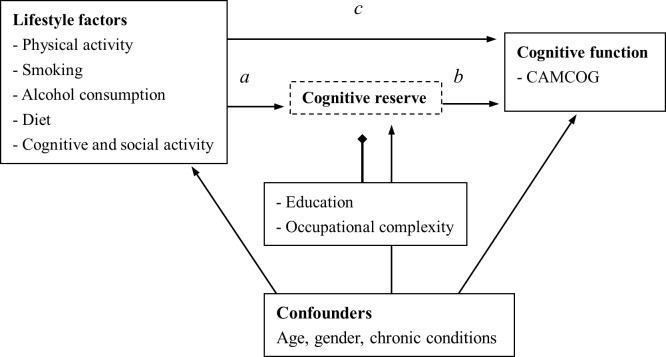
“To investigate the potential 270 mediating effect of cognitive reserve on the association between lifestyle factors and 271 cognitive function, three pathways (a, b, c) were estimated using linear regression modelling 272 and adjusting for age, gender and chronic conditions (Fig 1) [24].”
MethodWhat is cognitive reserve? Theory and research application of the reserve concept
STERN, Y. (2002) · Journal of the International Neuropsychological Society · doi:10.1017/s1355617702813248 · Cited by 3,951 · cited 2×
“trajectories of cognitive health and rates of cognitive decline [10].”
BackgroundPotential for primary prevention of Alzheimer's disease: an analysis of population-based data
Norton, S., Matthews, F. E., Barnes, D. E., Yaffe, K., & Brayne, C. (2014) · The Lancet Neurology · doi:10.1016/s1474-4422(14)70136-x · Cited by 2,466 · cited 2×
“relationships between exposures and outcomes and examine additional variables 265 hypothesised to be on the causal pathway [22, 23].”
BackgroundResultSelf-citationAn active and socially integrated lifestyle in late life might protect against dementia
Fratiglioni, L., Paillard-Borg, S., & Winblad, B. (2004) · The Lancet Neurology · doi:10.1016/s1474-4422(04)00767-7 · Cited by 2,135
Hertzog, C., Kramer, A. F., Wilson, R. S., & Lindenberger, U. (2008) · Psychological Science in the Public Interest · doi:10.1111/j.1539-6053.2009.01034.x · Cited by 1,495
Brain foods: The effects of nutrients on brain function.
Gómez-Pinilla, F. (2008) · Nature Reviews Neuroscience · doi:10.1038/nrn2421 · Cited by 1,372 · cited 1×
“networks and hence enhancing cognitive reserve, resulting in greater resilience against the 126 effects of developing neuropathology [13,14].”
BackgroundLeisure-time physical activity at midlife and the risk of dementia and Alzheimer's disease
Rovio, S., Kåreholt, I., Helkala, E.-L., Viitanen, M., Winblad, B., Tuomilehto, J., Soininen, H., Nissinen, A., & Kivipelto, M. (2005) · The Lancet Neurology · doi:10.1016/s1474-4422(05)70198-8 · Cited by 1,054 · cited 1×
“Targeting 104 potentially-modifiable lifestyle factors could have positive benefits for cognitive health in 105 later life and serve as a counterweight to elevated genetic risk [8].”
BackgroundBrain reserve and dementia: a systematic review
VALENZUELA, M. J., & SACHDEV, P. (2006) · Psychological Medicine · doi:10.1017/s0033291705006264 · Cited by 932 · cited 2×
“that place complex demands, is a key determinant of level of cognitive reserve [11,12].”
Background
Cited by
Items 201–300 of 325
Internet Use, Leisure Activities, and Memory Performance Among 65+ Residents of Baltic States
Ivleva, V., Kairys, A., & Jurkuvėnas, V. (2024) · Socialinė teorija empirija politika ir praktika · doi:10.15388/stepp.2023.27.5 · Cited by 8
Pulmonary function and trajectories of cognitive decline in aging population
Ksinan, A. J., Dalecká, A., Court, T., Pikhart, H., & Bobák, M. (2024) · Experimental Gerontology · doi:10.1016/j.exger.2024.112386 · Cited by 6
“Cognitive health is among the major factors relevant to preserving the quality of life as it allows older people to maintain a sense of purpose and the ability to live independently (Clare et al., 2017; Dekhuijzen et al., 2020).”
BackgroundThe mechanisms of the protective effect of education in cognitive aging
Sidenkova, A. P., Litvinenko, V., & Kalinin, I. (2020) · BIO Web of Conferences · doi:10.1051/bioconf/20202201016 · Cited by 4
Watermeyer, T., Gregory, S., Leetham, E., Udeh‐Momoh, C. T., & Terrera, G. M. (2025) · Frontiers in Dementia · doi:10.3389/frdem.2024.1496051 · Cited by 7
Liu, G.-H., Huang, Y.-H., Yuan, T.-C., Chen, Y.-P., Hsu, J., Lee, S., Lin, C.-M., Toh, C., Fang, J., Lin, S., et al. (2025) · JMIR Aging · doi:10.2196/80584 · Cited by 5
Kratz, F., & Klee, M. (2026) · Social Science & Medicine · doi:10.1016/j.socscimed.2026.118961 · Cited by 3
Sun, Q., Zheng, F., Chen, G., & Jin, L. (2026) · Frontiers in Neurology · doi:10.3389/fneur.2025.1644172 · Cited by 3
Jin, S., Chao, J., Jin, Q., Yang, B., Tan, G., Wang, L., & Wu, Y. (2025) · Brain Sciences · doi:10.3390/brainsci15040408 · Cited by 3
“Previous studies have identified the correlations between age, gender, education, lifestyle, BMI, functional abilities, and cognitive scores [6,23,40].”
Self-citationVinay, R., Probst, J., Huynh, P., Schlögl, M., Kowatsch, T., & Nißen, M. (2025) · PLoS ONE · doi:10.1371/journal.pone.0323390 · Cited by 4
“While these proxy improvements do not constitute direct evidence of reduced dementia incidence, they are aligned with established mechanisms linking cognitive reserve and lifestyle factors to lower dementia risk [55,56].”
Reserva cognitiva e os diferentes perfis de ganho cognitivo em idosos: Uma scoping review
Brandebusque, J. C., Cipolli, G. C., Alonso, V., Defanti, F. M. G., & Cachioni, M. (2020) · Psico · doi:10.15448/1980-8623.2020.4.33842 · Cited by 4
COGNITIVE FUNCTIONS IN MULTIPLE SCLEROSIS PATIENTS DEPENDING ON THE DIFFERENT RISK FACTORS PRESENCE
Kopchak, O. O., Odintsova, T. A., & Pulyk, O. R. (2021) · Wiadomości Lekarskie · doi:10.36740/wlek202110115 · Cited by 4
Ihle, A., Gouveia, É. R., de Gouveia, B. R. F. O., Marques, A., Marconcin, P., Nascimento, M. D. M., Haas, M., Jurema, J., Tinôco, M. A., & Kliegel, M. (2022) · Biology · doi:10.3390/biology11121754 · Cited by 5
Role of Education and Physical Activity in Executive Function Performance of Adult Population
Sharma, N., & Shenoy, S. (2023) · Current Aging Science · doi:10.2174/1874609816666230214100557 · Cited by 5
EVALUATING POSITIVE EFFECTS OF LEISURE FROM A LIFE-COURSE PERSPECTIVE: A LITERATURE REVIEW
Takiguchi, Y., Kikutani, M., & Matsui, M. (2023) · PSYCHOLOGIA · doi:10.2117/psysoc.2022-b027 · Cited by 4
Pue, S. D., Gillebert, C. R., Dierckx, E., & den Bussche, E. V. (2023) · Scientific Reports · doi:10.1038/s41598-023-36718-9 · Cited by 3
Ruiz‐Rizzo, A. L., Finke, K., Damoiseaux, J. S., Bartels, C., Büerger, K., Cosma, N. C., Dechent, P., Dobisch, L., Ewers, M., Fließbach, K., et al. (2024) · Neurobiology of Aging · doi:10.1016/j.neurobiolaging.2024.01.012 · Cited by 7
Liu, X., Li, C., Jin, S., Cao, X., Hoogendijk, E. O., Han, L., Xu, X., Allore, H. G., Feng, Q., Zhang, Q., et al. (2024) · Experimental Gerontology · doi:10.1016/j.exger.2024.112490 · Cited by 3
“Several covariates were considered as they may be related to cognitive impairment (Anstey et al., 2013; Clare et al., 2017; Klimova et al., 2017; Norton et al., 2014; Polidori et al., 2010; Richard et al., 2009; Scazufca et al., 2010), disability (Z.-H. Li et al., 2020; Macinko et al., 2021; Van…”
BackgroundAriöz, U., Smrke, U., Šafran, V., Lin, S. M., Nateqi, J., Bēma, D., Poļaka, I., Arcimoviča, K., Ļeščinska, A. M., Manzo, G., et al. (2025) · Applied Sciences · doi:10.3390/app15094713 · Cited by 6
Non-pharmacological therapies of cognitive impairment
Маневич, Т. М., & Mkhitaryan, E. A. (2020) · Russian Journal of Geriatric Medicine · doi:10.37586/2686-8636-3-2020-243-249 · Cited by 3
The Mobile Physical Activity and Cognitive Training App for Older Adults: A Pilot Study
Smith, L., Argentina, V., Price, J., & O’Brien, C. P. (2020) · CIN Computers Informatics Nursing · doi:10.1097/cin.0000000000000697 · Cited by 2
“Prevention research should include multidomain interventions that focus concurrently on vascular and lifestyle risk factors, such as PA, cognitive activity, and socialization.(5) These prevention trials testingCT and physical exercise can be designed to target individuals with any degree of cognitive function ranging…”
BackgroundGender Features of the Cognitive Reserve.
Sidenkova, A. P., & Litvinenko, V. (2021) · PubMed · Cited by 3
Westrick, A. C., Langa, K. M., & Kobayashi, L. C. (2022) · Preventive Medicine Reports · doi:10.1016/j.pmedr.2022.102083 · Cited by 4
Miao, Y., Li, X., Shen, Z., Zhu, D., Bai, J., Zhang, J., Ren, R., Guo, D., Tarimo, C. S., Cui, J., et al. (2025) · Scientific Reports · doi:10.1038/s41598-025-85163-3 · Cited by 4
Miao, Y., Zhu, D., Shen, Z., Li, Y., Zhang, W., Bai, J., Ren, R., Zhang, J., Guo, D., Tarimo, C. S., et al. (2025) · BMC Public Health · doi:10.1186/s12889-025-21442-y · Cited by 2
Xiao, J., Guo, B., Ma, Y., Huang, N., Huang, T., & Liang, H. (2025) · Depression and Anxiety · doi:10.1155/da/1293449 · Cited by 3
Zhu, H., Zhao, X., Jing, Y., Wang, P., Huang, Z., Ren, J., Zhou, H., & Wang, Y. (2025) · Journal of Global Health · doi:10.7189/jogh.15.04221 · Cited by 3
“Healthy LFs may increase CR, which may help people to be more resilient to physiological changes in relation to cognitive function [ 40 ].”
Delbono, O., Wang, Z., & Messi, M. L. (2025) · Ageing Research Reviews · doi:10.1016/j.arr.2025.102999 · Cited by 7
Bohn, L., Vandenberg, P., Fah, H., Rajah, M. N., Einstein, G., & Dixon, R. A. (2026) · Biology of Sex Differences · doi:10.1186/s13293-026-00864-2 · Cited by 3
“Several recent studies and reviews suggest that cognitively stimulating activities may function as a pathway towards increased brain and cognitive reserve [75, 84, 85], and such associations may translate into healthier memory aging [86].”
Tao, H., Wang, T., & Jia, Y. (2023) · Frontiers in Public Health · doi:10.3389/fpubh.2023.1244407 · Cited by 2
Evaluación de la Flexibilidad Cognitiva en la vejez: Evidencias de validez del Test CAMBIOS
Krzemien, D., Bario, D. A., Ferreyra, F. A., & Richard’s, M. M. (2023) · Revista Evaluar · doi:10.35670/1667-4545.v23.n3.43890 · Cited by 4
Corney, K. B., Stuart, A. L., Mohebbi, M., Pasco, J. A., Kavanagh, B. E., Sui, S. X., & Williams, L. J. (2024) · Acta Neurologica Scandinavica · doi:10.1155/2024/1935091 · Cited by 2
Bai, Y., Liu, M., Fang, Y., & Zhan, R. (2024) · Frontiers in Psychology · doi:10.3389/fpsyg.2024.1407846 · Cited by 4
DIET AND COGNITION IN AGING: EFFECTS OF HIGH-FAT-SUGAR DIETS ON MEMORY AND EXECUTIVE FUNCTIONING
Atak, S., Boye, A., Botoseneanu, A., Peciña, S., & Liu, Z. (2024) · Journal of Ageing and Longevity · doi:10.1093/geroni/igae098.3042 · Cited by 2
Characterizing the cognitive and mental health benefits of exercise and video game playing
Paleczny, S. G., Wild, C. J., Xue, A., Highfield, R., & Owen, A. M. (2025) · PLoS ONE · doi:10.1371/journal.pone.0334924 · Cited by 4
“The past decade has seen a proliferation of research into preventative medicine, and whether modifiable lifestyle factors can improve cognitive and mental health [1,2].”
Cognitive Aging and Cognitive Reserve: Points of Contact
Myakotnykh, V. S., Sidenkova, A. P., Сергеевна, О. Е., Кулакова, И. А., Belikh, N. A., & Borovkova, T. A. (2020) · Advances in Gerontology · doi:10.1134/s2079057020040165 · Cited by 2
“At the same time, the threshold of reduced CNS function is determined not by quantitative measurements in the brain structures but by a set of changes determined by the individual’s experience [14, 16, 18, 21].”
BackgroundInfluentialCorrelates of visuospatial ability among older people in Indonesia
Widagdo, T. M. M., Rianto, N., Restyandito, & Kurniawan, E. (2021) · Indian Journal of Community Medicine · doi:10.4103/ijcm.ijcm_526_20 · Cited by 3
“The results showed that cognitive function tended to decline with age, as reported by numerous studies.[11-13] There was no significant difference among participants of different age groups.”
ResultMeulenberg, C. J. W. (2019) · Annales Kinesiologiae · doi:10.35469/ak.2019.175 · Cited by 5
Nutrition and Chronic Conditions
Ojo, O. (2019) · MDPI eBooks · doi:10.3390/books978-3-03897-603-5 · Cited by 8
Prevention and Intervention Approaches for Cognitive Aging
Shake, M. C., & Blake, C. D. (2021) · Springer eBooks · doi:10.1007/978-3-030-12852-4_68-1 · Cited by 2
Lifshitz, H. (2020) · Springer eBooks · doi:10.1007/978-3-030-38352-7_1 · Cited by 3
Lifestyle Factors and Cognitive Health
Singha, R. (2024) · Advances in medical technologies and clinical practice book series · doi:10.4018/979-8-3693-1090-8.ch003 · Cited by 1
Ponnusamy, B., Rajagopal, P., & Jayaraman, S. (2024) · Springer eBooks · doi:10.1007/978-981-99-8803-7_12 · Cited by 1
Kang, S.-J. (2024) · Journal of Exercise Rehabilitation · doi:10.12965/jer.2448644.322 · Cited by 1
Chen, X., Wang, P., Tang, Y., Veldheer, S., Geng, T., Sun, L., Li, Y., & Gao, X. (2025) · Journal of Alzheimer s Disease · doi:10.1177/13872877251327164 · Cited by 2
Wu, P., Ding, J., Jin, H., Zhang, J., Greenshaw, A. J., & Liang, S. (2025) · Frontiers in Psychiatry · doi:10.3389/fpsyt.2025.1553895 · Cited by 1
Liu, J., Wang, S., Song, Y., Luo, R., & Han, L. (2025) · Frontiers in Public Health · doi:10.3389/fpubh.2025.1603138 · Cited by 3
Nelson, C. L., & Revell, A. J. (2025) · Sage Open Aging · doi:10.1177/30495334251352906 · Cited by 1
“…by their spouse, which may encourage engagement in cognitively enriching activities, such as social interaction, intellectual pursuits, and physical exercise, all of which contribute to cognitive reserve (Clare et al., 2017; Evans et al., 2018; Håkansson et al., 2009; Richards & Deary, 2005).”
Xu, R. P., Wu, Z., & Liu, Z. (2025) · Frontiers in Medicine · doi:10.3389/fmed.2025.1625542 · Cited by 3
Yang, L., Wang, J., Guo, D., Zhang, X., & Wang, L. (2025) · BMC Geriatrics · doi:10.1186/s12877-025-06375-w · Cited by 1
“Many studies have found that age, education, income, physical inactivity, healthy behaviours, and chronic diseases can contribute to the cognitive function of older adults [5–7].”
The Role of Preinjury Cognitive Function in Future Traumatic Brain Injury and Functional Recovery
Taalas, W., Raj, R., & Siironen, J. O. (2025) · Neurology · doi:10.1212/wnl.0000000000214322 · Cited by 1
Jing, W., Zhang, Q., & Kang, J. (2025) · Educational Gerontology · doi:10.1080/03601277.2025.2575904 · Cited by 1
“Another potential pathway appears to be that cognitive reserve was an important mediator between healthy lifestyle behaviors and cognitive function (Clare et al., 2017).”
Cara, K. C., Scott, T. M., Jacques, P. F., & Chung, M. (2025) · Current Developments in Nutrition · doi:10.1016/j.cdnut.2025.107599 · Cited by 7
“…cross-sectional analysis of the Cognitive Function and Ageing Study Wales (CFAS-Wales) cohort ( n = 2315) which found positive and significant associations for healthy diet with cognitive reserve after controlling for age, sex, chronic conditions, cognitive and social activity, and lifestyle [42].”
Sun, L., Wang, J., Kang, Y., & Zhang, P. (2025) · The Journals of Gerontology Series A · doi:10.1093/gerona/glaf266 · Cited by 1
Ren, J., Li, H., Liufu, L., Yang, Y., Long, D., Liu, H., & Chen, L. (2025) · Aging Clinical and Experimental Research · doi:10.1007/s40520-025-03255-6 · Cited by 1
Zhao, X., Zhang, Y., Ge, R., Ji, L., Dong, Z., Zhang, H., Bai, X., Chen, S., Li, H., Jing, Q., et al. (2026) · BMC Public Health · doi:10.1186/s12889-026-26368-7 · Cited by 2
“…studies have shown that sociodemographic characteristics (such as age, sex, and education level), health conditions, and behavioral factors (such as chronic status and social interaction) may be associated with the trajectories of depressive symptoms and cognitive function in older adults [12–15].”
Wang, K., Wan, R., Peng, J., Zhou, H., Xu, K., Liu, H., Chen, L., & Liu, Z. (2026) · The Journal of Prevention of Alzheimer s Disease · doi:10.1016/j.tjpad.2026.100499 · Cited by 2
“Second, engagement in social activities may bolster cognitive reserve by improving neural efficiency and brain plasticity, thereby delaying neurodegeneration [42,43].”
Mohammed, A., Ovalle-Eliseo, S., Mohammed, J. M., Islas-Huerta, G., Monserratt, L. H., Andrade, D., Garcia, J., Kaufman, R., Gutierrez, M. R. C., & Díaz‐Santos, M. (2026) · JMIR Formative Research · doi:10.2196/73445 · Cited by 1
Dai, D., Xiang, B., Dai, Y., Yang, P., Zhu, N., & Wang, S. Z. (2026) · Frontiers in Psychology · doi:10.3389/fpsyg.2026.1564721 · Cited by 1
“Most studies employed cross-sectional designs, limiting understanding of temporal relationships (Clare et al., 2017; Sedgwick, 2015).”
Montanari, M., Balsamo, F., Ponterio, G., Atiallah, I. E., Landolfo, E., Berretta, E., D’Ambra, C., Martella, G., Meringolo, M., Tassone, A., et al. (2026) · Brain Behavior and Immunity · doi:10.1016/j.bbi.2026.106557 · Cited by 1
Scotti, G., Caprara, G., Penserini, C., Titta, L., Cuccarini, V., Berlingeri, M., & Rosazza, C. (2026) · Aging Clinical and Experimental Research · doi:10.1007/s40520-026-03362-y · Cited by 2
“These findings contribute to a finer-grained understanding of the cognitive benefits of a healthy lifestyle by highlighting domain-specific effects that may remain undetected if one considers global cognitive functioning [14, 26].”
InfluentialPapi, S., Salimi, M. M., Behboodi, L., Dianat, I., Jafarabadi, M. A., & Allahverdipour, H. (2022) · Menopause Review/Przegląd Menopauzalny · doi:10.5114/pm.2022.116976 · Cited by 5
“It can be influenced by factors such as physical activity, participation in motivational activities, and social networks [46].”
BackgroundCalatayud, E., Ferreira, C., Oliván‐Blázquez, B., Aguilar‐Latorre, A., & Gómez‐Soria, I. (2023) · Journal of Applied Gerontology · doi:10.1177/07334648231154040 · Cited by 2
“…activities and interests is related to a better adaptation to the aging process due to the increase in cognitive reserve that each new activity and role produces (Clare et al., 2017; Gulley et al., 2011; Kielhofner, 2007; Kim et al., 2021; Mao et al., 2020; Oakley et al., 1986; Zhu et al., 2017).”
Nurturing Student Well-Being in the Modern World: Nutrition and Its Effect on Cognitive Functioning
Prabakar, T., Jagadeesha, D., Narayan, S., & Kachhi, Z. (2024) · Advances in educational marketing, administration, and leadership book series · doi:10.4018/979-8-3693-1455-5.ch018 · Cited by 1
Когнитивный резерв и образование в зрелом и пожилом возрастах (обзор литературы)
Sidenkova, A. P., Литвиненко, В. В., & Кулакова, И. А. (2019) · Сибирский вестник психиатрии и наркологии · doi:10.26617/1810-3111-2019-4(105)-52-59 · Cited by 1
Wang, H., Xia, H., Wang, D., Yu, C., Wang, X., Yu, Y., Zhang, C., & Liu, Z. (2022) · All Life · doi:10.1080/26895293.2022.2101550 · Cited by 1
Ivleva, V., & Kairys, A. (2023) · International Journal of Cognitive Research in Science Engineering and Education · doi:10.23947/2334-8496-2023-11-1-129-141
Program Studi Ilmu Keolahragaan, F. I. O., Prayikno, R., Noordia, A., Program Studi Ilmu Keolahragaan, F. I. O., Kumaat, N. A., Program Studi Ilmu Keolahragaan, F. I. O., Yuliastrid, D., Program Studi Ilmu Keolahragaan, F. I. O., Susanto, I. H., & Program Studi Ilmu Keolahragaan, F. I. O. (2023) · Jurnal Porkes · doi:10.29408/porkes.v6i1.7929 · Cited by 1
Sedentary Life Is an Invisible Trap: Molecular, Cellular, and Systemic Reasons to Leave It BehindPreprint
Diniz, D. G., Bento‐Torres, J., da Costa, V. O., Carvalho, J. P. R., Tomás, A. M., de Oliveira, T. C. G., Soares, F. C., de Macedo, L. D. E. D., Jardim, N. Y. V., Bento-Torres, N. V. O., et al. (2024) · Preprints.org · doi:10.20944/preprints202408.1277.v1 · Cited by 1
Rezerwa poznawcza: jak się starzeć pomyślnie?
Szepietowska, E. M. (2019) · Annales Universitatis Mariae Curie-Skłodowska sectio J – Paedagogia-Psychologia · doi:10.17951/j.2018.31.3.299-311 · Cited by 1
Atividades cognitivas entre idosos longevos: dados do estudo FIBRA
Brandebusque, J. C. (2019) · Digital Library of Theses and Dissertations (Universidade de São Paulo) · doi:10.11606/d.100.2019.tde-13062019-230505
COGNITIVE REHABILITATION FOR THE ELDERLY USING SOCIAL ROBOTS: A BRIEF REVIEW
Mahmoudi, M., & Hameed, I. A. (2019) · ICERI proceedings · doi:10.21125/iceri.2019.1668 · Cited by 1
Higher Level of Cognitive Reserve Reduces the Risk of Cognitive Difficulties in Healthy Adults
Szepietowska, E. M., & Kuzaka, A. (2020) · Psihologijske teme · doi:10.31820/pt.29.2.2
“…of CR-related effects in cognitive competences at later stages of life should account for various resources related to life history, e.g., living conditions, previous and existing CNS disorders, drugs (Clare et al., 2017), demographic factors, ethnicity and migration (Mondini et al., 2014).”
BackgroundInfluentialRisk Factors and Non-Pharmacological Prevention of Dementia
D’Hooge, R., der Jeugd, A. V., Engelborghs, S., Waldorff, F. B., & Vandenbulcke, M. (2022) · Cambridge University Press eBooks · doi:10.1017/9781108918954.009
The role of social support networks in the dementia literacy of older adults in Wales
Maddock, C. A. (2019) · Cronfa (Swansea University) · doi:10.23889/suthesis.61499
Can our life resources support successful aging?
Szepietowska, E. M. (2022) · Kwartalnik Naukowy Fides et Ratio · doi:10.34766/fetr.v4i52.1141
“The studies following the former approach, in most general terms, show that higher level of CR favourably affects both general cognitive functioning (Clare et al., 2017) and its specific domains (Perneczky et al., 2019).”
ResultThe Role of Bilingualism in the Formation of Neurocognitive Reserve
Malyshevskaya, A., Gallo, F., Efremov, A., Myachykov, A., & Юрьевич, Ш. Ю. (2023) · Neuroscience and Behavioral Physiology · doi:10.1007/s11055-023-01410-y
“Researchers have discovered a number of such protective factors in recent years, including both the level of employment and access to higher education, along with intellectually or physically active leisure activities [Cheng, 2016; Clare et al., 2017; Rouillard et al., 2017; Wang et al., 2017].”
BackgroundTreatment of Vascular Cognitive Impairment: A Bibliometric Analysis over a 12-Year Period
(2023) · International Journal of World Medicine · doi:10.38007/ijwm.2023.040207
Cognitive reserve to modify the trajectory of dementia: what does it represent for Oaxaca, Mexico?
Martínez-Martínez, G. M., Nance, D. C., & Ortiz, E. M. (2023) · Revista de Fomento Social · doi:10.24875/rmn.22000032
“Motor function also has a reserve component 5 only for strenuous activities but also for moderate physical activities.”
Srivastava, S. (2022) · Indian Journal of Mental Health(IJMH) · doi:10.30877/ijmh.9.4.2022.333-341
Social Relationships and Cognitive Function in Older Adults
Kim, H. (2023) · Cambridge University Press eBooks · doi:10.1017/9781108974325.014 · Cited by 1
An Individual’s Cognitive Aging with Others: Key Findings, Issues, and Implications
Chey, J. (2023) · Cambridge University Press eBooks · doi:10.1017/9781108974325.013
Vafa, S., Yong, M. H., Marzuki, A. A., Ng, A. L. O., & Schaefer, A. (2023) · doi:10.31234/osf.io/fbyan
“Previous studies repeatedly demonstrated the effect of individual factors on the cognitive interventions’ outcomes (Clare et al., 2017; Corbett & Ballard, 2020; Roheger et al., 2020; Roldán-Tapia et al., 2017; Shaw & Hosseini, 2021).”
古丽尼莎汗, ·. (2023) · Advances in Clinical Medicine · doi:10.12677/acm.2023.13112570
Association between Serum Creatinine and Cognitive Impairment in US Older AdultsPreprint
Wang, X., & Lu, X. (2023) · Research Square · doi:10.21203/rs.3.rs-3652105/v1 · Cited by 1
The Effect of Physical Activity Level on Executive Functions in Obese Cases
Karakoç, Z. B., Demırbüken, İ., Keleş, H. O., Oğul, Ö. E., Timurtaş, E., Üner, Ö. E., Sertbaş, Y., & Polat, M. G. (2024) · İzmir Katip Çelebi Üniversitesi Sağlık Bilimleri Fakültesi Dergisi · doi:10.61399/ikcusbfd.1386543 · Cited by 1
Ajith, M., Aycock, D. M., Tone, E. B., Liu, J., Misiura, M. B., Ellis, R., Plis, S., King, T. Z., Dotson, V. M., & Calhoun, V. D. (2024) · Aperture Neuro · doi:10.52294/001c.118576
Dong, Q., Li, Y., Song, Y., Zhang, Y. L., Han, X., Ren, Y., Wang, J., Han, X., & Du, Y. (2024) · Journal of Alzheimer s Disease Reports · doi:10.3233/adr-240064
Morikawa, M., Harada, K., Kurita, S., Nishijima, C., Fujii, K., Kakita, D., Yamashiro, Y., Takayanagi, N., Sudo, M., & Shimada, H. (2024) · Archives of Gerontology and Geriatrics · doi:10.1016/j.archger.2024.105736 · Cited by 1
Zhu, H., Zhao, X., Jing, Y., Wang, P., Huang, Z., Ren, J., Zhou, H., & Wang, Y. (2025) · SSRN Electronic Journal · doi:10.2139/ssrn.5123848
Lin, W., & Lin, Y.-K. (2025) · Archives of Gerontology and Geriatrics Plus · doi:10.1016/j.aggp.2025.100139 · Cited by 1
Zhang, S., Cheng, Y., Zhang, L., Ma, Y., Fu, J., Yang, T., Xia, J., Li, C., Burgunder, J., & Shang, H. (2025) · Movement Disorders Clinical Practice · doi:10.1002/mdc3.70047
Nutrition and cognitive function in the elderly: The correlation
Iraj, S., & Khan, A. R. (2025) · International Journal of Home Science · doi:10.22271/23957476.2025.v11.i2a.1842
“Cognitive decline or dementia symptoms may manifest only when there is a more significant threshold/burden of pathology (Matthews F. et al ., 2017) [3] .”
Zhang, X., Xie, T., Guo, K., Liu, X., Zhou, S., Yuan, T., She, Y., Guo, R., Hu, J., Liu, X., et al. (2025) · Food Science and Human Wellness · doi:10.26599/fshw.2025.9250640 · Cited by 1
Hyodo, K., & Soya, H. (2025) · Advances in neurobiology · doi:10.1007/978-981-95-0066-6_21
Cognitive Reserve in rural and urban populations: Insights from two aging cohorts in southern India
Burra, R., Malo, P. K., Pradhan, H., Prasad, R., Rai, P., Issac, T. G., Sundarakumar, J. S., Athreya, S., Sundaresan, R., CBR-SANSCOG Study Team, et al. (2026) · Alzheimer s Research & Therapy · doi:10.1186/s13195-026-02031-6
“…in a sample of 370 elderly individuals from urban West Bengal measured CR by combining two proxy indicators, educational level and occupational complexity, but used a formula developed for a different population, namely the Cognitive Function and Ageing Studies – Wales (CFAS-Wales) cohort [7, 8].”
Self-citationDong, J., Lv, J., Lu, M., Chen, Y., Zhang, S., Feng, Y., Huang, H., & Zhou, Y. (2025) · Research Square · doi:10.21203/rs.3.rs-7473070/v1
Telomere length, aging, and cognitive function in the Midwestern Amish
Liu, Y., Song, Y. E., Lynn, A., Wang, W., Miskimen, K. L. S., Fuzzell, S. L., Hochstetler, S. D., Laux, R. A., Caywood, L. J., Clouse, J. E., et al. (2025) · Human Genetics and Genomics Advances · doi:10.1016/j.xhgg.2025.100533 · Cited by 3
Santana, L. K., Meng, H., Liu, Y., Le, M. Q., Peterson, L. J., Grippo, A. J., Branco, M. D. F. C., Li, M., & Dobbs, D. (2025) · Sage Open Aging · doi:10.1177/30495334251385858
“For example, Clare et al. (2017), in a neuroimaging study of 67 community-dwelling older adults, found that higher engagement in social and intellectual activities was associated with better cognitive performance and greater global brain volume ( r = .37, p < .01).”
Metadata
- Authors
- Clare, L., Wu, Y.-T., Teale, J. C., MacLeod, C., Matthews, F., Brayne, C., Woods, B., & CFAS-Wales study team
- Affiliations
- Australian National University (AU)
- University of Exeter (GB)
- Bangor University (GB)
- University of Cambridge (GB)
- Corresponding author
- Clare, Linda
- Venue
- PLOS Medicine
- Publisher
- Public Library of Science (PLoS)
- Published
- 2017-03-21
- Volume
- 14
- Issue
- 3
- Pages
- e1002259
- ISSN
- 1549-1277 (ISSN-L)
- 1549-1676
- PMC
- PMC5360216
- OpenAlex
- W2584171552
- Cited by
- 325
- References
- 39
- Citations by year
- 2026: 27 · 2025: 52 · 2024: 51 · 2023: 45 · 2022: 33 · 2021: 36 · 2020: 37 · 2019: 25 · 2018: 15 · 2017: 4
- FWCI
- 18.20
- Type
- journal article
- Language
- en
- Open access
- gold
- doi.org
- Licence
- Locations
- PLoS Medicine (publishedVersion, cc-by)
- PubMed Central (publishedVersion, cc-by)
- PubMed (publishedVersion)
- Edinburgh Research Explorer (University of Edinburgh) (submittedVersion, cc-by)
- DOAJ (DOAJ: Directory of Open Access Journals) (submittedVersion, cc-by-sa)
- Figshare (submittedVersion)
- Figshare (submittedVersion, cc-by)
- Repository@Hull (Worktribe) (University of Hull) (submittedVersion, cc-by)
- Open Research Exeter (University of Exeter) (submittedVersion, cc-by)
- Bangor University Research Portal (Bangor University) (submittedVersion, other-oa)
- Apollo (University of Cambridge) (submittedVersion, cc-by)
- Apollo (cc-by)
- Funders
- Economic and Social Research Council (RES-060-25-0060)
- Medical Research Council (U105292687)
- Topics
- Health Sciences › Medicine › Psychiatry and Mental health › Dementia and Cognitive Impairment Research
- Health Sciences › Medicine › Public Health, Environmental and Occupational Health › Aging, Health, and Disability
- Social Sciences › Psychology › Developmental and Educational Psychology › Aging and Gerontology Research
- Keywords
- cognitive reserve, lifestyle factors, cognitive function, older adults, mediation analysis, cognitive activity, social activity, physical activity, diet, alcohol consumption, smoking, dementia risk, cognitive decline
- MeSH terms
- Aged, Aged, 80 and over, Cognition, Cross-Sectional Studies, Educational Status, Female, Humans, Life Style, Male, Occupations, Wales, Cognitive Reserve
About these checks
Registry, retraction, Cites and statistics results are computed, not judged, with one exception: a printed reference that no index lists is read once by a model before it counts as a citation error. Claims are extracted by a model and kept only when their quote appears verbatim in the text; each cited source is then checked, with a model’s help, for whether it says what the claim relies on. Those verdicts can be wrong — read the claim’s quote and the cited source before relying on one.
Statistics and arithmetic are recomputed, not judged.
Confidence bands are shown only for fields calibrated on our annotated test set. None is calibrated yet, so no band is shown.
What counts as a claim ›How we measure confidence ›How we check this ›
Are you an author, or do you see a problem with this page? Request a review
Data sources
Bibliographic data: Semantic Scholar, OpenAlex, Crossref.
Contains information from the Semantic Scholar Academic Graph Datasets, made available under the ODC Attribution License (ODC-BY 1.0).
Semantic Scholar’s data is described in: Kinney, R., et al. (2023). The Semantic Scholar Open Data Platform. arXiv:2301.10140.
