

Plasticity of the Intrinsic Period of the Human Circadian Timing System
Open accessThe DOI matches its Crossref record; 47 of the 49 references it cites were found in a registry or an index.
Abstract
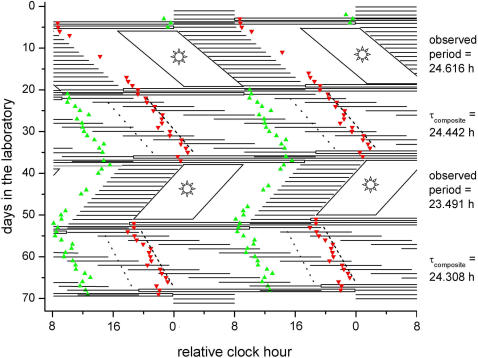
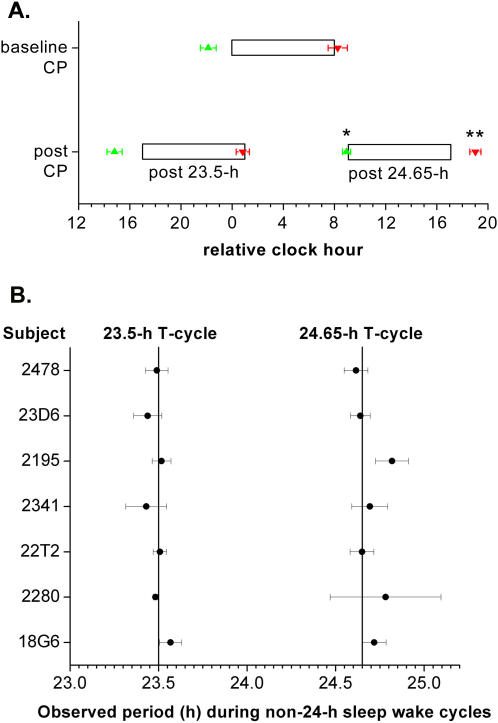
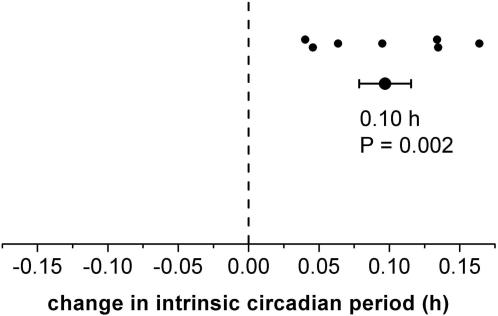
Human expeditions to Mars will require adaptation to the 24.65-h Martian solar day-night cycle (sol), which is outside the range of entrainment of the human circadian pacemaker under lighting intensities to which astronauts are typically exposed. Failure to entrain the circadian time-keeping system to the desired rest-activity cycle disturbs sleep and impairs cognitive function. Furthermore, differences between the intrinsic circadian period and Earth's 24-h light-dark cycle underlie human circadian rhythm sleep disorders, such as advanced sleep phase disorder and non-24-hour sleep-wake disorders. Therefore, first, we tested whether exposure to a model-based lighting regimen would entrain the human circadian pacemaker at a normal phase angle to the 24.65-h Martian sol and to the 23.5-h day length often required of astronauts during short duration space exploration. Second, we tested here whether such prior entrainment to non-24-h light-dark cycles would lead to subsequent modification of the intrinsic period of the human circadian timing system. Here we show that exposure to moderately bright light ( approximately 450 lux; approximately 1.2 W/m(2)) for the second or first half of the scheduled wake episode is effective for entraining individuals to the 24.65-h Martian sol and a 23.5-h day length, respectively. Estimations of the circadian periods of plasma melatonin, plasma cortisol, and core body temperature rhythms collected under forced desynchrony protocols revealed that the intrinsic circadian period of the human circadian pacemaker was significantly longer following entrainment to the Martian sol as compared to following entrainment to the 23.5-h day. The latter finding of after-effects of entrainment reveals for the first time plasticity of the period of the human circadian timing system. Both findings have important implications for the treatment of circadian rhythm sleep disorders and human space exploration.
Overview
The claims and statistics of this paper haven’t been checked yet.
Free: it reads the open-access text and checks the first 5 claims that cite a source we can check. Create a free account to check every claim.
Integrity signals
Registry
Cites
Statistics
Figures
Verification
Claims the paper makes
The claims and statistics of this paper haven’t been checked yet.
Free: it reads the open-access text and checks the first 5 claims that cite a source we can check. Create a free account to check every claim.
Claims other papers make about this one
Each is checked against this paper’s own text: does it say what the citing paper says it does?
The cited source says what the claim attributes to it.
In the citing paper
“Light studies in humans and other animals have demonstrated that the intrinsic period of the circadian pacemaker is dependent on prior light exposure40, 41.”
From Irregular sleep/wake patterns are associated with poorer academic performance and delayed circadian and sleep/wake timing (2017) · cites this paper as [41]
In the citing paper
“However, it should be noted that the 24-h oscillation time can be changed slightly using different stimuli [ 44 ].”
From Physiological Rhythms and Biological Variation of Biomolecules: The Road to Personalized Laboratory Medicine (2023) · cites this paper as [44]
Self-check
Percentages, sums and reported differences re-computed from the paper’s own numbers.
The self-check needs the paper’s full text.
Citations
Cites
Coordination of circadian timing in mammals
Reppert, S. M., & Weaver, D. R. (2002) · Nature · doi:10.1038/nature00965 · Cited by 4,379 · cited 1×
“The period of the circadian timing system is genetically determined, involving transcription-translation feedback loops of clock genes [17,18].”
BackgroundTwo-Process Model of Sleep Regulation
(2009) · Encyclopedia of Neuroscience · doi:10.1007/978-3-540-29678-2_6166 · Cited by 3,899 · cited 1×
“The daily pattern of sleep and wakefulness is regulated by homeostatic and circadian processes [1,2].”
BackgroundPhototransduction by retinal ganglion cells that set the circadian clock
Berson, D. M., Dunn, F. A., & Takao, M. (2002) · Science · doi:10.1126/science.1067262 · Cited by 3,629 · cited 1×
“Based on the spectral sensitivity of retinal photoreceptor systems involved in non-imageforming photic responses, additional research should be conducted to evaluate strategies to decrease further the light intensity or duration required by optimizing wavelength [8,28].”
BackgroundPittendrigh, C. S., & Daan, S. (1976) · Journal of Comparative Physiology ? A · doi:10.1007/bf01417856 · Cited by 2,127
Stephan, F. K., & Zucker, I. (1972) · Proceedings of the National Academy of Sciences · doi:10.1073/pnas.69.6.1583 · Cited by 2,039 · cited 1×
“The master circadian pacemaker, located in the suprachiasmatic nucleus of the anterior hypothalamus (SCN), orchestrates near-24-h rhythms in physiology and behavior in mammals, including the sleep-wake cycle [3,4].”
BackgroundTransplanted Suprachiasmatic Nucleus Determines Circadian Period
Ralph, M. R., Foster, R. G., Davis, F. C., & Menaker, M. (1990) · Science · doi:10.1126/science.2305266 · Cited by 1,853 · cited 1×
“The period of the circadian timing system is genetically determined, involving transcription-translation feedback loops of clock genes [17,18].”
BackgroundStability, precision, and near-24-hour period of the human circadian pacemaker
Czeisler, C. A., Duffy, J. F., Shanahan, T. L., Brown, E. N., Mitchell, J. F., Rimmer, D. W., Ronda, J. M., Silva, E. J., Allan, J. S., Emens, J. S., et al. (1999) · Science · doi:10.1126/science.284.5423.2177 · Cited by 1,705 · cited 6×
“plasma melatonin, plasma cortisol, and core body temperature data collected during FD and were computed by a nonorthogonal spectral analysis technique with an exact maximum likelihood fitting procedure [13].”
BackgroundMethodInfluentialSelf-citationPittendrigh, C. S., & Daan, S. (1976) · Journal of Comparative Physiology ? A · doi:10.1007/bf01417860 · Cited by 1,636 · cited 6×
“comparable in magnitude to after-effects of entrainment [26,40,42].”
BackgroundResultInfluentialZeitzer, J. M., Dijk, D., Kronauer, R. E., Brown, E. N., & Czeisler, C. A. (2000) · The Journal of Physiology · doi:10.1111/j.1469-7793.2000.00695.x · Cited by 1,175 · cited 2×
“Given that the resetting effects of light are both phasedependent [7,15] and intensity-dependent [5,6], we used Kronauer’s mathematical model [16] to design a temporal pattern of”
MethodSelf-citationA Phase Response Curve to Single Bright Light Pulses in Human Subjects
Khalsa, S. B. S., Jewett, M. E., Cajochen, C., & Czeisler, C. A. (2003) · The Journal of Physiology · doi:10.1113/jphysiol.2003.040477 · Cited by 1,040 · cited 2×
“Given that the resetting effects of light are both phasedependent [7,15] and intensity-dependent [5,6], we used Kronauer’s mathematical model [16] to design a temporal pattern of”
MethodSelf-citation
Research works printed but not linked: 2
- DeCoursey PJ 1989 Photoentrainment of circadian rhythms: an ecologist viewpoint. Hiroshige T Honma K Circadian clocks and ecology Sapporo Hokkaido Univ. Press 187 206
- Richter CP 1968 Inherent twenty-four hour and lunar clocks of a primate - the squirrel monkey. Commun Behav Biol 1 305 332
Cited by
Items 101–144 of 144
Light in ecological settings: Entrainment, circadian disruption, and interventions
Fischer, D. R., & Hilditch, C. J. (2022) · Progress in brain research · doi:10.1016/bs.pbr.2022.04.001 · Cited by 5
How Light Resets Circadian Clocks
Johnsson, A., Helfrich‐Förster, C., & Engelmann, W. (2014) · Springer eBooks · doi:10.1007/978-1-4939-1468-5_18 · Cited by 6
Physiological and pathophysiological role of the circadian clock system
Halmos, T., & Suba, I. (2012) · Orvosi Hetilap · doi:10.1556/oh.2012.29436 · Cited by 8
Associations of Circadian Disruption of Sleep and Nutritional Factors with Risk of Cancer
Anjum, B. (2012) · The Open Nutraceuticals Journal · doi:10.2174/1876396001205010124 · Cited by 5
“The internal rhythms can become desynchronized from both the external environment and internally with each other, impairing our ability to sleep and wake at the appropriate times and compromising physiologic and metabolic processes [16].”
BackgroundResultBiological Rhythms Workshop IC: Sleep and Rhythms
Münch, M. Y., Cain, S. W., & Duffy, J. F. (2007) · Cold Spring Harbor Symposia on Quantitative Biology · doi:10.1101/sqb.2007.72.065 · Cited by 5
“…than 24-hour day lengths have also been reported in hamsters (Reebs and Doucet 1997), albino rats (Stewart et al. 1990), and more recently humans (Scheer et al. 2007). most powerful environmental signal to the internal clock) is therefore present at some circadian phases and absent at others…”
BackgroundZhao, C., Li, N., Yi, X., Wang, X., He, Y., Shen, H., & Lin, Y. (2025) · Journal of Sleep Research · doi:10.1111/jsr.14450 · Cited by 3
Ince, L. M. (2022) · Parasite Immunology · doi:10.1111/pim.12905 · Cited by 4
Z-Time: Making and feeling time in the chronobiological laboratory
Hussey, K. D. (2023) · Time & Society · doi:10.1177/0961463x231184083 · Cited by 3
“For example, the challenge of adapting the human body to the altered Martian day is a key research area for chronobiologists working with space agencies (Scheer et al., 2007).”
Conti, F., Vergès-Castillo, A., Sánchez‐Vázquez, F. J., López‐Olmeda, J. F., Bertolucci, C., & Muñoz‐Cueto, J. A. (2024) · Comparative Biochemistry and Physiology Part A Molecular & Integrative Physiology · doi:10.1016/j.cbpa.2024.111772 · Cited by 4
Mahmood, Z., Ramsey, M., Kidambi, N., Hernandez, A., Palmer, H., Liu, J., Tu, X. M., Ancoli‐Israel, S., Malhotra, A., Smagula, S. F., et al. (2024) · Journal of Clinical Sleep Medicine · doi:10.5664/jcsm.11192 · Cited by 4
“…findings that circadian rhythm disruption-related sleep changes (eg, rapid eye movement sleep modulation 71 and altered sleep timing 20,72 ) are frequently associated with poorer psychological and physiological health, the current study found that greater fragmentation of rhythms and…”
Melatonin and Sleep: Possible Involvement of GABAergic Mechanisms
Cardinali, D. P., Pandi-Perumal, S. R., Niles, L. P., & Brown, G. M. (2010) · Springer eBooks · doi:10.1007/978-3-0346-0226-6_13 · Cited by 5
“Observations of subjects whose circadian rhythms had been experimentally desynchronized have supported the inference that rapid eye movement (REM) sleep is driven by the circadian component whereas slow wave (nonREM) sleep is driven by the homeostatic component [127].”
BackgroundRoh, H. W., Seo, S. W., Choi, S. H., Kim, E.-J., Cho, S. H., Kim, J., Choi, J. W., An, Y.-S., Kim, N.-R., Park, B., et al. (2026) · Proceedings of the National Academy of Sciences · doi:10.1073/pnas.2527236123 · Cited by 4
Metrics for Flight Operations: Application to Europa Clipper Tour Selection
Bindschadler, D. L., Hwangpo, N., & Sarrel, M. A. (2022) · IEEE Aerospace Conference (AERO) · doi:10.1109/aero53065.2022.9843410 · Cited by 2
Ear-Lead Multiple Smart Bio Sensor System in M-health
Celik, N., Balachandran, W., & Manivannan, N. (2015) · EAI Endorsed Transactions on Pervasive Health and Technology · doi:10.4108/eai.28-9-2015.2261544 · Cited by 2
“…to a number of clinically diagnosed diseases, particularly in the characterization and diagnosis of human sleep disorders to estimate the circadian-system, which is 24-hour cycle in biological processes [4], and also CBT monitoring is a wide area of research for human thermoregulation applications.”
BackgroundDo Circadian Rhythms Draw the Patterns of Sustained Mental Vigor and Ailment?
Sharma, A., & Goyal, R. (2016) · Drug Development Research · doi:10.1002/ddr.21342 · Cited by 2
“The REM component of the sleep is endogenously controlled by circadian rhythms, whereas, NREM component brings about homeostasis and depends on the sleep burden [Scheer et al., 2007].”
BackgroundDelayed sleep phase syndrome: a forerunner of psychiatric distress.
Jabeen, S. (2013) · PubMed · Cited by 2
Chen, X., Yang, J., Lv, H., Che, J., Wang, J., Zhang, B., & Shang, P. (2022) · Acta Astronautica · doi:10.1016/j.actaastro.2022.10.020 · Cited by 2
Dombi, E. (2018) · SZTE Repository of Dissertations (University of Szeged) · doi:10.14232/phd.9798 · Cited by 8
Wright, K. P., Abbott, S. M., Ashbrook, L. H., Drake, C. L., Flynn‐Evans, E. E., Framnes‐DeBoer, S. N., Kazmi, U., Keeler, K., McCall, C., Morgan, R. L., et al. (2026) · Journal of Clinical Sleep Medicine · doi:10.1007/s44470-026-00076-w · Cited by 1
Self-citationLim, D., Kim, J. H., Kim, J. H., & Kim, J. K. (2026) · Journal of Biological Rhythms · doi:10.1177/07487304261430123 · Cited by 2
“For example, in the ODE models we used, the intrinsic period (τ) is assumed to be 24.2 hours for all individuals (Stone et al., 2019; Huang et al., 2021), while this value varies depending on an individual's physiological state (Scheer et al., 2007; Stack et al., 2020; Skeldon et al., 2023).”
InfluentialDisruption in Sleep and Circadian Rhythm: A Potential Accelerator in Alzheimer’s Disease Progression
Khan, A. H., Abdullah, A., Mustafa, M. S., & Qadeer, M. A. (2023) · Annals of Neurosciences · doi:10.1177/09727531231200958 · Cited by 2
Hilaire, M. A. S., Czeisler, C. A., & Klerman, E. B. (2025) · Journal of Biological Rhythms · doi:10.1177/07487304251355451 · Cited by 1
Self-citationAlternatives for Sustaining Cognitive Performance During Sleep Loss
Wesensten, N. J. (2012) · Cambridge University Press eBooks · doi:10.1017/cbo9780511783005.015 · Cited by 1
“65 hour day length of the planet Mars [73, 88, 89].”
BackgroundCircadian Rhythm of Patients with Disorders of Consciousness
Di, H. (2018) · Open access Journal of Neurology & Neurosurgery · doi:10.19080/oajnn.2018.09.555763 · Cited by 1
“In studies on healthy participants where environmental cues were controlled, the circadian period changes to something close to the free-running period [11,17-19].”
BackgroundAlbini, A. (2019) · Elsevier eBooks · doi:10.1016/b978-0-12-811659-3.00004-9 · Cited by 2
Ritmos biológicos em índios Guarani adultos
Lapa, D. W. C. (2007) · Digital Library of Theses and Dissertations (Universidade de São Paulo) · doi:10.11606/t.47.2007.tde-29052008-143531 · Cited by 2
Molecular Determinants of Human Circadian Clocks
Brown, S. A. (2015) · Wiley eBooks · doi:10.1002/9781118467831.ch2 · Cited by 1
Back, F. A. (2008) · Digital Library of Theses and Dissertations (Universidade de São Paulo) · doi:10.11606/d.42.2008.tde-15092008-124927
Breakdown of selection-mediated correlation between development time and clock period
Yadav, P., & Sharma, V. K. (2014) · Physiology & Behavior · doi:10.1016/j.physbeh.2014.02.015
“It is also believed that after-effects on circadian clocks may help frequent travelers to rapidly adjust to new time schedules [9].”
Epidemiological Data of Seasonal Variation in Mood and Behaviour
Grimaldi, S. (2009) · Helda - University of Helsinki Institutional Repository · Cited by 1
A cellular model for human daily behaviour
Pagani, L. (2010) · edoc (University of Basel) · doi:10.5451/unibas-005398037
Sleep and biological rhythm in space
Mishima, K. (2012) · Rinsho Shinkeigaku · doi:10.5692/clinicalneurol.52.1321
Wearable Physiologic Monitoring System in Health Promotion
Kim, J. S., Lee, K., Yoo, C. S., Kim, T., Yi, S. H., & Kim, H. C. (2011) · Korean Journal of Health Promotion
Zhang, Y.-Q., Li, X., Wang, L., & Zhang, Y. (2017) · arXiv (Cornell University) · doi:10.48550/arxiv.1706.01779
Role of Physical Activity and Nutrition on Brain Health in Older Adults Based on Assessment
Nagayama, C. (2013) · J of Health Science · doi:10.17265/2328-7136/2013.12.001
The Circadian Model with the Simulated Actual Illumination
袁, 梓. (2020) · Dynamical Systems and Control · doi:10.12677/dsc.2021.101003
Levine, T. B., & Levine, A. B. (2012) · Wiley eBooks · doi:10.1002/9781118480045.ch8
The Pattern, Flow, Tempo of the Importance of Circadian Rhythm of Pain, And Analgesic Treatments
Smith, R. G. (2022) · Journal of Medical - Clinical Research & Reviews · doi:10.33425/2639-944x.1269
“For example, chemotherapy treatments such as those related to cancer are applied in line the timing dictated by the molecular clock, allowing therapeutic actions to be maximized according to the transcriptional state of the target [29,30].”
BackgroundA perspective on the Festschrift of Charles A. Czeisler, PhD MD
Klerman, E. B., Wright, K. P., Duffy, J. F., Scheer, F. A. J. L., Chang, A., Czeisler, C. A., & Rajaratnam, S. M. W. (2024) · Sleep Health · doi:10.1016/j.sleh.2024.01.003
Self-citationLi, J., Bai, Y., Bi, S., & Beer, M. (2025) · Advances in Space Research · doi:10.1016/j.asr.2025.06.069
Skeldon, A. C., Usmani, I. M., & Dijk, D. (2025) · Journal of Biological Rhythms · doi:10.1177/07487304251355454
“An alternative explanation is that this discrepancy may be explained by aftereffects (Scheer et al., 2007) which confound the assessment of the intrinsic period in sighted individuals.”
Coşkun, A., Kaya, Z. Z., & Lippi, G. (2025) · Turkish Journal of Biochemistry · doi:10.1515/tjb-2025-0270
Circadian biology of songbirds : endogenous and environmental components
Lehmann, M. (2014) · KOPS (University of Konstanz)
Mauvieux, B., Gabel, V., Raverot, V., Clot, C., & Besnard, S. (2026) · Chronobiology International · doi:10.1080/07420528.2026.2661312
“Such behavior is consistent with evidence that the circadian pacemaker exhibits substantial plasticity and can self-organize across a wide range of non–24-h temporal regimes (Wever 1979; Gronfier et al. 2007; Scheer et al. 2007).”
Metadata
- Authors
- Scheer, F. A. J. L., Wright, K. P., Kronauer, R. E., & Czeisler, C. A.
- Affiliations
- Brigham and Women's Hospital (US)
- Corresponding author
- Scheer, Frank A. J. L.
- Venue
- PLoS ONE
- Publisher
- Public Library of Science (PLoS)
- Published
- 2007-08-08
- Volume
- 2
- Issue
- 8
- Pages
- e721
- ISSN
- 1932-6203 (ISSN-L)
- PMC
- PMC1934931
- OpenAlex
- W2091409509
- Cited by
- 146
- References
- 49
- Citations by year
- 2026: 4 · 2025: 5 · 2024: 10 · 2023: 4 · 2022: 12 · 2021: 7 · 2020: 6 · 2019: 3 · 2018: 8 · 2017: 10 · 2016: 4 · 2015: 5 · 2014: 4 · 2013: 10 · 2012: 12
- FWCI
- 4.63
- Type
- journal article
- Language
- en
- Open access
- gold
- doi.org
- Locations
- PLoS ONE (publishedVersion, cc-by)
- PubMed Central (publishedVersion, cc-by)
- PubMed (publishedVersion)
- DOAJ (DOAJ: Directory of Open Access Journals) (submittedVersion, cc-by-sa)
- Figshare (submittedVersion, cc-by)
- Funders
- National Aeronautics and Space Administration (NCC958)
- Boehringer Ingelheim
- Bristol-Myers Squibb
- American Academy of Allergy Asthma and Immunology
- National Sleep Foundation
- Pfizer
- GlaxoSmithKline
- Sanofi
- Brigham and Women's Hospital (M01 RR02635)
- Takeda Pharmaceuticals North America
- Purdue University
- University of Pennsylvania
- Harvard University
- University of Pittsburgh
- National Space Biomedical Research Institute (NCC 9‐58)
- Sleep Research Society
- Vanda Pharmaceuticals
- Jazz Pharmaceuticals
- Neurocrine Biosciences
- Sleep Research Society Foundation
- Purdue Pharma
- ResMed
- Dalhousie University
- University of Tsukuba
- National Heart, Lung, and Blood Institute (R01HL081761)
- National Institute of Neurological Disorders and Stroke (R01-NS41886, R01NS041886)
- National Center for Research Resources (M01 RR 02635, M01RR002635)
- Topics
- Life Sciences › Neuroscience › Endocrine and Autonomic Systems › Circadian rhythm and melatonin
- Social Sciences › Psychology › Experimental and Cognitive Psychology › Sleep and Work-Related Fatigue
- Health Sciences › Medicine › Physiology (medical) › Spaceflight effects on biology
- Keywords
- circadian entrainment, circadian pacemaker, circadian rhythm sleep disorders, non-24-hour sleep-wake disorder, light exposure, melatonin, cortisol, core body temperature, forced desynchrony, space exploration, astronauts, sleep
- MeSH terms
- Adult, Biological Clocks, Body Temperature, Circadian Rhythm, Humans, Hydrocortisone, Light, Male, Melatonin, Middle Aged, Photic Stimulation, Space Flight, Photoperiod, Mars, Young Adult
About these checks
Registry, retraction, Cites and statistics results are computed, not judged, with one exception: a printed reference that no index lists is read once by a model before it counts as a citation error. Claims are extracted by a model and kept only when their quote appears verbatim in the text; each cited source is then checked, with a model’s help, for whether it says what the claim relies on. Those verdicts can be wrong — read the claim’s quote and the cited source before relying on one.
Statistics and arithmetic are recomputed, not judged.
Confidence bands are shown only for fields calibrated on our annotated test set. None is calibrated yet, so no band is shown.
What counts as a claim ›How we measure confidence ›How we check this ›
Are you an author, or do you see a problem with this page? Request a review
Data sources
Bibliographic data: Semantic Scholar, OpenAlex, Crossref.
Contains information from the Semantic Scholar Academic Graph Datasets, made available under the ODC Attribution License (ODC-BY 1.0).
Semantic Scholar’s data is described in: Kinney, R., et al. (2023). The Semantic Scholar Open Data Platform. arXiv:2301.10140.
