

Binding to the Minor Groove of the Double-Strand, Tau Protein Prevents DNA from Damage by Peroxidation
Open accessThe DOI matches its Crossref record; 52 of the 52 references it cites were found in a registry or an index.
Abstract
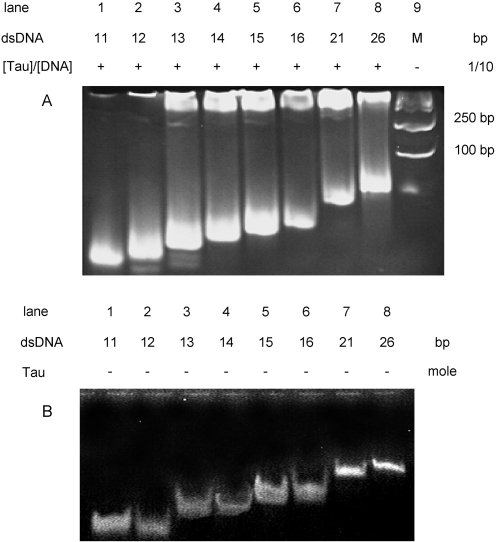
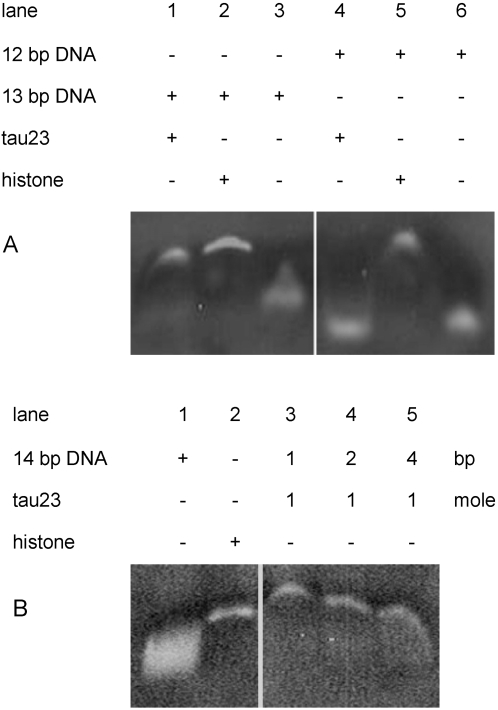
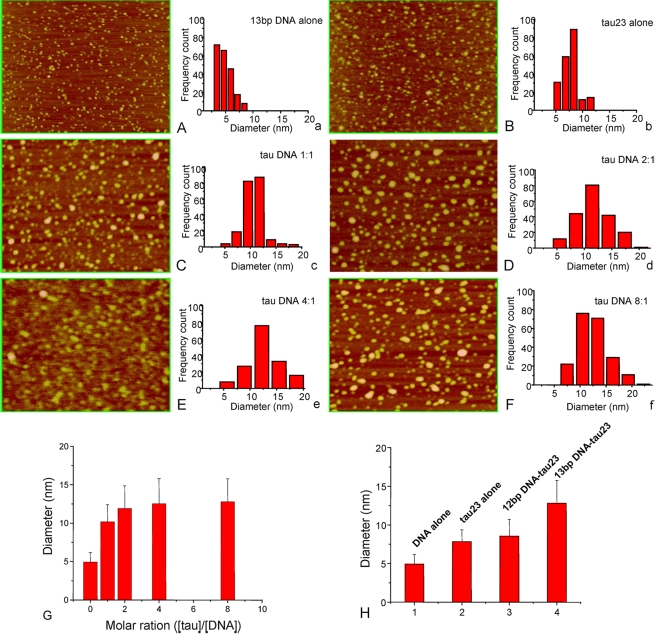
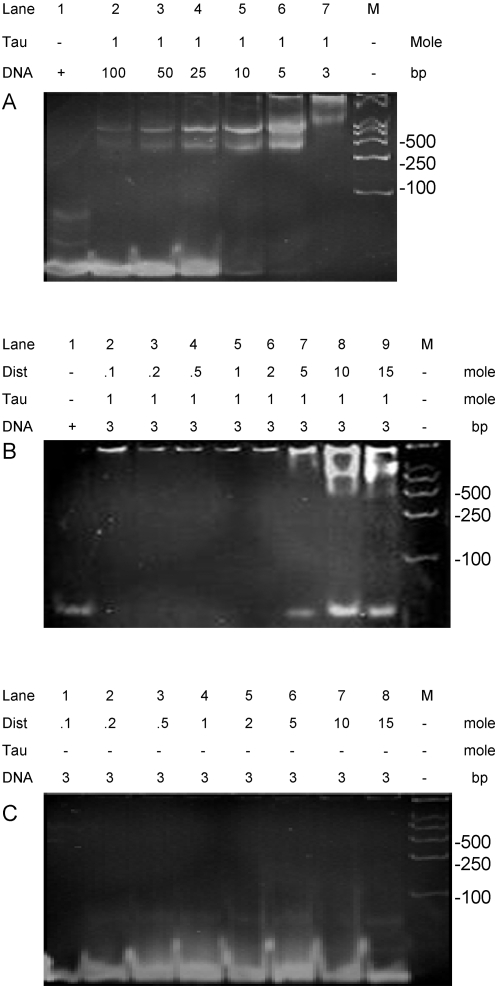
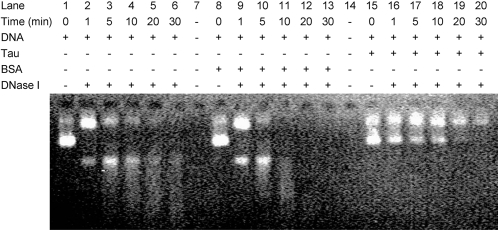
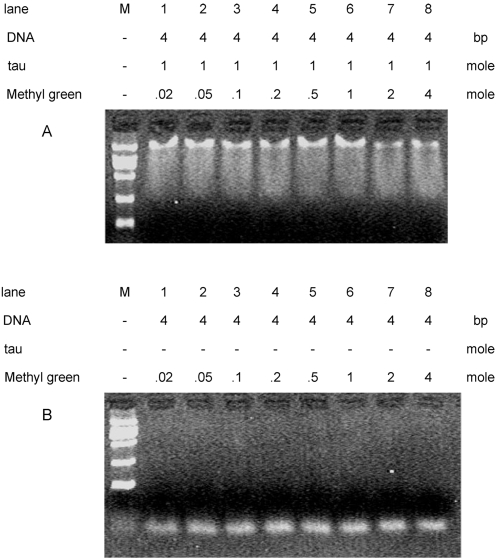
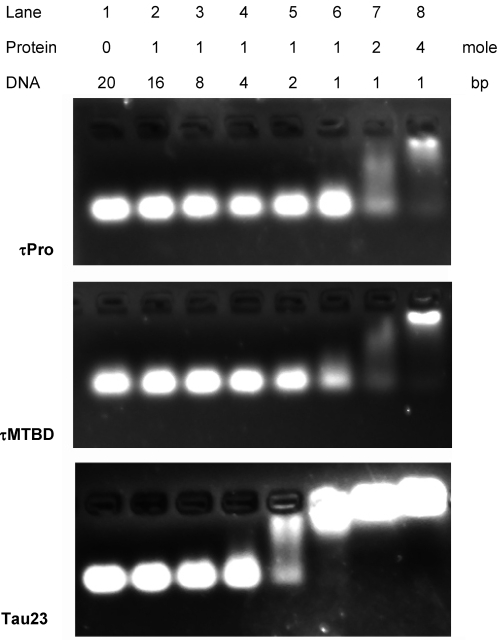
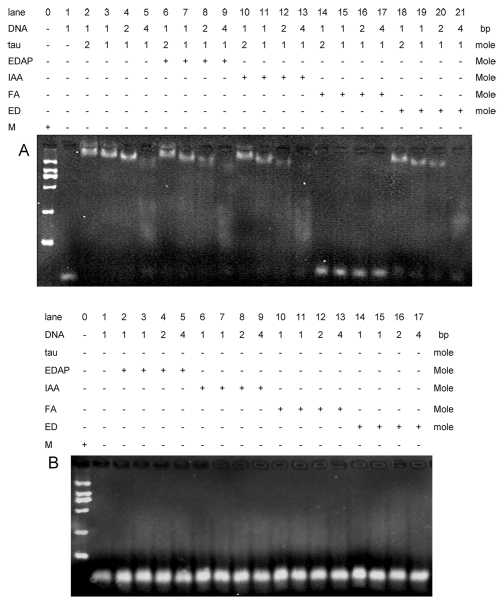
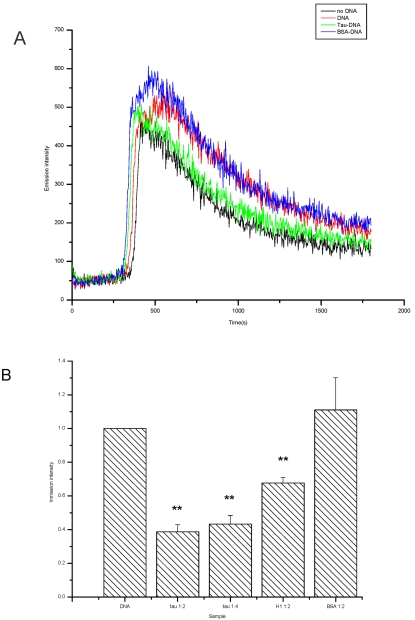
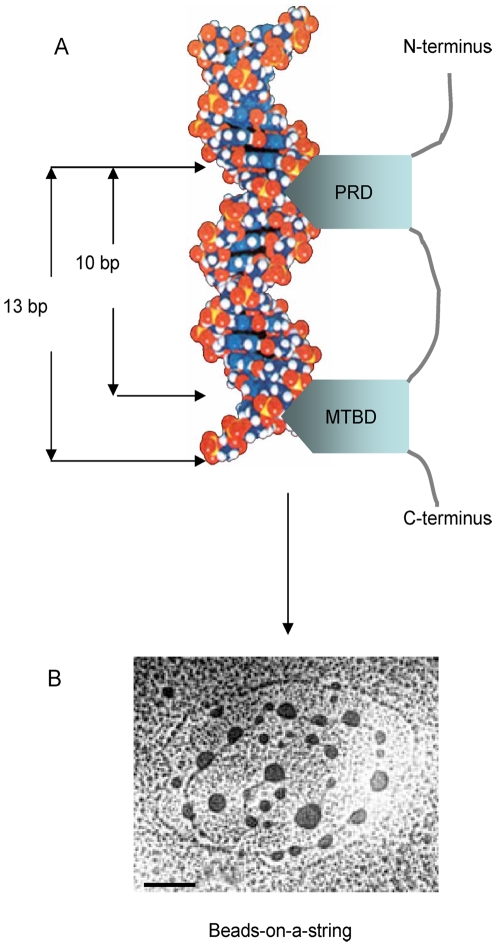
Tau, an important microtubule associated protein, has been found to bind to DNA, and to be localized in the nuclei of both neurons and some non-neuronal cells. Here, using electrophoretic mobility shifting assay (EMSA) in the presence of DNA with different chain-lengths, we observed that tau protein favored binding to a 13 bp or a longer polynucleotide. The results from atomic force microscopy also showed that tau protein preferred a 13 bp polynucleotide to a 12 bp or shorter polynucleotide. In a competitive assay, a minor groove binder distamycin A was able to replace the bound tau from the DNA double helix, indicating that tau protein binds to the minor groove. Tau protein was able to protect the double-strand from digestion in the presence of DNase I that was bound to the minor groove. On the other hand, a major groove binder methyl green as a negative competitor exhibited little effect on the retardation of tau-DNA complex in EMSA. This further indicates the DNA minor groove as the binding site for tau protein. EMSA with truncated tau proteins showed that both the proline-rich domain (PRD) and the microtubule-binding domain (MTBD) contributed to the interaction with DNA; that is to say, both PRD and MTBD bound to the minor groove of DNA and bent the double-strand, as observed by electron microscopy. To investigate whether tau protein is able to prevent DNA from the impairment by hydroxyl free radical, the chemiluminescence emitted by the phen-Cu/H(2)O(2)/ascorbate was measured. The emission intensity of the luminescence was markedly decreased when tau protein was present, suggesting a significant protection of DNA from the damage in the presence of hydroxyl free radical.
Overview
The claims and statistics of this paper haven’t been checked yet.
Free: it reads the open-access text and checks the first 5 claims that cite a source we can check. Create a free account to check every claim.
Integrity signals
Registry
Cites
Statistics
Figures
Verification
Claims the paper makes
The claims and statistics of this paper haven’t been checked yet.
Free: it reads the open-access text and checks the first 5 claims that cite a source we can check. Create a free account to check every claim.
Claims other papers make about this one
Each is checked against this paper’s own text: does it say what the citing paper says it does?
The source backs part of the claim, not all of it — or backs it for a different population, condition or comparison.
In the citing paper
“In vitro and in cultured cells, tau binds the minor groove of the DNA double helix”
From Tau promotes neurodegeneration through global chromatin relaxation (2014) · cites this paper as [48]
Experimental — accuracy not yet measuredThe cited source says what the claim attributes to it.
In the citing paper
“Tau has the capacity to bind DNA (281,304) and may protect it from oxidative damage (305).”
From Functional genomic screen and network analysis reveal novel modifiers of tauopathy dissociated from tau phosphorylation (2011) · cites this paper as [305]
The cited source says what the claim attributes to it.
In the citing paper
“and is thought to protect DNA from oxidative damage46-48”
From Tau promotes neurodegeneration through global chromatin relaxation (2014) · cites this paper as [48]
In the citing paper
“prevents DNA damage by oxidative stress 94, 106”
From Altered Machinery of Protein Synthesis in Alzheimer's: From the Nucleolus to the Ribosome (2016) · cites this paper as [106]
Self-check
Percentages, sums and reported differences re-computed from the paper’s own numbers.
The self-check needs the paper’s full text.
Citations
Cites
Goedert, M., Spillantini, M. G., Jakes, R., Rutherford, D., & Crowther, R. A. (1989) · Neuron · doi:10.1016/0896-6273(89)90210-9 · Cited by 2,492 · cited 1×
“Goedert [12–14].”
Buée, L., Bussière, T., Buée-Scherrer, V., Delacourte, A., & Hof, P. R. (2000) · Brain Research Reviews · doi:10.1016/s0165-0173(00)00019-9 · Cited by 2,015
Goedert, M., Wischik, C. M., Crowther, R. A., Walker, J. E., & Klug, A. (1988) · Proceedings of the National Academy of Sciences · doi:10.1073/pnas.85.11.4051 · Cited by 1,134 · cited 1×
“In the adult human brain, there are six isoforms of tau, produced from a single gene by alternative mRNA splicing”
BackgroundGoedert, M., Spillantini, M. G., Potier, M. C., Ulrich, J., & Crowther, R. A. (1989) · The EMBO Journal · doi:10.1002/j.1460-2075.1989.tb03390.x · Cited by 1,037 · cited 1×
“Goedert [12–14].”
Modulation of the dynamic instability of tubulin assembly by the microtubule-associated protein tau.
Drechsel, D. N., Hyman, A. A., Cobb, M. H., & Kirschner, M. W. (1992) · Molecular Biology of the Cell · doi:10.1091/mbc.3.10.1141 · Cited by 970 · cited 1×
“Tau is a major microtubule-binding protein that is important for the assembly and stabilization of microtubules [1].”
BackgroundCleveland, D. W., Hwo, S.-Y., & Kirschner, M. W. (1977) · Journal of Molecular Biology · doi:10.1016/0022-2836(77)90213-3 · Cited by 915
Structure and novel exons of the human .tau. gene
Andreadis, A., Brown, W. M., & Kosik, K. S. (1992) · Biochemistry · doi:10.1021/bi00158a027 · Cited by 624 · cited 1×
“In the adult human brain, there are six isoforms of tau, produced from a single gene by alternative mRNA splicing [12– 15].”
BackgroundKlemm, J. D., Rould, M. A., Aurora, R., Herr, W., & Pabo, C. O. (1994) · Cell · doi:10.1016/0092-8674(94)90231-3 · Cited by 506
The microtubule binding domain of tau protein
Lee, G., Neve, R. L., & Kosik, K. S. (1989) · Neuron · doi:10.1016/0896-6273(89)90050-0 · Cited by 500 · cited 1×
“The MTBD functions as a regulator of the rate of microtubule polymerization [17] and actin assembly [18,19].”
BackgroundBILLINGSLEY, M. L., & KINCAID, R. L. (1997) · Biochemical Journal · doi:10.1042/bj3230577 · Cited by 453 · cited 1×
“reported [33–35].”
Research works printed but not linked: 1
- Li FX Lu J Xu YJ Tong ZQ Nie CL 2008 Formaldehyde-mediated chronic damage may be related to sporadic neurodegeneration. Prog in Bioc and Biop 35 393 400
Cited by
Arendt, T., Stieler, J. T., & Holzer, M. (2016) · Brain Research Bulletin · doi:10.1016/j.brainresbull.2016.08.018 · Cited by 609
Tau promotes neurodegeneration through global chromatin relaxation
Frost, B., Hemberg, M., Lewis, J., & Feany, M. B. (2014) · Nature Neuroscience · doi:10.1038/nn.3639 · Cited by 495
“In vitro and in cultured cells, tau binds the minor groove of the DNA double helix and is thought to protect DNA from oxidative damage 46-48 .”
Kent, S. A., Spires-Jones, T. L., & Durrant, C. S. (2020) · Acta Neuropathologica · doi:10.1007/s00401-020-02196-w · Cited by 446
Nuclear Tau, a Key Player in Neuronal DNA Protection
Sultan, A., Nesslany, F., Violet, M., Bégard, S., Loyens, A., Talahari, S., Mansuroglu, Z., Marzin, D., Sergeant, N., Humez, S., et al. (2011) · Journal of Biological Chemistry · doi:10.1074/jbc.m110.199976 · Cited by 421
A walk through tau therapeutic strategies
Jadhav, S., Avila, J., Schöll, M., Kovacs, G. G., Kövari, E., Skrabana, R., Evans, L. D., Kontsekova, E., Malawska, B., de Silva, R., et al. (2019) · Acta Neuropathologica Communications · doi:10.1186/s40478-019-0664-z · Cited by 290
Hyperphosphorylation of Tau Associates With Changes in Its Function Beyond Microtubule Stability
Alonso, A. D., Cohen, L. S., Corbo, C., Morozova, V., ElIdrissi, A., Phillips, G., & Kleiman, F. E. (2018) · Frontiers in Cellular Neuroscience · doi:10.3389/fncel.2018.00338 · Cited by 278
Violet, M., Delattre, L., Tardivel, M., Sultan, A., Chauderlier, A., Caillierez, R., Talahari, S., Nesslany, F., Lefebvre, B., Bonnefoy, E., et al. (2014) · Frontiers in Cellular Neuroscience · doi:10.3389/fncel.2014.00084 · Cited by 251
“DNA protection may be mediated partially through Tau interactions with the A-T-rich DNA minor groove (Sjöberg et al., 2006; Wei et al., 2008; Sultan et al., 2011; Camero et al., 2013); however, a role for Tau in DNA repair mechanisms cannot be excluded.”
BackgroundAltered Machinery of Protein Synthesis in Alzheimer's: From the Nucleolus to the Ribosome
Hernández‐Ortega, K., Garcia‐Esparcia, P., Gil, L., Lucas, J. J., & Ferrer, I. (2016) · Brain Pathology · doi:10.1111/bpa.12335 · Cited by 245
“Nuclear tau induces DNA conformational changes in neural cells (81), protects DNA from denaturation in vitro (51, 52), prevents DNA damage by oxidative stress (94, 106), and confers stability to DNA (15, 92).”
BackgroundA Brief Overview of Tauopathy: Causes, Consequences, and Therapeutic Strategies
Orr, M. E., Sullivan, A. C., & Frost, B. (2017) · Trends in Pharmacological Sciences · doi:10.1016/j.tips.2017.03.011 · Cited by 235
“Tau binds directly to DNA in vitro [104], protects against peroxidation-induced DNA damage [105], binds directly to AT-rich a-satellite heterochromatin in non-neuronal cultured cells [106], and colocalizes with pericentromeric constitutive heterochromatin in primary neuronal cells cultured from wild-type mice [107].”
BackgroundTau Protein Interaction Partners and Their Roles in Alzheimer’s Disease and Other Tauopathies
Sinsky, J., Pichlerova, K., & Hanes, J. (2021) · International Journal of Molecular Sciences · doi:10.3390/ijms22179207 · Cited by 220
“Tau can directly bind DNA [88] and RNA [89] and protects them from oxidative damage [90,91] which helps to maintain DNA and RNA integrity [92].”
BackgroundTau oligomers and aggregation in Alzheimer’s disease
Meraz‐Ríos, M. A., Lira‐De León, K. I., Campos‐Peña, V., De Anda‐Hernández, M. A., & Mena‐López, R. (2010) · Journal of Neurochemistry · doi:10.1111/j.1471-4159.2009.06511.x · Cited by 191
“Based upon this information, it is possible to suggest that these isoforms offer a resistance to the process of filament formation (Hua and He 2003; Hikosou et al. 2007; Wei et al. 2008).”
BackgroundLiu, C., & Götz, J. (2013) · PLoS ONE · doi:10.1371/journal.pone.0084849 · Cited by 155
“Recruitment of tau to the nucleus is determined by tau-DNA binding as unbound tau does not stay in the nucleus, as shown with the DNA-binding antibiotic netropsin [35].”
MethodInfluentialGenomic integrity and the ageing brain
Chow, H.-M., & Herrup, K. (2015) · Nature Reviews Neuroscience · doi:10.1038/nrn4020 · Cited by 174
Nuclear Tau and Its Potential Role in Alzheimer’s Disease
Bukar Maina, M., Al-Hilaly, Y., & Serpell, L. (2016) · Biomolecules · doi:10.3390/biom6010009 · Cited by 161
“Further studies revealed that tau binds and bends the DNA through AT-rich minor groove of the DNA, likely through an electrostatic interaction with the ε-amino group of its lysine residues on its PRD and microtubule binding domain (MBD); and that tau preferentially binds DNA sequences of about 13 bp or longer [81].”
BackgroundInfluentialMansuroglu, Z., Benhelli-Mokrani, H., Marcato, V., Sultan, A., Violet, M., Chauderlier, A., Delattre, L., Loyens, A., Talahari, S., Bégard, S., et al. (2016) · Scientific Reports · doi:10.1038/srep33047 · Cited by 146
Niewiadomska, G., Niewiadomski, W., Steczkowska, M., & Gasiorowska, A. (2021) · Life · doi:10.3390/life11010028 · Cited by 131
The proline-rich domain of tau plays a role in interactions with actin
He, H. J., Wang, X. S., Pan, R., Wang, D. L., Liu, M. N., & He, R. Q. (2009) · BMC Cell Biology · doi:10.1186/1471-2121-10-81 · Cited by 142
Self-citationLü, J., Jun-Ye, M. I. A. O., Su, T., Liu, Y., & He, R. (2013) · Biochimica et Biophysica Acta (BBA) - General Subjects · doi:10.1016/j.bbagen.2013.04.028 · Cited by 143
Self-citationSynaptic tau: A pathological or physiological phenomenon?
Robbins, M., Clayton, E., & Kaminski Schierle, G. S. (2021) · Acta Neuropathologica Communications · doi:10.1186/s40478-021-01246-y · Cited by 116
Tau Isoforms: Gaining Insight into MAPT Alternative Splicing
Corsi, A., Bombieri, C., Valenti, M. T., & Romanelli, M. G. (2022) · International Journal of Molecular Sciences · doi:10.3390/ijms232315383 · Cited by 130
Genome instability in Alzheimer disease
Hou, Y., Song, H., Croteau, D. L., Akbari, M., & Bohr, V. A. (2017) · Mechanisms of Ageing and Development · doi:10.1016/j.mad.2016.04.005 · Cited by 120
“Tau was shown to protect DNA from oxidative damage probably by binding to the minor groove of DNA (Hua and He, 2003; Wei et al., 2008), and prefibrillar tau oligomerization resulted in the loss of the DNA protective function of tau (Violet et al., Mech Ageing Dev.”
BackgroundAmbegaokar, S. S., & Jackson, G. R. (2011) · Human Molecular Genetics · doi:10.1093/hmg/ddr432 · Cited by 124
“Tau has the capacity to bind DNA (281,304) and may protect it from oxidative damage (305).”
BackgroundMulthaup, G., Huber, O., Buée, L., & Galas, M.-C. (2015) · Journal of Biological Chemistry · doi:10.1074/jbc.r115.677211 · Cited by 101
“(80) showed that Tau-DNA binding protected DNA from damage induced by free hydroxyl radicals, likely through its capacity to bind to the AT-rich minor groove of DNA (i.”
BackgroundReinstating plasticity and memory in a tauopathy mouse model with an acetyltransferase activator
Chatterjee, S., Cassel, R., Schneider‐Anthony, A., Merienne, K., Cosquer, B., Tzeplaeff, L., Halder Sinha, S., Kumar, M., Chaturbedy, P., Eswaramoorthy, M., et al. (2018) · EMBO Molecular Medicine · doi:10.15252/emmm.201708587 · Cited by 99
“Interestingly, Tau protein is found in the nucleus (Wei et al, 2008; Sultan et al, 2011; Qi et al, 2015), a cellular compartment where Tau levels progressively increase during aging (Gil et al, 2017).”
BackgroundQi, H., Cantrelle, F.-X., Benhelli-Mokrani, H., Smet-Nocca, C., Buée, L., Lippens, G., Bonnefoy, E., Galas, M.-C., & Landrieu, I. (2015) · Biochemistry · doi:10.1021/bi5014613 · Cited by 84
Regulation of neuronal microtubule dynamics by tau: Implications for tauopathies
Venkatramani, A., & Panda, D. (2019) · International Journal of Biological Macromolecules · doi:10.1016/j.ijbiomac.2019.04.120 · Cited by 78
Violet, M., Chauderlier, A., Delattre, L., Tardivel, M., Chouala, M. S., Sultan, A., Marciniak, E., Humez, S., Binder, L., Kayed, R., et al. (2015) · Neurobiology of Disease · doi:10.1016/j.nbd.2015.09.003 · Cited by 66
Hyperphosphorylation Results in Tau Dysfunction in DNA Folding and Protection
Lu, Y., He, H.-J., Zhou, J., Miao, J.-Y., Lu, J., He, Y.-G., Pan, R., Wei, Y., Liu, Y., & He, R.-Q. (2013) · Journal of Alzheimer's Disease · doi:10.3233/jad-130602 · Cited by 65
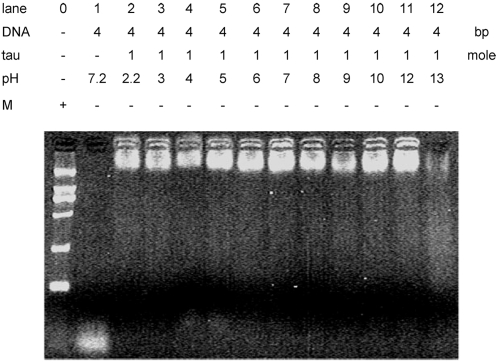
“8 [9, 66]; 3) The interaction between tau and DNA is markedly reduced at pH higher than 12, indicating that the interaction depends on electrostatic forces; and 4) Modification of tau in vitro with formaldehyde results in reduced association of tau with DNA [40].”
Self-citationProtein phosphatase 2A and tau: an orchestrated ‘Pas de Deux’
Taleski, G., & Sontag, E. (2017) · FEBS Letters · doi:10.1002/1873-3468.12907 · Cited by 74
Intracellular and Extracellular Roles for Tau in Neurodegenerative Disease
Hanger, D. P., Lau, D. H. W., Phillips, E. C., Bondulich, M. K., Guo, T., Woodward, B. W., Pooler, A. M., & Noble, W. (2014) · Journal of Alzheimer's Disease · doi:10.3233/jad-132054 · Cited by 63
“Some studies suggest that nuclear tau may 184 have a role in protection against DNA damage [51, 52], 185 although this is somewhat controversial [53].”
Rossi, G., & Tagliavini, F. (2015) · Frontiers in Aging Neuroscience · doi:10.3389/fnagi.2015.00192 · Cited by 58
“Tau is localized not only in cytoskeleton, centrosome, andmitotic spindle MT but also in the nucleus (Sjöberg et al., 2006; Rossi et al., 2008a) and has the ability to bind to DNA and protect it from damage in a chaperon-like manner (Hua and He, 2003; Wei et al., 2008).”
BackgroundRossi, G., Conconi, D., Panzeri, E., Redaelli, S., Piccoli, E., Paoletta, L., Dalprà, L., & Tagliavini, F. (2013) · Journal of Alzheimer’s Disease · doi:10.3233/jad-2012-121633 · Cited by 51
d-Ribosylated Tau forms globular aggregates with high cytotoxicity
Chen, L., Yan, W., Wang, X., & He, R. (2009) · Cellular and Molecular Life Sciences · doi:10.1007/s00018-009-0058-7 · Cited by 63
“In a normal neuron, Tau is localized in the axons, neuronal soma [4–6] and nuclei [7], and its function is regulated by phosphorylation [8].”
Self-citationTau Filament Self-Assembly and Structure: Tau as a Therapeutic Target
Oakley, S. S., Maina, M. B., Marshall, K. E., Al-Hilaly, Y. K., Harrington, C. R., Wischik, C. M., & Serpell, L. C. (2020) · Frontiers in Neurology · doi:10.3389/fneur.2020.590754 · Cited by 61
“This interaction with DNA indicates that tau proteins may play a role in protection against reactive oxygen species (36, 37), ribosome stability and miRNA activity (38).”
BackgroundAlzheimer’s disease and related tauopathies: disorders of disrupted neuronal identity
Frost, B. E. (2023) · Trends in Neurosciences · doi:10.1016/j.tins.2023.07.006 · Cited by 61
Phosphorylation regulates tau’s phase separation behavior and interactions with chromatin
Abasi, L. S., Elathram, N., Movva, M., Deep, A., Corbett, K. D., & Debelouchina, G. T. (2024) · Communications Biology · doi:10.1038/s42003-024-05920-4 · Cited by 62
“Since tau can bind DNA lengths of 13 bp or longer 27 , we expected that multiple tau molecules would be able to bind, and consistent with this, we observed bands with increasingly larger mobility shifts corresponding to different tau: DNA or tau: nucleosome stoichiometries (Fig.”
InfluentialBenhelli-Mokrani, H., Mansuroglu, Z., Chauderlier, A., Albaud, B., Gentien, D., Sommer, S., Schirmer, C., Laqueuvre, L., Josse, T., Buée, L., et al. (2018) · Nucleic Acids Research · doi:10.1093/nar/gky929 · Cited by 52
Aging dependent effect of nuclear tau
Gil, L., Federico, C., Pinedo, F., Bruno, F., Poves, A. B. R., Montoya, J. J., Olazabal, I. M., Ferrer, I., & Saccone, S. (2017) · Brain Research · doi:10.1016/j.brainres.2017.09.030 · Cited by 55
“…tau protein binds to the minor groove of dsDNA in an unspecific manner via the proline-rich domain (PRD) and the microtubule-binding domain (MTBD) (Wei et al., 2008; Qi et al., 2015) and that presents, by nuclear magnetic resonance spectroscopy, multiple points of contact both in AT-rich and…”
InfluentialPhosphorylation of nuclear Tau is modulated by distinct cellular pathways
Ulrich, G., Salvadè, A., Boersema, P., Calì, T., Foglieni, C., Sola, M., Picotti, P., Papin, S., & Paganetti, P. (2018) · Scientific Reports · doi:10.1038/s41598-018-36374-4 · Cited by 50
Redox signaling and metabolism in Alzheimer's disease
Holubiec, M. I., Gellert, M., & Hanschmann, E. M. (2022) · Frontiers in Aging Neuroscience · doi:10.3389/fnagi.2022.1003721 · Cited by 52
“Tau has not only been shown to interact with other proteins but also with DNA, making it less susceptible to peroxidation (Wei et al., 2008).”
BackgroundCamero, S., Benítez, M. J., Barrantes, A., Ayuso, J. M., Cuadros, R., Ávila, J., & Jiménez, J. S. (2014) · Journal of Alzheimer's Disease · doi:10.3233/jad-131415 · Cited by 42
“Experiments of electrophoretic mobility shifting assay have been reported showing that tau protein may compete with Distamycin A for DNA binding [30].”
InfluentialVisualizing the microtubule-associated protein tau in the nucleus
Lu, J., Li, T., He, R., Bartlett, P. F., & Götz, J. (2014) · Science China Life Sciences · doi:10.1007/s11427-014-4635-0 · Cited by 43
Self-citationFailure of DNA double-strand break repair by tau mediates Alzheimer’s disease pathology in vitro
Asada‐Utsugi, M., Uemura, K., Ayaki, T., Uemura, M. T., Minamiyama, S., Hikiami, R., Morimura, T., Shodai, A., Ueki, T., Takahashi, R., et al. (2022) · Communications Biology · doi:10.1038/s42003-022-03312-0 · Cited by 51
Thermodynamics of the Interaction between Alzheimer's Disease Related Tau Protein and DNA
Camero, S., Benítez, M. J., Cuadros, R., Hernández, F., Ávila, J., & Jiménez, J. S. (2014) · PLoS ONE · doi:10.1371/journal.pone.0104690 · Cited by 40
“Electrophoretic mobility assays of DNA in the presence of truncated forms of Tau show that the microtubule binding domain (MTBD) of Tau contributes to the DNA interaction [23].”
BackgroundWalker, S., Ullman, O., & Stultz, C. M. (2012) · Journal of Biological Chemistry · doi:10.1074/jbc.m111.336107 · Cited by 51
Neuronal and Glial Distribution of Tau Protein in the Adult Rat and Monkey
Kanaan, N. M., & Grabinski, T. (2021) · Frontiers in Molecular Neuroscience · doi:10.3389/fnmol.2021.607303 · Cited by 46
“Tau was originally co-purified with microtubules from brain and was subsequently labeled as a microtubule-associated protein that primarily plays a role in stabilizing microtubules (Weingarten et al., 1975; Witman et al., 1976; Cleveland et al., 1977a,b).”
BackgroundCordeiro, Y., Macedo, B., Silva, J. L., & Gomes, M. P. B. (2014) · Biophysical Reviews · doi:10.1007/s12551-013-0132-0 · Cited by 44
“The use of specific minor and major groove ligands revealed that tau binds the minor groove of the DNA double helix (Wei et al. 2008).”
BackgroundNuclear Transport Deficits in Tau-Related Neurodegenerative Diseases
Diez, L., & Wegmann, S. (2020) · Frontiers in Neurology · doi:10.3389/fneur.2020.01056 · Cited by 45
Protein-DNA Interaction at the Origin of Neurological Diseases: A Hypothesis
Jiménez, J. S. (2010) · Journal of Alzheimer s Disease · doi:10.3233/jad-2010-100189 · Cited by 45
“Also the DNA interaction with tau protein has been largely reported [37–40].”
Tau Modulates VGluT1 Expression
Siano, G., Varisco, M., Caiazza, M. C., Quercioli, V., Mainardi, M., Ippolito, C., Cattaneo, A., & Primio, C. D. (2019) · Journal of Molecular Biology · doi:10.1016/j.jmb.2019.01.023 · Cited by 44
Tau Mutations Serve as a Novel Risk Factor for Cancer
Rossi, G., Redaelli, V., Contiero, P., Fabiano, S., Tagliabue, G., Perego, P., Benussi, L., Bruni, A. C., Filippini, G., Farinotti, M., et al. (2018) · Cancer Research · doi:10.1158/0008-5472.can-17-3175 · Cited by 40
“Whereas there is no evidence of the involvement of tau in DNA repair systems (15) or in telomere preservation, a chaperone role of tau in protecting DNA from free radicals and heat stress damage has recently emerged (18,19), as well as a structural role of tau in chromatin stabilization (15).”
BackgroundFrontrunner in Translation: Progressive Supranuclear Palsy
Shoeibi, A., Olfati, N., & Litvan, I. (2019) · Frontiers in Neurology · doi:10.3389/fneur.2019.01125 · Cited by 39
“Further studies showed that tau can regulate fast axonal transport (95) and probably plays a role in stabilizing nuclear DNA (96).”
BackgroundAlterations in Tau Metabolism in ALS and ALS-FTSD
Strong, M. J., Donison, N. S., & Volkening, K. (2020) · Frontiers in Neurology · doi:10.3389/fneur.2020.598907 · Cited by 41
“A tau isoform that lacks phosphorylation at S195-S202 is localized to the nucleus, where it is involved in DNA binding (either through association with AT-rich DNA, or with the minor groove of AT-rich DNA sequences) (55, 56), heterochromatin stability, transcription repression of ribosomal DNA, long non-coding RNA pro…”
BackgroundNew evidences on Tau–DNA interactions and relevance to neurodegeneration
Padmaraju, V., Indi, S. S., & Rao, K. S. J. (2010) · Neurochemistry International · doi:10.1016/j.neuint.2010.04.013 · Cited by 42
How it all Started: Tau and Protein Phosphatase 2A
Liu, C., & Götz, J. (2013) · Journal of Alzheimer s Disease · doi:10.3233/jad-130503 · Cited by 45
“Finally, DNA was protected from damage by free radicals when tau was present [79].”
BackgroundGil, L., Niño, S. A., Chi-Ahumada, É., Rodríguez‐Leyva, I., Guerrero, C., Poves, A. B. R., Navalón, J. A. A., & Jiménez-Capdeville, M. E. (2020) · International Journal of Molecular Sciences · doi:10.3390/ijms21051841 · Cited by 38
Multimerization and DNA Binding Properties of INI1/hSNF5 and Its Functional Significance
Das, S., Cano, J., & Kalpana, G. V. (2009) · Journal of Biological Chemistry · doi:10.1074/jbc.m808141200 · Cited by 38
Altered Levels and Isoforms of Tau and Nuclear Membrane Invaginations in Huntington’s Disease
Fernández‐Nogales, M., & Lucas, J. J. (2020) · Frontiers in Cellular Neuroscience · doi:10.3389/fncel.2019.00574 · Cited by 34
“Moreover, Tau is present in small amounts in dendrites and even in the nucleus where it can bind to DNA protecting it from damage (Wei et al., 2008; Violet et al., 2014).”
BackgroundShaping of interphase chromosomes by the microtubule network
Maizels, Y., & Gerlitz, G. (2015) · FEBS Journal · doi:10.1111/febs.13334 · Cited by 37
Gómez de Barreda, E., Dawson, H. N., Vitek, M. P., & Avila, J. (2010) · FEBS Letters · doi:10.1016/j.febslet.2010.03.032 · Cited by 32
Aging and Alzheimer’s disease connection: Nuclear Tau and lamin A
Gil, L., Niño, S. A., Capdeville, G., & Jiménez-Capdeville, M. E. (2021) · Neuroscience Letters · doi:10.1016/j.neulet.2021.135741 · Cited by 31
Rane, J. S., Kumari, A. R., & Panda, D. (2019) · ACS Chemical Neuroscience · doi:10.1021/acschemneuro.9b00455 · Cited by 27
Mutations in MAPT give rise to aneuploidy in animal models of tauopathy
Rossi, G., Conconi, D., Panzeri, E., Paoletta, L., Piccoli, E., Ferretti, M. G., Mangieri, M., Ruggerone, M., Dalprà, L., & Tagliavini, F. (2013) · Neurogenetics · doi:10.1007/s10048-013-0380-y · Cited by 26
“The in vitro ability of tau to efficiently bind to DNA, preventing it from oxidative damage [6], and the in vivo recruitment of tau into the nucleus and its binding to chromatin during heat stress [7] supported its involvement as DNA-protecting chaperone protein.”
BackgroundNon-Canonical Roles of Tau and Their Contribution to Synaptic Dysfunction
Siano, G., Falcicchia, C., Origlia, N., Cattaneo, A., & Primio, C. D. (2021) · International Journal of Molecular Sciences · doi:10.3390/ijms221810145 · Cited by 23
“It interacts with the minor groove of the double strand DNA helix, stabilizes DNA structure and, as a matter of fact, it increases the dsDNA melting temperature and protects DNA from oxidative stress induced by hydroxyl radicals [120,124].”
BackgroundRodríguez-Callejas, J. D., Fuchs, E., & Perez‐Cruz, C. (2023) · Neurobiology of Aging · doi:10.1016/j.neurobiolaging.2023.04.010 · Cited by 23
Inoue, H., Hiradate, Y., Shirakata, Y., Kanai, K., Kosaka, K., Gotoh, A., Fukuda, Y., Nakai, Y., Uchida, T., Sato, E., et al. (2014) · FEBS Letters · doi:10.1016/j.febslet.2014.04.021 · Cited by 24
“Tau has been reported to protect DNA from Oxidation and heat stresses [37,38].”
BackgroundEffects of Tau on the activity of triose phosphate isomerase (TPI) in brain cells
Park, S.-A., Park, H. W., Kim, N., Kim, Y.-H., Kwak, M.-J., Shin, J., & Kim, C. (2010) · Neurochemistry International · doi:10.1016/j.neuint.2010.03.014 · Cited by 21
“, 2008), and Tauoverexpressing cells are more resistant to apoptotic stimuli (Li et al., 2007; Wei et al., 2008; Magnani et al., 2007).”
Phosphorylated nucleolar Tau protein is related to the neuronal in vitro differentiation
Federico, C., Gil, L., Bruno, F., D’Amico, A. G., D’Agata, V., & Saccone, S. (2018) · Gene · doi:10.1016/j.gene.2018.04.051 · Cited by 21
Nag, T. C., Kathpalia, P., & Wadhwa, S. (2020) · Experimental Eye Research · doi:10.1016/j.exer.2020.108153 · Cited by 20
Emerging Connections Between Tau and Nucleic Acids
Galas, M., Bonnefoy, E., Buée, L., & Lefebvre, B. (2019) · Advances in experimental medicine and biology · doi:10.1007/978-981-32-9358-8_12 · Cited by 19
Baldensperger, T., Preissler, M., & Becker, C. F. W. (2025) · RSC Chemical Biology · doi:10.1039/d4cb00221k · Cited by 22
Formaldehyde-mediated Hyperphosphorylation Disturbs The Interaction Between Tau Protein and DNA*
Lu, J. N., Jun-Ye, M. I. A. O., Rong, P. A. N., & He, R. (2012) · PROGRESS IN BIOCHEMISTRY AND BIOPHYSICS · doi:10.3724/sp.j.1206.2011.00451 · Cited by 17
Self-citationPhospho-Tau and Chromatin Landscapes in Early and Late Alzheimer’s Disease
Gil, L., Niño, S. A., Guerrero, C., & Jiménez-Capdeville, M. E. (2021) · International Journal of Molecular Sciences · doi:10.3390/ijms221910283 · Cited by 16
“It is widely accepted that tau protects DNA [117–119], preserves genome integrity [120–123], and is highly sensitive to cellular stressors [63,118,119], especially in neurons [79,115].”
BackgroundTau here, tau there, tau almost everywhere: Clarifying the distribution of tau in the adult CNS
Kanaan, N. M. (2024) · Cytoskeleton · doi:10.1002/cm.21820 · Cited by 15
“…and the role of nuclear tau is actively being investigated, but nuclear tau may participate in chromatin stabilization, nucleolar organization and/or protecting DNA and RNA from damage (Camero et al., 2014; Sjöberg et al., 2006; Sultan et al., 2011; Violet et al., 2014; Wei et al., 2008).”
BackgroundRoqanian, S., Ahmadian, S., Nabavi, S. M., Pakdaman, H., Shafiezadeh, M., Goudarzi, G., & Shahpasand, K. (2022) · Journal of Neuroscience Research · doi:10.1002/jnr.25024 · Cited by 15
Phosphorylation of SET mediates apoptosis via P53 hyperactivation and NM23-H1 nuclear import
Wu, M., Yu, G., Yan, T., Ke, D., Wang, Q., Liu, R., Wang, J., Zhang, B., Chen, D., & Wang, X. (2018) · Neurobiology of Aging · doi:10.1016/j.neurobiolaging.2018.04.022 · Cited by 14
Self-citationCimini, S., Giaccone, G., Tagliavini, F., Costantino, M., Perego, P., & Rossi, G. (2022) · Biochemical Pharmacology · doi:10.1016/j.bcp.2022.115043 · Cited by 14
Alzheimer’s disease biomarker profiling in a memory clinic cohort without common comorbidities
Daniilidou, M., Eroli, F., Alanko, V., Goikolea, J., Latorre‐Leal, M., Rodriguez‐Rodriguez, P., Griffiths, W. J., Wang, Y., Pacciarini, M., Brinkmalm, A., et al. (2023) · Brain Communications · doi:10.1093/braincomms/fcad228 · Cited by 15
Cancer Cells Upregulate Tau to Gain Resistance to DNA Damaging Agents
Rico, T., Denéchaud, M., Caillierez, R., Comptdaer, T., Adriaenssens, É., Buée, L., & Lefebvre, B. (2022) · Cancers · doi:10.3390/cancers15010116 · Cited by 13
“In this regard, it has been demonstrated in vitro that Tau protects DNA from free radical damage [18].”
BackgroundRole of Tau protein in long COVID and potential therapeutic targets
Marwaha, B. (2023) · Frontiers in Cellular and Infection Microbiology · doi:10.3389/fcimb.2023.1280600 · Cited by 13
Genomic stress and impaired DNA repair in Alzheimer disease
Neven, J., Issayama, L. K., Dewachter, I., & Wilson, D. M. (2024) · DNA repair · doi:10.1016/j.dnarep.2024.103678 · Cited by 13
Partial mimicry of the microtubule binding of tau by its membrane binding
MacAinsh, M., & Zhou, H. (2023) · Protein Science · doi:10.1002/pro.4581 · Cited by 12
“First, the MTBRs bind DNA (Wei et al., 2008) and RNA (Kampers et al.”
BackgroundBöken, D., Wu, Y., Zhang, Z., & Klenerman, D. (2025) · ChemBioChem · doi:10.1002/cbic.202400877 · Cited by 12
Anomalous Protein–DNA Interactions Behind Neurological Disorders
Camero, S., Benítez, M. J., & Jiménez, J. S. (2013) · Advances in protein chemistry and structural biology · doi:10.1016/b978-0-12-411637-5.00002-0 · Cited by 11
Bukhari, H., Nithianandam, V., Battaglia, R. A., Cicalo, A., Sarkar, S., Comjean, A., Hu, Y., Leventhal, M. J., Dong, X., & Feany, M. Β. (2024) · Genome Research · doi:10.1101/gr.278576.123 · Cited by 14
“…involved in regulation of the cytoskeleton, a number of studies have shown that TAU can also be detected in the nucleus (Loomis et al. 1990; Thurston et al. 1996; Cross et al. 2000), where the protein binds DNA (Hua et al. 2003; Sjöberg et al. 2006; Wei et al. 2008; Bukar Maina et al. 2016).”
Diverse influences on tau aggregation and implications for disease progression
Alstyne, M. V., Pratt, J., & Parker, R. (2025) · Genes & Development · doi:10.1101/gad.352551.124 · Cited by 11
“Such a role might be relevant because tau has nanomolar affinity for DNA (Wei et al. 2008) and RNA (McMillan et al. 2023).”
Chronic Formaldehyde-Mediated Impairments and Age-Related Dementia
Jun-Ye, M. I. A. O., & He, R. (2012) · InTech eBooks · doi:10.5772/34949 · Cited by 14
“from both digestion by DNase I and damage by peroxidation (Wei et al., 2008).”
BackgroundSelf-citationD’Aiuto, L., Caldwell, J. K., Edwards, T. G., Zhou, C., McDonald, M. L., Maio, R. D., Joel, W., Hyde, V. R., Wallace, C. T., Watkins, S. C., et al. (2025) · Neurobiology of Disease · doi:10.1016/j.nbd.2025.106804 · Cited by 9
“In addition to genetic and environmental factors, accumulating evidence suggests that infectious agents may”
Kanaan, N. M., Himmelstein, D. S., Ward, S., Combs, B., & Binder, L. I. (2014) · Elsevier eBooks · doi:10.1016/b978-0-12-405195-9.00056-1 · Cited by 13
Looking at Alzheimer’s Disease Pathogenesis from the Nuclear Side
D’Andrea, L., Stringhi, R., Luca, M. D., & Marcello, E. E. (2021) · Biomolecules · doi:10.3390/biom11091261 · Cited by 11
Juarez-Romero, G. U., Sun, X., Gerez, J., Auwer, C. D., Landrot, G., Nachtegaal, M., Riek, R., Luo, J., & Quintanar, L. (2026) · Chemical Science · doi:10.1039/d5sc08604c · Cited by 8
“93,94 The nucleus is a zinc-rich cellular compartment; 95 hence, the Zn binding site 1 in tau could be populated, potentially modulating its interaction with DNA.”
Tau-dependent HDAC1 nuclear reduction is associated with altered VGluT1 expression
Siano, G., Madaro, G., Caiazza, M. C., Allouch, A., Varisco, M., Mignanelli, M., Cattaneo, A., & Primio, C. D. (2023) · Frontiers in Cell and Developmental Biology · doi:10.3389/fcell.2023.1151223 · Cited by 7
“Several evidences suggest an interplay between Tau and chromatin structure since Tau can directly bind DNA and histones and can induce transposon instability (Wei et al., 2008; BenhelliMokrani et al., 2018; Guo et al., 2018; Gil et al., 2021; Rico et al., 2021).”
BackgroundThe Role of Aβ and Tau Oligomers in the Pathogenesis of Alzheimer’s Disease
Bhaskar, K., & Lamb, B. T. (2011) · Springer eBooks · doi:10.1007/978-94-007-2774-8_5 · Cited by 10
Ávila, J., Gómez‐Ramos, A., & Soriano, E. (2014) · Frontiers in Aging Neuroscience · doi:10.3389/fnagi.2014.00323 · Cited by 8
“Indeed, tau is a DNAbinding protein (Corces et al., 1980; Krylova et al., 2005; Wei et al., 2008; Camero et al., 2014) and it plays a major role in neuronal DNA protection (Violet et al.”
BackgroundDNA-binding mode transition of tau in the presence of Zinc ions
Asadollahi, K., Riazi, G. H., Rabbani‐Chadegani, A., & Rafiee, S. (2017) · Journal of Biomolecular Structure and Dynamics · doi:10.1080/07391102.2017.1343684 · Cited by 6
“Moreover, the different affinity of tau protein for various DNA sequences and conformations that are present in genomic DNA solution could explain the contradiction between the calculated site sizes and previously reported site size (Wei et al., 2008).”
BackgroundThe role of non-enzymatic glycation on Tau-DNA interactions: Kinetic and mechanistic approaches
Yekta, R., Sadeghi, L., & Dehghan, G. (2022) · International Journal of Biological Macromolecules · doi:10.1016/j.ijbiomac.2022.02.178 · Cited by 7
Sturiale, V., Bruno, F., Brancato, D., D’Amico, A. G., Maugeri, G., D’Agata, V., Saccone, S., & Federico, C. (2023) · International Journal of Molecular Sciences · doi:10.3390/ijms241814373 · Cited by 5
“N. MRC-01). cDNAs were obtained by reverse transcription (SuperScript III First-Strand Synthesis SuperMix, Invitrogen, Thermo Fisher Scientific, Foster City, CA, USA) under the following conditions: 50 ◦ C for 50 min, 85 ◦ C for 5 min.”
BackgroundInfluentialCognitive Ability and Impairment Related to Formaldehyde
He, R. (2017) · Springer eBooks · doi:10.1007/978-94-024-1177-5_8 · Cited by 5
Self-citationSiano, G., Caiazza, M. C., Varisco, M., Calvello, M., Quercioli, V., Cattaneo, A., & Primio, C. D. (2019) · Journal of Visualized Experiments · doi:10.3791/59988 · Cited by 5
Mohammadi, F., Takalloo, Z., Rahmani, H., Khalili, M. A. N., Khajeh, K., Riazi, G. H., & Sajedi, R. H. (2020) · The Journal of Biochemistry · doi:10.1093/jb/mvaa101 · Cited by 4
Metadata
- Authors
- Wei, Y., Qu, M.-H., Wang, X.-S., Chen, L., Wang, D.-L., Liu, Y., Hua, Q., & He, R.-Q.
- Affiliations
- Chinese Academy of Sciences (CN)
- Beijing University of Chinese Medicine (CN)
- Venue
- PLoS ONE
- Publisher
- Public Library of Science (PLoS)
- Published
- 2008-07-02
- Volume
- 3
- Issue
- 7
- Pages
- e2600
- ISSN
- 1932-6203 (ISSN-L)
- PMC
- PMC2432501
- OpenAlex
- W2077905824
- Cited by
- 129
- References
- 52
- Citations by year
- 2026: 9 · 2025: 4 · 2024: 4 · 2023: 7 · 2022: 10 · 2021: 11 · 2020: 11 · 2019: 7 · 2018: 12 · 2017: 7 · 2016: 4 · 2015: 9 · 2014: 10 · 2013: 7 · 2012: 4
- FWCI
- 2.94
- Type
- journal article
- Language
- en
- Open access
- gold
- doi.org
- Locations
- PLoS ONE (publishedVersion, cc-by)
- PubMed Central (publishedVersion, cc-by)
- PubMed (publishedVersion)
- DOAJ (DOAJ: Directory of Open Access Journals) (submittedVersion, cc-by-sa)
- Funders
- National Natural Science Foundation of China (90206041)
- Chinese Academy of Sciences (KSCX2-YW-R, KSCX2-YW-R-119)
- Topics
- Life Sciences › Neuroscience › Cellular and Molecular Neuroscience › Alzheimer's disease research and treatments
- Life Sciences › Biochemistry, Genetics and Molecular Biology › Molecular Biology › DNA and Nucleic Acid Chemistry
- Life Sciences › Biochemistry, Genetics and Molecular Biology › Molecular Biology › Protein Interaction Studies and Fluorescence Analysis
- Keywords
- tau protein, DNA minor groove binding, protein-DNA interactions, peroxidation, DNase I resistance, proline-rich region, microtubule-binding domain, DNA bending, minor groove binders, demyelination
- MeSH terms
- Binding Sites, DNA, DNA Damage, Humans, Microscopy, Electron, Models, Molecular, Nucleic Acid Conformation, Proline, tau Proteins, Hydroxyl Radical, Microscopy, Atomic Force, Electrophoretic Mobility Shift Assay
About these checks
Registry, retraction, Cites and statistics results are computed, not judged, with one exception: a printed reference that no index lists is read once by a model before it counts as a citation error. Claims are extracted by a model and kept only when their quote appears verbatim in the text; each cited source is then checked, with a model’s help, for whether it says what the claim relies on. Those verdicts can be wrong — read the claim’s quote and the cited source before relying on one.
Statistics and arithmetic are recomputed, not judged.
Confidence bands are shown only for fields calibrated on our annotated test set. None is calibrated yet, so no band is shown.
What counts as a claim ›How we measure confidence ›How we check this ›
Are you an author, or do you see a problem with this page? Request a review
Data sources
Bibliographic data: Semantic Scholar, OpenAlex, Crossref.
Contains information from the Semantic Scholar Academic Graph Datasets, made available under the ODC Attribution License (ODC-BY 1.0).
Semantic Scholar’s data is described in: Kinney, R., et al. (2023). The Semantic Scholar Open Data Platform. arXiv:2301.10140.
