

Binding to the Minor Groove of the Double-Strand, Tau Protein Prevents DNA from Damage by Peroxidation
Open accessThe DOI matches its Crossref record; 52 of the 52 references it cites were found in a registry or an index.
Abstract
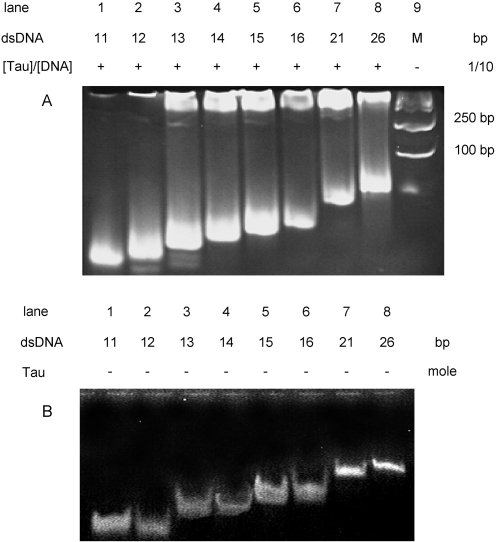
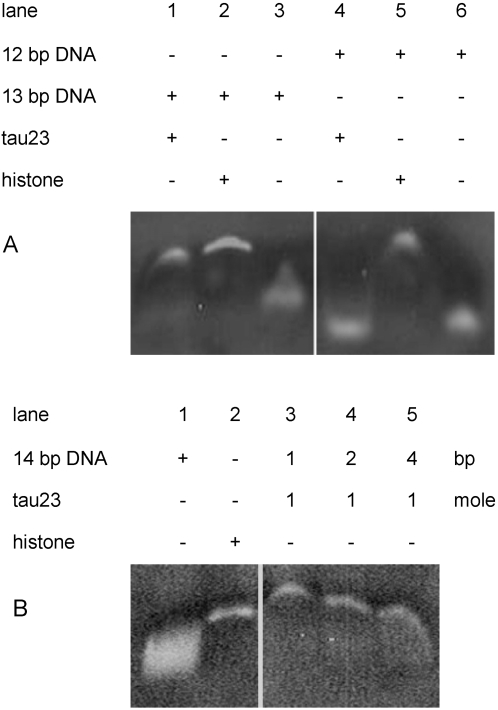
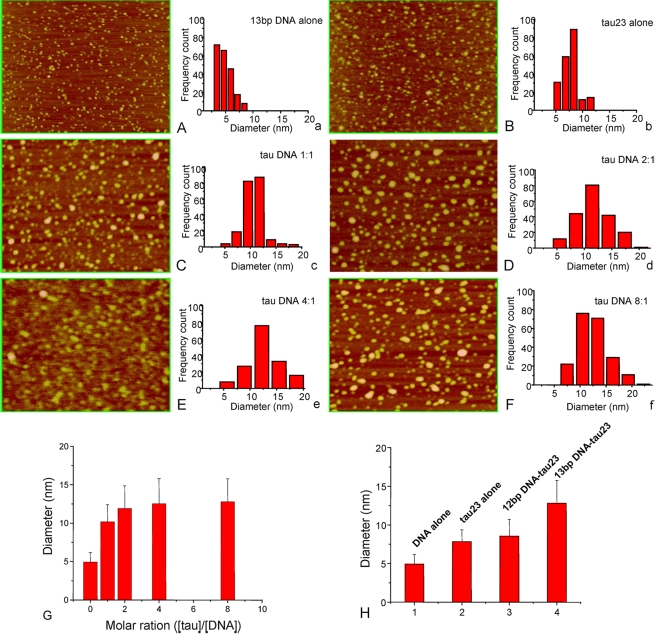
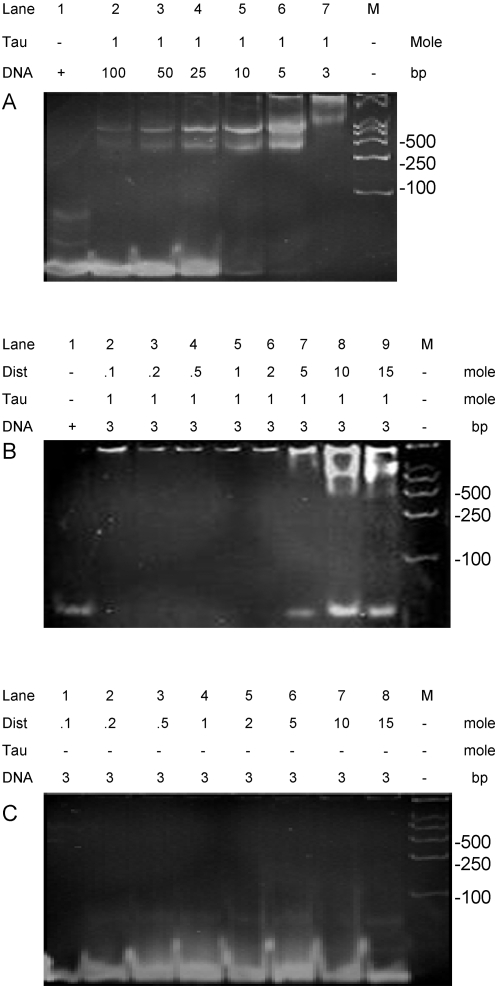
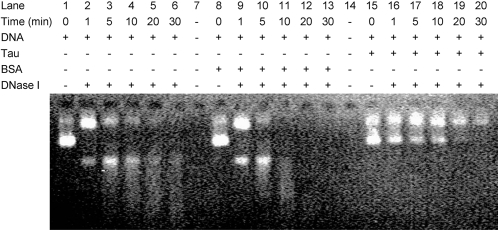
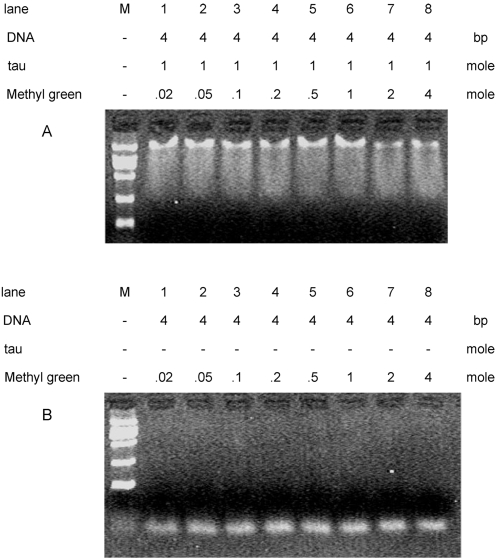
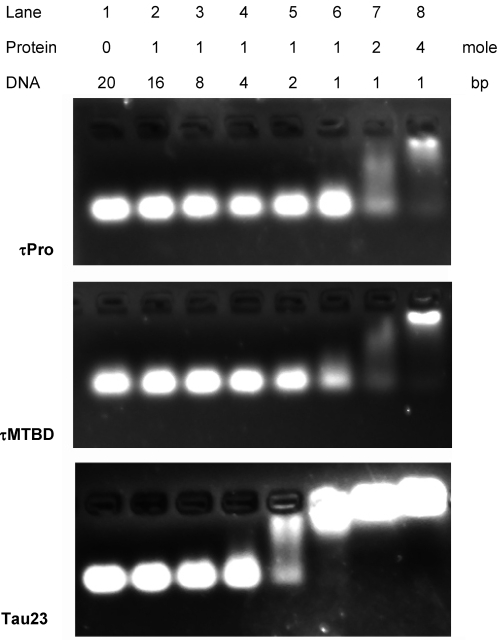
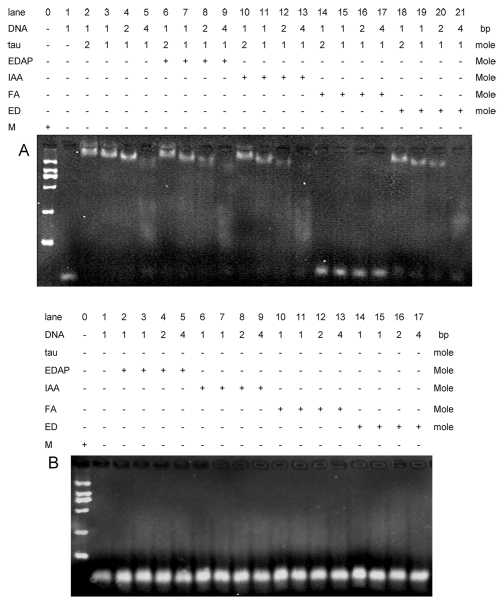
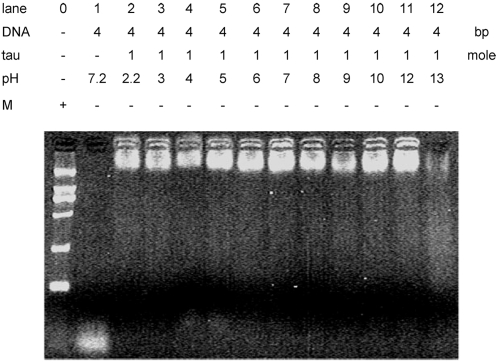
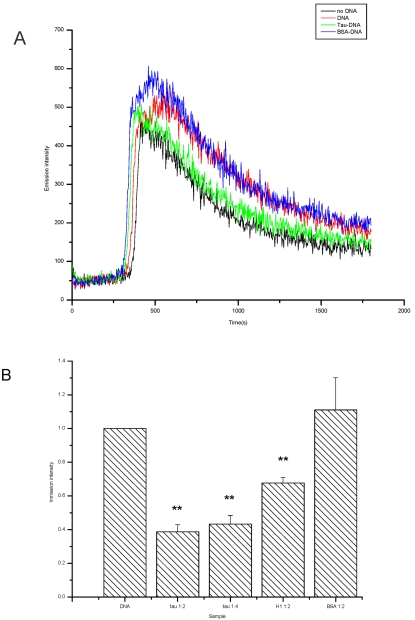
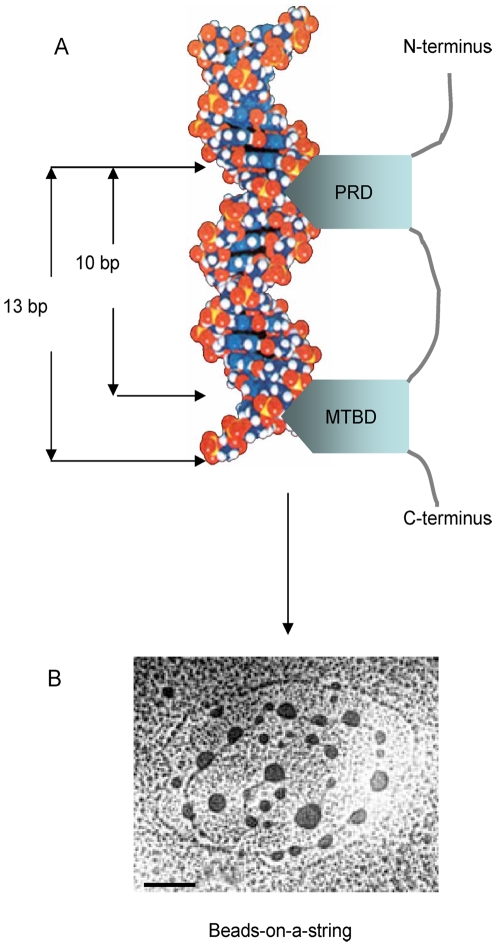
Tau, an important microtubule associated protein, has been found to bind to DNA, and to be localized in the nuclei of both neurons and some non-neuronal cells. Here, using electrophoretic mobility shifting assay (EMSA) in the presence of DNA with different chain-lengths, we observed that tau protein favored binding to a 13 bp or a longer polynucleotide. The results from atomic force microscopy also showed that tau protein preferred a 13 bp polynucleotide to a 12 bp or shorter polynucleotide. In a competitive assay, a minor groove binder distamycin A was able to replace the bound tau from the DNA double helix, indicating that tau protein binds to the minor groove. Tau protein was able to protect the double-strand from digestion in the presence of DNase I that was bound to the minor groove. On the other hand, a major groove binder methyl green as a negative competitor exhibited little effect on the retardation of tau-DNA complex in EMSA. This further indicates the DNA minor groove as the binding site for tau protein. EMSA with truncated tau proteins showed that both the proline-rich domain (PRD) and the microtubule-binding domain (MTBD) contributed to the interaction with DNA; that is to say, both PRD and MTBD bound to the minor groove of DNA and bent the double-strand, as observed by electron microscopy. To investigate whether tau protein is able to prevent DNA from the impairment by hydroxyl free radical, the chemiluminescence emitted by the phen-Cu/H(2)O(2)/ascorbate was measured. The emission intensity of the luminescence was markedly decreased when tau protein was present, suggesting a significant protection of DNA from the damage in the presence of hydroxyl free radical.
Overview
The claims and statistics of this paper haven’t been checked yet.
Free: it reads the open-access text and checks the first 5 claims that cite a source we can check. Create a free account to check every claim.
Integrity signals
Registry
Cites
Statistics
Figures
Verification
Claims the paper makes
The claims and statistics of this paper haven’t been checked yet.
Free: it reads the open-access text and checks the first 5 claims that cite a source we can check. Create a free account to check every claim.
Claims other papers make about this one
Each is checked against this paper’s own text: does it say what the citing paper says it does?
The source backs part of the claim, not all of it — or backs it for a different population, condition or comparison.
In the citing paper
“In vitro and in cultured cells, tau binds the minor groove of the DNA double helix”
From Tau promotes neurodegeneration through global chromatin relaxation (2014) · cites this paper as [48]
Experimental — accuracy not yet measuredThe cited source says what the claim attributes to it.
In the citing paper
“Tau has the capacity to bind DNA (281,304) and may protect it from oxidative damage (305).”
From Functional genomic screen and network analysis reveal novel modifiers of tauopathy dissociated from tau phosphorylation (2011) · cites this paper as [305]
The cited source says what the claim attributes to it.
In the citing paper
“and is thought to protect DNA from oxidative damage46-48”
From Tau promotes neurodegeneration through global chromatin relaxation (2014) · cites this paper as [48]
In the citing paper
“prevents DNA damage by oxidative stress 94, 106”
From Altered Machinery of Protein Synthesis in Alzheimer's: From the Nucleolus to the Ribosome (2016) · cites this paper as [106]
Self-check
Percentages, sums and reported differences re-computed from the paper’s own numbers.
The self-check needs the paper’s full text.
Citations
Cites
Goedert, M., Spillantini, M. G., Jakes, R., Rutherford, D., & Crowther, R. A. (1989) · Neuron · doi:10.1016/0896-6273(89)90210-9 · Cited by 2,492 · cited 1×
“Goedert [12–14].”
Buée, L., Bussière, T., Buée-Scherrer, V., Delacourte, A., & Hof, P. R. (2000) · Brain Research Reviews · doi:10.1016/s0165-0173(00)00019-9 · Cited by 2,015
Goedert, M., Wischik, C. M., Crowther, R. A., Walker, J. E., & Klug, A. (1988) · Proceedings of the National Academy of Sciences · doi:10.1073/pnas.85.11.4051 · Cited by 1,134 · cited 1×
“In the adult human brain, there are six isoforms of tau, produced from a single gene by alternative mRNA splicing”
BackgroundGoedert, M., Spillantini, M. G., Potier, M. C., Ulrich, J., & Crowther, R. A. (1989) · The EMBO Journal · doi:10.1002/j.1460-2075.1989.tb03390.x · Cited by 1,037 · cited 1×
“Goedert [12–14].”
Modulation of the dynamic instability of tubulin assembly by the microtubule-associated protein tau.
Drechsel, D. N., Hyman, A. A., Cobb, M. H., & Kirschner, M. W. (1992) · Molecular Biology of the Cell · doi:10.1091/mbc.3.10.1141 · Cited by 970 · cited 1×
“Tau is a major microtubule-binding protein that is important for the assembly and stabilization of microtubules [1].”
BackgroundCleveland, D. W., Hwo, S.-Y., & Kirschner, M. W. (1977) · Journal of Molecular Biology · doi:10.1016/0022-2836(77)90213-3 · Cited by 915
Structure and novel exons of the human .tau. gene
Andreadis, A., Brown, W. M., & Kosik, K. S. (1992) · Biochemistry · doi:10.1021/bi00158a027 · Cited by 624 · cited 1×
“In the adult human brain, there are six isoforms of tau, produced from a single gene by alternative mRNA splicing [12– 15].”
BackgroundKlemm, J. D., Rould, M. A., Aurora, R., Herr, W., & Pabo, C. O. (1994) · Cell · doi:10.1016/0092-8674(94)90231-3 · Cited by 506
The microtubule binding domain of tau protein
Lee, G., Neve, R. L., & Kosik, K. S. (1989) · Neuron · doi:10.1016/0896-6273(89)90050-0 · Cited by 500 · cited 1×
“The MTBD functions as a regulator of the rate of microtubule polymerization [17] and actin assembly [18,19].”
BackgroundBILLINGSLEY, M. L., & KINCAID, R. L. (1997) · Biochemical Journal · doi:10.1042/bj3230577 · Cited by 453 · cited 1×
“reported [33–35].”
Chemical Modification of Proteins
Wood, E. J. (1974) · Biochemical Education · doi:10.1016/0307-4412(74)90019-3 · Cited by 400
Oxidative damage to mitochondrial DNA and its relationship to ageing
Richter, C. (1995) · The International Journal of Biochemistry & Cell Biology · doi:10.1016/1357-2725(95)00025-k · Cited by 350 · cited 1×
“Protection of histone on DNA has been reported by Richter C and Ozawa T [45,46].”
BackgroundGenetic and functional changes in mitochondria associated with aging
Ozawa, T. (1997) · Physiological Reviews · doi:10.1152/physrev.1997.77.2.425 · Cited by 312 · cited 1×
“Protection of histone on DNA has been reported by Richter C and Ozawa T [45,46].”
BackgroundStructure refined to 2Å of a nicked DNA octanucleotide complex with DNase I
Suck, D., Lahm, A., & Oefner, C. (1988) · Nature · doi:10.1038/332464a0 · Cited by 293 · cited 1×
“DNA [24] was also employed to assay the binding of tau protein to”
MethodIdentification of nuclear tau isoforms in human neuroblastoma cells.
Loomis, P. A., Howard, T. H., Castleberry, R. P., & Binder, L. I. (1990) · Proceedings of the National Academy of Sciences · doi:10.1073/pnas.87.21.8422 · Cited by 218 · cited 1×
“found in the nuclei of human neuroblastoma cells, human cervical carcinoma cells, human macrophages, monkey kidney cells and PC12 cells [3–7].”
BackgroundThe Chemical Modification of Proteins
MAEKAWA, K. (1961) · Journal of the agricultural chemical society of Japan · doi:10.1271/nogeikagaku1924.35.a1 · Cited by 176
Morton, R. E., & Evans, T. A. (1992) · Analytical Biochemistry · doi:10.1016/0003-2697(92)90248-6 · Cited by 174 · cited 1×
“The bicinchoninic acid (BCA) protein-assay kit [50] to determine the protein concentration was the product of Pierce Biotechnology Inc (USA).”
MethodCell motility: proline-rich proteins promote protrusions
Holt, M. (2001) · Trends in Cell Biology · doi:10.1016/s0962-8924(00)01876-6 · Cited by 170 · cited 11×
“A recent review by Holt and Koffer discusses proline-rich proteins and they emphasize the significance of the function of the prolinerich domain (PRD) [20].”
BackgroundInfluentialTau protein binds to pericentromeric DNA: a putative role for nuclear tau in nucleolar organization
Sjöberg, M. K., Shestakova, E., Mansuroglu, Z., Maccioni, R. B., & Bonnefoy, E. (2006) · Journal of Cell Science · doi:10.1242/jcs.02907 · Cited by 166 · cited 1×
“organization and heterochromatinization of a portion of RNA genes [9].”
BackgroundLi, P., He, X., Gerrero, M. R., Mok, M., Aggarwal, A., & Rosenfeld, M. G. (1993) · Genes & Development · doi:10.1101/gad.7.12b.2483 · Cited by 161 · cited 1×
“, China) according to the nucleotide sequence of mouse N-Oct-3 (Table 1) [51].”
BackgroundDNA damage and cancer: Measurement and mechanism
Wiseman, H., Kaur, H., & Halliwell, B. B. (1995) · Cancer Letters · doi:10.1016/0304-3835(95)03792-u · Cited by 160 · cited 2×
“Hydroxyl free radical is one of the most important factors resulting in DNA damage [29].”
BackgroundNormal and Pathological Tau Proteins as Factors for Microtubule Assembly
Delacourte, A., & Buée, L. (1997) · International review of cytology · doi:10.1016/s0074-7696(08)62588-7 · Cited by 157 · cited 1×
“reported [33–35].”
Presence of tau in isolated nuclei from human brain
Rady, R. M., Zinkowski, R. P., & Binder, L. I. (1995) · Neurobiology of Aging · doi:10.1016/0197-4580(95)00023-8 · Cited by 145 · cited 1×
“found in the nuclei of human neuroblastoma cells, human cervical carcinoma cells, human macrophages, monkey kidney cells and PC12 cells [3–7].”
BackgroundA novel tau transcript in cultured human neuroblastoma cells expressing nuclear tau.
Wang, Y., Loomis, P. A., Zinkowski, R. P., & Binder, L. I. (1993) · The Journal of cell biology · doi:10.1083/jcb.121.2.257 · Cited by 132 · cited 1×
“regions and binds to DNA in nucleus [5,7], suggesting that tau is a”
BackgroundSynthesis, DNA-binding properties, and antitumor activity of novel distamycin derivatives
Arcamone, F., Animati, F., Barbieri, B., Configliacchi, E., D’Alessio, R., Geroni, C., Giuliani, F. C., Lazzari, E., & Menozzi, M. (1989) · Journal of Medicinal Chemistry · doi:10.1021/jm00124a008 · Cited by 122 · cited 1×
“Consequently, distamycin A (a minor groove binder) was employed as a competitor to assay whether tau protein bound to the minor groove of DNA [23].”
MethodTau as a nucleolar protein in human nonneural cells in vitro and in vivo
Thurston, V. C., Zinkowski, R. P., & Binder, L. I. (1996) · Chromosoma · doi:10.1007/bf02510035 · Cited by 121 · cited 2×
“regions and binds to DNA in nucleus [5,7], suggesting that tau is a”
BackgroundTau could protect DNA double helix structure
Hua, Q., & He, R. (2003) · Biochimica et Biophysica Acta (BBA) - Proteins and Proteomics · doi:10.1016/s1570-9639(02)00538-1 · Cited by 109 · cited 4×
“(3) Tau protein prevents the DNA double helix from disassociating during thermal denaturation, and improves its renaturation, indicating the marked effect on refolding of the DNA double-strand [22].”
BackgroundInfluentialSelf-citationChromatin assembly: biochemical identities and genetic redundancy
Adams, C. R., & Kamakaka, R. T. (1999) · Current Opinion in Genetics & Development · doi:10.1016/s0959-437x(99)80028-8 · Cited by 109 · cited 1×
“(3) Some important nucleic associated proteins, such as histone H2b and H3 recognize the minor groove binding to DNA without sequence specificity [36,37].”
BackgroundMolecular Biology of the Cell (4th Ed)
(2002) · Journal of Biological Education · doi:10.1080/00219266.2002.9655847 · Cited by 99
Localization and in Situ Phosphorylation State of Nuclear Tau
Greenwood, J. A., & Johnson, G. V. W. (1995) · Experimental Cell Research · doi:10.1006/excr.1995.1323 · Cited by 98 · cited 1×
“binding of tau to DNA in the nucleus [8].”
BackgroundMicrotubule associated protein tau binds to double-stranded but not single-stranded DNA
Hua, Q., He, R.-Q., Haque, N., Qu, M., Alonso, A. D. C., Grundke, I., & Iqbal, K. (2003) · Cellular and Molecular Life Sciences · doi:10.1007/s000180300034 · Cited by 95 · cited 1×
“. As described previously, tau protein cannot bind to the nucleosome since histone displaces the bound tau from tau-DNA complex”
BackgroundSelf-citationMitsouras, K., Wong, B., Arayata, C., Johnson, R. C., & Carey, M. (2002) · Molecular and Cellular Biology · doi:10.1128/mcb.22.12.4390-4401.2002 · Cited by 93 · cited 1×
“Another DNA chaperone HMGB1 also bends the double-strand and binds in a beads-on-a-string manner without sequence specificity [48].”
BackgroundNie, C. L., Yan, W., Chen, X., Liu, Y. Y., Dui, W., Liu, Y. M., Davies, M. C., Tendler, S. J. B., & He, R. (2007) · PLoS ONE · doi:10.1371/journal.pone.0000629 · Cited by 88 · cited 1×
“Formaldehyde reacts with a-/e-amino groups of a protein [42–44].”
BackgroundSelf-citationAmyloid-like aggregates of neuronal tau induced by formaldehyde promote apoptosis of neuronal cells
Nie, C. L., Wang, X. S., Liu, Y., Perrett, S., & He, R. Q. (2007) · BMC Neuroscience · doi:10.1186/1471-2202-8-9 · Cited by 86 · cited 1×
“Observation under atomic force microscopy (Mutiplemode-I, Digital Instruments, USA) was as described previously [42].”
MethodSelf-citationTau Neurofibrillary Pathology and Microtubule Stability
Michaelis, M. L., Dobrowsky, R. T., & Li, G. (2002) · Journal of Molecular Neuroscience · doi:10.1385/jmn:19:3:289 · Cited by 73 · cited 1×
“promote microtubule assembly [31,32].”
B lymphocytes inhibit human osteoclastogenesis by secretion of TGF?
Weitzmann, M. N., Cenci, S., Haug, J., Brown, C., DiPersio, J., & Pacifici, R. (2000) · Journal of Cellular Biochemistry · doi:10.1002/(sici)1097-4644(20000801)78:2<318::aid-jcb13>3.0.co;2-n · Cited by 73
Triplex-Forming Oligonucleotides as Potential Tools for Modulation of Gene Expression
Rogers, F., Lloyd, J., & Glazer, P. M. (2005) · Anti-Cancer Agents in Medicinal Chemistry · doi:10.2174/1568011054222300 · Cited by 64 · cited 1×
“(3) Some important nucleic associated proteins, such as histone H2b and H3 recognize the minor groove binding to DNA without sequence specificity [36,37].”
BackgroundEffects of DNA on Microtubule Assembly
GORCES, V. G., MANSO, R., TORRE, J., AVILA, J., NASR, A., & WICHE, G. (1980) · European Journal of Biochemistry · doi:10.1111/j.1432-1033.1980.tb04468.x · Cited by 64 · cited 1×
“tau has a higher affinity for DNA than for microtubules [2], and is”
BackgroundJohnson, G. V. W., & Bailey, C. D. C. (2002) · Journal of Alzheimer's Disease · doi:10.3233/jad-2002-4505 · Cited by 61 · cited 1×
“reported [33–35].”
Wang, X. S., Wang, D. L., Zhao, J., Qu, M. H., Zhou, X. H., He, H. J., & He, R. Q. (2006) · Protein & Peptide Letters · doi:10.2174/092986606777790566 · Cited by 60 · cited 2×
“Neuronal tau23 and the truncated mutant proteins (tN, tPro, tMTBD and tC) were expressed and purified as described previously [10,49].”
MethodSelf-citationCross, D. C., Mu�oz, J. P., Hern�ndez, P., & Maccioni, R. B. (2000) · Journal of Cellular Biochemistry · doi:10.1002/(sici)1097-4644(20000801)78:2<305::aid-jcb12>3.0.co;2-w · Cited by 58 · cited 1×
“found in the nuclei of human neuroblastoma cells, human cervical carcinoma cells, human macrophages, monkey kidney cells and PC12 cells [3–7].”
BackgroundA τ Fragment Containing a Repetitive Sequence Induces Bundling of Actin Filaments
Moraga, D. M., Nuñez, P., Garrido, J., & Maccioni, R. B. (1993) · Journal of Neurochemistry · doi:10.1111/j.1471-4159.1993.tb03611.x · Cited by 56 · cited 1×
“The MTBD functions as a regulator of the rate of microtubule polymerization [17] and actin assembly [18,19].”
BackgroundTuite, E., Sehlstedt, U., Hagmar, P., Nordén, B., & Takahashi, M. (1997) · European Journal of Biochemistry · doi:10.1111/j.1432-1033.1997.0482a.x · Cited by 44 · cited 1×
“Thus, methyl green, a DNA major groove binder [25,26] was used as a major groove binding competitor for this competitive experiment.”
MethodThe Herpes Simplex Virus Type 1 Origin Binding Protein
Simonsson, S., Samuelsson, T., & Elias, P. (1998) · Journal of Biological Chemistry · doi:10.1074/jbc.273.38.24633 · Cited by 39
Nature of protamine-DNA complexes
Pörschke, D. (1991) · Journal of Molecular Biology · doi:10.1016/0022-2836(91)90220-z · Cited by 37 · cited 1×
“The interaction of a Lys residue with a nucleotide is mostly dependent upon electrostatics and to form hydrogen bond between e-amino group and DNA bases [28].”
BackgroundYamauchi, P. S., & Purich, D. L. (1993) · Biochemical and Biophysical Research Communications · doi:10.1006/bbrc.1993.1107 · Cited by 36 · cited 1×
“The MTBD functions as a regulator of the rate of microtubule polymerization [17] and actin assembly [18,19].”
BackgroundNeuronal tau induces DNA conformational changes observed by atomic force microscopy.
Qu, M., Li, H., Tian, R., Nie, C.-I., Liu, Y. M., Bao-Shan, H., & He, R. (2004) · PubMed · Cited by 36
Self-citationKumar, K. A., & Muniyappa, K. (1992) · Journal of Biological Chemistry · doi:10.1016/s0021-9258(18)35838-1 · Cited by 33 · cited 1×
“Thus, methyl green, a DNA major groove binder [25,26] was used as a major groove binding competitor for this competitive experiment.”
MethodHuman protein tau represses DNA replication in vitro
Li, W., Wang, X. S., Qu, M., Liu, Y. M., & He, R. Q. (2005) · Biochimica et Biophysica Acta (BBA) - General Subjects · doi:10.1016/j.bbagen.2005.08.014 · Cited by 23 · cited 2×
“in the presence of T7 RNA polymerase [11], behavior that is similar to histone.”
BackgroundSelf-citationMa, W., Cao, E., Zhang, J., & Qin, J. (1998) · Journal of Photochemistry and Photobiology B Biology · doi:10.1016/s1011-1344(98)00120-1 · Cited by 22 · cited 1×
“. Thus, we have investigated whether tau protein is capable of preventing DNA from the impairment by hydroxyl free radical in vitro. We employed the phen-copper complex as a reporting model, described previously by Ma et al.”
MethodWojtuszewski, K., & Mukerji, I. (2004) · Protein Science · doi:10.1110/ps.04730204 · Cited by 18 · cited 1×
“Wojtuszewski K and Mukerji I have studied the interaction of HU with DNA using UV resonance Raman spectroscopy [47].”
BackgroundDNA recognition and structural specificities.
Kb, R. (1996) · PubMed · Cited by 2
Research works printed but not linked: 1
- Li FX Lu J Xu YJ Tong ZQ Nie CL 2008 Formaldehyde-mediated chronic damage may be related to sporadic neurodegeneration. Prog in Bioc and Biop 35 393 400
Cited by
Arendt, T., Stieler, J. T., & Holzer, M. (2016) · Brain Research Bulletin · doi:10.1016/j.brainresbull.2016.08.018 · Cited by 609
Tau promotes neurodegeneration through global chromatin relaxation
Frost, B., Hemberg, M., Lewis, J., & Feany, M. B. (2014) · Nature Neuroscience · doi:10.1038/nn.3639 · Cited by 495
“In vitro and in cultured cells, tau binds the minor groove of the DNA double helix and is thought to protect DNA from oxidative damage 46-48 .”
Kent, S. A., Spires-Jones, T. L., & Durrant, C. S. (2020) · Acta Neuropathologica · doi:10.1007/s00401-020-02196-w · Cited by 446
Nuclear Tau, a Key Player in Neuronal DNA Protection
Sultan, A., Nesslany, F., Violet, M., Bégard, S., Loyens, A., Talahari, S., Mansuroglu, Z., Marzin, D., Sergeant, N., Humez, S., et al. (2011) · Journal of Biological Chemistry · doi:10.1074/jbc.m110.199976 · Cited by 421
A walk through tau therapeutic strategies
Jadhav, S., Avila, J., Schöll, M., Kovacs, G. G., Kövari, E., Skrabana, R., Evans, L. D., Kontsekova, E., Malawska, B., de Silva, R., et al. (2019) · Acta Neuropathologica Communications · doi:10.1186/s40478-019-0664-z · Cited by 290
Metadata
- Authors
- Wei, Y., Qu, M.-H., Wang, X.-S., Chen, L., Wang, D.-L., Liu, Y., Hua, Q., & He, R.-Q.
- Affiliations
- Chinese Academy of Sciences (CN)
- Beijing University of Chinese Medicine (CN)
- Venue
- PLoS ONE
- Publisher
- Public Library of Science (PLoS)
- Published
- 2008-07-02
- Volume
- 3
- Issue
- 7
- Pages
- e2600
- ISSN
- 1932-6203 (ISSN-L)
- PMC
- PMC2432501
- OpenAlex
- W2077905824
- Cited by
- 129
- References
- 52
- Citations by year
- 2026: 9 · 2025: 4 · 2024: 4 · 2023: 7 · 2022: 10 · 2021: 11 · 2020: 11 · 2019: 7 · 2018: 12 · 2017: 7 · 2016: 4 · 2015: 9 · 2014: 10 · 2013: 7 · 2012: 4
- FWCI
- 2.94
- Type
- journal article
- Language
- en
- Open access
- gold
- doi.org
- Locations
- PLoS ONE (publishedVersion, cc-by)
- PubMed Central (publishedVersion, cc-by)
- PubMed (publishedVersion)
- DOAJ (DOAJ: Directory of Open Access Journals) (submittedVersion, cc-by-sa)
- Funders
- National Natural Science Foundation of China (90206041)
- Chinese Academy of Sciences (KSCX2-YW-R, KSCX2-YW-R-119)
- Topics
- Life Sciences › Neuroscience › Cellular and Molecular Neuroscience › Alzheimer's disease research and treatments
- Life Sciences › Biochemistry, Genetics and Molecular Biology › Molecular Biology › DNA and Nucleic Acid Chemistry
- Life Sciences › Biochemistry, Genetics and Molecular Biology › Molecular Biology › Protein Interaction Studies and Fluorescence Analysis
- Keywords
- tau protein, DNA minor groove binding, protein-DNA interactions, peroxidation, DNase I resistance, proline-rich region, microtubule-binding domain, DNA bending, minor groove binders, demyelination
- MeSH terms
- Binding Sites, DNA, DNA Damage, Humans, Microscopy, Electron, Models, Molecular, Nucleic Acid Conformation, Proline, tau Proteins, Hydroxyl Radical, Microscopy, Atomic Force, Electrophoretic Mobility Shift Assay
About these checks
Registry, retraction, Cites and statistics results are computed, not judged, with one exception: a printed reference that no index lists is read once by a model before it counts as a citation error. Claims are extracted by a model and kept only when their quote appears verbatim in the text; each cited source is then checked, with a model’s help, for whether it says what the claim relies on. Those verdicts can be wrong — read the claim’s quote and the cited source before relying on one.
Statistics and arithmetic are recomputed, not judged.
Confidence bands are shown only for fields calibrated on our annotated test set. None is calibrated yet, so no band is shown.
What counts as a claim ›How we measure confidence ›How we check this ›
Are you an author, or do you see a problem with this page? Request a review
Data sources
Bibliographic data: Semantic Scholar, OpenAlex, Crossref.
Contains information from the Semantic Scholar Academic Graph Datasets, made available under the ODC Attribution License (ODC-BY 1.0).
Semantic Scholar’s data is described in: Kinney, R., et al. (2023). The Semantic Scholar Open Data Platform. arXiv:2301.10140.
