

Individual Attachment Style Modulates Human Amygdala and Striatum Activation during Social Appraisal
Open accessThe DOI matches its Crossref record; 54 of the 57 references it cites were found in a registry or an index.
Abstract
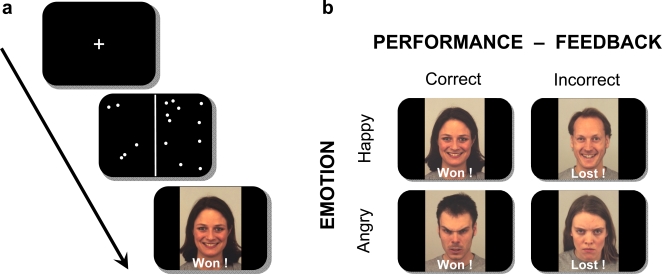
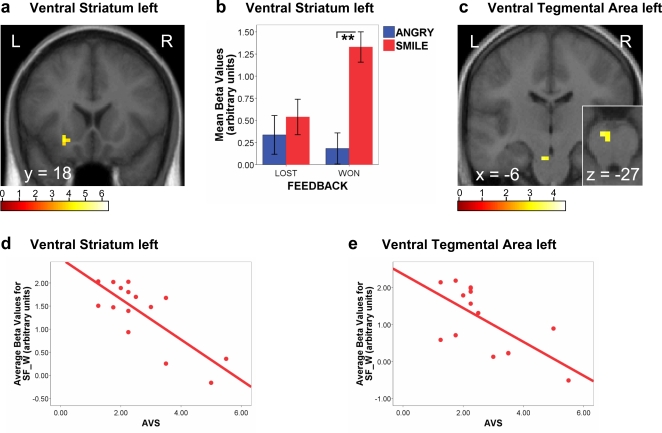
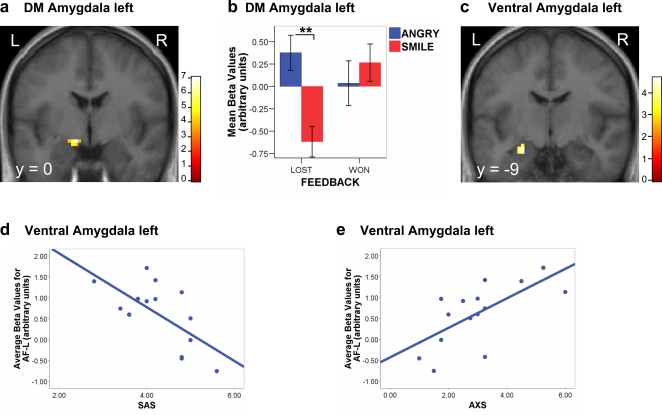
Adult attachment style refers to individual personality traits that strongly influence emotional bonds and reactions to social partners. Behavioral research has shown that adult attachment style reflects profound differences in sensitivity to social signals of support or conflict, but the neural substrates underlying such differences remain unsettled. Using functional magnetic resonance imaging (fMRI), we examined how the three classic prototypes of attachment style (secure, avoidant, anxious) modulate brain responses to facial expressions conveying either positive or negative feedback about task performance (either supportive or hostile) in a social game context. Activation of striatum and ventral tegmental area was enhanced to positive feedback signaled by a smiling face, but this was reduced in participants with avoidant attachment, indicating relative impassiveness to social reward. Conversely, a left amygdala response was evoked by angry faces associated with negative feedback, and correlated positively with anxious attachment, suggesting an increased sensitivity to social punishment. Secure attachment showed mirror effects in striatum and amygdala, but no other specific correlate. These results reveal a critical role for brain systems implicated in reward and threat processing in the biological underpinnings of adult attachment style, and provide new support to psychological models that have postulated two separate affective dimensions to explain these individual differences, centered on the ventral striatum and amygdala circuits, respectively. These findings also demonstrate that brain responses to face expressions are not driven by facial features alone but determined by the personal significance of expressions in current social context. By linking fundamental psychosocial dimensions of adult attachment with brain function, our results do not only corroborate their biological bases but also help understand their impact on behavior.
Overview
The claims and statistics of this paper haven’t been checked yet.
Free: it reads the open-access text and checks the first 5 claims that cite a source we can check. Create a free account to check every claim.
Integrity signals
Registry
Cites
Statistics
Figures
Verification
Claims the paper makes
The claims and statistics of this paper haven’t been checked yet.
Free: it reads the open-access text and checks the first 5 claims that cite a source we can check. Create a free account to check every claim.
Claims other papers make about this one
Each is checked against this paper’s own text: does it say what the citing paper says it does?
The source backs part of the claim, not all of it — or backs it for a different population, condition or comparison.
In the citing paper
“In both studies, challenges to the attachment system yielded greater ventral striatal activation in securely attached individuals, whereas in avoidant/dismissing individuals it was associated with a relative downregulation of reward-related activity.”
From A developmental, mentalization-based approach to the understanding and treatment of borderline personality disorder (2009) · cites this paper as Vrticka et al., 2008
Experimental — accuracy not yet measuredThe source backs part of the claim, not all of it — or backs it for a different population, condition or comparison.
In the citing paper
“This study reported a negative correlation between dismissing attachment scores and activation of the ventral striatum.”
From A developmental, mentalization-based approach to the understanding and treatment of borderline personality disorder (2009) · cites this paper as Vrticka et al., 2008
Experimental — accuracy not yet measuredThe source backs part of the claim, not all of it — or backs it for a different population, condition or comparison.
In the citing paper
“Individuals who use attachment deactivation strategies , typical of dismissive attached individuals, are able to keep the neural systems involved in controlled mentalization 'on-line' for longer, including neural systems involved in judging the trustworthiness of other individuals (i.e., the 'pull mechanism' associated with attachment; Vrticka et al., 2008).”
From A developmental, mentalization-based approach to the understanding and treatment of borderline personality disorder (2009) · cites this paper as Vrticka et al., 2008
Experimental — accuracy not yet measuredThe cited source says what the claim attributes to it.
In the citing paper
“Conversely, these positive responses are much weaker or even absent in individuals with an avoidant attachment style.44”
From Ventral striatum dysfunction in children and adolescents with reactive attachment disorder: functional MRI study (2015) · cites this paper as [44]
The cited source says what the claim attributes to it.
In the citing paper
“Moreover, Vrticka and colleagues also reported that secure attachment was positively related to the activation of the ventral striatum in response to positive reinforcement, but negatively with activation of the amygdala to negative reinforcement.”
From A developmental, mentalization-based approach to the understanding and treatment of borderline personality disorder (2009) · cites this paper as Vrticka et al., 2008
3 more claims about this paper
Create a free account to see every claim other papers make about this one.
Self-check
Percentages, sums and reported differences re-computed from the paper’s own numbers.
The self-check needs the paper’s full text.
Citations
Cites
Development and validation of brief measures of positive and negative affect: The PANAS scales.
Watson, D., Clark, L. A., & Tellegen, A. (1988) · Journal of Personality and Social Psychology · doi:10.1037/0022-3514.54.6.1063 · Cited by 32,433 · cited 1×
“Other personality questionnaires included STAXI [47], STAI [48], BIS-BAS [49], and PANAS [50].”
(1970) · Cited by 24,983
(1969) · Cited by 18,340
Romantic love conceptualized as an attachment process.
Hazan, C., & Shaver, P. (1987) · Journal of Personality and Social Psychology · doi:10.1037/0022-3514.52.3.511 · Cited by 11,908 · cited 4×
“Following earlier studies on children and parents, classic models have distinguished between three main prototypes of attachment style in adults: secure, anxious, and avoidant [5]; whereas subsequent work suggested the existence of four [10] or even five [11,12] distinct styles.”
InfluentialAttachment styles among young adults: A test of a four-category model.
Bartholomew, K., & Horowitz, L. M. (1991) · Journal of Personality and Social Psychology · doi:10.1037//0022-3514.61.2.226 · Cited by 8,384 · cited 8×
“However, activity in STS did not appear to subtend differences in ‘‘mental models’’ of others that are typically associated with different attachment styles [5, 10 ,25].”
InfluentialCarver, C. S., & White, T. L. (1994) · Journal of Personality and Social Psychology · doi:10.1037/0022-3514.67.2.319 · Cited by 7,306 · cited 1×
“Other personality questionnaires included STAXI [47], STAI [48], BIS-BAS [49], and PANAS [50].”
Attachment in adulthood: structure, dynamics, and change
(2008) · Choice Reviews Online · doi:10.5860/choice.45-2903 · Cited by 4,315
Does Rejection Hurt? An fMRI Study of Social Exclusion
Eisenberger, N. I., Lieberman, M. D., & Williams, K. D. (2003) · Science · doi:10.1126/science.1089134 · Cited by 3,849 · cited 4×
“SF-W), consistent with previous reports that ACC might be involved in conditions of social rejection and conflict [31–33].”
InfluentialAttachment theory and close relationships
(1998) · Choice Reviews Online · doi:10.5860/choice.35-6513 · Cited by 3,626
The amygdala: vigilance and emotion
Davis, M., & Whalen, P. J. (2001) · Molecular Psychiatry · doi:10.1038/sj.mp.4000812 · Cited by 2,882 · cited 1×
“These data reveal that processing of socially aversive situations is specifically enhanced in brain systems associated with emotional arousal and fear [41] for people with higher anxious attachment.”
Research works printed but not linked: 1
- Bouthillier D Tremblay N Hamelin F Julien D Scherzer P 1996 French translation and validation of an adult attachment styles measure. Canadian Journal of Behavioural Science-Revue Canadienne Des Sciences Du Comportement 28 74 77
Cited by
Items 101–200 of 283
Cognitive-Emotion Interactions
Armony, J. L., & Vuilleumier, P. O. (2013) · Cambridge University Press eBooks · doi:10.1017/cbo9780511843716.018 · Cited by 33
Self-citationDoes attachment anxiety increase vulnerability to headache?
Berry, J. K. M., & Drummond, P. D. (2013) · Journal of Psychosomatic Research · doi:10.1016/j.jpsychores.2013.11.018 · Cited by 38
“Preoccupied individuals show greater attentional bias toward threatening stimuli than secure individuals [67–69] whereas effective support deflects attention away from the sensory/affective qualities of pain [70].”
BackgroundAttention Bias of Avoidant Individuals to Attachment Emotion Pictures
Liu, Y., Ding, Y., Lu, L., & Chen, X. (2017) · Scientific Reports · doi:10.1038/srep41631 · Cited by 38
Debbané, M., Badoud, D., Sander, D., Eliez, S., Luyten, P., & Vrtička, P. (2017) · Cognitive Affective & Behavioral Neuroscience · doi:10.3758/s13415-017-0497-9 · Cited by 38
“…et al., 2009; Vrtička et al., 2008), while attachment anxiety may be associated with increased threat- or rejection sensitivity-related activity to negative social stimuli in regions including the anterior cingulate cortex, insula, and amygdala (DeWall et al., 2012; Vrtička et al., 2008).”
BackgroundSelf-citationEnsink, K., Biberdzic, M., Normandin, L., & Clarkin, J. F. (2015) · Journal of Infant Child and Adolescent Psychotherapy · doi:10.1080/15289168.2015.1007715 · Cited by 38
Distinct but overlapping neural networks subserve depression and insecure attachment
Galynker, I. I., Yaseen, Z. S., Katz, C., Zhang, X., Jennings-Donovan, G., Dashnaw, S., Hirsch, J., Mayberg, H., Cohen, L. J., & Winston, A. (2012) · Social Cognitive and Affective Neuroscience · doi:10.1093/scan/nsr074 · Cited by 28
Physical attractiveness and sex as modulatory factors of empathic brain responses to pain
Jankowiak-Siuda, K., Rymarczyk, K., Żurawski, Ł., Jednoróg, K., & Marchewka, A. (2015) · Frontiers in Behavioral Neuroscience · doi:10.3389/fnbeh.2015.00236 · Cited by 33
“…the middle insula, dorsal ACC and the striatum (comprised of the putamen, globus pallidus and caudate nuclei) have been observed in romantic and maternal love (Bartels and Zeki, 2000, 2004; Aron et al., 2005; Beauregard et al., 2009) and affiliation (Vrticka et al., 2008; Strathearn et al., 2009).”
BackgroundInfluentialThe neural correlates of attachment security in typically developing children
Choi, E. J., Taylor, M. J., Hong, S.-B., Kim, C.-D., & Yi, S.-H. (2018) · Brain and Cognition · doi:10.1016/j.bandc.2018.04.003 · Cited by 33
“Especially the striatum, comprising of globus pallidus, putamen, and caudate nucleus, has been shown to mediate between socio-emotional information processing and attachment security in adult studies (Schneider et al., 2012; Vrtička & Vuilleumier, 2012; Vrticka et al., 2008; Vrticka, 2012).”
Carpenter, K. L. H., Angold, A. C., Chen, N., Copeland, W., Gaur, P., Pelphrey, K. A., Song, A. W., & EGGER, H. L. (2015) · PLoS ONE · doi:10.1371/journal.pone.0116854 · Cited by 34
“Although there is a paucity of neuroimaging studies of separation anxiety, anxious attachment styles in adulthood are associated with both greater amygdala and less orbitofrontal cortex activation [41, 42].”
Prediction-error in the context of real social relationships modulates reward system activity
Poore, J., Pfeifer, J. H., Berkman, E. T., Inagaki, T. K., Welborn, B. L., & Lieberman, M. D. (2012) · Frontiers in Human Neuroscience · doi:10.3389/fnhum.2012.00218 · Cited by 34
A Neural Model of Empathic States in Attachment-Based Psychotherapy
Cittern, D., & Edalat, A. (2017) · Computational Psychiatry · doi:10.1162/cpsy_a_00006 · Cited by 33
“Evidence implicates both DA (Bartels and Zeki, 2004; Strathearn et al., 2009; Vrtička et al., 2008) and OXT (Feldman et al.”
BackgroundMuted neural response to distress among securely attached people
Nash, K. A., Prentice, M. S., Hirsh, J. B., McGregor, I., & Inzlicht, M. (2013) · Social Cognitive and Affective Neuroscience · doi:10.1093/scan/nst099 · Cited by 30
“For example, in response to angry faces or stressful stimuli, secure attachment has been correlated with decreased amygdala activity, a subcortical group of nuclei involved in fear and anxiety (Lemche et al., 2006; Vrticka et al., 2008).”
BackgroundPichon, S., Rieger, S., & Vuilleumier, P. (2012) · NeuroImage · doi:10.1016/j.neuroimage.2012.06.004 · Cited by 32
“…be up-or down-regulated by re-interpreting the emotional stimulus as a function of the immediate contextual information available (de Gelder et al., 2006; Kim et al., 2004; Sinke et al., 2010; Vrticka et al., 2008) or by modifying one's own interpretation of a negative situation (Ray et al., 2005).”
Self-citationAuthenticity: a mediator in the relationship between attachment style and affective functioning
Stevens, F. L. (2016) · Counselling Psychology Quarterly · doi:10.1080/09515070.2016.1176010 · Cited by 31
Attachment Representation Moderates the Influence of Emotional Context on Information Processing
Leyh, R., Heinisch, C., Kungl, M., & Spangler, G. (2016) · Frontiers in Human Neuroscience · doi:10.3389/fnhum.2016.00278 · Cited by 33
“It can be assumed that top-down processes modulating the P3 come along with a concurrent neurophysiological activation that suppresses target detection in negative contexts (also see Vrtička et al., 2008).”
BackgroundMethodInfluentialDisentangle the neural correlates of attachment style in healthy individuals
Perlini, C., Bellani, M., Rossetti, M. G., Zovetti, N., Rossin, G., Bressi, C., & Brambilla, P. (2019) · Epidemiology and Psychiatric Sciences · doi:10.1017/s2045796019000271 · Cited by 31
“The reported deactivations of the VTA and striatal regions during positive feedback tasks in avoidant-attached individuals seem to suggest an involvement of the limbic regions (Vrtička et al., 2008) and a different sensitivity to positive social feedbacks.”
BackgroundMcEwan, K., Gilbert, P., Dandeneau, S., Lipka, S., Maratos, F. A., Paterson, K. B., & Baldwin, M. W. (2014) · PLoS ONE · doi:10.1371/journal.pone.0088783 · Cited by 34
“those with social anxiety or high selfcriticism), affiliation and social approach can be threatening [29– 32].”
BackgroundInsecure attachment is an independent correlate of objective sleep disturbances in military veterans
Troxel, W., & Germain, A. (2011) · Sleep Medicine · doi:10.1016/j.sleep.2011.07.005 · Cited by 28
Rigon, A., Duff, M. C., & Voss, M. W. (2015) · Brain Imaging and Behavior · doi:10.1007/s11682-015-9446-9 · Cited by 31
“…amygdala involvement in attachment: amygdala activity is modulated by attachment insecurity during different types of affective tasks (Lemche et al. 2006; Vrticka et al. 2008; Riem et al., 2012; Norman et al. 2014; Denny et al. 2014), with higher activation corresponding to more insecure styles.”
BackgroundNeural correlates of sex-related differences in attachment dimensions
Altavilla, D., Ciacchella, C., Pellicano, G. R., Cecchini, M. G., Tambelli, R., Kalsi, N., Aceto, P., & Lai, C. (2021) · Cognitive Affective & Behavioral Neuroscience · doi:10.3758/s13415-020-00859-5 · Cited by 29
“A M G = am yg da la ;A H j= am yg da la -h ip po ca m pu s ju nc tio n; H PC = hi pp oc am pu s p va lu e < .0 5 with the neurobiological pathways during socioemotional tasks (Ran & Zhang, 2018; Vrtička et al., 2008).”
BackgroundInfluentialAutistic traits, personality, and evaluations of humanoid robots by young and older adults
Schweinberger, S. R., Pohl, M., & Winkler, P. (2020) · Computers in Human Behavior · doi:10.1016/j.chb.2020.106256 · Cited by 31
Ma, Y., Ran, G., Chen, X., Ma, H., & Hu, N. (2017) · Frontiers in Psychology · doi:10.3389/fpsyg.2017.00627 · Cited by 29
“For example, several studies have indicated that, at an automatic processing level, anxiously attached individuals are more responsive to emotional facial signals than securely attached individuals (Vrtička et al., 2008; Donges et al., 2012).”
BackgroundInfluentialUnderstanding and accounting for relational context is critical for social neuroscience
Clark‐Polner, E., & Clark, M. S. (2014) · Frontiers in Human Neuroscience · doi:10.3389/fnhum.2014.00127 · Cited by 28
Brain responses to social punishment: a meta-analysis
Zinchenko, O. O. (2019) · Scientific Reports · doi:10.1038/s41598-019-49239-1 · Cited by 26
“…punishment option Punishment > no punishment 17 Treadway, 2014 30 10 n/r right 18–30 Scenarios evaluation and punishment assignment Punished > Not punished trials 15 Vrticka, 2008 16 8 n/r right 23.6 ± 3.6 Perceptual task with social feedback Angry > Smiling Faces with Lost Feedback 3 Wang, 2017…”
BackgroundInfluentialNasiriavanaki, Z., Barbour, T., Farabaugh, A. H., Fava, M., Holmes, A. J., Tootell, R. B. H., & Holt, D. J. (2021) · NeuroImage: Clinical · doi:10.1016/j.nicl.2021.102585 · Cited by 24
“…of over-responsivity of a range of brain regions to socially salient information (including potential social threats or ambiguous social cues in the environment) in individuals with higher levels of anxious attachment (Vrtička, 2008; Lemche, 2006; DeWall, 2012; Redlich, 2015; Norman, 2015).”
InfluentialXu, C. L., & Yan, W. (2022) · Current Psychology · doi:10.1007/s12144-022-03809-1 · Cited by 30
“…found that highly avoidant individuals have lower activation of the ventral striatum when they complete tasks correctly and receive positive social feedback (smiling faces) (Vrtička et al., 2008) while their striatal activity, which represents personal success or failure, remains at a higher level.”
BackgroundSocial relationship-dependent neural response to speech in dogs
Gábor, A., Andics, A., Miklósi, Á., Czeibert, K., Carreiro, C., & Gácsi, M. (2021) · NeuroImage · doi:10.1016/j.neuroimage.2021.118480 · Cited by 26
“This statistical analysis was based on many human fMRI studies investigating behavioral-brain response correlations to understand the neural mechanisms mediating social behaviors and relationships (e.g. Scheele et al., 2013; Spitzer et al., 2007; Vrtička et al., 2008).”
Dismissing Attachment Characteristics Dynamically Modulate Brain Networks Subserving Social Aversion
Krause, A. L., Borchardt, V., Li, M., van Tol, M., Demenescu, L. R., Strauss, B. M., Kirchmann, H. A., Buchheim, A., Metzger, C. D., Nolte, T., et al. (2016) · Frontiers in Human Neuroscience · doi:10.3389/fnhum.2016.00077 · Cited by 24
“An insecure-anxious attachment style, in contrast, has been associated with an increased activation of the ‘‘social aversion system’’ in response to negative social cues (e.g., Lemche et al., 2006; Vrtička et al., 2008; DeWall et al., 2012).”
BackgroundSocial cognitive neuroscience: A review of core systems.
Doré, B., Zerubavel, N., & Ochsner, K. N. (2014) · American Psychological Association eBooks · doi:10.1037/14341-022 · Cited by 26
The role of attachment styles in regulating the effects of dopamine on the behavior of salespersons
Verbeke, W., Bagozzi, R. P., & van den Berg, W. E. (2014) · Frontiers in Human Neuroscience · doi:10.3389/fnhum.2014.00032 · Cited by 22
“For example, Vrtička et al. (2008) show that the amygdala was selectively activated when angry faces were presented as negative feedback after giving incorrect responses; this leads to heightened distress and higher emotionality.”
BackgroundTang, Q., Chen, X., Hu, J. J., & Liu, Y. (2017) · Frontiers in Psychology · doi:10.3389/fpsyg.2017.00624 · Cited by 24
“Studies, although a few in number, suggest that higher anxiety scores correlate with stronger reactions in the amygdala to negative social stimuli such as angry faces or negative verbal scenarios (Lemche et al., 2006; Vrtička et al., 2008); amygdala is the brain region associated with rapid environmental threat detect…”
BackgroundA voxel-based morphometry study on adult attachment style and affective loss
Acosta, H., Jansen, A., Nuscheler, B., & Kircher, T. T. J. (2018) · Neuroscience · doi:10.1016/j.neuroscience.2018.06.045 · Cited by 22
Zheng, M., Zhang, Y., & Zheng, Y. (2015) · Attachment & Human Development · doi:10.1080/14616734.2014.995191 · Cited by 24
Ran, G., & Zhang, Q. (2018) · Attachment & Human Development · doi:10.1080/14616734.2018.1465105 · Cited by 23
“For example, the fMRI study of Vrticka et al. (2008) has examined the effect of attachment style on subjects’ brain responses to emotional faces conveying either positive or negative feedback about task performance (either supportive or hostile) in a social game context.”
BackgroundInfluentialDefining social reward: A systematic review of human and animal studies.
Stijovic, A., Siegel, M., Koçan, A. U., Bojkovska, I., Korb, S., & Silani, G. (2024) · Psychological Bulletin · doi:10.1037/bul0000455 · Cited by 21
Is That Me or My Twin? Lack of Self-Face Recognition Advantage in Identical Twins
Martini, M., Bufalari, I., Stazi, M. A., & Aglioti, S. M. (2015) · PLoS ONE · doi:10.1371/journal.pone.0120900 · Cited by 24
Neuro-imagerie et neuroscience des émotions
Pichon, S., & Vuilleumier, P. O. (2011) · médecine/sciences · doi:10.1051/medsci/2011278019 · Cited by 24
Self-citationBortolini, T., Laport, M. C., Latgé-Tovar, S., Fischer, R. D., Zahn, R., de Oliveira‐Souza, R., & Moll, J. (2024) · Neuroscience & Biobehavioral Reviews · doi:10.1016/j.neubiorev.2024.105584 · Cited by 22
Mothers Who Were Neglected in Childhood Show Differences in Neural Response to Their Infant’s Cry
Wright, D. B., Laurent, H. K., & Ablow, J. C. (2016) · Child Maltreatment · doi:10.1177/1077559516683503 · Cited by 36
The Besançon affective picture set-adult (BAPS-Adult): Development and validation
Szymanska, M., Comte, A., Tio, G., Vidal, C., Monnin, J., Chateau‐Smith, C., Nezelof, S., & Vulliez‐Coady, L. (2018) · Psychiatry Research · doi:10.1016/j.psychres.2018.11.005 · Cited by 18
Close Relationships and Virtual Reality
Huang, S. A., & Bailenson, J. N. (2018) · Educational communications and technology: issues and innovations · doi:10.1007/978-3-030-02631-8_4 · Cited by 24
The biological bases of attachment
Oliveira, P., & Fearon, P. R. M. (2019) · Adoption & Fostering · doi:10.1177/0308575919867770 · Cited by 26
Rubeis, J. D., Sütterlin, S., Lange, D., Pawelzik, M. R., van Randenborgh, A., Victor, D., & Vögele, C. (2016) · PLoS ONE · doi:10.1371/journal.pone.0150375 · Cited by 21
“, dACC, anterior insula; [40]; ACC,[36]; amygdala, [38]), more intense behavioral responses to rejection [34], greater negative emotions and lower self-esteem [41].”
BackgroundCosta‐Cordella, S., Vivanco-Carlevari, A., Rossi, A., Arévalo-Romero, C. A., & Silva, J. R. (2022) · International Journal of Public Health · doi:10.3389/ijph.2022.1604401 · Cited by 20
“Avoidant attachment styles are characterised by hidden distress, even when physiological signs of stress are present [30].”
BackgroundOpioid Regulation of Social Homeostasis: Connecting Loneliness to Addiction
Løseth, G. E., Eikemo, M., & Leknes, S. (2024) · Biological Psychiatry · doi:10.1016/j.biopsych.2024.11.011 · Cited by 18
“The quality of social relationships appears to calibrate social reward and threat sensitivity (36,37) and to form a central part of the bioenergetic resources that people count on to cope with challenges (34).”
Activating the attachment system modulates neural responses to threat in refugees with PTSD
Liddell, B. J., Malhi, G. S., Felmingham, K. L., Den, M. L., Das, P., Outhred, T., Nickerson, A., Askovic, M., Coello, M., Aroche, J., et al. (2021) · Social Cognitive and Affective Neuroscience · doi:10.1093/scan/nsab077 · Cited by 18
“Anxious attachment style by contrast has been associated with greater amygdala engagement to un-primed threatening faces (Vrticka et al., 2008; Norman et al., 2015), increased amygdala activity while making judgements about social threat scenes (Vrticka et al.”
BackgroundResultInterpersonal Closeness and Social Reward Processing: Figure 1.
Vrtička, P. (2012) · Journal of Neuroscience · doi:10.1523/jneurosci.3157-12.2012 · Cited by 16
“…closeness indexes (low IOS/high attachment avoidance) display either strongly decreased reward-related processing of social positive information (Vrticka et al., 2008; Strathearn et al., 2009) or nonspecifically high BOLDsignalinrewardareastobothsocialand nonsocial positive stimuli, reflecting…”
BackgroundSelf-citationAttachment security and striatal functional connectivity in typically developing children
Choi, E. J., Taylor, M. J., Vandewouw, M. M., Hong, S., Kim, C.-D., & Yi, S.-H. (2021) · Developmental Cognitive Neuroscience · doi:10.1016/j.dcn.2021.100914 · Cited by 17
Puhlmann, L. M. C., Derome, M., Morosan, L., Kilicel, D., Vrtička, P., & Debbané, M. (2021) · Attachment & Human Development · doi:10.1080/14616734.2021.1993628 · Cited by 16
“Overall, observing distinct neural correlates for AX and AV corroborates psychological models that suggest two affective dimensions that may represent distinct early influences on brain morphology and function (Gillath et al., 2005; Vrtička et al., 2008).”
BackgroundSelf-citationAn insecure base: Attachment style and orienting response to positive stimuli
Yee, C., & Shiota, M. N. (2015) · Psychophysiology · doi:10.1111/psyp.12422 · Cited by 17
Facing two faces: Defense activation varies as a function of personal relevance
Bublatzky, F., & Alpers, G. W. (2017) · Biological Psychology · doi:10.1016/j.biopsycho.2017.03.001 · Cited by 16
Individual differences in social attachment: A multi‐disciplinary perspective
Gustison, M. L., & Phelps, S. M. (2022) · Genes Brain & Behavior · doi:10.1111/gbb.12792 · Cited by 16
“72,73,75 Moreover, avoidantly-attached individuals show elevated activity in areas associated with emotion regulation like OFC.”
BackgroundPhysiological arousal explains infant gaze following in various social contexts
Ishikawa, M., Senju, A., Kato, M., & Itakura, S. (2022) · Royal Society Open Science · doi:10.1098/rsos.220592 · Cited by 16
“Critically, these core regions of the reward system are anatomically close to the insula, the anterior cingulate cortex (ACC), and the hypothalamus, [21], which play a critical role in modulating sympathetic activities.”
BackgroundIrak, M., Soylu, C., & Güler, B. (2020) · Biological Psychology · doi:10.1016/j.biopsycho.2020.107953 · Cited by 14
Functional connectivity changes following interpersonal reactivity
Krause, A. L., Čolić, L., Borchardt, V., Li, M., Strauss, B. M., Buchheim, A., Wildgruber, D., Fonagy, P., Nolte, T., & Walter, M. (2017) · Human Brain Mapping · doi:10.1002/hbm.23888 · Cited by 15
Socioemotional Information Processing in Human Infants: From Genes to Subjective Construals
Johnson, S. C., & Chen, F. S. (2011) · Emotion Review · doi:10.1177/1754073910387945 · Cited by 19
Childhood emotional neglect predicts empathic accuracy in social inclusion and exclusion contexts
Zhang, X., Zhang, M., Zeng, M., Lan, M., Liu, Y., Li, J., Chen, H., & Yang, J. (2022) · PsyCh Journal · doi:10.1002/pchj.553 · Cited by 13
Asgarizadeh, A., Vahidi, E., Mousavi, P. S. S., Bagherzanjani, A., & Ghanbari, S. (2023) · Brain and Behavior · doi:10.1002/brb3.3114 · Cited by 15
Miller, J. G., Shrestha, S. B., Reiss, A. L., & Vrtička, P. (2020) · Cognitive Affective & Behavioral Neuroscience · doi:10.3758/s13415-020-00781-w · Cited by 13
Self-citationSilva, C., Chaminade, T., David, D. F., Santos, A., Esteves, F. G., Soares, I., & Deruelle, C. (2015) · Scandinavian Journal of Psychology · doi:10.1111/sjop.12202 · Cited by 12
Prinsen, J., Deschepper, A., Maes, E., & Alaerts, K. (2019) · Biological Psychology · doi:10.1016/j.biopsycho.2019.107773 · Cited by 11
Pupil responses to emotion regulation strategies: the role of attachment orientations
Domic‐Siede, M., Guzmán‐González, M., Sánchez‐Corzo, A., Granillo, L., Salazar, C., Silva, M. N., Ortiz, R., & Ossandón, T. (2025) · Cognition & Emotion · doi:10.1080/02699931.2025.2512886 · Cited by 11
“…high attachment anxiety relates to hyperactivation of the anterior insula and ACC (DeWall et al., 2011), while high attachment avoidance engages control regions and amygdala activity linked to suppressive tendencies (Lemche et al., 2006; Long et al., 2020; Vrtička et al., 2008; Winterheld, 2015).”
Measuring the Autonomic Nervous System as a Window Into the Mind and Brain: A Selective Review
Ishikawa, M. (2023) · European Psychologist · doi:10.1027/1016-9040/a000500 · Cited by 13
Yetişkin Ayrılma Anksiyetesi Bozukluğu: Bir Gözden Geçirme
Namlı, Z., ÖZBAY, A., & Tamam, L. (2022) · Psikiyatride Guncel Yaklasimlar - Current Approaches in Psychiatry · doi:10.18863/pgy.940071 · Cited by 24
Models of Change in the Psychotherapy of Borderline Personality Disorders
Viviani, R., Kächele, H. U., & Buchheim, A. (2011) · Neuropsychoanalysis · doi:10.1080/15294145.2011.10773671 · Cited by 12
Jimenez, A. M., Clayson, P. E., Hasratian, A. S., Lee, J., Reavis, E. A., Wynn, J. K., Green, M. F., & Horan, W. P. (2023) · Neuropsychologia · doi:10.1016/j.neuropsychologia.2023.108621 · Cited by 10
The coregulatory effects of emotionally focused therapy
Conroy, J., Perryman, K. L., Robinson, S., Rana, R., Blisard, P., & Gray, M. (2022) · Journal of Counseling & Development · doi:10.1002/jcad.12453 · Cited by 12
Mentalisieren bei Depressionen
Staun, L. (2024) · PDP – Psychodynamische Psychotherapie · doi:10.21706/pdp-23-3-222 · Cited by 10
Emotion Perception and Elicitation
Meaux, E., & Vuilleumier, P. O. (2015) · Elsevier eBooks · doi:10.1016/b978-0-12-397025-1.00159-7 · Cited by 12
Self-citationGauvin, S. E. M., Maxwell, J. A., Impett, E. A., & MacDonald, G. (2024) · Personality and Social Psychology Bulletin · doi:10.1177/01461672241258391 · Cited by 9
“…are not accurate in this positive context echo findings using diverse methods (e.g., memory studies; Gentzler & Kerns, 2006; brain imaging Vrtička et al., 2008) that illustrate lower responsiveness to positive stimuli, and our relatively large sample size enhances confidence in our…”
Towards a neural model of bonding in self-attachment
Cittern, D., & Edalat, A. (2015) · International Joint Conference on Neural Networks (IJCNN) · doi:10.1109/ijcnn.2015.7280548 · Cited by 10
“For example, [7] found increased amygdala activation as a function of increasing attachment anxiety when images of facial expressions were used to provide social feedback on performance during a perceptual game.”
BackgroundMethodMellor, R. L., & Psouni, E. (2021) · Frontiers in Psychology · doi:10.3389/fpsyg.2021.726817 · Cited by 8
Ein‐Dor, T., Perry‐Paldi, A., Merrin, J., Efrati, Y., & Hirschberger, G. (2017) · Journal of Personality · doi:10.1111/jopy.12308 · Cited by 9
How does psychotherapy work? The self and its disorders
Adshead, G. M. J., & Fonagy, P. (2012) · Advances in Psychiatric Treatment · doi:10.1192/apt.bp.111.009274 · Cited by 13
Philipp-Muller, A. Z., & MacDonald, G. (2016) · Journal of Experimental Social Psychology · doi:10.1016/j.jesp.2016.11.010 · Cited by 9
Khani, P., Dezfouli, M. A., Nasri, F., Rahemi, M., Ahmadloo, S., Afkhami, H., Saeidi, F., Tereshchenko, S. Y., Bigdeli, M. R., & Modarressi, M. H. (2023) · Frontiers in Genetics · doi:10.3389/fgene.2023.1002048 · Cited by 8
“Activation of L VTA is frequently found in studies on facial attractiveness, which revealed that L VTA specifically reacted to smiling and supportive faces (Vrtička et al., 2008).”
BackgroundYan, M., Hodgdon, E. A., Yang, R., Yu, Q., Inagaki, T. K., & Wiggins, J. L. (2022) · Social Cognitive and Affective Neuroscience · doi:10.1093/scan/nsac038 · Cited by 8
“A multitude of neuroimaging studies linking attachment style with neural activity to emotional tasks have been conducted in adults (Gillath et al., 2005; Vrticka et al., 2008, 2012; DeWall et al., 2012).”
BackgroundLevy, K. N., Johnson, B. N., Scala, J. W., Temes, C. M., & Clouthier, T. L. (2015) · Psihologijske teme · Cited by 17
Attachment is in the eye of the beholder: a pupillometry study on emotion processing
Vacaru, S. V., Waters, T. E. A., & Hunnius, S. (2025) · Scientific Reports · doi:10.1038/s41598-025-92347-4 · Cited by 8
“Building on a rich body of behavioral research (e.g., reaction time tasks 29 ; dot-probe tasks 30 ) and neuroimaging studies (e.g., fMRI 31 ; psychophysiology 3 ), which have revealed distinct psychobiological emotion processing across individuals with different attachment orientations, a promising…”
Stamp, G. E., Wadley, A. L., & Iacovides, S. (2024) · Journal of Pain · doi:10.1016/j.jpain.2024.104619 · Cited by 9
State attachment moderates the maternal-related neural responses to infant faces
Ma, Y., Hu, N., Liu, G., & Chen, X. (2019) · International Journal of Psychophysiology · doi:10.1016/j.ijpsycho.2019.10.007 · Cited by 8
Neumann, C. S. (2020) · Personality Neuroscience · doi:10.1017/pen.2020.8 · Cited by 8
“…(Hariri, 2009), trait optimism (Feder et al., 2009), trait happiness and positive emotion (Cunningham & Kirkland, 2014), attachment style (Vrticka et al., 2008), resilience (Heitzeg et al., 2008), pathological personality traits (Carré et al., 2013; Donegan et al., 2003; Schultz et al.,…”
Comte, A., Szymanska, M., Monnin, J., Moulin, T., Nezelof, S., Magnin, É., Jardri, R., & Vulliez‐Coady, L. (2024) · Attachment & Human Development · doi:10.1080/14616734.2024.2384393 · Cited by 9
“The most frequently used stimuli are positive social feedback such as happy facial expressions, prompting and reunion phases in virtual games (Suslow et al., 2009; Vrticka et al., 2008; White et al., 2012).”
Haverkamp, E., Olsman, E., Ćurĉić‐Blake, B., Ramírez, V. V., Aleman, A., Ket, J. C. F., & Schaap‐Jonker, H. (2025) · Frontiers in Psychology · doi:10.3389/fpsyg.2025.1569514 · Cited by 7
Izaki, T., Wang, W., & Kawamoto, T. (2022) · Frontiers in Psychology · doi:10.3389/fpsyg.2022.881863 · Cited by 6
Biological Factors in Parenting and Child Development
Deater-Deckard, K. D., Chary, M., & McCormick, S. A. (2018) · Springer eBooks · doi:10.1007/978-3-319-94598-9_2 · Cited by 5
Cerebellar engagement in the attachment behavioral system
Picerni, E., Laricchiuta, D., Piras, F., Petrosini, L., Spalletta, G., & Cutuli, D. (2022) · Scientific Reports · doi:10.1038/s41598-022-17722-x · Cited by 6
Worthington, R. (2018) · Journal of Forensic Practice · doi:10.1108/jfp-07-2017-0027 · Cited by 6
Bernard, C. E. (2020) · Digital Commons (Liberty University) · Cited by 19
Association between attachment anxiety and the gaze direction-related N170
Burra, N., & Vrtička, P. (2022) · Attachment & Human Development · doi:10.1080/14616734.2022.2091337 · Cited by 6
“, 2017), in line with the idea that anxiously (as compared to securely) attached individuals are more responsive to emotional facial signals (Donges et al., 2012; Vrtička et al., 2008).”
BackgroundSelf-citationXu, D., & He, R. (2025) · Brain Sciences · doi:10.3390/brainsci15080843 · Cited by 6
Parsing positivity in the bipolar spectrum: The effect of context on social decision-making
Campellone, T. R., Peckham, A., & Johnson, S. L. (2018) · Journal of Affective Disorders · doi:10.1016/j.jad.2018.02.020 · Cited by 4
Color perception influences attention processing in females with different attachment styles
Ma, Y., Hu, N., Zhang, X., Liu, G., & Chen, X. (2019) · Current Psychology · doi:10.1007/s12144-018-0123-1 · Cited by 4
Adult attachment style and lateral preferences in physical proximity
Takano, T., & Mogi, K. (2019) · Biosystems · doi:10.1016/j.biosystems.2019.05.002 · Cited by 6
No effect of attachment avoidance on visual disengagement from a romantic partner’s face
Sanscartier, S., Maxwell, J. A., & Lockwood, P. (2020) · Journal of Social and Personal Relationships · doi:10.1177/0265407520919991 · Cited by 4
“…to emotional faces have failed to replicate in a considerable number of studies (Byrow, Broeren, et al., 2016; Cooper et al., 2009; Davis et al., 2014; Fraley et al., 2006; Jia et al., 2017; Meinz et al., 2017; Vandevivere et al., 2014; Vrticka et al., 2008; Westphal, 2014; Zhang et al., 2008).”
BackgroundResultKendall-Jones, R. (2014) · University of Birmingham Institutional Research Archive (University of Birmingham) · Cited by 6
Domic‐Siede, M., Figueroa-Cuevas, J., Leiva-Cortés, K., López, D., Guzmán‐González, M., Lau-Lemus, T., Hernández, S., Ortiz, R., González, L., & Silva, J. R. (2026) · Frontiers in Human Neuroscience · doi:10.3389/fnhum.2026.1742378 · Cited by 3
“Some studies report that secure attachment is associated with more efficient prefrontal down-regulation of amygdala responses during emotional challenges (Vrtička et al., 2008, 2012; Vrtička and Vuilleumier, 2012).”
Bao, X., Zhang, M., & Chen, X. (2024) · International Journal of Clinical and Health Psychology · doi:10.1016/j.ijchp.2024.100494 · Cited by 4
“Vrticka et al. (2008) found no activation in the ventral striatum and tegmental area of the reward-related brain regions in high-AX individuals after receiving positive feedback.”
BackgroundAttachment Style, Task Difficulty, and Feedback Type: Effects on Cognitive Load
Mizrahi, D., Laufer, I., & Zuckerman, I. (2025) · Behavioral Sciences · doi:10.3390/bs15040427 · Cited by 3
“The dot counting task (Vrtiˇcka et al., 2008) was designed to evaluate cognitive effort under varying levels of difficulty.”
InfluentialLetourneau, N. L., Hart, M. J., & MacMaster, F. P. (2017) · SAGE Open Nursing · doi:10.1177/2377960816685572 · Cited by 4
“The ages of participants ranged from 18 years (Gillath et al., 2005; Vrtička et al., 2008) to 36 years (Donges et al., 2012; Warren et al., 2010) to unknown (DeWall et al., 2012).”
BackgroundMethodInfluential
Metadata
- Authors
- Vrtička, P., Andersson, F., Grandjean, D., Sander, D., & Vuilleumier, P.
- Affiliations
- University of Geneva (CH)
- Corresponding author
- Vrtička, Pascal
- Venue
- PLoS ONE
- Publisher
- Public Library of Science (PLoS)
- Published
- 2008-08-06
- Volume
- 3
- Issue
- 8
- Pages
- e2868
- ISSN
- 1932-6203 (ISSN-L)
- PMC
- PMC2478709
- OpenAlex
- W2163551061
- Semantic Scholar
- 9567c4e0784ac2b99a086354dac4e74d1f765e13
- Cited by
- 260
- References
- 57
- Citations by year
- 2026: 10 · 2025: 19 · 2024: 8 · 2023: 6 · 2022: 13 · 2021: 10 · 2020: 14 · 2019: 11 · 2018: 15 · 2017: 16 · 2016: 17 · 2015: 29 · 2014: 19 · 2013: 22 · 2012: 27
- FWCI
- 10.70
- Type
- journal article
- Language
- en
- Open access
- gold
- doi.org
- Locations
- PLoS ONE (publishedVersion, cc-by)
- Europe PMC (PubMed Central) (publishedVersion, cc-by)
- PubMed Central (publishedVersion, cc-by)
- PubMed (publishedVersion)
- Archive ouverte UNIGE (University of Geneva) (publishedVersion, other-oa)
- HAL (submittedVersion)
- RePEc: Research Papers in Economics (submittedVersion)
- DOAJ (DOAJ: Directory of Open Access Journals) (submittedVersion, cc-by-sa)
- Max Planck Digital Library (submittedVersion)
- mediaTUM – the media and publications repository of the Technical University Munich (Technical University Munich) (submittedVersion)
- MPG.PuRe (Max Planck Society) (submittedVersion, other-oa)
- Archive ouverte UNIGE (University of Geneva) (submittedVersion, cc-by)
- Funders
- National Science Foundation (51NF40-104897)
- Schweizerischer Nationalfonds zur Förderung der Wissenschaftlichen Forschung (104897, 51NF40)
- Université de Genève (51NF40-104897)
- Topics
- Social Sciences › Psychology › Social Psychology › Attachment and Relationship Dynamics
- Life Sciences › Neuroscience › Cognitive Neuroscience › Face Recognition and Perception
- Life Sciences › Neuroscience › Endocrine and Autonomic Systems › Neuroendocrine regulation and behavior
- Keywords
- adult attachment styles, secure attachment, attachment avoidance, attachment anxiety, amygdala, ventral striatum, ventral tegmental area, social feedback, facial expressions, social reward, social danger, individual differences, social evaluation
- MeSH terms
- Amygdala, Brain Mapping, Corpus Striatum, Emotions, Facial Expression, Feedback, Humans, Functional Laterality, Magnetic Resonance Imaging, Reaction Time, Social Behavior, Social Support
About these checks
Registry, retraction, Cites and statistics results are computed, not judged, with one exception: a printed reference that no index lists is read once by a model before it counts as a citation error. Claims are extracted by a model and kept only when their quote appears verbatim in the text; each cited source is then checked, with a model’s help, for whether it says what the claim relies on. Those verdicts can be wrong — read the claim’s quote and the cited source before relying on one.
Statistics and arithmetic are recomputed, not judged.
Confidence bands are shown only for fields calibrated on our annotated test set. None is calibrated yet, so no band is shown.
What counts as a claim ›How we measure confidence ›How we check this ›
Are you an author, or do you see a problem with this page? Request a review
Data sources
Bibliographic data: Semantic Scholar, OpenAlex, Crossref.
Contains information from the Semantic Scholar Academic Graph Datasets, made available under the ODC Attribution License (ODC-BY 1.0).
Semantic Scholar’s data is described in: Kinney, R., et al. (2023). The Semantic Scholar Open Data Platform. arXiv:2301.10140.
