

microRNA Expression Patterns Reveal Differential Expression of Target Genes with Age
Open accessThe DOI matches its Crossref record; 50 of the 50 references it cites were found in a registry or an index.
Abstract
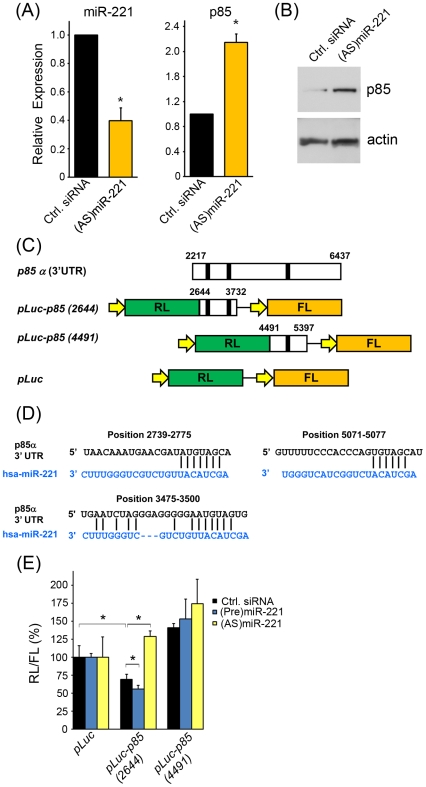
Recent evidence supports a role for microRNAs (miRNAs) in regulating the life span of model organisms. However, little is known about how these small RNAs contribute to human aging. Here, we profiled the expression of over 800 miRNAs in peripheral blood mononuclear cells from young and old individuals by real-time RT-PCR analysis. This genome-wide assessment of miRNA expression revealed that the majority of miRNAs studied decreased in abundance with age. We identified nine miRNAs (miR-103, miR-107, miR-128, miR-130a, miR-155, miR-24, miR-221, miR-496, miR-1538) that were significantly lower in older individuals. Among them, five have been implicated in cancer pathogenesis. Predicted targets of several of these miRNAs, including PI3 kinase (PI3K), c-Kit and H2AX, were found to be elevated with advancing age, supporting a possible role for them in the aging process. Furthermore, we found that decreasing the levels of miR-221 was sufficient to cause a corresponding increase in the expression of the predicted target, PI3K. Taken together, these findings demonstrate that changes in miRNA expression occur with human aging and suggest that miRNAs and their predicted targets have the potential to be diagnostic indicators of age or age-related diseases.
Overview
The claims and statistics of this paper haven’t been checked yet.
Free: it reads the open-access text and checks the first 5 claims that cite a source we can check. Create a free account to check every claim.
Integrity signals
Registry
Cites
Statistics
Figures
Verification
Claims the paper makes
The claims and statistics of this paper haven’t been checked yet.
Free: it reads the open-access text and checks the first 5 claims that cite a source we can check. Create a free account to check every claim.
Claims other papers make about this one
Each is checked against this paper’s own text: does it say what the citing paper says it does?
The source backs part of the claim, not all of it — or backs it for a different population, condition or comparison.
In the citing paper
“Studies have shown age-related differences in the abundance of specific miRNAs in circulating cells, plasma, and whole blood from older compared with younger individuals42–48.”
From Inflammageing: chronic inflammation in ageing, cardiovascular disease, and frailty (2018) · cites this paper as [42]
Experimental — accuracy not yet measured
Self-check
Percentages, sums and reported differences re-computed from the paper’s own numbers.
The self-check needs the paper’s full text.
Citations
Cites
Hanahan, D., & Weinberg, R. A. (2000) · Cell · doi:10.1016/s0092-8674(00)81683-9 · Cited by 29,219
MicroRNAs: Target Recognition and Regulatory Functions
Bartel, D. P. (2009) · Cell · doi:10.1016/j.cell.2009.01.002 · Cited by 20,068 · cited 3×
“Most recently, differences in microRNA abundance were observed in the liver from the Ames dwarf mouse, which have extended longevity compared to wild-type mice [7,11,12].”
The functions of animal microRNAs
Ambros, V. (2004) · Nature · doi:10.1038/nature02871 · Cited by 10,728
MicroRNA expression profiles classify human cancers
Lu, J., Getz, G., Miska, E. A., Alvarez-Saavedra, E., Lamb, J., Peck, D., Sweet-Cordero, A., Ebert, B. L., Mak, R. H., Ferrando, A. A., et al. (2005) · Nature · doi:10.1038/nature03702 · Cited by 9,539
Cellular senescence: when bad things happen to good cells
Campisi, J., & d'Adda di Fagagna, F. (2007) · Nature Reviews Molecular Cell Biology · doi:10.1038/nrm2233 · Cited by 4,441 · cited 3×
“Recent studies have suggested that changes in miRNA expression also occur with human cellular senescence, an in vitro model system that recapitulates certain aspects of aging and cancer [14,15].”
BackgroundModel-based analysis of oligonucleotide arrays: Expression index computation and outlier detection.
Li, C., & Wong, W. H. (2001) · Proceedings of the National Academy of Sciences · doi:10.1073/pnas.98.1.31 · Cited by 3,133 · cited 1×
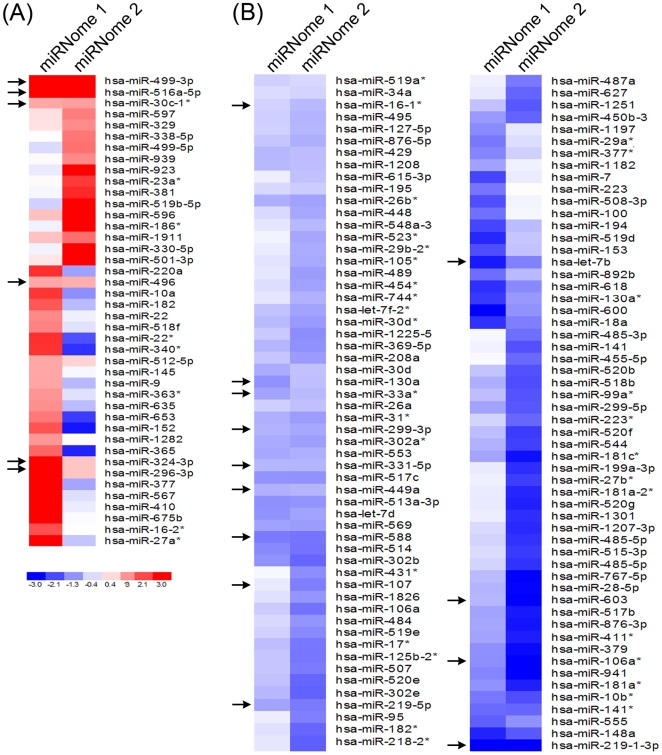
“The heat map was generated using dChip software and indicates the fold log10 relative change in expression in young versus old participants[49].”
MethodBiogenesis of small RNAs in animals
Kim, V. N., Han, J., & Siomi, M. C. (2009) · Nature Reviews Molecular Cell Biology · doi:10.1038/nrm2632 · Cited by 2,814
Targeting the phosphoinositide 3-kinase pathway in cancer
Liu, P., Cheng, H., Roberts, T. M., & Zhao, J. J. (2009) · Nature Reviews Drug Discovery · doi:10.1038/nrd2926 · Cited by 2,721
Targeting PI3K signalling in cancer: opportunities, challenges and limitations
Engelman, J. A. (2009) · Nature Reviews Cancer · doi:10.1038/nrc2664 · Cited by 2,445 · cited 1×
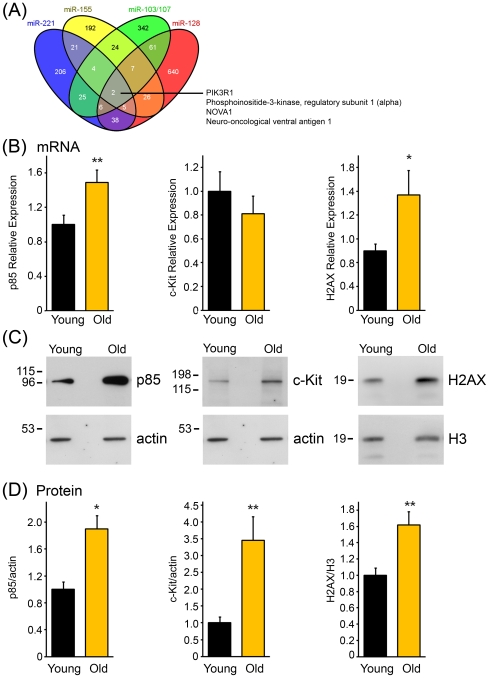
“regulatory p85a subunit of phosphoinositide 3-kinse (PI3K), a lipid kinase that plays a key role in many cellular processes including cell survival, cell proliferation, and tumorigenesis [24,25].”
BackgroundGarzon, R., Calin, G. A., & Croce, C. M. (2009) · Annual Review of Medicine · doi:10.1146/annurev.med.59.053006.104707 · Cited by 1,770
Cited by
Items 301–356 of 356
Epigenetics of Metabolic Diseases
Gillberg, L., & Hjort, L. (2022) · Elsevier eBooks · doi:10.1016/b978-0-323-91909-8.00026-8 · Cited by 2
Mechanisms Linking Depression, Immune System and Epigenetics During Aging
Bradburn, S. (2018) · Elsevier eBooks · doi:10.1016/b978-0-12-811073-7.00019-2 · Cited by 2
Ekowati, A. L., Pramono, Z. A. D., Soeselo, D. A., Budiyanto, A., Astuti, I., & Mubarika, S. (2019) · The Indonesian Biomedical Journal · doi:10.18585/inabj.v11i3.827 · Cited by 2
microRNA221 is Involved in Human Placental Development by Targeting DDIT4
Hu, B., Xu, G., Tang, J., Li, X., Qian, P., Shen, R., Xu, L., Gao, T., Zhang, N., & Hou, J. (2019) · Cellular Physiology and Biochemistry · doi:10.33594/000000019 · Cited by 2
Metaxakis, A., Gkikas, I., & Tavernarakis, N. (2022) · Elsevier eBooks · doi:10.1016/b978-0-12-823761-8.00027-6 · Cited by 2
Unlocking the therapeutic promise of miRNAs in promoting amyloid-β clearance for Alzheimer's disease
Kaur, V., & Sunkaria, A. (2025) · Behavioural Brain Research · doi:10.1016/j.bbr.2025.115505 · Cited by 1
Hu, W., Zhou, H., Zhang, X., Ma, T., Hao, J., Liu, X., & Yan, J. (2025) · Microchemical Journal · doi:10.1016/j.microc.2025.114682 · Cited by 1
Plasma microRNA signatures in drug-naïve Romanian adolescents with first-episode psychosis
Grosu, Ș.-A., Milanesi, E., Pelisenco, I. A., Paun, R.-M., Dobre, M., & Hinescu, M. E. (2026) · Frontiers in Psychiatry · doi:10.3389/fpsyt.2026.1837719 · Cited by 1
“Current literature suggests that miRNA levels vary considerably with age (20), therefore the wide age ranges that are currently used in the inclusion criteria of case-control studies may not be suitable for miRNA pro fi ling.”
Differential Expression of Long Noncoding RNA in the Rat Brain During Aging
Kour, S., & Rath, P. C. (2016) · Springer eBooks · doi:10.1007/978-981-10-2155-8_10 · Cited by 1
Cacabelos, R., & Teijido, Ó. (2018) · Elsevier eBooks · doi:10.1016/b978-0-12-811353-0.00074-9 · Cited by 1
Lv, Y., Wang, Z.-Q., Qiang, L., Zhao, J., & Yang, Z. (2021) · Medicine Science and the Law · doi:10.1177/00258024211064404 · Cited by 1
RetractedRawat, K., & Garlapally, P. (2023) · Exploration of Neuroprotective Therapy · doi:10.37349/ent.2023.00040 · Cited by 1
Wardzyńska, A., Pawelczyk, M., Rywaniak, J., Makowska, J. S., Kowalski, M. L., & Chałubiński, M. (2023) · Apmis · doi:10.1111/apm.13328 · Cited by 2
“Age is a significant factor affecting miRNAome (13, 14), and we previously reported that in a group of elderly asthmatics during the stable period of the disease expression of circulating miRNAs was not associated with clinical features of disease as it was in younger subjects (5).”
Shulga, S., Андріяш, Г. С., Tigunova, O., Priyomov, S., & Blume, Y. B. (2025) · Cytology and Genetics · doi:10.3103/s0095452725020094 · Cited by 1
“Overexpression of miR-106a and miR-520c can lead to a significant decrease in APP levels in HEK-293 cells (Yamakuchi et al., 2008; Noren Hooten et al., 2010; Chen et al., 2018).”
Is Use of Micro-RNA–Containing Food Feasible?
Kang, J.-W., Baek, H.-A., Cho, S., & Lee, J. (2016) · Journal of Food Chemistry and Nanotechnology · doi:10.17756/jfcn.2016-009 · Cited by 1
“The miRNA control systems linked with the cell cycle, DNA repair, oxidative stress responses and apoptosis are abnormally expressed in midlife [23, 24].”
BackgroundMicroRNAs Regulating Autophagy in Neurodegeneration
Lai, Q., Kovzel, N., Konovalov, R., & Vinnikov, I. A. (2021) · Advances in experimental medicine and biology · doi:10.1007/978-981-16-2830-6_11 · Cited by 1
Exercise, epigenetics, and aging
Chilton, W., Maier, M. C., Akinnibosun, O. A., O’Brien, B. J., & Charchar, F. J. (2021) · Elsevier eBooks · doi:10.1016/b978-0-12-820682-9.00002-5 · Cited by 2
Regulation of Micrornas by 17β-Estradiol in the Aging Female Brain
Giffin-Rao, Y. (2015) · Loyola eCommons (Loyola University of Chicago)
Absence of mutation in miR-34a gene in a Chinese longevity population.
Wu, H., He, Y., Xu, T., & Kong, Q. (2015) · PubMed · doi:10.13918/j.issn.2095-8137.2015.2.112
“Typically, the expression of most miRNAs are downregulated with human age (Noren Hooten et al, 2010), but are upregulated in centenarians as compared with the octogenarians, being somewhat similar to those of younger people (Serna et al, 2012).”
Resultvan Almen, G. C. (2012) · Research Publications (Maastricht University) · doi:10.26481/dis.20120516ga
Mudhir, S. H., Al-Jubouri, R. H., & Majeed, B. A. A. (2014) · DOAJ (DOAJ: Directory of Open Access Journals)
McCallie, B. R., Parks, J. C., Loper, R., Buttermore, H., Schoolcraft, W. B., & Katz‐Jaffe, M. G. (2011) · Fertility and Sterility · doi:10.1016/j.fertnstert.2011.07.111
Aging: An Etiological Factor in The Development of Intestinal Tumorigenesis
Nautiyal, J., Purvis, K., & Majumdar, A. P. N. (2015) · Springer eBooks · doi:10.1007/978-3-319-19986-3_10
MikroRNA’lar ve OSTEOARTRİT / MicroRNAs and OSTEOARTHRITIS
Soyocak, A., Özgen, M., Kurt, H., Değirmenci, İ., & Güneş, H. V. (2016) · OSMANGAZİ JOURNAL OF MEDICINE · doi:10.20515/otd.04339
Novel regulation of neuronal genes implicated in Alzheimer disease by microRNA
Long, J. M. (2013) · Purdue University Indianapolis (Indiana University) · doi:10.7912/c2/2052
Bonifacio, L. N. (2010) · Carolina Digital Repository (University of North Carolina at Chapel Hill) · doi:10.17615/nwfs-3n09
Design and development of miRNA and stem cell based micro/nano systems as lung disease therapy
Alhasan, L. (2016) · RMIT Research Repository (RMIT University Library) · doi:10.25439/rmt.27582078
Exploring the functional landscape of the fission yeast genome via Hermes transposon mutagenesis
Grech, L. (2018) · UCL Discovery (University College London)
Epigenetic Biomarkers of Biological Age
Daimiel, L., & Micó, V. (2018) · Elsevier eBooks · doi:10.1016/b978-0-12-801238-3.62147-5
Use of delivery technologies to manipulate miRNA expression
Lai, W. (2019) · Elsevier eBooks · doi:10.1016/b978-0-12-816485-3.00009-x
Epigenomic reprogramming of caloric restriction on aging
Ribarič, S. (2019) · Elsevier eBooks · doi:10.1016/b978-0-12-816843-1.00016-3
Epigenomic, Transcriptome and Image-Based Biomarkers of Aging
Yan, Y., Mu, Y., Chen, W., & Han, J. J. (2019) · Healthy ageing and longevity · doi:10.1007/978-3-030-24970-0_5
Noncoding RNAs and Epigenetic Regulation in Aging
Thangaraj, A., Periyasamy, P., Chen, L., Kutchy, N. A., Hu, G., & Buch, S. J. (2020) · Elsevier eBooks · doi:10.1016/b978-0-08-100596-5.22716-9
Mušo, M. (2020) · Elsevier eBooks · doi:10.1016/b978-0-12-817193-6.00015-7
Silica Particles Trigger Pulmonary Fibrosis Act Through Cell-To-Cell Delivery of Exosomal Mir-107Preprint
Wang, D., Hao, C., Guo, W., Pei, Y., Zhang, L., Bao, L., Liu, S., Li, Y., Qu, Y., Zhao, Y., et al. (2021) · Research Square · doi:10.21203/rs.3.rs-365315/v1
“For example, miR-107 expression was found to decrease with age, and is thought to play an important role in regulating biological life span[32].”
BackgroundElias, F. M. (2020) · Digital Library of Theses and Dissertations (Universidade de São Paulo) · doi:10.11606/d.5.2020.tde-22072021-142734
Mitochondria and microRNAs in obesity and after weight loss
Breininger, S. P. (2020)
The potential use of miRNAs in forensic science
Фанилевич, Г. И., Beylerli, O., & Измайлов, А. А. (2021) · Bulletin of Siberian Medicine · doi:10.20538/1682-0363-2021-3-129-140
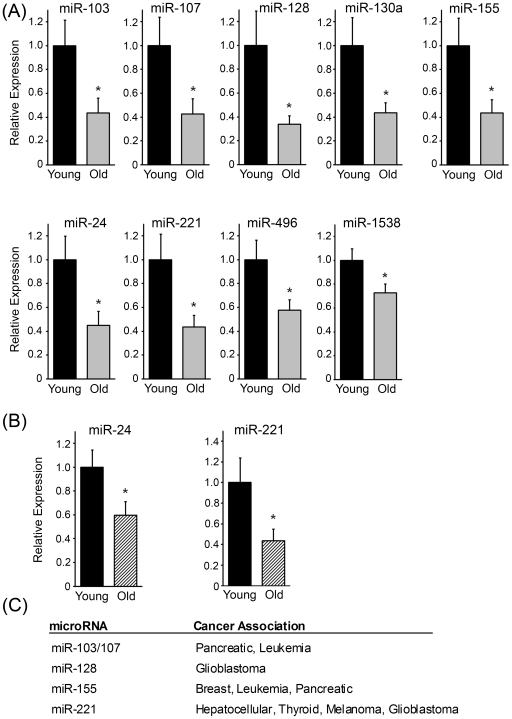
“[55] Donor age qRT-PCR Humans miR-103, miR-107, miR-128, miR-130a, miR-155, miR-24, miR-221, miR-496, and miR-1538 Peripheral blood Decreased”
MethodSu, R. J., Zhao, E., & Zhang, J. (2020) · Research Square · doi:10.21203/rs.3.rs-61573/v1
“Limited researches have shown that low expression of miR-496 is related to aging process[8, 9], and plays an important role in the formation and differentiation of bone cells [10].”
BackgroundWardzyńska, A., Małgorzata, P., Rywaniak, J., Makowska, J. S., Jamroz‐Brzeska, J., & Kowalski, M. L. (2020) · Research Square · doi:10.21203/rs.3.rs-124946/v1
Epigenetic aging and its reversal
de la Parte, C., & Guallar, D. (2022) · Elsevier eBooks · doi:10.1016/b978-0-323-91617-2.00006-7 · Cited by 1
Fey, R. M., Chow, E. S., Gvakharia, B. O., Giebultowicz, J. M., & Hendrix, D. A. (2022) · F1000Research · doi:10.12688/f1000research.124724.1
Usage areas of microrna (miRNA) in forensic genetics
Hölümen, N. (2022) · Novel Forensic Research · doi:10.5455/nofor.2022.06.02
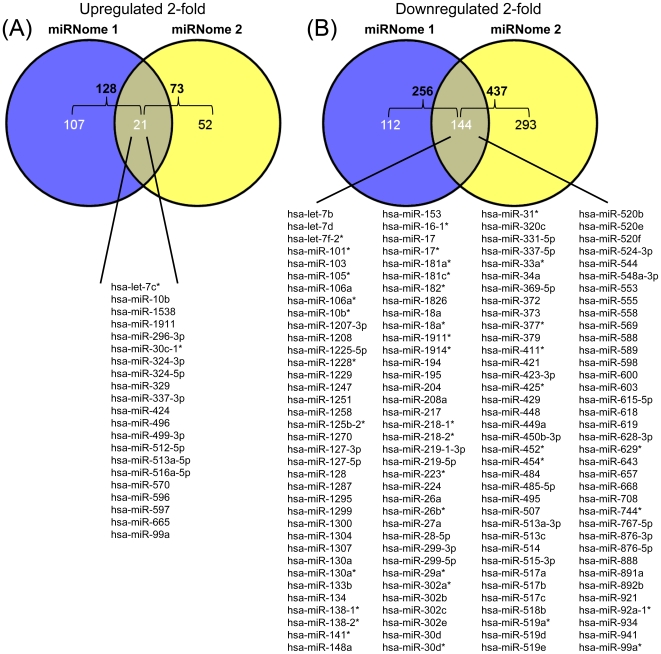
“In another study, a team worked with both young and old donors and they found that most of the miRNAs (total 800 miRNA was investigated) are decreasing with age from 800 investigated miRNA profiles [11].”
BackgroundButts, B. (2024) · Springer eBooks · doi:10.1007/978-3-031-53705-9_3
Yanishevskaya, M. A., Андреевна, Б. Е., & Akleyev, A. V. (2024) · Russian Journal of Genetics · doi:10.1134/s1022795424701102
Specific functions and therapeutic applications of microRNAs in aging and age-related diseases
Kim, D., Lee, N., & Lee, H. (2024) · Journal of Applied Biological Chemistry · doi:10.3839/jabc.2024.062
Wardzyńska, A., Pawelczyk, M., Rywaniak, J., Makowska, J., Jamroz‐Brzeska, J., & Kowalski, M. L. (2021) · Figshare · doi:10.6084/m9.figshare.14767474
Dogan, H., Shu, J., Hakguder, Z., Xu, Z., & Cui, J. (2020) · Figshare · doi:10.6084/m9.figshare.13167407
Modulation de la sénescence induite par les oncogènes par les glucocorticoïdes et rôle de EGR1
Carvalho, C. (2018) · theses.fr (ABES) · doi:10.70675/7cafc6a4za30dz467dz81a1z7033a7846a52
Spena, S., Cairo, A., Pappalardo, E., Tedesco, C., Gualtierotti, R., & Peyvandi, F. (2026) · Research and Practice in Thrombosis and Haemostasis · doi:10.1016/j.rpth.2026.106639
Applications of Epigenetics to Forensic Sciences. Introduction
Zapico, S. C. (2026) · Epigenetics and human health · doi:10.1007/978-3-032-23085-0_1
Role of miR-155 and miR-103 in Oxidative Stress in Cardiovascular Disease: A Narrative Review
Cacciapuoti, M., Stefanelli, L. F., Caputo, I., Driussi, G., Ceol, M., Priante, G., Calò, L. A., & Nalesso, F. (2026) · Pathophysiology · doi:10.3390/pathophysiology33030064
MicroRNA Signatures: An Emerging Forensic Landscape for Body Fluids based Age EstimationPreprint
Parmar, M., Verma, K., & Joshi, B. (2026) · Research Square · doi:10.21203/rs.3.rs-10597046/v1
STZ‑induced sporadic Alzheimer’s in rats: behavioral, histopathological, and MiRNA profiles
Moustafa, N., Gaballa, Z., Haiba, S., & Abdellatif, A. (2026) · Journal of Molecular Histology · doi:10.1007/s10735-026-10979-w
“The absence of Let-7 alterations in our study may also correspond to the early neuropathological window examined (4–13 weeks) and the concurrent upregulation of miR-107, which has been shown to suppress Let-7 biogenesis (Y. Wang et al. 2022b ).”
Behnke, M. K. (2012) · VCU Scholars Compass (Virginia Commonwealth University) · doi:10.25772/gt0a-et79
“KIT was the only developmental gene identified in the literature as potentially increased with advanced age [124] and appeared to have a slight effect in our data, but this turned out to be driven by 2 outliers (Sample T3_400 had FC 3.”
Background
Metadata
- Authors
- Noren Hooten, N., Abdelmohsen, K., Gorospe, M., Ejiogu, N., Zonderman, A. B., & Evans, M. K.
- Affiliations
- National Institutes of Health (US)
- Corresponding author
- Evans, Michele K.
- Venue
- PLoS ONE
- Publisher
- Public Library of Science (PLoS)
- Published
- 2010-05-20
- Volume
- 5
- Issue
- 5
- Pages
- e10724
- ISSN
- 1932-6203 (ISSN-L)
- PMC
- PMC2873959
- OpenAlex
- W2120126501
- Cited by
- 357
- References
- 50
- Citations by year
- 2026: 7 · 2025: 11 · 2024: 12 · 2023: 12 · 2022: 17 · 2021: 22 · 2020: 34 · 2019: 32 · 2018: 33 · 2017: 17 · 2016: 28 · 2015: 32 · 2014: 24 · 2013: 28 · 2012: 28
- FWCI
- 7.56
- Type
- journal article
- Language
- en
- Open access
- gold
- doi.org
- Licence
- Locations
- PLoS ONE (publishedVersion, public-domain)
- Europe PMC (PubMed Central) (publishedVersion, public-domain)
- PubMed Central (publishedVersion, public-domain)
- PubMed (publishedVersion)
- DOAJ (DOAJ: Directory of Open Access Journals) (submittedVersion, cc-by-sa)
- Figshare (submittedVersion, cc-by)
- Funders
- National Institutes of Health
- Topics
- Life Sciences › Biochemistry, Genetics and Molecular Biology › Cancer Research › MicroRNA in disease regulation
- Life Sciences › Biochemistry, Genetics and Molecular Biology › Aging › Genetics, Aging, and Longevity in Model Organisms
- Life Sciences › Biochemistry, Genetics and Molecular Biology › Cell Biology › Telomeres, Telomerase, and Senescence
- Keywords
- microRNA expression, human aging, peripheral blood mononuclear cells, miR-221, PI3-kinase, CD117, H2AX, age-related gene expression, miRNA target genes, age-related diseases
- MeSH terms
- Adult, Aging, Animals, Base Sequence, Female, HeLa Cells, Humans, Male, Middle Aged, Molecular Sequence Data, Reproducibility of Results, Signal Transduction, Down-Regulation, Up-Regulation, Caenorhabditis elegans, Gene Expression Regulation, Developmental, Phosphatidylinositol 3-Kinases, Reverse Transcriptase Polymerase Chain Reaction, Gene Expression Profiling, MicroRNAs
About these checks
Registry, retraction, Cites and statistics results are computed, not judged, with one exception: a printed reference that no index lists is read once by a model before it counts as a citation error. Claims are extracted by a model and kept only when their quote appears verbatim in the text; each cited source is then checked, with a model’s help, for whether it says what the claim relies on. Those verdicts can be wrong — read the claim’s quote and the cited source before relying on one.
Statistics and arithmetic are recomputed, not judged.
Confidence bands are shown only for fields calibrated on our annotated test set. None is calibrated yet, so no band is shown.
What counts as a claim ›How we measure confidence ›How we check this ›
Are you an author, or do you see a problem with this page? Request a review
Data sources
Bibliographic data: Semantic Scholar, OpenAlex, Crossref.
Contains information from the Semantic Scholar Academic Graph Datasets, made available under the ODC Attribution License (ODC-BY 1.0).
Semantic Scholar’s data is described in: Kinney, R., et al. (2023). The Semantic Scholar Open Data Platform. arXiv:2301.10140.
