

microRNA Expression Patterns Reveal Differential Expression of Target Genes with Age
Open accessThe DOI matches its Crossref record; 50 of the 50 references it cites were found in a registry or an index.
Abstract
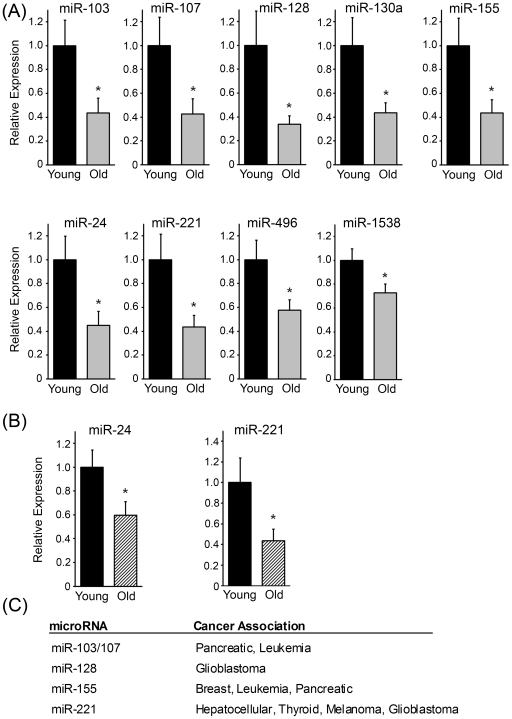
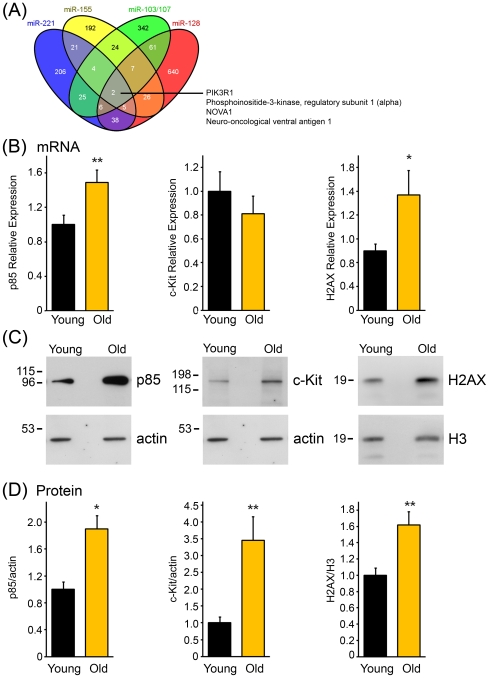
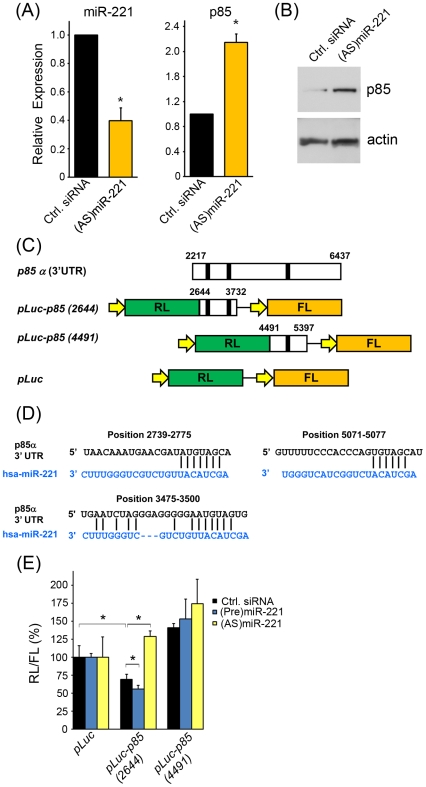
Recent evidence supports a role for microRNAs (miRNAs) in regulating the life span of model organisms. However, little is known about how these small RNAs contribute to human aging. Here, we profiled the expression of over 800 miRNAs in peripheral blood mononuclear cells from young and old individuals by real-time RT-PCR analysis. This genome-wide assessment of miRNA expression revealed that the majority of miRNAs studied decreased in abundance with age. We identified nine miRNAs (miR-103, miR-107, miR-128, miR-130a, miR-155, miR-24, miR-221, miR-496, miR-1538) that were significantly lower in older individuals. Among them, five have been implicated in cancer pathogenesis. Predicted targets of several of these miRNAs, including PI3 kinase (PI3K), c-Kit and H2AX, were found to be elevated with advancing age, supporting a possible role for them in the aging process. Furthermore, we found that decreasing the levels of miR-221 was sufficient to cause a corresponding increase in the expression of the predicted target, PI3K. Taken together, these findings demonstrate that changes in miRNA expression occur with human aging and suggest that miRNAs and their predicted targets have the potential to be diagnostic indicators of age or age-related diseases.
Overview
The claims and statistics of this paper haven’t been checked yet.
Free: it reads the open-access text and checks the first 5 claims that cite a source we can check. Create a free account to check every claim.
Integrity signals
Registry
Cites
Statistics
Figures
Verification
Claims the paper makes
The claims and statistics of this paper haven’t been checked yet.
Free: it reads the open-access text and checks the first 5 claims that cite a source we can check. Create a free account to check every claim.
Claims other papers make about this one
Each is checked against this paper’s own text: does it say what the citing paper says it does?
The source backs part of the claim, not all of it — or backs it for a different population, condition or comparison.
In the citing paper
“Studies have shown age-related differences in the abundance of specific miRNAs in circulating cells, plasma, and whole blood from older compared with younger individuals42–48.”
From Inflammageing: chronic inflammation in ageing, cardiovascular disease, and frailty (2018) · cites this paper as [42]
Experimental — accuracy not yet measured
Self-check
Percentages, sums and reported differences re-computed from the paper’s own numbers.
The self-check needs the paper’s full text.
Citations
Cites
Hanahan, D., & Weinberg, R. A. (2000) · Cell · doi:10.1016/s0092-8674(00)81683-9 · Cited by 29,219
MicroRNAs: Target Recognition and Regulatory Functions
Bartel, D. P. (2009) · Cell · doi:10.1016/j.cell.2009.01.002 · Cited by 20,068 · cited 3×
“Most recently, differences in microRNA abundance were observed in the liver from the Ames dwarf mouse, which have extended longevity compared to wild-type mice [7,11,12].”
The functions of animal microRNAs
Ambros, V. (2004) · Nature · doi:10.1038/nature02871 · Cited by 10,728
MicroRNA expression profiles classify human cancers
Lu, J., Getz, G., Miska, E. A., Alvarez-Saavedra, E., Lamb, J., Peck, D., Sweet-Cordero, A., Ebert, B. L., Mak, R. H., Ferrando, A. A., et al. (2005) · Nature · doi:10.1038/nature03702 · Cited by 9,539
Cellular senescence: when bad things happen to good cells
Campisi, J., & d'Adda di Fagagna, F. (2007) · Nature Reviews Molecular Cell Biology · doi:10.1038/nrm2233 · Cited by 4,441 · cited 3×
“Recent studies have suggested that changes in miRNA expression also occur with human cellular senescence, an in vitro model system that recapitulates certain aspects of aging and cancer [14,15].”
BackgroundModel-based analysis of oligonucleotide arrays: Expression index computation and outlier detection.
Li, C., & Wong, W. H. (2001) · Proceedings of the National Academy of Sciences · doi:10.1073/pnas.98.1.31 · Cited by 3,133 · cited 1×
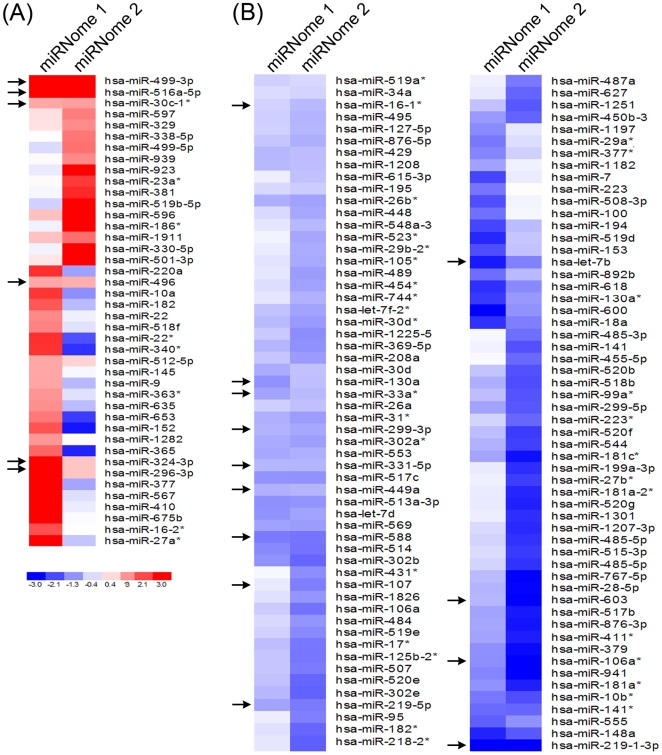
“The heat map was generated using dChip software and indicates the fold log10 relative change in expression in young versus old participants[49].”
MethodBiogenesis of small RNAs in animals
Kim, V. N., Han, J., & Siomi, M. C. (2009) · Nature Reviews Molecular Cell Biology · doi:10.1038/nrm2632 · Cited by 2,814
Targeting the phosphoinositide 3-kinase pathway in cancer
Liu, P., Cheng, H., Roberts, T. M., & Zhao, J. J. (2009) · Nature Reviews Drug Discovery · doi:10.1038/nrd2926 · Cited by 2,721
Targeting PI3K signalling in cancer: opportunities, challenges and limitations
Engelman, J. A. (2009) · Nature Reviews Cancer · doi:10.1038/nrc2664 · Cited by 2,445 · cited 1×
“regulatory p85a subunit of phosphoinositide 3-kinse (PI3K), a lipid kinase that plays a key role in many cellular processes including cell survival, cell proliferation, and tumorigenesis [24,25].”
BackgroundGarzon, R., Calin, G. A., & Croce, C. M. (2009) · Annual Review of Medicine · doi:10.1146/annurev.med.59.053006.104707 · Cited by 1,770
Cited by
Items 101–200 of 356
The Impact of MicroRNAs on Brain Aging and Neurodegeneration
Persengiev, S. P., Kondova, I. I., & Bontrop, R. E. (2012) · Current Gerontology and Geriatrics Research · doi:10.1155/2012/359369 · Cited by 62
Haque, S., Ames, R. M., Moore, K., Pilling, L. C., Peters, L. L., Bandinelli, S., Ferrucci, L., & Harries, L. W. (2020) · GeroScience · doi:10.1007/s11357-019-00120-z · Cited by 61
“…2006; Harries et al. 2011), studies report associations between gene expression and the development of age-associated syndromes of the muscle (Noren Hooten et al. 2010; Welle et al. 2004) as well as neurodegenerative conditions such as Alzheimer’s disease and Parkinson’s disease (Miller et al.…”
BackgroundDesign and Analysis for Studying microRNAs in Human Disease: A Primer on -Omic Technologies
Nair, V. S., Pritchard, C. C., Tewari, M., & Ioannidis, J. P. A. (2014) · American Journal of Epidemiology · doi:10.1093/aje/kwu135 · Cited by 60
Dong, J., Zhang, Z., Huang, H., Mo, P., Cheng, C., Liu, J., Huang, W., Tian, C., Zhang, C., & Li, J. (2018) · Stem Cell Research & Therapy · doi:10.1186/s13287-018-0895-0 · Cited by 59
Piscopo, P., Grasso, M., Puopolo, M., D’Acunto, E., Talarico, G., Crestini, A., Gasparini, M., Campopiano, R., Gambardella, S., Castellano, A. E., et al. (2018) · Journal of Alzheimer’s Disease · doi:10.3233/jad-180364 · Cited by 58
Perdaens, O., & van Pesch, V. (2022) · Frontiers in Neurology · doi:10.3389/fneur.2021.811518 · Cited by 58
“, miR-17/92a/181a in peripheral blood mononuclear cells (PBMCs)] (101, 102), and they have been linked to several mechanisms underlying cellular senescence [reviewed by (103)].”
BackgroundNext-generation sequencing identifies novel microRNAs in peripheral blood of lung cancer patients
Keller, A., Backes, C., Leidinger, P., Kefer, N., Boisguérin, V., Bárbácioru, C., Vogel, B., Matzas, M., Huwer, H., Katus, H. A., et al. (2011) · Molecular BioSystems · doi:10.1039/c1mb05353a · Cited by 60
Matamala, N., Vargas, M. T., González‐Cámpora, R., Arias, J. I., Menéndez, P., Andrés‐León, E., Yanowsky, K., Llaneza-Folgueras, A., Miñambres, R., Martínez–Delgado, B., et al. (2016) · Oncotarget · doi:10.18632/oncotarget.7705 · Cited by 59
Potential applications of microRNA profiling to forensic investigations
Glynn, C. L. (2019) · RNA · doi:10.1261/rna.072173.119 · Cited by 69
Vascular Ageing: Mechanisms, Risk Factors, and Treatment Strategies
Ya, J., & Bayraktutan, U. (2023) · International Journal of Molecular Sciences · doi:10.3390/ijms241411538 · Cited by 57
Epigenomics and the Regulation of Aging
Boyd-Kirkup, J. D., Green, C. D., Wu, G., Wang, D., & Han, J.-D. J. (2013) · Epigenomics · doi:10.2217/epi.13.5 · Cited by 57
Urinary sediment miRNA levels in adult nephrotic syndrome
Wang, G., Kwan, B. C., Lai, F. M., Chow, K., Li, P. K., & Szeto, C. (2013) · Clinica Chimica Acta · doi:10.1016/j.cca.2012.12.011 · Cited by 56
miR‐204 downregulates EphB2 in aging mouse hippocampal neurons
Danka Mohammed, C. P., Rhee, H., Phee, B., Kim, K., Kim, H., Lee, H., Park, J. H., Jung, J. H., Kim, J. Y., Kim, H., et al. (2016) · Aging Cell · doi:10.1111/acel.12444 · Cited by 56
“We identified 269 miRNAs expressed in the hippocampus, accounting for approximately 30% of all miRNAs identified in mice, in accordance with previous reports showing that the brain (and particularly the hippocampus) is enriched in miRNAs (Noren Hooten et al., 2010; van Spronsen et al., 2013).”
BackgroundResultRegulation of the unfolded protein response by microRNAs
Bartoszewska, S., Kochan, K., Madanecki, P., Piotrowski, A., Ochocka, R., Collawn, J., & Bartoszewski, R. (2013) · Cellular and Molecular Biology Letters · doi:10.2478/s11658-013-0106-z · Cited by 55
“Furthermore, we need to emphasize that many miRNAs are expressed in tissue- and age-specific patterns, suggesting that miRNAs have cell type-specific functions [133, 134].”
BackgroundPlasma microRNA profiling distinguishes patients with frontotemporal dementia from healthy subjects
Grasso, M., Piscopo, P., Talarico, G., Ricci, L., Crestini, A., Tosto, G., Gasparini, M., Bruno, G., Denti, M. A., & Confaloni, A. (2019) · Neurobiology of Aging · doi:10.1016/j.neurobiolaging.2019.01.024 · Cited by 54
Bigagli, E., Luceri, C., Scartabelli, T., Dolara, P., Casamenti, F., Pellegrini-Giampietro, D. E., & Giovannelli, L. (2016) · The Journals of Gerontology Series A: Biological Sciences and Medical Sciences · doi:10.1093/gerona/glu231 · Cited by 53
“A general decline in miRNA expression was previously reported during the aging process in peripheral proliferating cells such as fibroblasts (42) and in peripheral blood mononuclear cells from elderly individuals (43,44).”
Sierra, M., Fernández, A., & Fraga, M. (2015) · Current Genomics · doi:10.2174/1389202916666150817203459 · Cited by 54
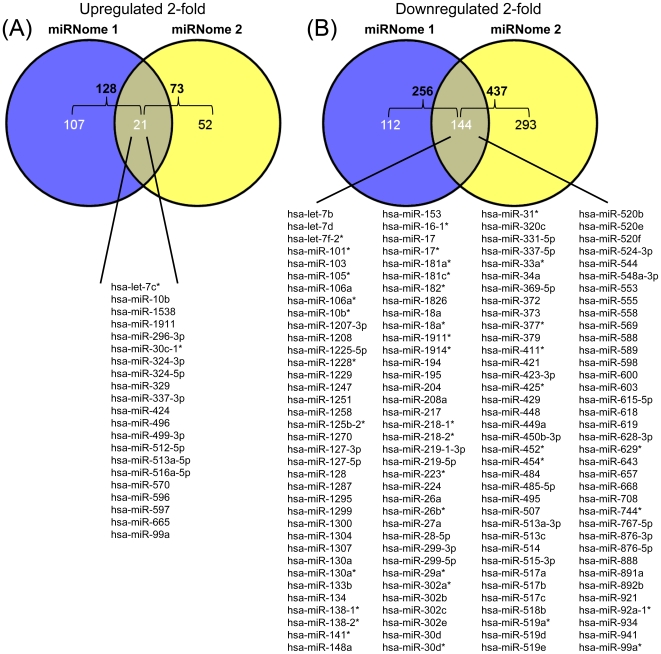
“The results showed that a cohort of 144 miRNAs was suppressed in elderly individuals, while 21 miRNAs increased with age [26].”
miR-128 plays a critical role in murine osteoclastogenesis and estrogen deficiency-induced bone loss
Shen, G., Ren, H. J., Shang, Q., Zhang, Z., Zhao, W., Yu, X., Tang, J., Yang, Z., Liang, D., & Jiang, X. (2020) · Theranostics · doi:10.7150/thno.42982 · Cited by 59
“In addition, its predicted targets such as PI3 kinase (PI3K), c-Kit and H2AX, were also discovered to have increased in aging individual, highlighting its significance in the process of aging [36].”
BackgroundMiR-495 regulates proliferation and migration in NSCLC by targeting MTA3
Chu, H., Chen, X., Wang, H., Du, Y., Wang, Y., Zang, W., Li, P., Li, J., Chang, J., Zhao, G., et al. (2013) · Tumor Biology · doi:10.1007/s13277-013-1460-1 · Cited by 54
“suppressor genes” and regulate multiple cellular processes relevant to tumorigenesis and cancer progression [36].”
BackgroundMeira, M., Sievers, C., Hoffmann, F., Rasenack, M., Kühle, J., Derfuss, T. J., Kappos, L., & Lindberg, R. L. P. (2014) · Journal of Immunology Research · doi:10.1155/2014/897249 · Cited by 56
Novel regulatory mechanisms in inflammatory arthritis: a role for microRNA
Baxter, D., McInnes, I. B., & Kurowska‐Stolarska, M. (2012) · Immunology and Cell Biology · doi:10.1038/icb.2011.114 · Cited by 58
miRNAs as Therapeutic Tools in Alzheimer’s Disease
Lee, C. Y., Ryu, I. S., Ryu, J., & Cho, H. (2021) · International Journal of Molecular Sciences · doi:10.3390/ijms222313012 · Cited by 62
Role of microRNAs in the age-associated decline of pancreatic beta cell function in rat islets
Tugay, K., Guay, C., Marques, A. C., Allagnat, F., Locke, J. M., Harries, L. W., Rutter, G. A., & Regazzi, R. (2015) · Diabetologia · doi:10.1007/s00125-015-3783-5 · Cited by 50
“MiRNAs are major regulators of gene expression and are involved in senescence and other age-associated phenomena [21–23].”
BackgroundCrocco, P., Montesanto, A., Passarino, G., & Rose, G. (2015) · The Journals of Gerontology Series A · doi:10.1093/gerona/glv058 · Cited by 52
Kou, X., Chen, D., & Chen, N. (2019) · International Journal of Molecular Sciences · doi:10.3390/ijms20071591 · Cited by 50
Long Noncoding Competing Endogenous RNA Networks in Age-Associated Cardiovascular Diseases
Greco, S., Gaetano, C., & Martelli, F. (2019) · International Journal of Molecular Sciences · doi:10.3390/ijms20123079 · Cited by 53
“By contrast, miR-128, which is associated with senescence [150], displayes an opposite pattern of expression [91].”
BackgroundFrom cellular senescence to age-associated diseases: the miRNA connection
Schraml, E., & Grillari, J. (2012) · Longevity & Healthspan · doi:10.1186/2046-2395-1-10 · Cited by 47
Circulating microRNAs Associated With Reversible Cerebral Vasoconstriction Syndrome
Chen, S., Chang, Y., Chou, C., Juan, C., Lee, H., Chen, L. ‐., Wu, P., Wang, Y.-F., Fuh, J., Lirng, J., et al. (2020) · Annals of Neurology · doi:10.1002/ana.25965 · Cited by 49
Hauser, B. R., Zhao, Y., Pang, X., Ling, Z., Myers, E. M., Wang, P. C., Califano, J. A., & Gu, X. (2015) · PLoS ONE · doi:10.1371/journal.pone.0116321 · Cited by 51
“The molecular and cellular functions of miR-128 are expressed in numerous pathways and organs within the body [23].”
MicroRNAs in cardiovascular ageing
Seeger, T., & Boon, R. A. (2015) · The Journal of Physiology · doi:10.1113/jp270557 · Cited by 53
“Furthermore, several reports describe differential levels of circulating miRs in centenarians, compared to young control subjects (Noren Hooten et al. 2010; Gombar et al. 2012; Serna et al. 2012; Meder et al. 2014).”
Lee, Y., Kim, S. Y., & Bae, Y. (2014) · Molecules and Cells · doi:10.14348/molcells.2014.0157 · Cited by 45
“Other groups have reported that miR-337-3p and miR-216b increase during senescence (Marasa et al., 2010; Noren Hooten et al., 2010).”
BackgroundmiRNAs in stem cell aging and age-related disease
Choi, S. W., Lee, J. Y., & Kang, K. (2017) · Mechanisms of Ageing and Development · doi:10.1016/j.mad.2017.08.013 · Cited by 62
A microRNA feedback loop regulates global microRNA abundance during aging
Inukai, S., Pincus, Z., de Lencastre, A., & Slack, F. J. (2017) · RNA · doi:10.1261/rna.062190.117 · Cited by 46
“…with theoretical and experimental evidence that suggests that higher levels of microRNA targeting can decrease inter-individual variability by providing robustness against fluctuations in mRNA levels (Hornstein and Shomron 2006; Osella et al. 2011; Ebert and Sharp 2012; Schmiedel et al. 2015).”
Age-related gene and miRNA expression changes in airways of healthy individuals
Ong, J., Woldhuis, R. R., Boudewijn, I. M., van den Berg, A., Kluiver, J. L., Kok, K., Terpstra, M. M., Guryev, V., de Vries, M., Vermeulen, C. J., et al. (2019) · Scientific Reports · doi:10.1038/s41598-019-39873-0 · Cited by 45
“Multiple miRNAs have been proposed to be involved in the process of ageing (10-13) and especially in cellular senescence, for example by targeting genes that play a role in the p53/p21 and p16/Rb senescence pathways (14).”
BackgroundBiological Age Predictors: The Status Quo and Future Trends
Erema, V. V., Yakovchik, A., Kashtanova, D. A., Bochkaeva, Z. V., Ivanov, M. V., Сосин, Д. В., Matkava, L. R., Yudin, V. S., Makarov, V. V., Keskinov, A. A., et al. (2022) · International Journal of Molecular Sciences · doi:10.3390/ijms232315103 · Cited by 48
“Other age-associated epigenetic markers could be changes in miRNA concentrations [19], histone modifications [20], and chromatin remodeling [18].”
BackgroundDaschkey, S., Röttgers, S., Giri, A., Bradtke, J., Teigler‐Schlegel, A., Meister, G., Borkhardt, A., & Landgraf, P. (2013) · PLoS ONE · doi:10.1371/journal.pone.0056334 · Cited by 46
Khee, S. G. S., Yusof, Y. A. M., & Makpol, S. (2014) · Oxidative Medicine and Cellular Longevity · doi:10.1155/2014/725929 · Cited by 41
“Similarly, genome-wide analysis of miRNA expression revealed miR-449a was downregulated with age [18].”
BackgroundYao, X., Yao, R., Yi, J., & Huang, F. (2018) · Neuroscience Letters · doi:10.1016/j.neulet.2018.12.039 · Cited by 41
Ageing, Neuronal Connectivity and Brain Disorders: An Unsolved Ripple Effect
Bano, D., Agostini, M., Melino, G., & Nicotera, P. (2011) · Molecular Neurobiology · doi:10.1007/s12035-011-8164-6 · Cited by 45
“It is intriguing to notice that the expression of some microRNAs decrease during ageing [45].”
BackgroundExosomes and Micro-RNAs in Aging Process
Hamdan, Y., Mazini, L., & Malka, G. (2021) · Biomedicines · doi:10.3390/biomedicines9080968 · Cited by 46
Nautiyal, J., Du, J., Yu, Y., Kanwar, S. S., Levi, E., & Majumdar, A. P. N. (2012) · American Journal of Physiology-Gastrointestinal and Liver Physiology · doi:10.1152/ajpgi.00323.2011 · Cited by 43
“(28) investigated the miRNA expression profiles and differential expression of their targets with aging.”
BackgroundSerafin, A., Foco, L., Blankenburg, H., Picard, A., Zanigni, S., Zanon, A., Pramstaller, P. P., Hicks, A. A., & Schwienbacher, C. (2014) · BMC Research Notes · doi:10.1186/1756-0500-7-715 · Cited by 40
“Last, but not of minor importance when studying neurodegenerative disease, is the evidence that the expression of miR-103a-3p varies depending on the age of the patients [35].”
Zhang, Y., Feng, Z.-P., Naselli, G., Bell, F., Wettenhall, J. M., Auyeung, P., Ellis, J. A., Ponsonby, A., Speed, T. P., Chong, M. M. W., et al. (2016) · Journal of Autoimmunity · doi:10.1016/j.jaut.2015.12.006 · Cited by 42
Regulation of senescence by microRNA biogenesis factors
Abdelmohsen, K., Srikantan, S., Kang, M. J., & Gorospe, M. (2012) · Ageing Research Reviews · doi:10.1016/j.arr.2012.01.003 · Cited by 43
Self-citationFan, H., Sun, X., Niu, W., Zhao, L., Zhang, Q., Li, W., Zhong, A., Zhang, L.-Y., & Lu, J. Z. (2015) · Journal of Molecular Neuroscience · doi:10.1007/s12031-015-0503-z · Cited by 43
Age-Associated Changes in MicroRNA Expression in Bone Marrow Derived Dendritic Cells
Park, S., Kang, S., Min, K. H., Woo Hwang, K., & Min, H. (2013) · Immunological Investigations · doi:10.3109/08820139.2012.717328 · Cited by 39
Aging, MicroRNAs, and Heart Failure
Florio, M. C., Magenta, A., Beji, S., Lakatta, E. G., & Capogrossi, M. C. (2018) · Current Problems in Cardiology · doi:10.1016/j.cpcardiol.2018.12.003 · Cited by 42
Lai, C., Wu, Y., Yu, S., Yu, Y., Lee, S., Liu, C., Hsieh, W., Hwu, H., Chen, P., Jeng, S., et al. (2014) · Aging Cell · doi:10.1111/acel.12225 · Cited by 38
“One of the miRNAs, miR-107, was also found in a previous study (Noren Hooten et al., 2010) to be down-regulated in the peripheral blood of old people, and three of the miRNAs (hsa-let-7a, miR-30e-5p, and miR-107) have been implicated in human cancers (Moncini et al., 2011; Thornton & Gregory, 2012).”
InfluentialIdentification of miR‐305, a micro RNA that promotes aging, and its target mRNA s in Drosophila
Ueda, M., Sato, T., Ohkawa, Y., & Inoue, Y. H. (2018) · Genes to Cells · doi:10.1111/gtc.12555 · Cited by 41
“Moreover, it is suspected that the human miR-103b is involved in tumorigenesis (Hooten et al., 2010), whereas both miR-103 and miR-107 are implicated in the regulation of insulin sensitivity in mice (Trajkovski et al.”
BackgroundDavel, A. P., Jaffe, I. Z., Tostes, R. C., Jaisser, F., & de Chantemèle, E. J. B. (2018) · American Journal of Physiology-Heart and Circulatory Physiology · doi:10.1152/ajpheart.00073.2018 · Cited by 44
“miR-155 has been previously shown to decrease with aging in human peripheral leukocytes (79) and to correlate inversely with BP in humans (24).”
Barnes, P. J. (2019) · Sub-cellular biochemistry/Subcellular biochemistry · doi:10.1007/978-981-13-3681-2_3 · Cited by 40
Chen, F., Liu, X., Zhao, J., Xie, B., Qian, J., Liu, W., Li, B., Zhang, X., Huijuan, W., & Yan, J. (2020) · Forensic Science International Genetics · doi:10.1016/j.fsigen.2020.102300 · Cited by 37
Budzinska, M., Owczarz, M., Pawlik-Pachucka, E., Roszkowska-Gancarz, M., Slusarczyk, P., & Puzianowska-Kuznicka, M. (2016) · BMC Geriatrics · doi:10.1186/s12877-016-0379-y · Cited by 29
Che, H., Sun, L.-H., Guo, F., Niu, H.-F., Su, X.-L., Bao, Y.-N., Fu, Z. D., Liu, H.-L., Hou, X., Yang, B.-F., et al. (2014) · Cellular Physiology and Biochemistry · doi:10.1159/000356646 · Cited by 35
Micromanaging aging with miRNAs: new messages from the nuclear envelope
Ugalde, A. P., Español, Y., & López-Otín, C. (2011) · Nucleus · doi:10.4161/nucl.2.6.17986 · Cited by 34
“Similarly, differential miRNA expression levels have been found in human skeletal muscle and peripheral blood mononuclear aging cells.(25,26) Hackl et al.”
BackgroundReverse Expression of Aging-Associated Molecules through Transfection of miRNAs to Aged Mice
Kim, J., Lee, B., Choi, E., Lee, K., Choi, S., Cho, J. H., Jeon, W. B., & Kim, E. (2016) · Molecular Therapy — Nucleic Acids · doi:10.1016/j.omtn.2016.11.005 · Cited by 42
Tackling Aging by Using miRNA as a Target and a Tool
Lai, W., Lin, M., & Wong, W. (2019) · Trends in Molecular Medicine · doi:10.1016/j.molmed.2019.04.007 · Cited by 39
Behbahanipour, M., Peymani, M., Salari, M., Hashemi, M., Nasr‐Esfahani, M. H., & Ghaedi, K. (2019) · Scientific Reports · doi:10.1038/s41598-019-50256-3 · Cited by 40
The emerging role of miRNAs in biological aging and age-related diseases
Turko, R., Hajja, A., Magableh, A. M., Omer, M. H., Shafqat, A., Khan, M. I., & Yaqinuddin, A. (2025) · Non-coding RNA Research · doi:10.1016/j.ncrna.2025.05.002 · Cited by 43
Extracellular RNA profiles with human age
Dluzen, D. F., Hooten, N. N., De, S., Wood, W. H., Zhang, Y., Becker, K. G., Zonderman, A. B., Tanaka, T., Ferrucci, L., & Evans, M. K. (2018) · Aging Cell · doi:10.1111/acel.12785 · Cited by 37
“Earlier, we found that several circulating miRNAs are lower in abundance as humans age (Noren Hooten et al., 2010, 2013).”
BackgroundSelf-citationMa, R., Zhu, P., Liu, S., Gao, B., & Wang, W. T. (2019) · Biochemical and Biophysical Research Communications · doi:10.1016/j.bbrc.2019.08.046 · Cited by 33
Titov, S. E., Ivanov, M., Karpinskaya, E. V., Tsivlikova, E. V., Shevchenko, S. P., Veryaskina, Y. A., Akhmerova, L. G., Полоз, Т. Л., Klimova, O. A., Gulyaeva, L. F., et al. (2016) · BMC Cancer · doi:10.1186/s12885-016-2240-2 · Cited by 38
“, age-related changes [39]; ii) sampling errors, i.”
Bhattacharyya, M., & Bandyopadhyay, S. (2012) · Molecular BioSystems · doi:10.1039/c2mb25434d · Cited by 34
Dluzen, D. F., Noren Hooten, N., & Evans, M. K. (2017) · WIREs RNA · doi:10.1002/wrna.1385 · Cited by 31
“Data from our laboratory suggest that this reduced expression with age may be due to lower levels of DICER1 with human age.(86,116) Eighteen miRNAs have been reported in two or more of the studies discussed here (Table 1).”
Self-citationmicroRNA-496 – A new, potentially aging-relevant regulator of mTOR
Rubie, C., Kölsch, K., Halajda, B., Eichler, H., Wagenpfeil, S., Roemer, K., & Glanemann, M. (2016) · Cell Cycle · doi:10.1080/15384101.2016.1158360 · Cited by 33
“Data on potentially aging-relevant miRNAs largely originate from genome-wide miRNA microarray surveys.(24,36) A recently published microarray study including 863 human miRNAs compared the expression profiles of centenarians to those of younger individuals in blood cells.”
BackgroundEpigenetic changes during ageing and their underlying mechanisms
Braga, D. L., Mousovich‐Neto, F., Tonon-da-Silva, G., Salgueiro, W. G., & Mori, M. A. (2020) · Biogerontology · doi:10.1007/s10522-020-09874-y · Cited by 35
A ride through the epigenetic landscape: aging reversal by reprogramming
Camillo, L. P. D. L., & Quinlan, R. B. A. (2021) · GeroScience · doi:10.1007/s11357-021-00358-6 · Cited by 32
Alvarado, S. G., Wyglinski, J., Suderman, M. J., Andrews, S. A., & Szyf, M. (2013) · PLoS ONE · doi:10.1371/journal.pone.0074009 · Cited by 32
“Although some reports have indicated a role of hsa-mir-496 in alcohol exposure [44], and aging [45] its expression has not yet been”
The Potential of MicroRNAs in Personalized Medicine against Cancers
Saumet, A., Mathelier, A., & Lecellier, C. (2014) · BioMed Research International · doi:10.1155/2014/642916 · Cited by 33
Zhao, X., Wei, X., Wang, X., & Qi, G. (2020) · Molecular Medicine Reports · doi:10.3892/mmr.2020.11064 · Cited by 29
“The expression levels of several mirnas have been shown to be age‐associated and cell type‐specific (30,34), which needs to be consideration clinically during angiogenic therapy.”
BackgroundWei, C., Xiang, S., Yu, Y., Song, J., Zheng, M., & Lian, F. (2021) · Molecular Reproduction and Development · doi:10.1002/mrd.23457 · Cited by 30
“The study also revealed that miR‐221 may be a potential marker of age‐related diseases (Noren Hooten et al., 2010).”
BackgroundParadoxical microRNAs: Individual gene repressors, global translation enhancers
Srikantan, S., Marasa, B. S., Becker, K. G., Gorospe, M., & Abdelmohsen, K. (2011) · Cell Cycle · doi:10.4161/cc.10.5.14825 · Cited by 30
Self-citationKim, E. H., Kim, D. H., Kim, H. R., Kim, S. Y., Kim, H. H., & Bang, O. Y. (2016) · Cell Transplantation · doi:10.3727/096368916x690430 · Cited by 32
Epigenetic biomarkers in aging and longevity: Current and future application
Izadi, M., Sadri, N., Abdi, A., Serajian, S., Jalalei, D., & Tahmasebi, S. (2024) · Life Sciences · doi:10.1016/j.lfs.2024.122842 · Cited by 37
Shen, K., Liu, X., Chen, D., Chang, J., Zhang, Y., & Kou, X. (2021) · Brain Research Bulletin · doi:10.1016/j.brainresbull.2021.04.027 · Cited by 30
The Role of MicroRNAs in Endothelial Cell Senescence
Starčević, J. N., Ariaee, N., Liew, A., Abbasnia, S., Fazeli, B., & Šabović, M. (2022) · Cells · doi:10.3390/cells11071185 · Cited by 40
“MiR-130a was reported to be markedly downregulated in different types of ageing cells [91].”
BackgroundInfluentialMorange, M. (2011) · Biological Theory · doi:10.1007/s13752-011-0010-6 · Cited by 32
“Therefore, recent observations have highlighted an abundance of mechanisms involved in aging, one of the latest being a change in microRNA expression (Hooten et al. 2010).”
BackgroundFrontotemporal Lobar Degeneration and MicroRNAs
Piscopo, P., Albani, D., Castellano, A. E., Forloni, G., & Confaloni, A. (2016) · Frontiers in Aging Neuroscience · doi:10.3389/fnagi.2016.00017 · Cited by 29
A Preliminary Study of microRNA-208b after Acute Myocardial Infarction: Impact on 6-Month Survival
Alavi-Moghaddam, M., Chehrazi, M., Alipoor, S. D., Mohammadi, M., Baratloo, A., Mahjoob, M. P., Movasaghi, M., Garssen, J., Adcock, I. M., & Mortaz, E. (2018) · Disease Markers · doi:10.1155/2018/2410451 · Cited by 33
MicroRNAs miR-203-3p, miR-664-3p and miR-708-5p are associated with median strain lifespan in mice
Lee, B. P., Burić, I., Pandeth, A. G., Flurkey, K., Harrison, D. E., Yuan, R., Peters, L. L., Kuchel, G. A., Melzer, D. R., & Harries, L. W. (2017) · Scientific Reports · doi:10.1038/srep44620 · Cited by 31
Esplugas, R., Arenas, M., Serra, N., Bellés, M., Bonet, M., Gascón, M., Vallvé, J.-C., & Linares, V. (2019) · PLoS ONE · doi:10.1371/journal.pone.0217443 · Cited by 31
Peplow, P., & Martinez, B. (2021) · Neural Regeneration Research · doi:10.4103/1673-5374.330591 · Cited by 32
“The progranulin gene has been reported to be under the posttranscriptional control of miR-29b, miR-107, and miR-659 (Hébert et al., 2008; Noren Hooten et al., 2010; Piscopo et al., 2016).”
BackgroundDifferences of microRNA expression profiles between monozygotic twins’ blood samples
Xiao, C., Pan, C., Liu, E., He, H., Liu, C., Huang, Y., Yi, S., & Huang, D. (2019) · Forensic Science International Genetics · doi:10.1016/j.fsigen.2019.05.003 · Cited by 28
Beauty and the beast: host microRNA-155 versus SARS-CoV-2
Papadopoulos, K. I., Papadopoulou, A., & Aw, T. C. (2023) · Human Cell · doi:10.1007/s13577-023-00867-w · Cited by 35
“In situations when miR-155 homeostasis is compromised (T2DM, sarcopenia, obesity, smoking, aging, male gender, CVD and renal disease, or pharmacological interventions), unimpeded RAAS stimulation and inappropriately low EPO levels, with subsequent EPO/eNOS-NO protection override, may allow NLRP3 dysregulation, and pro…”
BackgroundZhang, H., & Jin, K. (2020) · International Journal of Molecular Sciences · doi:10.3390/ijms21061908 · Cited by 30
Regulation of the HIF switch in human endothelial and cancer cells
Slawski, J., Jaśkiewicz, M., Barton, A., Kozioł, S., Collawn, J. F., & Bartoszewski, R. (2024) · European Journal of Cell Biology · doi:10.1016/j.ejcb.2024.151386 · Cited by 26
Yamaura, Y., Tatsumi, N., Takagi, S., Tokumitsu, S., Fukami, T., Tajiri, K., Minemura, M., Yokoi, T., & Nakajima, M. (2017) · Clinical Biochemistry · doi:10.1016/j.clinbiochem.2017.08.010 · Cited by 26
The emerging role of miR‐128 in musculoskeletal diseases
Shang, Q., Shen, G., Chen, G., Zhang, Z., Yu, X., Zhao, W., Zhang, P., Chen, H., Tang, K., Yu, F., et al. (2020) · Journal of Cellular Physiology · doi:10.1002/jcp.30179 · Cited by 27
“Another study also indicated that miR‐128 was significantly lower in monocytes of peripheral blood from old participants compared with young ones, thus affecting the predicted targets including PI3K, c‐Kit, and H2AX, supporting a positive role against the aging process (Noren Hooten et al., 2010).”
ResultCentenarians as models of healthy aging: Example of REST
Marcos-Pérez, D., Saenz‐Antoñanzas, A., & Matheu, A. (2021) · Ageing Research Reviews · doi:10.1016/j.arr.2021.101392 · Cited by 28
Zhao, C., Zhao, M., Zhu, Y., Zhang, L., Zheng, Z., Wang, Q., Li, Y., Zhang, P., Zhu, S., Ding, S., et al. (2020) · Forensic Science International · doi:10.1016/j.forsciint.2020.110594 · Cited by 26
Song, B., Qian, J., & Fu, J. (2023) · International Journal of Legal Medicine · doi:10.1007/s00414-023-03091-1 · Cited by 28
“As early as 2010, Noren Hooten et al. [140] evaluated more than 800 miRNAs by RT-qPCR, and the expression abundance of most miRNAs decreased with age.”
Prince, C. S., Hooten, N. N., Mode, N. A., Zhang, Y., Ejiogu, N., Becker, K. G., Zonderman, A. B., & Evans, M. K. (2019) · Aging · doi:10.18632/aging.102135 · Cited by 26
“isolated from fasting blood samples and stored at -80C [46].”
Self-citationPathogenesis of miR-155 on nonmodifiable and modifiable risk factors in Alzheimer’s disease
Liu, J.-J., Long, Y.-F., Xu, P., Guo, H.-D., & Cui, G.-H. (2023) · Alzheimer s Research & Therapy · doi:10.1186/s13195-023-01264-z · Cited by 29
An emerging role for microRNAs in sexually dimorphic neurobiological systems
Pak, T. R., Rao, Y. S., Prins, S. A., & Mott, N. N. (2013) · Pflügers Archiv - European Journal of Physiology · doi:10.1007/s00424-013-1227-y · Cited by 25
“Additionally, overall changes in gene expression could potentially be attributed to global changes in RNA processing, for which regulatory RNAs have come to the forefront as important regulators of age-related gene expression and neurological disease [43, 65, 89, 111].”
Kubo, E., Hasanova, N., Sasaki, H., & Singh, D. P. (2013) · Journal of Cellular and Molecular Medicine · doi:10.1111/jcmm.12094 · Cited by 28
A Parallel Study of mRNA and microRNA Profiling of Peripheral Blood in Young Adult Women
Sredni, S. T., Gadd, S., Jafari, N., & Huang, C.-C. (2011) · Frontiers in Genetics · doi:10.3389/fgene.2011.00049 · Cited by 24
“Recently, Hooten et al. (2010) identified several miRNAs differentially expressed between young (30 years of age) and old (64 years of age) adults and showed an overall decline in miRNA expression in older adults compared to younger adults.”
ResultThe role of microRNA-485 in neurodegenerative diseases
Ryu, I. S., Kim, D. H., Cho, H.-J., & Ryu, J.-H. (2023) · Reviews in the Neurosciences · doi:10.1515/revneuro-2022-0039 · Cited by 25
“Recent studies have demonstrated that miRNAs, such as miR-30d-5p and miR-505-5p, are differentially expressed with age in whole blood, serum, and peripheral blood mononuclear cells (Fehlmann et al. 2020; Freedman et al. 2016; Huan et al. 2018; Noren Hooten et al. 2010; Noren Hooten et al. 2013).”
BackgroundDhahri, W., Dussault, S., Légaré, É., Rivard, F., Desjarlais, M., Mathieu, R., & Rivard, A. (2020) · Aging · doi:10.18632/aging.103340 · Cited by 24
“Interestingly, miR-130a was previously identified as one of nine miRNAs significantly reduced in the peripheral blood mononuclear cells of older individuals [23].”
BackgroundExtracellular vesicles and extracellular RNA in aging and age-related disease
Hooten, N. N. (2020) · Translational Medicine of Aging · doi:10.1016/j.tma.2020.07.006 · Cited by 24
Neault, M., Couteau, F., Bonneau, É., Guire, V. D., & Mallette, F. A. (2017) · International review of cytology · doi:10.1016/bs.ircmb.2017.04.001 · Cited by 23
Metadata
- Authors
- Noren Hooten, N., Abdelmohsen, K., Gorospe, M., Ejiogu, N., Zonderman, A. B., & Evans, M. K.
- Affiliations
- National Institutes of Health (US)
- Corresponding author
- Evans, Michele K.
- Venue
- PLoS ONE
- Publisher
- Public Library of Science (PLoS)
- Published
- 2010-05-20
- Volume
- 5
- Issue
- 5
- Pages
- e10724
- ISSN
- 1932-6203 (ISSN-L)
- PMC
- PMC2873959
- OpenAlex
- W2120126501
- Cited by
- 357
- References
- 50
- Citations by year
- 2026: 7 · 2025: 11 · 2024: 12 · 2023: 12 · 2022: 17 · 2021: 22 · 2020: 34 · 2019: 32 · 2018: 33 · 2017: 17 · 2016: 28 · 2015: 32 · 2014: 24 · 2013: 28 · 2012: 28
- FWCI
- 7.56
- Type
- journal article
- Language
- en
- Open access
- gold
- doi.org
- Licence
- Locations
- PLoS ONE (publishedVersion, public-domain)
- Europe PMC (PubMed Central) (publishedVersion, public-domain)
- PubMed Central (publishedVersion, public-domain)
- PubMed (publishedVersion)
- DOAJ (DOAJ: Directory of Open Access Journals) (submittedVersion, cc-by-sa)
- Figshare (submittedVersion, cc-by)
- Funders
- National Institutes of Health
- Topics
- Life Sciences › Biochemistry, Genetics and Molecular Biology › Cancer Research › MicroRNA in disease regulation
- Life Sciences › Biochemistry, Genetics and Molecular Biology › Aging › Genetics, Aging, and Longevity in Model Organisms
- Life Sciences › Biochemistry, Genetics and Molecular Biology › Cell Biology › Telomeres, Telomerase, and Senescence
- Keywords
- microRNA expression, human aging, peripheral blood mononuclear cells, miR-221, PI3-kinase, CD117, H2AX, age-related gene expression, miRNA target genes, age-related diseases
- MeSH terms
- Adult, Aging, Animals, Base Sequence, Female, HeLa Cells, Humans, Male, Middle Aged, Molecular Sequence Data, Reproducibility of Results, Signal Transduction, Down-Regulation, Up-Regulation, Caenorhabditis elegans, Gene Expression Regulation, Developmental, Phosphatidylinositol 3-Kinases, Reverse Transcriptase Polymerase Chain Reaction, Gene Expression Profiling, MicroRNAs
About these checks
Registry, retraction, Cites and statistics results are computed, not judged, with one exception: a printed reference that no index lists is read once by a model before it counts as a citation error. Claims are extracted by a model and kept only when their quote appears verbatim in the text; each cited source is then checked, with a model’s help, for whether it says what the claim relies on. Those verdicts can be wrong — read the claim’s quote and the cited source before relying on one.
Statistics and arithmetic are recomputed, not judged.
Confidence bands are shown only for fields calibrated on our annotated test set. None is calibrated yet, so no band is shown.
What counts as a claim ›How we measure confidence ›How we check this ›
Are you an author, or do you see a problem with this page? Request a review
Data sources
Bibliographic data: Semantic Scholar, OpenAlex, Crossref.
Contains information from the Semantic Scholar Academic Graph Datasets, made available under the ODC Attribution License (ODC-BY 1.0).
Semantic Scholar’s data is described in: Kinney, R., et al. (2023). The Semantic Scholar Open Data Platform. arXiv:2301.10140.
