

microRNA Expression Patterns Reveal Differential Expression of Target Genes with Age
Open accessThe DOI matches its Crossref record; 50 of the 50 references it cites were found in a registry or an index.
Abstract
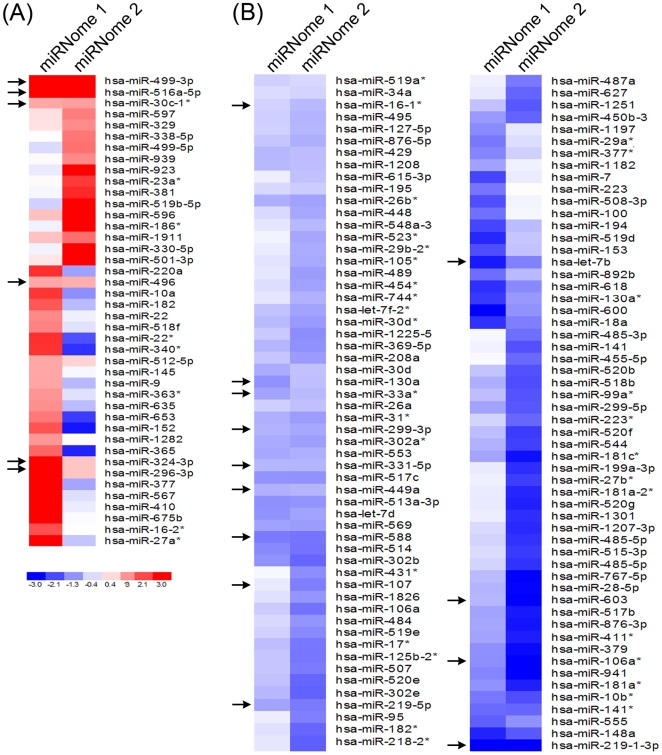
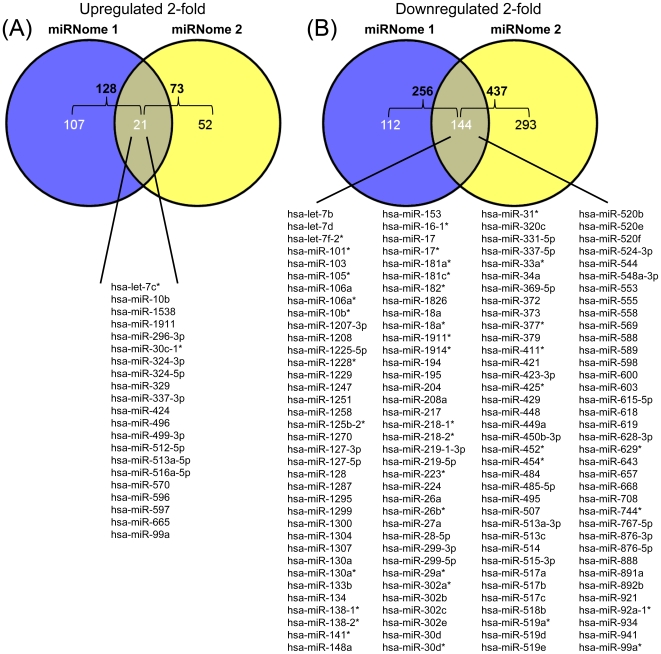
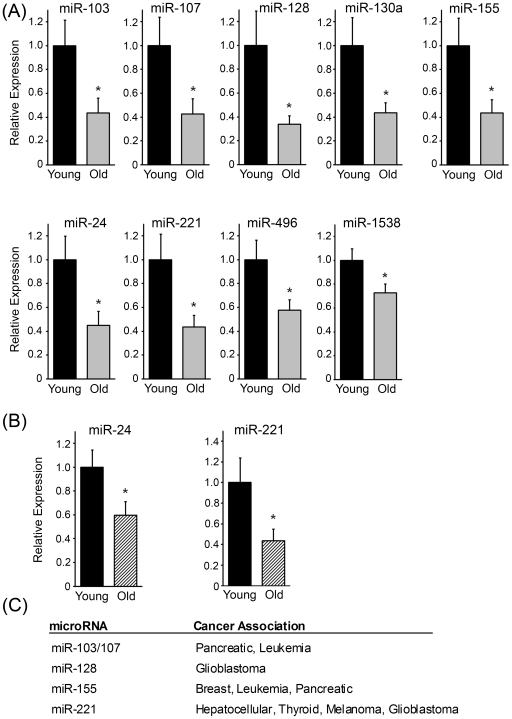
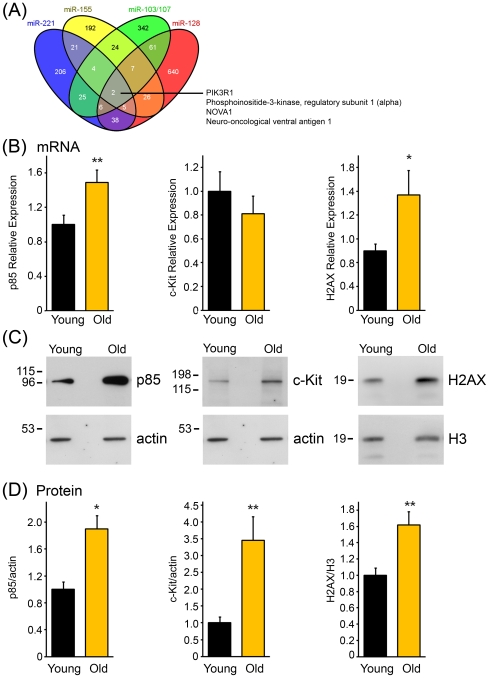
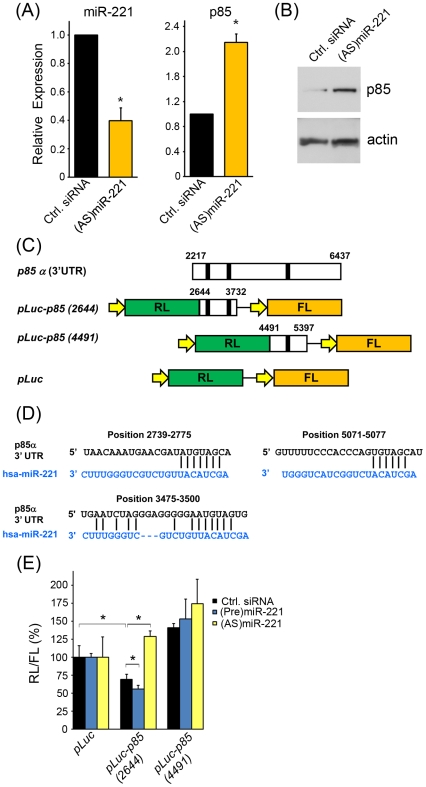
Recent evidence supports a role for microRNAs (miRNAs) in regulating the life span of model organisms. However, little is known about how these small RNAs contribute to human aging. Here, we profiled the expression of over 800 miRNAs in peripheral blood mononuclear cells from young and old individuals by real-time RT-PCR analysis. This genome-wide assessment of miRNA expression revealed that the majority of miRNAs studied decreased in abundance with age. We identified nine miRNAs (miR-103, miR-107, miR-128, miR-130a, miR-155, miR-24, miR-221, miR-496, miR-1538) that were significantly lower in older individuals. Among them, five have been implicated in cancer pathogenesis. Predicted targets of several of these miRNAs, including PI3 kinase (PI3K), c-Kit and H2AX, were found to be elevated with advancing age, supporting a possible role for them in the aging process. Furthermore, we found that decreasing the levels of miR-221 was sufficient to cause a corresponding increase in the expression of the predicted target, PI3K. Taken together, these findings demonstrate that changes in miRNA expression occur with human aging and suggest that miRNAs and their predicted targets have the potential to be diagnostic indicators of age or age-related diseases.
Overview
The claims and statistics of this paper haven’t been checked yet.
Free: it reads the open-access text and checks the first 5 claims that cite a source we can check. Create a free account to check every claim.
Integrity signals
Registry
Cites
Statistics
Figures
Verification
Claims the paper makes
The claims and statistics of this paper haven’t been checked yet.
Free: it reads the open-access text and checks the first 5 claims that cite a source we can check. Create a free account to check every claim.
Claims other papers make about this one
Each is checked against this paper’s own text: does it say what the citing paper says it does?
The source backs part of the claim, not all of it — or backs it for a different population, condition or comparison.
In the citing paper
“Studies have shown age-related differences in the abundance of specific miRNAs in circulating cells, plasma, and whole blood from older compared with younger individuals42–48.”
From Inflammageing: chronic inflammation in ageing, cardiovascular disease, and frailty (2018) · cites this paper as [42]
Experimental — accuracy not yet measured
Self-check
Percentages, sums and reported differences re-computed from the paper’s own numbers.
The self-check needs the paper’s full text.
Citations
Cites
Hanahan, D., & Weinberg, R. A. (2000) · Cell · doi:10.1016/s0092-8674(00)81683-9 · Cited by 29,219
MicroRNAs: Target Recognition and Regulatory Functions
Bartel, D. P. (2009) · Cell · doi:10.1016/j.cell.2009.01.002 · Cited by 20,068 · cited 3×
“Most recently, differences in microRNA abundance were observed in the liver from the Ames dwarf mouse, which have extended longevity compared to wild-type mice [7,11,12].”
The functions of animal microRNAs
Ambros, V. (2004) · Nature · doi:10.1038/nature02871 · Cited by 10,728
MicroRNA expression profiles classify human cancers
Lu, J., Getz, G., Miska, E. A., Alvarez-Saavedra, E., Lamb, J., Peck, D., Sweet-Cordero, A., Ebert, B. L., Mak, R. H., Ferrando, A. A., et al. (2005) · Nature · doi:10.1038/nature03702 · Cited by 9,539
Cellular senescence: when bad things happen to good cells
Campisi, J., & d'Adda di Fagagna, F. (2007) · Nature Reviews Molecular Cell Biology · doi:10.1038/nrm2233 · Cited by 4,441 · cited 3×
“Recent studies have suggested that changes in miRNA expression also occur with human cellular senescence, an in vitro model system that recapitulates certain aspects of aging and cancer [14,15].”
BackgroundModel-based analysis of oligonucleotide arrays: Expression index computation and outlier detection.
Li, C., & Wong, W. H. (2001) · Proceedings of the National Academy of Sciences · doi:10.1073/pnas.98.1.31 · Cited by 3,133 · cited 1×
“The heat map was generated using dChip software and indicates the fold log10 relative change in expression in young versus old participants[49].”
MethodBiogenesis of small RNAs in animals
Kim, V. N., Han, J., & Siomi, M. C. (2009) · Nature Reviews Molecular Cell Biology · doi:10.1038/nrm2632 · Cited by 2,814
Targeting the phosphoinositide 3-kinase pathway in cancer
Liu, P., Cheng, H., Roberts, T. M., & Zhao, J. J. (2009) · Nature Reviews Drug Discovery · doi:10.1038/nrd2926 · Cited by 2,721
Targeting PI3K signalling in cancer: opportunities, challenges and limitations
Engelman, J. A. (2009) · Nature Reviews Cancer · doi:10.1038/nrc2664 · Cited by 2,445 · cited 1×
“regulatory p85a subunit of phosphoinositide 3-kinse (PI3K), a lipid kinase that plays a key role in many cellular processes including cell survival, cell proliferation, and tumorigenesis [24,25].”
BackgroundGarzon, R., Calin, G. A., & Croce, C. M. (2009) · Annual Review of Medicine · doi:10.1146/annurev.med.59.053006.104707 · Cited by 1,770
Cited by
Inflammageing: chronic inflammation in ageing, cardiovascular disease, and frailty
Ferrucci, L., & Fabbri, E. (2018) · Nature Reviews Cardiology · doi:10.1038/s41569-018-0064-2 · Cited by 3,690
Extracellular miRNAs: From Biomarkers to Mediators of Physiology and Disease
Mori, M. A., Ludwig, R. G., Garcia-Martin, R., Brandão, B. B., & Kahn, C. R. (2019) · Cell Metabolism · doi:10.1016/j.cmet.2019.07.011 · Cited by 961
Pal, S., & Tyler, J. K. (2016) · Science Advances · doi:10.1126/sciadv.1600584 · Cited by 860
Oxidative stress response and Nrf2 signaling in aging
Zhang, H., Davies, K. J. A., & Forman, H. J. (2015) · Free Radical Biology and Medicine · doi:10.1016/j.freeradbiomed.2015.05.036 · Cited by 804
The epigenetics of aging and neurodegeneration
Lardenoije, R., Iatrou, A., Kenis, G., Kompotis, K., Steinbusch, H. W. M., Mastroeni, D., Coleman, P., Lemere, C. A., Hof, P. R., van den Hove, D. L. A., et al. (2015) · Progress in Neurobiology · doi:10.1016/j.pneurobio.2015.05.002 · Cited by 381
“In human blood mononuclear cells, however, various miRNAswere significantly decreased in older participants (Noren Hooten et al., 2010) (Table 3).”
BackgroundEffects of Age on the Detection and Management of Breast Cancer
McGuire, A., Brown, J., Malone, C., McLaughlin, R., & Kerin, M. (2015) · Cancers · doi:10.3390/cancers7020815 · Cited by 374
“Recently age has been implicated as a factor affecting the differential expression of miRNAs [77–79].”
BackgroundFinnerty, J. R., Wang, W.-X., Hébert, S. S., Wilfred, B. R., Mao, G., & Nelson, P. T. (2010) · Journal of Molecular Biology · doi:10.1016/j.jmb.2010.07.051 · Cited by 371
MicroRNAs and their roles in aging
Smith-Vikos, T., & Slack, F. J. (2012) · Journal of Cell Science · doi:10.1242/jcs.099200 · Cited by 333
“…levels measured in peripheral blood mononuclear cells correlate with aging of both mice and humans, as well as a report of a single miRNA that can function as a marker for brain aging, neurodegeneration and memory impairment (Li, X. et al., 2011; Noren Hooten et al., 2010; Zovoilis et al., 2011).”
BackgroundThomas, S., Izard, J., Walsh, E., Batich, K., Chongsathidkiet, P., Clarke, G., Sela, D. A., Muller, A. J., Mullin, J. M., Albert, K., et al. (2017) · Cancer Research · doi:10.1158/0008-5472.can-16-2929 · Cited by 367
“Genome-wide assessment of miRNA expression revealed that the majority of miRNAs decreased with age (131, 132).”
BackgroundAge-related changes in microRNA levels in serum
Hooten, N. N., Fitzpatrick, M., Wood, W. H., De, S., Ejiogu, N., Zhang, Y., Mattison, J. A., Becker, K. G., Zonderman, A. B., & Evans, M. K. (2013) · Aging · doi:10.18632/aging.100603 · Cited by 329
Self-citationmiRNAs regulate the HIF switch during hypoxia: a novel therapeutic target
Serocki, M., Bartoszewska, S., Janaszak-Jasiecka, A., Ochocka, R. J., Collawn, J. F., & Bartoszewski, R. (2018) · Angiogenesis · doi:10.1007/s10456-018-9600-2 · Cited by 288
“Indeed, many miRNAs are expressed in tissueand age-specific patterns [91].”
BackgroundEpigenetic changes during aging and their reprogramming potential
Kane, A. E., & Sinclair, D. A. (2019) · Critical Reviews in Biochemistry and Molecular Biology · doi:10.1080/10409238.2019.1570075 · Cited by 283
γH2AX as a marker of DNA double strand breaks and genomic instability in human population studies
Valdiglesias, V., Giunta, S., Fenech, M., Neri, M., & Bonassi, S. (2013) · Mutation Research/Reviews in Mutation Research · doi:10.1016/j.mrrev.2013.02.001 · Cited by 277
Senescence in COPD and Its Comorbidities
Barnes, P. J. (2017) · Annual Review of Physiology · doi:10.1146/annurev-physiol-022516-034314 · Cited by 266
Olivieri, F., Spazzafumo, L., Santini, G., Lazzarini, R., Albertini, M. C., Rippo, M. R., Galeazzi, R., Abbatecola, A. M., Marcheselli, F., Monti, D., et al. (2012) · Mechanisms of Ageing and Development · doi:10.1016/j.mad.2012.09.004 · Cited by 248
“Data obtained from models such as Caenorhabditis elegans and mouse have shown that specific miRs exhibit age-dependent expression patterns (Noren Hooten et al., 2010; Ibanez-Ventoso et al., 2006; Li et al., 2011a; Maes et al., 2008).”
BackgroundMethodMicroRNA‐18 and microRNA‐19 regulate CTGF and TSP‐1 expression in age‐related heart failure
van Almen, G. C., Verhesen, W., van Leeuwen, R. E. W., van de Vrie, M., Eurlings, C., Schellings, M. W. M., Swinnen, M., Cleutjens, J. P. M., van Zandvoort, M. A. M. J., Heymans, S., et al. (2011) · Aging Cell · doi:10.1111/j.1474-9726.2011.00714.x · Cited by 248
“…aging, i.e. after irradiation (Maes et al., 2008), p53 induction (Brosh et al., 2008), or stress-induced senescence (Li et al., 2009), and in old human skin, bone-marrow-derived mesenchymal stem cells, T cells (Hackl et al., 2010), and peripheral blood mononuclear cells (Noren Hooten et al., 2010).”
BackgroundAging and microRNA expression in human skeletal muscle: a microarray and bioinformatics analysis
Drummond, M. J., McCarthy, J. J., Sinha, M., Spratt, H. M., Volpi, E., Esser, K. A., & Rasmussen, B. B. (2011) · Physiological Genomics · doi:10.1152/physiolgenomics.00148.2010 · Cited by 235
“Recent data have suggested that miRNAs may play a part in regulating the aging process (1, 3, 17, 19, 23, 24, 34, 39, 40, 57, 60).”
Simon, L. M., Edelstein, L. C., Nagalla, S., Woodley, A. B., Chen, E. S., Kong, X., Ma, L., Fortina, P., Kunapuli, S., Holinstat, M., et al. (2014) · Blood · doi:10.1182/blood-2013-12-544692 · Cited by 229
“In our large sample size, 15 miRNAs were DE by age, with 11 of 15 decreasing with older age, consistent with a small study that profiled miRNAs from the peripheral blood mononuclear cells of 2 young and 2 old subjects.(39) Of interest,miRs-128, -106a, -18a, -484, 548a-3p, and -425 significantly decreased with aging in…”
ResultMitomiRs in human inflamm-aging: A hypothesis involving miR-181a, miR-34a and miR-146a
Rippo, M. R., Olivieri, F., Monsurrò, V., Prattichizzo, F., Albertini, M. C., & Procopio, A. D. (2014) · Experimental Gerontology · doi:10.1016/j.exger.2014.03.002 · Cited by 209
“…experimentalmodels and systems, including fruit fly brain (Liu et al., 2012), mouse brain (Li et al., 2011), liver (Bates et al., 2010), human skeletal muscle (Drummond et al., 2011), blood cells (Hooten et al., 2010), plasma (Olivieri et al., 2012), and endothelial cells (Olivieri et al., 2013a).”
BackgroundKonishi, H., Ichikawa, D., Komatsu, S., Shiozaki, A., Tsujiura, M., Takeshita, H., Morimura, R., Nagata, H., Arita, T., Kawaguchi, T., et al. (2012) · British Journal of Cancer · doi:10.1038/bjc.2011.588 · Cited by 201
“…of physiologic pathways (Ambros, 2004; Bartel, 2004), such as development, cell death, cell proliferation and metabolism, which suggests the possible effects of individual variability and also age-related biological change on plasma miRNA expression study (Hackl et al, 2010; Noren et al, 2010).”
BackgroundMetformin‐mediated increase in DICER1 regulates microRNA expression and cellular senescence
Noren Hooten, N., Martin‐Montalvo, A., Dluzen, D. F., Zhang, Y., Bernier, M., Zonderman, A. B., Becker, K. G., Gorospe, M., Cabo, R., & Evans, M. K. (2016) · Aging Cell · doi:10.1111/acel.12469 · Cited by 196
“…miRNA levels decrease with advancing age in human peripheral blood mononuclear cells (PBMCs) and primate skeletal muscle, while others have found decreased levels of miRNAs with age in mouse brain and in C. elegans (Noren Hooten et al., 2010, 2013; Smith-Vikos & Slack, 2012; Mercken et al., 2013).”
BackgroundMethodInfluentialSelf-citationMechanisms of development of multimorbidity in the elderly
Barnes, P. J. (2015) · European Respiratory Journal · doi:10.1183/09031936.00229714 · Cited by 195
Human miR-221/222 in Physiological and Atherosclerotic Vascular Remodeling
Chistiakov, D. A., Sobenin, I. A., Orekhov, A. N., & Bobryshev, Y. V. (2015) · BioMed Research International · doi:10.1155/2015/354517 · Cited by 194
“In older humans, miR-221 expression in peripheral blood mononuclear cells (PMBCs) was also reduced while expression of its targets c-kit and PI3KR1 was increased with age [95].”
BackgroundEpigenetics and Oxidative Stress in Aging
Guillaumet-Adkins, A., Yañez, Y., Peris-Diaz, M. D., Calabria, I., Palanca-Ballester, C., & Sandoval, J. (2017) · Oxidative Medicine and Cellular Longevity · doi:10.1155/2017/9175806 · Cited by 193
“During aging, differential expression of miRNA is also evident [56] and lncRNAs are also deregulated in aging-related diseases [57].”
BackgroundMicroRNA Predictors of Longevity in Caenorhabditis elegans
Pincus, Z., Smith-Vikos, T., & Slack, F. J. (2011) · PLoS Genetics · doi:10.1371/journal.pgen.1002306 · Cited by 191
MicroRNAs in age‐related diseases
Dimmeler, S., & Nicotera, P. (2013) · EMBO Molecular Medicine · doi:10.1002/emmm.201201986 · Cited by 188
“In humans, comparisons of miRNA expression between peripheral blood mononuclear cells of young versus old individuals revealed the downregulation of various miRNAs, among which two – namely miR-24 and miR-221 – were validated in a cohort of older individuals (Noren Hooten et al, 2010).”
Portal-Núñez, S., Esbrit, P., Alcaraz, M. J., & Largo, R. (2016) · Biochemical Pharmacology · doi:10.1016/j.bcp.2015.12.012 · Cited by 173
Huan, T., Chen, G., Liu, C., Bhattacharya, A., Rong, J., Chen, B. H., Seshadri, S., Tanriverdi, K., Freedman, J. E., Larson, M. G., et al. (2018) · Aging Cell · doi:10.1111/acel.12687 · Cited by 161
“Recent studies have examined differentially expressed miRNAs in relation to age in whole blood (ElSharawy et al., 2012), peripheral blood mononuclear cells (PBMC) (Noren Hooten et al., 2010), and serum (Noren Hooten et al., 2013; Zhang et al., 2014).”
BackgroundResultInfluentialMicroglia change from a reactive to an age-like phenotype with the time in culture
Caldeira, C., Oliveira, A. F., Cunha, C., Vaz, A. R., Falcão, A. S., Fernandes, A., & Brites, D. (2014) · Frontiers in Cellular Neuroscience · doi:10.3389/fncel.2014.00152 · Cited by 156
“Moreover, decreased miR-124 and miR-155 that revealed a negative correlation with age (Fichtlscherer et al., 2010; Noren Hooten et al., 2010; Smith-Vikos and Slack, 2012), parallelled by the enhanced miR-146a expression, further reinforce that 16 DIV microglia mainly represent aged-like microglia.”
Genome‐wide miRNA signatures of human longevity
ElSharawy, A., Keller, A., Flachsbart, F., Wendschlag, A., Jacobs, G., Kefer, N., Brefort, T., Leidinger, P., Backes, C., Meese, E., et al. (2012) · Aging Cell · doi:10.1111/j.1474-9726.2012.00824.x · Cited by 154
“Possible explanations for the discrepant findings in our study and that of Noren Hooten et al. (2010) may be differences in sample sizes (102 vs. four individuals), ages of the participants (maximum age 105 vs. 64.5 years), phenotypes (healthy aging vs. normal aging), and in the examined tissues…”
BackgroundResultInfluentialNovel MicroRNAs Differentially Expressed during Aging in the Mouse Brain
Inukai, S., de Lencastre, A., Turner, M., & Slack, F. (2012) · PLoS ONE · doi:10.1371/journal.pone.0040028 · Cited by 146
Epigenetics of Aging and Alzheimer’s Disease: Implications for Pharmacogenomics and Drug Response
Cacabelos, R., & Torrellas, C. (2015) · International Journal of Molecular Sciences · doi:10.3390/ijms161226236 · Cited by 153
“elegans; several miRNAs (miRNAs-34, -669c, -709, -93, -214) were found to be upregulated with age, while others (miRNAs-103, -107,-128, -130a, -155, -24, -221, -496, -1538, -17, -19b, -20a, -106a) appeared downregulated in peripheral tissues [47,48].”
Genetic and epigenetic regulation of human aging and longevity
Morris, B. J., Willcox, B. J., & Donlon, T. A. (2019) · Biochimica et Biophysica Acta (BBA) - Molecular Basis of Disease · doi:10.1016/j.bbadis.2018.08.039 · Cited by 140
Diabetes and ageing‐induced vascular inflammation
Assar, M. E., Angulo, J., & Rodríguez‐Mañas, L. (2015) · The Journal of Physiology · doi:10.1113/jp270841 · Cited by 153
“Furthermore, reduced expression of miR-27a was observed in older mice and it was also found to be decreased in older individuals, suggesting a role of this miRNA in regulating longevity (Noren Hooten et al. 2010; Jansen et al. 2015).”
BackgroundResultEpigenetic mechanisms in Alzheimer's disease: Implications for pathogenesis and therapy
Wang, J., Yu, J., Tan, M., Jiang, T., & Tan, L. (2013) · Ageing Research Reviews · doi:10.1016/j.arr.2013.05.003 · Cited by 154
MicroRNA profiling in human diploid fibroblasts uncovers miR-519 role in replicative senescence
Marasa, B. S., Srikantan, S., Martindale, J. L., Kim, M. M., Lee, E. K., Gorospe, M., & Abdelmohsen, K. (2010) · Aging · doi:10.18632/aging.100159 · Cited by 132
Self-citationProfiling of m6A RNA modifications identified an age‐associated regulation of AGO 2 mRNA stability
Min, K., Zealy, R. W., Davila, S., Fomin, M., Cummings, J. C., Makowsky, D., Mcdowell, C. H., Thigpen, H., Hafner, M., Kwon, S., et al. (2018) · Aging Cell · doi:10.1111/acel.12753 · Cited by 131
“Clinical information on this subcohort has been described previously and is also listed in Figure 1a (n = 11/group) (Noren Hooten et al., 2010, 2016).”
MethodFulzele, S., Sahay, B., Yusufu, I., Lee, T. J., Sharma, A. K., Kolhe, R. B., & Isales, C. M. (2020) · Aging and Disease · doi:10.14336/ad.2020.0428 · Cited by 127
“Our laboratory and others have reported that miRNAs play a critical role in age-related complications [13-16].”
BackgroundMercken, E. M., Majounie, E., Ding, J., Guo, R., Kim, J., Bernier, M., Mattison, J., Cookson, M. R., Gorospe, M., de Cabo, R., et al. (2013) · Aging · doi:10.18632/aging.100598 · Cited by 125
“We previously reported miRNA changes associated with age in peripheral blood mononuclear cells and with replicative senescence of WI-38 human diploid fibroblasts [7, 32].”
BackgroundSelf-citationForensic miRNA: Potential biomarker for body fluids?
Silva, S. S., Lopes, C. D. F., Teixeira, A. L., Sousa, M., & Medeiros, R. (2014) · Forensic Science International Genetics · doi:10.1016/j.fsigen.2014.09.002 · Cited by 150
Feng, L., Xie, Y., Zhang, H., & Wu, Y. (2011) · Medical Oncology · doi:10.1007/s12032-011-9823-1 · Cited by 134
“processes relevant to tumorigenesis and cancer progression [14, 15].”
BackgroundInvestigation of MicroRNA Expression in Human Serum During the Aging Process
Zhang, H., Yang, H., Zhang, C., Jing, Y., Wang, C., Liu, C., Zhang, R., Wang, J., Zhang, J., Zen, K., et al. (2015) · The Journals of Gerontology: Series A · doi:10.1093/gerona/glu145 · Cited by 123
“Moreover, mononuclear cells from peripheral blood were used as a model to evaluate miRNA expression in samples from young and old individuals, and they identified nine miRNAs that were significantly lower in older individuals (11).”
Olivieri, F., Capri, M., Bonafè, M., Morsiani, C., Jung, H. J., Spazzafumo, L., Viña, J., & Suh, Y. (2017) · Mechanisms of Ageing and Development · doi:10.1016/j.mad.2016.12.004 · Cited by 119
MicroRNAs in vascular aging and atherosclerosis
Menghini, R., Stöhr, R., & Federici, M. (2014) · Ageing Research Reviews · doi:10.1016/j.arr.2014.03.005 · Cited by 125
Long noncoding RNAs in aging and age-related diseases
Kour, S., & Rath, P. C. (2015) · Ageing Research Reviews · doi:10.1016/j.arr.2015.12.001 · Cited by 127
Altered microRNA expression in B lymphocytes in multiple sclerosis
Sievers, C., Meira, M., Hoffmann, F., da Fontoura, P. P., Kappos, L., & Lindberg, R. L. P. (2012) · Clinical Immunology · doi:10.1016/j.clim.2012.04.002 · Cited by 127
Key Aging-Associated Alterations in Primary Microglia Response to Beta-Amyloid Stimulation
Caldeira, C., Cunha, C., Vaz, A. R., Falcão, A. S., Barateiro, A., Seixas, E., Fernandes, A., & Brites, D. (2017) · Frontiers in Aging Neuroscience · doi:10.3389/fnagi.2017.00277 · Cited by 117
miR-221/222: promising biomarkers for breast cancer
Chen, W., Hu, Q., Qiu, M., Zhong, S., Xu, J., Tang, J., & Zhao, J. (2013) · Tumor Biology · doi:10.1007/s13277-013-0750-y · Cited by 119
“Besides, miR-221/222 were negatively correlated with p27 expression, a downstreammodulator of PI3K/Akt pathway; p27-mediated cell death was associated with autophagosome-like bodies in TAM-treated BCa cells [8].”
BackgroundInfluentialReview: The Role of MicroRNAs in Osteoarthritis and Chondrogenesis
Le, L. T. T., Swingler, T. E., & Clark, I. M. (2013) · Arthritis & Rheumatism · doi:10.1002/art.37990 · Cited by 125
microRNA and aging: A novel modulator in regulating the aging network
Chen, L.-H., Chiou, G., Chen, Y., Li, H.-Y., & Chiou, S. (2010) · Ageing Research Reviews · doi:10.1016/j.arr.2010.08.002 · Cited by 125
The Regulation of microRNAs in Alzheimer's Disease
Kou, X., Chen, D., & Chen, N. (2020) · Frontiers in Neurology · doi:10.3389/fneur.2020.00288 · Cited by 112
“Previous studies have demonstrated that the majority of microRNAs such as miR-151a-3p, miR181a-5p, miR-1248, miR-103, miR-107, miR-128, miR-130a, miR-155, miR-24, miR-221, miR-496, and miR-1538 in serum of human are down-regulated as the extension of age (74).”
BackgroundKim, S. Y., Lee, Y., & Bae, Y. (2012) · Biochemical and Biophysical Research Communications · doi:10.1016/j.bbrc.2012.10.117 · Cited by 113
MicroRNA in Aging: From Discovery to Biology
Jin Jung, H., & Suh, Y. (2012) · Current Genomics · doi:10.2174/138920212803251436 · Cited by 107
The Role of microRNAs in Organismal and Skin Aging
Gerasymchuk, M., Cherkasova, V., Kovalchuk, O., & Kovalchuk, I. (2020) · International Journal of Molecular Sciences · doi:10.3390/ijms21155281 · Cited by 123
“miR-24 Regulates epidermal differentiation [10,93,94]”
BackgroundDuPont, J. J., McCurley, A., Davel, A. P., McCarthy, J., Bender, S. B., Hong, K., Yang, Y., Yoo, J., Aronovitz, M. J., Baur, W. E., et al. (2016) · JCI Insight · doi:10.1172/jci.insight.88942 · Cited by 111
“Also, in humans, miR-155 expression was previously shown to decline with aging in peripheral blood mononuclear cells (17).”
BackgroundDuPont, J. J., & Jaffe, I. Z. (2017) · Journal of Endocrinology · doi:10.1530/joe-17-0009 · Cited by 110
miR‐186 is decreased in aged brain and suppresses BACE 1 expression
Kim, J., Yoon, H., Chung, D., Brown, J. L., Belmonte, K. C., & Kim, J. (2016) · Journal of Neurochemistry · doi:10.1111/jnc.13507 · Cited by 111
“Although there have been several miRNA profiling studies with human samples, our understanding of the miRNA’s roles in human brain aging is still limited (Noren Hooten et al. 2010, 2013; Somel et al. 2010; Hu et al. 2011; Persengiev et al. 2011, 2012; Smith-Vikos and Slack 2012; Wei et al. 2015).”
BackgroundComprehensive expression profiling of microRNAs in laryngeal squamous cell carcinoma
Cao, P., Zhou, L., Zhang, J., Zheng, F., Wang, H., Ma, D., & Tian, J. (2012) · Head & Neck · doi:10.1002/hed.23011 · Cited by 104
“affected by heterogeneity of cancer samples and age of patient.(30)”
BackgroundCentenarians, but not octogenarians, up-regulate the expression of microRNAs
Serna, E., Gambini, J., Borras, C., Abdelaziz, K. M., Belenguer, A., Sanchis, P., Avellana, J. A., Rodriguez-Mañas, L., & Viña, J. (2012) · Scientific Reports · doi:10.1038/srep00961 · Cited by 101
MicroRNAs and the Genetic Network in Aging
Inukai, S., & Slack, F. (2013) · Journal of Molecular Biology · doi:10.1016/j.jmb.2013.01.023 · Cited by 101
Circular RNAs are temporospatially regulated throughout development and ageing in the rat
Mahmoudi, E., & Cairns, M. J. (2019) · Scientific Reports · doi:10.1038/s41598-019-38860-9 · Cited by 99
The Pivotal Role of microRNA‐155 in the Control of Cancer
Chen, Z., Ma, T., Huang, C. Z., Hu, T., & Li, J. (2014) · Journal of Cellular Physiology · doi:10.1002/jcp.24492 · Cited by 104
“2; Brosh et al., 2008; Noren Hooten et al., 2010; Huang et al., 2012).”
Rivero-Segura, N. A., Bello‐Chavolla, O. Y., Barrera-Vázquez, O. S., Gutiérrez‐Robledo, L. M., & Gómez-Verján, J. C. (2020) · Ageing Research Reviews · doi:10.1016/j.arr.2020.101164 · Cited by 108
Aging as an Epigenetic Phenomenon
Ashapkin, V. V., Kutueva, L. I., & Vanyushin, B. F. (2017) · Current Genomics · doi:10.2174/1389202918666170412112130 · Cited by 98
“Interestingly, most of >800 human miRNAs were found to be downregulated with age in peripheral blood mononuclear cells [76].”
BackgroundInfluence of age on wound healing and fibrosis
Kapetanaki, M. G., Mora, A. L., & Rojas, M. (2013) · The Journal of Pathology · doi:10.1002/path.4122 · Cited by 90
Weber, D. G., Johnen, G., Bryk, O., Jöckel, K., & Brüning, T. (2012) · PLoS ONE · doi:10.1371/journal.pone.0030221 · Cited by 99
Regulation of angiogenesis by hypoxia: the role of microRNA
Madanecki, P., Kapoor, N., Bebok, Z., Ochocka, R., Collawn, J., & Bartoszewski, R. (2013) · Cellular and Molecular Biology Letters · doi:10.2478/s11658-012-0037-0 · Cited by 87
“It should be emphasized that many miRNAs are expressed in tissue- and age-specific patterns, suggesting that miRNAs have cell type-specific functions [17, 18], see also [58].”
BackgroundAging Biomarkers: From Functional Tests to Multi‐Omics Approaches
Kudryashova, K. S., Burka, K., Kulaga, A. Y., Vorobyeva, N. S., & Kennedy, B. K. (2020) · PROTEOMICS · doi:10.1002/pmic.201900408 · Cited by 86
Pandey, P., Qin, S., Ho, J., Zhou, J., & Kreidberg, J. A. (2011) · BMC Systems Biology · doi:10.1186/1752-0509-5-56 · Cited by 94
Wang, Y., Fu, B., Sun, X., Li, D., Huang, Q., Zhao, W., & Chen, X. (2015) · Stem Cell Research & Therapy · doi:10.1186/s13287-015-0179-x · Cited by 90
Bonifacio, L. N., & Jarstfer, M. B. (2010) · PLoS ONE · doi:10.1371/journal.pone.0012519 · Cited by 85
“We found that expression of miR-155, a proto-oncogenic miRNA [6,8], is regulated during replicative senescence, consistent with the observed down-regulation in one study of aged WI-38 cells [13] and in aging in humans [14].”
BackgroundPallis, A. G., Hatse, S., Brouwers, B. A. H., Pawelec, G., Falandry, C., Wedding, U., Lago, L. D., Repetto, L., Ring, A. E., & Wildiers, H. P. M. W. (2013) · Journal of Geriatric Oncology · doi:10.1016/j.jgo.2013.09.001 · Cited by 90
“Analysis of the miRNA expression profiles in PBMC from elderly versus young individuals revealed significant age-associated down-regulation of miR-24, miR-103, miR-107, miR-128, miR-130a, miR-155, miR-221, miR-496 and miR-1538.(141) Furthermore, a very recent genome-wide study(142) using amicroarray technique comprisi…”
ResultRibarič, S. (2012) · Oxidative Medicine and Cellular Longevity · doi:10.1155/2012/741468 · Cited by 107
“The health implications of these trends are a shift from acute to chronic and age related illnesses (e.g., Alzheimer’s disease, osteoporosis, cardiovascular diseases, and cancer), increasing heath costs and an increasing economic burden to the society and to the individual [281–283].”
BackgroundHuang, H., Yu, H., Huang, L., Huang, H.-C., Chen, R.-F., Lin, I.-C., Ou, C.-Y., Hsu, T., & Yang, K. D. (2012) · Journal of Leukocyte Biology · doi:10.1189/jlb.1211593 · Cited by 91
“miR-130a had been reported to be associated with chemotherapy resistance [42], direct binding of NF- B p65 subunit [43], capability to secrete insulin in response to stimulatory levels of glucose [44], aging (significantly lower in older individuals) [41], and also as a target site in the 3=-UTR of the antiangiogenic…”
BackgroundSmith-Vikos, T., Liu, Z., Parsons, C., Gorospe, M., Ferrucci, L., Gill, T. M., & Slack, F. J. (2016) · Aging · doi:10.18632/aging.101106 · Cited by 82
“These studies have shown differential abundance of multiple miRNAs in peripheral blood mononuclear cells (PBMCs) or serum/plasma when comparing younger and older adults [16-21].”
BackgroundMethodSelf-citationForensic transcriptome analysis using massively parallel sequencing
Haas, C., Neubauer, J., Salzmann, A. P., Hanson, E., & Ballantyne, J. (2021) · Forensic Science International Genetics · doi:10.1016/j.fsigen.2021.102486 · Cited by 90
Deep Sequencing Reveals Novel MicroRNAs and Regulation of MicroRNA Expression during Cell Senescence
Dhahbi, J. M., Atamna, H., Boffelli, D., Magis, W., Spindler, S. R., & Martin, D. I. K. (2011) · PLoS ONE · doi:10.1371/journal.pone.0020509 · Cited by 82
Pandey, A. C., Semon, J. A., Kaushal, D., O'Sullivan, R. P., Glowacki, J., Gimble, J. M., & Bunnell, B. A. (2011) · Stem Cell Research & Therapy · doi:10.1186/scrt90 · Cited by 91
Augustin, R., Endres, K., Reinhardt, S., Kuhn, P.-H., Lichtenthaler, S. F., Hansen, J., Wurst, W., & Trümbach, D. (2012) · BMC Medical Genetics · doi:10.1186/1471-2350-13-35 · Cited by 81
Ranking Biomarkers of Aging by Citation Profiling and Effort Scoring
Hartmann, A., Hartmann, C., Secci, R., Hermann, A., Fuellen, G., & Walter, M. (2021) · Frontiers in Genetics · doi:10.3389/fgene.2021.686320 · Cited by 80
“Histone modifications and DNA methylation are closely related to chromatin remodeling and changes in chromatin architecture (Oberdoerffer and Sinclair, 2007; López-Otín et al., 2013).”
BackgroundIntegrated Multi-Omics for Novel Aging Biomarkers and Antiaging Targets
Wu, L., Xie, X., Liang, T., Ma, J., Yang, L., Yang, J., Li, L., Xi, Y., Li, H., Zhang, J., et al. (2021) · Biomolecules · doi:10.3390/biom12010039 · Cited by 92
Bjersing, J. L., Bokarewa, M. I., & Mannerkorpi, K. (2014) · Rheumatology International · doi:10.1007/s00296-014-3139-3 · Cited by 92
“Reduced levels of miR-103 and miR-107 were seen both in elderly subjects [47] and in early Alzheimers disease [48, 49].”
BackgroundComprehensive microRNA profiling in B-cells of human centenarians by massively parallel sequencing
Gombar, S., Jung, H. J., Dong, F., Calder, B., Atzmon, G., Barzilai, N., Tian, X.-L., Pothof, J., Hoeijmakers, J. H., Campisi, J., et al. (2012) · BMC Genomics · doi:10.1186/1471-2164-13-353 · Cited by 79
“**Determined as differentially expressed in [48].”
BackgroundSarcopenia, a Neurogenic Syndrome?
Kwan, P. (2013) · Journal of Aging Research · doi:10.1155/2013/791679 · Cited by 92
“Many miRNA candidates altered their expression level during aging in both myocytes and neurons [38–40].”
BackgroundDhahbi, J. M., Spindler, S. R., Atamna, H., Yamakawa, A., Guerrero, N., Boffelli, D., Mote, P., & Martin, D. I. (2013) · Aging · doi:10.18632/aging.100540 · Cited by 75
“Alterations in miRNA levels have been described during mammalian aging and senescence [32-42].”
BackgroundViña, J., Tarazona‐Santabalbina, F. J., Pérez‐Ros, P., Martínez‐Arnau, F. M., Borrás, C., González, G. O., Salvador‐Pascual, A., & Gómez‐Cabrera, M. C. (2016) · Molecular Aspects of Medicine · doi:10.1016/j.mam.2016.04.005 · Cited by 87
Zhang, C., Wang, J., Ma, X., Wang, W., Zhao, B., Chen, Y., Chen, C., & Bihl, J. C. (2018) · Journal of Cellular and Molecular Medicine · doi:10.1111/jcmm.13471 · Cited by 76
“As one of the ageing-related miRs, miR-18a is found down-regulated in human ageing [18].”
BackgroundMechanistic Actions of microRNAs in Diabetic Wound Healing
Petkovic, M., Sørensen, A. E., Leal, E. C., Carvalho, E., & Dalgaard, L. T. (2020) · Cells · doi:10.3390/cells9102228 · Cited by 83
“Moreover, intrinsic and extrinsic elements such as sex [196], age [197], type of biological sample [198], diabetes duration [199], method of profiling [200] as well as pre-analytic factor such as hemolysis of samples or covariates of DFU, such as decreased nutritional state of the patient, smoking, peripheral limb isc…”
BackgroundCirculating small noncoding RNAs as biomarkers of aging
Dhahbi, J. M. (2014) · Ageing Research Reviews · doi:10.1016/j.arr.2014.02.005 · Cited by 82
Alzheimer’s disease: presence and role of microRNAs
Basavaraju, M., & de Lencastre, A. (2016) · Biomolecular Concepts · doi:10.1515/bmc-2016-0014 · Cited by 71
“Interestingly, many more miRNAs (a total of 71 miRNAs) were downregulated with aging in mouse brain – a pattern that has also been noted during aging in other species (27, 30).”
BackgroundRacial differences in microRNA and gene expression in hypertensive women
Dluzen, D. F., Hooten, N. N., Zhang, Y., Kim, Y., Glover, F. E., Tajuddin, S. M., Jacob, K. D., Zonderman, A. B., & Evans, M. K. (2016) · Scientific Reports · doi:10.1038/srep35815 · Cited by 82
Self-citationNoncoding RNAs in age-related cardiovascular diseases
Jusic, A., Thomas, P. B., Wettinger, S. B., Dogan, S., Farrugia, R., Gaetano, C., Tuna, B. G., Pinet, F., Robinson, E. L., Tual-Chalot, S., et al. (2022) · Ageing Research Reviews · doi:10.1016/j.arr.2022.101610 · Cited by 70
Molecular biomarkers for chronological age in animal ecology
Jarman, S., Polanowski, A. M., Faux, C. E., Robbins, J., Paoli‐Iseppi, R. D., Bravington, M. V., & Deagle, B. E. (2015) · Molecular Ecology · doi:10.1111/mec.13357 · Cited by 80
“…alternatives to HTS when analysing previously characterized DNA or RNA sequences. qPCR is widely used in quantifying levels of individual mRNA (Cook et al. 2006; Liu et al. 2009; Wang et al. 2013) and miRNA molecules (Noren Hooten et al. 2010, 2013; Li et al. 2011; Liu et al. 2012).”
BackgroundMethodInfluentialCandini, O., Spano, C., Murgia, A., Grisendi, G., Veronesi, E., Piccinno, M. S., Ferracin, M., Negrini, M., Giacobbi, F., Bambi, F., et al. (2014) · Stem Cells · doi:10.1002/stem.1897 · Cited by 71
Hatse, S., Brouwers, B., Dalmasso, B., Laenen, A., Kenis, C., Schöffski, P., & Wildiers, H. (2014) · PLoS ONE · doi:10.1371/journal.pone.0110644 · Cited by 67
Lolli, A., Narcisi, R., Lambertini, E., Penolazzi, L., Angelozzi, M., Kops, N., Gasparini, S., van Osch, G. J. V. M., & Piva, R. (2016) · Stem Cells · doi:10.1002/stem.2350 · Cited by 70
miR‐10a restores human mesenchymal stem cell differentiation by repressing KLF4
Li, J., Dong, J., Zhang, Z., Zhang, D., You, X., Zhong, Y., Chen, M., & Liu, S. (2013) · Journal of Cellular Physiology · doi:10.1002/jcp.24402 · Cited by 84
“Noren Hooten et al. (2010) compared miRNA expression in peripheral blood mononuclear cells from different aged populations and showed that nine miRNAs were upregulated in younger individuals.”
Circulatory miRNA biomarkers of metabolic syndrome
Ramzan, F., D’Souza, R. F., Durainayagam, B. R., Milan, A. M., Markworth, J. F., Miranda-Soberanis, V., Sequeira, I. R., Roy, N. C., Poppitt, S. D., Mitchell, C. J., et al. (2019) · Acta Diabetologica · doi:10.1007/s00592-019-01406-6 · Cited by 73
Inflammation, chronic obstructive pulmonary disease and aging
Provinciali, M., Cardelli, M., & Marchegiani, F. (2011) · Current Opinion in Pulmonary Medicine · doi:10.1097/01.mcp.0000410742.90463.1f · Cited by 63
MicroRNAs and the metabolic hallmarks of aging
Victoria, B., Nunez Lopez, Y. O., & Masternak, M. M. (2017) · Molecular and Cellular Endocrinology · doi:10.1016/j.mce.2016.12.021 · Cited by 62
“DOI: 10.1126/science.1077780 [PubMed: 12471266] Dluzen DF, Noren Hooten N, Evans MK. Extracellular RNA in aging.”
BackgroundInfluential
Metadata
- Authors
- Noren Hooten, N., Abdelmohsen, K., Gorospe, M., Ejiogu, N., Zonderman, A. B., & Evans, M. K.
- Affiliations
- National Institutes of Health (US)
- Corresponding author
- Evans, Michele K.
- Venue
- PLoS ONE
- Publisher
- Public Library of Science (PLoS)
- Published
- 2010-05-20
- Volume
- 5
- Issue
- 5
- Pages
- e10724
- ISSN
- 1932-6203 (ISSN-L)
- PMC
- PMC2873959
- OpenAlex
- W2120126501
- Cited by
- 357
- References
- 50
- Citations by year
- 2026: 7 · 2025: 11 · 2024: 12 · 2023: 12 · 2022: 17 · 2021: 22 · 2020: 34 · 2019: 32 · 2018: 33 · 2017: 17 · 2016: 28 · 2015: 32 · 2014: 24 · 2013: 28 · 2012: 28
- FWCI
- 7.56
- Type
- journal article
- Language
- en
- Open access
- gold
- doi.org
- Licence
- Locations
- PLoS ONE (publishedVersion, public-domain)
- Europe PMC (PubMed Central) (publishedVersion, public-domain)
- PubMed Central (publishedVersion, public-domain)
- PubMed (publishedVersion)
- DOAJ (DOAJ: Directory of Open Access Journals) (submittedVersion, cc-by-sa)
- Figshare (submittedVersion, cc-by)
- Funders
- National Institutes of Health
- Topics
- Life Sciences › Biochemistry, Genetics and Molecular Biology › Cancer Research › MicroRNA in disease regulation
- Life Sciences › Biochemistry, Genetics and Molecular Biology › Aging › Genetics, Aging, and Longevity in Model Organisms
- Life Sciences › Biochemistry, Genetics and Molecular Biology › Cell Biology › Telomeres, Telomerase, and Senescence
- Keywords
- microRNA expression, human aging, peripheral blood mononuclear cells, miR-221, PI3-kinase, CD117, H2AX, age-related gene expression, miRNA target genes, age-related diseases
- MeSH terms
- Adult, Aging, Animals, Base Sequence, Female, HeLa Cells, Humans, Male, Middle Aged, Molecular Sequence Data, Reproducibility of Results, Signal Transduction, Down-Regulation, Up-Regulation, Caenorhabditis elegans, Gene Expression Regulation, Developmental, Phosphatidylinositol 3-Kinases, Reverse Transcriptase Polymerase Chain Reaction, Gene Expression Profiling, MicroRNAs
About these checks
Registry, retraction, Cites and statistics results are computed, not judged, with one exception: a printed reference that no index lists is read once by a model before it counts as a citation error. Claims are extracted by a model and kept only when their quote appears verbatim in the text; each cited source is then checked, with a model’s help, for whether it says what the claim relies on. Those verdicts can be wrong — read the claim’s quote and the cited source before relying on one.
Statistics and arithmetic are recomputed, not judged.
Confidence bands are shown only for fields calibrated on our annotated test set. None is calibrated yet, so no band is shown.
What counts as a claim ›How we measure confidence ›How we check this ›
Are you an author, or do you see a problem with this page? Request a review
Data sources
Bibliographic data: Semantic Scholar, OpenAlex, Crossref.
Contains information from the Semantic Scholar Academic Graph Datasets, made available under the ODC Attribution License (ODC-BY 1.0).
Semantic Scholar’s data is described in: Kinney, R., et al. (2023). The Semantic Scholar Open Data Platform. arXiv:2301.10140.
