

Internet Treatment for Generalized Anxiety Disorder: A Randomized Controlled Trial Comparing Clinician vs. Technician Assistance
Open accessThe DOI matches its Crossref record; 54 of the 56 references it cites were found in a registry or an index.
Abstract
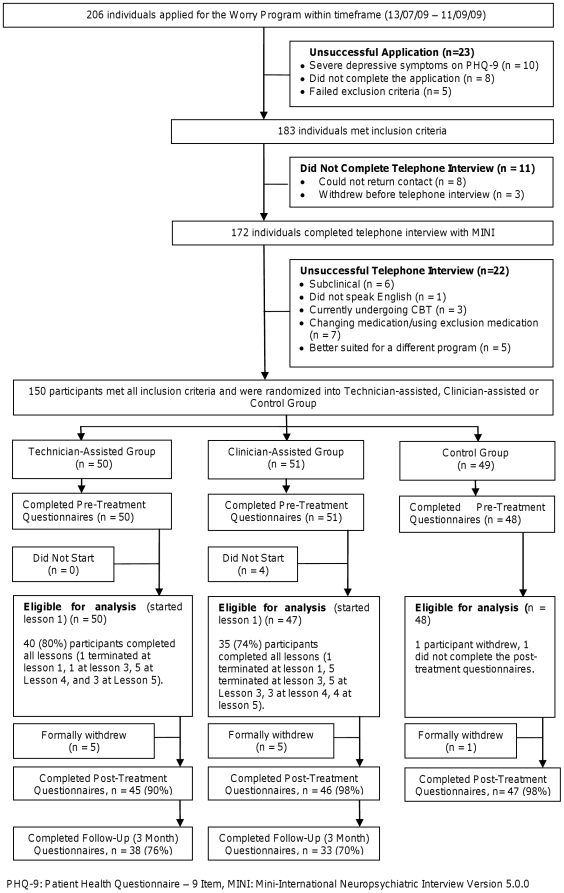
BACKGROUND: Internet-based cognitive behavioural therapy (iCBT) for generalized anxiety disorder (GAD) has been shown to be effective when guided by a clinician. The present study sought to replicate this finding, and determine whether support from a technician is as effective as guidance from a clinician. METHOD: Randomized controlled non-inferiority trial comparing three groups: Clinician-assisted vs. technician-assisted vs. delayed treatment. Community-based volunteers applied to the VirtualClinic (www.virtualclinic.org.au) research program and 150 participants with GAD were randomized. Participants in the clinician- and technician-assisted groups received access to an iCBT program for GAD comprising six online lessons, weekly homework assignments, and weekly supportive contact over a treatment period of 10 weeks. Participants in the clinician-assisted group also received access to a moderated online discussion forum. The main outcome measures were the Penn State Worry Questionnaire (PSWQ) and the Generalized Anxiety Disorder-7 Item (GAD-7). Completion rates were high, and both treatment groups reduced scores on the PSWQ (p<0.001) and GAD-7 (p<0.001) compared to the delayed treatment group, but did not differ from each other. Within group effect sizes on the PSWQ were 1.16 and 1.07 for the clinician- and technician-assisted groups, respectively, and on the GAD-7 were 1.55 and 1.73, respectively. At 3 month follow-up participants in both treatment groups had sustained the gains made at post-treatment. Participants in the clinician-assisted group had made further gains on the PSWQ. Approximately 81 minutes of clinician time and 75 minutes of technician time were required per participant during the 10 week treatment program. CONCLUSIONS: Both clinician- and technician-assisted treatment resulted in large effect sizes and clinically significant improvements comparable to those associated with face-to-face treatment, while a delayed treatment/control group did not improve. These results provide support for large scale trials to determine the clinical effectiveness and acceptability of technician-assisted iCBT programs for GAD. This form of treatment has potential to increase the capacity of existing mental health services. TRIAL REGISTRATION: Australian New Zealand Clinical Trials Registry ACTRN12609000563268.
Overview
The claims and statistics of this paper haven’t been checked yet.
Free: it reads the open-access text and checks the first 5 claims that cite a source we can check. Create a free account to check every claim.
Integrity signals
Registry
Cites
Statistics
Figures
Verification
Claims the paper makes
The claims and statistics of this paper haven’t been checked yet.
Free: it reads the open-access text and checks the first 5 claims that cite a source we can check. Create a free account to check every claim.
Claims other papers make about this one
Each is checked against this paper’s own text: does it say what the citing paper says it does?
The source backs part of the claim, not all of it — or backs it for a different population, condition or comparison.
In the citing paper
“Numerous reviews and meta-analyses have found that CCBT achieves moderate to large effect sizes for depression and anxiety [25-31], similar to those found for therapist-delivered CBT [26,32].”
From Computerized cognitive behavior therapy for anxiety and depression in rural areas:a systematic review (2015) · cites this paper as [32]
Experimental — accuracy not yet measuredThe source backs part of the claim, not all of it — or backs it for a different population, condition or comparison.
In the citing paper
“The role of the therapist providing support is less important in internet-delivered CBT and challenges the thinking regarding dissemination of CBT including training clinicians in CBT.”
From The promise and pitfalls of the internet for cognitive behavioral therapy (2010) · cites this paper as [26]
Experimental — accuracy not yet measuredThe source backs part of the claim, not all of it — or backs it for a different population, condition or comparison.
In the citing paper
“Computerized CBT (cCBT) was proven to be an effective alternative to CBT and does not require face-to-face therapy between a therapist and the patient, which suited the COVID-19 pandemic response.”
From The Efficacy of Computerized Cognitive Behavioral Therapy for Depressive and Anxiety Symptoms in Patients With COVID-19: Randomized Controlled Trial (2021) · cites this paper as [20]
Experimental — accuracy not yet measuredThe cited source says what the claim attributes to it.
In the citing paper
“Characteristics of the intervention that may improve adherence to the intervention include a strong theoretical foundation [41], perceived personal relevance to the user [65,66], perceived effectiveness [67,68], tailoring [69,70], persuasive technologies [71], credibility [72,73], social networking [74,75], and regular “push factors” including human support [76-78] and/or periodic prompts (eg, by”
From Web-Based Interventions for Behavior Change and Self-Management: Potential, Pitfalls, and Progress (2012) · cites this paper as [78]
The cited source says what the claim attributes to it.
In the citing paper
“Support has emerged that it is not necessary for the person providing such guidance to be a professionally trained therapist”
From Meta-analytic review of online guided self-help interventions for depressive symptoms among college students (2021) · cites this paper as Robinson et al., 2010
7 more claims about this paper
Create a free account to see every claim other papers make about this one.
Self-check
Percentages, sums and reported differences re-computed from the paper’s own numbers.
The self-check needs the paper’s full text.
Citations
Cites
The PHQ-9: Validity of a brief depression severity measure
Kroenke, K., Spitzer, R. L., & Williams, J. B. W. (2001) · Journal of General Internal Medicine · doi:10.1046/j.1525-1497.2001.016009606.x · Cited by 44,910
A Brief Measure for Assessing Generalized Anxiety Disorder: The GAD-7
Spitzer, R. L., Kroenke, K., Williams, J. B. W., & Löwe, B. (2006) · Archives of Internal Medicine · doi:10.1001/archinte.166.10.1092 · Cited by 31,765 · cited 2×
“A score of 10 on the GAD-7 has been identified as providing an important threshold for identifying DSM-IV congruent GAD [31].”
BackgroundMethod(1998) · The Journal of Clinical Psychiatry · Cited by 19,139
KESSLER, R. C., ANDREWS, G., COLPE, L. J., HIRIPI, E., MROCZEK, D. K., NORMAND, S.-L. T., WALTERS, E. E., & ZASLAVSKY, A. M. (2002) · Psychological Medicine · doi:10.1017/s0033291702006074 · Cited by 10,327 · cited 9×
“The PSWQ, GAD-7, PHQ-9, K-10, SDS and a treatment satisfaction questionnaire (based on the CEQ) were re-administered one week post-treatment and at three-months post-treatment (follow-up), while the GAD-7 and PHQ-9 was also administered mid-treatment (at week 5).”
MethodInfluentialSelf-citation(1998) · PubMed · Cited by 10,216
Jacobson, N. S., & Truax, P. (1991) · Journal of Consulting and Clinical Psychology · doi:10.1037/0022-006x.59.1.12 · Cited by 7,770 · cited 1×
“This was defined as the proportion of participants who met the criteria of statistically reliable change as described in Jacobson and Truax [46].”
MethodThe mini international neuropsychiatric interview
Lecrubier, Y., Sheehan, D., Hergueta, T., & Weiller, E. (1998) · European Psychiatry · doi:10.1016/s0924-9338(99)80239-9 · Cited by 5,872
Moher, D., Schulz, K. F., & Altman, D. G. (2001) · The Lancet · doi:10.1016/s0140-6736(00)04337-3 · Cited by 5,373
Development and validation of the Penn State Worry Questionnaire
Meyer, T. J., Miller, M. L., Metzger, R. L., & Borkovec, T. D. (1990) · Behaviour Research and Therapy · doi:10.1016/0005-7967(90)90135-6 · Cited by 5,099 · cited 1×
“One week prior to beginning the trial participants completed the following questionnaires online: The Penn State Worry Questionnaire (PSWQ) [34]; the GAD-7; the Patient Health Questionnaire 9-Item (PHQ-9); the Kessler 10 (K-10) [35]; the Sheehan Disability Scales (SDS) [36]; and the Credibility/ Expectancy Questionnai…”
MethodLöwe, B., Decker, O., Müller, S., Brähler, E., Schellberg, D., Herzog, W., & Herzberg, P. Y. (2008) · Medical Care · doi:10.1097/mlr.0b013e318160d093 · Cited by 4,527 · cited 1×
“Pretreatment and post-treatment GAD-7 scores were compared with optimum cut-offs for a probable diagnosis of GAD [44], to provide an index of remission.”
Method
Research works printed but not linked: 2
- Titov N Andrews G Schwencke G Solley K Johnston L 2009 An RCT comparing two types of support on severity of symptoms for people completing Internet-based cognitive behavior therapy for social phobia. Aust N Z J Psychiatry 43 920 926 · DOI · Paper page
- American Psychiatric Association 2000 Diagnostic and Statistical Manual of Mental Disorders, Fourth Edition, Text Revision. Washington, DC American Psychiatric Association. 943
Cited by
Items 101–200 of 277
De Silva, S., Parker, A., Purcell, R., Callahan, P., Liu, P., & Hetrick, S. (2013) · Crisis · doi:10.1027/0227-5910/a000190 · Cited by 53
Acceptability of Digital Mental Health Interventions for Depression and Anxiety: Systematic Review
Lau, C. K. Y., Saad, A., Camara, B., Rahman, D., & Bolea-Alamanac, B. (2024) · Journal of Medical Internet Research · doi:10.2196/52609 · Cited by 51
Mewton, L., Sachdev, P. S., & Andrews, G. (2013) · PLoS ONE · doi:10.1371/journal.pone.0071825 · Cited by 48
Self-citationTherapist Effects in Guided Internet-Delivered CBT for Anxiety Disorders
Almlöv, J., Carlbring, P., Källqvist, K., Paxling, B., Cuijpers, P., & Andersson, G. (2011) · Behavioural and Cognitive Psychotherapy · doi:10.1017/s135246581000069x · Cited by 48
“A series of controlled studies by Titov and colleagues showed that guidance can be equally effective when provided by a clinician or a technician (Robinson et al., 2010; Titov et al., 2009, 2010).”
BackgroundDigital interventions in mental health: Evidence syntheses and economic modelling
Gega, L., Jankovic, D., Saramago, P., Marshall, D., Dawson, S., Brabyn, S., Nikolaidis, G. F., Melton, H., Churchill, R., & Bojke, L. (2022) · Health Technology Assessment · doi:10.3310/rcti6942 · Cited by 48
Internet-Delivered Cognitive Behavior Therapy for Anxiety Disorders Is Here to Stay
Andrews, G., Newby, J. M., & Williams, A. D. (2015) · Current Psychiatry Reports · doi:10.1007/s11920-014-0533-1 · Cited by 48
Self-citationHobbs, M. J., Mahoney, A., & Andrews, G. (2017) · Journal of Anxiety Disorders · doi:10.1016/j.janxdis.2017.09.003 · Cited by 52
Self-citationMason, E. C., Grierson, A. B., Sie, A., Sharrock, M. J., Li, I., Chen, A. Z., & Newby, J. M. (2022) · SLEEP · doi:10.1093/sleep/zsac205 · Cited by 54
Mourad, G., Strömberg, A., Jonsbu, E., Gustafsson, M., Johansson, P., & Jaarsma, T. (2016) · Trials · doi:10.1186/s13063-016-1491-1 · Cited by 46
Johnston, L., Titov, N., Andrews, G., Dear, B. F., & Spence, J. (2013) · Cognitive Behaviour Therapy · doi:10.1080/16506073.2012.753108 · Cited by 45
“Emerging evidence suggests that anxiety disorders such as generalised anxiety disorder (GAD), SP, and PDA respond similarly to transdiagnostic treatment (Norton, 2012), while it is argued that, because of their complexity, obsessive compulsive disorder (OCD) and PTSD may not respond to transdiagnostic treatment (Erick…”
MethodInfluentialSelf-citationDirkse, D., Hadjistavropoulos, H. D., Hesser, H., & Barak, A. (2015) · Cognitive Behaviour Therapy · doi:10.1080/16506073.2014.952773 · Cited by 44
“0.80) in support of therapist-assisted ICBT in comparison to waiting list controls for improving symptoms of GAD (Paxling et al., 2011; Robinson et al., 2010) with gains still found at 1 and 3 years post-treatment (Paxling et al., 2011).”
MethodResultInfluentialRichards, D., Timulak, L., Rashleigh, C., McLoughlin, O., Colla, A., Joyce, C., Doherty, G., Sharry, J., Duffy, D., & Anderson-Gibbons, M. (2016) · Internet Interventions · doi:10.1016/j.invent.2016.10.003 · Cited by 43
“Other studies of similar design and topic to that of the current piece of research have demonstrated statistically significant between group differences (Paxling et al., 2011; Titov et al., 2009; Robinson et al., 2010).”
ResultBlankers, M., Nabitz, U., Smit, F., Koeter, M. W., & Schippers, G. M. (2012) · Journal of Medical Internet Research · doi:10.2196/jmir.2052 · Cited by 42
“Internet-based therapy (IT) leads to larger and longer-lasting positive effects than Internet-based self-help (IS) in the treatment of depression [9,10], anxiety [10,11], and problem drinking [8].”
BackgroundMiller, C. B., Gu, J., Henry, A. L., Davis, M. L., Espie, C. A., Stott, R., Heinz, A. J., Bentley, K. H., Goodwin, G. M., Gorman, B. S., et al. (2021) · Journal of Behavior Therapy and Experimental Psychiatry · doi:10.1016/j.jbtep.2020.101609 · Cited by 40
Predictive modeling in e-mental health: A common language framework
Becker, D., van Breda, W., Funk, B., Hoogendoorn, M., Ruwaard, J., & Riper, H. M. (2018) · Internet Interventions · doi:10.1016/j.invent.2018.03.002 · Cited by 48
Brotto, L. A., Stephenson, K. R., & Zippan, N. (2022) · Mindfulness · doi:10.1007/s12671-021-01820-4 · Cited by 47
“Interestingly, when a coach or navigator is available to check in with participants throughout their program, research suggests that even individuals with no therapy training who are only trained on helping participants navigate the platform can significantly improve engagement and outcomes (Baumeister et al., 2014; R…”
BackgroundLv, J., Zhang, X., Ou, S., Gu, S., Su, Z., Tong, S., Liu, B., Song, Z., & Chi, L. (2016) · International Heart Journal · doi:10.1536/ihj.15-259 · Cited by 37
“In the sequence of hospital admission, patients were allocated numbers, which decided the grouping: the first 38 patients (1-38) were assigned to the CBT group, and the remaining 37 patients (39-75) to the control group.”
MethodBiagianti, B., Foti, G., Liberto, A. D., Bressi, C., & Brambilla, P. (2023) · Journal of Affective Disorders · doi:10.1016/j.jad.2023.01.057 · Cited by 45
Hadjistavropoulos, H. D., Alberts, N. M., Nugent, M., & Marchildon, G. (2014) · Canadian Psychology / Psychologie canadienne · doi:10.1037/a0037716 · Cited by 36
Kok, G., Bockting, C., Burger, H., Smit, F., & Riper, H. (2014) · Internet Interventions · doi:10.1016/j.invent.2014.05.002 · Cited by 36
Zippan, N., Stephenson, K. R., & Brotto, L. A. (2020) · The Journal of Sexual Medicine · doi:10.1016/j.jsxm.2020.07.086 · Cited by 38
Peerani, F., Watt, M., Ismond, K. P., Whitlock, R., Ambrosio, L., Hotte, N., Mitchell, N., Bailey, R. J., Kroeker, K., Dieleman, L. A., et al. (2022) · Therapeutic Advances in Gastroenterology · doi:10.1177/17562848221127238 · Cited by 35
Lorian, C. N., Titov, N., & Grisham, J. R. (2011) · Journal of Anxiety Disorders · doi:10.1016/j.janxdis.2011.10.003 · Cited by 44
Self-citationBeukes, E. W., Andersson, G., Fagelson, M., & Manchaiah, V. (2021) · American Journal of Audiology · doi:10.1044/2021_aja-20-00222 · Cited by 34
Ma, L., Huang, C., Tao, R., Cui, Z., & Schluter, P. (2021) · Internet Interventions · doi:10.1016/j.invent.2021.100427 · Cited by 34
“Support has emerged that it is not necessary for the person providing such guidance to be a professionally trained therapist (Robinson et al., 2010; Titov et al., 2010).”
BackgroundUsing Noninferiority Tests to Evaluate Telemedicine and E-Health Services: Systematic Review
Kummervold, P. E., Johnsen, J.-A. K., Skrøvseth, S. O., & Wynn, R. (2012) · Journal of Medical Internet Research · doi:10.2196/jmir.2169 · Cited by 38
Watts, S. E., & Andrews, G. (2014) · Asian Journal of Psychiatry · doi:10.1016/j.ajp.2014.06.007 · Cited by 32
“18; NNT 2) (Robinson et al., 2010; Newby et al., 2013;Williams and Andrews, 2013; Mewton et al., 2012; Watts et al., 2013; Wims et al., 2010; Titov et al., 2011, 2008).”
Self-citationSaramago, P., Gega, L., Marshall, D. C., Nikolaidis, G. F., Janković, D., Melton, H., Dawson, S., Churchill, R. C., & Bojke, L. (2021) · Frontiers in Psychiatry · doi:10.3389/fpsyt.2021.726222 · Cited by 38
“NMA Results for GAD-7 Scores at Follow-Up Ten direct treatment comparisons were made in the 13 trials included in the GAD-7-based NMA; 4 of the 13 trials were multi-arm trials [three 3-arm trials (49, 59, 63) and one 5-arm trial (11)]; five comparisons were informed by more than one trial where pair-wise ANCOVA meta-a…”
BackgroundMethodTRANSDIAGNOSTIC INTERNET TREATMENT FOR ANXIETY AND DEPRESSION
Titov, N., Dear, B. F., Johnston, L., & Terides, M. D. (2012) · Revista de Psicopatología y Psicología Clínica · Cited by 31
Self-citationDirkse, D., Hadjistavropoulos, H. D., Alberts, N. A., Karin, E., Schneider, L. H., Titov, N., & Dear, B. F. (2020) · Journal of Cancer Survivorship · doi:10.1007/s11764-019-00810-9 · Cited by 29
Self-citationBeukes, E. W., Manchaiah, V., Baguley, D. M., Allen, P. M., & Andersson, G. (2018) · International Journal of Audiology · doi:10.1080/14992027.2017.1384858 · Cited by 31
“Internet-based trials for depression, anxiety, and social phobia have found comparable results, regardless of whether a clinician or a technical assistant guided the intervention (Titov et al. 2009; Robinson et al. 2010; Titov et al. 2010).”
ResultPalmer, C. E., Marshall, E., Millgate, E., Warren, G., Ewbank, M., Cooper, E., Lawes, S., Bouazzaoui, M., Smith, A., Hutchins-Joss, C., et al. (2025) · Journal of Medical Internet Research · doi:10.2196/69351 · Cited by 47
“A noninferiority margin of a 1.8 change in GAD-7 total score was chosen based on previous literature [47-49] (see Methods S1 in Multimedia Appendix 1 for more details).”
InfluentialSpencer, L., Potterton, R., Allen, K. L., Musiat, P., & Schmidt, U. H. (2019) · Journal of Medical Internet Research · doi:10.2196/10876 · Cited by 35
“Internet-based interventions have been found to be effective in prevention and treatment of a range of psychiatric disorders, including depression [10], anxiety [11], posttraumatic stress disorder [12], and eating disorders [13].”
Remote cognitive‐behavioral therapy for generalized anxiety disorder: A preliminary meta‐analysis
Trenoska Basile, V., Newton‐John, T., & Wootton, B. M. (2022) · Journal of Clinical Psychology · doi:10.1002/jclp.23360 · Cited by 28
Kirkpatrick, T., Manoukian, L., Dear, B. F., Johnston, L., & Titov, N. (2013) · PeerJ · doi:10.7717/peerj.210 · Cited by 29
“Converging evidence indicates that internet-delivered psychological interventions can be administered effectively by people with limited mental health training or experience when appropriately trained and supervised [Titov et al., 2009; Robinson et al., 2010; Richards & Suckling, 2009].”
BackgroundInfluentialBarakat, S., Burton, A. L., Cunich, M. M., Hay, P., Hazelton, J. L., Kim, M., Lymer, S. J., Madden, S., Maloney, D., Miskovic‐Wheatley, J., et al. (2023) · Psychiatry Research · doi:10.1016/j.psychres.2023.115534 · Cited by 33
“…to suggest that very light touch contact from a researcher or technician (which may in some way resemble the researcher contact in our trial) may be the optimal form of contact for digital for self-help programs (Andrews et al., 2010; Robinson et al., 2010; Shim et al., 2017; Titov et al., 2010).”
Flygare, A.-L., Engström, I., Hasselgren, M., Jansson-Fröjmark, M., Frejgrim, R., Andersson, G., & Holländare, F. (2020) · Internet Interventions · doi:10.1016/j.invent.2019.100303 · Cited by 29
Mehta, S., Hadjistavropoulos, H., Nugent, M., Karin, E., Titov, N., & Dear, B. F. (2020) · Spinal Cord · doi:10.1038/s41393-019-0398-6 · Cited by 27
Self-citationDigitally Delivered Psychological Interventions for Anxiety Disorders: a Comprehensive Review
Stefanopoulou, E., Lewis, D., Taylor, M., Broscombe, J., & Larkin, J. (2018) · Psychiatric Quarterly · doi:10.1007/s11126-018-9620-5 · Cited by 34
Lattie, E. G., Graham, A. K., Hadjistavropoulos, H. D., Dear, B. F., Titov, N., & Mohr, D. C. (2019) · DIGITAL HEALTH · doi:10.1177/2055207619896145 · Cited by 27
“lor’s-trained individuals in digital mental health interventions.(25,26) Nevertheless, it should be noted that”
BackgroundSelf-citationClarke, J., Proudfoot, J., & Ma, H. (2016) · JMIR Mental Health · doi:10.2196/mental.5131 · Cited by 26
“The scales are well validated [30], used widely as screening tools in primary care settings, and frequently included as outcome measures in studies of Web-based interventions [31,32].”
Théberge-Lapointe, N., Marchand, A., Langlois, F., Gosselin, P., & Watts, S. (2015) · European Review of Applied Psychology · doi:10.1016/j.erap.2014.10.001 · Cited by 24
Borghouts, J. W., Eikey, E. V., Leon, C. D., Schueller, S. M., Schneider, M. L., Stadnick, N. A., Zheng, K., Wilson, L., Caro, D., Mukamel, D. B., et al. (2022) · JMIR Formative Research · doi:10.2196/43192 · Cited by 34
“This is consistent with previous work that found technical issues to be a common barrier to engagement with DMHIs [16], and technical assistance has been shown to be an important aspect in facilitating engagement [38,39].”
ResultChristensen, H., Mackinnon, A. J., Batterham, P. J., O'Dea, B., Guastella, A. J., Griffiths, K. M., Eagleson, C., Kalia Hehir, K., Kenardy, J., Bennett, K., et al. (2014) · Internet Interventions · doi:10.1016/j.invent.2014.08.002 · Cited by 24
“For GAD in particular, strong evidence has emerged for online cognitive behavioural therapy (iCBT) (Mewton et al., 2012; Robinson et al., 2010; Spence et al., 2011).”
BackgroundInternet-Delivered Cognitive Behaviour Therapy
Richards, D., Enrique, Á., Palacios, J. E., & Duffy, D. J. (2018) · InTech eBooks · doi:10.5772/intechopen.71412 · Cited by 31
Internet-Based Cognitive Behavior Therapy
Andersson, G., Carlbring, P., & Hadjistavropoulos, H. D. (2017) · Elsevier eBooks · doi:10.1016/b978-0-12-803457-6.00021-0 · Cited by 30
The use of automated assessments in internet-based CBT: The computer will be with you shortly
Mason, E. C., & Andrews, G. (2014) · Internet Interventions · doi:10.1016/j.invent.2014.10.003 · Cited by 23
“For example, Robinson et al. (2010) and Titov et al.”
Self-citationMahoney, A. E. J., Hobbs, M., Newby, J., Williams, A. D., & Andrews, G. (2018) · Behavioural and Cognitive Psychotherapy · doi:10.1017/s1352465818000127 · Cited by 18
“This CBT protocol has been validated in two randomized controlled trials (Robinson et al., 2010; Titov et al., 2009), two effectiveness studies (Mewton et al., 2012; Newby et al., 2017) and therapist guides are publicly available (Andrews et al., 2016).”
MethodSelf-citationMahoney, A., Hobbs, M. J., Newby, J. M., Williams, A. D., & Andrews, G. (2017) · Behavioural and Cognitive Psychotherapy · doi:10.1017/s1352465817000455 · Cited by 26
“Both iCBT courses are efficacious and effective, and have been described in detail elsewhere (Newby et al., 2013, 2014; Mewton et al., 2012; Robinson et al., 2010).”
BackgroundSelf-citationZhu, Y., Li, Y., & Xu, X. (2022) · Psychiatry Research · doi:10.1016/j.psychres.2022.114837 · Cited by 26
Yu, J. S., Szigethy, E., Wallace, M., Solano, F., & Oser, M. (2018) · Telemedicine and e-Health · doi:10.1089/tmj.2017.0280 · Cited by 15
“50 Again, these studies have largely included only participants meeting DSM-IV criteria for GAD.”
Generalized Anxiety Disorder: A Review of Recent Findings
Allgulander, C. (2012) · Journal of Experimental & Clinical Medicine · doi:10.1016/j.jecm.2012.01.006 · Cited by 31
The acceptability of therapist-assisted, internet-delivered treatment for college students
Travers, M. F., & Benton, S. A. (2014) · Journal of College Student Psychotherapy · doi:10.1080/87568225.2014.854676 · Cited by 19
“There are many randomized controlled trials, meta-analyses, and published studies internationally that support the efficacy of TAI-CBT in patients with anxiety disorders and depression (Andrews et al., 2010; Cape, Wittington, Buszewicz, Wallace, & Underwood, 2010; Carlbring et al., 2007; Cavanaugh & Shapiro, 2004; Dur…”
BackgroundAre Trials of Computerized Therapy Generalizable? A Multidimensional Meta-analysis
Wilks, C. R., Zieve, G. G., & Lessing, H. K. (2016) · Telemedicine and e-Health · doi:10.1089/tmj.2015.0129 · Cited by 18
Henry, J. A., Goodworth, M.-C., Lima, E., Zaugg, T., & Thielman, E. J. (2022) · Ear & Hearing · doi:10.1097/aud.0000000000001150 · Cited by 18
“All rights reserved • Printed in the U.S.A. Copyright © 2021 Wolters Kluwer Health, Inc. Unauthorized reproduction of this article is prohibited. disorder (Robinson et al. 2010).”
BackgroundInternet-delivered acceptance-based behavior therapy for generalized anxiety disorder: A pilot study
Dahlin, M., Ryberg, M., Vernmark, K., Annas, N., Carlbring, P., & Andersson, G. (2016) · Internet Interventions · doi:10.1016/j.invent.2016.08.004 · Cited by 17
“In a second controlled trial 145 participants were randomized to clinician-assisted treatment, technician-assisted treatment or wait list control (Robinson et al., 2010).”
BackgroundWild, T. S. N., Fromberger, P., Jordan, K., Müller, I., & Müller, J. L. (2019) · Frontiers in Psychiatry · doi:10.3389/fpsyt.2018.00763 · Cited by 26
“Indeed, several studies found that guided internet-based cognitive behavioral therapies are more effective than internet-based cognitive behavioral therapies without therapeutic guidance (56, 57) and that 10min of support per patient and week are sufficient to achieve clinically significant improvements (58, 59).”
BackgroundInfluentialSpencer, L., Schmidt-Hantke, J., Allen, K. L., Gordon, G., Potterton, R., Musiat, P., Hagner, F., Beintner, I., Vollert, B., Nacke, B., et al. (2018) · Internet Interventions · doi:10.1016/j.invent.2018.02.005 · Cited by 20
“, 2008) and the scale also shows good sensitivity to change over time (Robinson et al., 2010).”
BackgroundResultMureşan, V., Montgomery, G. H., & David, D. (2012) · Journal of Technology in Human Services · doi:10.1080/15228835.2011.653290 · Cited by 16
“Two clinical trials (Robinson et al., 2010; Warmerdam et al., 2010) each studied two experimental groups.”
BackgroundRichards, D., Timulak, L., Doherty, G., Sharry, J., McLoughlin, O., Rashleigh, C., Colla, A., & Joyce, C. (2014) · Trials · doi:10.1186/1745-6215-15-145 · Cited by 16
“Firstly, can an online treatment for GAD symptoms be effective for an adult student population in a service-based setting? Secondly, what do participants find helpful and hindering in their online treatment for GAD symptoms? Thirdly, are participants satisfied with accessing and using an online treatment? Fourth and f…”
BackgroundResultInfluentialBendtsen, P., Müssener, U., Karlsson, N. E., López‐Pelayo, H., Vieira, J. A. P., Colom, J., Gual, A., Reynolds, J., Wallace, P., Segura, L., et al. (2016) · BMJ Open · doi:10.1136/bmjopen-2015-010271 · Cited by 18
Increasing engagement with computerised cognitive behavioural therapies
Cavanagh, K., & Millings, A. (2013) · ICST Transactions on Ambient Systems · doi:10.4108/trans.amsys.01-06.2013.e3 · Cited by 16
“Dropout rates were also similar in both groups (Robinson et al., 2010).”
ResultMurray, E., Linke, S., Harwood, E., Conroy, S., Stevenson, F. A., & Godfrey, C. (2012) · Alcohol and Alcoholism · doi:10.1093/alcalc/ags096 · Cited by 19
“‘Facilitated access’ or support in use of the programme can reduce attrition from CCBT (Robinson et al., 2010; Titov et al., 2010; Johnston et al., 2011).”
BackgroundDahlin, M., Johansson, A., Romare, H., Carlbring, P., & Andersson, G. (2022) · Internet Interventions · doi:10.1016/j.invent.2022.100531 · Cited by 15
“Several studies on transdiagnostic ICBT have included participants with GAD as either the principle or comorbid condition showing positive results (Dear et al., 2015; Johnston et al., 2011; Titov et al., 2010).”
Zhang, W., Du, Y., Yang, X., Wang, E., Fang, J., Liu, Z., Wu, S., Liu, Q., & Hu, Y. (2022) · Frontiers in Psychiatry · doi:10.3389/fpsyt.2022.832167 · Cited by 21
“(48) Australia GAD/DSM-IV 98 (50/48) 67% 44.”
Rubel, J. A., Väth, T., Hanraths, S., Pruessner, L., Timm, C., Hartmann, S. F., Barnow, S., & Lalk, C. (2024) · Internet Interventions · doi:10.1016/j.invent.2024.100716 · Cited by 19
“Furthermore, specific aspects of guidance, such as the frequency of supportive monitoring or the experience level of support personnel, may not significantly impact GAD symptom reduction (Hadjistavropoulos et al., 2017; Robinson et al., 2010).”
BackgroundGuided self-help for generalized anxiety disorder in older adults.
Landreville, P., Gosselin, P., Grenier, S., Hudon, C., & Lorrain, D. (2016) · Aging & Mental Health · doi:10.1080/13607863.2015.1060945 · Cited by 14
“On the whole, these results are promising, but they are not clear if GSH is effective for GAD in older adults although there is evidence of the efficacy of CBT-GSH for GAD in younger adults (Paxling et al., 2011; Robinson et al., 2010; Titov, Andrews, Johnston, Robinson, & Spence, 2010; Titov et al., 2009).”
BackgroundResultSasseville, M., LeBlanc, A., Tchuente, J., Boucher, M., Dugas, M., Mbemba, G. I. C., Barony, R., Chouinard, M., Beaulieu, M., Beaudet, N., et al. (2023) · Systematic Reviews · doi:10.1186/s13643-023-02241-1 · Cited by 22
“Robinson [80] 2010 Australia Generalized anxiety disorder 150 Internet or website/email (SMS) Anxiety/depression”
BackgroundPowell, C. L. Y. M., Chiu, C. Y., Sun, X., & So, S. H. (2024) · BMC Psychiatry · doi:10.1186/s12888-023-05306-6 · Cited by 24
Dopke, C. A., McBride, A., Babington, P., Jonathan, G., Michaels, T., Ryan, C., Duffecy, J. L., Mohr, D. C., & Goulding, E. H. (2021) · JMIR Formative Research · doi:10.2196/25810 · Cited by 14
Jenkins, P. E., Luck, A., Burrows, A., & Boughton, N. (2014) · Trials · doi:10.1186/1745-6215-15-181 · Cited by 16
“The training and background of therapists has also been identified as an issue in therapist-administered treatments [52-54].”
BackgroundBeintner, I., Görlich, D., Berger, T., Ebert, D. D., Zeiler, M., Herrero Camarano, R., Waldherr, K., & Jacobi, C. (2019) · Internet Interventions · doi:10.1016/j.invent.2018.05.001 · Cited by 14
Mackenzie, A., Harvey, S. B., Mewton, L. R., & Andrews, G. (2014) · The Medical Journal of Australia · doi:10.5694/mja14.00293 · Cited by 15
Self-citationJohansson, R. (2013) · Linköping studies in behavioural science · doi:10.3384/diss.diva-100385 · Cited by 18
“tantly, there exist studies where the guidance has been provided by professionals other than therapists, for example nurses (Marks, Cavanagh, & Gega, 2007) and computer technicians (Robinson et al., 2010; Titov, Andrews, Davies, et al., 2010).”
BackgroundTitov, N., Dear, B. F., Johnston, L., & Terides, M. (2012) · Revista de Psicopatología y Psicología Clínica · doi:10.5944/rppc.vol.17.num.3.2012.11842 · Cited by 13
Self-citationClarke, J., Vatiliotis, V., Verge, C. F., Holmes-Walker, D. J., Campbell, L. V., Wilhelm, K. A., & Proudfoot, J. G. (2015) · JMIR Research Protocols · doi:10.2196/resprot.4032 · Cited by 14
“It is used widely as a screening tool for depression, and is frequently included as outcome measures in studies of online interventions (eg, [36,37]).”
Katzman, M. A., Bleau, P., Blier, P., Chokka, P. R., Kjernisted, K. D., & Ameringen, M. V. (2023) · doi:10.32920/14638581 · Cited by 13
Mahar, E. A., Stephenson, K. R., & Brotto, L. A. (2025) · Behaviour Research and Therapy · doi:10.1016/j.brat.2025.104732 · Cited by 15
Mahoney, A., Newby, J. M., Hobbs, M. J., Williams, A. D., & Andrews, G. (2017) · Internet Interventions · doi:10.1016/j.invent.2017.11.004 · Cited by 15
“Both iCBT courses have been shown to be efficacious and effective in routine care, and have been described in detail elsewhere (Newby et al., 2013; Mewton et al., 2012; Robinson et al., 2010).”
BackgroundMethodSelf-citationFinding Web-Based Anxiety Interventions on the World Wide Web: A Scoping Review
Ashford, M. T., Olander, E. K., & Ayers, S. (2016) · JMIR Mental Health · doi:10.2196/mental.5349 · Cited by 11
“Symptom reduction was the same for technician and clinician-assisted versions of the treatment [83].”
Armaou, M. (2024) · Social Sciences · doi:10.3390/socsci13020114 · Cited by 15
Rajeshkumar, L., Mishkind, M. C., Coleman, J. J., Pahwa, M., LaPreze, D., Solenske, S., & Wright, J. H. (2024) · Journal of Psychiatric Practice · doi:10.1097/pra.0000000000000815 · Cited by 15
“65 The Wellbeing Course, found to be effective in 2 studies, 67,68 is a structured 8-week transdiagnostic CCBT intervention consisting of 5 lessons that integrate elements from CBT and social-cognitive therapies.”
Maeng, D. D., Cornell, A. E., & Nasra, G. S. (2019) · Journal of Occupational and Environmental Medicine · doi:10.1097/jom.0000000000001678 · Cited by 11
“In this study, a patient classified as having moderate to severe depression or anxiety disorder at baseline (ie, PHQ9 or GAD7 more than or equal to 10 at the initial BHP visit of an episode of care) was considered to have achieved his/her response goal if their PHQ9 or GAD7 score falls below 10 or is reduced by at lea…”
MethodIndividually tailored internet-based cognitive behavioural therapy for anxiety disorders
Nordgren, L. B. (2013) · Linköping University Electronic Press eBooks · doi:10.3384/diss.diva-100969 · Cited by 12
“…a technical point of view (i.e., support from a coach or technician not aiming to be therapeutic) can acquire results comparable to those of a clinician or therapist (Johnston, Titov, Andrews, Spence, & Dear, 2011; Robinson et al., 2010; Titov, Andrews, Davies, et al., 2010; Titov et al., 2009).”
ResultComputerised cognitive behavioural therapy: helping Ireland log on
Twomey, C. D., O’Reilly, G., & Byrne, M. (2013) · Irish Journal of Psychological Medicine · doi:10.1017/ipm.2012.5 · Cited by 11
Anxiety Disorders in Childhood and Adolescence
Donnelly, C. L., & Rhoads, J. C. (2012) · Wiley eBooks · doi:10.1002/9781119962229.ch13 · Cited by 11
Internet‐Delivered Treatments for Social Anxiety Disorder
Andersson, G., Carlbring, P., & Furmark, T. (2014) · Wiley eBooks · doi:10.1002/9781118653920.ch26 · Cited by 12
State-of-the-Art Treatment via the Internet: An Optimistic Vision of the Future
Carlbring, P., Andersson, G., & Kaldo, V. (2011) · Cognitive Behaviour Therapy · doi:10.1080/16506073.2011.575591 · Cited by 10
“There is, therefore, a clear need for studies that look at not only the amount of allocated therapist time but also the type of contact and the type of health care professional that this support person should be (Robinson et al., 2010).”
BackgroundSkaczkowski, G., van der Kruk, S., Loxton, S., Hughes-Barton, D., Howell, C., Turnbull, D., Jensen, N., Smout, M., & Gunn, K. (2022) · JMIR Mental Health · doi:10.2196/31018 · Cited by 9
Watt, M., Hyde, A. M., Spence, J. C., Wright, G. M., Well, S. V., Johnson, E., Mason, A. L., McLeod, M., & Tandon, P. (2023) · Canadian Liver Journal · doi:10.3138/canlivj-2022-0045 · Cited by 9
Mutter, A., Bücheler, M., Idrees, A. R., Domhardt, M., & Baumeister, H. (2024) · BMJ Open · doi:10.1136/bmjopen-2024-086728 · Cited by 12
Mahoney, A., Haskelberg, H., Mason, E. C., Millard, M., & Newby, J. M. (2021) · Personality and Mental Health · doi:10.1002/pmh.1506 · Cited by 10
Serowik, K. L., Roemer, L., Suvak, M., Liverant, G., & Orsillo, S. M. (2020) · Cognitive Behaviour Therapy · doi:10.1080/16506073.2020.1765858 · Cited by 7
ICBT in Psychiatry: Generalised Anxiety Disorder
Titov, N., Andersson, G., & Paxling, B. (2016) · Springer eBooks · doi:10.1007/978-3-319-06083-5_5 · Cited by 7
Self-citationGega, L., Swift, L., Barton, G., Todd, G., Reeve, N., Bird, K., Holland, R., Howe, A. C., Wilson, J., & Molle, J. (2012) · Trials · doi:10.1186/1745-6215-13-151 · Cited by 9
“Other studies use less experienced support staff, such as an administrator [28,29], lay counsellors [26] or psychology students [22], who are easier to find and less costly to employ, but may be less effective or less acceptable, or may have hidden costs (for example, increased patient use of other services).”
Punna, M., Lappalainen, R. I., Kettunen, T., Lappalainen, P., Muotka, J. S., Kaipainen, K., Villberg, J. J., & Kasila, K. (2021) · Journal of Contextual Behavioral Science · doi:10.1016/j.jcbs.2021.04.007 · Cited by 11
Shiri, R., Varje, P., & Toppinen‐Tanner, S. (2025) · Journal of Psychosomatic Research · doi:10.1016/j.jpsychores.2025.112140 · Cited by 9
Pigeon, W. R., Bishop, T. M., Bossarte, R. M., Schueller, S. M., & Kessler, R. C. (2023) · Contemporary Clinical Trials · doi:10.1016/j.cct.2023.107306 · Cited by 6
Kornfield, R., Lattie, E. G., Nicholas, J., Knapp, A. A., Mohr, D. C., & Reddy, M. C. (2023) · Proceedings of the ACM on Human-Computer Interaction · doi:10.1145/3610093 · Cited by 7
“While some studies have demonstrated that technicians who are not mental health specialists can effectively provide coaching for internet-based cognitive behavioral therapy (iCBT), these applied the same basic coaching protocol developed for mental health clinicians, apart from technicians being trained not to give cl…”
BackgroundPharmacotherapy of Generalized Anxiety Disorder
Allgulander, C., & Baldwin, D. S. (2013) · Modern trends in psychiatry · doi:10.1159/000351955 · Cited by 6
Metadata
- Authors
- Robinson, E., Titov, N., Andrews, G., McIntyre, K., Schwencke, G., & Solley, K.
- Affiliations
- St Vincent's Hospital Sydney (AU)
- UNSW Sydney (AU)
- Corresponding author
- Titov, Nickolai
- Venue
- PLoS ONE
- Publisher
- Public Library of Science (PLoS)
- Published
- 2010-06-03
- Volume
- 5
- Issue
- 6
- Pages
- e10942
- ISSN
- 1932-6203 (ISSN-L)
- PMC
- PMC2880592
- OpenAlex
- W2042102848
- Cited by
- 277
- References
- 56
- Citations by year
- 2026: 4 · 2025: 11 · 2024: 10 · 2023: 20 · 2022: 18 · 2021: 15 · 2020: 13 · 2019: 15 · 2018: 12 · 2017: 11 · 2016: 18 · 2015: 21 · 2014: 35 · 2013: 28 · 2012: 25
- FWCI
- 35.30
- Type
- journal article
- Language
- en
- Open access
- gold
- doi.org
- Locations
- PLoS ONE (publishedVersion, cc-by)
- PubMed Central (publishedVersion, cc-by)
- PubMed (publishedVersion)
- RePEc: Research Papers in Economics (submittedVersion)
- DOAJ (DOAJ: Directory of Open Access Journals) (submittedVersion, cc-by-sa)
- Figshare (submittedVersion, cc-by)
- Funders
- Australian Rotary Health
- Topics
- Social Sciences › Psychology › Applied Psychology › Digital Mental Health Interventions
- Social Sciences › Psychology › Experimental and Cognitive Psychology › Anxiety, Depression, Psychometrics, Treatment, Cognitive Processes
- Health Sciences › Medicine › Public Health, Environmental and Occupational Health › Telemedicine and Telehealth Implementation
- Keywords
- generalized anxiety disorder, internet-based cognitive behavioral therapy, online therapy, treatment completion, worry reduction, treatment acceptability, mental health service capacity
- MeSH terms
- Adolescent, Adult, Aged, Anxiety Disorders, Health Personnel, Humans, Middle Aged, Surveys and Questionnaires, Treatment Outcome, Internet, Young Adult
About these checks
Registry, retraction, Cites and statistics results are computed, not judged, with one exception: a printed reference that no index lists is read once by a model before it counts as a citation error. Claims are extracted by a model and kept only when their quote appears verbatim in the text; each cited source is then checked, with a model’s help, for whether it says what the claim relies on. Those verdicts can be wrong — read the claim’s quote and the cited source before relying on one.
Statistics and arithmetic are recomputed, not judged.
Confidence bands are shown only for fields calibrated on our annotated test set. None is calibrated yet, so no band is shown.
What counts as a claim ›How we measure confidence ›How we check this ›
Are you an author, or do you see a problem with this page? Request a review
Data sources
Bibliographic data: Semantic Scholar, OpenAlex, Crossref.
Contains information from the Semantic Scholar Academic Graph Datasets, made available under the ODC Attribution License (ODC-BY 1.0).
Semantic Scholar’s data is described in: Kinney, R., et al. (2023). The Semantic Scholar Open Data Platform. arXiv:2301.10140.
