

Internet Treatment for Generalized Anxiety Disorder: A Randomized Controlled Trial Comparing Clinician vs. Technician Assistance
Open accessThe DOI matches its Crossref record; 54 of the 56 references it cites were found in a registry or an index.
Abstract
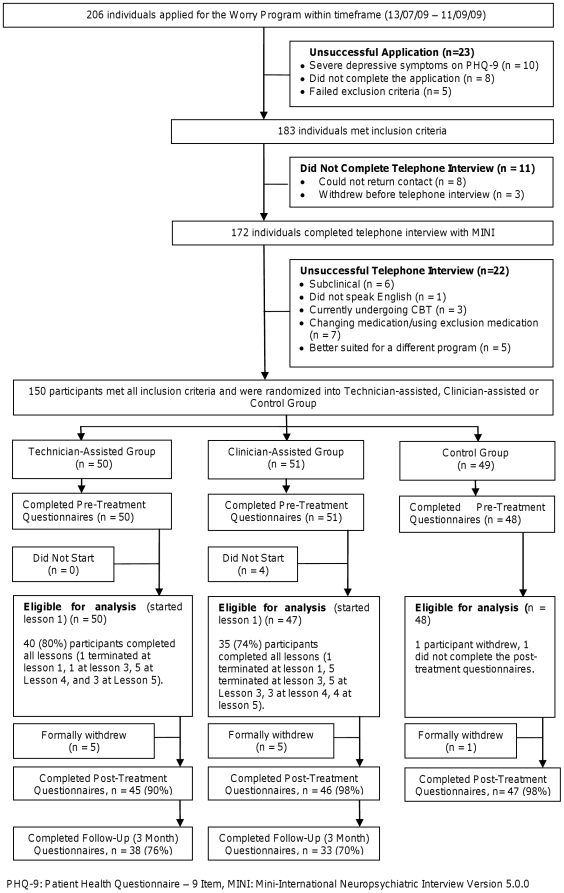
BACKGROUND: Internet-based cognitive behavioural therapy (iCBT) for generalized anxiety disorder (GAD) has been shown to be effective when guided by a clinician. The present study sought to replicate this finding, and determine whether support from a technician is as effective as guidance from a clinician. METHOD: Randomized controlled non-inferiority trial comparing three groups: Clinician-assisted vs. technician-assisted vs. delayed treatment. Community-based volunteers applied to the VirtualClinic (www.virtualclinic.org.au) research program and 150 participants with GAD were randomized. Participants in the clinician- and technician-assisted groups received access to an iCBT program for GAD comprising six online lessons, weekly homework assignments, and weekly supportive contact over a treatment period of 10 weeks. Participants in the clinician-assisted group also received access to a moderated online discussion forum. The main outcome measures were the Penn State Worry Questionnaire (PSWQ) and the Generalized Anxiety Disorder-7 Item (GAD-7). Completion rates were high, and both treatment groups reduced scores on the PSWQ (p<0.001) and GAD-7 (p<0.001) compared to the delayed treatment group, but did not differ from each other. Within group effect sizes on the PSWQ were 1.16 and 1.07 for the clinician- and technician-assisted groups, respectively, and on the GAD-7 were 1.55 and 1.73, respectively. At 3 month follow-up participants in both treatment groups had sustained the gains made at post-treatment. Participants in the clinician-assisted group had made further gains on the PSWQ. Approximately 81 minutes of clinician time and 75 minutes of technician time were required per participant during the 10 week treatment program. CONCLUSIONS: Both clinician- and technician-assisted treatment resulted in large effect sizes and clinically significant improvements comparable to those associated with face-to-face treatment, while a delayed treatment/control group did not improve. These results provide support for large scale trials to determine the clinical effectiveness and acceptability of technician-assisted iCBT programs for GAD. This form of treatment has potential to increase the capacity of existing mental health services. TRIAL REGISTRATION: Australian New Zealand Clinical Trials Registry ACTRN12609000563268.
Overview
The claims and statistics of this paper haven’t been checked yet.
Free: it reads the open-access text and checks the first 5 claims that cite a source we can check. Create a free account to check every claim.
Integrity signals
Registry
Cites
Statistics
Figures
Verification
Claims the paper makes
The claims and statistics of this paper haven’t been checked yet.
Free: it reads the open-access text and checks the first 5 claims that cite a source we can check. Create a free account to check every claim.
Claims other papers make about this one
Each is checked against this paper’s own text: does it say what the citing paper says it does?
The source backs part of the claim, not all of it — or backs it for a different population, condition or comparison.
In the citing paper
“Numerous reviews and meta-analyses have found that CCBT achieves moderate to large effect sizes for depression and anxiety [25-31], similar to those found for therapist-delivered CBT [26,32].”
From Computerized cognitive behavior therapy for anxiety and depression in rural areas:a systematic review (2015) · cites this paper as [32]
Experimental — accuracy not yet measuredThe source backs part of the claim, not all of it — or backs it for a different population, condition or comparison.
In the citing paper
“The role of the therapist providing support is less important in internet-delivered CBT and challenges the thinking regarding dissemination of CBT including training clinicians in CBT.”
From The promise and pitfalls of the internet for cognitive behavioral therapy (2010) · cites this paper as [26]
Experimental — accuracy not yet measuredThe source backs part of the claim, not all of it — or backs it for a different population, condition or comparison.
In the citing paper
“Computerized CBT (cCBT) was proven to be an effective alternative to CBT and does not require face-to-face therapy between a therapist and the patient, which suited the COVID-19 pandemic response.”
From The Efficacy of Computerized Cognitive Behavioral Therapy for Depressive and Anxiety Symptoms in Patients With COVID-19: Randomized Controlled Trial (2021) · cites this paper as [20]
Experimental — accuracy not yet measuredThe cited source says what the claim attributes to it.
In the citing paper
“Characteristics of the intervention that may improve adherence to the intervention include a strong theoretical foundation [41], perceived personal relevance to the user [65,66], perceived effectiveness [67,68], tailoring [69,70], persuasive technologies [71], credibility [72,73], social networking [74,75], and regular “push factors” including human support [76-78] and/or periodic prompts (eg, by”
From Web-Based Interventions for Behavior Change and Self-Management: Potential, Pitfalls, and Progress (2012) · cites this paper as [78]
The cited source says what the claim attributes to it.
In the citing paper
“Support has emerged that it is not necessary for the person providing such guidance to be a professionally trained therapist”
From Meta-analytic review of online guided self-help interventions for depressive symptoms among college students (2021) · cites this paper as Robinson et al., 2010
7 more claims about this paper
Create a free account to see every claim other papers make about this one.
Self-check
Percentages, sums and reported differences re-computed from the paper’s own numbers.
The self-check needs the paper’s full text.
Citations
Cites
The PHQ-9: Validity of a brief depression severity measure
Kroenke, K., Spitzer, R. L., & Williams, J. B. W. (2001) · Journal of General Internal Medicine · doi:10.1046/j.1525-1497.2001.016009606.x · Cited by 44,910
A Brief Measure for Assessing Generalized Anxiety Disorder: The GAD-7
Spitzer, R. L., Kroenke, K., Williams, J. B. W., & Löwe, B. (2006) · Archives of Internal Medicine · doi:10.1001/archinte.166.10.1092 · Cited by 31,765 · cited 2×
“A score of 10 on the GAD-7 has been identified as providing an important threshold for identifying DSM-IV congruent GAD [31].”
BackgroundMethod(1998) · The Journal of Clinical Psychiatry · Cited by 19,139
KESSLER, R. C., ANDREWS, G., COLPE, L. J., HIRIPI, E., MROCZEK, D. K., NORMAND, S.-L. T., WALTERS, E. E., & ZASLAVSKY, A. M. (2002) · Psychological Medicine · doi:10.1017/s0033291702006074 · Cited by 10,327 · cited 9×
“The PSWQ, GAD-7, PHQ-9, K-10, SDS and a treatment satisfaction questionnaire (based on the CEQ) were re-administered one week post-treatment and at three-months post-treatment (follow-up), while the GAD-7 and PHQ-9 was also administered mid-treatment (at week 5).”
MethodInfluentialSelf-citation(1998) · PubMed · Cited by 10,216
Jacobson, N. S., & Truax, P. (1991) · Journal of Consulting and Clinical Psychology · doi:10.1037/0022-006x.59.1.12 · Cited by 7,770 · cited 1×
“This was defined as the proportion of participants who met the criteria of statistically reliable change as described in Jacobson and Truax [46].”
MethodThe mini international neuropsychiatric interview
Lecrubier, Y., Sheehan, D., Hergueta, T., & Weiller, E. (1998) · European Psychiatry · doi:10.1016/s0924-9338(99)80239-9 · Cited by 5,872
Moher, D., Schulz, K. F., & Altman, D. G. (2001) · The Lancet · doi:10.1016/s0140-6736(00)04337-3 · Cited by 5,373
Development and validation of the Penn State Worry Questionnaire
Meyer, T. J., Miller, M. L., Metzger, R. L., & Borkovec, T. D. (1990) · Behaviour Research and Therapy · doi:10.1016/0005-7967(90)90135-6 · Cited by 5,099 · cited 1×
“One week prior to beginning the trial participants completed the following questionnaires online: The Penn State Worry Questionnaire (PSWQ) [34]; the GAD-7; the Patient Health Questionnaire 9-Item (PHQ-9); the Kessler 10 (K-10) [35]; the Sheehan Disability Scales (SDS) [36]; and the Credibility/ Expectancy Questionnai…”
MethodLöwe, B., Decker, O., Müller, S., Brähler, E., Schellberg, D., Herzog, W., & Herzberg, P. Y. (2008) · Medical Care · doi:10.1097/mlr.0b013e318160d093 · Cited by 4,527 · cited 1×
“Pretreatment and post-treatment GAD-7 scores were compared with optimum cut-offs for a probable diagnosis of GAD [44], to provide an index of remission.”
Method
Research works printed but not linked: 2
- Titov N Andrews G Schwencke G Solley K Johnston L 2009 An RCT comparing two types of support on severity of symptoms for people completing Internet-based cognitive behavior therapy for social phobia. Aust N Z J Psychiatry 43 920 926 · DOI · Paper page
- American Psychiatric Association 2000 Diagnostic and Statistical Manual of Mental Disorders, Fourth Edition, Text Revision. Washington, DC American Psychiatric Association. 943
Cited by
Andrews, G., Cuijpers, P., Craske, M. G., McEvoy, P., & Titov, N. (2010) · PLoS ONE · doi:10.1371/journal.pone.0013196 · Cited by 1,311
Self-citationAdvantages and limitations of Internet-based interventions for common mental disorders
Andersson, G., & Titov, N. (2014) · World Psychiatry · doi:10.1002/wps.20083 · Cited by 1,160
“ICBT is highly structured (34-36), it is unclear whether similar outcomes would be obtained with less structured interventions.”
BackgroundSelf-citationThe impact of guidance on Internet-based mental health interventions — A systematic review
Baumeister, H., Reichler, L., Munzinger, M., & Lin, J. (2014) · Internet Interventions · doi:10.1016/j.invent.2014.08.003 · Cited by 1,037
“Random sequence generation Allocation concealment Blinding of participant and staff Blinding of outcome Incomplete outcome data Selective outcome reporting Other Symptom severity Completed modules Completer rate Guided vs. unguided Berger et al. (2011a) Low Low Higha Highb Low Low Low Unclearc Low Berger et al. (2011b…”
BackgroundMethodResultInfluentialKatzman, M. A., Bleau, P., Blier, P., Chokka, P., Kjernisted, K., Van Ameringen, M., & the Canadian Anxiety Guidelines Initiative Group on behalf of the Anxiety Disorders Association of Canada/Association Canadienne des troubles anxieux and McGill University (2014) · BMC Psychiatry · doi:10.1186/1471-244x-14-s1-s1 · Cited by 1,090
“than wait-list control [79,524,525], with benefits being”
Andrews, G., Basu, A., Cuijpers, P., Craske, M. G., McEvoy, P., English, C. L., & Newby, J. M. (2018) · Journal of Anxiety Disorders · doi:10.1016/j.janxdis.2018.01.001 · Cited by 922
Self-citationHedman, E., Ljótsson, B., & Lindefors, N. (2012) · Expert Review of Pharmacoeconomics & Outcomes Research · doi:10.1586/erp.12.67 · Cited by 672
Response rates for CBT for anxiety disorders: need for standardized criteria
Loerinc, A. G., Meuret, A. E., Twohig, M. P., Rosenfield, D., Bluett, E. J., & Craske, M. G. (2015) · Clinical Psychology Review · doi:10.1016/j.cpr.2015.08.004 · Cited by 592
Cuijpers, P., Cristea, I. A., Karyotaki, E., Reijnders, M., & Huibers, M. J. H. (2016) · World Psychiatry · doi:10.1002/wps.20346 · Cited by 572
Psychological treatment of generalized anxiety disorder: A meta-analysis
Cuijpers, P., Sijbrandij, M., Koole, S., Huibers, M., Berking, M., & Andersson, G. (2014) · Clinical Psychology Review · doi:10.1016/j.cpr.2014.01.002 · Cited by 527
Internet-based psychological treatments for depression
Johansson, R., & Andersson, G. (2012) · Expert Review of Neurotherapeutics · doi:10.1586/ern.12.63 · Cited by 509
An overview of and recommendations for more accessible digital mental health services
Lattie, E. G., Stiles-Shields, C., & Graham, A. K. (2022) · Nature Reviews Psychology · doi:10.1038/s44159-021-00003-1 · Cited by 446
Titov, N., Andrews, G., Davies, M., McIntyre, K., Robinson, E., & Solley, K. (2010) · PLoS ONE · doi:10.1371/journal.pone.0010939 · Cited by 406
“, with results comparable to those obtained from good face-to-face treatment. Recent studies of iCBT programs for generalized anxiety disorder and social phobia indicate that clinician time can be reduced considerably by delegating the majority of patient contact to a non-clinician (technician), without compromising c…”
ResultSelf-citationTherapist-supported Internet cognitive behavioural therapy for anxiety disorders in adults
Olthuis, J. V., Watt, M. C., Bailey, K., Hayden, J. A., & Stewart, S. H. (2016) · Cochrane Database of Systematic Reviews · doi:10.1002/14651858.cd011565.pub2 · Cited by 390
Etzelmueller, A., Vis, C., Karyotaki, E., Baumeister, H., Titov, N., Berking, M., Cuijpers, P., Riper, H., & Ebert, D. D. (2020) · Journal of Medical Internet Research · doi:10.2196/18100 · Cited by 356
“40 (please see Multimedia Appendix 8 for references) [133-162] compared with 0.”
BackgroundSelf-citationBeard, C., & Björgvinsson, T. (2014) · Journal of Anxiety Disorders · doi:10.1016/j.janxdis.2014.06.002 · Cited by 360
Titov, N., Dear, B. F., Johnston, L., Lorian, C., Zou, J., Wootton, B., Spence, J., McEvoy, P. M., & Rapee, R. M. (2013) · PLoS ONE · doi:10.1371/journal.pone.0062873 · Cited by 364
“These ESs were deemed sufficient, based on similar studies [22,23] but more were recruited to hedge against attrition.”
Self-citationArnberg, F. K., Linton, S. J., Hultcrantz, M., Heintz, E., & Jonsson, U. (2014) · PLoS ONE · doi:10.1371/journal.pone.0098118 · Cited by 330
“One trial found that I-CBT with non-clinical support by a technician was more effective than a WLC [67].”
BackgroundTransdiagnostic internet treatment for anxiety and depression: a randomised controlled trial
Titov, N., Dear, B. F., Schwencke, G., Andrews, G., Johnston, L., Craske, M. G., & McEvoy, P. (2011) · Behaviour Research and Therapy · doi:10.1016/j.brat.2011.03.007 · Cited by 285
Self-citationClinician-Assisted Internet-Based Treatment is Effective for Panic: A Randomized Controlled Trial
Wims, E., Titov, N., Andrews, G., & Choi, I. (2010) · Australian & New Zealand Journal of Psychiatry · doi:10.3109/00048671003614171 · Cited by 290
Self-citationBerger, T., Caspar, F., Richardson, R., Kneubühler, B., Sutter, D., & Andersson, G. (2011) · Behaviour Research and Therapy · doi:10.1016/j.brat.2010.12.007 · Cited by 265
“…Furmark, et al., 2006b; Klein & Richards, 2001; Klein, Richards, & Austin, 2006), post-traumatic stress disorder (Hirai & Clum, 2005; Knaevelsrud &Maercker, 2007; Lange, van den Ven, Schrieken, & Emmelkamp, 2001; Lange et al., 2003), and generalized anxiety disorder (Robinson et al., 2010).”
Dear, B. F., Titov, N., Sunderland, M., McMillan, D., Anderson, T., Lorian, C., & Robinson, E. (2011) · Cognitive Behaviour Therapy · doi:10.1080/16506073.2011.582138 · Cited by 282
“The study methods are summarised here and are described in more detail elsewhere (Robinson et al., 2010; Titov et al., 2009).”
BackgroundMethodInfluentialSelf-citationThe Effectiveness of Prompts to Promote Engagement With Digital Interventions: A Systematic Review
Alkhaldi, G., Hamilton, F. L., Lau, R., Webster, R., Michie, S., & Murray, E. (2016) · Journal of Medical Internet Research · doi:10.2196/jmir.4790 · Cited by 273
“…likely to influence effectiveness include timing (ie, when should a prompt be used), duration (ie, for how long should it be used) [18,25-27], frequency [22], mode of delivery (eg, email, text message, or telephone call [23]), sender [28,29], content [30], and theoretical underpinning [23].”
Johansson, R., Sjöberg, E., Sjögren, M., Johnsson, E., Carlbring, P., Andersson, T., Rousseau, A., & Andersson, G. (2012) · PLoS ONE · doi:10.1371/journal.pone.0036905 · Cited by 268
“This hypothesis can be contrasted with recent indications that a computer technician can conduct ICBT as good as a clinician [40,41].”
ResultAndrews, G., Bell, C., Boyce, P., Gale, C., Lampe, L., Marwat, O., Rapee, R., & Wilkins, G. (2018) · Australian & New Zealand Journal of Psychiatry · doi:10.1177/0004867418799453 · Cited by 243
Self-citationAssessing treatments used to reduce rumination and/or worry: A systematic review
Querstret, D., & Cropley, M. (2013) · Clinical Psychology Review · doi:10.1016/j.cpr.2013.08.004 · Cited by 251
“Six of these studies assessed treatments with a cognitive behaviour therapy (CBT) focus against either a waitlist control condition or other treatments (Andersson et al., 2012; Leichsenring et al., 2009; Paxling et al., 2011; Robins et al., 2012; Robinson et al., 2010; Titov et al., 2010; Westra et al., 2009).”
BackgroundMethodResultInfluentialDear, B. F., Staples, L. G., Terides, M. D., Karin, E., Zou, J., Johnston, L., Gandy, M., Fogliati, V. J., Wootton, B. M., McEvoy, P. M., et al. (2015) · Journal of Anxiety Disorders · doi:10.1016/j.janxdis.2015.09.003 · Cited by 230
Self-citationDeMartini, J., Patel, G., & Fancher, T. L. (2019) · Annals of Internal Medicine · doi:10.7326/aitc201904020 · Cited by 226
Titov, N., Dear, B. F., Staples, L. G., Terides, M. D., Karin, E., Sheehan, J., Johnston, L., Gandy, M., Fogliati, V. J., Wootton, B. M., et al. (2015) · Journal of Anxiety Disorders · doi:10.1016/j.janxdis.2015.08.002 · Cited by 223
“…studies have empirically evaluated this odel, and have found clinically significant improvements when reatment is delivered by technicians in iCBT interventions for epression (Titov et al., 2010), GAD (Robinson et al., 2010), and anxety disorders (Johnston et al., 2011; Johnston et al., 2013).”
BackgroundSelf-citationDomhardt, M., Geßlein, H., von Rezori, R. E., & Baumeister, H. (2019) · Depression and Anxiety · doi:10.1002/da.22860 · Cited by 218
Web-Based Interventions for Behavior Change and Self-Management: Potential, Pitfalls, and Progress
Murray, E. (2012) · Medicine 2.0 · doi:10.2196/med20.1741 · Cited by 219
“Characteristics of the intervention that may improve adherence to the intervention include a strong theoretical foundation [41], perceived personal relevance to the user [65,66], perceived effectiveness [67,68], tailoring [69,70], persuasive technologies [71], credibility [72,73], social networking [74,75], and regula…”
BackgroundMoreno, A. L., DeSousa, D. A., Souza, A. M. F. L. P., Manfro, G. G., Salum, G. A., Koller, S. H., Osório, F. L., & Crippa, J. A. S. (2016) · Temas em Psicologia · doi:10.9788/tp2016.1-25 · Cited by 207
“, 2011), being also used in many experimental studies (Robinson et al., 2010; Stoop, Spek, Pop, & Pouwer, 2011; Titov et al., 2009) and considered the best-performing test do assess GAD (Herr, Williams, Benjamin, & McDuffi e, 2014).”
MethodMusiat, P., & Tarrier, N. (2014) · Psychological Medicine · doi:10.1017/s0033291714000245 · Cited by 188
“Similar results were observed in a trial comparing clinician support with technician support, in which both types of support produced comparable outcomes, completion rates and treatment satisfaction (Robinson et al. 2010).”
BackgroundResultTransdiagnostic Internet treatment for anxiety disorders: A randomized controlled trial
Titov, N., Andrews, G., Johnston, L., Robinson, E., & Spence, J. (2010) · Behaviour Research and Therapy · doi:10.1016/j.brat.2010.05.014 · Cited by 196
Self-citationThe Public Health Impact of Major Depression: A Call for Interdisciplinary Prevention Efforts
McLaughlin, K. A. (2011) · Prevention Science · doi:10.1007/s11121-011-0231-8 · Cited by 196
“Recent efforts to deliver mental health treatment over the Internet have utilized a remote clinician to provide individualized feedback (Robinson et al. 2010), which may be a potential solution for expanding the reach of preventive interventions without compromising careful clinical monitoring.”
Hilvert-Bruce, Z., Rossouw, P. J., Wong, N., Sunderland, M., & Andrews, G. (2012) · Behaviour Research and Therapy · doi:10.1016/j.brat.2012.04.001 · Cited by 193
“However, adherence, defined as the proportion of patients beginning the first lessonwho complete the final lesson, is less than half that obtained in the research efficacy trials of the same courses (37.9%, compared to 75e85%; e.g. Titov et al., 2008, 2011; Robinson et al., 2010).”
ResultInfluentialSelf-citationAcceptability of Internet Treatment of Anxiety and Depression
Gun, S. Y., Titov, N., & Andrews, G. (2011) · Australasian Psychiatry · doi:10.3109/10398562.2011.562295 · Cited by 174
Self-citationLewis, C., Pearce, J., & Bisson, J. I. (2012) · British Journal of Psychiatry · doi:10.1192/bjp.bp.110.084756 · Cited by 189
“…(2003) 30 Furmark (2009) 34 a Furmark (2009) 34 b Gould (1993) 22 Gould (1995) 21 Klein (2006) 25 Lidren (1994) 26 Nordin (2010) 28 Rapee (2007) 35 Robinson (2010) 13 Titov (2008) 38 Titov (2008) 37 Titov (2008) 36 Titov (2009) 12 Titov (2010) 41 Total (95% CI) Heterogeneity: t 2 =0.07; w 2…”
InfluentialChoi, I., Zou, J., Titov, N., Dear, B. F., Li, S., Johnston, L., Andrews, G., & Hunt, C. (2012) · Journal of Affective Disorders · doi:10.1016/j.jad.2011.11.003 · Cited by 180
“Furthermore, recent studies of iCBT programs for depression (Titov et al., 2010a), generalised anxiety disorder (Robinson et al., 2010), and social phobia (Titov et al., 2009) indicate that iCBT programs can be safely and effectively administered by non-clinicians when being supervised by…”
BackgroundSelf-citationNewby, J. M., Mackenzie, A., Williams, A. D., McIntyre, K., Watts, S., Wong, N., & Andrews, G. (2013) · Psychological Medicine · doi:10.1017/s0033291713000111 · Cited by 181
“iCBT is an effective treatment for depression (Andersson & Cuijpers, 2009), GAD (Robinson et al. 2010) and for mixed anxiety disorders (Titov et al.”
Self-citationAndersson, G., Paxling, B., Roch-Norlund, P., Östman, G., Norgren, A., Almlöv, J., Georén, L., Breitholtz, E., Dahlin, M., Cuijpers, P., et al. (2012) · Psychotherapy and Psychosomatics · doi:10.1159/000339371 · Cited by 183
Paxling, B., Lundgren, S., Norman, A., Almlöv, J., Carlbring, P., Cuijpers, P., & Andersson, G. (2013) · Behavioural and Cognitive Psychotherapy · doi:10.1017/s1352465812000240 · Cited by 162
“…it is as yet unclear whether the therapist in iCBT actually needs to be a trained therapist, as a group of patients with generalized anxiety disorder (GAD) who received technician-assisted iCBT had an outcome as good as those who received support from a clinician (Robinson et al., 2010).”
BackgroundInfluentialPauley, D., Cuijpers, P., Papola, D., Miguel, C., & Karyotaki, E. (2021) · Psychological Medicine · doi:10.1017/s0033291721001999 · Cited by 170
“…merged for analysis (Berger, Boettcher, & Caspar, 2014; Christensen et al., 2014; Oromendia, Orrego, Bonillo, & Molinuevo, 2016; Richards, Klein, & Austin, 2006; Robinson et al., 2010; Schulz et al., 2016; Stolz et al., 2018), according to the recommended method of Cochrane (Higgins et al., 2008).”
Liu, Z., Qiao, D., Xu, Y., Zhao, W., Yang, Y., Wen, D., Li, X., Nie, X., Dong, Y., Tang, S., et al. (2021) · Journal of Medical Internet Research · doi:10.2196/26883 · Cited by 169
“There is substantial evidence that cCBT is an effective alternative to CBT for the treatment of mild to moderate depression and anxiety [18-20].”
Effectiveness of Guided Internet-Based Cognitive Behavior Therapy in Regular Clinical Settings
Andersson, G., & Hedman, E. (2013) · Verhaltenstherapie · doi:10.1159/000354779 · Cited by 165
Musiat, P., Johnson, C., Atkinson, M., Wilksch, S., & Wade, T. (2022) · Psychological Medicine · doi:10.1017/s0033291721004621 · Cited by 166
“However, several other studies suggest no benefit from trained clinician input (Kobak, Greist, Jacobi, Levy-Mack, & Greist, 2015; Robinson et al., 2010; Titov et al., 2010).”
BackgroundAndersson, G., Carlbring, P., Furmark, T., & on behalf of the S. O. F. I. E. Research Group (2012) · PLoS ONE · doi:10.1371/journal.pone.0037411 · Cited by 166
“While there are previous studies suggesting that guidance can be given from a practical and technical point of view [21,35,36], this is the first and probably the largest ICBT study for SAD in which therapists with less or more previous experience of ICBT have been randomly allocated to patients.”
BackgroundResultTreating eating disorders over the internet: A systematic review and future research directions
Aardoom, J. J., Dingemans, A. E., Spinhoven, P., & Van Furth, E. F. (2013) · International Journal of Eating Disorders · doi:10.1002/eat.22135 · Cited by 158
“…large clinical improvements as interventions with clinical guidance (guidance provided by a licensed psychologist including active engagement in participants’ goal setting, problem solving, and discussion of strategies to overcome barriers to progress) (Robinson et al., 2010; Titov et al., 2010).”
BackgroundBerger, T., Boettcher, J., & Caspar, F. (2014) · Psychotherapy · doi:10.1037/a0032527 · Cited by 158
Pearl, S. B., & Norton, P. J. (2017) · Journal of Anxiety Disorders · doi:10.1016/j.janxdis.2016.07.004 · Cited by 156
Carl, E., Witcraft, S. M., Kauffman, B. Y., Gillespie, E. M., Becker, E. S., Cuijpers, P., Van Ameringen, M., Smits, J. A. J., & Powers, M. B. (2020) · Cognitive Behaviour Therapy · doi:10.1080/16506073.2018.1560358 · Cited by 151
Johnston, L., Titov, N., Andrews, G., Spence, J., & Dear, B. F. (2011) · PLoS ONE · doi:10.1371/journal.pone.0028079 · Cited by 150
Self-citationOnline interventions for depression and anxiety – a systematic review
Saddichha, S., Al-Desouki, M., Lamia, A., Linden, I. A., & Krausz, M. (2014) · Health Psychology and Behavioral Medicine · doi:10.1080/21642850.2014.945934 · Cited by 133
“…were classified as recovered (Continued ) H ealth P sychology & B ehavioural M edicine 873 874 S. Saddichha et al. Grisham 2012; Paxling et al. 2011; Robinson et al., 2010; Titov, Andrews, Choi, Schwencke, & Johnston, 2009; Titov, Andrews, Choi, Schwencke, & Johnston, 2009; Titov, Andrews, Choi,…”
ResultInfluentialTherapist-supported Internet cognitive behavioural therapy for anxiety disorders in adults
Olthuis, J. V., Watt, M. C., Bailey, K., Hayden, J. A., & Stewart, S. H. (2015) · Cochrane Database of Systematic Reviews · doi:10.1002/14651858.cd011565 · Cited by 150
Paxling, B., Almlöv, J., Dahlin, M., Carlbring, P., Breitholtz, E., Eriksson, T., & Andersson, G. (2011) · Cognitive Behaviour Therapy · doi:10.1080/16506073.2011.576699 · Cited by 147
“The same research group has also shown that effects are similar when support is given by a technician instead of a therapist (E. Robinson et al., 2010) and has proven that a transdiagnostic Internet-administered treatment can be effective for various anxiety disorders, including GAD (Titov,…”
BackgroundMethodDay, V., McGrath, P. J., & Wojtowicz, M. (2013) · Behaviour Research and Therapy · doi:10.1016/j.brat.2013.03.003 · Cited by 145
“However, Titov et al. (2009, 2010) as well as Robinson et al. (2010) found that it is not necessary for the person providing such guidance to be a professionally trained therapist.”
BackgroundSpence, J., Titov, N., Dear, B. F., Johnston, L., Solley, K., Lorian, C., Wootton, B., Zou, J., & Schwenke, G. (2011) · Depression and Anxiety · doi:10.1002/da.20835 · Cited by 143
Self-citationLappalainen, P., Granlund, A., Siltanen, S., Ahonen, S., Vitikainen, M., Tolvanen, A., & Lappalainen, R. (2014) · Behaviour Research and Therapy · doi:10.1016/j.brat.2014.07.006 · Cited by 138
Generalized anxiety disorder: diagnosis and treatment
Hoge, E. A., Ivkovic, A., & Fricchione, G. L. (2012) · BMJ · doi:10.1136/bmj.e7500 · Cited by 137
Barnett, P., Goulding, L., Casetta, C., Jordan, H., Sheridan-Rains, L., Steare, T., Williams, J., Wood, L., Gaughran, F., & Johnson, S. (2021) · Journal of Medical Internet Research · doi:10.2196/26492 · Cited by 136
Attrition Revisited: Adherence and Retention in a Web-Based Alcohol Trial
Murray, E., White, I. R., Varagunam, M., Godfrey, C., Khadjesari, Z., & McCambridge, J. (2013) · Journal of Medical Internet Research · doi:10.2196/jmir.2336 · Cited by 128
Guided internet-based CBT for common mental disorders
Andersson, G., Carlbring, P., Ljótsson, B., & Hedman, E. (2013) · Journal of Contemporary Psychotherapy · doi:10.1007/s10879-013-9237-9 · Cited by 119
“In addition to these studies there is just one group that have performed controlled studies on iCBT for GAD (Robinson et al. 2010; Titov et al. 2009).”
BackgroundInsomnia before and after treatment for anxiety and depression
Mason, E. C., & Harvey, A. G. (2014) · Journal of Affective Disorders · doi:10.1016/j.jad.2014.07.020 · Cited by 135
“For more detailed information about the content of the courses, please refer to the trials of the courses used in this study (Newby et al., 2013; Perini et al., 2009; Robinson et al., 2010; Titov et al., 2008; Wims et al., 2010).”
MethodRichards, D., Richardson, T., Timulak, L., & McElvaney, J. (2015) · Internet Interventions · doi:10.1016/j.invent.2015.07.003 · Cited by 111
“Three studies (Andersson et al., 2012; Johnston et al., 2011; Robinson et al., 2010) had two active intervention conditions as they compared different types of internet-delivered therapy.”
BackgroundMethodInfluentialMak, W. W., Chan, A. T., Cheung, E. Y., Lin, C. L., & Ngai, K. C. (2015) · Journal of Medical Internet Research · doi:10.2196/jmir.3746 · Cited by 110
“Possible strategies may include the inclusion of online support groups or chat rooms among participants to enhance a sense of membership and interpersonal support or the use of technicians in providing telephone support to minimize attrition [16,57,58].”
The promise and pitfalls of the internet for cognitive behavioral therapy
Andersson, G. (2010) · BMC Medicine · doi:10.1186/1741-7015-8-82 · Cited by 114
“In a series of studies, Titov and colleagues have found that support administered from a technician can be equivalent to the support provided by a psychologist [26,27].”
BackgroundMayo-Wilson, E., & Montgomery, P. (2013) · Cochrane Database of Systematic Reviews · doi:10.1002/14651858.cd005330.pub4 · Cited by 112
Internet-delivered cognitive behavioural therapy in the treatment of psychiatric illness
Gratzer, D., & Khalid-Khan, F. (2016) · Canadian Medical Association Journal · doi:10.1503/cmaj.150007 · Cited by 112
An open trial of a brief transdiagnostic internet treatment for anxiety and depression
Dear, B. F., Titov, N., Schwencke, G., Andrews, G., Johnston, L., Craske, M. G., & McEvoy, P. (2011) · Behaviour Research and Therapy · doi:10.1016/j.brat.2011.09.007 · Cited by 107
Self-citationBeukes, E. W., Baguley, D. M., Allen, P. M., Manchaiah, V., & Andersson, G. (2018) · Ear & Hearing · doi:10.1097/aud.0000000000000505 · Cited by 104
Vallury, K. D., Jones, M., & Oosterbroek, C. (2015) · Journal of Medical Internet Research · doi:10.2196/jmir.4145 · Cited by 105
“Staff who are not trained mental health practitioners are able to provide the guidance required by some CCBT programs without significantly reduced clinical effect [32,40,55,56].”
Titov, N., Andrews, G., Kemp, A., & Robinson, E. (2010) · PLoS ONE · doi:10.1371/journal.pone.0010885 · Cited by 97
Self-citationBergman Nordgren, L., Carlbring, P., Linna, E., & Andersson, G. (2013) · JMIR Research Protocols · doi:10.2196/resprot.2292 · Cited by 92
“There is, however, also evidence indicating that a technician can be as effective as a therapist [39-41].”
Titov, N., Andrews, G., Schwencke, G., Robinson, E., Peters, L., & Spence, J. (2010) · Australian & New Zealand Journal of Psychiatry · doi:10.3109/00048674.2010.493859 · Cited by 98
Self-citationMewton, L., Wong, N., & Andrews, G. (2012) · Depression and Anxiety · doi:10.1002/da.21995 · Cited by 94
“[6, 7] Two studies included in the review by Andrews et al (2010) focused on iCBT for GAD specifically.[8, 9] These studies found significant reductions in primary (GAD symptoms) and secondary outcomes (depression symptoms, psychological distress, and disability) for the treatment groups (effect sizes were all moderat…”
ResultLeung, C., Pei, J., Hudec, K., Shams, F., Munthali, R., & Vigo, D. (2022) · Journal of Medical Internet Research · doi:10.2196/36004 · Cited by 94
“Of the 2 studies that compared adherence rates in nonclinician-guided and clinician-guided groups, Robinson et al [28] reported higher adherence rates in the nonclinician-guided group, and Titov et al [30] reported the same adherence rates in each group.”
BackgroundMethodResultInfluentialMak, W. W., Chio, F. H., Chan, A. T., Lui, W. W., & Wu, E. K. (2017) · Journal of Medical Internet Research · doi:10.2196/jmir.6737 · Cited by 94
Computer-Assisted Cognitive-Behavior Therapy and Mobile Apps for Depression and Anxiety
Wright, J. H., Mishkind, M., Eells, T. D., & Chan, S. R. (2019) · Current Psychiatry Reports · doi:10.1007/s11920-019-1031-2 · Cited by 93
Dahlin, M., Andersson, G., Magnusson, K., Johansson, T., Sjögren, J., Håkansson, A., Pettersson, M., Kadowaki, Å., Cuijpers, P., & Carlbring, P. (2016) · Behaviour Research and Therapy · doi:10.1016/j.brat.2015.12.007 · Cited by 86
Newby, J. M., Mewton, L. R., Williams, A. D., & Andrews, G. (2014) · Journal of Affective Disorders · doi:10.1016/j.jad.2014.04.037 · Cited by 107
Self-citationMahoney, A., Mackenzie, A., Williams, A. D., Smith, J. S., & Andrews, G. (2014) · Behaviour Research and Therapy · doi:10.1016/j.brat.2014.09.012 · Cited by 98
“Existing studies involving participants with social phobia, generalised anxiety disorder and depression have compared technician- or student-administered iCBT with clinician-administered iCBT and found comparable efficacy across conditions (Andersson, Carlbring, et al., 2012; Robinson et al., 2010; Titov et al., 2010;…”
MethodResultSelf-citation(Inter)personal Computing: The Role of the Therapeutic Relationship in E-mental Health
Cavanagh, K., & Millings, A. (2013) · Journal of Contemporary Psychotherapy · doi:10.1007/s10879-013-9242-z · Cited by 88
“…the effects of e-mental health tools for anxiety and depression offered by briefly trained ‘technicians’ providing similar levels of support as experienced clinicians found they were similarly effective, with dropout rates also similar in both groups (Robinson et al. 2010; Titov et al. 2010).”
ResultSunderland, M., Wong, N., Hilvert-Bruce, Z., & Andrews, G. (2012) · Behaviour Research and Therapy · doi:10.1016/j.brat.2012.03.005 · Cited by 84
Acceptance of Mobile Mental Health Treatment Applications
Becker, D. (2016) · EUSPN/ICTH · doi:10.1016/j.procs.2016.09.036 · Cited by 79
“The amount of time that clinicians require for each client is considerably less than in regular face-to-face treatment 6,7 , which means that more clients can be supervised than in a conventional therapy setting.”
BackgroundThe Diagnosis and Treatment of Generalized Anxiety Disorder
Bandelow, B., Boerner, R. J., Kasper, S., Linden, M., Wittchen, H.-U., & Möller, H.-J. (2013) · Deutsches Ärzteblatt international · doi:10.3238/arztebl.2013.0300 · Cited by 83
Newby, J. M., Williams, A. D., & Andrews, G. (2014) · Behaviour Research and Therapy · doi:10.1016/j.brat.2014.05.009 · Cited by 78
“Studies of patients with GAD have also shown that directly challenging positive beliefs about the utility, function and consequences of worry reduces worry frequency (e.g., Robinson et al., 2010), suggesting positive beliefs are an important clinical target.”
BackgroundSelf-citationPapola, D., Miguel, C., Mazzaglia, M., Franco, P., Tedeschi, F., Romero, S. A., Patel, A., Ostuzzi, G., Gastaldon, C., Karyotaki, E., et al. (2023) · JAMA Psychiatry · doi:10.1001/jamapsychiatry.2023.3971 · Cited by 138
Andrews, G., & Williams, A. D. (2014) · Clinical Psychology Review · doi:10.1016/j.cpr.2014.05.006 · Cited by 85
Self-citationShim, M., Mahaffey, B., Bleidistel, M., & Gonzalez, A. (2017) · Clinical Psychology Review · doi:10.1016/j.cpr.2017.09.003 · Cited by 72
“In terms of dropout, two of the studies reported less dropout in the expert clinician condition compared to the non-clinician condition (Robinson et al., 2010; Titov et al., 2010), and one study (Johnson et al., 2011) found no significant difference.”
BackgroundResultInfluentialNewman, M. G., Przeworski, A., Consoli, A. J., & Taylor, C. B. (2014) · Psychotherapy · doi:10.1037/a0032519 · Cited by 71
Digital Technologies in the Treatment of Anxiety: Recent Innovations and Future Directions
Firth, J., Torous, J., Carney, R., Newby, J., Cosco, T. D., Christensen, H., & Sarris, J. (2018) · Current Psychiatry Reports · doi:10.1007/s11920-018-0910-2 · Cited by 70
Zou, J. B., Dear, B. F., Titov, N., Lorian, C. N., Johnston, L., Spence, J., Knight, R. G., Anderson, T. M., & Sachdev, P. S. (2012) · Journal of Anxiety Disorders · doi:10.1016/j.janxdis.2012.04.002 · Cited by 99
Self-citationSilfvernagel, K., Carlbring, P., Kabo, J., Edström, S., Eriksson, J., Månson, L., & Andersson, G. (2012) · Journal of Medical Internet Research · doi:10.2196/jmir.1853 · Cited by 69
Herbst, N., Voderholzer, U., Thiel, N., Schaub, R., Knaevelsrud, C., Stracke, S., Hertenstein, E., Nissen, C., & Külz, A. K. (2014) · Psychotherapy and Psychosomatics · doi:10.1159/000357570 · Cited by 69
Blumenfeld, A. M., Tepper, S. J., Robbins, L. D., Adams, A. M., Buse, D. C., Orejudos, A. C., & Silberstein, S. D. (2019) · Journal of Neurology Neurosurgery & Psychiatry · doi:10.1136/jnnp-2018-319290 · Cited by 78
Toward Game-Based Digital Mental Health Interventions: Player Habits and Preferences
Mandryk, R. L., & Birk, M. V. (2017) · Journal of Medical Internet Research · doi:10.2196/jmir.6906 · Cited by 67
“Another solution is to highlight and reinforce the positive benefits to mental health that will eventually occur through sustained participation in the intervention [35,36].”
Newby, J. M., Mewton, L., & Andrews, G. (2017) · Journal of Anxiety Disorders · doi:10.1016/j.janxdis.2016.06.002 · Cited by 75
“…a Transdiagnostic iCBT program for mixed anxiety and depression (the Depression and Anxiety Program) (Newby et al., 2013), versus two disorder-specific iCBT programs: the Depression program (Perini, Titov, & Andrews, 2009), and the generalized anxiety disorder (GAD) program (Robinson et al., 2010).”
BackgroundMethodSelf-citationEilert, N., Enrique, A., Wogan, R., Mooney, O., Timulak, L., & Richards, D. (2021) · Depression and Anxiety · doi:10.1002/da.23115 · Cited by 60
“S 17.3 (8.86) PSWQ 69.03 (6.25) Richards et al. (2020) GAD‐7 13.84 (4.18) PHQ‐9 14.77 (5.18) ‐ ‐ Robinson et al. (2010) GAD‐7 12.42 (3.73) PHQ‐9 12.29 (4.97) PSWQ 64.47 (9.85) GAD‐7 12.7 (4.11) PHQ‐9 11.95 (4.68) PSWQ 64.92 (9.76) Salemink et al. (2014) STAI‐”
BackgroundInfluentialMewton, L., Smith, J., Rossouw, P., & Andrews, G. (2014) · Psychology Research and Behavior Management · doi:10.2147/prbm.s40879 · Cited by 57
Self-citationRomijn, G., Batelaan, N., Kok, R., Koning, J., van Balkom, A., Titov, N., & Riper, H. (2019) · Journal of Medical Internet Research · doi:10.2196/11706 · Cited by 52
Self-citationChen, T.-R., Huang, H.-C., Hsu, J.-H., Ouyang, W.-C., & Lin, K.-C. (2019) · Journal of Psychiatric Research · doi:10.1016/j.jpsychires.2019.08.014 · Cited by 54
Metadata
- Authors
- Robinson, E., Titov, N., Andrews, G., McIntyre, K., Schwencke, G., & Solley, K.
- Affiliations
- St Vincent's Hospital Sydney (AU)
- UNSW Sydney (AU)
- Corresponding author
- Titov, Nickolai
- Venue
- PLoS ONE
- Publisher
- Public Library of Science (PLoS)
- Published
- 2010-06-03
- Volume
- 5
- Issue
- 6
- Pages
- e10942
- ISSN
- 1932-6203 (ISSN-L)
- PMC
- PMC2880592
- OpenAlex
- W2042102848
- Cited by
- 277
- References
- 56
- Citations by year
- 2026: 4 · 2025: 11 · 2024: 10 · 2023: 20 · 2022: 18 · 2021: 15 · 2020: 13 · 2019: 15 · 2018: 12 · 2017: 11 · 2016: 18 · 2015: 21 · 2014: 35 · 2013: 28 · 2012: 25
- FWCI
- 35.30
- Type
- journal article
- Language
- en
- Open access
- gold
- doi.org
- Locations
- PLoS ONE (publishedVersion, cc-by)
- PubMed Central (publishedVersion, cc-by)
- PubMed (publishedVersion)
- RePEc: Research Papers in Economics (submittedVersion)
- DOAJ (DOAJ: Directory of Open Access Journals) (submittedVersion, cc-by-sa)
- Figshare (submittedVersion, cc-by)
- Funders
- Australian Rotary Health
- Topics
- Social Sciences › Psychology › Applied Psychology › Digital Mental Health Interventions
- Social Sciences › Psychology › Experimental and Cognitive Psychology › Anxiety, Depression, Psychometrics, Treatment, Cognitive Processes
- Health Sciences › Medicine › Public Health, Environmental and Occupational Health › Telemedicine and Telehealth Implementation
- Keywords
- generalized anxiety disorder, internet-based cognitive behavioral therapy, online therapy, treatment completion, worry reduction, treatment acceptability, mental health service capacity
- MeSH terms
- Adolescent, Adult, Aged, Anxiety Disorders, Health Personnel, Humans, Middle Aged, Surveys and Questionnaires, Treatment Outcome, Internet, Young Adult
About these checks
Registry, retraction, Cites and statistics results are computed, not judged, with one exception: a printed reference that no index lists is read once by a model before it counts as a citation error. Claims are extracted by a model and kept only when their quote appears verbatim in the text; each cited source is then checked, with a model’s help, for whether it says what the claim relies on. Those verdicts can be wrong — read the claim’s quote and the cited source before relying on one.
Statistics and arithmetic are recomputed, not judged.
Confidence bands are shown only for fields calibrated on our annotated test set. None is calibrated yet, so no band is shown.
What counts as a claim ›How we measure confidence ›How we check this ›
Are you an author, or do you see a problem with this page? Request a review
Data sources
Bibliographic data: Semantic Scholar, OpenAlex, Crossref.
Contains information from the Semantic Scholar Academic Graph Datasets, made available under the ODC Attribution License (ODC-BY 1.0).
Semantic Scholar’s data is described in: Kinney, R., et al. (2023). The Semantic Scholar Open Data Platform. arXiv:2301.10140.
