

The DOI matches its Crossref record; 123 of the 124 references it cites were found in a registry or an index.
Sex- and Diet-Specific Changes of Imprinted Gene Expression and DNA Methylation in Mouse Placenta under a High-Fat Diet
Open accessAbstract
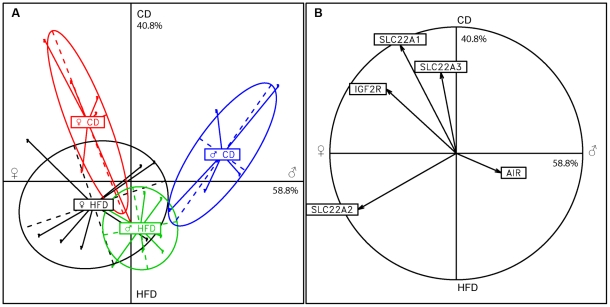
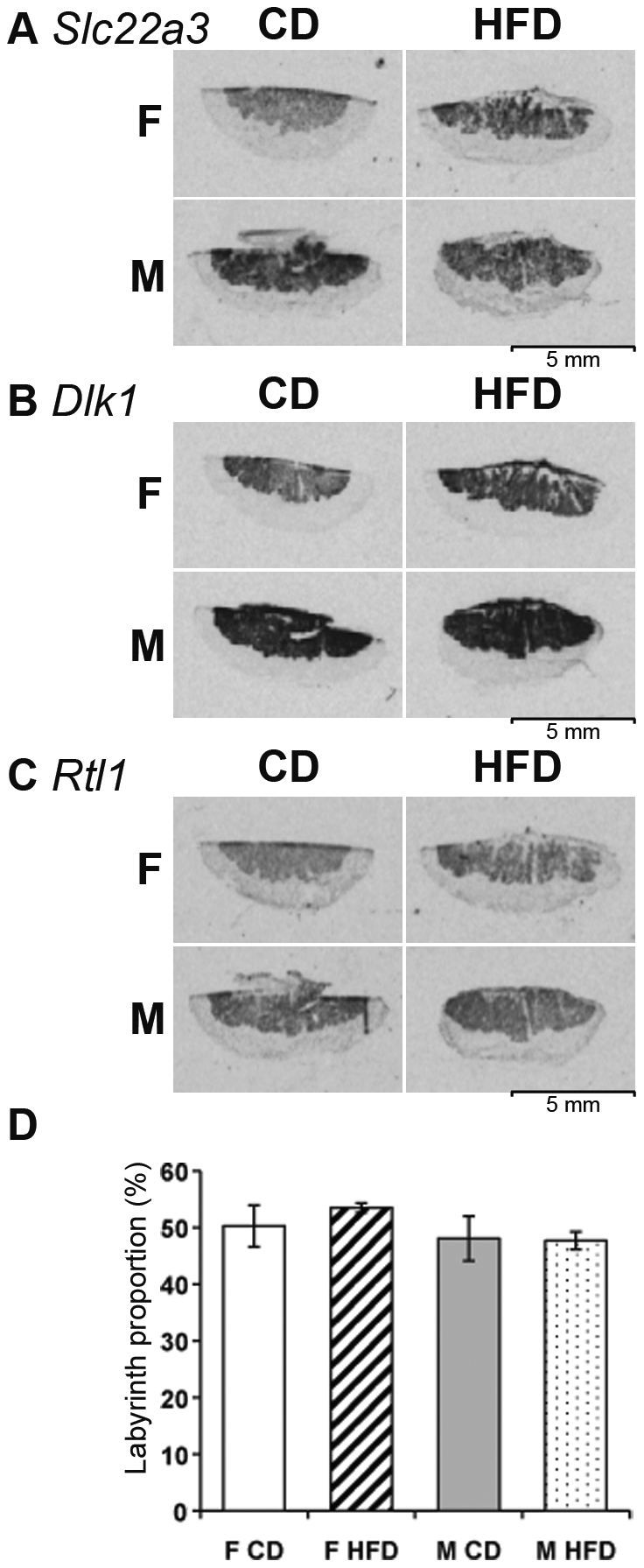
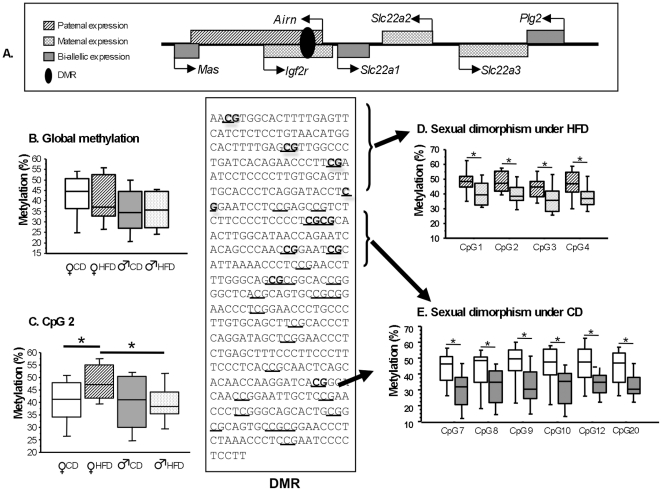
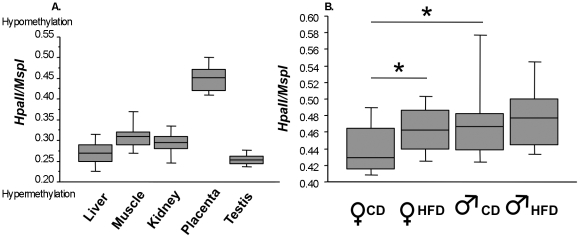
BACKGROUND: Changes in imprinted gene dosage in the placenta may compromise the prenatal control of nutritional resources. Indeed monoallelic behaviour and sensitivity to changes in regional epigenetic state render imprinted genes both vulnerable and adaptable. METHODS AND FINDINGS: We investigated whether a high-fat diet (HFD) during pregnancy modified the expression of imprinted genes and local and global DNA methylation patterns in the placenta. Pregnant mice were fed a HFD or a control diet (CD) during the first 15 days of gestation. We compared gene expression patterns in total placenta homogenates, for male and female offspring, by the RT-qPCR analysis of 20 imprinted genes. Sexual dimorphism and sensitivity to diet were observed for nine genes from four clusters on chromosomes 6, 7, 12 and 17. As assessed by in situ hybridization, these changes were not due to variation in the proportions of the placental layers. Bisulphite-sequencing analysis of 30 CpGs within the differentially methylated region (DMR) of the chromosome 17 cluster revealed sex- and diet-specific differential methylation of individual CpGs in two conspicuous subregions. Bioinformatic analysis suggested that these differentially methylated CpGs might lie within recognition elements or binding sites for transcription factors or factors involved in chromatin remodelling. Placental global DNA methylation, as assessed by the LUMA technique, was also sexually dimorphic on the CD, with lower methylation levels in male than in female placentae. The HFD led to global DNA hypomethylation only in female placenta. Bisulphite pyrosequencing showed that neither B1 nor LINE repetitive elements could account for these differences in DNA methylation. CONCLUSIONS: A HFD during gestation triggers sex-specific epigenetic alterations within CpG and throughout the genome, together with the deregulation of clusters of imprinted genes important in the control of many cellular, metabolic and physiological functions potentially involved in adaptation and/or evolution. These findings highlight the importance of studying both sexes in epidemiological protocols and dietary interventions.
Overview
The claims and statistics of this paper haven’t been checked yet.
Run the check — free, no account needed. It reads the open-access text and checks the sources it cites.
Integrity signals
Registry
Cites
Statistics
Figures
Verification
Claims the paper makes
The claims and statistics of this paper haven’t been checked yet.
Run the check — free, no account needed. It reads the open-access text and checks the sources it cites.
Claims other papers make about this one
Each is checked against this paper’s own text: does it say what the citing paper says it does?
The cited source says what the claim attributes to it.
In the citing paper
“Of note, Gallou-Kabani et al. showed that the global methylation pattern of the placenta was different between male and females, even though they were exposed to the same in utero environment [148].”
From Developmental programming of offspring adipose tissue biology and obesity risk (2021) · cites this paper as [148]
Self-check
Percentages, sums and reported differences re-computed from the paper’s own numbers.
The self-check needs the paper’s full text.
Citations
Cites
Eckel, R. H., Alberti, K., Grundy, S. M., & Zimmet, P. (2010) · The Lancet · doi:10.1016/s0140-6736(09)61794-3 · Cited by 6,317
Weber, M., Davies, J. J., Wittig, D., Oakeley, E. J., Haase, M., Lam, W. L., & Schübeler, D. (2005) · Nature Genetics · doi:10.1038/ng1598 · Cited by 1,785
The non-coding Air RNA is required for silencing autosomal imprinted genes
Sleutels, F., Zwart, R., & Barlow, D. P. (2002) · Nature · doi:10.1038/415810a · Cited by 1,096
Maternal Nutrition and Fetal Development
Bazer, F. W., Spencer, T. E., Wu, G., Cudd, T. A., & Meininger, C. J. (2004) · The Journal of Nutrition · doi:10.1093/jn/134.9.2169 · Cited by 1,019
Sex-Specific Programming of Offspring Emotionality after Stress Early in Pregnancy
Mueller, B. R., & Bale, T. L. (2008) · The Journal of Neuroscience · doi:10.1523/jneurosci.1424-08.2008 · Cited by 988
Samuelsson, A.-M., Matthews, P. A., Argenton, M., Christie, M. R., McConnell, J. M., Jansen, E. H. J. M., Piersma, A. H., Ozanne, S. E., Twinn, D. F., Remacle, C., et al. (2008) · Hypertension · doi:10.1161/hypertensionaha.107.101477 · Cited by 923
Self-citationReview: Sex and the human placenta: Mediating differential strategies of fetal growth and survival
Clifton, V. L. (2010) · Placenta · doi:10.1016/j.placenta.2009.11.010 · Cited by 868
Kwong, W. Y., Wild, A. E., Roberts, P., Willis, A. C., & Fleming, T. P. (2000) · Development · doi:10.1242/dev.127.19.4195 · Cited by 798
Gene Body-Specific Methylation on the Active X Chromosome
Hellman, A., & Chess, A. J. (2007) · Science · doi:10.1126/science.1136352 · Cited by 757
Ten Putative Contributors to the Obesity Epidemic
McAllister, E. J., Dhurandhar, N. V., Keith, S. W., Aronne, L. J., Barger, J., Baskin, M., Benca, R. M., Biggio, J., Boggiano, M. M., Eisenmann, J. C., et al. (2009) · Critical Reviews in Food Science and Nutrition · doi:10.1080/10408390903372599 · Cited by 710
Cited by
Sorted by citations
Epigenetics and the environment: emerging patterns and implications
Feil, R., & Fraga, M. F. (2012) · Nature Reviews Genetics · doi:10.1038/nrg3142 · Cited by 1,929
Sex-Specific Placental Responses in Fetal Development
Rosenfeld, C. S. (2015) · Endocrinology · doi:10.1210/en.2015-1227 · Cited by 485
Gabory, A., Roseboom, T. J., Moore, T., Moore, L. G., & Junien, C. (2013) · Biology of Sex Differences · doi:10.1186/2042-6410-4-5 · Cited by 344
Self-citationSex differences in developmental programming models.
Aiken, C., & Ozanne, S. (2013) · Reproduction · doi:10.1530/rep-11-0489 · Cited by 336
Bisphenol A Exposure Disrupts Genomic Imprinting in the Mouse
Susiarjo, M., Sasson, I. E., Mesaros, C., & Bartolomei, M. S. (2013) · PLoS Genetics · doi:10.1371/journal.pgen.1003401 · Cited by 304
The Placenta as a Mediator of Stress Effects on Neurodevelopmental Reprogramming
Bronson, S. L., & Bale, T. L. (2015) · Neuropsychopharmacology · doi:10.1038/npp.2015.231 · Cited by 303
Rosenfeld, C. S. (2021) · Journal of Neuroscience Research · doi:10.1002/jnr.24603 · Cited by 280
Tarrade, A., Panchenko, P., Junien, C., & Gabory, A. (2015) · Journal of Experimental Biology · doi:10.1242/jeb.110320 · Cited by 251
Self-citationThe omniscient placenta: Metabolic and epigenetic regulation of fetal programming
Nugent, B. M., & Bale, T. L. (2015) · Frontiers in Neuroendocrinology · doi:10.1016/j.yfrne.2015.09.001 · Cited by 222
Microbiome disturbances and autism spectrum disorders
Rosenfeld, C. S. (2015) · Drug Metabolism and Disposition · doi:10.1124/dmd.115.063826 · Cited by 229
Sandovici, I., Hoelle, K., Angiolini, E., & Constância, M. (2012) · Reproductive BioMedicine Online · doi:10.1016/j.rbmo.2012.03.017 · Cited by 224
The Programming Power of the Placenta
Sferruzzi-Perri, A. N., & Camm, E. J. (2016) · Frontiers in Physiology · doi:10.3389/fphys.2016.00033 · Cited by 223
Animal models of in utero exposure to a high fat diet: A review
Williams, L., Seki, Y., Vuguin, P. M., & Charron, M. J. (2013) · Biochimica et Biophysica Acta (BBA) - Molecular Basis of Disease · doi:10.1016/j.bbadis.2013.07.006 · Cited by 234
Barboza Solís, C., Kelly-Irving, M., Fantin, R., Darnaudéry, M., Torrisani, J., Lang, T., & Delpierre, C. (2015) · Proceedings of the National Academy of Sciences · doi:10.1073/pnas.1417325112 · Cited by 157
Gabory, A., Ferry, L., Fajardy, I., Jouneau, L., Gothié, J.-D., Vigé, A., Fleur, C., Mayeur, S., Gallou-Kabani, C., Gross, M.-S., et al. (2012) · PLoS ONE · doi:10.1371/journal.pone.0047986 · Cited by 204
Self-citationBraun, T., Challis, J. R., Newnham, J. P., & Sloboda, D. M. (2013) · Endocrine Reviews · doi:10.1210/er.2013-1012 · Cited by 196
Hemochorial placentation: development, function, and adaptations†
Soares, M. J., Varberg, K. M., & Iqbal, K. (2018) · Biology of Reproduction · doi:10.1093/biolre/ioy049 · Cited by 207
Placental phenotype and the insulin‐like growth factors: resource allocation to fetal growth
Sferruzzi-Perri, A. N., Sandovici, I., Constância, M., & Fowden, A. L. (2017) · The Journal of Physiology · doi:10.1113/jp273330 · Cited by 185
Ge, Z., Luo, S., Lin, F., Liang, Q., Huang, L., Wei, Y., Hou, Y., Han, Z., Schatten, H., & Sun, Q. (2013) · Environmental Health Perspectives · doi:10.1289/ehp.1307047 · Cited by 170
Perinatal and Early-Life Nutrition, Epigenetics, and Allergy
Acevedo, N., Alhamwe, B. A., Caraballo, L. R., Ding, M., Ferrante, A., Garn, H., Garssen, J., Hii, C. S. T., Irvine, J., Llinás-Caballero, K., et al. (2021) · Nutrients · doi:10.3390/nu13030724 · Cited by 183
Purcell, R. H., Sun, B., Pass, L. L., Power, M. L., Moran, T. H., & Tamashiro, K. L. (2011) · Physiology & Behavior · doi:10.1016/j.physbeh.2011.05.012 · Cited by 158
Crudo, A., Petropoulos, S., Moisiadis, V. G., Iqbal, M., Kostaki, A., Machnes, Z., Szyf, M., & Matthews, S. G. (2012) · Endocrinology · doi:10.1210/en.2011-2160 · Cited by 156
Placental H3K27me3 establishes female resilience to prenatal insults
Nugent, B. M., O’Donnell, C. M., Epperson, C. N., & Bale, T. L. (2018) · Nature Communications · doi:10.1038/s41467-018-04992-1 · Cited by 153
Chango, A., & Pogribny, I. (2015) · Nutrients · doi:10.3390/nu7042748 · Cited by 144
Safi-Stibler, S., & Gabory, A. (2020) · Seminars in Cell and Developmental Biology · doi:10.1016/j.semcdb.2019.09.008 · Cited by 127
Self-citationAnderson, O. S., Nahar, M. S., Faulk, C., Jones, T. R., Liao, C., Kannan, K., Weinhouse, C., Rozek, L. S., & Dolinoy, D. C. (2012) · Environmental and Molecular Mutagenesis · doi:10.1002/em.21692 · Cited by 140
Ribaroff, G., Wastnedge, E., Drake, A. J., Sharpe, R. M., & Chambers, T. J. G. (2017) · Obesity Reviews · doi:10.1111/obr.12524 · Cited by 135
The Human Placental Sexome Differs between Trophoblast Epithelium and Villous Vessel Endothelium
Cvitic, S., Longtine, M. S., Hackl, H., Wagner, K., Nelson, M. D., Desoye, G., & Hiden, U. (2013) · PLoS ONE · doi:10.1371/journal.pone.0079233 · Cited by 127
Dynamics of epigenetic phenomena: intergenerational and intragenerational phenotype ‘washout’
Burggren, W. W. (2015) · Journal of Experimental Biology · doi:10.1242/jeb.107318 · Cited by 127
Lifestyle, Pregnancy and Epigenetic Effects
Barua, S., & Junaid, M. A. (2015) · Epigenomics · doi:10.2217/epi.14.71 · Cited by 129
Januar, V., Desoyé, G., Novakovic, B., Cvitic, S., & Saffery, R. (2015) · American Journal of Obstetrics and Gynecology · doi:10.1016/j.ajog.2015.07.011 · Cited by 127
Nutritional manipulations in the perinatal period program adipose tissue in offspring
Lukaszewski, M., Eberlé, D., Vieau, D., & Breton, C. (2013) · American Journal of Physiology-Endocrinology and Metabolism · doi:10.1152/ajpendo.00231.2013 · Cited by 128
Self-citationLan, X., Cretney, E. C., Schmidt, J. K., Khateeb, K., Berg, M. A., Peñagaricano, F., Magness, R. R., Radunz, A. E., & Khatib, H. (2013) · Frontiers in Genetics · doi:10.3389/fgene.2013.00049 · Cited by 122
Burdge, G. C., & Lillycrop, K. A. (2013) · Current Opinion in Clinical Nutrition & Metabolic Care · doi:10.1097/mco.0000000000000023 · Cited by 123
Faulk, C. D., Barks, A. K., Liu, K., Goodrich, J. M., & Dolinoy, D. C. (2013) · Epigenomics · doi:10.2217/epi.13.49 · Cited by 114
Shallie, P. D., & Naicker, T. (2019) · International Journal of Developmental Neuroscience · doi:10.1016/j.ijdevneu.2019.01.003 · Cited by 116
Heerwagen, M. J. R., Stewart, M. S., de la Houssaye, B. A., Janssen, R. C., & Friedman, J. E. (2013) · PLoS ONE · doi:10.1371/journal.pone.0067791 · Cited by 116
Ghosh, J., Coutifaris, C., Sapienza, C., & Mainigi, M. A. (2017) · Clinical Epigenetics · doi:10.1186/s13148-017-0318-6 · Cited by 111
From Maternal Diet to Neurodevelopmental Disorders: A Story of Neuroinflammation
Bordeleau, M., de Cossío, L. F., Chakravarty, M. M., & Tremblay, M. (2021) · Frontiers in Cellular Neuroscience · doi:10.3389/fncel.2020.612705 · Cited by 110
Dahlhoff, M., Pfister, S., Blutke, A., Rozman, J., Klingenspor, M., Deutsch, M. J., Rathkolb, B., Fink, B., Gimpfl, M., de Angelis, M. H., et al. (2013) · Biochimica et Biophysica Acta (BBA) - Molecular Basis of Disease · doi:10.1016/j.bbadis.2013.11.021 · Cited by 103
Togher, K. L., Togher, K. L., O'Keeffe, M. M., O'Keeffe, M. M., Khashan, A. S., Khashan, A. S., Gutiérrez, H., Gutiérrez, H., Kenny, L. C., Kenny, L. C., et al. (2014) · Epigenetics · doi:10.4161/epi.28703 · Cited by 105
Placental adaptations supporting fetal growth during normal and adverse gestational environments
Sferruzzi-Perri, A. N., López‐Tello, J., & Salazar‐Petres, E. (2022) · Experimental Physiology · doi:10.1113/ep090442 · Cited by 105
What obesity research tells us about epigenetic mechanisms
Youngson, N. A., & Morris, M. J. (2012) · Philosophical Transactions of the Royal Society B Biological Sciences · doi:10.1098/rstb.2011.0337 · Cited by 97
Wankhade, U. D., Zhong, Y., Kang, P., Alfaro, M., Chintapalli, S. V., Piccolo, B. D., Mercer, K. E., Andres, A., Thakali, K. M., & Shankar, K. (2018) · Scientific Reports · doi:10.1038/s41598-018-34453-0 · Cited by 100
Review: Placenta, evolution and lifelong health
Lewis, R. M., Cleal, J. K., & Hanson, M. A. (2011) · Placenta · doi:10.1016/j.placenta.2011.12.003 · Cited by 91
Depot- and sex-specific effects of maternal obesity in offspring’s adipose tissue
Lecoutre, S., Deracinois, B., Laborie, C., Eberlé, D., Guinez, C., Panchenko, P. E., Lésage, J., Vieau, D., Junien, C., Gabory, A., et al. (2016) · Journal of Endocrinology · doi:10.1530/joe-16-0037 · Cited by 93
Self-citationZheng, J., Xiao, X., Zhang, Q., & Yu, M. (2014) · British Journal Of Nutrition · doi:10.1017/s0007114514002827 · Cited by 92
Intrauterine calorie restriction affects placental DNA methylation and gene expression
Chen, P., Ganguly, A., Rubbi, L., Orozco, L. D., Morselli, M., Ashraf, D. C., Jaroszewicz, A., Feng, S., Jacobsen, S. E., Nakano, A., et al. (2013) · Physiological Genomics · doi:10.1152/physiolgenomics.00034.2013 · Cited by 91
Sexually dimorphic characteristics of the small intestine and colon of prepubescent C57BL/6 mice
Steegenga, W. T., Mischke, M., Lute, C., Boekschoten, M. V., Pruis, M. G. M., Lendvai, Á., Verkade, H. J., Boekhorst, J., Timmerman, H. M., Plösch, T., et al. (2014) · Biology of Sex Differences · doi:10.1186/s13293-014-0011-9 · Cited by 90
Folic Acid Transport to the Human Fetus Is Decreased in Pregnancies with Chronic Alcohol Exposure
Hutson, J. R., Stade, B. C., Lehotay, D. C., Collier, C. P., & Kapur, B. M. (2012) · PLoS ONE · doi:10.1371/journal.pone.0038057 · Cited by 86
The Emerging Role of Biomarkers in the Diagnosis of Gestational Diabetes Mellitus
Rodrigo, N., & Glastras, S. J. (2018) · Journal of Clinical Medicine · doi:10.3390/jcm7060120 · Cited by 90
Sex differences in the associations of placental epigenetic aging with fetal growth
Ayele, F. T., Workalemahu, T., Gorfu, G., Shrestha, D., Tycko, B., Wapner, R. J., Zhang, C., & Louis, G. M. B. (2019) · Aging · doi:10.18632/aging.102124 · Cited by 85
Langie, S. A. S., Achterfeldt, S., Gorniak, J. P., Halley-Hogg, K. J. A., Oxley, D., Schooten, F.-J., Godschalk, R., McKay, J., & Mathers, J. C. (2013) · The FASEB Journal · doi:10.1096/fj.12-224121 · Cited by 81
Epigenetic regulation in obesity
Lavebratt, C., Almgren, M., & Ekström, T. J. (2011) · International Journal of Obesity · doi:10.1038/ijo.2011.178 · Cited by 83
Self-citationBruce-Keller, A. J., Fernandez-Kim, S.-O., Townsend, R. L., Kruger, C., Carmouche, R., Newman, S., Salbaum, J. M., & Berthoud, H.-R. (2017) · PLoS ONE · doi:10.1371/journal.pone.0175577 · Cited by 76
Sex differences in rat placental development: from pre-implantation to late gestation
Kalisch-Smith, J. I., Simmons, D. G., Pantaleon, M., & Moritz, K. M. (2017) · Biology of Sex Differences · doi:10.1186/s13293-017-0138-6 · Cited by 76
Barua, S., Kuizon, S., Chadman, K. K., Flory, M. J., Brown, W. T., & Junaid, M. A. (2014) · Epigenetics & Chromatin · doi:10.1186/1756-8935-7-3 · Cited by 73
Epigenetics of pregnancy: looking beyond the DNA code
Zuccarello, D., Sorrentino, U., Brasson, V., Marin, L., Piccolo, C., Capalbo, A., Andrisani, A., & Cassina, M. (2022) · Journal of Assisted Reproduction and Genetics · doi:10.1007/s10815-022-02451-x · Cited by 83
DNA Methylation: An Epigenetic Risk Factor in Preterm Birth
Menon, R., Conneely, K. N., & Smith, A. K. (2012) · Reproductive Sciences · doi:10.1177/1933719111424446 · Cited by 69
Attig, L., Vigé, A., Gabory, A., Karimi, M., Beauger, A. A., Gross, M., Athias, A., Gallou‐Kabani, C., Gambert, P., Ekström, T. J., et al. (2013) · PLoS ONE · doi:10.1371/journal.pone.0066816 · Cited by 73
Self-citationEarly sex-dependent differences in response to environmental stress
Pérez‐Cerezales, S., Ramos‐Ibeas, P., Rizos, D. V., Lonergan, P., Bermejo‐Álvarez, P., & Gutiérrez‐Adán, A. (2017) · Reproduction · doi:10.1530/rep-17-0466 · Cited by 65
Saoi, M., Kennedy, K. M., Gohir, W., Sloboda, D. M., & Britz‐McKibbin, P. (2020) · Scientific Reports · doi:10.1038/s41598-020-66222-3 · Cited by 65
Maternal nutritional manipulations program adipose tissue dysfunction in offspring
Lecoutre, S., & Breton, C. (2015) · Frontiers in Physiology · doi:10.3389/fphys.2015.00158 · Cited by 70
Self-citationGe, Z., Liang, Q., Hou, Y., Han, Z., Schatten, H., Sun, Q., & Zhang, C. (2014) · Reproductive Biology and Endocrinology · doi:10.1186/1477-7827-12-29 · Cited by 64
Silver nanoparticles cause complications in pregnant mice
Gurunathan, S., Zhang, X., Park, J. H., Choi, Y., Kang, M.-H., & Kim, J. (2015) · International Journal of Nanomedicine · doi:10.2147/ijn.s95694 · Cited by 63
Inferring Past Environments from Ancient Epigenomes
Gokhman, D., Malul, A., & Carmel, L. (2017) · Molecular Biology and Evolution · doi:10.1093/molbev/msx211 · Cited by 59
Unravelling the role of epigenetics in reproductive adaptations to early-life environment
Bar-Sadeh, B., Rudnizky, S., Pnueli, L., Bentley, G. R., Stöger, R. J., Kaplan, A., & Melamed, P. (2020) · Nature Reviews Endocrinology · doi:10.1038/s41574-020-0370-8 · Cited by 61
Tellechea, M., Mensegue, M. F., & Pirola, C. (2017) · Scientific Reports · doi:10.1038/s41598-017-05344-7 · Cited by 45
Developmental programming of offspring adipose tissue biology and obesity risk
Rodgers, A., & Sferruzzi-Perri, A. N. (2021) · International Journal of Obesity · doi:10.1038/s41366-021-00790-w · Cited by 57
Cumulative lifetime maternal stress and epigenome-wide placental DNA methylation in the PRISM cohort
Brunst, K. J., Tignor, N. L., Just, A. C., Liu, Z., Lin, X., Hacker, M. R., Enlow, M. B., Wright, R. O., Wang, P., Baccarelli, A., et al. (2018) · Epigenetics · doi:10.1080/15592294.2018.1497387 · Cited by 57
Faulk, C. D., Kim, J. H., Anderson, O. S., Nahar, M. S., Jones, T. R., Sartor, M. A., & Dolinoy, D. C. (2016) · Epigenetics · doi:10.1080/15592294.2016.1183856 · Cited by 57
Preterm Birth and Its Long-Term Effects: Methylation to Mechanisms
Parets, S. E., Bedient, C. E., Menon, R., & Smith, A. K. (2014) · Biology · doi:10.3390/biology3030498 · Cited by 57
Environmental regulation of placental phenotype: implications for fetal growth
Vaughan, O. R., Sferruzzi-Perri, A. N., Coan, P. M., & Fowden, A. L. (2011) · Reproduction Fertility and Development · doi:10.1071/rd11909 · Cited by 56
Kumar, D., & Thakur, M. K. (2017) · The Journal of Toxicological Sciences · doi:10.2131/jts.42.281 · Cited by 58
Models of Intrauterine growth restriction and fetal programming in rabbits
López‐Tello, J., Arias‐Álvarez, M., Gonzalez‐Bulnes, A., & Sferruzzi-Perri, A. N. (2019) · Molecular Reproduction and Development · doi:10.1002/mrd.23271 · Cited by 54
Sexual dimorphism in the fetal cardiac response to maternal nutrient restriction
Muralimanoharan, S., Li, C., Nakayasu, E. S., Casey, C., Metz, T., Nathanielsz, P. W., & Maloyan, A. (2017) · Journal of Molecular and Cellular Cardiology · doi:10.1016/j.yjmcc.2017.06.006 · Cited by 51
Batistel, F., Alharthi, A. S., Yambao, R. R. C. S., Elolimy, A. A., Pan, Y., Parys, C., & Loor, J. J. (2018) · Journal of Nutrition · doi:10.1093/jn/nxy240 · Cited by 52
Daily Variation in Global and Local DNA Methylation in Mouse Livers
Xia, L., Ma, S., Zhang, Y., Wang, T., Zhou, M., Wang, Z., & Zhang, J. (2015) · PLoS ONE · doi:10.1371/journal.pone.0118101 · Cited by 49
Rosenfeld, C. (2012) · Reproduction in Domestic Animals · doi:10.1111/j.1439-0531.2012.02051.x · Cited by 50
Examining Sex Differences in the Human Placental Transcriptome During the First Fetal Androgen Peak
Braun, A. E., Muench, K. L., Robinson, B. G., Wang, A., Palmer, T. D., & Winn, V. D. (2020) · Reproductive Sciences · doi:10.1007/s43032-020-00355-8 · Cited by 55
Perinatal taurine exposure affects adult arterial pressure control
Roysommuti, S., & Wyss, J. M. (2012) · Amino Acids · doi:10.1007/s00726-012-1417-5 · Cited by 47
Addo, K., Bulka, C. M., Dhingra, R., Junior, H. P. D. O. S., Smeester, L., O’Shea, T. M., & Fry, R. C. (2019) · Current Zoology · doi:10.1093/eep/dvz010 · Cited by 48
Óvilo, C., Gonzalez‐Bulnes, A., Benítez, R., Ayuso, M., Barbero-Fernández, A., Pérez-Solana, M. L., Barragán, C., Astiz, S., Fernández, A., & López-Bote, C. J. (2013) · British Journal Of Nutrition · doi:10.1017/s0007114513002948 · Cited by 45
Transgenerational Epigenetic Mechanisms in Adipose Tissue Development
Lecoutre, S., Petrus, P., Rydén, M., & Breton, C. (2018) · Trends in Endocrinology and Metabolism · doi:10.1016/j.tem.2018.07.004 · Cited by 48
Self-citationEaton, M., Davies, A., Devine, J., Zhao, X., Simmons, D. G., Maríusdóttir, E., Natale, D. R. C., Matyas, J. R., Bering, E. A., Workentine, M. L., et al. (2020) · PLoS ONE · doi:10.1371/journal.pone.0226735 · Cited by 44
Current views in chronic obstructive pulmonary disease pathogenesis and management
Alfahad, A. J., Alzaydi, M. M., Aldossary, A. M., Alshehri, A. A., Almughem, F. A., Zaidan, N. M., & Tawfik, E. A. (2021) · Saudi Pharmaceutical Journal · doi:10.1016/j.jsps.2021.10.008 · Cited by 51
Barua, S., Kuizon, S., Brown, W. T., & Junaid, M. A. (2015) · Journal of Molecular Neuroscience · doi:10.1007/s12031-015-0673-8 · Cited by 43
King, V. M., Hibbert, N., Seckl, J. R., Norman, J. E., & Drake, A. J. (2013) · Placenta · doi:10.1016/j.placenta.2013.09.006 · Cited by 42
Epigenetics and a New Look on Metabolic Syndrome
Kuneš, J., Vaněčková, I., Mikulášková, B., Behuliak, M., Maletı́nská, L., & Zicha, J. (2015) · Physiological Research · doi:10.33549/physiolres.933174 · Cited by 40
Namous, H., Peñagaricano, F., Corvo, M. D., Capra, E., Thomas, D. L., Stella, A., Williams, J. L., Ajmone‐Marsan, P., & Khatib, H. (2018) · BMC Genomics · doi:10.1186/s12864-018-4509-0 · Cited by 39
Developmental origin and sex-specific risk for infections and immune diseases later in life
Zazara, D. E., & Arck, P. (2018) · Seminars in Immunopathology · doi:10.1007/s00281-018-0713-x · Cited by 40
Periconceptional influences on offspring sex ratio and placental responses
Rosenfeld, C. S. (2011) · Reproduction Fertility and Development · doi:10.1071/rd11906 · Cited by 37
Lucas, E. S. (2013) · Reproductive BioMedicine Online · doi:10.1016/j.rbmo.2013.06.003 · Cited by 37
Jiang, Y., Zhang, H., Sun, T., Wang, J., Sun, W., Gong, H., BinBin, Y., Shi, Y., & Wei, J. (2012) · Acta Biochimica et Biophysica Sinica · doi:10.1093/abbs/gms075 · Cited by 36
Singh, G., Singh, V., & Schneider, J. S. (2018) · Biochimica et Biophysica Acta (BBA) - Molecular Basis of Disease · doi:10.1016/j.bbadis.2018.10.016 · Cited by 38
Effects of Prenatal Nutrition and the Role of the Placenta in Health and Disease
Myatt, L., & Thornburg, K. L. R. (2018) · Methods in molecular biology · doi:10.1007/978-1-4939-7614-0_2 · Cited by 36
Kochmanski, J. J., Marchlewicz, E. H., Cavalcante, R. G., Perera, B. P. U., Sartor, M. A., & Dolinoy, D. C. (2018) · Environmental Health Perspectives · doi:10.1289/ehp3441 · Cited by 34
Maternal oxycodone treatment causes pathophysiological changes in the mouse placenta
Green, M. T., Martin, R. E., Kinkade, J. A., Schmidt, R., Bivens, N. J., Tuteja, G., Mao, J., & Rosenfeld, C. S. (2020) · Placenta · doi:10.1016/j.placenta.2020.08.006 · Cited by 34
Effects of Maternal Obesity On Placental Phenotype
Fowden, A. L., Camm, E. J., & Sferruzzi-Perri, A. N. (2020) · Current Vascular Pharmacology · doi:10.2174/1570161118666200513115316 · Cited by 37
The cellularity of offspring's adipose tissue is programmed by maternal nutritional manipulations
Lecoutre, S., & Breton, C. (2014) · Adipocyte · doi:10.4161/adip.29806 · Cited by 31
Self-citation
Metadata
- Authors
- Gallou-Kabani, C., Gabory, A., Tost, J., Karimi, M., Mayeur, S., Lesage, J., Boudadi, E., Gross, M.-S., Taurelle, J., Vigé, A., Breton, C., Reusens, B., Remacle, C., Vieau, D., Ekström, T. J., Jais, J.-P., & Junien, C.
- Affiliations
- Hôpital Necker-Enfants Malades (FR)
- Commissariat à l'Énergie Atomique et aux Énergies Alternatives (FR)
- Karolinska Institutet (SE)
- Université de Lille (FR)
- UCLouvain (BE)
- Corresponding author
- Junien, Claudine
- ORCID
- Venue
- PLoS ONE
- Publisher
- Public Library of Science (PLoS)
- Published
- 2010-12-21
- Volume
- 5
- Issue
- 12
- Pages
- e14398
- ISSN
- 1932-6203 (ISSN-L)
- PMC
- PMC3006175
- OpenAlex
- W2157038986
- Cited by
- 229
- References
- 124
- Citations by year
- 2026: 1 · 2025: 9 · 2024: 5 · 2023: 5 · 2022: 10 · 2021: 11 · 2020: 16 · 2019: 13 · 2018: 27 · 2017: 22 · 2016: 14 · 2015: 24 · 2014: 12 · 2013: 31 · 2012: 23
- FWCI
- 10.80
- Type
- journal article
- Language
- en
- Open access
- gold
- doi.org
- Locations
- PLoS ONE (publishedVersion, cc-by)
- PubMed Central (publishedVersion, cc-by)
- PubMed (publishedVersion)
- HAL (submittedVersion, other-oa)
- Digital Access to Libraries (submittedVersion, other-oa)
- DOAJ (DOAJ: Directory of Open Access Journals) (submittedVersion, cc-by-sa)
- Funders
- Agence Nationale de la Recherche (ANR-06-PNRA-0022)
- Institut National de la Santé et de la Recherche Médicale
- Cancerfonden
- Institut National de la Recherche Agronomique
- Topics
- Life Sciences › Biochemistry, Genetics and Molecular Biology › Genetics › Genetic Syndromes and Imprinting
- Health Sciences › Medicine › Pediatrics, Perinatology and Child Health › Birth, Development, and Health
- Life Sciences › Biochemistry, Genetics and Molecular Biology › Molecular Biology › Epigenetics and DNA Methylation
- Keywords
- genomic imprinting, imprinted gene expression, placenta, high-fat diet, maternal diet, sex differences, DNA methylation, differentially methylated regions, global DNA hypomethylation, monoallelic expression, epigenetic inheritance
- MeSH terms
- Alleles, Animals, Animal Feed, Dietary Fats, Female, Gene Expression Regulation, Male, Placenta, Pregnancy, Pregnancy, Animal, Sex Factors, Genomic Imprinting, Gene Dosage, DNA Methylation, Epigenesis, Genetic, Mice
About these checks
Registry, retraction, Cites and statistics results are computed, not judged, with one exception: a printed reference that no index lists is read once by a model before it counts as a citation error. Claims are extracted by a model and kept only when their quote appears verbatim in the text; each cited source is then checked, with a model’s help, for whether it says what the claim relies on. Those verdicts can be wrong — read the claim’s quote and the cited source before relying on one.
Statistics and arithmetic are recomputed, not judged.
Confidence bands are shown only for fields calibrated on our annotated test set. None is calibrated yet, so no band is shown.
What counts as a claim ›How we measure confidence ›How we check this ›
Are you an author, or do you see a problem with this page? Request a review
