

Disordered Microbial Communities in the Upper Respiratory Tract of Cigarette Smokers
Open accessThe DOI matches its Crossref record; 52 of the 52 references it cites were found in a registry or an index.
Abstract
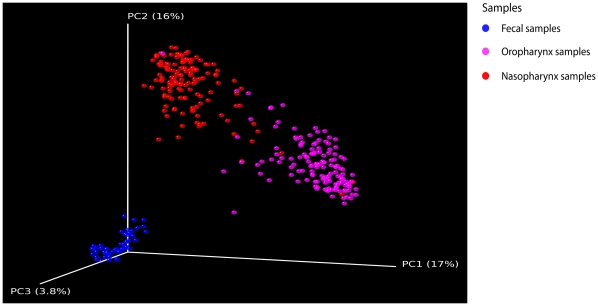
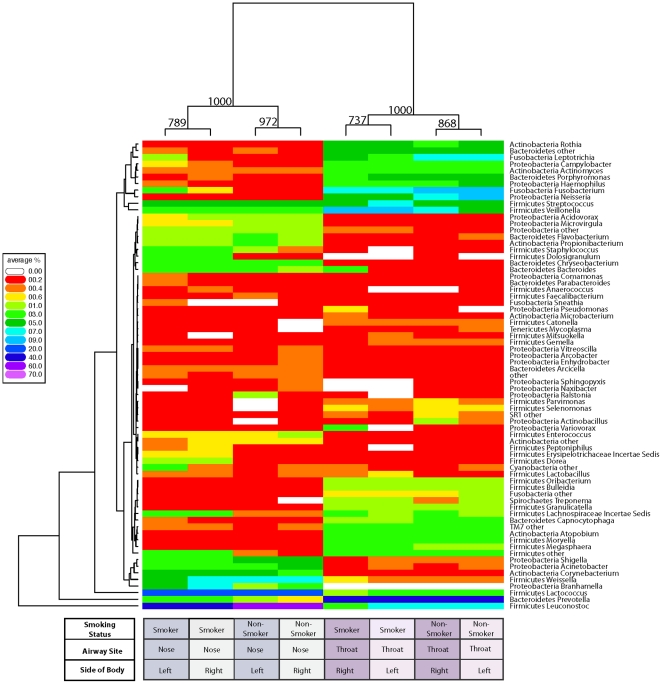
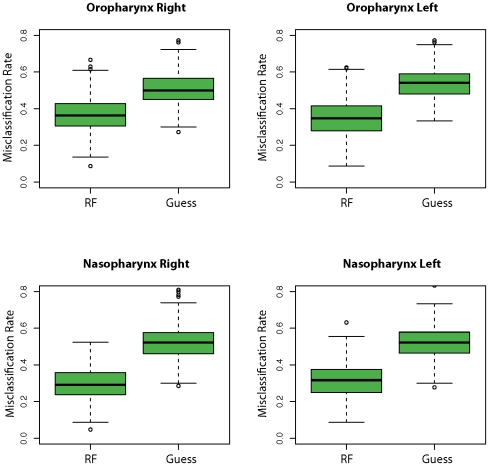
Cigarette smokers have an increased risk of infectious diseases involving the respiratory tract. Some effects of smoking on specific respiratory tract bacteria have been described, but the consequences for global airway microbial community composition have not been determined. Here, we used culture-independent high-density sequencing to analyze the microbiota from the right and left nasopharynx and oropharynx of 29 smoking and 33 nonsmoking healthy asymptomatic adults to assess microbial composition and effects of cigarette smoking. Bacterial communities were profiled using 454 pyrosequencing of 16S sequence tags (803,391 total reads), aligned to 16S rRNA databases, and communities compared using the UniFrac distance metric. A Random Forest machine-learning algorithm was used to predict smoking status and identify taxa that best distinguished between smokers and nonsmokers. Community composition was primarily determined by airway site, with individuals exhibiting minimal side-of-body or temporal variation. Within airway habitats, microbiota from smokers were significantly more diverse than nonsmokers and clustered separately. The distributions of several genera were systematically altered by smoking in both the oro- and nasopharynx, and there was an enrichment of anaerobic lineages associated with periodontal disease in the oropharynx. These results indicate that distinct regions of the human upper respiratory tract contain characteristic microbial communities that exhibit disordered patterns in cigarette smokers, both in individual components and global structure, which may contribute to the prevalence of respiratory tract complications in this population.
Overview
The claims and statistics of this paper haven’t been checked yet.
Free: it reads the open-access text and checks the first 5 claims that cite a source we can check. Create a free account to check every claim.
Integrity signals
Registry
Cites
Statistics
Figures
Verification
Claims the paper makes
The claims and statistics of this paper haven’t been checked yet.
Free: it reads the open-access text and checks the first 5 claims that cite a source we can check. Create a free account to check every claim.
Claims other papers make about this one
Each is checked against this paper’s own text: does it say what the citing paper says it does?
The source backs part of the claim, not all of it — or backs it for a different population, condition or comparison.
In the citing paper
“The oropharynx, which is lined with a non-keratinized stratified squamous epithelium, has more diverse bacterial communities than the nasopharynx41, which are characterized by streptococcal species, Neisseria spp., Rothia spp. and anaerobes, including Veillonella spp., Prevotella spp. and Leptotrichia spp.39,41,51,52.”
From The microbiota of the respiratory tract: gatekeeper to respiratory health (2017) · cites this paper as [41]
Experimental — accuracy not yet measuredThe cited source says what the claim attributes to it.
In the citing paper
“Active smoking also affects the microbial communities in the URT37,41; however, in the LRT, smoking has no clear influence on the composition of the microbiota42.”
From The microbiota of the respiratory tract: gatekeeper to respiratory health (2017) · cites this paper as [41]
Self-check
Percentages, sums and reported differences re-computed from the paper’s own numbers.
The self-check needs the paper’s full text.
Citations
Cites
QIIME allows analysis of high-throughput community sequencing data
Caporaso, J. G., Kuczynski, J., Stombaugh, J., Bittinger, K., Bushman, F. D., Costello, E. K., Fierer, N., Peña, A. G., Goodrich, J. K., Gordon, J. I., et al. (2010) · Nature Methods · doi:10.1038/nmeth.f.303 · Cited by 34,887 · cited 1×
“Denoised sequences were analyzed using the Qiime pipeline [24], in which sequences were clustered at 97% sequence identity into operational taxonomic units (OTUs, also called phylotypes) and assigned a taxonomic identity by alignment to the RDP reference 16S rRNA database [25].”
MethodSelf-citationSearch and clustering orders of magnitude faster than BLAST
Edgar, R. C. (2010) · Bioinformatics · doi:10.1093/bioinformatics/btq461 · Cited by 20,826
Naïve Bayesian Classifier for Rapid Assignment of rRNA Sequences into the New Bacterial Taxonomy
Wang, Q., Garrity, G. M., Tiedje, J. M., & Cole, J. R. (2007) · Applied and Environmental Microbiology · doi:10.1128/aem.00062-07 · Cited by 19,885 · cited 2×
“Denoised sequences were analyzed using the Qiime pipeline [24], in which sequences were clustered at 97% sequence identity into operational taxonomic units (OTUs, also called phylotypes) and assigned a taxonomic identity by alignment to the RDP reference 16S rRNA database [25].”
MethodFastTree 2 – Approximately Maximum-Likelihood Trees for Large Alignments
Price, M. N., Dehal, P. S., & Arkin, A. P. (2010) · PLoS ONE · doi:10.1371/journal.pone.0009490 · Cited by 14,894
UniFrac: a New Phylogenetic Method for Comparing Microbial Communities
Lozupone, C., & Knight, R. (2005) · Applied and Environmental Microbiology · doi:10.1128/aem.71.12.8228-8235.2005 · Cited by 8,227 · cited 3×
“QIIME generates data summaries of the proportions of identified taxa in each community and calculates the amount of bacterial diversity shared between two communities using the UniFrac metric [26].”
MethodA core gut microbiome in obese and lean twins
Turnbaugh, P. J., Hamady, M., Yatsunenko, T., Cantarel, B. L., Duncan, A., Ley, R. E., Sogin, M. L., Jones, W. J., Roe, B. A., Affourtit, J. P., et al. (2009) · Nature · doi:10.1038/nature07540 · Cited by 7,823
PyNAST: a flexible tool for aligning sequences to a template alignment
Caporaso, J. G., Bittinger, K., Bushman, F. D., DeSantis, T. Z., Andersen, G. L., & Knight, R. (2010) · Bioinformatics · doi:10.1093/bioinformatics/btp636 · Cited by 3,396 · cited 1×
“, aligned to full length 16S rRNA sequences with PyNAST”
BackgroundSelf-citationBacterial Community Variation in Human Body Habitats Across Space and Time
Costello, E. K., Lauber, C. L., Hamady, M., Fierer, N., Gordon, J. I., & Knight, R. (2009) · Science · doi:10.1126/science.1177486 · Cited by 3,231 · cited 5×
“7%, consistent with previous reports surveying the throat and oral cavity [18,19,29,35].”
BackgroundResultInfluentialTopographical and Temporal Diversity of the Human Skin Microbiome
Grice, E. A., Kong, H. H., Conlan, S., Deming, C. B., Davis, J., Young, A. C., Program, N. C. S., Bouffard, G. G., Blakesley, R. W., Murray, P. R., et al. (2009) · Science · doi:10.1126/science.1171700 · Cited by 2,953
Lozupone, C. A., Hamady, M., Kelley, S. T., & Knight, R. (2007) · Applied and Environmental Microbiology · doi:10.1128/aem.01996-06 · Cited by 2,656 · cited 1×
“UniFrac [26,52] was used to measure beta diversity between all pairs of bacterial communities, including both an unweighted (considers only presence or absence of lineages to assess community membership) and a weighted analysis (includes relative abundances of lineages to assess community structure).”
Method
Cited by
Items 101–200 of 433
Lu, H., Li, A., Zhang, T., Ren, Z., He, K., Zhang, H., Yang, J., Luo, Q., Zhou, K., Chen, C., et al. (2017) · Emerging Microbes & Infections · doi:10.1038/emi.2017.101 · Cited by 85
Odendaal, M.-L., Piters, W. A. A. D. S., Franz, E., Chu, M. L. J. N., Groot, J. A., van Logchem, E. M., Hasrat, R., Kuiling, S., Pijnacker, R., Mariman, R., et al. (2024) · Cell · doi:10.1016/j.cell.2024.07.008 · Cited by 84
Botero, L. E., Delgado-Serrano, L., Cepeda, M., Bustos, J. R., Anzola, J. M., Portillo, P. D., Robledo, J., & Zambrano, M. M. (2014) · Microbiome · doi:10.1186/2049-2618-2-29 · Cited by 85
“All sputum, nasal and oropharynx samples were collected, processed as reported [13], and used to isolate DNA with the MoBio PowerSoil DNA Isolation Kit (MO Bio Laboratories, Carlsbad, CA, USA) [14,15], following the manufacturer's recommendations.”
MethodResultRhoades, N. S., Pinski, A. N., Monsibais, A. N., Jankeel, A., Doratt, B. M., Cinco, I. R., Ibraim, I. C., & Messaoudi, I. (2021) · Cell Reports · doi:10.1016/j.celrep.2021.109637 · Cited by 78
“This community is influenced by a multitude of external factors such as age, sex, antibiotic use, and pollutants (Wos-Oxley et al., 2010; Charlson et al., 2010; Ramakrishnan et al., 2018).”
Merenstein, C., Bushman, F. D., & Collman, R. G. (2022) · Microbiome · doi:10.1186/s40168-022-01342-8 · Cited by 68
Self-citationSmit, L. A. M., Boender, G. J., Piters, W. A. A. D. S., Hagenaars, T. J., Huijskens, E. G. W., Rossen, J. W. A., Koopmans, M., Nodelijk, G., Sanders, E. A. M., Yzermans, J. C., et al. (2017) · Pneumonia · doi:10.1186/s41479-017-0027-0 · Cited by 72
“Both culture-based and cultureindependent studies have shown that smoking can simultaneously deplete members of the normal commensal airway flora and enrich for potential pathogens [37].”
BackgroundMiRKAT-S: a community-level test of association between the microbiota and survival times
Plantinga, A., Zhan, X., Zhao, N., Chen, J., Jenq, R. R., & Wu, M. C. (2017) · Microbiome · doi:10.1186/s40168-017-0239-9 · Cited by 65
“Using these methods, the human microbiome has been studied at a variety of body sites including the gut [5], skin [6], and respiratory tract [7] and has been associated with many health conditions, such as inflammatory bowel disease, diabetes, psoriasis, and chronic obstructive pulmonary disease [8–10].”
BackgroundMethodSelf-citationNasal Microbiota, Olfactory Health, Neurological Disorders and Aging—A Review
Thangaleela, S., Sivamaruthi, B. S., Kesika, P., Bharathi, M., & Chaiyasut, C. (2022) · Microorganisms · doi:10.3390/microorganisms10071405 · Cited by 67
Understanding respiratory microbiome–immune system interactions in health and disease
Simone, S. K. D., Rudloff, I., Nold‐Petry, C. A., Forster, S. C., & Nold, M. F. (2023) · Science Translational Medicine · doi:10.1126/scitranslmed.abq5126 · Cited by 67
Higher Rates of Clostridium difficile Infection among Smokers
Rogers, M. A. M., Greene, M. T., Saint, S. K., Chenoweth, C., Malani, P., Trivedi, I., & Aronoff, D. M. (2012) · PLoS ONE · doi:10.1371/journal.pone.0042091 · Cited by 66
“While disordered microbial communities in the respiratory tract of smokers have been demonstrated [21], it is conceivable that there are differences in the microbiota within the gastrointestinal tract of smokers as well.”
BackgroundRole of the Lung Microbiome in the Pathogenesis of Chronic Obstructive Pulmonary Disease
Wang, L., Hao, K., Yang, T., & Wang, C. (2017) · Chinese Medical Journal · doi:10.4103/0366-6999.211452 · Cited by 66
“Data also suggest that smoking could alter the upper airway microbiome, resulting in enrichment for Veillonella.”
Compositional Differences in the Oral Microbiome of E-cigarette Users
Chopyk, J., Bojanowski, C. M., Shin, J. H., Moshensky, A., Fuentes, A. L., Bonde, S. S., Chuki, D., Pride, D. T., & Alexander, L. E. C. (2021) · Frontiers in Microbiology · doi:10.3389/fmicb.2021.599664 · Cited by 74
“, 2015), right and left oropharynx (Charlson et al., 2010), small intestinal mucosa (Shanahan et al.”
BackgroundVallès, Y., Inman, C. K., Peters, B. A., Ali, R., Wareth, L. A., Abdulle, A. M., AlSafar, H. S., Anouti, F. A., Dhaheri, A. S. A., Galani, D., et al. (2018) · Scientific Reports · doi:10.1038/s41598-018-29730-x · Cited by 69
Airway microbial communities, smoking and asthma in a general population sample
Turek, E. M., Cox, M. J., Hunter, M. L., Hui, J., James, P. L., Willis‐Owen, S. A. G., Cuthbertson, L., James, A. L., Musk, A. W., Moffatt, M. F., et al. (2021) · EBioMedicine · doi:10.1016/j.ebiom.2021.103538 · Cited by 61
“The loss of diversity and the increase in prevalence of S. pneumoniae/mitis clades revealed by map gene sequencing may predispose smokers to the recurrent infections that lead to COPD [4,5] and dental disease [53].”
BackgroundInfluentialAlterations in Oral Microbiota in HIV Are Related to Decreased Pulmonary Function
Yang, L., Dunlap, D. G., Qin, S., Fitch, A. C., Li, K., Koch, C. D., Nouraie, M. S., DeSensi, R., Ho, K. S., Martinson, J. J., et al. (2020) · American Journal of Respiratory and Critical Care Medicine · doi:10.1164/rccm.201905-1016oc · Cited by 62
Zeineldin, M. M., Lowe, J. F., Grimmer, E. D., de Godoy, M. R. C., Ghanem, M. M., El-Raof, Y. M. A., & Aldridge, B. M. (2017) · BMC Microbiology · doi:10.1186/s12866-017-1042-2 · Cited by 73
“Technical advances in culture-independent techniques have shown that the respiratory tract of healthy people is not sterile, but is composed of a complex and previously unappreciated microbial community [16, 17], and that certain configurations of the microbiota may be associated with development of respiratory diseas…”
BackgroundPredictive Modeling of Microbiome Data Using a Phylogeny-Regularized Generalized Linear Mixed Model
Xiao, J. Y., Chen, L., Johnson, S. P., Yu, Y., Zhang, X., & Chen, J. (2018) · Frontiers in Microbiology · doi:10.3389/fmicb.2018.01391 · Cited by 66
“…vector and the dispersion parameter φ ) estimated based on a real OTU dataset from a study of the microbiome of the human upper respiratory tract (Charlson et al., 2010; Chen and Li, 2013), which contains the counts of 778 OTUs from 60 samples, together with a phylogenetic tree describing the…”
MethodSelf-citationKoh, H., Li, Y., Zhan, X., Chen, J., & Zhao, N. (2019) · Frontiers in Genetics · doi:10.3389/fgene.2019.00458 · Cited by 65
“…(Knights et al., 2013; Borren et al., 2018), and cancers (Zitvogel et al., 2015)], medical interventions [e.g., administration of antibiotics (Zhang et al., 2018a)], and behavioral/environmental factors [e.g., diet, residence, smoking and birth mode (Charlson et al., 2010; Liu et al., 2017)].”
BackgroundMethodSelf-citationPredicting the recurrence of chronic rhinosinusitis with nasal polyps using nasal microbiota
Zhao, Y., Chen, J., Hao, Y. X., Wang, B., Wang, Y., Liu, Q., Zhao, J., Li, Y., Wang, P., Wang, X., et al. (2021) · Allergy · doi:10.1111/all.15168 · Cited by 62
Self-citationThe human laryngeal microbiome: effects of cigarette smoke and reflux
Jetté, M. E., Dill‐McFarland, K. A., Hanshew, A. S., Suen, G., & Thibeault, S. L. (2016) · Scientific Reports · doi:10.1038/srep35882 · Cited by 61
Exploring the microbiome in health and disease: Implications for toxicology
Scotti, E., Boué, S., Sasso, G. L., Zanetti, F., Belcastro, V., Poussin, C., Sierro, N., Battey, J. N. D., Gimalac, A., Ivanov, N. V., et al. (2017) · Toxicology Research and Application · doi:10.1177/2397847317741884 · Cited by 97
Cigarette Smoking Modulation of Saliva Microbial Composition and Cytokine Levels
Rodríguez-Rabassa, M., López, P. L., Rodríguez-Santiago, R. E., Cases-Rosario, A. L., Felici, M., Sánchez, R., Yamamura, Y., & Rivera‐Amill, V. (2018) · International Journal of Environmental Research and Public Health · doi:10.3390/ijerph15112479 · Cited by 62
“Prior studies have confirmed that tobacco smoke disrupts the homeostasis of commensal microbial composition, gingival diseases, and dental alteration [47,48].”
BackgroundAn adaptive microbiome α-diversity-based association analysis method
Koh, H. (2018) · Scientific Reports · doi:10.1038/s41598-018-36355-7 · Cited by 62
The Lung Microbiome: A New Frontier for Lung and Brain Disease
Chen, J., Li, T., Ye, C., Zhong, J., Huang, J., Ke, Y., & Sun, H. (2023) · International Journal of Molecular Sciences · doi:10.3390/ijms24032170 · Cited by 60
“Subsequently, many studies have also confirmed the existence of a lung microbiome [7,26].”
BackgroundSelf-citationThe Impact of Smoking on Microbiota: A Narrative Review
Cicchinelli, S., Rosa, F., Manca, F., Zanza, C., Ojetti, V., Covino, M., Candelli, M., Gasbarrini, A., Franceschi, F., & Piccioni, A. (2023) · Biomedicines · doi:10.3390/biomedicines11041144 · Cited by 67
The bacterial microbiota in inflammatory lung diseases
Huffnagle, G. B., & Dickson, R. P. (2015) · Clinical Immunology · doi:10.1016/j.clim.2015.05.022 · Cited by 61
“While active cigarette smoking alters the microbial constitution of the upper airways [35], it has little effect on the lower airways [10].”
Lung Microbiota and Its Impact on the Mucosal Immune Phenotype
Wu, B. G., & Segal, L. N. (2017) · Microbiology Spectrum · doi:10.1128/microbiolspec.bad-0005-2016 · Cited by 61
“In the oral cavity, the microbiota is characterized by enrichment with Prevotella , Streptococcus , Fusobacterium , Neisseria , Leptotrichia , and Veillonella (35).”
BackgroundInfluentialThe Role of Bacterial and Fungal Human Respiratory Microbiota in COVID‐19 Patients
Soltani, S., Zakeri, A., Zandi, M., Kesheh, M. M., Tabibzadeh, A., Dastranj, M., Faramarzi, S., Didehdar, M., Hafezi, H., Hosseini, P., et al. (2021) · BioMed Research International · doi:10.1155/2021/6670798 · Cited by 54
“One study reported that the upper respiratory tract’s microbial balance is typically unique to each person, changing little over time [124].”
Dima, E., Kyriakoudi, A., Kaponi, M., Vasileiadis, I., Stamou, P., Koutsoukou, A., Koulouris, N. G., & Rovina, N. (2019) · Respiratory Medicine · doi:10.1016/j.rmed.2019.08.012 · Cited by 59
A novel deep learning method for predictive modeling of microbiome data
Wang, Y., Bhattacharya, T., Jiang, Y., Qin, X., Wang, Y., Liu, Y., Saykin, A. J., & Chen, L. (2020) · Briefings in Bioinformatics · doi:10.1093/bib/bbaa073 · Cited by 58
Association between tobacco use and the upper gastrointestinal microbiome among Chinese men
Vogtmann, E., Flores, R., Yu, G., Freedman, N. D., Shi, J., Gail, M. H., Dye, B. A., Wang, G., Klepac‐Ceraj, V., Paster, B. J., et al. (2015) · Cancer Causes & Control · doi:10.1007/s10552-015-0535-2 · Cited by 50
“microbiota of 29 smokers in the upper respiratory tract compared to 33 non-smokers [10].”
Variations in Oral Microbiota Composition Are Associated With a Risk of Throat Cancer
Wang, L., Yin, G., Guo, Y. Q., Zhao, Y., Zhao, M. M., Lai, Y., Sui, P., Shi, T., Guo, W., & Huang, Z. (2019) · Frontiers in Cellular and Infection Microbiology · doi:10.3389/fcimb.2019.00205 · Cited by 54
“It has been reported that smoking could influence the oral microbiota colonization and lead to upper respiratory disease (Charlson et al., 2010; Yu et al., 2017).”
BackgroundHu, Y., Satten, G. A., & Hu, Y. (2022) · Proceedings of the National Academy of Sciences · doi:10.1073/pnas.2122788119 · Cited by 56
“The original analysis of this dataset [35] reported that Megasphaera and Veillonella spp.”
MethodResultThe Effect of Influenza Virus on the Human Oropharyngeal Microbiome
Ramos‐Sevillano, E., Wade, W. G., Mann, A., Gilbert, A., Lambkin‐Williams, R., Killingley, B., Nguyen‐Van‐Tam, J. S., & Tang, C. M. (2018) · Clinical Infectious Diseases · doi:10.1093/cid/ciy821 · Cited by 51
“Several external factors influence the microbiome including age, smoking, and antibiotic 90 treatment [17-19].”
BackgroundSmall Sample Kernel Association Tests for Human Genetic and Microbiome Association Studies
Chen, J., Chen, W., Zhao, N., Wu, M. C., & Schaid, D. J. (2015) · Genetic Epidemiology · doi:10.1002/gepi.21934 · Cited by 61
“Specifically, we simulated data sets with a total sample size of 50, 100, and 200, and generated the OTU counts for each sample from a Dirichlet multinomial distribution with the parameters estimated from a real upper respiratory tract microbiome data set, which consists of 856 OTUs measured on each of 60 samples [Cha…”
MethodInfluentialSelf-citationSmith, E., Wheeler, I., Adler, H., Ferreira, D. M., Sá‐Leão, R., Abdullahi, O. A., Adetifa, I., Becker‐Dreps, S., Esposito, S., Farida, H., et al. (2020) · Journal of Infection · doi:10.1016/j.jinf.2020.06.028 · Cited by 48
Cigarette smoking and oral microbiota in low-income and African-American populations
Yang, Y., Zheng, W., Cai, Q., Shrubsole, M. J., Pei, Z., Brucker, R. M., Steinwandel, M. D., Bordenstein, S. R., Li, Z., Blot, W. J., et al. (2019) · Journal of Epidemiology & Community Health · doi:10.1136/jech-2019-212474 · Cited by 50
Voss, M., Wonnenberg, B., Honecker, A., Kamyschnikow, A., Herr, C., Bischoff, M., Tschernig, T., Bals, R., & Beißwenger, C. (2015) · Respiratory Research · doi:10.1186/s12931-015-0204-8 · Cited by 48
“Thus, smoking and passive smoking are associated with disordered microbial communities of the upper airways, impairment of commensal airway flora, and an increased risk of bacterial infections in healthy individuals [4,11-14].”
BackgroundThe Airway Microbiome-IL-17 Axis: a Critical Regulator of Chronic Inflammatory Disease
Mannion, J. M., McLoughlin, R. M., & Lalor, S. J. (2022) · Clinical Reviews in Allergy & Immunology · doi:10.1007/s12016-022-08928-y · Cited by 43
“While evidence that smoking results in significant changes to the lung microbiome is limited, it does lead to changes in that of the URT [6, 17].”
BackgroundInfluentialAlterations to the Lung Microbiome in Idiopathic Pulmonary Fibrosis Patients
Tong, X., Su, F., Xu, X., Xu, H., Yang, T., Xu, Q., Dai, H., Huang, K., Zou, L., Zhang, W., et al. (2019) · Frontiers in Cellular and Infection Microbiology · doi:10.3389/fcimb.2019.00149 · Cited by 45
“Smoking may directly affect the composition of the respiratory microbiome, leading to changes or shifts inmicrobial community structure (Charlson et al., 2010; Sapkota et al., 2010; Lee et al., 2012).”
BackgroundBeghini, F., Renson, A., Zolnik, C. P., Geistlinger, L., Usyk, M., Moody, T. U., Thorpe, L. E., Dowd, J. B., Burk, R. D., Segata, N., et al. (2019) · Annals of Epidemiology · doi:10.1016/j.annepidem.2019.03.005 · Cited by 52
A Fast Small-Sample Kernel Independence Test for Microbiome Community-Level Association Analysis
Zhan, X., Plantinga, A., Zhao, N., & Wu, M. C. (2017) · Biometrics · doi:10.1111/biom.12684 · Cited by 50
“We first generated the microbiome composition data which was reflective of real OTU counts in a upper-respiratory-tract microbiome dataset (Charlson et al., 2010).”
MethodZhan, X., Xue, L., Zheng, H., Plantinga, A., Wu, M. C., Schaid, D. J., Zhao, N., & Chen, J. (2018) · Genetic Epidemiology · doi:10.1002/gepi.22160 · Cited by 43
“To simulate Zi1, we followed an existing strategy that generated OTU counts using a Dirichlet‐multinomial distribution estimated from real respiratory‐tract microbiome data (Charlson et al., 2010), and then normalized the OTU counts to relative abundances by dividing the total count for each sample.”
MethodSelf-citationPriftis, K. Ν., Litt, D. J., Manglani, S., Anthracopoulos, M. Β., Thickett, K. J., Tzanakaki, G., Fenton, P. A., Syrogiannopoulos, G. A., Vogiatzi, A., Douros, K., et al. (2013) · CHEST Journal · doi:10.1378/chest.12-0623 · Cited by 46
A small-sample multivariate kernel machine test for microbiome association studies
Zhan, X., Tong, X., Zhao, N., Maity, A., Wu, M. C., & Chen, J. (2016) · Genetic Epidemiology · doi:10.1002/gepi.22030 · Cited by 46
“For all simulations, we first generated OTUs of each individual from a Dirichlet-multinomial distribution, which has distribution parameters estimated based on a real upper respiratory tract microbiome data set (Charlson et al., 2010), to accommodate the overdispersion of OTU counts.”
MethodSelf-citationBenchmarking differential abundance analysis methods for correlated microbiome sequencing data
Yang, L., & Chen, J. (2023) · Briefings in Bioinformatics · doi:10.1093/bib/bbac607 · Cited by 40
Self-citationZhu, Z., Satten, G. A., Mitchell, C. M., & Hu, Y. (2021) · Microbiome · doi:10.1186/s40168-021-01034-9 · Cited by 45
The Role of Upper Airway Microbiome in the Development of Adult Asthma
Losol, P., Choi, J., Kim, S., & Chang, Y. (2021) · Immune Network · doi:10.4110/in.2021.21.e19 · Cited by 47
The Upper Airway Microbiota, Environmental Exposures, Inflammation, and Disease
Elgamal, Z., Singh, P., & Geraghty, P. M. (2021) · Medicina · doi:10.3390/medicina57080823 · Cited by 47
“Active cigarette smoke [30] Adults Nasopharynx ↓ Actinomycetaceae, ↓ Corynebacteriaceae, ↓ Coriobacteriaceae, ↑ Eggerthella, ↓ Flexibacteriaceae, ↓ Flavobacteriaceae, ↑ Porphromonadaceae, ↓ Leuconostocaceae, ↑ Erysipelotrichaceae, ↑ Aerococcaceae, ↑ Eubacteriaceae, ↑ Incertae Sedis XIII, ↑ Peptostretococcaceae, ↑ Rumi…”
BackgroundInfluentialGugnacki, P., & Sierko, E. (2021) · Cancers · doi:10.3390/cancers13235902 · Cited by 40
Sibley, C. D., Church, D. L., Surette, M. G., Dowd, S. E., & Parkins, M. D. (2012) · European Journal of Clinical Microbiology & Infectious Diseases · doi:10.1007/s10096-012-1614-x · Cited by 41
“Within normal healthy hosts, it has been demonstrated that the respiratory microbiome constituents are highly distinct from individual to individual [56, 57] and, as such, partially explains the diversity in the pleural samples assessed.”
BackgroundA GLM-based Latent Variable Ordination Method for Microbiome Samples
Sohn, M. B., & Li, H. (2017) · Biometrics · doi:10.1111/biom.12775 · Cited by 38
“Exploratory Analysis of Real Data: Microbial Communities in the Upper Respiratory Tract The original data sets consist of 16S rRNA gene sequences of 291 swap samples from the left and right sides of nasopharynx and oropharynx of each 29 smoking and 33 nonsmoking healthy adults (Charlson et al., 2010).”
InfluentialSelf-citationCurrent E-Cigarette Research in the Context of Asthma
Hickman, E., & Jaspers, I. (2020) · Current Allergy and Asthma Reports · doi:10.1007/s11882-020-00952-2 · Cited by 41
Wirth, R., Maróti, G., Mihók, R., Simon-Fiala, D., Antal, M. Á., Pap, B., Demcsák, A., Minárovits, J., & Kovács, K. L. (2020) · Journal of Oral Microbiology · doi:10.1080/20002297.2020.1773067 · Cited by 40
“and esophageal samples of smokers relative to nonsmokers [97,98].”
BackgroundOral microbiome dysbiosis among cigarette smokers and smokeless tobacco users compared to non-users
Chattopadhyay, S., Malayil, L., Chopyk, J., Smyth, E. M., Kulkarni, P., Raspanti, G., Thomas, S. B., Sapkota, A., Mongodin, E. F., & Sapkota, A. R. (2024) · Scientific Reports · doi:10.1038/s41598-024-60730-2 · Cited by 49
“This was consistent with previous studies that found Neisseria (a Gram-negative member of the Proteobacteria ) to be depleted in smokers’ oral mucosas 56 , lower respiratory tracts 57 , nasopharynges, and oropharynges 58 .”
ResultUpper Respiratory Tract Microbiome and Otitis Media Intertalk: Lessons from the Literature
Folino, F., Ruggiero, L., Capaccio, P., Coro, I., Aliberti, S., Drago, L., Marchisio, P., & Torretta, S. (2020) · Journal of Clinical Medicine · doi:10.3390/jcm9092845 · Cited by 36
“Studies conducted in adult subjects suggest that active smoking impairs URT microbiota composition [56].”
BackgroundMicrobial differences between active and remission peri-implantitis
Hashimoto, Y., Okada, S., Yasuda, K., Kawagoe, M., Kajiya, M., & Tsuga, K. (2022) · Scientific Reports · doi:10.1038/s41598-022-09192-y · Cited by 37
Bacteria in COPD; their potential role and treatment
King, P. T., MacDonald, M., & Bardin, P. G. (2013) · Translational Respiratory Medicine · doi:10.1186/2213-0802-1-13 · Cited by 39
“2010 [22] 29 Smoker Pharynx Different regions o smoking 33 Nonsmoker”
BackgroundA Phylogeny-Regularized Sparse Regression Model for Predictive Modeling of Microbial Community Data
Xiao, J. Y., Chen, L., Yu, Y., Zhang, X., & Chen, J. (2018) · Frontiers in Microbiology · doi:10.3389/fmicb.2018.03112 · Cited by 35
“The OTU counts were generated using a Dirichlet-multinomial distribution with the parameter values (dispersion, mean proportions) estimated based on a real dataset from the human upper respiratory tract microbiome (Charlson et al., 2010).”
BackgroundMethodInfluentialSelf-citationpldist: ecological dissimilarities for paired and longitudinal microbiome association analysis
Plantinga, A., Chen, J., Jenq, R. R., & Wu, M. C. (2019) · Bioinformatics · doi:10.1093/bioinformatics/btz120 · Cited by 33
Self-citationRen, Y., Su, H., She, Y., Dai, C., Xie, D., Narrandes, S., Huang, S.-J., Chen, C., & Xu, W. W. (2019) · Translational Lung Cancer Research · doi:10.21037/tlcr.2019.06.11 · Cited by 36
Association of upper airway bacterial microbiota and asthma: systematic review
Losol, P., Park, H.-S., Song, W., Hwang, Y.-K., Kim, S., Holloway, J. W., & Chang, Y. (2022) · Asia Pacific Allergy · doi:10.5415/apallergy.2022.12.e32 · Cited by 39
“org Confounding factors While feeding type, siblings, antibiotic use, respiratory viral infection, animal exposure, day care attendance, season and antibiotic have shown to influence the airway microbiome in children [28, 41, 42], disease process, smoking, and season potentially affected the composition of airway micr…”
BackgroundThe Microbiome in COPD: Emerging Potential for Microbiome-Targeted Interventions
Millares, L., & Monsó, E. (2022) · International Journal of COPD · doi:10.2147/copd.s371958 · Cited by 35
Catenazzi, M. C. E., Jones, H. J., Wallace, I., Clifton, J., Chong, J. P. J., Jackson, M. A., Macdonald, S. J., Edwards, J., & MOIR, J. W. B. (2014) · Molecular Microbiology · doi:10.1111/mmi.12664 · Cited by 32
“Notably, the proportion of the salivary microbiota belonging to genera Porphyromonas and Fusobacterium varies with age, such that there is a peak of colonization around age 18, correlating tightly with changes in nasopharyngeal meningococcal carriage with age (our analysis of data in Stahringer et al., 2012; Fig.”
BackgroundMethodInfluentialglmgraph: an R package for variable selection and predictive modeling of structured genomic data
Chen, L., Liu, H., Kocher, J., Li, H., & Chen, J. (2015) · Bioinformatics · doi:10.1093/bioinformatics/btv497 · Cited by 32
Self-citationMunck, C., Helby, J., Westergaard, C. G., Porsbjerg, C. M., Backer, V., & Hansen, L. H. (2016) · PLoS ONE · doi:10.1371/journal.pone.0158622 · Cited by 33
“smokers found that smoking is associated with changes in the oral microbiome compared to non-smokers [4,5].”
BackgroundIs There a Link between Oropharyngeal Microbiome and Schizophrenia? A Narrative Review
Martin, S., Foulon, A., El‐Hage, W., Dufour‐Rainfray, D., & Denis, F. (2022) · International Journal of Molecular Sciences · doi:10.3390/ijms23020846 · Cited by 33
“Decrease in Neisseria and Capnocytophaga abundance was associated with cigarette smoking [27].”
BackgroundPaulo, A. C., Lança, J., Almeida, S. T., Hilty, M., & Sá‐Leão, R. (2023) · Microbiome · doi:10.1186/s40168-023-01640-9 · Cited by 39
Kang, Y., Deng, R., Wang, C., Deng, T., Peng, P., Cheng, X., Wang, G., Qian, M., Gao, H., Han, B., et al. (2012) · PLoS ONE · doi:10.1371/journal.pone.0038743 · Cited by 33
“[31,32] Therefore, we can assume that patients from the same subgroup should share pharyngeal microecosystems or at least the properties of their flora and thus share similar breakpoints as well.”
BackgroundAlmeida, S. T., Pedro, T., Paulo, A. C., de LENCASTRE, H., & Sá‐Leão, R. (2020) · Scientific Reports · doi:10.1038/s41598-020-65399-x · Cited by 38
Chen, J., Toyomasu, Y., Hayashi, Y., Linden, D. R., Szurszewski, J. H., Nelson, H., Farrugia, G., Kashyap, P., Chia, N., & Ördög, T. (2016) · Genome Medicine · doi:10.1186/s13073-016-0357-1 · Cited by 32
Self-citationThe human oral cavity microbiota composition during acute tonsillitis: a cross-sectional survey
Yeoh, Y. K., Chan, M. H., Chen, Z., Lam, E. W. H., Wong, P. Y., Ngai, C. M., Chan, P. K. S., & Hui, M. (2019) · BMC Oral Health · doi:10.1186/s12903-019-0956-5 · Cited by 34
Alsayed, A. R., Abed, A. I., Khader, H. A., Al-Shdifat, L., Hasoun, L., Al‐Rshaidat, M. M. D., Alkhatib, M., & Zihlif, M. A. (2023) · International Journal of Molecular Sciences · doi:10.3390/ijms24044086 · Cited by 39
Human pharyngeal microbiota in age-related macular degeneration
Ho, E. X. P., Cheung, C. M. G., Sim, S., Chu, C. W., Wilm, A., Lin, C. B., Mathur, R., Wong, D., Chan, C. M., Bhagarva, M., et al. (2018) · PLoS ONE · doi:10.1371/journal.pone.0201768 · Cited by 32
Hu, Y., & Satten, G. A. (2022) · Bioinformatics · doi:10.1093/bioinformatics/btac399 · Cited by 34
Leveraging 3D Model Systems to Understand Viral Interactions with the Respiratory Mucosa
Iverson, E., Kaler, L., Agostino, E. L., Song, D., Duncan, G. A., & Scull, M. A. (2020) · Viruses · doi:10.3390/v12121425 · Cited by 30
Zhao, N., Zhan, X., Guthrie, K. A., Mitchell, C. M., & Larson, J. C. (2018) · Genetic Epidemiology · doi:10.1002/gepi.22127 · Cited by 28
“Paired data may also be obtained from different body sites (Charlson et al., 2010) or from subjects matched by other variables (Chen et al., 2016).”
BackgroundMethodYang, X., Jiang, Y., & Wang, C. (2016) · Mediators of Inflammation · doi:10.1155/2016/6470364 · Cited by 28
“IL-17 mRNA and protein levels have been found to be elevated in the lung tissue, induced sputum, and serum of asthmatics and to correlate with increased disease severity [9–12].”
BackgroundAkmatov, M. K., Koch, N., Vital, M., Ahrens, W., Flesch‐Janys, D., Fricke, J., Gatzemeier, A., Greiser, K. H., Günther, K., Illig, T., et al. (2017) · Scientific Reports · doi:10.1038/s41598-017-01212-6 · Cited by 28
‘Recurrent lower respiratory tract infections’ – going around in circles, respiratory medicine style
Everard, M. L. (2012) · Paediatric Respiratory Reviews · doi:10.1016/j.prrv.2012.03.003 · Cited by 31
Significance of the Microbiome in Chronic Obstructive Pulmonary Disease
Martínez, F. J., Erb‐Downward, J. R., & Huffnagle, G. B. (2013) · Annals of the American Thoracic Society · doi:10.1513/annalsats.201306-204aw · Cited by 27
The respiratory microbiome of HIV-infected individuals
Lawani, M. B., & Morris, A. (2016) · Expert Review of Anti-infective Therapy · doi:10.1080/14787210.2016.1206469 · Cited by 30
“Smoking promotes bacterial colonization of the upper airways by facilitating mucosal epithelial binding and by disrupting mucociliary clearance [72].”
BackgroundKernel Methods for Regression Analysis of Microbiome Compositional Data
Chen, J., & Li, H. (2013) · Springer proceedings in mathematics & statistics · doi:10.1007/978-1-4614-7846-1_16 · Cited by 25
“To mimic the real OTU counts, we use a medium-scale phylogenetic tree of OTUs from a real throat microbiome data set of 60 samples [16].”
MethodSelf-citationGalvin, S., Anishchuk, S., Healy, C. M., & Moran, G. P. (2023) · Journal of Oral Microbiology · doi:10.1080/20002297.2023.2263971 · Cited by 26
“Most published studies that have sampled mucosal surfaces have been relatively small and have significantly more non-smokers than smokers in their sample populations, which may potentially influence reported results [24,25].”
BackgroundAgarwal, D. M., Dhotre, D. P., Kumbhare, S. V., Gaike, A. H., Brashier, B. B., Shouche, Y. S., Juvekar, S. K., & Salvi, S. (2021) · Archives of Microbiology · doi:10.1007/s00203-020-02155-9 · Cited by 26
A rarefaction-based extension of the LDM for testing presence–absence associations in the microbiome
Hu, Y., Lane, A., & Satten, G. A. (2021) · Bioinformatics · doi:10.1093/bioinformatics/btab012 · Cited by 26
Applying Next-Generation Sequencing and Multi-Omics in Chronic Obstructive Pulmonary Disease
Tiew, P. Y., Meldrum, O. W., & Chotirmall, S. H. (2023) · International Journal of Molecular Sciences · doi:10.3390/ijms24032955 · Cited by 25
“Studies have reported that smoking is associated with changes in the oral microbiome, including a decreased abundance of the Proteobacteria phylum and the genera Neisseria, Porphyromonas, Gamella, Capnocytophaga, Peptostreptococcus, and Leptotrichia compared to healthy non-smokers [12,13,29,30,31].”
BackgroundChen, W., Yin, G., Chen, Y., Wang, L., Wang, Y., Zhao, C., Wang, W., & Ye, J. (2023) · Frontiers in Pediatrics · doi:10.3389/fped.2023.1098067 · Cited by 36
“Thus, adult smoking can disrupt upper respiratory tract flora (58) and affect children.”
BackgroundReal, F. G., Barrionuevo, L. P., Franklin, K. A., Lindberg, E., Bertelsen, R. J., Benediktsdóttir, B., Forsberg, B., Gíslason, Þ., Jögi, R., Johannessen, A., et al. (2016) · PLoS ONE · doi:10.1371/journal.pone.0147518 · Cited by 23
“It is known that smoking increases the activity of the aggressive oral pathogen Porfyromonas Gingivalis [38–40], and that smokers have characteristic microbial communities that may contribute to respiratory tract complications [41].”
BackgroundIntegrating the microbiota of the respiratory tract with the unified airway model
Hanshew, A. S., Jetté, M. E., Rosen, S. P., & Thibeault, S. L. (2017) · Respiratory Medicine · doi:10.1016/j.rmed.2017.03.019 · Cited by 22
Wassan, J. T., Wang, H., Browne, F., & Zheng, H. (2019) · IEEE Transactions on NanoBioscience · doi:10.1109/tnb.2019.2912824 · Cited by 21
“[30], investigating the effect of cigarette smoking on the bacterial communities present in humans’ respiratory tract.”
BackgroundAir pollution from livestock farms and the oropharyngeal microbiome of COPD patients and controls
van Kersen, W., Bossers, A., Piters, W. A. A. D. S., de Rooij, M. M. T., Bonten, M. J. M., Fluit, A. C., Heederik, D. J. J., Paganelli, F. L., Rogers, M. R. C., Viveen, M. C., et al. (2022) · Environment International · doi:10.1016/j.envint.2022.107497 · Cited by 20
Simón‐Soro, Á., Sohn, M. B., McGinniss, J. E., Imai, I., Brown, M. C., Knecht, V. R., Bailey, A., Clarke, E., Cantu, E., Li, H., et al. (2019) · Annals of the American Thoracic Society · doi:10.1513/annalsats.201904-299oc · Cited by 22
Self-citationCigarette Smoking and Opium Use in Relation to the Oral Microbiota in Iran
Wu, Z., Han, Y., Caporaso, J. G., Bokulich, N. A., Mohamadkhani, A., Moayyedkazemi, A., Hua, X., Kamangar, F., Wan, Y., Suman, S., et al. (2021) · Microbiology Spectrum · doi:10.1128/spectrum.00138-21 · Cited by 23
“rette and opium use status, which has also been seen in previous studies comparing cigarette smokers and nonsmokers (18, 19, 27, 31, 32, 37).”
ResultYue, Y., & Hu, Y. (2022) · Bioinformatics · doi:10.1093/bioinformatics/btac310 · Cited by 23
Effect of electronic cigarette and tobacco smoking on the human saliva microbial community
Wang, X., Mi, Q.-L., Yang, J., Guan, Y., Zeng, W., Xiang, H., Liu, X., Yang, W., Yang, G., Li, X., et al. (2022) · Brazilian Journal of Microbiology · doi:10.1007/s42770-022-00721-5 · Cited by 26
“Previous studies showed that tobacco smoking can disrupt the homeostasis of oral commensal microbial composition, gingival diseases, and dental alterations [25, 26], which play driving roles in reshaping the oral microbial community.”
BackgroundTHE HUMAN MICROBIOTA: THE ROLE OF MICROBIAL COMMUNITIES IN HEALTH AND DISEASE
Botero, L. E., Delgado-Serrano, L., Hernández, M. L. C., Portillo, P. D., & Eder, M. M. Z. (2015) · Acta Biológica Colombiana · doi:10.15446/abc.v21n1.49761 · Cited by 22
The microbiome of the “sterile” pustules in palmoplantar pustulosis
Masuda‐Kuroki, K., Murakami, M., Tokunaga, N., Kishibe, M., Mori, H., Utsunomiya, R., Tsuda, T., Shiraishi, K., Tohyama, M., & Sayama, K. (2018) · Experimental Dermatology · doi:10.1111/exd.13791 · Cited by 19
A Model for Paired-Multinomial Data and Its Application to Analysis of Data on a Taxonomic Tree
Shi, P., & Li, H. (2017) · Biometrics · doi:10.1111/biom.12681 · Cited by 19
“Charlson et al. (2010) collected the left and right nasopharynx and oropharynx microbiome samples from 32 current smokers and 36 nonsmokers.”
BackgroundMethodSelf-citationTomita, H., Okazaki, F., & Tamaru, Y. (2019) · AMB Express · doi:10.1186/s13568-019-0752-2 · Cited by 22
Metadata
- Authors
- Charlson, E. S., Chen, J., Custers-Allen, R., Bittinger, K., Li, H., Sinha, R., Hwang, J., Bushman, F. D., & Collman, R. G.
- Affiliations
- University of Pennsylvania (US)
- Corresponding author
- Bushman, Frederic D.
- Collman, Ronald G.
- Venue
- PLoS ONE
- Publisher
- Public Library of Science (PLoS)
- Published
- 2010-12-20
- Volume
- 5
- Issue
- 12
- Pages
- e15216
- ISSN
- 1932-6203 (ISSN-L)
- PMC
- PMC3004851
- OpenAlex
- W2037878492
- Cited by
- 437
- References
- 52
- Citations by year
- 2026: 16 · 2025: 20 · 2024: 23 · 2023: 30 · 2022: 47 · 2021: 46 · 2020: 34 · 2019: 33 · 2018: 40 · 2017: 34 · 2016: 26 · 2015: 23 · 2014: 19 · 2013: 19 · 2012: 21
- FWCI
- 17.07
- Type
- journal article
- Language
- en
- Open access
- gold
- doi.org
- Locations
- PLoS ONE (publishedVersion, cc-by)
- PubMed Central (publishedVersion, cc-by)
- PubMed (publishedVersion)
- DOAJ (DOAJ: Directory of Open Access Journals) (submittedVersion, cc-by-sa)
- Figshare (submittedVersion, cc-by)
- Funders
- Pennsylvania Department of Health
- University of Pennsylvania
- National Institutes of Health
- National Heart, Lung, and Blood Institute (U01HL098957, U01 HL98957)
- National Institute of Allergy and Infectious Diseases (P30AI045008)
- Topics
- Health Sciences › Dentistry › Periodontics › Oral microbiology and periodontitis research
- Life Sciences › Biochemistry, Genetics and Molecular Biology › Molecular Biology › Gut microbiota and health
- Physical Sciences › Environmental Science › Ecology › Microbial Community Ecology and Physiology
- Keywords
- cigarette smoking, upper respiratory tract microbiota, nasopharynx, oropharynx, bacterial community composition, microbial diversity, anaerobic bacteria, periodontal disease, respiratory infections, smoking status prediction
- MeSH terms
- Adult, Algorithms, Artificial Intelligence, DNA, Bacterial, Female, Humans, Magnetics, Male, Middle Aged, Respiratory System, RNA, Ribosomal, 16S, Smoking, Bacterial Typing Techniques, Polymerase Chain Reaction, Sequence Analysis, DNA
About these checks
Registry, retraction, Cites and statistics results are computed, not judged, with one exception: a printed reference that no index lists is read once by a model before it counts as a citation error. Claims are extracted by a model and kept only when their quote appears verbatim in the text; each cited source is then checked, with a model’s help, for whether it says what the claim relies on. Those verdicts can be wrong — read the claim’s quote and the cited source before relying on one.
Statistics and arithmetic are recomputed, not judged.
Confidence bands are shown only for fields calibrated on our annotated test set. None is calibrated yet, so no band is shown.
What counts as a claim ›How we measure confidence ›How we check this ›
Are you an author, or do you see a problem with this page? Request a review
Data sources
Bibliographic data: Semantic Scholar, OpenAlex, Crossref.
Contains information from the Semantic Scholar Academic Graph Datasets, made available under the ODC Attribution License (ODC-BY 1.0).
Semantic Scholar’s data is described in: Kinney, R., et al. (2023). The Semantic Scholar Open Data Platform. arXiv:2301.10140.
