

Disordered Microbial Communities in the Upper Respiratory Tract of Cigarette Smokers
Open accessThe DOI matches its Crossref record; 52 of the 52 references it cites were found in a registry or an index.
Abstract
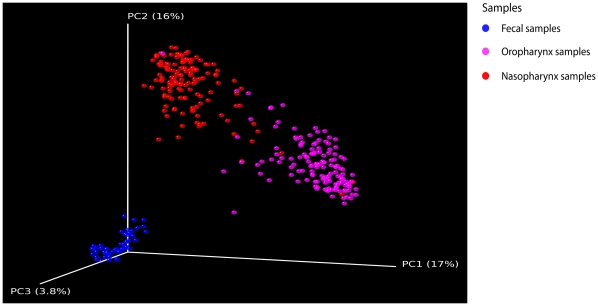
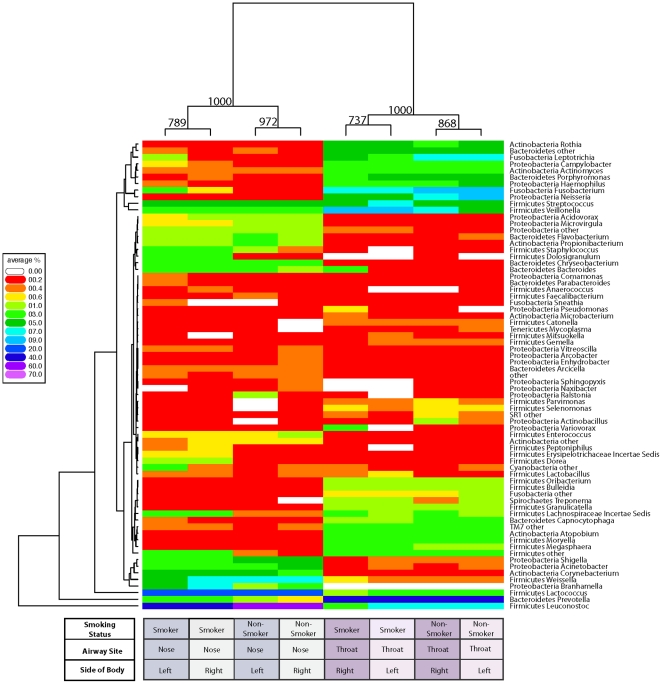
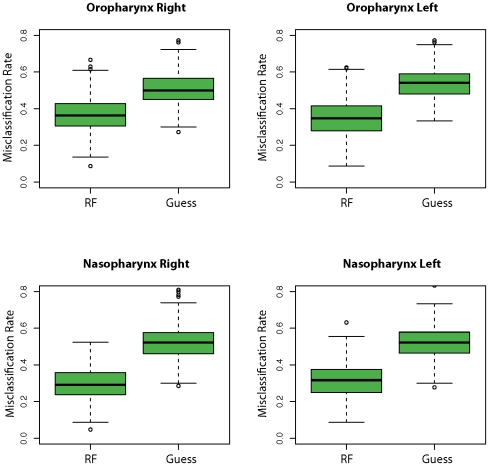
Cigarette smokers have an increased risk of infectious diseases involving the respiratory tract. Some effects of smoking on specific respiratory tract bacteria have been described, but the consequences for global airway microbial community composition have not been determined. Here, we used culture-independent high-density sequencing to analyze the microbiota from the right and left nasopharynx and oropharynx of 29 smoking and 33 nonsmoking healthy asymptomatic adults to assess microbial composition and effects of cigarette smoking. Bacterial communities were profiled using 454 pyrosequencing of 16S sequence tags (803,391 total reads), aligned to 16S rRNA databases, and communities compared using the UniFrac distance metric. A Random Forest machine-learning algorithm was used to predict smoking status and identify taxa that best distinguished between smokers and nonsmokers. Community composition was primarily determined by airway site, with individuals exhibiting minimal side-of-body or temporal variation. Within airway habitats, microbiota from smokers were significantly more diverse than nonsmokers and clustered separately. The distributions of several genera were systematically altered by smoking in both the oro- and nasopharynx, and there was an enrichment of anaerobic lineages associated with periodontal disease in the oropharynx. These results indicate that distinct regions of the human upper respiratory tract contain characteristic microbial communities that exhibit disordered patterns in cigarette smokers, both in individual components and global structure, which may contribute to the prevalence of respiratory tract complications in this population.
Overview
The claims and statistics of this paper haven’t been checked yet.
Free: it reads the open-access text and checks the first 5 claims that cite a source we can check. Create a free account to check every claim.
Integrity signals
Registry
Cites
Statistics
Figures
Verification
Claims the paper makes
The claims and statistics of this paper haven’t been checked yet.
Free: it reads the open-access text and checks the first 5 claims that cite a source we can check. Create a free account to check every claim.
Claims other papers make about this one
Each is checked against this paper’s own text: does it say what the citing paper says it does?
The source backs part of the claim, not all of it — or backs it for a different population, condition or comparison.
In the citing paper
“The oropharynx, which is lined with a non-keratinized stratified squamous epithelium, has more diverse bacterial communities than the nasopharynx41, which are characterized by streptococcal species, Neisseria spp., Rothia spp. and anaerobes, including Veillonella spp., Prevotella spp. and Leptotrichia spp.39,41,51,52.”
From The microbiota of the respiratory tract: gatekeeper to respiratory health (2017) · cites this paper as [41]
Experimental — accuracy not yet measuredThe cited source says what the claim attributes to it.
In the citing paper
“Active smoking also affects the microbial communities in the URT37,41; however, in the LRT, smoking has no clear influence on the composition of the microbiota42.”
From The microbiota of the respiratory tract: gatekeeper to respiratory health (2017) · cites this paper as [41]
Self-check
Percentages, sums and reported differences re-computed from the paper’s own numbers.
The self-check needs the paper’s full text.
Citations
Cites
QIIME allows analysis of high-throughput community sequencing data
Caporaso, J. G., Kuczynski, J., Stombaugh, J., Bittinger, K., Bushman, F. D., Costello, E. K., Fierer, N., Peña, A. G., Goodrich, J. K., Gordon, J. I., et al. (2010) · Nature Methods · doi:10.1038/nmeth.f.303 · Cited by 34,887 · cited 1×
“Denoised sequences were analyzed using the Qiime pipeline [24], in which sequences were clustered at 97% sequence identity into operational taxonomic units (OTUs, also called phylotypes) and assigned a taxonomic identity by alignment to the RDP reference 16S rRNA database [25].”
MethodSelf-citationSearch and clustering orders of magnitude faster than BLAST
Edgar, R. C. (2010) · Bioinformatics · doi:10.1093/bioinformatics/btq461 · Cited by 20,826
Naïve Bayesian Classifier for Rapid Assignment of rRNA Sequences into the New Bacterial Taxonomy
Wang, Q., Garrity, G. M., Tiedje, J. M., & Cole, J. R. (2007) · Applied and Environmental Microbiology · doi:10.1128/aem.00062-07 · Cited by 19,885 · cited 2×
“Denoised sequences were analyzed using the Qiime pipeline [24], in which sequences were clustered at 97% sequence identity into operational taxonomic units (OTUs, also called phylotypes) and assigned a taxonomic identity by alignment to the RDP reference 16S rRNA database [25].”
MethodFastTree 2 – Approximately Maximum-Likelihood Trees for Large Alignments
Price, M. N., Dehal, P. S., & Arkin, A. P. (2010) · PLoS ONE · doi:10.1371/journal.pone.0009490 · Cited by 14,894
UniFrac: a New Phylogenetic Method for Comparing Microbial Communities
Lozupone, C., & Knight, R. (2005) · Applied and Environmental Microbiology · doi:10.1128/aem.71.12.8228-8235.2005 · Cited by 8,227 · cited 3×
“QIIME generates data summaries of the proportions of identified taxa in each community and calculates the amount of bacterial diversity shared between two communities using the UniFrac metric [26].”
MethodA core gut microbiome in obese and lean twins
Turnbaugh, P. J., Hamady, M., Yatsunenko, T., Cantarel, B. L., Duncan, A., Ley, R. E., Sogin, M. L., Jones, W. J., Roe, B. A., Affourtit, J. P., et al. (2009) · Nature · doi:10.1038/nature07540 · Cited by 7,823
PyNAST: a flexible tool for aligning sequences to a template alignment
Caporaso, J. G., Bittinger, K., Bushman, F. D., DeSantis, T. Z., Andersen, G. L., & Knight, R. (2010) · Bioinformatics · doi:10.1093/bioinformatics/btp636 · Cited by 3,396 · cited 1×
“, aligned to full length 16S rRNA sequences with PyNAST”
BackgroundSelf-citationBacterial Community Variation in Human Body Habitats Across Space and Time
Costello, E. K., Lauber, C. L., Hamady, M., Fierer, N., Gordon, J. I., & Knight, R. (2009) · Science · doi:10.1126/science.1177486 · Cited by 3,231 · cited 5×
“7%, consistent with previous reports surveying the throat and oral cavity [18,19,29,35].”
BackgroundResultInfluentialTopographical and Temporal Diversity of the Human Skin Microbiome
Grice, E. A., Kong, H. H., Conlan, S., Deming, C. B., Davis, J., Young, A. C., Program, N. C. S., Bouffard, G. G., Blakesley, R. W., Murray, P. R., et al. (2009) · Science · doi:10.1126/science.1171700 · Cited by 2,953
Lozupone, C. A., Hamady, M., Kelley, S. T., & Knight, R. (2007) · Applied and Environmental Microbiology · doi:10.1128/aem.01996-06 · Cited by 2,656 · cited 1×
“UniFrac [26,52] was used to measure beta diversity between all pairs of bacterial communities, including both an unweighted (considers only presence or absence of lineages to assess community membership) and a weighted analysis (includes relative abundances of lineages to assess community structure).”
Method
Cited by
Items 301–400 of 433
The Lung-Gut-Cross Talk in Chronic Airways Diseases
Wouters, E. F. �. (2026) · Barcelona Respiratory Network · doi:10.23866/brnrev:2018-0020 · Cited by 3
Impact of Experimental Bias on Compositional Analysis of Microbiome Data
Hu, Y., Satten, G. A., & Hu, Y.-J. (2023) · Genes · doi:10.3390/genes14091777 · Cited by 2
Xu, H., Wang, T., Miao, Y., Qian, M., Yang, Y., & Wang, S. (2024) · Bioinformatics · doi:10.1093/bioinformatics/btad757 · Cited by 3
“Following Chen et al. (2012), we simulated microbiome data mimicking a real upper respiratory tract microbiome data (Charlson et al. 2010) consisting of 856 OTUs after discarding singletons.”
MethodAn optimal normalization method for high sparse compositional microbiome data
Sohn, M. B., Monaco, C. L., & Gill, S. R. (2024) · PLoS Computational Biology · doi:10.1371/journal.pcbi.1012338 · Cited by 3
Yu, X., Zhang, L., Srinivasan, A., Xie, M., & Xue, L. (2025) · Biometrics · doi:10.1093/biomtc/ujaf001 · Cited by 5
“The upper-respiratory microbiome data from Charlson et al. (2010) consists of 856 OTUs.”
Microbiota of the Lung Tuberculoma: Paucibacillary Bacterial Community
Огарков, О. Б., Андреевна, О. Е., Suzdalnitsky, A. E., & Владиславович, М. И. (2025) · International Journal of Mycobacteriology · doi:10.4103/ijmy.ijmy_126_25 · Cited by 2
Microbiome of the upper airway focusing on chronic rhinosinusitis and allergic rhinitis
Hong, S., Park, P., Cho, S., & Kim, D. (2016) · Allergy Asthma & Respiratory Disease · doi:10.4168/aard.2016.4.6.399 · Cited by 2
Statistical Models and Analysis of Microbiome Data from Mice and Humans
Xia, Y., & Sun, J. (2018) · Springer eBooks · doi:10.1007/978-1-4939-7534-1_12 · Cited by 3
IDENTIFIKASI BAKTERI RONGGA MULUT PEROKOK DAN BUKAN PEROKOK DI PEKANBARU
Lasmini, T. (2020) · Klinikal Sains Jurnal Analis Kesehatan · doi:10.36341/klinikal_sains.v8i1.1249 · Cited by 2
Plata, G., Baxter, N. T., Hawkins, T., Huntimer, L., Nagireddy, A., Susanti, D., & Reinbold, J. B. (2025) · Animal Microbiome · doi:10.1186/s42523-025-00413-z · Cited by 2
“Stochastic changes in microbial community composition have been recently discussed in the context of type 1 diabetes [28], obesity [29], alcoholism [30], smoking [31], and liver cirrhosis [32] among others, illustrating how animal microbiomes may exhibit increased dispersion under stress [33].”
The early-life microbiome: the key to respiratory health?
de Koff, E. M., Pattaroni, C., Marsland, B. J., & Bogaert, D. (2019) · European Respiratory Society eBooks · doi:10.1183/2312508x.10015818 · Cited by 3
Chávez-Elizalde, B. P., Barrera-Vázquez, O. S., & Carrillo-Vega, M. F. (2020) · Springer eBooks · doi:10.1007/978-3-030-40955-5_9 · Cited by 2
Variant‐set association test for generalized linear mixed model
Zhan, X., Banerjee, K., & Chen, J. (2021) · Genetic Epidemiology · doi:10.1002/gepi.22378 · Cited by 3
Self-citationAn Adaptive and Robust Test for Microbial Community Analysis
Chen, Q., Lin, S., & Song, C. W. (2022) · Frontiers in Genetics · doi:10.3389/fgene.2022.846258 · Cited by 3
“Using SparseDOSSA2 package, we first parameterized a real upper-respiratory-tract microbiome data set consisting of 856 OTUs and 60 samples (Charlson et al., 2010).”
MethodResultMa, M. (2019) · UA Campus Repository (The University of Arizona) · Cited by 2
Hickman, E., Hinton, A. L., Zorn, B., Rebuli, M. E., Robinette, C., Wolfgang, M. C., Mucha, P. J., & Jaspers, I. (2021) · Research Square · doi:10.21203/rs.3.rs-725763/v1 · Cited by 2
Băncescu, G., Davila", C., Sfetcu, L., Didilescu, A. C., & Băncescu, A. (2020) · STOMATOLOGY EDU JOURNAL · doi:10.25241/stomaeduj.2020.7(2).art.1 · Cited by 2
“The oropharynx microbiota is complex and comprises hundreds of microbial species [2,3], most of them organized in biofilms associated with the respective microenvironment [4].”
BackgroundInfluentialThe upper respiratory tract microbiome and its role in human health: biotopes and variability
Starikova, E. V., Galeeva, J. S., & Ilina, E. N. (2022) · PULMONOLOGIYA · doi:10.18093/0869-0189-2022-32-5-745-754 · Cited by 1
Man-Bovenkerk, S., Schipper, K., van Sorge, N. M., Speijer, D., ENDE, A. V. D., & Pannekoek, Y. (2023) · Journal of Bacteriology · doi:10.1128/jb.00462-22 · Cited by 2
“This activity is crucial when meningococci encounter different host environments that vary in nutrients, like the adolescent/adult nasopharynx containing propionic acid as a supplementary carbon source (9).”
BackgroundA debiasing phylogenetic tree-assisted regression model for microbiome data
Li, Y. N., Zhao, L., & Wang, J. (2024) · Computational Statistics & Data Analysis · doi:10.1016/j.csda.2024.108111 · Cited by 1
The multipotential effect of microbiome in lung cancer development and progression
Karimi, N., Anda, A. B. D., Yang, R., Aksan, E., Grimaldo, M. T., & Moghaddam, S. J. (2025) · International review of cytology · doi:10.1016/bs.ircmb.2024.12.011 · Cited by 1
Druzhinin, V. G., Baranova, E. D., Сергеевич, Д. П., Matskova, L. V., Викторович, Л. А., & Yuzhalin, A. E. (2025) · Cancers · doi:10.3390/cancers17162643 · Cited by 3
“These results align with a previous study [34], which reported similar microbiome shifts in smokers’ oropharyngeal samples but noted trends, such as increased Megasphaera , Veil-lonella , Actinomyces , and Atopobium , not observed here.”
Breaking the bottleneck of asthma treatment: the future of omni-targeted therapy
Li, K., Xie, H., Shen, D., Li, L., & Chen, H. (2025) · Journal of Advanced Research · doi:10.1016/j.jare.2025.10.016 · Cited by 3
“Although smoking causes dysbiosis in the upper airway microbiota, no significant differences have been observed in lower-airway composition between smokers and non-smokers [182,183].”
Ensemble test for microbiome data
Bu, D., Yan, J., Yang, W., Zhang, X., & Li, Q. (2026) · Microbiome · doi:10.1186/s40168-026-02367-z · Cited by 2
“These abundance data are compositional (relative abundances sum to one), highly sparse (containing a disproportionally large number of zeros [11]), and high-dimensional (the dimension of relative abundances is often larger than the sample size [12]).”
Liang, Z., Liu, Z., Pan, W., Fan, L., Quan, J., Lin, L., Wu, L., & Yu, X. (2026) · Frontiers in Physiology · doi:10.3389/fphys.2026.1788828 · Cited by 1
“…β ; TNF-α , tumor necrosis factor alpha; CXCL1, C-X-C motif chemokine ligand 1; CXCL2, C-X-C motif chemokine ligand 2; ALI, acute lung inflammation; ARDS, acute respiratory distress syndrome; GSH, glutathione; GSSG, glutathione disulfide. exacerbations (Charlson et al., 2010; McGeoch et al., 2023).”
Oral microbiota for diagnosis of etomidate abuse via machine learning
He, M., Huang, L., Ye, L., Yang, M., Zhang, X., Liu, X., Liu, C., & Chen, L. (2026) · Journal of Translational Genetics and Genomics · doi:10.20517/jtgg.2025.112 · Cited by 1
Vilkevičiūtė, A., Bruzaite, A., Čebatorienė, D., Žaliūnienė, D., Lukoševičius, R., Skieceviciene, J., Kupčinskas, J., & Liutkevičienė, R. (2026) · Diagnostics · doi:10.3390/diagnostics16101475 · Cited by 1
The Gut–Lung Microbiome Axis in Alveolar Stem Cell Regeneration and Lung Repair
Liu, A., Ran, D., Shen, Z., Rojba, M., & Zhang, J. (2026) · Microorganisms · doi:10.3390/microorganisms14071572 · Cited by 1
“The microbiome comprises all the microbes and their gene sequences, including homologous sequences, in a specific habitat at a specific time [1,2].”
Dynamics of Microeukaryotes and Archaea in the Mammalian Gut Microbiome
Dollive, S. (2013) · Scholarly Commons (University of Pennsylvania) · Cited by 1
What is bacterial colonisation in COPD?
Mohan, A., & Sethi, S. (2015) · European Respiratory Society eBooks · doi:10.1183/2312508x.10006815 · Cited by 1
Chakraborty, S., & Esiobu, N. (2017) · Advances in Microbiology · doi:10.4236/aim.2017.72013 · Cited by 1
“Subgingival biofilm in smokers is enriched for pathogenic bacteria, resulting in alteration of the microbial signatures of the oral cavity with a decrease in the commensal population and a concomitant increase in pathogens [10] [11].”
BackgroundMicrobiome in Chronic Obstructive Pulmonary Disease (COPD)
Chandran, C. S., Subin, A. J., Raj, A., Swathy, K. K., & Raghunath, I. (2022) · Springer eBooks · doi:10.1007/978-981-16-8957-4_6 · Cited by 1
Koh, H. (2024) · NAR Genomics and Bioinformatics · doi:10.1093/nargab/lqae148 · Cited by 1
“This is to survey possible disparities in simulation results between the upper-respiratory-tract microbiome data ( 30 ) and the gut microbiome data ( 26 ).”
The Microbiome Associated with Lung Cancer
Tsay, J.-C. J., Murthy, V., & Segal, L. N. (2019) · Current cancer research · doi:10.1007/978-3-030-04155-7_8 · Cited by 1
Study on the difference of saliva flora between smokers and non-smokers
Li, J., & Shen, X. (2019) · AIP conference proceedings · doi:10.1063/1.5110824 · Cited by 1
Fedosenko, S. V., Ogorodova, L. M., Popenko, A., Петров, В. А., Tyacht, A. V., Saltykova, I. V., Деев, И. А., Kulikov, E. S., Кириллова, Н. А., Govorun, V. M., et al. (2015) · Russian Journal of Allergy · doi:10.36691/rja450 · Cited by 2
Chudzicka-Strugała, I., Gołębiewska, I., Brudecki, G. P., & Zwoździak, B. (2021) · The Open Microbiology Journal · doi:10.2174/1874285802115010120 · Cited by 2
“The human microbiota, the socalled physiological flora, is subject to changes as a result of exposure to a number of factors, including antibiotic therapy, the use of vaccines, and even active or passive smoking [4].”
BackgroundInterplay of Microbiome, Inflammation, and Immunity in Inflammatory Lung Diseases
Malhotra, H., Kamboj, A., Kaushik, P., & Gautam, R. K. (2022) · Springer eBooks · doi:10.1007/978-981-16-8957-4_4 · Cited by 1
Engineering microbes to sense and eradicate a human pathogen
Saeidi, N. (2013) · DR-NTU (Nanyang Technological University) · doi:10.32657/10356/53103 · Cited by 1
Fungi In Asthma - Investigation Of The Lung Mycobiome And Characterisation Of Allergens
Rick, E. (2019) · Figshare · Cited by 1
Microbial characteristics of the DMFT index in a high HIV prevalence settingPreprint
Kalanzi, D., Mayanja‐Kizza, H., Nakanjako, D., Mboowa, G., Mbabali, M., Kigozi, E., Ashaba, F. K., Sserwadda, I., Kateete, D. P., Acan, B., et al. (2020) · Research Square · doi:10.21203/rs.3.rs-25139/v1 · Cited by 2
A New Approach to Testing Mediation of the Microbiome using the LDMPreprint
Yue, Y., & Hu, Y. (2021) · bioRxiv (Cold Spring Harbor Laboratory) · doi:10.1101/2021.11.12.468449 · Cited by 1
“Our simulations were based on data on 856 taxa of the upper-respiratory-tract (URT) microbiome [31] and the mediation model (1) and the forward outcome model (2) as generative models.”
MethodHickman, E., Hinton, A. L., Zorn, B., Rebuli, M. E., Robinette, C., Wolfgang, M. C., Mucha, P. J., & Jaspers, I. (2021) · Research Square · doi:10.21203/rs.3.rs-725763/v2 · Cited by 2
Kernel machine methods for analysis of genomic data from different sources
Zhao, N. (2014) · Carolina Digital Repository (University of North Carolina at Chapel Hill) · doi:10.17615/z57b-dm04 · Cited by 1
The Impact of Smoking in Detection of Bacteria Related to Oral Disease and Human Papillomavirus
손화경, 김주영, Park, J.-R., & 김진 (2013)
Purcell, P. (2013) · Northumbria Research Link (Northumbria University)
High Bacterial Load Predicts Poor Outcomes in Patients with Idiopathic Pulmonary FibrosisPreprint
Molyneaux, P. L., Cox, M. J., Willis‐Owen, S. A. G., Russell, K. E., Mallia, P., Russell, A., Johnston, S. L., Wells, A. U., Cookson, W., Maher, T. M., et al. (2014) · bioRxiv (Cold Spring Harbor Laboratory) · doi:10.1101/003145
Programming microbes to treat superbug infection
Wong, C. K. A. (2014) · doi:10.25560/31369
Vicente, A. D. (2013) · Dialnet (Universidad de la Rioja)
Smith, A. D. (2015) · Digital Commons @ UNT Health Science Center · Cited by 2
Enany, S., McEachern, E. K., & Hwang, J. (2015) · The Egyptian Journal of Medical Microbiology · doi:10.12816/0024812
Self-citationBiofilmsand Colonization in Oral Tobacco Smoking Affects Bacterial
de Jager, M., Aspiras, M., Kumar, P., Matthews, C. R., & Joshi, V. (2011)
The Effect of Agricultural Exposures and Genetics on Respiratory Phenotypes
Boyd, L. W.-M. (2016) · DigitalCommons@UNMC
Ventilator-associated pneumonia: when is a pathogen not a pathogen?
Cox, M. J. (2017) · Thorax · doi:10.1136/thoraxjnl-2017-209997
Volgers (2017) · Research Publications (Maastricht University) · doi:10.26481/dis.20171005cv
Bayesian Nonparametric Topic Model Using an Outcome Variable For Microbial Data
Okui, T. (2019) · Ouyou toukeigaku · doi:10.5023/jappstat.48.1
Respiratory Microbiome in Children
Kim, D. H. (2019) · Pediatric Infection & Vaccine · doi:10.14776/piv.2019.26.e24
Das Mikrobiom bei Kopf-Hals-Tumoren – erste Erkenntnisse und Ausblick
Lang, S., Brandau, S., Marchesi, J. R., Jabłońska, J., Thurnher, D., Mattheis, S., Buer, J., & Hussain, T. (2020) · HNO · doi:10.1007/s00106-020-00950-w · Cited by 1
“Rauchen und Alkoholkonsum beeinflussen die Mikrobiota: Zigarettenrauch verändert die Zusammensetzungder oralenBakterienbesiedlung und macht die Mundhöhle empfänglicher für pathogene Spezies [6, 20, 33, 36].”
BackgroundThe development of the respiratory microbiota in infants and children
Powell, E. A. (2019) · doi:10.25560/82376
Nayler, P. S. (2020) · BDJ · doi:10.1038/s41415-020-2364-2
Jannati, S., & Sanalla, A. (2020) · BDJ · doi:10.1038/s41415-020-2366-0
Kazmi, A. (2020) · BDJ · doi:10.1038/s41415-020-2363-3
Catala-Valentin, A., Mikhail, S. A., Bernard, J. N., Caldwell, M. C., Moore, S. D., & Andl, C. D. (2021)
THE BANALITY OF IMMUNITY, DEATH AND DISTRESS OF TOBACCO SMOKING --("STRIKE THE RIGHT”)
Rao, M. V. R., Kumari, A., Calvo, T., Khan, A. A., Mathai, D. C., Rao, D. S., Priscilla, T., Verma, M. K., & Chennamchetty, V. K. (2021) · GLOBAL JOURNAL FOR RESEARCH ANALYSIS · doi:10.36106/gjra/3912068
Kolla, H. B., Reddy, P. N., & Bramhachari, P. V. (2021) · Springer eBooks · doi:10.1007/978-981-16-3156-6_7
Yadav, M., & Bhambi, M. (2021) · Elsevier eBooks · doi:10.1016/b978-0-12-819265-8.00078-4
The role of the lung in shaping CNS autoimmunity
Hosang, L. (2019) · eDiss (Georg-August-Universität Göttingen) · doi:10.53846/goediss-7695
Shen, P., & Stämpfli, M. R. (2017) · Barcelona Respiratory Network · doi:10.24875/brn.m17000016
Programming microbes to treat superbug infection
Wong, A. C. K. (2016) · DR-NTU (Nanyang Technological University) · doi:10.32657/10356/65950
First insights into nasal microbiome in wine tastersPreprint
Duarte-Coimbra, S., Forcina, G., Pérez-Pardal, L., & Beja‐Pereira, A. (2023) · bioRxiv (Cold Spring Harbor Laboratory) · doi:10.1101/2023.03.21.533426
Zhang, X., Dong, K., Kang, Z., Ji, X., Ning, X., Ma, Q., & Sun, B. (2023) · PubMed Central · Cited by 1
Babišová, K., Krumpolec, P., Hadžega, D., Sabaka, P., Jackuliak, P., Minárik, G., & Hýblová, M. (2023) · Acta Virologica · doi:10.3389/av.2023.11664
“The oropharynx has a greater bacterial diversity compared to the nasopharynx (Charlson et al., 2010).”
BackgroundRattanaburi, S. (2021) · Chula Digiverse · doi:10.58837/chula.the.2021.22
Analysis of nasopharyngeal microbiome patterns in Zambian infants with fatal acute febrile illnessPreprint
Odom-Mabey, A. R., McClintock, J., Gill, C. J., Pieciak, R. C., Ismail, A., MacLeod, W., Johnson, W. E., & Lapidot, R. (2023) · bioRxiv (Cold Spring Harbor Laboratory) · doi:10.1101/2023.09.27.559805
Guo, G., cheng, Q., Li, C., Zhang, Y., Liu, L., Liu, Y., Zhong, Y., Xiang, Y., Liao, Z., & Zhang, J. (2024) · Research Square · doi:10.21203/rs.3.rs-3865545/v1
Khosravi, M., Merza, M., Saleh, R. O., Habib, H. A., Alnemare, A. K., Mahfoz, T. M. B., Ghaffar, U. B., Ghildiyal, P., Shoja, S. J., & Elawady, A. (2024) · Medical Hypotheses · doi:10.1016/j.mehy.2024.111284
Khosravi, M., Berardis, D. D., Sarabandi, S., Mazloom, S., Adibi, A., Javan, N., Ghiasi, Z., Nafeli, M., & Rahmanian, N. (2024) · Mental Illness · doi:10.1155/2024/5595195 · Cited by 1
“Although the lower prevalence levels of Capno-cytophaga and Neisseria were linked to smoking [43, 44], it is not easy to con fi rm a connection with mental illness.”
BackgroundAir pollution from livestock farms and respiratory health impacts in neighboring residents
van Kersen, W. (2024) · Utrecht University Repository (Utrecht University) · doi:10.33540/2086 · Cited by 1
Tobacco Smoke Exposure is Characterized by a Distinct Nasal Rhinotype in a Pediatric PopulationPreprint
Monaco, H., Elaiho, C. R., Liu, B., Chan, T., Cantor, A., Collaco, J. M., McGrath‐Morrow, S. A., Wilson, K. M., & Clemente, J. C. (2024) · bioRxiv (Cold Spring Harbor Laboratory) · doi:10.1101/2024.03.15.585112
“Smokers have been found to carry more pathogenic strains in their nasal microbiomes than non-smokers 8-10 .”
BackgroundDatta, J., & Bandyopadhyay, D. (2024) · Journal of the Indian Society for Probability and Statistics · doi:10.1007/s41096-024-00194-9 · Cited by 1
“Notably, the diminished presence of Proteobacteria appears to be significant, given its association with PD observed in individuals compared to their healthy counterparts (Griffen et al. 2012).”
BackgroundResultInfluentialAnwar, H., Mukhtar, I., Muzaffar, H., Irfan, S., Saleem, S., & Ijaz, F. (2024) · Springer eBooks · doi:10.1007/978-981-97-3790-1_2 · Cited by 1
Li, R., Li, M., & Zhao, N. (2024) · Genetic Epidemiology · doi:10.1002/gepi.22596
“We simulate OTU data that are similar to the real throat data (Charlson et al. 2010).”
Modelling Microbiome Association with Host Phenotypes Using a Bayesian Dirichlet Process ModelPreprint
Awany, D., & Chimusa, E. R. (2024) · bioRxiv (Cold Spring Harbor Laboratory) · doi:10.1101/2024.10.08.617289
“In order to make the simulation more realistic, the parameters of the DM distribution (mean and dispersion) were estimated from real microbiome data of human upper respiratory microbiome in the study by [14].”
MethodA general kernel machine comparative analysis framework for randomized block designsPreprint
Koh, H. (2025) · bioRxiv (Cold Spring Harbor Laboratory) · doi:10.1101/2025.02.06.636977
Koh, H. (2025) · bioRxiv (Cold Spring Harbor Laboratory) · doi:10.1101/2025.02.07.637007
A reweighted random forest to predict health outcomes using human microbiome data
Wang, T., Li, B., Xu, H., Miao, Y., Qian, M., & Wang, S. (2025) · The Annals of Applied Statistics · doi:10.1214/24-aoas1973
Fehse, L., Tajabadi, M., Martin, R., Holzmann, H., & Heider, D. (2025) · Computational and Structural Biotechnology Journal · doi:10.1016/j.csbj.2025.07.031 · Cited by 2
Host-Microbe Crosstalk in the Lung Microenvironment
CARPANELLI, C., Gualdi, F., & Battaglini, D. (2025) · Springer eBooks · doi:10.1007/978-3-032-01024-7_27
The role of respiratory viruses in exacerbations of cystic fibrosis in adults
Flight, W. G. (2014) · Research Explorer (The University of Manchester)
Additional file 8 of Phylogeny-guided microbiome OTU-specific association test (POST)
Huang, C. D., Callahan, B. J., Wu, M. C., Holloway, S. T., Brochu, H. N., Lu, W., Peng, X., & Tzeng, J. (2022) · Figshare · doi:10.6084/m9.figshare.20012400
Zhan, Y., Tianyi, L., Xuejing, S., Xinpeng, L., Jianqun, W., Wenxia, X., & Jingshu, G. (2024) · Figshare · doi:10.6084/m9.figshare.26686752
Zhan, Y., Tianyi, L., Xuejing, S., Xinpeng, L., Jianqun, W., Wenxia, X., & Jingshu, G. (2024) · Figshare · doi:10.6084/m9.figshare.26686749
Paulo, A. C., Lança, J., Almeida, S. T., Hilty, M., & Sá‐Leão, R. (2024) · Figshare · doi:10.6084/m9.figshare.26614456
Liu, H., Ling, W., Hua, X., Moon, J.-Y., Williams-Nguyen, J. S., Zhan, X., Plantinga, A., Zhao, N., Zhang, A., Knight, R. D., et al. (2023) · Figshare · doi:10.6084/m9.figshare.22671314
Metadata
- Authors
- Charlson, E. S., Chen, J., Custers-Allen, R., Bittinger, K., Li, H., Sinha, R., Hwang, J., Bushman, F. D., & Collman, R. G.
- Affiliations
- University of Pennsylvania (US)
- Corresponding author
- Bushman, Frederic D.
- Collman, Ronald G.
- Venue
- PLoS ONE
- Publisher
- Public Library of Science (PLoS)
- Published
- 2010-12-20
- Volume
- 5
- Issue
- 12
- Pages
- e15216
- ISSN
- 1932-6203 (ISSN-L)
- PMC
- PMC3004851
- OpenAlex
- W2037878492
- Cited by
- 437
- References
- 52
- Citations by year
- 2026: 16 · 2025: 20 · 2024: 23 · 2023: 30 · 2022: 47 · 2021: 46 · 2020: 34 · 2019: 33 · 2018: 40 · 2017: 34 · 2016: 26 · 2015: 23 · 2014: 19 · 2013: 19 · 2012: 21
- FWCI
- 17.07
- Type
- journal article
- Language
- en
- Open access
- gold
- doi.org
- Locations
- PLoS ONE (publishedVersion, cc-by)
- PubMed Central (publishedVersion, cc-by)
- PubMed (publishedVersion)
- DOAJ (DOAJ: Directory of Open Access Journals) (submittedVersion, cc-by-sa)
- Figshare (submittedVersion, cc-by)
- Funders
- Pennsylvania Department of Health
- University of Pennsylvania
- National Institutes of Health
- National Heart, Lung, and Blood Institute (U01HL098957, U01 HL98957)
- National Institute of Allergy and Infectious Diseases (P30AI045008)
- Topics
- Health Sciences › Dentistry › Periodontics › Oral microbiology and periodontitis research
- Life Sciences › Biochemistry, Genetics and Molecular Biology › Molecular Biology › Gut microbiota and health
- Physical Sciences › Environmental Science › Ecology › Microbial Community Ecology and Physiology
- Keywords
- cigarette smoking, upper respiratory tract microbiota, nasopharynx, oropharynx, bacterial community composition, microbial diversity, anaerobic bacteria, periodontal disease, respiratory infections, smoking status prediction
- MeSH terms
- Adult, Algorithms, Artificial Intelligence, DNA, Bacterial, Female, Humans, Magnetics, Male, Middle Aged, Respiratory System, RNA, Ribosomal, 16S, Smoking, Bacterial Typing Techniques, Polymerase Chain Reaction, Sequence Analysis, DNA
About these checks
Registry, retraction, Cites and statistics results are computed, not judged, with one exception: a printed reference that no index lists is read once by a model before it counts as a citation error. Claims are extracted by a model and kept only when their quote appears verbatim in the text; each cited source is then checked, with a model’s help, for whether it says what the claim relies on. Those verdicts can be wrong — read the claim’s quote and the cited source before relying on one.
Statistics and arithmetic are recomputed, not judged.
Confidence bands are shown only for fields calibrated on our annotated test set. None is calibrated yet, so no band is shown.
What counts as a claim ›How we measure confidence ›How we check this ›
Are you an author, or do you see a problem with this page? Request a review
Data sources
Bibliographic data: Semantic Scholar, OpenAlex, Crossref.
Contains information from the Semantic Scholar Academic Graph Datasets, made available under the ODC Attribution License (ODC-BY 1.0).
Semantic Scholar’s data is described in: Kinney, R., et al. (2023). The Semantic Scholar Open Data Platform. arXiv:2301.10140.
