

Disordered Microbial Communities in the Upper Respiratory Tract of Cigarette Smokers
Open accessThe DOI matches its Crossref record; 52 of the 52 references it cites were found in a registry or an index.
Abstract
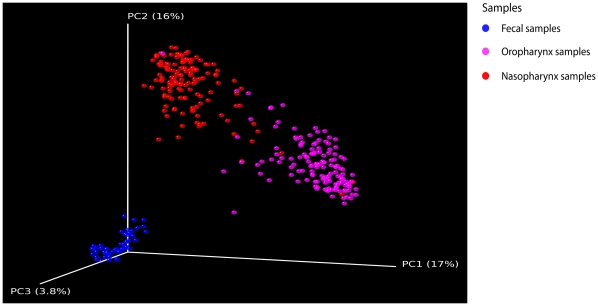
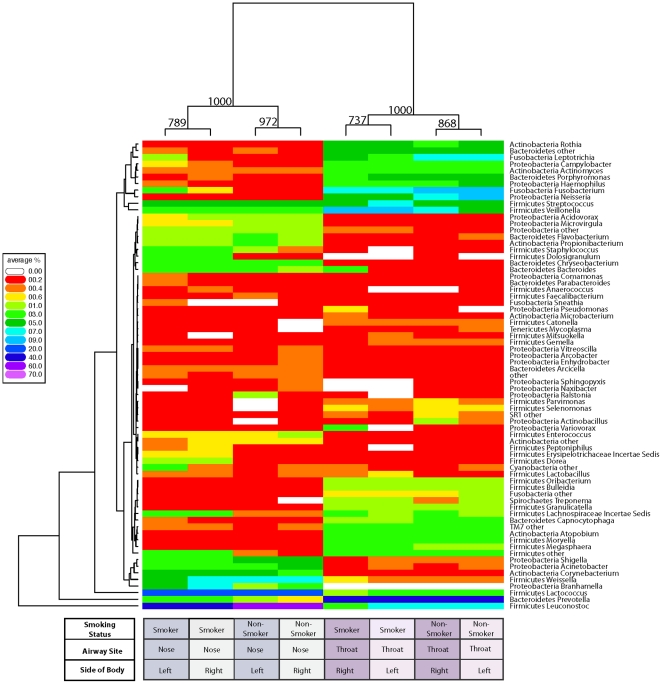
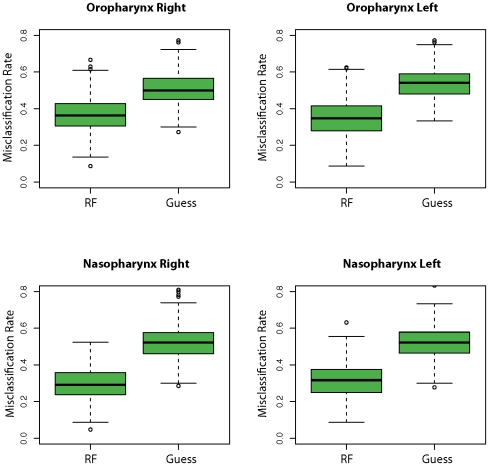
Cigarette smokers have an increased risk of infectious diseases involving the respiratory tract. Some effects of smoking on specific respiratory tract bacteria have been described, but the consequences for global airway microbial community composition have not been determined. Here, we used culture-independent high-density sequencing to analyze the microbiota from the right and left nasopharynx and oropharynx of 29 smoking and 33 nonsmoking healthy asymptomatic adults to assess microbial composition and effects of cigarette smoking. Bacterial communities were profiled using 454 pyrosequencing of 16S sequence tags (803,391 total reads), aligned to 16S rRNA databases, and communities compared using the UniFrac distance metric. A Random Forest machine-learning algorithm was used to predict smoking status and identify taxa that best distinguished between smokers and nonsmokers. Community composition was primarily determined by airway site, with individuals exhibiting minimal side-of-body or temporal variation. Within airway habitats, microbiota from smokers were significantly more diverse than nonsmokers and clustered separately. The distributions of several genera were systematically altered by smoking in both the oro- and nasopharynx, and there was an enrichment of anaerobic lineages associated with periodontal disease in the oropharynx. These results indicate that distinct regions of the human upper respiratory tract contain characteristic microbial communities that exhibit disordered patterns in cigarette smokers, both in individual components and global structure, which may contribute to the prevalence of respiratory tract complications in this population.
Overview
The claims and statistics of this paper haven’t been checked yet.
Free: it reads the open-access text and checks the first 5 claims that cite a source we can check. Create a free account to check every claim.
Integrity signals
Registry
Cites
Statistics
Figures
Verification
Claims the paper makes
The claims and statistics of this paper haven’t been checked yet.
Free: it reads the open-access text and checks the first 5 claims that cite a source we can check. Create a free account to check every claim.
Claims other papers make about this one
Each is checked against this paper’s own text: does it say what the citing paper says it does?
The source backs part of the claim, not all of it — or backs it for a different population, condition or comparison.
In the citing paper
“The oropharynx, which is lined with a non-keratinized stratified squamous epithelium, has more diverse bacterial communities than the nasopharynx41, which are characterized by streptococcal species, Neisseria spp., Rothia spp. and anaerobes, including Veillonella spp., Prevotella spp. and Leptotrichia spp.39,41,51,52.”
From The microbiota of the respiratory tract: gatekeeper to respiratory health (2017) · cites this paper as [41]
Experimental — accuracy not yet measuredThe cited source says what the claim attributes to it.
In the citing paper
“Active smoking also affects the microbial communities in the URT37,41; however, in the LRT, smoking has no clear influence on the composition of the microbiota42.”
From The microbiota of the respiratory tract: gatekeeper to respiratory health (2017) · cites this paper as [41]
Self-check
Percentages, sums and reported differences re-computed from the paper’s own numbers.
The self-check needs the paper’s full text.
Citations
Cites
QIIME allows analysis of high-throughput community sequencing data
Caporaso, J. G., Kuczynski, J., Stombaugh, J., Bittinger, K., Bushman, F. D., Costello, E. K., Fierer, N., Peña, A. G., Goodrich, J. K., Gordon, J. I., et al. (2010) · Nature Methods · doi:10.1038/nmeth.f.303 · Cited by 34,887 · cited 1×
“Denoised sequences were analyzed using the Qiime pipeline [24], in which sequences were clustered at 97% sequence identity into operational taxonomic units (OTUs, also called phylotypes) and assigned a taxonomic identity by alignment to the RDP reference 16S rRNA database [25].”
MethodSelf-citationSearch and clustering orders of magnitude faster than BLAST
Edgar, R. C. (2010) · Bioinformatics · doi:10.1093/bioinformatics/btq461 · Cited by 20,826
Naïve Bayesian Classifier for Rapid Assignment of rRNA Sequences into the New Bacterial Taxonomy
Wang, Q., Garrity, G. M., Tiedje, J. M., & Cole, J. R. (2007) · Applied and Environmental Microbiology · doi:10.1128/aem.00062-07 · Cited by 19,885 · cited 2×
“Denoised sequences were analyzed using the Qiime pipeline [24], in which sequences were clustered at 97% sequence identity into operational taxonomic units (OTUs, also called phylotypes) and assigned a taxonomic identity by alignment to the RDP reference 16S rRNA database [25].”
MethodFastTree 2 – Approximately Maximum-Likelihood Trees for Large Alignments
Price, M. N., Dehal, P. S., & Arkin, A. P. (2010) · PLoS ONE · doi:10.1371/journal.pone.0009490 · Cited by 14,894
UniFrac: a New Phylogenetic Method for Comparing Microbial Communities
Lozupone, C., & Knight, R. (2005) · Applied and Environmental Microbiology · doi:10.1128/aem.71.12.8228-8235.2005 · Cited by 8,227 · cited 3×
“QIIME generates data summaries of the proportions of identified taxa in each community and calculates the amount of bacterial diversity shared between two communities using the UniFrac metric [26].”
MethodA core gut microbiome in obese and lean twins
Turnbaugh, P. J., Hamady, M., Yatsunenko, T., Cantarel, B. L., Duncan, A., Ley, R. E., Sogin, M. L., Jones, W. J., Roe, B. A., Affourtit, J. P., et al. (2009) · Nature · doi:10.1038/nature07540 · Cited by 7,823
PyNAST: a flexible tool for aligning sequences to a template alignment
Caporaso, J. G., Bittinger, K., Bushman, F. D., DeSantis, T. Z., Andersen, G. L., & Knight, R. (2010) · Bioinformatics · doi:10.1093/bioinformatics/btp636 · Cited by 3,396 · cited 1×
“, aligned to full length 16S rRNA sequences with PyNAST”
BackgroundSelf-citationBacterial Community Variation in Human Body Habitats Across Space and Time
Costello, E. K., Lauber, C. L., Hamady, M., Fierer, N., Gordon, J. I., & Knight, R. (2009) · Science · doi:10.1126/science.1177486 · Cited by 3,231 · cited 5×
“7%, consistent with previous reports surveying the throat and oral cavity [18,19,29,35].”
BackgroundResultInfluentialTopographical and Temporal Diversity of the Human Skin Microbiome
Grice, E. A., Kong, H. H., Conlan, S., Deming, C. B., Davis, J., Young, A. C., Program, N. C. S., Bouffard, G. G., Blakesley, R. W., Murray, P. R., et al. (2009) · Science · doi:10.1126/science.1171700 · Cited by 2,953
Lozupone, C. A., Hamady, M., Kelley, S. T., & Knight, R. (2007) · Applied and Environmental Microbiology · doi:10.1128/aem.01996-06 · Cited by 2,656 · cited 1×
“UniFrac [26,52] was used to measure beta diversity between all pairs of bacterial communities, including both an unweighted (considers only presence or absence of lineages to assess community membership) and a weighted analysis (includes relative abundances of lineages to assess community structure).”
Method
Cited by
Items 201–300 of 433
Zhang, L., Wang, Y., Chen, J., & Chen, J. (2022) · Frontiers in Genetics · doi:10.3389/fgene.2021.749573 · Cited by 21
“In the original study (Charlson et al., 2010), the association between smoking and the respiratory tract microbiome was tested by Permutational Multivariate Analysis of Variance (Anderson, 2001). based on weighted and unweighted UniFrac distances (Lozupone and Knight, 2005; Lozupone et al., 2007).”
BackgroundMethodResultInfluentialSelf-citationHeart–Lung Interaction via Infection
Morris, A. (2014) · Annals of the American Thoracic Society · doi:10.1513/annalsats.201306-157mg · Cited by 18
Respiratory tract microbiome and pneumonia
Narendrakumar, L., & Ray, A. (2022) · Progress in molecular biology and translational science · doi:10.1016/bs.pmbts.2022.07.002 · Cited by 20
E-Cigarette Use, Cigarette Smoking, and Sex Are Associated With Nasal Microbiome Dysbiosis
Hickman, E., Roca, C., Zorn, B., Rebuli, M. E., Robinette, C., Wolfgang, M. C., & Jaspers, I. (2024) · Nicotine & Tobacco Research · doi:10.1093/ntr/ntae176 · Cited by 20
The Human Microbiota: The Rise of an "Empire"
Berger, G., Bitterman, R., & Azzam, Z. S. (2015) · Rambam Maimonides Medical Journal · doi:10.5041/rmmj.10202 · Cited by 20
Mucin Binding to Moraxella catarrhalis during Airway Inflammation Is Dependent on Sialic Acid
Padra, M., Benktander, J. D., Padra, J. T., Andersson, A., Brundin, B., Tengvall, S., Christenson, K., Qvarfordt, I., Gad, R., Paulsson, M., et al. (2021) · American Journal of Respiratory Cell and Molecular Biology · doi:10.1165/rcmb.2021-0064oc · Cited by 17
Intestinal host–microbe interactions fuel pulmonary inflammation in cigarette smoke exposed mice
Yang-Jensen, S. K., Nägele, N. S., Sonne, S. B., Koeninger, L., Pineault, M., Tremblay, F., Kristensen, N. N., Bay, L., Aubin, S., Morissette, M. C., et al. (2025) · Gut Microbes · doi:10.1080/19490976.2025.2519699 · Cited by 19
The Role of Lower Airway Dysbiosis in Asthma: Dysbiosis and Asthma
Lu, J., Xiong, L., Zhang, X., Liu, Z., Wang, S., Zhang, C., Zheng, J., Wang, G., Zheng, R., Simpson, J. L., et al. (2017) · Mediators of Inflammation · doi:10.1155/2017/3890601 · Cited by 19
“Among the multiple lifestyle factors, cigarette smoking and airway inflammation appear to alter the composition of the microbiome from the upper airways (including nasopharynx and oropharynx) in a study of healthy asymptomatic adults including 29 smokers and 33 nonsmokers [41].”
Short term dynamics of the sputum microbiome among COPD patients
Sinha, R., Weissenburger-Moser, L. A., Clarke, J., Smith, L. M., Heires, A. J., Romberger, D. J., & LeVan, T. D. (2018) · PLoS ONE · doi:10.1371/journal.pone.0191499 · Cited by 17
Self-citationKoh, H., & Zhao, N. (2020) · Microbiome · doi:10.1186/s40168-020-00834-9 · Cited by 20
Extension of PERMANOVA to Testing the Mediation Effect of the Microbiome
Yue, Y., & Hu, Y. (2022) · Genes · doi:10.3390/genes13060940 · Cited by 22
“Simulation Studies Our simulations were based on data on 856 taxa of the upper respiratory tract (URT) microbiome [30], and the mediator model (1) and the forward outcome model (2) as generative models.”
MethodLower respiratory tract microbiome composition and community interactions in smokers
Campos, M., Cickovski, T., Fernandez, M., Jaric, M., Wanner, A., Holt, G. E., Donna, E., Mendes, E. S., Silva‐Herzog, E., Schneper, L. M., et al. (2023) · Access Microbiology · doi:10.1099/acmi.0.000497.v3 · Cited by 16
“It has been postulated that the smokingrelated dysbiosis in the oral microbiome may account for the increased prevalence of respiratory tract complications seen in smokers [6].”
BackgroundSerré, J., Mathyssen, C., Tanjeko, A. T., Korf, H., Maes, K., Heulens, N., Gysemans, C. A., Mathieu, C., Vanaudenaerde, B. M., Janssens, W., et al. (2018) · The Journal of Steroid Biochemistry and Molecular Biology · doi:10.1016/j.jsbmb.2018.10.021 · Cited by 15
Aguilera, P., Mascardi, M. F., Belforte, F. S., Rosso, A. D., Quesada, S., Llovet, I., Iraola, G., Trinks, J., & Steinhardt, A. P. (2022) · Frontiers in Microbiology · doi:10.3389/fmicb.2022.803121 · Cited by 17
“In this sense, microbiological changes induced by many perturbations are stochastic, and therefore lead to transitions from stable to unstable community states (Charlson et al., 2010; Chen et al., 2015; Zaneveld et al., 2017).”
BackgroundLung microbiota: genuine or artifact?
Berger, G., & Wunderink, R. G. (2013) · PubMed · Cited by 19
Zakrzewski, M., Gannon, O. M., Panizza, B. J., Saunders, N. A., & Antonsson, A. (2021) · Head & Neck · doi:10.1002/hed.26821 · Cited by 14
Microbiome‐based mechanisms hypothesized to initiate obesity‐associated rheumatoid arthritis
Luo, Y., & Blackledge, W. C. (2018) · Obesity Reviews · doi:10.1111/obr.12671 · Cited by 14
“Smoking, RA’s most well-known modifiable risk factor, impacts the oral and upper airway microbiota (39).”
BackgroundPhylogeny-guided microbiome OTU-specific association test (POST)
Huang, C. D., Callahan, B. J., Wu, M. C., Holloway, S. T., Brochu, H. N., Lu, W., Peng, X., & Tzeng, J. (2022) · Microbiome · doi:10.1186/s40168-022-01266-3 · Cited by 14
“:3) m using the dataset of Charlson et al. [24] considered in the simulation study.”
MethodTobacco smoke exposure, the lower airways microbiome and outcomes of ventilated children
Leroue, M. K., Williamson, K. M., Curtin, P. C. P., Sontag, M. K., Wagner, B. D., Ambroggio, L., Bixby, M., Busgang, S. A., Murphy, S. E., Peterson, L. A., et al. (2023) · Pediatric Research · doi:10.1038/s41390-023-02502-8 · Cited by 17
Common Lung Microbiome Identified among Mechanically Ventilated Surgical Patients
Smith, A. D., Zhang, Y., Barber, R. C., Minshall, C. T., Huebinger, R. M., & Allen, M. S. (2016) · PLoS ONE · doi:10.1371/journal.pone.0166313 · Cited by 14
Battey, J. N. D., Szostak, J., Phillips, B. W., Teng, C., Tung, C. K., Lim, W. T., Yeo, Y. S., Ouadi, S., Baumer, K., Thomas, J., et al. (2021) · Frontiers in Microbiology · doi:10.3389/fmicb.2021.587745 · Cited by 15
Human matters in asthma: Considering the microbiome in pulmonary health
Marathe, S. J., Snider, M. A., Flores-Torres, A. S., Dubin, P. J., & Samarasinghe, A. E. (2022) · Frontiers in Pharmacology · doi:10.3389/fphar.2022.1020133 · Cited by 17
“(Charlson et al., 2010) wherein the anaerobic Firmicute Megasphaera species significantly increases alongside increased abundance of potential pathogens like Actinomyces, Atopobium, Streptococcus, and Veillonella species.”
BackgroundThe Effects of Smoking on Human Pharynx Microbiota Composition and Stability
Bach, L., Ram, A., Ijaz, U. Z., Evans, T. J., Haydon, D. T., & Lindström, J. (2023) · Microbiology Spectrum · doi:10.1128/spectrum.02166-21 · Cited by 13
“taxa (5, 20, 45, 46), while others reported no association between the oral microbiota and”
Introductory Overview of Statistical Analysis of Microbiome Data
Xia, Y., Sun, J., & Chen, D. (2018) · ICSA book series in statistics · doi:10.1007/978-981-13-1534-3_3 · Cited by 16
Environmental Arsenic Exposure and Microbiota in Induced Sputum
White, A., Watts, G. S., Lu, Z. J., Meza‐Montenegro, M. M., Lutz, E., Harber, P. I., & Burgess, J. L. (2014) · International Journal of Environmental Research and Public Health · doi:10.3390/ijerph110202299 · Cited by 13
“or exposure [16].”
Relationship between smoking and otorhinolaryngological symptoms
Şanlı, A., Bekmez, E. T., Yıldız, G., Erdoğan, B. A., Yılmaz, H. B., & Altın, G. (2016) · The Turkish Journal of Ear Nose and Throat · doi:10.5606/kbbihtisas.2016.87059 · Cited by 15
“Smoking is a risk factor for infectious diseases affecting the respiratory tract.[18] Bacteria obtained from patients with cigarette smoke exposure return to the bacteria phenotype that does not form biofilm when smoke is interrupted.”
BackgroundChen, Y., Xu, C. B., Zhong, C.-F., Lyu, Z., Liu, J., Chen, Z., Dun, H., Xin, B., & Xie, Q. (2021) · Frontiers in Microbiology · doi:10.3389/fmicb.2020.617696 · Cited by 12
“Previous studies have shown that bacterial biodiversity and uniformity vary greatly in the upper respiratory tract; thus, the oropharynx and oral cavity have the highest biodiversity and uniformity (Charlson et al., 2010; Zhou et al., 2013).”
BackgroundBeta Diversity and Distance-Based Analysis of Microbiome Data
Plantinga, A., & Wu, M. C. (2021) · Frontiers in probability and the statistical sciences · doi:10.1007/978-3-030-73351-3_5 · Cited by 15
Liu, H., Ling, W., Hua, X., Moon, J., Williams-Nguyen, J. S., Zhan, X., Plantinga, A., Zhao, N., Zhang, A. Y., Knight, R. D., et al. (2023) · Microbiome · doi:10.1186/s40168-023-01530-0 · Cited by 12
Developing a New Phylogeny-Driven Random Forest Model for Functional Metagenomics
Wassan, J. T., Wang, H., & Zheng, H. (2023) · IEEE Transactions on NanoBioscience · doi:10.1109/tnb.2023.3283462 · Cited by 13
“Over HTM, the highest performance of Phylogeny-RF employed with number of trees = 64, noticed an Accuracy of 0.700 and Kappa of 0.390 which is better than RF (Accuracy of 0.667 and Kappa of 0.317 with number of trees = 164).”
BackgroundInfluentialZhu, Z., Satten, G. A., & Hu, Y. (2022) · Bioinformatics · doi:10.1093/bioinformatics/btac181 · Cited by 14
Ramon, E., Belanche-Muñoz, L. A., Molist, F., Quintanilla, R., Pérez-Enciso, M., & Ramayo‐Caldas, Y. (2021) · Frontiers in Microbiology · doi:10.3389/fmicb.2021.609048 · Cited by 13
Sun, H. L., Huang, X., Huo, B., Tan, Y., He, T., & Jiang, X. (2022) · Briefings in Bioinformatics · doi:10.1093/bib/bbac149 · Cited by 12
Shen, P., Whelan, F., Schenck, L. P., McGrath, J. J. C., Vanderstocken, G., Bowdish, D. M. E., Surette, M. G., & Stämpfli, M. R. (2017) · Infection and Immunity · doi:10.1128/iai.00434-17 · Cited by 12
“smokers have been observed to have less abundant Corynebacterium than nonsmokers (6, 14, 17).”
BackgroundInfluentialLi, L., Deng, X., Zou, Y., Lv, X., & Guo, Y. (2021) · Brazilian Journal of Microbiology · doi:10.1007/s42770-021-00594-0 · Cited by 13
Laing, B. B., Barnett, M. P. G., Marlow, G., Nasef, N. A., & Ferguson, L. R. (2018) · Expert Review of Gastroenterology & Hepatology · doi:10.1080/17474124.2018.1505497 · Cited by 12
“communities there as ‘disordered’ [103].”
Prediction Analysis for Microbiome Sequencing Data
Wang, T., Yang, C., & Zhao, H. (2019) · Biometrics · doi:10.1111/biom.13061 · Cited by 11
“To deal with these issues, distance‐based methods evaluate the association of the overall microbiota composition with the trait (Charlson et al., 2010).”
MethodMultidimensional scaling improves distance-based clustering for microbiome data
Chen, G., Wang, X., Sun, Q., & Tang, Z.-Z. (2025) · Bioinformatics · doi:10.1093/bioinformatics/btaf042 · Cited by 12
“Following Chen et al. (2012) and Wu et al. (2016), we simulated samples of one group from the Dirichlet multinomial (DM) model with proportion and dispersion parameters estimated from real respiratory tract microbiome data (Charlson et al. 2010) via the R package dirmult (Tvedebrink 2010).”
Chen, Y., Xu, Y., Zhao, W., Xiao, X., Zhou, X., Lin, L., Huang, T., Liao, J., Li, Y., Zeng, X., et al. (2018) · BMC Cancer · doi:10.1186/s12885-018-4110-6 · Cited by 10
“Interestingly, one study shows that microbial communities in the upper respiratory tract can be distorted by cigarette smoking [28], thus it may be one of the potential mechanisms for cigarette-smoking-related NPC carcinogenesis, as observed by other studies [29, 30].”
Resultvan der Does, A. M., Amatngalim, G. D., Keijser, B. J. F., Hiemstra, P. S., & Villenave, R. (2018) · Vaccines · doi:10.3390/vaccines6030049 · Cited by 10
Optimal Estimation of Wasserstein Distance on a Tree With an Application to Microbiome Studies
Wang, S., Cai, T., & Li, H. (2019) · Journal of the American Statistical Association · doi:10.1080/01621459.2019.1699422 · Cited by 14
Self-citationMiRKAT-MC: A Distance-Based Microbiome Kernel Association Test With Multi-Categorical Outcomes
Jiang, Z., He, M., Chen, J., Zhao, N., & Zhan, X. (2022) · Frontiers in Genetics · doi:10.3389/fgene.2022.841764 · Cited by 12
“Brie fl y, we fi rst fi tted a Dirchlet-multinomial distribution to a real upper-respiratory-tract microbiome dataset (Charlson et al., 2010), which contains 856 OTUs for 60 samples, and estimated the mean and dispersion parameters.”
MethodSelf-citationChen, H., Wang, H., Yang, F., Wang, M., & Chen, X.-M. (2022) · European Archives of Oto-Rhino-Laryngology · doi:10.1007/s00405-022-07327-5 · Cited by 12
The respiratory tract microbial biogeography in alcohol use disorder
Samuelson, D. R., Burnham, E. L., Maffei, V. J., Vandivier, R. W., Blanchard, E., Shellito, J. E., Luo, M., Taylor, C. M., & Welsh, D. A. (2017) · American Journal of Physiology-Lung Cellular and Molecular Physiology · doi:10.1152/ajplung.00277.2017 · Cited by 13
Ogorodova, L. M., Fedosenko, S. V., Popenko, A., Петров, В. А., Tyakht, A., Saltykova, I. V., Деев, И. А., Сергеевич, К. Е., Кириллова, Н. А., Govorun, V. M., et al. (2015) · Annals of the Russian academy of medical sciences · doi:10.15690/vramn532 · Cited by 11
Peripheral blood microbial signatures in current and former smokers
Morrow, J. D., Castaldi, P. J., Chase, R., Yun, J. H., Lee, S., Liu, Y., Hersh, C. P., & the COPDGene Investigators (2021) · Scientific Reports · doi:10.1038/s41598-021-99238-4 · Cited by 10
Wang, H., Du, P., Li, J., Zhang, Y., Zhang, W., Han, N., Woo, P. C. Y., & Chen, C. (2013) · Journal of Medical Microbiology · doi:10.1099/jmm.0.060616-0 · Cited by 10
“, 2005), respiratory tract (Zhao et al., 2012; Charlson et al., 2010), sea water (Gilbert et al.”
BackgroundTowards airway microbiome engineering for improving respiratory health
Hern, K. E., & Prindle, A. B. (2025) · Advanced Drug Delivery Reviews · doi:10.1016/j.addr.2025.115662 · Cited by 8
Sun, H. L., Huang, X., Fu, L., Huo, B., He, T., & Jiang, X. (2021) · Journal of genetics and genomics/Journal of Genetics and Genomics · doi:10.1016/j.jgg.2021.08.002 · Cited by 9
Adaptive and powerful microbiome multivariate association analysis via feature selection
Banerjee, K., Chen, J., & Zhan, X. (2022) · NAR Genomics and Bioinformatics · doi:10.1093/nargab/lqab120 · Cited by 10
“The procedure is described in the following steps: • Based on the throat microbiome data set (34), the estimated OTU proportions ( ˆ π 1 , ˆ π 2 , . . . , ˆ π 856 ) as well as the estimated over dispersion parameter ˆ θ were obtained via the method of maximum likelihood (35).”
InfluentialSelf-citationUpdate in clinical allergy and immunology
von Gunten, S., Marsland, B. J., von Garnier, C., & Simon, D. (2012) · Allergy · doi:10.1111/all.12067 · Cited by 11
Les bactéries anaérobies, ces inconnues du microbiote pulmonaire
Guilloux, C.-A., Lamoureux, C., & Héry-Arnaud, G. (2018) · médecine/sciences · doi:10.1051/medsci/20183403014 · Cited by 14
“L’application des techniques dites « culture-indépendantes » n’a révélé que récemment l’existence d’un microbiote pulmonaire en conditions physiologiques [11, 51, 52] (➜).”
Transcriptional Response of Mycobacterium tuberculosis to Cigarette Smoke Condensate
Willemse, D., Moodley, C., Mehra, S., & Kaushal, D. (2021) · Frontiers in Microbiology · doi:10.3389/fmicb.2021.744800 · Cited by 8
“The respiratory tract microbiota differs significantly between smokers and non-smokers (Charlson et al., 2010; Yu et al., 2017).”
BackgroundAn adaptive direction-assisted test for microbiome compositional data
Zhang, W., Liu, A., Zhang, Z., Chen, G., & Li, Q. (2022) · Bioinformatics · doi:10.1093/bioinformatics/btac361 · Cited by 9
MKMR: a multi-kernel machine regression model to predict health outcomes using human microbiome data
Li, B. J., Wang, T., Qian, M., & Wang, S. (2023) · Briefings in Bioinformatics · doi:10.1093/bib/bbad158 · Cited by 7
16S rRNA deep sequencing for the characterization of healthy human pharyngeal microbiome.
Gioula, G., Melidou, A., Siasios, P., Minti, F., & Malisiovas, N. (2018) · Europe PMC (PubMed Central) · Cited by 10
Folino, F., Bosi, P., Torretta, S., Gaffuri, M., & Marchisio, P. (2022) · Applied Microbiology · doi:10.3390/applmicrobiol2030046 · Cited by 12
Analysis of the Human Oral Microbiome of Smokers and Non-Smokers Using PCR-RFLP and Ribotyping
Chakraborty, S., Persaud, V., Vanegas, S., Gautier, G., & Esiobu, N. (2014) · Advances in Microbiology · doi:10.4236/aim.2014.410073 · Cited by 9
“Studies have also shown that smoking alters the microbial signatures of the oral cavity, with a decrease in the commensal population and a concomitant increase in pathogens [25] [26].”
BackgroundExploratory Analysis of Microbiome Data and Beyond
Xia, Y., Sun, J., & Chen, D. (2018) · ICSA book series in statistics · doi:10.1007/978-981-13-1534-3_7 · Cited by 7
Koh, H., Tuddenham, S., Sears, C. L., & Zhao, N. (2021) · Statistics in Medicine · doi:10.1002/sim.8940 · Cited by 9
Microbiome of nasal cavity and paranasal sinuses in norm and pathology. Part II
As, L., Azizov, I., & Kozlov, R. S. (2021) · Russian Rhinology · doi:10.17116/rosrino20212902181 · Cited by 7
multiMiAT: an optimal microbiome-based association test for multicategory phenotypes
Sun, H. L., Wang, Y., Xiao, Z. Z., Huang, X., Wang, H., He, T., & Jiang, X. (2023) · Briefings in Bioinformatics · doi:10.1093/bib/bbad012 · Cited by 7
Principal Component Analysis in Space Forms
Tabaghi, P., Khanzadeh, M., Wang, Y., & Mirarab, S. (2024) · IEEE Transactions on Signal Processing · doi:10.1109/tsp.2024.3457529 · Cited by 17
Accommodating multiple potential normalizations in microbiome associations studies
Song, H., Ling, W., Zhao, N., Plantinga, A., Broedlow, C. A., Klatt, N. R., Hensley‐McBain, T., & Wu, M. C. (2023) · BMC Bioinformatics · doi:10.1186/s12859-023-05147-w · Cited by 7
Hu, Y., Li, Y., Satten, G. A., & Hu, Y. (2022) · PLoS Computational Biology · doi:10.1371/journal.pcbi.1010509 · Cited by 7
“Our simulations were based on data on 856 taxa of the upper-respiratory-tract (URT) microbiome [21] that were also used in the MiRKAT-S paper.”
MethodDas Mikrobiom – die unplanbare Größe zukünftiger Therapien
Beule, A. G. (2018) · Laryngo-Rhino-Otologie · doi:10.1055/s-0043-122301 · Cited by 12
“Similar changes that, however, were only detected on one side, were obvious in the nasopharynx [47] and the saliva [47].”
BackgroundModeling Over-Dispersed Microbiome Data
Xia, Y., Sun, J., & Chen, D. (2018) · ICSA book series in statistics · doi:10.1007/978-981-13-1534-3_11 · Cited by 7
A Log-Linear Model for Inference on Bias in Microbiome Studies
Zhao, N., & Satten, G. A. (2021) · Frontiers in probability and the statistical sciences · doi:10.1007/978-3-030-73351-3_9 · Cited by 10
Testing hypotheses about the microbiome using the linear decomposition model (LDM)Preprint
Hu, Y.-J., & Satten, G. A. (2017) · bioRxiv (Cold Spring Harbor Laboratory) · doi:10.1101/229831 · Cited by 6
“The data for our first example were generated as part of a study to examine the effect of cigarette smoking on the orpharyngeal and nospharyngeal microbiome [22].”
MethodContinuity of interstitial spaces within and outside the human lung
Ordner, J., Narula, N., Chiriboga, L. A., Zeck, B., Majd, M., Gupta, K., Gaglia, R. J., Zhou, F., Moreira, A. L., Iman, R., et al. (2025) · Journal of Anatomy · doi:10.1111/joa.14280 · Cited by 5
“Although this is speculative, it is worth considering that these changes may account for deviations in microbiome composition in smokers from normal and for lung–brain interactions in smoking (Charlson et al., 2010 ; Morris et al., 2013).”
The Role of Periodontopathogens and Oral Microbiome in the Progression of Oral Cancer. A Review
Beltran, J. F., Viafara-García, S. M., Labrador, A. P., & Basterrechea, J. (2021) · The Open Dentistry Journal · doi:10.2174/1874210602115010367 · Cited by 5
dICC: distance-based intraclass correlation coefficient for metagenomic reproducibility studies
Chen, J., & Zhang, X. (2022) · Bioinformatics · doi:10.1093/bioinformatics/btac618 · Cited by 5
Self-citationThe Pulmonary Microbiome, Mechanical Ventilation, and Trauma
Smith, A. D., Zhang, Y., & Shewale, S. (2012) · Biological Systems Open Access · doi:10.4172/2329-6577.1000116 · Cited by 5
“Several culture-independent studies on BAL samples illustrate that lungs are not sterile and reveal the existence of a core pulmonary bacterial microbiome in healthy lungs [7-9].”
BackgroundZhang, Q., & Dao, T. (2020) · BMC Bioinformatics · doi:10.1186/s12859-020-3530-x · Cited by 10
Jang, H., Koh, H., Gu, W., & Kang, B. (2022) · Scientific Reports · doi:10.1038/s41598-022-25093-6 · Cited by 5
Population level virulence in polymicrobial communities associated with chronic disease
Leid, J. G., & Cope, E. K. (2011) · Frontiers in Biology · doi:10.1007/s11515-011-1153-3 · Cited by 8
Fungal microbiota in COPD patients during exacerbations
Gawor, W., Góralska, K., Galant, S., Majewski, S., Piotrowski, W. J., Miłkowska-Dymanowska, J., Kiszałkiewicz, J., & Brzeziańska‐Lasota, E. (2025) · Journal de Mycologie Médicale · doi:10.1016/j.mycmed.2025.101543 · Cited by 4
Zubiría-Barrera, C., Yamba, L. Y., Klassert, T. E., Bos, M., Ahl, J., Wasserstrom, L., Slevogt, H., & Riesbeck, K. (2025) · Medical Microbiology and Immunology · doi:10.1007/s00430-025-00828-0 · Cited by 4
Airway sensory systems: breathing new life into microbiota-brain communication
Mann‐Nüttel, R., Armbruster, M., Mandal, S., & Forsythe, P. (2025) · Frontiers in Cellular Neuroscience · doi:10.3389/fncel.2025.1632805 · Cited by 4
“Smoking cigarettes also modulates the airway microbiome with smokers having a more diverse oro-and nasopharyngeal microbiota compared to non-smokers (Charlson et al., 2010).”
Structural and functional variation of human oral microbiome in health and disease
Khan, M. F., Khan, M. I., & Kato, I. (2023) · Elsevier eBooks · doi:10.1016/b978-0-323-98338-9.00002-5 · Cited by 4
Zhang, J., Yan, R., Chen, Y., Liu, Y., Wang, P., Chen, Z., & Sun, H. L. (2025) · Expert Systems with Applications · doi:10.1016/j.eswa.2025.127514 · Cited by 6
Yue, Y., Mao, Y., Read, T. D., Fedirko, V., Satten, G. A., Chen, X., Zhan, X., & Hu, Y. (2025) · Journal of the American Statistical Association · doi:10.1080/01621459.2025.2516205 · Cited by 6
“Our simulations are based on data on 856 taxa of the upper-respiratory-tract (URT) microbiome by Charlson et al. (2010).”
Human microbiome diversity: implications in health, disease, and applications
Mboto, C. I., Edet, U. O., Mbim, E. N., Zenoh, D. A., Umego, C., Odidi, F. S., Tarh, J. E., & Upula, S. A. (2018) · World News of Natural Sciences · doi:10.5281/zenodo.19123852 · Cited by 6
Lima-Engelmann, K., & Schneider, M. (2022) · Current Nutraceuticals · doi:10.2174/2665978604666221122112434 · Cited by 4
Microbial characteristics of dental caries in HIV positive individuals
Kalanzi, D., Mayanja‐Kizza, H., Nakanjako, D., Semitala, F., Mboowa, G., Mbabali, M., Kigozi, E., Katabazi, F. A., Sserwadda, I., Kateete, D. P., et al. (2022) · Frontiers in Oral Health · doi:10.3389/froh.2022.1004930 · Cited by 4
“Studies conducted elsewhere have used 50–65 samples to detect up to 80% of genera (14, 15).”
BackgroundExploring the Pathoprofiles of SARS-COV-2 Infected Human Gut–Lungs Microbiome Crosstalks
Nandi, S., Ahmed, S., Saxena, A., & Saxena, A. K. (2023) · Springer eBooks · doi:10.1007/978-981-99-1463-0_12 · Cited by 7
Statistical Methods for Human Microbiome Data Analysis
Chen, J. (2012) · ScholarlyCommons (University of Pennsylvania) · Cited by 8
Self-citationImpacts of inhaled exposures on the upper respiratory tract microbiome: a systematic review
Hewitt, B. C., Odendaal, M.-L., de Rooij, M. M. T., Bossers, A., Franz, E., Bogaert, D., & Smit, L. A. M. (2026) · The Science of The Total Environment · doi:10.1016/j.scitotenv.2026.181776 · Cited by 4
Burnham‐Marusich, A. R., Olsen, R. K., Scarbrough, J., Kvam, A. J., Yang, W., Zimmerman, L. I., Dunn, J. J., Merkel, T. J., & Kozel, T. R. (2020) · Scientific Reports · doi:10.1038/s41598-020-72092-6 · Cited by 3
The Microbiome at Other Mucosal Sites
Cárdenas, P., & Cookson, W. (2015) · Elsevier eBooks · doi:10.1016/b978-0-12-415847-4.00006-9 · Cited by 4
High-dimensional analysis of variance in multivariate linear regression
Lou, Z., Zhang, X., & Wu, W. B. (2023) · Biometrika · doi:10.1093/biomet/asad001 · Cited by 3
“Our second dataset is from the study of the smoking effect on the human upper respiratory tract (Charlson et al., 2010).”
Zhan, Y., Tianyi, L., Xuejing, S., Xinpeng, L., Jianqun, W., Xu, W., & Jingshu, G. (2024) · BMC Oral Health · doi:10.1186/s12903-024-04051-w · Cited by 4
“Previous studies have shown that smoking and alcohol consumption drive microbial changes particularly in the saliva [69, 70].”
BackgroundDiversité physiopathologique du microbiote respiratoire
Michon, A.-L., & Marchandin, H. (2015) · Revue Francophone des Laboratoires · doi:10.1016/s1773-035x(15)72820-0 · Cited by 6
Uncovering the hidden villain within the human respiratory microbiome
Lee, C. K., & Bent, S. J. (2014) · Diagnosis · doi:10.1515/dx-2014-0039 · Cited by 6
“Furthermore, other studies have also observed significant differences in the airway bacterial communities between smokers and non-smokers [55, 57, 58].”
ResultButler, A. P., Smith, L., & Mackay, A. J. (2016) · European Respiratory Society eBooks · doi:10.1183/2312508x.10001416 · Cited by 3
Lung Microbiota and Its Impact on the Mucosal Immune Phenotype
Wu, B. G., & Segal, L. N. (2018) · ASM Press eBooks · doi:10.1128/9781555819705.ch7 · Cited by 3
Testing Mediation Effects in High-Dimensional Microbiome Data with False Discovery Rate ControlPreprint
Yue, Y., & Hu, Y. (2021) · Research Square · doi:10.21203/rs.3.rs-1105471/v1 · Cited by 3
“Our simulations were based on data on 856 taxa of the upper-respiratory-tract (URT) microbiome [31] and the mediation model (1) and the forward outcome model (2) as generative models.”
MethodByrne, S. (2020) · BDJ · doi:10.1038/s41415-020-2362-4 · Cited by 3
Moon, S. W., Kim, M., Kim, E. Y., Kang, C., Shin, J. H., Kim, K., Won, S., Yi, H., & Jung, J. Y. (2026) · Respiratory Research · doi:10.1186/s12931-025-03471-8 · Cited by 2
“This pattern is consistent with previous findings linking tobacco exposure to the enrichment of pro-inflammatory or opportunistic taxa [36].”
Gschwendtner, S., Kovacevic, D., Gaede, K. I., Herzmann, C., Overmann, J., Schloter, M., & Krauss‐Etschmann, S. (2026) · Respiratory Research · doi:10.1186/s12931-026-03644-z · Cited by 2
“Some studies observed increased diversity in the oral cavity and URT [13, 20–22], while others reported decreased diversity [23, 24].”
Metadata
- Authors
- Charlson, E. S., Chen, J., Custers-Allen, R., Bittinger, K., Li, H., Sinha, R., Hwang, J., Bushman, F. D., & Collman, R. G.
- Affiliations
- University of Pennsylvania (US)
- Corresponding author
- Bushman, Frederic D.
- Collman, Ronald G.
- Venue
- PLoS ONE
- Publisher
- Public Library of Science (PLoS)
- Published
- 2010-12-20
- Volume
- 5
- Issue
- 12
- Pages
- e15216
- ISSN
- 1932-6203 (ISSN-L)
- PMC
- PMC3004851
- OpenAlex
- W2037878492
- Cited by
- 437
- References
- 52
- Citations by year
- 2026: 16 · 2025: 20 · 2024: 23 · 2023: 30 · 2022: 47 · 2021: 46 · 2020: 34 · 2019: 33 · 2018: 40 · 2017: 34 · 2016: 26 · 2015: 23 · 2014: 19 · 2013: 19 · 2012: 21
- FWCI
- 17.07
- Type
- journal article
- Language
- en
- Open access
- gold
- doi.org
- Locations
- PLoS ONE (publishedVersion, cc-by)
- PubMed Central (publishedVersion, cc-by)
- PubMed (publishedVersion)
- DOAJ (DOAJ: Directory of Open Access Journals) (submittedVersion, cc-by-sa)
- Figshare (submittedVersion, cc-by)
- Funders
- Pennsylvania Department of Health
- University of Pennsylvania
- National Institutes of Health
- National Heart, Lung, and Blood Institute (U01HL098957, U01 HL98957)
- National Institute of Allergy and Infectious Diseases (P30AI045008)
- Topics
- Health Sciences › Dentistry › Periodontics › Oral microbiology and periodontitis research
- Life Sciences › Biochemistry, Genetics and Molecular Biology › Molecular Biology › Gut microbiota and health
- Physical Sciences › Environmental Science › Ecology › Microbial Community Ecology and Physiology
- Keywords
- cigarette smoking, upper respiratory tract microbiota, nasopharynx, oropharynx, bacterial community composition, microbial diversity, anaerobic bacteria, periodontal disease, respiratory infections, smoking status prediction
- MeSH terms
- Adult, Algorithms, Artificial Intelligence, DNA, Bacterial, Female, Humans, Magnetics, Male, Middle Aged, Respiratory System, RNA, Ribosomal, 16S, Smoking, Bacterial Typing Techniques, Polymerase Chain Reaction, Sequence Analysis, DNA
About these checks
Registry, retraction, Cites and statistics results are computed, not judged, with one exception: a printed reference that no index lists is read once by a model before it counts as a citation error. Claims are extracted by a model and kept only when their quote appears verbatim in the text; each cited source is then checked, with a model’s help, for whether it says what the claim relies on. Those verdicts can be wrong — read the claim’s quote and the cited source before relying on one.
Statistics and arithmetic are recomputed, not judged.
Confidence bands are shown only for fields calibrated on our annotated test set. None is calibrated yet, so no band is shown.
What counts as a claim ›How we measure confidence ›How we check this ›
Are you an author, or do you see a problem with this page? Request a review
Data sources
Bibliographic data: Semantic Scholar, OpenAlex, Crossref.
Contains information from the Semantic Scholar Academic Graph Datasets, made available under the ODC Attribution License (ODC-BY 1.0).
Semantic Scholar’s data is described in: Kinney, R., et al. (2023). The Semantic Scholar Open Data Platform. arXiv:2301.10140.
