

Data Sharing by Scientists: Practices and Perceptions
Open accessThe DOI matches its Crossref record; 10 of the 10 references it cites were found in a registry or an index.
Abstract
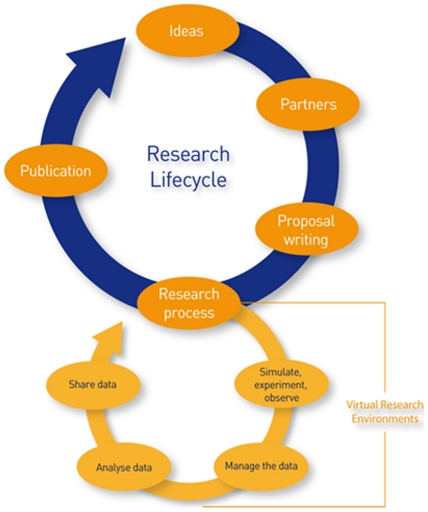
BACKGROUND: Scientific research in the 21st century is more data intensive and collaborative than in the past. It is important to study the data practices of researchers--data accessibility, discovery, re-use, preservation and, particularly, data sharing. Data sharing is a valuable part of the scientific method allowing for verification of results and extending research from prior results. METHODOLOGY/PRINCIPAL FINDINGS: A total of 1329 scientists participated in this survey exploring current data sharing practices and perceptions of the barriers and enablers of data sharing. Scientists do not make their data electronically available to others for various reasons, including insufficient time and lack of funding. Most respondents are satisfied with their current processes for the initial and short-term parts of the data or research lifecycle (collecting their research data; searching for, describing or cataloging, analyzing, and short-term storage of their data) but are not satisfied with long-term data preservation. Many organizations do not provide support to their researchers for data management both in the short- and long-term. If certain conditions are met (such as formal citation and sharing reprints) respondents agree they are willing to share their data. There are also significant differences and approaches in data management practices based on primary funding agency, subject discipline, age, work focus, and world region. CONCLUSIONS/SIGNIFICANCE: Barriers to effective data sharing and preservation are deeply rooted in the practices and culture of the research process as well as the researchers themselves. New mandates for data management plans from NSF and other federal agencies and world-wide attention to the need to share and preserve data could lead to changes. Large scale programs, such as the NSF-sponsored DataNET (including projects like DataONE) will both bring attention and resources to the issue and make it easier for scientists to apply sound data management principles.
Overview
The claims and statistics of this paper haven’t been checked yet.
Free: it reads the open-access text and checks the first 5 claims that cite a source we can check. Create a free account to check every claim.
Integrity signals
Registry
Cites
Statistics
Figures
Verification
Claims the paper makes
The claims and statistics of this paper haven’t been checked yet.
Free: it reads the open-access text and checks the first 5 claims that cite a source we can check. Create a free account to check every claim.
Claims other papers make about this one
Each is checked against this paper’s own text: does it say what the citing paper says it does?
The source backs part of the claim, not all of it — or backs it for a different population, condition or comparison.
In the citing paper
“Competitive funding models may affect willingness to collaborate and disincentivize team members to share skills, knowledge, and unpublished data [247].”
From Challenges and barriers in virtual teams: a literature review (2020) · cites this paper as [247]
Experimental — accuracy not yet measured
Self-check
Percentages, sums and reported differences re-computed from the paper’s own numbers.
The self-check needs the paper’s full text.
Citations
Cites
The Fourth Paradigm – Data-Intensive Scientific Discovery
Hey, T. (2012) · Communications in Computer and Information Science · doi:10.1007/978-3-642-33299-9_1 · Cited by 1,585
Data Withholding in Academic Genetics: Evidence From a National Survey
Campbell, E. G., Clarridge, B. R., Gokhale, M., Birenbaum, L., Hilgartner, S., Holtzman, N. A., & Blumenthal, D. (2002) · JAMA · doi:10.1001/jama.287.4.473 · Cited by 489
Empirical Study of Data Sharing by Authors Publishing in PLoS Journals
Savage, C. J., & Vickers, A. J. (2009) · PLoS ONE · doi:10.1371/journal.pone.0007078 · Cited by 411 · cited 2×
“Only one author sent an original dataset [14].”
BackgroundPromoting Access to Public Research Data for Scientific, Economic, and Social Development
Arzberger, P., Schroeder, P., Beaulieu, A., Bowker, G., Casey, K., Laaksonen, L., Moorman, D., Uhlir, P., & Wouters, P. (2004) · Data Science Journal · doi:10.2481/dsj.3.135 · Cited by 305
Nelson, B. (2009) · Nature · doi:10.1038/461160a · Cited by 260
Ensuring the Integrity, Accessibility, and Stewardship of Research Data in the Digital Age
(2009) · National Academies Press eBooks · doi:10.17226/12615 · Cited by 129
Avoiding a Digital Dark Age for data: why publishers should care about digital preservation
Smit, E., van der Hoeven, J., & Giaretta, D. (2010) · Learned Publishing · doi:10.1087/20110107 · Cited by 49
Campbell, E. G., & Bendavid, E. (2003) · PubMed · Cited by 45
Managing and sharing experimental data: standards, tools and pitfalls
Paton, N. W. (2008) · Biochemical Society Transactions · doi:10.1042/bst0360033 · Cited by 14
Openness in the Social Sciences: Sharing Data
Sieber, J. E. (1991) · Ethics & Behavior · doi:10.1207/s15327019eb0102_1 · Cited by 12
Cited by
Challenges and barriers in virtual teams: a literature review
Morrison-Smith, S., & Ruiz, J. (2020) · SN Applied Sciences · doi:10.1007/s42452-020-2801-5 · Cited by 633
Data reuse and the open data citation advantage
Piwowar, H. A., & Vision, T. J. (2013) · PeerJ · doi:10.7717/peerj.175 · Cited by 603
Value of long‐term ecological studies
LINDENMAYER, D. B., LIKENS, G. E., ANDERSEN, A., BOWMAN, D., BULL, C. M., BURNS, E., DICKMAN, C. R., HOFFMANN, A. A., KEITH, D. A., LIDDELL, M. J., et al. (2012) · Austral Ecology · doi:10.1111/j.1442-9993.2011.02351.x · Cited by 594
Scholarly use of social media and altmetrics: A review of the literature
Sugimoto, C. R., Work, S., Larivière, V., & Haustein, S. (2017) · Journal of the Association for Information Science and Technology · doi:10.1002/asi.23833 · Cited by 569
Wallis, J. C., Rolando, E., & Borgman, C. L. (2013) · PLoS ONE · doi:10.1371/journal.pone.0067332 · Cited by 495
“When asked in hypothetical terms whether they are willing to share their data, most researchers say they will share or that they do share [17,24,59,56].”
Changes in Data Sharing and Data Reuse Practices and Perceptions among Scientists Worldwide
Tenopir, C., Dalton, E. D., Allard, S., Frame, M., Pjesivac, I., Birch, B., Pollock, D., & Dorsett, K. (2015) · PLOS ONE · doi:10.1371/journal.pone.0134826 · Cited by 456
Self-citationPiwowar, H. (2013) · Nature · doi:10.1038/493159a · Cited by 397
Hydrogen Bonds: Simple after All?
Herschlag, D., & Pinney, M. M. (2018) · Biochemistry · doi:10.1021/acs.biochem.8b00217 · Cited by 382
Global Patterns and Drivers of Bee Distribution
Orr, M. C., Hughes, A. C., Chesters, D., Pickering, J., Zhu, C.-D., & Ascher, J. S. (2021) · Current Biology · doi:10.1016/j.cub.2020.10.053 · Cited by 381
What Drives Academic Data Sharing?
Fecher, B., Friesike, S., & Hebing, M. (2015) · PLOS ONE · doi:10.1371/journal.pone.0118053 · Cited by 338
Addressing Dementia: The OECD Response
OECD (2015) · OECD Health Policy Studies · doi:10.1787/9789264231726-en · Cited by 327
Public Data Archiving in Ecology and Evolution: How Well Are We Doing?
Roche, D. G., Kruuk, L. E. B., Lanfear, R., & Binning, S. A. (2015) · PLOS Biology · doi:10.1371/journal.pbio.1002295 · Cited by 303
Data sharing, management, use, and reuse: Practices and perceptions of scientists worldwide
Tenopir, C., Rice, N. M., Allard, S., Baird, L., Borycz, J., Christian, L., Grant, B., Olendorf, R., & Sandusky, R. J. (2020) · PLOS ONE · doi:10.1371/journal.pone.0229003 · Cited by 298
Self-citationData Sharing in Psychology: A Survey on Barriers and Preconditions
Houtkoop, B. L., Chambers, C., Macleod, M., Bishop, D. V. M., Nichols, T. E., & Wagenmakers, E.-J. (2018) · Advances in Methods and Practices in Psychological Science · doi:10.1177/2515245917751886 · Cited by 283
Making data sharing work: The FCP/INDI experience
Mennes, M., Biswal, B. B., Castellanos, F. X., & Milham, M. P. (2013) · NeuroImage · doi:10.1016/j.neuroimage.2012.10.064 · Cited by 281
Biodiversity data should be published, cited, and peer reviewed
Costello, M. J., Michener, W. K., Gahegan, M., Zhang, Z.-Q., & Bourne, P. E. (2013) · Trends in Ecology & Evolution · doi:10.1016/j.tree.2013.05.002 · Cited by 271
A topology of Twitter research: disciplines, methods, and ethics
Zimmer, M., & Proferes, N. J. (2014) · Aslib Journal of Information Management · doi:10.1108/ajim-09-2013-0083 · Cited by 257
Michener, W. K. (2015) · Ecological Informatics · doi:10.1016/j.ecoinf.2015.06.010 · Cited by 239
“First and foremost, they jealously value their time and have real concerns about the requisite time, labor and expertise to share data (Campbell et al., 2002; Tenopir et al., 2011).”
BackgroundInfluentialBurgelman, J.-C., Pascu, C., Szkuta, K., Von Schomberg, R., Karalopoulos, A., Repanas, K., & Schouppe, M. (2019) · Frontiers in Big Data · doi:10.3389/fdata.2019.00043 · Cited by 215
“Opening up research data also impacts the social web (Tenopir et al., 2011; Wallis et al., 2013; Peters et al., 2016).”
BackgroundMarwick, B. (2017) · Journal of Archaeological Method and Theory · doi:10.1007/s10816-015-9272-9 · Cited by 179
Big data, open science and the brain: lessons learned from genomics
Choudhury, S., Fishman, J. R., McGowan, M. L., & Juengst, E. T. (2014) · Frontiers in Human Neuroscience · doi:10.3389/fnhum.2014.00239 · Cited by 160
“Interestingly, 85% of these respondents indicated an interest in having access to other researchers’ datasets (Tenopir et al., 2011).”
BackgroundReproducible and reusable research: are journal data sharing policies meeting the mark?
Vasilevsky, N. A., Minnier, J., Haendel, M. A., & Champieux, R. E. (2017) · PeerJ · doi:10.7717/peerj.3208 · Cited by 165
“Moreover, despite a belief in the importance of access to other’s data for their ownwork,many scientists do not consistently share their data, reporting a variety of barriers and disincentives (Tenopir et al., 2011).”
BackgroundRahnev, D., Desender, K., Lee, A. L. F., Adler, W. T., Aguilar-Lleyda, D., Akdoğan, B., Arbuzova, P., Atlas, L. Y., Balcı, F., Bang, J. W., et al. (2020) · Nature Human Behaviour · doi:10.1038/s41562-019-0813-1 · Cited by 151
ReproZip: Computational Reproducibility With Ease
Chirigati, F., Rampin, R., Shasha, D., & Freire, J. (2016) · Proceedings of the 2016 International Conference on Management of Data · doi:10.1145/2882903.2899401 · Cited by 128
“This difficulty discourages researchers from creating reproducible experiments, especially if the reason is solely for publication purposes [2, 5, 24].”
BackgroundCar, J., Sheikh, A., Wicks, P., & Williams, M. S. (2019) · BMC Medicine · doi:10.1186/s12916-019-1382-x · Cited by 126
Hidden concerns of sharing research data by low/middle-income country scientists
Bezuidenhout, L., & Chakauya, E. (2018) · Global Bioethics · doi:10.1080/11287462.2018.1441780 · Cited by 126
“Data practices – while motivated by the ideals discussed above – are thus be best understood as highly varied according to the scientist, data and research community (Borgman, 2012; Tenopir et al., 2011).”
BackgroundTransforming Epidemiology for 21st Century Medicine and Public Health
Khoury, M. J., Lam, T. K., Ioannidis, J. P. A., Hartge, P., Spitz, M. R., Buring, J. E., Chanock, S. J., Croyle, R. T., Goddard, K. A., Ginsburg, G. S., et al. (2013) · Cancer Epidemiology, Biomarkers & Prevention · doi:10.1158/1055-9965.epi-13-0146 · Cited by 119
Sherba, J. J., Hogquist, S., Lin, H., Shan, J. W., Shreiber, D. I., & Zahn, J. D. (2020) · Scientific Reports · doi:10.1038/s41598-020-59790-x · Cited by 117
Advances in global change research require open science by individual researchers
Wolkovich, E. M., Regetz, J., & O'Connor, M. I. (2012) · Global Change Biology · doi:10.1111/j.1365-2486.2012.02693.x · Cited by 111
Scavenger receptor class B type I: A multifunctional receptor
Valacchi, G., Sticozzi, C., Lim, Y., & Pecorelli, A. (2011) · Annals of the New York Academy of Sciences · doi:10.1111/j.1749-6632.2011.06205.x · Cited by 108
Large‐Scale Transdisciplinary Collaboration for Adaptation Research: Challenges and Insights
Cundill, G., Harvey, B., Tebboth, M., Cochrane, L., Currie‐Alder, B., Vincent, K., Lawn, J., Nicholls, R. J., Scodanibbio, L., Prakash, A., et al. (2019) · Global Challenges · doi:10.1002/gch2.201700132 · Cited by 94
Hardwicke, T. E., & Ioannidis, J. P. A. (2018) · PLOS ONE · doi:10.1371/journal.pone.0201856 · Cited by 78
Open Humans: a platform for participant-centered research and personal data exploration
Greshake Tzovaras, B., Angrist, M., Arvai, K., Dulaney, M., Estrada-Galiñanes, V., Gunderson, B., Head, T., Lewis, D., Nov, O., Shaer, O., et al. (2019) · GigaScience · doi:10.1093/gigascience/giz076 · Cited by 56
Kim, Y. (2017) · Information Processing & Management · doi:10.1016/j.ipm.2017.03.003 · Cited by 56
Regulatory Frameworks for Clinical Trial Data Sharing: Scoping Review
Gudi, N., Kamath, P., Chakraborty, T., Jacob, A. G., Parsekar, S. S., Sarbadhikari, S. N., & John, O. (2022) · Journal of Medical Internet Research · doi:10.2196/33591 · Cited by 31
Public availability of research data in dentistry journals indexed in Journal Citation Reports
Vidal-Infer, A., Tarazona, B., Alonso-Arroyo, A., & Aleixandre-Benavent, R. (2018) · Clinical Oral Investigations · doi:10.1007/s00784-017-2108-0 · Cited by 25
Metadata
- Authors
- Tenopir, C., Allard, S., Douglass, K., Aydinoglu, A. U., Wu, L., Read, E., Manoff, M., & Frame, M.
- Affiliations
- University of Tennessee at Knoxville (US)
- United States Geological Survey (US)
- Corresponding author
- Tenopir, Carol
- Venue
- PLoS ONE
- Publisher
- Public Library of Science (PLoS)
- Published
- 2011-06-29
- Volume
- 6
- Issue
- 6
- Pages
- e21101
- ISSN
- 1932-6203 (ISSN-L)
- PMC
- PMC3126798
- OpenAlex
- W2091636366
- Cited by
- 1,432
- References
- 10
- Citations by year
- 2026: 65 · 2025: 82 · 2024: 75 · 2023: 87 · 2022: 125 · 2021: 126 · 2020: 126 · 2019: 111 · 2018: 121 · 2017: 117 · 2016: 104 · 2015: 111 · 2014: 77 · 2013: 54 · 2012: 41
- FWCI
- 164.01
- Type
- journal article
- Language
- en
- Open access
- gold
- doi.org
- Locations
- PLoS ONE (publishedVersion, cc-by)
- PubMed Central (publishedVersion, cc-by)
- PubMed (publishedVersion)
- RePEc: Research Papers in Economics (submittedVersion)
- DOAJ (DOAJ: Directory of Open Access Journals) (submittedVersion, cc-by-sa)
- OpenMETU (Middle East Technical University) (submittedVersion, cc-by-nc-nd)
- Funders
- National Science Foundation (0830944)
- Topics
- Physical Sciences › Computer Science › Information Systems › Research Data Management Practices
- Social Sciences › Sociology and Political Science › Data Analysis and Archiving
- Social Sciences › Decision Sciences › Information Systems and Management › Scientific Computing and Data Management
- Keywords
- data sharing, data management practices, data preservation, barriers to data sharing, researcher perceptions, data reuse, data discovery, research funding, data management plans, DataONE, research culture, disciplinary differences
- MeSH terms
- Cooperative Behavior, Humans, Research, Access to Information, Information Dissemination
About these checks
Registry, retraction, Cites and statistics results are computed, not judged, with one exception: a printed reference that no index lists is read once by a model before it counts as a citation error. Claims are extracted by a model and kept only when their quote appears verbatim in the text; each cited source is then checked, with a model’s help, for whether it says what the claim relies on. Those verdicts can be wrong — read the claim’s quote and the cited source before relying on one.
Statistics and arithmetic are recomputed, not judged.
Confidence bands are shown only for fields calibrated on our annotated test set. None is calibrated yet, so no band is shown.
What counts as a claim ›How we measure confidence ›How we check this ›
Are you an author, or do you see a problem with this page? Request a review
Data sources
Bibliographic data: Semantic Scholar, OpenAlex, Crossref.
Contains information from the Semantic Scholar Academic Graph Datasets, made available under the ODC Attribution License (ODC-BY 1.0).
Semantic Scholar’s data is described in: Kinney, R., et al. (2023). The Semantic Scholar Open Data Platform. arXiv:2301.10140.
