

The DOI matches its Crossref record; 48 of the 48 references it cites were found in a registry or an index.
Increased Intestinal Permeability Correlates with Sigmoid Mucosa alpha-Synuclein Staining and Endotoxin Exposure Markers in Early Parkinson's Disease
Open accessAbstract
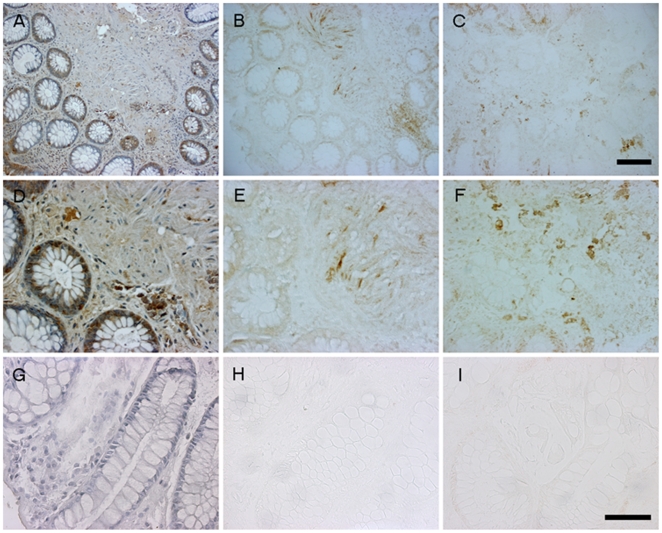
UNLABELLED: Parkinson's disease (PD) is the second most common neurodegenerative disorder of aging. The pathological hallmark of PD is neuronal inclusions termed Lewy bodies whose main component is alpha-synuclein protein. The finding of these Lewy bodies in the intestinal enteric nerves led to the hypothesis that the intestine might be an early site of PD disease in response to an environmental toxin or pathogen. One potential mechanism for environmental toxin(s) and proinflammatory luminal products to gain access to mucosal neuronal tissue and promote oxidative stress is compromised intestinal barrier integrity. However, the role of intestinal permeability in PD has never been tested. We hypothesized that PD subjects might exhibit increased intestinal permeability to proinflammatory bacterial products in the intestine. To test our hypothesis we evaluated intestinal permeability in subjects newly diagnosed with PD and compared their values to healthy subjects. In addition, we obtained intestinal biopsies from both groups and used immunohistochemistry to assess bacterial translocation, nitrotyrosine (oxidative stress), and alpha-synuclein. We also evaluated serum markers of endotoxin exposure including LPS binding protein (LBP). Our data show that our PD subjects exhibit significantly greater intestinal permeability (gut leakiness) than controls. In addition, this intestinal hyperpermeability significantly correlated with increased intestinal mucosa staining for E. coli bacteria, nitrotyrosine, and alpha-synuclein as well as serum LBP levels in PD subjects. These data represent not only the first demonstration of abnormal intestinal permeability in PD subjects but also the first correlation of increased intestinal permeability in PD with intestinal alpha-synuclein (the hallmark of PD), as well as staining for gram negative bacteria and tissue oxidative stress. Our study may thus shed new light on PD pathogenesis as well as provide a new method for earlier diagnosis of PD and suggests potential therapeutic targets in PD subjects. TRIAL REGISTRATION: Clinicaltrials.gov NCT01155492.
Overview
The claims and statistics of this paper haven’t been checked yet.
Run the check — free, no account needed. It reads the open-access text and checks the sources it cites.
Integrity signals
Registry
Cites
Statistics
Figures
Verification
Claims the paper makes
The claims and statistics of this paper haven’t been checked yet.
Run the check — free, no account needed. It reads the open-access text and checks the sources it cites.
Claims other papers make about this one
Each is checked against this paper’s own text: does it say what the citing paper says it does?
The source backs part of the claim, not all of it — or backs it for a different population, condition or comparison.
In the citing paper
“A leaky gut barrier has been linked to PD pathogenesis involving local flux of bacterial toxins, microbes, and potentially molecules like α-synuclein across the gastrointestinal epithelium [29–31]”
From The gut–brain axis in early Parkinson’s disease: from prodrome to prevention (2025) · cites this paper as [31]
Experimental — accuracy not yet measuredThe source backs part of the claim, not all of it — or backs it for a different population, condition or comparison.
In the citing paper
“Increased intestinal permeability is associated with increased bacteria and exposure to the bacterial endotoxin in Parkinson's disease, while increased intestinal a-synuclein and 3nitrotyrosine staining (associated with oxidative stress) leads to high intestinal permeability.127”
From The role of gut dysbiosis in Parkinson’s disease: mechanistic insights and therapeutic options (2021) · cites this paper as [127]
Experimental — accuracy not yet measuredIn the citing paper
“Intestinal permeability increases early in Parkinson’s disease”
From The endotoxin hypothesis of neurodegeneration (2019) · cites this paper as [92]
In the citing paper
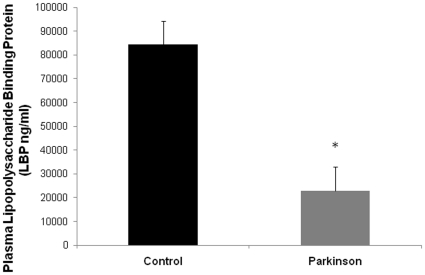
“PD patients have increased gastrointestinal permeability [92] and LPS binding protein (LBP) [92], and a proportion of PD patients have elevated blood endotoxin [93].”
From The endotoxin hypothesis of neurodegeneration (2019) · cites this paper as [92]
In the citing paper
“serum from PD patients contains low levels of LPS binding protein [145,146], which are indicative of a chronic systemic exposure to LPS and gram negative endobacteria [147,148,149]”
From The Interplay between Gut Microbiota and Parkinson’s Disease: Implications on Diagnosis and Treatment (2022) · cites this paper as [146]
Self-check
Percentages, sums and reported differences re-computed from the paper’s own numbers.
The self-check needs the paper’s full text.
Citations
Cites
Hughes, A. J., Daniel, S. E., Kilford, L., & Lees, A. J. (1992) · Journal of Neurology, Neurosurgery & Psychiatry · doi:10.1136/jnnp.55.3.181 · Cited by 10,378
Metagenomic Analysis of the Human Distal Gut Microbiome
Gill, S. R., Pop, M., DeBoy, R. T., Eckburg, P. B., Turnbaugh, P. J., Samuel, B. S., Gordon, J. I., Relman, D. A., Fraser-Liggett, C. M., & Nelson, K. E. (2006) · Science · doi:10.1126/science.1124234 · Cited by 4,699
The Effect of Diet on the Human Gut Microbiome: A Metagenomic Analysis in Humanized Gnotobiotic Mice
Turnbaugh, P. J., Ridaura, V. K., Faith, J. J., Rey, F. E., Knight, R., & Gordon, J. I. (2009) · Science Translational Medicine · doi:10.1126/scitranslmed.3000322 · Cited by 3,058 · cited 1×
“The composition of this bacterial community is influenced by both genetic and environmental factors like diet [10].”
BackgroundProjected number of people with Parkinson disease in the most populous nations, 2005 through 2030
Dorsey, E. R., Constantinescu, R., Thompson, J. P., Biglan, K., Holloway, R. G., Kieburtz, K. D., Marshall, F. J., Ravina, B. M., Schifitto, G., Siderowf, A. D., et al. (2006) · Neurology · doi:10.1212/01.wnl.0000247740.47667.03 · Cited by 2,479
Systemic LPS causes chronic neuroinflammation and progressive neurodegeneration
Qin, L., Wu, X., Block, M. L., Liu, Y., Breese, G. R., Hong, J., Knapp, D. J., & Crews, F. T. (2007) · Glia · doi:10.1002/glia.20467 · Cited by 2,144
Neuroinflammation in Parkinson’s disease: A target for neuroprotection?
Hirsch, E. C., & Hunot, S. (2009) · The Lancet Neurology · doi:10.1016/s1474-4422(09)70062-6 · Cited by 1,984
Lees, A. J., Hardy, J., & Revesz, T. (2009) · The Lancet · doi:10.1016/s0140-6736(09)60492-x · Cited by 1,956
Braak, H., R�b, U., Gai, W. P., & Del Tredici, K. (2003) · Journal of Neural Transmission · doi:10.1007/s00702-002-0808-2 · Cited by 1,683
Parkinson's disease: a dual‐hit hypothesis
Hawkes, C. H., Del Tredici, K., & Braak, H. (2007) · Neuropathology and Applied Neurobiology · doi:10.1111/j.1365-2990.2007.00874.x · Cited by 1,021
Kim, W., Mohney, R. P., Wilson, B. C., Jeohn, G., Liu, B., & Hong, J. (2000) · Journal of Neuroscience · doi:10.1523/jneurosci.20-16-06309.2000 · Cited by 881
Thomas, B., & Beal, M. F. (2007) · Human Molecular Genetics · doi:10.1093/hmg/ddm159 · Cited by 748
Inflammation as a causative factor in the aetiology of Parkinson's disease
Whitton, P. S. (2007) · British Journal of Pharmacology · doi:10.1038/sj.bjp.0707167 · Cited by 641
Maes, M. H. J., Kubera, M., & Leunis, J. (2008) · PubMed · Cited by 609
Invited Article: Nervous system pathology in sporadic Parkinson disease
Braak, H., & Tredici, K. D. (2008) · Neurology · doi:10.1212/01.wnl.0000312279.49272.9f · Cited by 548
Intestinal barrier: An interface between health and disease
Farhadi, A., Banan, A., Fields, J. Z., & Keshavarzian, A. (2003) · Journal of Gastroenterology and Hepatology · doi:10.1046/j.1440-1746.2003.03032.x · Cited by 532
Self-citationInflammation and the Degenerative Diseases of Aging
McGeer, P. L., & McGeer, E. G. (2004) · Annals of the New York Academy of Sciences · doi:10.1196/annals.1332.007 · Cited by 530
Parkinson's disease: the presence of Lewy bodies in Auerbach's and Meissner's plexuses
Wakabayashi, K., Takahashi, H., Takeda, S., Ohama, E., & Ikuta, F. (1988) · Acta Neuropathologica · doi:10.1007/bf00687767 · Cited by 528
Estes, J. D., Harris, L. D., Klatt, N. R., Tabb, B., Pittaluga, S., Paiardini, M., Barclay, G. R., Smedley, J. V., Pung, R., Oliveira, K. M., et al. (2010) · PLoS Pathogens · doi:10.1371/journal.ppat.1001052 · Cited by 498
Self-citationShults, C. W. (2006) · Proceedings of the National Academy of Sciences · doi:10.1073/pnas.0509567103 · Cited by 495
Alpha-synuclein in colonic submucosa in early untreated Parkinson’s disease
Shannon, K. M., Keshavarzian, A., Mutlu, E., Dodiya, H. B., Daian, D., Jaglin, J. A., & Kordower, J. H. (2012) · Movement Disorders · doi:10.1002/mds.23838 · Cited by 469
Self-citationMultiple facets of intestinal permeability and epithelial handling of dietary antigens
Ménard, S., Cerf–Bensussan, N., & Heyman, M. (2010) · Mucosal Immunology · doi:10.1038/mi.2010.5 · Cited by 428
Lebouvier, T., Neunlist, M., Bruley des Varannes, S., Coron, E., Drouard, A., N'Guyen, J.-M., Chaumette, T., Tasselli, M., Paillusson, S., Flamand, M., et al. (2010) · PLoS ONE · doi:10.1371/journal.pone.0012728 · Cited by 427
Gao, H.-M., Zhang, F., Zhou, H., Kam, W., Wilson, B., & Hong, J.-S. (2011) · Environmental Health Perspectives · doi:10.1289/ehp.1003013 · Cited by 355 · cited 1×
“Only the transgenic mice, and not controls, developed sustained neuroinflammation including Lewy bodies staining of nigral neurons [40].”
BackgroundLipopolysaccharide Binding Protein-mediated Complexation of Lipopolysaccharide with Soluble CD14
Tobias, P. S., Soldau, K., Gegner, J. A., Mintz, D., & Ulevitch, R. J. (1995) · Journal of Biological Chemistry · doi:10.1074/jbc.270.18.10482 · Cited by 324
Wakabayashi, K., Takahashi, H., Ohama, E., & Ikuta, F. (1990) · Acta Neuropathologica · doi:10.1007/bf00294234 · Cited by 324
Zhang, R., Miller, R. G., Gascon, R., Champion, S., Katz, J., Lancero, M., Narvaez, A., Honrada, R., Ruvalcaba, D., & McGrath, M. S. (2009) · Journal of Neuroimmunology · doi:10.1016/j.jneuroim.2008.09.017 · Cited by 319
Qualman, S. J., Haupt, H. M., Yang, P. H., & Hamilton, S. R. (1984) · PubMed · Cited by 295
The second brain and Parkinson’s disease
Lebouvier, T., Chaumette, T., Paillusson, S., Duyckaerts, C. J., Varannes, S. B. D., Neunlist, M., & Derkinderen, P. (2009) · European Journal of Neuroscience · doi:10.1111/j.1460-9568.2009.06873.x · Cited by 271
Modulatory effects of sCD14 and LBP on LPS-host cell interactions
Kitchens, R. L., & Thompson, P. A. (2005) · Journal of Endotoxin Research · doi:10.1179/096805105x46565 · Cited by 268
Pathological lesions in colonic biopsies during Parkinson’s disease
Lebouvier, T., Chaumette, T., Damier, P., Coron, E., Touchefeu, Y., Vrignaud, S., Naveilhan, P., Galmiche, J.-P., Varannes, S. B. D., Derkinderen, P., et al. (2008) · Gut · doi:10.1136/gut.2008.162503 · Cited by 237
Gutsmann, T., Müller, M., Carroll, S. F., MacKenzie, R. C., Wiese, A., & Seydel, U. (2001) · Infection and Immunity · doi:10.1128/iai.69.11.6942-6950.2001 · Cited by 229
Low-grade endotoxemia in patients with severe autism
Emanuele, E., Orsi, P., Boso, M., Broglia, D., Brondino, N., Barale, F., di Nemi, S. U., & Politi, P. (2010) · Neuroscience Letters · doi:10.1016/j.neulet.2010.01.033 · Cited by 225
Neuroinflammation in the living brain of Parkinson's disease
Ouchi, Y., Yagi, S., Yokokura, M., & Sakamoto, M. (2009) · Parkinsonism & Related Disorders · doi:10.1016/s1353-8020(09)70814-4 · Cited by 210
Epithelial Barriers in Intestinal Inflammation
John, L., Fromm, M., & Schulzke, J. (2011) · Antioxidants and Redox Signaling · doi:10.1089/ars.2011.3892 · Cited by 195
Phillips, R. J., Walter, G. C., Wilder, S. L., Baronowsky, E. A., & Powley, T. L. (2008) · Neuroscience · doi:10.1016/j.neuroscience.2008.02.074 · Cited by 189
Greene, J. G., Noorian, A. R., & Srinivasan, S. (2009) · Experimental Neurology · doi:10.1016/j.expneurol.2009.04.023 · Cited by 165
Starring roles for astroglia in barrier pathologies of gut and brain
Savidge, T., Sofroniew, M. V., & Neunlist, M. (2007) · Laboratory Investigation · doi:10.1038/labinvest.3700600 · Cited by 132
Cirillo, C., Sarnelli, G., Esposito, G., Grosso, M., Petruzzelli, R., Izzo, P., Calı̀, G., D’Armiento, F. P., Rocco, A., Nardone, G., et al. (2009) · Neurogastroenterology & Motility · doi:10.1111/j.1365-2982.2009.01346.x · Cited by 129
Intestinal Permeability and Orocaecal Transit Time in Elderly Patients with Parkinson’s Disease
Davies, K. N., King, D., Billington, D., & Barrett, J. A. (1996) · Postgraduate Medical Journal · doi:10.1136/pgmj.72.845.164 · Cited by 88
Wang, S. Z., Yan, J.-Y., Lo, Y.-K., Carvey, P. M., & Ling, Z. (2009) · Brain Research · doi:10.1016/j.brainres.2009.02.022 · Cited by 86
Farhadi, A., Keshavarzian, A., HOLMES, E. W., et al. (2002) · Journal of Chromatography B · doi:10.1016/s1570-0232(02)00787-0 · Cited by 79
Self-citationHobson, P., Meara, J., & Ishihara-Paul, L. (2010) · Journal of Neurology Neurosurgery & Psychiatry · doi:10.1136/jnnp.2009.198689 · Cited by 67
Endotoxin: is it an environmental factor in the cause of Parkinson’s disease?
Niehaus, I., & Lange, J. H. (2003) · Occupational and Environmental Medicine · doi:10.1136/oem.60.5.378 · Cited by 63
Murakami, M., Ohta, T., & Ito, S. (2009) · Journal of Neuroscience Research · doi:10.1002/jnr.22036 · Cited by 57
McOmber, M. E., Ou, C., & Shulman, R. J. (2010) · Journal of Pediatric Gastroenterology and Nutrition · doi:10.1097/mpg.0b013e3181aa3aa9 · Cited by 56
Farhadi, A., Keshavarzian, A., Fields, J. Z., Sheikh, M., & Banan, A. (2006) · Journal of Chromatography B · doi:10.1016/j.jchromb.2006.03.046 · Cited by 44
Self-citationAbsence of TRIF Signaling in Lipopolysaccharide-Stimulated Murine Mast Cells
Keck, S., Müller, I., Fejér, G., Savic, I., Tchaptchet, S., Nielsen, P. J., Galanos, C., Huber, M., & Freudenberg, M. A. (2011) · The Journal of Immunology · doi:10.4049/jimmunol.1000458 · Cited by 41
Minter, R. M., Bi, X., Ben-Josef, G., Wang, T., Hu, B., Arbabi, S., Hemmila, M. R., Wang, S. C., Remick, D. G., & Su, G. L. (2009) · American Journal of Physiology-Gastrointestinal and Liver Physiology · doi:10.1152/ajpgi.00041.2008 · Cited by 34
Research works printed but not linked: 3
- K Shannon, 2011, Alpha-synuclein in Colonic Submucosa in Early Untreated Parkinson Disease., Movement Disorders
- WJ Kupsky, 1987, Parkinson's disease and megacolon: concentric hyaline inclusions (Lewy bodies) in enteric ganglion cells., Neurology, 37, 1253, 10.1212/WNL.37.7.1253 · DOI
- K Wakabayashi, 1997, Neuropathology of autonomic nervous system in Parkinson's disease., Eur Neurol, 38, 2, 10.1159/000113469 · DOI
Cited by
Sorted by citations
Cryan, J. F., O'Riordan, K. J., Cowan, C. S. M., Sandhu, K. V., Bastiaanssen, T. F. S., Boehme, M., Codagnone, M. G., Cussotto, S., Fulling, C., Golubeva, A. V., et al. (2019) · Physiological Reviews · doi:10.1152/physrev.00018.2018 · Cited by 5,286
The gut microbiota–brain axis in behaviour and brain disorders
Morais, L. H., Schreiber, H. L., & Mazmanian, S. K. (2021) · Nature Reviews Microbiology · doi:10.1038/s41579-020-00460-0 · Cited by 2,149
Gut microbiota are related to Parkinson's disease and clinical phenotype
Scheperjans, F., Aho, V., Pereira, P. A. B., Koskinen, K., Paulin, L., Pekkonen, E., Haapaniemi, E., Kaakkola, S., Eerola‐Rautio, J., Pohja, M., et al. (2015) · Movement Disorders · doi:10.1002/mds.26069 · Cited by 1,968
Interactions between the microbiota, immune and nervous systems in health and disease
Fung, T. C., Olson, C. A., & Hsiao, E. Y. (2017) · Nature Neuroscience · doi:10.1038/nn.4476 · Cited by 1,900
The impact of diet and lifestyle on gut microbiota and human health
Conlon, M., & Bird, A. (2014) · Nutrients · doi:10.3390/nu7010017 · Cited by 1,567
Metadata
- Authors
- Forsyth, C. B., Shannon, K. M., Kordower, J. H., Voigt, R. M., Shaikh, M., Jaglin, J. A., Estes, J. D., Dodiya, H. B., & Keshavarzian, A.
- Affiliations
- Rush University Medical Center (US)
- National Cancer Institute (US)
- Corresponding author
- Forsyth, Christopher B.
- ORCID
- Venue
- PLoS ONE
- Publisher
- Public Library of Science (PLoS)
- Published
- 2011-12-01
- Volume
- 6
- Issue
- 12
- Pages
- e28032
- ISSN
- 1932-6203 (ISSN-L)
- PMC
- PMC3228722
- OpenAlex
- W1992780204
- Cited by
- 974
- References
- 48
- Citations by year
- 2026: 72 · 2025: 73 · 2024: 86 · 2023: 108 · 2022: 108 · 2021: 132 · 2020: 96 · 2019: 72 · 2018: 66 · 2017: 44 · 2016: 33 · 2015: 36 · 2014: 20 · 2013: 13 · 2012: 14
- FWCI
- 9.55
- Type
- journal article
- Language
- en
- Open access
- gold
- doi.org
- Locations
- PLoS ONE (publishedVersion, cc-by)
- Europe PMC (PubMed Central) (publishedVersion, cc-by)
- PubMed Central (publishedVersion, cc-by)
- PubMed (publishedVersion)
- DOAJ (DOAJ: Directory of Open Access Journals) (submittedVersion, cc-by-sa)
- Figshare (submittedVersion, cc-by)
- Funders
- Parkinson's Disease Foundation
- Topics
- Health Sciences › Medicine › Clinical Neurology › Parkinson's Disease Mechanisms and Treatments
- Health Sciences › Medicine › Gastroenterology › Gastrointestinal motility and disorders
- Life Sciences › Biochemistry, Genetics and Molecular Biology › Molecular Biology › Gut microbiota and health
- Keywords
- Parkinson's disease, intestinal permeability, alpha-synuclein, Lewy bodies, endotoxin exposure, bacterial translocation, nitrotyrosine, oxidative stress, LPS-binding protein, Escherichia coli, intestinal barrier integrity, early diagnosis, gut-brain axis
- MeSH terms
- Lipopolysaccharide-Binding Protein, Acute-Phase Proteins, Aged, Carrier Proteins, Endotoxins, Escherichia coli, Escherichia coli Infections, Female, Humans, Immunoenzyme Techniques, Intestinal Mucosa, Intestines, Male, Membrane Glycoproteins, Middle Aged, Neurons, Parkinson Disease, Permeability, Sucrose, Tyrosine, Biomarkers, Oxidative Stress, alpha-Synuclein
About these checks
Registry, retraction, Cites and statistics results are computed, not judged, with one exception: a printed reference that no index lists is read once by a model before it counts as a citation error. Claims are extracted by a model and kept only when their quote appears verbatim in the text; each cited source is then checked, with a model’s help, for whether it says what the claim relies on. Those verdicts can be wrong — read the claim’s quote and the cited source before relying on one.
Statistics and arithmetic are recomputed, not judged.
Confidence bands are shown only for fields calibrated on our annotated test set. None is calibrated yet, so no band is shown.
What counts as a claim ›How we measure confidence ›How we check this ›
Are you an author, or do you see a problem with this page? Request a review
