

The DOI matches its Crossref record; 27 of the 28 references it cites were found in a registry or an index.
Behavioral Priming: It’s all in the Mind, but whose Mind?
Open accessAbstract
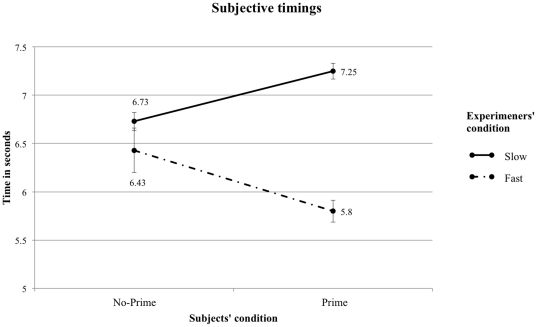
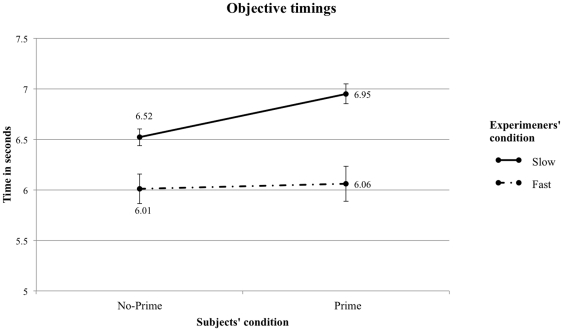
The perspective that behavior is often driven by unconscious determinants has become widespread in social psychology. Bargh, Chen, and Burrows' (1996) famous study, in which participants unwittingly exposed to the stereotype of age walked slower when exiting the laboratory, was instrumental in defining this perspective. Here, we present two experiments aimed at replicating the original study. Despite the use of automated timing methods and a larger sample, our first experiment failed to show priming. Our second experiment was aimed at manipulating the beliefs of the experimenters: Half were led to think that participants would walk slower when primed congruently, and the other half was led to expect the opposite. Strikingly, we obtained a walking speed effect, but only when experimenters believed participants would indeed walk slower. This suggests that both priming and experimenters' expectations are instrumental in explaining the walking speed effect. Further, debriefing was suggestive of awareness of the primes. We conclude that unconscious behavioral priming is real, while real, involves mechanisms different from those typically assumed to cause the effect.
Overview
The claims and statistics of this paper haven’t been checked yet.
Run the check — free, no account needed. It reads the open-access text and checks the sources it cites.
Integrity signals
Registry
Cites
Statistics
Figures
Verification
Claims the paper makes
The claims and statistics of this paper haven’t been checked yet.
Run the check — free, no account needed. It reads the open-access text and checks the sources it cites.
Claims other papers make about this one
Each is checked against this paper’s own text: does it say what the citing paper says it does?
The source backs part of the claim, not all of it — or backs it for a different population, condition or comparison.
In the citing paper
“When Doyen and colleagues49 attempted to replicate a previous experiment suggesting that priming participants with age-related stereotypes had an effect on walking speed50, they failed to find any significant results when using a double-blind procedure (prior studies were not blinded).”
From The limited prosocial effects of meditation: A systematic review and meta-analysis (2018) · cites this paper as [49]
Experimental — accuracy not yet measuredThe cited source says what the claim attributes to it.
In the citing paper
“As demonstrated by Doyen et al. [25] the experimenter who knows the participants’ condition may unintentionally act differently so that participants’ behavior may be altered to confirm the researcher’s hypothesis.”
From Failed Replication of Oxytocin Effects on Trust: The Envelope Task Case (2015) · cites this paper as [25]
The cited source says what the claim attributes to it.
In the citing paper
“The use of single blind studies, where the subject is blind to the treatment condition but the experimenter is not, introduces the risk that the experimenter might unconsciously influence the subjects (37).”
From Is there a Publication Bias in Behavioural Intranasal Oxytocin Research on Humans? Opening the File Drawer of One Laboratory (2016) · cites this paper as [37]
The cited source says what the claim attributes to it.
In the citing paper
“They further showed that when making some experimenters believe that priming participants with age-related stereotypes would slow them down, this indeed had a significant effect, but only in those experimenters that were made to believe in the stereotypes.”
From The limited prosocial effects of meditation: A systematic review and meta-analysis (2018) · cites this paper as [49]
The cited source says what the claim attributes to it.
In the citing paper
“Recent work indicates that experimenter biases are not a thing of the past.”
From The limited prosocial effects of meditation: A systematic review and meta-analysis (2018) · cites this paper as [49]
Self-check
Percentages, sums and reported differences re-computed from the paper’s own numbers.
The self-check needs the paper’s full text.
Citations
Cites
Telling more than we can know: Verbal reports on mental processes.
Nisbett, R. E., & Wilson, T. D. (1977) · Psychological Review · doi:10.1037/0033-295x.84.3.231 · Cited by 11,317 · cited 1×
“As Nisbett and Wilson [20] famously pointed out, participants can remain (1) unaware of the stimulus, (2) unaware of their response, or (3) unaware of the fact that the stimulus importantly influenced the response.”
BackgroundThe unbearable automaticity of being
Bargh, J. A., & Chartrand, T. L. (1999) · American Psychologist · doi:10.1037/0003-066x.54.7.462 · Cited by 3,699 · cited 1×
“Studies [22] on automatic behavior have suggested that participants tend to mimic the experimenter’s behavior.”
BackgroundThe chameleon effect: the perception–behavior link and social interaction
Chartrand, T. L., & Bargh, J. A. (1999) · Journal of Personality and Social Psychology · doi:10.1037/0022-3514.76.6.893 · Cited by 3,674
Bargh, J. A., Chen, M., & Burrows, L. (1996) · Journal of Personality and Social Psychology · doi:10.1037/0022-3514.71.2.230 · Cited by 2,736
Bargh, J. A., Chen, M. I.-C., & Burrows, L. (1996) · Journal of Personality and Social Psychology · doi:10.1037//0022-3514.71.2.230 · Cited by 2,646
Towards a cognitive neuroscience of consciousness: basic evidence and a workspace framework
Dehaene, S. (2001) · Cognition · doi:10.1016/s0010-0277(00)00123-2 · Cited by 2,498 · cited 1×
“For instance, several authors [9,10,11] suggest that two factors are necessary to produce the large patterns of neural activation in higher association cortices that are essential for semantic priming to occur: Top-down attention to the prime and bottom-up stimulus strength (e.”
BackgroundConscious, preconscious, and subliminal processing: a testable taxonomy
Dehaene, S., Changeux, J.-P., Naccache, L., Sackur, J., & Sergent, C. (2006) · Trends in Cognitive Sciences · doi:10.1016/j.tics.2006.03.007 · Cited by 2,067
The automated will: nonconscious activation and pursuit of behavioral goals.
Bargh, J. A., Gollwitzer, P. M., Lee-Chai, A., Barndollar, K., & Trötschel, R. (2001) · Journal of Personality and Social Psychology · doi:10.1037/0022-3514.81.6.1014 · Cited by 1,865
Srull, T. K., & Wyer, R. S. (1979) · Journal of Personality and Social Psychology · doi:10.1037/0022-3514.37.10.1660 · Cited by 1,529
Cerebral mechanisms of word masking and unconscious repetition priming
Dehaene, S., Naccache, L., Cohen, L., Bihan, D. L., Mangin, J.-F., Poline, J.-B., & Rivière, D. (2001) · Nature Neuroscience · doi:10.1038/89551 · Cited by 1,305
Cited by
Sorted by citations
Items 501–600 of 674
A FAIR Workflow Guide for Researchers in Human Cognitive NeurosciencePreprint
Zheng, Z., Chen, X., Brown, T., Cousijn, H., & Melloni, L. (2024) · PsyArXiv (OSF Preprints) · doi:10.31234/osf.io/yhj5c · Cited by 3
Questionable Interpretive Practices
Jussim, L. J., Stevens, S. T., & Anglin, S. M. (2022) · Oxford University Press eBooks · doi:10.1093/oso/9780190938550.003.0009 · Cited by 1
Mind the (Construct-Measurement) Gap
Hodson, G. (2023) · Psychological Inquiry · doi:10.1080/1047840x.2023.2274389 · Cited by 1
Persistent evidential discordance
Reijula, S., & Sequeiros, S. B. (2024) · The British Journal for the Philosophy of Science · doi:10.1086/731543 · Cited by 1
La replicabilidad en la ciencia y el papel transformador de la metodología estadística de knockoffs
Vásquez, A. R., Escarela, G., Núñez‐Antonio, G., & Urbina, J. U. M. (2024) · SAHUARUS REVISTA ELECTRÓNICA DE MATEMÁTICAS · doi:10.36788/sah.v8i1.148 · Cited by 1
Virtue Ethics and the Environment
Dzwonkowska, D. (2024) · Routledge eBooks · doi:10.4324/9781003433156 · Cited by 1
Ezzina, S., Pla, S., & Delignières, D. (2025) · Frontiers in Network Physiology · doi:10.3389/fnetp.2025.1532700 · Cited by 1
Snell, A., & Zuckerman, M. (2025) · Self and Identity · doi:10.1080/15298868.2025.2541586 · Cited by 1
The effect of assessment and mixed emotions on willingness to try clean meat
Thomas, T. S., Septianto, F., O’Rourke, A.-M., & Mathmann, F. (2025) · Journal of Strategic Marketing · doi:10.1080/0965254x.2025.2601980 · Cited by 1
Smithson, M. J. (2026) · doi:10.1093/9780198960614.001.0001 · Cited by 1
Huang, S.-C. (2013) · ProQuest LLC eBooks · doi:10.7916/d8ks6zrz · Cited by 1
Kognitive Systeme und Prozesse
Pfister, H. R., Jungermann, H., & Fischer, K. (2016) · Springer eBooks · doi:10.1007/978-3-662-53038-2_10 · Cited by 1
Silent Hands: A Leader’s Ability to Create Nonverbal Immediacy
Talley, L. L., & Temple, S. R. (2018) · Journal of Social Behavioral and Health Sciences · doi:10.5590/jsbhs.2018.12.1.09 · Cited by 1
Soziale Kognition: Grundlagen sozialer Informationsverarbeitung und sozialen Verhaltens
Werth, L., Denzler, M., & Mayer, J. (2020) · Springer eBooks · doi:10.1007/978-3-662-53897-5_2 · Cited by 2
A tale of two biases: choosing versus rejecting and the decision-by-sampling model
Brennan, I. (2021) · The International Review of Retail Distribution and Consumer Research · doi:10.1080/09593969.2021.1945654 · Cited by 1
Auf dem Weg zu einer reflektierten Entscheidung
von Nitzsch, R. (2021) · Springer eBooks · doi:10.1007/978-3-658-34520-4_1 · Cited by 1
Masrhouni, I., & Bahoussa, A. (2023) · Journal of Social Science Studies · doi:10.5296/jsss.v10i1.20680 · Cited by 1
Goldschmied, N. P., García-Aliaga, A., Solana, D. M., & Mon‐López, D. (2023) · PLoS ONE · doi:10.1371/journal.pone.0291017 · Cited by 1
Priming Motivation in a Second Language: A Preregistered Report
Al‐Hoorie, A. H., & Hiver, P. V. (2023) · Journal for the Psychology of Language Learning · doi:10.52598/jpll/5/1/2 · Cited by 1
Modulation of the Walking Speed by Moving Avatars with Age Stereotype Stimuli
Koseki, Y., & Amemiya, T. (2023) · Lecture notes in computer science · doi:10.1007/978-3-031-48050-8_7 · Cited by 1
The Role of Political Communication in Protest Mobilization
Schiffbeck, A., & Basarabă, A. (2024) · Communist and post-communist studies · doi:10.1525/cpcs.2024.2271188 · Cited by 1
Epistemic justification and the folk conceptual gap
Mortini, D. (2025) · Episteme · doi:10.1017/epi.2024.30 · Cited by 1
Eagle, M. N. (2013) · The Psychoanalytic Review · doi:10.1521/prev.2013.100.6.881 · Cited by 1
Chapter 2. Experimental research
Cremers, H. R. (2017) · John Benjamins Publishing Company eBooks · doi:10.1075/z.210.02cre · Cited by 1
Jensen, A. M., Stevens, R., & Burls, A. (2019) · Advances in Integrative Medicine · doi:10.1016/j.aimed.2019.04.002 · Cited by 1
Selvi, U., & Sümer, H. C. (2020) · Psikoloji Çalışmaları / Studies in Psychology · doi:10.26650/sp2019-0022 · Cited by 1
Response to Lynch et al: On measuring head motion and effects of head molds during fMRI
Jolly, E., Sadhukha, S., & Chang, L. J. (2020) · NeuroImage · doi:10.1016/j.neuroimage.2020.117484 · Cited by 1
Counteracting subliminal cues that threaten national identity
van Breen, J. A., de Lemus, S., Spears, R., & Kuppens, T. (2021) · British Journal of Social Psychology · doi:10.1111/bjso.12474 · Cited by 1
The Reproducibility Crisis in Science Education Studies: Causes and Solutions
Nakamura, D., HARADA, Y., HISASAKA, T., UNZAI, H., & Matsuura, T. (2021) · Journal of Research in Science Education · doi:10.11639/sjst.sp20016 · Cited by 1
Meier, B. P., Kitchens, M. B., Kupersmith, D. E., Houck, K. E., Keyton, N. S., Petrasic, S. E., Schultz, E. H., Sheriff, S. S., Simmers, M. M., Underwood, J. O., et al. (2021) · Experimental Psychology (formerly Zeitschrift für Experimentelle Psychologie) · doi:10.1027/1618-3169/a000513 · Cited by 1
Werth, L., Seibt, B., & Mayer, J. (2019) · Springer eBooks · doi:10.1007/978-3-662-53899-9_4 · Cited by 1
Current Issues in Behavioral and Social Science Research Ethics
DuBois, J. M., & Lisi, E. C. (2021) · Oxford University Press eBooks · doi:10.1093/oxfordhb/9780190947750.013.23 · Cited by 1
BRAND ATTITUDES AND THE PLACEMENT OF SEMANTIC PRIMES IN NOVELS
(2017) · Global Journal of Management and Marketing · doi:10.47177/gjmm.01.01.2017.021 · Cited by 1
Good science, bad science: Questioning research practices in psychological research
Bakker, M. (2014) · UvA-DARE (University of Amsterdam) · Cited by 1
Subliminal Exposure to Empathy Primes: A New Method to Reduce Intergroup Bias?
Khan, B. (2013) · Brock University Digital Repository (Brock University) · Cited by 1
Weight as an Embodiment of Importance: Replication and ExtensionsPreprint
Djordjević, S., & IJzerman, H. (2015) · SSRN Electronic Journal · doi:10.2139/ssrn.2586261 · Cited by 1
Kersbergen, I. (2017) · Thesis Commons (OSF Preprints) · doi:10.31237/osf.io/cehmq · Cited by 1
Meaning and the Situated Mind: How Context Guides Mental Representations Formed from Language
Hauser, D. (2017) · Deep Blue (University of Michigan) · Cited by 1
Symptom over-reporting ≠ malingering
Niesten, I. J. M. (2019) · Research Publications (Maastricht University) · doi:10.26481/dis.20191011in · Cited by 1
Religion Causes Decreases in Women’s Provocativeness of DressPreprint
Hone, L. S. E., & McCullough, M. E. (2019) · PsyArXiv (OSF Preprints) · doi:10.31234/osf.io/g7de9 · Cited by 3
Bayesian evaluation of replication studiesPreprint
Leplaa, H. J., Rietbergen, C., & Hoijtink, H. J. A. (2020) · doi:10.31234/osf.io/49tbz · Cited by 1
Conscious and unconscious mental states.Preprint
Dienes, Z. P., & Seth, A. K. (2022) · doi:10.31219/osf.io/mzx6t · Cited by 1
The Evolutionary Approach to Political PsychologyPreprint
Petersen, M. B. (2022) · doi:10.31234/osf.io/372cr · Cited by 1
Bellman, S. (2017) · Wiley eBooks · doi:10.1002/9781118901731.iecrm0098 · Cited by 1
Schimmack, U., & Soto, M. (2026) · Communication Methods and Measures · doi:10.1080/19312458.2026.2658505 · Cited by 2
Tricoche, L., & Caspar, É. A. (2026) · OSF Preprints (OSF Preprints) · doi:10.31219/osf.io/s6jtk_v4 · Cited by 1
Violent video games and social behaviour
Tear, M. J. (2015) · The University of Queensland · doi:10.14264/uql.2015.784
The Effects of Testosterone Indicators on Consumer Risk-Taking
Stenstrom, E. P. (2014) · Spectrum Research Repository (Concordia University)
Malay, D. S. (2016) · The Journal of Foot & Ankle Surgery · doi:10.1053/j.jfas.2016.01.029
Under the Influence and Unaware
Balcetis, E., & Granot, Y. (2015) · Wiley eBooks · doi:10.1002/9781118468333.ch11
Runyan, J. D. (2014) · Palgrave Macmillan UK eBooks · doi:10.1057/9781137329493_6
Priming Effects of LinkedIn Advertisements on Evaluations of Applicants
Légaré-Saint-Laurent, L.-E. (2014) · The Atrium (University of Guelph)
Humanization: The Crash or Reboot of Social Psychology
Bainbridge, W. S. (2017) · Springer eBooks · doi:10.1007/978-3-319-56502-6_2
The formal disciplinary value of advanced mathematical study : a focus on spatial skills
Humphries, S. M. (2017) · Loughborough University Institutional Repository (Loughborough University)
Sex differences in social learning : exploring the links with risk aversion and confidence
Brand, C. O. (2017) · St Andrews Research Repository (St Andrews Research Repository)
How We Process Information: A Look at Embodied Cognition and Priming
Young, B. (2018) · Springer eBooks · doi:10.1007/978-3-319-90911-0_4
Are We Rational When It Comes to Rationality?
Rudnicki, J. (2018) · Filozofia Nauki · doi:10.14394/filnau.2018.0028
The 2008 election: A preregistered replication analysisPreprint
Lei, R., Gelman, A., & Ghitza, Y. (2016) · arXiv (Cornell University) · doi:10.48550/arxiv.1607.04157
Hong, J., Hwang, M., & Tai, K. (2020) · IntechOpen eBooks · doi:10.5772/intechopen.93902
The Role of Sensorimotor Representation in Social Interaction
Huang, Y., & Li, X. (2020) · Advances in Applied Sociology · doi:10.4236/aasoci.2020.1012031
Psychological science from 'publish or perish' to 'trust but verify'
Keljanović, A. (2021) · Zbornik radova Filozofskog fakulteta u Pristini · doi:10.5937/zrffp51-24851
Beyond Embodied Cognition: Intentionality, Affordance, and Environmental Adaptation
Jin, Z., Tirassa, M., & Borghi, A. M. (2019) · Frontiers research topics · doi:10.3389/978-2-88945-815-8
Teaching ReplicationPreprint
Frank, M. C., & Saxe, R. R. (2017) · doi:10.31219/osf.io/6gvw9
(2016) · Elsevier eBooks · doi:10.1016/b978-0-12-420020-3.00013-x
Hasselman, F., Crielaard, S. V., & Bosman, A. M. T. (2017) · doi:10.31234/osf.io/j944a
Psychology and open science in Africa: Why is it needed and how can we implement it?Preprint
Azouaghe, S., Adetula, A., Forscher, P. S., Basnight-Brown, D. M., Ouherrou, N., Charyate, A. C. A., & IJzerman, H. (2020) · AfricArXiv (OSF Preprints) · doi:10.31730/osf.io/ke7ub
Vaughan‐Johnston, T. I., & Jacobson, J. A. (2020) · The Wiley Encyclopedia of Personality and Individual Differences · doi:10.1002/9781118970843.ch56
(2015) · Odile Jacob eBooks · doi:10.3917/oj.pigno.2015.01.0259
Embodied cognition—How our bodies and movements shape our thinking
Raab, M. (2020) · Elsevier eBooks · doi:10.1016/b978-0-12-823523-2.00003-9
Stewart, E. K. (2019) · Springer eBooks · doi:10.1007/978-3-319-47829-6_772-1
Buttliere, B., & Wicherts, J. M. (2018) · PsyArXiv (OSF Preprints) · doi:10.31234/osf.io/972eu
Vaughan‐Johnston, T. I., & Jacobson, J. A. (2020) · The Wiley Encyclopedia of Personality and Individual Differences · doi:10.1002/9781119547143.ch56
Psychological Science Replicates Just Fine, ThanksPreprint
Aarts, A. A. (2021) · SSRN Electronic Journal · doi:10.2139/ssrn.4176922
Intranasal oxytocin studies on dogs might not be double-blind
Kis, A., Bolló, H., Gergely, A. E., & Topál, J. (2022) · Applied Animal Behaviour Science · doi:10.1016/j.applanim.2022.105681
Smells, Well-being, and the Built Environment
Xiao, J., Aletta, F., & Radicchi, A. (2022) · Frontiers research topics · doi:10.3389/978-2-88976-160-9 · Cited by 1
Unbemerkte kognitive Beeinflussungen – ein Beispiel
Wenski, G. (2022) · Springer eBooks · doi:10.1007/978-3-662-64776-9_1
Stewart, E. K. (2022) · Springer eBooks · doi:10.1007/978-3-319-55065-7_772
Automatic Prejudice and Weapon Identification: A Study with Students and Police Officers
Dantas, G. S., Alves, M. V., & Pereira, M. E. (2022) · Race and Social Problems · doi:10.1007/s12552-022-09373-4
Prymowanie starości w grze komputerowej a szybkość funkcji poznawczych
Nowicka, P., & Kowalska, K. (2022) · Ogrody Nauk i Sztuk · doi:10.15503/onis2022.295.308
Ziani-Franclet, Z. (2022) · doi:10.31234/osf.io/ys9dh
“What an Emotionless Robot!”: Visuomotor Priming from Video Stimuli Influences Emotion Recognition
Finkbeiner, K. M., & Helton, W. S. (2022) · Proceedings of the Human Factors and Ergonomics Society Annual Meeting · doi:10.1177/1071181322661057
Tanton, T. (2023) · Oxford University Press eBooks · doi:10.1093/oso/9780192884589.003.0006
Grounding God? Embodying Theological Meaning
Tanton, T. (2023) · Oxford University Press eBooks · doi:10.1093/oso/9780192884589.003.0005
Tanton, T. (2023) · Oxford University Press eBooks · doi:10.1093/oso/9780192884589.003.0001
Conclusion: Theology for Humans
Tanton, T. (2023) · Oxford University Press eBooks · doi:10.1093/oso/9780192884589.003.0009
Embodied Cognition in Ecclesial Practices
Tanton, T. (2023) · Oxford University Press eBooks · doi:10.1093/oso/9780192884589.003.0007
Tanton, T. (2023) · Oxford University Press eBooks · doi:10.1093/oso/9780192884589.003.0008
Tanton, T. (2023) · Oxford University Press eBooks · doi:10.1093/oso/9780192884589.003.0002
Tanton, T. (2023) · Oxford University Press eBooks · doi:10.1093/oso/9780192884589.003.0004
Tanton, T. (2023) · Oxford University Press eBooks · doi:10.1093/oso/9780192884589.002.0004
Psychoaccelerometry: Mapping psychological constructs to movement in experimental researchPreprint
Clark, O. J. (2023) · doi:10.31234/osf.io/aezmy
Metadata
- Authors
- Doyen, S., Klein, O., Pichon, C.-L., & Cleeremans, A.
- Affiliations
- Université Libre de Bruxelles (BE)
- Corresponding author
- Doyen, Stéphane
- Venue
- PLoS ONE
- Publisher
- Public Library of Science (PLoS)
- Published
- 2012-01-18
- Volume
- 7
- Issue
- 1
- Pages
- e29081
- ISSN
- 1932-6203 (ISSN-L)
- PMC
- PMC3261136
- OpenAlex
- W2047874726
- Cited by
- 670
- References
- 28
- Citations by year
- 2026: 32 · 2025: 45 · 2024: 32 · 2023: 64 · 2022: 40 · 2021: 48 · 2020: 49 · 2019: 51 · 2018: 50 · 2017: 43 · 2016: 44 · 2015: 60 · 2014: 56 · 2013: 43 · 2012: 10
- FWCI
- 179.33
- Type
- journal article
- Language
- en
- Open access
- gold
- doi.org
- Locations
- PLoS ONE (publishedVersion, cc-by)
- PubMed Central (publishedVersion, cc-by)
- PubMed (publishedVersion)
- Dépôt institutionnel de l'Université libre de Bruxelles (Université Libre de Bruxelles) (submittedVersion, other-oa)
- DOAJ (DOAJ: Directory of Open Access Journals) (submittedVersion, cc-by-sa)
- Figshare (submittedVersion, cc-by)
- Topics
- Social Sciences › Sociology and Political Science › Social and Intergroup Psychology
- Social Sciences › Psychology › Social Psychology › Psychology of Social Influence
- Social Sciences › Psychology › Social Psychology › Death Anxiety and Social Exclusion
- Keywords
- behavioral priming, unconscious priming, replication failure, walking speed, age stereotypes, expectancy effects, debriefing
- MeSH terms
- Adolescent, Adult, Awareness, Behavior, Humans, Psychology, Social, Psychomotor Performance, Unconscious, Psychology, Word Association Tests, Walking, Young Adult
About these checks
Registry, retraction, Cites and statistics results are computed, not judged, with one exception: a printed reference that no index lists is read once by a model before it counts as a citation error. Claims are extracted by a model and kept only when their quote appears verbatim in the text; each cited source is then checked, with a model’s help, for whether it says what the claim relies on. Those verdicts can be wrong — read the claim’s quote and the cited source before relying on one.
Statistics and arithmetic are recomputed, not judged.
Confidence bands are shown only for fields calibrated on our annotated test set. None is calibrated yet, so no band is shown.
What counts as a claim ›How we measure confidence ›How we check this ›
Are you an author, or do you see a problem with this page? Request a review
