

The DOI matches its Crossref record; 27 of the 28 references it cites were found in a registry or an index.
Behavioral Priming: It’s all in the Mind, but whose Mind?
Open accessAbstract
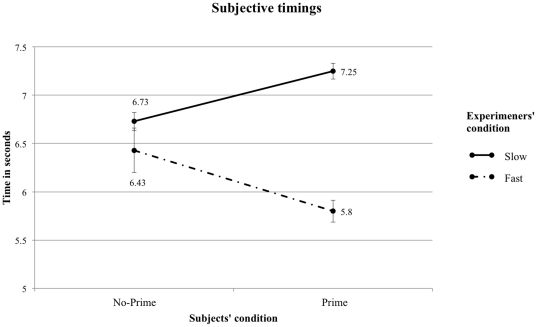
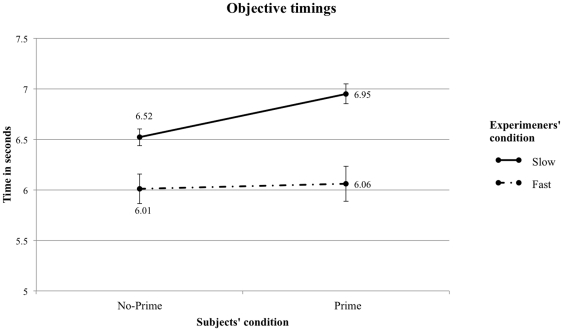
The perspective that behavior is often driven by unconscious determinants has become widespread in social psychology. Bargh, Chen, and Burrows' (1996) famous study, in which participants unwittingly exposed to the stereotype of age walked slower when exiting the laboratory, was instrumental in defining this perspective. Here, we present two experiments aimed at replicating the original study. Despite the use of automated timing methods and a larger sample, our first experiment failed to show priming. Our second experiment was aimed at manipulating the beliefs of the experimenters: Half were led to think that participants would walk slower when primed congruently, and the other half was led to expect the opposite. Strikingly, we obtained a walking speed effect, but only when experimenters believed participants would indeed walk slower. This suggests that both priming and experimenters' expectations are instrumental in explaining the walking speed effect. Further, debriefing was suggestive of awareness of the primes. We conclude that unconscious behavioral priming is real, while real, involves mechanisms different from those typically assumed to cause the effect.
Overview
The claims and statistics of this paper haven’t been checked yet.
Run the check — free, no account needed. It reads the open-access text and checks the sources it cites.
Integrity signals
Registry
Cites
Statistics
Figures
Verification
Claims the paper makes
The claims and statistics of this paper haven’t been checked yet.
Run the check — free, no account needed. It reads the open-access text and checks the sources it cites.
Claims other papers make about this one
Each is checked against this paper’s own text: does it say what the citing paper says it does?
The source backs part of the claim, not all of it — or backs it for a different population, condition or comparison.
In the citing paper
“When Doyen and colleagues49 attempted to replicate a previous experiment suggesting that priming participants with age-related stereotypes had an effect on walking speed50, they failed to find any significant results when using a double-blind procedure (prior studies were not blinded).”
From The limited prosocial effects of meditation: A systematic review and meta-analysis (2018) · cites this paper as [49]
Experimental — accuracy not yet measuredThe cited source says what the claim attributes to it.
In the citing paper
“As demonstrated by Doyen et al. [25] the experimenter who knows the participants’ condition may unintentionally act differently so that participants’ behavior may be altered to confirm the researcher’s hypothesis.”
From Failed Replication of Oxytocin Effects on Trust: The Envelope Task Case (2015) · cites this paper as [25]
The cited source says what the claim attributes to it.
In the citing paper
“The use of single blind studies, where the subject is blind to the treatment condition but the experimenter is not, introduces the risk that the experimenter might unconsciously influence the subjects (37).”
From Is there a Publication Bias in Behavioural Intranasal Oxytocin Research on Humans? Opening the File Drawer of One Laboratory (2016) · cites this paper as [37]
The cited source says what the claim attributes to it.
In the citing paper
“They further showed that when making some experimenters believe that priming participants with age-related stereotypes would slow them down, this indeed had a significant effect, but only in those experimenters that were made to believe in the stereotypes.”
From The limited prosocial effects of meditation: A systematic review and meta-analysis (2018) · cites this paper as [49]
The cited source says what the claim attributes to it.
In the citing paper
“Recent work indicates that experimenter biases are not a thing of the past.”
From The limited prosocial effects of meditation: A systematic review and meta-analysis (2018) · cites this paper as [49]
Self-check
Percentages, sums and reported differences re-computed from the paper’s own numbers.
The self-check needs the paper’s full text.
Citations
Cites
Telling more than we can know: Verbal reports on mental processes.
Nisbett, R. E., & Wilson, T. D. (1977) · Psychological Review · doi:10.1037/0033-295x.84.3.231 · Cited by 11,317 · cited 1×
“As Nisbett and Wilson [20] famously pointed out, participants can remain (1) unaware of the stimulus, (2) unaware of their response, or (3) unaware of the fact that the stimulus importantly influenced the response.”
BackgroundThe unbearable automaticity of being
Bargh, J. A., & Chartrand, T. L. (1999) · American Psychologist · doi:10.1037/0003-066x.54.7.462 · Cited by 3,699 · cited 1×
“Studies [22] on automatic behavior have suggested that participants tend to mimic the experimenter’s behavior.”
BackgroundThe chameleon effect: the perception–behavior link and social interaction
Chartrand, T. L., & Bargh, J. A. (1999) · Journal of Personality and Social Psychology · doi:10.1037/0022-3514.76.6.893 · Cited by 3,674
Bargh, J. A., Chen, M., & Burrows, L. (1996) · Journal of Personality and Social Psychology · doi:10.1037/0022-3514.71.2.230 · Cited by 2,736
Bargh, J. A., Chen, M. I.-C., & Burrows, L. (1996) · Journal of Personality and Social Psychology · doi:10.1037//0022-3514.71.2.230 · Cited by 2,646
Towards a cognitive neuroscience of consciousness: basic evidence and a workspace framework
Dehaene, S. (2001) · Cognition · doi:10.1016/s0010-0277(00)00123-2 · Cited by 2,498 · cited 1×
“For instance, several authors [9,10,11] suggest that two factors are necessary to produce the large patterns of neural activation in higher association cortices that are essential for semantic priming to occur: Top-down attention to the prime and bottom-up stimulus strength (e.”
BackgroundConscious, preconscious, and subliminal processing: a testable taxonomy
Dehaene, S., Changeux, J.-P., Naccache, L., Sackur, J., & Sergent, C. (2006) · Trends in Cognitive Sciences · doi:10.1016/j.tics.2006.03.007 · Cited by 2,067
The automated will: nonconscious activation and pursuit of behavioral goals.
Bargh, J. A., Gollwitzer, P. M., Lee-Chai, A., Barndollar, K., & Trötschel, R. (2001) · Journal of Personality and Social Psychology · doi:10.1037/0022-3514.81.6.1014 · Cited by 1,865
Srull, T. K., & Wyer, R. S. (1979) · Journal of Personality and Social Psychology · doi:10.1037/0022-3514.37.10.1660 · Cited by 1,529
Cerebral mechanisms of word masking and unconscious repetition priming
Dehaene, S., Naccache, L., Cohen, L., Bihan, D. L., Mangin, J.-F., Poline, J.-B., & Rivière, D. (2001) · Nature Neuroscience · doi:10.1038/89551 · Cited by 1,305
Cited by
Sorted by citations
Items 101–200 of 674
Replicator degrees of freedom allow publication of misleading failures to replicate
Bryan, C. J., Yeager, D. S., & O’Brien, J. (2019) · Proceedings of the National Academy of Sciences · doi:10.1073/pnas.1910951116 · Cited by 72
Vadillo, M. A., Hardwicke, T. E., & Shanks, D. R. (2016) · Journal of Experimental Psychology General · doi:10.1037/xge0000157 · Cited by 69
Reward-driven distraction: A meta-analysis.
Rusz, D., Pelley, M. E. L., Kompier, M. A. J., Mait, L., & Bijleveld, E. (2020) · Psychological Bulletin · doi:10.1037/bul0000296 · Cited by 67
What’s next for psychology’s embattled field of social priming
Chivers, T. (2019) · Nature · doi:10.1038/d41586-019-03755-2 · Cited by 68
Subliminal priming of intentional inhibition
Parkinson, J., & Haggard, P. (2013) · Cognition · doi:10.1016/j.cognition.2013.11.005 · Cited by 67
McCarthy, R. J., Coley, S. L., Wagner, M. F., Zengel, B., & Basham, A. (2016) · Journal of Experimental Social Psychology · doi:10.1016/j.jesp.2015.10.009 · Cited by 64
Yoo, S.-C., Peña, J. F., & Drumwright, M. (2015) · Computers in Human Behavior · doi:10.1016/j.chb.2015.01.042 · Cited by 58
Priming is not Priming is not Priming
Wentura, D., & Rothermund, K. (2014) · Social Cognition · doi:10.1521/soco.2014.32.supp.47 · Cited by 62
There’s Nothing Social about Social Priming: Derailing the “Train Wreck”
Sherman, J. W., & Rivers, A. M. (2021) · Psychological Inquiry · doi:10.1080/1047840x.2021.1889312 · Cited by 62
Failed Replication of Oxytocin Effects on Trust: The Envelope Task Case
Lane, A., Mikolajczak, M., Treinen, E., Samson, D., Corneille, O., de Timary, P., & Luminet, O. (2015) · PLOS ONE · doi:10.1371/journal.pone.0137000 · Cited by 60
A Model of Political Bias in Social Science Research
Honeycutt, N., & Jussim, L. J. (2020) · Psychological Inquiry · doi:10.1080/1047840x.2020.1722600 · Cited by 64
The Emergence of Statistical Objectivity: Changing Ideas of Epistemic Vice and Virtue in Science
Jeremy Freese, A., & Peterson, D. (2018) · Sociological Theory · doi:10.1177/0735275118794987 · Cited by 61
Do Financial Concerns Make Workers Less Productive?
Kaur, S., Mullainathan, S., Oh, S. S.-Y., & Schilbach, F. (2021) · National Bureau of Economic Research · doi:10.3386/w28338 · Cited by 65
When are women willing to lead? The effect of team gender composition and gendered tasks
Chen, J., & Houser, D. E. (2019) · The Leadership Quarterly · doi:10.1016/j.leaqua.2019.101340 · Cited by 62
Cognitive mechanisms for responding to mimicry from others
Hale, J., & Hamilton, A. F. D. C. (2016) · Neuroscience & Biobehavioral Reviews · doi:10.1016/j.neubiorev.2016.02.006 · Cited by 63
The Role of Experimenter Belief in Social Priming
Gilder, T. S. E., & Heerey, E. A. (2018) · Psychological Science · doi:10.1177/0956797617737128 · Cited by 57
An a priori solution to the replication crisis
Trafimow, D. (2018) · Philosophical Psychology · doi:10.1080/09515089.2018.1490707 · Cited by 56
Full Disclosure: Doing behavioural science necessitates sharingPreprint
Peters, G.-J., Abraham, C., & Crutzen, R. (2018) · doi:10.31234/osf.io/n7p5m · Cited by 55
Measuring the Prevalence of Questionable Research Practices with Incentives for Truth-TellingPreprint
John, L. K., Loewenstein, G. F., & Prelec, D. (2012) · SSRN Electronic Journal · doi:10.2139/ssrn.1996631 · Cited by 56
What We Talk about When We Talk about Unconscious Processing – A Plea for Best Practices
Rothkirch, M., & Hesselmann, G. (2017) · Frontiers in Psychology · doi:10.3389/fpsyg.2017.00835 · Cited by 56
Understanding the Role of the ‘Self’ in the Social Priming of Mimicry
Yin, W., & Hamilton, A. F. D. C. (2013) · PLoS ONE · doi:10.1371/journal.pone.0060249 · Cited by 58
Registered Replication Report on Srull and Wyer (1979)
McCarthy, R. J., Skowronski, J. J., Verschuère, B., Meijer, E. H., Jim, A., Hoogesteyn, K., Orthey, R., Acar, O. A., Aczél, B., Bakos, B. E., et al. (2018) · Advances in Methods and Practices in Psychological Science · doi:10.1177/2515245918777487 · Cited by 55
Will to live in older people's medical decisions: immediate and delayed effects of aging stereotypes
Marques, S., Lima, M. L., Abrams, D., & Swift, H. J. (2014) · Journal of Applied Social Psychology · doi:10.1111/jasp.12231 · Cited by 52
Can the behavioral sciences self-correct? A social epistemic study
Romero, F. (2016) · Studies in History and Philosophy of Science Part A · doi:10.1016/j.shpsa.2016.10.002 · Cited by 53
A creative destruction approach to replication: Implicit work and sex morality across cultures
Tierney, W., Hardy, J. H., Ebersole, C. R., Viganola, D., Clemente, E. G., Gordon, M., Hoogeveen, S., Haaf, J. M., Dreber, A., Johannesson, M., et al. (2020) · Journal of Experimental Social Psychology · doi:10.1016/j.jesp.2020.104060 · Cited by 54
Chan, J. (2025) · Tourism Management · doi:10.1016/j.tourman.2024.105093 · Cited by 43
Can the goal of honesty be primed?
Pashler, H., Rohrer, D., & Harris, C. R. (2013) · Journal of Experimental Social Psychology · doi:10.1016/j.jesp.2013.05.011 · Cited by 50
Perceptual but not complex moral judgments can be biased by exploiting the dynamics of eye-gaze.
Newell, B. R., & Pelley, M. E. L. (2018) · Journal of Experimental Psychology General · doi:10.1037/xge0000386 · Cited by 55
GOALIATH: a theory of goal-directed behavior
Hommel, B. (2021) · Psychological Research · doi:10.1007/s00426-021-01563-w · Cited by 58
Open Science: What, Why, and HowPreprint
Spellman, B., Gilbert, E. A., & Corker, K. S. (2017) · doi:10.31234/osf.io/ak6jr · Cited by 50
Wyatt, T. D. (2020) · Philosophical Transactions of the Royal Society B Biological Sciences · doi:10.1098/rstb.2019.0262 · Cited by 52
Manipulating Belief in Free Will and Its Downstream Consequences: A Meta-Analysis
Genschow, O., Cracco, E., Schneider, J., Protzko, J., Wisniewski, D., Braß, M., & Schooler, J. W. (2022) · Personality and Social Psychology Review · doi:10.1177/10888683221087527 · Cited by 63
Situated Inferences and the What, Who, and Where of Priming
Loersch, C., & Payne, B. (2014) · Social Cognition · doi:10.1521/soco.2014.32.supp.137 · Cited by 58
Ego Depletion in Color Priming Research
Bertrams, A., Baumeister, R. F., Englert, C., & Furley, P. (2015) · Personality and Social Psychology Bulletin · doi:10.1177/0146167214564968 · Cited by 52
Busby, E. C., Howat, A. J., Rothschild, J. E., & Shafranek, R. M. (2021) · Cambridge University Press eBooks · doi:10.1017/9781009086462 · Cited by 48
What Can We Learn from Many Labs Replications?
Stroebe, W. (2019) · Basic and Applied Social Psychology · doi:10.1080/01973533.2019.1577736 · Cited by 50
Psychology, replication & beyond
Laws, K. R. (2016) · BMC Psychology · doi:10.1186/s40359-016-0135-2 · Cited by 52
Pratt, M. G., & Crosina, E. (2016) · Annual Review of Organizational Psychology and Organizational Behavior · doi:10.1146/annurev-orgpsych-041015-062517 · Cited by 52
Raffard, S., Salesse, R. N., Marín, L., Del-Monte, J., Schmidt, R. C., Varlet, M., Bardy, B. G., Boulenger, J., & Capdevielle, D. (2015) · Scientific Reports · doi:10.1038/srep08156 · Cited by 45
Using avatars to tailor ideation process to innovation strategy
Stéphanie Buisine, A., Guegan, J., Barré, J., Segonds, F., & Aoussat, A. (2016) · Cognition Technology & Work · doi:10.1007/s10111-016-0378-y · Cited by 45
Toward an Integration of Goal Setting Theory and the Automaticity Model
Latham, G. P., Brcic, J., & Steinhauer, A. (2016) · Applied Psychology · doi:10.1111/apps.12087 · Cited by 45
Craig, R., Cox, A., Tourish, D., & Thorpe, A. (2020) · Research Policy · doi:10.1016/j.respol.2020.103930 · Cited by 53
Accent imitation positively affects language attitudes
Adank, P., Stewart, A. J., Connell, L., & Wood, J. S. (2013) · Frontiers in Psychology · doi:10.3389/fpsyg.2013.00280 · Cited by 45
How malleable are cognitive abilities? A critical perspective on popular brief interventions.
Moreau, D. (2021) · American Psychologist · doi:10.1037/amp0000872 · Cited by 48
Haggard, M. C., Kaelen, R., Saroglou, V., Klein, O., & Rowatt, W. C. (2018) · Psychology of Religion and Spirituality · doi:10.1037/rel0000196 · Cited by 43
Self-citationButton, K. S., Chambers, C., Lawrence, N., & Munafo, M. R. (2019) · Psychology Learning & Teaching · doi:10.1177/1475725719857659 · Cited by 40
The impact of embodying an “elderly” body avatar on motor imagery
Beaudoin, M., Barra, J., Dupraz, L., Mollier-Sabet, P., & Guerraz, M. (2020) · Experimental Brain Research · doi:10.1007/s00221-020-05828-5 · Cited by 41
Experimenter Philosophy: the Problem of Experimenter Bias in Experimental Philosophy
Strickland, B., & Suben, A. (2012) · Review of Philosophy and Psychology · doi:10.1007/s13164-012-0100-9 · Cited by 42
Mertens, G., Lund, M., & Engelhard, I. M. (2021) · Acta Psychologica · doi:10.1016/j.actpsy.2021.103424 · Cited by 40
Unravelling the intellectual discourse of implicit consumer cognition: A bibliometric review
Wörfel, P. (2019) · Journal of Retailing and Consumer Services · doi:10.1016/j.jretconser.2019.101960 · Cited by 42
The Challenge of Inferring Unconscious Mental Processes
Shanks, D. R., Malejka, S., & Vadillo, M. A. (2021) · Experimental Psychology · doi:10.1027/1618-3169/a000517 · Cited by 40
Dijksterhuis, A. (2014) · Perspectives on Psychological Science · doi:10.1177/1745691613513472 · Cited by 39
The statistical crisis in science: how is it relevant to clinical neuropsychology?
Gelman, A., & Geurts, H. M. (2017) · The Clinical Neuropsychologist · doi:10.1080/13854046.2016.1277557 · Cited by 40
Prime Numbers: Anchoring and its Implications for Theories of Behavior Priming
Newell, B. R., & Shanks, D. R. (2014) · Social Cognition · doi:10.1521/soco.2014.32.supp.88 · Cited by 42
Phaf, R. H. (2020) · Theory & Psychology · doi:10.1177/0959354319898250 · Cited by 41
Young adults' online shopping addiction: The role of self‐regulation and smartphone use
Nyrhinen, J., Lonka, K., Sirola, A., Ranta, M., & Wilska, T. (2023) · International Journal of Consumer Studies · doi:10.1111/ijcs.12961 · Cited by 65
A theoretical review of the Proteus effect: understanding the underlying processes
Coesel, A. M., Biancardi, B., & Buisine, S. (2024) · Frontiers in Psychology · doi:10.3389/fpsyg.2024.1379599 · Cited by 43
“Everything was fine”*: An analysis of the drill crew's situation awareness on Deepwater Horizon
Roberts, R., Flin, R. H., & Cleland, J. (2015) · Journal of Loss Prevention in the Process Industries · doi:10.1016/j.jlp.2015.08.008 · Cited by 38
Dissociating explicit and implicit effects of cross-media advertising
Vandeberg, L., Murre, J. M. J., Voorveld, H. A. M., & Smit, E. G. (2015) · International Journal of Advertising · doi:10.1080/02650487.2015.1011023 · Cited by 40
Physical Warmth and Perceptual Focus: A Replication of IJzerman and Semin (2009)
Schilder, J. D., IJzerman, H., & Denissen, J. J. A. (2014) · PLoS ONE · doi:10.1371/journal.pone.0112772 · Cited by 35
Trafimow, D., & Earp, B. D. (2016) · Theory & Psychology · doi:10.1177/0959354316637136 · Cited by 38
Compensatory control and religious beliefs: a registered replication report across two countries
Hoogeveen, S., Wagenmakers, E., Kay, A. C., & van Elk, M. (2018) · Comprehensive Results in Social Psychology · doi:10.1080/23743603.2019.1684821 · Cited by 45
Stafford, T. (2014) · Frontiers in Psychology · doi:10.3389/fpsyg.2014.01067 · Cited by 39
Implicit Self-Evaluations Predict Changes in Implicit Partner Evaluations
McNulty, J. K., Baker, L. R., & Olson, M. A. (2014) · Psychological Science · doi:10.1177/0956797614537833 · Cited by 37
Willard, A. K., Shariff, A., & Norenzayan, A. (2016) · Current Opinion in Psychology · doi:10.1016/j.copsyc.2016.06.003 · Cited by 41
What Makes a Television Commercial Sell?Using Biometrics to Identify Successful Ads
Bellman, S., Nenycz‐Thiel, M., Kennedy, R., Larguinat, L., McColl, B., & Varan, D. (2016) · Journal of Advertising Research · doi:10.2501/jar-2016-051 · Cited by 37
On the priming of risk preferences: The role of fear and general affect
Alempaki, D., Starmer, C., & Tufano, F. (2019) · Journal of Economic Psychology · doi:10.1016/j.joep.2018.12.011 · Cited by 38
Measurement practices in large-scale replications: Insights from Many Labs 2.
Shaw, M., Cloos, L., Luong, R., Elbaz, S., & Flake, J. K. (2020) · Canadian Psychology/Psychologie canadienne · doi:10.1037/cap0000220 · Cited by 43
Full disclosure: Doing behavioural science necessitates sharing
Peters, G.-J., Abraham, C., & Crutzen, R. (2012) · PsycEXTRA Dataset · doi:10.1037/e544792013-002 · Cited by 36
An Intersensory Interaction Account of Priming Effects—and Their Absence
Klatzky, R. L., & Creswell, J. D. (2014) · Perspectives on Psychological Science · doi:10.1177/1745691613513468 · Cited by 36
The Influence of Divine Rewards and Punishments on Religious Prosociality
Saleam, J., & Moustafa, A. A. (2016) · Frontiers in Psychology · doi:10.3389/fpsyg.2016.01149 · Cited by 42
Effects of Evaluation: An Example of Robust “Social” Priming
Ferguson, M. J., & Mann, T. C. (2014) · Social Cognition · doi:10.1521/soco.2014.32.supp.33 · Cited by 35
Cesario, J., & Jonas, K. J. (2014) · Social Cognition · doi:10.1521/soco.2014.32.supp.124 · Cited by 35
Anterior medial prefrontal cortex implements social priming of mimicry
Wang, Y., & Hamilton, A. F. D. C. (2014) · Social Cognitive and Affective Neuroscience · doi:10.1093/scan/nsu076 · Cited by 37
Reproducibility in Psychological Science: When Do Psychological Phenomena Exist?
Iso‐Ahola, S. E. (2017) · Frontiers in Psychology · doi:10.3389/fpsyg.2017.00879 · Cited by 41
Does the conclusion follow from the evidence? Recommendations for improving research
Hales, A. H. (2016) · Journal of Experimental Social Psychology · doi:10.1016/j.jesp.2015.09.011 · Cited by 54
Fujita, K., & Yaacov Trope, B. (2014) · Social Cognition · doi:10.1521/soco.2014.32.supp.68 · Cited by 34
Black and White as Valence Cues
Meier, B. P., Fetterman, A. K., & Robinson, M. D. (2015) · Social Psychology · doi:10.1027/1864-9335/a000236 · Cited by 34
Psychology needs to get tired of winning
Haeffel, G. J. (2022) · Royal Society Open Science · doi:10.1098/rsos.220099 · Cited by 35
Schaller, M. (2015) · Journal of Experimental Social Psychology · doi:10.1016/j.jesp.2015.09.006 · Cited by 37
Stürmer, S., Oeberst, A., Trötschel, R., & Decker, O. (2017) · Social Psychology · doi:10.1027/1864-9335/a000324 · Cited by 32
Open Minded: Searching for Truth about the Unconscious Mind
Newell, B. R., & Shanks, D. R. (2023) · doi:10.7551/mitpress/14922.001.0001 · Cited by 17
Sánchez‐Pagés, S., Rodríguez-Ruiz, C., & Turiégano, E. (2014) · PLoS ONE · doi:10.1371/journal.pone.0112157 · Cited by 32
Learning and the replicability of priming effects
Ramscar, M. (2016) · Current Opinion in Psychology · doi:10.1016/j.copsyc.2016.07.001 · Cited by 31
Stephens, R. G., Matzke, D., & Hayes, B. K. (2018) · Journal of Mathematical Psychology · doi:10.1016/j.jmp.2018.11.003 · Cited by 31
The threat of appearing lazy, inefficient, and slow? Stereotype threat in the public sector
Dinhof, K., Neo, S., Bertram, I., Bouwman, R., de Boer, N., Szydlowski, G., Willems, J., & Tummers, L. G. (2023) · Public Management Review · doi:10.1080/14719037.2023.2229326 · Cited by 35
Zhang, Q., Wen, R., Hendra, L. B., Ding, Z., & Lc, R. (2025) · CHI Conference on Human Factors in Computing Systems · doi:10.1145/3706598.3713661 · Cited by 43
Sounds Good to Me: How Communication Mode and Priming Affect Auditor Performance
Durkin, M. P., Jollineau, S. J., & Lyon, S. C. (2020) · Auditing A Journal of Practice & Theory · doi:10.2308/ajpt-19-038 · Cited by 33
Fishman, J., Salmon, M. K., Scheitrum, D. P., Schaefer, K. A., & Robertson, C. T. (2022) · Vaccine · doi:10.1016/j.vaccine.2022.05.073 · Cited by 33
EMAC Distinguished Marketing Scholar 2012
Laurent, G. (2013) · International Journal of Research in Marketing · doi:10.1016/j.ijresmar.2013.07.003 · Cited by 29
Consciousness science: where are we, where are we going, and what if we get there?
Axel Cleeremans, B., Mudrik, L., & Seth, A. K. (2025) · Frontiers in Science · doi:10.3389/fsci.2025.1546279 · Cited by 40
Self-citationHow does the embodied metaphor affect creative thinking?
Wang, X., He, Y., Lu, K., Deng, C.-L., Qiao, X., & Hao, N. (2019) · NeuroImage · doi:10.1016/j.neuroimage.2019.116114 · Cited by 29
Obœuf, A., Hanneton, S., Buffet, J., Fantoni, C., & Labiadh, L. (2020) · Frontiers in Psychology · doi:10.3389/fpsyg.2020.611803 · Cited by 33
Brown, S. D., Furrow, D. R., Hill, D. F., Gable, J. C., Porter, L. P., & Jacobs, W. J. (2014) · Perspectives on Psychological Science · doi:10.1177/1745691614551749 · Cited by 31
Zur Methodologie von Replikationsstudien
Erdfelder, E., & Ulrich, R. (2018) · Psychologische Rundschau · doi:10.1026/0033-3042/a000387 · Cited by 33
Spellman, B. A., Gilbert, E. A., & Corker, K. S. (2018) · Wiley eBooks · doi:10.1002/9781119170174.epcn519 · Cited by 88
Who Should Do Replication Labor?
Romero, F. (2018) · Advances in Methods and Practices in Psychological Science · doi:10.1177/2515245918803619 · Cited by 28
Hoffarth, M. R., & Hodson, G. (2015) · Social Psychology · doi:10.1027/1864-9335/a000258 · Cited by 27
Should We Strive to Make Science Bias-Free? A Philosophical Assessment of the Reproducibility Crisis
Hudson, R. G. S. (2021) · Journal for General Philosophy of Science · doi:10.1007/s10838-020-09548-w · Cited by 30
Evaluating Behavior Priming Research: Three Observations and a Recommendation
Dijksterhuis, A., van Knippenberg, A., & Holland, R. W. (2014) · Social Cognition · doi:10.1521/soco.2014.32.supp.196 · Cited by 27
Metadata
- Authors
- Doyen, S., Klein, O., Pichon, C.-L., & Cleeremans, A.
- Affiliations
- Université Libre de Bruxelles (BE)
- Corresponding author
- Doyen, Stéphane
- Venue
- PLoS ONE
- Publisher
- Public Library of Science (PLoS)
- Published
- 2012-01-18
- Volume
- 7
- Issue
- 1
- Pages
- e29081
- ISSN
- 1932-6203 (ISSN-L)
- PMC
- PMC3261136
- OpenAlex
- W2047874726
- Cited by
- 670
- References
- 28
- Citations by year
- 2026: 32 · 2025: 45 · 2024: 32 · 2023: 64 · 2022: 40 · 2021: 48 · 2020: 49 · 2019: 51 · 2018: 50 · 2017: 43 · 2016: 44 · 2015: 60 · 2014: 56 · 2013: 43 · 2012: 10
- FWCI
- 179.33
- Type
- journal article
- Language
- en
- Open access
- gold
- doi.org
- Locations
- PLoS ONE (publishedVersion, cc-by)
- PubMed Central (publishedVersion, cc-by)
- PubMed (publishedVersion)
- Dépôt institutionnel de l'Université libre de Bruxelles (Université Libre de Bruxelles) (submittedVersion, other-oa)
- DOAJ (DOAJ: Directory of Open Access Journals) (submittedVersion, cc-by-sa)
- Figshare (submittedVersion, cc-by)
- Topics
- Social Sciences › Sociology and Political Science › Social and Intergroup Psychology
- Social Sciences › Psychology › Social Psychology › Psychology of Social Influence
- Social Sciences › Psychology › Social Psychology › Death Anxiety and Social Exclusion
- Keywords
- behavioral priming, unconscious priming, replication failure, walking speed, age stereotypes, expectancy effects, debriefing
- MeSH terms
- Adolescent, Adult, Awareness, Behavior, Humans, Psychology, Social, Psychomotor Performance, Unconscious, Psychology, Word Association Tests, Walking, Young Adult
About these checks
Registry, retraction, Cites and statistics results are computed, not judged, with one exception: a printed reference that no index lists is read once by a model before it counts as a citation error. Claims are extracted by a model and kept only when their quote appears verbatim in the text; each cited source is then checked, with a model’s help, for whether it says what the claim relies on. Those verdicts can be wrong — read the claim’s quote and the cited source before relying on one.
Statistics and arithmetic are recomputed, not judged.
Confidence bands are shown only for fields calibrated on our annotated test set. None is calibrated yet, so no band is shown.
What counts as a claim ›How we measure confidence ›How we check this ›
Are you an author, or do you see a problem with this page? Request a review
