

The DOI matches its Crossref record; 27 of the 28 references it cites were found in a registry or an index.
Behavioral Priming: It’s all in the Mind, but whose Mind?
Open accessAbstract
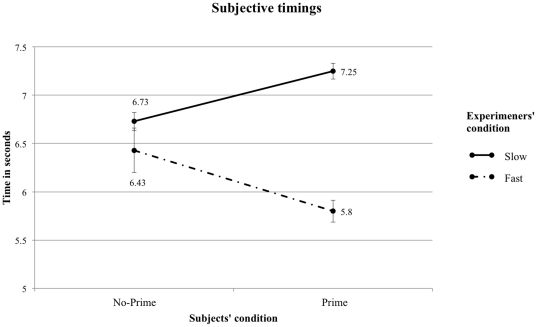
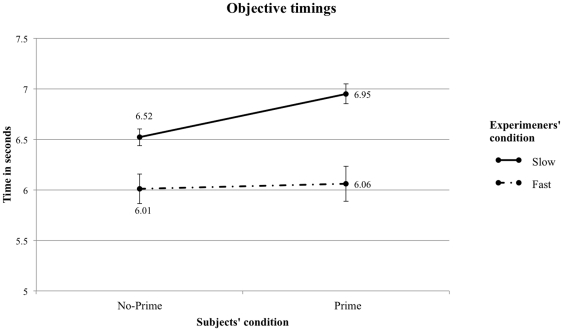
The perspective that behavior is often driven by unconscious determinants has become widespread in social psychology. Bargh, Chen, and Burrows' (1996) famous study, in which participants unwittingly exposed to the stereotype of age walked slower when exiting the laboratory, was instrumental in defining this perspective. Here, we present two experiments aimed at replicating the original study. Despite the use of automated timing methods and a larger sample, our first experiment failed to show priming. Our second experiment was aimed at manipulating the beliefs of the experimenters: Half were led to think that participants would walk slower when primed congruently, and the other half was led to expect the opposite. Strikingly, we obtained a walking speed effect, but only when experimenters believed participants would indeed walk slower. This suggests that both priming and experimenters' expectations are instrumental in explaining the walking speed effect. Further, debriefing was suggestive of awareness of the primes. We conclude that unconscious behavioral priming is real, while real, involves mechanisms different from those typically assumed to cause the effect.
Overview
The claims and statistics of this paper haven’t been checked yet.
Run the check — free, no account needed. It reads the open-access text and checks the sources it cites.
Integrity signals
Registry
Cites
Statistics
Figures
Verification
Claims the paper makes
The claims and statistics of this paper haven’t been checked yet.
Run the check — free, no account needed. It reads the open-access text and checks the sources it cites.
Claims other papers make about this one
Each is checked against this paper’s own text: does it say what the citing paper says it does?
The source backs part of the claim, not all of it — or backs it for a different population, condition or comparison.
In the citing paper
“When Doyen and colleagues49 attempted to replicate a previous experiment suggesting that priming participants with age-related stereotypes had an effect on walking speed50, they failed to find any significant results when using a double-blind procedure (prior studies were not blinded).”
From The limited prosocial effects of meditation: A systematic review and meta-analysis (2018) · cites this paper as [49]
Experimental — accuracy not yet measuredThe cited source says what the claim attributes to it.
In the citing paper
“As demonstrated by Doyen et al. [25] the experimenter who knows the participants’ condition may unintentionally act differently so that participants’ behavior may be altered to confirm the researcher’s hypothesis.”
From Failed Replication of Oxytocin Effects on Trust: The Envelope Task Case (2015) · cites this paper as [25]
The cited source says what the claim attributes to it.
In the citing paper
“The use of single blind studies, where the subject is blind to the treatment condition but the experimenter is not, introduces the risk that the experimenter might unconsciously influence the subjects (37).”
From Is there a Publication Bias in Behavioural Intranasal Oxytocin Research on Humans? Opening the File Drawer of One Laboratory (2016) · cites this paper as [37]
The cited source says what the claim attributes to it.
In the citing paper
“They further showed that when making some experimenters believe that priming participants with age-related stereotypes would slow them down, this indeed had a significant effect, but only in those experimenters that were made to believe in the stereotypes.”
From The limited prosocial effects of meditation: A systematic review and meta-analysis (2018) · cites this paper as [49]
The cited source says what the claim attributes to it.
In the citing paper
“Recent work indicates that experimenter biases are not a thing of the past.”
From The limited prosocial effects of meditation: A systematic review and meta-analysis (2018) · cites this paper as [49]
Self-check
Percentages, sums and reported differences re-computed from the paper’s own numbers.
The self-check needs the paper’s full text.
Citations
Cites
Telling more than we can know: Verbal reports on mental processes.
Nisbett, R. E., & Wilson, T. D. (1977) · Psychological Review · doi:10.1037/0033-295x.84.3.231 · Cited by 11,317 · cited 1×
“As Nisbett and Wilson [20] famously pointed out, participants can remain (1) unaware of the stimulus, (2) unaware of their response, or (3) unaware of the fact that the stimulus importantly influenced the response.”
BackgroundThe unbearable automaticity of being
Bargh, J. A., & Chartrand, T. L. (1999) · American Psychologist · doi:10.1037/0003-066x.54.7.462 · Cited by 3,699 · cited 1×
“Studies [22] on automatic behavior have suggested that participants tend to mimic the experimenter’s behavior.”
BackgroundThe chameleon effect: the perception–behavior link and social interaction
Chartrand, T. L., & Bargh, J. A. (1999) · Journal of Personality and Social Psychology · doi:10.1037/0022-3514.76.6.893 · Cited by 3,674
Bargh, J. A., Chen, M., & Burrows, L. (1996) · Journal of Personality and Social Psychology · doi:10.1037/0022-3514.71.2.230 · Cited by 2,736
Bargh, J. A., Chen, M. I.-C., & Burrows, L. (1996) · Journal of Personality and Social Psychology · doi:10.1037//0022-3514.71.2.230 · Cited by 2,646
Towards a cognitive neuroscience of consciousness: basic evidence and a workspace framework
Dehaene, S. (2001) · Cognition · doi:10.1016/s0010-0277(00)00123-2 · Cited by 2,498 · cited 1×
“For instance, several authors [9,10,11] suggest that two factors are necessary to produce the large patterns of neural activation in higher association cortices that are essential for semantic priming to occur: Top-down attention to the prime and bottom-up stimulus strength (e.”
BackgroundConscious, preconscious, and subliminal processing: a testable taxonomy
Dehaene, S., Changeux, J.-P., Naccache, L., Sackur, J., & Sergent, C. (2006) · Trends in Cognitive Sciences · doi:10.1016/j.tics.2006.03.007 · Cited by 2,067
The automated will: nonconscious activation and pursuit of behavioral goals.
Bargh, J. A., Gollwitzer, P. M., Lee-Chai, A., Barndollar, K., & Trötschel, R. (2001) · Journal of Personality and Social Psychology · doi:10.1037/0022-3514.81.6.1014 · Cited by 1,865
Srull, T. K., & Wyer, R. S. (1979) · Journal of Personality and Social Psychology · doi:10.1037/0022-3514.37.10.1660 · Cited by 1,529
Cerebral mechanisms of word masking and unconscious repetition priming
Dehaene, S., Naccache, L., Cohen, L., Bihan, D. L., Mangin, J.-F., Poline, J.-B., & Rivière, D. (2001) · Nature Neuroscience · doi:10.1038/89551 · Cited by 1,305
Cited by
Sorted by citations
Evaluating Effect Size in Psychological Research: Sense and Nonsense
Funder, D. C., & Ozer, D. J. (2019) · Advances in Methods and Practices in Psychological Science · doi:10.1177/2515245919847202 · Cited by 3,295
Measuring the Prevalence of Questionable Research Practices With Incentives for Truth Telling
John, L. K., Loewenstein, G., & Prelec, D. (2012) · Psychological Science · doi:10.1177/0956797611430953 · Cited by 2,239
Evaluating replicability of laboratory experiments in economics
Camerer, C. F., Dreber, A., Forsell, E., Ho, T.-H., Huber, J., Johannesson, M., Kirchler, M., Almenberg, J., Altmejd, A., Chan, T., et al. (2016) · Science · doi:10.1126/science.aaf0918 · Cited by 1,314
Is psychology suffering from a replication crisis? What does “failure to replicate” really mean?
Maxwell, S. E., Lau, M. Y., & Howard, G. S. (2015) · American Psychologist · doi:10.1037/a0039400 · Cited by 1,102
Many Labs 2: Investigating variation in replicability across samples and settings
Klein, R. A., Vianello, M., Hasselman, F., Adams, B. G., Adams, R. B., Alper, S., Aveyard, M., Axt, J. R., Babalola, M. T., Bahník, Š., et al. (2018) · Advances in Methods and Practices in Psychological Science · doi:10.1177/2515245918810225 · Cited by 944
Recommendations for Increasing Replicability in Psychology
Asendorpf, J. B., Conner, M. T., Fruyt, F. D., Houwer, J. D., Denissen, J. J. A., Fiedler, K., Fiedler, S., Funder, D. C., Kliegl, R. M., Nosek, B. A., et al. (2013) · European Journal of Personality · doi:10.1002/per.1919 · Cited by 876
Pan, X., & Hamilton, A. F. D. C. (2018) · British Journal of Psychology · doi:10.1111/bjop.12290 · Cited by 801
The Replication Recipe: What makes for a convincing replication?
Brandt, M. J., IJzerman, H., Dijksterhuis, A., Farach, F. J., Geller, J., Giner‐Sorolla, R., Grange, J. A., Perugini, M., Spies, J. R., & Veer, A. V. '. (2013) · Journal of Experimental Social Psychology · doi:10.1016/j.jesp.2013.10.005 · Cited by 758
Muthukrishna, M., & Henrich, J. (2019) · Nature Human Behaviour · doi:10.1038/s41562-018-0522-1 · Cited by 745
Unconscious influences on decision making: A critical review
Newell, B. R., & Shanks, D. R. (2014) · Behavioral and Brain Sciences · doi:10.1017/s0140525x12003214 · Cited by 652
The alleged crisis and the illusion of exact replication
Stroebe, W., & Strack, F. (2014) · Perspectives on Psychological Science · doi:10.1177/1745691613514450 · Cited by 597
Nelson, L. D., Simmons, J., & Simonsohn, U. (2018) · Annual Review of Psychology · doi:10.1146/annurev-psych-122216-011836 · Cited by 548
Shariff, A., Willard, A. K., Andersen, T., & Norenzayan, A. (2015) · Personality and Social Psychology Review · doi:10.1177/1088868314568811 · Cited by 522
Avoiding the Ask: A Field Experiment on Altruism, Empathy, and Charitable Giving
James Andreoni, A., Rao, J. M., & Trachtman, H. (2017) · Journal of Political Economy · doi:10.1086/691703 · Cited by 495
Replication, falsification, and the crisis of confidence in social psychology
Earp, B. D., & Trafimow, D. (2015) · Frontiers in Psychology · doi:10.3389/fpsyg.2015.00621 · Cited by 472
Small is beautiful: In defense of the small-N design
Smith, P. L., & Little, D. R. (2018) · Psychonomic Bulletin & Review · doi:10.3758/s13423-018-1451-8 · Cited by 511
Yong, E. (2012) · Nature · doi:10.1038/485298a · Cited by 406
Senses of place: architectural design for the multisensory mind
Spence, C. J. (2020) · Cognitive Research Principles and Implications · doi:10.1186/s41235-020-00243-4 · Cited by 518
Weingarten, E., Chen, Q.-J., McAdams, M., Yi, J., Hepler, J., & Albarracín, D. (2015) · Psychological bulletin · doi:10.1037/bul0000030 · Cited by 275
Does Oxytocin Increase Trust in Humans? A Critical Review of Research
Nave, G., Camerer, C., & McCullough, M. (2015) · Perspectives on Psychological Science · doi:10.1177/1745691615600138 · Cited by 316
Nonconscious activation of placebo and nocebo pain responses
Jensen, K. B., Kaptchuk, T. J., Kirsch, I., Raicek, J., Lindstrom, K. M., Berna, C., Gollub, R. L., Ingvar, M., & Kong, J. (2012) · Proceedings of the National Academy of Sciences · doi:10.1073/pnas.1202056109 · Cited by 305
Conducting perception research over the internet: A tutorial review
Woods, A. T., Velasco, C., Levitan, C. A., Wan, X., & Spence, C. (2015) · PeerJ · doi:10.7717/peerj.1058 · Cited by 301
Continuously Cumulating Meta-Analysis and Replicability
Braver, S. L., Thoemmes, F. J., & Rosenthal, R. (2014) · Perspectives on Psychological Science · doi:10.1177/1745691614529796 · Cited by 308
Lakens, D., & Evers, E. R. K. (2014) · Perspectives on Psychological Science · doi:10.1177/1745691614528520 · Cited by 266
Content and process priming: A review
Janiszewski, C. A., & Wyer, R. S. (2013) · Journal of Consumer Psychology · doi:10.1016/j.jcps.2013.05.006 · Cited by 245
Priming Intelligent Behavior: An Elusive Phenomenon
Shanks, D. R., Newell, B. R., Lee, E. H., Balakrishnan, D., Ekelund, L., Cenac, Z., Kavvadia, F., & Moore, C. (2013) · PLoS ONE · doi:10.1371/journal.pone.0056515 · Cited by 263
Influences on Student Intention and Behavior Toward Environmental Sustainability
Swaim, J. A., Maloni, M. J., Napshin, S. A., & Henley, A. B. (2013) · Journal of Business Ethics · doi:10.1007/s10551-013-1883-z · Cited by 220
Representation, Pattern Information, and Brain Signatures: From Neurons to Neuroimaging
Kragel, P. A., Koban, L., Barrett, L. F., & Wager, T. D. (2018) · Neuron · doi:10.1016/j.neuron.2018.06.009 · Cited by 212
The limited prosocial effects of meditation: A systematic review and meta-analysis
Kreplin, U., Farias, M., & Brazil, I. A. (2018) · Scientific Reports · doi:10.1038/s41598-018-20299-z · Cited by 211
Understanding Priming Effects in Social Psychology: What is “Social Priming” and How does it Occur?
Molden, D. C. (2014) · Social Cognition · doi:10.1521/soco.2014.32.supp.1 · Cited by 204
Safeguard Power as a Protection Against Imprecise Power Estimates
Perugini, M., Gallucci, M., & Costantini, G. (2014) · Perspectives on Psychological Science · doi:10.1177/1745691614528519 · Cited by 203
Against dispositionalism: belief in cognitive science
Quilty‐Dunn, J., & Mandelbaum, E. (2017) · Philosophical Studies · doi:10.1007/s11098-017-0962-x · Cited by 194
Tost, L. P. (2015) · Research in Organizational Behavior · doi:10.1016/j.riob.2015.10.004 · Cited by 194
Li, Y., & Bates, T. C. (2019) · Journal of Experimental Psychology: General · doi:10.1037/xge0000669 · Cited by 215
Frank, M. C., & Saxe, R. (2012) · Perspectives on Psychological Science · doi:10.1177/1745691612460686 · Cited by 175
Finkel, E. J. (2013) · Advances in experimental social psychology · doi:10.1016/b978-0-12-800052-6.00001-9 · Cited by 180
The Past, Present, and Future of Ego Depletion
Inzlicht, M., & Friese, M. (2019) · Social Psychology · doi:10.1027/1864-9335/a000398 · Cited by 192
There’s more than one way to conduct a replication study: Beyond statistical significance.
Anderson, S. F., & Maxwell, S. E. (2016) · Psychological Methods · doi:10.1037/met0000051 · Cited by 167
Reconceptualizing replication as a sequence of different studies: A replication typology
Hüffmeier, J., Mazei, J., & Schultze, T. (2016) · Journal of Experimental Social Psychology · doi:10.1016/j.jesp.2015.09.009 · Cited by 177
Two Failures to Replicate High-Performance-Goal Priming Effects
Harris, C. R., Coburn, N., Rohrer, D., & Pashler, H. (2013) · PLoS ONE · doi:10.1371/journal.pone.0072467 · Cited by 151
Priming of Social Distance? Failure to Replicate Effects on Social and Food Judgments
Pashler, H., Coburn, N., & Harris, C. R. (2012) · PLoS ONE · doi:10.1371/journal.pone.0042510 · Cited by 164
Lurquin, J., Michaelson, L., Barker, J. E., Gustavson, D. E., von Bastian, C. C., Carruth, N. P., & Miyake, A. (2016) · PLoS ONE · doi:10.1371/journal.pone.0147770 · Cited by 171
Klein, O., Doyen, S., Leys, C., da Gama, P. A. M. D. S., Miller, S., Questienne, L., & Axel Cleeremans, B. (2012) · Perspectives on Psychological Science · doi:10.1177/1745691612463704 · Cited by 151
Self-citationPhilosophy of science and the replicability crisis
Romero, F. (2019) · Philosophy Compass · doi:10.1111/phc3.12633 · Cited by 166
An Enumerative Review and a Meta‐Analysis of Primed Goal Effects on Organizational Behavior
Chen, X., Latham, G., Piccolo, R. F., & Itzchakov, G. (2020) · Applied Psychology · doi:10.1111/apps.12239 · Cited by 39
Nonverbal Behavior and Communication in the Workplace
Bonaccio, S., O’Reilly, J., O’Sullivan, S. L., & Chiocchio, F. (2016) · Journal of Management · doi:10.1177/0149206315621146 · Cited by 171
Behavioural Insights and (Un)healthy Dietary Choices: a Review of Current Evidence
Bauer, J. M., & Reisch, L. A. (2018) · Journal of Consumer Policy · doi:10.1007/s10603-018-9387-y · Cited by 162
Though They May Be Unaware, Newlyweds Implicitly Know Whether Their Marriage Will Be Satisfying
McNulty, J. K., Olson, M. A., Meltzer, A. L., & Shaffer, M. J. (2013) · Science · doi:10.1126/science.1243140 · Cited by 137
Lane, A., Luminet, O., Nave, G., & Mikolajczak, M. (2016) · Journal of Neuroendocrinology · doi:10.1111/jne.12384 · Cited by 129
Kim, M.-S., & Yuan, Y. (2015) · Episteme · doi:10.1017/epi.2015.17 · Cited by 134
Priming and warnings are not effective to prevent social engineering attacks
Junger, M., Montoya, L., & Overink, F. J. (2016) · Computers in Human Behavior · doi:10.1016/j.chb.2016.09.012 · Cited by 149
Using Ambient Scent to Enhance Well-Being in the Multisensory Built Environment
Spence, C. J. (2020) · Frontiers in Psychology · doi:10.3389/fpsyg.2020.598859 · Cited by 131
A Room with a Viewpoint Revisited: Descriptive Norms and Hotel Guests' Towel Reuse Behavior
Bohner, G., & Schlüter, L. E. (2014) · PLoS ONE · doi:10.1371/journal.pone.0104086 · Cited by 127
How Trustworthy Is the Scientific Literature in Industrial and Organizational Psychology?
Kepes, S., & McDaniel, M. A. (2013) · Industrial and Organizational Psychology · doi:10.1111/iops.12045 · Cited by 136
Gomes, C., & McCullough, M. E. (2015) · Journal of Experimental Psychology General · doi:10.1037/xge0000027 · Cited by 130
Understanding the Replication Crisis as a Base Rate Fallacy
Bird, A. (2018) · The British Journal for the Philosophy of Science · doi:10.1093/bjps/axy051 · Cited by 126
Replication Research, Publication Bias, and Applied Behavior Analysis
Tincani, M., & Travers, J. C. (2019) · Perspectives on Behavior Science · doi:10.1007/s40614-019-00191-5 · Cited by 136
Acting your avatar’s age: effects of virtual reality avatar embodiment on real life walking speed
Reinhard, R., Shah, K. G., Christmann, C. A., & Lachmann, T. (2019) · Media Psychology · doi:10.1080/15213269.2019.1598435 · Cited by 125
Reflections on the replication corner: In praise of conceptual replications
Lynch, J. G., Bradlow, E. T., Huber, J. C., & Lehmann, D. R. (2015) · International Journal of Research in Marketing · doi:10.1016/j.ijresmar.2015.09.006 · Cited by 134
Replicating Studies in Which Samples of Participants Respond to Samples of Stimuli
Westfall, J., Judd, C. M., & Kenny, D. A. (2014) · Perspectives on Psychological Science · doi:10.1177/1745691614564879 · Cited by 133
Replicability Crisis in Social Psychology: Looking at the Past to Find New Pathways for the Future
Świątkowski, W., & Dompnier, B. (2017) · International Review of Social Psychology · doi:10.5334/irsp.66 · Cited by 132
The effect of horizontal eye movements on free recall: a preregistered adversarial collaboration.
Matzke, D., Nieuwenhuis, S., van Rijn, H., Slagter, H., van der Molen, M. W., & Wagenmakers, E. (2015) · Journal of experimental psychology. General · doi:10.1037/xge0000038 · Cited by 148
On the Other Side of the Mirror: Priming in Cognitive and Social Psychology
Doyen, S., Klein, O., Simons, D. J., & Axel Cleeremans, B. (2014) · Social Cognition · doi:10.1521/soco.2014.32.supp.12 · Cited by 119
Self-citationOnline antecedents for young consumers’ impulse buying behavior
Nyrhinen, J., Sirola, A., Koskelainen, T., Munnukka, J., & Wilska, T. (2023) · Computers in Human Behavior · doi:10.1016/j.chb.2023.108129 · Cited by 197
Blind loyalty? When group loyalty makes us see evil or engage in it
Hildreth, J. A. D., Gino, F., & Bazerman, M. H. (2015) · Organizational Behavior and Human Decision Processes · doi:10.1016/j.obhdp.2015.10.001 · Cited by 118
An Appeal for a Methodological Fusion of Conversation Analysis and Experimental Psychology
de Ruiter, J. P., & Albert, S. (2017) · Research on Language and Social Interaction · doi:10.1080/08351813.2017.1262050 · Cited by 119
Socially transmitted placebo effects
Chen, P.-H. A., Cheong, J. H., Jolly, E., Elhence, H., Wager, T. D., & Chang, L. J. (2019) · Nature Human Behaviour · doi:10.1038/s41562-019-0749-5 · Cited by 108
Does Cleanliness Influence Moral Judgments?
Johnson, D. J., Cheung, F., & Donnellan, M. B. (2014) · Social Psychology · doi:10.1027/1864-9335/a000186 · Cited by 105
Suggestion, Cognition, and Behavior
Michael, R. B., Garry, M., & Kirsch, I. (2012) · Current Directions in Psychological Science · doi:10.1177/0963721412446369 · Cited by 99
What can recent replication failures tell us about the theoretical commitments of psychology?
Klein, S. B. (2014) · Theory & Psychology · doi:10.1177/0959354314529616 · Cited by 101
Healey, P. G. T., Purver, M., & Howes, C. (2014) · PLoS ONE · doi:10.1371/journal.pone.0098598 · Cited by 99
Kinds of Replication: Examining the Meanings of “Conceptual Replication” and “Direct Replication”
Derksen, M., & Morawski, J. G. (2022) · Perspectives on Psychological Science · doi:10.1177/17456916211041116 · Cited by 104
Bargh, J. A., & Chartrand, T. L. (2014) · Cambridge University Press eBooks · doi:10.1017/cbo9780511996481.017 · Cited by 97
Arrested Theory Development: The Misguided Distinction Between Exploratory and Confirmatory Research
Szollosi, A., & Donkin, C. (2021) · Perspectives on Psychological Science · doi:10.1177/1745691620966796 · Cited by 107
Hazée, S., Vaerenbergh, Y. V., Delcourt, C., & Warlop, L. (2019) · Journal of Service Research · doi:10.1177/1094670519838622 · Cited by 93
Registered Replication Report: Dijksterhuis and van Knippenberg (1998)
O'Donnell, M. P., Nelson, L. D., Ackermann, E., Aczél, B., Akhtar, A., Aldrovandi, S., Alshaif, N., Andringa, R., Aveyard, M. E., Babinčák, P., et al. (2018) · Perspectives on Psychological Science · doi:10.1177/1745691618755704 · Cited by 92
Self-citationCorneille, O., & Lush, P. (2022) · Personality and Social Psychology Review · doi:10.1177/10888683221104368 · Cited by 130
Failure to Demonstrate That Playing Violent Video Games Diminishes Prosocial Behavior
Tear, M. J., & Nielsen, M. (2013) · PLoS ONE · doi:10.1371/journal.pone.0068382 · Cited by 90
Religious attitudes and prosocial behavior: a systematic review of published research
Oviedo, L. (2015) · Religion Brain & Behavior · doi:10.1080/2153599x.2014.992803 · Cited by 89
We're All Behavioral Economists Now
Angner, E. (2018) · Journal of Economic Methodology · doi:10.1080/1350178x.2019.1625210 · Cited by 98
Kepes, S., Bennett, A. A., & McDaniel, M. A. (2014) · Academy of Management Learning and Education · doi:10.5465/amle.2013.0193 · Cited by 99
Time and Space in Strategy Discourse: Implications for Intertemporal Choice
Crilly, D. (2017) · Strategic Management Journal · doi:10.1002/smj.2687 · Cited by 88
Isager, P. M., van Aert, R. C. M., Bahník, Š., Brandt, M. J., DeSoto, K. A., Giner‐Sorolla, R., Krueger, J. I., Perugini, M., Ropovik, I., Veer, A. V. '., et al. (2021) · Psychological Methods · doi:10.1037/met0000438 · Cited by 94
Many Labs 2: Investigating Variation in Replicability Across Sample and SettingPreprint
Klein, R. A., Vianello, M., Hasselman, F., Adams, B. G., Adams, R. B., Alper, S., Aveyard, M. E., Axt, J., Babalola, M. T., Bahník, Š., et al. (2018) · PsyArXiv (OSF Preprints) · doi:10.31234/osf.io/9654g · Cited by 87
Peterson, D. (2015) · American Sociological Review · doi:10.1177/0003122415607230 · Cited by 84
König, L., & Jucks, R. (2019) · Public Understanding of Science · doi:10.1177/0963662519833903 · Cited by 84
Priming healthy eating. You can't prime all the people all of the time
Forwood, S., Ahern, A. L., Hollands, G. J., Ng, Y., & Marteau, T. M. (2015) · Appetite · doi:10.1016/j.appet.2015.01.018 · Cited by 89
Interpretations and methods: Towards a more effectively self-correcting social psychology
Jussim, L. J., Crawford, J. T., Anglin, S. M., Stevens, S. T., & Duarte, J. L. (2016) · Journal of Experimental Social Psychology · doi:10.1016/j.jesp.2015.10.003 · Cited by 84
Researcher degrees of freedom in phonetic research
Roettger, T. B. (2019) · Laboratory Phonology Journal of the Association for Laboratory Phonology · doi:10.5334/labphon.147 · Cited by 77
Pre-registration: Weighing costs and benefits for researchers
Logg, J. M., & Dorison, C. A. (2021) · Organizational Behavior and Human Decision Processes · doi:10.1016/j.obhdp.2021.05.006 · Cited by 80
Schimmack, U. (2021) · Perspectives on Psychological Science · doi:10.1177/1745691621991860 · Cited by 84
Looking for crossmodal correspondences between classical music and fine wine
Spence, C. J., Richards, L., Kjellin, E., Huhnt, A.-M., Daskal, V., Scheybeler, A., Velasco, C., & Deroy, O. D. (2013) · Flavour · doi:10.1186/2044-7248-2-29 · Cited by 72
A second-person neuroscience in interaction
Schilbach, L., Timmermans, B., Reddy, V., Costall, A. P., Bente, G., Schlicht, T., & Vogeley, K. T. (2013) · Behavioral and Brain Sciences · doi:10.1017/s0140525x12002452 · Cited by 71
The elusive nature of the blocking effect: 15 failures to replicate.
Maes, E., Boddez, Y., Alfei, J. M., Krypotos, A., D’Hooge, R., Houwer, J. D., & Beckers, T. (2016) · Journal of Experimental Psychology General · doi:10.1037/xge0000200 · Cited by 80
Avoiding The Ask: A Field Experiment on Altruism, Empathy, and Charitable Giving
James Andreoni, A., Rao, J. M., & Trachtman, H. (2011) · National Bureau of Economic Research · doi:10.3386/w17648 · Cited by 70
Gu, Y., Zalkikar, A., Liu, M., Kelly, L., Hall, A. R., Daly, K., & Ward, T. E. (2021) · Scientific Reports · doi:10.1038/s41598-021-98387-w · Cited by 68
Attachment Security Priming: A Meta-Analysis
Gillath, O., Karantzas, G. C., Romano, D. A., & Karantzas, K. M. (2022) · Personality and Social Psychology Review · doi:10.1177/10888683211054592 · Cited by 70
Excess Success for Psychology Articles in the Journal Science
Francis, G., Tanzman, J. S., & Matthews, W. J. (2014) · PLoS ONE · doi:10.1371/journal.pone.0114255 · Cited by 69
New frontiers in the rubber hand experiment: when a robotic hand becomes one’s own
Caspar, É. A., Beir, A. D., da Gama, P. A. M. D. S., Yernaux, F., Axel Cleeremans, B., & Vanderborght, B. (2014) · Behavior Research Methods · doi:10.3758/s13428-014-0498-3 · Cited by 69
Self-citationReplication and Reproducibility in Cross-Cultural Psychology
Milfont, T. L., & Klein, R. A. (2018) · Journal of Cross-Cultural Psychology · doi:10.1177/0022022117744892 · Cited by 69
Metadata
- Authors
- Doyen, S., Klein, O., Pichon, C.-L., & Cleeremans, A.
- Affiliations
- Université Libre de Bruxelles (BE)
- Corresponding author
- Doyen, Stéphane
- Venue
- PLoS ONE
- Publisher
- Public Library of Science (PLoS)
- Published
- 2012-01-18
- Volume
- 7
- Issue
- 1
- Pages
- e29081
- ISSN
- 1932-6203 (ISSN-L)
- PMC
- PMC3261136
- OpenAlex
- W2047874726
- Cited by
- 670
- References
- 28
- Citations by year
- 2026: 32 · 2025: 45 · 2024: 32 · 2023: 64 · 2022: 40 · 2021: 48 · 2020: 49 · 2019: 51 · 2018: 50 · 2017: 43 · 2016: 44 · 2015: 60 · 2014: 56 · 2013: 43 · 2012: 10
- FWCI
- 179.33
- Type
- journal article
- Language
- en
- Open access
- gold
- doi.org
- Locations
- PLoS ONE (publishedVersion, cc-by)
- PubMed Central (publishedVersion, cc-by)
- PubMed (publishedVersion)
- Dépôt institutionnel de l'Université libre de Bruxelles (Université Libre de Bruxelles) (submittedVersion, other-oa)
- DOAJ (DOAJ: Directory of Open Access Journals) (submittedVersion, cc-by-sa)
- Figshare (submittedVersion, cc-by)
- Topics
- Social Sciences › Sociology and Political Science › Social and Intergroup Psychology
- Social Sciences › Psychology › Social Psychology › Psychology of Social Influence
- Social Sciences › Psychology › Social Psychology › Death Anxiety and Social Exclusion
- Keywords
- behavioral priming, unconscious priming, replication failure, walking speed, age stereotypes, expectancy effects, debriefing
- MeSH terms
- Adolescent, Adult, Awareness, Behavior, Humans, Psychology, Social, Psychomotor Performance, Unconscious, Psychology, Word Association Tests, Walking, Young Adult
About these checks
Registry, retraction, Cites and statistics results are computed, not judged, with one exception: a printed reference that no index lists is read once by a model before it counts as a citation error. Claims are extracted by a model and kept only when their quote appears verbatim in the text; each cited source is then checked, with a model’s help, for whether it says what the claim relies on. Those verdicts can be wrong — read the claim’s quote and the cited source before relying on one.
Statistics and arithmetic are recomputed, not judged.
Confidence bands are shown only for fields calibrated on our annotated test set. None is calibrated yet, so no band is shown.
What counts as a claim ›How we measure confidence ›How we check this ›
Are you an author, or do you see a problem with this page? Request a review
