

The DOI matches its Crossref record; 41 of the 42 references it cites were found in a registry or an index.
Stress Leads to Contrasting Effects on the Levels of Brain Derived Neurotrophic Factor in the Hippocampus and Amygdala
Open accessAbstract
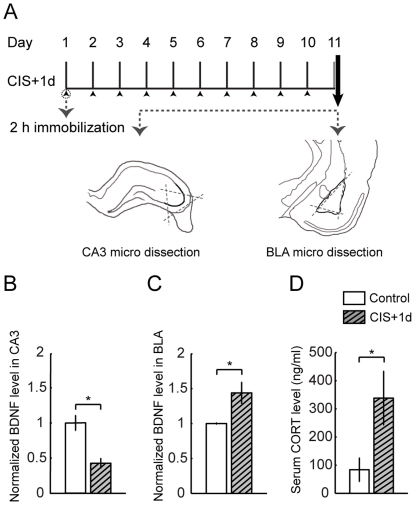
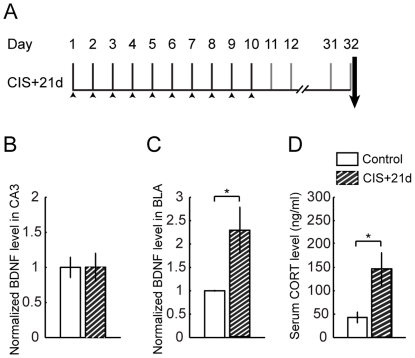
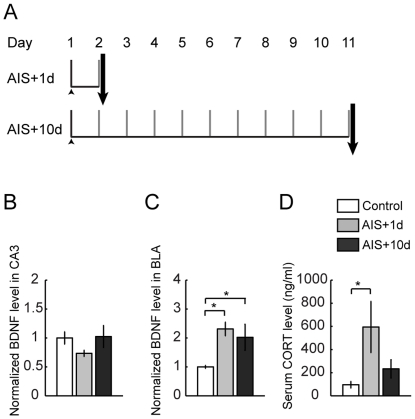
Recent findings on stress induced structural plasticity in rodents have identified important differences between the hippocampus and amygdala. The same chronic immobilization stress (CIS, 2 h/day) causes growth of dendrites and spines in the basolateral amygdala (BLA), but dendritic atrophy in hippocampal area CA3. CIS induced morphological changes also differ in their temporal longevity--BLA hypertrophy, unlike CA3 atrophy, persists even after 21 days of stress-free recovery. Furthermore, a single session of acute immobilization stress (AIS, 2 h) leads to a significant increase in spine density 10 days, but not 1 day, later in the BLA. However, little is known about the molecular correlates of the differential effects of chronic and acute stress. Because BDNF is known to be a key regulator of dendritic architecture and spines, we investigated if the levels of BDNF expression reflect the divergent effects of stress on the hippocampus and amygdala. CIS reduces BDNF in area CA3, while it increases it in the BLA of male Wistar rats. CIS-induced increase in BDNF expression lasts for at least 21 days after the end of CIS in the BLA. But CIS-induced decrease in area CA3 BDNF levels, reverses to normal levels within the same period. Finally, BDNF is up regulated in the BLA 1 day after AIS and this increase persists even 10 days later. In contrast, AIS fails to elicit any significant change in area CA3 at either time points. Together, these findings demonstrate that both acute and chronic stress trigger opposite effects on BDNF levels in the BLA versus area CA3, and these divergent changes also follow distinct temporal profiles. These results point to a role for BDNF in stress-induced structural plasticity across both hippocampus and amygdala, two brain areas that have also been implicated in the cognitive and affective symptoms of stress-related psychiatric disorders.
Overview
The claims and statistics of this paper haven’t been checked yet.
Run the check — free, no account needed. It reads the open-access text and checks the sources it cites.
Integrity signals
Registry
Cites
Statistics
Figures
Verification
Claims the paper makes
The claims and statistics of this paper haven’t been checked yet.
Run the check — free, no account needed. It reads the open-access text and checks the sources it cites.
Claims other papers make about this one
Each is checked against this paper’s own text: does it say what the citing paper says it does?
The source backs part of the claim, not all of it — or backs it for a different population, condition or comparison.
In the citing paper
“enhanced BDNF/TrkB signaling in the amygdala leads to maladaptive plasticity resulting in overactivation of this brain region and exacerbated anxiety and fear responses (47, 198–200)”
From Psychedelics and Other Psychoplastogens for Treating Mental Illness. (2021) · cites this paper as [200]
Experimental — accuracy not yet measured
Self-check
Percentages, sums and reported differences re-computed from the paper’s own numbers.
The self-check needs the paper’s full text.
Citations
Cites
A Neurotrophic Model for Stress-Related Mood Disorders
Duman, R. S., & Monteggia, L. M. (2006) · Biological Psychiatry · doi:10.1016/j.biopsych.2006.02.013 · Cited by 3,375
Nestler, E. J., Barrot, M., DiLeone, R. J., Eisch, A. J., Gold, S. J., & Monteggia, L. M. (2002) · Neuron · doi:10.1016/s0896-6273(02)00653-0 · Cited by 3,217
The molecular neurobiology of depression
Krishnan, V., & Nestler, E. J. (2008) · Nature · doi:10.1038/nature07455 · Cited by 2,889
Neurocircuitry of stress: central control of the hypothalamo–pituitary–adrenocortical axis
Herman, J. P., & Cullinan, W. E. (1997) · Trends in Neurosciences · doi:10.1016/s0166-2236(96)10069-2 · Cited by 2,270
Essential role of BDNF in the mesolimbic dopamine pathway in social defeat stress
Berton, O., McClung, C. A., DiLeone, R. J., Krishnan, V., Renthal, W., Russo, S. J., Graham, D., Tsankova, N. M., Bolanos, C. A., Rios, M., et al. (2006) · Science · doi:10.1126/science.1120972 · Cited by 2,129
Nibuya, M., Morinobu, S., & Duman, R. (1995) · The Journal of Neuroscience · doi:10.1523/jneurosci.15-11-07539.1995 · Cited by 2,109
STRESS AND HIPPOCAMPAL PLASTICITY
McEwen, B. S. (1999) · Annual Review of Neuroscience · doi:10.1146/annurev.neuro.22.1.105 · Cited by 2,087
Stress, memory and the amygdala
Roozendaal, B., McEwen, B. S., & Chattarji, S. (2009) · Nature Reviews Neuroscience · doi:10.1038/nrn2651 · Cited by 1,760
Self-citationVyas, A., Mitra, R., Shankaranarayana Rao, B. S., & Chattarji, S. (2002) · The Journal of Neuroscience · doi:10.1523/jneurosci.22-15-06810.2002 · Cited by 1,662
Self-citationBrain-derived neurotrophic factor produces antidepressant effects in behavioral models of depression
Shirayama, Y., Chen, A. C.-H., Nakagawa, S., Russell, D. S., & Duman, R. S. (2002) · The Journal of Neuroscience · doi:10.1523/jneurosci.22-08-03251.2002 · Cited by 1,654
Research works printed but not linked: 1
- BS McEwen, 1999, Stress and hippocampal plasticity., Annual Review of Neuroscience, 22, 105, 10.1146/annurev.neuro.22.1.105 · DOI · Paper page
Cited by
Sorted by citations
Stress Effects on Neuronal Structure: Hippocampus, Amygdala, and Prefrontal Cortex
McEwen, B. S., Nasca, C., & Gray, J. D. (2016) · Neuropsychopharmacology · doi:10.1038/npp.2015.171 · Cited by 1,574
Mechanisms of stress in the brain
McEwen, B. S., Bowles, N. P., Gray, J. D., Hill, M. N., Hunter, R. G., Karatsoreos, I. N., & Nasca, C. (2015) · Nature Neuroscience · doi:10.1038/nn.4086 · Cited by 1,386
Hannibal, K. E., & Bishop, M. D. (2014) · Physical Therapy · doi:10.2522/ptj.20130597 · Cited by 729
The Role of Neural Plasticity in Depression: From Hippocampus to Prefrontal Cortex
Liu, W., Ge, T., Leng, Y., Pan, Z., Fan, J., Yang, W., & Cui, R. (2017) · Neural Plasticity · doi:10.1155/2017/6871089 · Cited by 640
The hippocampal–prefrontal pathway: The weak link in psychiatric disorders?
Godsil, B. P., Kiss, J., Spedding, M., & Jay, T. M. (2013) · European Neuropsychopharmacology · doi:10.1016/j.euroneuro.2012.10.018 · Cited by 459
Maren, S., & Holmes, A. (2016) · Neuropsychopharmacology · doi:10.1038/npp.2015.180 · Cited by 412
Synaptic plasticity in depression: Molecular, cellular and functional correlates
Marsden, W. N. (2012) · Progress in Neuro-Psychopharmacology and Biological Psychiatry · doi:10.1016/j.pnpbp.2012.12.012 · Cited by 323
In pursuit of resilience: stress, epigenetics, and brain plasticity
McEwen, B. S. (2016) · Annals of the New York Academy of Sciences · doi:10.1111/nyas.13020 · Cited by 329
Stress, anxiety, and dendritic spines: What are the connections?
Leuner, B., & Shors, T. J. (2013) · Neuroscience · doi:10.1016/j.neuroscience.2012.04.021 · Cited by 284
BDNF in sleep, insomnia, and sleep deprivation
Schmitt, K., Holsboer‐Trachsler, E., & Eckert, A. (2016) · Annals of Medicine · doi:10.3109/07853890.2015.1131327 · Cited by 284
Neighborhood matters: divergent patterns of stress-induced plasticity across the brain
Chattarji, S., Tomar, A., Suvrathan, A., Ghosh, S., & Rahman, M. M. (2015) · Nature Neuroscience · doi:10.1038/nn.4115 · Cited by 248
Self-citationSuri, D., & Vaidya, V. A. (2012) · Neuroscience · doi:10.1016/j.neuroscience.2012.08.065 · Cited by 269
Gray, J. D., Milner, T. A., & McEwen, B. S. (2012) · Neuroscience · doi:10.1016/j.neuroscience.2012.08.034 · Cited by 250
Beyond the Hippocampus and the SVZ: Adult Neurogenesis Throughout the Brain
Jurkowski, M. P., Bettio, L. E. B., Woo, E. K., Patten, A. R., Yau, S., & Gil‐Mohapel, J. (2020) · Frontiers in Cellular Neuroscience · doi:10.3389/fncel.2020.576444 · Cited by 278
Håkansson, K., Ledreux, A., Daffner, K. R., Terjestam, Y., Bergman, P., Carlsson, R., Kivipelto, M., Winblad, B. G., Granholm, A., & Mohammed, A. K. H. (2016) · Journal of Alzheimer s Disease · doi:10.3233/jad-160593 · Cited by 233
Stress and trauma: BDNF control of dendritic-spine formation and regression
Bennett, M. R., & Lagopoulos, J. (2014) · Progress in Neurobiology · doi:10.1016/j.pneurobio.2013.10.005 · Cited by 199
The stressed synapse 2.0: pathophysiological mechanisms in stress-related neuropsychiatric disorders
Sanacora, G., Yan, Z., & Popoli, M. (2022) · Nature Reviews Neuroscience · doi:10.1038/s41583-021-00540-x · Cited by 197
Stress effects on BDNF expression: Effects of age, sex, and form of stress
Bath, K. G., Schilit, A., & Lee, F. S. (2013) · Neuroscience · doi:10.1016/j.neuroscience.2013.01.074 · Cited by 197
Chakravarty, S., Reddy, B. R., Sudhakar, S. R., Saxena, S., Das, T., Vuppalapaty, M., Swamy, C. V. B., Kumar, A., & Idris, M. M. (2013) · PLoS ONE · doi:10.1371/journal.pone.0063302 · Cited by 187
Vinall, J., Pavlova, M., Asmundson, G. J. G., Rasic, N. F., & Noel, M. E. (2016) · Children · doi:10.3390/children3040040 · Cited by 198
Regulation of dopamine system responsivity and its adaptive and pathological response to stress
Belujon, P., & Grace, A. A. (2015) · Proceedings of the Royal Society B Biological Sciences · doi:10.1098/rspb.2014.2516 · Cited by 192
The Relationships Between Stress, Mental Disorders, and Epigenetic Regulation of BDNF
Miao, Z., Wang, Y., & Sun, Z. S. (2020) · International Journal of Molecular Sciences · doi:10.3390/ijms21041375 · Cited by 186
Psychedelics and Other Psychoplastogens for Treating Mental Illness.
Vargas, M. V., Meyer, R., Avanes, A. A., Rus, M., & Olson, D. E. (2021) · Frontiers in Psychiatry · doi:10.3389/fpsyt.2021.727117 · Cited by 166
The Neurobiology and Pharmacotherapy of Posttraumatic Stress Disorder
Abdallah, C. G., Averill, L. A., Akiki, T. J., Raza, M., Averill, C. L., Gomaa, H., Adikey, A., & Krystal, J. H. (2018) · The Annual Review of Pharmacology and Toxicology · doi:10.1146/annurev-pharmtox-010818-021701 · Cited by 179
Chronic Stress Weakens Connectivity in the Prefrontal Cortex: Architectural and Molecular Changes.
Woo, E., Sansing, L. H., Arnsten, A. F. T., & Datta, D. (2021) · Chronic Stress · doi:10.1177/24705470211029254 · Cited by 159
Neuroendocrine regulation of the stress response in adult zebrafish, Danio rerio
Pavlidis, M. A., Theodoridi, A., & Tsalafouta, A. (2015) · Progress in Neuro-Psychopharmacology and Biological Psychiatry · doi:10.1016/j.pnpbp.2015.02.014 · Cited by 153
Dandi, Ε., Kalamari, A., Touloumi, O., Lagoudaki, R., Nousiopoulou, E., Simeonidou, C., Spandou, E., & Tata, D. Α. (2018) · International Journal of Developmental Neuroscience · doi:10.1016/j.ijdevneu.2018.03.003 · Cited by 154
Hippocampus: Molecular, Cellular, and Circuit Features in Anxiety
Shi, H., Wang, S., Wang, X., Zhang, R.-X., & Zhu, L. (2023) · Neuroscience Bulletin · doi:10.1007/s12264-023-01020-1 · Cited by 151
Are BDNF and glucocorticoid activities calibrated?
Jeanneteau, F. D., & Chao, M. V. (2012) · Neuroscience · doi:10.1016/j.neuroscience.2012.09.017 · Cited by 150
Prefrontal cortex reactivity underlies trait vulnerability to chronic social defeat stress
Kumar, S., Hultman, R. C., Hughes, D. N., Michel, N., Katz, B. M., & Dzirasa, K. (2014) · Nature Communications · doi:10.1038/ncomms5537 · Cited by 131
Chau, C. M. Y., Ranger, M., Bichin, M., Park, M. T. M., Amaral, R. S. C., Chakravarty, M. M., Poskitt, K. J., Synnes, A. R., Miller, S. P., & GRUNAU, R. E. (2019) · Frontiers in Behavioral Neuroscience · doi:10.3389/fnbeh.2019.00051 · Cited by 123
Tyrka, A. R., Ridout, K. K., & Parade, S. H. (2016) · Development and Psychopathology · doi:10.1017/s0954579416000870 · Cited by 119
Shilpa, B. A., Bhagya, V. R., Harish, G., Bharath, M. S., & Rao, B. S. (2017) · Progress in Neuro-Psychopharmacology and Biological Psychiatry · doi:10.1016/j.pnpbp.2017.02.025 · Cited by 122
Song, C., Liu, B.-P., Zhang, Y., Peng, Z., Wang, J., Collier, A. D., Echevarria, D. J., Savelieva, K. V., Lawrence, R. F., Rex, C. S., et al. (2017) · Progress in Neuro-Psychopharmacology and Biological Psychiatry · doi:10.1016/j.pnpbp.2017.08.021 · Cited by 119
Synaptic regulation of affective behaviors; role of BDNF
Ninan, I. (2013) · Neuropharmacology · doi:10.1016/j.neuropharm.2013.04.011 · Cited by 114
Guadagno, A., Wong, T. P., & Walker, C. (2017) · Progress in Neuro-Psychopharmacology and Biological Psychiatry · doi:10.1016/j.pnpbp.2017.09.025 · Cited by 112
Synaptic Mechanisms Regulating Mood State Transitions in Depression
Parekh, P. K., Johnson, S. B., & Liston, C. (2022) · Annual Review of Neuroscience · doi:10.1146/annurev-neuro-110920-040422 · Cited by 101
Stress-induced remodeling of hippocampal CA3 pyramidal neurons
McEwen, B. S. (2016) · Brain Research · doi:10.1016/j.brainres.2015.12.043 · Cited by 105
Neuronal and behavioral plasticity: the role of serotonin and BDNF systems tandem
Popova, N. K., & Naumenko, V. S. (2019) · Expert Opinion on Therapeutic Targets · doi:10.1080/14728222.2019.1572747 · Cited by 105
Rodent models of social stress and neuronal plasticity: Relevance to depressive-like disorders
Patel, D., Kas, M. J., Chattarji, S., & Buwalda, B. (2019) · Behavioural Brain Research · doi:10.1016/j.bbr.2019.111900 · Cited by 111
Self-citationPatel, D., Anilkumar, S., Chattarji, S., & Buwalda, B. (2018) · Behavioural Brain Research · doi:10.1016/j.bbr.2018.03.034 · Cited by 93
Self-citationNeuroplasticity and the next wave of antidepressant strategies
Hayley, S., & Litteljohn, D. (2013) · Frontiers in Cellular Neuroscience · doi:10.3389/fncel.2013.00218 · Cited by 92
Deppermann, S., Storchak, H., Fallgatter, A. J., & Ehlis, A. (2014) · Neuroscience · doi:10.1016/j.neuroscience.2014.08.037 · Cited by 100
Ashokan, A., Hegde, A., & Mitra, R. (2016) · Psychoneuroendocrinology · doi:10.1016/j.psyneuen.2016.04.009 · Cited by 88
Increased Amygdalar and Hippocampal Volumes in Young Adults with Social Anxiety
Machado‐de‐Sousa, J. P., Osório, F. D. L., Jackowski, A. P., Bressan, R. A., Chagas, M. H. N., Alves, N. T., DePaula, A. L. D., Crippa, J. A., & Hallak, J. E. C. (2014) · PLoS ONE · doi:10.1371/journal.pone.0088523 · Cited by 85
Depressive behavior and activation of the orexin/hypocretin system.
Arendt, D. H., Ronan, P. J., Oliver, K. D., Callahan, L. B., Summers, T. R., & Summers, C. H. (2013) · Behavioral Neuroscience · doi:10.1037/a0031442 · Cited by 87
Navarria, A., Tamburella, A., Iannotti, F. A., Micale, V., Camillieri, G., Gozzo, L., Verde, R., Imperatore, R., Leggio, G. M., Drago, F., et al. (2014) · Pharmacological Research · doi:10.1016/j.phrs.2014.04.014 · Cited by 82
Smoller, J. W., Gallagher, P., Duncan, L. E., McGrath, L. M., Haddad, S. A., Holmes, A. J., Wolf, A. B., Hilker, S., Block, S. R., Weill, S. R., et al. (2014) · Biological Psychiatry · doi:10.1016/j.biopsych.2013.12.018 · Cited by 81
Effects of stressors in adolescence on learning and memory in rodent models
Green, M. R., & McCormick, C. M. (2013) · Hormones and Behavior · doi:10.1016/j.yhbeh.2012.09.012 · Cited by 86
Kim, H.-J., Min, J.-Y., Kim, H.-J., & Min, K.-B. (2019) · Journal of Mental Health · doi:10.1080/09638237.2017.1370641 · Cited by 80
Lapmanee, S., Charoenphandhu, J., & Charoenphandhu, N. (2013) · Behavioural Brain Research · doi:10.1016/j.bbr.2013.05.018 · Cited by 78
The neurobiological effects of childhood maltreatment on brain structure, function, and attachment
Tomoda, A., Nishitani, S., Takiguchi, S., Fujisawa, T. X., Sugiyama, T., & Teicher, M. H. (2024) · European Archives of Psychiatry and Clinical Neuroscience · doi:10.1007/s00406-024-01779-y · Cited by 115
Inflammation in the pathogenesis of depression: a disorder of neuroimmune origin
Corrigan, M., O’Rourke, A. M., Moran, B., Fletcher, J. M., & Harkin, A. (2023) · Neuronal Signaling · doi:10.1042/ns20220054 · Cited by 81
Amygdala substructure volumes in Major Depressive Disorder
Roddy, D. W., Kelly, J. R., Farrell, C. M., Doolin, K., Román, E., Nasa, A., Frodl, T., Harkin, A., O’Mara, S. M., O’Hanlon, E., et al. (2021) · NeuroImage Clinical · doi:10.1016/j.nicl.2021.102781 · Cited by 79
Shirayama, Y., Takahashi, M., Osone, F., Hara, A., & Okubo, T. (2016) · Biological Psychiatry Cognitive Neuroscience and Neuroimaging · doi:10.1016/j.bpsc.2016.11.006 · Cited by 84
Rubinow, M. J., Mahajan, G., May, W., Overholser, J. C., Jurjus, G., Dieter, L., Herbst, N. P., Steffens, D. C., Miguel-Hidalgo, J. J., Rajkowska, G., et al. (2014) · Brain Structure and Function · doi:10.1007/s00429-014-0900-z · Cited by 76
Ortiz, J. B., & Conrad, C. D. (2018) · Frontiers in Neuroendocrinology · doi:10.1016/j.yfrne.2018.02.005 · Cited by 72
Ignácio, Z. M., Réus, G. Z., Abelaira, H. M., & Quevedo, J. (2014) · Neuroscience · doi:10.1016/j.neuroscience.2014.06.036 · Cited by 65
Yasmin, F., Colangeli, R., Morena, M., Filipski, S. B., van der Stelt, M., Pittman, Q. J., Hillard, C. J., Teskey, G. C., McEwen, B. S., Hill, M. N., et al. (2019) · Proceedings of the National Academy of Sciences · doi:10.1073/pnas.1910322116 · Cited by 65
Self-citationEarly hippocampal volume loss as a marker of eventual memory deficits caused by repeated stress
Rahman, M. M., Callaghan, C. K., Kerskens, C., Chattarji, S., & O’Mara, S. M. (2016) · Scientific Reports · doi:10.1038/srep29127 · Cited by 66
Self-citationLiu, Y., Hu, C., Shen, J.-D., Wu, S., Li, Y., & Yi, L. (2016) · Physiology & Behavior · doi:10.1016/j.physbeh.2016.12.003 · Cited by 61
Sagarkar, S., Bhamburkar, T., Shelkar, G. P., Choudhary, A., Kokare, D. M., & Sakharkar, A. J. (2017) · Neurobiology of Disease · doi:10.1016/j.nbd.2017.06.016 · Cited by 63
Zebrafish Models of Anxiety-Like Behaviors
Collier, A. D., Kalueff, A. V., & Echevarria, D. J. (2017) · Springer eBooks · doi:10.1007/978-3-319-33774-6_3 · Cited by 60
Mice deficient in phosphodiesterase-4A display anxiogenic-like behavior
Hansen, R., Conti, M., & Zhang, H. (2014) · Psychopharmacology · doi:10.1007/s00213-014-3480-y · Cited by 59
The Neurotrophic Hypothesis of Depression Revisited: New Insights and Therapeutic Implications
Jaggar, M., Fanibunda, S. E., Ghosh, S. K., Duman, R. S., & Vaidya, V. A. (2019) · Elsevier eBooks · doi:10.1016/b978-0-12-813333-0.00006-8 · Cited by 59
Opposing Roles of Estradiol and Testosterone on Stress-Induced Visceral Hypersensitivity in Rats
Ji, Y., Hu, B., Li, J., & Traub, R. J. (2018) · Journal of Pain · doi:10.1016/j.jpain.2018.02.007 · Cited by 57
Kaul, D., Schwab, S. G., Mechawar, N., & Matosin, N. (2021) · Neuroscience & Biobehavioral Reviews · doi:10.1016/j.neubiorev.2021.01.025 · Cited by 58
Vaseghi, S., Mostafavijabbari, A., Alizadeh, M.-S., Ghaffarzadegan, R., Kholghi, G., & Zarrindast, M. (2022) · Metabolic Brain Disease · doi:10.1007/s11011-022-01124-z · Cited by 59
PTEN knockdown alters dendritic spine/protrusion morphology, not density
Haws, M. E., Jaramillo, T. C., Espinosa, F., Widman, A. J., Stuber, G. D., Sparta, D. R., Tye, K. M., Russo, S. J., Parada, L. F., Stavarache, M. A., et al. (2013) · The Journal of Comparative Neurology · doi:10.1002/cne.23488 · Cited by 56
IFN-γ differentially modulates memory-related processes under basal and chronic stressor conditions
Litteljohn, D., Nelson, E., & Hayley, S. P. (2014) · Frontiers in Cellular Neuroscience · doi:10.3389/fncel.2014.00391 · Cited by 53
D’Alessio, L., Korman, G. P., Sarudiansky, M., Guelman, L. R., Scévola, L., Pastore, A., Obregón, A., & Ej, R. (2020) · Frontiers in Psychiatry · doi:10.3389/fpsyt.2020.00501 · Cited by 56
Vásquez, C. E., Riener, R. M., Reynolds, E., & Britton, G. B. (2014) · Neurochemistry International · doi:10.1016/j.neuint.2014.09.007 · Cited by 50
Magaraggia, I., Kuiperes, Z., & Schreiber, R. (2021) · Neurobiology of Learning and Memory · doi:10.1016/j.nlm.2021.107467 · Cited by 51
Ney, L. J., Gogos, A., Hsu, C. K., & Felmingham, K. L. (2019) · Psychoneuroendocrinology · doi:10.1016/j.psyneuen.2019.104416 · Cited by 51
Chau, C. M. Y., Cepeda, I. L., Devlin, A. M., Weinberg, J., & GRUNAU, R. E. (2015) · Neuroscience · doi:10.1016/j.neuroscience.2015.08.044 · Cited by 48
Mechanisms of action and clinical efficacy of NMDA receptor modulators in mood disorders
Ghasemi, M., Phillips, C., Fahimi, A., McNerney, M. W., & Salehi, A. (2017) · Neuroscience & Biobehavioral Reviews · doi:10.1016/j.neubiorev.2017.07.002 · Cited by 53
Effects of Stress on Learning and Memory
Lindau, M. P., Almkvist, O., & Mohammed, A. H. (2016) · Elsevier eBooks · doi:10.1016/b978-0-12-800951-2.00018-2 · Cited by 47
Jeanneteau, F. D., Borie, A. M., Chao, M. V., & Garabedian, M. J. (2018) · Neuroendocrinology · doi:10.1159/000496392 · Cited by 45
Malikowska‐Racia, N., & Sałat, K. (2019) · Pharmacological Research · doi:10.1016/j.phrs.2019.02.001 · Cited by 50
Caudal, D., Jay, T., & Godsil, B. (2014) · Frontiers in Behavioral Neuroscience · doi:10.3389/fnbeh.2014.00019 · Cited by 50
Tripathi, S. J., Chakraborty, S., Srikumar, B. N., Raju, T. R., & Shankaranarayana Rao, B. S. (2019) · Progress in Neuro-Psychopharmacology and Biological Psychiatry · doi:10.1016/j.pnpbp.2018.07.016 · Cited by 43
Stress modulation of reconsolidation
Akirav, I., & Maroun, M. (2012) · Psychopharmacology · doi:10.1007/s00213-012-2887-6 · Cited by 46
Brain Physiology and Pathophysiology in Mental Stress
Alkadhi, K. A. (2013) · ISRN Physiology · doi:10.1155/2013/806104 · Cited by 48
Restoration of hippocampal growth hormone reverses stress-induced hippocampal impairment
Weele, C. M. V., Saenz, C., Yao, J., Correia, S. S., & Goosens, K. A. (2013) · Frontiers in Behavioral Neuroscience · doi:10.3389/fnbeh.2013.00066 · Cited by 42
Repeated psychosocial stress at night, but not day, affects the central molecular clock
Bartlang, M. S., Savelyev, S. A., Johansson, A., Reber, S. O., Helfrich‐Förster, C., & Lundkvist, G. B. S. (2014) · Chronobiology International · doi:10.3109/07420528.2014.940085 · Cited by 43
Bashiyan, M. L., Nasehi, M., Vaseghi, S., & Khalifeh, S. (2021) · Journal of Psychopharmacology · doi:10.1177/02698811211000762 · Cited by 42
Epigenetic Interactions and the Brain-Body Communication
McEwen, B. S. (2017) · Psychotherapy and Psychosomatics · doi:10.1159/000449150 · Cited by 39
Ortiz, J. B., Mathewson, C. M., Hoffman, A. N., Hanavan, P. D., Terwilliger, E. F., & Conrad, C. D. (2014) · European Journal of Neuroscience · doi:10.1111/ejn.12703 · Cited by 40
Chronic Antidepressant Treatment in Normal Mice Induces Anxiety and Impairs Stress-coping Ability
Baek, I., Park, J. Y., & Han, P. (2015) · Experimental Neurobiology · doi:10.5607/en.2015.24.2.156 · Cited by 39
Radahmadi, M., Hosseini, N., & Nasimi, A. (2014) · Neuroscience · doi:10.1016/j.neuroscience.2014.09.005 · Cited by 37
Serra, M. P., Poddighe, L., Boi, M., Sanna, F., Piludu, M. A., Sanna, F., Corda, M. G., Giorgi, O., & Quartu, M. (2018) · International Journal of Molecular Sciences · doi:10.3390/ijms19123745 · Cited by 40
Grigoruţă, M., Martı́nez-Martı́nez, A., Dagda, R. Y., & Dagda, R. K. (2019) · Molecular Neurobiology · doi:10.1007/s12035-019-01838-9 · Cited by 37
Ketamine for post-traumatic stress disorders and it's possible therapeutic mechanism
Asim, M., Wang, B., Hao, B., & Wang, X. (2021) · Neurochemistry International · doi:10.1016/j.neuint.2021.105044 · Cited by 37
Monsey, M. S., Boyle, L. M., Zhang, M. L., Nguyen, C. P., Kronman, H. G., Ota, K. T., Duman, R. S., Taylor, J. R., & Schafe, G. E. (2014) · PLoS ONE · doi:10.1371/journal.pone.0091530 · Cited by 39
Tsai, S., Huang, T.-Y., Chang, C.-Y., Hsu, Y.-C., Chen, S.-J., Yu, L., Kuo, Y., & Jen, C. J. (2014) · Frontiers in Behavioral Neuroscience · doi:10.3389/fnbeh.2014.00027 · Cited by 38
Brain-derived neurotrophic factor (BDNF) in perinatal depression: Side show or pivotal factor?
Singh, S., Fereshetyan, K., Shorter, S. A., Paliokha, R., Dremencov, E., Yenkoyan, K. B., & Ovsepian, S. V. (2022) · Drug Discovery Today · doi:10.1016/j.drudis.2022.103467 · Cited by 36
Farazi, N., Mahmoudi, J., Sadigh‐Eteghad, S., Farajdokht, F., & Rasta, S. H. (2021) · Lasers in Medical Science · doi:10.1007/s10103-021-03370-6 · Cited by 35
Gill, K. M., & Grace, A. A. (2013) · The International Journal of Neuropsychopharmacology · doi:10.1017/s1461145713000618 · Cited by 34
Berghauzen-Maciejewska, K., Wardas, J., Kosmowska, B., Głowacka, U., Kuter, K. Z., & Ossowska, K. (2015) · PLoS ONE · doi:10.1371/journal.pone.0117698 · Cited by 34
Tripathi, S. J., Chakraborty, S., Srikumar, B. N., Raju, T. R., & Rao, B. S. S. (2017) · Neurobiology of Learning and Memory · doi:10.1016/j.nlm.2017.05.005 · Cited by 35
Metadata
- Authors
- Lakshminarasimhan, H., & Chattarji, S.
- Affiliations
- Tata Institute of Fundamental Research (IN)
- Corresponding author
- Chattarji, Sumantra
- ORCID
- Chattarji, Sumantra
- Venue
- PLoS ONE
- Publisher
- Public Library of Science (PLoS)
- Published
- 2012-01-17
- Volume
- 7
- Issue
- 1
- Pages
- e30481
- ISSN
- 1932-6203 (ISSN-L)
- PMC
- PMC3260293
- OpenAlex
- W2058006510
- Cited by
- 253
- References
- 42
- Citations by year
- 2026: 11 · 2025: 13 · 2024: 12 · 2023: 15 · 2022: 16 · 2021: 29 · 2020: 19 · 2019: 14 · 2018: 18 · 2017: 23 · 2016: 20 · 2015: 15 · 2014: 24 · 2013: 16 · 2012: 8
- FWCI
- 8.44
- Type
- journal article
- Language
- en
- Open access
- gold
- doi.org
- Locations
- PLoS ONE (publishedVersion, cc-by)
- Europe PMC (PubMed Central) (publishedVersion, cc-by)
- PubMed Central (publishedVersion, cc-by)
- PubMed (publishedVersion)
- DOAJ (DOAJ: Directory of Open Access Journals) (submittedVersion, cc-by-sa)
- Funders
- Wellcome Trust (GR 0701339 MA)
- Directorate for Biological Sciences
- National Centre for Biological Sciences
- Topics
- Life Sciences › Neuroscience › Behavioral Neuroscience › Stress Responses and Cortisol
- Life Sciences › Neuroscience › Cellular and Molecular Neuroscience › Nerve injury and regeneration
- Life Sciences › Neuroscience › Cognitive Neuroscience › Memory and Neural Mechanisms
- Keywords
- brain-derived neurotrophic factor, restraint stress, chronic stress, acute stress, hippocampus, amygdala, basolateral amygdala, CA3, dendritic spine density, dendritic atrophy, structural plasticity, stress recovery, stress-related psychiatric disorders
- MeSH terms
- Amygdala, Animals, Body Weight, Hippocampus, Immunoassay, Male, Restraint, Physical, Stress, Physiological, Stress, Psychological, Time Factors, Rats, Wistar, Brain-Derived Neurotrophic Factor, Rats, CA3 Region, Hippocampal
About these checks
Registry, retraction, Cites and statistics results are computed, not judged, with one exception: a printed reference that no index lists is read once by a model before it counts as a citation error. Claims are extracted by a model and kept only when their quote appears verbatim in the text; each cited source is then checked, with a model’s help, for whether it says what the claim relies on. Those verdicts can be wrong — read the claim’s quote and the cited source before relying on one.
Statistics and arithmetic are recomputed, not judged.
Confidence bands are shown only for fields calibrated on our annotated test set. None is calibrated yet, so no band is shown.
What counts as a claim ›How we measure confidence ›How we check this ›
Are you an author, or do you see a problem with this page? Request a review
