

Adjusted Light and Dark Cycles Can Optimize Photosynthetic Efficiency in Algae Growing in Photobioreactors
Open accessThe DOI matches its Crossref record; 54 of the 54 references it cites were found in a registry or an index.
Abstract
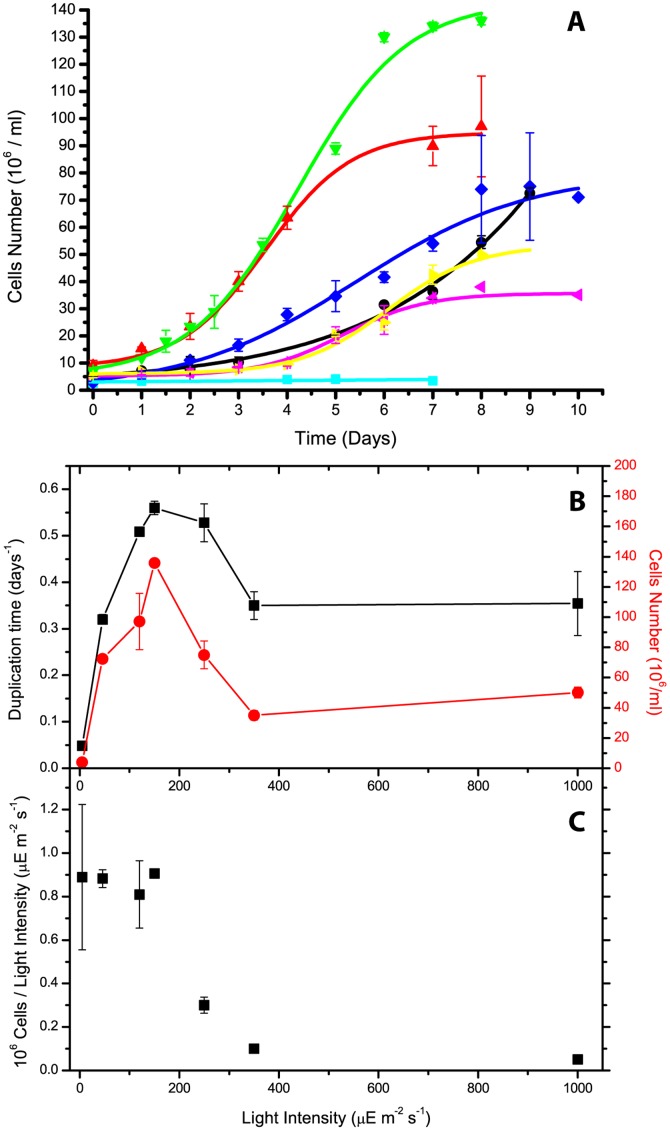
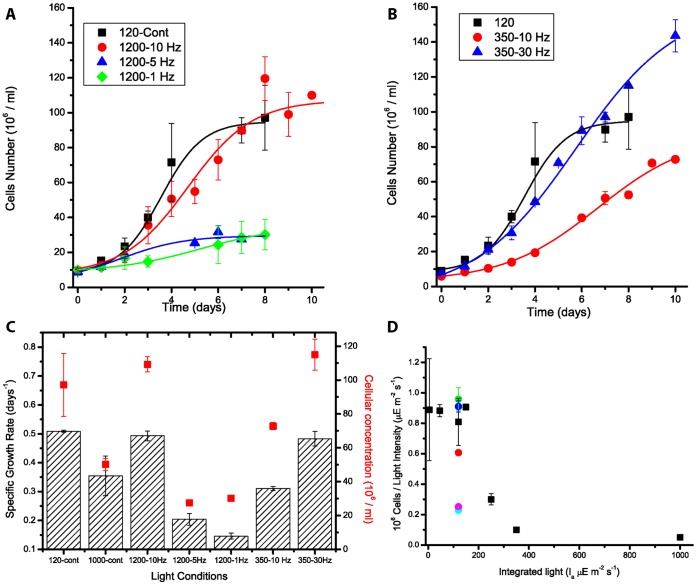
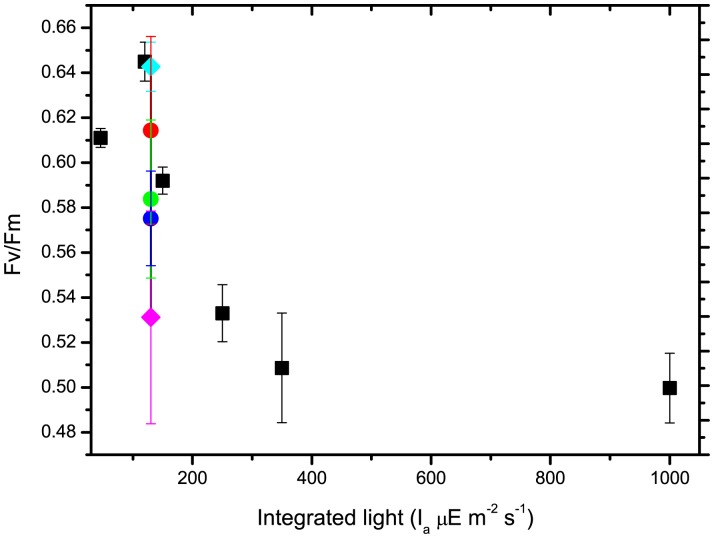
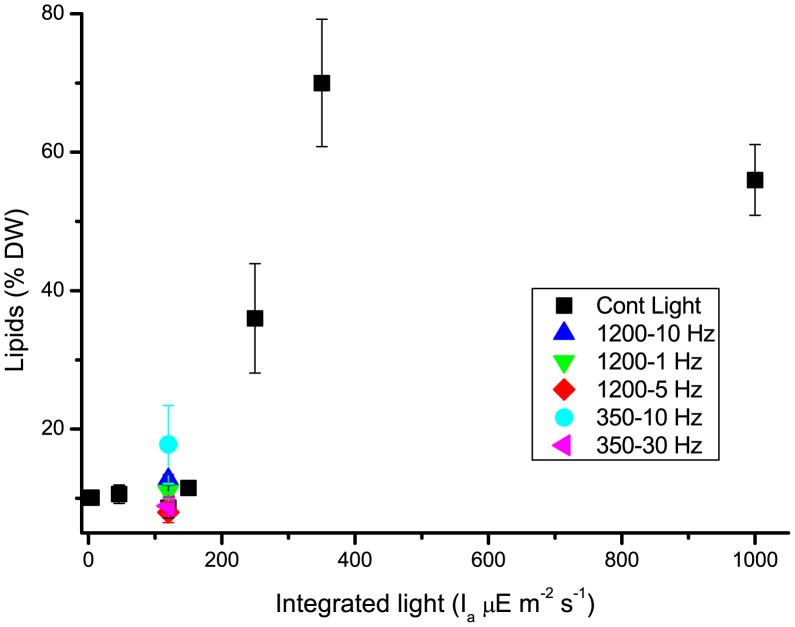
Biofuels from algae are highly interesting as renewable energy sources to replace, at least partially, fossil fuels, but great research efforts are still needed to optimize growth parameters to develop competitive large-scale cultivation systems. One factor with a seminal influence on productivity is light availability. Light energy fully supports algal growth, but it leads to oxidative stress if illumination is in excess. In this work, the influence of light intensity on the growth and lipid productivity of Nannochloropsis salina was investigated in a flat-bed photobioreactor designed to minimize cells self-shading. The influence of various light intensities was studied with both continuous illumination and alternation of light and dark cycles at various frequencies, which mimic illumination variations in a photobioreactor due to mixing. Results show that Nannochloropsis can efficiently exploit even very intense light, provided that dark cycles occur to allow for re-oxidation of the electron transporters of the photosynthetic apparatus. If alternation of light and dark is not optimal, algae undergo radiation damage and photosynthetic productivity is greatly reduced. Our results demonstrate that, in a photobioreactor for the cultivation of algae, optimizing mixing is essential in order to ensure that the algae exploit light energy efficiently.
Overview
The claims and statistics of this paper haven’t been checked yet.
Free: it reads the open-access text and checks the first 5 claims that cite a source we can check. Create a free account to check every claim.
Integrity signals
Registry
Cites
Statistics
Figures
Verification
Claims the paper makes
The claims and statistics of this paper haven’t been checked yet.
Free: it reads the open-access text and checks the first 5 claims that cite a source we can check. Create a free account to check every claim.
Claims other papers make about this one
Each is checked against this paper’s own text: does it say what the citing paper says it does?
The cited source says what the claim attributes to it.
In the citing paper
“If the frequency is not optimized, a decrease in biomass formation can occur [218].”
From Lab-scale photobioreactor systems: principles, applications, and scalability (2022) · cites this paper as [218]
Self-check
Percentages, sums and reported differences re-computed from the paper’s own numbers.
The self-check needs the paper’s full text.
Citations
Cites
Chlorophyll fluorescence—a practical guide
Maxwell, K., & Johnson, G. N. (2000) · Journal of Experimental Botany · doi:10.1093/jexbot/51.345.659 · Cited by 9,347 · cited 1×
“efficiency in algae and plants and, in particular, to highlight photoinhibition due to excess illumination [40].”
BackgroundGuillard, R. R. L., & Ryther, J. H. (1962) · Canadian Journal of Microbiology · doi:10.1139/m62-029 · Cited by 7,685
Porra, R. J., Thompson, W. A., & Kriedemann, P. E. (1989) · Biochimica et Biophysica Acta (BBA) - Bioenergetics · doi:10.1016/s0005-2728(89)80347-0 · Cited by 5,992 · cited 1×
“Pigment concentrations were determined spectrophotometrically with specific extinction coefficients [50,51].”
MethodWellburn, A. R. (1994) · Journal of Plant Physiology · doi:10.1016/s0176-1617(11)81192-2 · Cited by 5,820
Microalgal triacylglycerols as feedstocks for biofuel production: perspectives and advances
Hu, Q., Sommerfeld, M., Jarvis, E., Ghirardi, M., Posewitz, M., Seibert, M., & Darzins, A. (2008) · The Plant Journal · doi:10.1111/j.1365-313x.2008.03492.x · Cited by 3,745 · cited 1×
“Light intensity has been suggested to influence algal lipid synthesis, with strong illumination inducing their accumulation [1,42].”
BackgroundRodolfi, L., Chini Zittelli, G., Bassi, N., Padovani, G., Biondi, N., Bonini, G., & Tredici, M. R. (2009) · Biotechnology and Bioengineering · doi:10.1002/bit.22033 · Cited by 2,879 · cited 2×
“Such massive accumulation of lipids has been shown to be activated in response to stresses such as nitrogen or phosphorus starvation or exposure to excess light [10–14].”
BackgroundNile red: a selective fluorescent stain for intracellular lipid droplets.
Greenspan, P., Mayer, E. P., & Fowler, S. D. (1985) · The Journal of cell biology · doi:10.1083/jcb.100.3.965 · Cited by 2,543 · cited 1×
“Fluorescence was measured on a spectrofluorometer (OLIS DM45), with excitation wavelength at 488 nm and emission at 58065 nm [53].”
MethodPhotoinhibition of photosystem II under environmental stress
Murata, N., Takahashi, S., Nishiyama, Y., & Allakhverdiev, S. I. (2007) · Biochimica et Biophysica Acta (BBA) - Bioenergetics · doi:10.1016/j.bbabio.2006.11.019 · Cited by 1,583
Microalgae as a raw material for biofuels production
Gouveia, L., & Oliveira, A. C. (2009) · Journal of Industrial Microbiology & Biotechnology · doi:10.1007/s10295-008-0495-6 · Cited by 1,284 · cited 1×
“Such massive accumulation of lipids has been shown to be activated in response to stresses such as nitrogen or phosphorus starvation or exposure to excess light [10–14].”
BackgroundSensing and Responding to Excess Light
Li, Z., Wakao, S., Fischer, B. B., & Niyogi, K. K. (2009) · Annual Review of Plant Biology · doi:10.1146/annurev.arplant.58.032806.103844 · Cited by 992 · cited 3×
“Among the several possibilities, light is a major factor, because it provides all the energy necessary to support metabolism but, if present in excess, may lead to the formation of harmful reactive oxygen species (ROS) and oxidative stress [15].”
BackgroundInfluential
Research works printed but not linked: 1
- Nedbal L Tichy V Xiong FH Grobbelaar JU 1996 Microscopic green algae and cyanobacteria in high-frequency intermittent light. Journal of Applied Phycology 8 325 333 · DOI · Paper page
Cited by
Items 101–200 of 329
An Identifiable State Model To Describe Light Intensity Influence on Microalgae Growth
Bernardi, A., Perin, G., Sforza, E., Galvanin, F., Morosinotto, T., & Bezzo, F. (2014) · Industrial & Engineering Chemistry Research · doi:10.1021/ie500523z · Cited by 34
Self-citationAli, H., Solsvik, J., Wagner, J. L., Zhang, D., Hellgardt, K., & Park, C. W. (2019) · Biotechnology and Bioengineering · doi:10.1002/bit.27010 · Cited by 37
Grudziński, W., Krzemińska, I., Luchowski, R., Nosalewicz, A., & Gruszecki, W. I. (2016) · Algal Research · doi:10.1016/j.algal.2016.03.021 · Cited by 39
Silva, C. E. D. F., Sforza, E., & Bertucco, A. (2017) · Journal of Applied Phycology · doi:10.1007/s10811-017-1252-x · Cited by 36
“This behavior is species dependent, as the acclimation of photosynthetic apparatus can maintain/improve the efficiency under photoperiod (Sforza et al. 2012) or reduce significantly CO2 fixation under lower photoperiods (Krzeminska et al. 2014).”
BackgroundSelf-citationBorowiak, D., & Krzywonos, M. (2022) · Energies · doi:10.3390/en15155357 · Cited by 39
The role of an electron pool in algal photosynthesis during sub-second light–dark cycling
Vejrazka, C., Streefland, M., Wijffels, R. H., & Janssen, M. (2015) · Algal Research · doi:10.1016/j.algal.2015.07.017 · Cited by 40
Sforza, E., Calvaruso, C., Meneghesso, A., Morosinotto, T., & Bertucco, A. (2015) · Applied Microbiology and Biotechnology · doi:10.1007/s00253-015-6876-7 · Cited by 37
Self-citationLin, J., Tan, S., Yi, Y.-C., Hsiang, C., Chang, C., Chen, C., Chang, J., & Ng, I. (2021) · Environmental Research · doi:10.1016/j.envres.2021.112283 · Cited by 41
Rocca, N. L., Sciuto, K., Meneghesso, A., Moro, I., Rascio, N., & Morosinotto, T. (2014) · Physiologia Plantarum · doi:10.1111/ppl.12273 · Cited by 40
Self-citationPerin, G., Cimetta, E., Monetti, F., Morosinotto, T., & Bezzo, F. (2016) · Algal Research · doi:10.1016/j.algal.2016.07.015 · Cited by 35
Self-citationHan, P.-P., Shen, S.-G., Wang, H., Yao, S., Tan, Z., Zhong, C., & Jia, S. (2016) · Journal of Applied Phycology · doi:10.1007/s10811-016-0963-8 · Cited by 36
“Evidently, the photosynthetic efficiency was reduced under strong light, which was used for repair of damaged photosystem II and dissipation of excess energy (Sforza et al. 2012).”
BackgroundMuthuraj, M., Chandra, N., Palabhanvi, B., Kumar, V., & Das, D. (2014) · BioEnergy Research · doi:10.1007/s12155-014-9552-3 · Cited by 34
“light intensity resulted in reduced biomass titer [32] which was different from our observation, as both 250 and 350 μE m s depicted similar biomass titer.”
BackgroundModeling and Technoeconomic Analysis of Algae for Bioenergy and Coproducts
Kroumov, A. D., Scheufele, F. B., Trigueros, D. E. G., Módenes, A. N., Zaharieva, M. M., & Najdenski, H. M. (2017) · Elsevier eBooks · doi:10.1016/b978-0-444-63784-0.00011-4 · Cited by 41
Zotti, M., Mazzoleni, S., Mercaldo, L. V., Noce, M. D., Ferrara, M., Veneri, P. D., Diano, M., Esposito, S., & Cartenì, F. (2024) · Heliyon · doi:10.1016/j.heliyon.2024.e26323 · Cited by 35
Perin, G., Gambaro, F., & Morosinotto, T. (2022) · Frontiers in Plant Science · doi:10.3389/fpls.2022.846496 · Cited by 37
Self-citationModeling of smart mixing regimes to improve marine biorefinery productivity and energy efficiency
Golberg, A., & Liberzon, A. (2015) · Algal Research · doi:10.1016/j.algal.2015.05.021 · Cited by 32
Okumura, C., Hamdan, N. S., Rahman, M. A., Hasegawa, H., Miki, O., & Takimoto, A. (2014) · Environmental Progress & Sustainable Energy · doi:10.1002/ep.11951 · Cited by 36
“However, research is still needed to optimize growth parameters of lipid producing photoautotrophic microorganism to develop a competitive large-scale cultivation system [6].”
BackgroundInfluentialBorella, L., Diotto, D., Barbera, E., Fiorimonte, D., Sforza, E., & Trivellin, N. (2022) · Energy · doi:10.1016/j.energy.2022.125087 · Cited by 31
Self-citationDevelopment and Applications of Attached Growth System for Microalgae Biomass Production
Singh, G., & Patidar, S. K. (2020) · BioEnergy Research · doi:10.1007/s12155-020-10195-8 · Cited by 34
Lu, H., Zhao, R., Wang, C., Zhang, G., Chen, C., Li, B., & Han, T. (2022) · Journal of Cleaner Production · doi:10.1016/j.jclepro.2022.131304 · Cited by 32
Jerez, C., Navarro, E., Malpartida, I., Rico, R., Masojídek, J., Abdala, R., & Figueroa, F. (2014) · Aquatic Biology · doi:10.3354/ab00603 · Cited by 30
“…fluctuations have been proven to in crease light efficiency and productivity (Kok 1953, Terry 1986, Grobbelaar et al. 1996, Grobbelaar 2009b, 2010, Sforza et al. 2012), as such short durations match the turnover of the photosynthetic apparatus, which is suggested to be about 10 ms (Fal kowski et…”
BackgroundLi, X., Huff, J., Crunkleton, D. W., & Johannes, T. W. (2023) · Journal of Biotechnology · doi:10.1016/j.jbiotec.2023.08.007 · Cited by 31
Recent Progress on Systems and Synthetic Biology of Diatoms for Improving Algal Productivity
Chen, J., Huang, Y., Shu, Y., Hu, X., Wu, D., Jiang, H., Wang, K., Liu, W., & Fu, W. (2022) · Frontiers in Bioengineering and Biotechnology · doi:10.3389/fbioe.2022.908804 · Cited by 40
“In photonic fields, a recent study showed that an ideal arrangement of timing in photosynthetic pathways achieved by pulsed light is the key to increasing algal PE (Sforza et al., 2012; Zarmi et al., 2020).”
BackgroundNguyen, N.-K.-Q., Bui, X., Dao, T., Pham, M.-D.-T., Ngo, H. H., Lin, C., Lin, K. A., Nguyen, P., Huynh, K.-P.-H., Vo, T., et al. (2023) · Environmental Technology & Innovation · doi:10.1016/j.eti.2023.103494 · Cited by 29
Vertical distribution of algal productivity in open pond raceways
Murphy, T. E., Kapili, B. J., Detweiler, A. M., Bebout, B. M., & Prufert‐Bebout, L. E. (2015) · Algal Research · doi:10.1016/j.algal.2015.07.003 · Cited by 34
Ewusi-Mensah, D., Huang, J., Díaz, L. K. C., Rodenas, P., Ramírez-Moreno, M., Ortiz, J. M., & Esteve‐Núñez, A. (2021) · Processes · doi:10.3390/pr9112011 · Cited by 27
“The photosynthetic efficiency is critically reduced when light and dark cycles are not optimum [29].”
BackgroundCulture of Spirogyra sp. in a flat-panel airlift photobioreactor
Vogel, V., & Bergmann, P. (2018) · 3 Biotech · doi:10.1007/s13205-017-1026-9 · Cited by 26
“As a consequence, the cells switch constantly between the bright and the dark sections of the reactor, which enhances photosynthetic efficiency of the cells (Janssen et al. 2001; Sforza et al. 2012).”
BackgroundThe impact of light/dark regimes on structure and physiology of Chlorella vulgaris biofilms
Gao, Y., Bernard, O., Fanesi, A., Perré, P., & Lopes, F. (2023) · Frontiers in Microbiology · doi:10.3389/fmicb.2023.1250866 · Cited by 30
“Flashing light frequency and peak PPFD have been shown to impact strongly F v / F m in suspended cultures (Sforza et al., 2012).”
BackgroundMethodCheregi, O., Engelbrektsson, J., Andersson, M. X., Strömberg, N., Ekendahl, S., Godhe, A., & Spetea, C. (2021) · Physiologia Plantarum · doi:10.1111/ppl.13412 · Cited by 25
“The threefold nutrient enrichment yielded lower Ng cell densities (Figure 2B), most likely resulting in excess light per cell unit, condition also known to stimulate lipid synthesis (Sforza et al., 2012; Simionato et al., 2011).”
BackgroundFarahin, A. W., Ikhsan, N. F. M., Nagao, N., Katayama, T., Imaizumi, Y., Mamat, N. Z., Yusoff, F. M., & Shariff, M. (2021) · Algal Research · doi:10.1016/j.algal.2021.102523 · Cited by 32
How Mixing and Light Heterogeneity Impact the Overall Growth Rate in Photobioreactors
Gernigon, V., Chekroun, M. A., Cockx, A., Guiraud, P., & Morchain, J. (2019) · Chemical Engineering & Technology · doi:10.1002/ceat.201900102 · Cited by 26
Luzi, G., McHardy, C., Lindenberger, C., Rauh, C., & Delgado, A. (2019) · Algal Research · doi:10.1016/j.algal.2018.101404 · Cited by 24
Kareya, M. S., Mariam, I., Nesamma, A. A., & Jutur, P. P. (2020) · Materials Science for Energy Technologies · doi:10.1016/j.mset.2020.03.002 · Cited by 25
Lau, C. C., Teh, K. Y., Afifudeen, C. L. W., Yee, W., Ahmad, A., & San, T. (2022) · World Journal of Microbiology and Biotechnology · doi:10.1007/s11274-022-03245-0 · Cited by 26
Biomanufacturing of glycosylated antibodies: Challenges, solutions, and future prospects
Dubey, K. K., Kumar, A., Baldia, A., Rajput, D., Kateriya, S., Singh, R., Nikita, N., Tandon, R., & Mishra, Y. K. (2023) · Biotechnology Advances · doi:10.1016/j.biotechadv.2023.108267 · Cited by 25
Dejsungkranont, M., Chisti, Y., & Sirisansaneeyakul, S. (2017) · Journal of Chemical Technology & Biotechnology · doi:10.1002/jctb.5293 · Cited by 25
Pigment structure in the violaxanthin–chlorophyll-a-binding protein VCP
Llansola‐Portoles, M. J., Litvín, R., Ilioaia, C., Pascal, A. A., Bína, D., & Robert, B. (2017) · Photosynthesis Research · doi:10.1007/s11120-017-0407-6 · Cited by 26
Perin, G., Simionato, D., Bellan, A., Carone, M., Occhipinti, A., Maffei, M. E., & Morosinotto, T. (2017) · Algal Research · doi:10.1016/j.algal.2017.10.013 · Cited by 24
Self-citationMichelberger, T., Mezzadrelli, E., Bellan, A., Perin, G., & Morosinotto, T. (2025) · PLANT PHYSIOLOGY · doi:10.1093/plphys/kiaf301 · Cited by 23
“Later a new increase in NPQ is observed, possibly because the actinic light used here is close to the saturation point for the species (Sforza et al. 2012).”
Self-citationPerin, G., & Morosinotto, T. (2023) · Frontiers in Photobiology · doi:10.3389/fphbi.2023.1274525 · Cited by 25
Self-citationMuto, M., Kubota, C., Tanaka, M., Satoh, A., Matsumoto, M., Yoshino, T., & Tanaka, T. (2013) · PLoS ONE · doi:10.1371/journal.pone.0073507 · Cited by 27
“Based on the reasons, recently, oleaginous microalgae have been intensively studied as non-food biomass and high-triacylglyceride (TAG) producer for efficient BDF production [1,4].”
BackgroundKrujatz, F., Fehse, K., Jahnel, M., Gommel, C., Schurig, C., Lindner, F., Bley, T., Weber, J., & Steingroewer, J. (2016) · Algal Research · doi:10.1016/j.algal.2016.06.018 · Cited by 22
Sharma, S., Sanyal, S. K., Sushmita, K., Chauhan, M., Sharma, A. S., Anirudhan, G., Veetil, S. K., & Kateriya, S. (2021) · Current Genomics · doi:10.2174/1389202922666210412104817 · Cited by 24
“Plant growth under the controlled environmental conditions (light, temperature, CO2, and humidity) within a small area has come up as an alternative measure to tackle these restrictions, though the control of light parameters through artificial illumination remained a major challenge [278].”
BackgroundCultivation of Spirulina platensis for nutrient removal from piggery wastewater
Liang, C., Zhang, N., Pang, Y., Li, S., Shang, J., Zhang, Y., Kuang, Z., Liu, J., & Fei, H. (2023) · Environmental Science and Pollution Research · doi:10.1007/s11356-023-28334-x · Cited by 22
Screening microalgae isolated from urban storm- and wastewater systems as feedstock for biofuel
Massimi, R., & Kirkwood, A. E. (2016) · PeerJ · doi:10.7717/peerj.2396 · Cited by 24
“Research to increase growth rates and lipid production has identified optimal temperatures, pH, photoperiods and nutrients for several species (Lv et al., 2010; Sforza et al., 2012; Adams et al., 2013).”
BackgroundPires, J. C. M. (2015) · Elsevier eBooks · doi:10.1016/b978-0-12-800776-1.00005-4 · Cited by 31
Feasibility of Chlorella vulgaris to waste products removal from cheese whey
Pires, T. D. A., Cardoso, V. L., & Batista, F. R. X. (2021) · International Journal of Environmental Science and Technology · doi:10.1007/s13762-021-03423-x · Cited by 22
“Furthermore, in the condition with 100% of CW, the turbidity reduced the light penetration, which is essential for microalgae metabolism (Sforza et al., 2012).”
BackgroundSarkar, S., Manna, M. S., Bhowmick, T. K., & Gayen, K. (2021) · Process Biochemistry · doi:10.1016/j.procbio.2021.07.007 · Cited by 22
Fixing N2 into cyanophycin: continuous cultivation of Nostoc sp. PCC 7120
Trentin, G., Piazza, F., Carletti, M., Zorin, B., Khozin‐Goldberg, I., Bertucco, A., & Sforza, E. (2022) · Applied Microbiology and Biotechnology · doi:10.1007/s00253-022-12292-4 · Cited by 21
“Indeed, when cyanobacteria are exposed to high light intensities, they reduce the chlorophyll content to limit photoinhibition (Sforza et al. 2012).”
BackgroundSelf-citationBauer, L., Rodrigues, E., & Rech, R. (2020) · Biocatalysis and Agricultural Biotechnology · doi:10.1016/j.bcab.2020.101601 · Cited by 23
Nannochloropsis gaditana grown outdoors in annular photobioreactors: Operation strategies
Nogueira, N., Nascimento, F. J. A., Cunha, C., & Cordeiro, N. (2020) · Algal Research · doi:10.1016/j.algal.2020.101913 · Cited by 21
“gaditana under semi-continuous culture [52,53].”
Assessment of photosynthetic activity in dense microalgae cultures using oxygen production
Vera‐Vives, A. M., Michelberger, T., Morosinotto, T., & Perin, G. (2024) · Plant Physiology and Biochemistry · doi:10.1016/j.plaphy.2024.108510 · Cited by 24
Self-citationGuermazi, W., Masmoudi, S., Boukhris, S., Ayadi, H., & Morant-Manceau, A. (2014) · Journal of Applied Phycology · doi:10.1007/s10811-014-0260-3 · Cited by 20
Mixson, S., & Burkholder, J. M. (2016) · Journal of Experimental Marine Biology and Ecology · doi:10.1016/j.jembe.2016.11.006 · Cited by 20
Sniffen, K. D., Price, J., Sales, C. M., & Olson, M. S. (2017) · Environmental Science & Technology · doi:10.1021/acs.est.7b03975 · Cited by 20
Virtanen, O., Valev, D., Kruse, O., Wobbe, L., & Tyystjärvi, E. (2019) · Photosynthetica · doi:10.32615/ps.2019.056 · Cited by 22
Bellan, A., Bucci, F., Perin, G., Alboresi, A., & Morosinotto, T. (2019) · Plant and Cell Physiology · doi:10.1093/pcp/pcz174 · Cited by 22
Self-citationAli, H., Cheema, T. A., & Park, C. W. (2017) · International Journal of Heat and Mass Transfer · doi:10.1016/j.ijheatmasstransfer.2016.10.061 · Cited by 19
Influence of process factors and photobioreactor design on microalgae cultivation
Nedaei, L., & Shokrkar, H. (2025) · Biofuels Bioproducts and Biorefining · doi:10.1002/bbb.2759 · Cited by 25
“…Evaluation of an optical fiber spectrometer in an airlift photobioreactor Increasing light penetration in PBR interior with circular configuration 91 Evaluation of growth rate, production of carotenoids in microalgae Dunaliella salina using LEDs with specific wavelength Increase of carotenoids…”
Li, X., Huff, J., Crunkleton, D. W., & Johannes, T. W. (2021) · Journal of Biotechnology · doi:10.1016/j.jbiotec.2021.09.008 · Cited by 22
Subramanian, G., Dineshkumar, R., & Sen, R. (2016) · RSC Advances · doi:10.1039/c6ra08900c · Cited by 19
Environmental stressors and lipid production by Dunaliella spp. I. Salinity
Mixson, S., Burkholder, J. M., & Zimba, P. V. (2016) · Journal of Experimental Marine Biology and Ecology · doi:10.1016/j.jembe.2016.11.004 · Cited by 21
Guedes, V. C., Palma, G. M., & Horta, A. C. L. (2023) · Brazilian Journal of Chemical Engineering · doi:10.1007/s43153-023-00388-x · Cited by 20
“Further information regarding effects of light intensity on microalgal growth can be found in the studies of Sforza et al. (2012); (2019) and Cuaresma et al. (2009).”
Cyanobacteria respond to trophic status in shallow aquatic ecosystems
Kuczyńska‐Kippen, N., Kozak, A., & Celewicz-Gołdyn, S. (2024) · The Science of The Total Environment · doi:10.1016/j.scitotenv.2024.174932 · Cited by 20
Leal, E., de Beyer, L., O’Connor, W. A., Dove, M. C., Ralph, P. J., & Pernice, M. (2020) · Aquaculture · doi:10.1016/j.aquaculture.2020.736077 · Cited by 20
Potential of household photobioreactor for algae cultivation
Osama, A., Hosney, H., & Moussa, M. S. (2021) · Journal of Water and Climate Change · doi:10.2166/wcc.2021.261 · Cited by 19
Abu‐Ghosh, S., Dubinsky, Z., Banet, G., & Iluz, D. (2018) · Bioresource Technology · doi:10.1016/j.biortech.2018.03.110 · Cited by 18
Perkins, R. G., Williamson, C. J., Lavaud, J., Mouget, J., & Campbell, D. A. (2018) · Photosynthesis Research · doi:10.1007/s11120-018-0508-x · Cited by 17
“1 3 in optimising bioreactor light environments (Eriksen 2008; Carvalho et al. 2011; Sforza et al. 2012).”
Green microalgae in intermittent light: a meta-analysis assisted by machine learning
Levasseur, W., Pozzobon, V., & Perré, P. (2021) · Journal of Applied Phycology · doi:10.1007/s10811-021-02603-z · Cited by 19
A mathematical model to guide genetic engineering of photosynthetic metabolism
Perin, G., Bernardi, A., Bellan, A., Bezzo, F., & Morosinotto, T. (2017) · Metabolic Engineering · doi:10.1016/j.ymben.2017.11.002 · Cited by 15
“Bottles were illuminated from one side (illumination rate was determined using the LI-250A photometer (Heinz-Walz, Effeltrich, Germany)) and bubbled using air enriched with 5 % CO2 (v/v), at a total flow rate of 1 L h -1, as detailed in (Sforza et al., 2012a).”
BackgroundMethodSelf-citationSun, L. L., Lei, Y., & Li, H. (2022) · Frontiers in Environmental Science · doi:10.3389/fenvs.2022.893412 · Cited by 19
“The optimal alternation of the light/dark cycle, which, similar to the circulation cycle of anaerobic/aerobic switches in the sequencing batch reactor (SBR), is also beneficial to the efficient use of light energy by algae (Sforza et al., 2012).”
BackgroundTan, C.-Y. (2016) · Journal of Oil Palm Research · doi:10.21894/jopr.2016.2804.11 · Cited by 17
“The cells exposed to high irradiance at the periphery will move from the zone of excess light to the internal dark zone for dissipating the excess photons in order to reduce photooxidative damage (Sforza et al., 2012).”
BackgroundOmer, S. N., Saravanan, P., Kumar, P., Kannan, R. R., Rajasimman, M., & Shanmugam, V. (2024) · Biomass Conversion and Biorefinery · doi:10.1007/s13399-023-05263-w · Cited by 16
“[35] Integrated approaches for wastewater treatment In order to generate biomass and improve the environment, integrated systems that combine the production of algal biomass with wastewater treatment should be investigated.”
Mariam, I., Kareya, M. S., Rehmanji, M., Nesamma, A. A., & Jutur, P. P. (2021) · Frontiers in Microbiology · doi:10.3389/fmicb.2021.693106 · Cited by 14
“After alignment of the sequences by ClustalW, the phylogenetic tree was constructed using neighborjoining (N-J) method, and the evolutionary distances was computed using the Jones–Taylor–Thornton (JTT) matrix-based method (Shaikh et al., 2020).”
MethodA modelling workflow for quantification of photobioreactor performance
Gu, W., Theau, E., Anderson, A. W., Fletcher, D. F., Kavanagh, J. M., & McClure, D. D. (2023) · Chemical Engineering Journal · doi:10.1016/j.cej.2023.147032 · Cited by 16
Montoya, L. M. M., Arbeláez, A., Giraldo, N. D., & Atehortúa, L. (2024) · Journal of Applied Phycology · doi:10.1007/s10811-024-03208-y · Cited by 14
“On the other hand, Nannochloropsis sp cells experienced a decrease in F v /F m (0.5) when the light intensity increased up to 1200 μmol photons m −2 s −1 (Sforza et al. 2012).”
InfluentialTheus, M. E., Layden, T. J., McWilliams, N., Crafton‐Tempel, S., Kremer, C. T., & Fey, S. B. (2022) · Oikos · doi:10.1111/oik.08839 · Cited by 13
Fattore, N., Bucci, F., Bellan, A., Bossi, S., Maffei, M. E., & Morosinotto, T. (2022) · Journal of Biotechnology · doi:10.1016/j.jbiotec.2022.07.007 · Cited by 15
“…in nitrogen deprivation and high light (Figure 4B, C), where TAG accumulation is already strongly induced (Alboresi et al., 2016; Pal et al., 2011; Sforza et al., 2012; Simionato et al., 2013; Teo et al., 2014). p r Most likely, in those conditions algal metabolism has already been altered for…”
Self-citationLutzu, G. A., Concas, A., Damergi, E., Chen, L., Zhang, W., & Liu, T. (2024) · Applied Sciences · doi:10.3390/app14219704 · Cited by 17
“When exposed to higher light intensity (Figure − The decision to conduct these experiments under continuous light was in fl uenced by evidence that alternating dark and light periods can inhibit growth and reduce cell performance compared to continuous light exposure [37].”
Morelli, L., Patwari, P., Pruckner, F., Bastide, M., & Fabris, M. (2025) · Algal Research · doi:10.1016/j.algal.2025.103920 · Cited by 12
Ogbonna, I. O., Ikwebe, J., Ogbonna, J. C., Eze, C. N., & Ndrimbula, J. B. (2022) · Nigerian Journal of Biotechnology · doi:10.4314/njb.v38i2.1 · Cited by 16
The Effect of Light on Nitrogen Removal by Microalgae-Bacteria Symbiosis System (MBS)
Wang, S., Guo, Z., Ding, X., Li, L., Jin, Z., Zhang, C., Liu, S., Zhou, Y., & Fan, G. (2023) · Water · doi:10.3390/w15111991 · Cited by 14
Fatah, H. M. A. E., El-Baghdady, K. Z., Zakaria, A. E., & Sadek, H. N. (2020) · Biocatalysis and Agricultural Biotechnology · doi:10.1016/j.bcab.2020.101588 · Cited by 13
Antioxidant and Antimicrobial Activity of Microalgae of the Filinskaya Bay (Baltic Sea)
Shevelyukhina, A. V., Babich, O., Сухих, С. А., Ivanova, S. A., Kashirskih, E., Smirnov, V., Michaud, P., & Chupakhin, E. G. (2022) · Plants · doi:10.3390/plants11172264 · Cited by 11
“It is also worth mentioning that during cultivation, other types of microalgae also showed photosaturation at the illumination of more than 150 mcM m−2 s−1 photons [33].”
BackgroundRavikumar, R. (2013) · Springer eBooks · doi:10.1007/978-94-007-7494-0_5 · Cited by 13
Vanags, J., Kunga, L., Dubencovs, K., Galvanauskas, V., Balode, M., & Grīgs, O. (2015) · Environmental Research Engineering and Management · doi:10.5755/j01.erem.70.4.8437 · Cited by 14
“In literature there is mentioned that mixing, light intensity and CO2 concentration are parameters that may essentially influence the growth of algae (Sforza et al., 2012).”
BackgroundHosseini, M. K., Shariati, F. P., Bonakdarpour, B., & Heydarinasab, A. (2019) · Journal of Applied Phycology · doi:10.1007/s10811-019-01944-0 · Cited by 11
Lima, S., Villanova, V., Grisafi, F., Brucato, A., & Scargiali, F. (2020) · The Canadian Journal of Chemical Engineering · doi:10.1002/cjce.23776 · Cited by 12
Wang, H., Liu, J., Phyu, K., Cao, Y., Xu, X., Liang, J., Chang, C., Zhang, K., & Zhi, S. (2024) · The Science of The Total Environment · doi:10.1016/j.scitotenv.2024.177282 · Cited by 11
Valorization of environmental-burden waste towards microalgal metabolites production
Sharma, S., Show, P. L., Aminabhavi, T. M., Sevda, S., & Garlapati, V. K. (2023) · Environmental Research · doi:10.1016/j.envres.2023.115320 · Cited by 11
Mangal, V., Phung, T., & Guéguen, C. (2020) · Environmental Science and Pollution Research · doi:10.1007/s11356-020-07812-6 · Cited by 12
“…algae have developed two mechanisms of actions which have become evolved by photosynthetic organisms: (1) degradation and synthesis of a D1 subunit through the photosystem II pathway and (2) the reduction of light induced damage through energy excess loss (Murata et al. 2007; Sforza et al. 2012).”
BackgroundSharma, S., & Garlapati, V. K. (2020) · Environmental Pollution · doi:10.1016/j.envpol.2020.115837 · Cited by 11
Culturing of microalgae for food applications
Torzillo, G., Zittelli, G. C., Benavides, A. M. S., Ranglová, K., & Masojídek, J. (2021) · Elsevier eBooks · doi:10.1016/b978-0-12-821080-2.00002-2 · Cited by 15
Chen, C., Tao, F., Han, T., Gao, F., Dong, T., Jiang, W., Lu, H., Zhang, Y., & Li, B. (2022) · Journal of Applied Phycology · doi:10.1007/s10811-022-02840-w · Cited by 10
A step-forward in the characterization of microalgal consortia: Microbiological and kinetic aspects
Coronado-Apodaca, K. G., Vital‐Jácome, M., Buitrón, G., & Quijano, G. (2019) · Biochemical Engineering Journal · doi:10.1016/j.bej.2019.02.021 · Cited by 10
Efficient Production of Microalgal Biomass—Step by Step to Industrial Scale
Hawrot-Paw, M., & Ratomski, P. (2024) · Energies · doi:10.3390/en17040944 · Cited by 9
“The cells inside the culture receive only part of the radiation, which reduces the light efficiency compared to cells in the outer, light-exposed zone [6].”
BackgroundPérez-Varillas, N. I., & Sánchez‐Saavedra, M. D. P. (2025) · Journal of Applied Phycology · doi:10.1007/s10811-025-03557-2 · Cited by 11
“Microalgae growth rates depend on environmental conditions, such as optimal irradiance levels ranging between 5 and 150 µmol photons m −2 s −1 , depending on the species (Sforza et al. 2012).”
Balamurugan, S., Li, D., Wang, X., & Li, H. (2025) · Critical Reviews in Food Science and Nutrition · doi:10.1080/10408398.2025.2475240 · Cited by 11
“At the same time, sub-optimal light intensity remarkably reduced algal growth and photosynthetic rate (Vejrazka et al. 2011; Sforza et al. 2012).”
Habiby, O., Nahor, O., Israel, A. A., Liberzon, A., & Golberg, A. (2018) · Biotechnology and Bioengineering · doi:10.1002/bit.26588 · Cited by 9
Phycoremediation of Municipal Wastewater by the Cold‐Adapted Microalga Monoraphidium sp. Dek19
Hage, A., Luckett, N., & Holbrook, G. P. (2018) · Water Environment Research · doi:10.2175/106143017x15131012188060 · Cited by 9
“As discussed by Grobellar (1994) and Sforza et al. (2012), using other microalgal species, self-shading of the cells was ameliorated by increased aeration and agitation, which circulates algae to the outside of the culture, resulting in greater light exposure and consequently less Chl synthesis per…”
Background
Metadata
- Authors
- Sforza, E., Simionato, D., Giacometti, G. M., Bertucco, A., & Morosinotto, T.
- Affiliations
- University of Padua (IT)
- Corresponding author
- Morosinotto, Tomas
- Venue
- PLoS ONE
- Publisher
- Public Library of Science (PLoS)
- Published
- 2012-06-20
- Volume
- 7
- Issue
- 6
- Pages
- e38975
- ISSN
- 1932-6203 (ISSN-L)
- PMC
- PMC3380057
- OpenAlex
- W2043003528
- Cited by
- 313
- References
- 54
- Citations by year
- 2026: 13 · 2025: 25 · 2024: 21 · 2023: 21 · 2022: 26 · 2021: 25 · 2020: 24 · 2019: 22 · 2018: 23 · 2017: 23 · 2016: 34 · 2015: 20 · 2014: 22 · 2013: 12 · 2012: 1
- FWCI
- 6.74
- Type
- journal article
- Language
- en
- Open access
- gold
- doi.org
- Locations
- PLoS ONE (publishedVersion, cc-by)
- Europe PMC (PubMed Central) (publishedVersion, cc-by)
- PubMed Central (publishedVersion, cc-by)
- PubMed (publishedVersion)
- DOAJ (DOAJ: Directory of Open Access Journals) (submittedVersion, cc-by-sa)
- Figshare (submittedVersion, cc-by)
- Padua Research Archive (University of Padova) (submittedVersion, cc-by)
- Topics
- Physical Sciences › Energy › Renewable Energy, Sustainability and the Environment › Algal biology and biofuel production
- Life Sciences › Biochemistry, Genetics and Molecular Biology › Molecular Biology › Photosynthetic Processes and Mechanisms
- Physical Sciences › Environmental Science › Environmental Chemistry › Aquatic Ecosystems and Phytoplankton Dynamics
- Keywords
- Nannochloropsis salina, photobioreactors, light intensity, photosynthetic efficiency, lipid productivity, oxidative stress, radiation damage, algal growth, mixing
- MeSH terms
- Light, Photosynthesis, Photoperiod, Oxidative Stress, Stramenopiles, Microalgae, Photobioreactors
About these checks
Registry, retraction, Cites and statistics results are computed, not judged, with one exception: a printed reference that no index lists is read once by a model before it counts as a citation error. Claims are extracted by a model and kept only when their quote appears verbatim in the text; each cited source is then checked, with a model’s help, for whether it says what the claim relies on. Those verdicts can be wrong — read the claim’s quote and the cited source before relying on one.
Statistics and arithmetic are recomputed, not judged.
Confidence bands are shown only for fields calibrated on our annotated test set. None is calibrated yet, so no band is shown.
What counts as a claim ›How we measure confidence ›How we check this ›
Are you an author, or do you see a problem with this page? Request a review
Data sources
Bibliographic data: Semantic Scholar, OpenAlex, Crossref.
Contains information from the Semantic Scholar Academic Graph Datasets, made available under the ODC Attribution License (ODC-BY 1.0).
Semantic Scholar’s data is described in: Kinney, R., et al. (2023). The Semantic Scholar Open Data Platform. arXiv:2301.10140.
