

Adjusted Light and Dark Cycles Can Optimize Photosynthetic Efficiency in Algae Growing in Photobioreactors
Open accessThe DOI matches its Crossref record; 54 of the 54 references it cites were found in a registry or an index.
Abstract
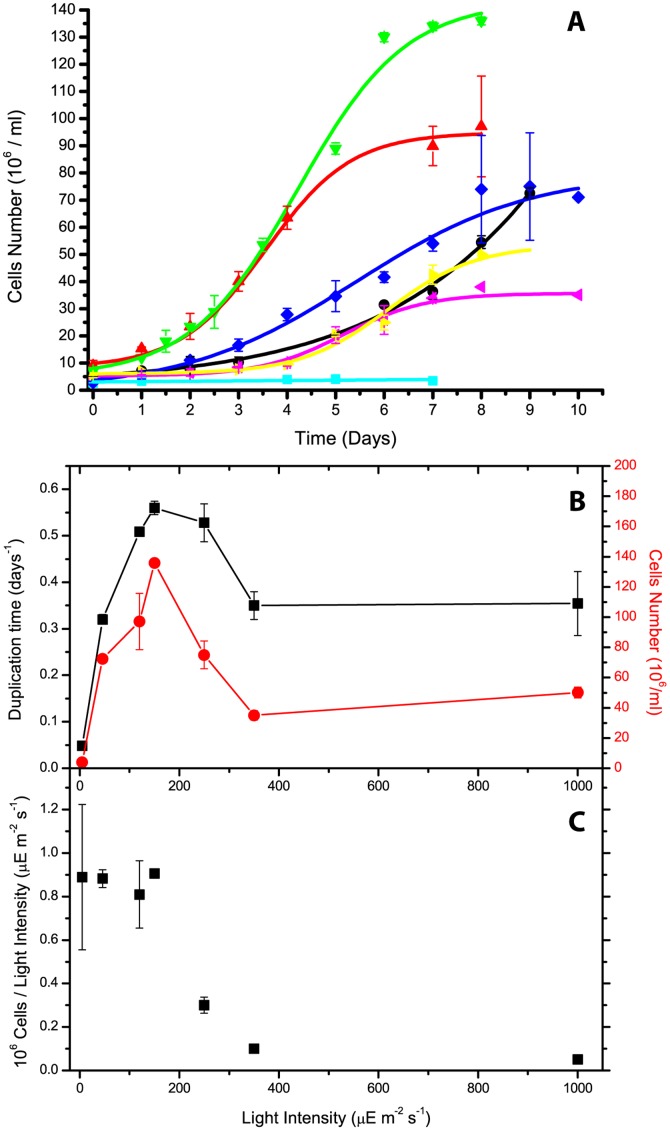
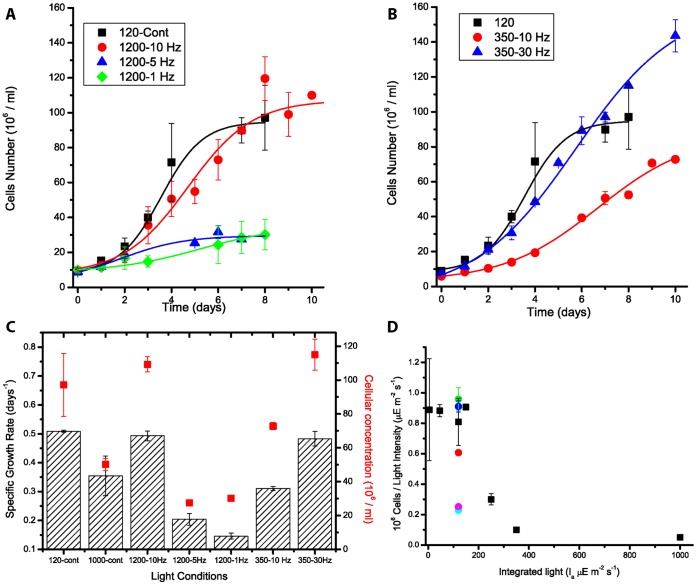
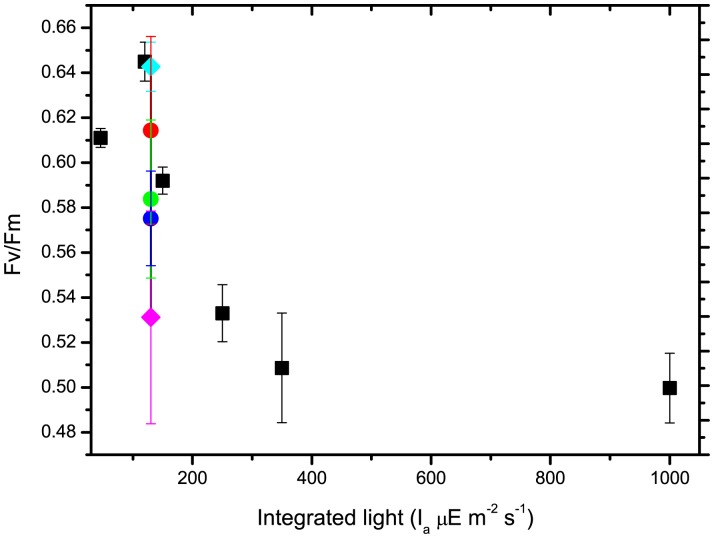
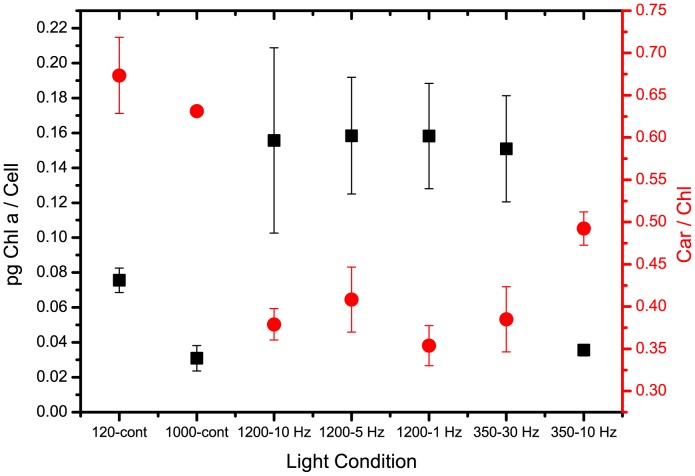
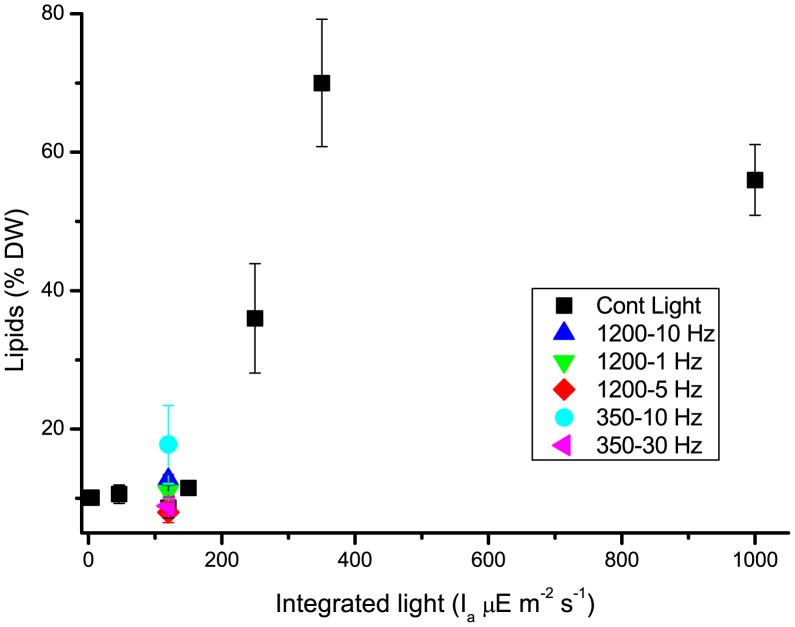
Biofuels from algae are highly interesting as renewable energy sources to replace, at least partially, fossil fuels, but great research efforts are still needed to optimize growth parameters to develop competitive large-scale cultivation systems. One factor with a seminal influence on productivity is light availability. Light energy fully supports algal growth, but it leads to oxidative stress if illumination is in excess. In this work, the influence of light intensity on the growth and lipid productivity of Nannochloropsis salina was investigated in a flat-bed photobioreactor designed to minimize cells self-shading. The influence of various light intensities was studied with both continuous illumination and alternation of light and dark cycles at various frequencies, which mimic illumination variations in a photobioreactor due to mixing. Results show that Nannochloropsis can efficiently exploit even very intense light, provided that dark cycles occur to allow for re-oxidation of the electron transporters of the photosynthetic apparatus. If alternation of light and dark is not optimal, algae undergo radiation damage and photosynthetic productivity is greatly reduced. Our results demonstrate that, in a photobioreactor for the cultivation of algae, optimizing mixing is essential in order to ensure that the algae exploit light energy efficiently.
Overview
The claims and statistics of this paper haven’t been checked yet.
Free: it reads the open-access text and checks the first 5 claims that cite a source we can check. Create a free account to check every claim.
Integrity signals
Registry
Cites
Statistics
Figures
Verification
Claims the paper makes
The claims and statistics of this paper haven’t been checked yet.
Free: it reads the open-access text and checks the first 5 claims that cite a source we can check. Create a free account to check every claim.
Claims other papers make about this one
Each is checked against this paper’s own text: does it say what the citing paper says it does?
The cited source says what the claim attributes to it.
In the citing paper
“If the frequency is not optimized, a decrease in biomass formation can occur [218].”
From Lab-scale photobioreactor systems: principles, applications, and scalability (2022) · cites this paper as [218]
Self-check
Percentages, sums and reported differences re-computed from the paper’s own numbers.
The self-check needs the paper’s full text.
Citations
Cites
Chlorophyll fluorescence—a practical guide
Maxwell, K., & Johnson, G. N. (2000) · Journal of Experimental Botany · doi:10.1093/jexbot/51.345.659 · Cited by 9,347 · cited 1×
“efficiency in algae and plants and, in particular, to highlight photoinhibition due to excess illumination [40].”
BackgroundGuillard, R. R. L., & Ryther, J. H. (1962) · Canadian Journal of Microbiology · doi:10.1139/m62-029 · Cited by 7,685
Porra, R. J., Thompson, W. A., & Kriedemann, P. E. (1989) · Biochimica et Biophysica Acta (BBA) - Bioenergetics · doi:10.1016/s0005-2728(89)80347-0 · Cited by 5,992 · cited 1×
“Pigment concentrations were determined spectrophotometrically with specific extinction coefficients [50,51].”
MethodWellburn, A. R. (1994) · Journal of Plant Physiology · doi:10.1016/s0176-1617(11)81192-2 · Cited by 5,820
Microalgal triacylglycerols as feedstocks for biofuel production: perspectives and advances
Hu, Q., Sommerfeld, M., Jarvis, E., Ghirardi, M., Posewitz, M., Seibert, M., & Darzins, A. (2008) · The Plant Journal · doi:10.1111/j.1365-313x.2008.03492.x · Cited by 3,745 · cited 1×
“Light intensity has been suggested to influence algal lipid synthesis, with strong illumination inducing their accumulation [1,42].”
BackgroundRodolfi, L., Chini Zittelli, G., Bassi, N., Padovani, G., Biondi, N., Bonini, G., & Tredici, M. R. (2009) · Biotechnology and Bioengineering · doi:10.1002/bit.22033 · Cited by 2,879 · cited 2×
“Such massive accumulation of lipids has been shown to be activated in response to stresses such as nitrogen or phosphorus starvation or exposure to excess light [10–14].”
BackgroundNile red: a selective fluorescent stain for intracellular lipid droplets.
Greenspan, P., Mayer, E. P., & Fowler, S. D. (1985) · The Journal of cell biology · doi:10.1083/jcb.100.3.965 · Cited by 2,543 · cited 1×
“Fluorescence was measured on a spectrofluorometer (OLIS DM45), with excitation wavelength at 488 nm and emission at 58065 nm [53].”
MethodPhotoinhibition of photosystem II under environmental stress
Murata, N., Takahashi, S., Nishiyama, Y., & Allakhverdiev, S. I. (2007) · Biochimica et Biophysica Acta (BBA) - Bioenergetics · doi:10.1016/j.bbabio.2006.11.019 · Cited by 1,583
Microalgae as a raw material for biofuels production
Gouveia, L., & Oliveira, A. C. (2009) · Journal of Industrial Microbiology & Biotechnology · doi:10.1007/s10295-008-0495-6 · Cited by 1,284 · cited 1×
“Such massive accumulation of lipids has been shown to be activated in response to stresses such as nitrogen or phosphorus starvation or exposure to excess light [10–14].”
BackgroundSensing and Responding to Excess Light
Li, Z., Wakao, S., Fischer, B. B., & Niyogi, K. K. (2009) · Annual Review of Plant Biology · doi:10.1146/annurev.arplant.58.032806.103844 · Cited by 992 · cited 3×
“Among the several possibilities, light is a major factor, because it provides all the energy necessary to support metabolism but, if present in excess, may lead to the formation of harmful reactive oxygen species (ROS) and oxidative stress [15].”
BackgroundInfluential
Research works printed but not linked: 1
- Nedbal L Tichy V Xiong FH Grobbelaar JU 1996 Microscopic green algae and cyanobacteria in high-frequency intermittent light. Journal of Applied Phycology 8 325 333 · DOI · Paper page
Cited by
Items 201–300 of 329
Design and Bench-Scale Hydrodynamic Testing of Thin-Layer Wavy Photobioreactors
Moroni, M., Lorino, S., Cicci, A., & Bravi, M. (2019) · Water · doi:10.3390/w11071521 · Cited by 9
Liu, L., Ying, K., Wu, K., Tang, S., Zhou, J., & Cai, Z. (2022) · Journal of Marine Science and Engineering · doi:10.3390/jmse10070839 · Cited by 11
New Angled Twin–layer Porous Substrate Photobioreactors for Cultivation of Nannochloropsis oculata
Tran, H.-D., Ong, B.-N., Ngo, V.-T., Tran, D.-L., Nguyen, T.-C., Tran-Thi, B.-H., Trí, Đ. T., Nguyen, T.-M.-L., Nguyen, X.-H., & Melkonian, M. (2022) · Protist · doi:10.1016/j.protis.2022.125914 · Cited by 9
Scale-Up—Bioreactor Design and Culture Optimization
Cuello, J. L., Hoshino, T., Kuwahara, S., & Brown, C. L. (2016) · Elsevier eBooks · doi:10.1016/b978-0-444-63475-7.00019-4 · Cited by 15
An overview of algal photobioreactors for resource recovery from waste
Ramasamy, S., Arun, S., & Pakshirajan, K. (2020) · Elsevier eBooks · doi:10.1016/b978-0-12-821264-6.00013-9 · Cited by 14
Dębowski, M., Kisielewska, M., Zieliński, M., & Kazimierowicz, J. (2026) · Applied Sciences · doi:10.3390/app16052524 · Cited by 9
The effect of LEDs on the growth and fatty acid composition of Botryococcus braunii
Kurt, Ç., Ekinci, K., & Uysal, Ö. (2022) · Renewable Energy · doi:10.1016/j.renene.2021.12.142 · Cited by 9
Ultrasound-assisted steps for producing biodiesel from microalgae
Tabernero, A., González‐Garcinuño, Á., & del Valle, E. M. M. (2024) · Current Research in Biotechnology · doi:10.1016/j.crbiot.2024.100251 · Cited by 8
Photosynthetic cell factories, a new paradigm for carbon dioxide (CO2) valorization
Nag, B., Makaranga, A., Kareya, M. S., Nesamma, A. A., & Jutur, P. P. (2023) · Elsevier eBooks · doi:10.1016/b978-0-323-99429-3.00027-8 · Cited by 8
Pelagatti, M., Mori, G., Falsini, S., Ballini, R., Lazzara, L., & Papini, A. (2023) · Microorganisms · doi:10.3390/microorganisms11051236 · Cited by 9
“…of L. fusiformis to different light qualities, the culture was divided into two subcultures and, successively, one was exposed to blue light (λ max 460 nm) and one to yellow light (λ max 590 nm), with PAR still being 150 µE m/2 s/1 as in Silva et al. (2020) and Sforza et al. (2012) [10,11].”
MethodFadeyi, O., Dzantor, E. K., & Adeleke, E. O. (2016) · Journal of Water Resource and Protection · doi:10.4236/jwarp.2016.82018 · Cited by 8
“Terrestrial biofuel feedstocks have been promoted as potential alternative to fossil fuels, however, they have limitations such as low biomass productivity and competition of arable land for food production [10] [11].”
BackgroundPalacios, Y. M., Vonshak, A., & Beardall, J. (2018) · Phycologia · doi:10.2216/17-100.1 · Cited by 9
“The acclimation potential of Nannochloropsis to changing light conditions, at exponential phase of the cultures, has been studied (Kromkamp et al. 2009; Sforza et al. 2012; Szabó et al. 2014).”
BackgroundResultInfluentialCFD Simulation of Algae Production in Airlift Photobioreactor
Kommareddy, N. C., & Ananthula, V. V. (2017) · Journal of Hazardous Toxic and Radioactive Waste · doi:10.1061/(asce)hz.2153-5515.0000364 · Cited by 8
Simulation of shading and algal growth in experimental raceways
Khawam, G., Waller, P. M., Gao, S., Edmundson, S. J., Huesemann, M. H., Attalah, S., & Ogden, K. L. (2019) · Algal Research · doi:10.1016/j.algal.2019.101575 · Cited by 8
Trivedi, J., Atray, N., & Agrawal, D. (2021) · Biofuels · doi:10.1080/17597269.2018.1448634 · Cited by 7
Long-term effects of liquid nanoparticles on algal growth and photosynthetic biogas upgrading
de Mello, B. S., Sarti, A., & Muñoz, R. (2025) · Renewable Energy · doi:10.1016/j.renene.2025.123467 · Cited by 7
Comparative Study on Plant Type Specific LED Light Source Design Parameters
Kárász, C. (2020) · Acta Polytechnica Hungarica · doi:10.12700/aph.17.3.2020.3.4 · Cited by 7
Wang, Z., & Hong, Y. (2024) · Current Pollution Reports · doi:10.1007/s40726-024-00300-2 · Cited by 9
“N) on microalgal growth, thereby promoting microalgal purification ability [15, 16].”
Han, K. H., Li, Z., Park, B. S., Jung, M. S., Kim, M., Kwon, K.-K., Youn, J. Y., Lee, J. H., Choi, D. B., Kim, J., et al. (2025) · Biotechnology for Biofuels and Bioproducts · doi:10.1186/s13068-025-02660-3 · Cited by 8
“According to Sforza et al. [67], Nannochloropsis species has been found to have a flexible photosynthetic apparatus, which can acclimate to a wide range of constant and varying light intensities.”
Photoinhibition of Algal Photobioreactor by Intense Light
Farahdiba, A. U., Cahyonugroho, O. H., Nindhita, S. N., & Hidayah, E. N. (2020) · Journal of Physics Conference Series · doi:10.1088/1742-6596/1569/4/042095 · Cited by 7
Mishra, N., Mishra, P., Gupta, E., & Singh, P. (2023) · Journal of Microbiology Biotechnology and Food Sciences · doi:10.55251/jmbfs.3632 · Cited by 9
Perin, G., Segalla, A., Basso, S., Simionato, D., Meneghesso, A., Sforza, E., Bertucco, A., & Morosinotto, T. (2014) · Chemical engineering transactions · doi:10.3303/cet1437128 · Cited by 10
Self-citationSan, T., Yee, W., Phua, P. S. P., Loh, S. H., & Ahmad, A. (2021) · Biotechnology Letters · doi:10.1007/s10529-021-03077-2 · Cited by 8
The application of bubble column photobioreactor for algal cultivation
O'Higgins, L., Haider, M. N., Verma, N., & Bose, A. (2025) · Algal Bioreactors · doi:10.1016/b978-0-443-14058-7.00003-8 · Cited by 6
High-intensity pulsed-light cultivation of unicellular algae: Photosynthesis continues in the dark
Zarmi, Y. (2024) · Heliyon · doi:10.1016/j.heliyon.2024.e27224 · Cited by 6
Sipaúba-Tavares, L. H., Tedesque, M. G., Fenerick, D. C., Millan, R. N., & Scardoeli-Truzzi, B. (2022) · Biotechnology Research and Innovation · doi:10.4322/biori.20226202 · Cited by 6
Zavafer, A., Bates, H., Labeeuw, L., Kofler, J. R., & Ralph, P. J. (2021) · Algal Research · doi:10.1016/j.algal.2021.102309 · Cited by 6
The roles of microalgae and bacteria in wastewater treatment
Dinh, N. T., Thu, L. P., Dat, N. T., Toàn, N. K., & Pham, L. A. (2022) · Vietnam Journal of Biotechnology · doi:10.15625/1811-4989/16645 · Cited by 8
“Several studies have successfully proven that enhanced vertical mixing increases microalgal photosynthesis and production owing to increased light/dark cycles, known as the ‘‘flashing light effect" (Sforza et al., 2012; Vejrazka et al., 2012).”
BackgroundPhotobioreactor for CO2 Sequestration: Possibilities and Challenges
Chawla, P. (2014) · Journal of Bioremediation & Biodegradation · doi:10.4172/2155-6199.1000234 · Cited by 6
Wang, X., Steyer, J., Capson‐Tojo, G., Lu, H., Zhu, D., Jiang, W., & Wang, C. (2025) · Bioresource Technology · doi:10.1016/j.biortech.2025.133243 · Cited by 6
Design and Analysis of Offshore Macroalgae Biorefineries
Golberg, A., Liberzon, A., Vitkin, E. I., & Yakhini, Z. (2018) · Methods in molecular biology · doi:10.1007/7651_2018_127 · Cited by 5
Olivieri, G., Moroni, M., Janssen, M., Piersanti, L., Mezza, D., & Bravi, M. (2021) · Processes · doi:10.3390/pr9071158 · Cited by 5
“For this reason, the main guidelines to design the cultivation system suggest having high surface to volume ratio and many geometries have been proposed in laboratory and pilot investigations: tubular photobioreactor, flat panel, bubble column and airlift, and more advanced configurations [2] Besides that, after Kok’s…”
BackgroundLu, H., Zhang, G., Wang, C., Han, T., Zhao, R., & Zhu, D. (2021) · Bioresource Technology · doi:10.1016/j.biortech.2021.126107 · Cited by 6
Silva, C. E. D. F., Gris, B., & Bertucco, A. (2016) · Brazilian Journal of Chemical Engineering · doi:10.1590/0104-6632.20160334s20150016 · Cited by 6
Self-citationJinda, K., Koottatep, T., Chaiwong, C., & Polprasert, C. (2020) · Water Science & Technology · doi:10.2166/wst.2020.329 · Cited by 6
Nikolaou, A., Bernardi, A., Bezzo, F., Morosinotto, T., & Chachuat, B. (2014) · IFAC Proceedings Volumes · doi:10.3182/20140824-6-za-1003.00904 · Cited by 5
“A first validation of the model is conducted in this section using experimental data from a PAM fluorometer for the microalgae Nannochloropsis Salina (Sforza et al., 2012).”
MethodResultSelf-citationShankar, U., Lenka, S. K., Ackland, M. L., & Callahan, D. L. (2025) · Algal Research · doi:10.1016/j.algal.2025.104224 · Cited by 5
Park, J. B. K., Montemezzani, V., Picken, C., Rendle, D., Sutherland, D. L., Hariz, H. B., & Craggs, R. J. (2025) · Journal of Environmental Management · doi:10.1016/j.jenvman.2025.126868 · Cited by 4
de Mello, B. S., Vargas-Estrada, L., Sarti, A., & Muñoz, R. (2025) · Journal of Applied Phycology · doi:10.1007/s10811-025-03684-w · Cited by 4
“In healthy green algal cultures, this ratio typically ranges between 0.6 and 0.8 (Sforza et al. 2012; Ángeles et al. 2021).”
InfluentialEffect of Different Shaking Systems on the Growth of Marine Diatom Phaeodactylum Tricornutum
Yakan, S. D., & Tureyen, O. E. (2021) · AQUATIC SCIENCES AND ENGINEERING · doi:10.26650/ase2021905122 · Cited by 4
Arbeláez, A., Giraldo, N. D., Montoya, L. M. M., & Garcés, L. A. (2024) · Algal Research · doi:10.1016/j.algal.2024.103678 · Cited by 5
Kvíderová, J., Kubáč, D., & Lukavský, J. (2024) · Algal Research · doi:10.1016/j.algal.2024.103759 · Cited by 5
Saco, J. A., Sekida, S., & Mine, I. (2020) · Phycological Research · doi:10.1111/pre.12446 · Cited by 4
“Sforza et al. (2012) showed that a microalgae Nannochloropsis salina Hibberd under continuous light ( 150 μmol photons m−2 s−1) has a reduced FV/FM corresponding with increased lipid contents indicating that the cells were undergoing photoinhibition.”
BackgroundFeng, Y., Fan, Y., Tang, L. H., Liu, X., Jin, C., Zhao, Y., Wang, Y., & Guo, L. (2025) · Process Safety and Environmental Protection · doi:10.1016/j.psep.2025.107022 · Cited by 4
Obidi, P. O., & Bayless, D. J. (2025) · Algal Research · doi:10.1016/j.algal.2025.104102 · Cited by 5
Bates, H., Zavafer, A., Szabó, M., & Ralph, P. J. (2022) · Journal of Applied Phycology · doi:10.1007/s10811-022-02890-0 · Cited by 6
“There is a consensus, however, that for microalgae to become a mainstream industrial solution, photosynthetic processes must be optimized in photobioreactors (Sforza et al. 2012).”
BackgroundA Hybrid Hmm/Autoregressive Time-Delay Neural Network Automatic Speech Recognition System
Selouani, S., & O’Shaughnessy, D. D. (2002) · INFM-OAR (INFN Catania) · doi:10.5281/zenodo.37758 · Cited by 6
Yarnold, J. (2016) · The University of Queensland · doi:10.14264/uql.2016.536 · Cited by 4
Barnett, J. Z. (2015) · Louisiana State University · doi:10.31390/gradschool_theses.3285 · Cited by 5
“Nannochloropsis salina has been shown to experience photoinhibition at irradiance levels higher than 150 mol m-2 s-1 (Sforza et al., 2012).”
BackgroundInfluentialThajuddin, F., Rasheed, A. S., Rajendran, P. J., Palanivel, P., Nooruddin, T., & Dharumadurai, D. (2026) · Renewable and Sustainable Energy Reviews · doi:10.1016/j.rser.2026.117105 · Cited by 3
Scharff, C., Schroeder, F. G., Domurath, N., & Wensch-Dorendorf, M. (2016) · Acta Horticulturae · doi:10.17660/actahortic.2016.1110.14 · Cited by 4
Liu, R., Tian, X., Huang, G., He, M., & Wang, C. (2024) · Algal Research · doi:10.1016/j.algal.2024.103389 · Cited by 4
Guardini, Z., Gómez, R., & Dall’Osto, L. (2022) · Elsevier eBooks · doi:10.1016/b978-0-12-823781-6.00005-8 · Cited by 4
Microalgae Isolation and Cultivation Technology for Mass Production
Lee, T. H. W., Show, P.-L., Ong, H. C., Ling, T. C., Lan, J. C., & Chang, J. (2022) · Springer eBooks · doi:10.1007/978-94-007-6724-9_10-1 · Cited by 7
Control of Microcystis Buoyancy by Reducing Cellular Carbohydrate Content at High Temperature
Samudra, T. T., Amano, Y., & Machida, M. (2023) · Journal of Water and Environment Technology · doi:10.2965/jwet.22-067 · Cited by 3
Cultivation of microalgae in closed systems under artificial lighting
Scharff, C., Domurath, N., Wensch-Dorendorf, M., & Schröder, F.-G. (2017) · Acta Horticulturae · doi:10.17660/actahortic.2017.1170.149 · Cited by 3
Influence of light stratification on the growth of Scenedesmus quadricauda
Leonardi, R. J., Ibañez, M. V., Morelli, M. N., Irazoqui, H. A., & Heinrich, J. M. (2019) · Biochemical Engineering Journal · doi:10.1016/j.bej.2019.04.022 · Cited by 3
The Light Regime Effect on Triacylglycerol Accumulation of Isochrysis zhangjiangensis
Fan, X., Cao, X., Chu, Y., Wu, P., & Xue, S. (2019) · Journal of Ocean University of China · doi:10.1007/s11802-019-3691-2 · Cited by 3
“Daily illumination length is one of the key factors in microalgae growth (Sforza et al., 2012; Singh et al., 2015).”
BackgroundModel guided development of astaxanthin production in microalgae biofilms
Pereira, D. M., Fanesi, A., Chachuat, B., Tebbani, S., Bernard, O., & Lopes, F. (2025) · Algal Research · doi:10.1016/j.algal.2025.104201 · Cited by 2
Rapp, D., Schelvis, D., French, N. P., & Plouviez, M. (2025) · Current Research in Biotechnology · doi:10.1016/j.crbiot.2025.100362 · Cited by 2
Wang, D., Tabassum, S., Li, J., Li, G., Altundağ, H., Zhang, N., & Khan, I. (2026) · RSC Advances · doi:10.1039/d6ra02058e · Cited by 2
“80 Although microalgae biomass is high in the Rs reactor and is expected to produce more oxygen, this may not be the case, as increased biomass also reduces light trans-mittance through shading, thereby inhibiting oxygen production, 54 a ff ecting pollutant removal.”
Chae, H., Kim, S., Choi, H., Kim, J., Han, S. J., & Kim, E. J. (2023) · Marine Drugs · doi:10.3390/md21080454 · Cited by 2
Microalgal farming for biofuel production: Extraction, conversion, and characterization
Mondal, S., Halder, S. K., & Mondal, K. C. (2023) · Elsevier eBooks · doi:10.1016/b978-0-443-13927-7.00006-2 · Cited by 2
Microalgal biofilm behavior under light/dark cycles
Gao, Y., U, J. I. F., Perré, P., Lopes, F., & Bernard, O. (2023) · IFAC-PapersOnLine · doi:10.1016/j.ifacol.2023.10.288 · Cited by 2
Paduvetnaya, L., Venkatesh, K. H., & Madhyastha, H. (2024) · Energy, environment, and sustainability · doi:10.1007/978-981-97-1152-9_19 · Cited by 2
LED Lamp with Customizable Light Regimes for Horticulture Applications
Kandilarov, R. Y. (2018) · International Scientific Conference Electronics (ET) · doi:10.1109/et.2018.8549613 · Cited by 2
“However, as the photosynthesis process has different relaxation time, different lighting regimes alternating light with dark periods [3-6] may be used to optimize the energy used for lighting.”
MethodBooth, M. J., Spicer, A., & Kiparissides, A. (2021) · Biochemical Engineering Journal · doi:10.1016/j.bej.2021.108315 · Cited by 2
Akhtar, S., Ali, H., & Park, C. W. (2022) · Journal of Chemistry · doi:10.1155/2022/3209051 · Cited by 2
Masmoudi, S. (2014) · theses.fr (ABES) · doi:10.70675/fca7feb8zf7eaz42f3z9a39z30ccfd692a00 · Cited by 3
Levasseur, W. (2021) · theses.fr (ABES) · doi:10.70675/2a8319a0z51eaz4212za65cz12156f21ef39 · Cited by 6
Micro-environment Establishment for Promoting Diverse Algal Growth
Sözmen, A. B. (2024) · Environmental science and engineering · doi:10.1007/978-981-97-2371-3_1 · Cited by 2
Zheng, Y.-Y., Wang, Y.-H., Yeh, C.-C., Liao, C.-H., & Lee, T. (2026) · Journal of environmental chemical engineering · doi:10.1016/j.jece.2026.122222 · Cited by 1
El-Gama, A. A. E., Fakhry, E. M., & Maghraby, D. M. E. (2015) · Journal of Coastal Life Medicine · doi:10.12980/jclm.3.2015j5-110 · Cited by 1
“Low doses of radiation may stimulate changes in the photosynthetic apparatus to optimize light absorption and minimize damage to this system[54].”
BackgroundUSE OF MICROALGAE AS RENEWABLE RESOURCES
Scharff, C., & Scharff, C. (2015) · RePEc: Research Papers in Economics · doi:10.22004/ag.econ.206654 · Cited by 1
Genetic engineering approaches to increase microalgae light use efficiency
Bellan, A. (2018) · Padua@research (University of Padova) · Cited by 1
Båmstedt, U. (2019) · Hydrobiologia · doi:10.1007/s10750-019-3964-1 · Cited by 1
O’Higgins, L., & Hamed, I. (2024) · Developments in applied phycology. · doi:10.1007/978-3-031-43969-8_18 · Cited by 1
Sutherland, D. L. (2015) · UC Research Repository (University of Canterbury) · doi:10.26021/7688 · Cited by 3
Singh, R., Arfin, H. U., Sharma, A. S., Nikita, Tandon, R., Hegemann, P., & Kateriya, S. (2025) · bioRxiv (Cold Spring Harbor Laboratory) · doi:10.1101/2025.05.22.655495 · Cited by 1
Effect of hydrodynamics on light utilization in large scale cultures of microalgae
Hartmann, P. (2014) · theses.fr (ABES) · doi:10.70675/a53bccc3z95a4z46cdz8836zb08cd433b1a6 · Cited by 2
Mesure en ligne par spectroscopie Raman appliquée à un photobioréacteur de microalgues
Lieutaud, C. (2019) · theses.fr (ABES) · doi:10.70675/b149f935zc54az4f46z877az5412eeee4d12 · Cited by 2
EFFECT OF CO2 CONCENTRATION AND TEMPERATURE ON GROWTH RATE AND LIPID CONTENT OF Isochrysis galbana
Umdu, S. (2012) · İYTE (İZMİR YÜKSEK TEKNOLOJİ ENSTİTÜSÜ)
The Effects of Environmental Conditions on Lipid Content and Composition in Five Microalgal Species
Ruffell, S. E. (2017) · UWSpace (University of Waterloo)
Terigar, B. G. (2013) · Louisiana State University · doi:10.31390/gradschool_dissertations.1296
“This greatly reduces their light-use efficiency (Sforza et al., 2012).”
BackgroundHosseini, N. S. (2017) · Lu Zone Ul (Laurentian University) · Cited by 1
Study of PAR Intensity Distribution in Cylindrical Photobioreactors
Brzychczyk, B., Hebda, T., & Giełżecki, J. (2019) · Springer proceedings in energy · doi:10.1007/978-3-030-13888-2_3
Employing 13C tracers to elucidate bacterial and microalgal metabolism in dynamic systems
McConnell, B. O. (2019) · Library, Museums and Press - UDSpace (University of Delaware) · doi:10.58088/3t9k-yx06
Martín‐Girela, I. (2020) · UPM Digital Archive (Technical University of Madrid) · doi:10.20868/upm.thesis.65873
Ramanna, L. (2022) · DUT Open Scholar (Durban University of Technology) · doi:10.51415/10321/4126
Cultivation Techniques to Induce High-Value Nutraceuticals in Microalgae
Ji, X., Webster, L. J., Wass, T. J., & Schenk, P. M. (2022) · BENTHAM SCIENCE PUBLISHERS eBooks · doi:10.2174/9789815051872122010006
Production of carbohydrates and polyhydrohybutyrate by cyanobacteria grown in wastewater
Arias, D. M. (2018) · UPCommons institutional repository (Universitat Politècnica de Catalunya) · doi:10.5821/dissertation-2117-122696
Harnessing spin and orbital angular momentum light for optimal algae growth
He, Y., Huang, Z., Zeng, Q., & Huang, H. (2024) · Scientific Reports · doi:10.1038/s41598-024-56203-1
Microalgae Isolation and Cultivation Technology for Mass Production
Lee, T. H. W., Show, P.-L., Ong, H. C., Ling, T. C., Lan, J. C., & Chang, J. (2024) · Springer eBooks · doi:10.1007/978-981-97-7586-6_10 · Cited by 2
Algal systems for wastewater treatment
Nguyen, K. A., & Nguyen, T.-T. (2025) · Elsevier eBooks · doi:10.1016/b978-0-443-23662-4.00009-3
Optimization of Carbon Capture Rates of Chlorella Vulgaris Using Experimental Testing
Garodia, H., Jain, R., & Kini, S. (2025) · Studies in systems, decision and control · doi:10.1007/978-3-031-84628-1_19
Growth and physiological responses of Isochrysis galbana under varying agitation frequencies
Afzan, A. W., Ikhsan, N. F. M., Shariff, M., & Yusoff, F. M. (2025) · Journal of Aquatic Research and Sustainability · doi:10.69517/jars.2025.02.03.0002
Mechanistic Modeling of Rotating Algal Biofilms
Gao, Y., Perré, P., Fierro, I., Lopes, F., & Bernard, O. (2025) · Biotechnology and Bioengineering · doi:10.1002/bit.70028 · Cited by 2
“The increase of μ n with the frequency of alternating L/D regimes is in agreement with literature (Schulze et al. 2020; Sforza et al. 2012; Nedbal et al. 1996).”
Microalgae-based dosimetry for monitoring blue light exposure
Habib, L., Mounsef, J. R., Michael‐Jubeli, R., Abboud, M., Tfayli, A. M., & Lteif, R. (2025) · Applied Phycology · doi:10.1080/26388081.2025.2528247
“Blue light, which has a wavelength range of roughly 400–500 nm, strongly drives photosynthetic activity in microalgae (Coats et al., 2021; Sforza et al., 2012).”
Metadata
- Authors
- Sforza, E., Simionato, D., Giacometti, G. M., Bertucco, A., & Morosinotto, T.
- Affiliations
- University of Padua (IT)
- Corresponding author
- Morosinotto, Tomas
- Venue
- PLoS ONE
- Publisher
- Public Library of Science (PLoS)
- Published
- 2012-06-20
- Volume
- 7
- Issue
- 6
- Pages
- e38975
- ISSN
- 1932-6203 (ISSN-L)
- PMC
- PMC3380057
- OpenAlex
- W2043003528
- Cited by
- 313
- References
- 54
- Citations by year
- 2026: 13 · 2025: 25 · 2024: 21 · 2023: 21 · 2022: 26 · 2021: 25 · 2020: 24 · 2019: 22 · 2018: 23 · 2017: 23 · 2016: 34 · 2015: 20 · 2014: 22 · 2013: 12 · 2012: 1
- FWCI
- 6.74
- Type
- journal article
- Language
- en
- Open access
- gold
- doi.org
- Locations
- PLoS ONE (publishedVersion, cc-by)
- Europe PMC (PubMed Central) (publishedVersion, cc-by)
- PubMed Central (publishedVersion, cc-by)
- PubMed (publishedVersion)
- DOAJ (DOAJ: Directory of Open Access Journals) (submittedVersion, cc-by-sa)
- Figshare (submittedVersion, cc-by)
- Padua Research Archive (University of Padova) (submittedVersion, cc-by)
- Topics
- Physical Sciences › Energy › Renewable Energy, Sustainability and the Environment › Algal biology and biofuel production
- Life Sciences › Biochemistry, Genetics and Molecular Biology › Molecular Biology › Photosynthetic Processes and Mechanisms
- Physical Sciences › Environmental Science › Environmental Chemistry › Aquatic Ecosystems and Phytoplankton Dynamics
- Keywords
- Nannochloropsis salina, photobioreactors, light intensity, photosynthetic efficiency, lipid productivity, oxidative stress, radiation damage, algal growth, mixing
- MeSH terms
- Light, Photosynthesis, Photoperiod, Oxidative Stress, Stramenopiles, Microalgae, Photobioreactors
About these checks
Registry, retraction, Cites and statistics results are computed, not judged, with one exception: a printed reference that no index lists is read once by a model before it counts as a citation error. Claims are extracted by a model and kept only when their quote appears verbatim in the text; each cited source is then checked, with a model’s help, for whether it says what the claim relies on. Those verdicts can be wrong — read the claim’s quote and the cited source before relying on one.
Statistics and arithmetic are recomputed, not judged.
Confidence bands are shown only for fields calibrated on our annotated test set. None is calibrated yet, so no band is shown.
What counts as a claim ›How we measure confidence ›How we check this ›
Are you an author, or do you see a problem with this page? Request a review
Data sources
Bibliographic data: Semantic Scholar, OpenAlex, Crossref.
Contains information from the Semantic Scholar Academic Graph Datasets, made available under the ODC Attribution License (ODC-BY 1.0).
Semantic Scholar’s data is described in: Kinney, R., et al. (2023). The Semantic Scholar Open Data Platform. arXiv:2301.10140.
