

Cell Elasticity Determines Macrophage Function
Open accessThe DOI matches its Crossref record; 46 of the 46 references it cites were found in a registry or an index.
Abstract
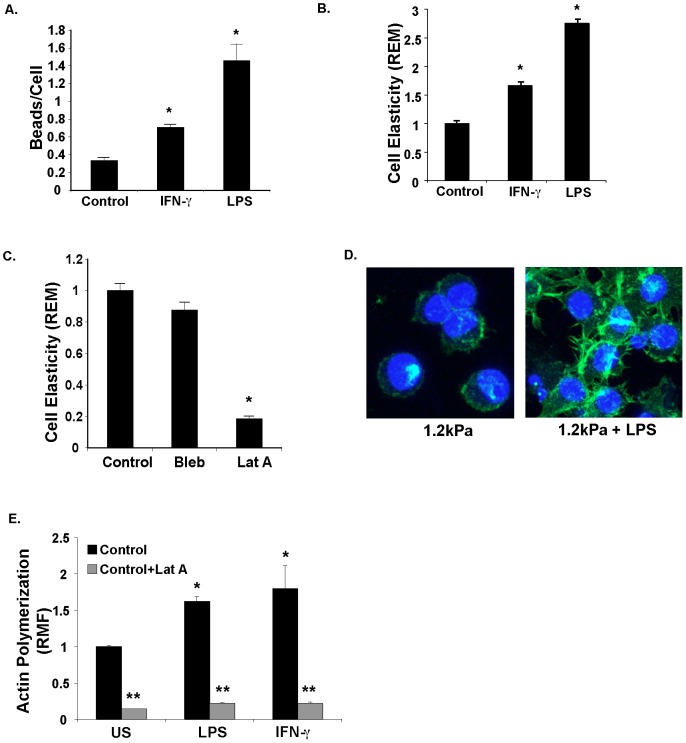
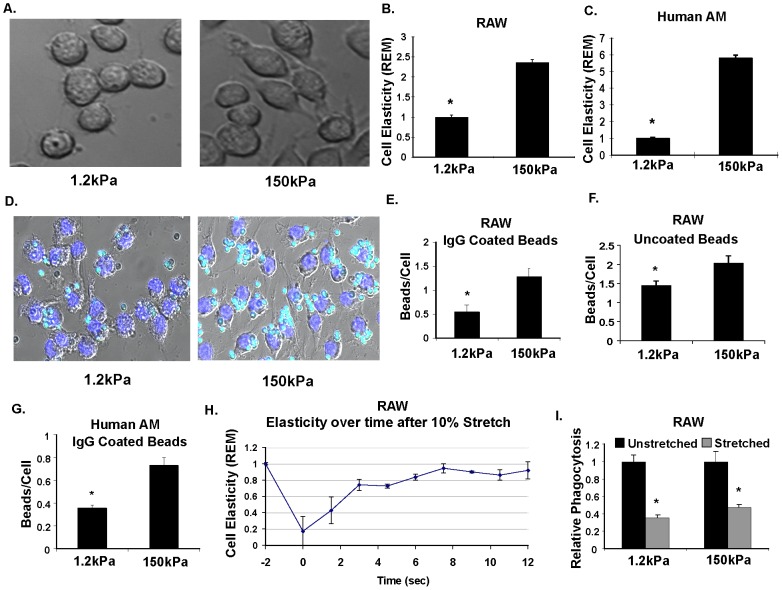
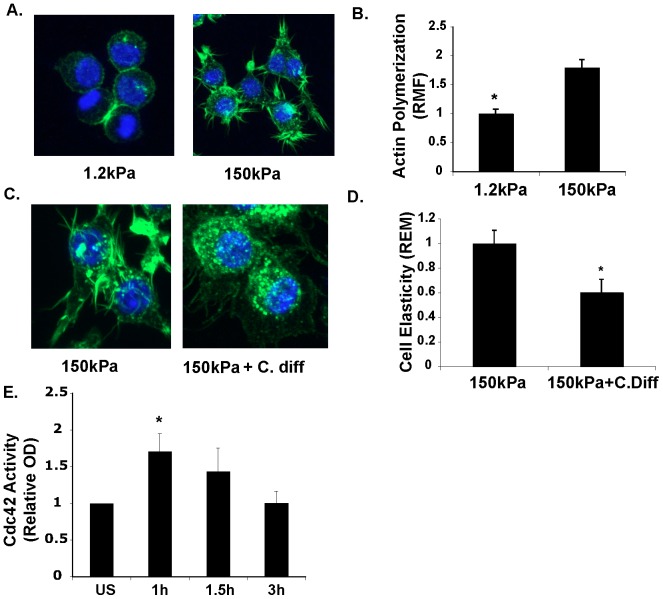
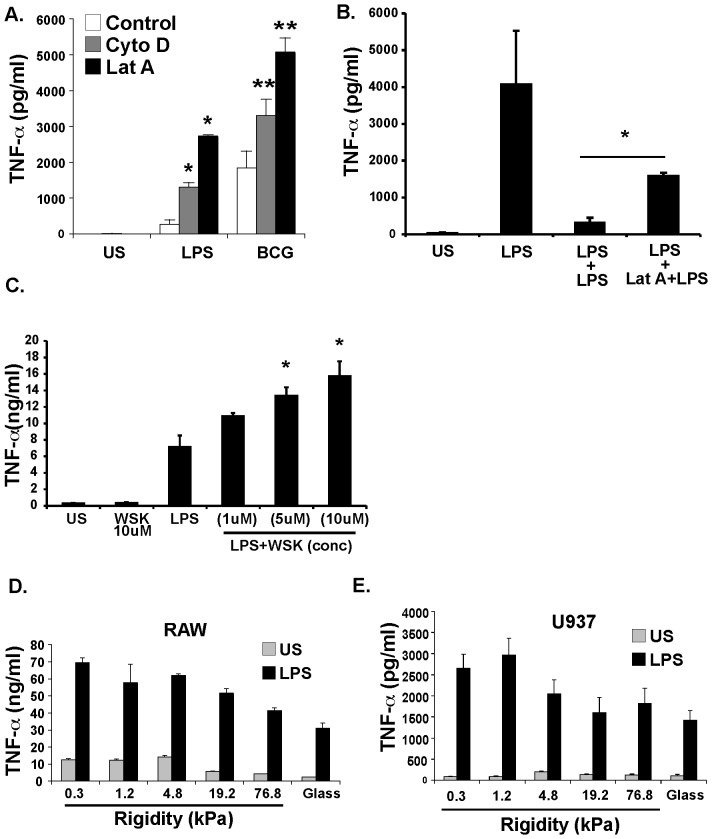
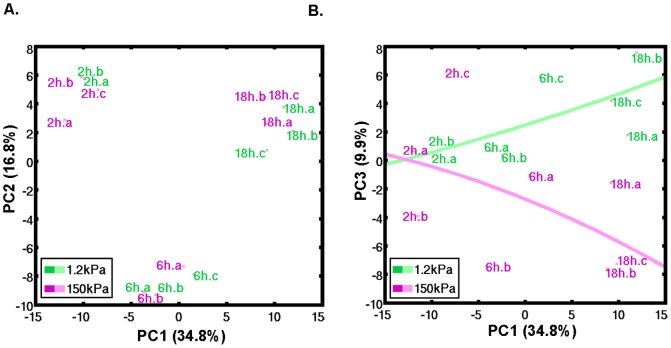
Macrophages serve to maintain organ homeostasis in response to challenges from injury, inflammation, malignancy, particulate exposure, or infection. Until now, receptor ligation has been understood as being the central mechanism that regulates macrophage function. Using macrophages of different origins and species, we report that macrophage elasticity is a major determinant of innate macrophage function. Macrophage elasticity is modulated not only by classical biologic activators such as LPS and IFN-γ, but to an equal extent by substrate rigidity and substrate stretch. Macrophage elasticity is dependent upon actin polymerization and small rhoGTPase activation, but functional effects of elasticity are not predicted by examination of gene expression profiles alone. Taken together, these data demonstrate an unanticipated role for cell elasticity as a common pathway by which mechanical and biologic factors determine macrophage function.
Overview
The claims and statistics of this paper haven’t been checked yet.
Free: it reads the open-access text and checks the first 5 claims that cite a source we can check. Create a free account to check every claim.
Integrity signals
Registry
Cites
Statistics
Figures
Verification
Claims the paper makes
The claims and statistics of this paper haven’t been checked yet.
Free: it reads the open-access text and checks the first 5 claims that cite a source we can check. Create a free account to check every claim.
Claims other papers make about this one
Each is checked against this paper’s own text: does it say what the citing paper says it does?
The source backs part of the claim, not all of it — or backs it for a different population, condition or comparison.
In the citing paper
“It was shown that macrophage phagocytosis increased with the stiffness of PA gels (2 and 150 kPa). 12”
From Matrix stiffness regulates macrophage polarisation via the Piezo1‐YAP signalling axis (2024) · cites this paper as [12]
Experimental — accuracy not yet measuredThe source backs part of the claim, not all of it — or backs it for a different population, condition or comparison.
In the citing paper
“The mechanical properties of biomaterials, particularly stiffness, have been shown to influence macrophage activation and FBR.”
From Soft tissue-mimicking hydrogel stiffness modulates polarisation of human monocyte-derived macrophages (2025) · cites this paper as [12]
Experimental — accuracy not yet measuredIn the citing paper
“This role of mechanosensitivity in macrophage function was further explored by Patel et al. [37], who reported that macrophage elasticity (elastic modulus), which is mediated by substrate stiffness, is actively dependent on actin polymerization and Rho-GTPase activity.”
From Biomaterial based modulation of macrophage polarization: a review and suggested design principles (2015) · cites this paper as [37]
In the citing paper
“Cell elasticity and phagocytic ability was also markedly higher for cells cultured on stiff substrates, suggesting that substrate elasticity modulates macrophage elasticity and phagocytosis through actin polymerization [37].”
From Biomaterial based modulation of macrophage polarization: a review and suggested design principles (2015) · cites this paper as [37]
In the citing paper
“RAW 264.7 cells (a macrophage-like, Abelson leukemia virus transformed cell line derived from BALB/c mice) consistently exhibited organized actin filaments and filopodial projections on stiff (150 kPa) polyacrylamide substrates; however, upon treatment with a Rho-GTPase inhibitor (C.Difficile toxin), cells appeared similar to those on softer (1.2 kPa) substrates, with an absence of organized actin”
From Biomaterial based modulation of macrophage polarization: a review and suggested design principles (2015) · cites this paper as [37]
Self-check
Percentages, sums and reported differences re-computed from the paper’s own numbers.
The self-check needs the paper’s full text.
Citations
Cites
Matrix elasticity directs stem cell lineage specification
Engler, A. J., Sen, S., Sweeney, H. L., & Discher, D. E. (2006) · Cell · doi:10.1016/j.cell.2006.06.044 · Cited by 13,915
Exploring the full spectrum of macrophage activation
Mosser, D. M., & Edwards, J. P. (2008) · Nature Reviews Immunology · doi:10.1038/nri2448 · Cited by 9,144
Tissue Cells Feel and Respond to the Stiffness of Their Substrate
Discher, D. E., Janmey, P., & Wang, Y.-L. (2005) · Science · doi:10.1126/science.1116995 · Cited by 6,382 · cited 1×
“Because substrate elastic modulus (rigidity) has well documented effects on cell elastic modulus (elasticity) [21,22,23] (see Supplementary Information S1), we cultured murine RAW 264.”
MethodMatrix Crosslinking Forces Tumor Progression by Enhancing Integrin Signaling
Levental, K. R., Yu, H., Kass, L., Lakins, J. N., Egeblad, M., Erler, J. T., Fong, S. F. T., Csiszar, K., Giaccia, A., Weninger, W., et al. (2009) · Cell · doi:10.1016/j.cell.2009.10.027 · Cited by 4,101
Macrophage plasticity and interaction with lymphocyte subsets: cancer as a paradigm
Biswas, S. K., & Mantovani, A. (2010) · Nature Immunology · doi:10.1038/ni.1937 · Cited by 3,840 · cited 4×
“macrophage function can determine the outcome of injury and inflammation [1,2,3], prevailing theories have focused on receptor-ligand dependent modulation of macrophage activation and function [1,2,3] and its downstream consequences in terms of gene expression [1,8,36].”
BackgroundInfluentialAlternative Activation of Macrophages: An Immunologic Functional Perspective
Martinez, F. O., Helming, L., & Gordon, S. (2009) · Annual Review of Immunology · doi:10.1146/annurev.immunol.021908.132532 · Cited by 2,745 · cited 4×
“macrophage function can determine the outcome of injury and inflammation [1,2,3], prevailing theories have focused on receptor-ligand dependent modulation of macrophage activation and function [1,2,3] and its downstream consequences in terms of gene expression [1,8,36].”
BackgroundInfluentialMechanisms, Pathophysiology, and Therapy of Arterial Stiffness
Zieman, S. J., Melenovsky, V., & Kass, D. A. (2005) · Arteriosclerosis, Thrombosis, and Vascular Biology · doi:10.1161/01.atv.0000160548.78317.29 · Cited by 1,854 · cited 1×
“Furthermore, the observation that cell elasticity determines macrophage function in cells of different sources and species suggests these findings may have broad application to macrophage molecular cell biology in a variety of disease states characterized by increased tissue rigidity and altered macrophage function su…”
Filopodia: molecular architecture and cellular functions
Mattila, P. K., & Lappalainen, P. (2008) · Nature Reviews Molecular Cell Biology · doi:10.1038/nrm2406 · Cited by 1,719
Macrophage Polarization in Bacterial Infections
Benoit, M., Desnues, B., & Mege, J.-L. (2008) · The Journal of Immunology · doi:10.4049/jimmunol.181.6.3733 · Cited by 1,329
Feedback amplification of fibrosis through matrix stiffening and COX-2 suppression
Liu, F., Mih, J. D., Shea, B. S., Kho, A. T., Sharif, A. S., Tager, A. M., & Tschumperlin, D. J. (2010) · Journal of Cell Biology · doi:10.1083/jcb.201004082 · Cited by 810
Self-citationUniversal physical responses to stretch in the living cell
Trepat, X., Deng, L., An, S. S., Navajas, D., Tschumperlin, D. J., Gerthoffer, W. T., Butler, J. P., & Fredberg, J. J. (2007) · Nature · doi:10.1038/nature05824 · Cited by 699
Self-citationSpector, I., Shochet, N. R., Blasberger, D., & Kashman, Y. (1989) · Cell Motility · doi:10.1002/cm.970130302 · Cited by 580
Granulocyte Apoptosis and Its Role in the Resolution and Control of Lung Inflammation
HASLETT, C. (1999) · American Journal of Respiratory and Critical Care Medicine · doi:10.1164/ajrccm.160.supplement_1.4 · Cited by 518
Rock, C. S., & Lowry, S. F. (1991) · Journal of Surgical Research · doi:10.1016/0022-4804(91)90146-d · Cited by 503
Endocytic pathways regulate Toll‐like receptor 4 signaling and link innate and adaptive immunity
Husebye, H., Halaas, Ø., Stenmark, H., Tunheim, G., Sandanger, Ø., Bogen, B., Brech, A., Latz, E., & Espevik, T. (2006) · The EMBO Journal · doi:10.1038/sj.emboj.7600991 · Cited by 486
Gene Signatures of Progression and Metastasis in Renal Cell Cancer
Jones, J., Otu, H., Spentzos, D., Kolia, S., Inan, M., Beecken, W. D., Fellbaum, C., Gu, X., Joseph, M., Pantuck, A. J., et al. (2005) · Clinical Cancer Research · doi:10.1158/1078-0432.ccr-04-2225 · Cited by 447
Mäki-Petäjä, K. M., Hall, F. C., Booth, A. D., Wallace, S. M. L., Yasmin, Bearcroft, P. W. P., Harish, S., Furlong, A., McEniery, C. M., Brown, J., et al. (2006) · Circulation · doi:10.1161/circulationaha.105.601641 · Cited by 416
WASP: a key immunological multitasker
Thrasher, A. J., & Burns, S. O. (2010) · Nature Reviews Immunology · doi:10.1038/nri2724 · Cited by 406
Arredouani, M., Yang, Z., Ning, Y., Qin, G., Soininen, R., Tryggvason, K., & Kobzik, L. (2004) · The Journal of Experimental Medicine · doi:10.1084/jem.20040731 · Cited by 361
Lung Infection—A Public Health Priority
Mizgerd, J. P. (2006) · PLoS Medicine · doi:10.1371/journal.pmed.0030076 · Cited by 290
Reinforcement versus Fluidization in Cytoskeletal Mechanoresponsiveness
Krishnan, R., Park, C. Y., Lin, Y.-C., Mead, J., Jaspers, R. T., Trepat, X., Lenormand, G., Tambe, D., Smolensky, A. V., Knoll, A. H., et al. (2009) · PLoS ONE · doi:10.1371/journal.pone.0005486 · Cited by 263
Self-citationInnate immunity, macrophage activation, and atherosclerosis
Yan, Z., & Hansson, G. K. (2007) · Immunological Reviews · doi:10.1111/j.1600-065x.2007.00554.x · Cited by 256
Pena, O. M., Pistolic, J., Raj, D., Fjell, C. D., & Hancock, R. E. W. (2011) · The Journal of Immunology · doi:10.4049/jimmunol.1001952 · Cited by 238
Filopodia act as phagocytic tentacles and pull with discrete steps and a load-dependent velocity
Kress, H., Stelzer, E. H. K., Holzer, D., Buss, F., Griffiths, G., & Rohrbach, A. (2007) · Proceedings of the National Academy of Sciences · doi:10.1073/pnas.0702449104 · Cited by 228
Tolerance to microbial TLR ligands: molecular mechanisms and relevance to disease
Medvedev, A. E., Sabroe, I., Hasday, J. D., & Vogel, S. N. (2006) · Journal of Endotoxin Research · doi:10.1179/096805106x102255 · Cited by 203
Chemical inhibition of N-WASP by stabilization of a native autoinhibited conformation
Peterson, J. R., Bickford, L. C., Morgan, D., Kim, A. S., Ouerfelli, O., Kirschner, M. W., & Rosen, M. K. (2004) · Nature Structural & Molecular Biology · doi:10.1038/nsmb796 · Cited by 193
Th2 Cytokines in Susceptibility to Tuberculosis
W. Rook, G. (2007) · Current Molecular Medicine · doi:10.2174/156652407780598557 · Cited by 174
Kho, A. T., Zhao, Q., Cai, Z., Butte, A. J., Kim, J. Y. H., Pomeroy, S. L., Rowitch, D. H., & Kohane, I. S. (2004) · Genes & Development · doi:10.1101/gad.1182504 · Cited by 163
Self-citationSensitivity of alveolar macrophages to substrate mechanical and adhesive properties
Féréol, S., Fodil, R., Labat, B., Galiacy, S., Laurent, V. M., Louis, B., Isabey, D., & Planus, E. (2006) · Cell Motility and the Cytoskeleton · doi:10.1002/cm.20130 · Cited by 139 · cited 2×
“3 fold for cells on the more rigid substrate compared with the less rigid substrate (Figure 2B), similar to published findings in rat alveolar macrophages [23].”
MethodResultDynamic macrophage “probing” is required for the efficient capture of phagocytic targets
Flannagan, R. S., Harrison, R. E., Yip, C. M., Jaqaman, K., & Grinstein, S. (2010) · Journal of Cell Biology · doi:10.1083/jcb.201007056 · Cited by 135
Erzurum, S. C., Downey, G. P., Doherty, D. E., Schwab, B., Elson, E. L., & Worthen, G. S. (1992) · The Journal of Immunology · doi:10.4049/jimmunol.149.1.154 · Cited by 134
HIV Impairs TNF-α Mediated Macrophage Apoptotic Response to Mycobacterium tuberculosis
Patel, N. R., Zhu, J., Tachado, S. D., Zhang, J., Wan, Z., Saukkonen, J. J., & Koziel, H. (2007) · The Journal of Immunology · doi:10.4049/jimmunol.179.10.6973 · Cited by 118
Self-citationRecombinant interferons increase macrophage Fc receptor capacity.
Fertsch, D., & Vogel, S. N. (1984) · The Journal of Immunology · doi:10.4049/jimmunol.132.5.2436 · Cited by 89
An Essential Role for RIG-I in Toll-like Receptor-Stimulated Phagocytosis
Kong, L., Sun, L., Zhang, H., Liu, Q., Liu, Y., Qin, L., Shi, G., Hu, J.-H., Xu, A., Sun, Y.-P., et al. (2009) · Cell Host & Microbe · doi:10.1016/j.chom.2009.06.008 · Cited by 86 · cited 1×
“To examine this possibility, we asked whether biologic agents that stimulate phagocytosis, such as LPS [19] and IFN-c [20], also increase macrophage cell elasticity.”
BackgroundDynamic mechanical consequences of deep inflation in mice depend on type and degree of lung injury
Allen, G. B., & Bates, J. H. T. (2004) · Journal of Applied Physiology · doi:10.1152/japplphysiol.00270.2003 · Cited by 80
Micromechanics of filopodia mediated capture of pathogens by macrophages
Vonna, L., Wiedemann, A., Aepfelbacher, M., & Sackmann, E. (2006) · European Biophysics Journal · doi:10.1007/s00249-006-0118-y · Cited by 71
Recent advances and new opportunities in lung mechanobiology
Tschumperlin, D. J., Boudreault, F., & Liu, F. (2009) · Journal of Biomechanics · doi:10.1016/j.jbiomech.2009.09.015 · Cited by 70
Self-citationTumor necrosis factor's effects on lung mechanics, gas exchange, and airway reactivity in sheep
Wheeler, A. P., Jesmok, G. J., & Brigham, K. L. (1990) · Journal of Applied Physiology · doi:10.1152/jappl.1990.68.6.2542 · Cited by 67
Earliest Innate Immune Responses Require Macrophage RelA during Pneumococcal Pneumonia
Pittet, L. A., Quinton, L. J., Yamamoto, K., Robson, B. E., Ferrari, J. D., Algül, H., Schmid, R. M., & Mizgerd, J. P. (2011) · American Journal of Respiratory Cell and Molecular Biology · doi:10.1165/rcmb.2010-0210oc · Cited by 56
Use of Ultrasound Elastography for Skin and Subcutaneous Abscesses
Gaspari, R., Blehar, D., Mendoza, M., et al. (2009) · Journal of Ultrasound in Medicine · doi:10.7863/jum.2009.28.7.855 · Cited by 51
Effects of acute lung injury on dynamic tissue properties
Ingenito, E. P., Mark, L., & Davison, B. (1994) · Journal of Applied Physiology · doi:10.1152/jappl.1994.77.6.2689 · Cited by 34
Zhao, G., Qin, Q., Jing, C., & Wang, C. (2009) · Microscopy Research and Technique · doi:10.1002/jemt.20716 · Cited by 31
Effect of pneumococcal lobar pneumonia on canine lung mechanics
Mink, S. N., Light, R. B., & WOOD, L. D. H. (1981) · Journal of Applied Physiology · doi:10.1152/jappl.1981.50.2.283 · Cited by 25
Dynamic changes in liver stiffness during the course of acute hepatitis A
Seo, Y. S., Lee, K. G., Jung, E. S., et al. (2010) · Scandinavian Journal of Gastroenterology · doi:10.3109/00365520903536515 · Cited by 14
Effect of Neutrophil Adhesion on the Mechanical Properties of Lung Microvascular Endothelial Cells
Kang, I., Wang, Q., Eppell, S. J., et al. (2009) · American Journal of Respiratory Cell and Molecular Biology · doi:10.1165/rcmb.2006-0381oc · Cited by 10
Dynamic macrophage “probing” is required for the efficient capture of phagocytic targets
Flannagan, R. S., Harrison, R. E., Yip, C. M., Jaqaman, K., & Grinstein, S. (2010) · The Journal of Experimental Medicine · doi:10.1084/jem20713oia37 · Cited by 5
Cited by
Mao, X., Xu, J., Wang, W., Liang, C., Hua, J., Liu, J., Zhang, B., Meng, Q., Yu, X., & Shi, S. (2021) · Molecular Cancer · doi:10.1186/s12943-021-01428-1 · Cited by 2,290
The extracellular matrix modulates the hallmarks of cancer
Pickup, M. W., Mouw, J. K., & Weaver, V. M. (2014) · EMBO reports · doi:10.15252/embr.201439246 · Cited by 1,996
Extracellular matrix-based materials for regenerative medicine
Hussey, G. S., Dziki, J. L., & Badylak, S. F. (2018) · Nature Reviews Materials · doi:10.1038/s41578-018-0023-x · Cited by 844
Biomaterial based modulation of macrophage polarization: a review and suggested design principles
Sridharan, R., Cameron, A. R., Kelly, D. J., Kearney, C. J., & O’Brien, F. J. (2015) · Materials Today · doi:10.1016/j.mattod.2015.01.019 · Cited by 826
Burgstaller, G., Oehrle, B., Gerckens, M., White, E. S., Schiller, H. B., & Eickelberg, O. (2017) · European Respiratory Journal · doi:10.1183/13993003.01805-2016 · Cited by 482
Metadata
- Authors
- Patel, N. R., Bole, M., Chen, C., Hardin, C. C., Kho, A. T., Mih, J., Deng, L., Butler, J., Tschumperlin, D., Fredberg, J. J., Krishnan, R., & Koziel, H.
- Affiliations
- Beth Israel Deaconess Medical Center (US)
- Harvard University (US)
- Boston Children's Hospital (US)
- Chongqing University (CN)
- Corresponding author
- Patel, Naimish R.
- ORCID
- Venue
- PLoS ONE
- Publisher
- Public Library of Science (PLoS)
- Published
- 2012-09-18
- Volume
- 7
- Issue
- 9
- Pages
- e41024
- ISSN
- 1932-6203 (ISSN-L)
- PMC
- PMC3445606
- OpenAlex
- W2114845386
- Cited by
- 275
- References
- 46
- Citations by year
- 2026: 8 · 2025: 23 · 2024: 21 · 2023: 16 · 2022: 21 · 2021: 44 · 2020: 24 · 2019: 32 · 2018: 24 · 2017: 19 · 2016: 9 · 2015: 18 · 2014: 12 · 2013: 4
- FWCI
- 5.15
- Type
- journal article
- Language
- en
- Open access
- gold
- doi.org
- Locations
- PLoS ONE (publishedVersion, cc-by)
- PubMed Central (publishedVersion, cc-by)
- PubMed (publishedVersion)
- Digital Access to Scholarship at Harvard (DASH) (Harvard University) (submittedVersion, cc-by)
- DOAJ (DOAJ: Directory of Open Access Journals) (submittedVersion, cc-by-sa)
- DSpace@MIT (Massachusetts Institute of Technology) (submittedVersion, cc-by-nc)
- Figshare (submittedVersion, cc-by)
- Funders
- National Heart, Lung, and Blood Institute (K25HL111212, K25HL091124, R01HL102373)
- National Institute of Allergy and Infectious Diseases
- Topics
- Life Sciences › Biochemistry, Genetics and Molecular Biology › Cell Biology › Cellular Mechanics and Interactions
- Life Sciences › Immunology and Microbiology › Immunology › Immune cells in cancer
- Physical Sciences › Engineering › Biomedical Engineering › Elasticity and Material Modeling
- Keywords
- macrophage function, substrate stiffness, actin polymerization, Rho GTPase activation, innate immunity, lipopolysaccharide, interferon-gamma, mechanobiology
- MeSH terms
- Actins, Animals, Cell Line, Elasticity, Humans, Inflammation, Interferon-gamma, Lipopolysaccharides, Macrophages, Phagocytosis, rho GTP-Binding Proteins, Gene Expression Profiling, Mice, Protein Multimerization, Transcriptome
About these checks
Registry, retraction, Cites and statistics results are computed, not judged, with one exception: a printed reference that no index lists is read once by a model before it counts as a citation error. Claims are extracted by a model and kept only when their quote appears verbatim in the text; each cited source is then checked, with a model’s help, for whether it says what the claim relies on. Those verdicts can be wrong — read the claim’s quote and the cited source before relying on one.
Statistics and arithmetic are recomputed, not judged.
Confidence bands are shown only for fields calibrated on our annotated test set. None is calibrated yet, so no band is shown.
What counts as a claim ›How we measure confidence ›How we check this ›
Are you an author, or do you see a problem with this page? Request a review
Data sources
Bibliographic data: Semantic Scholar, OpenAlex, Crossref.
Contains information from the Semantic Scholar Academic Graph Datasets, made available under the ODC Attribution License (ODC-BY 1.0).
Semantic Scholar’s data is described in: Kinney, R., et al. (2023). The Semantic Scholar Open Data Platform. arXiv:2301.10140.
