

The DOI matches its Crossref record; 17 of the 17 references it cites were found in a registry or an index.
Altered Social Behaviours in Neurexin 1α Knockout Mice Resemble Core Symptoms in Neurodevelopmental Disorders
Overview
The claims and statistics of this paper haven’t been checked yet.
Run the check — free, no account needed. It reads the open-access text and checks the sources it cites.
Integrity signals
Registry
Cites
Statistics
Figures
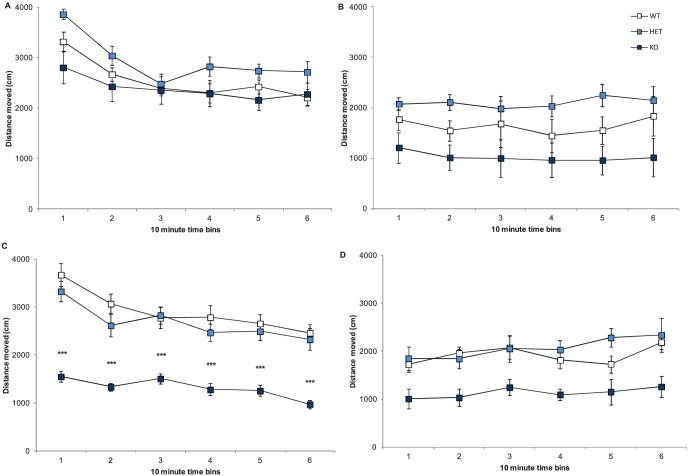
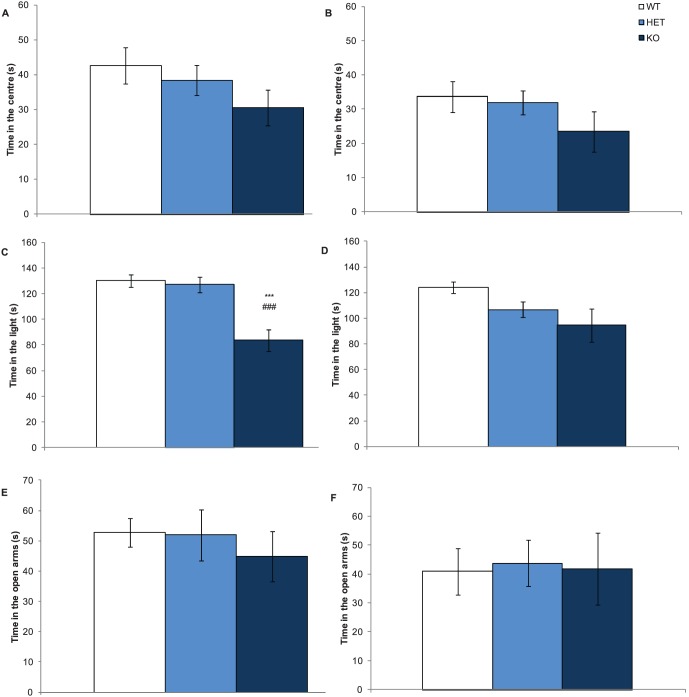
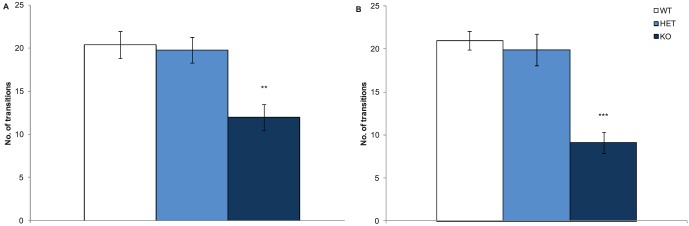
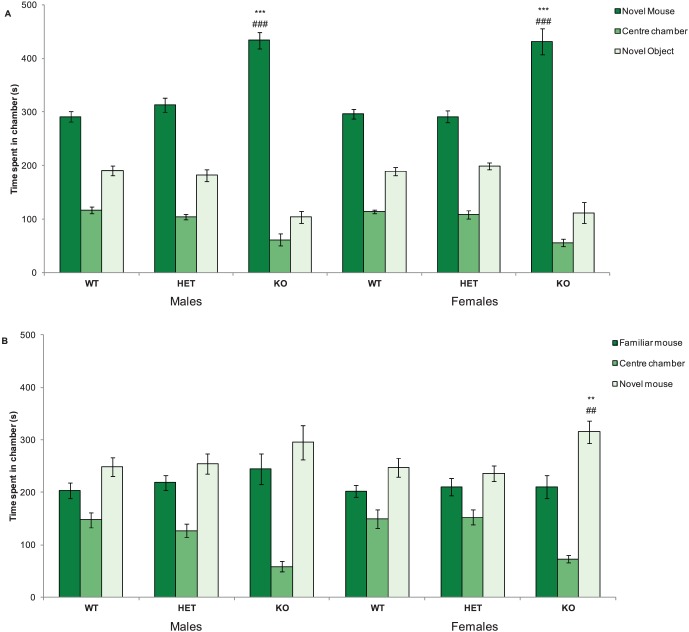
Verification
Claims the paper makes
The claims and statistics of this paper haven’t been checked yet.
Run the check — free, no account needed. It reads the open-access text and checks the sources it cites.
Claims other papers make about this one
Each is checked against this paper’s own text: does it say what the citing paper says it does?
In the citing paper
“However, heterozygous deletions yield only modest behavioral and physiological changes in vivo11.”
From Phenotypic complexities of rare heterozygous neurexin-1 deletions (2025) · cites this paper as [11]
Self-check
Percentages, sums and reported differences re-computed from the paper’s own numbers.
The self-check needs the paper’s full text.
Citations
Cites
Strong association of de novo copy number mutations with autism
Sebat, J., Lakshmi, B., Malhotra, D., Troge, J., Lese-Martin, C., Walsh, T., Yamrom, B., Yoon, S., Krasnitz, A., Kendall, J., et al. (2007) · Science · doi:10.1126/science.1138659 · Cited by 2,795
Animal models of neuropsychiatric disorders
Nestler, E. J., & Hyman, S. E. (2010) · Nature Neuroscience · doi:10.1038/nn.2647 · Cited by 2,023
Functional impact of global rare copy number variation in autism spectrum disorders
Pinto, D., Pagnamenta, A. T., Klei, L., Anney, R., Merico, D., Regan, R., Conroy, J., Magalhaes, T. R., Correia, C., Abrahams, B. S., et al. (2010) · Nature · doi:10.1038/nature09146 · Cited by 2,013
Structural Variation of Chromosomes in Autism Spectrum Disorder
Marshall, C. R., Noor, A., Vincent, J. B., Lionel, A. C., Feuk, L., Skaug, J., Shago, M., Moessner, R., Pinto, D., Ren, Y., et al. (2008) · The American Journal of Human Genetics · doi:10.1016/j.ajhg.2007.12.009 · Cited by 1,815
Large recurrent microdeletions associated with schizophrenia.
GROUP, Stefansson, H., Rujescu, D., Cichon, S., Pietiläinen, O. P. H., Ingason, A., Steinberg, S., Fossdal, R., Sigurdsson, E., Sigmundsson, T., et al. (2008) · Nature · doi:10.1038/nature07229 · Cited by 1,745
Self-citationAssociation between Microdeletion and Microduplication at 16p11.2 and Autism
Weiss, L. A., Shen, Y., Korn, J. M., Arking, D. E., Miller, D. T., Fossdal, R., Saemundsen, E., Stefansson, H., Ferreira, M. A. R., Green, T., et al. (2008) · New England Journal of Medicine · doi:10.1056/nejmoa075974 · Cited by 1,666
Behavioural phenotyping assays for mouse models of autism
Silverman, J. L., Yang, M., Lord, C., & Crawley, J. N. (2010) · Nature Reviews Neuroscience · doi:10.1038/nrn2851 · Cited by 1,462
Mice with Reduced NMDA Receptor Expression Display Behaviors Related to Schizophrenia
Mohn, A. R., Gainetdinov, R. R., Caron, M. G., & Koller, B. H. (1999) · Cell · doi:10.1016/s0092-8674(00)81972-8 · Cited by 1,075
Gene-targeting studies of mammalian behavior: is it the mutation or the background genotype?
Gerlai, R. (1996) · Trends in Neurosciences · doi:10.1016/s0166-2236(96)20020-7 · Cited by 881
Cognitive Impairment in Schizophrenia Is the Core of the Disorder
Elvevag, B., & Goldberg, T. E. (2000) · Critical Reviews™ in Neurobiology · doi:10.1615/critrevneurobiol.v14.i1.10 · Cited by 835
Research works printed but not linked: 21
- Reissner CRF, Missler M. Neurexins. Genome Biology. In press. · DOI
- G Kattenstroth, 2004, Postsynaptic N-methyl-D-aspartate receptor function requires alpha-neurexins. Proceedings of the National Academy of Sciences of the United States of America, 101, 2607
- W Zhang, 2005, Extracellular domains of alpha-neurexins participate in regulating synaptic transmission by selectively affecting N- and P/Q-type Ca2+ channels. The Journal of neuroscience : the official journal of the Society for Neuroscience, 25, 4330
- I Dudanova, 2006, Important contribution of alpha-neurexins to Ca2+-triggered exocytosis of secretory granules. The Journal of neuroscience : the official journal of the Society for Neuroscience, 26, 10599
- J Feng, 2006, High frequency of neurexin 1beta signal peptide structural variants in patients with autism. Neuroscience letters, 409, 10
- FR Zahir, 2008, A patient with vertebral, cognitive and behavioural abnormalities and a de novo deletion of NRXN1alpha. Journal of medical genetics, 45, 239
- MS Ching, 2010, Deletions of NRXN1 (neurexin-1) predispose to a wide spectrum of developmental disorders. American journal of medical genetics Part B, Neuropsychiatric genetics : the official publication of the International Society of Psychiatric Genetics, 153B, 937
- C Zweier, 2009, CNTNAP2 and NRXN1 are mutated in autosomal-recessive Pitt-Hopkins-like mental retardation and determine the level of a common synaptic protein in Drosophila. American journal of human genetics, 85, 655
- V Harrison, 2011, Compound heterozygous deletion of NRXN1 causing severe developmental delay with early onset epilepsy in two sisters. American journal of medical genetics Part A, 155A, 2826
- CP Schaaf, 2012, Phenotypic spectrum and genotype-phenotype correlations of NRXN1 exon deletions. European journal of human genetics : EJHG, 20, 1240
- Yang M, Silverman JL, Crawley JN (2011) Automated three-chambered social approach task for mice. Current protocols in neuroscience/editorial board, Jacqueline N Crawley [et al]. Chapter 8: Unit 8 26. · DOI · Paper page
- Winslow JT (2003) Mouse social recognition and preference. Current protocols in neuroscience/editorial board, Jacqueline N Crawley [et al]. Chapter 8: Unit 8 16. · DOI · Paper page
- Yang M, Crawley JN (2009) Simple behavioral assessment of mouse olfaction. Current protocols in neuroscience/editorial board, Jacqueline N Crawley [et al]. Chapter 8: Unit 8 24. · DOI
- C Reissner, 2008, Mutational analysis of the neurexin/neuroligin complex reveals essential and regulatory components. Proceedings of the National Academy of Sciences of the United States of America, 105, 15124
- D Piskulic, 2007, Behavioural studies of spatial working memory dysfunction in schizophrenia: a quantitative literature review. Psychiatry research, 150, 111
- HG Kim, 2008, Disruption of neurexin 1 associated with autism spectrum disorder. American journal of human genetics, 82, 199
- L Wing, 1981, Language, social, and cognitive impairments in autism and severe mental retardation. Journal of autism and developmental disorders, 11, 31
- Takao K, Kobayashi K, Hagihara H, Ohira K, Shoji H, et al.. (2013) Deficiency of Schnurri-2, an MHC Enhancer Binding Protein, Induces Mild Chronic Inflammation in the Brain and Confers Molecular, Neuronal, and Behavioral Phenotypes Related to Schizophrenia. Neuropsychopharmacology : official publication of the American College of Neuropsychopharmacology. · DOI · Paper page
- SS Moy, 2006, Mouse models of autism spectrum disorders: the challenge for behavioral genetics. American journal of medical genetics Part C, Seminars in medical genetics, 142C, 40
- AB Fernando, 2011, Animal models of neuropsychiatric disorders. Annual review of clinical psychology, 7, 39
- N Ghebranious, 2007, A novel microdeletion at 16p11.2 harbors candidate genes for aortic valve development, seizure disorder, and mild mental retardation. American journal of medical genetics Part A, 143A, 1462
Cited by
Advancing the understanding of autism disease mechanisms through genetics
de la Torre-Ubieta, L., Won, H., Stein, J. L., & Geschwind, D. H. (2016) · Nature Medicine · doi:10.1038/nm.4071 · Cited by 827
Synaptic Neurexin Complexes: A Molecular Code for the Logic of Neural Circuits
Südhof, T. C. (2017) · Cell · doi:10.1016/j.cell.2017.10.024 · Cited by 810
Convergence of Sex Differences and the Neuroimmune System in Autism Spectrum Disorder
McCarthy, M. M., & Wright, C. L. (2017) · Biological Psychiatry · doi:10.1016/j.biopsych.2016.10.004 · Cited by 158
Genetics of aggressive behavior: An overview
Veroude, K., Zhang‐James, Y., Fernàndez‐Castillo, N., Bakker, M. J., Cormand, B., & Faraone, S. V. (2016) · American Journal of Medical Genetics Part B: Neuropsychiatric Genetics · doi:10.1002/ajmg.b.32364 · Cited by 147
An intra-amygdala circuit specifically regulates social fear learning
Twining, R. C., Vantrease, J. E., Love, S., Padival, M., & Rosenkranz, J. A. (2017) · Nature Neuroscience · doi:10.1038/nn.4481 · Cited by 93
Metadata
- Authors
- Grayton, H. M., Missler, M., Collier, D. A., & Fernandes, C.
- Venue
- PLoS ONE
- Publisher
- Public Library of Science (PLoS)
- Published
- 2013-06-28
- Volume
- 8
- Issue
- 6
- Pages
- e67114
- ISSN
- 1932-6203
- PMC
- PMC3696036
- Cited by
- 180
- References
- 17
- Language
- en
About these checks
Registry, retraction, Cites and statistics results are computed, not judged, with one exception: a printed reference that no index lists is read once by a model before it counts as a citation error. Claims are extracted by a model and kept only when their quote appears verbatim in the text; each cited source is then checked, with a model’s help, for whether it says what the claim relies on. Those verdicts can be wrong — read the claim’s quote and the cited source before relying on one.
Statistics and arithmetic are recomputed, not judged.
Confidence bands are shown only for fields calibrated on our annotated test set. None is calibrated yet, so no band is shown.
What counts as a claim ›How we measure confidence ›How we check this ›
Are you an author, or do you see a problem with this page? Request a review
How to cite
Cite CoChat for the checks on this page, and the paper for its own findings.
- This page
- CoChat. (2026). Citation check: Altered Social Behaviours in Neurexin 1α Knockout Mice Resemble Core Symptoms in Neurodevelopmental Disorders. https://app.cochat.ai/papers/10.1371/journal.pone.0067114
- The paper
- Grayton, H. M., Missler, M., Collier, D. A., & Fernandes, C. (2013). Altered Social Behaviours in Neurexin 1α Knockout Mice Resemble Core Symptoms in Neurodevelopmental Disorders. PLoS ONE. https://doi.org/10.1371/journal.pone.0067114
Data sources
Bibliographic data: Semantic Scholar, OpenAlex, Crossref.
Contains information from the Semantic Scholar Academic Graph Datasets, made available under the ODC Attribution License (ODC-BY 1.0).
Semantic Scholar’s data is described in: Kinney, R., et al. (2023). The Semantic Scholar Open Data Platform. arXiv:2301.10140.
