

The DOI matches its Crossref record; 42 of the 42 references it cites were found in a registry or an index.
The Personalized Advantage Index: Translating Research on Prediction into Individualized Treatment Recommendations. A Demonstration
Open accessAbstract
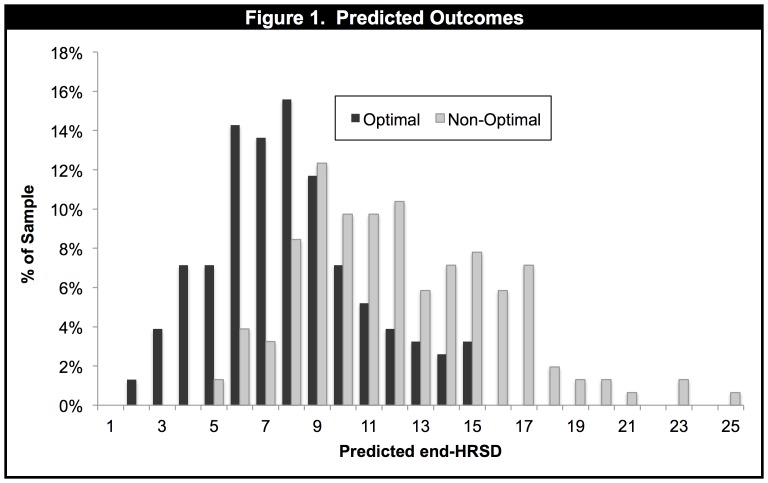
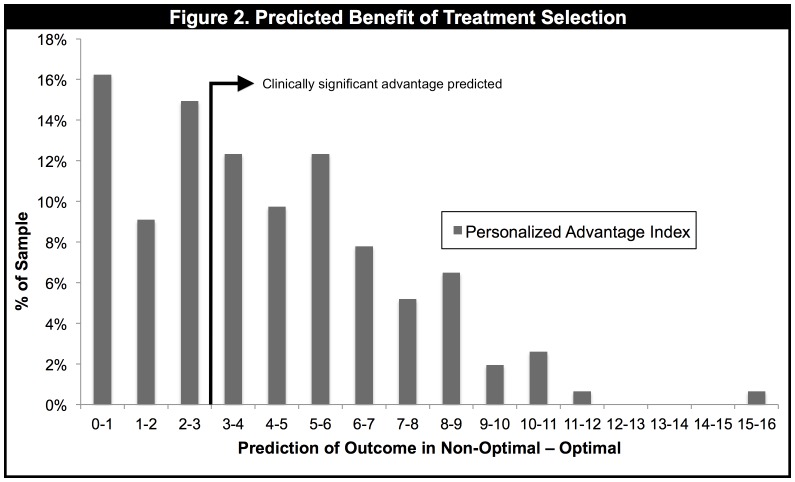
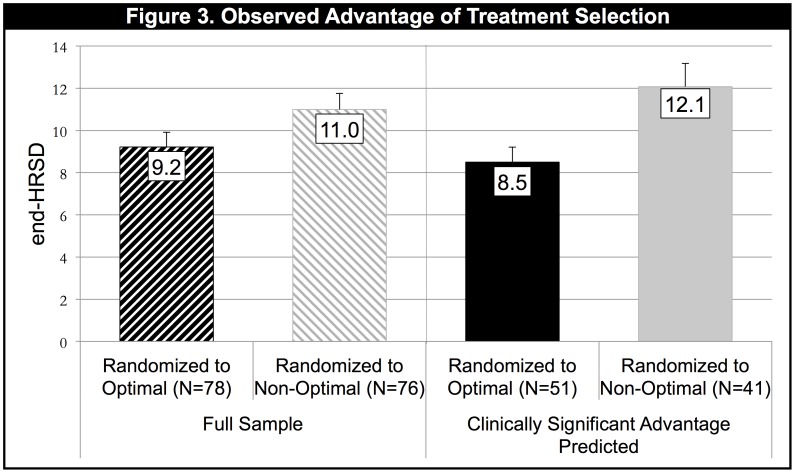
BACKGROUND: Advances in personalized medicine require the identification of variables that predict differential response to treatments as well as the development and refinement of methods to transform predictive information into actionable recommendations. OBJECTIVE: To illustrate and test a new method for integrating predictive information to aid in treatment selection, using data from a randomized treatment comparison. METHOD: Data from a trial of antidepressant medications (N = 104) versus cognitive behavioral therapy (N = 50) for Major Depressive Disorder were used to produce predictions of post-treatment scores on the Hamilton Rating Scale for Depression (HRSD) in each of the two treatments for each of the 154 patients. The patient's own data were not used in the models that yielded these predictions. Five pre-randomization variables that predicted differential response (marital status, employment status, life events, comorbid personality disorder, and prior medication trials) were included in regression models, permitting the calculation of each patient's Personalized Advantage Index (PAI), in HRSD units. RESULTS: For 60% of the sample a clinically meaningful advantage (PAI≥3) was predicted for one of the treatments, relative to the other. When these patients were divided into those randomly assigned to their "Optimal" treatment versus those assigned to their "Non-optimal" treatment, outcomes in the former group were superior (d = 0.58, 95% CI .17-1.01). CONCLUSIONS: This approach to treatment selection, implemented in the context of two equally effective treatments, yielded effects that, if obtained prospectively, would rival those routinely observed in comparisons of active versus control treatments.
Overview
The claims and statistics of this paper haven’t been checked yet.
Run the check — free, no account needed. It reads the open-access text and checks the sources it cites.
Integrity signals
Registry
Cites
Statistics
Figures
Verification
Claims the paper makes
The claims and statistics of this paper haven’t been checked yet.
Run the check — free, no account needed. It reads the open-access text and checks the sources it cites.
Claims other papers make about this one
Each is checked against this paper’s own text: does it say what the citing paper says it does?
In the citing paper
“The use of waiting list control groups as often the case in psychotherapy research may lead to an overestimation of the effects of treatment. 592,593”
From Time for united action on depression: a Lancet–World Psychiatric Association Commission (2022) · cites this paper as [592]
In the citing paper
“Literature on patient factors predicting treatment response to MBCT is emerging but still in its infancy, particularly compared to predictors of outcome of cognitive therapy (DeRubeis et al., 2014).”
From Adding mindfulness-based cognitive therapy to maintenance antidepressant medication for prevention of relapse/recurrence in major depressive disorder: Randomised controlled trial (2015) · cites this paper as DeRubeis et al., 2014
In the citing paper
“There is now a consensus in the literature that future improvements in outcomes obtained from cognitive behavioral therapy (CBT) for chronic pain will require research to identify patient and treatment variables that help explain outcomes.”
From Predictors and mediators of outcome in cognitive behavioral therapy for chronic pain: The contributions of psychological flexibility (2021) · cites this paper as DeRubeis et al., 2014
Self-check
Percentages, sums and reported differences re-computed from the paper’s own numbers.
The self-check needs the paper’s full text.
Citations
Cites
Hamilton, M. (1960) · Journal of Neurology, Neurosurgery & Psychiatry · doi:10.1136/jnnp.23.1.56 · Cited by 32,817
Draper, N. R., & Smith, H. (2005) · Technometrics · doi:10.1198/tech.2005.s303 · Cited by 17,993
A leisurely look at the bootstrap, the jackknife, and cross-validation
Efron, B., & Gong, G. (1983) · The American Statistician · doi:10.1080/00031305.1983.10483087 · Cited by 3,229
Mediators and Moderators of Treatment Effects in Randomized Clinical Trials
Kraemer, H. C., Wilson, G. T., Fairburn, C. G., & Agras, W. S. (2002) · Archives of General Psychiatry · doi:10.1001/archpsyc.59.10.877 · Cited by 2,562 · cited 1×
“Biostatisticians have described analytic frameworks to identify prescriptive (moderator) variables [38,39], but less attention has”
BackgroundKirsch, I., Deacon, B. J., Huedo-Medina, T. B., Scoboria, A., Moore, T. J., & Johnson, B. T. (2008) · PLoS Medicine · doi:10.1371/journal.pmed.0050045 · Cited by 2,442
Selective publication of antidepressant trials and its influence on apparent efficacy
Turner, E. H., Matthews, A. M., Linardatos, E., Tell, R. A., & Rosenthal, R. (2008) · New England Journal of Medicine · doi:10.1056/nejmsa065779 · Cited by 2,435
“Clinical versus Actuarial Judgment.”
Dawes, R. M., Faust, D., & Meehl, P. E. (1989) · Science · doi:10.1126/science.2648573 · Cited by 2,298
The Path to Personalized Medicine
Hamburg, M. A., & Collins, F. S. (2010) · New England Journal of Medicine · doi:10.1056/nejmp1006304 · Cited by 1,970
Encyclopedia of research design
(2011) · Choice Reviews Online · doi:10.5860/choice.48-2447 · Cited by 1,925
Cognitive Therapy vs Medications in the Treatment of Moderate to Severe Depression
DeRubeis, R. J., Hollon, S. D., Amsterdam, J. D., Shelton, R. C., Young, P. R., Salomon, R. M., O’Reardon, J. P., Lovett, M. L., Gladis, M. M., Brown, L. L., et al. (2005) · Archives of General Psychiatry · doi:10.1001/archpsyc.62.4.409 · Cited by 989
Self-citation
Cited by
Sorted by citations
Items 201–300 of 509
Meinke, C., Lueken, U., Walter, H., & Hilbert, K. (2024) · Neuroscience & Biobehavioral Reviews · doi:10.1016/j.neubiorev.2024.105640 · Cited by 17
“The direct utility for treatment allocation arises when combining models for different treatments, as demonstrated in approaches like the personalized advantage index (DeRubeis et al., 2014), or when generating models that explicitly recommend one treatment over others.”
Furukawa, T. A., Schramm, E., Weitz, E. S., Salanti, G., Efthimiou, O., Michalak, J., Watanabe, N., Cipriani, A., Keller, M. B., Kocsis, J. H., et al. (2016) · BMJ Open · doi:10.1136/bmjopen-2016-011769 · Cited by 16
Honoring the Past, Envisioning the Future: ABCT’s 50th Anniversary Presidential Address
Craske, M. G. (2017) · Behavior Therapy · doi:10.1016/j.beth.2017.05.003 · Cited by 18
Penedo, J. M. G., Zilcha‐Mano, S., & Roussos, A. (2019) · Journal of Consulting and Clinical Psychology · doi:10.1037/ccp0000417 · Cited by 19
“At the same time, there has been a growing body of research supporting the need for personalization of treatment based on the patients’ baseline characteristics, through the selection and adaptation of interventions (DeRubeis et al., 2014).”
BackgroundBayesian Predictive Modeling for Genomic Based Personalized Treatment Selection
Ma, J., Stingo, F. C., & Hobbs, B. P. (2015) · Biometrics · doi:10.1111/biom.12448 · Cited by 16
“We further conducted leave-one-out cross-validation (LOOCV) analyses using the summary measure as the criteria for model (rank) selection (Foster et al., 2011; DeRubeis et al., 2014).”
MethodShani, R., Tal, S., Derakshan, N., Cohen, N., Enock, P. M., McNally, R. J., Mor, N., Daches, S., Williams, A. D., Yiend, J., et al. (2021) · Journal of Psychiatric Research · doi:10.1016/j.jpsychires.2021.03.043 · Cited by 18
“The difference between the expected outcome in the “optimal” and “non-optimal” groups is termed the Personalized Advantage Index (PAI; DeRubeis et al., 2014).”
InfluentialNúñez, C., Delgadillo, J., Barkham, M., & Behn, A. J. (2024) · European Psychiatry · doi:10.1192/j.eurpsy.2024.1756 · Cited by 16
Schulte-Frankenfeld, P. M., Breedvelt, J., Brouwer, M. E., van der Spek, N., Bosmans, G., & Bockting, C. (2024) · Clinical Psychology in Europe · doi:10.32872/cpe.13717 · Cited by 18
“…medicine approaches could result in substantial benefits for patients, and it might therefore be valuable to investigate further ‘what works for whom’ when it comes to dynamicity-embracing treatments for suicidal youth (Deisenhofer et al., 2024; DeRubeis et al., 2014; Robinson et al., 2018).”
Kappelmann, N., Müller‐Myhsok, B., & Kopf‐Beck, J. (2021) · Trials · doi:10.1186/s13063-020-04965-0 · Cited by 15
Solomonov, N., & Barber, J. P. (2015) · Epidemiology and Psychiatric Sciences · doi:10.1017/s2045796015000815 · Cited by 15
“Some preliminary findings have shown that specific populations benefit from specific treatments (e.g., Barber & Muenz, 1996; Sotsky et al. 2006; DeRubeis et al. 2014).”
BackgroundKjell, O., Kjell, K., & Schwartz, H. A. (2023) · doi:10.31234/osf.io/yfd8g · Cited by 15
Hall, M., Lappenbusch, L. M., Wiegmann, E., & Rubel, J. A. (2024) · Administration and Policy in Mental Health and Mental Health Services Research · doi:10.1007/s10488-023-01333-3 · Cited by 19
“One example of a pre-treatment feedback tool is the Personalized Advantage Index (PAI; DeRubeis et al., 2014), which uses large amount of data from previously treated patients to form predictions about what kinds of treatment would benefit that individual the most, and what their symptom…”
Scholten, S., Schemer, L., Herzog, P., Haas, J. W., Heider, J., Winter, D., Reis, D., & Glombiewski, J. A. (2024) · Administration and Policy in Mental Health and Mental Health Services Research · doi:10.1007/s10488-024-01363-5 · Cited by 19
“Once data has accumulated, personalized advantage indexes could be developed to guide personalized treatment selection on a very fine-grained level (DeRubeis et al., 2014).”
Forand, N. R., Huibers, M., & DeRubeis, R. (2017) · Journal of Consulting and Clinical Psychology · doi:10.1037/ccp0000182 · Cited by 13
Self-citationEinsatz internetbasierter Verlaufsmessung in der Psychotherapieforschung
Wilhelm, M., Feldhege, J., Bauer, S., & Moessner, M. (2020) · Psychotherapeut · doi:10.1007/s00278-020-00461-7 · Cited by 14
“Die Behandlungsplanung in Bezug auf Setting, Therapeuten und spezifische Interventionsstrategien wird spezifischen Patientencharakteristika angepasst, d.h. personalisiert (DeRu- beis et al. 2014; Lutz undWucherpfennig 2017; Lutz et al. 2017).”
BackgroundArndt, A., Lutz, W., Rubel, J., Berger, T., Meyer, B., Schröder, J., Späth, C., Hautzinger, M., Fuhr, K., Rose, M., et al. (2020) · PubMed · doi:10.1080/16506073.2018.1556331 · Cited by 14
“estimated benefit that a patient will have from a certain treatment (DeRubeis et al., 2014; Lorenzo-Luaces, DeRubeis, van Straten, & Tiemens, 2017; Lutz, Zimmermann, Müller, Deisenhofer, & Rubel, 2017).”
BackgroundLorenzo‐Luaces, L., Rodríguez‐Quintana, N., Riley, T. N., & Weisz, J. R. (2020) · Psychotherapy Research · doi:10.1080/10503307.2020.1747657 · Cited by 14
“Increasingly, researchers are becoming interested in the use of multiple variables, beyond treatment severity, to optimize treatment allocation (DeRubeis et al., 2014; Lorenzo-Luaces et al., 2017).”
BackgroundSelf-citationRapp, A. M., Chavira, D. A., Sugar, C. A., & Asarnow, J. R. (2020) · Journal of Affective Disorders · doi:10.1016/j.jad.2020.09.028 · Cited by 15
“Although there is a great need to identify baseline prognostic indicators that can be used to personalize treatment (Cohen & DeRubeis, 2018; DeRubeis et al., 2014), research has elucidated few factors that robustly predict longitudinal course of depression (Kovacs et al., 2016).”
BackgroundWeb-based training for post-secondary student well-being during the pandemic: a randomized trial
Wang, Y., & Farb, N. A. S. (2022) · Anxiety Stress & Coping · doi:10.1080/10615806.2022.2079637 · Cited by 15
“The inclusion of choice in learning has been prominently featured in clinical MATCH trials, resulting in improved treatment outcomes and more efficient use of health care services (DeRubeis et al., 2014; Huibers et al., 2015; Khan et al., 2019).”
BackgroundRost, N., Dwyer, D., Gaffron, S., Rechberger, S., Maier, D., Binder, E. B., & Brückl, T. M. (2023) · Journal of Affective Disorders · doi:10.1016/j.jad.2023.02.007 · Cited by 15
Dunn, B. D., O’Mahen, H., Wright, K. A., & Brown, G. P. (2019) · Behaviour Research and Therapy · doi:10.1016/j.brat.2019.103417 · Cited by 15
Høstmælingen, A., Ulvenes, P., Nissen‐Lie, H. A., Eielsen, M., & Wampold, B. E. (2021) · Journal of Affective Disorders · doi:10.1016/j.jad.2021.01.066 · Cited by 13
Stirman, S. W., Cohen, Z. D., Lunney, C. A., DeRubeis, R. J., Wiley, J. F., & Schnurr, P. P. (2021) · Behaviour Research and Therapy · doi:10.1016/j.brat.2021.103872 · Cited by 13
Self-citationWester, R. A., Rubel, J. A., & Mayer, A. (2022) · Clinical Psychological Science · doi:10.1177/21677026211071043 · Cited by 14
“A PAI of zero implies no predicted difference in outcome between two treatments and therefore no advantage of one treatment over another for an individual patient.”
BackgroundMethodInfluentialRecognizing that truth is unattainable and attending to the most informative research evidence
DeRubeis, R. J., & Lorenzo‐Luaces, L. (2016) · Psychotherapy Research · doi:10.1080/10503307.2016.1252072 · Cited by 13
“As the field becomes more aware of the promise of personalized mental health (DeRubeis et al., 2014), it will be ever more important to identify patient characteristics, including diagnostic status, that suggest a likely advantage of one treatment over another, for a given individual.”
BackgroundSelf-citationMeinke, C., Hornstein, S., Schmidt, J., Arolt, V., Dannlowski, U., Deckert, J., Domschke, K., Fehm, L., Fydrich, T., Gerlach, A. L., et al. (2024) · Psychological Medicine · doi:10.1017/s0033291724003118 · Cited by 12
“…focus, or the integration of online treatment elements (Bremer et al., 2023; Bruijniks et al., 2022; Friedl et al., 2020a, 2020b; Held et al., 2023; Hoeboer et al., 2021; Senger et al., 2021), while others compared antidepressants to CBT or placebo (DeRubeis et al., 2014; Webb et al., 2019).”
InfluentialPrediction of individual patient outcomes to psychotherapy vs medication for major depression
LoParo, D., Dunlop, B. W., Nemeroff, C. B., Mayberg, H. S., & Craighead, W. E. (2025) · npj Mental Health Research · doi:10.1038/s44184-025-00119-9 · Cited by 13
“The original PAI tool used predictive variables to de fi ne “ optimal ” vs “ non-optimal ” treatment for individuals, fi nding a signi fi cant difference in end-of-treatment depression severity scores( d = 0.58) 23 .”
InfluentialDevelopment of a model to predict psychotherapy response for depression among Veterans
Ziobrowski, H. N., Cui, R., Ross, E. L., Liu, H., Puac‐Polanco, V., Turner, B., Leung, L. B., Bossarte, R. M., Bryant, C., Pigeon, W. R., et al. (2022) · Psychological Medicine · doi:10.1017/s0033291722000228 · Cited by 13
Bruijniks, S. J. E., van Bronswijk, S. C., DeRubeis, R. J., Delgadillo, J., Cuijpers, P. J., & Huibers, M. J. H. (2022) · Journal of Consulting and Clinical Psychology · doi:10.1037/ccp0000658 · Cited by 12
Self-citationLi, F., Jörg, F., Li, X., & Feenstra, T. (2022) · PharmacoEconomics · doi:10.1007/s40273-022-01185-z · Cited by 12
Primary Care Physicians' Selection of Low-Intensity Treatments for Patients With Depression.
Lorenzo‐Luaces, L., DeRubeis, R. J., & Bennett, I. M. (2015) · PubMed · Cited by 11
Self-citationEvidence for distinct genetic and environmental influences on fear acquisition and extinction
Purves, K. L., Krebs, G., McGregor, T., Constantinou, E., Lester, K. J., Barry, T. J., Craske, M. G., Young, K. S., Breen, G. D., & Eley, T. C. (2021) · Psychological Medicine · doi:10.1017/s0033291721002580 · Cited by 15
“…and individual characteristics such as unemployment, low educational attainment and poor interpersonal relationships that are also known to reduce treatment efficacy (DeRubeis et al., 2014; Mojtabai, 2017; Newman, Llera, Erickson, Przeworski, & Castonguay, 2013; Renaud, Russell, & Myhr, 2014).”
Goldstein, A., Kapelner, A. D., Bleich, J., & Pitkin, E. (2014) · Figshare · doi:10.6084/m9.figshare.1006469 · Cited by 12
Buckman, J. E. J., Saunders, R., Cohen, Z. D., Clarke, K., Ambler, G., DeRubeis, R. J., Gilbody, S. M., Hollon, S. D., Kendrick, T., Watkins, E. R., et al. (2019) · Wellcome Open Research · doi:10.12688/wellcomeopenres.15225.3 · Cited by 11
Self-citationUnderstanding mental health through computers: An introduction to computational psychiatry
Martínez, J. C. C., & Santamaría‐García, H. A. (2023) · Frontiers in Psychiatry · doi:10.3389/fpsyt.2023.1092471 · Cited by 11
Kooiman, B., Robberegt, S. J., Albers, C. J., Bockting, C., Stikkelbroek, Y. A. J., & Nauta, M. H. (2023) · Frontiers in Psychiatry · doi:10.3389/fpsyt.2023.1229713 · Cited by 11
Furukawa, T. A., Noma, H., Tajika, A., Toyomoto, R., Sakata, M., Luo, Y., Horikoshi, M., Akechi, T., Kawakami, N., Nakayama, T., et al. (2025) · npj Digital Medicine · doi:10.1038/s41746-025-01906-6 · Cited by 11
“Second, there are some other studies that compared two active interventions 13 .”
Frederick, J., Ng, M. Y., Valente, M. J., Chorpita, B. F., & Weisz, J. R. (2022) · Psychotherapy Research · doi:10.1080/10503307.2022.2131475 · Cited by 14
“There is evidence that depressed individuals have different optimal treatments that depend in part on their personal and clinical characteristics (Cohen & Derubeis, 2018; DeRubeis et al., 2014).”
BackgroundRetos en el desarrollo de intervenciones psicológicas y la práctica asistencial en salud mental
Tortella‐Feliu, M., Vázquez, C., Valiente, C., Quero, S., Soler, J., Montorio, I., Jiménez‐Múrcia, S., Hervás, G., García‐Palacios, A., García‐Campayo, J., et al. (2016) · Clínica y Salud · doi:10.1016/j.clysa.2016.03.002 · Cited by 15
“…muestran que se consiguen índices de éxito significativamente mayores cuando los pacientes reciben el tratamiento “óptimo” para su caso concreto (DeRubeis et al., 2014). b. Otra de las vías que se ha ido apuntando tiene que ver con el desarrollo de nuevas aproximaciones al tratamiento que se…”
Vittengl, J. R., Clark, L. A., Thase, M. E., & Jarrett, R. B. (2017) · Psychiatry Research · doi:10.1016/j.psychres.2017.03.032 · Cited by 11
“Consequently, researchers have proposed aggregating variables with weaker moderator effects into stronger composite moderators (DeRubeis et al., 2014; Kraemer, 2013).”
BackgroundMethodInfluentialSenger, K., Schröder, A., Kleinstäuber, M., Rubel, J. A., Rief, W., & Heider, J. (2021) · Psychotherapy Research · doi:10.1080/10503307.2021.1916120 · Cited by 11
“We used 10-fold-cross-validation with bootstrap resampling and a tune-length of 50 to identify parameter with the best performance (Efron & Gong, 1983; Zou &Hastie, 2005).”
MethodElliott, H., Jones, P. J., & Schmidt, U. H. (2018) · PsyArXiv (OSF Preprints) · doi:10.31234/osf.io/hw2dz · Cited by 15
Terrill, D. R., Dellavella, C., King, B. T., Hubert, T., Wild, H., & Zimmerman, M. (2023) · Journal of Affective Disorders · doi:10.1016/j.jad.2023.03.036 · Cited by 11
Forden, G., Ronaghan, S., Williams, P. J., Fish, S., & Ford, C. E. L. (2023) · Disability and Rehabilitation · doi:10.1080/09638288.2023.2283113 · Cited by 10
Hennemann, S., Witthöft, M., Kleinstäuber, M., Böhme, K., Baumeister, H., Ebert, D. D., & Probst, T. (2022) · Journal of Psychosomatic Research · doi:10.1016/j.jpsychores.2022.110761 · Cited by 10
Herzog, P., Feldmann, M., Κube, T., Langs, G., Gärtner, T., Rauh, E., Doerr, R., Hillert, A., Voderholzer, U., Rief, W., et al. (2022) · Journal of Affective Disorders · doi:10.1016/j.jad.2022.02.057 · Cited by 10
Praxisorientierte Forschung in der Psychotherapie
Herzog, P., Kaiser, T., & Brakemeier, E. (2022) · Zeitschrift für Klinische Psychologie und Psychotherapie · doi:10.1026/1616-3443/a000665 · Cited by 10
Gyorda, J. A., Nemesure, M. D., Price, G. D., & Jacobson, N. C. (2022) · Journal of Affective Disorders · doi:10.1016/j.jad.2022.09.112 · Cited by 10
Caporino, N., & Storch, E. (2016) · Current Behavioral Neuroscience Reports · doi:10.1007/s40473-016-0066-5 · Cited by 11
Zilcha‐Mano, S., Chui, H. T., Dolev, T., McCarthy, K. S., Dinger, U., & Barber, J. P. (2016) · Journal of Affective Disorders · doi:10.1016/j.jad.2015.12.073 · Cited by 10
“…mechanisms account for patient improvement in different treatments, researchers must clarify these to further our understanding of the various causes of psychopathology and help us choose the most suitable treatment for each patient presentation (Barber and Muenz, 1996; DeRubeis et al., 2014).”
Exploring personalized psychotherapy for depression: A system dynamics approach
Wittenborn, A. K., & Hosseinichimeh, N. (2022) · PLOS ONE · doi:10.1371/journal.pone.0276441 · Cited by 9
Buckman, J. E. J., Saunders, R., Cohen, Z. D., Clarke, K., Ambler, G., DeRubeis, R. J., Gilbody, S. M., Hollon, S. D., Kendrick, T., Watkins, E. R., et al. (2019) · Wellcome Open Research · doi:10.12688/wellcomeopenres.15225.1 · Cited by 9
Self-citationEzawa, I. D., Robinson, N., & Hollon, S. D. (2024) · Annual Review of Clinical Psychology · doi:10.1146/annurev-clinpsy-080822-040442 · Cited by 9
Bossarte, R. M., Kessler, R. C., Nierenberg, A. A., Chattopadhyay, A., Cuijpers, P. J., Enrique, Á., Foxworth, P. M., Gildea, S. M., Belnap, B. H., Haut, M. W., et al. (2022) · Trials · doi:10.1186/s13063-022-06438-y · Cited by 9
Rohrbach, P. J., Fokkema, M., Spinhoven, P., van Furth, E. F., & Dingemans, A. E. (2023) · International Journal of Eating Disorders · doi:10.1002/eat.24021 · Cited by 10
Zilcha‐Mano, S., & Webb, C. A. (2023) · Journal of Consulting and Clinical Psychology · doi:10.1037/ccp0000868 · Cited by 9
Tait, J., Kellett, S., Saxon, D. H., Deisenhofer, A., Lutz, W., Barkham, M., & Delgadillo, J. (2024) · Psychotherapy Research · doi:10.1080/10503307.2024.2360449 · Cited by 12
“To address this, DeRubeis et al. (2014) developed a method called the Personalised Advantage Index (PAI).”
Early Symptom Trajectories as Predictors of Treatment Outcome for Citalopram Versus Placebo
Zilcha‐Mano, S., Roose, S. P., Brown, P. J., & Rutherford, B. R. (2017) · American Journal of Geriatric Psychiatry · doi:10.1016/j.jagp.2017.02.001 · Cited by 10
Cognitive Behavior Therapy for Depression From an Evolutionary Perspective
Hollon, S. D., Andrews, P. W., & Thomson, J. A. (2021) · Frontiers in Psychiatry · doi:10.3389/fpsyt.2021.667592 · Cited by 11
“About 30% of patients with more severe depression are more likely to respond to ADM than to CBT and a different 30% of the more severely depressed show the opposite pattern (83).”
Backgroundde Roos, C., Zijlstra, B. J. H., Perrin, S. G., der Oord, S. V., Lucassen, S., Emmelkamp, P. M. G., & de Jongh, A. (2021) · European Journal of Psychotraumatology · doi:10.1080/20008198.2021.1968138 · Cited by 9
“Future studies may also consider combining baseline patient characteristics to create a single strong moderator as a more powerful and precise measure to detect differential treatment responses (Wallace, Frank, & Kraemer, 2013) or consider the use of the Personalized Advantage Index approach (PAI; DeRubeis et al., 201…”
BackgroundBenjet, C. L., Kessler, R. C., Kazdin, A. E., Cuijpers, P. J., Albor, Y., Tapias, N. E. C., Contreras‐Ibáñez, C. C., González, M. S. D., Gildea, S. M., González, N., et al. (2022) · Trials · doi:10.1186/s13063-022-06255-3 · Cited by 10
“The difference score, sometimes referred to in linear interaction models as the personalized advantage index (PAI) [93], quantifies the effect of using a precision treatment assignment rule to determine which patients should receive which treatments.”
BackgroundSeparation Anxiety Symptom Profiles and Parental Accommodation Across Pediatric Anxiety Disorders
Phillips, K. E., Norris, L. A., & Kendall, P. C. (2020) · Child Psychiatry & Human Development · doi:10.1007/s10578-019-00949-7 · Cited by 8
Daniëls, M., Van, H. L., van den Heuvel, B., Dekker, J. J. M., Peen, J., Bosmans, J., Arntz, A., & Huibers, M. J. H. (2023) · Trials · doi:10.1186/s13063-023-07136-z · Cited by 9
“Bruijniks SJ, van Bronswijk SC, DeRubeis RJ, Delgadillo J, Cuijpers P, Huibers MJ. Individual differences in response to once versus twice weekly sessions of CBT and IPT for depression.”
MethodZainal, N. H., Bossarte, R. M., Gildea, S. M., Hwang, I. H., Kennedy, C. J., Liu, H., Leung, L. B., Luedtke, A. R., Marx, B. P., Petukhova, M. V., et al. (2024) · Molecular Psychiatry · doi:10.1038/s41380-024-02500-0 · Cited by 9
Voorbij het oordeel van de dodo
Huibers, M. J. H. (2015) · Tijdschrift voor Psychotherapie · doi:10.1007/s12485-015-0027-6 · Cited by 8
Studying Effects and Process in Psychotherapy for Personality Disorders
Caspar, F. (2018) · Psychopathology · doi:10.1159/000487895 · Cited by 8
Zilcha‐Mano, S., Shahar, B., Fisher, H., Dolev‐Amit, T., Greenberg, L. S., & Barber, J. P. (2021) · BMC Psychiatry · doi:10.1186/s12888-021-03279-y · Cited by 8
TFP Extended: Development and Recent Advances
Clarkin, J. F., Caligor, E., & Sowislo, J. F. (2021) · Psychodynamic Psychiatry · doi:10.1521/pdps.2021.49.2.188 · Cited by 9
Maunder, R., Wiesenfeld, L. A., Rawkins, S., & Park, J. (2016) · Journal of Comorbidity · doi:10.15256/joc.2016.6.66 · Cited by 7
Penedo, J. M. G., Constantino, M. J., Coyne, A. E., Romano, F. M., Westra, H. A., & Antony, M. M. (2019) · Behavior Therapy · doi:10.1016/j.beth.2019.01.007 · Cited by 9
Woolley, M. G., Ramos, A. M., Bowers, E. M., Muñoz, K. F., Petersen, J. M., & Twohig, M. P. (2025) · Journal of Psychiatric Research · doi:10.1016/j.jpsychires.2025.02.054 · Cited by 7
“For example, the Personalized Advantage Index (PAI; DeRubeis et al., 2014) demonstrates the potential of predictive modeling to allocate individuals to treatments likely to yield the greatest benefit.”
Driessen, E., Efthimiou, O., Wienicke, F. J., Breunese, J., Cuijpers, P. J., Debray, T. P. A., Fisher, D. J., Fokkema, M., Furukawa, T. A., Hollon, S. D., et al. (2025) · PLoS ONE · doi:10.1371/journal.pone.0322124 · Cited by 9
“Concep-tually, this evaluation will follow the Personalized Advantage Index approach described by DeRubeis and colleagues [71] in which outcomes of participants who received the treatment recommended by the model are compared against the outcomes of participants who received a non-recommended…”
Self-citationCardona, N. D., Ametaj, A., Cassiello-Robbins, C. F., Wilner, J. G., Olesnycky, O. S., Sauer-Zavala, S. E., Farchione, T. J., & Barlow, D. H. (2023) · The Journal of Nervous and Mental Disease · doi:10.1097/nmd.0000000000001692 · Cited by 6
Abeditehrani, H., Dijk, C., Neyshabouri, M. D., & Arntz, A. R. (2021) · Journal of Behavior Therapy and Experimental Psychiatry · doi:10.1016/j.jbtep.2023.101908 · Cited by 7
Boswell, J. F., Cain, N. M., Oswald, J. M., McAleavey, A. A., & Adelman, R. W. (2017) · Journal of Consulting and Clinical Psychology · doi:10.1037/ccp0000219 · Cited by 7
“Consistent with increased calls for personalized medicine (DeRubeis et al., 2014; Fisher & Boswell, 2016; Hamburg & Collins, 2010), a focus on patient variables, for example, facilitates process investigations of what works for whom (Castonguay & Beutler, 2006).”
BackgroundWucherpfennig, F., Boyle, K. S., Rubel, J. A., Weinmann‐Lutz, B., & Lutz, W. (2019) · Psychotherapy Research · doi:10.1080/10503307.2019.1671630 · Cited by 7
“In line with other researchers (Cohen & DeRubeis, 2018; DeRubeis et al., 2014), we assume that the interaction of patient and treatment characteristics may result in differential response patterns.”
ResultHack, L. M. (2021) · American Psychiatric Association Publishing eBooks · doi:10.1176/appi.books.9781615379118 · Cited by 8
Integrating genomic signatures for treatment selection with Bayesian predictive failure time models
Ma, J., Hobbs, B. P., & Stingo, F. C. (2016) · Statistical Methods in Medical Research · doi:10.1177/0962280216675373 · Cited by 7
“For implementation of the RAFT and OTR methods, we used the LOOCV procedure that is similar to that described by Derubeis et al.32 We implemented the proposed BPFT approach by first selecting the optimal number of clusters (rank) via evaluating the 5-year restricted mean survival times (RMSTs) on the training data wit…”
Patient-appraised beneficial moments during inpatient psychiatric treatment
Locher, C., Mansour, R., Koechlin, H., & Büchi, S. (2020) · BMC Health Services Research · doi:10.1186/s12913-020-05617-4 · Cited by 7
“Furthermore, there has been an increased interest on the use of patient characteristics in order to match patients to the treatments that might be most suitable to them [43, 44].”
BackgroundMaking Therapy Widely Available: Clinical Research Triumph or Existential Catastrophe?
Rush, A. J. (2022) · American Journal of Psychiatry · doi:10.1176/appi.ajp.2021.21121201 · Cited by 7
Rubel, J. A., & Lutz, W. (2017) · Springer eBooks · doi:10.1007/978-3-319-50675-3_13 · Cited by 7
Bossarte, R. M., Ross, E. L., Liu, H., Turner, B., Bryant, C., Zainal, N. H., Puac‐Polanco, V., Ziobrowski, H. N., Cui, R., Cipriani, A., et al. (2023) · Journal of Affective Disorders · doi:10.1016/j.jad.2023.01.082 · Cited by 6
Scholten, S., Herzog, P., Glombiewski, J. A., & Kaiser, T. (2024) · Pain · doi:10.1097/j.pain.0000000000003363 · Cited by 9
Myers, C. E., Dave, C. V., Chesin, M. S., Marx, B. P., Hill, L. M. S., Reddy, V., Miller, R. B., King, A. R., & Interian, A. (2024) · Behaviour Research and Therapy · doi:10.1016/j.brat.2024.104637 · Cited by 7
Uckelstam, C.-J. (2021) · Linköping studies in behavioural science · doi:10.3384/diss.diva-172754 · Cited by 6
Probst, G., Vîslă, A., & Flückiger, C. (2022) · Journal of Anxiety Disorders · doi:10.1016/j.janxdis.2022.102635 · Cited by 6
Hautmann, C., Dose, C., Hellmich, M., Scholz, K., Katzmann, J., Pinior, J., Gebauer, S., Nordmann, L., Metternich-Kaizman, T. W., Schürmann, S., et al. (2023) · Behaviour Research and Therapy · doi:10.1016/j.brat.2023.104271 · Cited by 6
Bauer‐Staeb, C., Griffith, E., Faraway, J. J., & Button, K. S. (2023) · BJPsych Open · doi:10.1192/bjo.2022.628 · Cited by 6
Advantages of developing clinical practice guidelines using international standards.
Hollon, S. D., & Teachman, B. A. (2019) · Psychotherapy · doi:10.1037/pst0000240 · Cited by 6
Høstmælingen, A., Ulvenes, P., Nissen‐Lie, H. A., Eielsen, M., & Wampold, B. E. (2021) · Journal of Counseling Psychology · doi:10.1037/cou0000572 · Cited by 5
Hall, M., Wagner, A. A., Scherner, P. V., Michael, K. L., Lawyer, G., Lutz, W., & Rubel, J. A. (2022) · PsyArXiv (OSF Preprints) · doi:10.31234/osf.io/8deyj · Cited by 8
Feedback-Informed Psychological Therapy in Practice: The Trier Treatment Navigator (TTN)
Lutz, W., Danilo Moggia, N., Bommer, J., Schaffrath, J., Deisenhofer, A., Eberhardt, S. T., Vehlen, A., Schwartz, B., & Rubel, J. A. (2025) · CBT: science into practice · doi:10.1007/978-3-031-90428-8_2 · Cited by 5
Watson, J. C. (2023) · Psychotherapy Research · doi:10.1080/10503307.2023.2252160 · Cited by 5
“…et al., 2009, 2011a) building links between clients’ pre-therapy characteristics, in-session process, post-session outcome and final therapy outcome (DeRubeis et al., 2014; Watson & Greenberg, 1996a; Wiseman & Rice, 1989); and naturalistic observation and task analysis to study client and…”
Otero, P., Smit, F., Cuijpers, P. J., DeRubeis, R. J., Torres, Á., & Vázquez, F. L. (2015) · Psychiatry Research · doi:10.1016/j.psychres.2015.09.005 · Cited by 5
Self-citationBredemeier, K., Larsen, S. E., Shivakumar, G., Grubbs, K. M., McLean, C. P., Tress, C. R., Rosenfield, D., DeRubeis, R. J., Xu, C., Foa, E. B., et al. (2022) · Contemporary Clinical Trials · doi:10.1016/j.cct.2022.106850 · Cited by 5
Self-citationvan den Heuvel, B. B., Dekker, J., Daniëls, M., Van, H. L., Peen, J., Bosmans, J. E., Arntz, A. R., & Huibers, M. J. H. (2023) · Trials · doi:10.1186/s13063-023-07309-w · Cited by 6
“Bruijniks SJ, van Bronswijk SC, DeRubeis RJ, Delgadillo J, Cuijpers P, Huibers MJ. Individual differences in response to once versus twice weekly sessions of CBT and IPT for depression.”
MethodWebb, C. A., Hirshberg, M. J., González, O., Davidson, R. J., & Goldberg, S. B. (2023) · Journal of Consulting and Clinical Psychology · doi:10.1037/ccp0000842 · Cited by 6
“For example, DeRubeis et al. (2014) developed a predictive algorithm (“Personalized Advantage Index”; PAI), based on pre-treatment patient characteristics, which identified subgroups of individuals who derived greater benefit from CBT vs. an antidepressant medication.”
MethodBremer, S., van Vliet, N. I., van Bronswijk, S. C., Huntjens, R. J. C., de Jongh, A., & van Dijk, M. K. (2023) · Journal of Traumatic Stress · doi:10.1002/jts.22980 · Cited by 5
Compatibility of Components in Cognitive Behavioral Therapies: A Call for Combinatory Congruency
O’Toole, M. S., Mikkelsen, M. B., Arch, J. J., Tauber, N. M., Elkjær, E., & Michalak, J. (2024) · Cognitive and Behavioral Practice · doi:10.1016/j.cbpra.2023.12.006 · Cited by 5
Hall, M., Wagner, A. A., Scherner, P. V., & Rubel, J. A. (2024) · Clinical Psychology & Psychotherapy · doi:10.1002/cpp.70013 · Cited by 9
Metadata
- Authors
- DeRubeis, R. J., Cohen, Z. D., Forand, N. R., Fournier, J. C., Gelfand, L. A., & Lorenzo-Luaces, L.
- Affiliations
- University of Pennsylvania (US)
- The Ohio State University (US)
- University of Pittsburgh (US)
- Corresponding author
- DeRubeis, Robert J.
- Venue
- PLoS ONE
- Publisher
- Public Library of Science (PLoS)
- Published
- 2014-01-08
- Volume
- 9
- Issue
- 1
- Pages
- e83875
- ISSN
- 1932-6203 (ISSN-L)
- PMC
- PMC3885521
- OpenAlex
- W2079702662
- Cited by
- 509
- References
- 42
- Citations by year
- 2026: 36 · 2025: 25 · 2024: 33 · 2023: 41 · 2022: 52 · 2021: 99 · 2020: 46 · 2019: 51 · 2018: 34 · 2017: 35 · 2016: 26 · 2015: 23 · 2014: 8
- FWCI
- 22.60
- Type
- journal article
- Language
- en
- Open access
- gold
- doi.org
- Licence
- Locations
- PLoS ONE (publishedVersion, cc-by)
- Europe PMC (PubMed Central) (publishedVersion, cc-by)
- PubMed Central (publishedVersion, cc-by)
- PubMed (publishedVersion)
- D-Scholarship@Pitt (University of Pittsburgh) (acceptedVersion)
- RePEc: Research Papers in Economics (submittedVersion)
- DOAJ (DOAJ: Directory of Open Access Journals) (submittedVersion, cc-by-sa)
- Funders
- National Institute of Mental Health (2-R01-MH-060998-06, R01MH060998)
- Topics
- Health Sciences › Medicine › Pharmacology (medical) › Treatment of Major Depression
- Social Sciences › Psychology › Clinical Psychology › Psychotherapy Techniques and Applications
- Physical Sciences › Mathematics › Statistics and Probability › Statistical Methods in Clinical Trials
- Keywords
- personalized medicine, treatment selection, differential treatment response, prediction of treatment outcome, major depressive disorder, antidepressants, cognitive behavioral therapy, Hamilton Depression Rating Scale, treatment response prediction
- MeSH terms
- Antidepressive Agents, Depressive Disorder, Major, Major Depressive Disorder, Health Planning Guidelines, Humans, Prognosis, Psychiatric Status Rating Scales, Cognitive Behavioral Therapy, Translational Research, Biomedical, Precision Medicine
About these checks
Registry, retraction, Cites and statistics results are computed, not judged, with one exception: a printed reference that no index lists is read once by a model before it counts as a citation error. Claims are extracted by a model and kept only when their quote appears verbatim in the text; each cited source is then checked, with a model’s help, for whether it says what the claim relies on. Those verdicts can be wrong — read the claim’s quote and the cited source before relying on one.
Statistics and arithmetic are recomputed, not judged.
Confidence bands are shown only for fields calibrated on our annotated test set. None is calibrated yet, so no band is shown.
What counts as a claim ›How we measure confidence ›How we check this ›
Are you an author, or do you see a problem with this page? Request a review
