

The DOI matches its Crossref record; 42 of the 42 references it cites were found in a registry or an index.
The Personalized Advantage Index: Translating Research on Prediction into Individualized Treatment Recommendations. A Demonstration
Open accessAbstract
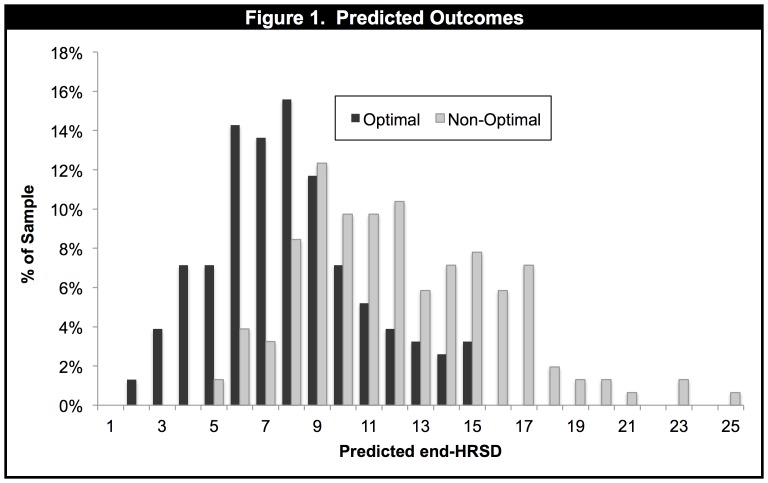
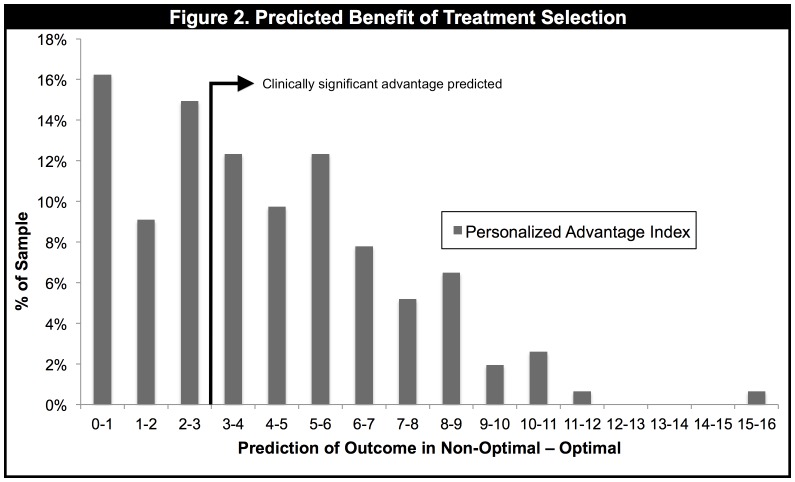
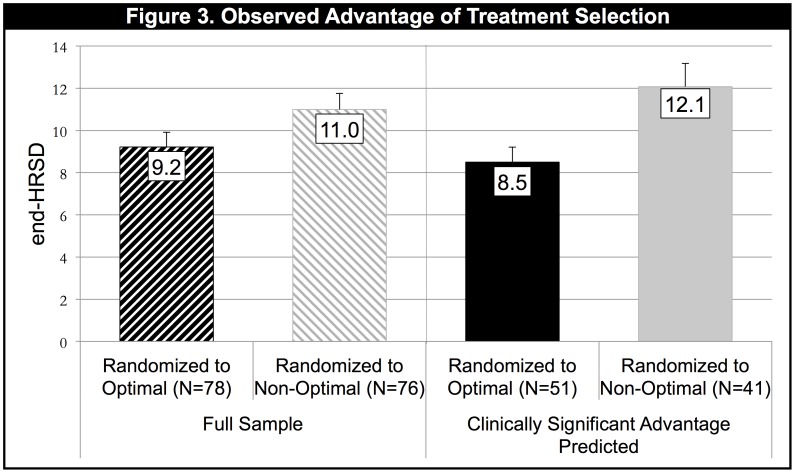
BACKGROUND: Advances in personalized medicine require the identification of variables that predict differential response to treatments as well as the development and refinement of methods to transform predictive information into actionable recommendations. OBJECTIVE: To illustrate and test a new method for integrating predictive information to aid in treatment selection, using data from a randomized treatment comparison. METHOD: Data from a trial of antidepressant medications (N = 104) versus cognitive behavioral therapy (N = 50) for Major Depressive Disorder were used to produce predictions of post-treatment scores on the Hamilton Rating Scale for Depression (HRSD) in each of the two treatments for each of the 154 patients. The patient's own data were not used in the models that yielded these predictions. Five pre-randomization variables that predicted differential response (marital status, employment status, life events, comorbid personality disorder, and prior medication trials) were included in regression models, permitting the calculation of each patient's Personalized Advantage Index (PAI), in HRSD units. RESULTS: For 60% of the sample a clinically meaningful advantage (PAI≥3) was predicted for one of the treatments, relative to the other. When these patients were divided into those randomly assigned to their "Optimal" treatment versus those assigned to their "Non-optimal" treatment, outcomes in the former group were superior (d = 0.58, 95% CI .17-1.01). CONCLUSIONS: This approach to treatment selection, implemented in the context of two equally effective treatments, yielded effects that, if obtained prospectively, would rival those routinely observed in comparisons of active versus control treatments.
Overview
The claims and statistics of this paper haven’t been checked yet.
Run the check — free, no account needed. It reads the open-access text and checks the sources it cites.
Integrity signals
Registry
Cites
Statistics
Figures
Verification
Claims the paper makes
The claims and statistics of this paper haven’t been checked yet.
Run the check — free, no account needed. It reads the open-access text and checks the sources it cites.
Claims other papers make about this one
Each is checked against this paper’s own text: does it say what the citing paper says it does?
In the citing paper
“The use of waiting list control groups as often the case in psychotherapy research may lead to an overestimation of the effects of treatment. 592,593”
From Time for united action on depression: a Lancet–World Psychiatric Association Commission (2022) · cites this paper as [592]
In the citing paper
“Literature on patient factors predicting treatment response to MBCT is emerging but still in its infancy, particularly compared to predictors of outcome of cognitive therapy (DeRubeis et al., 2014).”
From Adding mindfulness-based cognitive therapy to maintenance antidepressant medication for prevention of relapse/recurrence in major depressive disorder: Randomised controlled trial (2015) · cites this paper as DeRubeis et al., 2014
In the citing paper
“There is now a consensus in the literature that future improvements in outcomes obtained from cognitive behavioral therapy (CBT) for chronic pain will require research to identify patient and treatment variables that help explain outcomes.”
From Predictors and mediators of outcome in cognitive behavioral therapy for chronic pain: The contributions of psychological flexibility (2021) · cites this paper as DeRubeis et al., 2014
Self-check
Percentages, sums and reported differences re-computed from the paper’s own numbers.
The self-check needs the paper’s full text.
Citations
Cites
Hamilton, M. (1960) · Journal of Neurology, Neurosurgery & Psychiatry · doi:10.1136/jnnp.23.1.56 · Cited by 32,817
Draper, N. R., & Smith, H. (2005) · Technometrics · doi:10.1198/tech.2005.s303 · Cited by 17,993
A leisurely look at the bootstrap, the jackknife, and cross-validation
Efron, B., & Gong, G. (1983) · The American Statistician · doi:10.1080/00031305.1983.10483087 · Cited by 3,229
Mediators and Moderators of Treatment Effects in Randomized Clinical Trials
Kraemer, H. C., Wilson, G. T., Fairburn, C. G., & Agras, W. S. (2002) · Archives of General Psychiatry · doi:10.1001/archpsyc.59.10.877 · Cited by 2,562 · cited 1×
“Biostatisticians have described analytic frameworks to identify prescriptive (moderator) variables [38,39], but less attention has”
BackgroundKirsch, I., Deacon, B. J., Huedo-Medina, T. B., Scoboria, A., Moore, T. J., & Johnson, B. T. (2008) · PLoS Medicine · doi:10.1371/journal.pmed.0050045 · Cited by 2,442
Selective publication of antidepressant trials and its influence on apparent efficacy
Turner, E. H., Matthews, A. M., Linardatos, E., Tell, R. A., & Rosenthal, R. (2008) · New England Journal of Medicine · doi:10.1056/nejmsa065779 · Cited by 2,435
“Clinical versus Actuarial Judgment.”
Dawes, R. M., Faust, D., & Meehl, P. E. (1989) · Science · doi:10.1126/science.2648573 · Cited by 2,298
The Path to Personalized Medicine
Hamburg, M. A., & Collins, F. S. (2010) · New England Journal of Medicine · doi:10.1056/nejmp1006304 · Cited by 1,970
Encyclopedia of research design
(2011) · Choice Reviews Online · doi:10.5860/choice.48-2447 · Cited by 1,925
Cognitive Therapy vs Medications in the Treatment of Moderate to Severe Depression
DeRubeis, R. J., Hollon, S. D., Amsterdam, J. D., Shelton, R. C., Young, P. R., Salomon, R. M., O’Reardon, J. P., Lovett, M. L., Gladis, M. M., Brown, L. L., et al. (2005) · Archives of General Psychiatry · doi:10.1001/archpsyc.62.4.409 · Cited by 989
Self-citation
Cited by
Sorted by citations
Items 301–400 of 509
Bockting, C., Breedvelt, J., & Brouwer, M. E. (2021) · Elsevier eBooks · doi:10.1016/b978-0-12-818697-8.00224-7 · Cited by 5
Introduction: Applying Clinical Psychological Science to Practice
Cha, C. B., & DiVasto, K. A. (2017) · Journal of Clinical Psychology · doi:10.1002/jclp.22448 · Cited by 7
“…(moderators of treatment effects; Kazdin, 2008); how to optimally prescribe and match interventions for a given individual (personalized medicine; DeRubeis et al., 2014); how treatments can be broken from a manualized mold to be more flexibly tailored to each client (modularized treatment;…”
BackgroundThe power of noise and the art of prediction
Xiao, Z., & Higgins, S. (2017) · International Journal of Educational Research · doi:10.1016/j.ijer.2017.10.006 · Cited by 6
“…to be widely appreciated (Shmueli and Koppius, 2011), despite the aforementioned advantages and its rapid development and application in other fields (DeRubeis et al., 2014; Kapelner et al., 2014; Kennedy et al., 2017; Popkin, 2015; Hofman et al., 2017; Tetlock et al., 2017), such as the…”
BackgroundPerspektiven einer evidenzbasierten und personalisierten Psychotherapie
Lutz, W., Clausen, S. A., & Deisenhofer, A. (2019) · Zeitschrift für Klinische Psychologie und Psychotherapie · doi:10.1026/1616-3443/a000518 · Cited by 6
Lutz, W., & Wucherpfennig, F. (2017) · PPmP - Psychotherapie · Psychosomatik · Medizinische Psychologie · doi:10.1055/s-0043-110128 · Cited by 5
Inference for the Effectiveness of Personalized Medicine with SoftwarePreprint
Kapelner, A. D., Bleich, J., Levine, A., Cohen, Z. D., DeRubeis, R. J., & Berk, R. A. (2014) · arXiv (Cornell University) · Cited by 5
Self-citationMiggiels, M. F., ten Klooster, P. M., Bremer-Hoeve, S., Dekker, J. J. M., Huibers, M. J. H., Reefhuis, E., Van, H. L., & van Dijk, M. K. (2021) · BMC Psychiatry · doi:10.1186/s12888-021-03156-8 · Cited by 5
Wade, B., Pindale, R., Luccarelli, J., Li, S., Meisner, R. C., Seiner, S. J., Camprodon, J. A., & Henry, M. (2025) · npj Digital Medicine · doi:10.1038/s41746-025-01523-3 · Cited by 4
“Wedeveloped amachine-learning adaptationof the Personalized Advantage Index approach originally developed by DeRubeis 16 to predict optimal treatment allocation between ECT and (es) ketamine for individual patients using pretreatment measures of clinical records and demographic data.”
InfluentialClient subgroups in emotion‐focussed therapy: Exploring profiles in observable emotion
Pascual‐Leone, A., Cristoffanini, F., & Sawashima, T. (2024) · Counselling and Psychotherapy Research · doi:10.1002/capr.12781 · Cited by 4
Jones, F., Timulák, L., Keogh, D., Chigwedere, C., Wilson, C. E., & Ward, F. (2024) · Person-Centered & Experiential Psychotherapies · doi:10.1080/14779757.2024.2335383 · Cited by 4
“Examples of this are studies using predictive analysis to inform treatment selections for a given individual (DeRubeis et al., 2014; Huibers et al., 2015), and studies using patient profiling and risk stratification to inform personalized treatment recommendations (Delgadillo et al., 2016).”
Telepsychiatry in the Treatment of Major Depressive Disorders
Cho, C., Lee, H., & Kim, Y. (2024) · Advances in experimental medicine and biology · doi:10.1007/978-981-97-4402-2_17 · Cited by 5
Barton, B. B., Schramm, E., & Voderholzer, U. (2017) · Zeitschrift für Psychiatrie Psychologie und Psychotherapie · doi:10.1024/1661-4747/a000336 · Cited by 4
“Auch DeRubeis et al. (2014) berechneten auf Grundlage eines bestehenden Datensets retrospektiv anhand klinischer und demographischer Variablen einen „Personalized Advantage Index“, um zu entscheiden, ob ein Patient mehr von einer KVT oder einer antidepressiven medikamentösen Therapie profitiert…”
BackgroundOu, J., Wu, Y., Liu, J., & Hong, L. (2019) · Advances in Psychological Science · doi:10.3724/sp.j.1042.2020.00111 · Cited by 4
Prognostic and prescriptive predictors of PTSD response to prolonged exposure and sertraline
Rosencrans, P. L., Garcia, N. M., Cooper, A. A., Lehinger, E. A., Bagley, J. M., Levine, D. S., Walker, R. M., Rothbaum, A. O., Marks, E. H., Mohr, J. L., et al. (2023) · Journal of Mood and Anxiety Disorders · doi:10.1016/j.xjmad.2023.100008 · Cited by 5
“As an alternative approach, effects may be better captured by composite indices such as the personalized advantage index (PAI) [18,61].”
Schmidt, F., Hammerfald, K., Jahren, H. H., Solbakken, O. A., Payberah, A. H., & Vlassov, V. (2023) · IEEE International Conference on Digital Health (ICDH) · doi:10.1109/icdh60066.2023.00030 · Cited by 4
“, [53], [54]) or the expected change for different treatment strategies (e.”
BackgroundA longitudinal view of an approach to responsiveness: Principles followed and lessons learned
Caspar, F. (2023) · Psychotherapy Research · doi:10.1080/10503307.2023.2275627 · Cited by 5
“This indicated retrospectively that responsiveness in the treatment selection based on interpersonal variables would have been advantageous for the patients, very much in the sense of Beutler and Harwood (2000) and DeRubeis et al. (2014).”
Held, P., Patton, E. E., Pridgen, S., Smith, D. L., Kaysen, D. L., & Klassen, B. J. (2023) · European Journal of Psychotraumatology · doi:10.1080/20008066.2023.2281757 · Cited by 4
“To generate models assessing potential di ff erential predictions for individuals based on the ITP compre-hensiveness, we followed the basic framework for generation of a PAI (DeRubeis et al., 2014; van Bronswijk et al., 2021).”
BackgroundMethodFrederick, J., Ng, M. Y., Valente, M. J., Venturo‐Conerly, K. E., & Weisz, J. R. (2024) · Behavior Therapy · doi:10.1016/j.beth.2024.01.004 · Cited by 4
Marel, C., Afzali, M. H., Sunderland, M., Teesson, M., & Mills, K. L. (2024) · International Journal of Mental Health and Addiction · doi:10.1007/s11469-024-01257-5 · Cited by 5
“…information that can guide clinical decision-making, yet many clinicians lack time, resources, guidance, or procedures on how to best synthesise, analyse, or utilise this information in practice to deliver personalised care (DeRubeis et al., 2014; Grol & Grimshaw, 2003; Oxman & Flottorp, 2001).”
Zhou, Y., Chen, X., Liu, D., Pan, Y.-L., Hou, Y., Gao, T., Peng, F., Wang, X., & Zhang, X. (2022) · Psychotherapy Research · doi:10.1080/10503307.2022.2078680 · Cited by 5
“Some of these methods used statistical modeling of treatment-moderators, such as the personalized advantage index (PAI) approach (see, for example, Bronswijk et al., 2019; Cohen & Derubeis, 2018; Deisenhofer et al., 2018; Derubeis et al., 2014; Huibers et al., 2015).”
Inference for Treatment Regime Models in Personalized MedicinePreprint
Kapelner, A. D., Bleich, J., Cohen, Z. D., DeRubeis, R. J., & Berk, R. A. (2014) · Cited by 4
Self-citationWatkins, E. R., Phillips, D., Choueiri, H., Ford, A., Cook, H., Taylor, G. T., & Kessler, R. C. (2025) · Trials · doi:10.1186/s13063-025-09023-1 · Cited by 4
“…estimating the attained improvement of the mean outcome under a treatment selection scheme that always selects the treatment option with the best predicted outcome compared to the mean outcome under balanced randomization, generating a difference score or a personalized advantage index [67].”
van Dijk, D. A., Stoel, N. G., Meijer, R. J., Repko, R. J. E., van den Boogaard, T. M., Ruhé, H. G., Spijker, J., & Peeters, F. P. M. L. (2025) · Journal of Affective Disorders · doi:10.1016/j.jad.2025.04.050 · Cited by 4
Pozuelo, J. R., Lahiri, A., Singh, R. S. P., Kushwah, A., Khanduri, M., Shukla, A., Khan, A., Sruthi, G., Shende, V., Parashar, Y., et al. (2025) · BMC Psychiatry · doi:10.1186/s12888-025-07030-9 · Cited by 4
“Traditional regression-based PTR models typically rely on correctly specifying main effects and simple two-way interactions, where treatment effects vary based on specific baseline characteristics but do not account for more complex interaction patterns [71].”
Self-citationvan Bronswijk, S. C., Howard, J., & Lorenzo‐Luaces, L. (2024) · Journal of Affective Disorders · doi:10.1016/j.jad.2024.04.015 · Cited by 3
Self-citationSugg, H. V. R., Frost, J., & Richards, D. A. (2020) · Trials · doi:10.1186/s13063-019-3788-3 · Cited by 3
Loohuis, A. M. M., Burger, H., Wessels, N. J., Dekker, J. H., Malmberg, A. G., Berger, M. Y., Blanker, M. H., & van der Worp, H. (2022) · BMJ Open · doi:10.1136/bmjopen-2021-051827 · Cited by 3
Acceptance and commitment therapy and its unacknowledged influences: Some old wine in a new bottle?
Gonçalves, M. M. (2022) · Clinical Psychology & Psychotherapy · doi:10.1002/cpp.2775 · Cited by 6
Kaiser, T., & Roth, M. (2022) · F1000Research · doi:10.12688/f1000research.123136.1 · Cited by 2
Pickles, A. R., Edwards, D., Horvath, L., & Emsley, R. (2023) · Journal of Child Psychology and Psychiatry · doi:10.1111/jcpp.13892 · Cited by 4
Chapter 12. Toward Precision Cognitive-Behavioral Therapy Via Reinforcement Learning Theory
Niv, Y., Hitchcock, P., Berwian, I. M., & Schoen, G. (2021) · American Psychiatric Association Publishing eBooks · doi:10.1176/appi.books.9781615379118.lg12 · Cited by 3
Langhammer, T., Unterfeld, C., Blankenburg, F., Erk, S., Fehm, L., Haynes, J., Heinzel, S., Hilbert, K., Jacobi, F., Kathmann, N., et al. (2025) · BMJ Open · doi:10.1136/bmjopen-2024-094110 · Cited by 3
“82 It is based on an algorithm that is trained on a data set of patients who have been assigned to one of at least two (or more) treatment alternatives.”
Carl, E., Mason, J. E., Smits, J. A. J., & Asmundson, G. J. G. (2021) · Elsevier eBooks · doi:10.1016/b978-0-12-818697-8.00074-1 · Cited by 3
Big Data Guided Interventions: Predicting Treatment Response
Kautzky, A., Lanzenberger, R. R., & Kasper, S. F. (2019) · Springer eBooks · doi:10.1007/978-3-030-03553-2_4 · Cited by 3
How does early symptom change predict subsequent course of depressive symptoms during psychotherapy?
Fuhr, K., Werle, D., & Batra, A. (2021) · Psychology and Psychotherapy Theory Research and Practice · doi:10.1111/papt.12370 · Cited by 6
Commentary on Hofmann and Hayes: The Water Looks Inviting, but How and When Do We Jump in?
Teachman, B. A. (2018) · Clinical Psychological Science · doi:10.1177/2167702618797104 · Cited by 3
“Greater investments are needed in research on personalizing treatments (beyond work on biomarkers; e.g., DeRubeis et al., 2014) to learn how to match treatments to a given individual and context, and in idiographic network models (e.g., Borsboom & Cramer, 2013) to identify the key change processes…”
BackgroundWester, R. A., Rubel, J. A., & Mayer, A. (2021) · doi:10.31234/osf.io/t5843 · Cited by 3
Zhu, M., Guo, Z., Liu, J., Guo, Y., Dong, J., Ma, J., & Chen, X. (2025) · Clinical Neuropharmacology · doi:10.1097/wnf.0000000000000630 · Cited by 2
Wyant, K., Sant'Ana, S. J. K., Punturieri, C., Yu, J., Fronk, G. E., Maggard, C. M., Janssen, C., Wanta, S. E., Kornfield, R., Swol, L. M. V., et al. (2025) · JMIR Research Protocols · doi:10.2196/81697 · Cited by 2
Xie, Q., Goldberg, S. B., Jacobson, N. A., Rakel, D. P., & Quanbeck, A. (2025) · Journal of Pain Research · doi:10.2147/jpr.s568016 · Cited by 4
Predicting Adolescent Response to School-Based Mindfulness
Webb, C. A., Ren, B., Hinze, V., Dalgleish, T., Ford, T. J., Greenberg, M. T., Montero-Marin, J., & Kuyken, W. (2026) · JAMA Psychiatry · doi:10.1001/jamapsychiatry.2025.4638 · Cited by 2
PSYKOTERAPIFORSKNING GENNEM 100 ÅR – HVOR LANGT ER VI NÅET?
Hougaard, E. (2021) · Psyke & Logos · doi:10.7146/pl.v42i1.128765 · Cited by 3
“23 stressfyldte livsbegivenheder og haft mindst to tidligere behandlinger med antidepressiva (DeRubeis et al., 2014).”
BackgroundKaram, C., Brown, D., Yang, M., Done, N., Dieye, I., Bozas, A., Vera‐Llonch, M., & Signorovitch, J. (2022) · Muscle & Nerve · doi:10.1002/mus.27668 · Cited by 2
Rayner, C., Coleman, J. R. I., Skelton, M., Armour, C., Bradley, J. R., Buckman, J. E. J., Davies, M. R., Hirsch, C. R., Hotopf, M. H., Hübel, C., et al. (2022) · BMC Psychiatry · doi:10.1186/s12888-022-04275-6 · Cited by 2
“The positive association detected between educational attainment and favourable treatment outcomes is also consistent with prior studies which have found lower cognitive ability to be associated with poorer outcomes following psychological therapy [12].”
BackgroundResultInfluentialde Jong, K., Wilkens, J., Anderson, T., & Steggles, K. (2024) · Research in Psychotherapy Psychopathology Process and Outcome · doi:10.4081/ripppo.2024.804 · Cited by 2
“It seems that treating more challenging patients may require therapists to utilize their skills more effectively, which is in line with the idea that therapy quality matters most in more challenging patients (DeRubeis et al ., 2014).”
BackgroundSilverstein, S. M., Demmin, D. L., & Fradkin, S. I. (2021) · American Psychiatric Association Publishing eBooks · doi:10.1176/appi.books.9781615379118.lg05 · Cited by 2
Frost, K., Hoeboer, C., Hoffart, A., & Sele, P. (2025) · European Journal of Psychotraumatology · doi:10.1080/20008066.2025.2484060 · Cited by 2
Stepped Care for Depression: A Systematic Review and Feasibility Study
Hill, J. J. (2016) · Open Research Exeter (University of Exeter) · Cited by 2
Positive Interventions and Their Effectiveness with Clinical Populations
Ruini, C. (2017) · Springer eBooks · doi:10.1007/978-3-319-52112-1_4 · Cited by 2
Lutz, W., Clausen, S. A., Bennemann, B., Zimmermann, D., Prinz, J. N., Rubel, J. A., & Deisenhofer, A. (2019) · Verhaltenstherapie · doi:10.1159/000501026 · Cited by 2
“In weiteren Studien konnte gezeigt werden, dass Vorhersagen für depressive Patientinnen und Patienten für die Behandlung, von der sie gemäß PAI stärker profitieren sollten, höhere Therapieerfolge lieferten [DeRubeis et al., 2014; Huibers et al., 2015].”
BackgroundPsychotherapeutische Kompetenzen
Caspar, F., Deisenhofer, A., Evers, O., Laireiter, A., Lutz, W., Prinz, J. N., Rief, W., Strauss, B. M., & Taubner, S. (2021) · Elsevier eBooks · doi:10.1016/b978-3-437-22601-4.00001-2 · Cited by 3
Uncovering Individualised Treatment Effect: Evidence from Educational TrialsPreprint
Xiao, Z., Hauser, O., Kirkwood, C., Li, D. Z., Jones, B., & Higgins, S. (2020) · OSF Preprints (OSF Preprints) · doi:10.31219/osf.io/8nsw4 · Cited by 2
Hehlmann, M. I., & Lutz, W. (2023) · PPmP - Psychotherapie · Psychosomatik · Medizinische Psychologie · doi:10.1055/a-2137-8561 · Cited by 2
Wade, B., Pindale, R., Camprodon, J. A., Luccarelli, J., Li, S., Meisner, R. C., Seiner, S. J., & Henry, M. (2023) · Research Square · doi:10.21203/rs.3.rs-3682009/v1 · Cited by 2
“To address this limitation, DeRubeis et al. [14] introduced the Personalized Advantage Index (PAI).”
BackgroundArch, J. J., Finkelstein, L. B., & Dindo, L. N. (2022) · Oxford University Press eBooks · doi:10.1093/oxfordhb/9780197550076.013.29 · Cited by 1
Peipert, A., Rutter, L. A., Howard, J., & Lorenzo‐Luaces, L. (2024) · Behavior Therapy · doi:10.1016/j.beth.2024.09.001 · Cited by 1
Self-citationWojnarowski, C., Simmonds‐Buckley, M., & Kellett, S. (2024) · British Journal of Clinical Psychology · doi:10.1111/bjc.12508 · Cited by 1
“For example, the PAI in DeRubeis et al. (2014) predicted a clinically meaningful advantage for 60% of patients assigned to their predicted optimal treatment.”
InfluentialChapter 9. Translational Neurobiological Approaches to Precision Medicine for Fear and PTSD
Harnett, N. G., Seligowski, A. V., Pine, D. S., & Ressler, K. J. (2021) · American Psychiatric Association Publishing eBooks · doi:10.1176/appi.books.9781615379118.lg09 · Cited by 1
Schwartz, B., Vehlen, A., Eberhardt, S. T., & Lutz, W. (2025) · CBT: science into practice · doi:10.1007/978-3-031-90428-8_13 · Cited by 1
Targeted Learning for Optimal Patient Assignment to Psychotherapy
Malkki, V. K., Saarni, S. E., Lutz, W., & Rosenström, T. H. (2025) · Psychotherapy Research · doi:10.1080/10503307.2025.2517567 · Cited by 1
“…patient are predicted based on previous progress of other patients resembling most closely the patient in question (Lutz et al., 2005, 2019) and the personalized advantage index (PAI) which allows comparisons of predicted outcomes for a patient in two different treatments (DeRubeis et al., 2014).”
Tamm, J., Takano, K., Just, L., Ehring, T. W., Rosenkranz, T., & Kopf‐Beck, J. (2025) · Behavior Therapy · doi:10.1016/j.beth.2025.08.002 · Cited by 1
Assmann, N., Kaiser, T., Herzog, P., Arntz, A. R., Klein, J. P., Faßbinder, E., & Schaich, A. (2025) · Behaviour Research and Therapy · doi:10.1016/j.brat.2025.104899 · Cited by 1
“…in subgroups usually one variable at a time is evaluated as a potential predictor, the personalised advantage index (PAI) (Chekroud et al., 2021; DeRubeis et al., 2014) combines multiple potential moderators and thereby enables the prediction of treatment response for a specific patient…”
Bomhof, C., Löffler, J. P., Brugman, S., Lodder, P., van den End, A., van Dijk, M. K., van Westen, M., van Dam, L., Wielaard, I., Mensink, W., et al. (2025) · BMC Psychiatry · doi:10.1186/s12888-025-07550-4 · Cited by 1
“The PAI was initially developed by DeRu-beis et al. [44], but recently Meinke et al. [124] revised the algorithm, addressing key analytical issues in the traditional approach.”
Transforming psychological practice with precision mental health: introduction to the NOVA project
Roca, P., Noheda, S., Ramírez-Riveros, E., Martín-Azañedo, C., Martínez‐Zaragoza, F., Zangri, R. M., del Valle, E. P. G., Sanchez-Pedreño, M., León‐García, M., Gravholt, D. L., et al. (2026) · Frontiers in Psychology · doi:10.3389/fpsyg.2026.1775489 · Cited by 2
Predicting Nonresponse to Multicomponent Treatment in Fibromyalgia
López-García, R., Serrat, M., Sanabria‐Mazo, J. P., Pérez‐Aranda, A., Almirall, M., Delgadillo, J., Espelt, A., Luciano, J. V., Nieto, R., & Feliu‐Soler, A. (2026) · Clinical Journal of Pain · doi:10.1097/ajp.0000000000001367 · Cited by 1
Lees, J., & Delgadillo, J. (2026) · Behaviour Research and Therapy · doi:10.1016/j.brat.2026.105024 · Cited by 1
Berndt, L. C. S., Crawley, D., Tymchyk, R., Hall, A., Onysk, J., Erdmann, T., Wimmer, G. E., Berwian, I. M., Norbury, A., & Huys, Q. J. M. (2026) · PLoS Computational Biology · doi:10.1371/journal.pcbi.1014439 · Cited by 1
“A better understanding of the underlying cognitive and neurobiological processes that are engaged by behavioral activation could help improve and target treatment better [4–7].”
Bringing Single-Case Experimental Designs Into Routine Care
Scholten, S., Glombiewski, J. A., Kolb-Grunder, L., Heider, J., Henrich, D., Herzog, P., Schemer, L., Stenkamp, S., & Haas, J. W. (2026) · Zeitschrift für Klinische Psychologie und Psychotherapie · doi:10.1026/1616-3443/a000868 · Cited by 1
Srivastava, K., & Srivastava, R. (2026) · Frontiers in Systems Biology · doi:10.3389/fsysb.2026.1898853 · Cited by 1
“The PAI is a methodological framework used to identify patient subgroups, often referred to as “treatment-indicated” , who are more likely to benefit from a specific intervention compared to placebo, thereby supporting personalized medicine approaches (DeRubeis et al., 2014).”
Empirically supported treatment: A commentary.
Hollon, S. D. (2015) · Clinical Psychology Science and Practice · doi:10.1111/cpsp.12129 · Cited by 1
IOM REPORT ON PSYCHOSOCIAL TREATMENTS: CBT PERSPECTIVE
Hollon, S. D. (2015) · Depression and Anxiety · doi:10.1002/da.22444 · Cited by 1
“severe depressions).[8] My only caution is that it is easier to detect an effect than it is to explain it and I would not want the field to assume that you have to know how a treatment works to before you can use it.”
BackgroundHarnessing the Therapist Effect in Patient-Centered Mental Health Care Decision Making
Boswell, J. F., Constantino, M. J., & Kraus, D. R. (2017) · Administration and Policy in Mental Health and Mental Health Services Research · doi:10.1007/s10488-016-0789-3 · Cited by 1
Mindfulness-Based Interventions
Shamblaw, A. L., & Segal, Z. V. (2021) · Elsevier eBooks · doi:10.1016/b978-0-12-818697-8.00212-0 · Cited by 1
Internal and External Validity
Kazdin, A. E. (2021) · Cambridge University Press eBooks · doi:10.1017/9781108993647.003 · Cited by 1
Collaborative Care and Stepped Care
Richards, D. A., Hill, J. J., Gilbody, S. M., Coventry, P. A., & Gask, L. (2018) · Cambridge University Press eBooks · doi:10.1017/9781911623038.029 · Cited by 1
Chauvin, G. V., Hoyt, D. L., & Otto, M. W. (2022) · Journal of Behavioral and Cognitive Therapy · doi:10.1016/j.jbct.2022.04.003 · Cited by 1
Hicks, O., McInerney, S. J., Lam, R. W. M., Milev, R. V., Frey, B. N., Soares, C. N., Foster, J. A., Rotzinger, S., Kennedy, S. H., & Harkness, K. L. (2022) · Journal of Affective Disorders · doi:10.1016/j.jad.2022.06.058 · Cited by 2
Next Steps: Building a Science for Improving Outcomes
Cloître, M., Bryant, R. A., & Schnyder, U. (2022) · Springer eBooks · doi:10.1007/978-3-030-97802-0_28 · Cited by 1
A-Tjak, J. G. L., & Hayes, L. (2022) · Oxford University Press eBooks · doi:10.1093/oxfordhb/9780197550076.013.14 · Cited by 1
Second Wave Treatment for Depressive Disorders
Chong, A. K., Molaie, A. M., & Fisher, J. E. (2022) · Springer eBooks · doi:10.1007/978-3-031-11677-3_16 · Cited by 1
Thege, B. K., Emmanuel, T., Callanan, J., & Askland, K. D. (2023) · Frontiers in Public Health · doi:10.3389/fpubh.2023.1102434 · Cited by 1
Personalisierte Psychotherapie der posttraumatischen Belastungsstörung
Steuwe, C., Blaß, J., Herpertz, S. C., & Drießen, M. (2023) · Der Nervenarzt · doi:10.1007/s00115-023-01549-6 · Cited by 1
Chapter 2. The Future Of Precision Transcranial Magnetic Stimulation In Psychiatry
Philip, N. S., Zandvakili, A., & Berlow, Y. A. (2021) · American Psychiatric Association Publishing eBooks · doi:10.1176/appi.books.9781615379118.lg02 · Cited by 1
Zainal, N. H., Rajendra, S. J., Doren, N. V., Salamanca-Sanabria, A., Curtiss, J. E., & Keng, S. (2025) · BMC Psychiatry · doi:10.1186/s12888-025-07372-4 · Cited by 2
“These approaches enable going beyond standard moderator-by-treatment interaction by leveraging machine learning (ML) to evaluate treatment effect heterogeneity with greater accuracy and flexibility than standard ordinary least squares (OLS) regression [132, 136, 137].”
Personalized Psychotherapy Informed by Person in Context Assessment: A Single Subject Study
Paup, S. R., Scott, W. D., & Lin, B. (2025) · Journal of Personality Assessment · doi:10.1080/00223891.2025.2575937 · Cited by 1
“…to identify moderators that predict individualized responses to psychotherapy, personalized psychotherapy researchers have largely neglected consideration of personality (Huibers et al., 2020), instead focusing on demographic variables (DeRubeis et al., 2014; for an exception, see Hopwood, 2018).”
Individualizing Treatment for Clients With Personality Disorders
Kramer, U. (2019) · Elsevier eBooks · doi:10.1016/b978-0-12-813521-1.15001-5 · Cited by 1
Trajectories of Function and Symptom Change in Desvenlafaxine Clinical Trials
Zilcha‐Mano, S., Wang, X., Wajsbrot, D., Boucher, M., Fine, S. A., & Rutherford, B. R. (2021) · Journal of Clinical Psychopharmacology · doi:10.1097/jcp.0000000000001435 · Cited by 1
Case-Control and Cohort Designs
Kazdin, A. E. (2021) · Cambridge University Press eBooks · doi:10.1017/9781108993647.008 · Cited by 1
Null Hypothesis Significance Testing
Kazdin, A. E. (2021) · Cambridge University Press eBooks · doi:10.1017/9781108993647.014 · Cited by 1
Stratified medicine and child psychology and psychiatry: An old or new paradigm?
Kennedy, E. (2018) · Clinical Child Psychology and Psychiatry · doi:10.1177/1359104518783378 · Cited by 1
“…Multiple Assessment Randomised Trials (SMARTs) where treatments are randomly assigned and continued or discontinued based on treatment response to therapies adapted for specific subgroups to individualised metrics such as the Personalised Advantage Index (DeRubeis et al., 2014; Ng & Weisz, 2016).”
BackgroundRankin, P. S. (2019) · The University of Queensland · doi:10.14264/uql.2020.35 · Cited by 1
Mayer, A., Zimmermann, J., Hoyer, J., Salzer, S., Wiltink, J., Leibing, E., & Leichsenring, F. (2019) · doi:10.31234/osf.io/sthm6 · Cited by 1
HCI and Data: Interacting in a New Era of VirtualizationPreprint
Durango, I., Gallud, J. A., & Penichet, V. M. R. (2024) · Preprints.org · doi:10.20944/preprints202405.0508.v2
Batmaz, S. (2026) · Journal of Contemporary Psychotherapy · doi:10.1007/s10879-026-09753-6
Goldstein, A. (2014) · Scholarly Commons (University of Pennsylvania)
Innovative Psychological Treatments for Depression
Hollon, S. D., & Williams, C. J. (2016) · FOCUS The Journal of Lifelong Learning in Psychiatry · doi:10.1176/appi.focus.20150044
Toward a Rational Model of Depression Treatment
Forand, N. R., Richards, D. A., Huibers, M. J. H., & Bockting, C. (2016) · Oxford University Press eBooks · doi:10.1093/oxfordhb/9780199973965.013.41
Self-citationDifferenzielle Therapieentscheidung bei unipolaren Depressionen
Gärtner, T., & Voderholzer, U. (2018) · DNP - Der Neurologe und Psychiater · doi:10.1007/s15202-018-2092-5
Smout, M., Harris, J. K., & Furber, G. (2019) · Australian Psychologist · doi:10.1111/ap.12387
Metadata
- Authors
- DeRubeis, R. J., Cohen, Z. D., Forand, N. R., Fournier, J. C., Gelfand, L. A., & Lorenzo-Luaces, L.
- Affiliations
- University of Pennsylvania (US)
- The Ohio State University (US)
- University of Pittsburgh (US)
- Corresponding author
- DeRubeis, Robert J.
- Venue
- PLoS ONE
- Publisher
- Public Library of Science (PLoS)
- Published
- 2014-01-08
- Volume
- 9
- Issue
- 1
- Pages
- e83875
- ISSN
- 1932-6203 (ISSN-L)
- PMC
- PMC3885521
- OpenAlex
- W2079702662
- Cited by
- 509
- References
- 42
- Citations by year
- 2026: 36 · 2025: 25 · 2024: 33 · 2023: 41 · 2022: 52 · 2021: 99 · 2020: 46 · 2019: 51 · 2018: 34 · 2017: 35 · 2016: 26 · 2015: 23 · 2014: 8
- FWCI
- 22.60
- Type
- journal article
- Language
- en
- Open access
- gold
- doi.org
- Licence
- Locations
- PLoS ONE (publishedVersion, cc-by)
- Europe PMC (PubMed Central) (publishedVersion, cc-by)
- PubMed Central (publishedVersion, cc-by)
- PubMed (publishedVersion)
- D-Scholarship@Pitt (University of Pittsburgh) (acceptedVersion)
- RePEc: Research Papers in Economics (submittedVersion)
- DOAJ (DOAJ: Directory of Open Access Journals) (submittedVersion, cc-by-sa)
- Funders
- National Institute of Mental Health (2-R01-MH-060998-06, R01MH060998)
- Topics
- Health Sciences › Medicine › Pharmacology (medical) › Treatment of Major Depression
- Social Sciences › Psychology › Clinical Psychology › Psychotherapy Techniques and Applications
- Physical Sciences › Mathematics › Statistics and Probability › Statistical Methods in Clinical Trials
- Keywords
- personalized medicine, treatment selection, differential treatment response, prediction of treatment outcome, major depressive disorder, antidepressants, cognitive behavioral therapy, Hamilton Depression Rating Scale, treatment response prediction
- MeSH terms
- Antidepressive Agents, Depressive Disorder, Major, Major Depressive Disorder, Health Planning Guidelines, Humans, Prognosis, Psychiatric Status Rating Scales, Cognitive Behavioral Therapy, Translational Research, Biomedical, Precision Medicine
About these checks
Registry, retraction, Cites and statistics results are computed, not judged, with one exception: a printed reference that no index lists is read once by a model before it counts as a citation error. Claims are extracted by a model and kept only when their quote appears verbatim in the text; each cited source is then checked, with a model’s help, for whether it says what the claim relies on. Those verdicts can be wrong — read the claim’s quote and the cited source before relying on one.
Statistics and arithmetic are recomputed, not judged.
Confidence bands are shown only for fields calibrated on our annotated test set. None is calibrated yet, so no band is shown.
What counts as a claim ›How we measure confidence ›How we check this ›
Are you an author, or do you see a problem with this page? Request a review
