

The DOI matches its Crossref record; 42 of the 42 references it cites were found in a registry or an index.
The Personalized Advantage Index: Translating Research on Prediction into Individualized Treatment Recommendations. A Demonstration
Open accessAbstract
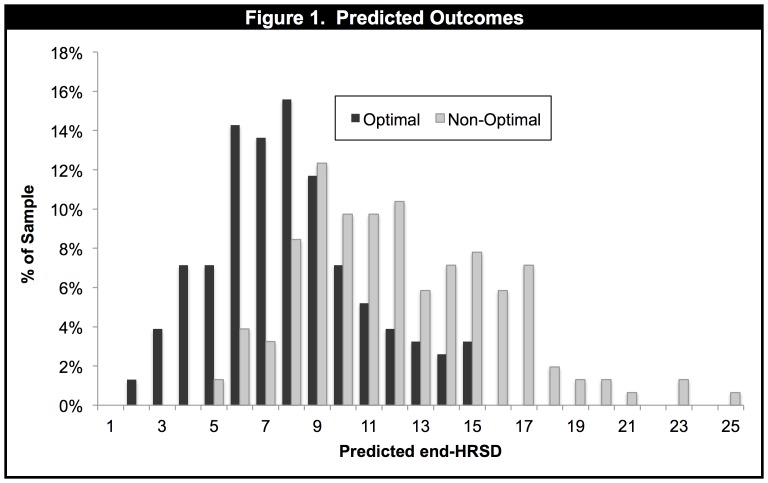
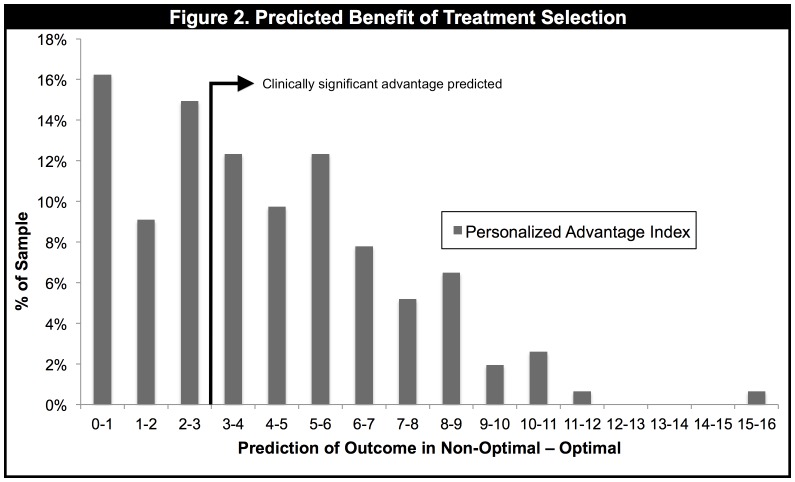
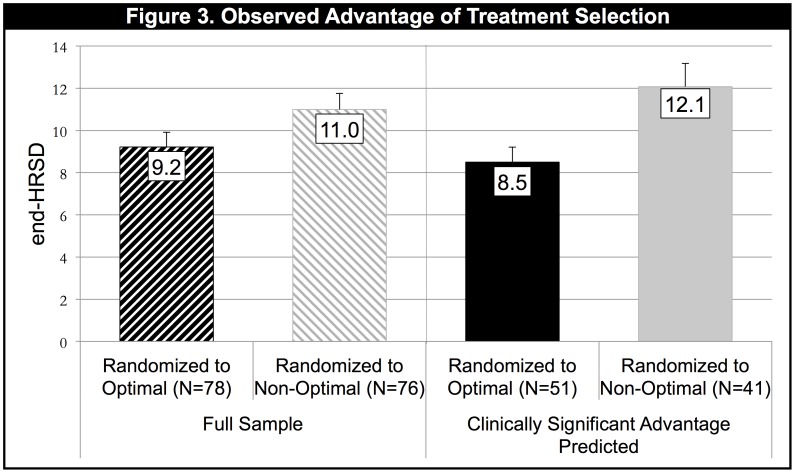
BACKGROUND: Advances in personalized medicine require the identification of variables that predict differential response to treatments as well as the development and refinement of methods to transform predictive information into actionable recommendations. OBJECTIVE: To illustrate and test a new method for integrating predictive information to aid in treatment selection, using data from a randomized treatment comparison. METHOD: Data from a trial of antidepressant medications (N = 104) versus cognitive behavioral therapy (N = 50) for Major Depressive Disorder were used to produce predictions of post-treatment scores on the Hamilton Rating Scale for Depression (HRSD) in each of the two treatments for each of the 154 patients. The patient's own data were not used in the models that yielded these predictions. Five pre-randomization variables that predicted differential response (marital status, employment status, life events, comorbid personality disorder, and prior medication trials) were included in regression models, permitting the calculation of each patient's Personalized Advantage Index (PAI), in HRSD units. RESULTS: For 60% of the sample a clinically meaningful advantage (PAI≥3) was predicted for one of the treatments, relative to the other. When these patients were divided into those randomly assigned to their "Optimal" treatment versus those assigned to their "Non-optimal" treatment, outcomes in the former group were superior (d = 0.58, 95% CI .17-1.01). CONCLUSIONS: This approach to treatment selection, implemented in the context of two equally effective treatments, yielded effects that, if obtained prospectively, would rival those routinely observed in comparisons of active versus control treatments.
Overview
The claims and statistics of this paper haven’t been checked yet.
Run the check — free, no account needed. It reads the open-access text and checks the sources it cites.
Integrity signals
Registry
Cites
Statistics
Figures
Verification
Claims the paper makes
The claims and statistics of this paper haven’t been checked yet.
Run the check — free, no account needed. It reads the open-access text and checks the sources it cites.
Claims other papers make about this one
Each is checked against this paper’s own text: does it say what the citing paper says it does?
In the citing paper
“The use of waiting list control groups as often the case in psychotherapy research may lead to an overestimation of the effects of treatment. 592,593”
From Time for united action on depression: a Lancet–World Psychiatric Association Commission (2022) · cites this paper as [592]
In the citing paper
“Literature on patient factors predicting treatment response to MBCT is emerging but still in its infancy, particularly compared to predictors of outcome of cognitive therapy (DeRubeis et al., 2014).”
From Adding mindfulness-based cognitive therapy to maintenance antidepressant medication for prevention of relapse/recurrence in major depressive disorder: Randomised controlled trial (2015) · cites this paper as DeRubeis et al., 2014
In the citing paper
“There is now a consensus in the literature that future improvements in outcomes obtained from cognitive behavioral therapy (CBT) for chronic pain will require research to identify patient and treatment variables that help explain outcomes.”
From Predictors and mediators of outcome in cognitive behavioral therapy for chronic pain: The contributions of psychological flexibility (2021) · cites this paper as DeRubeis et al., 2014
Self-check
Percentages, sums and reported differences re-computed from the paper’s own numbers.
The self-check needs the paper’s full text.
Citations
Cites
Hamilton, M. (1960) · Journal of Neurology, Neurosurgery & Psychiatry · doi:10.1136/jnnp.23.1.56 · Cited by 32,817
Draper, N. R., & Smith, H. (2005) · Technometrics · doi:10.1198/tech.2005.s303 · Cited by 17,993
A leisurely look at the bootstrap, the jackknife, and cross-validation
Efron, B., & Gong, G. (1983) · The American Statistician · doi:10.1080/00031305.1983.10483087 · Cited by 3,229
Mediators and Moderators of Treatment Effects in Randomized Clinical Trials
Kraemer, H. C., Wilson, G. T., Fairburn, C. G., & Agras, W. S. (2002) · Archives of General Psychiatry · doi:10.1001/archpsyc.59.10.877 · Cited by 2,562 · cited 1×
“Biostatisticians have described analytic frameworks to identify prescriptive (moderator) variables [38,39], but less attention has”
BackgroundKirsch, I., Deacon, B. J., Huedo-Medina, T. B., Scoboria, A., Moore, T. J., & Johnson, B. T. (2008) · PLoS Medicine · doi:10.1371/journal.pmed.0050045 · Cited by 2,442
Selective publication of antidepressant trials and its influence on apparent efficacy
Turner, E. H., Matthews, A. M., Linardatos, E., Tell, R. A., & Rosenthal, R. (2008) · New England Journal of Medicine · doi:10.1056/nejmsa065779 · Cited by 2,435
“Clinical versus Actuarial Judgment.”
Dawes, R. M., Faust, D., & Meehl, P. E. (1989) · Science · doi:10.1126/science.2648573 · Cited by 2,298
The Path to Personalized Medicine
Hamburg, M. A., & Collins, F. S. (2010) · New England Journal of Medicine · doi:10.1056/nejmp1006304 · Cited by 1,970
Encyclopedia of research design
(2011) · Choice Reviews Online · doi:10.5860/choice.48-2447 · Cited by 1,925
Cognitive Therapy vs Medications in the Treatment of Moderate to Severe Depression
DeRubeis, R. J., Hollon, S. D., Amsterdam, J. D., Shelton, R. C., Young, P. R., Salomon, R. M., O’Reardon, J. P., Lovett, M. L., Gladis, M. M., Brown, L. L., et al. (2005) · Archives of General Psychiatry · doi:10.1001/archpsyc.62.4.409 · Cited by 989
Self-citation
Cited by
Sorted by citations
Items 101–200 of 509
Tibi, L., van Oppen, P., van Balkom, A. J. L. M., Eikelenboom, M., Hendriks, G., & Anholt, G. E. (2019) · Journal of Affective Disorders · doi:10.1016/j.jad.2019.12.028 · Cited by 42
Davey, E., Allen, K. L., Bennett, S. D., Bryant‐Waugh, R., Clarke, T., Cooper, Z., Dixon‐Ward, K., Dudley, J., Eisler, I., Griffiths, J., et al. (2023) · European Eating Disorders Review · doi:10.1002/erv.2981 · Cited by 39
“There are many questions concerning treatment matching but work in other areas of mental health, such as depression, have proven fruitful (e.g., the development of the Personalised Advantage Index; DeRubeis et al., 2014).”
BackgroundSingle-case experimental research designs.
Kazdin, A. E. (2015) · Methodological issues and strategies in clinical research (4th ed.). · doi:10.1037/14805-029 · Cited by 39
Lutz, W., Zimmermann, D., Müller, V., Deisenhofer, A., & Rubel, J. A. (2017) · BMC Psychiatry · doi:10.1186/s12888-017-1464-2 · Cited by 41
“So far such prediction and adaptation or feedback tools have been studied independent of each other [3, 5].”
BackgroundMethodPredictive modeling in e-mental health: A common language framework
Becker, D., van Breda, W., Funk, B., Hoogendoorn, M., Ruwaard, J., & Riper, H. M. (2018) · Internet Interventions · doi:10.1016/j.invent.2018.03.002 · Cited by 43
“, 2012), and alcohol misuse (Farren and McElroy, 2010; Pedersen and Hesse, 2009). More advanced statistical techniques have also been applied. For instance, Patten (2005) analyzed data from several clinical depression trials to estimate the parameters of a Markov model, and Van Voorhees et al. (2008) identified risk f…”
InfluentialPredicting early dropout in online versus face-to-face guided self-help: A machine learning approach
Gonzalez Salas Duhne, P., Delgadillo, J., & Lutz, W. (2022) · Behaviour Research and Therapy · doi:10.1016/j.brat.2022.104200 · Cited by 38
Niles, A. N., Guinyard, A. G. L., Krull, J. L., Roy‐Byrne, P., Sullivan, G., Sherbourne, C. D., Bystritsky, A., & Craske, M. G. (2017) · Behavior Therapy · doi:10.1016/j.beth.2017.02.001 · Cited by 39
“M* is analogous to the Personalized Advantage Index (DeRubeis et al., 2014) because values of M* can be used to determine which of two treatments should be prescribed and the extent to which the prescribed treatment should produce superior outcomes over the alternative.”
BackgroundA Tutorial Introduction to Heterogeneous Treatment Effect Estimation with Meta-learners
Salditt, M., Eckes, T., & Nestler, S. (2023) · Administration and Policy in Mental Health and Mental Health Services Research · doi:10.1007/s10488-023-01303-9 · Cited by 37
“However, predicting ITEs is a highly challenging task, and as DeRubeis et al. (2014) discuss, the clinical utility of the predictive model should then be tested further in a prospective way.”
BackgroundMethodResultInfluentialPenedo, J. M. G., Constantino, M. J., Coyne, A. E., Westra, H. A., & Antony, M. M. (2017) · Journal of Consulting and Clinical Psychology · doi:10.1037/ccp0000233 · Cited by 38
“These results highlight an ATI that may help optimize treatment fit for a specific subset of insecurely attached clients with GAD, which is consistent with the overarching movement toward personalizing mental health care (e.g., DeRubeis et al., 2014).”
ResultParent–teen communication predicts treatment benefit for depressed and suicidal adolescents.
Zisk, A., Abbott, C. H., Bounoua, N., Diamond, G. S., & Kobak, R. (2019) · Journal of Consulting and Clinical Psychology · doi:10.1037/ccp0000457 · Cited by 41
“The growing emphasis on more personalized approaches to treatment planning has called for identifying both prognostic indicators, which predict variation in treatment response across treatment conditions, and prescriptive factors, which moderate differential response between treatment modalities (Cohen & DeRubeis, 201…”
BackgroundErmers, N. J., Hagoort, K., & Scheepers, F. E. (2020) · Frontiers in Psychiatry · doi:10.3389/fpsyt.2020.00472 · Cited by 41
“Two studies have previously attempted to generate individualized treatment recommendations through the use of a “ Personal Advantage Index ” (45, 46).”
MethodYoung, J. F., Jones, J. D., Gallop, R., Benas, J. S., Schueler, C. M., Garber, J., & Hankin, B. L. (2020) · Journal of the American Academy of Child & Adolescent Psychiatry · doi:10.1016/j.jaac.2020.11.004 · Cited by 37
Can Artificial Intelligence Improve Psychotherapy Research and Practice?
Horn, R. L., & Weisz, J. R. (2020) · Administration and Policy in Mental Health and Mental Health Services Research · doi:10.1007/s10488-020-01056-9 · Cited by 36
“As one example, van Bronswijk et al. (2019) used a two-step machine learning process to select variables for calculating the Personalized Advantage Index (PAI; DeRubeis et al. 2014) for clients who received cognitive therapy (CT) or interpersonal psychotherapy (IPT); their analysis revealed that reports of traumatic c…”
MethodInfluentialJames, L., Elkins‐Brown, N., Wilson, M., James, S., Dotson, E., Edwards, C. D., Wintersteen-Arleth, L., Stevens, K. V., & Butterfield, P. (2021) · International Journal of Nursing Studies · doi:10.1016/j.ijnurstu.2021.104041 · Cited by 39
Weitz, E. S., Kleiboer, A. M., van Straten, A., Hollon, S. D., & Cuijpers, P. J. (2017) · BMJ Open · doi:10.1136/bmjopen-2016-013478 · Cited by 36
Client-focused psychotherapy research.
Fuertes, J. N., & Williams, E. N. (2017) · Journal of Counseling Psychology · doi:10.1037/cou0000214 · Cited by 40
Brakemeier, E., & Herpertz, S. C. (2019) · Der Nervenarzt · doi:10.1007/s00115-019-00808-9 · Cited by 36
Canário, C., Byrne, S., Creasey, N., Kodyšová, E., Akik, B. K., Lewandowska-Walter, A., Stanke, K. M., Pećnik, N., & Leijten, P. H. O. (2022) · International Journal of Environmental Research and Public Health · doi:10.3390/ijerph19031488 · Cited by 36
“Methodological developments, such as the personal advantage index [76], allow for secondary analyses of studies comparing different intervention types and increase our ability to predict which families benefit more from each intervention type.”
BackgroundEhring, T. W., Limburg, K., Kunze, A. E., Wittekind, C. E., Werner, G. G., Wolkenstein, L., Guzey, M., & Cludius, B. (2022) · Clinical Psychology Review · doi:10.1016/j.cpr.2022.102163 · Cited by 43
Hehlmann, M. I., Schwartz, B., Lutz, T., Gómez Penedo, J. M., Rubel, J. A., & Lutz, W. (2021) · Frontiers in Psychiatry · doi:10.3389/fpsyt.2021.613085 · Cited by 43
Uwatoko, T., Luo, Y., Sakata, M., Kobayashi, D., Sakagami, Y., Takemoto, K., Collins, L. M., Watkins, E. R., Hollon, S. D., Wason, J. M. S., et al. (2018) · Trials · doi:10.1186/s13063-018-2719-z · Cited by 33
“There have been several attempts to tailor or personalize psychotherapies to match individual characteristics [25, 26].”
BackgroundBig Data analytics and artificial intelligence in mental healthcare
Rosenfeld, A., Benrimoh, D. A., Armstrong, C., Mirchi, N., Langlois-Therrien, T., Rollins, C. P. E., Tanguay-Sela, M., Mehltretter, J., Fratila, R., Israel, S. A., et al. (2021) · Elsevier eBooks · doi:10.1016/b978-0-12-820203-6.00001-1 · Cited by 67
Artificial Intelligence (AI) to improve chronic pain care: Evidence of AI learning
Piette, J. D., Newman, S., Krein, S. L., Marinec, N. S., Chen, J., Williams, D. A., Edmond, S. N., Driscoll, M., LaChappelle, K. M., Maly, M., et al. (2022) · Intelligence-Based Medicine · doi:10.1016/j.ibmed.2022.100064 · Cited by 34
Teachman, B. A., McKay, D., Barch, D. M., Prinstein, M. J., Hollon, S. D., & Chambless, D. L. (2018) · American Psychologist · doi:10.1037/amp0000361 · Cited by 35
Recent Developments in the Treatment of Depression
Hollon, S. D., Cohen, Z. D., Singla, D. R., & Andrews, P. W. (2019) · Behavior Therapy · doi:10.1016/j.beth.2019.01.002 · Cited by 37
Self-citationOprel, D. A. C., Hoeboer, C. M., Schoorl, M., de Kleine, R. A., Wigard, I. G., Cloître, M., van Minnen, A., & van der Does, W. A. J. (2018) · BMC Psychiatry · doi:10.1186/s12888-018-1967-5 · Cited by 36
“We will calculate a ‘personalized advantage index’ (PAI) [41] and trees for treatment-subgroup interactions (QUalitative INteraction Trees; QUINT) to evaluate which pretreatment characteristics are most discriminating in predicting optimal treatment and differential response to treatments with a combination of predict…”
MethodInfluentialBoswell, J. F. (2019) · Psychotherapy Research · doi:10.1080/10503307.2019.1686192 · Cited by 35
“Similar to increased efforts to better match patients to specific treatments (e.g., DeRubeis et al., 2014), such findings point to the potential utility of matching specific patients with specific therapists.”
Kopf‐Beck, J., Zimmermann, P., Egli, S., Rein, M., Kappelmann, N., Fietz, J., Tamm, J., Rek, K., Lucae, S., Brem, A., et al. (2020) · BMC Psychiatry · doi:10.1186/s12888-020-02880-x · Cited by 48
“In the past, parameters from different domains such as genetics and epigenetics [77], inflammation [12], neuroimaging [78], self-reports including clinical parameters, or sociodemographic variables [69, 79, 80] have been used to identify predictors of treatment response or outcome.”
BackgroundMethodWhen and how assessment matters: An update on the Treatment Utility of Clinical Assessment (TUCA).
Kamphuis, J. H., Noordhof, A., & Hopwood, C. J. (2020) · Psychological Assessment · doi:10.1037/pas0000966 · Cited by 34
Lorenzo‐Luaces, L., Rodríguez‐Quintana, N., & Bailey, A. J. (2020) · Behaviour Research and Therapy · doi:10.1016/j.brat.2020.103637 · Cited by 30
“Treatment researchers are increasingly becoming interested in moving away from exploring single variables and towards the combination of multiple variables to assign patients to treatments for depression (Cloitre, Petkova, Su, & Weiss, 2016; Delgadillo, Huey, Bennett, & McMillan, 2017; DeRubeis et al., 2014; Kessler e…”
BackgroundSelf-citationDecision making and the use of evidence-based practice: Is the three-legged stool balanced?
Stewart, R. E., Chambless, D. L., & Stirman, S. W. (2018) · Practice Innovations · doi:10.1037/pri0000063 · Cited by 30
Wibbelink, C. J. M., Arntz, A. R., Grasman, R. P. P. P., Sinnaeve, R., Boog, M., Bremer, O. M. C., Dek, E. C. P., Alkan, S. G., James, C., Koppeschaar, A. M., et al. (2022) · BMC Psychiatry · doi:10.1186/s12888-021-03670-9 · Cited by 33
Giesemann, J., Delgadillo, J., Schwartz, B., Bennemann, B., & Lutz, W. (2023) · Psychotherapy Research · doi:10.1080/10503307.2022.2161432 · Cited by 26
“…Personalized Advantage Index and different ML approaches (e.g., Cohen et al., 2020; Cohen & DeR-ubeis, 2018; Deisenhofer et al., 2018; Delgadillo & Gonzalez Salas Duhne, 2020; DeRubeis et al., 2014; Huibers et al., 2015; Kessler et al., 2019; Lorenzo-Luaces & DeRubeis, 2018; Schwartz et al., 2020).”
MethodRøssberg, J. I., Evensen, J. H., Dammen, T., Wilberg, T., Klungsøyr, O., Jones, M., Bøen, E., Egeland, R., Breivik, R., Løvgren, A., et al. (2021) · BMC Psychology · doi:10.1186/s40359-021-00517-6 · Cited by 30
“[26] used data from a trial of antidepressant medications versus CBT for MDD to calculate predictions of post-treatment scores on the Hamilton Rating Scale for Depression (HRSD) in each of the two treatments.”
MethodEstimating Treatment Effect Heterogeneity in Psychiatry: A Review and Tutorial With Causal Forests
Sverdrup, E., Petukhova, M., & Wager, S. (2025) · International Journal of Methods in Psychiatric Research · doi:10.1002/mpr.70015 · Cited by 37
“…logic is used here to generate two predicted outcome scores from this model for each participant in the study, the first assuming that the participant was assigned to the intervention group and the second assuming that the participant was assigned to the control group (DeRubeis et al. 2014).”
McMain, S., Fitzpatrick, S., Boritz, T. Z., Barnhart, R., Links, P. S., & Streiner, D. L. (2017) · Journal of Personality Disorders · doi:10.1521/pedi_2017_31_309 · Cited by 29
López‐Gómez, I., Lorenzo‐Luaces, L., Chaves, C., Hervás, G., DeRubeis, R. J., & Vázquez, C. (2019) · General Hospital Psychiatry · doi:10.1016/j.genhosppsych.2019.07.004 · Cited by 33
Self-citationMehltretter, J., Fratila, R., Benrimoh, D. A., Kapelner, A. D., Perlman, K., Snook, E., Israel, S. A., Armstrong, C., Miresco, M., & Turecki, G. (2020) · Computational Psychiatry · doi:10.1162/cpsy_a_00029 · Cited by 29
“Future analyses, along the lines of the Personalized Advantage Index (PAI) (Derubeis et al., 2014) may be able to help estimate the individual benefit with model-predicted treatment.”
MethodInfluentialBoyle, K. S., Deisenhofer, A., Rubel, J. A., Bennemann, B., Weinmann‐Lutz, B., & Lutz, W. (2019) · Cognitive Behaviour Therapy · doi:10.1080/16506073.2019.1625945 · Cited by 30
“There is evidence that such approaches have the potential to enhance therapy outcomes, especially for patients with an increased risk of not profiting from therapy (DeRubeis et al., 2014; Lambert, Whipple, & Kleinstäuber, 2018; Lutz, de Jong, & Rubel, 2015).”
BackgroundFlack, F., Stahlschmidt, L., Dobe, M., Hirschfeld, G., Strasser, A., Michalak, J., Wager, J., & Zernikow, B. (2018) · Pain · doi:10.1097/j.pain.0000000000001321 · Cited by 28
Tovote, K. A., Schroevers, M. J., Snippe, E., Emmelkamp, P. M. G., Links, T. P., Sanderman, R., & Fleer, J. (2017) · PLoS ONE · doi:10.1371/journal.pone.0179941 · Cited by 31
Ritz, C., Astrup, A. V., Larsen, T. M., & Hjorth, M. F. (2019) · European Journal of Clinical Nutrition · doi:10.1038/s41430-019-0423-z · Cited by 28
Webb, C. A., Forgeard, M. J. C., Israel, E. S., Lovell-Smith, N., Beard, C., & Björgvinsson, Þ. (2021) · Journal of Consulting and Clinical Psychology · doi:10.1037/ccp0000555 · Cited by 28
Are personalised treatments of adult depression finally within reach?
Cuijpers, P. J., & Christensen, H. M. (2016) · Epidemiology and Psychiatric Sciences · doi:10.1017/s204579601600007x · Cited by 28
“The paper by Kessler and colleagues (Kraemer, 2013; DeRubeis et al. 2014) describes a whole new approach to personalised treatments.”
BackgroundMethodological advances in statistical prediction.
Garb, H. N., & Wood, J. M. (2019) · Psychological Assessment · doi:10.1037/pas0000673 · Cited by 33
Evidence-Based Strategies for Treatment Personalization: A Review
Stumpp, N. E., & Sauer-Zavala, S. (2022) · Cognitive and Behavioral Practice · doi:10.1016/j.cbpra.2021.10.004 · Cited by 29
“In contrast, presence of a comorbid personality disorder has been associated with more favorable outcomes for ADM relative to CT/CBT (DeRubeis et al., 2014; Fournier et al., 2008).”
BackgroundMethodInfluentialDunn, B. D. (2017) · Cognitive Therapy and Research · doi:10.1007/s10608-017-9831-3 · Cited by 29
Penedo, J. M. G., Schwartz, B., Giesemann, J., Rubel, J. A., Deisenhofer, A., & Lutz, W. (2021) · Psychotherapy Research · doi:10.1080/10503307.2021.1930242 · Cited by 33
“In treatment selection algorithms, there are some benchmarks that could be used to establish suitability of implementation, although they are usually highly instrument-specific (e.g., Personalized Advantage Index; DeRubeis et al., 2014).”
MethodWebb, C. A., Hirshberg, M. J., Davidson, R. J., & Goldberg, S. B. (2022) · Journal of Medical Internet Research · doi:10.2196/41566 · Cited by 30
“For example, DeRubeis et al [16] developed the Personalized Advantage Index (PAI) as an algorithm for guiding treatment recommendations based on pretreatment patient characteristics.”
Piette, J. D., Krein, S. L., Striplin, D., Marinec, N. S., Kerns, R. D., Farris, K. B., Singh, S. P., An, L. C., & Heapy, A. A. (2016) · JMIR Research Protocols · doi:10.2196/resprot.4995 · Cited by 32
Facets of Mindfulness Predict Depressive and Anxiety Symptom Improvement Above CBT Skills
Webb, C. A., Beard, C., Forgeard, M., & Björgvinsson, T. (2019) · Mindfulness · doi:10.1007/s12671-018-1005-1 · Cited by 23
An Answer to “So What?” Implications of Network Theory for Research and Practice
Jones, P. J., & Robinaugh, D. J. (2021) · FOCUS The Journal of Lifelong Learning in Psychiatry · doi:10.1176/appi.focus.20200050 · Cited by 27
Cohen, Z. D., DeRubeis, R. J., Hayes, R., Watkins, E. R., Lewis, G., Byng, R., Byford, S., Crane, C., Kuyken, W., Dalgleish, T., et al. (2023) · Clinical Psychological Science · doi:10.1177/21677026221076832 · Cited by 25
“Much of the work in this space (e.g., the Personalized Advantage Index [PAI] approach; DeRubeis et al., 2014) has been based on the proportional interaction model.”
Self-citationBreedvelt, J., Karyotaki, E., Warren, F. C., Brouwer, M. E., Jermann, F., Holländare, F., Klein, N. S., de Jonge, M., Klein, D. N., Farb, N. A. S., et al. (2024) · Nature Mental Health · doi:10.1038/s44220-023-00178-x · Cited by 24
“A personalized strategy can help to reduce trial and error in determining the most accurate relapse prevention strategy for each patient 10,11 .”
Hollon, S. D. (2015) · Epidemiology and Psychiatric Sciences · doi:10.1017/s2045796015000748 · Cited by 27
“DeRubeis et al. (2014) recently described a personal advantage index (PAI) that uses a ‘left one out’ jackknife procedure to combine multiple prognostic and prescriptive indices into a single index that optimises treatment choice at the level of the individual patient.”
MethodInterventions to Support Integrated Psychological Care and Holistic Health Outcomes in Paediatrics
Shafran, R., Bennett, S. D., & Smith, M. M. (2017) · Healthcare · doi:10.3390/healthcare5030044 · Cited by 28
“At its most sophisticated, it would mean having systems to identify psychological needs early in the process and to personalise the psychological intervention to both the individual and family characteristics, as well as the characteristics of the long-term condition [55].”
BackgroundPredictive modeling for response to lithium and quetiapine in bipolar disorder
Kim, T. T., Dufour, S. C., Xu, C., Cohen, Z. D., Sylvia, L. G., Deckersbach, T., DeRubeis, R. J., & Nierenberg, A. A. (2019) · Bipolar Disorders · doi:10.1111/bdi.12752 · Cited by 24
“51 Furthermore, following the recommenda‐ tions of Kessler, 52 a possible next step would be the implementation of the method in large observational samples.”
MethodSelf-citationToward a personalized approach to psychotherapy outcome and the study of therapeutic change
Barber, J. P., & Solomonov, N. (2019) · World Psychiatry · doi:10.1002/wps.20666 · Cited by 25
Friedl, N., Berger, T., Krieger, T., Caspar, F., & Holtforth, M. G. (2019) · Psychotherapy Research · doi:10.1080/10503307.2019.1664782 · Cited by 18
“…from, the Personalized Advantage Index (PAI) identifies the treatment that predicts a better treatment outcome for a given patient with particular characteristics and provides a quantitative estimate of how much a particular treatment is better for this patient than another (DeRubeis et al., 2014).”
BackgroundMethodResultInfluentialEskildsen, A., Reinholt, N., van Bronswijk, S. C., Brund, R. B. K., Christensen, A. B., Hvenegaard, M., Arendt, M. C. B. B., Alrø, A. J., Poulsen, S., Rosenberg, N., et al. (2020) · Cognitive Therapy and Research · doi:10.1007/s10608-020-10116-1 · Cited by 29
Cognitive-Behavioral Psychotherapy
German, R. E., & DeRubeis, R. J. (2015) · Elsevier eBooks · doi:10.1016/b978-0-12-397045-9.00018-5 · Cited by 25
Self-citationGunn, J. M., Wachtler, C., Fletcher, S. L., Davidson, S. K., Mihalopoulos, C., Palmer, V. J., Hegarty, K. L., Coe, A., Murray, E., Dowrick, C. F., et al. (2017) · Trials · doi:10.1186/s13063-017-2089-y · Cited by 24
van Bronswijk, S. C., Lemmens, L. H. J. M., Keefe, J. R., Huibers, M. J. H., DeRubeis, R. J., & Peeters, F. P. M. L. (2018) · Depression and Anxiety · doi:10.1002/da.22868 · Cited by 23
“Among others, recent studies have focused on predicting the optimal treatment for a given individual using a so-called “Personalized Advantage Index Approach” (Cohen & DeRubeis, 2018; DeRubeis et al., 2014; Huibers et al., 2015).”
BackgroundSelf-citationSeow, L. L. Y., Page, A. C., & Hooke, G. R. (2020) · Psychotherapy Research · doi:10.1080/10503307.2020.1720931 · Cited by 27
“In addition, the finding that BPD symptom severity is associated with differential responses to skills use in DBT highlights the potential for treatment matching in the vein of personalized medicine (DeRubeis et al., 2014).”
BackgroundEilertsen, S. E. H., & Eilertsen, T. (2023) · BMC Psychology · doi:10.1186/s40359-023-01238-8 · Cited by 27
For whom does interpersonal psychotherapy work? A systematic review
Bernecker, S. L., Coyne, A. E., Constantino, M. J., & Ravitz, P. (2017) · Clinical Psychology Review · doi:10.1016/j.cpr.2017.07.001 · Cited by 24
Hollon, S. D., DeRubeis, R. J., Andrews, P. W., & Thomson, J. A. (2020) · Cognitive Therapy and Research · doi:10.1007/s10608-020-10132-1 · Cited by 24
“pulled these moderators into a single algorithm to predict differential response and found that if each patient had gotten his or her optimal treatment outcomes would have been improved by twice the drug‐placebo difference (DeRubeis et al. 2014).”
BackgroundSelf-citationTreatment outcome package: Measuring and facilitating multidimensional change.
Boswell, J. F., Kraus, D. R., Castonguay, L. G., & Youn, S. J. (2015) · Psychotherapy · doi:10.1037/pst0000028 · Cited by 23
When is it Effective to Focus on the Alliance? Analysis of a Within-Client Moderator
Zilcha‐Mano, S., Lipsitz‐Odess, I., & Errázuriz, P. (2017) · Cognitive Therapy and Research · doi:10.1007/s10608-017-9867-4 · Cited by 23
Neuroimaging Advances for Depression.
Dunlop, B. W., & Mayberg, H. S. (2017) · Europe PMC (PubMed Central) · Cited by 23
The antidepressant standoff: Why it continues and how to resolve it
Ormel, J., Spinhoven, P., de Vries, Y. A., Cramer, A. O. J., Siegle, G. J., Bockting, C. L. H., & Hollon, S. D. (2020) · Psychological Medicine · doi:10.1017/s0033291719003295 · Cited by 22
“As a result, personalized treatment ( ‘ precision medicine ’ ) is not yet possible with depression although there are interesting developments in this direction (Cohen & DeRubeis, 2018; DeRubeis et al., 2014; Fournier et al., 2009; Kessler, 2018).”
Newman, M. G., Lafreniere, L. S., & Jacobson, N. C. (2018) · Psychotherapy Research · doi:10.1080/10503307.2016.1253891 · Cited by 21
“In such frameworks, a variable that predicts differential response to treatment is first identified; then, following assessment of a client on this variable, treatment is implemented differently (i.e., optimally) based on what would best match the client’s profile (DeRubeis et al., 2014).”
Penedo, J. M. G., Coyne, A. E., Constantino, M. J., Krieger, T., Hayes, A. M., & Holtforth, M. G. (2020) · Journal of Consulting and Clinical Psychology · doi:10.1037/ccp0000502 · Cited by 24
Mellem, M. S., Kollada, M., Tiller, J., & Lauritzen, T. Z. (2021) · BMC Medical Informatics and Decision Making · doi:10.1186/s12911-021-01510-0 · Cited by 23
Statistical Methods for Establishing Personalized Treatment Rules in Oncology
Ma, J., Hobbs, B. P., & Stingo, F. C. (2015) · BioMed Research International · doi:10.1155/2015/670691 · Cited by 24
Mayer, A., Zimmermann, J., Hoyer, J., Salzer, S., Wiltink, J., Leibing, E., & Leichsenring, F. (2020) · Structural Equation Modeling A Multidisciplinary Journal · doi:10.1080/10705511.2019.1671196 · Cited by 21
Trajectories of depression in psychotherapy: How client characteristics predict clinical improvement
Lin, T., & Farber, B. A. (2021) · Journal of Clinical Psychology · doi:10.1002/jclp.23119 · Cited by 22
Evolutionary theory and the treatment of depression: It is all about the squids and the sea bass
Hollon, S. D., Andrews, P. W., Singla, D. R., Maslej, M. M., & Mulsant, B. H. (2021) · Behaviour Research and Therapy · doi:10.1016/j.brat.2021.103849 · Cited by 22
Huys, Q. J. M., Russek, E. M., Abitante, G., Kahnt, T., & Gollan, J. K. (2022) · Computational Psychiatry · doi:10.5334/cpsy.81 · Cited by 26
van Bronswijk, S. C., Lemmens, L. H. J. M., Huibers, M. J. H., & Peeters, F. P. M. L. (2020) · Journal of Affective Disorders · doi:10.1016/j.jad.2020.09.135 · Cited by 24
Evaluating the Effectiveness of Personalized Medicine With Software
Kapelner, A. D., Bleich, J., Levine, A., Cohen, Z. D., DeRubeis, R. J., & Berk, R. (2021) · Frontiers in Big Data · doi:10.3389/fdata.2021.572532 · Cited by 20
Self-citationBig Data Analytics and AI in Mental HealthcarePreprint
Rosenfeld, A., Benrimoh, D., Armstrong, C., Mirchi, N., Langlois-Therrien, T., Rollins, C. P. E., Tanguay-Sela, M., Mehltretter, J., Fratila, R., Israel, S., et al. (2019) · arXiv.org · doi:10.48550/arxiv.1903.12071 · Cited by 19
Lebowitz, E. R., Zilcha‐Mano, S., Orbach, M., Shimshoni, Y., & Silverman, W. K. (2021) · Journal of Child Psychology and Psychiatry · doi:10.1111/jcpp.13386 · Cited by 19
“The difference in average outcome for patients assigned to their optimal versus nonoptimal treatment is the average Personalized Advantage Index (PAI; DeRubeis et al., 2014).”
BackgroundMethodvan Bronswijk, S. C., Lemmens, L. H. J. M., Viechtbauer, W., Huibers, M. J. H., Arntz, A. R., & Peeters, F. P. M. L. (2017) · Journal of Affective Disorders · doi:10.1016/j.jad.2017.08.043 · Cited by 20
“…the studies that used a randomized design also reported inconsistent fi ndings varying from no di ff erences between individuals with and without a co-morbid PD (Hirschfeld et al., 1998; Maddux et al., 2009) to a negative e ff ect of PD on MDD outcome (DeRubeis et al., 2014; Fournier et al., 2008).”
A Principle-Based Approach to Psychotherapy Integration
Eubanks, C. F., & Goldfried, M. R. (2019) · Oxford University Press eBooks · doi:10.1093/med-psych/9780190690465.003.0004 · Cited by 19
Constantino, M. J., Coyne, A. E., Luukko, E. K., Newkirk, K., Bernecker, S. L., Ravitz, P., & McBride, C. (2017) · Psychotherapy · doi:10.1037/pst0000101 · Cited by 23
Friedl, N., Krieger, T., Chevreul, K., Hazo, J., Holtzmann, J., Hoogendoorn, M., Kleiboer, A. M., Mathiasen, K., Urech, A., Riper, H. M., et al. (2020) · Journal of Clinical Medicine · doi:10.3390/jcm9020490 · Cited by 20
“When predicting the therapy outcome for each patient, applying a leave‐one‐out approach (“jackknife”) to estimate regression models is an essential beginning step in generating the PAI [36,38,69].”
InfluentialPaetsch, A., Moultrie, J. K., Kappelmann, N., Fietz, J., Bernstein, D. P., & Kopf‐Beck, J. (2021) · Journal of Personality Assessment · doi:10.1080/00223891.2021.1966020 · Cited by 21
“, 2011), and in a second step as a factor for personalized treatment selection (DeRubeis et al., 2014).”
BackgroundLeveraging Novel Technologies and Artificial Intelligence to Advance Practice-Oriented Research
Atzil–Slonim, D., Penedo, J. M. G., & Lutz, W. (2023) · Administration and Policy in Mental Health and Mental Health Services Research · doi:10.1007/s10488-023-01309-3 · Cited by 23
“For example, the Personalized Advantage Index model developed by DeRubeis et al. (2014) predicts the most effective treatment for specific clients based on their pre-treatment characteristics.”
Moggia, D., Saxon, D. H., Lutz, W., Hardy, G. E., & Barkham, M. (2023) · Psychotherapy Research · doi:10.1080/10503307.2023.2269297 · Cited by 22
“One method developed to assess which of two interventions would be expected to result in a better outcome for a specific patient is the personalized advantage index (PAI; DeRubeis et al., 2014).”
Buckman, J. E. J., Saunders, R., Fearon, P., Leibowitz, J., & Pilling, S. (2019) · Behavioural and Cognitive Psychotherapy · doi:10.1017/s1352465818000590 · Cited by 18
Lemmens, L. H. J. M., van Bronswijk, S. C., Peeters, F. P. M. L., Arntz, A. R., Roefs, A., Hollon, S. D., DeRubeis, R. J., & Huibers, M. J. H. (2020) · American Journal of Psychotherapy · doi:10.1176/appi.psychotherapy.20190030 · Cited by 18
Self-citationGroot, I. Z., Venhuizen, A.-S. S. M., Bachrach, N., Walhout, S., de Moor, B., Nikkels, K., Dalmeijer, S., Maarschalkerweerd, M., van Aalderen, J. R., de Lange, H., et al. (2022) · BMC Psychiatry · doi:10.1186/s12888-022-04248-9 · Cited by 18
“To derive a tool that informs future patients and therapists what treatment is likely to be most efficacious for the specific patient (personalized care), we currently plan to use the Personalized Advantage Index (PAI) procedure developed by DeRubeis [61].”
MethodHeld, P., Schubert, R. A., Pridgen, S., Kovacevic, M., Montes, M., Christ, N. M., Banerjee, U., & Smith, D. L. (2022) · Journal of Psychiatric Research · doi:10.1016/j.jpsychires.2022.03.066 · Cited by 19
Precision Mental Health and Data-Informed Decision Support in Psychological Therapy: An Example
Lutz, W., Schaffrath, J., Eberhardt, S. T., Hehlmann, M. I., Schwartz, B., Deisenhofer, A., Vehlen, A., Schürmann, S., Uhl, J., & Moggia, D. (2023) · Administration and Policy in Mental Health and Mental Health Services Research · doi:10.1007/s10488-023-01330-6 · Cited by 24
“Besides the PI, several other indices have been applied to treatment selection in recent years, including the Leeds Risk Index (LRI; Delgadillo et al., 2016 ), the Expected Treatment Response (ETR; Lutz et al., 2006), and the Personalized Advantage Index (PAI; DeRubeis et al., 2014).”
MethodDevelopment and validation of the Cognitive Behavioural Therapy Skills Scale among college students
Sakata, M., Toyomoto, R., Yoshida, K., Luo, Y., Nakagami, Y., Aoki, S., Irie, T., Sakano, Y., Suga, H., Sumi, M., et al. (2021) · Evidence-Based Mental Health · doi:10.1136/ebmental-2020-300217 · Cited by 17
Mütze, K., Witthöft, M., Lutz, W., & Bräscher, A. (2021) · Psychotherapy Research · doi:10.1080/10503307.2021.1930244 · Cited by 19
“Thus, the PAI identifies the treatment predicted to produce the best possible outcome for a given patient (Bronswijk et al., 2021; Cohen & DeRubeis, 2018; DeRubeis et al., 2014).”
BackgroundPersonalized assessment and treatment of depression
Fisher, A. J., & Bosley, H. G. (2015) · Current Opinion in Psychology · doi:10.1016/j.copsyc.2015.03.031 · Cited by 18
Ahuvia, I. L., Mullarkey, M. C., Sung, J. Y., Fox, K. R., & Schleider, J. L. (2023) · Journal of Child Psychology and Psychiatry · doi:10.1111/jcpp.13822 · Cited by 16
Lorenzo‐Luaces, L., & Howard, J. (2023) · Journal of Medical Internet Research · doi:10.2196/45411 · Cited by 16
“Alternatively, data-driven approaches may help to identify subgroups of individuals who preferentially respond to specific SSIs [5,6,73,74].”
Self-citation
Metadata
- Authors
- DeRubeis, R. J., Cohen, Z. D., Forand, N. R., Fournier, J. C., Gelfand, L. A., & Lorenzo-Luaces, L.
- Affiliations
- University of Pennsylvania (US)
- The Ohio State University (US)
- University of Pittsburgh (US)
- Corresponding author
- DeRubeis, Robert J.
- Venue
- PLoS ONE
- Publisher
- Public Library of Science (PLoS)
- Published
- 2014-01-08
- Volume
- 9
- Issue
- 1
- Pages
- e83875
- ISSN
- 1932-6203 (ISSN-L)
- PMC
- PMC3885521
- OpenAlex
- W2079702662
- Cited by
- 509
- References
- 42
- Citations by year
- 2026: 36 · 2025: 25 · 2024: 33 · 2023: 41 · 2022: 52 · 2021: 99 · 2020: 46 · 2019: 51 · 2018: 34 · 2017: 35 · 2016: 26 · 2015: 23 · 2014: 8
- FWCI
- 22.60
- Type
- journal article
- Language
- en
- Open access
- gold
- doi.org
- Licence
- Locations
- PLoS ONE (publishedVersion, cc-by)
- Europe PMC (PubMed Central) (publishedVersion, cc-by)
- PubMed Central (publishedVersion, cc-by)
- PubMed (publishedVersion)
- D-Scholarship@Pitt (University of Pittsburgh) (acceptedVersion)
- RePEc: Research Papers in Economics (submittedVersion)
- DOAJ (DOAJ: Directory of Open Access Journals) (submittedVersion, cc-by-sa)
- Funders
- National Institute of Mental Health (2-R01-MH-060998-06, R01MH060998)
- Topics
- Health Sciences › Medicine › Pharmacology (medical) › Treatment of Major Depression
- Social Sciences › Psychology › Clinical Psychology › Psychotherapy Techniques and Applications
- Physical Sciences › Mathematics › Statistics and Probability › Statistical Methods in Clinical Trials
- Keywords
- personalized medicine, treatment selection, differential treatment response, prediction of treatment outcome, major depressive disorder, antidepressants, cognitive behavioral therapy, Hamilton Depression Rating Scale, treatment response prediction
- MeSH terms
- Antidepressive Agents, Depressive Disorder, Major, Major Depressive Disorder, Health Planning Guidelines, Humans, Prognosis, Psychiatric Status Rating Scales, Cognitive Behavioral Therapy, Translational Research, Biomedical, Precision Medicine
About these checks
Registry, retraction, Cites and statistics results are computed, not judged, with one exception: a printed reference that no index lists is read once by a model before it counts as a citation error. Claims are extracted by a model and kept only when their quote appears verbatim in the text; each cited source is then checked, with a model’s help, for whether it says what the claim relies on. Those verdicts can be wrong — read the claim’s quote and the cited source before relying on one.
Statistics and arithmetic are recomputed, not judged.
Confidence bands are shown only for fields calibrated on our annotated test set. None is calibrated yet, so no band is shown.
What counts as a claim ›How we measure confidence ›How we check this ›
Are you an author, or do you see a problem with this page? Request a review
