

The DOI matches its Crossref record; 42 of the 42 references it cites were found in a registry or an index.
The Personalized Advantage Index: Translating Research on Prediction into Individualized Treatment Recommendations. A Demonstration
Open accessAbstract
BACKGROUND: Advances in personalized medicine require the identification of variables that predict differential response to treatments as well as the development and refinement of methods to transform predictive information into actionable recommendations. OBJECTIVE: To illustrate and test a new method for integrating predictive information to aid in treatment selection, using data from a randomized treatment comparison. METHOD: Data from a trial of antidepressant medications (N = 104) versus cognitive behavioral therapy (N = 50) for Major Depressive Disorder were used to produce predictions of post-treatment scores on the Hamilton Rating Scale for Depression (HRSD) in each of the two treatments for each of the 154 patients. The patient's own data were not used in the models that yielded these predictions. Five pre-randomization variables that predicted differential response (marital status, employment status, life events, comorbid personality disorder, and prior medication trials) were included in regression models, permitting the calculation of each patient's Personalized Advantage Index (PAI), in HRSD units. RESULTS: For 60% of the sample a clinically meaningful advantage (PAI≥3) was predicted for one of the treatments, relative to the other. When these patients were divided into those randomly assigned to their "Optimal" treatment versus those assigned to their "Non-optimal" treatment, outcomes in the former group were superior (d = 0.58, 95% CI .17-1.01). CONCLUSIONS: This approach to treatment selection, implemented in the context of two equally effective treatments, yielded effects that, if obtained prospectively, would rival those routinely observed in comparisons of active versus control treatments.
Overview
The claims and statistics of this paper haven’t been checked yet.
Run the check — free, no account needed. It reads the open-access text and checks the sources it cites.
Integrity signals
Registry
Cites
Statistics
Figures
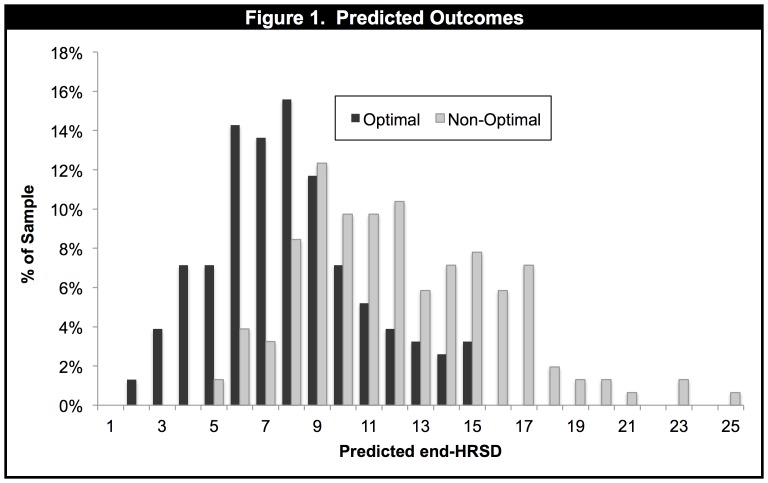
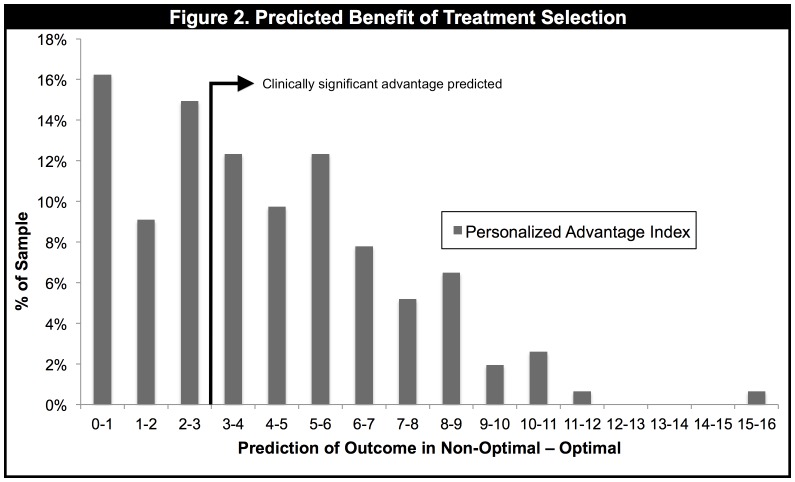
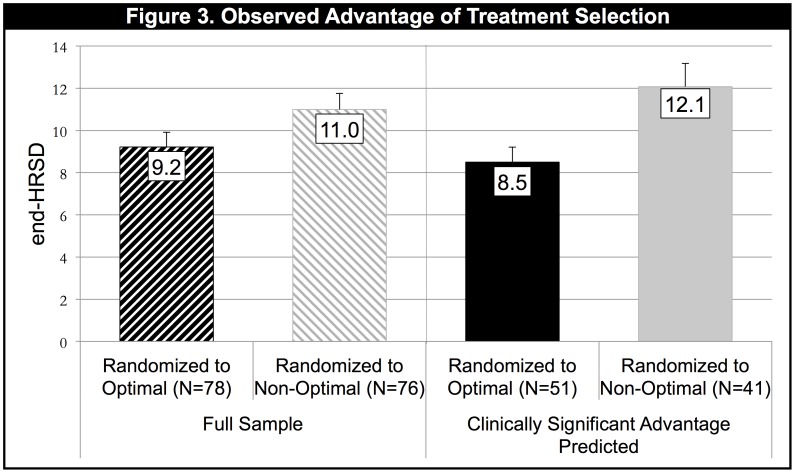
Verification
Claims the paper makes
The claims and statistics of this paper haven’t been checked yet.
Run the check — free, no account needed. It reads the open-access text and checks the sources it cites.
Claims other papers make about this one
Each is checked against this paper’s own text: does it say what the citing paper says it does?
In the citing paper
“The use of waiting list control groups as often the case in psychotherapy research may lead to an overestimation of the effects of treatment. 592,593”
From Time for united action on depression: a Lancet–World Psychiatric Association Commission (2022) · cites this paper as [592]
In the citing paper
“Literature on patient factors predicting treatment response to MBCT is emerging but still in its infancy, particularly compared to predictors of outcome of cognitive therapy (DeRubeis et al., 2014).”
From Adding mindfulness-based cognitive therapy to maintenance antidepressant medication for prevention of relapse/recurrence in major depressive disorder: Randomised controlled trial (2015) · cites this paper as DeRubeis et al., 2014
In the citing paper
“There is now a consensus in the literature that future improvements in outcomes obtained from cognitive behavioral therapy (CBT) for chronic pain will require research to identify patient and treatment variables that help explain outcomes.”
From Predictors and mediators of outcome in cognitive behavioral therapy for chronic pain: The contributions of psychological flexibility (2021) · cites this paper as DeRubeis et al., 2014
Self-check
Percentages, sums and reported differences re-computed from the paper’s own numbers.
The self-check needs the paper’s full text.
Citations
Cites
Hamilton, M. (1960) · Journal of Neurology, Neurosurgery & Psychiatry · doi:10.1136/jnnp.23.1.56 · Cited by 32,817
Draper, N. R., & Smith, H. (2005) · Technometrics · doi:10.1198/tech.2005.s303 · Cited by 17,993
A leisurely look at the bootstrap, the jackknife, and cross-validation
Efron, B., & Gong, G. (1983) · The American Statistician · doi:10.1080/00031305.1983.10483087 · Cited by 3,229
Mediators and Moderators of Treatment Effects in Randomized Clinical Trials
Kraemer, H. C., Wilson, G. T., Fairburn, C. G., & Agras, W. S. (2002) · Archives of General Psychiatry · doi:10.1001/archpsyc.59.10.877 · Cited by 2,562 · cited 1×
“Biostatisticians have described analytic frameworks to identify prescriptive (moderator) variables [38,39], but less attention has”
BackgroundKirsch, I., Deacon, B. J., Huedo-Medina, T. B., Scoboria, A., Moore, T. J., & Johnson, B. T. (2008) · PLoS Medicine · doi:10.1371/journal.pmed.0050045 · Cited by 2,442
Selective publication of antidepressant trials and its influence on apparent efficacy
Turner, E. H., Matthews, A. M., Linardatos, E., Tell, R. A., & Rosenthal, R. (2008) · New England Journal of Medicine · doi:10.1056/nejmsa065779 · Cited by 2,435
“Clinical versus Actuarial Judgment.”
Dawes, R. M., Faust, D., & Meehl, P. E. (1989) · Science · doi:10.1126/science.2648573 · Cited by 2,298
The Path to Personalized Medicine
Hamburg, M. A., & Collins, F. S. (2010) · New England Journal of Medicine · doi:10.1056/nejmp1006304 · Cited by 1,970
Encyclopedia of research design
(2011) · Choice Reviews Online · doi:10.5860/choice.48-2447 · Cited by 1,925
Cognitive Therapy vs Medications in the Treatment of Moderate to Severe Depression
DeRubeis, R. J., Hollon, S. D., Amsterdam, J. D., Shelton, R. C., Young, P. R., Salomon, R. M., O’Reardon, J. P., Lovett, M. L., Gladis, M. M., Brown, L. L., et al. (2005) · Archives of General Psychiatry · doi:10.1001/archpsyc.62.4.409 · Cited by 989
Self-citation
Cited by
Sorted by citations
Goldstein, A., Kapelner, A., Bleich, J., & Pitkin, E. (2015) · Journal of Computational and Graphical Statistics · doi:10.1080/10618600.2014.907095 · Cited by 1,861
“The goal of the analysis in DeRubeis et al. (2014) is to understand how different subjects respond to different treatments, conditional on their personal covariates.”
BackgroundMethodInfluentialComputational psychiatry as a bridge from neuroscience to clinical applications
Huys, Q. J. M., Maia, T. V., & Frank, M. J. (2016) · Nature Neuroscience · doi:10.1038/nn.4238 · Cited by 1,002
Time for united action on depression: a Lancet–World Psychiatric Association Commission
Herrman, H., Patel, V., Kieling, C., Berk, M., Buchweitz, C., Cuijpers, P., Furukawa, T. A., Kessler, R. C., Kohrt, B. A., Maj, M., et al. (2022) · The Lancet · doi:10.1016/s0140-6736(21)02141-3 · Cited by 1,104
Cross-trial prediction of treatment outcome in depression: a machine learning approach
Chekroud, A. M., Zotti, R. J., Shehzad, Z., Gueorguieva, R., Johnson, M. K., Trivedi, M. H., Cannon, T. D., Krystal, J. H., & Corlett, P. R. (2016) · The Lancet Psychiatry · doi:10.1016/s2215-0366(15)00471-x · Cited by 676
The Lancet Psychiatry Commission on psychological treatments research in tomorrow's science
Holmes, E. A., Ghaderi, A., Harmer, C. J., Ramchandani, P. G., Cuijpers, P., Morrison, A. P., Roiser, J. P., Bockting, C. L. H., O'Connor, R. C., Shafran, R., et al. (2018) · The Lancet Psychiatry · doi:10.1016/s2215-0366(17)30513-8 · Cited by 624
The promise of machine learning in predicting treatment outcomes in psychiatry
Chekroud, A. M., Bondar, J., Delgadillo, J., Doherty, G., Wasil, A., Fokkema, M., Cohen, Z., Belgrave, D., DeRubeis, R., Iniesta, R., et al. (2021) · World Psychiatry · doi:10.1002/wps.20882 · Cited by 531
Self-citationTreatment selection in depression.
Cohen, Z. D., & DeRubeis, R. J. (2018) · Annual Review of Clinical Psychology · doi:10.1146/annurev-clinpsy-050817-084746 · Cited by 435
Self-citationProspects for a clinical science of mindfulness-based intervention
Dimidjian, S., & Segal, Z. V. (2015) · American Psychologist · doi:10.1037/a0039589 · Cited by 291
Annual Research Review: Building a science of personalized intervention for youth mental health
Ng, M. Y., & Weisz, J. R. (2016) · Journal of Child Psychology and Psychiatry · doi:10.1111/jcpp.12470 · Cited by 291
Kazdin, A. E. (2021) · Cambridge University Press eBooks · doi:10.1017/9781108993647.010 · Cited by 279
Historical and philosophical bases of the cognitive-behavioral therapies.
Dobson, K. S., & Dozois, D. J. A. (2019) · Cited by 261
Illusory generalizability of clinical prediction models
Chekroud, A. M., Hawrilenko, M., Loho, H., Bondar, J., Gueorguieva, R., Hasan, A., Kambeitz, J., Corlett, P. R., Koutsouleris, N., Krumholz, H. M., et al. (2024) · Science · doi:10.1126/science.adg8538 · Cited by 251
Khazanov, G. K., & Ruscio, A. M. (2016) · Psychological Bulletin · doi:10.1037/bul0000059 · Cited by 240
“Patient outcomes could improve if treatment choices were made based on characteristics that predict treatment response (DeRubeis et al., 2014), and personality traits have been found to predict response to particular types of treatments (Simon & Perlis, 2010).”
BackgroundEnhancing the Personalization of Psychotherapy With Dynamic Assessment and Modeling
Fisher, A. J., & Boswell, J. F. (2016) · Assessment · doi:10.1177/1073191116638735 · Cited by 219
“Thus, many have called for a renewed emphasis on idiographic research (Barlow & Nock, 2009; Nesselroade, Gerstorf, Hardy, & Ram, 2007) and efforts to personalize psychosocial interventions (DeRubeis et al., 2014; Fisher, 2015).”
BackgroundLutz, W., Rubel, J. A., Schwartz, B., Schilling, V., & Deisenhofer, A.-K. (2019) · Behaviour Research and Therapy · doi:10.1016/j.brat.2019.103438 · Cited by 196
Machine learning and big data in psychiatry: toward clinical applications
Rutledge, R. B., Chekroud, A. M., & Huys, Q. J. M. (2019) · Current Opinion in Neurobiology · doi:10.1016/j.conb.2019.02.006 · Cited by 206
“[21] based on work by Barber and Muenz [22] developed predictors for each RCT arm separately and then applied them to both arms.”
MethodUsing patient self-reports to study heterogeneity of treatment effects in major depressive disorder
Kessler, R. C., van Loo, H. M., Wardenaar, K. J., Bossarte, R. M., Brenner, L. A., Ebert, D. D., de Jonge, P., Nierenberg, A. A., Rosellini, A. J., Sampson, N. A., et al. (2016) · Epidemiology and Psychiatric Sciences · doi:10.1017/s2045796016000020 · Cited by 193
“DeRubeis et al. (2014) proposed an approach to MDD HTE estimation very similar to the Kraemer approach in that it began by estimating a conventional modifier model for each potential modifier one at a time.”
Pizzagalli, D. A., Webb, C. A., Dillon, D. G., Tenke, C. E., Kayser, J., Goer, F., Fava, M., McGrath, P., Weissman, M., Parsey, R., et al. (2018) · JAMA Psychiatry · doi:10.1001/jamapsychiatry.2018.0252 · Cited by 189
Elliott, H., Jones, P. J., & Schmidt, U. H. (2019) · Clinical Psychological Science · doi:10.1177/2167702619865958 · Cited by 210
Hollon, S. D., DeRubeis, R. J., Fawcett, J., Amsterdam, J. D., Shelton, R. C., Zajecka, J., Young, P. R., & Gallop, R. (2014) · JAMA Psychiatry · doi:10.1001/jamapsychiatry.2014.1054 · Cited by 179
Self-citationRetractedCombining clinical variables to optimize prediction of antidepressant treatment outcomes
Iniesta, R., Malki, K., Maier, W., Rietschel, M., Mors, O. N., Hauser, J., Henigsberg, N., Dernovšek, M. Z., Souery, D., Stahl, D. R., et al. (2016) · Journal of Psychiatric Research · doi:10.1016/j.jpsychires.2016.03.016 · Cited by 189
“In conjunctionwith earlier studies (DeRubeis et al., 2014; Perlis, 2013), these results suggest that a combination of information from questionnaires and rating scales can meaningfully contribute to predict treatment outcome for individual patients.”
BackgroundResultPersonalized prediction of antidepressant v. placebo response: evidence from the EMBARC study
Webb, C. A., Trivedi, M. H., Cohen, Z. D., Dillon, D. G., Fournier, J. C. J., Goer, F., D, M. F. M., McGrath, P. J., Weissman, M. M., Parsey, R. V., et al. (2018) · Psychological Medicine · doi:10.1017/s0033291718001708 · Cited by 177
“We then evaluated the above comparisons with only those patients for whom the absolute value of the PAI was 3 or greater (i.e. predicted to have a ‘ clinically significant ’ advantage in one treatment condition) (DeRubeis et al ., 2014).”
BackgroundMethodResultInfluentialSelf-citationA systematic review and meta-analysis of interpersonal psychotherapy for perinatal women
Sockol, L. E. (2018) · Journal of Affective Disorders · doi:10.1016/j.jad.2018.01.018 · Cited by 158
CBT at the crossroads: the rise of transdiagnostic treatments.
Schaeuffele, C., Schulz, A., Knaevelsrud, C., Renneberg, B., & Boettcher, J. (2021) · International Journal of Cognitive Therapy · doi:10.1007/s41811-020-00095-2 · Cited by 150
“Optimally matching patients to treatments according to certain baseline characteristics has the potential to enhance treatment outcomes (Cohen and DeRubeis 2018; DeRubeis et al. 2014).”
BackgroundLuedtke, A., Sadikova, E., & Kessler, R. C. (2019) · Clinical Psychological Science · doi:10.1177/2167702618815466 · Cited by 143
Huibers, M. J. H., Cohen, Z. D., Lemmens, L. H. J. M., Arntz, A., Peeters, F. P. M. L., Cuijpers, P., & DeRubeis, R. J. (2015) · PLOS ONE · doi:10.1371/journal.pone.0140771 · Cited by 215
“A more detailed description of the approach can be found elsewhere [16].”
InfluentialSelf-citationDelgadillo, J., Moreea, O., & Lutz, W. (2016) · Behaviour Research and Therapy · doi:10.1016/j.brat.2016.02.003 · Cited by 153
Personalized machine learning of depressed mood using wearables
Shah, R. V., Grennan, G., Zafar-Khan, M., Alim, F., Dey, S., Ramanathan, D., & Mishra, J. (2021) · Translational Psychiatry · doi:10.1038/s41398-021-01445-0 · Cited by 123
Measurement-Based and Data-Informed Psychological Therapy
Lutz, W., Schwartz, B., & Delgadillo, J. (2021) · Annual Review of Clinical Psychology · doi:10.1146/annurev-clinpsy-071720-014821 · Cited by 146
Personalized Psychotherapy for Adult Depression: A Meta-Analytic Review
Cuijpers, P., Ebert, D. D., Acarturk, C., Andersson, G., & Cristea, I. A. (2016) · Behavior Therapy · doi:10.1016/j.beth.2016.04.007 · Cited by 128
Huibers, M. J. H., Lorenzo‐Luaces, L., Cuijpers, P. J., & Kazantzis, N. (2021) · Frontiers in Psychiatry · doi:10.3389/fpsyt.2020.607508 · Cited by 139
Self-citationCohen, Z. D., Kim, T. T., Van, H. L., Dekker, J., & Driessen, E. (2019) · Psychotherapy Research · doi:10.1080/10503307.2018.1563312 · Cited by 128
“For instance, the initial applications (DeRubeis et al., 2014; Huibers et al., 2015) relied on a domain-based backwards stepwise-regression (Fournier et al., 2009) for variable selection, in which potential predictors were first grouped by domains (e.g., history of illness, demographic and life…”
BackgroundMethodResultInfluentialSelf-citationFurukawa, T. A., Efthimiou, O., Weitz, E. S., Cipriani, A., Keller, M. B., Kocsis, J. H., Klein, D. N., Michalak, J., Salanti, G., Cuijpers, P., et al. (2018) · Psychotherapy and Psychosomatics · doi:10.1159/000489227 · Cited by 109
Deisenhofer, A., Barkham, M., Beierl, E. T., Schwartz, B., Doorn, K. A., Beevers, C. G., Berwian, I. M., Blackwell, S. E., Bockting, C., Brakemeier, E., et al. (2023) · Behaviour Research and Therapy · doi:10.1016/j.brat.2023.104443 · Cited by 123
“…out by a computer) that converts well-specified inputs (e.g., predictive features like patient demographics or clinical factors) into a recommendation that an individual should receive one treatment instead of another (e.g., cognitive therapy vs. antidepressant medication; DeRubeis et al., 2014).”
BackgroundSelf-citationDelgadillo, J., & Duhne, P. G. S. (2019) · Journal of Consulting and Clinical Psychology · doi:10.1037/ccp0000476 · Cited by 111
“…multivariable prediction algorithms have been developed to identify patients who respond differentially to CBT vs. antidepressant medication (DeRubeis et al., 2014), CBT vs. interpersonal psychotherapy (Huibers et al., 2015), CBT vs. eye-movement desensitization and reprocessing…”
MethodResultInfluentialDivergent outcomes in cognitive-behavioral therapy and pharmacotherapy for adult depression
Vittengl, J. R., Jarrett, R. B., Weitz, E., Hollon, S. D., Twisk, J., Cristea, I., David, D., DeRubeis, R. J., Dimidjian, S., Dunlop, B. W., et al. (2016) · American Journal of Psychiatry · doi:10.1176/appi.ajp.2015.15040492 · Cited by 97
“Even so, empirical guidance for selecting CBT or pharmacotherapy for a given patient based on average post-treatment symptom scores is available [16,38].”
BackgroundSelf-citationTreatment as usual and routine care in research and clinical practice
Kazdin, A. E. (2015) · Clinical Psychology Review · doi:10.1016/j.cpr.2015.08.006 · Cited by 96
Lorenzo‐Luaces, L., DeRubeis, R. J., van Straten, A., & Tiemens, B. G. (2017) · Journal of Affective Disorders · doi:10.1016/j.jad.2017.02.010 · Cited by 96
“…with a better prognosis benefit as much from non-specific interventions such as BT as they do from empiricallysupported treatments like CBT but patients with a poorer prognosis require treatments with more active ingredients (e.g., CBT) to experience treatment benefit (see DeRubeis et al. (2014b)).”
BackgroundInfluentialSelf-citationCognitive behavioral therapy: Current status and future research directions
McMain, S., Newman, M. G., Segal, Z. V., & DeRubeis, R. J. (2015) · Psychotherapy Research · doi:10.1080/10503307.2014.1002440 · Cited by 106
“McGrath et al. (2013) used indexes of brain metabolism from positron emission tomography to predict response, and found that hypometabolism in the insula was associated with a better response to CBT while hypermetabolism predicted a better response to ADM. DeRubeis et al. (2014) applied linear regression models to imp…”
BackgroundSelf-citationSchwartz, B., Cohen, Z. D., Rubel, J. A., Zimmermann, D., Wittmann, W. W., & Lutz, W. (2020) · Psychotherapy Research · doi:10.1080/10503307.2020.1769219 · Cited by 101
Self-citationPredictors of Dropout in Internet-Based Cognitive Behavioral Therapy for Depression
Ezawa, I. D., Forand, N. R., & Strunk, D. R. (2018) · Cognitive Therapy and Research · doi:10.1007/s10608-018-9979-5 · Cited by 104
Self-citationMajor developments in methods addressing for whom psychotherapy may work and why
Zilcha‐Mano, S. (2018) · Psychotherapy Research · doi:10.1080/10503307.2018.1429691 · Cited by 99
Zilcha‐Mano, S., & Errázuriz, P. (2015) · Journal of Counseling Psychology · doi:10.1037/cou0000103 · Cited by 99
Individual treatment selection for patients with posttraumatic stress disorder
Deisenhofer, A., Delgadillo, J., Rubel, J. A., Boehnke, J. R., Zimmermann, D., Schwartz, B., & Lutz, W. (2018) · Depression and Anxiety · doi:10.1002/da.22755 · Cited by 93
“Our results are consistent with existing literature in which the PAI predicted a meaningful advantage for approximately 60% of cases receiving their optimal treatment (DeRubeis et al., 2014; Huibers et al., 2015).”
BackgroundMethodResultInfluentialResearch Design in Clinical Psychology
Kazdin, A. E. (2021) · doi:10.1017/9781108993647 · Cited by 240
Machine learning methods for developing precision treatment rules with observational data
Kessler, R. C., Bossarte, R. M., Luedtke, A. R., Zaslavsky, A. M., & Zubizarreta, J. R. (2019) · Behaviour Research and Therapy · doi:10.1016/j.brat.2019.103412 · Cited by 85
“Increasing the accepted Type 1 error rate is a strategy sometimes used to identify more interactions as significant in these underpowered studies (e.g., DeRubeis et al., 2014), but this is counter to the usual advice to tighten criteria in reaction to multiplicity of possible tests.”
BackgroundMethodLorenzo‐Luaces, L., DeRubeis, R. J., & Webb, C. A. (2014) · Journal of Consulting and Clinical Psychology · doi:10.1037/a0035994 · Cited by 81
“Consistent with recent calls to personalize treatments according to patient characteristics (DeRubeis et al., 2014), this type of research would facilitate the tailoring of psychological interventions to specific individuals.”
BackgroundSelf-citationSaunders, R., Buckman, J. E. J., Stott, J., Leibowitz, J., Aguirre, E., John, A., Lewis, G., Cape, J., & Pilling, S. (2021) · Journal of Affective Disorders · doi:10.1016/j.jad.2021.06.084 · Cited by 81
“…those seen for psychological treatment might systematically differ from those not seen for treatment on unmeasured factors associated with outcomes (e.g., chronicity of illness, relationship status, comorbid personality disorders and the number of previous treatments (DeRubeis et al., 2014)).”
BackgroundEarly Maladaptive Schemas and Schema Modes in clinical disorders: A systematic review
Bär, A., Bär, H. E., Rijkeboer, M. M., & Lobbestael, J. (2023) · Psychology and Psychotherapy: Theory, Research and Practice · doi:10.1111/papt.12465 · Cited by 79
A decennial review of psychotraumatology: what did we learn and where are we going?
Olff, M., Amstadter, A. B., Armour, C., Birkeland, M. S., Bui, É., Cloître, M., Ehlers, A., Ford, J. D., Greene, T., Hansen, M., et al. (2019) · European Journal of Psychotraumatology · doi:10.1080/20008198.2019.1672948 · Cited by 89
“Here we might simplify the number and nature of treatments by identifying mechanisms of action or algorithms that identify best treatments for certain symptom profiles (e.g. such as seen in Personalized Advantage Index (PAI), DeRubeis, Cohen, Forand, Fournier, & Gelfand et al., 2014).”
Methodvan Bronswijk, S. C., DeRubeis, R. J., Lemmens, L. H. J. M., Peeters, F. P. M. L., Keefe, J. R., Cohen, Z. D., & Huibers, M. J. H. (2021) · Psychological Medicine · doi:10.1017/s0033291719003192 · Cited by 75
Self-citationHeterogeneity of treatment effects in trials on psychotherapy of depression.
Kaiser, T., Volkmann, C., Volkmann, A., Karyotaki, E., Cuijpers, P. J., & Brakemeier, E. (2022) · Clinical Psychology Science and Practice · doi:10.1037/cps0000079 · Cited by 87
Zilcha‐Mano, S., & Errázuriz, P. (2017) · Journal of Consulting and Clinical Psychology · doi:10.1037/ccp0000192 · Cited by 81
Kjell, O., Kjell, K., & Schwartz, H. A. (2023) · Psychiatry Research · doi:10.1016/j.psychres.2023.115667 · Cited by 115
“Natural language responses can also be used directly for precision in healthcare: To predict the likelihood of intervention success for a person in time without first predicting a psychiatric condition (e.g., DeRubeis et al., 2014).”
Hoeboer, C. M., de Kleine, R. A., Molendijk, M. L., Schoorl, M., Oprel, D. A. C., Mouthaan, J., van der Does, W. A. J., & van Minnen, A. (2020) · BJPsych Open · doi:10.1192/bjo.2020.30 · Cited by 75
Development and initial implementation of the Dynamic Assessment Treatment Algorithm (DATA)
Fernandez, K. C., Fisher, A. J., & Chi, C. (2017) · PLOS ONE · doi:10.1371/journal.pone.0178806 · Cited by 68
Wu, C., Dillon, D. G., Hsu, H.-C., Huang, S., Barrick, E. M., & Liu, Y. (2018) · Applied Sciences · doi:10.3390/app8081244 · Cited by 74
Buckman, J. E. J., Saunders, R., Cohen, Z. D., Barnett, P., Clarke, K., Ambler, G., DeRubeis, R. J., Gilbody, S. M., Hollon, S. D., Kendrick, T., et al. (2021) · Psychological Medicine · doi:10.1017/s0033291721001367 · Cited by 70
“There had been some suggestion from past studies that the duration of depression might be associated with prognosis (Carter et al., 2012; DeRubeis et al., 2014; Fournier et al., 2009; Lorenzo-Luaces et al., 2020; Noma et al., 2019) although there were inconsistencies and contradictory findings in…”
Self-citationEvidence-based psychotherapies I: qualifiers and limitations in what we know
Kazdin, A. E. (2014) · South African Journal of Psychology · doi:10.1177/0081246314533750 · Cited by 73
“The question continues to dominate the treatment research agenda (e.g., DeRubeis et al., 2014; Kaplan, 2008; Roth & Fonagy, 2005).”
BackgroundDunlop, B. W., LoParo, D., Kinkead, B. L., Mletzko, T., Cole, S. P., Nemeroff, C. B., Mayberg, H. S., & Craighead, W. E. (2019) · American Journal of Psychiatry · doi:10.1176/appi.ajp.2018.18091075 · Cited by 69
Intervenciones psicológicas basadas en mindfulness y sus beneficios: estado actual de la cuestión
Hervás, G., Cebolla, A., & Soler, J. (2016) · Clínica y Salud · doi:10.1016/j.clysa.2016.09.002 · Cited by 67
“…eficacia de dos técnicas es equivalente a nivel grupal, conocer los perfiles que se pueden beneficiar más de una técnica o de otra, de forma que se pueda maximizar la eficacia, asignando a cada paciente el tratamiento que mejor encaje con sus características pretratamiento (DeRubeis et al., 2014).”
BackgroundKeefe, J. R., Stirman, S. W., Cohen, Z. D., DeRubeis, R. J., Smith, B. N., & Resick, P. A. (2018) · Depression and Anxiety · doi:10.1002/da.22731 · Cited by 65
“…gap (Cloitre, 2015) and to illustrate methodologies of treatment selection that may ultimately result in better patient engagement and outcomes (DeRubeis et al., 2014; Wallace, Frank, & Kraemer, 2013; Zilcha-Mano et al., 2016), we conducted a comprehensive moderator analysis from a clinical…”
BackgroundMethodResultInfluentialSelf-citationLorenzo‐Luaces, L., Peipert, A., Jesús-Romero, R. D., Rutter, L. A., & Rodríguez‐Quintana, N. (2020) · International Journal of Cognitive Therapy · doi:10.1007/s41811-020-00094-3 · Cited by 62
Self-citationA-Tjak, J. G. L., Morina, N., Topper, M., & Emmelkamp, P. M. G. (2018) · Psychotherapy and Psychosomatics · doi:10.1159/000486807 · Cited by 61
van Bronswijk, S. C., Bruijniks, S. J. E., Lorenzo‐Luaces, L., DeRubeis, R. J., Lemmens, L. H. J. M., Peeters, F. P. M. L., & Huibers, M. J. H. (2020) · Psychotherapy Research · doi:10.1080/10503307.2020.1823029 · Cited by 59
Self-citationRubel, J. A., Zilcha-Mano, S., Giesemann, J., Prinz, J., & Lutz, W. (2020) · Psychotherapy Research · doi:10.1080/10503307.2019.1597994 · Cited by 56
“The PAI predicts the optimal treatment for new patients based on information on patients who have previously been treated (e.g., DeRubeis et al., 2014; Deisenhofer et al., 2018).”
BackgroundMethodInfluentialFernández-Álvarez, J., Díaz-García, A., González-Robles, A., Baños, R., García-Palacios, A., & Botella, C. (2017) · Internet Interventions · doi:10.1016/j.invent.2017.09.001 · Cited by 60
“Similar to face-to-face approaches, if technological advancements make it possible, algorithms to generate expected outcome curves could make useful contributions to personalizing program contents and to better specifying all assessment processes (DeRubeis et al., 2014; Delgadillo et al., 2016).”
BackgroundA-Tjak, J. G. L., Morina, N., Topper, M., & Emmelkamp, P. M. G. (2021) · BMC Psychiatry · doi:10.1186/s12888-020-03020-1 · Cited by 57
Defining and Predicting Patterns of Early Response in a Web-Based Intervention for Depression
Lutz, W., Arndt, A., Rubel, J. A., Berger, T., Schröder, J., Späth, C., Meyer, B., Greiner, W., Gräfe, V., Hautzinger, M., et al. (2017) · Journal of Medical Internet Research · doi:10.2196/jmir.7367 · Cited by 58
Lorenzo-Luaces, L., & DeRubeis, R. J. (2018) · Cognitive Therapy and Research · doi:10.1007/s10608-018-9893-x · Cited by 56
Self-citationZilcha-Mano, S., Keefe, J. R., Chui, H., Rubin, A., Barrett, M. S., & Barber, J. P. (2016) · The Journal of Clinical Psychiatry · doi:10.4088/jcp.15m10081 · Cited by 55
Predicting treatment outcome in depression: an introduction into current concepts and challenges
Rost, N., Binder, E. B., & Brückl, T. M. (2022) · European Archives of Psychiatry and Clinical Neuroscience · doi:10.1007/s00406-022-01418-4 · Cited by 66
Herzog, P., & Kaiser, T. (2022) · Journal of Anxiety Disorders · doi:10.1016/j.janxdis.2022.102611 · Cited by 64
Bruijniks, S. J. E., DeRubeis, R. J., Hollon, S. D., & Huibers, M. J. H. (2019) · Clinical Psychological Science · doi:10.1177/2167702619830391 · Cited by 57
Self-citationSauer-Zavala, S. E., Cassiello-Robbins, C. F., Conklin, L. R., Bullis, J. R., Thompson‐Hollands, J., & Kennedy, K. (2016) · Behavior Modification · doi:10.1177/0145445516673827 · Cited by 54
“One possibility for personalization involves using any baseline and demographic data that may be predictive to develop an algorithm to match patients to modules that will likely lead to the greatest symptom improvement (e.g., DeRubeis et al., 2014).”
How data science can advance mental health research
Russ, T. C., Woelbert, E., Davis, K. A. S., Hafferty, J. D., Ibrahim, Z. M., Inkster, B., John, A. M., Lee, W. E., Maxwell, M., McIntosh, A. M., et al. (2018) · Nature Human Behaviour · doi:10.1038/s41562-018-0470-9 · Cited by 65
Hilbert, K., Kunas, S. L., Lueken, U., Kathmann, N., Fydrich, T., & Fehm, L. (2019) · Behaviour Research and Therapy · doi:10.1016/j.brat.2019.103530 · Cited by 54
Saunders, R., Cape, J. D., Fearon, P. R. M., & Pilling, S. (2016) · Journal of Affective Disorders · doi:10.1016/j.jad.2016.03.011 · Cited by 53
Rayner, C., Coleman, J. R. I., Purves, K. L., Hodsoll, J. P., Goldsmith, K., Alpers, G. W., Andersson, E., Arolt, V., Boberg, J., Bögels, S. M., et al. (2019) · Translational Psychiatry · doi:10.1038/s41398-019-0481-y · Cited by 57
Åkerblom, S., Perrin, S., Rivano Fischer, M., & McCracken, L. M. (2021) · Journal of Behavioral Medicine · doi:10.1007/s10865-020-00168-9 · Cited by 52
“It is expected that this information will help to refine and personalize existing treatments (DeRubeis et al., 2014; Gilpin, Keyes, Stahl, Greig, & McCracken, 2017; Kraemer, Wilson, Fairburn, & Agras, 2002; Turner et al., 2007; Williams et al., 2012).”
BackgroundThe human connectome in health and psychopathology
Essen, D. C. V., & Barch, D. M. (2015) · World Psychiatry · doi:10.1002/wps.20228 · Cited by 52
Hallgren, K. A., Bauer, A. M., & Atkins, D. C. (2017) · Depression and Anxiety · doi:10.1002/da.22640 · Cited by 45
“Research suggests that individual patient characteristics can predict responses to different depression treatments (DeRubeis et al., 2014); however, developing more personalized depression treatments will likely require “big data” on clinical outcomes across large combinations depression treatment…”
BackgroundRichards, D. A., Rhodes, S., Ekers, D., McMillan, D., Taylor, R. S., Byford, S., Barrett, B. M., Finning, K., Ganguli, P., Warren, F. C., et al. (2017) · Health Technology Assessment · doi:10.3310/hta21460 · Cited by 56
Moderators of Outcome for Youth Anxiety Treatments: Current Findings and Future Directions
Norris, L. A., & Kendall, P. C. (2021) · Journal of Clinical Child & Adolescent Psychology · doi:10.1080/15374416.2020.1833337 · Cited by 46
“…time series and network analyses rather than focusing on baseline variables (Hayes et al., 2019), use of the dynamic p-technique to flexibly generalize individuallevel inferences to the group (Kurz et al., 2019) and the personalized advantage index (Cohen & DeRubeis, 2018; DeRubeis et al., 2014).”
MethodKeefe, J. R., Kim, T. T., DeRubeis, R. J., Streiner, D. L., Links, P. S., & McMain, S. (2020) · Psychological Medicine · doi:10.1017/s0033291720000550 · Cited by 50
Self-citationPsychotherapy and Neuroimaging
Fournier, J. C. J., & Price, R. B. (2014) · FOCUS The Journal of Lifelong Learning in Psychiatry · doi:10.1176/appi.focus.12.3.290 · Cited by 51
Self-citationTourism and depressive symptoms
Levi, E., Dolev, T., Collins‐Kreiner, N., & Zilcha‐Mano, S. (2018) · Annals of Tourism Research · doi:10.1016/j.annals.2018.04.001 · Cited by 48
Latent variable mixture modelling and individual treatment prediction
Saunders, R., Buckman, J. E. J., & Pilling, S. (2019) · Behaviour Research and Therapy · doi:10.1016/j.brat.2019.103505 · Cited by 53
Kappelmann, N., Rein, M., Fietz, J., Mayberg, H. S., Craighead, W. E., Dunlop, B. W., Nemeroff, C. B., Keller, M. B., Klein, D. N., Arnow, B. A., et al. (2020) · BMC Medicine · doi:10.1186/s12916-020-01623-9 · Cited by 51
Furukawa, T. A., Karyotaki, E., Suganuma, A. M., Pompoli, A., Ostinelli, E. G., Cipriani, A., Cuijpers, P. J., & Efthimiou, O. (2018) · BMJ Open · doi:10.1136/bmjopen-2018-026137 · Cited by 46
The history, current status, and possible future of precision mental health
DeRubeis, R. J. (2019) · Behaviour Research and Therapy · doi:10.1016/j.brat.2019.103506 · Cited by 46
Self-citationO’Driscoll, C., Buckman, J. E. J., Fried, E. I., Saunders, R., Cohen, Z. D., Ambler, G., DeRubeis, R. J., Gilbody, S. M., Hollon, S. D., Kendrick, T., et al. (2021) · BMC Medicine · doi:10.1186/s12916-021-01971-0 · Cited by 55
Self-citationWeisz, J. R., Venturo‐Conerly, K. E., Fitzpatrick, O. M., Frederick, J., & Ng, M. Y. (2023) · Annual Review of Clinical Psychology · doi:10.1146/annurev-clinpsy-080921-082920 · Cited by 52
Huijbers, M. J., Spinhoven, P., Spijker, J., Ruhé, H. G., van Schaik, D. J. F., van Oppen, P., Nolen, W. A., Ormel, J., Kuyken, W., van der Wilt, G. J., et al. (2015) · Journal of Affective Disorders · doi:10.1016/j.jad.2015.08.023 · Cited by 43
Hankin, B. L., Young, J. F., Gallop, R., & Garber, J. (2018) · Journal of Abnormal Child Psychology · doi:10.1007/s10802-018-0401-2 · Cited by 43
“…Index (PAI) have used machine learning techniques to analyze whether individual differences, assessed before depression treatment initiation in their RCTs for adult major depression, serve as significant post-hoc moderators of treatment efficacy (DeRubeis et al. 2014; Huibers et al. 2015).”
Zilcha‐Mano, S., Muran, J. C., Eubanks, C. F., Safran, J. D., & Winston, A. (2017) · Cognitive Therapy and Research · doi:10.1007/s10608-017-9866-5 · Cited by 45
A Machine Learning Approach to Identifying Placebo Responders in Late-Life Depression Trials
Zilcha‐Mano, S., Roose, S. P., Brown, P. J., & Rutherford, B. R. (2018) · American Journal of Geriatric Psychiatry · doi:10.1016/j.jagp.2018.01.001 · Cited by 42
“Novel, systematic approaches to subgroup analysis have recently shown differential effects for different treatment conditions across patient subgroups (17-18).”
BackgroundMethodResultLemmens, L. H. J. M., van Bronswijk, S. C., Peeters, F. P. M. L., Arntz, A. R., Hollon, S. D., & Huibers, M. J. H. (2018) · Psychological Medicine · doi:10.1017/s0033291718001083 · Cited by 42
Widnall, E., Price, A., Trompetter, H. R., & Dunn, B. D. (2019) · Cognitive Therapy and Research · doi:10.1007/s10608-019-10041-y · Cited by 39
Sarter, L., Heider, J., Kirchner, L., Schenkel, S., Witthöft, M., Rief, W., & Kleinstäuber, M. (2021) · Journal of Psychosomatic Research · doi:10.1016/j.jpsychores.2021.110486 · Cited by 38
Metadata
- Authors
- DeRubeis, R. J., Cohen, Z. D., Forand, N. R., Fournier, J. C., Gelfand, L. A., & Lorenzo-Luaces, L.
- Affiliations
- University of Pennsylvania (US)
- The Ohio State University (US)
- University of Pittsburgh (US)
- Corresponding author
- DeRubeis, Robert J.
- Venue
- PLoS ONE
- Publisher
- Public Library of Science (PLoS)
- Published
- 2014-01-08
- Volume
- 9
- Issue
- 1
- Pages
- e83875
- ISSN
- 1932-6203 (ISSN-L)
- PMC
- PMC3885521
- OpenAlex
- W2079702662
- Cited by
- 509
- References
- 42
- Citations by year
- 2026: 36 · 2025: 25 · 2024: 33 · 2023: 41 · 2022: 52 · 2021: 99 · 2020: 46 · 2019: 51 · 2018: 34 · 2017: 35 · 2016: 26 · 2015: 23 · 2014: 8
- FWCI
- 22.60
- Type
- journal article
- Language
- en
- Open access
- gold
- doi.org
- Licence
- Locations
- PLoS ONE (publishedVersion, cc-by)
- Europe PMC (PubMed Central) (publishedVersion, cc-by)
- PubMed Central (publishedVersion, cc-by)
- PubMed (publishedVersion)
- D-Scholarship@Pitt (University of Pittsburgh) (acceptedVersion)
- RePEc: Research Papers in Economics (submittedVersion)
- DOAJ (DOAJ: Directory of Open Access Journals) (submittedVersion, cc-by-sa)
- Funders
- National Institute of Mental Health (2-R01-MH-060998-06, R01MH060998)
- Topics
- Health Sciences › Medicine › Pharmacology (medical) › Treatment of Major Depression
- Social Sciences › Psychology › Clinical Psychology › Psychotherapy Techniques and Applications
- Physical Sciences › Mathematics › Statistics and Probability › Statistical Methods in Clinical Trials
- Keywords
- personalized medicine, treatment selection, differential treatment response, prediction of treatment outcome, major depressive disorder, antidepressants, cognitive behavioral therapy, Hamilton Depression Rating Scale, treatment response prediction
- MeSH terms
- Antidepressive Agents, Depressive Disorder, Major, Major Depressive Disorder, Health Planning Guidelines, Humans, Prognosis, Psychiatric Status Rating Scales, Cognitive Behavioral Therapy, Translational Research, Biomedical, Precision Medicine
About these checks
Registry, retraction, Cites and statistics results are computed, not judged, with one exception: a printed reference that no index lists is read once by a model before it counts as a citation error. Claims are extracted by a model and kept only when their quote appears verbatim in the text; each cited source is then checked, with a model’s help, for whether it says what the claim relies on. Those verdicts can be wrong — read the claim’s quote and the cited source before relying on one.
Statistics and arithmetic are recomputed, not judged.
Confidence bands are shown only for fields calibrated on our annotated test set. None is calibrated yet, so no band is shown.
What counts as a claim ›How we measure confidence ›How we check this ›
Are you an author, or do you see a problem with this page? Request a review
