

The DOI matches its Crossref record; 41 of the 41 references it cites were found in a registry or an index.
Dysbiosis in the Gut Microbiota of Patients with Multiple Sclerosis, with a Striking Depletion of Species Belonging to Clostridia XIVa and IV Clusters
Open accessAbstract
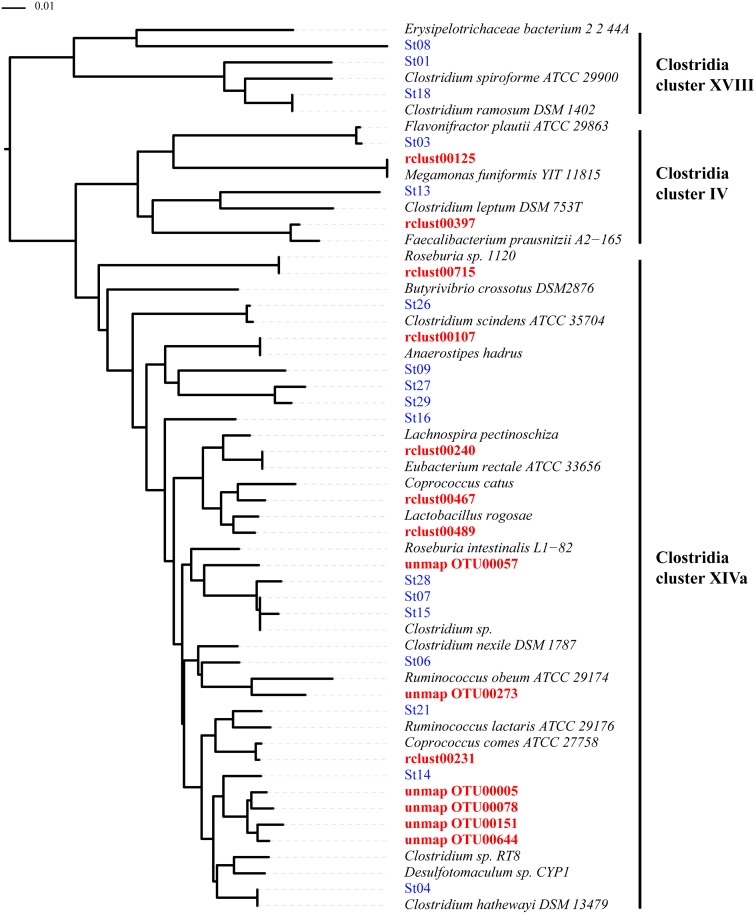
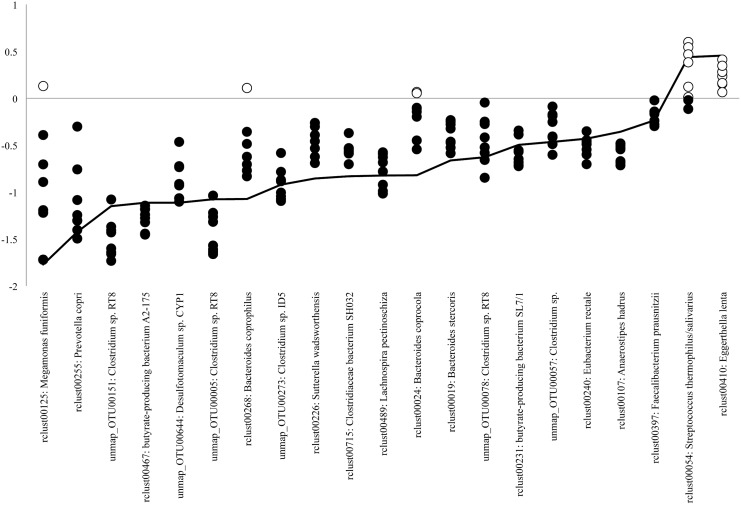
The pathogenesis of multiple sclerosis (MS), an autoimmune disease affecting the brain and spinal cord, remains poorly understood. Patients with MS typically present with recurrent episodes of neurological dysfunctions such as blindness, paresis, and sensory disturbances. Studies on experimental autoimmune encephalomyelitis (EAE) animal models have led to a number of testable hypotheses including a hypothetical role of altered gut microbiota in the development of MS. To investigate whether gut microbiota in patients with MS is altered, we compared the gut microbiota of 20 Japanese patients with relapsing-remitting (RR) MS (MS20) with that of 40 healthy Japanese subjects (HC40) and an additional 18 healthy subjects (HC18). All the HC18 subjects repeatedly provided fecal samples over the course of months (158 samples in total). Analysis of the bacterial 16S ribosomal RNA (rRNA) gene by using a high-throughput culture-independent pyrosequencing method provided evidence of a moderate dysbiosis in the structure of gut microbiota in patients with MS. Furthermore, we found 21 species that showed significant differences in relative abundance between the MS20 and HC40 samples. On comparing MS samples to the 158 longitudinal HC18 samples, the differences were found to be reproducibly significant for most of the species. These taxa comprised primarily of clostridial species belonging to Clostridia clusters XIVa and IV and Bacteroidetes. The phylogenetic tree analysis revealed that none of the clostridial species that were significantly reduced in the gut microbiota of patients with MS overlapped with other spore-forming clostridial species capable of inducing colonic regulatory T cells (Treg), which prevent autoimmunity and allergies; this suggests that many of the clostridial species associated with MS might be distinct from those broadly associated with autoimmune conditions. Correcting the dysbiosis and altered gut microbiota might deserve consideration as a potential strategy for the prevention and treatment of MS.
Overview
The claims and statistics of this paper haven’t been checked yet.
Run the check — free, no account needed. It reads the open-access text and checks the sources it cites.
Integrity signals
Registry
Cites
Statistics
Figures
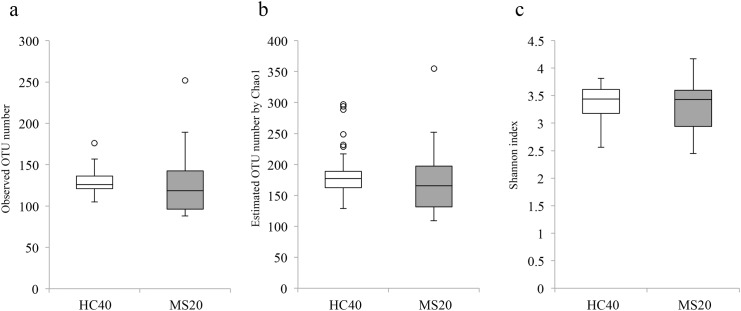
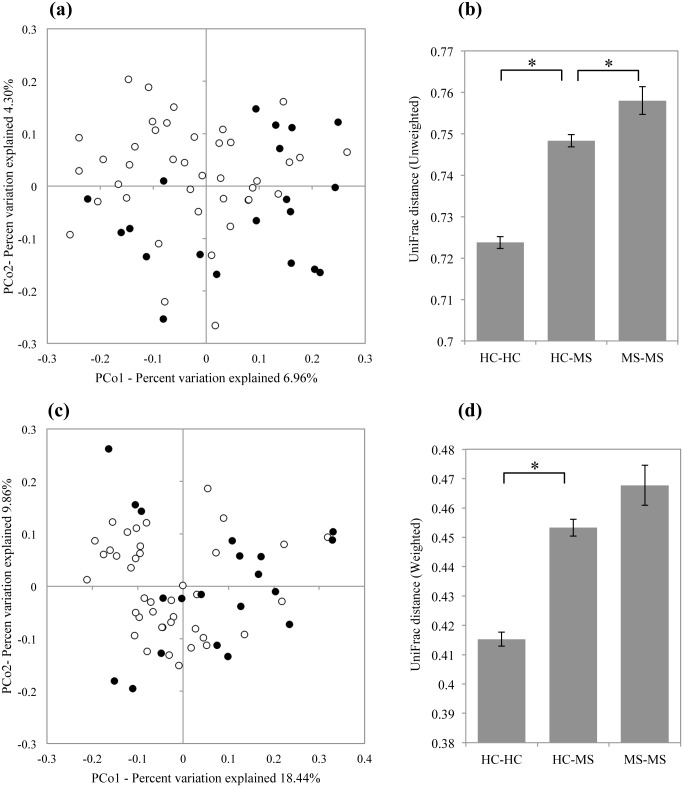
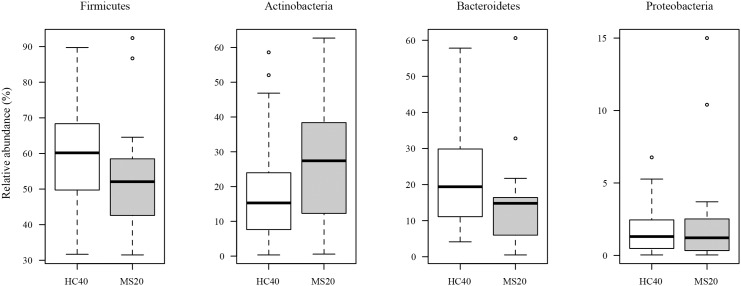
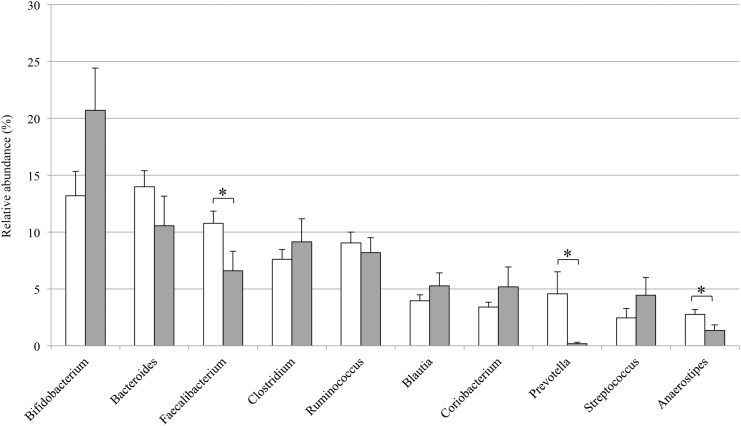
Verification
Claims the paper makes
The claims and statistics of this paper haven’t been checked yet.
Run the check — free, no account needed. It reads the open-access text and checks the sources it cites.
Claims other papers make about this one
Each is checked against this paper’s own text: does it say what the citing paper says it does?
In the citing paper
“Bacteria belonging to the Clostridia family contribute to the suppression of pathological autoimmunity (134, 139–143).”
From The gut-brain axis: how microbiota and host inflammasome influence brain physiology and pathology (2020) · cites this paper as [134]
In the citing paper
“Interestingly, even MS patients with active disease have an altered microbiota compared to patients in the remission phase, which in turn have a microbiota more similar to healthy controls (25, 134–138).”
From The gut-brain axis: how microbiota and host inflammasome influence brain physiology and pathology (2020) · cites this paper as [134]
Self-check
Percentages, sums and reported differences re-computed from the paper’s own numbers.
The self-check needs the paper’s full text.
Citations
Cites
A human gut microbial gene catalogue established by metagenomic sequencing
MetaHIT Consortium, Qin, J., Li, R., Raes, J., Arumugam, M., Burgdorf, K. S., Manichanh, C., Nielsen, T., Pons, N., Levenez, F., et al. (2010) · Nature · doi:10.1038/nature08821 · Cited by 11,624
McDonald, W. I., Compston, A., Edan, G., Goodkin, D., Hartung, H., Lublin, F. D., McFarland, H. F., Paty, D. W., Polman, C. H., Reingold, S. C., et al. (2001) · Annals of Neurology · doi:10.1002/ana.1032 · Cited by 6,969
Commensal microbe-derived butyrate induces the differentiation of colonic regulatory T cells
Furusawa, Y., Obata, Y., Fukuda, S., Endo, T. A., Nakato, G., Takahashi, D., Nakanishi, Y., Uetake, C., Kato, K., Kato, T., et al. (2013) · Nature · doi:10.1038/nature12721 · Cited by 5,549
The Microbial Metabolites, Short-Chain Fatty Acids, Regulate Colonic T reg Cell Homeostasis
Smith, P. M., Howitt, M. R., Panikov, N., Michaud, M., Gallini, C. A., Bohlooly-Y, M., Glickman, J. N., & Garrett, W. S. (2013) · Science · doi:10.1126/science.1241165 · Cited by 5,413
Role of the microbiota in immunity and inflammation.
Belkaid, Y., & Hand, T. W. (2014) · Cell · doi:10.1016/j.cell.2014.03.011 · Cited by 5,385
Metabolites produced by commensal bacteria promote peripheral regulatory T-cell generation
Arpaia, N., Campbell, C., Fan, X., Dikiy, S., van der Veeken, J., deRoos, P., Liu, H., Cross, J. R., Pfeffer, K., Coffer, P. J., et al. (2013) · Nature · doi:10.1038/nature12726 · Cited by 4,838
Richness of human gut microbiome correlates with metabolic markers
Le Chatelier, E., Nielsen, T., Qin, J., Prifti, E., Hildebrand, F., Falony, G., Almeida, M., Arumugam, M., Batto, J.-M., Kennedy, S., et al. (2013) · Nature · doi:10.1038/nature12506 · Cited by 4,662
Frank, D. N., St. Amand, A. L., Feldman, R. A., Boedeker, E. C., Harpaz, N., & Pace, N. R. (2007) · Proceedings of the National Academy of Sciences · doi:10.1073/pnas.0706625104 · Cited by 4,611
Sokol, H., Pigneur, B., Watterlot, L., Lakhdari, O., Bermúdez-Humarán, L. G., Gratadoux, J.-J., Blugeon, S., Bridonneau, C., Furet, J.-P., Corthier, G., et al. (2008) · Proceedings of the National Academy of Sciences · doi:10.1073/pnas.0804812105 · Cited by 4,413
Induction of Colonic Regulatory T Cells by Indigenous Clostridium Species
Atarashi, K., Tanoue, T., Shima, T., Imaoka, A., Kuwahara, T., Momose, Y., Cheng, G., Yamasaki, S., Saito, T., Ohba, Y., et al. (2011) · Science · doi:10.1126/science.1198469 · Cited by 3,752
Cited by
Sorted by citations
Items 701–800 of 810
Bacteria, Viruses, and the Microbiome
Anisman, H., Hayley, S. P., & Kusnecov, A. W. (2024) · Elsevier eBooks · doi:10.1016/b978-0-443-23565-8.00020-x
Circulating exosomes cause loss of immunological balance in multiple sclerosis
Kimura, K., & Yamamura, T. (2018) · Clinical and Experimental Neuroimmunology · doi:10.1111/cen3.12474
Role of intestinal microflora in the regulation of immune response in rheumatoid arthritis
Podolinskaya, N., & Vykhrystsenka, I. (2017) · Immunopathology Allergology Infectology · doi:10.14427/jipai.2017.1.37
Genetic Disruption of VIP Signaling Alters Intestinal Microbial Structure and Immunity
Bains, M. (2018) · NDSU Repository (North Dakota State University)
Diet, Gut Microbiome and Multiple Sclerosis
Sell, L. B., & Ochoa‐Repáraz, J. (2019) · Royal Society of Chemistry eBooks · doi:10.1039/9781788016070-00302
Épidémiologie, environnement et génétique dans la sclérose en plaques
Defer, G. L., Debouverie, M., Bardou, I., Benamar, M., Bernard‐Valnet, R., Branger, P., Brassat, D., Benallegue, N., Calocer, F., Damotte, V., et al. (2019) · Elsevier eBooks · doi:10.1016/b978-2-294-71420-7.00002-1
Potapova, K. (2019) · Ukrainian Neurological Journal · doi:10.30978/unj2019-2-22
Diet and the microbiome in precision medicine
Toribio-Mateas, M. A., & Bester, A. (2019) · Elsevier eBooks · doi:10.1016/b978-0-12-819178-1.00043-5
Rolle des Darmes bei der Multiplen Sklerose
Linker, R. A., & Haghikia, A. (2020) · Nervenheilkunde · doi:10.1055/a-1037-2166
Sutanti, V., Suyanto, E., Mufidah, M., & Kurnianingsih, N. (2020) · Pesquisa Brasileira em Odontopediatria e Clínica Integrada · doi:10.1590/pboci.2020.107
WITHDRAWN: Causality and complex disease: The example of multiple sclerosis
Bach, J. (2017) · Revue Neurologique · doi:10.1016/j.neurol.2017.07.002
RetractedGut Bacterial Dysbiosis and Its Clinical Implications
Archer, A. C. (2021) · Springer eBooks · doi:10.1007/978-981-33-6236-9_1 · Cited by 1
STUDY OF THE GUT ENTEROTYPES IN SOME EGYPTIAN PATIENTS WITH REMITTING RELAPSING MULTIPLE SCLEROSISPreprint
Said, S., Ahmed, S. M., Hamdy, M., Wani, R., Ibrahim, A. E., & Mekky, J. F. (2021) · doi:10.22541/au.161700285.57402411/v1
Gut Microbiota in Brain diseases
Salami, M. (2021) · Elsevier eBooks · doi:10.1016/b978-0-12-819265-8.00040-1
Fecal markers in Multiple Sclerosis Sex makes the differencePreprint
Becker, A., Abuazab, M., Schwiertz, A., Walter, S., Fassbender, K. C., Fousse, M., & Unger, M. M. (2020) · doi:10.21203/rs.3.rs-41141/v1
Immune-Microbiota Crosstalk Underlying Inflammatory Bowel Disease
Xu, C., Mac, Q. D., Jia, Q., & Qiu, P. (2021) · Lecture notes in computer science · doi:10.1007/978-3-030-91415-8_2
Clientelismo y candidaturas corporativas bajo el sufragio censitario
Bellver, F. J. V. (1994) · Boletín de la Institución Libre de Enseñanza
Allergy and autoimmunity: Share of genetics and environment
Manibarathi, K., Lio, C. T., & Bose, T. (2022) · Elsevier eBooks · doi:10.1016/b978-0-323-85415-3.00016-7
Becker, A., Abuazab, M., Schwiertz, A., Walter, S., Fassbender, K. C., Fousse, M., & Unger, M. M. (2020) · Research Square · doi:10.21203/rs.3.rs-85998/v1
Prinz, M. (2017) · Faculty Opinions – Post-Publication Peer Review of the Biomedical Literature · doi:10.3410/f.731077576.793538553
Publications from Juntendo University Graduate School of Medicine, 2015 [1/6]
(2017) · Juntendō Igaku/Juntendo igaku · doi:10.14789/jmj.63.204
5) Gut Microbiota and Allergic Diseases
Takeda, K., & Maeda, Y. (2017) · Nihon Naika Gakkai Zasshi · doi:10.2169/naika.106.1838
(2018) · Elsevier eBooks · doi:10.1016/b978-0-12-811351-6.00026-7
Knudsen, J. K. (2021) · VBN Forskningsportal (Aalborg Universitet) · doi:10.54337/aau455013245
Meta-analysis identifies common gut microbiota signatures in patients with multiple sclerosisPreprint
Lin, Q., Dorsett, Y., Mirza, A., Tremlett, H. L., Piccio, L. M., Longbrake, E. E., Choileáin, S. N., Hafler, D. A., Cox, L. M., Weiner, H. L., et al. (2022) · Research Square · doi:10.21203/rs.3.rs-2026810/v1
2) Multiple Sclerosis and Gut Microbiota
Miyake, S. (2021) · Nihon Naika Gakkai Zasshi · doi:10.2169/naika.110.1831
Microorganisms in Pathogenesis and Management of Multiple Sclerosis (MS)
Ortíz, G. G., Bitzer-Quintero, O. K., Niño, C. L. C., Panduro-Cerda, A., Mireles-Ramírez, M. A., Ramírez-Jirano, L. J., Torres-Sánchez, E. D., González-Usigli, H., Torres-Mendoza, B. M., & Delgado-Lara, D. L. C. (2022) · Springer eBooks · doi:10.1007/978-981-19-4800-8_8
Microbiome: Impact of sex on function and characteristics of gut microbiome
Taneja, V. (2023) · Principles of Gender-Specific Medicine · doi:10.1016/b978-0-323-88534-8.00041-9
Research Progress of Gut Microbiota’s Function in Neurological and Psychological Diseases
范, 锦. (2023) · Open Journal of Natural Science · doi:10.12677/ojns.2023.113040
Microbiome manipulation as a target for eye diseases: Lessons from animal models
Lin, P., & Dadgar, N. (2023) · Elsevier eBooks · doi:10.1016/b978-0-323-98338-9.00011-6
Microbiome and multiple sclerosis
Durán, M. J. O., Rodríguez, T., López‐Nevot, M. Á., & Cobo, F. (2023) · Elsevier eBooks · doi:10.1016/b978-0-443-18578-6.00005-2
Gut Microbiota Links With Disease
Ishiguro, E. E., Haskey, N., & Campbell, K. (2023) · Elsevier eBooks · doi:10.1016/b978-0-323-91387-4.00009-0
Proportionality-based association metrics in count compositional data
McGregor, K., Okaeme, N., Khorasaniha, R., Veniamin, S., Jovel, J., Miller, R., Mahmood, R., Graham, M., Bonner, C., Bernstein, C. N., et al. (2026) · NAR Genomics and Bioinformatics · doi:10.1093/nargab/lqag102
Lipid metabolism in neurodegenerative diseases
Bogie, J. F. J., Guns, J., & Vanherle, S. (2023) · Elsevier eBooks · doi:10.1016/b978-0-323-95582-9.00008-5
Effects of disease-modifying drugs in multiple sclerosis on the gut microbiome
Omarova, М. А., & Boyko, А. N. (2024) · Journal of clinical practice · doi:10.17816/clinpract623044
Nuxcell Neo® improves vaccine efficacy in antibody response
Jesus, G. F. A., Galvani, N. C., Abel, J. D. S., Scussel, R., Fagundes, M. Í., Córneo, E. D. S., Rossetto, M. P., Sargiani, D., Machado‐de‐Ávila, R. A., & Michels, M. (2024) · Frontiers in Veterinary Science · doi:10.3389/fvets.2024.1248811
Microbiome in multiple sclerosis
Baranzini, S. E. (2024) · Elsevier eBooks · doi:10.1016/b978-0-12-823848-6.00012-9
Microbiota e doenças da tireoide: uma revisão sistemática atualizada
Rodrigues, E. B. S., Pissolato, M. L. R., & Flizikowski, R. T. D. S. (2024) · Journal Archives of Health · doi:10.46919/archv5n3espec-237
Lu, Q., & Xin, Y. (2024) · Elsevier eBooks · doi:10.1016/b978-0-443-23947-2.00008-4
A Comprehensive Review of Medicinal Herbs Improving Gut-Brain Health
Ramanathan, A., Rani, K. R. V., Bhupathyraaj, M., Sridhar, S. B., Shareef, J., & Thomas, S. (2024) · Springer eBooks · doi:10.1007/978-981-19-3949-5_36-1 · Cited by 1
Ketogenic Diet: Implications on Multiple Sclerosis
Elbahrawi, R. T., Abdukadir, A. M., Rabeh, N., Aljoudi, S., Dimassi, Z., & Hamdan, H. (2024) · Nutritional neurosciences · doi:10.1007/978-981-97-4673-6_14
A Comprehensive Review of Medicinal Herbs Improving Gut-Brain Health
Ramanathan, A., Rani, K. R. V., Bhupathyraaj, M., Sridhar, S. B., Shareef, J., & Thomas, S. (2024) · Springer eBooks · doi:10.1007/978-981-99-7557-0_36
The impact of gut microbiome on neuro-autoimmune demyelinating diseases
Abolfazli, P., Nchama, C. N. A., & Lucke-Wold, B. P. (2024) · Academia Biology · doi:10.20935/acadbiol7397
(2024) · Elsevier eBooks · doi:10.1016/b978-0-443-23565-8.09996-8
Gut Microbiome Modulation of Innate Immunity in Neurodegenerative Diseases
Merchak, A. R., Menees, K. B., Bolen, M. L., & Tansey, M. G. (2024) · Oxford University Press eBooks · doi:10.1093/oxfordhb/9780190931544.013.14
Organ-specific autoimmune disorders
Chatterjee, S., Yadav, M., Sharma, H., Jha, B., Neelam, D. K., Thakre, V., Pathak, H., Devki, & Kumar, D. (2025) · Elsevier eBooks · doi:10.1016/b978-0-443-18776-6.00003-7
Bhattacharya, A., Agarwal, K., Ganguly, N. K., & Suroliya, V. (2025) · Next research. · doi:10.1016/j.nexres.2025.100441
Cencicchio, M. A., & Falcone, M. (2025) · The microbiomes of humans, animals, plants, and the environment · doi:10.1007/978-3-031-84065-4_7
Understanding the microbiome in autologous haemopoietic stem cell transplant for multiple sclerosis
Yin, J., Kaakoush, N. O., Massey, J. C., & Danta, M. (2025) · Frontiers in Immunology · doi:10.3389/fimmu.2025.1590601
Blood metabolomics improves prediction of central nervous system damage in multiple sclerosis
Rebeaud, J., Phillips, N. E., Thévoz, G., Vigne, S., Nassirnia, S., Gauthier-Jaques, A., Lim-Dubois-Ferriere, P., Panda, S., Théaudin, M., Pasquier, R. D., et al. (2025) · Metabolomics · doi:10.1007/s11306-025-02315-2
Perego, J., Mannella, V., Manuto, L., Valles‐Colomer, M., Asnicar, F., Piperni, E., García-Valiente, A., Bonanomi, M., Gaglio, D., Montini, F., et al. (2025) · bioRxiv (Cold Spring Harbor Laboratory) · doi:10.64898/2025.11.30.691404
D’Amato, A., Mannelli, L. D. C., Lucarini, E., Man, A. L., Le Gall, G., Branca, J. J. V., Ghelardini, C., Amedei, A., Bertelli, E., Regoli, M., et al. (2020) · Figshare · doi:10.6084/m9.figshare.13041006
D’Amato, A., Mannelli, L. D. C., Lucarini, E., Man, A. L., Le Gall, G., Branca, J. J. V., Ghelardini, C., Amedei, A., Bertelli, E., Regoli, M., et al. (2020) · Figshare · doi:10.6084/m9.figshare.13041009
Montgomery, T. L., Eckstrom, K. M., Lile, K. H., Caldwell, S. K., Heney, E. R., Lahue, K. G., D’Alessandro, A., Wargo, M. J., & Krementsov, D. N. (2022) · Figshare · doi:10.6084/m9.figshare.21622034
Montgomery, T. L., Eckstrom, K. M., Lile, K. H., Caldwell, S. K., Heney, E. R., Lahue, K. G., D’Alessandro, A., Wargo, M. J., & Krementsov, D. N. (2022) · Figshare · doi:10.6084/m9.figshare.21622055
Montgomery, T. L., Eckstrom, K. M., Lile, K. H., Caldwell, S. K., Heney, E. R., Lahue, K. G., D’Alessandro, A., Wargo, M. J., & Krementsov, D. N. (2022) · Figshare · doi:10.6084/m9.figshare.21622037
Han, B., Shi, L., Bao, M., Yu, F.-L., Zhang, Y., Lu, X.-Y., Wang, Y., Li, D.-X., Lin, J.-C., Jia, W., et al. (2024) · Figshare · doi:10.6084/m9.figshare.26738115
Han, B., Shi, L., Bao, M., Yu, F.-L., Zhang, Y., Lu, X.-Y., Wang, Y., Li, D.-X., Lin, J.-C., Jia, W., et al. (2024) · Figshare · doi:10.6084/m9.figshare.26738118
Montgomery, T. L., Eckstrom, K. M., Lile, K. H., Caldwell, S. K., Heney, E. R., Lahue, K. G., D’Alessandro, A., Wargo, M. J., & Krementsov, D. N. (2022) · Figshare · doi:10.6084/m9.figshare.21622043
Montgomery, T. L., Eckstrom, K. M., Lile, K. H., Caldwell, S. K., Heney, E. R., Lahue, K. G., D’Alessandro, A., Wargo, M. J., & Krementsov, D. N. (2022) · Figshare · doi:10.6084/m9.figshare.21622031
Montgomery, T. L., Eckstrom, K. M., Lile, K. H., Caldwell, S. K., Heney, E. R., Lahue, K. G., D’Alessandro, A., Wargo, M. J., & Krementsov, D. N. (2022) · Figshare · doi:10.6084/m9.figshare.21622052
Montgomery, T. L., Eckstrom, K. M., Lile, K. H., Caldwell, S. K., Heney, E. R., Lahue, K. G., D’Alessandro, A., Wargo, M. J., & Krementsov, D. N. (2022) · Figshare · doi:10.6084/m9.figshare.21622046
Han, B., Shi, L., Bao, M., Yu, F.-L., Zhang, Y., Lu, X.-Y., Wang, Y., Li, D.-X., Lin, J.-C., Jia, W., et al. (2024) · Figshare · doi:10.6084/m9.figshare.26738112
Prado, C. E., Espinoza, A., Martínez, E., Petrosino, J., Riquelme, E., Martin, A. J. M., & Pacheco, R. (2023) · Figshare · doi:10.6084/m9.figshare.23281128
D’Amato, A., Mannelli, L. D. C., Lucarini, E., Man, A. L., Le Gall, G., Branca, J. J. V., Ghelardini, C., Amedei, A., Bertelli, E., Regoli, M., et al. (2020) · Figshare · doi:10.6084/m9.figshare.13040958
Watai, K., Suda, W., Kurokawa, R., Sekiya, K., Hayashi, H., Iwata, M., Nagayama, K., Nakamura, Y., Hamada, Y., Kamide, Y., et al. (2024) · Figshare · doi:10.6084/m9.figshare.25389503
Montgomery, T. L., Eckstrom, K. M., Lile, K. H., Caldwell, S. K., Heney, E. R., Lahue, K. G., D’Alessandro, A., Wargo, M. J., & Krementsov, D. N. (2022) · Figshare · doi:10.6084/m9.figshare.21622049
Han, B., Shi, L., Bao, M., Yu, F.-L., Zhang, Y., Lu, X.-Y., Wang, Y., Li, D.-X., Lin, J.-C., Jia, W., et al. (2024) · Figshare · doi:10.6084/m9.figshare.26094351
Montgomery, T. L., Eckstrom, K. M., Lile, K. H., Caldwell, S. K., Heney, E. R., Lahue, K. G., D’Alessandro, A., Wargo, M. J., & Krementsov, D. N. (2022) · Figshare · doi:10.6084/m9.figshare.21622040
Han, B., Shi, L., Bao, M., Yu, F.-L., Zhang, Y., Lu, X.-Y., Wang, Y., Li, D.-X., Lin, J.-C., Jia, W., et al. (2024) · Figshare · doi:10.6084/m9.figshare.26094469
Multiple Sclerosis: The Disease and its Association with Changes in the Gut Microbiota
Bruzaite, A., Vilkevičiūtė, A., Balnytė, R., Giedraitienė, A., & Liutkevičienė, R. (2024) · Neurologijos seminarai · doi:10.15388/ns.2024.28.102.2
Przerwa, J. (2025) · International Journal of Innovative Technologies in Social Science · doi:10.31435/ijitss.4(48).2025.4431 · Cited by 1
Montgomery, T. L., Nelson, E. A., Downs, L. A., Heney, E. R., Lee, M. F. J., Martino, C., McDonald, D. T., Rahman, G., Knight, R. D., & Krementsov, D. N. (2026) · bioRxiv (Cold Spring Harbor Laboratory) · doi:10.64898/2026.01.08.698420
Sarmento, A., Regen, T., Ferro, D., Ruiz-Moreno, Á., González-Torres, C., Carter, K., Shanmugavadivu, A., Waisman, A., Sá, M. J., & Úbeda, C. (2026) · bioRxiv (Cold Spring Harbor Laboratory) · doi:10.64898/2026.02.23.707375
Kudiersky, N., Barker, L. A., Dalton, C. F., Sharrack, B., Nair, K. S., Kesterton, S., & Carter, A. (2026) · Research Square · doi:10.21203/rs.3.rs-8086671/v1
A Historical Overview of Epidemiological Studies on Multiple Sclerosis in Japan
Watanabe, M. (2026) · Clinical and Experimental Neuroimmunology · doi:10.1111/cen3.70053
Calvo‐Barreiro, L., Boutitah-Benyaich, I., Eixarch, H., Espejo, C., & Gabr, M. T. (2026) · Journal of Neuroinflammation · doi:10.1186/s12974-026-03768-5
Ilchmann-Diounou, H. (2019) · theses.fr (ABES) · doi:10.70675/77d1e895zc1e7z4ff0zab27z0432cc19c25d · Cited by 1
Facteurs génétiques et post-génétiques associés au développement de la sclérose en plaques
Axisa, P. (2017) · theses.fr (ABES) · doi:10.70675/bd87267ez6461z4759z8173z6f34bba4e52f
Influence des anticorps anti-Neu5Gc et anti-alpha-1-3-Galactose dans la réponse immunitaire
Rousse, J. (2019) · theses.fr (ABES) · doi:10.70675/4b032d03z011bz4593zba51zf37eb1e47a25
Saloi, D., Zaman, A., Saha, D., Mehta, P., Das, T., & Das, B. K. (2026) · Tissue and Cell · doi:10.1016/j.tice.2026.103534
The ‘gut feeling’: Connecting neurodegenerative diseases and gut microbiota
Niyogi, S., & Basu, S. (2026) · The Microbe · doi:10.1016/j.microb.2026.100719
The Microbiome-Body Connection: Unraveling the Gut-Brain Axis
Islam, M. M., Mahbub, N. U., & Islam, M. A. (2026) · Springer eBooks · doi:10.1007/978-981-95-7494-0_1
Khodve, G., Raval, S., & Banerjee, S. (2026) · International review of neurobiology · doi:10.1016/bs.irn.2026.05.015
Kumari, J., Das, S., Ranjan, S., & Singh, S. (2026) · 3 Biotech · doi:10.1007/s13205-026-04885-x
Unraveling microbial signatures in the comorbidity of autoimmune diseases and depression
Tang, F., Zhao, C., Cao, Y., Liu, C., Mi, G., Cao, J., Li, Y., & Wang, C. (2026) · BMC Microbiology · doi:10.1186/s12866-026-05223-0
Wang, X., Piao, Y., Xia, B., Chu, W., Yao, X., & Li, W. (2026) · Frontiers in Cellular and Infection Microbiology · doi:10.3389/fcimb.2026.1834069 · Cited by 1
Chen, K., Zou, Q., & Yao, Y. (2026) · Genes · doi:10.3390/genes17070810
Eggerthella lenta: metabolism, pathogenesis and therapeutic implications
Rock, R. R., Zhang, S., Noecker, C. A., & Turnbaugh, P. J. (2026) · Nature Reviews Microbiology · doi:10.1038/s41579-026-01344-5 · Cited by 1
Gut microbiota and brain health: Disease-specific pathways and emerging therapeutic strategies
Oriquat, G., Rizaev, J., Abdulqader, A. F., Kadhim, A. A., Jamuna, K. V., Singhal, D. K., Bainsal, N., & Mansurova, N. (2026) · Multiple Sclerosis and Related Disorders · doi:10.1016/j.msard.2026.107407
Zhang, Y., Lu, Q., Wu, T., Wu, L., Wang, B., Xu, H., Zhang, Y., Jiang, L., Wang, J., Lu, J., et al. (2026) · Phytomedicine · doi:10.1016/j.phymed.2026.158691
Montgomery, T. L., Nelson, E. A., Downs, L. A., Heney, E. R., Lee, M. F. J., Martino, C., McDonald, D. T., Rahman, G., Knight, R. D., & Krementsov, D. N. (2026) · mSystems · doi:10.1128/msystems.00002-26
Andargei, M. A., & Oudah, M. (2026) · IEEE International Conference on Healthcare Informatics (ICHI) · doi:10.1109/ichi69079.2026.00047
Araújo, G., Domingues, S., Silva, G., & Lima, T. (2026) · Metabolites · doi:10.3390/metabo16090602 · Cited by 1
The gut microbiota–miRNA axis in multiple sclerosis: Mechanisms and therapeutic potentials
Sedaghat, F. R., Hasani, A., Poortahmasebi, V., Hosseini, S., Kafil, H. S., Heydarlou, M. M., Ahmadi, S., Mehdizadehfar, E., Sadeghpour, Y., Hasani, R., et al. (2026) · Folia Microbiologica · doi:10.1007/s12223-026-01574-3
Metadata
- Authors
- Miyake, S., Kim, S., Suda, W., Oshima, K., Nakamura, M., Matsuoka, T., Chihara, N., Tomita, A., Sato, W., Kim, S.-W., Morita, H., Hattori, M., & Yamamura, T.
- Affiliations
- Juntendo University (JP)
- RIKEN Center for Integrative Medical Sciences (JP)
- The University of Tokyo (JP)
- National Institute of Neuroscience (JP)
- Azabu University (JP)
- Corresponding author
- Hattori, Masahira
- Yamamura, Takashi
- ORCID
- Venue
- PLoS ONE
- Publisher
- Public Library of Science (PLoS)
- Published
- 2015-09-14
- Volume
- 10
- Issue
- 9
- Pages
- e0137429
- ISSN
- 1932-6203 (ISSN-L)
- PMC
- PMC4569432
- OpenAlex
- W2200372542
- Cited by
- 809
- References
- 41
- Citations by year
- 2026: 49 · 2025: 61 · 2024: 83 · 2023: 68 · 2022: 91 · 2021: 89 · 2020: 89 · 2019: 76 · 2018: 85 · 2017: 76 · 2016: 38 · 2015: 2
- FWCI
- 29.08
- Type
- journal article
- Language
- en
- Open access
- gold
- doi.org
- Licence
- Locations
- PLoS ONE (publishedVersion, cc-by)
- PubMed Central (publishedVersion, cc-by)
- PubMed (publishedVersion)
- DOAJ (DOAJ: Directory of Open Access Journals) (submittedVersion, cc-by-sa)
- Figshare (submittedVersion, cc-by)
- Funders
- Ministry of Health, Labour and Welfare
- University of Tokyo
- Japan Society for the Promotion of Science (24229006, 26293234)
- Topics
- Life Sciences › Biochemistry, Genetics and Molecular Biology › Molecular Biology › Gut microbiota and health
- Health Sciences › Medicine › Clinical Neurology › Multiple Sclerosis Research Studies
- Health Sciences › Medicine › Gastroenterology › Inflammatory Bowel Disease
- Keywords
- multiple sclerosis, gut microbiota, dysbiosis, Clostridium XIVa, Bacteroidetes, relapsing-remitting multiple sclerosis, experimental autoimmune encephalomyelitis, regulatory T cells, autoimmunity, 16S rRNA gene sequencing, fecal microbiota
- MeSH terms
- Gastrointestinal Microbiome, Adult, Clostridium, Female, Humans, Japan, Male, Multiple Sclerosis, RNA, Bacterial, RNA, Ribosomal, 16S, Sequence Analysis, RNA, Bacteroidetes, High-Throughput Nucleotide Sequencing, Dysbiosis
About these checks
Registry, retraction, Cites and statistics results are computed, not judged, with one exception: a printed reference that no index lists is read once by a model before it counts as a citation error. Claims are extracted by a model and kept only when their quote appears verbatim in the text; each cited source is then checked, with a model’s help, for whether it says what the claim relies on. Those verdicts can be wrong — read the claim’s quote and the cited source before relying on one.
Statistics and arithmetic are recomputed, not judged.
Confidence bands are shown only for fields calibrated on our annotated test set. None is calibrated yet, so no band is shown.
What counts as a claim ›How we measure confidence ›How we check this ›
Are you an author, or do you see a problem with this page? Request a review
