

Emotional Dynamics in the Age of Misinformation
Open accessThe DOI matches its Crossref record; 51 of the 53 references it cites were found in a registry or an index.
Abstract
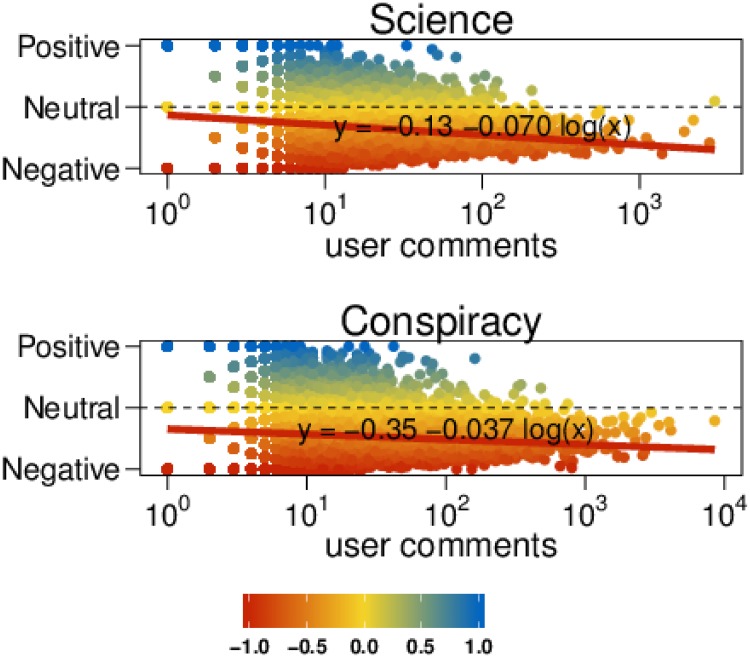
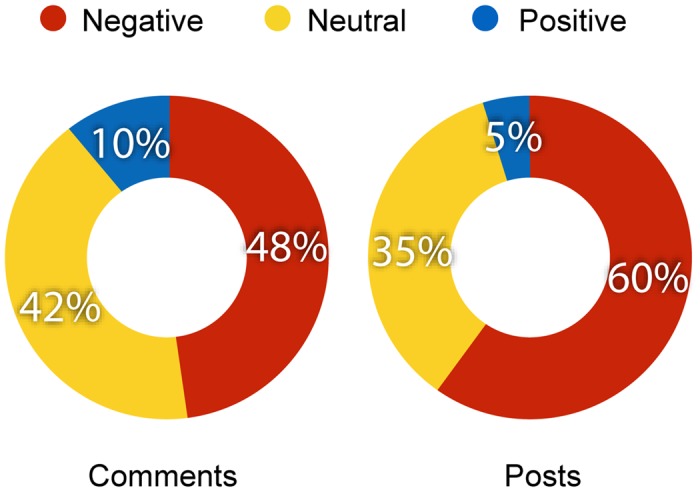
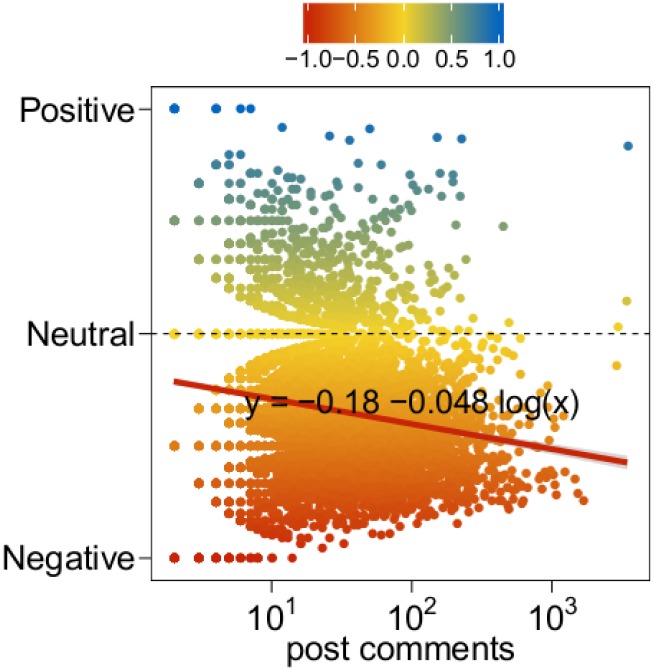
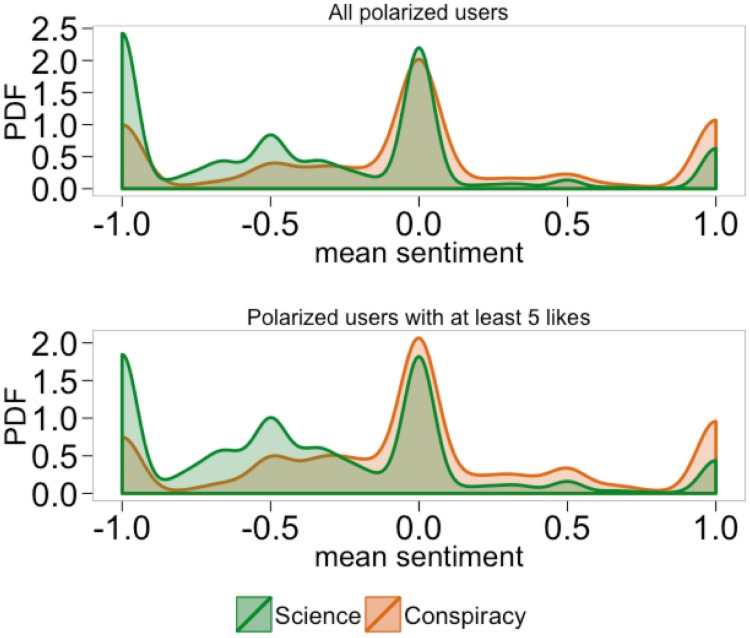
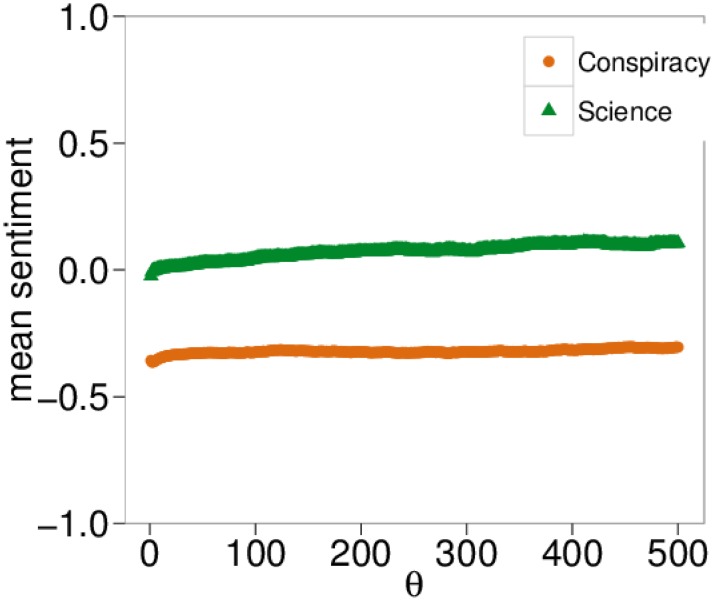
According to the World Economic Forum, the diffusion of unsubstantiated rumors on online social media is one of the main threats for our society. The disintermediated paradigm of content production and consumption on online social media might foster the formation of homogeneous communities (echo-chambers) around specific worldviews. Such a scenario has been shown to be a vivid environment for the diffusion of false claim. Not rarely, viral phenomena trigger naive (and funny) social responses-e.g., the recent case of Jade Helm 15 where a simple military exercise turned out to be perceived as the beginning of the civil war in the US. In this work, we address the emotional dynamics of collective debates around distinct kinds of information-i.e., science and conspiracy news-and inside and across their respective polarized communities. We find that for both kinds of content the longer the discussion the more the negativity of the sentiment. We show that comments on conspiracy posts tend to be more negative than on science posts. However, the more the engagement of users, the more they tend to negative commenting (both on science and conspiracy). Finally, zooming in at the interaction among polarized communities, we find a general negative pattern. As the number of comments increases-i.e., the discussion becomes longer-the sentiment of the post is more and more negative.
Overview
The claims and statistics of this paper haven’t been checked yet.
Free: it reads the open-access text and checks the first 5 claims that cite a source we can check. Create a free account to check every claim.
Integrity signals
Registry
Cites
Statistics
Figures
Verification
Claims the paper makes
The claims and statistics of this paper haven’t been checked yet.
Free: it reads the open-access text and checks the first 5 claims that cite a source we can check. Create a free account to check every claim.
Claims other papers make about this one
Each is checked against this paper’s own text: does it say what the citing paper says it does?
The source backs part of the claim, not all of it — or backs it for a different population, condition or comparison.
In the citing paper
“Further, online stories from social media perceived as negative garner more reactions (for example, likes, Facebook reactions)42,43.”
From Negativity drives online news consumption (2023) · cites this paper as [42]
Experimental — accuracy not yet measuredThe cited source says what the claim attributes to it.
In the citing paper
“cuanto más larga es la conversación (más número de comentarios), mayor es la carga de negatividad del sentimiento o la emoción del caso (Zollo et al., 2015)”
From Emociones y polarización de las comunidades digitales en América Latina: elecciones presidenciales 2018-2019 (2023) · cites this paper as Zollo et al., 2015
In the citing paper
“The majority of studies on online behaviour are correlational34–36,38–42, while laboratory studies take subjects out of their natural environment.”
From Negativity drives online news consumption (2023) · cites this paper as [42]
Self-check
Percentages, sums and reported differences re-computed from the paper’s own numbers.
The self-check needs the paper’s full text.
Citations
Cites
A Coefficient of Agreement for Nominal Scales
Cohen, J. (1960) · Educational and Psychological Measurement · doi:10.1177/001316446002000104 · Cited by 42,398 · cited 1×
“On the other hand, Cohen’s kappa [49] is a standard measure of interrater agreement, but rarely used to evaluate classification models.”
MethodThe Nature of Statistical Learning Theory
Vapnik, V. N. (1995) · doi:10.1007/978-1-4757-2440-0 · Cited by 39,138
Ellison, N. B., Steinfield, C., & Lampe, C. (2007) · Journal of Computer-Mediated Communication · doi:10.1111/j.1083-6101.2007.00367.x · Cited by 9,939 · cited 1×
“Notice that each of these actions has a particular meaning [39–41].”
BackgroundWeighted kappa: nominal scale agreement provision for scaled disagreement or partial credit
Cohen, J. (1968) · Psychological Bulletin · doi:10.1037/h0026256 · Cited by 8,736 · cited 1×
“We use Cohen’s weighted kappa [50] to compare the inter-annotator agreement and self-agreement.”
MethodA systematic analysis of performance measures for classification tasks
Sokolova, M., & Lapalme, G. (2009) · Information Processing & Management · doi:10.1016/j.ipm.2009.03.002 · Cited by 7,515 · cited 1×
“F1 is the harmonic mean of Precision and Recall for each class [48]:”
BackgroundThumbs up?: sentiment classification using machine learning techniques
Pang, B., Lee, L., & Vaithyanathan, S. (2002) · Proceedings of the ACL-02 conference on Empirical methods in natural language processing - EMNLP '02 · doi:10.3115/1118693.1118704 · Cited by 7,024 · cited 1×
“Even with this rough approximation, and disagreements on single cases, it turns out that on a large scale, when one deals with thousands of sentiment assignments, the aggregated sentiment converges to stable values [37].”
BackgroundOpinion Mining and Sentiment Analysis
Pang, B., & Lee, L. (2008) · now publishers, Inc. eBooks · doi:10.1561/9781601981516 · Cited by 6,720
Opinion mining and sentiment analysis
Pang, B., & Lee, L. (2008) · Foundations and Trends® in Information Retrieval · doi:10.1561/1500000011 · Cited by 6,372
Twitter as a Corpus for Sentiment Analysis and Opinion Mining
Pak, A., & Paroubek, P. (2010) · Language Resources and Evaluation Conference (LREC) · doi:10.63317/47akcj8foo4d · Cited by 2,704 · cited 1×
“Although other studies apply sentiment analysis to social media [32–35], our work is the first linking the interplay between communities emerging around shared narratives and specifically addressing the emotional dynamics with respect to misinformation spreading.”
BackgroundPredicting Elections with Twitter: What 140 Characters Reveal about Political Sentiment
Tumasjan, A., Sprenger, T., Sandner, P., & Welpe, I. (2010) · Proceedings of the International AAAI Conference on Web and Social Media · doi:10.1609/icwsm.v4i1.14009 · Cited by 2,649
Research works printed but not linked: 2
- Del Vicario M, Bessi A, Zollo F, Petroni F, Scala A, Caldarelli G, et al. Echo chambers in the age of misinformation. arXiv preprint arXiv:150900189. 2015;.
- Go A, Bhayani R, Huang L. Twitter sentiment classification using distant supervision. CS224N Project Report, Stanford. 2009;p. 1– 12.
Cited by
The spreading of misinformation online
Del Vicario, M., Bessi, A., Zollo, F., Petroni, F., Scala, A., Caldarelli, G., Stanley, H. E., & Quattrociocchi, W. (2016) · Proceedings of the National Academy of Sciences · doi:10.1073/pnas.1517441113 · Cited by 2,407
“Such a phenomenon is particularly evident on the WWW where users, embedded in homogeneous clusters (14–16), process information through a shared system of meaning (10, 11, 17, 18) and trigger collective framing of narratives that are often biased toward self-confirmation.”
BackgroundSelf-citationUnderstanding Conspiracy Theories
Douglas, K. M., Uscinski, J. E., Sutton, R. M., Cichocka, A., Nefes, T., Ang, C. S., & Deravi, F. (2019) · Political Psychology · doi:10.1111/pops.12568 · Cited by 1,511
Kralj Novak, P., Smailović, J., Sluban, B., & Mozetič, I. (2015) · PLOS ONE · doi:10.1371/journal.pone.0144296 · Cited by 805
Self-citationHorne, B., & Adali, S. (2017) · Proceedings of the International AAAI Conference on Web and Social Media · doi:10.1609/icwsm.v11i1.14976 · Cited by 688
Fake news game confers psychological resistance against online misinformation
Roozenbeek, J., & van der Linden, S. (2019) · Palgrave Communications · doi:10.1057/s41599-019-0279-9 · Cited by 708
Echo Chambers: Emotional Contagion and Group Polarization on Facebook
Del Vicario, M., Vivaldo, G., Bessi, A., Zollo, F., Scala, A., Caldarelli, G., & Quattrociocchi, W. (2016) · Scientific Reports · doi:10.1038/srep37825 · Cited by 576
“8,9 What’s more, experimental evidence shows that confirmatory information gets accepted even if containing deliberately false claims, 10–14 while dissenting information is mainly ignored or might even increase group polarization.”
BackgroundSelf-citationEcho chambers and viral misinformation: Modeling fake news as complex contagion
Törnberg, P. (2018) · PLOS ONE · doi:10.1371/journal.pone.0203958 · Cited by 419
“Armies of supporters for products, brands or presidents are quickly rallied, spreading their views in an environment where trust in traditional knowledge authorities is increasingly frail [21–25].”
BackgroundReliance on emotion promotes belief in fake news
Martel, C., Pennycook, G., & Rand, D. G. (2020) · Cognitive Research: Principles and Implications · doi:10.1186/s41235-020-00252-3 · Cited by 470
Grigoli, F., Cesca, S., Priolo, E., Rinaldi, A. P., Clinton, J. F., Stabile, T. A., Dost, B., Fernandez, M. G., Wiemer, S., & Dahm, T. (2017) · Reviews of Geophysics · doi:10.1002/2016rg000542 · Cited by 376
“In fact, The World Economic Forum labeled massive digital misinformation as one of the main threats for our society [ Bessi et al. , 2015; Zollo et al. , 2015].”
The Effects of Twitter Sentiment on Stock Price Returns
Ranco, G., Aleksovski, D., Caldarelli, G., Grčar, M., & Mozetič, I. (2015) · PLoS ONE · doi:10.1371/journal.pone.0138441 · Cited by 395
Self-citationDouglas, K. M., & Sutton, R. M. (2023) · Annual Review of Psychology · doi:10.1146/annurev-psych-032420-031329 · Cited by 313
Debunking in a world of tribes
Zollo, F., Bessi, A., Del Vicario, M., Scala, A., Caldarelli, G., Shekhtman, L., Havlin, S., & Quattrociocchi, W. (2017) · PLOS ONE · doi:10.1371/journal.pone.0181821 · Cited by 345
Self-citationNegativity drives online news consumption
Robertson, C. E., Pröllochs, N., Schwarzenegger, K., Pärnamets, P., Van Bavel, J. J., & Feuerriegel, S. (2023) · Nature Human Behaviour · doi:10.1038/s41562-023-01538-4 · Cited by 333
Anatomy of news consumption on Facebook
Schmidt, A. L., Zollo, F., Del Vicario, M., Bessi, A., Scala, A., Caldarelli, G., Stanley, H. E., & Quattrociocchi, W. (2017) · Proceedings of the National Academy of Sciences · doi:10.1073/pnas.1617052114 · Cited by 305
Self-citationUsers Polarization on Facebook and Youtube
Bessi, A., Zollo, F., Del Vicario, M., Puliga, M., Scala, A., Caldarelli, G., Uzzi, B., & Quattrociocchi, W. (2016) · PLOS ONE · doi:10.1371/journal.pone.0159641 · Cited by 285
Self-citationModeling confirmation bias and polarization
Del Vicario, M., Scala, A., Caldarelli, G., Stanley, H. E., & Quattrociocchi, W. (2017) · Scientific Reports · doi:10.1038/srep40391 · Cited by 222
“− + x t t I x t I x t ( , ) ( , ) ( , ) (6) The negative part is defined as in the BCM case but for a wider interval:”
BackgroundSelf-citationMapping social dynamics on Facebook: The Brexit debate
Del Vicario, M., Zollo, F., Caldarelli, G., Scala, A., & Quattrociocchi, W. (2017) · Social Networks · doi:10.1016/j.socnet.2017.02.002 · Cited by 233
Self-citationMultilingual Twitter Sentiment Classification: The Role of Human Annotators
Mozetič, I., Grčar, M., & Smailović, J. (2016) · PLOS ONE · doi:10.1371/journal.pone.0155036 · Cited by 203
“Facebook(it) [8].”
BackgroundMethodSelf-citationAnger, Fear, and Echo Chambers: The Emotional Basis for Online Behavior
Wollebæk, D., Karlsen, R., Steen-Johnsen, K., & Enjolras, B. (2019) · Social Media + Society · doi:10.1177/2056305119829859 · Cited by 200
“Using social media data, a set of studies has demonstrated that social media spaces are also emotional spaces (Del Vicario et al., 2017; Kramer, Guillory, & Hancock, 2014; Zollo et al., 2015).”
BackgroundBreaking Harmony Square: A game that “inoculates” against political misinformation
Roozenbeek, J., & van der Linden, S. (2020) · Harvard Kennedy School Misinformation Review · doi:10.37016/mr-2020-47 · Cited by 137
“Exploiting emotional language, i.e., trying to make people afraid or angry about a particular topic (Brady et al., 2017; Zollo et al., 2015).”
BackgroundHavey, N. F. (2020) · Journal of Computational Social Science · doi:10.1007/s42001-020-00089-2 · Cited by 169
“Political discourse can also be extremely emotional, leading to further consensus seeking and polarization [47].”
BackgroundPersonality traits and echo chambers on facebook
Bessi, A. (2016) · Computers in Human Behavior · doi:10.1016/j.chb.2016.08.016 · Cited by 139
“rn society [29, 30] and, despite dierent debunking strategies have been proposed, unsubstantiated rumors and false news keep proliferating in polarized communities emerging in online social networks [31, 32, 9, 10, 33]. In this work, we perform a comparative analysis on personality traits of users engaged with dierent…”
BackgroundMethodSelf-citationCountering Misinformation: Evidence, Knowledge Gaps, and Implications of Current Interventions
Roozenbeek, J., Culloty, E., & Suiter, J. (2023) · European Psychologist · doi:10.1027/1016-9040/a000492 · Cited by 189
The role of bot squads in the political propaganda on Twitter
Caldarelli, G., De Nicola, R., Del Vigna, F., Petrocchi, M., & Saracco, F. (2020) · Communications Physics · doi:10.1038/s42005-020-0340-4 · Cited by 106
“, [34–37]).”
Self-citationDynamics of online hate and misinformation
Cinelli, M., Pelicon, A., Mozetič, I., Quattrociocchi, W., Novak, P. K., & Zollo, F. (2021) · Scientific Reports · doi:10.1038/s41598-021-01487-w · Cited by 107
“More in general, we are interested in analysing how commenting dynamics change over time and whether online hate follows similar dynamics to those observed for users’ sentiment 31 .”
ResultSelf-citationWang, X., & Song, Y. (2020) · Internet Research · doi:10.1108/intr-11-2019-0491 · Cited by 92
Stance and influence of Twitter users regarding the Brexit referendum
Grćar, M., Cherepnalkoski, D., Mozetič, I., & Novak, P. K. (2017) · Computational Social Networks · doi:10.1186/s40649-017-0042-6 · Cited by 134
“On Facebook, we compared emotional dynamics of comments between the proponents of conspiracy theories and science [44].”
BackgroundSelf-citationCountering misinformation: A multidisciplinary approach
Gradoń, K., Hołyst, J. A., Moy, W. R., Sienkiewicz, J., & Suchecki, K. (2021) · Big Data & Society · doi:10.1177/20539517211013848 · Cited by 116
“…of emotions has greatly contributed to findings pointing to phenomena in social sciences including on the collective character of online emotions and their role in sustaining discourse in ecommunities or emotional dynamics in the presence of misinformation (Chmiel et al., 2011; Zollo et al., 2015).”
BackgroundInfluentialAnalyzing Textual (Mis)Information Shared in WhatsApp Groups
Resende, G., Melo, P. D. F., Reis, J. C. S., Vasconcelos, M., Almeida, J. M., & Benevenuto, F. (2019) · ACM Web Science Conference (WebSci) · doi:10.1145/3292522.3326029 · Cited by 113
“This finding is in agreement with previous observations that misinformation content tends to be more negative [33], especially within polarized communities.”
ResultPublic Discourse and Social Network Echo Chambers Driven by Socio-Cognitive Biases
Wang, X., Sirianni, A. D., Tang, S., Zheng, Z., & Fu, F. (2020) · Physical Review X · doi:10.1103/physrevx.10.041042 · Cited by 93
Ribeiro, M. H., Calais, P., Almeida, V. A. F., & Meira, W. (2017) · arXiv (Cornell University) · doi:10.48550/arxiv.1706.05924 · Cited by 112
“Conversely, misinformation plays a key role in creating polarized groups [43].”
BackgroundThe Web of False Information: Rumors, Fake News, Hoaxes, Clickbait, and Various Other Shenanigans
Zannettou, S., Sirivianos, M., Blackburn, J., & Kourtellis, N. (2019) · Journal of Data and Information Quality · doi:10.1145/3309699 · Cited by 86
“[209] study the emotional dynamics around conversations regarding science and conspiracy theories.”
BackgroundMisinformation Spreading on Facebook
Zollo, F., & Quattrociocchi, W. (2018) · Computational social sciences · doi:10.1007/978-3-319-77332-2_10 · Cited by 102
Self-citationFong, A. A., Roozenbeek, J., Goldwert, D., Rathje, S., & van der Linden, S. (2021) · Group Processes & Intergroup Relations · doi:10.1177/1368430220987596 · Cited by 100
“…on the role that conspiracies play in online networks (Bode & Vraga, 2017; Del Vicario et al., 2016; Lewandowsky et al., 2015), the intergroup nature of conspiracies and the ways in which groups express language online remain severely understudied (Douglas & Sutton, 2018; Zollo et al., 2015).”
BackgroundMethodInfluentialSpread of Misinformation in Social Networks: Analysis Based on Weibo Tweets
Luo, H., Cai, M., & Cui, Y. (2021) · Security and Communication Networks · doi:10.1155/2021/7999760 · Cited by 92
“Generally, the more active the users are, the more comments they make, the longer the discussion takes, and the more dominant negative emotions become [41].”
BackgroundDoes negatively toned language use on social media lead to attitude polarization?
Buder, J., Rabl, L., Feiks, M., Badermann, M., & Zurstiege, G. (2020) · Computers in Human Behavior · doi:10.1016/j.chb.2020.106663 · Cited by 84
Different types of COVID-19 misinformation have different emotional valence on Twitter
Charquero‐Ballester, M., Walter, J. G., Nissen, I. A., & Bechmann, A. (2021) · Big Data & Society · doi:10.1177/20539517211041279 · Cited by 68
“Another study shows that communication about misinformation and science also becomes more negative over time with misinformation being more negative in general (Zollo et al., 2015).”
BackgroundMethodInfluentialRobust Fake News Detection Over Time and Attack
Horne, B. D., Nørregaard, J., & Adalı, S. (2019) · ACM Transactions on Intelligent Systems and Technology · doi:10.1145/3363818 · Cited by 109
“Liter-ature on misinformation also shows that many viral conspiracy theories tend to be more negative overall [6, 8, 57].”
BackgroundAn Audit of Misinformation Filter Bubbles on YouTube: Bubble Bursting and Recent Behavior Changes
Tomlein, M., Pecher, B., Simko, J., Srba, I., Moro, R., Stefancova, E., Kompan, M., Hrckova, A., Podrouzek, J., & Bielikova, M. (2021) · Fifteenth ACM Conference on Recommender Systems · doi:10.1145/3460231.3474241 · Cited by 65
“Polarization and fragmentation of the society increases [25, 32].”
Emotions in online rumor diffusion
Pröllochs, N., Bär, D., & Feuerriegel, S. (2021) · EPJ Data Science · doi:10.1140/epjds/s13688-021-00307-5 · Cited by 63
Weismueller, J., Gruner, R. L., Harrigan, P., Coussement, K., & Wang, S. (2023) · Information Systems Journal · doi:10.1111/isj.12453 · Cited by 79
On Sentiment of Online Fake News
Zaeem, R. N., Li, C., & Barber, K. S. (2020) · 2020 IEEE/ACM International Conference on Advances in Social Networks Analysis and Mining (ASONAM) · doi:10.1109/asonam49781.2020.9381323 · Cited by 61
“Besides analyzing the sentiment of fake news, other researchers have studied the sentiment of comments posted on fake news stories [6], [18], [21]-[23].”
BackgroundAuditing YouTube’s Recommendation Algorithm for Misinformation Filter Bubbles
Srba, I., Moro, R., Tomlein, M., Pecher, B., Simko, J., Stefancova, E., Kompan, M., Hrckova, A., Podrouzek, J., Gavornik, A., et al. (2023) · ACM Transactions on Recommender Systems · doi:10.1145/3568392 · Cited by 61
“Echo chambers may finally contribute into increased polarization and fragmentation of the society [49, 58].”
BackgroundHow to Combat Health Misinformation: A Psychological Approach
Roozenbeek, J., & van der Linden, S. (2022) · American Journal of Health Promotion · doi:10.1177/08901171211070958 · Cited by 60
Flow of online misinformation during the peak of the COVID-19 pandemic in Italy
Caldarelli, G., De Nicola, R., Petrocchi, M., Pratelli, M., & Saracco, F. (2021) · EPJ Data Science · doi:10.1140/epjds/s13688-021-00289-4 · Cited by 54
Self-citationDealing with digital misinformation: a polarised context of narratives and tribes
Zollo, F. (2019) · EFSA Journal · doi:10.2903/j.efsa.2019.e170720 · Cited by 72
Self-citationHartmann, D., Wang, S. M., Pohlmann, L., & Berendt, B. (2025) · Journal of Computational Social Science · doi:10.1007/s42001-025-00381-z · Cited by 59
“…posts, and comments in two labeled groups of Facebook pages ’scientific’ and ’conspiracy’ [20, 21, 35, 62, 63] and their relation to misinformation [226] debunking posts [225] sentiments of tweets and their personalities [20], shared news URLs with news outlets leaning scores [9, 49, 64], term /…”
BackgroundThe pharmacist’s active role in combating COVID-19 medication misinformation
Marwitz, K. K. (2020) · Journal of the American Pharmacists Association · doi:10.1016/j.japh.2020.10.022 · Cited by 65
Fighting False Information from Propagation Process: A Survey
Sun, L., Rao, Y., Wu, L., Zhang, X., Lan, Y., & Nazir, A. (2023) · ACM Computing Surveys · doi:10.1145/3563388 · Cited by 68
“Besides, Crowdsourcing refers to having a large number of Fighting False Information from Propagation Process: A Survey 207:21 people manually label accounts on the Internet, which is considered not cost-effective but reliable [145].”
BackgroundInfluentialGegen die Öffentlichkeit: Alternative Nachrichtenmedien im deutschsprachigen Raum
Schwaiger, L. (2022) · transcript Verlag eBooks · doi:10.14361/9783839461211 · Cited by 86
Humprecht, E., Amsler, M., Esser, F., & Aelst, P. V. (2024) · Political Communication · doi:10.1080/10584609.2024.2350416 · Cited by 66
“For example, negative news about salient issues such as war or climate change can elicit negative affective responses from audiences (Zollo et al., 2015).”
BackgroundHow People Weave Online Information Into Pseudoknowledge
Introne, J. E., Yildirim, I., Iandoli, L., DeCook, J. R., & Elzeini, S. (2018) · Social Media + Society · doi:10.1177/2056305118785639 · Cited by 59
“One series of studies has examined the dynamics of con-spiracy narratives on Facebook, leading to a range of findings (Bessi, Caldarelli, Del Vicario, Scala, & Quattrociocchi, 2014; Del Vicario et al., 2016; Zollo et al., 2015).”
BackgroundNan, X., Wang, Y., & Thier, K. (2021) · Routledge eBooks · doi:10.4324/9781003043379-27 · Cited by 60
Reliance on emotion promotes belief in fake news
Martel, C., Pennycook, G., & Rand, D. G. (2019) · doi:10.31234/osf.io/a2ydw · Cited by 49
‘A war against truth’ - understanding the fake news controversy
Monsees, L. (2020) · Critical Studies on Security · doi:10.1080/21624887.2020.1763708 · Cited by 54
Marin, L. (2020) · Ethics and Information Technology · doi:10.1007/s10676-020-09550-2 · Cited by 51
Monitoring the Twitter sentiment during the Bulgarian elections
Smailović, J., Kranjc, J., Grćar, M., Žnidaršič, M., & Mozetič, I. (2015) · IEEE International Conference on Data Science and Advanced Analytics (DSAA) · doi:10.1109/dsaa.2015.7344886 · Cited by 46
“This approach was successfully applied to diverse domains, such as the study of emotional dynamics in Facebook comments [47], the effects of Twitter sentiment on stock prices [33], and the sentiment leaning of different network communities towards environmental topics [36].”
Self-citationOn the statistical properties of viral misinformation in online social media
Bessi, A. (2017) · Physica A: Statistical Mechanics and its Applications · doi:10.1016/j.physa.2016.11.012 · Cited by 46
“Keywords: misinformation, online social media, extreme value theory”
BackgroundSelf-citationStewart, R. J., Madonsela, A., Tshabalala, N., Etale, L., & Theunissen, N. (2022) · Digital Health · doi:10.1177/20552076221085070 · Cited by 51
“Even though there were some signs that women are less likely to respond at all to misinformation,(74,85) this was contradicted in other studies,(47,48) while others found no difference by gender.(76) The findings on age were also mixed.”
BackgroundResultInfluentialPushes and pulls from below: Anatomical variation, articulation and sound change
Dediu, D., & Moisik, S. R. (2019) · Glossa a journal of general linguistics · doi:10.5334/gjgl.646 · Cited by 49
“14 Arguably, such phenomena might govern, for example, the runaway polarization of social media (Zollo et al. 2015; Bessi et al. 2016).”
BackgroundRetweet networks of the European Parliament: evaluation of the community structure
Cherepnalkoski, D., & Mozetič, I. (2016) · Applied Network Science · doi:10.1007/s41109-016-0001-4 · Cited by 50
“…towards various environmental topics (Sluban et al. 2015), (ii) to study the emotional dynamics of Facebook comments on conspir-acy theories (Zollo et al. 2015), (iii) to analyze the effects of Twitter sentiment on stock prices (Ranco et al. 2015), (iv) to monitor the sentiment about…”
BackgroundSelf-citationTechnical assistance in the field of risk communication
(EFSA), E. F. S. A., Maxim, L., Mazzocchi, M., den Broucke, S. V., Zollo, F., Robinson, T. P., Rogers, C., Vrbos, D., Zamariola, G., & Smith, A. (2021) · EFSA Journal · doi:10.2903/j.efsa.2021.6574 · Cited by 54
Self-citationKwon, S., & Park, A. (2023) · Computers in Human Behavior · doi:10.1016/j.chb.2023.107734 · Cited by 46
“As the discussion becomes longer, it can lead to comments characterized by greater negative sentiments (Zollo et al., 2015) as one seeks to reinforce his/her perspective (Weeks, 2015).”
BackgroundSIFTER: A Framework for Robust Rumor Detection
Lu, M., Huang, Z., Li, B., Zhao, Y., Qin, Z., & Li, D. (2022) · IEEE/ACM Transactions on Audio Speech and Language Processing · doi:10.1109/taslp.2022.3140474 · Cited by 48
Scheibenzuber, C., Neagu, L.-M., Ruşeţi, Ş., Artmann, B., Bartsch, C., Kubik, M., Dascălu, M., Trăușan-Matu, Ș., & Nistor, N. (2022) · Computers in Human Behavior · doi:10.1016/j.chb.2022.107587 · Cited by 52
The effects of positive and negative emotional text content on knowledge revision
Trevors, G., & Kendeou, P. (2020) · Quarterly Journal of Experimental Psychology · doi:10.1177/1747021820913816 · Cited by 45
“Emotional content captures and consumes attention (Mather & Sutherland, 2011), motivates online engagement, sharing, virality, and counterarguments (Brady et al., 2017; Nauroth et al., 2014; A. L. Schmidt et al., 2018; Zollo et al., 2015), and the use of emotion in decision making is related to increased belief in fak…”
BackgroundConti, M., Lain, D., Lazzeretti, R., Lovisotto, G., & Quattrociocchi, W. (2017) · 2017 IEEE Workshop on Information Forensics and Security (WIFS) · doi:10.1109/wifs.2017.8267653 · Cited by 34
“In particular, discussion degenerates when the two polarized communities interact with one another [36].”
BackgroundInfluentialSelf-citationAlghamdi, J., Lin, Y., & Luo, S. (2024) · Engineering Applications of Artificial Intelligence · doi:10.1016/j.engappai.2024.109240 · Cited by 42
Semeraro, A., Vilella, S., Ruffo, G., & Stella, M. (2022) · Scientific Reports · doi:10.1038/s41598-022-18472-6 · Cited by 43
Fake News as We Feel It: Perception and Conceptualization of the Term “Fake News” in the Media
Cunha, E. L. T. P., Magno, G., Caetano, J. A., Teixeira, D., & Almeida, V. A. F. (2018) · Lecture notes in computer science · doi:10.1007/978-3-030-01129-1_10 · Cited by 47
The Rhetoric Side of Fake News: A New Weapon for Anti-Politics?
Scardigno, R., & Mininni, G. (2019) · World Futures · doi:10.1080/02604027.2019.1703158 · Cited by 42
Identifying Key Rumor Refuters on Social Media
Gao, Y., Sun, Y., Zhang, L., Liu, F., & Gao, L. (2022) · Expert Systems with Applications · doi:10.1016/j.eswa.2023.120603 · Cited by 38
Natural language processing for social science research: A comprehensive review
Hou, Y., & Huang, J. (2025) · Chinese Journal of Sociology · doi:10.1177/2057150x241306780 · Cited by 45
“For instance, Zollo et al. (2015) utilized SVM to analyze over one million Facebook comments, examining the sentiment dynamics within and between communities discussing science and conspiracy news.”
The Role of Political Activity in the Formation of Online Identity Bubbles
Koivula, A., Kaakinen, M., Oksanen, A., & Räsänen, P. (2019) · Policy & Internet · doi:10.1002/poi3.211 · Cited by 34
Gamified Inoculation Against Misinformation in India: A Randomized Control Trial
Harjani, T., Basol, M., Roozenbeek, J., & van der Linden, S. (2023) · Journal of Trial and Error · doi:10.36850/e12 · Cited by 41
“, 2015; Jung, 2011; Reznik, 2013), use of emotional language to frame content (Gross & Ambrosio, 2004; Konijn, 2012; Zollo et al., 2015), polarization of narratives to create hostility towards the opposition (Groenendyk, 2018; S.”
BackgroundMindsets of conspiracy: A typology of affinities towards conspiracy myths in digital environments
Schwaiger, L., Schneider, J., Rauchfleisch, A., & Eisenegger, M. (2022) · Convergence The International Journal of Research into New Media Technologies · doi:10.1177/13548565221106427 · Cited by 37
“Moreover, conspiracy myths mirror news values in terms of, for instance, scandalizing or emotionalizing news content (Konkes and Lester, 2015), which leads to higher user engagement on social media platforms compared to scientific news (Zollo et al., 2015).”
Misinformation interventions decay rapidly without an immediate posttest
Capewell, G., Maertens, R., Remshard, M., van der Linden, S., Compton, J., Lewandowsky, S., & Roozenbeek, J. (2024) · Journal of Applied Social Psychology · doi:10.1111/jasp.13049 · Cited by 38
“Emotionally manipulative language is a technique commonly used in misinformation (Carrasco ‐ Farré, 2022; Zollo et al., 2015).”
MethodThe use of emotions in conspiracy and debunking videos to engage publics on YouTube
Kim, S. J., & Chen, K. (2022) · New Media & Society · doi:10.1177/14614448221105877 · Cited by 32
“For example, Zollo et al. (2015) found that the number of comments on Facebook increases when anti-vaccination posts include negative sentiments.”
BackgroundKumari, R., Kumar, N. A., Ghosal, T., & Ekbal, A. (2021) · International Joint Conference on Neural Networks (IJCNN) · doi:10.1109/ijcnn52387.2021.9534218 · Cited by 32
Ezzeddine, F., Ayoub, O., Giordano, S., Nogara, G., Sbeity, I., Ferrara, E., & Luceri, L. (2023) · EPJ Data Science · doi:10.1140/epjds/s13688-023-00423-4 · Cited by 49
“Based on these premises, in the next Section, we propose to investigate the generalizability of our approach to identifying drivers of information operations,([3]) which might employ a more sophisticated combination of human curation, automation through social bots, and LLM-powered content generation [30,48].”
MethodFake News: O Que É, Como Se Faz E Por Que Funciona?Preprint
Forster, R., de Carvalho, R. M., Filgueiras, A., & Avila, E. (2021) · doi:10.1590/scielopreprints.3294 · Cited by 33
Role of voting intention in public opinion polarization
Vázquez, F., Saintier, N., & Pinasco, J. P. (2020) · Physical review. E · doi:10.1103/physreve.101.012101 · Cited by 31
Jakubik, J., Vössing, M., Pröllochs, N., Bär, D., & Feuerriegel, S. (2023) · Proceedings of the International AAAI Conference on Web and Social Media · doi:10.1609/icwsm.v17i1.22157 · Cited by 37
Latif, M. A. (2024) · Social Network Analysis and Mining · doi:10.1007/s13278-024-01354-2 · Cited by 33
“Group identification lowers ambiguity and increases a person's sense of self, according to Zollo et al. (2015) Discussions on social media have a detrimental effect on users' emotions and exacerbate polarization.”
Digital visions: the experience of self and others in the age of the digital revolution
Gallese, V. (2024) · International Review of Psychiatry · doi:10.1080/09540261.2024.2355281 · Cited by 28
“Additionally, research by Zollo et al. (2015) indicates that prolonged discussions on social media about news topics tend to foster increasingly negative sentiments among commentators : the longer the discussion, the greater the negativity of the sentiment.”
Whither Now, Opinion Modelers?
Sobkowicz, P. (2020) · Frontiers in Physics · doi:10.3389/fphy.2020.587009 · Cited by 30
“But these stories often are in stark contrast with logic and may even cause us to disregard or twist factual information [130, 159].”
BackgroundAffective Polarisation and Emotional Distortions on Social Media
Tanesini, A. (2022) · Royal Institute of Philosophy Supplement · doi:10.1017/s1358246122000261 · Cited by 27
“In addition to evidence of generalised emotional engagement, several studies have also highlighted phenomena that are akin to emotional contagion (Kramer et al., 2014; Zollo et al., 2015).”
Mancosu, M., & Vassallo, S. (2022) · Italian Political Science Review/Rivista Italiana di Scienza Politica · doi:10.1017/ipo.2021.57 · Cited by 30
Dysfunctional trusting and distrusting: Integrating trust and bias perspectives
Patent, V. (2022) · Journal of Trust Research · doi:10.1080/21515581.2022.2113887 · Cited by 28
“The extent to which one can and should trust others, institutions and information is an increasingly signi fi cant in fl uence on the stability of organisations and social and economic systems in democratic capitalist societies (Zollo et al., 2015).”
BackgroundTwitter and Affective Polarisation: Following Political Leaders in Spain
Rodríguez, J. L., & Torcal, M. (2022) · South European Society & Politics · doi:10.1080/13608746.2022.2047554 · Cited by 29
“In this sense, most of the literature has identified SNSs as a political arena that triggers affective polarisation (Gerstlé & Nai 2019; Zollo et al. 2015), praises anger and anxiety (Rudolph, Gangl & Stevens 2000), posits illiberal opinions against democratic institutions and principles (Bail…”
BackgroundEntropy-based detection of Twitter echo chambers
Pratelli, M., Saracco, F., & Petrocchi, M. (2024) · PNAS Nexus · doi:10.1093/pnasnexus/pgae177 · Cited by 28
“Zollo et al. , in [33], establish how users polarised on conspiracies express more negative feelings in their comments than users polarised on science news.”
BackgroundAjovalasit, S., Dorgali, M. V., Mazza, A., d’Onofrio, A., & Manfredi, P. (2021) · PLoS ONE · doi:10.1371/journal.pone.0253569 · Cited by 27
“The massive misinformation pervading the OSM environment has been defined by the World Economic Forum as one of the main threats to current societies [1, 5-6, 47, 48], in particular, because of the emergence of echo chambers, i.”
Sarfraz, M., Khawaja, K. F., Ivaşcu, L., & Khalil, M. (2023) · Studies In Educational Evaluation · doi:10.1016/j.stueduc.2023.101235 · Cited by 23
Lenti, J., Mejova, Y., Kalimeri, K., Panisson, A., Paolotti, D., Tizzani, M., & Starnini, M. (2023) · JMIR Infodemiology · doi:10.2196/44714 · Cited by 26
“The impact of antivaccination content on online social media (OSM) may be compounded by the so-called echo chamber effect [8], in which users’ beliefs are reinforced through interactions with like-minded peers [9-11].”
BackgroundKauk, J., Humprecht, E., Kreysa, H., & Schweinberger, S. R. (2024) · Computers in Human Behavior · doi:10.1016/j.chb.2024.108546 · Cited by 21
Conspiracy Thinking About the 15-Minute City: Something from Nothing?
Glover, T. D. (2024) · Leisure Sciences · doi:10.1080/01490400.2024.2387703 · Cited by 25
“…plays a pivotal role in fostering distinct and polarized online communities (Bessi et al., 2015), to be sure, but this polarization complicates rational and civil communication between groups, thereby leading to increasingly negative sentiments within and between communities (Zollo et al., 2015).”
Unpacking social media `engagement': a practice theory approach to science on social media
Davies, S. R., Wells, R., Zollo, F., & Roche, J. (2024) · Journal of Science Communication · doi:10.22323/2.23060402 · Cited by 23
Self-citationEvolution of topics and hate speech in retweet network communities
Evkoski, B., Ljubešić, N., Pelicon, A., Mozetič, I., & Novak, P. K. (2021) · Applied Network Science · doi:10.1007/s41109-021-00439-7 · Cited by 23
“Our results are comparable to the performance of models on similarly subjective and difficult tasks, on different social media platforms (Twitter, Facebook, YouTube comments) and in other languages (Zollo et al. 2015; Mozetič et al. 2016; Cinelli et al. 2021).”
ResultSelf-citationMedia use and life satisfaction: the moderating role of social events
Wilczek, B. (2018) · International Review of Economics · doi:10.1007/s12232-017-0290-7 · Cited by 22
“Therefore, SNS will facilitate the diffusion of emotions even across large social networks (Kramer et al. 2013; Del Vicario et al. 2015; Ferrara and Yang 2015; Zollo et al. 2015).”
BackgroundNetiquette for Social Media Engagement for Oncology Professionals
Ponce, S. B., Barry, M. M., Dizon, D. S., Katz, M. S., Murphy, M. C., Teplinsky, E., Tinianov, S., Attai, D. J., & Markham, M. J. (2022) · Future Oncology · doi:10.2217/fon-2021-1366 · Cited by 20
Metadata
- Authors
- Zollo, F., Novak, P. K., Del Vicario, M., Bessi, A., Mozetič, I., Scala, A., Caldarelli, G., & Quattrociocchi, W.
- Affiliations
- IMT School for Advanced Studies Lucca (IT)
- Jožef Stefan Institute (SI)
- Corresponding author
- Quattrociocchi, Walter
- ORCID
- Venue
- PLOS ONE
- Publisher
- Public Library of Science (PLoS)
- Published
- 2015-09-30
- Volume
- 10
- Issue
- 9
- Pages
- e0138740
- ISSN
- 1932-6203 (ISSN-L)
- PMC
- PMC4589395
- OpenAlex
- W2133664726
- Cited by
- 273
- References
- 53
- Citations by year
- 2026: 23 · 2025: 29 · 2024: 24 · 2023: 32 · 2022: 35 · 2021: 36 · 2020: 23 · 2019: 26 · 2018: 15 · 2017: 13 · 2016: 13 · 2015: 4
- FWCI
- 49.63
- Type
- journal article
- Language
- en
- Open access
- gold
- doi.org
- Licence
- Locations
- PLoS ONE (publishedVersion, cc-by)
- Europe PMC (PubMed Central) (publishedVersion, cc-by)
- PubMed Central (publishedVersion, cc-by)
- PubMed (publishedVersion)
- DiRROS repository (University of Maribor) (publishedVersion, other-oa)
- IMT Institutional Repository (IMT School for Advanced Studies Lucca) (acceptedVersion)
- arXiv (Cornell University) (submittedVersion)
- RePEc: Research Papers in Economics (submittedVersion)
- DOAJ (DOAJ: Directory of Open Access Journals) (submittedVersion, cc-by-sa)
- IRIS Research product catalog (Sapienza University of Rome) (submittedVersion)
- ARCA (Università Ca' Foscari Venezia) (submittedVersion)
- arXiv (Cornell University)
- Topics
- Social Sciences › Sociology and Political Science › Misinformation and Its Impacts
- Physical Sciences › Computer Science › Artificial Intelligence › Sentiment Analysis and Opinion Mining
- Social Sciences › Communication › Social Media and Politics
- Keywords
- misinformation, conspiracy theories, social media, echo chambers, polarization, sentiment analysis, user engagement, emotional dynamics, viral content
- MeSH terms
- Communication, Emotions, Female, Humans, Male
About these checks
Registry, retraction, Cites and statistics results are computed, not judged, with one exception: a printed reference that no index lists is read once by a model before it counts as a citation error. Claims are extracted by a model and kept only when their quote appears verbatim in the text; each cited source is then checked, with a model’s help, for whether it says what the claim relies on. Those verdicts can be wrong — read the claim’s quote and the cited source before relying on one.
Statistics and arithmetic are recomputed, not judged.
Confidence bands are shown only for fields calibrated on our annotated test set. None is calibrated yet, so no band is shown.
What counts as a claim ›How we measure confidence ›How we check this ›
Are you an author, or do you see a problem with this page? Request a review
Data sources
Bibliographic data: Semantic Scholar, OpenAlex, Crossref.
Contains information from the Semantic Scholar Academic Graph Datasets, made available under the ODC Attribution License (ODC-BY 1.0).
Semantic Scholar’s data is described in: Kinney, R., et al. (2023). The Semantic Scholar Open Data Platform. arXiv:2301.10140.
