

The DOI matches its Crossref record; 133 of the 135 references it cites were found in a registry or an index.
Diet and ADHD, Reviewing the Evidence: A Systematic Review of Meta-Analyses of Double-Blind Placebo-Controlled Trials Evaluating the Efficacy of Diet Interventions on the Behavior of Children with ADHD
Open accessAbstract
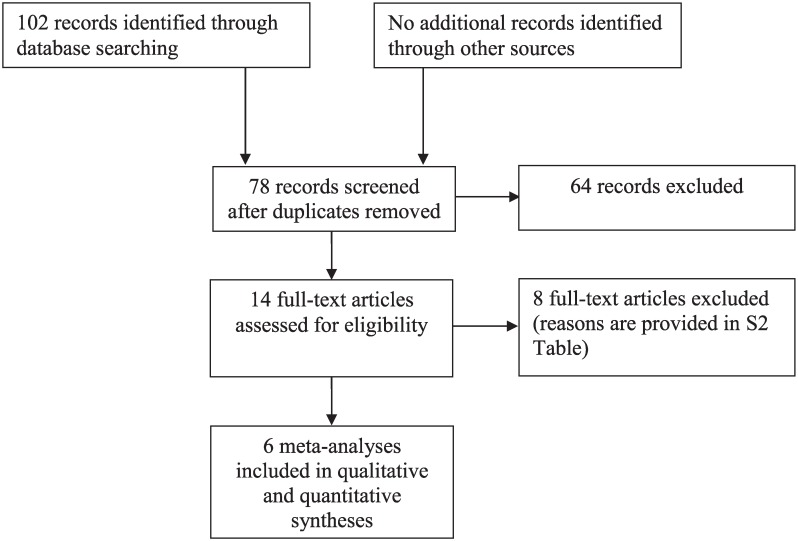
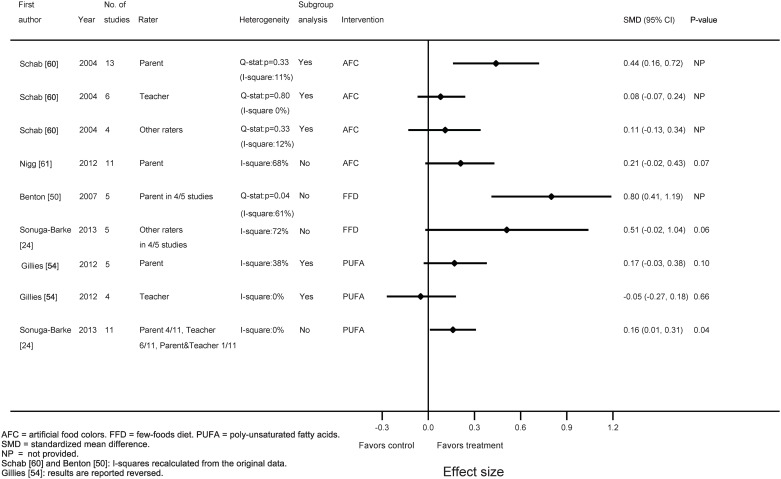
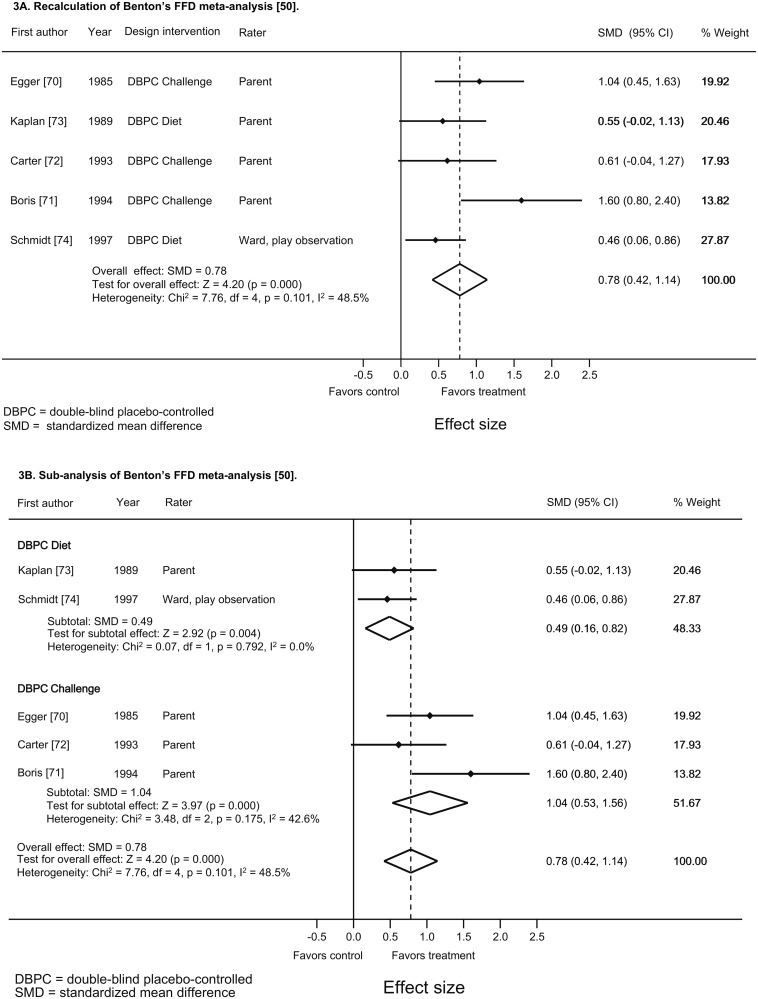
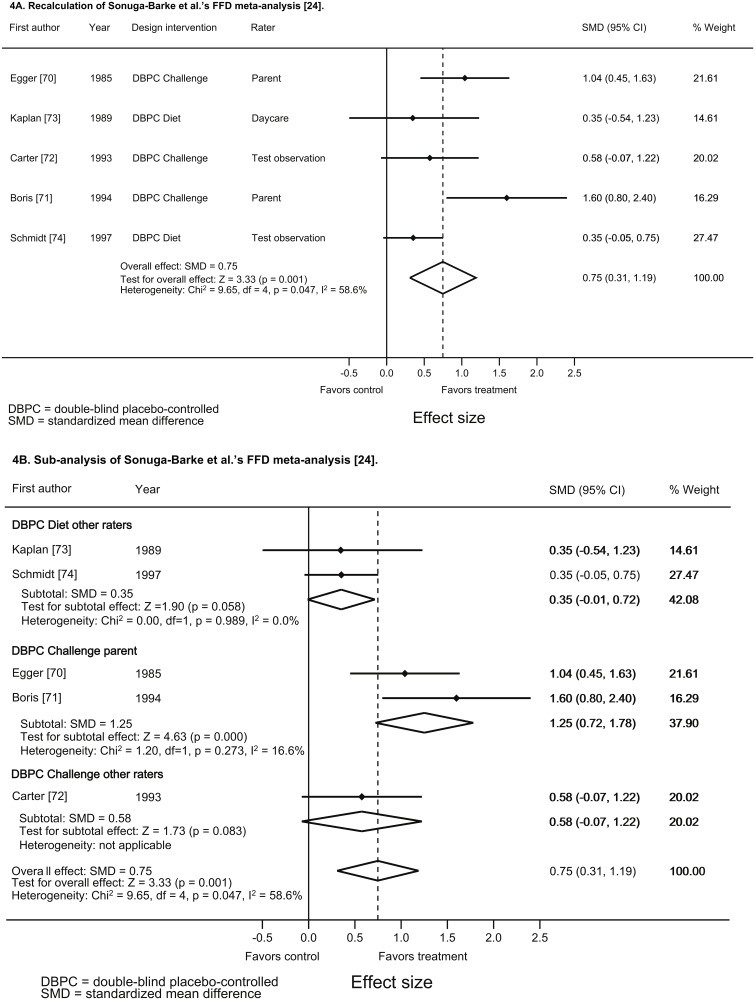
INTRODUCTION: Attention-deficit/hyperactivity disorder (ADHD) is a debilitating mental health problem hampering the child's development. The underlying causes include both genetic and environmental factors and may differ between individuals. The efficacy of diet treatments in ADHD was recently evaluated in three reviews, reporting divergent and confusing conclusions based on heterogeneous studies and subjects. To address this inconsistency we conducted a systematic review of meta-analyses of double-blind placebo-controlled trials evaluating the effect of diet interventions (elimination and supplementation) on ADHD. METHODS: Our literature search resulted in 14 meta-analyses, six of which confined to double-blind placebo-controlled trials applying homogeneous diet interventions, i.e. artificial food color (AFC) elimination, a few-foods diet (FFD) and poly-unsaturated fatty acid (PUFA) supplementation. Effect sizes (ES) and Confidence intervals (CI) of study outcomes were depicted in a forest plot. I2 was calculated to assess heterogeneity if necessary and additional random effects subgroup meta-regression was conducted if substantial heterogeneity was present. RESULTS: The AFC ESs were 0.44 (95% CI: 0.16-0.72, I2 = 11%) and 0.21 (95% CI: -0.02-0.43, I2 = 68%) [parent ratings], 0.08 (95% CI: -0.07-0.24, I2 = 0%) [teacher ratings] and 0.11 (95% CI: -0.13-0.34, I2 = 12%) [observer ratings]. The FFD ESs were 0.80 (95% CI: 0.41-1.19, I2 = 61%) [parent ratings] and 0.51 (95% CI: -0.02-1.04, I2 = 72%) [other ratings], while the PUFA ESs were 0.17 (95% CI: -0.03-0.38, I2 = 38%) [parent ratings], -0.05 (95% CI: -0.27-0.18, I2 = 0%) [teacher ratings] and 0.16 (95% CI: 0.01-0.31, I2 = 0%) [parent and teacher ratings]. Three meta-analyses (two FFD and one AFC) resulted in high I2 without presenting subgroup results. The FFD meta-analyses provided sufficient data to perform subgroup analyses on intervention type, resulting in a decrease of heterogeneity to 0% (diet design) and 37.8% (challenge design). CONCLUSION: Considering the small average ESs PUFA supplementation is unlikely to provide a tangible contribution to ADHD treatment, while further research is required for AFC elimination before advising this intervention as ADHD treatment. The average FFD ES is substantial, offering treatment opportunities in subgroups of children with ADHD not responding to or too young for medication. Further FFD research should focus on establishing the underlying mechanisms of food (e.g. incrimination of gut microbiota) to simplify the FFD approach in children with ADHD.
Overview
The claims and statistics of this paper haven’t been checked yet.
Run the check — free, no account needed. It reads the open-access text and checks the sources it cites.
Integrity signals
Registry
Cites
Statistics
Figures
Verification
Claims the paper makes
The claims and statistics of this paper haven’t been checked yet.
Run the check — free, no account needed. It reads the open-access text and checks the sources it cites.
Claims other papers make about this one
Each is checked against this paper’s own text: does it say what the citing paper says it does?
The source backs part of the claim, not all of it — or backs it for a different population, condition or comparison.
In the citing paper
“The recalculated meta-analyses found moderately large effect sizes in RCTs of the few-foods diets for any-rater measures (n=5, SMD=0.75, 95% CI: 0.31-1.19, I²=58.6%) and parent/ward observation measures (n=5, SMD=0.78, 95% CI: 0.42-1.14, I²=48.5%) of ADHD symptoms 78 .”
From A meta-review of "lifestyle psychiatry": the role of exercise, smoking, diet and sleep in the prevention and treatment of mental disorders (2020) · cites this paper as [78]
Experimental — accuracy not yet measuredThe cited source says what the claim attributes to it.
In the citing paper
“The results from meta-analyses of placebo-controlled trials indicated a non-significant trend towards improvement in symptoms of ADHD from AFC elimination across parent-rated measures (n=11, SMD=0.21, 95% CI: -0.02 to 0.43, I²=68%, p=0.07)”
From A meta-review of "lifestyle psychiatry": the role of exercise, smoking, diet and sleep in the prevention and treatment of mental disorders (2020) · cites this paper as [78]
The cited source says what the claim attributes to it.
In the citing paper
“with no effects for teacher-rated measures (n=6, SMD=0.08, 95% CI: -0.07 to 0.24, I²=0%) and observed-rated measures (n=4, SMD=0.11, 95% CI: -0.13 to 0.34, I²=12%) 78 .”
From A meta-review of "lifestyle psychiatry": the role of exercise, smoking, diet and sleep in the prevention and treatment of mental disorders (2020) · cites this paper as [78]
Self-check
Percentages, sums and reported differences re-computed from the paper’s own numbers.
The self-check needs the paper’s full text.
Citations
Cites
Measuring inconsistency in meta-analyses
Higgins, J. P. T., Thompson, S. G., Deeks, J. J., & Altman, D. G. (2003) · BMJ · doi:10.1136/bmj.327.7414.557 · Cited by 63,139
Liberati, A., Altman, D. G., Tetzlaff, J., Mulrow, C., Gøtzsche, P. C., Ioannidis, J. P. A., Clarke, M., Devereaux, P. J., Kleijnen, J., & Moher, D. (2009) · PLoS Medicine · doi:10.1371/journal.pmed.1000100 · Cited by 28,164
Liberati, A., Altman, D. G., Tetzlaff, J., Mulrow, C., Gotzsche, P. C., Ioannidis, J. P. A., Clarke, M., Devereaux, P. J., Kleijnen, J., & Moher, D. (2009) · BMJ · doi:10.1136/bmj.b2700 · Cited by 17,648
Assessing the quality of reports of randomized clinical trials: Is blinding necessary?
Jadad, A. R., Moore, R. A., Carroll, D., Jenkinson, C., Reynolds, D. J. M., Gavaghan, D. J., & McQuay, H. J. (1996) · Controlled Clinical Trials · doi:10.1016/0197-2456(95)00134-4 · Cited by 17,582
Zhang, Q., Wang, C., Zheng, M., Li, Y., Li, J., Zhang, L., Shang, X., & Yan, C. (2014) · Cerebrovascular Diseases · doi:10.1159/000369778 · Cited by 11,609
Diet rapidly and reproducibly alters the human gut microbiome
David, L. A., Maurice, C. F., Carmody, R. N., Gootenberg, D. B., Button, J. E., Wolfe, B. E., Ling, A. V., Devlin, A. S., Varma, Y., Fischbach, M. A., et al. (2014) · Nature · doi:10.1038/nature12820 · Cited by 10,100
Sterne, J. A. C., Sutton, A. J., Ioannidis, J. P. A., Terrin, N., Jones, D. R., Lau, J., Carpenter, J., Rucker, G., Harbord, R. M., Schmid, C. H., et al. (2011) · BMJ · doi:10.1136/bmj.d4002 · Cited by 7,709
Cochrane Handbook for Systematic Reviews of Interventions Version 5.0.1. The Cochrane Collaboration
Higgins, J., Green, S. R., & Higgins, J. (2008) · Cited by 5,544
Effect size estimates: Current use, calculations, and interpretation.
Fritz, C. O., Morris, P. E., & Richler, J. J. (2012) · Journal of Experimental Psychology: General · doi:10.1037/a0024338 · Cited by 5,199
Dong, Y., Hao, L., Shi, Z., Wang, G., Zhang, Z., & Han, C. (2013) · Urologia Internationalis · doi:10.1159/000351405 · Cited by 4,557
Research works printed but not linked: 1
- CM Jensen, 2015, Comorbid mental disorders in children and adolescents with attention-deficit/hyperactivity disorder in a large nationwide study, Atten Defic Hyperact Disord, 7, 27, 10.1007/s12402-014-0142-1 · DOI · Paper page
Cited by
Sorted by citations
Cryan, J. F., O'Riordan, K. J., Cowan, C. S. M., Sandhu, K. V., Bastiaanssen, T. F. S., Boehme, M., Codagnone, M. G., Cussotto, S., Fulling, C., Golubeva, A. V., et al. (2019) · Physiological Reviews · doi:10.1152/physrev.00018.2018 · Cited by 5,286
Firth, J., Solmi, M., Wootton, R. E., Vancampfort, D., Schuch, F. B., Hoare, E., Gilbody, S., Torous, J., Teasdale, S. B., Jackson, S. E., et al. (2020) · World Psychiatry · doi:10.1002/wps.20773 · Cited by 1,242
Reduced microbiome alpha diversity in young patients with ADHD
Prehn‐Kristensen, A., Zimmermann, A., Tittmann, L., Lieb, W., Schreiber, S., Baving, L., & Fischer, A. (2018) · PLoS ONE · doi:10.1371/journal.pone.0200728 · Cited by 304
Treatment strategies for ADHD: an evidence-based guide to select optimal treatment
Caye, A., Swanson, J. M., Coghill, D., & Rohde, L. A. (2019) · Molecular Psychiatry · doi:10.1038/s41380-018-0116-3 · Cited by 303
Snigdha, S., Ha, K., Tsai, P., Dinan, T. G., Bartos, J. D., & Shahid, M. (2021) · Pharmacology & Therapeutics · doi:10.1016/j.pharmthera.2021.107978 · Cited by 173
Omega-3 fatty acids and mental health
Lange, K. W. (2020) · Global Health Journal · doi:10.1016/j.glohj.2020.01.004 · Cited by 191
Gut microbiota from persons with attention-deficit/hyperactivity disorder affects the brain in mice
Tengeler, A. C., Dam, S. A., Wiesmann, M., Naaijen, J., van Bodegom, M., Belzer, C., Dederen, P. J. W. C., Verweij, V., Franke, B., Kozicz, T., et al. (2020) · Microbiome · doi:10.1186/s40168-020-00816-x · Cited by 153
Maître, L., Júlvez, J., López-Vicente, M., Warembourg, C., Tamayo, I., Philippat, C., Gützkow, K. B., Guxens, M., Andrušaitytė, S., Basagaña, X., et al. (2021) · Environment International · doi:10.1016/j.envint.2021.106523 · Cited by 132
Szopinska-Tokov, J., Dam, S. A., Naaijen, J., Konstanti, P., Rommelse, N. N. J., Belzer, C., Buitelaar, J. K., Franke, B., Bloemendaal, M., Aarts, E., et al. (2020) · Microorganisms · doi:10.3390/microorganisms8030406 · Cited by 117
The Potential Influence of the Bacterial Microbiome on the Development and Progression of ADHD
Bull-Larsen, S., & Mohajeri, M. H. (2019) · Nutrients · doi:10.3390/nu11112805 · Cited by 111
Eltokhi, A., Janmaat, I. E., Genedi, M., Haarman, B. C. M., & Sommer, I. E. (2020) · Journal of Neuroscience Research · doi:10.1002/jnr.24616 · Cited by 102
A systematic meta-review of systematic reviews on attention deficit hyperactivity disorder
Chaulagain, A., Lyhmann, I., Halmøy, A., Widding‐Havneraas, T., Nyttingnes, O., Bjelland, I., & Mykletun, A. (2023) · European Psychiatry · doi:10.1192/j.eurpsy.2023.2451 · Cited by 97
Boonchooduang, N., Louthrenoo, O., Chattipakorn, N., & Chattipakorn, S. C. (2020) · European Journal of Nutrition · doi:10.1007/s00394-020-02383-1 · Cited by 79
Bundgaard‐Nielsen, C., Lauritsen, M. B., Knudsen, J. K., Rold, L. S., Larsen, M. H., Hindersson, P., Villadsen, A. B., Leutscher, P. D. C., Hagstrøm, S., Nyegaard, M., et al. (2023) · Gut Microbes · doi:10.1080/19490976.2023.2211923 · Cited by 69
Eating Patterns and Dietary Interventions in ADHD: A Narrative Review
Pinto, S., Correia-de-Sá, T., Sampaio-Maia, B., Vasconcelos, C., Moreira, P., & Ferreira-Gomes, J. (2022) · Nutrients · doi:10.3390/nu14204332 · Cited by 66
The Role of the Gut-Brain Axis in Attention-Deficit/Hyperactivity Disorder
Dam, S. A., Mostert, J. C., Szopinska-Tokov, J., Bloemendaal, M., Amato, M. P., & Vásquez, A. A. (2019) · Gastroenterology Clinics of North America · doi:10.1016/j.gtc.2019.05.001 · Cited by 66
Nutrition in the Management of ADHD: A Review of Recent Research
Lange, K. W., Lange, K. M., Nakamura, Y., & Reißmann, A. (2023) · Current Nutrition Reports · doi:10.1007/s13668-023-00487-8 · Cited by 63
Borge, T. C., Biele, G., Papadopoulou, E., Andersen, L. F., Jacka, F. N., Eggesbø, M. Å., Caspersen, I. H., Aase, H., Meltzer, H. M., & Brantsæter, A. L. (2021) · BMC Psychiatry · doi:10.1186/s12888-021-03130-4 · Cited by 61
Larroya, A., Pantoja, J., Codoñer‐Franch, P., & Cénit, M. C. (2021) · Frontiers in Pediatrics · doi:10.3389/fped.2021.705859 · Cited by 47
A systematic review of interventions to enhance adherence and persistence with ADHD pharmacotherapy
Parkin, R., McNicholas, F., & Hayden, J. C. (2022) · Journal of Psychiatric Research · doi:10.1016/j.jpsychires.2022.05.044 · Cited by 47
Li, Y., Sun, H., Huang, Y., Yin, A., Zhang, L., Han, J., Lyu, Y., Xu, X., Zhai, Y., Sun, H., et al. (2022) · Gut Microbes · doi:10.1080/19490976.2022.2125747 · Cited by 44
Wang, L., Yu, Y., Fu, M.-L., Yeh, W., Hsu, J.-L., Yang, Y., Yang, H., Huang, S., Wei, I.-L., Chen, W. J., et al. (2019) · Journal of Clinical Medicine · doi:10.3390/jcm8050709 · Cited by 43
The association between ADHD and physical health: a co-twin control study
Pan, P.-Y., & Bölte, S. (2020) · Scientific Reports · doi:10.1038/s41598-020-78627-1 · Cited by 37
Kim, K. M., Lim, M. H., Kwon, H., Yoo, S.-J., Kim, E.-J., Kim, J. W., Ha, M., & Paik, K. C. (2018) · Appetite · doi:10.1016/j.appet.2018.05.004 · Cited by 39
Mian, A., Jansen, P. W., Nguyen, A. N., Bowling, A. B., Renders, C. M., & Voortman, T. (2019) · Journal of Nutrition · doi:10.1093/jn/nxy273 · Cited by 37
Händel, M. N., Rohde, J., Rimestad, M. L., Bandak, E., Birkefoss, K., Tendal, B., Lemcke, S., & Callesen, H. (2021) · Nutrients · doi:10.3390/nu13041226 · Cited by 29
Lange, K. W. (2020) · Frontiers in Psychiatry · doi:10.3389/fpsyt.2020.00102 · Cited by 37
Dietary factors in the etiology and therapy of attention deficit/hyperactivity disorder
Lange, K. W. (2017) · Current Opinion in Clinical Nutrition & Metabolic Care · doi:10.1097/mco.0000000000000415 · Cited by 29
Probiotics therapy show significant improvement in obesity and neurobehavioral disorders symptoms
Cai, Y., Liu, P., Zhou, X., Yuan, J., & Chen, Q. (2023) · Frontiers in Cellular and Infection Microbiology · doi:10.3389/fcimb.2023.1178399 · Cited by 34
Khoshbakht, Y., Moghtaderi, F., Bidaki, R., Hosseinzadeh, M., & Salehi-Abargouei, A. (2021) · European Journal of Nutrition · doi:10.1007/s00394-021-02527-x · Cited by 27
Loewen, O. K., Maximova, K., Ekwaru, J. P., Asbridge, M., Ohinmaa, A. E., & Veugelers, P. J. (2020) · Psychosomatic Medicine · doi:10.1097/psy.0000000000000787 · Cited by 26
Popow, C., Ohmann, S., & Plener, P. L. (2021) · Neuropsychiatrie · doi:10.1007/s40211-021-00395-9 · Cited by 37
Yorgidis, E., Beiner, L., Blazynski, N., Schneider-Momm, K., Clement, H., Rauh, R., Schulz, E., Clement, C., & Fleischhaker, C. (2021) · Nutrients · doi:10.3390/nu13082598 · Cited by 26
Role of Nutrition and Diet on Healthy Mental State
Granero, R. (2022) · Nutrients · doi:10.3390/nu14040750 · Cited by 26
Visternicu, M., Rarinca, V., Burlui, V., Halitchi, G., Ciobica, A. S., Sîngeap, A.-M., Dobrin, R., Mavroudis, I. A., & Trifan, A. V. (2024) · Nutrients · doi:10.3390/nu16183113 · Cited by 27
Diet and food in attention-deficit hyperactivity disorder
Lange, K. W., Nakamura, Y., & Reißmann, A. (2022) · Journal of Future Foods · doi:10.1016/j.jfutfo.2022.03.008 · Cited by 25
Pelsser, L., Frankena, K., Toorman, J., & Rodrigues Pereira, R. (2020) · Frontiers in Psychiatry · doi:10.3389/fpsyt.2020.00096 · Cited by 25
Self-citationLi, L., Taylor, M. J., Bälter, K. A., Kuja‐Halkola, R., Chen, Q., Hegvik, T., Tate, A., Chang, Z., Vásquez, A. A., Hartman, C. A., et al. (2020) · American Journal of Medical Genetics Part B Neuropsychiatric Genetics · doi:10.1002/ajmg.b.32825 · Cited by 28
Hontelez, S., Stobernack, T., Pelsser, L. M. J., van Baarlen, P., Frankena, K., Groefsema, M. M., Kleerebezem, M., Pereira, R. R., Postma, E. M., Smeets, P. A. M., et al. (2021) · Scientific Reports · doi:10.1038/s41598-021-01684-7 · Cited by 23
Self-citationShah, R., Grover, S., & Avasthi, A. (2019) · Indian Journal of Psychiatry · doi:10.4103/psychiatry.indianjpsychiatry_543_18 · Cited by 23
Rambler, R. M., Rinehart, E., Boehmler, W., Gait, P., Moore, J., Schlenker, M. K., & Kashyap, R. (2022) · Cureus · doi:10.7759/cureus.29241 · Cited by 21
Patients and agents – or why we need a different narrative: a philosophical analysis
Walach, H., & Loughlin, M. (2018) · Philosophy Ethics and Humanities in Medicine · doi:10.1186/s13010-018-0068-x · Cited by 23
Pan, P., Taylor, M. J., Larsson, H., Almqvist, C., Lichtenstein, P., Lundström, S., & Bölte, S. (2023) · Molecular Autism · doi:10.1186/s13229-023-00548-3 · Cited by 22
Attention deficit/hyperactivity disorder and epilepsy
Rheims, S., & Auvin, S. (2021) · Current Opinion in Neurology · doi:10.1097/wco.0000000000000903 · Cited by 20
Xu, X., Zhuo, L., Zhang, L., Peng, H., Lyu, Y., Sun, H., Zhai, Y., Luo, D., Wang, X., Li, X., et al. (2023) · Psychiatry Research · doi:10.1016/j.psychres.2023.115172 · Cited by 19
Stobernack, T., de Vries, S. P. W., Pereira, R. R., Pelsser, L. M. J., ter Braak, C. J. F., Aarts, E., van Baarlen, P., Kleerebezem, M., Frankena, K., & Hontelez, S. (2019) · BMJ Open · doi:10.1136/bmjopen-2019-029422 · Cited by 17
Self-citationOligoantigenic Diet Improves Children’s ADHD Rating Scale Scores Reliably in Added Video-Rating
Dölp, A., Schneider-Momm, K., Heiser, P., Clement, C., Rauh, R., Clement, H., Schulz, E., & Fleischhaker, C. (2020) · Frontiers in Psychiatry · doi:10.3389/fpsyt.2020.00730 · Cited by 18
Diet modification impact on ADHD outcome
Baaki, O. M. A. E., Hamid, E. R. A. E., Zaki, S. T., Alwakkad, A. S. E. D., Sabry, R. N., & Elsheikh, E. M. (2021) · Bulletin of the National Research Centre/Bulletin of the National Research Center · doi:10.1186/s42269-020-00466-x · Cited by 20
Do food bioactives play a role in attention-deficit/hyperactivity disorder?
Lange, K. W. (2018) · Journal of Food Bioactives · doi:10.31665/jfb.2018.4160 · Cited by 16
Montgomery, P., Spreckelsen, T. F., Burton, A., Burton, J., & Richardson, A. J. (2018) · PLoS ONE · doi:10.1371/journal.pone.0192909 · Cited by 21
Bosch, A., Bierens, M., Ly, V., van der Velde, J., de Boer, H., van Beek, G., Appelman, D., Visser, S., Bos, L. H. P., Reijmers, L., et al. (2023) · European Child & Adolescent Psychiatry · doi:10.1007/s00787-023-02256-y · Cited by 14
Is there a place for dietetic interventions in adult ADHD?
Breda, V., Cerqueira, R. O., Ceolin, G., Koning, E., Fabe, J., McDonald, A., Gomes, F. A., & Brietzke, E. M. (2022) · Progress in Neuro-Psychopharmacology and Biological Psychiatry · doi:10.1016/j.pnpbp.2022.110613 · Cited by 19
Matthews, Z., Pigden-Bennett, D., Tavassoli, T., & Snuggs, S. J. (2024) · Autism · doi:10.1177/13623613241277605 · Cited by 14
Lawrence, K., Myrissa, K., Toribio-Mateas, M. A., Minini, L., & Gregory, A. M. (2022) · Pilot and Feasibility Studies · doi:10.1186/s40814-022-01058-4 · Cited by 13
Marx, W., Visser, M., Wallace, C., Jacka, F. N., Bayes, J., Francis, H., Opie, R., Hockey, M., Teasdale, S. B., Sánchez‐Villegas, A., et al. (2024) · British Journal Of Nutrition · doi:10.1017/s0007114524001946 · Cited by 12
Lifestyle and attention deficit/hyperactivity disorder
Lange, K. W. (2017) · University of Regensburg Publication Server (University of Regensburg) · doi:10.5283/mnhd.10 · Cited by 13
Bosch, A., Bierens, M., de Wit, G. A., Ly, V., van der Velde, J., de Boer, H., van Beek, G., Appelman, D., Visser, S., Bos, L., et al. (2020) · BMC Psychiatry · doi:10.1186/s12888-020-02576-2 · Cited by 11
Zhao, M., Meng, Y., Cao, B., Tong, J., Liu, X., Yan, H., Yang, H., Han, H., Liang, X., & Chen, H. (2023) · Frontiers in Microbiology · doi:10.3389/fmicb.2023.1055804 · Cited by 10
Multimodal Interventions Are More Effective in Improving Core Symptoms in Children With ADHD
Ning, K., & Wang, T. (2021) · Frontiers in Psychiatry · doi:10.3389/fpsyt.2021.759315 · Cited by 10
Dietary and Micronutrient Treatments for Children with Neurodevelopment Disorders
Taylor, M. R., Chuang, C.-C., Carrasco, K., Nagatomo, S., & Rucklidge, J. J. (2018) · Current Developmental Disorders Reports · doi:10.1007/s40474-018-0150-5 · Cited by 11
Dalnoki, L., Hurks, P. P. M., Gubbels, J. S., Eussen, S. J. P. M., Mommers, M., & Thijs, C. T. (2024) · Journal of Attention Disorders · doi:10.1177/10870547241293946 · Cited by 8
Lawrence, K., Fibert, P., Toribio-Mateas, M. A., Gregory, A. M., Hobbs, J., Quadt, F., Wright, S., Cotter, P. D., Patel, S. H., & Myrissa, K. (2025) · BMC Psychiatry · doi:10.1186/s12888-025-07568-8 · Cited by 9
Physical Complaints Decrease after Following a Few-Foods Diet in Children with ADHD
Pelsser, L. M. J., Stobernack, T., & Frankena, K. (2022) · Nutrients · doi:10.3390/nu14153036 · Cited by 9
Self-citationZhang, S., Wang, Z., Jiang, J., Feng, G., & Fan, S. (2024) · Food & Function · doi:10.1039/d3fo05422e · Cited by 8
Rucklidge, J. J., Eggleston, M. J. F., Boggis, A., Darling, K. A., Gorman, B., & FRAMPTON, C. M. A. (2019) · Journal of Attention Disorders · doi:10.1177/1087054719886363 · Cited by 8
Varieties of Psychotherapy for Attention‐Deficit Hyperactivity Disorder
Dobrean, A., Păsărelu, C. R., & Döpfner, M. (2017) · Wiley eBooks · doi:10.1002/9781119462996.ch16 · Cited by 8
Morandini, H. A. E., Watson, P. A., Stewart, R. M., Wong, J. W. Y., Rao, P., & Zepf, F. D. (2022) · Clinical Nutrition ESPEN · doi:10.1016/j.clnesp.2022.10.004 · Cited by 7
Food and Toxicologic Pathology
Pulido, O. M., Rousseaux, C. G., & Cole, P. I. (2023) · Elsevier eBooks · doi:10.1016/b978-0-443-16153-7.00002-2 · Cited by 8
Current Perspectives on Attention-deficit Hyperactivity Disorder
Shafiullah, S., & Dhaneshwar, S. S. (2023) · Current Molecular Medicine · doi:10.2174/1566524023666230522145950 · Cited by 9
Lipids in the Treatment of Mental Disorders
Lange, K. W. (2020) · Wiley eBooks · doi:10.1002/047167849x.bio120 · Cited by 7
Gıda Katkı Maddelerinin Sağlık Üzerine Etkileri: Risk Değerlendirme
Eroglu, E. I., & Ayaz, A. (2018) · Journal of Nutrition and Dietetics · doi:10.33076/2018.bdd.312 · Cited by 6
Long, L., Peng, H., Chen, X., Wang, F. “., Long, W., Cheng, M. H., & Ma, J. (2024) · Neuropsychiatric Disease and Treatment · doi:10.2147/ndt.s449186 · Cited by 6
Borlase, N., Melzer, T. R., Eggleston, M. J. F., Darling, K. A., & Rucklidge, J. J. (2019) · Nutritional Neuroscience · doi:10.1080/1028415x.2019.1574329 · Cited by 6
ADHS im Kindes- und Jugendalter. Update 2020
Popow, C., & Ohmann, S. (2020) · Pädiatrie & Pädologie · doi:10.1007/s00608-020-00789-y · Cited by 7
Bosch, A., Bierens, M., Rucklidge, J. J., Ly, V., Donders, R. A. R. T., van de Loo-Neus, G. H. H., Vásquez, A. A., Klip, H., Buitelaar, J. K., van den Berg, S. W., et al. (2024) · JCPP Advances · doi:10.1002/jcv2.12257 · Cited by 8
Food Color Additives in the US Food Supply: Review of Neurobehavioral Safety
Craig, L. G., Kim, P. J., & Parker Julia, M. (2020) · Journal of Pediatric Neurology and Neuroscience · doi:10.36959/595/409 · Cited by 5
Lawrence, K., Fibert, P., Hobbs, J., Myrissa, K., Toribio-Mateas, M. A., Quadt, F., Cotter, P. D., & Gregory, A. M. (2023) · BMJ Open · doi:10.1136/bmjopen-2022-071063 · Cited by 8
Neurodevelopmental Disorders: Attention-Deficit/Hyperactivity Disorder
Newcorn, J. H., Krone, B., Coghill, D., & Halperin, J. M. (2023) · Springer eBooks · doi:10.1007/978-3-030-42825-9_64-1 · Cited by 6
Chen, S., Wu, T. M. S., Li, H., Shou, J., Qin, J., Wu, G.-T., Cheng, W., & Yeung, W.-F. (2025) · Nutrients · doi:10.3390/nu17030513 · Cited by 4
The Interaction Between Attention Deficit and Hyperactivity Disorder and Nutrition
Kilic, E. B., & Köksal, E. (2024) · Current Nutrition Reports · doi:10.1007/s13668-024-00592-2 · Cited by 4
Lange, K. W., Reißmann, A., Nakamura, Y., & Lange, K. M. (2023) · Food Science and Human Wellness · doi:10.26599/fshw.2022.9250146 · Cited by 6
Relation between IL-8 level and obstructive sleep apnea syndrome
Zeng, Q.-C., Sun, Q., Zhang, M., Tang, Y., & Long, H. (2021) · Open Medicine · doi:10.1515/med-2020-0240 · Cited by 4
Risk factors for attention deficit hyperactivity disorder in children: A systematic review
Kavanagh, R., Rafiq, M., & Iqbal, M. N. (2022) · International Journal of Developmental Neuroscience · doi:10.1002/jdn.10219 · Cited by 6
ADHD, Comorbidities, and Multimodal Treatment
Theodoratou, M., Farmakopoulou, I., & Gkintoni, E. (2023) · Advances in educational technologies and instructional design book series · doi:10.4018/978-1-6684-8203-2.ch013 · Cited by 4
Silva, N., Gomes, N., & Teixeira, B. (2026) · Mediterranean Journal of Nutrition and Metabolism · doi:10.1177/1973798x261422446 · Cited by 3
Diet and physical exercises for preschoolers with ADHD and their mothers: An intervention study
Hassan, M. M., Al-Nuaim, A. A., Osman, S. R., Hassan, M. D., & Ismail, T. M. (2022) · Complementary Therapies in Medicine · doi:10.1016/j.ctim.2022.102826 · Cited by 3
Herbs for Attention-Deficit/Hyperactivity Disorder
Yarnell, E. L. (2018) · Alternative and Complementary Therapies · doi:10.1089/act.2018.29168.eya · Cited by 3
Neurodevelopmental Disorders: Attention Deficit Hyperactivity Disorder (ADHD)
Newcorn, J. H., Krone, B., Coghill, D., & Halperin, J. M. (2024) · Springer eBooks · doi:10.1007/978-3-030-51366-5_64 · Cited by 2
Liu, C., Zheng, W., Wang, J., Yuan, X., Zhang, Y., Wang, Y., Ma, X., & Li, G. (2025) · mSphere · doi:10.1128/msphere.00914-24 · Cited by 2
Nogueira‐de‐Almeida, C. A., Filho, D. R., Philippi, S. T., Pimentel, C. V. D. M. B., Korkes, H. A., de Mello, E. D., Bertolucci, P. H. F., & Falcão, M. C. (2022) · International Journal of Nutrology · doi:10.54448/ijn22302 · Cited by 2
Zhou, K., Zhang, Q., Yuan, Z., Yan, Y., Zhao, Q., & Wang, J. (2024) · Frontiers in Psychiatry · doi:10.3389/fpsyt.2024.1368942 · Cited by 2
Deficiencies in Vitamins and Disease-Specific Diets Impacting Mental Health
Abdelwahab, M. M., Gamil, A. H., Ewais, N. M., Shahin, M. H., Ashmawy, R. E., & Baltaji, H. A. (2024) · Nutritional neurosciences · doi:10.1007/978-981-97-2681-3_14 · Cited by 2
Soltanian, M., Rajabalinejad, A., Rajabi, R., & Mousavi, M.-M. (2025) · Journal of Microbiota · doi:10.5812/jmb-159824 · Cited by 2
Hyperactivity: Nutritional aspects
Lange, K. W. (2022) · Elsevier eBooks · doi:10.1016/b978-0-12-821848-8.00065-2 · Cited by 2
Microbiome signatures correlate with diet-mediated ADHD symptom reduction
Hontelez, S., Guthrie, M., Stobernack, T., van Baarlen, P., Rousseau, C., Boks, M. P., Pereira, R. R., Boekhorst, J., & Kleerebezem, M. (2026) · Gut Microbes · doi:10.1080/19490976.2026.2659400 · Cited by 1
Ghasemi, F., Abbasi, K., Ghiasvand, R., Clark, C. C. T., & Rouhani, M. H. (2022) · Child Neuropsychology · doi:10.1080/09297049.2022.2099536 · Cited by 1
Dietary influences in Attention Deficit/Hyperactivity Disorder: an evidence-based narrative review
Boaz, M., & Shriqui, V. K. (2022) · Functional Food Science · doi:10.31989/ffs.v2i12.992 · Cited by 1
Chawla, V., Burgess, J. D., Lagera, P. G. D., & Noordsy, D. L. (2025) · Springer eBooks · doi:10.1007/978-3-031-82888-1_15 · Cited by 1
Food neuropsychology and child brain development
Lange, K. W., & Lange, K. M. (2021) · Journal of Food Bioactives · doi:10.31665/jfb.2020.13253 · Cited by 1
Theorien der sozialen Entwicklung
Siegler, R. S., Saffran, J. R., Gershoff, E. T., & Eisenberg, N. (2021) · Springer eBooks · doi:10.1007/978-3-662-62772-3_9 · Cited by 1
Metadata
- Authors
- Pelsser, L. M., Frankena, K., Toorman, J., & Rodrigues Pereira, R.
- Affiliations
- Wageningen University & Research (NL)
- Catharina Ziekenhuis (NL)
- Corresponding author
- Pelsser, Lidy M.
- Venue
- PLOS ONE
- Publisher
- Public Library of Science (PLoS)
- Published
- 2017-01-25
- Volume
- 12
- Issue
- 1
- Pages
- e0169277
- ISSN
- 1932-6203 (ISSN-L)
- PMC
- PMC5266211
- OpenAlex
- W2581553063
- Cited by
- 145
- References
- 135
- Citations by year
- 2026: 11 · 2025: 8 · 2024: 16 · 2023: 14 · 2022: 20 · 2021: 26 · 2020: 20 · 2019: 13 · 2018: 11 · 2017: 4
- FWCI
- 1.99
- Type
- journal article
- Language
- en
- Open access
- gold
- doi.org
- Licence
- Locations
- PLoS ONE (publishedVersion, cc-by)
- Europe PMC (PubMed Central) (publishedVersion, cc-by)
- PubMed Central (publishedVersion, cc-by)
- PubMed (publishedVersion)
- Socio-Environmental Systems Modeling (acceptedVersion, cc-by)
- RePEc: Research Papers in Economics (submittedVersion)
- DOAJ (DOAJ: Directory of Open Access Journals) (submittedVersion, cc-by-sa)
- Figshare (submittedVersion, cc-by)
- Data Archiving and Networked Services (DANS) (submittedVersion, cc-by)
- Topics
- Health Sciences › Medicine › Psychiatry and Mental health › Attention Deficit Hyperactivity Disorder
- Health Sciences › Medicine › Psychiatry and Mental health › Child Nutrition and Feeding Issues
- Social Sciences › Psychology › Developmental and Educational Psychology › Behavioral and Psychological Studies
- Keywords
- attention deficit hyperactivity disorder, dietary intervention, omega-3 fatty acids, omega-6 fatty acids, n-6/n-3 ratio, child behavior, parent ratings, teacher ratings, effect size heterogeneity
- MeSH terms
- Problem Behavior, Attention Deficit Disorder with Hyperactivity, Child, Child Behavior, Double-Blind Method, Humans, Meta-Analysis as Topic, Randomized Controlled Trials as Topic, Treatment Outcome
About these checks
Registry, retraction, Cites and statistics results are computed, not judged, with one exception: a printed reference that no index lists is read once by a model before it counts as a citation error. Claims are extracted by a model and kept only when their quote appears verbatim in the text; each cited source is then checked, with a model’s help, for whether it says what the claim relies on. Those verdicts can be wrong — read the claim’s quote and the cited source before relying on one.
Statistics and arithmetic are recomputed, not judged.
Confidence bands are shown only for fields calibrated on our annotated test set. None is calibrated yet, so no band is shown.
What counts as a claim ›How we measure confidence ›How we check this ›
Are you an author, or do you see a problem with this page? Request a review
