

The DOI matches its Crossref record; 133 of the 135 references it cites were found in a registry or an index.
Diet and ADHD, Reviewing the Evidence: A Systematic Review of Meta-Analyses of Double-Blind Placebo-Controlled Trials Evaluating the Efficacy of Diet Interventions on the Behavior of Children with ADHD
Open accessAbstract
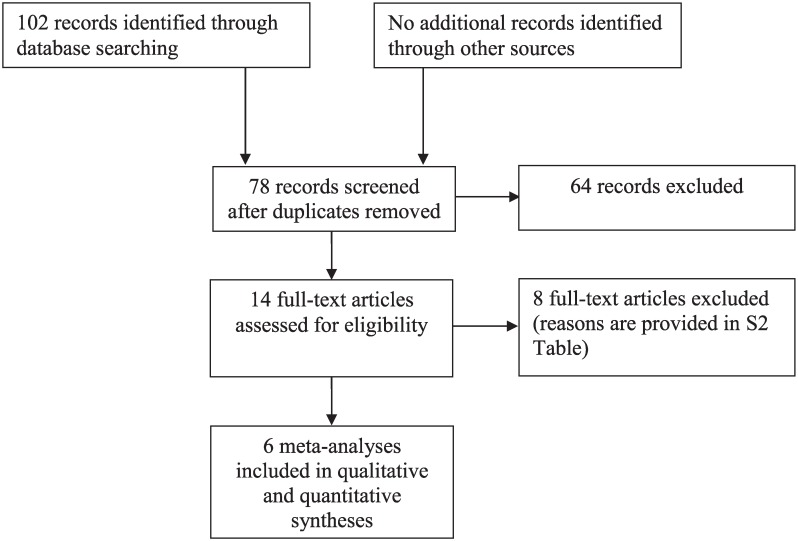
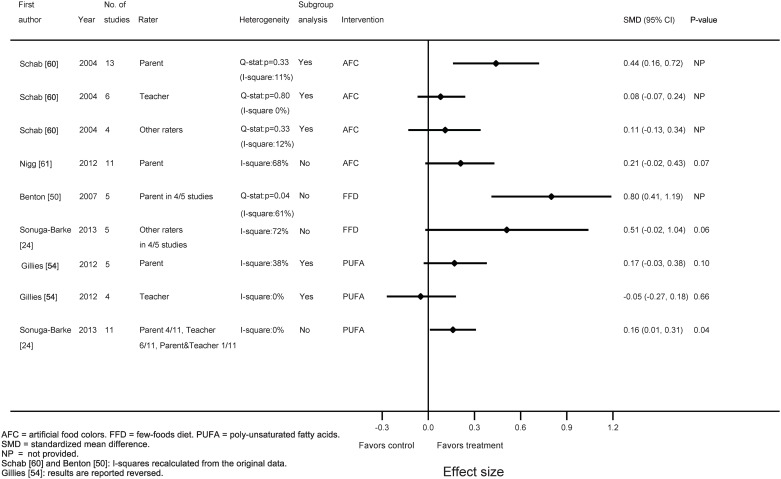
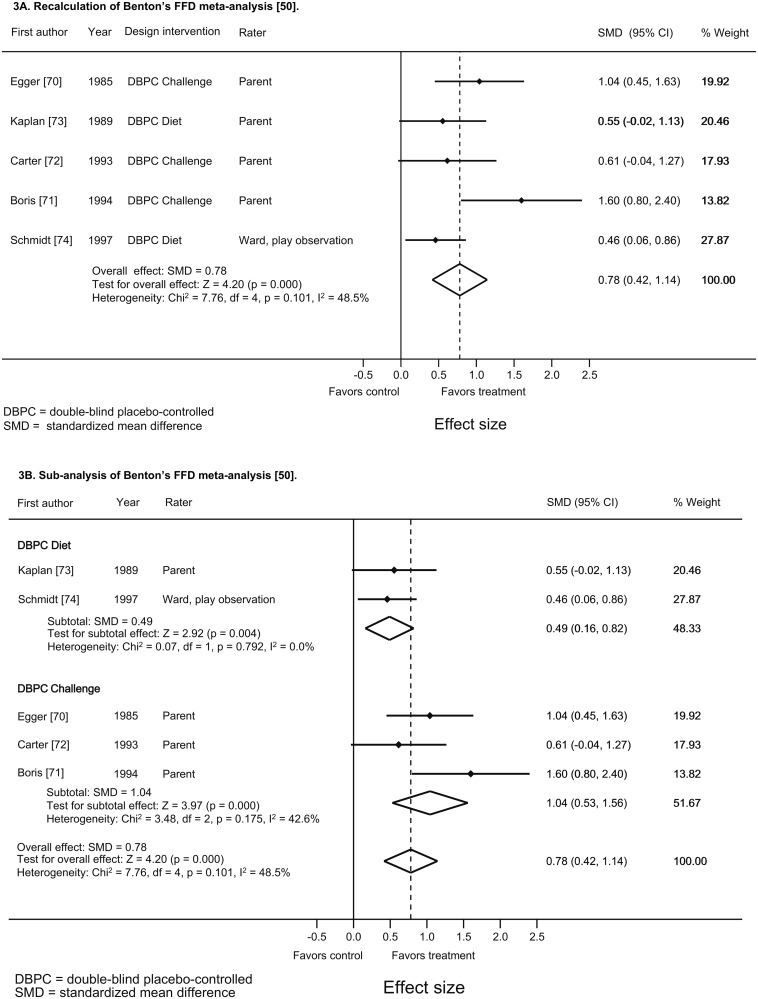
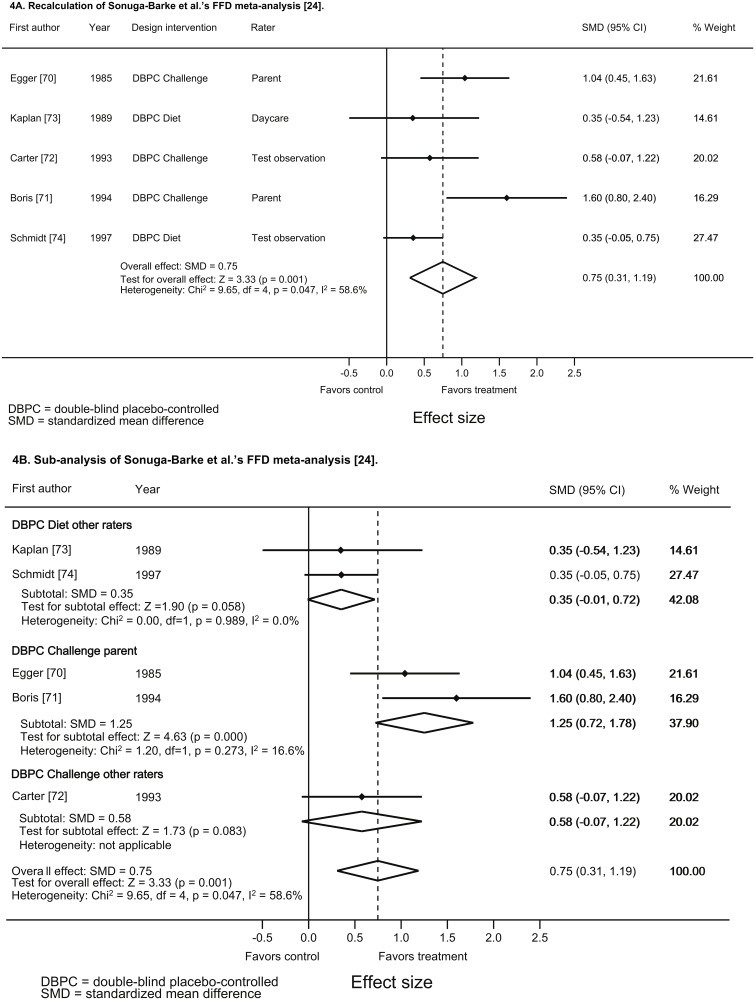
INTRODUCTION: Attention-deficit/hyperactivity disorder (ADHD) is a debilitating mental health problem hampering the child's development. The underlying causes include both genetic and environmental factors and may differ between individuals. The efficacy of diet treatments in ADHD was recently evaluated in three reviews, reporting divergent and confusing conclusions based on heterogeneous studies and subjects. To address this inconsistency we conducted a systematic review of meta-analyses of double-blind placebo-controlled trials evaluating the effect of diet interventions (elimination and supplementation) on ADHD. METHODS: Our literature search resulted in 14 meta-analyses, six of which confined to double-blind placebo-controlled trials applying homogeneous diet interventions, i.e. artificial food color (AFC) elimination, a few-foods diet (FFD) and poly-unsaturated fatty acid (PUFA) supplementation. Effect sizes (ES) and Confidence intervals (CI) of study outcomes were depicted in a forest plot. I2 was calculated to assess heterogeneity if necessary and additional random effects subgroup meta-regression was conducted if substantial heterogeneity was present. RESULTS: The AFC ESs were 0.44 (95% CI: 0.16-0.72, I2 = 11%) and 0.21 (95% CI: -0.02-0.43, I2 = 68%) [parent ratings], 0.08 (95% CI: -0.07-0.24, I2 = 0%) [teacher ratings] and 0.11 (95% CI: -0.13-0.34, I2 = 12%) [observer ratings]. The FFD ESs were 0.80 (95% CI: 0.41-1.19, I2 = 61%) [parent ratings] and 0.51 (95% CI: -0.02-1.04, I2 = 72%) [other ratings], while the PUFA ESs were 0.17 (95% CI: -0.03-0.38, I2 = 38%) [parent ratings], -0.05 (95% CI: -0.27-0.18, I2 = 0%) [teacher ratings] and 0.16 (95% CI: 0.01-0.31, I2 = 0%) [parent and teacher ratings]. Three meta-analyses (two FFD and one AFC) resulted in high I2 without presenting subgroup results. The FFD meta-analyses provided sufficient data to perform subgroup analyses on intervention type, resulting in a decrease of heterogeneity to 0% (diet design) and 37.8% (challenge design). CONCLUSION: Considering the small average ESs PUFA supplementation is unlikely to provide a tangible contribution to ADHD treatment, while further research is required for AFC elimination before advising this intervention as ADHD treatment. The average FFD ES is substantial, offering treatment opportunities in subgroups of children with ADHD not responding to or too young for medication. Further FFD research should focus on establishing the underlying mechanisms of food (e.g. incrimination of gut microbiota) to simplify the FFD approach in children with ADHD.
Overview
The claims and statistics of this paper haven’t been checked yet.
Run the check — free, no account needed. It reads the open-access text and checks the sources it cites.
Integrity signals
Registry
Cites
Statistics
Figures
Verification
Claims the paper makes
The claims and statistics of this paper haven’t been checked yet.
Run the check — free, no account needed. It reads the open-access text and checks the sources it cites.
Claims other papers make about this one
Each is checked against this paper’s own text: does it say what the citing paper says it does?
The source backs part of the claim, not all of it — or backs it for a different population, condition or comparison.
In the citing paper
“The recalculated meta-analyses found moderately large effect sizes in RCTs of the few-foods diets for any-rater measures (n=5, SMD=0.75, 95% CI: 0.31-1.19, I²=58.6%) and parent/ward observation measures (n=5, SMD=0.78, 95% CI: 0.42-1.14, I²=48.5%) of ADHD symptoms 78 .”
From A meta-review of "lifestyle psychiatry": the role of exercise, smoking, diet and sleep in the prevention and treatment of mental disorders (2020) · cites this paper as [78]
Experimental — accuracy not yet measuredThe cited source says what the claim attributes to it.
In the citing paper
“The results from meta-analyses of placebo-controlled trials indicated a non-significant trend towards improvement in symptoms of ADHD from AFC elimination across parent-rated measures (n=11, SMD=0.21, 95% CI: -0.02 to 0.43, I²=68%, p=0.07)”
From A meta-review of "lifestyle psychiatry": the role of exercise, smoking, diet and sleep in the prevention and treatment of mental disorders (2020) · cites this paper as [78]
The cited source says what the claim attributes to it.
In the citing paper
“with no effects for teacher-rated measures (n=6, SMD=0.08, 95% CI: -0.07 to 0.24, I²=0%) and observed-rated measures (n=4, SMD=0.11, 95% CI: -0.13 to 0.34, I²=12%) 78 .”
From A meta-review of "lifestyle psychiatry": the role of exercise, smoking, diet and sleep in the prevention and treatment of mental disorders (2020) · cites this paper as [78]
Self-check
Percentages, sums and reported differences re-computed from the paper’s own numbers.
The self-check needs the paper’s full text.
Citations
Cites
Measuring inconsistency in meta-analyses
Higgins, J. P. T., Thompson, S. G., Deeks, J. J., & Altman, D. G. (2003) · BMJ · doi:10.1136/bmj.327.7414.557 · Cited by 63,139
Liberati, A., Altman, D. G., Tetzlaff, J., Mulrow, C., Gøtzsche, P. C., Ioannidis, J. P. A., Clarke, M., Devereaux, P. J., Kleijnen, J., & Moher, D. (2009) · PLoS Medicine · doi:10.1371/journal.pmed.1000100 · Cited by 28,164
Liberati, A., Altman, D. G., Tetzlaff, J., Mulrow, C., Gotzsche, P. C., Ioannidis, J. P. A., Clarke, M., Devereaux, P. J., Kleijnen, J., & Moher, D. (2009) · BMJ · doi:10.1136/bmj.b2700 · Cited by 17,648
Assessing the quality of reports of randomized clinical trials: Is blinding necessary?
Jadad, A. R., Moore, R. A., Carroll, D., Jenkinson, C., Reynolds, D. J. M., Gavaghan, D. J., & McQuay, H. J. (1996) · Controlled Clinical Trials · doi:10.1016/0197-2456(95)00134-4 · Cited by 17,582
Zhang, Q., Wang, C., Zheng, M., Li, Y., Li, J., Zhang, L., Shang, X., & Yan, C. (2014) · Cerebrovascular Diseases · doi:10.1159/000369778 · Cited by 11,609
Diet rapidly and reproducibly alters the human gut microbiome
David, L. A., Maurice, C. F., Carmody, R. N., Gootenberg, D. B., Button, J. E., Wolfe, B. E., Ling, A. V., Devlin, A. S., Varma, Y., Fischbach, M. A., et al. (2014) · Nature · doi:10.1038/nature12820 · Cited by 10,100
Sterne, J. A. C., Sutton, A. J., Ioannidis, J. P. A., Terrin, N., Jones, D. R., Lau, J., Carpenter, J., Rucker, G., Harbord, R. M., Schmid, C. H., et al. (2011) · BMJ · doi:10.1136/bmj.d4002 · Cited by 7,709
Cochrane Handbook for Systematic Reviews of Interventions Version 5.0.1. The Cochrane Collaboration
Higgins, J., Green, S. R., & Higgins, J. (2008) · Cited by 5,544
Effect size estimates: Current use, calculations, and interpretation.
Fritz, C. O., Morris, P. E., & Richler, J. J. (2012) · Journal of Experimental Psychology: General · doi:10.1037/a0024338 · Cited by 5,199
Dong, Y., Hao, L., Shi, Z., Wang, G., Zhang, Z., & Han, C. (2013) · Urologia Internationalis · doi:10.1159/000351405 · Cited by 4,557
(1999) · Archives of General Psychiatry · doi:10.1001/archpsyc.56.12.1073 · Cited by 3,372
Hsiao, E. Y., McBride, S. W., Hsien, S., Sharon, G., Hyde, E. R., McCue, T., Codelli, J. A., Chow, J., Reisman, S. E., Petrosino, J. F., et al. (2013) · Cell · doi:10.1016/j.cell.2013.11.024 · Cited by 3,283
(2013) · The Lancet · doi:10.1016/s0140-6736(12)62129-1 · Cited by 3,010
Personalized nutrition by prediction of glycemic responses
Zeevi, D., Korem, T., Zmora, N., Israeli, D., Rothschild, D., Weinberger, A., Ben-Yacov, O., Lador, D., Avnit-Sagi, T., Lotan-Pompan, M., et al. (2015) · Cell · doi:10.1016/j.cell.2015.11.001 · Cited by 2,929
Systematic Review and Meta-analysis
Garg, A. X., Hackam, D. G., & Tonelli, M. A. (2008) · Clinical Journal of the American Society of Nephrology · doi:10.2215/cjn.01430307 · Cited by 2,293
Subcommittee on Attention-Deficit/Hyperactivity Disorder, S. C. O. Q. I. A. M. (2011) · Pediatrics · doi:10.1542/peds.2011-2654 · Cited by 2,185
Estimating effect sizes from pretest-posttest-control group designs
Morris, S. B. (2008) · Organizational Research Methods · doi:10.1177/1094428106291059 · Cited by 2,133
Artificial sweeteners induce glucose intolerance by altering the gut microbiota
Suez, J., Korem, T., Zeevi, D., Zilberman-Schapira, G., Thaiss, C. A., Maza, O., Israeli, D., Zmora, N., Gilad, S., Weinberger, A., et al. (2014) · Nature · doi:10.1038/nature13793 · Cited by 2,067
Blundell, J. E., Baker, J. L., Boyland, E. J., Blaak, E. E., Charzewska, J., Henauw, S. D., Frühbeck, G., González‐Gross, M., Hebebrand, J., Holm, L., et al. (2017) · Obesity Facts · doi:10.1159/000455952 · Cited by 1,983
Polanczyk, G. V., Willcutt, E. G., Salum, G. A., Kieling, C., & Rohde, L. A. (2014) · International Journal of Epidemiology · doi:10.1093/ije/dyt261 · Cited by 1,822
The interplay between the intestinal microbiota and the brain
Collins, S. M., Surette, M., & Bercik, P. (2012) · Nature Reviews Microbiology · doi:10.1038/nrmicro2876 · Cited by 1,611
How to select, calculate, and interpret effect sizes.
Durlak, J. (2009) · Journal of Pediatric Psychology · doi:10.1093/jpepsy/jsp004 · Cited by 1,487
Attention-deficit/hyperactivity disorder
Faraone, S. V., Asherson, P., Banaschewski, T., Biederman, J., Buitelaar, J. K., Ramos-Quiroga, J. A., Rohde, L. A., Sonuga-Barke, E. J. S., Tannock, R., & Franke, B. (2015) · Nature Reviews Disease Primers · doi:10.1038/nrdp.2015.20 · Cited by 1,479
Inference by Eye: Confidence Intervals and How to Read Pictures of Data.
Cumming, G., & Finch, S. (2005) · American Psychologist · doi:10.1037/0003-066x.60.2.170 · Cited by 1,449
Molina, B. S. G., Hinshaw, S. P., Swanson, J. M., Arnold, L. E., Vitiello, B., Jensen, P. S., Epstein, J. N., Hoza, B., Hechtman, L., Abikoff, H. B., et al. (2009) · Journal of the American Academy of Child & Adolescent Psychiatry · doi:10.1097/chi.0b013e31819c23d0 · Cited by 1,182
Attention deficit hyperactivity disorder
Thapar, A., & Cooper, M. (2015) · The Lancet · doi:10.1016/s0140-6736(15)00238-x · Cited by 1,168
Sonuga-Barke, E. J. S., Brandeis, D., Cortese, S., Daley, D., Ferrin, M., Holtmann, M., Stevenson, J., Danckaerts, M., van der Oord, S., Döpfner, M., et al. (2013) · American Journal of Psychiatry · doi:10.1176/appi.ajp.2012.12070991 · Cited by 1,167
Gene-environment interplay and psychopathology: multiple varieties but real effects
Rutter, M., Moffitt, T. E., & Caspi, A. (2006) · Journal of Child Psychology and Psychiatry · doi:10.1111/j.1469-7610.2005.01557.x · Cited by 1,058
Meta-analysis of structural imaging findings in attention-deficit/hyperactivity disorder
Valera, E. M., Faraone, S. V., Murray, K. E., & Seidman, L. J. (2007) · Biological Psychiatry · doi:10.1016/j.biopsych.2006.06.011 · Cited by 891
The Interpretation of Random-Effects Meta-Analysis in Decision Models
Ades, A. E., Lu, G., & Higgins, J. P. T. (2005) · Medical Decision Making · doi:10.1177/0272989x05282643 · Cited by 862
Harpin, V. A. (2005) · Archives of Disease in Childhood · doi:10.1136/adc.2004.059006 · Cited by 789
Shaw, M., Hodgkins, P., Caci, H., Young, S., Kahle, J., Woods, A. G., & Arnold, L. E. (2012) · BMC Medicine · doi:10.1186/1741-7015-10-99 · Cited by 759
Practitioner Review: What have we learnt about the causes of ADHD?
Thapar, A., Cooper, M., Eyre, O., & Langley, K. (2013) · Journal of Child Psychology and Psychiatry · doi:10.1111/j.1469-7610.2012.02611.x · Cited by 701
A dirty dozen: twelve p-value misconceptions.
Goodman, S. (2008) · Seminars in hematology (Print) · doi:10.1053/j.seminhematol.2008.04.003 · Cited by 694
European clinical guidelines for hyperkinetic disorder ? first upgrade
Taylor, E., D�pfner, M., Sergeant, J., Asherson, P., Banaschewski, T., Buitelaar, J., Coghill, D., Danckaerts, M., Rothenberger, A., Sonuga-Barke, E., et al. (2004) · European Child & Adolescent Psychiatry · doi:10.1007/s00787-004-1002-x · Cited by 682
Dalsgaard, S., Østergaard, S. D., Leckman, J. F., Mortensen, P. B., & Pedersen, M. G. (2015) · The Lancet · doi:10.1016/s0140-6736(14)61684-6 · Cited by 681
Wehmeier, P. M., Schacht, A., & Barkley, R. A. (2010) · Journal of Adolescent Health · doi:10.1016/j.jadohealth.2009.09.009 · Cited by 628
Medication for Attention Deficit–Hyperactivity Disorder and Criminality
Lichtenstein, P., Halldner, L., Zetterqvist, J., Sjölander, A., Serlachius, E., Fazel, S., Långström, N., & Larsson, H. (2012) · New England Journal of Medicine · doi:10.1056/nejmoa1203241 · Cited by 611
Nutritional medicine as mainstream in psychiatry
Sarris, J., Logan, A. C., Akbaraly, T. N., Amminger, G. P., Balanzá-Martínez, V., Freeman, M. P., Hibbeln, J., Matsuoka, Y., Mischoulon, D., Mizoue, T., et al. (2015) · The Lancet Psychiatry · doi:10.1016/s2215-0366(14)00051-0 · Cited by 592
A meta-analysis of behavioral treatments for attention-deficit/hyperactivity disorder
Fabiano, G. A., Pelham, W. E., Coles, E. K., Gnagy, E. M., Chronis-Tuscano, A., & O'Connor, B. C. (2009) · Clinical Psychology Review · doi:10.1016/j.cpr.2008.11.001 · Cited by 588
How persistent is ADHD? A controlled 10-year follow-up study of boys with ADHD
Biederman, J., Petty, C. R., Evans, M., Small, J., & Faraone, S. V. (2010) · Psychiatry Research · doi:10.1016/j.psychres.2009.12.010 · Cited by 496
Comparing the efficacy of stimulants for ADHD in children and adolescents using meta-analysis
Faraone, S. V., & Buitelaar, J. (2010) · European Child & Adolescent Psychiatry · doi:10.1007/s00787-009-0054-3 · Cited by 485
Confidence Interval or P-Value? Part 4 of a Series on Evaluation of Scientific Publications
du Prel, J., Hommel, G., Röhrig, B., & Blettner, M. (2009) · Deutsches Ärzteblatt international · doi:10.3238/arztebl.2009.0335 · Cited by 460
Alcock, J., Maley, C. C., & Aktipis, C. A. (2014) · BioEssays · doi:10.1002/bies.201400071 · Cited by 454
Genome-wide association studies in ADHD
Franke, B., Neale, B. M., & Faraone, S. V. (2009) · Human Genetics · doi:10.1007/s00439-009-0663-4 · Cited by 436
Bloch, M. H., & Qawasmi, A. (2011) · Journal of the American Academy of Child & Adolescent Psychiatry · doi:10.1016/j.jaac.2011.06.008 · Cited by 417
Jensen, C. M., & Steinhausen, H.-C. (2015) · ADHD Attention Deficit and Hyperactivity Disorders · doi:10.1007/s12402-014-0142-1 · Cited by 402
Lyte, M. (2013) · PLoS Pathogens · doi:10.1371/journal.ppat.1003726 · Cited by 399
Methylphenidate for children and adolescents with attention deficit hyperactivity disorder (ADHD)
Storebø, O. J., Ramstad, E., Krogh, H. B., Nilausen, T. D., Skoog, M., Holmskov, M., Rosendal, S., Groth, C., Magnusson, F. L., Moreira-Maia, C. R., et al. (2015) · Cochrane Database of Systematic Reviews · doi:10.1002/14651858.cd009885.pub2 · Cited by 347
Design, analysis, and presentation of crossover trials
Mills, E. J., Chan, A., Wu, P., Vail, A., Guyatt, G. H., & Altman, D. G. (2009) · Trials · doi:10.1186/1745-6215-10-27 · Cited by 341
EFA supplementation in children with inattention, hyperactivity, and other disruptive behaviors
Stevens, L., Zhang, W., Peck, L. W., Kuczek, T., Grevstad, N., Mahon, A. K., Zentall, S. S., Arnold, L. E., & Burgess, J. R. (2003) · Lipids · doi:10.1007/s11745-006-1155-0 · Cited by 337
The Economic Impact of Attention-Deficit/Hyperactivity Disorder in Children and Adolescents
Pelham, W. E., Foster, E. M., & Robb, J. A. (2007) · Journal of Pediatric Psychology · doi:10.1093/jpepsy/jsm022 · Cited by 336
What causes attention deficit hyperactivity disorder?
Thapar, A., Cooper, M., Jefferies, R., & Stergiakouli, E. (2011) · Archives of Disease in Childhood · doi:10.1136/archdischild-2011-300482 · Cited by 327
CONTROLLED TRIAL OF OLIGOANTIGENIC TREATMENT IN THE HYPERKINETIC SYNDROME
Egger, J., GRAHAM, P. J., Carter, C. M., Gumley, D., & Soothill, J. F. (1985) · The Lancet · doi:10.1016/s0140-6736(85)91206-1 · Cited by 326
Stimulant treatment over five years: adherence, effectiveness, and adverse effects
Charach, A., Ickowicz, A., & Schachar, R. (2004) · Journal of the American Academy of Child & Adolescent Psychiatry · doi:10.1097/00004583-200405000-00009 · Cited by 315
Review of Medication Adherence in Children and Adults with ADHD
Adler, L. D., & Nierenberg, A. A. (2010) · Postgraduate Medicine · doi:10.3810/pgm.2010.01.2112 · Cited by 295
Bolea-Alamañac, B., Nutt, D. J., Adamou, M., Asherson, P., Bazire, S., Coghill, D., Heal, D., Müller, U., Nash, J., Santosh, P., et al. (2014) · Journal of Psychopharmacology · doi:10.1177/0269881113519509 · Cited by 287
Morrison, A. P., Turkington, D., Pyle, M., Spencer, H. M., Brabban, A., Dunn, G., Christodoulides, T., Dudley, R. E. J., Chapman, N., Callcott, P., et al. (2014) · The Lancet · doi:10.1016/s0140-6736(13)62246-1 · Cited by 265
Parletta, N., & Bryan, J. (2007) · Journal of Developmental & Behavioral Pediatrics · doi:10.1097/01.dbp.0000267558.88457.a5 · Cited by 262
Nigg, J. T., Lewis, K., Edinger, T., & Falk, M. (2012) · Journal of the American Academy of Child & Adolescent Psychiatry · doi:10.1016/j.jaac.2011.10.015 · Cited by 260
Measured gene-by-environment interaction in relation to attention-deficit/hyperactivity disorder
Nigg, J., Nikolas, M., & Burt, S. A. (2010) · Journal of the American Academy of Child & Adolescent Psychiatry · doi:10.1016/j.jaac.2010.01.025 · Cited by 259
Overlapping meta-analyses on the same topic: survey of published studies
Siontis, K. C., Hernandez‐Boussard, T., & Ioannidis, J. P. A. (2013) · BMJ · doi:10.1136/bmj.f4501 · Cited by 249
Molina, B. S. G., Hinshaw, S. P., Eugene Arnold, L., Swanson, J. M., Pelham, W. E., Hechtman, L., Hoza, B., Epstein, J. N., Wigal, T., Abikoff, H. B., et al. (2013) · Journal of the American Academy of Child & Adolescent Psychiatry · doi:10.1016/j.jaac.2012.12.014 · Cited by 246
Te, B. (1964) · PubMed · Cited by 242
Dirty Dozen: Twelve P-Value Misconceptions
Goodman, T. (2008) · Cited by 238
Etiologic classification of attention-deficit/hyperactivity disorder.
Millichap, J. G. (2008) · PEDIATRICS · doi:10.1542/peds.2007-1332 · Cited by 234
SCHAB, D. W., & TRINH, N.-H. T. (2004) · Journal of Developmental & Behavioral Pediatrics · doi:10.1097/00004703-200412000-00007 · Cited by 234
Comparing the efficacy of medications for ADHD using meta-analysis.
(2006) · PubMed Central · Cited by 230
Why P Values Are Not a Useful Measure of Evidence in Statistical Significance Testing
Hubbard, R., & Lindsay, R. M. (2008) · Theory & Psychology · doi:10.1177/0959354307086923 · Cited by 226
The Diet Factor in Attention-Deficit/Hyperactivity Disorder
Millichap, J. G., & Yee, M. M. (2012) · PEDIATRICS · doi:10.1542/peds.2011-2199 · Cited by 224
Freeman, D., Waite, F., Startup, H., Myers, E., Lister, R., McInerney, J., Harvey, A. G., Geddes, J., Zaiwalla, Z., Luengo-Fernandez, R., et al. (2015) · The Lancet Psychiatry · doi:10.1016/s2215-0366(15)00314-4 · Cited by 219
Pelsser, L. M. J., Frankena, K., Toorman, J., Savelkoul, H. F. J., Dubois, A. E. J., Pereira, R. R., Haagen, T. A., Rommelse, N. N. J., & Buitelaar, J. K. (2011) · The Lancet · doi:10.1016/s0140-6736(10)62227-1 · Cited by 217
Self-citationThe Effect of Sugar on Behavior or Cognition in Children: A Meta-analysis
Wolraich, M. L. (1995) · JAMA · doi:10.1001/jama.1995.03530200053037 · Cited by 214
Hyperkinesis and Learning Disabilities Linked to Artificial Food Flavors and Colors
Feingold, B. F. (1975) · AJN American Journal of Nursing · doi:10.2307/3423460 · Cited by 214
The Preschool Attention-Deficit/Hyperactivity Disorder Treatment Study (PATS) 6-Year Follow-Up
Riddle, M. A., Yershova, K., Lazzaretto, D., Paykina, N., Yenokyan, G., Greenhill, L., Abikoff, H., Vitiello, B., Wigal, T., McCracken, J. T., et al. (2013) · Journal of the American Academy of Child & Adolescent Psychiatry · doi:10.1016/j.jaac.2012.12.007 · Cited by 202
ADHD characteristics: I. Concurrent co-morbidity patterns in children & adolescents
Elia, J., Ambrosini, P., & Berrettini, W. (2008) · Child and Adolescent Psychiatry and Mental Health · doi:10.1186/1753-2000-2-15 · Cited by 196
The Delinquency Outcomes of Boys with ADHD with and Without Comorbidity
Sibley, M. H., Pelham, W. E., Molina, B. S. G., Gnagy, E. M., Waschbusch, D. A., Biswas, A., MacLean, M. G., Babinski, D. E., & Karch, K. M. (2010) · Research on Child and Adolescent Psychopathology · doi:10.1007/s10802-010-9443-9 · Cited by 175
Gillies, D. M., Sinn, J. K. H., Lad, S. S., Leach, M., & Ross, M. J. (2012) · Cochrane Database of Systematic Reviews · doi:10.1002/14651858.cd007986.pub2 · Cited by 173
Effects of a few food diet in attention deficit disorder.
Carter, C. M., Urbanowicz, M., Hemsley, R., Mantilla, L. B., Ströbel, S., GRAHAM, P. J., & Taylor, E. A. (1993) · Archives of Disease in Childhood · doi:10.1136/adc.69.5.564 · Cited by 171
Harnack, K., Andersen, G., & Somoza, V. (2009) · Nutrition & Metabolism · doi:10.1186/1743-7075-6-8 · Cited by 162
Hawkey, E., & Nigg, J. T. (2014) · Clinical Psychology Review · doi:10.1016/j.cpr.2014.05.005 · Cited by 160
The impact of diet on anti-social, violent and criminal behaviour
Benton, D. (2007) · Neuroscience & Biobehavioral Reviews · doi:10.1016/j.neubiorev.2007.02.002 · Cited by 158
Foods and additives are common causes of the attention deficit hyperactive disorder in children.
Boris, M., & Mandel, F. S. (1994) · PubMed · Cited by 155
Dietary Replacement in Preschool-Aged Hyperactive Boys
Kaplan, B. J., McNicol, J., Conte, R., & Moghadam, H. K. (1989) · PEDIATRICS · doi:10.1542/peds.83.1.7 · Cited by 154
Early detection and intervention for attention-deficit/hyperactivity disorder
Sonuga-Barke, E. J., Koerting, J., Smith, E., McCann, D. C., & Thompson, M. (2011) · Expert Review of Neurotherapeutics · doi:10.1586/ern.11.39 · Cited by 150
Hyperactivity and Diet Treatment
Kavale, K. A., & Forness, S. R. (1983) · Journal of Learning Disabilities · doi:10.1177/002221948301600604 · Cited by 150
A Quantitative and Qualitative Review of Neurocognitive Performance in Pediatric Bipolar Disorder
Joseph, M. F., Frazier, T. W., Youngstrom, E. A., & Soares, J. C. (2008) · Journal of Child and Adolescent Psychopharmacology · doi:10.1089/cap.2008.064 · Cited by 128
Fabiano, G. A., Schatz, N. K., Aloe, A. M., Chacko, A., & Chronis-Tuscano, A. M. (2015) · Clinical Child and Family Psychology Review · doi:10.1007/s10567-015-0178-6 · Cited by 122
Cooper, R. E., Tye, C., Kuntsi, J., Vassos, E., & Asherson, P. J. (2015) · Journal of Psychopharmacology · doi:10.1177/0269881115587958 · Cited by 117
Attention deficit hyperactivity disorder: a review of the essential facts
Daley, D. (2006) · Child Care Health and Development · doi:10.1111/j.1365-2214.2006.00572.x · Cited by 115
Dietary Sensitivities and ADHD Symptoms: Thirty-five Years of Research
Stevens, L. J., Kuczek, T., Burgess, J. R., Hurt, E. A., & Arnold, L. E. (2010) · Clinical Pediatrics · doi:10.1177/0009922810384728 · Cited by 113
Faraone, S. V. (2009) · PubMed · Cited by 107
Stevenson, J., Buitelaar, J., Cortese, S., Ferrin, M., Konofal, E., Lecendreux, M., Simonoff, E., Wong, I. C. K., & Sonuga‐Barke, E. (2014) · Journal of Child Psychology and Psychiatry · doi:10.1111/jcpp.12215 · Cited by 106
Dunst, C. J., & Hamby, D. W. (2012) · Journal of Intellectual & Developmental Disability · doi:10.3109/13668250.2012.673575 · Cited by 106
Current topic: An auditable protocol for treating attention deficit/hyperactivity disorder
Hill, P. (2001) · Archives of Disease in Childhood · doi:10.1136/adc.84.5.404 · Cited by 104
Wells, K. C., Chi, T. C., Hinshaw, S. P., Epstein, J. N., Pfiffner, L. J., Nebel-Schwalm, M. S., Owens, E. B., Arnold, L. E., Abikoff, H., Conners, C. K., et al. (2006) · Journal of Consulting and Clinical Psychology · doi:10.1037/0022-006x.74.4.649 · Cited by 103
Diet in the treatment of ADHD in children—A systematic review of the literature
Rytter, M. J. H., Andersen, L. B. B., Houmann, T., Bilenberg, N., Hvolby, A., Mølgaard, C., Michaelsen, K. F., & Lauritzen, L. (2014) · Nordic Journal of Psychiatry · doi:10.3109/08039488.2014.921933 · Cited by 103
van de Loo-Neus, G. H. H., Rommelse, N., & Buitelaar, J. K. (2011) · European Neuropsychopharmacology · doi:10.1016/j.euroneuro.2011.03.008 · Cited by 98
A randomised controlled trial into the effects of food on ADHD
Pelsser, L. M. J., Frankena, K., Toorman, J., Savelkoul, H. F. J., Pereira, R. R., & Buitelaar, J. K. (2008) · European Child & Adolescent Psychiatry · doi:10.1007/s00787-008-0695-7 · Cited by 96
Self-citationDoes oligoantigenic diet influence hyperactive/conduct-disordered children ? a controlled trial
Schmidt, M. H., M�cks, P., Lay, B., Eisert, H. G., Fojkar, R., Fritz-Sigmund, D., Marcus, A., & Musaeus, B. (1997) · European Child & Adolescent Psychiatry · doi:10.1007/bf00566671 · Cited by 90
Childress, A. C., & Sallee, F. R. (2014) · CNS Drugs · doi:10.1007/s40263-013-0130-6 · Cited by 89
Coulson, M. (2010) · Frontiers in Psychology · doi:10.3389/fpsyg.2010.00026 · Cited by 77
GHUMAN, J. K., Arnold, L. E., & Anthony, B. J. (2008) · Journal of Child and Adolescent Psychopharmacology · doi:10.1089/cap.2008.022 · Cited by 77
Garbe, E., Mikolajczyk, R., Banaschewski, T., Petermann, U., Petermann, F., Kraut, A. A., & Langner, I. (2012) · Journal of Child and Adolescent Psychopharmacology · doi:10.1089/cap.2012.0022 · Cited by 67
Kratochvil, C. J., Milton, D. R., Vaughan, B. S., & Greenhill, L. L. (2008) · Child and Adolescent Psychiatry and Mental Health · doi:10.1186/1753-2000-2-25 · Cited by 64
Helfer, B., Prosser, A., Samara, M. T., Geddes, J. R., Cipriani, A., Davis, J. M., Mavridis, D., Salanti, G., & Leucht, S. (2015) · BMC Medicine · doi:10.1186/s12916-015-0317-4 · Cited by 63
Restriction and Elimination Diets in ADHD Treatment
Nigg, J. T., & Holton, K. (2014) · Child and Adolescent Psychiatric Clinics of North America · doi:10.1016/j.chc.2014.05.010 · Cited by 60
Puri, B. K., & Martins, J. G. (2014) · Prostaglandins, Leukotrienes and Essential Fatty Acids · doi:10.1016/j.plefa.2014.01.004 · Cited by 56
The Food Additive-Free Diet in the Treatment of Behavior Disorders: A Review
Wender, E. H. (1986) · Journal of Developmental & Behavioral Pediatrics · doi:10.1097/00004703-198602000-00007 · Cited by 55
Biederman, J., Petty, C. R., Monuteaux, M. C., Mick, E. O., Parcell, T., Westerberg, D., & Faraone, S. V. (2008) · Journal of Developmental & Behavioral Pediatrics · doi:10.1097/dbp.0b013e318190b290 · Cited by 54
Effects of omega-3 fatty acids on mental health.
Schachter, H. M., Kourad, K., Merali, Z., Lumb, A., Tran, K. T., & Miguelez, M. (2005) · PubMed Central · Cited by 52
Wehmeier, P. M., Dittmann, R., & Banaschewski, T. (2014) · ADHD Attention Deficit and Hyperactivity Disorders · doi:10.1007/s12402-014-0156-8 · Cited by 48
Putting Research in Context: Understanding Confidence Intervals from One or More Studies
Finch, S. J., & Cumming, G. (2008) · Journal of Pediatric Psychology · doi:10.1093/jpepsy/jsn118 · Cited by 43
Attention-Deficit/Hyperactivity Disorder
Arnold, L. E., Hurt, E. A., & Lofthouse, N. (2013) · Child and Adolescent Psychiatric Clinics of North America · doi:10.1016/j.chc.2013.03.001 · Cited by 42
Gilbert, M., Healey, M., Fidler, F., & Cumming, G. (2010) · Figshare · doi:10.26181/16926727 · Cited by 37
Child and adolescent psychiatry: past scientific achievements and challenges for the future
Rutter, M. L. (2010) · European Child & Adolescent Psychiatry · doi:10.1007/s00787-010-0111-y · Cited by 36
Hyperkinesis and Learning Disabilities Linked to Artificial Food Flavors and Colors
Feingold, B. F. (1975) · AJN American Journal of Nursing · doi:10.1097/00000446-197505000-00021 · Cited by 36
Howard, J. T., Walick, K. S., & Rivera, J. C. (2015) · Journal of Pediatric Orthopaedics · doi:10.1097/bpo.0000000000000651 · Cited by 35
Kleinman, N. L., Durkin, M. B., Melkonian, A. K., & Markosyan, K. M. (2009) · Journal of Occupational and Environmental Medicine · doi:10.1097/jom.0b013e3181bca68c · Cited by 34
Vestibular Stimulation for ADHD
Clark, D. L., Arnold, L. E., Crowl, L., Bozzolo, H., Peruggia, M., Ramadan, Y., Bornstein, R. A., Hollway, J. A., Thompson, S. L., Malone, K., et al. (2007) · Journal of Attention Disorders · doi:10.1177/1087054707311042 · Cited by 32
Sonuga-Barke, E. J. S., Daley, D., Thompson, M. J. J., & Swanson, J. (2003) · Expert Review of Neurotherapeutics · doi:10.1586/14737175.3.4.465 · Cited by 27
Pelham, W. E., Smith, B. H., Evans, S. W., Bukstein, O., Gnagy, E. M., Greiner, A. R., & Sibley, M. H. (2017) · Journal of Attention Disorders · doi:10.1177/1087054712474688 · Cited by 27
Sonuga-Barke, E. J. S., van Lier, P. A. C., Swanson, J. M., Coghill, D., Wigal, S. B., Vandenberghe, M., & HATCH, S. J. (2007) · European Child & Adolescent Psychiatry · doi:10.1007/s00787-007-0667-3 · Cited by 23
Rucklidge, J. J., & Kaplan, B. J. (2014) · CNS Drugs · doi:10.1007/s40263-014-0190-2 · Cited by 21
Clinical importance cannot be ruled out using mean difference alone
Cates, C. J., & Karner, C. (2015) · BMJ · doi:10.1136/bmj.h5496 · Cited by 19
Hong, M., Lee, W. H., Moon, D. S., Lee, S. M., Chung, U., & Bahn, G. H. (2014) · Journal of Child and Adolescent Psychopharmacology · doi:10.1089/cap.2013.0090 · Cited by 16
Sonuga-Barke, E. J. S., Coghill, D., DeBacker, M., & Swanson, J. M. (2009) · Journal of Child and Adolescent Psychopharmacology · doi:10.1089/cap.2009.0027 · Cited by 14
McCann, D., Thompson, M. J. J., Daley, D., Barton, J., Laver‐Bradbury, C., Hutchings, J., Coghill, D., Stanton, L., Maishman, T., Dixon, L., et al. (2014) · Trials · doi:10.1186/1745-6215-15-142 · Cited by 14
van der Kolk, A., Bouwmans, C. A. M., Schawo, S. J., Buitelaar, J. K., van Agthoven, M., & Roijen, L. H. (2015) · SpringerPlus · doi:10.1186/s40064-015-0978-7 · Cited by 13
Pelsser, L., van Steijn, D. V., Frankena, K., Toorman, J., Buitelaar, J., & Rommelse, N. (2013) · Child and Adolescent Mental Health · doi:10.1111/j.1475-3588.2012.00652.x · Cited by 13
Self-citationDoes oligoantigenic diet influence hyperactive/conduct-disordered children a controlled trial
Schmidt, M. H., Möcks, P., Lay, B., et al. (1997) · European Child & Adolescent Psychiatry · doi:10.1007/s007870050013 · Cited by 9
Hautmann, C., Rothenberger, A., & Döpfner, M. (2013) · BMC Psychiatry · doi:10.1186/1471-244x-13-219 · Cited by 6
ADHD, a Food-Induced Hypersensitivity Syndrome: in Quest of a Cause.
Pelsser, L. M. J. (2011) · Socio-Environmental Systems Modeling · Cited by 4
Self-citation
Research works printed but not linked: 1
- CM Jensen, 2015, Comorbid mental disorders in children and adolescents with attention-deficit/hyperactivity disorder in a large nationwide study, Atten Defic Hyperact Disord, 7, 27, 10.1007/s12402-014-0142-1 · DOI · Paper page
Cited by
Sorted by citations
Cryan, J. F., O'Riordan, K. J., Cowan, C. S. M., Sandhu, K. V., Bastiaanssen, T. F. S., Boehme, M., Codagnone, M. G., Cussotto, S., Fulling, C., Golubeva, A. V., et al. (2019) · Physiological Reviews · doi:10.1152/physrev.00018.2018 · Cited by 5,286
Firth, J., Solmi, M., Wootton, R. E., Vancampfort, D., Schuch, F. B., Hoare, E., Gilbody, S., Torous, J., Teasdale, S. B., Jackson, S. E., et al. (2020) · World Psychiatry · doi:10.1002/wps.20773 · Cited by 1,242
Reduced microbiome alpha diversity in young patients with ADHD
Prehn‐Kristensen, A., Zimmermann, A., Tittmann, L., Lieb, W., Schreiber, S., Baving, L., & Fischer, A. (2018) · PLoS ONE · doi:10.1371/journal.pone.0200728 · Cited by 304
Treatment strategies for ADHD: an evidence-based guide to select optimal treatment
Caye, A., Swanson, J. M., Coghill, D., & Rohde, L. A. (2019) · Molecular Psychiatry · doi:10.1038/s41380-018-0116-3 · Cited by 303
Snigdha, S., Ha, K., Tsai, P., Dinan, T. G., Bartos, J. D., & Shahid, M. (2021) · Pharmacology & Therapeutics · doi:10.1016/j.pharmthera.2021.107978 · Cited by 173
Metadata
- Authors
- Pelsser, L. M., Frankena, K., Toorman, J., & Rodrigues Pereira, R.
- Affiliations
- Wageningen University & Research (NL)
- Catharina Ziekenhuis (NL)
- Corresponding author
- Pelsser, Lidy M.
- Venue
- PLOS ONE
- Publisher
- Public Library of Science (PLoS)
- Published
- 2017-01-25
- Volume
- 12
- Issue
- 1
- Pages
- e0169277
- ISSN
- 1932-6203 (ISSN-L)
- PMC
- PMC5266211
- OpenAlex
- W2581553063
- Cited by
- 145
- References
- 135
- Citations by year
- 2026: 11 · 2025: 8 · 2024: 16 · 2023: 14 · 2022: 20 · 2021: 26 · 2020: 20 · 2019: 13 · 2018: 11 · 2017: 4
- FWCI
- 1.99
- Type
- journal article
- Language
- en
- Open access
- gold
- doi.org
- Licence
- Locations
- PLoS ONE (publishedVersion, cc-by)
- Europe PMC (PubMed Central) (publishedVersion, cc-by)
- PubMed Central (publishedVersion, cc-by)
- PubMed (publishedVersion)
- Socio-Environmental Systems Modeling (acceptedVersion, cc-by)
- RePEc: Research Papers in Economics (submittedVersion)
- DOAJ (DOAJ: Directory of Open Access Journals) (submittedVersion, cc-by-sa)
- Figshare (submittedVersion, cc-by)
- Data Archiving and Networked Services (DANS) (submittedVersion, cc-by)
- Topics
- Health Sciences › Medicine › Psychiatry and Mental health › Attention Deficit Hyperactivity Disorder
- Health Sciences › Medicine › Psychiatry and Mental health › Child Nutrition and Feeding Issues
- Social Sciences › Psychology › Developmental and Educational Psychology › Behavioral and Psychological Studies
- Keywords
- attention deficit hyperactivity disorder, dietary intervention, omega-3 fatty acids, omega-6 fatty acids, n-6/n-3 ratio, child behavior, parent ratings, teacher ratings, effect size heterogeneity
- MeSH terms
- Problem Behavior, Attention Deficit Disorder with Hyperactivity, Child, Child Behavior, Double-Blind Method, Humans, Meta-Analysis as Topic, Randomized Controlled Trials as Topic, Treatment Outcome
About these checks
Registry, retraction, Cites and statistics results are computed, not judged, with one exception: a printed reference that no index lists is read once by a model before it counts as a citation error. Claims are extracted by a model and kept only when their quote appears verbatim in the text; each cited source is then checked, with a model’s help, for whether it says what the claim relies on. Those verdicts can be wrong — read the claim’s quote and the cited source before relying on one.
Statistics and arithmetic are recomputed, not judged.
Confidence bands are shown only for fields calibrated on our annotated test set. None is calibrated yet, so no band is shown.
What counts as a claim ›How we measure confidence ›How we check this ›
Are you an author, or do you see a problem with this page? Request a review
