

The effectiveness of various computer-based interventions for patients with chronic pain or functional somatic syndromes: A systematic review and meta-analysis
Open accessThe DOI matches its Crossref record; 128 of the 129 references it cites were found in a registry or an index.
Abstract
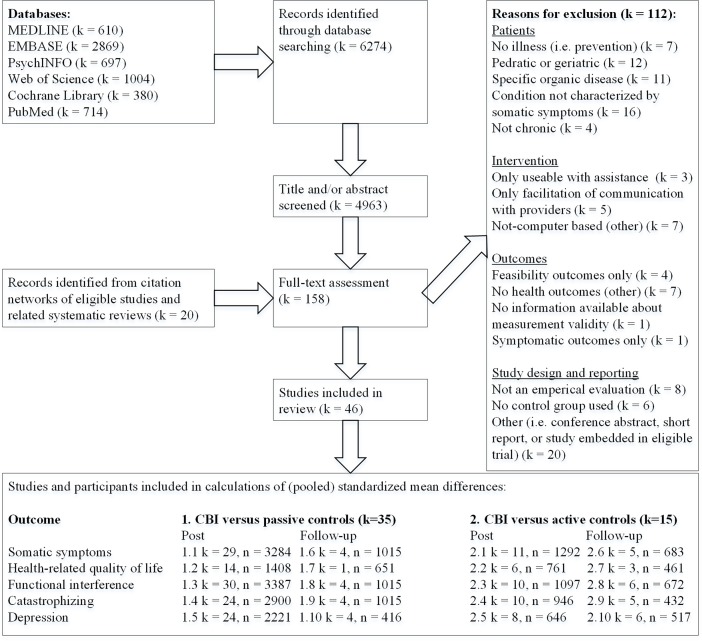
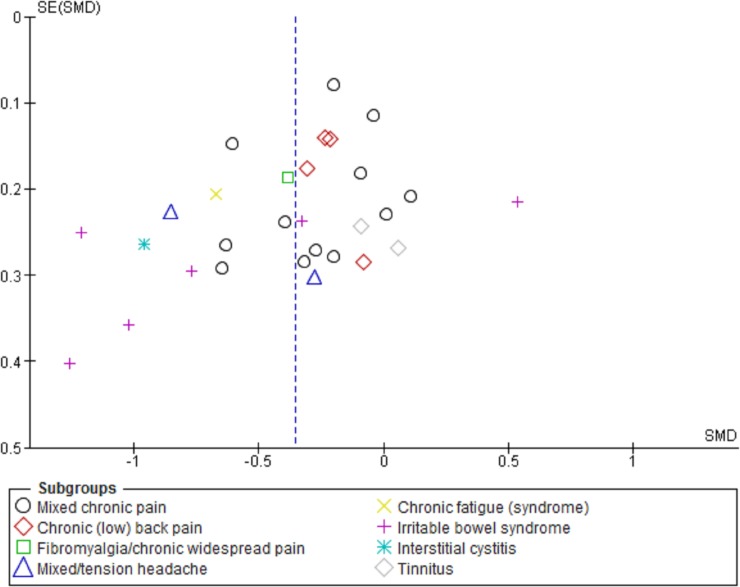
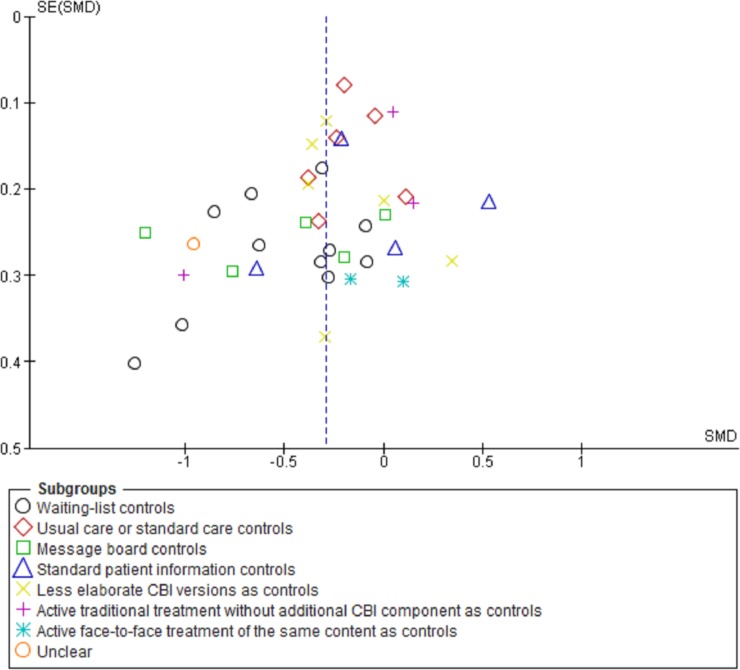
Computer-based interventions target improvement of physical and emotional functioning in patients with chronic pain and functional somatic syndromes. However, it is unclear to what extent which interventions work and for whom. This systematic review and meta-analysis (registered at PROSPERO, 2016: CRD42016050839) assesses efficacy relative to passive and active control conditions, and explores patient and intervention factors. Controlled studies were identified from MEDLINE, EMBASE, PsychInfo, Web of Science, and Cochrane Library. Pooled standardized mean differences by comparison type, and somatic symptom, health-related quality of life, functional interference, catastrophizing, and depression outcomes were calculated at post-treatment and at 6 or more months follow-up. Risk of bias was assessed. Sub-group analyses were performed by patient and intervention characteristics when heterogeneous outcomes were observed. Maximally, 30 out of 46 eligible studies and 3,387 participants were included per meta-analysis. Mostly, internet-based cognitive behavioral therapies were identified. Significantly higher patient reported outcomes were found in comparisons with passive control groups (standardized mean differences ranged between -.41 and -.18), but not in comparisons with active control groups (SMD = -.26 - -.14). For some outcomes, significant heterogeneity related to patient and intervention characteristics. To conclude, there is a minority of good quality evidence for small positive average effects of computer-based (cognitive) behavior change interventions, similar to traditional modes. These effects may be sustainable. Indications were found as of which interventions work better or more consistently across outcomes for which patients. Future process analyses are recommended in the aim of better understanding individual chances of clinically relevant outcomes.
Overview
The claims and statistics of this paper haven’t been checked yet.
Free: it reads the open-access text and checks the first 5 claims that cite a source we can check. Create a free account to check every claim.
Integrity signals
Registry
Cites
Statistics
Figures
Verification
Claims the paper makes
The claims and statistics of this paper haven’t been checked yet.
Free: it reads the open-access text and checks the first 5 claims that cite a source we can check. Create a free account to check every claim.
Claims other papers make about this one
Each is checked against this paper’s own text: does it say what the citing paper says it does?
The source backs part of the claim, not all of it — or backs it for a different population, condition or comparison.
In the citing paper
“Results from systematic reviews and meta-analysis support the efficacy of Internet-based ACT for chronic pain patients in improving emotional distress and pain-related outcomes.”
From Efficacy of Videoconference Group Acceptance and Commitment Therapy (ACT) and Behavioral Activation Therapy for Depression (BATD) for Chronic Low Back Pain (CLBP) Plus Comorbid Depressive Symptoms: A Randomized Controlled Trial (IMPACT Study) (2023) · cites this paper as [28]
Experimental — accuracy not yet measuredThe source backs part of the claim, not all of it — or backs it for a different population, condition or comparison.
In the citing paper
“Previous systematic reviews provide evidence for the efficacy of Internetbased ACT in chronic pain patients in reducing pain intensity and emotional distress, 28,78 but with small effects.”
From Efficacy of Videoconference Group Acceptance and Commitment Therapy (ACT) and Behavioral Activation Therapy for Depression (BATD) for Chronic Low Back Pain (CLBP) Plus Comorbid Depressive Symptoms: A Randomized Controlled Trial (IMPACT Study) (2023) · cites this paper as [28]
Experimental — accuracy not yet measuredThe source backs part of the claim, not all of it — or backs it for a different population, condition or comparison.
In the citing paper
“The first three outcome domains appear to be frequently reported in meta-analyses on internet-based interventions in chronic pain, whereas the last three domains related to participant experience and safety of the treatment are often not or only partly reported (Buhrman et al., 2016; Martorella et al., 2017; Vugts et al., 2018).”
From Guided internet-based cognitive-behavioral therapy for patients with chronic pain: A meta-analytic review (2022) · cites this paper as Vugts et al., 2018
Experimental — accuracy not yet measuredThe source backs part of the claim, not all of it — or backs it for a different population, condition or comparison.
In the citing paper
“Also, iCBT has previously found to be effective for a broader range of treatment outcomes for chronic somatic (pain) conditions than included in the previously mentioned meta-analysis (Gandy et al., 2022) (e.g., for fatigue, distress, pain acceptance, quality of life; van Beugen et al., 2014; Vugts et al., 2018).”
From Guided internet-based cognitive-behavioral therapy for patients with chronic pain: A meta-analytic review (2022) · cites this paper as Vugts et al., 2018
Experimental — accuracy not yet measuredThe source backs part of the claim, not all of it — or backs it for a different population, condition or comparison.
In the citing paper
“The efficacy of therapist guidance in somatic conditions and chronic pain appears to be less consistent, with some studies showing superiority of guided interventions and others finding similar effects of guided and unguided interventions (e.g., Buhrman et al., 2016; Mehta et al., 2019; Van Gils et al., 2016; Vugts et al., 2018; White et al., 2020).”
From Guided internet-based cognitive-behavioral therapy for patients with rheumatic conditions: A systematic review (2021) · cites this paper as Vugts et al., 2018
Experimental — accuracy not yet measured
8 more claims about this paper
Create a free account to see every claim other papers make about this one.
Self-check
Percentages, sums and reported differences re-computed from the paper’s own numbers.
The self-check needs the paper’s full text.
Citations
Cites
Preferred Reporting Items for Systematic Reviews and Meta-Analyses: the PRISMA statement
Moher, D., Liberati, A., Tetzlaff, J., Altman, D. G., & for the PRISMA Group (2009) · BMJ · doi:10.1136/bmj.b2535 · Cited by 83,823
Preferred Reporting Items for Systematic Reviews and Meta-Analyses: The PRISMA Statement
Moher, D., Liberati, A., Tetzlaff, J., Altman, D. G., & The PRISMA Group (2009) · PLoS Medicine · doi:10.1371/journal.pmed.1000097 · Cited by 64,042 · cited 2×
“Study inclusion and exclusion were based on: patient (P), intervention (I), comparison (C), outcome (O), and study type (S) criteria (PICOS) [48].”
Preferred reporting items for systematic reviews and meta-analyses: the PRISMA Statement.
(2009) · PubMed Central · Cited by 44,859
The Cochrane Collaboration's tool for assessing risk of bias in randomised trials
Higgins, J. P. T., Altman, D. G., Gotzsche, P. C., Juni, P., Moher, D., Oxman, A. D., Savovic, J., Schulz, K. F., Weeks, L., Sterne, J. A. C., et al. (2011) · BMJ · doi:10.1136/bmj.d5928 · Cited by 33,817
Cochrane Handbook for Systematic Reviews of Interventions: Cochrane Book Series
(2008) · doi:10.1002/9780470712184 · Cited by 25,048 · cited 5×
“Applicable thresholds for (rough) interpretations of I(2), with 0% to 40% as potentially unimportant, 30% to 60% as modest, 50% to 90% as substantial and 75% to 100% as considerable heterogeneity were conservatively applied [45].”
InfluentialDermyshi, E., Wang, Y., Yan, C., Hong, W., Qiu, G., Gong, X., & Zhang, T. (2017) · Neonatology · doi:10.1159/000454668 · Cited by 24,451
Wang, G., Ma, R., Qiao, G., Wada, K., Aizawa, Y., & Satoh, T. (2015) · Integrative Medicine International · doi:10.1159/000368408 · Cited by 18,657
Michie, S., Richardson, M., Johnston, M., Abraham, C., Francis, J., Hardeman, W., Eccles, M. P., Cane, J., & Wood, C. E. (2013) · Annals of Behavioral Medicine · doi:10.1007/s12160-013-9486-6 · Cited by 7,629 · cited 2×
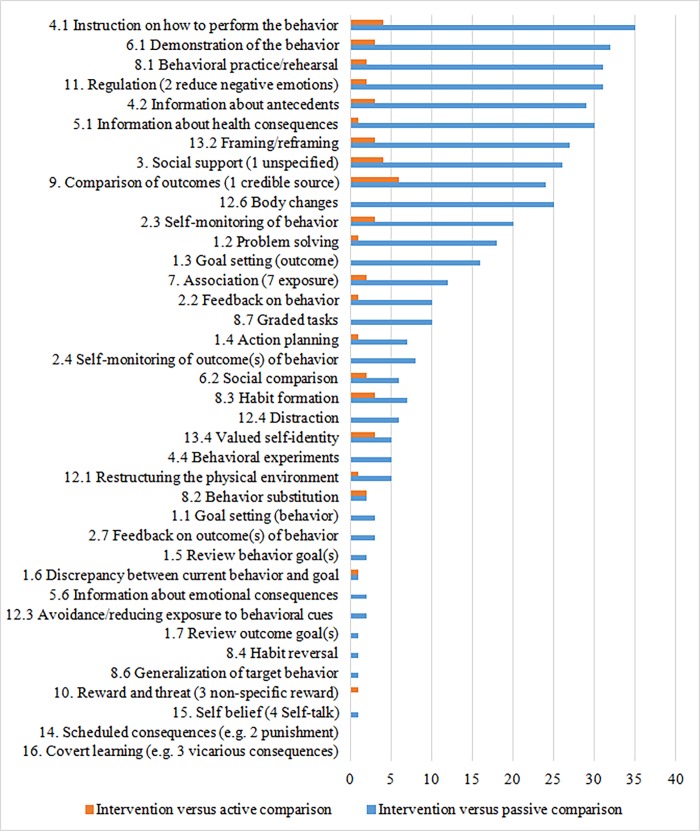
“For classifying BCTs, we used the updated Behavior Change Technique Taxonomy version 1 (BCTTv1) [25, 60].”
Survey of chronic pain in Europe: Prevalence, impact on daily life, and treatment
Breivik, H., Collett, B., Ventafridda, V., Cohen, R., & Gallacher, D. (2006) · European Journal of Pain · doi:10.1016/j.ejpain.2005.06.009 · Cited by 5,486 · cited 2×
“…that are due to a high prevalence (e.g., 20–30% for CP [10, 11], 1–3% for chronic fatigue syndrome [12], and 10–15% for tinnitus [13]), co-morbid psychological distress, loss of productivity, absence of strongly effective medical treatment, and limited access to specialized health care [3, 4, 11].”
Dworkin, R. H., Turk, D. C., Wyrwich, K. W., Beaton, D., Cleeland, C. S., Farrar, J. T., Haythornthwaite, J. A., Jensen, M. P., Kerns, R. D., Ader, D. N., et al. (2008) · The Journal of Pain · doi:10.1016/j.jpain.2007.09.005 · Cited by 3,471
The biopsychosocial approach to chronic pain: Scientific advances and future directions.
Gatchel, R. J., Peng, Y. B., Peters, M. L., Fuchs, P. N., & Turk, D. C. (2007) · Psychological Bulletin · doi:10.1037/0033-2909.133.4.581 · Cited by 3,392 · cited 2×
“, 20–30% for CP [10, 11], 1–3% for chronic fatigue syndrome [12], and 10–15% for tinnitus [13]), co-morbid psychological distress, loss of productivity, absence of strongly effective medical treatment, and limited access to specialized health care [3, 4, 11].”
A classification of chronic pain for ICD-11
Treede, R.-D., Rief, W., Barke, A., Aziz, Q., Bennett, M. I., Benoliel, R., Cohen, M., Evers, S., Finnerup, N. B., First, M. B., et al. (2015) · Pain · doi:10.1097/j.pain.0000000000000160 · Cited by 2,822 · cited 1×
“, fibromyalgia, chronic low back pain, and irritable bowel syndrome [IBS]) [4, 5].”
Webb, T. L., Joseph, J., Yardley, L., & Michie, S. (2010) · Journal of Medical Internet Research · doi:10.2196/jmir.1376 · Cited by 2,517 · cited 1×
“Classification of intervention content with uniform and empirically supported taxonomies was applied in a consistent, transparent, and independent way on the basis of intervention descriptions in study articles and research protocols [59, 60].”
Psychosomatic medicine in Germany: more timely than ever
Zipfel, S., Herzog, W., Kruse, J., & Henningsen, P. (2016) · Psychotherapy and Psychosomatics · doi:10.1159/000447701 · Cited by 2,323
Updated Method Guidelines for Systematic Reviews in the Cochrane Collaboration Back Review Group
van Tulder, M., Furlan, A., Bombardier, C., & Bouter, L. (2003) · Spine · doi:10.1097/01.brs.0000065484.95996.af · Cited by 2,180 · cited 1×
“Quality assessment of the studies was performed by MV and JG based on the 13 risks of bias criteria recommended by the Cochrane Collaboration Back Review group [61].”
Eysenbach, G., & CONSORT-EHEALTH Group (2011) · Journal of Medical Internet Research · doi:10.2196/jmir.1923 · Cited by 1,863
Computer-based psychological treatments for depression: A systematic review and meta-analysis
Richards, D., & Richardson, T. (2012) · Clinical Psychology Review · doi:10.1016/j.cpr.2012.02.004 · Cited by 1,442
The prevalence of chronic pain in United States adults: Results of an Internet-based survey
Johannes, C. B., Le, T. K., Zhou, X., Johnston, J. A., & Dworkin, R. H. (2010) · The Journal of Pain · doi:10.1016/j.jpain.2010.07.002 · Cited by 1,252 · cited 1×
“, 20–30% for CP [10, 11], 1–3% for chronic fatigue syndrome [12], and 10–15% for tinnitus [13]), co-morbid psychological distress, loss of productivity, absence of strongly effective medical treatment, and limited access to specialized health care [3, 4, 11].”
Andersson, G., Cuijpers, P., Carlbring, P., Riper, H., & Hedman, E. (2014) · World Psychiatry · doi:10.1002/wps.20151 · Cited by 1,077 · cited 3×
“It was suggested that future studies should focus more on methodological uniformity and quality, outcomes at long-term follow-up, direct one-to-one comparisons with various active treatments, and/or extended variety in participants and treatment settings [18, 24, 26].”
Spijkerman, M. P. J., Pots, W. T. M., & Bohlmeijer, E. T. (2016) · Clinical Psychology Review · doi:10.1016/j.cpr.2016.03.009 · Cited by 975
Ehde, D. M., Dillworth, T. M., & Turner, J. A. (2014) · American Psychologist · doi:10.1037/a0035747 · Cited by 879 · cited 1×
“Herein, CBIs could offer independent patient access to stand-alone programs or complementary elements for further-reaching, stronger, or more enduring effects by increasing independent engagement and/or preventing relapse [8, 9].”
Kulkarni, A. V. (2009) · JAMA · doi:10.1001/jama.2009.1307 · Cited by 817 · cited 3×
“As additional methods to obtain an exhaustive set of peerreviewed and published journal articles, references of previous systematic reviews and metaanalyses on related topics were checked [2, 14, 17–20, 22–29, 31, 32, 34, 54–57], and backward and forward citations of eligible studies were checked in Web of Science [58…”
InfluentialTinnitus: causes and clinical management
Langguth, B., Kreuzer, P. M., Kleinjung, T., & De Ridder, D. (2013) · The Lancet Neurology · doi:10.1016/s1474-4422(13)70160-1 · Cited by 799 · cited 1×
“, 20–30% for CP [10, 11], 1–3% for chronic fatigue syndrome [12], and 10–15% for tinnitus [13]), co-morbid psychological distress, loss of productivity, absence of strongly effective medical treatment, and limited access to specialized health care [3, 4, 11].”
Veehof, M. M., Oskam, M.-J., Schreurs, K. M. G., & Bohlmeijer, E. T. (2011) · PAIN · doi:10.1016/j.pain.2010.11.002 · Cited by 792
Management of functional somatic syndromes
Henningsen, P., Zipfel, S., & Herzog, W. (2007) · The Lancet · doi:10.1016/s0140-6736(07)60159-7 · Cited by 741 · cited 5×
“, fibromyalgia, chronic low back pain, and irritable bowel syndrome [IBS]) [4, 5].”
InfluentialHedman, E., Ljótsson, B., & Lindefors, N. (2012) · Expert Review of Pharmacoeconomics & Outcomes Research · doi:10.1586/erp.12.67 · Cited by 672
Smeets, R. J. E. M., Vlaeyen, J. W. S., Kester, A. D. M., & Knottnerus, J. A. (2006) · The Journal of Pain · doi:10.1016/j.jpain.2005.10.011 · Cited by 629 · cited 1×
“Important health outcomes for CP and FSS are patient-reported somatic symptom intensity, health related quality of life (HRQOL), functional interference (or disability, handicap, impact, or disturbance of activities due to somatic symptoms), catastrophizing (or acceptance, self-efficacy, or any other targeted cognitiv…”
Mind the gap: improving the dissemination of CBT
Shafran, R., Clark, D. M., Fairburn, C. G., Arntz, A., Barlow, D. H., Ehlers, A., Freeston, M., Garety, P. A., Hollon, S. D., Ost, L. G., et al. (2009) · Behaviour Research and Therapy · doi:10.1016/j.brat.2009.07.003 · Cited by 569
Mair, F. S., May, C., O’Donnell, C., Finch, T., Sullivan, F., & Murray, E. (2012) · Bulletin of the World Health Organization · doi:10.2471/blt.11.099424 · Cited by 553
Ebert, D. D., Zarski, A.-C., Christensen, H., Stikkelbroek, Y., Cuijpers, P., Berking, M., & Riper, H. (2015) · PLOS ONE · doi:10.1371/journal.pone.0119895 · Cited by 533
Turner, J. A., Holtzman, S., & Mancl, L. (2007) · Pain · doi:10.1016/j.pain.2006.09.005 · Cited by 530
Lorig, K. R., Ritter, P. L., Laurent, D. D., & Plant, K. (2008) · Arthritis Care & Research · doi:10.1002/art.23817 · Cited by 440 · cited 18×
“Different characteristics of patients included in studies were some-times associated with significantly higher or lower CBI effects on somatic symptom, HRQOL, and functional interference outcomes.”
InfluentialHeber, E., Ebert, D. D., Lehr, D., Cuijpers, P., Berking, M., Nobis, S., & Riper, H. (2017) · Journal of Medical Internet Research · doi:10.2196/jmir.5774 · Cited by 408 · cited 2×
“It seems reasonable to expect that users need substantial time to process contents that are relevant to them and are likely to lose interest when a program takes too long to complete [117].”
Waller, R., & Gilbody, S. (2009) · Psychological Medicine · doi:10.1017/s0033291708004224 · Cited by 393 · cited 1×
“, the degree to which e-health trials resemble routine applications) [14, 15, 41, 42].”
Cavanagh, K., Strauss, C., Forder, L., & Jones, F. (2014) · Clinical Psychology Review · doi:10.1016/j.cpr.2014.01.001 · Cited by 340
Andersson, G. (2002) · Psychosomatic Medicine · doi:10.1097/01.psy.0000031577.42041.f8 · Cited by 312
Macea, D. D., Gajos, K., Daglia Calil, Y. A., & Fregni, F. (2010) · The Journal of Pain · doi:10.1016/j.jpain.2010.06.005 · Cited by 289
Buhrman, M., Skoglund, A., Husell, J., Bergström, K., Gordh, T., Hursti, T., Bendelin, N., Furmark, T., & Andersson, G. (2013) · Behaviour Research and Therapy · doi:10.1016/j.brat.2013.02.010 · Cited by 285
Psychological therapies (Internet-delivered) for the management of chronic pain in adults
Eccleston, C., Fisher, E., Craig, L., Duggan, G. B., Rosser, B. A., & Keogh, E. (2014) · Cochrane Database of Systematic Reviews · doi:10.1002/14651858.cd010152.pub2 · Cited by 271 · cited 13×
“Statistically significant moderators of outcome improvement were found in CP patients after Internet-delivered CBT in comparison with controls, but there was no consistent moderating factor across outcome domains [39].”
InfluentialLjótsson, B., Falk, L., Vesterlund, A. W., Hedman, E., Lindfors, P., Rück, C., Hursti, T., Andréewitch, S., Jansson, L., Lindefors, N., et al. (2010) · Behaviour Research and Therapy · doi:10.1016/j.brat.2010.03.003 · Cited by 270
A controlled trial of self-help treatment of recurrent headache conducted via the Internet.
Ström, L., Pettersson, R., & Andersson, G. (2000) · Journal of Consulting and Clinical Psychology · doi:10.1037/0022-006x.68.4.722 · Cited by 267
Hesser, H., Gustafsson, T., Lundén, C., Henrikson, O., Fattahi, K., Johnsson, E., Westin, V. Z., Carlbring, P., Mäki-Torkko, E., Kaldo, V., et al. (2012) · Journal of Consulting and Clinical Psychology · doi:10.1037/a0027021 · Cited by 257 · cited 1×
“01 [68, 70, 72, 80, 84, 97, 106] [65, 76, 92, 101, 103, 105, 108]”
Lalloo, C., Jibb, L. A., Rivera, J., Agarwal, A., & Stinson, J. N. (2015) · The Clinical Journal of Pain · doi:10.1097/ajp.0000000000000171 · Cited by 257 · cited 2×
“, the degree to which e-health trials resemble routine applications) [14, 15, 41, 42].”
Trompetter, H. R., Bohlmeijer, E. T., Veehof, M. M., & Schreurs, K. M. G. (2015) · Journal of Behavioral Medicine · doi:10.1007/s10865-014-9579-0 · Cited by 255
A General Framework for the Evaluation of Clinical Trial Quality
Berger, V., & Alperson, S. (2009) · Reviews on Recent Clinical Trials · doi:10.2174/157488709788186021 · Cited by 251 · cited 1×
“A category was scored “high risk” if high risk was scored for one or more underlying criteria, assuming that a single source of risk could bias the results of a trial completely [63].”
Rief, W., & Martin, A. (2014) · Annual Review of Clinical Psychology · doi:10.1146/annurev-clinpsy-032813-153745 · Cited by 251 · cited 1×
“, migraine, multiple sclerosis, osteoarthritis) or psychiatric illness as a complication thereof, hypochondriasis [50], or individuals who did not report chronic somatic symptoms (e.”
Beatty, L., & Lambert, S. (2013) · Clinical Psychology Review · doi:10.1016/j.cpr.2013.03.004 · Cited by 244
Controlled trial of Internet-based treatment with telephone support for chronic back pain
Buhrman, M., Fältenhag, S., Ström, L., & Andersson, G. (2004) · Pain · doi:10.1016/j.pain.2004.07.021 · Cited by 232
Can pain be managed through the Internet? A systematic review of randomized controlled trials
Bender, J. L., Radhakrishnan, A., Diorio, C., Englesakis, M., & Jadad, A. R. (2011) · Pain · doi:10.1016/j.pain.2011.02.012 · Cited by 223
Internet interventions for chronic pain including headache: a systematic review
Buhrman, M., Gordh, T., & Andersson, G. (2016) · Internet Interventions · doi:10.1016/j.invent.2015.12.001 · Cited by 223 · cited 1×
“[23] that included 22 randomized controlled trials (RCTs) (five were published by the first author).”
Ljótsson, B., Hedman, E., Andersson, E., Hesser, H., Lindfors, P., Hursti, T., Rydh, S., Rück, C., Lindefors, N., & Andersson, G. (2011) · American Journal of Gastroenterology · doi:10.1038/ajg.2011.139 · Cited by 218 · cited 1×
“CBI vs active controls Symptom intensity post [9, 66, 78, 79, 83, 89, 91, 95, 98, 100, 104] -.”
Internet-enhanced management of fibromyalgia: A randomized controlled trial
Williams, D. A., Kuper, D., Segar, M., Mohan, N., Sheth, M., & Clauw, D. J. (2010) · Pain · doi:10.1016/j.pain.2010.08.034 · Cited by 210 · cited 1×
“Moreover, findings on relationships between CBI content and outcomes are limited by lacking information about fidelity, despite that standardized delivery is considered to be an important strength of CBI [107, 120, 121].”
Richmond, H., Hall, A. M., Copsey, B., Hansen, Z., Williamson, E., Hoxey-Thomas, N., Cooper, Z., & Lamb, S. E. (2015) · PLOS ONE · doi:10.1371/journal.pone.0134192 · Cited by 205
A randomized controlled trial of an internet-based treatment for chronic headache
Devineni, T., & Blanchard, E. B. (2005) · Behaviour Research and Therapy · doi:10.1016/j.brat.2004.01.008 · Cited by 203
Brown, M., Glendenning, A., Hoon, A. E., & John, A. (2016) · Journal of Medical Internet Research · doi:10.2196/jmir.6200 · Cited by 198 · cited 1×
“This agrees with the up-to-medium sized effects observed in previous meta-analyses on the efficacy of Internet CBT in populations with CP [1, 14] and mental or chronic somatic symptoms at large [22, 32, 110, 111].”
van Beugen, S., Ferwerda, M., Hoeve, D., Rovers, M. M., Spillekom-van Koulil, S., van Middendorp, H., & Evers, A. W. (2014) · Journal of Medical Internet Research · doi:10.2196/jmir.2777 · Cited by 189
Dear (2015) · doi:10.1097/j.pain.0000000000000251 · Cited by 187 · cited 1×
“CBI vs active controls Symptom intensity post [9, 66, 78, 79, 83, 89, 91, 95, 98, 100, 104] -.”
Interactive computer-based interventions for sexual health promotion
Bailey, J. V., Murray, E., Rait, G., Mercer, C. H., Morris, R. W., Peacock, R., Cassell, J., & Nazareth, I. (2010) · Cochrane Database of Systematic Reviews · doi:10.1002/14651858.cd006483.pub2 · Cited by 183
Dear, B. F., Titov, N., Perry, K. N., Johnston, L., Wootton, B. M., Terides, M. D., Rapee, R. M., & Hudson, J. L. (2013) · Pain · doi:10.1016/j.pain.2013.03.005 · Cited by 182 · cited 1×
“01 [68, 70, 72, 80, 84, 97, 106] [65, 76, 92, 101, 103, 105, 108]”
Functional somatic symptoms and syndromes
Mayou, R., & Farmer, A. (2002) · BMJ · doi:10.1136/bmj.325.7358.265 · Cited by 178
Kristjánsdóttir, Ó. B., Fors, E. A., Eide, E., Finset, A., Stensrud, T. L., van Dulmen, S., Wigers, S. H., & Eide, H. (2013) · Journal of Medical Internet Research · doi:10.2196/jmir.2249 · Cited by 176 · cited 1×
“CBI vs active controls Symptom intensity post [9, 66, 78, 79, 83, 89, 91, 95, 98, 100, 104] -.”
Lackner, J. M., Jaccard, J., Krasner, S. S., Katz, L. A., Gudleski, G. D., & Blanchard, E. B. (2007) · Gastroenterology · doi:10.1053/j.gastro.2007.05.014 · Cited by 172
A randomized controlled evaluation of an online chronic pain self management program
Ruehlman, L. S., Karoly, P., & Enders, C. (2012) · Pain · doi:10.1016/j.pain.2011.10.025 · Cited by 172
The prevalence of chronic fatigue syndrome/ myalgic encephalomyelitis: a meta-analysis
Johnston, S., Brenu, Staines, D., & Marshall-Gradisnik (2013) · Clinical Epidemiology · doi:10.2147/clep.s39876 · Cited by 171 · cited 1×
“, 20–30% for CP [10, 11], 1–3% for chronic fatigue syndrome [12], and 10–15% for tinnitus [13]), co-morbid psychological distress, loss of productivity, absence of strongly effective medical treatment, and limited access to specialized health care [3, 4, 11].”
Kaldo, V., Levin, S., Widarsson, J., Buhrman, M., Larsen, H.-C., & Andersson, G. (2008) · Behavior Therapy · doi:10.1016/j.beth.2007.10.003 · Cited by 162 · cited 1×
“CBI vs active controls Symptom intensity post [9, 66, 78, 79, 83, 89, 91, 95, 98, 100, 104] -.”
An Online Self-help CBT Intervention for Chronic Lower Back Pain
Carpenter, K. M., Stoner, S. A., Mundt, J. M., & Stoelb, B. (2012) · The Clinical Journal of Pain · doi:10.1097/ajp.0b013e31822363db · Cited by 157
SCHUBART, J. R., STUCKEY, H. L., GANESHAMOORTHY, A., & SCIAMANNA, C. N. (2011) · CIN: Computers, Informatics, Nursing · doi:10.1097/ncn.0b013e3182155274 · Cited by 153
Davis, M. C., & Zautra, A. J. (2013) · Annals of Behavioral Medicine · doi:10.1007/s12160-013-9513-7 · Cited by 151
Carnes, D., Homer, K. E., Miles, C. L., Pincus, T., Underwood, M., Rahman, A., & Taylor, S. J. C. (2012) · The Clinical Journal of Pain · doi:10.1097/ajp.0b013e31822ed2f3 · Cited by 141
Brief cognitive-behavioral internet therapy for irritable bowel syndrome
Hunt, M. G., Moshier, S., & Milonova, M. (2009) · Behaviour Research and Therapy · doi:10.1016/j.brat.2009.05.002 · Cited by 139
Internet‐Based Treatment of Headache: Does Telephone Contact Add Anything?
Andersson, G., Lundström, P., & Ström, L. (2003) · Headache: The Journal of Head and Face Pain · doi:10.1046/j.1526-4610.2003.03070.x · Cited by 136 · cited 1×
“CBI vs active controls Symptom intensity post [9, 66, 78, 79, 83, 89, 91, 95, 98, 100, 104] -.”
SCHUBART, J. R., STUCKEY, H. L., GANESHAMOORTHY, A., & SCIAMANNA, C. N. (2011) · CIN: Computers, Informatics, Nursing · doi:10.1097/ncn.0b013e3182065eed · Cited by 135
Ljótsson, B., Andersson, G., Andersson, E., Hedman, E., Lindfors, P., Andréewitch, S., Rück, C., & Lindefors, N. (2011) · BMC Gastroenterology · doi:10.1186/1471-230x-11-110 · Cited by 132
painACTION-Back Pain: A Self-Management Website for People with Chronic Back Pain
Chiauzzi, E., Pujol, L. A., Wood, M., Bond, K., Black, R., Yiu, E., & Zacharoff, K. (2010) · Pain Medicine · doi:10.1111/j.1526-4637.2010.00879.x · Cited by 130
Heapy, A. A., Higgins, D. M., Cervone, D., Wandner, L., Fenton, B. T., & Kerns, R. D. (2015) · The Clinical Journal of Pain · doi:10.1097/ajp.0000000000000185 · Cited by 128 · cited 1×
“It was suggested that future studies should focus more on methodological uniformity and quality, outcomes at long-term follow-up, direct one-to-one comparisons with various active treatments, and/or extended variety in participants and treatment settings [18, 24, 26].”
Jasper, K., Weise, C., Conrad, I., Andersson, G., Hiller, W., & Kleinstäuber, M. (2014) · Psychotherapy and Psychosomatics · doi:10.1159/000360705 · Cited by 126 · cited 1×
“Authors of included trials expressed their uncertainty about whether outcomes were influenced by their methods of participant inclusion and could only refer to a single trial with depressed patients to contest this [88, 114].”
Andersson, G., Buhrman, M., Nilsson-Ihrfeldt, E., Jannert, M., & Ström, L. (2011) · Journal of Rehabilitation Medicine · doi:10.2340/16501977-0805 · Cited by 121
Dowd, H., Hogan, M. J., McGuire, B. E., Davis, M. C., Sarma, K. M., Fish, R. A., & Zautra, A. J. (2015) · The Clinical Journal of Pain · doi:10.1097/ajp.0000000000000201 · Cited by 121
Milesl, C. L., Pincusl, T., Carnesl, D., Homerl, K. E., Taylorl, S. J. C., Bremnerl, S. A., Rahmanl, A., & Underwoodl, M. (2011) · European Journal of Pain · doi:10.1016/j.ejpain.2011.01.016 · Cited by 119 · cited 4×
“Two meta-analyses, comprising a diversity of self-management interventions and patients with musculoskeletal pain, explored moderators of program effectiveness [34, 37].”
InfluentialWeb-Based Interventions for Chronic Back Pain: A Systematic Review
Garg, S., Garg, D., Turin, T. C., & Chowdhury, M. F. U. (2016) · Journal of Medical Internet Research · doi:10.2196/jmir.4932 · Cited by 115 · cited 1×
“It was suggested that future studies should focus more on methodological uniformity and quality, outcomes at long-term follow-up, direct one-to-one comparisons with various active treatments, and/or extended variety in participants and treatment settings [18, 24, 26].”
Therapeutic Interactive Voice Response for chronic pain reduction and relapse prevention
Naylor, M. R., Keefe, F. J., Brigidi, B., Naud, S., & Helzer, J. E. (2008) · Pain · doi:10.1016/j.pain.2007.11.001 · Cited by 111 · cited 3×
“CBI vs active controls Symptom intensity post [9, 66, 78, 79, 83, 89, 91, 95, 98, 100, 104] -.”
Krein, S. L., Kadri, R., Hughes, M., Kerr, E. A., Piette, J. D., Holleman, R., Kim, H. M., & Richardson, C. R. (2013) · Journal of Medical Internet Research · doi:10.2196/jmir.2605 · Cited by 107
Grist, R., & Cavanagh, K. (2013) · Journal of Contemporary Psychotherapy · doi:10.1007/s10879-013-9243-y · Cited by 100 · cited 2×
“Process analyses embedded in clinical trials can offer the best evidence on these matters and can be complemented with meta-analytic tests [40, 45].”
Internet-Delivered Cognitive-Behavior Therapy for Tinnitus: A Randomized Controlled Trial
Weise, C., Kleinstäuber, M., & Andersson, G. (2016) · Psychosomatic Medicine · doi:10.1097/psy.0000000000000310 · Cited by 99
Riva, S., Camerini, A.-L., Allam, A., & Schulz, P. J. (2014) · Journal of Medical Internet Research · doi:10.2196/jmir.3474 · Cited by 96
Feltz-Cornelis, C. M. V. D., Hoedeman, R., Keuter, E., & Swinkels, J. A. (2011) · Journal of Psychosomatic Research · doi:10.1016/j.jpsychores.2011.11.007 · Cited by 95 · cited 2×
“Efficacious interventions for reducing experienced symptoms and functional interference, in order of increasing intensity, include conservative medical treatment, physical therapy, psychotherapy, or multidisciplinary rehabilitation in primary or specialized care settings [4, 6, 7].”
Andrews, G., & Williams, A. D. (2014) · Clinical Psychology Review · doi:10.1016/j.cpr.2014.05.006 · Cited by 85
Buhrman, M., Syk, M., Burvall, O., Hartig, T., Gordh, T., & Andersson, G. (2015) · The Clinical Journal of Pain · doi:10.1097/ajp.0000000000000176 · Cited by 83
Everitt, H., Moss-Morris, R., Sibelli, A., Tapp, L., Coleman, N., Yardley, L., Smith, P., & Little, P. (2013) · BMC Gastroenterology · doi:10.1186/1471-230x-13-68 · Cited by 83 · cited 1×
“This study by Everitt et al. (2013) differed from other IBS studies (but not from other included studies) by setting (“closed”) patient factors (higher age and lower education level), intervention factors (lower compliance), and risk of bias criteria (low risk of reporting bias) [83].”
Empowering Patients with Persistent Pain Using an Internet-based Self-Management Program
Wilson, M., Roll, J. M., Corbett, C., & Barbosa-Leiker, C. (2015) · Pain Management Nursing · doi:10.1016/j.pmn.2014.09.009 · Cited by 83
Psychological and behavioural treatments for adults with non-epileptic attack disorder
Martlew, J., Pulman, J., & Marson, A. G. (2014) · Cochrane Database of Systematic Reviews · doi:10.1002/14651858.cd006370.pub2 · Cited by 82
Enhanced care by generalists for functional somatic symptoms and disorders in primary care
Rosendal, M., Blankenstein, A. H., Morriss, R., Fink, P., Sharpe, M., & Burton, C. (2013) · Cochrane Database of Systematic Reviews · doi:10.1002/14651858.cd008142.pub2 · Cited by 76
Abbott, J.-A. M., Kaldo, V., Klein, B., Austin, D., Hamilton, C., Piterman, L., Williams, B., & Andersson, G. (2009) · Cognitive Behaviour Therapy · doi:10.1080/16506070902763174 · Cited by 71
Internet-based rehabilitation for individuals with chronic pain and burnout: a randomized trial
Brattberg, G. (2006) · International Journal of Rehabilitation Research · doi:10.1097/01.mrr.0000210055.17291.f5 · Cited by 69 · cited 1×
“01 [68, 70, 72, 80, 84, 97, 106] [65, 76, 92, 101, 103, 105, 108]”
Vallejo, M. A., Ortega, J., Rivera, J., Comeche, M. I., & Vallejo-Slocker, L. (2015) · Journal of Psychiatric Research · doi:10.1016/j.jpsychires.2015.06.006 · Cited by 68 · cited 1×
“For depression, heterogeneity was accompanied by an apparently outlying observation from a small study [105].”
Intervening on cognitions and behavior in irritable bowel syndrome: A feasibility trial using PDAs
Oerlemans, S., van Cranenburgh, O., Herremans, P.-J., Spreeuwenberg, P., & van Dulmen, S. (2011) · Journal of Psychosomatic Research · doi:10.1016/j.jpsychores.2010.09.018 · Cited by 67 · cited 1×
“CBIs may involve the use of the Internet [14], interactive voice response [9], mobile/ smart phone applications [15], CD-ROM/DVD, or handheld computers as a delivery route [16].”
Miles, C., Pincus, T., Carnes, D., Homer, K., Taylor, S. J., Bremner, S., Rahman, A., & Underwood, M. R. (2011) · UCL Discovery (University College London) · Cited by 63
Buhrman, M., Fredriksson, A., Edström, G., Shafiei, D., Tärnqvist, C., Ljótsson, B., Hursti, T., Gordh, T., & Andersson, G. (2013) · European Journal of Pain · doi:10.1002/j.1532-2149.2012.00244.x · Cited by 60 · cited 1×
“01 [68, 70, 72, 80, 84, 97, 106] [65, 76, 92, 101, 103, 105, 108]”
Self-Help for Medically Unexplained Symptoms: A Systematic Review and Meta-Analysis
van Gils, A., Schoevers, R. A., Bonvanie, I. J., Gelauff, J. M., Roest, A. M., & Rosmalen, J. G. M. (2016) · Psychosomatic Medicine · doi:10.1097/psy.0000000000000325 · Cited by 55
Consultation letters for medically unexplained physical symptoms in primary care
Hoedeman, R., Blankenstein, A. H., van der Feltz-Cornelis, C. M., Krol, B., Stewart, R., & Groothoff, J. W. (2010) · Cochrane Database of Systematic Reviews · doi:10.1002/14651858.cd006524.pub2 · Cited by 54
A Systematic Review and Meta-Analysis on the Efficacy of Self-Help Interventions in Tinnitus
Nyenhuis, N., Golm, D., & Kröner-Herwig, B. (2013) · Cognitive Behaviour Therapy · doi:10.1080/16506073.2013.803496 · Cited by 53
Camerini, L., & Schulz, P. J. (2012) · Journal of Medical Internet Research · doi:10.2196/jmir.1953 · Cited by 51
de Boer, M. J., Versteegen, G. J., Vermeulen, K. M., Sanderman, R., & Struys, M. M. R. F. (2014) · European Journal of Pain · doi:10.1002/ejp.509 · Cited by 51 · cited 1×
“CBI vs active controls Symptom intensity post [9, 66, 78, 79, 83, 89, 91, 95, 98, 100, 104] -.”
Pots, W. T. M., Trompetter, H. R., Schreurs, K. M. G., & Bohlmeijer, E. T. (2016) · BMC Psychiatry · doi:10.1186/s12888-016-0841-6 · Cited by 46 · cited 2×
“Several studies suggested similar degrees of CBI effectiveness across sub-populations, but participant (self) selection could have restricted the observed amount of patient variation [35, 36, 38, 39].”
Pajak, R., Lackner, J. M., & Kamboj, S. K. (2013) · Journal of Psychosomatic Research · doi:10.1016/j.jpsychores.2013.05.007 · Cited by 46
Boyers, D., McNamee, P., Clarke, A., Jones, D., Martin, D., Schofield, P., & Smith, B. H. (2013) · The Clinical Journal of Pain · doi:10.1097/ajp.0b013e318250f539 · Cited by 46
Mourad, G., Strömberg, A., Jonsbu, E., Gustafsson, M., Johansson, P., & Jaarsma, T. (2016) · Trials · doi:10.1186/s13063-016-1491-1 · Cited by 46
Schulz, P. J., Rubinell, S., & Hartung, U. (2007) · International Journal of Public Health · doi:10.1007/s00038-007-5127-9 · Cited by 43
Moderators of chronic disease self-management programs: who benefits?
Ritter, P. L., Lee, J., & Lorig, K. R. (2011) · Chronic Illness · doi:10.1177/1742395311399127 · Cited by 42
Knowles, S. R., & Mikocka-Walus, A. (2014) · Scandinavian Journal of Gastroenterology · doi:10.3109/00365521.2013.865259 · Cited by 42
McCombie, A., Gearry, R., Andrews, J., Mikocka-Walus, A., & Mulder, R. (2015) · Journal of Clinical Psychology in Medical Settings · doi:10.1007/s10880-015-9420-0 · Cited by 42 · cited 1×
“To meet the presumed potential of CBIs, developers and (clinical and policy) decision makers yet require knowledge about which CBIs will be effective for which patients with CP or FSS in actual health care settings [28, 43, 44].”
Greenwell, K., Sereda, M., Coulson, N., Refaie, A. E., & Hoare, D. J. (2016) · International Journal of Audiology · doi:10.3109/14992027.2015.1137363 · Cited by 41 · cited 1×
“For classifying BCTs, we used the updated Behavior Change Technique Taxonomy version 1 (BCTTv1) [25, 60].”
Mediators and moderators of chronic pain outcomes in an online self-management program.
DasMahapatra, P., Chiauzzi, E., Pujol, L. M., Los, C., & Trudeau, K. J. (2015) · The Clinical Journal of Pain · doi:10.1097/ajp.0000000000000125 · Cited by 40
Dear, B. F., Gandy, M., Karin, E., Ricciardi, T., Langman, N., Staples, L. G., Fogliati, V. J., Sharpe, L., McLellan, L. F., & Titov, N. (2016) · Pain · doi:10.1097/j.pain.0000000000000639 · Cited by 40 · cited 5×
“Statistically significant moderators of outcome improvement were found in CP patients after Internet-delivered CBT in comparison with controls, but there was no consistent moderating factor across outcome domains [39].”
InfluentialSampling bias in an internet treatment trial for depression
Donkin, L., Hickie, I. B., Christensen, H., Naismith, S. L., Neal, B., Cockayne, N. L., & Glozier, N. (2012) · Translational Psychiatry · doi:10.1038/tp.2012.100 · Cited by 38
Rini, C. K., Porter, L. S., Somers, T. J., McKee, D. C., & Keefe, F. J. (2014) · Journal of Medical Internet Research · doi:10.2196/jmir.3374 · Cited by 38 · cited 1×
“To meet the presumed potential of CBIs, developers and (clinical and policy) decision makers yet require knowledge about which CBIs will be effective for which patients with CP or FSS in actual health care settings [28, 43, 44].”
Fibromyalgia: can online cognitive behavioral therapy help?
(2014) · PubMed Central · Cited by 35
Background sounds and hearing-aid users: A scoping review
Gygi, B., & Hall, D. A. (2015) · International Journal of Audiology · doi:10.3109/14992027.2015.1072773 · Cited by 33
Brattberg, G. (2007) · International Journal of Rehabilitation Research · doi:10.1097/mrr.0b013e32829fa545 · Cited by 29
Guided self-help interventions for irritable bowel syndrome: a systematic review and meta-analysis
Liegl, G., Plessen, C. Y., Leitner, A., Boeckle, M., & Pieh, C. (2015) · European Journal of Gastroenterology & Hepatology · doi:10.1097/meg.0000000000000428 · Cited by 27 · cited 1×
“84) that did not differ between computer-based or face-to-face formats [27].”
Prediction of symptomatic improvement after exposure-based treatment for irritable bowel syndrome
Ljótsson, B., Andersson, E., Lindfors, P., Lackner, J. M., Grönberg, K., Molin, K., Norén, J., Romberg, K., Andersson, E., Hursti, T., et al. (2013) · BMC Gastroenterology · doi:10.1186/1471-230x-13-160 · Cited by 25 · cited 3×
“Several studies suggested similar degrees of CBI effectiveness across sub-populations, but participant (self) selection could have restricted the observed amount of patient variation [35, 36, 38, 39].”
Moessner, M., Aufdermauer, N., Baier, C., Göbel, H., Kuhnt, O., Neubauer, E., Poesthorst, H., & Kordy, H. (2013) · PPmP - Psychotherapie · Psychosomatik · Medizinische Psychologie · doi:10.1055/s-0033-1351266 · Cited by 23 · cited 1×
“CBI vs active controls Symptom intensity post [9, 66, 78, 79, 83, 89, 91, 95, 98, 100, 104] -.”
Lee, M., Wu, H., Lin, J., Tan, T., Chan, P., & Chen, Y. (2014) · International Journal of Urology · doi:10.1111/iju.12336 · Cited by 23
Empirical Support for a Self-help Treatment for IBS
Hunt, M. G., Ertel, E., Coello, J. A., & Rodriguez, L. (2014) · Cognitive Therapy and Research · doi:10.1007/s10608-014-9647-3 · Cited by 23
Fibromyalgia: Can Online Cognitive Behavioral Therapy Help?
Menga, G., Dupre, B. J., Gauthier, C., Davis, W. E., Webb-Detiege, T., Scopelitis, E., Zakem, J., & Quinet, R. (2011) · Europe PMC (PubMed Central) · Cited by 22
Janse, A., Wiborg, J. F., Bleijenberg, G., Tummers, M., & Knoop, H. (2016) · Journal of Consulting and Clinical Psychology · doi:10.1037/ccp0000085 · Cited by 20
Can ‘ehealth’ technology deliver on its promise of pain management for all?
Eccleston, C. (2011) · Pain · doi:10.1016/j.pain.2011.05.004 · Cited by 15 · cited 1×
“To meet the presumed potential of CBIs, developers and (clinical and policy) decision makers yet require knowledge about which CBIs will be effective for which patients with CP or FSS in actual health care settings [28, 43, 44].”
Enhanced care by generalists for functional somatic symptoms and disorders in primary care
Rosendal, M., Burton, C. D., Blankenstein, A. H., Fink, P., Kroenke, K., Sharpe, M., Frydenberg, M., & Morriss, R. K. (2009) · Cochrane Database of Systematic Reviews · doi:10.1002/14651858.cd008142 · Cited by 4
Research works printed but not linked: 4
- Buhrman M, Gordh T, Andersson G. Internet interventions for chronic pain including headache: A systematic review. Internet Interventions. 2016; 4: 17– 34. PMC6096254 30135787 · DOI · Paper page
- Higgins JP, Green S. Cochrane handbook for systematic reviews of interventions: John Wiley & Sons; 2011.
- Ljotsson B, Lindefors N. Cognitive behavior therapy via the Internet: A systematic review of applications, clinical efficacy and cost-effectiveness. Expert Review of Pharmacoeconomics and Outcomes Research. 2012; 12(6): 745– 764. doi: 10.1586/erp.12.67 23252357 · DOI · Paper page
- Deeks JJ, Higgins JP. Statistical algorithms in review manager 5. Statistical Methods Group of The Cochrane Collaboration. 2010: 1– 11.
Cited by
Philippe, T. J., Sikder, N., Jackson, A., Koblanski, M. E., Liow, E., Pilarinos, A., & Vasarhelyi, K. (2022) · JMIR Mental Health · doi:10.2196/35159 · Cited by 436
Physical and mental health complications post-COVID-19: Scoping review
Shanbehzadeh, S., Tavahomi, M., Zanjari, N., Ebrahimi-Takamjani, I., & Amiri-arimi, S. (2021) · Journal of Psychosomatic Research · doi:10.1016/j.jpsychores.2021.110525 · Cited by 334
Hauser-Ulrich, S., Künzli, H., Meier-Peterhans, D., & Kowatsch, T. (2020) · JMIR mHealth and uHealth · doi:10.2196/15806 · Cited by 210
“Cognitive behavioral therapy (CBT) has proven to be effective and is considered the standard therapy in chronic pain treatment [6-9].”
Ledel Solem, I. K., Varsi, C., Eide, H., Kristjansdottir, O. B., Børøsund, E., Schreurs, K. M. G., Waxenberg, L. B., Weiss, K. E., Morrison, E. J., Haaland-Øverby, M., et al. (2020) · Journal of Medical Internet Research · doi:10.2196/15889 · Cited by 80
Patients’ Needs and Requirements for eHealth Pain Management Interventions: Qualitative Study
Ledel Solem, I. K., Varsi, C., Eide, H., Kristjansdottir, O. B., Mirkovic, J., Børøsund, E., Haaland-Øverby, M., Heldal, K., Schreurs, K. M., Waxenberg, L. B., et al. (2019) · Journal of Medical Internet Research · doi:10.2196/13205 · Cited by 80
Metadata
- Authors
- Vugts, M. A. P., Joosen, M. C. W., van der Geer, J. E., Zedlitz, A. M. E. E., & Vrijhoef, H. J. M.
- Affiliations
- Tilburg University (NL)
- Leiden University (NL)
- Vrije Universiteit Brussel (BE)
- Corresponding author
- Vugts, Miel A. P.
- Venue
- PLOS ONE
- Publisher
- Public Library of Science (PLoS)
- Published
- 2018-05-16
- Volume
- 13
- Issue
- 5
- Pages
- e0196467
- ISSN
- 1932-6203 (ISSN-L)
- PMC
- PMC5955495
- OpenAlex
- W2804614906
- Cited by
- 85
- References
- 129
- Citations by year
- 2026: 10 · 2025: 5 · 2024: 6 · 2023: 16 · 2022: 13 · 2021: 19 · 2020: 10 · 2019: 5 · 2018: 1
- FWCI
- 1.19
- Type
- journal article
- Language
- en
- Open access
- gold
- doi.org
- Licence
- Locations
- PLoS ONE (publishedVersion, cc-by)
- Europe PMC (PubMed Central) (publishedVersion, cc-by)
- PubMed Central (publishedVersion, cc-by)
- Research portal (Tilburg University) (publishedVersion, other-oa)
- PubMed (publishedVersion)
- Research Publications (Maastricht University) (publishedVersion, cc-by)
- Leiden Repository (Leiden University) (submittedVersion)
- Data Archiving and Networked Services (DANS) (submittedVersion, other-oa)
- RePEc: Research Papers in Economics (submittedVersion)
- DOAJ (DOAJ: Directory of Open Access Journals) (submittedVersion, cc-by-sa)
- Figshare (submittedVersion, cc-by)
- VUBIR (Vrije Universiteit Brussel) (submittedVersion)
- Data Archiving and Networked Services (DANS) (submittedVersion, cc-by)
- Research Publications (Maastricht University) (submittedVersion, other-oa)
- Funders
- Ciran
- Topics
- Social Sciences › Psychology › Applied Psychology › Digital Mental Health Interventions
- Health Sciences › Health Professions › Physical Therapy, Sports Therapy and Rehabilitation › Musculoskeletal pain and rehabilitation
- Health Sciences › Medicine › Psychiatry and Mental health › Psychosomatic Disorders and Their Treatments
- Keywords
- computer-based intervention, chronic pain, functional somatic syndromes, internet-based cognitive behavioral therapy, health-related quality of life, pain catastrophizing, depression, functional interference, somatic symptoms, active control, treatment effects
- MeSH terms
- Medically Unexplained Symptoms, Female, Humans, Male, Syndrome, Therapy, Computer-Assisted, Cognitive Behavioral Therapy, Treatment Outcome, Chronic Pain
About these checks
Registry, retraction, Cites and statistics results are computed, not judged, with one exception: a printed reference that no index lists is read once by a model before it counts as a citation error. Claims are extracted by a model and kept only when their quote appears verbatim in the text; each cited source is then checked, with a model’s help, for whether it says what the claim relies on. Those verdicts can be wrong — read the claim’s quote and the cited source before relying on one.
Statistics and arithmetic are recomputed, not judged.
Confidence bands are shown only for fields calibrated on our annotated test set. None is calibrated yet, so no band is shown.
What counts as a claim ›How we measure confidence ›How we check this ›
Are you an author, or do you see a problem with this page? Request a review
Data sources
Bibliographic data: Semantic Scholar, OpenAlex, Crossref.
Contains information from the Semantic Scholar Academic Graph Datasets, made available under the ODC Attribution License (ODC-BY 1.0).
Semantic Scholar’s data is described in: Kinney, R., et al. (2023). The Semantic Scholar Open Data Platform. arXiv:2301.10140.
