

Respiratory modulation of cognitive performance during the retrieval process
Open accessThe DOI matches its Crossref record; 48 of the 48 references it cites were found in a registry or an index.
Abstract
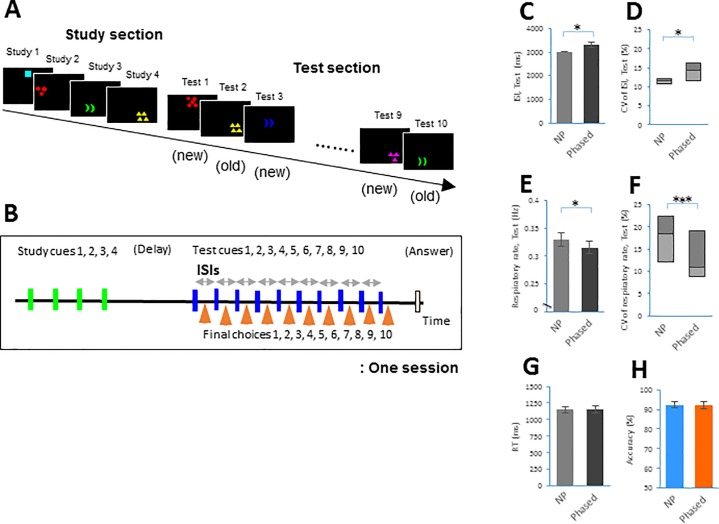
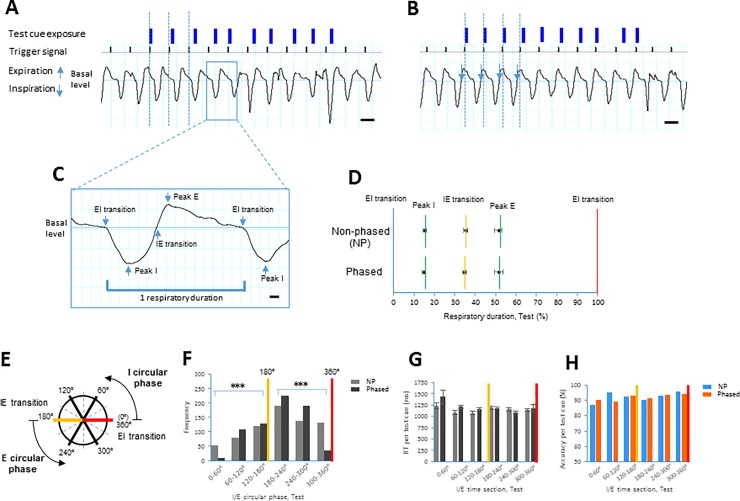
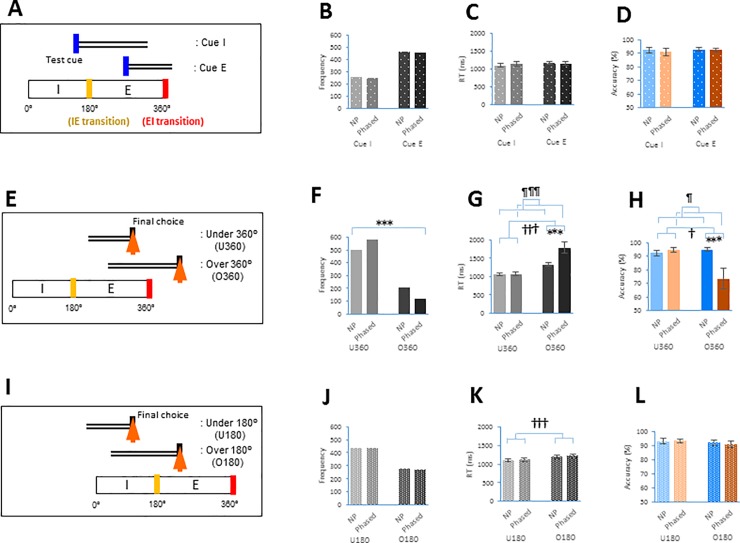
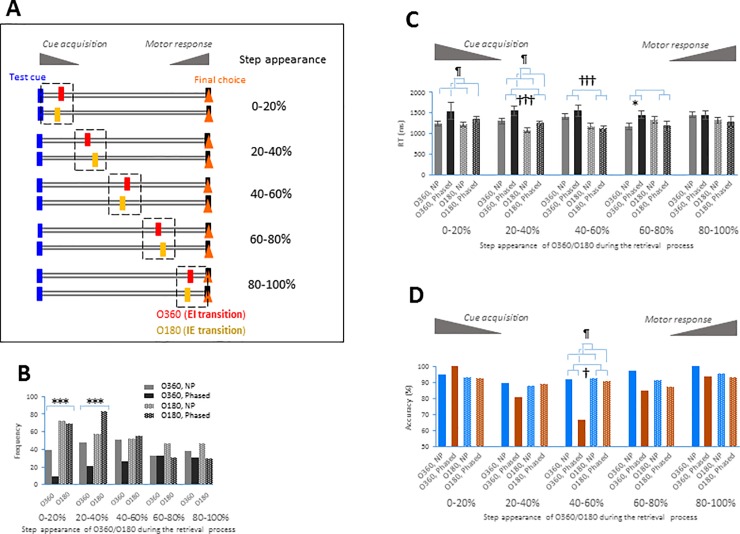
Recent research suggests that cognitive performance might be altered by the respiratory-synchronized activity generated in the brain. Previous human studies, however, have yielded inconsistent results when assessing task performance during distinct respiratory phases (inspiratory phase vs. expiratory phase). We therefore tested whether cognitive performance was regulated based on the timing of breathing components (e.g., expiratory-to-inspiratory (EI) phase transition) during the retrieval process. To determine the role of respiration in performance, the present study employed healthy subjects (n = 18) in a delayed matching-to-sample visual recognition task where a test cue was given in the respiratory phase-locked (Phased) or regularly paced (Non-phased) presentation paradigm. During the Phased session but not during the Non-phased session, the response time (RT) of the task increased by 466 ms (p = 0.003), and accuracy decreased by 21.4% (p = 0.004) when the retrieval process encompassed the EI transition. Breathing-dependent changes were particularly prominent when the EI transition occurred during the middle step of the retrieval process. Meanwhile, changes in the RT and accuracy were not observed when the retrieval process encompassed the inspiratory-to-expiratory phase transition. This is the first time that a certain phase transition in the respiratory cycle has been shown to modulate performance on a time scale of several seconds in a cognitive task. We propose that attenuation of these breathing-dependent cognitive fluctuations might be crucial for the maintenance and stability of successful performance in daily life and sports.
Overview
The claims and statistics of this paper haven’t been checked yet.
Free: it reads the open-access text and checks the first 5 claims that cite a source we can check. Create a free account to check every claim.
Integrity signals
Registry
Cites
Statistics
Figures
Verification
Claims the paper makes
The claims and statistics of this paper haven’t been checked yet.
Free: it reads the open-access text and checks the first 5 claims that cite a source we can check. Create a free account to check every claim.
Claims other papers make about this one
Each is checked against this paper’s own text: does it say what the citing paper says it does?
The source backs part of the claim, not all of it — or backs it for a different population, condition or comparison.
In the citing paper
“The coupling between nasal respiration and neural activity in limbic regions is also associated with the modulation of memory performance 120,138,139 and of emotional ratings in humans 120 , and it influences freezing behavior in mice 134,135 .”
From Interoceptive rhythms in the brain (2023) · cites this paper as [139]
Experimental — accuracy not yet measuredThe source backs part of the claim, not all of it — or backs it for a different population, condition or comparison.
In the citing paper
“The fact that at least some cycle effects need a prolonged period of synchronization between bodily rhythms and external inputs argues in favor of predictive coding 139 .”
From Interoceptive rhythms in the brain (2023) · cites this paper as [139]
Experimental — accuracy not yet measured
Self-check
Percentages, sums and reported differences re-computed from the paper’s own numbers.
The self-check needs the paper’s full text.
Citations
Cites
The Medial Temporal Lobe and Recognition Memory
Eichenbaum, H., Yonelinas, A. P., & Ranganath, C. (2007) · Annual Review of Neuroscience · doi:10.1146/annurev.neuro.30.051606.094328 · Cited by 2,580
Interplay of Hippocampus and Prefrontal Cortex in Memory
Preston, A. R., & Eichenbaum, H. (2013) · Current Biology · doi:10.1016/j.cub.2013.05.041 · Cited by 1,389
Visceral influences on brain and behavior
Critchley, H. D., & Harrison, N. A. (2013) · Neuron · doi:10.1016/j.neuron.2013.02.008 · Cited by 1,177
The speed-accuracy tradeoff: history, physiology, methodology, and behavior
Heitz, R. P. (2014) · Frontiers in Neuroscience · doi:10.3389/fnins.2014.00150 · Cited by 938
Locus coeruleus and dopaminergic consolidation of everyday memory
Takeuchi, T., Duszkiewicz, A. J., Sonneborn, A., Spooner, P. A., Yamasaki, M., Watanabe, M., Smith, C. C., Fernández, G., Deisseroth, K., Greene, R. W., et al. (2016) · Nature · doi:10.1038/nature19325 · Cited by 827
Can animals recall the past and plan for the future?
Clayton, N. S., Bussey, T. J., & Dickinson, A. (2003) · Nature Reviews Neuroscience · doi:10.1038/nrn1180 · Cited by 658
Nasal Respiration Entrains Human Limbic Oscillations and Modulates Cognitive Function
Zelano, C., Jiang, H., Zhou, G., Arora, N., Schuele, S., Rosenow, J., & Gottfried, J. A. (2016) · The Journal of Neuroscience · doi:10.1523/jneurosci.2586-16.2016 · Cited by 599
Understanding the Rhythm of Breathing: So Near, Yet So Far
Feldman, J. L., Del Negro, C. A., & Gray, P. A. (2013) · Annual Review of Physiology · doi:10.1146/annurev-physiol-040510-130049 · Cited by 459
Brainstem respiratory networks: building blocks and microcircuits
Smith, J. C., Abdala, A. P. L., Borgmann, A., Rybak, I. A., & Paton, J. F. R. (2013) · Trends in Neurosciences · doi:10.1016/j.tins.2012.11.004 · Cited by 428
Precise olfactory responses tile the sniff cycle
Shusterman, R., Smear, M. C., Koulakov, A. A., & Rinberg, D. (2011) · Nature Neuroscience · doi:10.1038/nn.2877 · Cited by 388
Research works printed but not linked: 1
- Gardiner JM. Retrieval: On its essence and related concepts. In: Roediger HL, Dudai Y, Fitzpatrick SM editors. Science of Memory: Concepts. New York: Oxford University Press; 2007 pp. 221– 224.
Cited by
Interoceptive rhythms in the brain
Engelen, T., Solcà, M., & Tallon-Baudry, C. (2023) · Nature Neuroscience · doi:10.1038/s41593-023-01425-1 · Cited by 207
Human non-olfactory cognition phase-locked with inhalation
Perl, O., Ravia, A., Rubinson, M., Eisen, A., Soroka, T., Mor, N., Secundo, L., & Sobel, N. (2019) · Nature Human Behaviour · doi:10.1038/s41562-019-0556-z · Cited by 220
Breathing Rhythm and Pattern and Their Influence on Emotion
Ashhad, S., Kam, K., Del Negro, C. A., & Feldman, J. L. (2022) · Annual Review of Neuroscience · doi:10.1146/annurev-neuro-090121-014424 · Cited by 161
Seppala, E. M., Bradley, C. M., Moeller, J., Harouni, L., Nandamudi, D., & Brackett, M. A. (2020) · Frontiers in Psychiatry · doi:10.3389/fpsyt.2020.00590 · Cited by 192
“Modulation of respiration, in particular, has been linked to improvements in neuro-cognitive function (91, 92).”
BackgroundThe rhythm of memory: how breathing shapes memory function
Heck, D. H., Kozma, R., & Kay, L. M. (2019) · Journal of Neurophysiology · doi:10.1152/jn.00200.2019 · Cited by 134
Respiratory rhythms of the predictive mind.
Allen, M., Varga, S., & Heck, D. H. (2023) · Psychological Review · doi:10.1037/rev0000391 · Cited by 114
The influence of the respiratory cycle on reaction times in sensory-cognitive paradigms
Johannknecht, M., & Kayser, C. (2022) · Scientific Reports · doi:10.1038/s41598-022-06364-8 · Cited by 101
“…et al. 1974; Gallego et al. 1991) to emotion recognition (Arch & Craske 2006; Homma & Masaoka 2008; Vlemincx et al. 2010; Zelano et al. 2016), memory recall (Arshamian et al. 2018; Huijbers et al. 2014; Nakamura et al. 2018; Zelano et al. 2016), or more complex mental tasks (Perl et al. 2019).”
BackgroundJerath, R., & Beveridge, C. (2020) · Frontiers in Psychology · doi:10.3389/fpsyg.2020.01980 · Cited by 107
Cognition through the lens of a body–brain dynamic system
Criscuolo, A., Schwartze, M., & Kotz, S. A. (2022) · Trends in Neurosciences · doi:10.1016/j.tins.2022.06.004 · Cited by 76
“Thus, breathing and HR are dynamically modulated to optimize perceptual, behavioral [43], and memory performance [8,29].”
BackgroundBrændholt, M., Kluger, D. S., Varga, S., Heck, D. H., Groß, J., & Allen, M. (2023) · Neuroscience & Biobehavioral Reviews · doi:10.1016/j.neubiorev.2023.105262 · Cited by 99
“Building on this foundation, emerging evidence highlights the significant role of respiratory rhythms in directly modulating neural oscillations through phase-amplitude coupling and neural excitation control (Arshamian et al., 2018; Johannknecht and Kayser, 2022; Kluger et al., 2021; Kluger and Gross, 2021; Nakamura e…”
BackgroundBrain-heart interactions are modulated across the respiratory cycle via interoceptive attention
Zaccaro, A., Perrucci, M. G., Parrotta, E., Costantini, M., & Ferri, F. (2022) · NeuroImage · doi:10.1016/j.neuroimage.2022.119548 · Cited by 82
The Influence of Slow-Paced Breathing on Executive Function
Laborde, S., Allen, M. S., Borges, U., Hosang, T. J., Furley, P., Mosley, E., & Dosseville, F. (2022) · Journal of Psychophysiology · doi:10.1027/0269-8803/a000279 · Cited by 67
Heck, D. H., Correia, B. L., Fox, M. B., Liu, Y., Allen, M., & Varga, S. (2022) · Biological Psychology · doi:10.1016/j.biopsycho.2022.108316 · Cited by 68
The deep and slow breathing characterizing rest favors brain respiratory-drive
Girin, B., Juventin, M., Garcia, S., Lefèvre, L., Amat, C., Fourcaud‐Trocmé, N., & Buonviso, N. (2021) · Scientific Reports · doi:10.1038/s41598-021-86525-3 · Cited by 64
Respiration-Driven Brain Oscillations in Emotional Cognition
Folschweiller, S., & Sauer, J. (2021) · Frontiers in Neural Circuits · doi:10.3389/fncir.2021.761812 · Cited by 61
Temporal Relations between Cortical Network Oscillations and Breathing Frequency during REM Sleep
Tort, A. B. L., Hammer, M., Zhang, J., Brankačk, J., & Draguhn, A. (2021) · Journal of Neuroscience · doi:10.1523/jneurosci.3067-20.2021 · Cited by 55
“Given the alleged beneficial effects of some respiratory practices to mood, behavioral performance, and cognitive abilities (Pascoe and Bauer, 2015; Zelano et al., 2016; Melnychuk et al., 2018; Nakamura et al., 2018; Perl et al., 2019; Novaes et al., 2020), the fact that nasal breathing can modulate brain oscillations…”
BackgroundGlobal coordination of brain activity by the breathing cycle
Tort, A. B. L., Laplagne, D. A., Draguhn, A., & González, J. (2025) · Nature reviews. Neuroscience · doi:10.1038/s41583-025-00920-7 · Cited by 71
“Retrieval accuracy was higher during inspiration than expiration 34 , although it declined if the retrieval process spanned the expiratory-to-inspiratory phase transition 257,258 .”
What Does the Human Olfactory System Do, and How Does It Do It?
Dikeçligil, G. N., & Gottfried, J. A. (2023) · Annual Review of Psychology · doi:10.1146/annurev-psych-042023-101155 · Cited by 68
Respiration modulates sleep oscillations and memory reactivation in humans
Schreiner, T., Petzka, M., Staudigl, T., & Staresina, B. P. (2023) · Nature Communications · doi:10.1038/s41467-023-43450-5 · Cited by 44
“Inadelayed-match-to-sampletask,therespirationphaseat which cue and target stimuli were presented impacted recognition performance 41 .”
Breathwork-induced psychedelic experiences modulate neural dynamics
Lewis-Healey, E., Tagliazucchi, E., Canales‐Johnson, A., & Bekinschtein, T. A. (2024) · Cerebral Cortex · doi:10.1093/cercor/bhae347 · Cited by 46
Perspective on the Multiple Pathways to Changing Brain States
Tantirigama, M. L. S., Zolnik, T. A., Judkewitz, B., Larkum, M. E., & Sachdev, R. N. S. (2020) · Frontiers in Systems Neuroscience · doi:10.3389/fnsys.2020.00023 · Cited by 34
Parviainen, T. M., Lyyra, P., & Nokia, M. S. (2022) · Neuroscience & Biobehavioral Reviews · doi:10.1016/j.neubiorev.2022.104908 · Cited by 48
Dynamic mechanisms that couple the brain and breathing to the external environment
Goheen, J., Wolman, A., Angeletti, L. L., Wolff, A., Anderson, J. A. E., & Northoff, G. (2024) · Communications Biology · doi:10.1038/s42003-024-06642-3 · Cited by 40
Jelinčić, V., Diest, I. V., Torta, D. M. E., & von Leupoldt, A. (2021) · Psychophysiology · doi:10.1111/psyp.13844 · Cited by 39
Nakamura, N. H., Oku, Y., & Fukunaga, M. (2023) · Reviews in the Neurosciences · doi:10.1515/revneuro-2023-0062 · Cited by 35
Self-citationEffects of respiratory phases on the processing of emotional and non‐emotional visual stimuli
Mizuhara, K., & Nittono, H. (2023) · Psychophysiology · doi:10.1111/psyp.14261 · Cited by 31
How the sense of smell influences cognition throughout life
Kostka, J. K., & Bitzenhofer, S. H. (2022) · e-Neuroforum · doi:10.1515/nf-2022-0007 · Cited by 31
Oku, Y. (2022) · The Journal of Physiological Sciences · doi:10.1186/s12576-022-00847-z · Cited by 34
Self-citationObservation of respiration-entrained brain oscillations with scalp EEG
Watanabe, T., Itagaki, A., Hashizume, A., Takahashi, A., Ishizaka, R., & Ozaki, I. (2023) · Neuroscience Letters · doi:10.1016/j.neulet.2023.137079 · Cited by 24
Differential modulation of parietal cortex activity by respiration and θ oscillations
Jung, F., Witte, V., Yanovsky, Y., Klumpp, M., Brankačk, J., Tort, A. B. L., & Draguhn, A. (2022) · Journal of Neurophysiology · doi:10.1152/jn.00376.2021 · Cited by 24
Boulanger-Bertolus, J., & Mouly, A. (2021) · Brain Sciences · doi:10.3390/brainsci11050616 · Cited by 26
“[148] used a delayed matching-to-sample visual recognition task where a test cue phase-locked to the respiratory cycle was given and showed that subjects exhibited increased reaction time and reduced accuracy when their retrieval processes encompassed the expiration to inspiration transition.”
MethodOrepić, P., Park, H., Rognini, G., Faivre, N., & Blanke, O. (2022) · Psychophysiology · doi:10.1111/psyp.14016 · Cited by 21
“, 2019), and visual pattern recognition (Nakamura et al., 2018).”
BackgroundResultInfluentialRespiration-timing-dependent changes in activation of neural substrates during cognitive processes
Nakamura, N. H., Fukunaga, M., Yamamoto, T., Sadato, N., & Oku, Y. (2022) · Cerebral Cortex Communications · doi:10.1093/texcom/tgac038 · Cited by 30
“Accordingly, we designed two epochs, i.e. Epochs A and B to create variability in the interstimulus interval (ISI) between test cues (see Nakamura et al. 2018).”
BackgroundMethodResultSelf-citationBody as First Teacher: The Role of Rhythmic Visceral Dynamics in Early Cognitive Development
Corcoran, A. W., Perrykkad, K., Feuerriegel, D., & Robinson, J. (2023) · Perspectives on Psychological Science · doi:10.1177/17456916231185343 · Cited by 21
“How do these findings (and analogous results from respiratory cycle-timing studies; Flexman, 1974; Kluger et al., 2021; Nakamura et al., 2018; Park et al., 2020; Perl et al., 2019; Waselius et al., 2019; Zelano et al., 2016) contribute to debates about embodied cognition?”
The respiratory cycle modulates distinct dynamics of affective and perceptual decision-making
Brændholt, M., Nikolova, N. E., Vejlø, M., Banellis, L., Fardo, F., Kluger, D. S., & Allen, M. (2025) · PLoS Computational Biology · doi:10.1371/journal.pcbi.1013086 · Cited by 27
Folschweiller, S., & Sauer, J. (2022) · Pflügers Archiv - European Journal of Physiology · doi:10.1007/s00424-022-02708-5 · Cited by 22
“Based on the idea that the timing and synchronization provided by the respiratory cycle are behaviorally relevant, human memory encoding, retrieval, and perception [3, 40, 54, 71] have been shown to be modulated by the phase of respiration.”
BackgroundRespiratory entrainment of units in the mouse parietal cortex depends on vigilance state
Jung, F., Yanovsky, Y., Brankačk, J., Tort, A. B. L., & Draguhn, A. (2022) · Pflügers Archiv - European Journal of Physiology · doi:10.1007/s00424-022-02727-2 · Cited by 18
Behavioral State-Dependent Modulation of Prefrontal Cortex Activity by Respiration
Folschweiller, S., & Sauer, J. (2023) · Journal of Neuroscience · doi:10.1523/jneurosci.2075-22.2023 · Cited by 24
Olofsson, J., Zhou, G., East, B. S., Zelano, C., & Wilson, D. A. (2019) · eNeuro · doi:10.1523/eneuro.0102-19.2019 · Cited by 17
“…olfactory system in both humans (Zelano et al., 2016) and rats (Yanovsky et al., 2014; Lockmann et al., 2016; Moberly et al., 2018; Tort et al., 2018), and this respiration entrainment is important for odor memory and cognition (Zelano et al., 2016; Arshamian et al., 2018; Nakamura et al., 2018).”
BackgroundThe timing of sleep spindles is modulated by the respiratory cycle in humans
Ghibaudo, V., Juventin, M., Buonviso, N., & Peter‐Derex, L. (2024) · Clinical Neurophysiology · doi:10.1016/j.clinph.2024.06.014 · Cited by 19
Task Difficulty Modulates the Disrupting Effects of Oral Respiration on Visual Search Performance
Yoshimura, N., Yonemitsu, F., Marmolejo‐Ramos, F., Ariga, A., & Yamada, Y. (2019) · Journal of Cognition · doi:10.5334/joc.77 · Cited by 21
Mizuhara, K., & Nittono, H. (2022) · International Journal of Psychophysiology · doi:10.1016/j.ijpsycho.2021.12.009 · Cited by 16
Respiratory rhythm modulates membrane potential and spiking of nonolfactory neurons
Juventin, M., Zbili, M., Fourcaud‐Trocmé, N., Garcia, S., Buonviso, N., & Amat, C. (2023) · Journal of Neurophysiology · doi:10.1152/jn.00487.2022 · Cited by 17
Respiration Facilitates Behavior During Multisensory Integration
Saltafossi, M., Zaccaro, A., Kluger, D. S., Perrucci, M. G., Ferri, F., & Costantini, M. (2025) · Psychophysiology · doi:10.1111/psyp.70145 · Cited by 22
“Similarly, a decrease in memory-related behavioral performance has been pointed out during respiratory phase transitions (Nakamura et al. 2018, 2022).”
Phase‐specific pooling of sparse assembly activity by respiration‐related brain oscillations
Folschweiller, S., & Sauer, J. (2022) · The Journal of Physiology · doi:10.1113/jp282631 · Cited by 16
“Behavioural studies on human participants indeed demonstrated that nasal respiration supports memory encoding and recall (Zelano et al. 2016; Arshamian et al. 2018; Nakamura et al. 2018), but how respiration affects information processing and fundamental circuit operations in higher-order neocortex has remained largel…”
BackgroundRespiration shapes response speed and accuracy with a systematic time lag
Harting, C., Hehemann, L., Stetza, L., & Kayser, C. (2025) · Proceedings of the Royal Society B Biological Sciences · doi:10.1098/rspb.2024.2566 · Cited by 20
Hashim, N. A., Ismail, N. A., & Emad, E. M. (2020) · Multiple Sclerosis and Related Disorders · doi:10.1016/j.msard.2020.102514 · Cited by 15
Hippocampal ensemble dynamics and memory performance are modulated by respiration during encoding
Nakamura, N. H., Furue, H., Kobayashi, K., & Oku, Y. (2023) · Nature Communications · doi:10.1038/s41467-023-40139-7 · Cited by 16
“Even though certain respiration timing can be recruited in activating “ online ” memory processes in human studies 12,13,15 , whether hippocampal cell ensembles involve respiratory activity during encoding remains unclear.”
Self-citationPhase confusion: How inconsistent cardiac labeling obscures interoception research
Caparco, A., López-Martín, G., & Galvez-Pol, A. (2025) · Biological Psychology · doi:10.1016/j.biopsycho.2025.109078 · Cited by 25
“As research on respiratory (Johannknecht & Kayser, 2022; Kluger et al., 2021; Leupin & Britz, 2024; Mizuhara & Nittono, 2022; Nakamura et al., 2018; Park et al., 2020; Perl et al., 2019; Waselius et al., 2019) and gastrointestinal interoception (Nord et al., 2021; Porciello et al., 2024; Rebollo &…”
Multimodal biofeedback for Parkinson’s disease motor and nonmotor symptoms
Shi, Z., Ding, L., Han, X., Jiang, B., Zhang, J., Suo, D., Wu, J., Pei, G., Fang, B., & Yan, T. (2023) · Brain Science Advances · doi:10.26599/bsa.2023.9050015 · Cited by 14
Zaccaro, A., della Penna, F., Bubbico, F., BAYRAM, B., Parrotta, E., Perrucci, M. G., Costantini, M., & Ferri, F. (2026) · NeuroImage · doi:10.1016/j.neuroimage.2026.121711 · Cited by 14
Heck, D. H., & Varga, S. (2022) · Pflügers Archiv - European Journal of Physiology · doi:10.1007/s00424-022-02738-z · Cited by 10
“This has now been confirmed in several studies showing that cognitive and affective functions are significantly modulated by respiration [3, 26, 31, 37, 39, 56] (for recent reviews see: [27, 28, 48]).”
BackgroundBreathing shifts visuo-spatial attention
Belli, F., & Fischer, M. H. (2023) · Cognition · doi:10.1016/j.cognition.2023.105685 · Cited by 15
Schaefer, M., Hrysanidis, C., Lundström, J. N., & Arshamian, A. (2023) · Psychophysiology · doi:10.1111/psyp.14493 · Cited by 9
Arousal and sustained attention fluctuate differently with respiration in younger and older adults
Andrews, R., Melnychuk, M. C., Moran, C. N., McGovern, D. P., Holfelder, A. F., Moran, S., & Dockree, P. M. (2025) · Imaging Neuroscience · doi:10.1162/imag.a.26 · Cited by 8
“Previous studies have shown that speeded responses ( Saltafossi et al., 2025) and memory retrieval ( Nakamura et al., 2018), and concurrent cortical activity ( Nakamura et al., 2022) are disrupted by the exhalation- to-inhalation transition.”
It's About Time—Breathing Dynamics Modulate Emotion and Cognition
Goheen, J., Çatal, Y., MacPhee, I., Call, T., Carson, C., Ali, R., Khan, R., Weche, K., Anderson, J. A. E., & Northoff, G. (2025) · Psychophysiology · doi:10.1111/psyp.70149 · Cited by 6
López-Martín, G., Caparco, A., van Steenoven, C., Leganes‐Fonteneau, M., & Galvez-Pol, A. (2025) · NeuroImage · doi:10.1016/j.neuroimage.2025.121650 · Cited by 9
Evidence That Respiratory Phase May Modulate Task-Related Neural Representations of Visual Stimuli
Stetza, L., Hehemann, L., & Kayser, C. (2025) · Journal of Neuroscience · doi:10.1523/jneurosci.2236-24.2025 · Cited by 11
Nasal inhalation does not improve memory of visual repetitions
Thunell, E., Francis, G., Bò, E. D., Schaefer, M., Lundström, J. N., & Arshamian, A. (2024) · Psychophysiology · doi:10.1111/psyp.14609 · Cited by 7
A body-brain (dis)equilibrium regulating transitions from health to pathology
Criscuolo, A., Czepiel, A. M., Schwartze, M., & Kotz, S. A. (2025) · Physics of Life Reviews · doi:10.1016/j.plrev.2025.07.003 · Cited by 7
“The breathing cycle influences cortico-muscular coherence in sensorimotor cortex [111], modulates tactile perception [116], visuospatial processing [104,106], memory [101,102,105,117], and decision making [118] so that performance is generally optimal in the inspiration phase.”
Respiration competes with theta for modulating parietal cortex neuronsPreprint
Jung, F., Yanovsky, Y., Brankačk, J., Tort, A. B. L., & Draguhn, A. (2019) · bioRxiv (Cold Spring Harbor Laboratory) · doi:10.1101/707331 · Cited by 5
“Noteworthy, it has been increasingly recognized that nasal respiration modulates performance in cognitive tasks [35– 37], including non-olfactory ones [38].”
BackgroundEffects of cardiac and respiratory phases on auditory evoked potentials
Mizuhara, K., Li, L., & Nittono, H. (2025) · International Journal of Psychophysiology · doi:10.1016/j.ijpsycho.2025.112521 · Cited by 8
Staszelis, A., Mofleh, R., & Kocsis, B. (2022) · Brain Research · doi:10.1016/j.brainres.2022.147996 · Cited by 6
Nakamura, N. H., Fukunaga, M., Nakamura, N. H., & Oku, Y. (2023) · Progress in Neurobiology · doi:10.60124/j.pneuro.2023.10.01 · Cited by 4
Self-citationChhajer, R., & Dagar, C. (2024) · Frontiers in Psychology · doi:10.3389/fpsyg.2024.1327119 · Cited by 5
Simpson, A. M. (2021) · The Research Repository @ WVU (West Virginia University) · doi:10.33915/etd.8297 · Cited by 3
Respiration shapes sleep-oscillations and memory reactivation in humansPreprint
Schreiner, T., Petzka, M., Staudigl, T., & Staresina, B. P. (2023) · bioRxiv (Cold Spring Harbor Laboratory) · doi:10.1101/2023.03.16.532910 · Cited by 3
The alignment of respiration to sensory-motor events is shaped by expected effort
Kayser, C., Hehemann, L., & Stetza, L. (2026) · iScience · doi:10.1016/j.isci.2026.115046 · Cited by 5
Fundamentals of Electroencephalography and Magnetoencephalography
Criscuolo, A., & Brattico, E. (2023) · Neuromethods · doi:10.1007/978-1-0716-3263-5_6 · Cited by 5
Respiratory control and circuitry
Kartar, A. A., & Colasanti, A. (2024) · Elsevier eBooks · doi:10.1016/b978-0-12-820480-1.00106-6 · Cited by 2
Boosting Motor Cortex Plasticity through Respiratory Phase-Triggered Paired Associative StimulationPreprint
Baker, S. N., & Zaaimi, B. (2025) · bioRxiv (Cold Spring Harbor Laboratory) · doi:10.1101/2025.01.29.635613 · Cited by 2
Respiration phase dependent modulation of somatosensory evoked potentials
Watanabe, T., Itagaki, A., & Ozaki, I. (2025) · Neuroscience · doi:10.1016/j.neuroscience.2025.10.048 · Cited by 1
Gopalan, P. R. S., Hämäläinen, J. A., Penttonen, M., & Nokia, M. S. (2026) · Scientific Reports · doi:10.1038/s41598-026-47916-6 · Cited by 3
Breathing affects self-other voice discrimination in a bodily state with increased othernessPreprint
Orepić, P., Park, H.-D., Rognini, G., Faivre, N., & Blanke, O. (2020) · doi:10.31234/osf.io/t9saq · Cited by 1
Yonekura, S., Cueto, J., Kanazawa, H., Atsumi, N., HIRABAYASHI, S., Iwamoto, M., & Kuniyoshi, Y. (2022) · bioRxiv (Cold Spring Harbor Laboratory) · doi:10.1101/2022.03.30.486453 · Cited by 2
“For example, the accuracy of memory 4 function is significantly modulated by the input timing of stimuli, with respect to the 5 respiratory phase [22,27,47].”
BackgroundKocsis, B., & Pittman-Polletta, B. (2023) · Frontiers in Neuroscience · doi:10.3389/fnins.2023.1164042
“, 2019), and visual working memory retrieval (Nakamura et al., 2018).”
BackgroundCognitive Fitness of Post-Retirement Employees in Control Room Settings
Damayanti, K. A., Widyanti, A., Sari, H., & Yassierli, Y. (2023) · Academic Journal of Interdisciplinary Studies · doi:10.36941/ajis-2023-0143
Ordo ab chaos: Timing cognition in Waves
Criscuolo, A. (2024) · Research Publications (Maastricht University) · doi:10.26481/dis.20240425ac
Simpson, A. M. (2024) · Springer eBooks · doi:10.1007/978-3-031-68525-5_6
Sinha, S., Mittal, S., & Baro, G. (2025) · International Journal of Yoga · doi:10.4103/ijoy.ijoy_238_24 · Cited by 1
“[56] Conditions where RMBO is disrupted, dysfunctions may occur.”
Stetza, L., & Kayser, C. (2026) · Scientific Reports · doi:10.1038/s41598-026-53388-5 · Cited by 1
Nakamura, N. H., Yoshino, K., & Fukunaga, M. (2025) · The Journal of Physiological Sciences · doi:10.1016/j.jphyss.2025.100053
“To address these questions, we investigated both respiratory phases and intraindividual fluctuations (i.e., velocity) in RRIs [37] and determined their effects on RT [9] during a short-term memory version of the delayed matching-to-sample (DMTS) task [19, 20].”
InfluentialSelf-citationSlow‐Paced Breathing Modulates Perceptual Sensitivity to Facial Expression
Hsu, S., & Tseng, C. (2025) · European Journal of Neuroscience · doi:10.1111/ejn.70369
Nakamura, N. H., Yoshino, K., & Fukunaga, M. (2025) · bioRxiv (Cold Spring Harbor Laboratory) · doi:10.64898/2025.12.25.696473
“Specifically, retrieval encompassing inspiratory onset (EI transition) is strongly associated with both reduced accuracy and prolonged RTs, particularly when the test cycle duration exceeds 3 sec, allowing phase-locking to the respiratory rhythm[21,23].”
InfluentialSelf-citationBreathing‐driven modulation of reticulospinal tract activity
Thawer, R., Baker, S. N., & Zaaimi, B. (2026) · Experimental Physiology · doi:10.1113/ep093536
“Conversely, Nakamura et al. (Nakamura et al., 2018) suggest that the transition from expiration to inspiration might affect reaction time and recall accuracy in a delayed match-to-sample visual recognition task.”
Can the respiratory rhythm be a global signal promoting long-range communication in the brain?
Juventin, M. (2021) · theses.fr (ABES) · doi:10.70675/04a1c362z3796z4591zb40dz620ffbccd4cb · Cited by 1
The Rhythmic Embodied Perception Framework of breath, brain, and perception
Andrews, R., & Dockree, P. M. (2026) · Neuroscience of Consciousness · doi:10.1093/nc/niag030
“…detection of near-threshold stimuli in the visual and tactile domains ( Kluger et al. 2021; Grund et al. 2022) to fluctuations in memory ( Zelano et al. 2016; Nakamura et al. 2018, 2022), pain sensitivity ( Arsenault et al. 2013; Iwabe et al. 2014), and emotional processing ( Zelano et al. 2016).”
The effect of preverbal message planning on inhalation depth in narrative speech
Redford, M. A., Chotechuang, S., & Clement, N. L. (2026) · Journal of Phonetics · doi:10.1016/j.wocn.2026.101544
Metadata
- Authors
- Nakamura, N. H., Fukunaga, M., & Oku, Y.
- Affiliations
- Hyogo Medical University (JP)
- National Institute for Physiological Sciences (JP)
- Corresponding author
- Nakamura, Nozomu H.
- Venue
- PLOS ONE
- Publisher
- Public Library of Science (PLoS)
- Published
- 2018-09-14
- Volume
- 13
- Issue
- 9
- Pages
- e0204021
- ISSN
- 1932-6203 (ISSN-L)
- PMC
- PMC6138381
- OpenAlex
- W2892026688
- Cited by
- 88
- References
- 48
- Citations by year
- 2026: 7 · 2025: 17 · 2024: 8 · 2023: 19 · 2022: 19 · 2021: 8 · 2020: 5 · 2019: 5
- FWCI
- 2.53
- Type
- journal article
- Language
- en
- Open access
- gold
- doi.org
- Licence
- Locations
- PLoS ONE (publishedVersion, cc-by)
- Europe PMC (PubMed Central) (publishedVersion, cc-by)
- PubMed Central (publishedVersion, cc-by)
- PubMed (publishedVersion)
- DOAJ (DOAJ: Directory of Open Access Journals) (submittedVersion, cc-by-sa)
- Figshare (submittedVersion, cc-by)
- Funders
- Grant-in-Aid for Scientific Research the Japan Society for the Promotion of Science (15K12055)
- Grant-in-Aid for Researchers from the Hyogo College of Medicine
- Cooperative Study Program of National Institute for Physiological Sciences
- Topics
- Life Sciences › Neuroscience › Endocrine and Autonomic Systems › Neuroscience of respiration and sleep
- Life Sciences › Neuroscience › Cognitive Neuroscience › Neural dynamics and brain function
- Health Sciences › Medicine › Cardiology and Cardiovascular Medicine › Heart Rate Variability and Autonomic Control
- Keywords
- respiration, cognitive performance, memory retrieval, delayed matching-to-sample, visual recognition, reaction time (psychology), accuracy
- MeSH terms
- Adult, Inhalation, Cognition, Female, Humans, Male, Memory, Reaction Time, Respiratory Physiological Phenomena, Task Performance and Analysis, Exhalation, Young Adult
About these checks
Registry, retraction, Cites and statistics results are computed, not judged, with one exception: a printed reference that no index lists is read once by a model before it counts as a citation error. Claims are extracted by a model and kept only when their quote appears verbatim in the text; each cited source is then checked, with a model’s help, for whether it says what the claim relies on. Those verdicts can be wrong — read the claim’s quote and the cited source before relying on one.
Statistics and arithmetic are recomputed, not judged.
Confidence bands are shown only for fields calibrated on our annotated test set. None is calibrated yet, so no band is shown.
What counts as a claim ›How we measure confidence ›How we check this ›
Are you an author, or do you see a problem with this page? Request a review
Data sources
Bibliographic data: Semantic Scholar, OpenAlex, Crossref.
Contains information from the Semantic Scholar Academic Graph Datasets, made available under the ODC Attribution License (ODC-BY 1.0).
Semantic Scholar’s data is described in: Kinney, R., et al. (2023). The Semantic Scholar Open Data Platform. arXiv:2301.10140.
