

Respiratory modulation of cognitive performance during the retrieval process
Open accessThe DOI matches its Crossref record; 48 of the 48 references it cites were found in a registry or an index.
Abstract
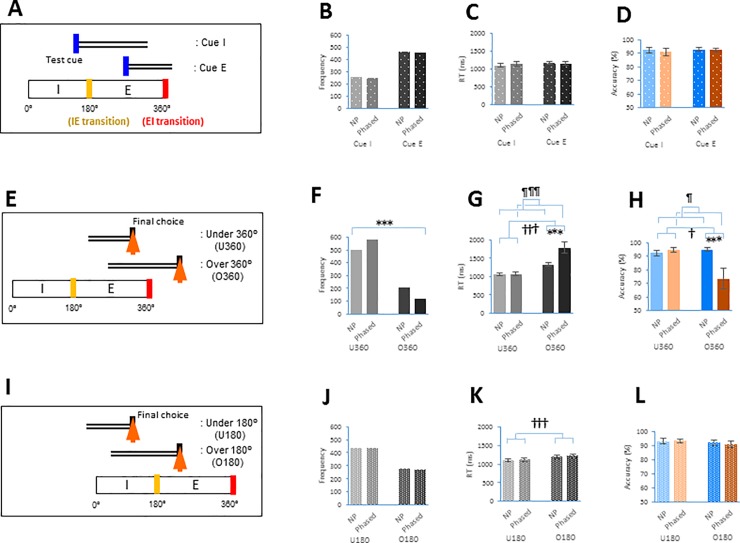
Recent research suggests that cognitive performance might be altered by the respiratory-synchronized activity generated in the brain. Previous human studies, however, have yielded inconsistent results when assessing task performance during distinct respiratory phases (inspiratory phase vs. expiratory phase). We therefore tested whether cognitive performance was regulated based on the timing of breathing components (e.g., expiratory-to-inspiratory (EI) phase transition) during the retrieval process. To determine the role of respiration in performance, the present study employed healthy subjects (n = 18) in a delayed matching-to-sample visual recognition task where a test cue was given in the respiratory phase-locked (Phased) or regularly paced (Non-phased) presentation paradigm. During the Phased session but not during the Non-phased session, the response time (RT) of the task increased by 466 ms (p = 0.003), and accuracy decreased by 21.4% (p = 0.004) when the retrieval process encompassed the EI transition. Breathing-dependent changes were particularly prominent when the EI transition occurred during the middle step of the retrieval process. Meanwhile, changes in the RT and accuracy were not observed when the retrieval process encompassed the inspiratory-to-expiratory phase transition. This is the first time that a certain phase transition in the respiratory cycle has been shown to modulate performance on a time scale of several seconds in a cognitive task. We propose that attenuation of these breathing-dependent cognitive fluctuations might be crucial for the maintenance and stability of successful performance in daily life and sports.
Overview
The claims and statistics of this paper haven’t been checked yet.
Free: it reads the open-access text and checks the first 5 claims that cite a source we can check. Create a free account to check every claim.
Integrity signals
Registry
Cites
Statistics
Figures



Verification
Claims the paper makes
The claims and statistics of this paper haven’t been checked yet.
Free: it reads the open-access text and checks the first 5 claims that cite a source we can check. Create a free account to check every claim.
Claims other papers make about this one
Each is checked against this paper’s own text: does it say what the citing paper says it does?
The source backs part of the claim, not all of it — or backs it for a different population, condition or comparison.
In the citing paper
“The coupling between nasal respiration and neural activity in limbic regions is also associated with the modulation of memory performance 120,138,139 and of emotional ratings in humans 120 , and it influences freezing behavior in mice 134,135 .”
From Interoceptive rhythms in the brain (2023) · cites this paper as [139]
Experimental — accuracy not yet measuredThe source backs part of the claim, not all of it — or backs it for a different population, condition or comparison.
In the citing paper
“The fact that at least some cycle effects need a prolonged period of synchronization between bodily rhythms and external inputs argues in favor of predictive coding 139 .”
From Interoceptive rhythms in the brain (2023) · cites this paper as [139]
Experimental — accuracy not yet measured
Self-check
Percentages, sums and reported differences re-computed from the paper’s own numbers.
The self-check needs the paper’s full text.
Citations
Cites
The Medial Temporal Lobe and Recognition Memory
Eichenbaum, H., Yonelinas, A. P., & Ranganath, C. (2007) · Annual Review of Neuroscience · doi:10.1146/annurev.neuro.30.051606.094328 · Cited by 2,580
Interplay of Hippocampus and Prefrontal Cortex in Memory
Preston, A. R., & Eichenbaum, H. (2013) · Current Biology · doi:10.1016/j.cub.2013.05.041 · Cited by 1,389
Visceral influences on brain and behavior
Critchley, H. D., & Harrison, N. A. (2013) · Neuron · doi:10.1016/j.neuron.2013.02.008 · Cited by 1,177
The speed-accuracy tradeoff: history, physiology, methodology, and behavior
Heitz, R. P. (2014) · Frontiers in Neuroscience · doi:10.3389/fnins.2014.00150 · Cited by 938
Locus coeruleus and dopaminergic consolidation of everyday memory
Takeuchi, T., Duszkiewicz, A. J., Sonneborn, A., Spooner, P. A., Yamasaki, M., Watanabe, M., Smith, C. C., Fernández, G., Deisseroth, K., Greene, R. W., et al. (2016) · Nature · doi:10.1038/nature19325 · Cited by 827
Can animals recall the past and plan for the future?
Clayton, N. S., Bussey, T. J., & Dickinson, A. (2003) · Nature Reviews Neuroscience · doi:10.1038/nrn1180 · Cited by 658
Nasal Respiration Entrains Human Limbic Oscillations and Modulates Cognitive Function
Zelano, C., Jiang, H., Zhou, G., Arora, N., Schuele, S., Rosenow, J., & Gottfried, J. A. (2016) · The Journal of Neuroscience · doi:10.1523/jneurosci.2586-16.2016 · Cited by 599
Understanding the Rhythm of Breathing: So Near, Yet So Far
Feldman, J. L., Del Negro, C. A., & Gray, P. A. (2013) · Annual Review of Physiology · doi:10.1146/annurev-physiol-040510-130049 · Cited by 459
Brainstem respiratory networks: building blocks and microcircuits
Smith, J. C., Abdala, A. P. L., Borgmann, A., Rybak, I. A., & Paton, J. F. R. (2013) · Trends in Neurosciences · doi:10.1016/j.tins.2012.11.004 · Cited by 428
Precise olfactory responses tile the sniff cycle
Shusterman, R., Smear, M. C., Koulakov, A. A., & Rinberg, D. (2011) · Nature Neuroscience · doi:10.1038/nn.2877 · Cited by 388
Neural Mechanisms of Speed-Accuracy Tradeoff
Heitz, R. P., & Schall, J. D. (2012) · Neuron · doi:10.1016/j.neuron.2012.08.030 · Cited by 368
Breathing above the brain stem: volitional control and attentional modulation in humans
Herrero, J. L., Khuvis, S., Yeagle, E., Cerf, M., & Mehta, A. D. (2018) · Journal of Neurophysiology · doi:10.1152/jn.00551.2017 · Cited by 338
Respiration-Entrained Brain Rhythms Are Global but Often Overlooked
Tort, A. B. L., Brankačk, J., & Draguhn, A. (2018) · Trends in Neurosciences · doi:10.1016/j.tins.2018.01.007 · Cited by 335
In pursuit of resilience: stress, epigenetics, and brain plasticity
McEwen, B. S. (2016) · Annals of the New York Academy of Sciences · doi:10.1111/nyas.13020 · Cited by 299
Breathing control center neurons that promote arousal in mice
Yackle, K., Schwarz, L. A., Kam, K., Sorokin, J. M., Huguenard, J. R., Feldman, J. L., Luo, L., & Krasnow, M. A. (2017) · Science · doi:10.1126/science.aai7984 · Cited by 282
Robust Odor Coding via Inhalation-Coupled Transient Activity in the Mammalian Olfactory Bulb
Cury, K. M., & Uchida, N. (2010) · Neuron · doi:10.1016/j.neuron.2010.09.040 · Cited by 275
Breathing as a fundamental rhythm of brain function.
Heck, D. H., McAfee, S. S., Liu, Y., Babajani-Feremi, A., Rezaie, R., Freeman, W. J., Wheless, J. W., Papanicolaou, A. C., Ruszinkó, M., Sokolov, Y., et al. (2017) · Frontiers in Neural Circuits · doi:10.3389/fncir.2016.00115 · Cited by 272
Ito, J., Roy, S., Liu, Y., Cao, Y., Fletcher, M., Lu, L., Boughter, J. D., Grün, S., & Heck, D. H. (2014) · Nature Communications · doi:10.1038/ncomms4572 · Cited by 252
Organization of prefrontal network activity by respiration-related oscillations
Biskamp, J., Bartos, M., & Sauer, J.-F. (2017) · Scientific Reports · doi:10.1038/srep45508 · Cited by 197
Slow Oscillations in the Mouse Hippocampus Entrained by Nasal Respiration
Yanovsky, Y., Ciatipis, M., Draguhn, A., Tort, A. B. L., & Brankačk, J. (2014) · The Journal of Neuroscience · doi:10.1523/jneurosci.5287-13.2014 · Cited by 175
Hippocampal Respiration-Driven Rhythm Distinct from Theta Oscillations in Awake Mice
Nguyen Chi, V., Müller, C., Wolfenstetter, T., Yanovsky, Y., Draguhn, A., Tort, A. B. L., & Brankačk, J. (2016) · The Journal of Neuroscience · doi:10.1523/jneurosci.2848-15.2016 · Cited by 171
Locus Coeruleus in time with the making of memories
Sara, S. J. (2015) · Current Opinion in Neurobiology · doi:10.1016/j.conb.2015.07.004 · Cited by 156
Selective entrainment of gamma subbands by different slow network oscillations
Zhong, W., Ciatipis, M., Wolfenstetter, T., Jessberger, J., Müller, C., Ponsel, S., Yanovsky, Y., Brankačk, J., Tort, A. B. L., & Draguhn, A. (2017) · Proceedings of the National Academy of Sciences · doi:10.1073/pnas.1617249114 · Cited by 155
A Respiration-Coupled Rhythm in the Rat Hippocampus Independent of Theta and Slow Oscillations
Lockmann, A. L. V., Laplagne, D. A., Leão, R. N., & Tort, A. B. L. (2016) · The Journal of Neuroscience · doi:10.1523/jneurosci.3452-15.2016 · Cited by 152
Mammalian Locomotor-Respiratory Integration: Implications for Diaphragmatic and Pulmonary Design
Bramble, D. M., & Jenkins, F. A. (1993) · Science · doi:10.1126/science.8211141 · Cited by 148
Nakamura, N. H., Flasbeck, V., Maingret, N., Kitsukawa, T., & Sauvage, M. M. (2013) · Journal of Neuroscience · doi:10.1523/jneurosci.4480-12.2013 · Cited by 103
Self-citationOlsen, R. K., Nichols, E. A., Chen, J., Hunt, J. F., Glover, G. H., Gabrieli, J. D. E., & Wagner, A. D. (2009) · The Journal of Neuroscience · doi:10.1523/jneurosci.2245-09.2009 · Cited by 102
Uematsu, A., Tan, B. Z., & Johansen, J. P. (2015) · Learning & Memory · doi:10.1101/lm.037283.114 · Cited by 95
Marzo, A., Totah, N. K., Neves, R. M., Logothetis, N. K., & Eschenko, O. (2014) · Journal of Neurophysiology · doi:10.1152/jn.00920.2013 · Cited by 93
Hippocampal sharp-wave ripples in awake mice are entrained by respiration
Liu, Y., McAfee, S. S., & Heck, D. H. (2017) · Scientific Reports · doi:10.1038/s41598-017-09511-8 · Cited by 93
Mindfulness‐of‐breathing exercise modulates EEG alpha activity during cognitive performance
Bing‐Canar, H., Pizzuto, J., & Compton, R. J. (2016) · Psychophysiology · doi:10.1111/psyp.12678 · Cited by 83
Inhibition, Not Excitation, Drives Rhythmic Whisking
Deschênes, M., Takatoh, J., Kurnikova, A., Moore, J. D., Demers, M., Elbaz, M., Furuta, T., Wang, F., & Kleinfeld, D. (2016) · Neuron · doi:10.1016/j.neuron.2016.03.007 · Cited by 79
Evans, K. C., Dougherty, D. D., Schmid, A. M., Scannell, E., McCallister, A., Benson, H., Dusek, J. A., & Lazar, S. W. (2009) · NeuroImage · doi:10.1016/j.neuroimage.2009.05.025 · Cited by 73
Jeneson, A., Mauldin, K. N., Hopkins, R. O., & Squire, L. R. (2011) · Learning & Memory · doi:10.1101/lm.2010711 · Cited by 70
Whisking, Sniffing, and the Hippocampal θ-Rhythm: A Tale of Two Oscillators
Kleinfeld, D., Deschênes, M., & Ulanovsky, N. (2016) · PLOS Biology · doi:10.1371/journal.pbio.1002385 · Cited by 56
Deep Breathing Practice Facilitates Retention of Newly Learned Motor Skills
Yadav, G., & Mutha, P. K. (2016) · Scientific Reports · doi:10.1038/srep37069 · Cited by 56
Niérat, M., Demiri, S., Dupuis-Lozeron, E., Allali, G., Morélot-Panzini, C., Similowski, T., & Adler, D. (2016) · PLoS ONE · doi:10.1371/journal.pone.0151625 · Cited by 46
Coordination between breathing and forearm movements during sinusoidal tracking
EBERT, D., Raßler, B., & Hefter, H. (2000) · European Journal of Applied Physiology · doi:10.1007/s004210050045 · Cited by 44
Assessing Attentional Control of Breathing by Reaction Time
Gallego, J., Perruchet, P., & Camus, J. (1991) · Psychophysiology · doi:10.1111/j.1469-8986.1991.tb00413.x · Cited by 36
Event Timing and Age Deficits in Higher-Order Sequence Learning
Howard, J. H., Howard, D. V., Dennis, N. A., & Yankovich, H. (2007) · Aging Neuropsychology and Cognition · doi:10.1080/13825580601186635 · Cited by 31
Koppe, G., Gruppe, H., Sammer, G., Gallhofer, B., Kirsch, P., & Lis, S. (2014) · NeuroImage · doi:10.1016/j.neuroimage.2014.07.008 · Cited by 30
Influences of Respiratory Cycle on Simple Reaction Time
Buchsbaum, M. S., & Callaway, E. (1965) · Perceptual and Motor Skills · doi:10.2466/pms.1965.20.3.961 · Cited by 30
Li, S., Park, W.-H., & Borg, A. (2012) · Motor Control · doi:10.1123/mcj.16.4.493 · Cited by 26
Nakamura, N. H., & Sauvage, M. M. (2015) · Hippocampus · doi:10.1002/hipo.22491 · Cited by 24
Self-citationThe Relationship Between Respiration Phase and Reaction Time
Beh, H. C., & Nix‐James, D. R. (1974) · Psychophysiology · doi:10.1111/j.1469-8986.1974.tb00563.x · Cited by 19
Interactions of breathing with the postural regulation of the fingers
Raßler, B., Bradl, U., & Scholle, H. (2000) · Clinical Neurophysiology · doi:10.1016/s1388-2457(00)00483-1 · Cited by 14
Periodic breathing and dysphagia associated with a localized lateral medullary infarction
Oku, Y., & OKADA, M. (2008) · Respirology · doi:10.1111/j.1440-1843.2008.01267.x · Cited by 14
Self-citationInternal representations underlying respiration during object manipulation
Lamberg, E. M., Mateika, J. H., Cherry, L., & Gordon, A. M. (2003) · Brain Research · doi:10.1016/s0006-8993(03)03120-2 · Cited by 13
Research works printed but not linked: 1
- Gardiner JM. Retrieval: On its essence and related concepts. In: Roediger HL, Dudai Y, Fitzpatrick SM editors. Science of Memory: Concepts. New York: Oxford University Press; 2007 pp. 221– 224.
Cited by
Interoceptive rhythms in the brain
Engelen, T., Solcà, M., & Tallon-Baudry, C. (2023) · Nature Neuroscience · doi:10.1038/s41593-023-01425-1 · Cited by 207
Human non-olfactory cognition phase-locked with inhalation
Perl, O., Ravia, A., Rubinson, M., Eisen, A., Soroka, T., Mor, N., Secundo, L., & Sobel, N. (2019) · Nature Human Behaviour · doi:10.1038/s41562-019-0556-z · Cited by 220
Breathing Rhythm and Pattern and Their Influence on Emotion
Ashhad, S., Kam, K., Del Negro, C. A., & Feldman, J. L. (2022) · Annual Review of Neuroscience · doi:10.1146/annurev-neuro-090121-014424 · Cited by 161
Seppala, E. M., Bradley, C. M., Moeller, J., Harouni, L., Nandamudi, D., & Brackett, M. A. (2020) · Frontiers in Psychiatry · doi:10.3389/fpsyt.2020.00590 · Cited by 190
“Modulation of respiration, in particular, has been linked to improvements in neuro-cognitive function (91, 92).”
BackgroundThe rhythm of memory: how breathing shapes memory function
Heck, D. H., Kozma, R., & Kay, L. M. (2019) · Journal of Neurophysiology · doi:10.1152/jn.00200.2019 · Cited by 134
Metadata
- Authors
- Nakamura, N. H., Fukunaga, M., & Oku, Y.
- Affiliations
- Hyogo Medical University (JP)
- National Institute for Physiological Sciences (JP)
- Corresponding author
- Nakamura, Nozomu H.
- Venue
- PLOS ONE
- Publisher
- Public Library of Science (PLoS)
- Published
- 2018-09-14
- Volume
- 13
- Issue
- 9
- Pages
- e0204021
- ISSN
- 1932-6203 (ISSN-L)
- PMC
- PMC6138381
- OpenAlex
- W2892026688
- Cited by
- 88
- References
- 48
- Citations by year
- 2026: 7 · 2025: 17 · 2024: 8 · 2023: 19 · 2022: 19 · 2021: 8 · 2020: 5 · 2019: 5
- FWCI
- 2.53
- Type
- journal article
- Language
- en
- Open access
- gold
- doi.org
- Licence
- Locations
- PLoS ONE (publishedVersion, cc-by)
- Europe PMC (PubMed Central) (publishedVersion, cc-by)
- PubMed Central (publishedVersion, cc-by)
- PubMed (publishedVersion)
- DOAJ (DOAJ: Directory of Open Access Journals) (submittedVersion, cc-by-sa)
- Figshare (submittedVersion, cc-by)
- Funders
- Grant-in-Aid for Scientific Research the Japan Society for the Promotion of Science (15K12055)
- Grant-in-Aid for Researchers from the Hyogo College of Medicine
- Cooperative Study Program of National Institute for Physiological Sciences
- Topics
- Life Sciences › Neuroscience › Endocrine and Autonomic Systems › Neuroscience of respiration and sleep
- Life Sciences › Neuroscience › Cognitive Neuroscience › Neural dynamics and brain function
- Health Sciences › Medicine › Cardiology and Cardiovascular Medicine › Heart Rate Variability and Autonomic Control
- Keywords
- respiration, cognitive performance, memory retrieval, delayed matching-to-sample, visual recognition, reaction time (psychology), accuracy
- MeSH terms
- Adult, Inhalation, Cognition, Female, Humans, Male, Memory, Reaction Time, Respiratory Physiological Phenomena, Task Performance and Analysis, Exhalation, Young Adult
About these checks
Registry, retraction, Cites and statistics results are computed, not judged, with one exception: a printed reference that no index lists is read once by a model before it counts as a citation error. Claims are extracted by a model and kept only when their quote appears verbatim in the text; each cited source is then checked, with a model’s help, for whether it says what the claim relies on. Those verdicts can be wrong — read the claim’s quote and the cited source before relying on one.
Statistics and arithmetic are recomputed, not judged.
Confidence bands are shown only for fields calibrated on our annotated test set. None is calibrated yet, so no band is shown.
What counts as a claim ›How we measure confidence ›How we check this ›
Are you an author, or do you see a problem with this page? Request a review
Data sources
Bibliographic data: Semantic Scholar, OpenAlex, Crossref.
Contains information from the Semantic Scholar Academic Graph Datasets, made available under the ODC Attribution License (ODC-BY 1.0).
Semantic Scholar’s data is described in: Kinney, R., et al. (2023). The Semantic Scholar Open Data Platform. arXiv:2301.10140.
