

The DOI matches its Crossref record; 72 of the 73 references it cites were found in a registry or an index.
Fecal transplant prevents gut dysbiosis and anxiety-like behaviour after spinal cord injury in rats
Open accessAbstract
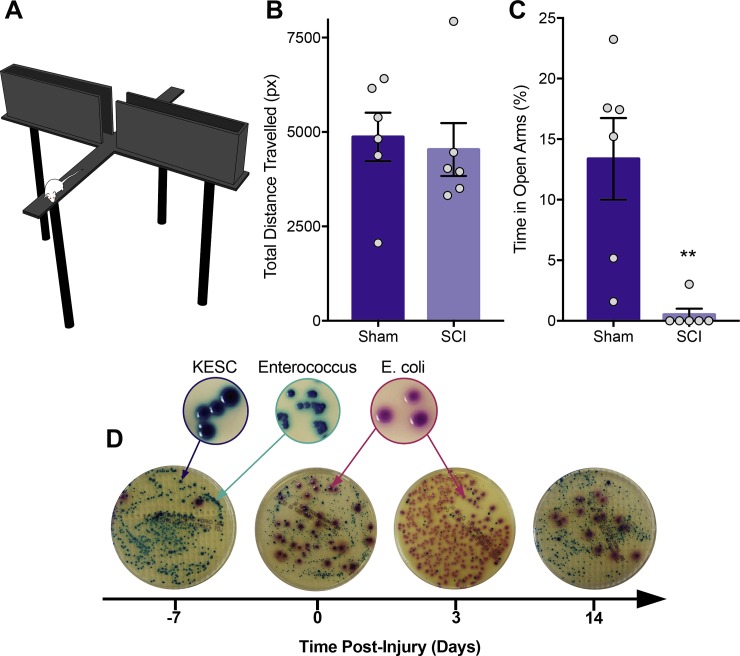
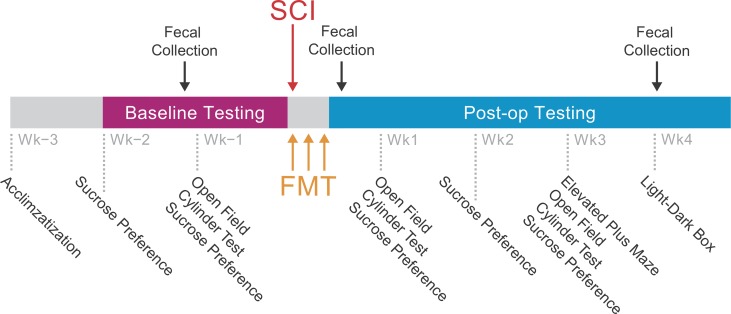
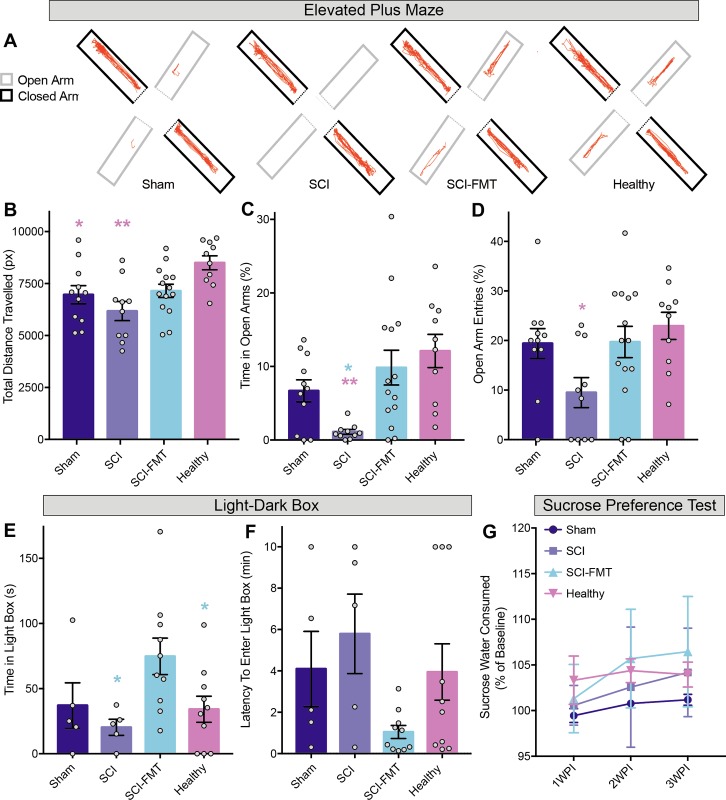
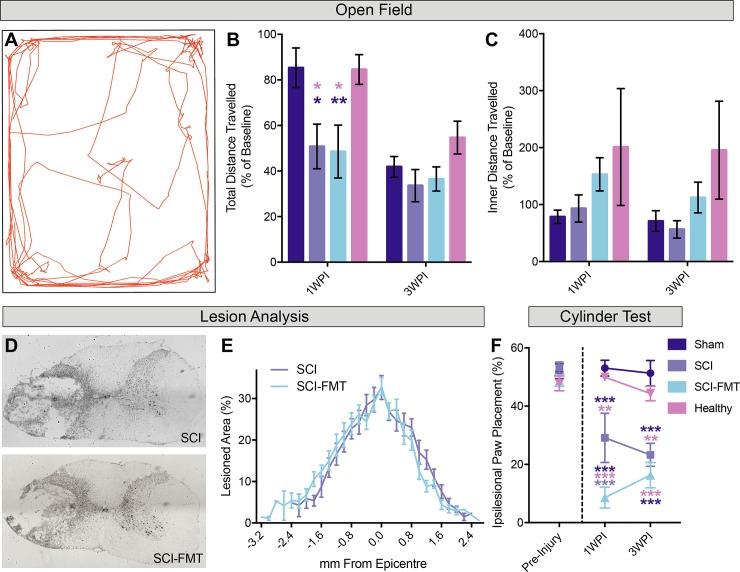
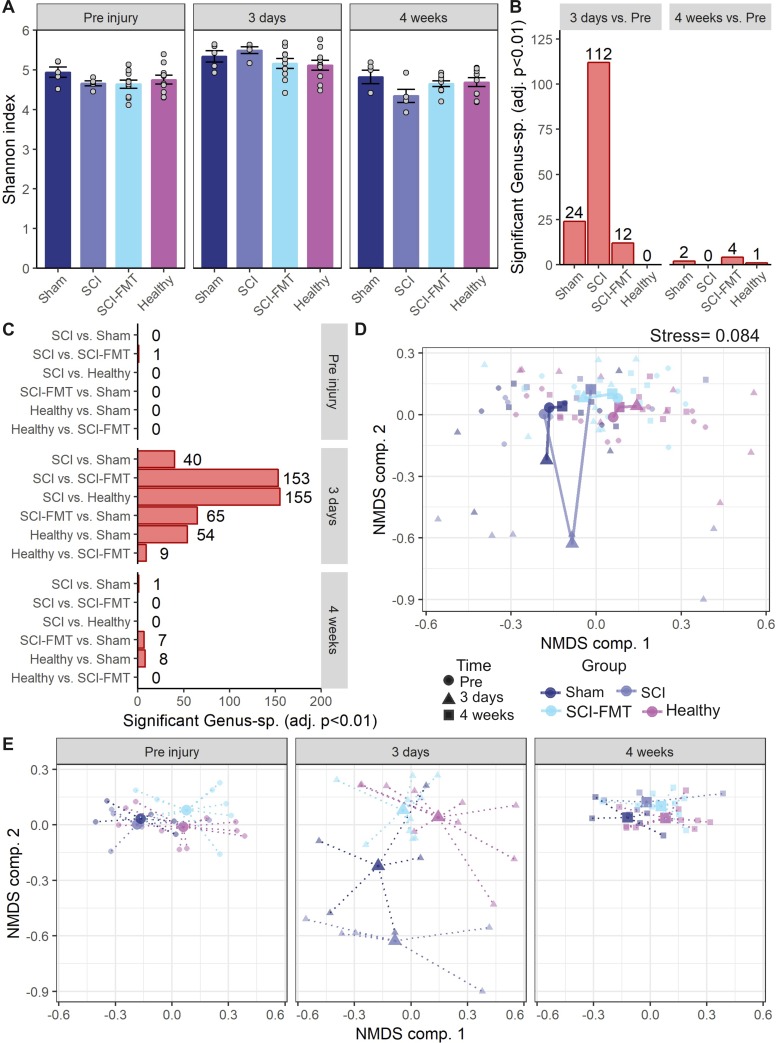
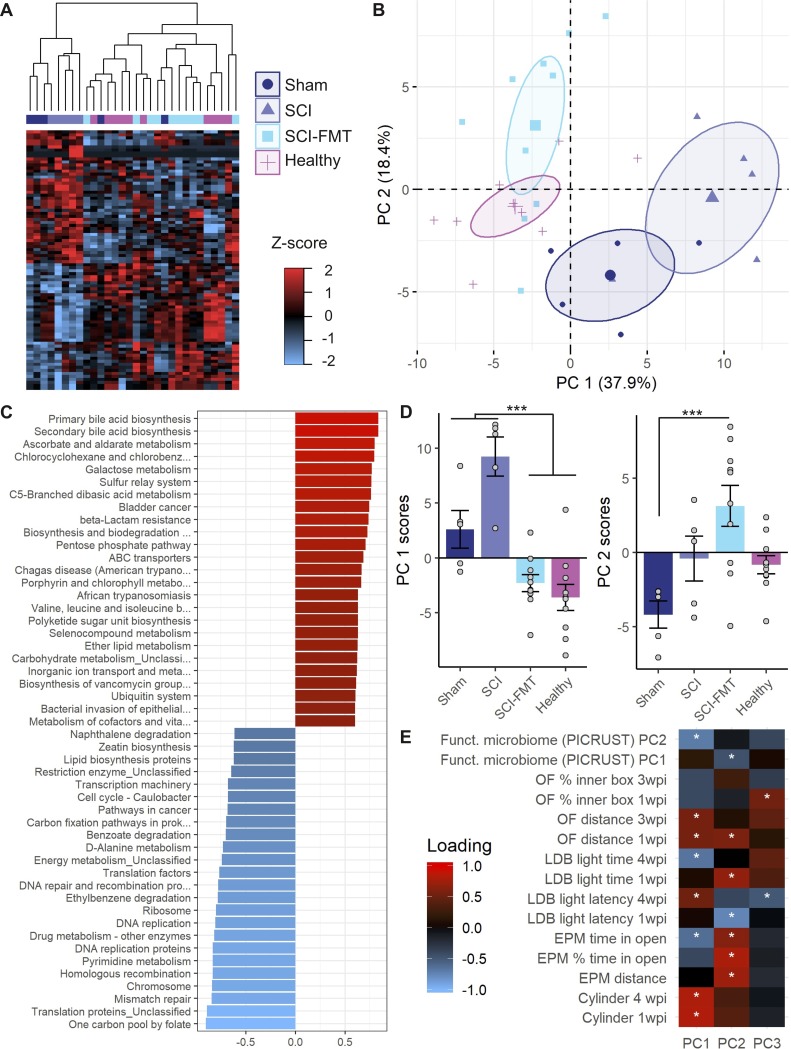
Secondary manifestations of spinal cord injury beyond motor and sensory dysfunction can negatively affect a person's quality of life. Spinal cord injury is associated with an increased incidence of depression and anxiety; however, the mechanisms of this relationship are currently not well understood. Human and animal studies suggest that changes in the composition of the intestinal microbiota (dysbiosis) are associated with mood disorders. The objective of the current study is to establish a model of anxiety following a cervical contusion spinal cord injury in rats and to determine whether the microbiota play a role in the observed behavioural changes. We found that spinal cord injury caused dysbiosis and increased symptoms of anxiety-like behaviour. Treatment with a fecal transplant prevented both spinal cord injury-induced dysbiosis as well as the development of anxiety-like behaviour. These results indicate that an incomplete unilateral cervical spinal cord injury can cause affective disorders and intestinal dysbiosis, and that both can be prevented by treatment with fecal transplant therapy.
Overview
The claims and statistics of this paper haven’t been checked yet.
Run the check — free, no account needed. It reads the open-access text and checks the sources it cites.
Integrity signals
Registry
Cites
Statistics
Figures
Verification
Claims the paper makes
The claims and statistics of this paper haven’t been checked yet.
Run the check — free, no account needed. It reads the open-access text and checks the sources it cites.
Claims other papers make about this one
Each is checked against this paper’s own text: does it say what the citing paper says it does?
In the citing paper
“FMT was reported to decrease antibiotic, chemotherapy, and injury-induced gut permeability and increased the prevalence of specific microbiota strains exhibiting anti-inflammatory properties.195,196”
From Regulation of Intestinal Barrier Function by Microbial Metabolites (2021) · cites this paper as [196]
Self-check
Percentages, sums and reported differences re-computed from the paper’s own numbers.
The self-check needs the paper’s full text.
Citations
Cites
limma powers differential expression analyses for RNA-sequencing and microarray studies
Ritchie, M. E., Phipson, B., Wu, D., Hu, Y., Law, C. W., Shi, W., & Smyth, G. K. (2015) · Nucleic Acids Research · doi:10.1093/nar/gkv007 · Cited by 40,458
vegan: Community Ecology Package
Oksanen, J., Simpson, G. L., Blanchet, F. G., Kindt, R., Legendre, P., Minchin, P. R., O’Hara, R. B., Sólymos, P., Stevens, M. H. H., Szöcs, E., et al. (2001) · doi:10.32614/cran.package.vegan · Cited by 27,099
phyloseq: An R Package for Reproducible Interactive Analysis and Graphics of Microbiome Census Data
McMurdie, P. J., & Holmes, S. (2013) · PLoS ONE · doi:10.1371/journal.pone.0061217 · Cited by 21,942
Predictive functional profiling of microbial communities using 16S rRNA marker gene sequences
Langille, M. G. I., Zaneveld, J., Caporaso, J. G., McDonald, D., Knights, D., Reyes, J. A., Clemente, J. C., Burkepile, D. E., Vega Thurber, R. L., Knight, R., et al. (2013) · Nature Biotechnology · doi:10.1038/nbt.2676 · Cited by 9,116
Molecular Mechanisms of Depression: Perspectives on New Treatment Strategies
Lang, U. E., & Borgwardt, S. (2013) · Cellular Physiology and Biochemistry · doi:10.1159/000350094 · Cited by 8,526
From inflammation to sickness and depression: when the immune system subjugates the brain
Dantzer, R., O'Connor, J. C., Freund, G. G., Johnson, R. W., & Kelley, K. W. (2008) · Nature Reviews Neuroscience · doi:10.1038/nrn2297 · Cited by 7,395
Validation of open:closed arm entries in an elevated plus-maze as a measure of anxiety in the rat
Pellow, S., Chopin, P., File, S. E., & Briley, M. (1985) · Journal of Neuroscience Methods · doi:10.1016/0165-0270(85)90031-7 · Cited by 5,822
A Meta-Analysis of Cytokines in Major Depression
Dowlati, Y., Herrmann, N., Swardfager, W., Liu, H., Sham, L., Reim, E. K., & Lanctôt, K. L. (2010) · Biological Psychiatry · doi:10.1016/j.biopsych.2009.09.033 · Cited by 4,729
Inflammation and Its Discontents: The Role of Cytokines in the Pathophysiology of Major Depression
Miller, A. H., Maletic, V., & Raison, C. L. (2009) · Biological Psychiatry · doi:10.1016/j.biopsych.2008.11.029 · Cited by 3,848
The tail suspension test: A new method for screening antidepressants in mice
Steru, L., Chermat, R., Thierry, B., & Simon, P. (1985) · Psychopharmacology · doi:10.1007/bf00428203 · Cited by 3,534
The open field as a paradigm to measure the effects of drugs on anxiety-like behaviors: a review.
Prut, L., & Belzung, C. (2003) · European Journal of Pharmacology · doi:10.1016/s0014-2999(03)01272-x · Cited by 3,190
Neurodegenerative Disorders: Parkinson's Disease and Huntington's Disease
Hague, S., Klaffke, S., & Bandmann, O. (2006) · IMPERIAL COLLEGE PRESS eBooks · doi:10.1142/9781860948961_0007 · Cited by 2,767
Sudo, N., Chida, Y., Aiba, Y., Sonoda, J., Oyama, N., Yu, X., Kubo, C., & Koga, Y. (2004) · The Journal of Physiology · doi:10.1113/jphysiol.2004.063388 · Cited by 2,735
The gut-brain axis: interactions between enteric microbiota, central and enteric nervous systems.
(2015) · PubMed Central · Cited by 2,540
Gut–brain axis: How the microbiome influences anxiety and depression
Foster, J. A., & McVey Neufeld, K.-A. (2013) · Trends in Neurosciences · doi:10.1016/j.tins.2013.01.005 · Cited by 2,460 · cited 3×
“Since then, many studies have strengthened the connection between microbiota changes and behaviour in animal modles [10,47,48] and humans [49,50].”
BackgroundWillner, P., Towell, A., Sampson, D., Sophokleous, S., & Muscat, R. (1987) · Psychopharmacology · doi:10.1007/bf00187257 · Cited by 1,993
The neuroactive potential of the human gut microbiota in quality of life and depression
Valles-Colomer, M., Falony, G., Darzi, Y., Tigchelaar, E. F., Wang, J., Tito, R. Y., Schiweck, C., Kurilshikov, A., Joossens, M., Wijmenga, C., et al. (2019) · Nature Microbiology · doi:10.1038/s41564-018-0337-x · Cited by 1,963
Interactions between the microbiota, immune and nervous systems in health and disease
Fung, T. C., Olson, C. A., & Hsiao, E. Y. (2017) · Nature Neuroscience · doi:10.1038/nn.4476 · Cited by 1,900
Bourin, M., & Hascoët, M. (2003) · European Journal of Pharmacology · doi:10.1016/s0014-2999(03)01274-3 · Cited by 1,440
Neufeld, K. M., Kang, N., Bienenstock, J., & Foster, J. A. (2011) · Neurogastroenterology & Motility · doi:10.1111/j.1365-2982.2010.01620.x · Cited by 1,392
Schallert, T. J., Fleming, S. M., Leasure, J. L., Tillerson, J. L., & Bland, S. T. (2000) · Neuropharmacology · doi:10.1016/s0028-3908(00)00005-8 · Cited by 1,373
Correlation between the human fecal microbiota and depression
Naseribafrouei, A., Hestad, K., Avershina, E., Sekelja, M., Linløkken, A., Wilson, R., & Rudi, K. (2014) · Neurogastroenterology & Motility · doi:10.1111/nmo.12378 · Cited by 1,044
Phipson, B., Lee, S., Majewski, I. J., Alexander, W. S., & Smyth, G. K. (2016) · The Annals of Applied Statistics · doi:10.1214/16-aoas920 · Cited by 1,013
Effects of the probiotic Bifidobacterium infantis in the maternal separation model of depression
Desbonnet, L., Garrett, L., Clarke, G., Kiely, B., Cryan, J. F., & Dinan, T. G. (2010) · Neuroscience · doi:10.1016/j.neuroscience.2010.08.005 · Cited by 999
The Relationship of Depression and Stressors to Immunological Assays: A Meta-Analytic Review
Zorrilla, E. P., Luborsky, L., McKay, J. R., Rosenthal, R., Houldin, A., Tax, A., McCorkle, R., Seligman, D. A., & Schmidt, K. (2001) · Brain, Behavior, and Immunity · doi:10.1006/brbi.2000.0597 · Cited by 995
Köhler, O., Benros, M. E., Nordentoft, M., Farkouh, M. E., Iyengar, R. L., Mors, O., & Krogh, J. (2014) · JAMA Psychiatry · doi:10.1001/jamapsychiatry.2014.1611 · Cited by 941
Kassam, Z., Lee, C. H., Yuan, Y., & Hunt, R. H. (2013) · American Journal of Gastroenterology · doi:10.1038/ajg.2013.59 · Cited by 904
Using the rat forced swim test to assess antidepressant-like activity in rodents
Slattery, D. A., & Cryan, J. F. (2012) · Nature Protocols · doi:10.1038/nprot.2012.044 · Cited by 903
Microbiota Dysbiosis Controls the Neuroinflammatory Response after Stroke
Singh, V., Roth, S., Llovera, G., Sadler, R., Garzetti, D., Stecher, B., Dichgans, M., & Liesz, A. (2016) · Journal of Neuroscience · doi:10.1523/jneurosci.1114-16.2016 · Cited by 815
Carola, V., D'Olimpio, F., Brunamonti, E., Mangia, F., & Renzi, P. (2002) · Behavioural Brain Research · doi:10.1016/s0166-4328(01)00452-1 · Cited by 735
Guo, S., Al–Sadi, R., Said, H. M., & Ma, T. Y. (2012) · American Journal Of Pathology · doi:10.1016/j.ajpath.2012.10.014 · Cited by 722
Endotoxin produces a depressive-like episode in rats
Yirmiya, R. (1996) · Brain Research · doi:10.1016/0006-8993(95)01415-2 · Cited by 604
Huang, R., Wang, K., & Hu, J. (2016) · Nutrients · doi:10.3390/nu8080483 · Cited by 505
Bacterial translocation from the gastrointestinal tract
Berg, R. D. (1995) · Trends in Microbiology · doi:10.1016/s0966-842x(00)88906-4 · Cited by 443
Frenois, F., Moreau, M., O’Connor, J., Lawson, M., Micon, C., Lestage, J., Kelley, K. W., Dantzer, R., & Castanon, N. (2007) · Psychoneuroendocrinology · doi:10.1016/j.psyneuen.2007.03.005 · Cited by 438
Galley, J. D., Nelson, M. C., Yu, Z., Dowd, S. E., Walter, J., Kumar, P., Lyte, M., & Bailey, M. T. (2014) · BMC Microbiology · doi:10.1186/1471-2180-14-189 · Cited by 411
Psychosocial issues in spinal cord injury: a review
Post, M. W. M., & van Leeuwen, C. M. C. (2012) · Spinal Cord · doi:10.1038/sc.2011.182 · Cited by 409
Pop, M., Walker, A. W., Paulson, J. N., Lindsay, B. R., Antonio, M., Hossain, M. A., Oundo, J. O., Tamboura, B., Mai, V., Astrovskaya, I., et al. (2014) · Genome biology · doi:10.1186/gb-2014-15-6-r76 · Cited by 375
Anxiety and depression after spinal cord injury: A longitudinal analysis
Kennedy, P., & Rogers, B. A. (2000) · Archives of Physical Medicine and Rehabilitation · doi:10.1053/apmr.2000.5580 · Cited by 370
The causes of intestinal dysbiosis: a review.
Hawrelak, J. A., & Myers, S. P. (2004) · PubMed · Cited by 366
Gut dysbiosis impairs recovery after spinal cord injury
Kigerl, K. A., Hall, J. C. E., Wang, L., Mo, X. M., Yu, Z., & Popovich, P. G. (2016) · The Journal of Experimental Medicine · doi:10.1084/jem.20151345 · Cited by 344
Self-citationA Single Dose of Endotoxin Increases Intestinal Permeability in Healthy Humans
O’Dwyer, S. (1988) · Archives of Surgery · doi:10.1001/archsurg.1988.01400360029003 · Cited by 302
Autonomic function following cervical spinal cord injury
Krassioukov, A. V. (2009) · Respiratory Physiology & Neurobiology · doi:10.1016/j.resp.2009.08.003 · Cited by 297
O’Donovan, A., Hughes, B. M., Slavich, G. M., Lynch, L., Cronin, M.-T., O’Farrelly, C., & Malone, K. M. (2010) · Brain, Behavior, and Immunity · doi:10.1016/j.bbi.2010.03.003 · Cited by 296
Fenn, A. M., Gensel, J. C., Huang, Y., Popovich, P. G., Lifshitz, J., & Godbout, J. P. (2014) · Biological Psychiatry · doi:10.1016/j.biopsych.2013.10.014 · Cited by 283
Self-citationSchwab, J. M., Zhang, Y., Kopp, M. A., Brommer, B., & Popovich, P. G. (2014) · Experimental Neurology · doi:10.1016/j.expneurol.2014.04.023 · Cited by 260 · cited 1×
“Given the acute and chronic inflammatory state associated with SCI [59,60], it is likely that inflammation plays a role in the etiology of mental health disorders following SCI [6].”
BackgroundSelf-citationMicrobiome, inflammation, epigenetic alterations, and mental diseases
Alam, R., Abdolmaleky, H. M., & Zhou, J. (2017) · American Journal of Medical Genetics Part B Neuropsychiatric Genetics · doi:10.1002/ajmg.b.32567 · Cited by 240
Rodgers, R. J., & Shepherd, J. K. (1993) · Psychopharmacology · doi:10.1007/bf02245704 · Cited by 221
The tantalizing links between gut microbes and the brain
Smith, P. A. (2015) · Nature · doi:10.1038/526312a · Cited by 221
Lucin, K. M., Sanders, V. M., JONES, T., Malarkey, W. B., & Popovich, P. G. (2007) · Experimental Neurology · doi:10.1016/j.expneurol.2007.05.019 · Cited by 208
Self-citationFile, S. E., Mabbutt, P. S., & Hitchcott, P. K. (1990) · Psychopharmacology · doi:10.1007/bf02245751 · Cited by 197
Autonomic Dysreflexia Causes Chronic Immune Suppression after Spinal Cord Injury
Zhang, Y., Guan, Z., Reader, B. F., Shawler, T. M., Mandrekar-Colucci, S., Huang, K., Weil, Z. M., Bratasz, A., Wells, J., Powell, N. D., et al. (2013) · Journal of Neuroscience · doi:10.1523/jneurosci.1974-13.2013 · Cited by 185
Self-citationIntestinal Microbiota in Patients with Spinal Cord Injury
Gungor, B., Adıgüzel, E., Gürsel, İ., Yılmaz, B., & Gürsel, M. (2016) · PLoS ONE · doi:10.1371/journal.pone.0145878 · Cited by 173
One-trial tolerance to the anxiolytic effects of chlordiazepoxide in the plus-maze
File, S. E. (1990) · Psychopharmacology · doi:10.1007/bf02244419 · Cited by 165
Bacterial translocation from the gastrointestinal tract.
Rd, B. (1992) · PubMed · Cited by 161
Lynch, A., Wong, C., Anthony, A., Dobbs, B., & Frizelle, F. (2000) · Spinal Cord · doi:10.1038/sj.sc.3101058 · Cited by 148
Lim, S.-W., Shiue, Y., Ho, C., Yu, S.-C., Kao, P., Wang, J., & Kuo, J. (2017) · PLoS ONE · doi:10.1371/journal.pone.0169623 · Cited by 147
Suicide following spinal cord injury
DeVivo, M. J., Black, K. J., Richards, J. S., & Stover, S. L. (1991) · Spinal Cord · doi:10.1038/sc.1991.91 · Cited by 134
Maldonado‐Bouchard, S., Peters, K., Woller, S. A., Madahian, B., Faghihi, U., Patel, S. P., Bake, S., & Hook, M. A. (2015) · Brain Behavior and Immunity · doi:10.1016/j.bbi.2015.08.009 · Cited by 133
O’Connor, G., Jeffrey, E., Madorma, D., Marcillo, A. E., Abreu, M. T., Deo, S. K., Dietrich, W. D., & Daunert, S. (2018) · Journal of Neurotrauma · doi:10.1089/neu.2017.5349 · Cited by 110
Inflammation modulates anxiety in an animal model of multiple sclerosis
Peruga, I., Hartwig, S., Thöne, J., Hovemann, B. T., Gold, R., Juckel, G., & Linker, R. A. (2011) · Behavioural Brain Research · doi:10.1016/j.bbr.2011.01.018 · Cited by 93
Bertoglio, L. J., & Carobrez, A. P. (2002) · Pharmacology Biochemistry and Behavior · doi:10.1016/s0091-3057(02)00958-9 · Cited by 74
Assessment of Depression in a Rodent Model of Spinal Cord Injury
Luedtke, K., Bouchard, S. M., Woller, S. A., Funk, M. K., Aceves, M., & Hook, M. A. (2014) · Journal of Neurotrauma · doi:10.1089/neu.2013.3204 · Cited by 73
Damage control in the nervous system: beware the immune system in spinal cord injury
Popovich, P. G., & McTigue, D. M. (2009) · Nature Medicine · doi:10.1038/nm0709-736 · Cited by 63
Self-citationSanto, C. C. D. E., Fiorin, F. D. S., Ilha, J., Duarte, M. M. M. F., Duarte, T., & Santos, A. R. S. (2019) · Brain Behavior and Immunity · doi:10.1016/j.bbi.2019.01.012 · Cited by 61
Fecal microbiota transplant in patients with Clostridium difficile infection
Chapman, B. C., Moore, H. B., Overbey, D. M., Morton, A. P., Harnke, B., Gerich, M. E., & Vogel, J. D. (2016) · The Journal of Trauma: Injury, Infection, and Critical Care · doi:10.1097/ta.0000000000001195 · Cited by 51
Albrechet‐Souza, L., Borelli, K. G., de Carvalho, M. C., & Brandão, M. L. (2009) · Neuroscience · doi:10.1016/j.neuroscience.2009.08.038 · Cited by 38
Study of Bacterial Translocation From Gut After Paraplegia Caused by Spinal cord Injury in Rats
Liu, J., An, H., Jiang, D., Huang, W., Zou, H., Meng, C., & Li, H. (2004) · Spine · doi:10.1097/01.brs.0000107234.74249.cd · Cited by 37
Rodent Models and Behavioral Outcomes of Cervical Spinal Cord Injury
Geissler, S. A. (2013) · Journal of Spine · doi:10.4172/2165-7939.s4-001 · Cited by 26
Zhou, H., Yu, C.-L., Wang, L.-P., Yang, Y., Mao, R., Zhou, Q., & Xu, L. (2015) · Pharmacology Biochemistry and Behavior · doi:10.1016/j.pbb.2015.05.009 · Cited by 12
Unrest at home: diarrheal disease and microbiota disturbance
Bik, E. M., & Relman, D. A. (2014) · Genome biology · doi:10.1186/gb4182 · Cited by 7
Research works printed but not linked: 1
- R Studio Team, 2015, RStudio: integrated development for R
Cited by
Sorted by citations
The Role of Microbiota-Gut-Brain Axis in Neuropsychiatric and Neurological Disorders
Socała, K., Doboszewska, U., Szopa, A., Serefko, A., Włodarczyk, M., Zielińska, A., Poleszak, E., Fichna, J., & Wlaź, P. (2021) · Pharmacological Research · doi:10.1016/j.phrs.2021.105840 · Cited by 857
Regulation of Intestinal Barrier Function by Microbial Metabolites
Ghosh, S., Whitley, C. S., Haribabu, B., & Jala, V. R. (2021) · Cellular and Molecular Gastroenterology and Hepatology · doi:10.1016/j.jcmgh.2021.02.007 · Cited by 835
Effect of fecal microbiota transplant on symptoms of psychiatric disorders: a systematic review
Chinna Meyyappan, A., Forth, E., Wallace, C. J. K., & Milev, R. (2020) · BMC Psychiatry · doi:10.1186/s12888-020-02654-5 · Cited by 254
The Role of Gut Dysbiosis in the Pathophysiology of Neuropsychiatric Disorders
Anand, N., Gorantla, V. R., & Chidambaram, S. B. (2022) · Cells · doi:10.3390/cells12010054 · Cited by 194
The neuroanatomical–functional paradox in spinal cord injury
Fouad, K., Popovich, P. G., Kopp, M. A., & Schwab, J. M. (2020) · Nature Reviews Neurology · doi:10.1038/s41582-020-00436-x · Cited by 163
Self-citation
Metadata
- Authors
- Schmidt, E. K. A., Torres-Espin, A., Raposo, P. J. F., Madsen, K. L., Kigerl, K. A., Popovich, P. G., Fenrich, K. K., & Fouad, K.
- Affiliations
- University of Alberta (CA)
- The Ohio State University Wexner Medical Center (US)
- Corresponding author
- Fouad, Karim
- ORCID
- Venue
- PLoS ONE
- Publisher
- Public Library of Science (PLoS)
- Published
- 2020-01-15
- Volume
- 15
- Issue
- 1
- Pages
- e0226128
- ISSN
- 1932-6203 (ISSN-L)
- PMC
- PMC6961833
- OpenAlex
- W2998874562
- Cited by
- 119
- References
- 73
- Citations by year
- 2026: 8 · 2025: 12 · 2024: 12 · 2023: 24 · 2022: 17 · 2021: 31 · 2020: 15
- FWCI
- 7.13
- Type
- journal article
- Language
- en
- Open access
- gold
- doi.org
- Licence
- Locations
- PLoS ONE (publishedVersion, cc-by)
- Europe PMC (PubMed Central) (publishedVersion, cc-by)
- PubMed Central (publishedVersion, cc-by)
- PubMed (publishedVersion)
- RePEc: Research Papers in Economics (submittedVersion)
- DOAJ (DOAJ: Directory of Open Access Journals) (submittedVersion, cc-by-sa)
- Figshare (submittedVersion, cc-by)
- Funders
- Craig H. Neilsen Foundation (542589)
- Canadian Institutes of Health Research (119281)
- Topics
- Life Sciences › Biochemistry, Genetics and Molecular Biology › Molecular Biology › Gut microbiota and health
- Health Sciences › Medicine › Clinical Neurology › Spinal Cord Injury Research
- Health Sciences › Medicine › Gastroenterology › Gastrointestinal motility and disorders
- Keywords
- fecal microbiota transplantation, spinal cord injury, gut dysbiosis, anxiety-like behavior, gut microbiota, mood disorders, depression
- MeSH terms
- Gastrointestinal Microbiome, Fecal Microbiota Transplantation, Animals, Anxiety, Behavior, Animal, Spinal Cord Injuries, Maze Learning, Recovery of Function, Rats, Dysbiosis
About these checks
Registry, retraction, Cites and statistics results are computed, not judged, with one exception: a printed reference that no index lists is read once by a model before it counts as a citation error. Claims are extracted by a model and kept only when their quote appears verbatim in the text; each cited source is then checked, with a model’s help, for whether it says what the claim relies on. Those verdicts can be wrong — read the claim’s quote and the cited source before relying on one.
Statistics and arithmetic are recomputed, not judged.
Confidence bands are shown only for fields calibrated on our annotated test set. None is calibrated yet, so no band is shown.
What counts as a claim ›How we measure confidence ›How we check this ›
Are you an author, or do you see a problem with this page? Request a review
