

Psychological impacts of “screen time” and “green time” for children and adolescents: A systematic scoping review
Open accessThe DOI matches its Crossref record; 265 of the 270 references it cites were found in a registry or an index; 36 of the 108 sources its claims cite were checked for support.
Abstract
Technological developments in recent decades have increased young people's engagement with screen-based technologies. This systematic scoping review included 186 eligible studies and found that high levels of screen time appeared to be associated with unfavourable psychological outcomes.
Overview
CoChat Summary
## TL;DR
This scoping review identified 186 studies on children and adolescents and found that higher screen time was generally associated with unfavourable psychological outcomes, while green time was generally associated with favourable ones. The evidence is highly heterogeneous and mostly cross-sectional, so the paper argues that stronger longitudinal and intervention studies are needed.
## Key findings
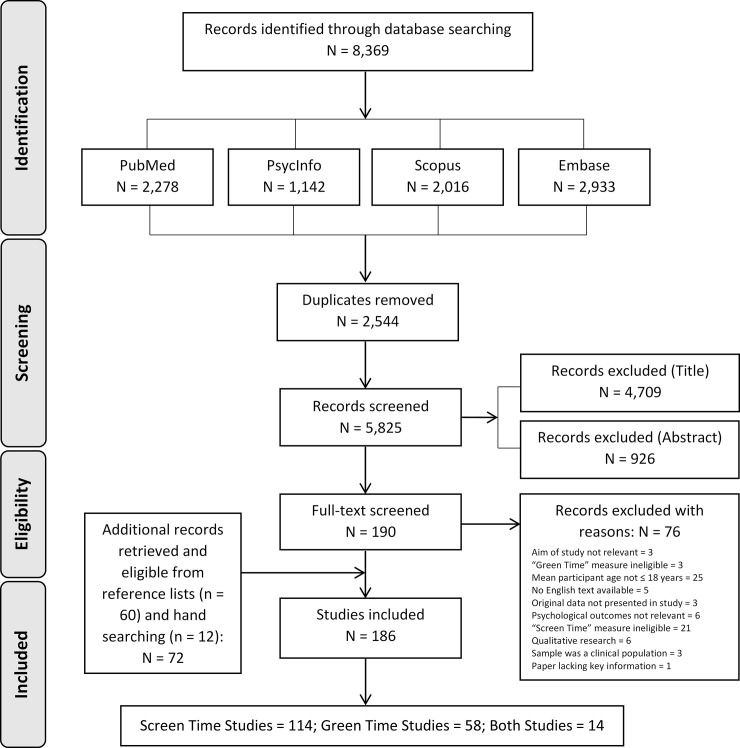
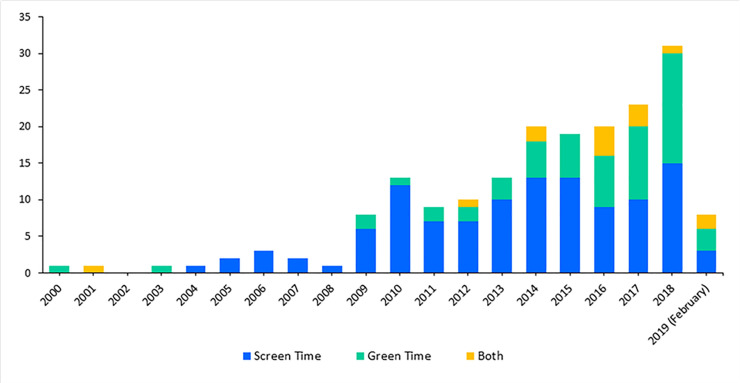
- The review included 186 studies: 114 on screen time (ST), 58 on green time (GT), and 14 on both.
- Across age groups, higher ST was generally linked to unfavourable psychological outcomes, while greater GT was generally linked to favourable psychological outcomes.
- In the included literature, cross-sectional designs dominated: 74% of ST studies, 42% of GT studies, and 57% of studies of both exposures.
- Sample sizes ranged from 11 to 388,275 participants, with a median of 969.
## Methods
- Design: Systematic scoping review using PRISMA Scoping Review Checklist and Arksey & O’Malley’s framework; no formal quality appraisal or meta-analysis.
- Data/sample: Searches of PubMed, PsycINFO, Embase, and Scopus from inception to 18 February 2019; included peer-reviewed English quantitative studies of children and adolescents aged ≤18 years.
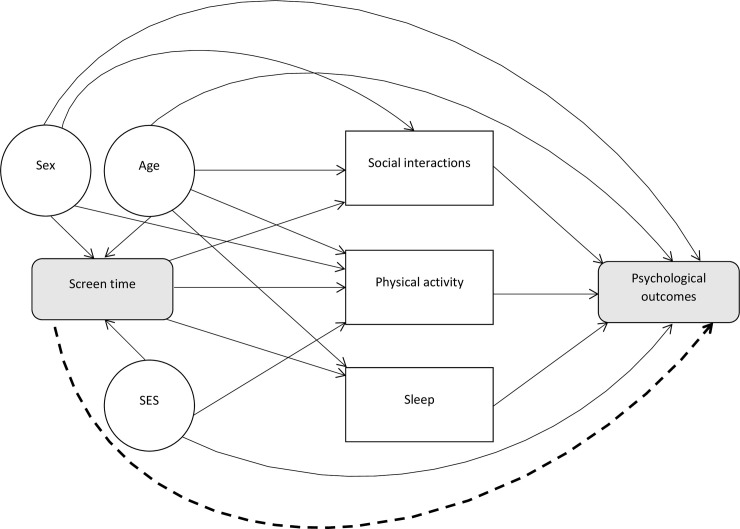
- Main analysis: Studies were charted descriptively and organized by age group, exposure (ST/GT), psychological outcome category, SES, and whether designs allowed some inference about causality.
## Limitations
- The paper states that heterogeneity across studies made it impossible to fully synthesize findings and perform a systematic appraisal or estimate effect sizes.
- The review was limited to English-language articles, which may have missed relevant studies.
- It focused on ST duration rather than content, making it hard to compare recreational vs educational or passive vs interactive screen use.
- Evident from the text: the evidence base is mostly cross-sectional, and studies often used inconsistent exposure/outcome measures, which weakens causal inference and comparability.
Model-written summary. Check it against the paper before relying on it.
Integrity signals
Registry
Cites
Statistics
Figures
Verification
Claims the paper makes
22 Valid · 5 Not valid · 124 Not checked · 106 Own results and interpretations
The cited sources support only part of this claim — read each source’s verdict below.
In the paper
“Experiences of depressive and anxiety symptoms in childhood and adolescence are associated with an elevated risk of poor mental health in adulthood [8–12]”
§ Psychological impacts of “screen time” and “green time” for children and adolescents: A systematic scoping review > 1 Introduction > 1.1 Background
What the sources say
- Not checked — no full text of the sourcecites [8] Baxter A, Vos T, M Scott K, Ferrari A, Whiteford H. The global burden of anxiety disorders in 2010. Psychological Medicine. 2014; 44: 2363– 74. 10.1017/S0033291713003243 24451993 source
- Partly supportedcites [9] Patton GC, Sawyer SM, Santelli JS, Ross DA, Afifi R, Allen NB, et al Our future: a Lancet commission on adolescent health and wellbeing. The Lancet. 2016; 387(10036): 2423– 78. PMC5832967 27174304 sourceExperimental — accuracy not yet measured
In ‘The global health profile of adolescents and young adults’ (page not available), the paper says mental disorders often begin in late childhood or adolescence and many persist into adulthood. It does not establish the claimed adult risk specifically for childhood and adolescent depressive and anxiety symptoms; the ‘Mental disorders’ section also notes that not all adolescent mental health problems persist, particularly brief episodes. (LLM, conf=0.83)
- Not checked — no full text of the sourcecites [10] Pine D, Cohen E, Cohen P, Brook J. Adolescent Depressive Symptoms as Predictors of Adult Depression: Moodiness or Mood Disorder? The American Journal of Psychiatry. 1999; 156: 133– 5. 10.1176/ajp.156.1.133 9892310 source
- Partly supportedcites [11] Copeland WE, Angold A, Shanahan L, Costello EJ. Longitudinal Patterns of Anxiety From Childhood to Adulthood: The Great Smoky Mountains Study. Journal of the American Academy of Child & Adolescent Psychiatry. 2014; 53(1): 21– 33. 24342383 PMC3939681 sourceExperimental — accuracy not yet measured
The Discussion reports links between childhood anxiety status and adult psychiatric outcomes, while the Results link childhood anxiety disorders to adverse functioning in young adulthood. The paper does not establish the claimed association for childhood depressive symptoms; its analyses concern anxiety disorders rather than depressive and anxiety symptoms together. (LLM, conf=0.86)
- Not checked — no full text of the sourcecites [12] Hofstra MB, Van der Ende JAN, Verhulst FC. Continuity and Change of Psychopathology From Childhood Into Adulthood: A 14-Year Follow-up Study. Journal of the American Academy of Child & Adolescent Psychiatry. 2000; 39(7): 850– 8. 10892226 source
plainstates an association- Asserted: passes — The authors put it forward as true.
- Checkable: passes — It can be checked against evidence.
- Load-bearing: passes — The paper’s conclusions depend on it.
- Based: passes — The paper gives a reason why it holds.
The cited sources support only part of this claim — read each source’s verdict below.
In the paper
“However, research investigating the psychological impacts of ST or GT typically considers ST and GT in isolation and fails to delineate the reciprocal effects of high technology use and low contact with nature on mental health and cognitive outcomes [53].”
§ Psychological impacts of “screen time” and “green time” for children and adolescents: A systematic scoping review > 1 Introduction > 1.1 Background
What the sources say
- Partly supportedcites [53] Atchley RA, Strayer DL, Atchley P. Creativity in the Wild: Improving Creative Reasoning through Immersion in Natural Settings. PLoS ONE. 2012; 7(12): e51474 10.1371/journal.pone.0051474 23251547 PMC3520840 sourceExperimental — accuracy not yet measured
Split into 2 atoms — 0 confirmed, 2 partially supported, 0 disputed, 0 misattributed, 0 unverifiable. Expand the claim to see per-atom verdicts.
plain- Asserted: passes — The authors put it forward as true.
- Checkable: passes — It can be checked against evidence.
- Load-bearing: passes — The paper’s conclusions depend on it.
- Based: passes — The paper gives a reason why it holds.
- Partly supported
The cited sources support only part of this claim — read each source’s verdict below.
In the paper
“However, from a developmental neurobiology perspective, excessive ST may be detrimental to young people as ST stimulates neurobiological systems such as the hypothalamic-pituitary-adrenal (HPA) axis [24] and dopaminergic circuitries [25].”
§ Psychological impacts of “screen time” and “green time” for children and adolescents: A systematic scoping review > 1 Introduction > 1.1 Background
What the sources say
- Not checked — no full text of the sourcecites [24] Brunetti VC, O'Loughlin EK, O'Loughlin J, Constantin E, Pigeon É. Screen and nonscreen sedentary behavior and sleep in adolescents. Sleep Health. 2016; 2(4): 335– 40. 10.1016/j.sleh.2016.09.004 29073392 source
- Partly supportedcites [25] Giedd JN. The Digital Revolution and Adolescent Brain Evolution. Journal of Adolescent Health. 2012; 51(2): 101– 5. 10.1016/j.jadohealth.2012.06.002 22824439 PMC3432415 sourceExperimental — accuracy not yet measured
The Entertainment section says video games stimulate reward circuitry involving dopamine, and Attention Economy raises a possible downside of sustained dopamine stimulation. The citation [25] is attached to the dopaminergic-circuitry claim, not the HPA-axis claim. The source discusses video games and poses the detrimental effect as a question; it does not establish that screen time generally has that effect. (LLM, conf=0.86)
hedgedstates a possible cause- Asserted: passes — The authors put it forward as true.
- Checkable: passes — It can be checked against evidence.
- Load-bearing: unclear — It is unclear whether the paper’s conclusions depend on it.
- Based: passes — The paper gives a reason why it holds.
The cited sources support only part of this claim — read each source’s verdict below.
In the paper
“Children in high-income countries are now experiencing significantly lower levels of contact with nature, or GT, than previous generations [35, 36].”
§ Psychological impacts of “screen time” and “green time” for children and adolescents: A systematic scoping review > 1 Introduction > 1.1 Background
What the sources say
- Partly supportedcites [35] Bratman GN, Hamilton JP, Hahn KS, Daily GC, Gross JJ. Nature experience reduces rumination and subgenual prefrontal cortex activation. Proc Natl Acad Sci USA. 2015; 112(28): 8567– 72. 10.1073/pnas.1510459112 26124129 PMC4507237 sourceExperimental — accuracy not yet measured
The paper’s introductory passages say that urbanization corresponds to decreased nature experience and that a larger share of humanity is removed from nature than ever before (page unavailable). They do not establish the claim specifically for children in high-income countries or quantify a significant difference from previous generations. (LLM, conf=0.86)
- Not checked — no full text of the sourcecites [36] Soga M, Gaston KJ. Extinction of experience: the loss of human–nature interactions. Frontiers in Ecology and the Environment. 2016; 14(2): 94– 101. source
plain- Asserted: passes — The authors put it forward as true.
- Checkable: passes — It can be checked against evidence.
- Load-bearing: passes — The paper’s conclusions depend on it.
- Based: passes — The paper gives a reason why it holds.
- Partly supported
The sources with a verdict support this claim; the rest weren’t checked yet, have no full text we could read, or their verdicts aren’t rated yet.
In the paper
“Moderate ST can be beneficial for young people in a connected world [22] as it may afford them with opportunities to enhance existing relationships, forge new connections, engage in safe identity exploration, aid in academic pursuits, and provide access to information about the world beyond their immediate surroundings [23].”
§ Psychological impacts of “screen time” and “green time” for children and adolescents: A systematic scoping review > 1 Introduction > 1.1 Background
What the sources say
- Supportedcites [22] Przybylski AK, Weinstein N. A Large-Scale Test of the Goldilocks Hypothesis: Quantifying the Relations Between Digital-Screen Use and the Mental Well-Being of Adolescents. Psychological Science. 2017; 28(2): 204– 15. 10.1177/0956797616678438 28085574 source
The Avenues for future work section (p. 11) says moderate digital engagement may have positive correlates with well-being and may afford advantages to adolescents. The Confirmatory analyses (p. 8) report positive or flat associations below the study’s screen-time thresholds, with an exception for weekend smartphone use. The claim’s 'can be beneficial' wording reflects that qualified possibility. (LLM, conf=0.91)
- Not checked — no full text of the sourcecites [23] Uhls YT, Ellison NB, Subrahmanyam K. Benefits and Costs of Social Media in Adolescence. Pediatrics. 2017; 140(Suppl 2): S67– s70. 10.1542/peds.2016-1758E 29093035 source
plainstates a possible cause- Asserted: passes — The authors put it forward as true.
- Checkable: passes — It can be checked against evidence.
- Load-bearing: unclear — It is unclear whether the paper’s conclusions depend on it.
- Based: passes — The paper gives a reason why it holds.
- Supported
111 more claims · 2 with their cited sources checked
Create a free account to see all 257 claims and to verify the 5 references still open.
- Probably not a substantial claim. 55
- It may state two separate claims as one. 107
- The quote only partly states this claim. 4
Claims other papers make about this one
Each is checked against this paper’s own text: does it say what the citing paper says it does?
The check wasn’t confident either way, so it gives no verdict — never disputed.
In the citing paper
“Additionally, parents often raise concerns about privacy, misinformation, and content appropriateness [10, 37, 58]”
From SET-PAiREd: Designing for Parental Involvement in Learning with an AI-Assisted Educational Robot (2025) · cites this paper as [58]
Experimental — accuracy not yet measuredIn the citing paper
“On the negative side, technology introduces risks such as excessive screen time, exposure to inappropriate content, and misinformation, which necessitate parental intervention [37, 58].”
From SET-PAiREd: Designing for Parental Involvement in Learning with an AI-Assisted Educational Robot (2025) · cites this paper as [58]
In the citing paper
“it has been posited that youth from low SES backgrounds may disproportionally impacted by psychological problems linked to high screen time [24].”
Citations
Cites
PRISMA Extension for Scoping Reviews (PRISMA-ScR): Checklist and Explanation
Tricco, A. C., Lillie, E., Zarin, W., O'Brien, K. K., Colquhoun, H., Levac, D., Moher, D., Peters, M. D. J., Horsley, T., Weeks, L., et al. (2018) · Annals of Internal Medicine · doi:10.7326/m18-0850 · Cited by 43,565
Scoping studies: towards a methodological framework
Arksey, H., & O'Malley, L. (2005) · International Journal of Social Research Methodology · doi:10.1080/1364557032000119616 · Cited by 36,742 · cited 6×
“While a formal risk of bias assessment was not performed (not required in scoping reviews [58]), a preliminary assessment of each study’s ability to permit examination of causal linkages, based on two key design features, was conducted.”
BackgroundMethodInfluentialThe future of employment: How susceptible are jobs to computerisation?
Frey, C. B., & Osborne, M. A. (2017) · Technological Forecasting and Social Change · doi:10.1016/j.techfore.2016.08.019 · Cited by 8,727
The restorative benefits of nature: toward an integrative framework
Kaplan, S. (1995) · Journal of Environmental Psychology · doi:10.1016/0272-4944(95)90001-2 · Cited by 6,923 · cited 5×
“, provide a feeling of ‘getting away’), may be more important for early-to-late adolescents because they provide opportunities for respite and mind-wandering [46].”
BackgroundInfluentialEffects of stress throughout the lifespan on the brain, behaviour and cognition
Lupien, S. J., McEwen, B. S., Gunnar, M. R., & Heim, C. (2009) · Nature Reviews Neuroscience · doi:10.1038/nrn2639 · Cited by 6,256
Stress recovery during exposure to natural and urban environments
Ulrich, R. S., Simons, R. F., Losito, B. D., Fiorito, E., Miles, M. A., & Zelson, M. (1991) · Journal of Environmental Psychology · doi:10.1016/s0272-4944(05)80184-7 · Cited by 5,990 · cited 3×
“Similarly, Stress Reduction Theory contends that due to extensive human evolution in natural environments, modern humans may have a biologically prepared readiness to quickly and readily acquire restoration from stress in natural settings, but have no such preparedness for highly stimulating technological environments…”
BackgroundOur future: a Lancet commission on adolescent health and wellbeing
Patton, G. C., Sawyer, S. M., Santelli, J. S., Ross, D. A., Afifi, R., Allen, N. B., Arora, M., Azzopardi, P., Baldwin, W., Bonell, C., et al. (2016) · The Lancet · doi:10.1016/s0140-6736(16)00579-1 · Cited by 3,785
Hartig, T., Mitchell, R., de Vries, S., & Frumkin, H. (2014) · Annual Review of Public Health · doi:10.1146/annurev-publhealth-032013-182443 · Cited by 3,638 · cited 2×
“Natural areas also tend to be less crowded, with reduced air and noise pollution, which is beneficial for overall health [41].”
BackgroundMental health of young people: A global public-health challenge
Patel, V., Flisher, A. J., Hetrick, S., & McGorry, P. (2007) · The Lancet · doi:10.1016/s0140-6736(07)60368-7 · Cited by 3,126
Why do many psychiatric disorders emerge during adolescence?
Paus, T., Keshavan, M., & Giedd, J. N. (2008) · Nature Reviews Neuroscience · doi:10.1038/nrn2513 · Cited by 3,123
Research works printed but not linked: 5
- Moss S. Natural Childhood. UK: National Trust; 2012. 28 p.
- Planet Ark. Climbing Trees: Getting Aussie Kids Back Outdoors Australia. Australia: Planet Ark; 2011. 11 p.
- Plitponkarnpim A, Srikaew C, Puranitee P, Vallibhakara SAO. Ict exposure in children younger than 2 years: Rates, associated factors, and health outcomes. Journal of the Medical Association of Thailand. 2018; 101(3): 345– 9.
- de Haan J, Huysmans F. IT/Media Use and Psychological Development Among Dutch Youth. IT&SOCIETY. 2004; 1(6): 44– 58.
- Stainbrook E. Human needs and the natural environment. Man and Nature in the City. 1968: 1– 9.
Cited by
Items 101–200 of 367
Outdoor learning in urban schools: Effects on 4–5 year old children's noise and physiological stress
Goldenberg, G., Atkinson, M., Dubiel, J., & Wass, S. V. (2024) · Journal of Environmental Psychology · doi:10.1016/j.jenvp.2024.102362 · Cited by 31
“Children from disadvantaged backgrounds are also thought to be disproportionately affected by swapping ‘green time ’ for ‘screen time ’ (Oswald et al., 2020).”
BackgroundHe, X., Hu, J., Yin, M., Zhang, W., & Qiu, B. (2023) · Brain Sciences · doi:10.3390/brainsci13101452 · Cited by 18
“A growing body of studies suggested that extensive exposure to screen media in youth might have a profound and lasting impact on mental health problems [4–6].”
BackgroundEffects of Touchscreen Media Use on Toddlers’ Sleep: Insights from Longtime ECG Monitoring
Wimmer, S., Eglmaier, M. T. W., Eichen, L., Rettenbacher, K., Macher, D., Walter‐Laager, C., Lackner, H. K., Papousek, I., & Paechter, M. (2021) · Sensors · doi:10.3390/s21227515 · Cited by 11
“Although extended (touch)screen use may have detrimental effects on the well-being of children of all ages (for an overview see [11]), media use does not necessarily have unfavorable effects.”
BackgroundBrons, M. E., Helbich, M., Bolt, G., Visser, K., & Stevens, G. W. J. M. (2023) · Health & Place · doi:10.1016/j.healthplace.2023.103140 · Cited by 9
Cioffredi, L., Garner, B., Maxwell, J. R., Merhar, S. L., Peralta-Carcelén, M., Scott, L. S., Sisodia, M., & DeMauro, S. B. (2024) · Developmental Cognitive Neuroscience · doi:10.1016/j.dcn.2024.101414 · Cited by 16
“Further, frequency of outdoor play was associated with improved socialization skills (Oswald et al., 2020).”
BackgroundNagata, J. M., Zamora, G., Al-Shoaibi, A. A. A., Lavender, J. M., Ganson, K. T., Testa, A. M., He, J., & Baker, F. C. (2025) · Social Psychiatry and Psychiatric Epidemiology · doi:10.1007/s00127-025-02814-6 · Cited by 13
“Notably, evidence supports an association between screen time and deleterious psychological outcomes, including depression and anxiety [5, 6].”
Liu, Y., Sun, Y., Zheng, K., Zheng, J., Kong, L., Gu, J., & Huang, T. (2023) · Cyberpsychology Behavior and Social Networking · doi:10.1089/cyber.2022.0373 · Cited by 9
Gillespie, K. M., Branjerdporn, G., Woerwag‐Mehta, S., Glegg, J., Porter, M., & Bartlett, S. E. (2024) · PLoS ONE · doi:10.1371/journal.pone.0314621 · Cited by 11
Effects of Screen Time on Children's Brain Development: A Scoping Review
Jannesar, N., Davenport, T. E., & Gietzen, L. (2023) · Pacific Journal of Health · doi:10.56031/2576-215x.1052 · Cited by 14
Find the Plant—An Educational Game Fosters Plant Species Literacy
Lindemann‐Matthies, P., Heber, E., & Remmele, M. (2024) · Sustainability · doi:10.3390/su16114702 · Cited by 15
El impacto del uso prolongado de pantallas en el desarrollo cognitivo de los estudiantes
Tulcanaza, P. E. E., Guarnizo, T. C., Nieves, J. M. N., Taco, B. N. I., Veas, L. J. V., & Chicaiza, D. C. F. (2024) · South Florida Journal of Development · doi:10.46932/sfjdv5n12-086 · Cited by 24
Ganesh, R., Singh, S., Bhargava, R., & Balhara, Y. P. S. (2022) · Indian Journal of Social Psychiatry · doi:10.4103/ijsp.ijsp_365_21 · Cited by 8
Akçay, D., & Barış, N. (2021) · Journal of Public Mental Health · doi:10.1108/jpmh-03-2021-0039 · Cited by 8
Beaudoin, M. E., Jones, K. M., Jerome, B., Martinez, D., George, T., & Pandža, N. B. (2024) · Frontiers in Psychology · doi:10.3389/fpsyg.2024.1335864 · Cited by 7
Ferreira, G., Redondo‐Tébar, A., Gonçalves, J. B., Sousa‐Sá, E., Oliveira, O., Lopes, L., & Santos, R. (2025) · British Journal of Health Psychology · doi:10.1111/bjhp.70004 · Cited by 14
Risk factors associated with adolescent suicidality before and during the COVID ‐19 pandemic
Zhu, A. Y., & Crawford, M. H. (2023) · Suicide and Life-Threatening Behavior · doi:10.1111/sltb.12997 · Cited by 9
ÜSTÜNDAĞ, A., Kanik, R., & Çinar, Y. R. (2024) · Journal of Pediatric Nursing · doi:10.1016/j.pedn.2024.10.010 · Cited by 15
Impacto de las pantallas y las redes sociales en la salud mental
Eddy, L. S., Patón, A. H., Buratti, M. A. F., Pitti, J. Á., Salmerón-Ruiz, M. A., Hernández, P. J. R., & Real‐López, M. (2025) · Anales de Pediatría · doi:10.1016/j.anpedi.2025.503909 · Cited by 18
Oswald, T. K., & Langmaid, G. R. (2021) · Health Promotion Journal of Australia · doi:10.1002/hpja.560 · Cited by 10
Self-citationVariables asociadas al uso de pantallas al término de la primera infancia
Ortiz-de-Villate, C., Flores, J. G., & Rodríguez-Santero, J. (2023) · Pixel-Bit Revista de Medios y Educación · doi:10.12795/pixelbit.96225 · Cited by 27
Ayotte‐Beaudet, J., Hasni, A., Vinuesa, V., Rodrigue-Poulin, É., Carmo, G. Q. D., Beaudry, M., L’Heureux, K., & Paquette, A. (2024) · Journal of Biological Education · doi:10.1080/00219266.2024.2332741 · Cited by 21
“In a systematic scoping review, Oswald et al. (2020) found that exposure to nature declined as students engaged more in visual screen-based technologies.”
Cartanyà‐Hueso, À., Alonso, B. D. C., Hidalgo-Tobón, S., Lora, A. L. M., Klünder‐Klünder, M., Martínez, B. L., Suárez, P. D., Pérez, E. B., So, P., & Delgado-Saborit, J. M. (2023) · Environmental Research · doi:10.1016/j.envres.2023.116968 · Cited by 7
“…protective effects on cardio-vascular health (James et al., 2015; B.-Y. Yang et al., 2021), mental health for Gascon adults (Gascon et al., 2015; Oswald et al., 2020; B.-Y. Yang et al., 2021) and children (McCormick, 2017), normal birth weight (James et al., 2015; B.-Y. Yang et al., 2021), and…”
Camerini, A.-L., Albanese, E., & Marciano, L. (2021) · PsyArXiv (OSF Preprints) · doi:10.31234/osf.io/ehbsn · Cited by 6
Khan, A., Gomersall, S. R., & Stylianou, M. (2022) · Academic Pediatrics · doi:10.1016/j.acap.2022.07.024 · Cited by 9
Shahriar, S., & Koly, F. J. (2021) · Pharmacy Education · doi:10.46542/pe.2021.211.267275 · Cited by 6
Anđić, B., Weinhandl, R., Maričić, M., & Dünser, B. (2025) · Thinking Skills and Creativity · doi:10.1016/j.tsc.2025.102019 · Cited by 7
Young children’s interest-driven information practices
Barriage, S. (2022) · Information and Learning Sciences · doi:10.1108/ils-03-2022-0037 · Cited by 8
Intree: embodied experience in a flat screen world
Puk, T. (2021) · Journal of Outdoor and Environmental Education · doi:10.1007/s42322-020-00073-4 · Cited by 6
“Although this study did not involve spending time intree, in many cases it may follow that the more time spent intree, the less screen time children would be exposed to (Oswald et al. 2020).”
BackgroundMori, T., Aoki, T., Oishi, K., Harada, T., Tanaka, C., Tanaka, S., Tanaka, H., Fukuda, K., Kamikawa, Y., Tsuji, N., et al. (2024) · BMC Public Health · doi:10.1186/s12889-024-20659-7 · Cited by 8
“Of course, it remains unknown whether an increase in green time can mitigate the relative age effect on screen time because a few studies have simultaneously examined both screen and green times [64].”
Tintori, A., Ciancimino, G., & Cerbara, L. (2024) · Social Sciences · doi:10.3390/socsci13090470 · Cited by 16
Independent Researcher, G., Bengel, P. T., & Peter, C. (2024) · European Journal of Geography · doi:10.48088/ejg.p.ben.15.2.120.134 · Cited by 12
Tintori, A., Ciancimino, G., & Cerbara, L. (2025) · Societies · doi:10.3390/soc15020025 · Cited by 11
Florit, E., Bastianello, T., Andalò, B., & Majorano, M. (2024) · PLoS ONE · doi:10.1371/journal.pone.0297645 · Cited by 12
Yin, S., Kasraian, D., Wang, G., Evers, S., & van Wesemael, P. J. V. (2024) · Environment and Behavior · doi:10.1177/00139165241311071 · Cited by 6
“Meanwhile, the pervasiveness of digital technology is shown to decrease children’s outdoor play in nature (Oswald et al., 2020).”
Residential greenness and adolescent mental health trajectories: A longitudinal pre-registered study
Larsen, S. R., Rakesh, D., Whittle, S., Allen, N. B., Enticott, P. G., & Mygind, L. (2025) · Environmental Research · doi:10.1016/j.envres.2025.122150 · Cited by 6
Xiang, X., & Jiang, H. (2024) · Complementary Therapies in Clinical Practice · doi:10.1016/j.ctcp.2024.101933 · Cited by 7
Nygaard, M. K., Olsen, M. F., Thomsen, M. M. W., Hadi, N. H. A., Trans, K. L., Horwood, S., & Flensborg‐Madsen, T. (2025) · BMJ Open · doi:10.1136/bmjopen-2025-103198 · Cited by 5
Farangi, M. R., & Naami, A. (2024) · Acta Psychologica · doi:10.1016/j.actpsy.2024.104167 · Cited by 11
Okela, A. H., Olatokun, W. M., Anumudu, C. E., Ziani, A., Nser, K. K., & Lagha, F. B. (2025) · Competitiveness Review An International Business Journal incorporating Journal of Global Competitiveness · doi:10.1108/cr-11-2023-0294 · Cited by 12
Tamura, N., Yamazaki, K., Miyashita, C., Ikeda, A., Ajmal, A., Suyama, S., Hikage, T., Omiya, M., Mizuta, M., & Kishi, R. (2025) · Environmental Health and Preventive Medicine · doi:10.1265/ehpm.25-00110 · Cited by 5
“Long hours of screen time can a ff ect children ’ s mental health [6, 7], as it can reduce their sleep duration, and cause them to become sedentary, reducing their physical activity [6, 8, 9].”
Accountability management system of superior elementary school for digital transformation
Triwiyanto, T., Kusumaningrum, D. E., Sobri, A. Y., & Maitreepun, W. (2024) · Journal of Education and Learning (EduLearn) · doi:10.11591/edulearn.v18i4.21692 · Cited by 19
“The integration of digital tools has also led to the emergence of blended learning models, which combine traditional teaching methods with online resources [72], [73].”
BackgroundSu, N., Zhang, Z., Chen, J., Li, W., & Long, Y. (2024) · Building and Environment · doi:10.1016/j.buildenv.2024.111720 · Cited by 8
Risk factors and prediction for pediatric obesity: current status and future perspectives
Minabe, S., Sutoh, Y., Otsuka‐Yamasaki, Y., Komaki, S., Nakao, M., Ohmomo, H., Hasegawa, Y., Ishigaki, Y., Tanno, K., Sasaki, M., et al. (2025) · Endocrine Journal · doi:10.1507/endocrj.ej24-0724 · Cited by 9
“Encouraging outdoor activity has been suggested as a means to mitigate the negative impacts of increased screen time and lead to healthier BMI levels [41].”
Estrada, É. R., del Carpio-Ovando Perla, S., & Lucas, G.-G. (2024) · Revista de Psicología Clínica con Niños y Adolescentes · doi:10.21134/rpcna.2024.11.2.3 · Cited by 25
“…que a menor nivel socioeconómico, mayor es el uso de pantallas en el hogar (Fung et al., 2020; Jiménez-Morales et al., 2020; Kaur et al., 2019; Oswald et al., 2020; Paudel et al., 2017; Reid Chassiakos et al., 2016; Vergara et al., 2014), es decir, el nivel socioeconómico de la familia tiene…”
BackgroundGómez‐Baya, D., Sarmento, H., Nicoletti, J. A., & Moro, F. J. G. (2022) · European Journal of Investigation in Health Psychology and Education · doi:10.3390/ejihpe12080075 · Cited by 10
“unfavorable [73,74], and facing a reality that shows the expansion in recent times of the use of various types of devices, in addition to the computer, it is necessary for future lines of research to consider the incorporation of indicators that deepen the knowledge regarding the new and varied ways of relating to the…”
BackgroundMatsui, M., Ishii, K., Suzuki, K., & Togashi, K. (2024) · Chronobiology International · doi:10.1080/07420528.2024.2320231 · Cited by 6
“A previous study reported that excessive leisure screen time caused more often emotional/behavioral problems (Oswald et al. 2020).”
BackgroundGorrell, L., Shen, X. S., MacDonald, M., Logan, S. W., Hatfield, B. E., Parkinson, C., D’Antonio, A., & Massey, W. V. (2024) · Leisure Sciences · doi:10.1080/01490400.2024.2335930 · Cited by 6
“Screen time, especially in excess, has been negatively associated with children’s mental health and emotional wellbeing (Hinkley et al., 2018; Stiglic & Viner, 2019; Wu et al., 2017) in contrast to the effects of outdoor play (Oswald et al., 2020).”
Can leisure education effect on screen time and perceived leisure benefits for college students?
Özkara, A. B., Mülazımoğlu, O., SOMOĞLU, M. B., Kırkbir, F., Tokul, E., Aydemir, B., Şentürk, H. E., Dalbudak, İ., & ÖZÇİLİNGİR, Ö. M. (2024) · Frontiers in Psychology · doi:10.3389/fpsyg.2024.1477857 · Cited by 8
Impact of screen and social media use on mental health
Eddy, L. S., Patón, A. H., Buratti, M. A. F., Pitti, J. Á., Salmerón-Ruiz, M. A., Hernández, P. J. R., & Real‐López, M. (2025) · Anales de Pediatría (English Edition) · doi:10.1016/j.anpede.2025.503909 · Cited by 20
A scoping review of parental stress related to children’s screen time
Sowmya, S., & Vithya, V. (2025) · Discover Psychology · doi:10.1007/s44202-025-00395-8 · Cited by 7
“According to the current literature, screen time (ST) refers to time spent engaging with visual screen-based technologies such as televisions, computers/laptops, videogames, smartphones, tablets/iPads, and handheld electronic or gaming devices [22].”
Technology in Nature—mDGBL as a Successful Approach to Promote Complex Contents?
Bengel, P. T., & Peter, C. (2022) · Sustainability · doi:10.3390/su15010633 · Cited by 11
Nguyen, J. T., Brown, T., & Yu, M. (2023) · British Journal of Occupational Therapy · doi:10.1177/03080226231190523 · Cited by 8
“ST is time spent occupied in screen-based technologies such as television, computers and laptops, tablets and iPads, gaming devices and smartphones (Oswald et al., 2020).”
BackgroundA greening theory of change: How neighborhood greening impacts adolescent health disparities
Kondo, M. C., Locke, D. H., Hazer, M., Mendelson, T., Fix, R. L., Joshi, A., Latshaw, M. W., Fry, D., & Mmari, K. (2024) · American Journal of Community Psychology · doi:10.1002/ajcp.12735 · Cited by 7
Schwarz, S., Krafft, H. S., Maurer, T., Lange, S., Schemmer, J., Fischbach, T. J., Emgenbroich, A., Monks, S., Hubmann, M. R., & Martin, D. D. (2024) · Developmental Science · doi:10.1111/desc.13578 · Cited by 12
Mori, Y., Silwal, S., Yunus, W. M. A. W. M., & Sourander, A. (2026) · Clinical Child Psychology and Psychiatry · doi:10.1177/13591045261432532 · Cited by 13
Uses and Gratifications of Biophilic Simulation Games
Ng, Y.-L. (2024) · Games and Culture · doi:10.1177/15554120241249518 · Cited by 6
“It is noted that indoor gaming can reduce the time individuals spend in outdoor natural environments (Oswald et al., 2020).”
Ko, C. (2023) · Journal of Practical Nurse Education and Practice · doi:10.29173/jpnep30 · Cited by 7
Suárez-Manzano, S., Rusillo-Magdaleno, A., Solas-Martínez, J. L., & Loureiro, V. (2023) · Retos · doi:10.47197/retos.v47.95093 · Cited by 10
Høy, T. V., Tjørnhøj‐Thomsen, T., Pawlowski, C. S., Gejl, A. K., Danielsen, D., & Toftager, M. (2025) · Discover Psychology · doi:10.1007/s44202-025-00404-w · Cited by 11
“While there is broad agreement in the literature that excessive screen use may contribute to mental health challenges [64], less attention has been given to whether shorter periods of screen use might offer children a beneficial mental break [46, 47].”
Sahril, N., Shamsuddin, N., Jusoh, W. S. A. W., Hamid, N., Zainuddin, A. A., & Ahmad, N. A. (2025) · Archives of Public Health · doi:10.1186/s13690-025-01729-7 · Cited by 6
“Recent meta-analyses and systematic reviews consistently highlight a positive association between increased sedentary time, especially screen-based activities, and a higher risk of depressive symptoms in this age group [20, 21].”
Sain, D., Demirci, H., & Bilge, Y. (2026) · Psicologia Reflexão e Crítica · doi:10.1186/s41155-026-00381-6 · Cited by 5
“Auditory activities such as talking on the phone and listening to music are not included in this time (Oswald et al., 2020).”
Zheng, A., Pahlen, S., Vo, T., Lawrence, F., Dungore, F., Lor, E., Bowman, N. D., Corley, R. P., Friedman, N. P., Wadsworth, S. J., et al. (2024) · Computers in Human Behavior · doi:10.1016/j.chb.2024.108401 · Cited by 7
Hao, Z., & Cui, J. (2025) · PLoS ONE · doi:10.1371/journal.pone.0324705 · Cited by 7
“Positive attitudes towards exercise can potentially offset the adverse effects of digital device use and excessive screen time [94].”
Musculoskeletal pain intensity and perceptions during distance learning: A cross‐sectional study
Vuran, B. Ş., & Altunalan, T. (2024) · Clinical Anatomy · doi:10.1002/ca.24163 · Cited by 3
“Prolonged exposure to screen-based technologies can cause mental exhaustion (Oswald et al., 2020), which indicates reduced performance during or after prolonged mental activities necessitating concentration and efficiency (Kato et al., 2009).”
BackgroundWiklund, E., Wiklund, M., Vikman, J., & Hedenborg, S. (2024) · Frontiers in Sports and Active Living · doi:10.3389/fspor.2024.1393336 · Cited by 7
Cadogan, E., Murphy, M. F., Lionetti, F., & Setti, A. (2022) · PsyArXiv (OSF Preprints) · doi:10.31234/osf.io/edy7k · Cited by 8
Smartphone use by children in fast food restaurants in Barcelona (Spain): a direct observation study
de Paz-Cantos, S., González‐Marrón, A., Lidón‐Moyano, C., Cabriada-Sáez, Í., Lara, M. C., Gómez-Galán, R., & Martínez-Sánchez, J. M. (2024) · Gaceta Sanitaria · doi:10.1016/j.gaceta.2024.102421 · Cited by 3
Guttman, Z., Hebner, Y., & Varma, R. (2021) · Journal of Science Policy & Governance · doi:10.38126/jspg180411 · Cited by 5
“…for adolescent mental health, as increases in screen (e.g., social media) compared to non-screen (e.g., social interaction and sports/exercise) activities (Oswald et al. 2020) are hypothesized to have contributed to accelerations in the rate of youth suicide (31% increase) and depression (33”
BackgroundWilson, R., Sellman, E. M., & Joseph, S. (2024) · Educational Review · doi:10.1080/00131911.2024.2325060 · Cited by 6
“In a time when the average young person in England (as internationally) has a notably higher proportion of “screen time” than “green time” (Oswald et al., 2020), it seems the educational need that schools must fulfil needs to shift.”
Remmele, M., & Lindemann‐Matthies, P. (2023) · International Journal of Science Education Part B · doi:10.1080/21548455.2023.2277706 · Cited by 4
“Reasons include dwindling opportunities for nature experiences as urbanization increases, increased media consumption, and little time spent on organismal biology and hands-on investigations of plants and animals at school (Cox et al., 2017; Oswald et al., 2020; Stroud et al., 2022).”
Kingsman, J. (2023) · International Journal of Educational Research · doi:10.1016/j.ijer.2023.102257 · Cited by 10
Gal, A. (2022) · Interdisciplinary Journal of Environmental and Science Education · doi:10.21601/ijese/11984 · Cited by 3
“Reducing this research gap is important in light of the fact that fifth-graders belong to the “screen generation” (Oswald et al., 2020), that (a) on a daily basis spends less time outdoors (Hoover, 2021; Larson et al.”
BackgroundMoneva, M. L. V., & Oropilla, C. T. (2024) · Education and human development · doi:10.5772/intechopen.114138 · Cited by 3
Bhoi, D., Vijin, J., & Venkatesh, H. A. (2025) · BMC Psychology · doi:10.1186/s40359-025-03574-3 · Cited by 8
The Impact of Touch Screen Tablet Caring Games on Empathic Concern and Compassion in Young Children
Shoshani, A. (2024) · International Journal of Human-Computer Interaction · doi:10.1080/10447318.2023.2295683 · Cited by 7
“Given the dangers associated with the pervasive increase in screen time and the decline in-person social interactions (Oswald et al., 2020; Shoshani & Kor, 2023), it is imperative to explore the ways in which tablet applications can actively facilitate social and emotional development in young…”
Bediou, B., & Wac, K. (2022) · Elsevier eBooks · doi:10.1016/b978-0-12-818872-9.00190-4 · Cited by 5
Lindemann‐Matthies, P., Lutz, F., & Remmele, M. (2025) · Sustainability · doi:10.3390/su17167310 · Cited by 4
Screentime in primary school children and its associations: a cross sectional study
R., P. P., & Veena Kumari, M. (2021) · International Journal of Contemporary Pediatrics · doi:10.18203/2349-3291.ijcp20213314 · Cited by 5
“Oswald et al, in their systematic review found high levels of screen time appearing to be associated with unfavorable psychological outcomes.(16)”
BackgroundOnline addictions are real: What are technology educators doing about it?
Lee, K. M., Kostrykina, S., & Washbrooke, S. (2023) · Australasian Journal of Technology Education · doi:10.15663/ajte.v9.i0.101 · Cited by 6
“Other mental health impacts manifest in attention-deficit symptoms, impaired emotional and social intelligence, social isolation, phantom vibration syndrome, and technology addiction, e.g., gaming disorder (King et al., 2020; Lodha & De Sousa, 2020; Oswald et al., 2020).”
BackgroundCONTEMPORARY CHALLENGES: EXPLORING THE IMPACT OF SCREEN TIME ON CHILD NEUROPSYMOTOR DEVELOPMENT
de Almeida, J. F., Cortillazzi, M. L. F., Veloso, A. B., de Oliveira, A. B., & de Andrade, D. H. P. (2024) · International Journal of Health Science · doi:10.22533/at.ed.01594224040110 · Cited by 2
O IMPACTO NEGATIVO DO TEMPO DE TELAS EM CRIANÇAS: UMA REVISÃO SISTEMÁTICA
de Andrade, A. V. R., Fortes, C. V. S., Araújo, L. M. S., & Oliveira, C. C. B. (2024) · Revista Contemporânea · doi:10.56083/rcv4n6-077 · Cited by 2
Hesketh, K. R., & Dodd, H. F. (2026) · BMJ Open · doi:10.1136/bmjopen-2025-105101 · Cited by 3
“14 The WHO recommends that preschool-aged children (1–4 years) have no more than 1 hour of screen time per day.”
Imagination, Creativity, and Play
Richert, R. A., Choi, K., Gleason, T. R., Goldstein, T. R., & Sibert, S. M. (2024) · Springer eBooks · doi:10.1007/978-3-031-69362-5_7 · Cited by 9
Ayotte‐Beaudet, J., Lacoste, Y., Dutil, A., Fournier, C., Dupuis, A., Guay, M.-H., Gagnon, B., Vinuesa, V., Lessard, G., Bouchard, C., et al. (2025) · Journal of Outdoor and Environmental Education · doi:10.1007/s42322-025-00231-6 · Cited by 6
A systematic review of the cognitive functioning of natural environments
Nanda, S., Bagaria, O., Sharma, P. C., & Jain, K. (2024) · Multidisciplinary Reviews · doi:10.31893/multirev.2023ss038 · Cited by 2
Peculiarities of preschool children’s usage of digital gadgets determined by adults
Kalabina, I. A., Nikitina, E. A., & Nikolaeva, E. I. (2024) · Science for Education Today · doi:10.15293/2658-6762.2403.01 · Cited by 2
Relación entre tiempo frente a pantalla y actividad física en adolescentes
Navarrete, H. P. (2023) · Revista Chilena de Rehabilitación y Actividad Física · doi:10.32457/reaf2.2081 · Cited by 6
Vepsäläinen, H., Korkalo, L., Skaffari, E., Abdollahi, A. M., Pajulahti, R., Lehto, R., Engberg, E., Leppänen, M. H., Lehto, E., Ray, C., et al. (2024) · Public Health Nutrition · doi:10.1017/s1368980024000612 · Cited by 3
“When the children grow older, excessive ST might also affect their social and emotional development (51) .”
BackgroundChildren in the Digital World from a Parental Perspective: A Scoping Review
Ulutaş, D. A., Özcan, R., Aldanma, Y., Çelik, S., & Şeker, Ö. (2025) · Sosyal Çalışma Dergisi · doi:10.70989/scd.1686290 · Cited by 7
Protecting urban wildlife fauna, fighting zoonoses, and preventing biophobia in Brazil
Kmetiuk, L. B., Pettan-Brewer, C., Morikawa, V. M., Negrini, V., de Castro, W. A. C., Maiorka, P. C., & Biondo, A. W. (2025) · Frontiers in Conservation Science · doi:10.3389/fcosc.2025.1554076 · Cited by 4
Lee, Y., Hull, K. A., & Kim, J. (2025) · Journal of Criminal Justice · doi:10.1016/j.jcrimjus.2025.102425 · Cited by 3
Majumdar, P., Mandi, S., Biswas, A., Nayak, P., & Sahu, S. (2022) · Biological Rhythm Research · doi:10.1080/09291016.2022.2031422 · Cited by 4
“The detrimental effect of increased screen time and subsequently decreased green time had been reported among children and adolescents in many studies (Dutta et al. 2020; Oswald et al. 2020).”
BackgroundBasuodan, R., Gmmash, A., Alghadier, M., & Albesher, R. A. (2024) · Healthcare · doi:10.3390/healthcare12161635 · Cited by 6
“Children should be encouraged to explore nature and engage in outdoor activities to promote emotional and behavioral wellbeing [47].”
BackgroundSingh, A., Lekha, P. P. S., Jadhav, B. N., & Azeez, E. P. A. (2025) · Adolescent Psychiatry · doi:10.2174/0122106766351202250110055724 · Cited by 2
Møller-Skau, C., Lorentzen, C., Moradi, S., & Bauger, L. (2026) · Frontiers in Sports and Active Living · doi:10.3389/fspor.2025.1712055 · Cited by 3
“On one hand, the high likelihood of CWD belonging to groups where screen time is a dominant part of leisure time raises concerns as screen time is often associated with sedentary behaviour and linked to adverse physical and mental health outcomes (84, 85).”
Screen-time exposure and modality-specific working memory capacity in adolescents
Sarvajna, D. H., Winston, J. S., Puttanna, D., Odeyar, S., Ravindran, R., Kumar, K. V. S., & Vettil, A. K. (2025) · International Journal of Adolescent Medicine and Health · doi:10.1515/ijamh-2025-0148 · Cited by 4
“New evidence suggests that screen time during this critical developmental phase may a ff ect WM development [15].”
Children with Disabilities in Digital Era: A Perspective for Physical Education
Acharya, Y. (2022) · Tribhuvan University Journal · doi:10.3126/tuj.v37i02.51746 · Cited by 2
“Because increased screen time reduces the daily physical activities of children and it eventually results in abnormal social behavior (Oswald, Rumbold, Kedzior & Moore 2020).”
BackgroundNuances of balance; parental perspectives around screen use and nature exposure in middle childhood
Torjinski, M., & Horwood, S. (2025) · BMC Psychology · doi:10.1186/s40359-025-03552-9 · Cited by 3
“Importantly, natural environments appear to inversely influence psychosocial well-being outcomes associated with excessive child screen use [9].”
Trust in Action: Lessons from Community-Engaged Scholarship Across Three Case Studies
Hubbard, K., Gravois, R., Yang, W., Connor, L., Miller, L. M., & McCauley, J. (2025) · Journal of Community Engagement and Scholarship · doi:10.54656/jces.v18i1.639 · Cited by 3
Metadata
- Authors
- Oswald, T. K., Rumbold, A. R., Kedzior, S. G. E., & Moore, V. M.
- Affiliations
- The University of Adelaide (AU)
- South Australian Health and Medical Research Institute (AU)
- Corresponding author
- Oswald, Tassia K.
- Venue
- PLoS ONE
- Publisher
- Public Library of Science (PLoS)
- Published
- 2020-09-04
- Volume
- 15
- Issue
- 9
- Pages
- e0237725
- ISSN
- 1932-6203 (ISSN-L)
- PMC
- PMC7473739
- OpenAlex
- W3083446787
- Cited by
- 367
- References
- 270
- Citations by year
- 2026: 56 · 2025: 77 · 2024: 86 · 2023: 58 · 2022: 49 · 2021: 39 · 2020: 2
- FWCI
- 3.20
- Type
- journal article
- Language
- en
- Open access
- gold
- doi.org
- Licence
- Locations
- PLoS ONE (publishedVersion, cc-by)
- PubMed Central (publishedVersion, cc-by)
- PubMed (publishedVersion)
- HRB National Drugs Library (Health Research Board) (submittedVersion)
- DOAJ (DOAJ: Directory of Open Access Journals) (submittedVersion, cc-by-sa)
- Funders
- Australian Government
- Topics
- Social Sciences › Urban Studies › Urban Green Space and Health
- Social Sciences › Education › Child Development and Digital Technology
- Social Sciences › Sociology and Political Science › Impact of Technology on Adolescents
- Keywords
- screen time, green time, nature exposure, children and adolescents, youth mental health, psychological well-being, cognitive function, academic performance, socioeconomic disparities
- MeSH terms
- Screen Time, Adolescent, Child, Geography, Humans, Language, Psychology, Publications, Socioeconomic Factors, Nature
About these checks
Registry, retraction, Cites and statistics results are computed, not judged, with one exception: a printed reference that no index lists is read once by a model before it counts as a citation error. Claims are extracted by a model and kept only when their quote appears verbatim in the text; each cited source is then checked, with a model’s help, for whether it says what the claim relies on. Those verdicts can be wrong — read the claim’s quote and the cited source before relying on one.
The claim verdicts this report counts are experimental: their accuracy is not yet measured.
A language model drew the claims from the paper on 2026-10-10, under version 3 of the claim definition (model deepseek-v4.1-flash, prompt extract-v3).
A second model labelled each claim on 2026-10-10 (model jev-1.13-20260917, definition revision gold-guideline-v0.2).
Cited sources are checked with a language model’s help (gpt-6-sol).
Statistics and arithmetic are recomputed, not judged.
Confidence bands are shown only for fields calibrated on our annotated test set. None is calibrated yet, so no band is shown.
What counts as a claim ›How we measure confidence ›How we check this ›
Are you an author, or do you see a problem with this page? Request a review
Data sources
Bibliographic data: Semantic Scholar, OpenAlex, Crossref.
Contains information from the Semantic Scholar Academic Graph Datasets, made available under the ODC Attribution License (ODC-BY 1.0).
Semantic Scholar’s data is described in: Kinney, R., et al. (2023). The Semantic Scholar Open Data Platform. arXiv:2301.10140.
