

Psychological impacts of “screen time” and “green time” for children and adolescents: A systematic scoping review
Open accessThe DOI matches its Crossref record; 265 of the 270 references it cites were found in a registry or an index; 36 of the 108 sources its claims cite were checked for support.
Abstract
Technological developments in recent decades have increased young people's engagement with screen-based technologies. This systematic scoping review included 186 eligible studies and found that high levels of screen time appeared to be associated with unfavourable psychological outcomes.
Overview
CoChat Summary
## TL;DR
This scoping review identified 186 studies on children and adolescents and found that higher screen time was generally associated with unfavourable psychological outcomes, while green time was generally associated with favourable ones. The evidence is highly heterogeneous and mostly cross-sectional, so the paper argues that stronger longitudinal and intervention studies are needed.
## Key findings
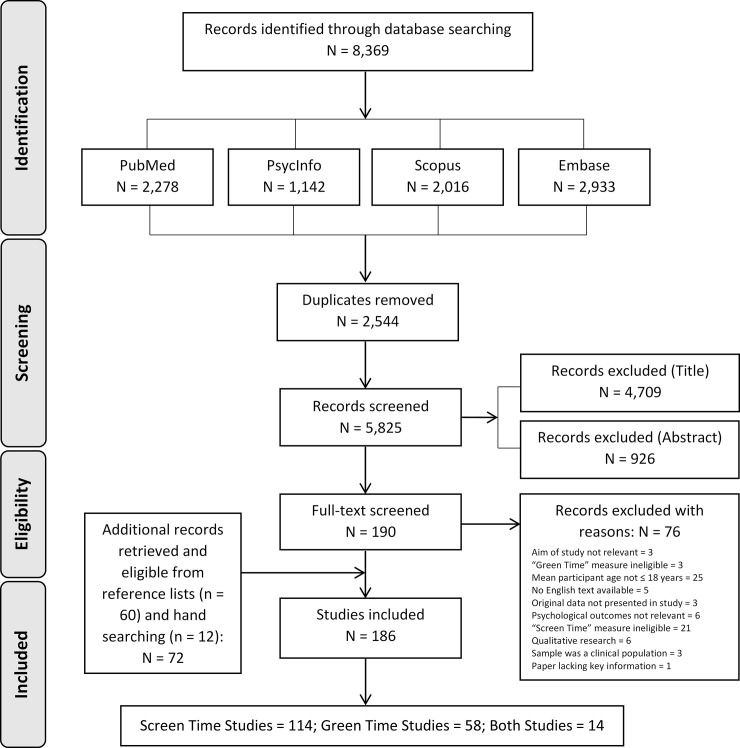
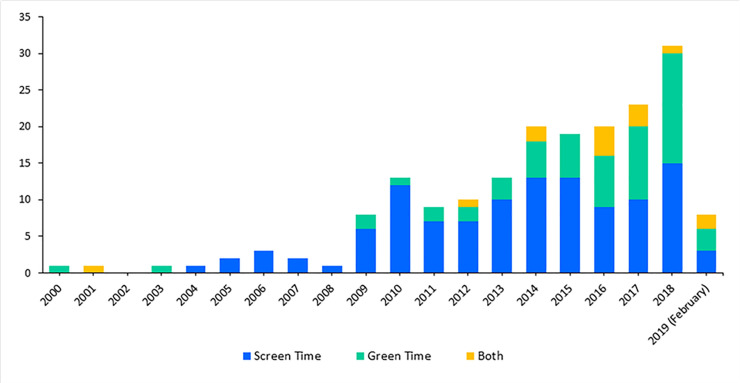
- The review included 186 studies: 114 on screen time (ST), 58 on green time (GT), and 14 on both.
- Across age groups, higher ST was generally linked to unfavourable psychological outcomes, while greater GT was generally linked to favourable psychological outcomes.
- In the included literature, cross-sectional designs dominated: 74% of ST studies, 42% of GT studies, and 57% of studies of both exposures.
- Sample sizes ranged from 11 to 388,275 participants, with a median of 969.
## Methods
- Design: Systematic scoping review using PRISMA Scoping Review Checklist and Arksey & O’Malley’s framework; no formal quality appraisal or meta-analysis.
- Data/sample: Searches of PubMed, PsycINFO, Embase, and Scopus from inception to 18 February 2019; included peer-reviewed English quantitative studies of children and adolescents aged ≤18 years.
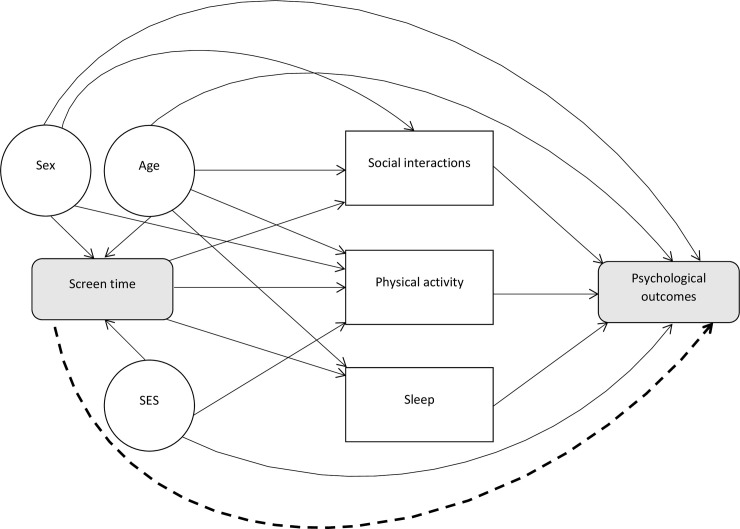
- Main analysis: Studies were charted descriptively and organized by age group, exposure (ST/GT), psychological outcome category, SES, and whether designs allowed some inference about causality.
## Limitations
- The paper states that heterogeneity across studies made it impossible to fully synthesize findings and perform a systematic appraisal or estimate effect sizes.
- The review was limited to English-language articles, which may have missed relevant studies.
- It focused on ST duration rather than content, making it hard to compare recreational vs educational or passive vs interactive screen use.
- Evident from the text: the evidence base is mostly cross-sectional, and studies often used inconsistent exposure/outcome measures, which weakens causal inference and comparability.
Model-written summary. Check it against the paper before relying on it.
Integrity signals
Registry
Cites
Statistics
Figures
Verification
Claims the paper makes
22 Valid · 5 Not valid · 124 Not checked · 106 Own results and interpretations
The cited sources support only part of this claim — read each source’s verdict below.
In the paper
“Experiences of depressive and anxiety symptoms in childhood and adolescence are associated with an elevated risk of poor mental health in adulthood [8–12]”
§ Psychological impacts of “screen time” and “green time” for children and adolescents: A systematic scoping review > 1 Introduction > 1.1 Background
What the sources say
- Not checked — no full text of the sourcecites [8] Baxter A, Vos T, M Scott K, Ferrari A, Whiteford H. The global burden of anxiety disorders in 2010. Psychological Medicine. 2014; 44: 2363– 74. 10.1017/S0033291713003243 24451993 source
- Partly supportedcites [9] Patton GC, Sawyer SM, Santelli JS, Ross DA, Afifi R, Allen NB, et al Our future: a Lancet commission on adolescent health and wellbeing. The Lancet. 2016; 387(10036): 2423– 78. PMC5832967 27174304 sourceExperimental — accuracy not yet measured
In ‘The global health profile of adolescents and young adults’ (page not available), the paper says mental disorders often begin in late childhood or adolescence and many persist into adulthood. It does not establish the claimed adult risk specifically for childhood and adolescent depressive and anxiety symptoms; the ‘Mental disorders’ section also notes that not all adolescent mental health problems persist, particularly brief episodes. (LLM, conf=0.83)
- Not checked — no full text of the sourcecites [10] Pine D, Cohen E, Cohen P, Brook J. Adolescent Depressive Symptoms as Predictors of Adult Depression: Moodiness or Mood Disorder? The American Journal of Psychiatry. 1999; 156: 133– 5. 10.1176/ajp.156.1.133 9892310 source
- Partly supportedcites [11] Copeland WE, Angold A, Shanahan L, Costello EJ. Longitudinal Patterns of Anxiety From Childhood to Adulthood: The Great Smoky Mountains Study. Journal of the American Academy of Child & Adolescent Psychiatry. 2014; 53(1): 21– 33. 24342383 PMC3939681 sourceExperimental — accuracy not yet measured
The Discussion reports links between childhood anxiety status and adult psychiatric outcomes, while the Results link childhood anxiety disorders to adverse functioning in young adulthood. The paper does not establish the claimed association for childhood depressive symptoms; its analyses concern anxiety disorders rather than depressive and anxiety symptoms together. (LLM, conf=0.86)
- Not checked — no full text of the sourcecites [12] Hofstra MB, Van der Ende JAN, Verhulst FC. Continuity and Change of Psychopathology From Childhood Into Adulthood: A 14-Year Follow-up Study. Journal of the American Academy of Child & Adolescent Psychiatry. 2000; 39(7): 850– 8. 10892226 source
plainstates an association- Asserted: passes — The authors put it forward as true.
- Checkable: passes — It can be checked against evidence.
- Load-bearing: passes — The paper’s conclusions depend on it.
- Based: passes — The paper gives a reason why it holds.
The cited sources support only part of this claim — read each source’s verdict below.
In the paper
“However, research investigating the psychological impacts of ST or GT typically considers ST and GT in isolation and fails to delineate the reciprocal effects of high technology use and low contact with nature on mental health and cognitive outcomes [53].”
§ Psychological impacts of “screen time” and “green time” for children and adolescents: A systematic scoping review > 1 Introduction > 1.1 Background
What the sources say
- Partly supportedcites [53] Atchley RA, Strayer DL, Atchley P. Creativity in the Wild: Improving Creative Reasoning through Immersion in Natural Settings. PLoS ONE. 2012; 7(12): e51474 10.1371/journal.pone.0051474 23251547 PMC3520840 sourceExperimental — accuracy not yet measured
Split into 2 atoms — 0 confirmed, 2 partially supported, 0 disputed, 0 misattributed, 0 unverifiable. Expand the claim to see per-atom verdicts.
plain- Asserted: passes — The authors put it forward as true.
- Checkable: passes — It can be checked against evidence.
- Load-bearing: passes — The paper’s conclusions depend on it.
- Based: passes — The paper gives a reason why it holds.
- Partly supported
The cited sources support only part of this claim — read each source’s verdict below.
In the paper
“However, from a developmental neurobiology perspective, excessive ST may be detrimental to young people as ST stimulates neurobiological systems such as the hypothalamic-pituitary-adrenal (HPA) axis [24] and dopaminergic circuitries [25].”
§ Psychological impacts of “screen time” and “green time” for children and adolescents: A systematic scoping review > 1 Introduction > 1.1 Background
What the sources say
- Not checked — no full text of the sourcecites [24] Brunetti VC, O'Loughlin EK, O'Loughlin J, Constantin E, Pigeon É. Screen and nonscreen sedentary behavior and sleep in adolescents. Sleep Health. 2016; 2(4): 335– 40. 10.1016/j.sleh.2016.09.004 29073392 source
- Partly supportedcites [25] Giedd JN. The Digital Revolution and Adolescent Brain Evolution. Journal of Adolescent Health. 2012; 51(2): 101– 5. 10.1016/j.jadohealth.2012.06.002 22824439 PMC3432415 sourceExperimental — accuracy not yet measured
The Entertainment section says video games stimulate reward circuitry involving dopamine, and Attention Economy raises a possible downside of sustained dopamine stimulation. The citation [25] is attached to the dopaminergic-circuitry claim, not the HPA-axis claim. The source discusses video games and poses the detrimental effect as a question; it does not establish that screen time generally has that effect. (LLM, conf=0.86)
hedgedstates a possible cause- Asserted: passes — The authors put it forward as true.
- Checkable: passes — It can be checked against evidence.
- Load-bearing: unclear — It is unclear whether the paper’s conclusions depend on it.
- Based: passes — The paper gives a reason why it holds.
The cited sources support only part of this claim — read each source’s verdict below.
In the paper
“Children in high-income countries are now experiencing significantly lower levels of contact with nature, or GT, than previous generations [35, 36].”
§ Psychological impacts of “screen time” and “green time” for children and adolescents: A systematic scoping review > 1 Introduction > 1.1 Background
What the sources say
- Partly supportedcites [35] Bratman GN, Hamilton JP, Hahn KS, Daily GC, Gross JJ. Nature experience reduces rumination and subgenual prefrontal cortex activation. Proc Natl Acad Sci USA. 2015; 112(28): 8567– 72. 10.1073/pnas.1510459112 26124129 PMC4507237 sourceExperimental — accuracy not yet measured
The paper’s introductory passages say that urbanization corresponds to decreased nature experience and that a larger share of humanity is removed from nature than ever before (page unavailable). They do not establish the claim specifically for children in high-income countries or quantify a significant difference from previous generations. (LLM, conf=0.86)
- Not checked — no full text of the sourcecites [36] Soga M, Gaston KJ. Extinction of experience: the loss of human–nature interactions. Frontiers in Ecology and the Environment. 2016; 14(2): 94– 101. source
plain- Asserted: passes — The authors put it forward as true.
- Checkable: passes — It can be checked against evidence.
- Load-bearing: passes — The paper’s conclusions depend on it.
- Based: passes — The paper gives a reason why it holds.
- Partly supported
The sources with a verdict support this claim; the rest weren’t checked yet, have no full text we could read, or their verdicts aren’t rated yet.
In the paper
“Moderate ST can be beneficial for young people in a connected world [22] as it may afford them with opportunities to enhance existing relationships, forge new connections, engage in safe identity exploration, aid in academic pursuits, and provide access to information about the world beyond their immediate surroundings [23].”
§ Psychological impacts of “screen time” and “green time” for children and adolescents: A systematic scoping review > 1 Introduction > 1.1 Background
What the sources say
- Supportedcites [22] Przybylski AK, Weinstein N. A Large-Scale Test of the Goldilocks Hypothesis: Quantifying the Relations Between Digital-Screen Use and the Mental Well-Being of Adolescents. Psychological Science. 2017; 28(2): 204– 15. 10.1177/0956797616678438 28085574 source
The Avenues for future work section (p. 11) says moderate digital engagement may have positive correlates with well-being and may afford advantages to adolescents. The Confirmatory analyses (p. 8) report positive or flat associations below the study’s screen-time thresholds, with an exception for weekend smartphone use. The claim’s 'can be beneficial' wording reflects that qualified possibility. (LLM, conf=0.91)
- Not checked — no full text of the sourcecites [23] Uhls YT, Ellison NB, Subrahmanyam K. Benefits and Costs of Social Media in Adolescence. Pediatrics. 2017; 140(Suppl 2): S67– s70. 10.1542/peds.2016-1758E 29093035 source
plainstates a possible cause- Asserted: passes — The authors put it forward as true.
- Checkable: passes — It can be checked against evidence.
- Load-bearing: unclear — It is unclear whether the paper’s conclusions depend on it.
- Based: passes — The paper gives a reason why it holds.
- Supported
111 more claims · 2 with their cited sources checked
Create a free account to see all 257 claims and to verify the 5 references still open.
- Probably not a substantial claim. 55
- It may state two separate claims as one. 107
- The quote only partly states this claim. 4
Claims other papers make about this one
Each is checked against this paper’s own text: does it say what the citing paper says it does?
The check wasn’t confident either way, so it gives no verdict — never disputed.
In the citing paper
“Additionally, parents often raise concerns about privacy, misinformation, and content appropriateness [10, 37, 58]”
From SET-PAiREd: Designing for Parental Involvement in Learning with an AI-Assisted Educational Robot (2025) · cites this paper as [58]
Experimental — accuracy not yet measuredIn the citing paper
“On the negative side, technology introduces risks such as excessive screen time, exposure to inappropriate content, and misinformation, which necessitate parental intervention [37, 58].”
From SET-PAiREd: Designing for Parental Involvement in Learning with an AI-Assisted Educational Robot (2025) · cites this paper as [58]
In the citing paper
“it has been posited that youth from low SES backgrounds may disproportionally impacted by psychological problems linked to high screen time [24].”
Citations
Cites
PRISMA Extension for Scoping Reviews (PRISMA-ScR): Checklist and Explanation
Tricco, A. C., Lillie, E., Zarin, W., O'Brien, K. K., Colquhoun, H., Levac, D., Moher, D., Peters, M. D. J., Horsley, T., Weeks, L., et al. (2018) · Annals of Internal Medicine · doi:10.7326/m18-0850 · Cited by 43,565
Scoping studies: towards a methodological framework
Arksey, H., & O'Malley, L. (2005) · International Journal of Social Research Methodology · doi:10.1080/1364557032000119616 · Cited by 36,742 · cited 6×
“While a formal risk of bias assessment was not performed (not required in scoping reviews [58]), a preliminary assessment of each study’s ability to permit examination of causal linkages, based on two key design features, was conducted.”
BackgroundMethodInfluentialThe future of employment: How susceptible are jobs to computerisation?
Frey, C. B., & Osborne, M. A. (2017) · Technological Forecasting and Social Change · doi:10.1016/j.techfore.2016.08.019 · Cited by 8,727
The restorative benefits of nature: toward an integrative framework
Kaplan, S. (1995) · Journal of Environmental Psychology · doi:10.1016/0272-4944(95)90001-2 · Cited by 6,923 · cited 5×
“, provide a feeling of ‘getting away’), may be more important for early-to-late adolescents because they provide opportunities for respite and mind-wandering [46].”
BackgroundInfluentialEffects of stress throughout the lifespan on the brain, behaviour and cognition
Lupien, S. J., McEwen, B. S., Gunnar, M. R., & Heim, C. (2009) · Nature Reviews Neuroscience · doi:10.1038/nrn2639 · Cited by 6,256
Stress recovery during exposure to natural and urban environments
Ulrich, R. S., Simons, R. F., Losito, B. D., Fiorito, E., Miles, M. A., & Zelson, M. (1991) · Journal of Environmental Psychology · doi:10.1016/s0272-4944(05)80184-7 · Cited by 5,990 · cited 3×
“Similarly, Stress Reduction Theory contends that due to extensive human evolution in natural environments, modern humans may have a biologically prepared readiness to quickly and readily acquire restoration from stress in natural settings, but have no such preparedness for highly stimulating technological environments…”
BackgroundOur future: a Lancet commission on adolescent health and wellbeing
Patton, G. C., Sawyer, S. M., Santelli, J. S., Ross, D. A., Afifi, R., Allen, N. B., Arora, M., Azzopardi, P., Baldwin, W., Bonell, C., et al. (2016) · The Lancet · doi:10.1016/s0140-6736(16)00579-1 · Cited by 3,785
Hartig, T., Mitchell, R., de Vries, S., & Frumkin, H. (2014) · Annual Review of Public Health · doi:10.1146/annurev-publhealth-032013-182443 · Cited by 3,638 · cited 2×
“Natural areas also tend to be less crowded, with reduced air and noise pollution, which is beneficial for overall health [41].”
BackgroundMental health of young people: A global public-health challenge
Patel, V., Flisher, A. J., Hetrick, S., & McGorry, P. (2007) · The Lancet · doi:10.1016/s0140-6736(07)60368-7 · Cited by 3,126
Why do many psychiatric disorders emerge during adolescence?
Paus, T., Keshavan, M., & Giedd, J. N. (2008) · Nature Reviews Neuroscience · doi:10.1038/nrn2513 · Cited by 3,123
Research works printed but not linked: 5
- Moss S. Natural Childhood. UK: National Trust; 2012. 28 p.
- Planet Ark. Climbing Trees: Getting Aussie Kids Back Outdoors Australia. Australia: Planet Ark; 2011. 11 p.
- Plitponkarnpim A, Srikaew C, Puranitee P, Vallibhakara SAO. Ict exposure in children younger than 2 years: Rates, associated factors, and health outcomes. Journal of the Medical Association of Thailand. 2018; 101(3): 345– 9.
- de Haan J, Huysmans F. IT/Media Use and Psychological Development Among Dutch Youth. IT&SOCIETY. 2004; 1(6): 44– 58.
- Stainbrook E. Human needs and the natural environment. Man and Nature in the City. 1968: 1– 9.
Cited by
Browning, M. H. E. M., Larson, L. R., Sharaievska, I., Rigolon, A., McAnirlin, O., Mullenbach, L., Cloutier, S., Vu, T. M., Thomsen, J., Reigner, N., et al. (2021) · PLOS ONE · doi:10.1371/journal.pone.0245327 · Cited by 888
Pandya, A., & Lodha, P. (2021) · Frontiers in Human Dynamics · doi:10.3389/fhumd.2021.684137 · Cited by 371
Muppalla, S. K., Vuppalapati, S., Reddy Pulliahgaru, A., & Sreenivasulu, H. (2023) · Cureus · doi:10.7759/cureus.40608 · Cited by 284
“It is worth noting that screens can also have positive educational and informational benefits [17].”
InfluentialAvoid Zoom Fatigue, Be Present and Learn
Peper, E., Wilson, V., Martin, M., Rosegard, E., & Harvey, R. (2021) · NeuroRegulation · doi:10.15540/nr.8.1.47 · Cited by 213
Paulich, K. N., Ross, J. M., Lessem, J. M., & Hewitt, J. K. (2021) · PLOS ONE · doi:10.1371/journal.pone.0256591 · Cited by 174
“An Australian study also suggests that the type of screen time matters [23], and it has been posited that youth from low SES backgrounds may disproportionally impacted by psychological problems linked to high screen time [24].”
BackgroundDigital Device Usage and Childhood Cognitive Development: Exploring Effects on Cognitive Abilities
Clemente‐Suárez, V. J., Beltrán-Velasco, A. I., Herrero-Roldán, S., Rodríguez-Besteiro, S., Martínez‐Guardado, I., Martín-Rodríguez, A., & Tornero-Aguilera, J. F. (2024) · Children · doi:10.3390/children11111299 · Cited by 323
The contribution of social media addiction to adolescent LIFE: Social appearance anxiety
Caner, N., Efe, Y. S., & Başdaş, Ö. (2022) · Current Psychology · doi:10.1007/s12144-022-03280-y · Cited by 104
“Recent research has determined a relationship between the time spent on social media by adolescents and depression, decreased academic achievement, dissatisfaction with body image, risky behaviors, and disordered eating behaviors (Nesi & Prinstein, 2015; Oswald et al., 2020; Twenge et al., 2018).”
BackgroundRestorative effects of exposure to nature on children and adolescents: A systematic review
Moll, A., Collado, S., Staats, H., & Corraliza, J. A. (2022) · Journal of Environmental Psychology · doi:10.1016/j.jenvp.2022.101884 · Cited by 131
Nagata, J. M., Al-Shoaibi, A. A. A., Leong, A. W., Zamora, G., Testa, A., Ganson, K. T., & Baker, F. C. (2024) · BMC Public Health · doi:10.1186/s12889-024-20102-x · Cited by 103
“An increase in the amount of time spent on screen-based technologies has been hypothesized to contribute to observed increases in the prevalence of mental health problems and suicide among adolescents [11–13].”
BackgroundScreen time as an index of family distress
Hartshorne, J. K., Huang, Y. T., Lucio Paredes, P. M., Oppenheimer, K., Robbins, P. T., & Velasco, M. D. (2021) · Current Research in Behavioral Sciences · doi:10.1016/j.crbeha.2021.100023 · Cited by 106
Sakhvidi, M. J. Z., Mehrparvar, A. H., Sakhvidi, F. Z., & Dadvand, P. (2023) · Current Opinion in Environmental Science & Health · doi:10.1016/j.coesh.2023.100445 · Cited by 108
Caner, N., & Evgin, D. (2021) · International Journal of Mental Health Nursing · doi:10.1111/inm.12912 · Cited by 108
“Studies have found that playing video games is associated with reduced emotional functionality (Oswald et al. 2020), and that digital game addiction causes negative emotions such as anxiety, depression, stress, and aggression in adolescents (Fumero et al.”
BackgroundChong, S. C., Teo, W. Z., & Shorey, S. (2023) · Pediatric Research · doi:10.1038/s41390-023-02555-9 · Cited by 116
“Hence, it is important to distinguish them and consider their long-term impacts, notably between the passive nature of television and the interactive ST devices including computer and mobile devices.(69) There is a need for robust research evidence relating to ST and its association with child development, so healthca…”
The Relationship between Technology Use and Physical Activity among Typically-Developing Children
Alotaibi, T., Almuhanna, R., Alhassan, J., Alqadhib, E. M., Mortada, E. M., & Alwhaibi, R. M. (2020) · Healthcare · doi:10.3390/healthcare8040488 · Cited by 89
“It was also associated with lower academic performance, Grade Point Average (GPA), language, math and reading achievements [9,10].”
BackgroundSugiyama, M., Tsuchiya, K. J., Okubo, Y., Rahman, M. S., Uchiyama, S., Harada, T., Iwabuchi, T., Okumura, A., Nakayasu, C., Amma, Y., et al. (2023) · Archives of Pediatrics and Adolescent Medicine · doi:10.1001/jamapediatrics.2022.5356 · Cited by 102
Oswald, T. K., Rumbold, A. R., Kedzior, S. G. E., Kohler, M. J., & Moore, V. (2021) · International Journal of Environmental Research and Public Health · doi:10.3390/ijerph18115630 · Cited by 71
“While excessive screen time has repeatedly been linked with poorer psychological outcomes in a pre-COVID world [65], a number of recent studies have found screen time to be a useful resource for adaptive coping during lockdowns, through positive escapism or community engagement, for example [18,26].”
BackgroundSelf-citationFriedman, S., Imrie, S., Fink, E., Gedikoglu, M., & Hughes, C. H. (2021) · People and Nature · doi:10.1002/pan3.10270 · Cited by 67
“Importantly, and as noted by Oswald et al. (2020), research into access and contact with nature generally draws data from higher SES respondents, while children from lower SES contexts are more likely to engage in higher amounts of screen time and to spend less time in green spaces.”
BackgroundLema-Gómez, L., Arango-Paternina, C. M., Eusse-López, C., Petro, J. L., Petro-Petro, J., López-Sánchez, M., Watts-Fernández, W., & Perea-Velásquez, F. (2021) · BMC Public Health · doi:10.1186/s12889-021-12403-2 · Cited by 70
“In particular, previous studies have documented that high levels of physical activity, low levels of screen time, and sufficient sleep time are behaviors associated with higher levels of mental health [10, 11].”
BackgroundMaia, C., Braz, D. S., Fernandes, H. M., Sarmento, H., & Machado‐Rodrigues, A. M. (2025) · Children · doi:10.3390/children12020203 · Cited by 93
“Furthermore, screen time has been linked to obesity, anxiety, depression [55], and sleep disturbances [87,95].”
Vitale, V., Martin, L., White, M. P., Elliott, L. R., Wyles, K. J., Browning, M. H. E. M., Pahl, S., Stehl, P., Bell, S., Bratman, G. N., et al. (2022) · Journal of Environmental Psychology · doi:10.1016/j.jenvp.2022.101876 · Cited by 63
Li, D., Zhai, Y., Chang, P.-J., Merrill, J., Browning, M. H. E. M., & SULLIVAN, W. C. (2022) · Landscape and Urban Planning · doi:10.1016/j.landurbplan.2022.104489 · Cited by 59
Zhang, Y., Wu, X., Tao, S., Li, S., Ma, L., Yu, Y., Sun, G., Li, T., & Tao, F. (2021) · Environmental Health and Preventive Medicine · doi:10.1186/s12199-021-01025-0 · Cited by 58
Camerini, A.-L., Albanese, E., & Marciano, L. (2022) · Computers in Human Behavior Reports · doi:10.1016/j.chbr.2022.100204 · Cited by 70
“ously studied together to predict mental health, very few studies applied longitudinal designs and explored the concomitant effects of ST and GT on mental health (Oswald et al., 2020).”
Putra, I. G. N. E., Astell‐Burt, T., Cliff, D. P., Vella, S. A., & Feng, X. (2021) · Urban forestry & urban greening · doi:10.1016/j.ufug.2021.127264 · Cited by 60
Roche, I. V., Ubalde-López, M., Daher, C., Nieuwenhuijsen, M. J., & Gascón, M. (2024) · Current Environmental Health Reports · doi:10.1007/s40572-024-00431-0 · Cited by 66
Chong, K. H., Parrish, A., Cliff, D. P., Dumuid, D., & Okely, A. D. (2021) · International Journal of Environmental Research and Public Health · doi:10.3390/ijerph18115995 · Cited by 50
“, tablets and smartphones) [16], nor did they account for the confounding influence of time spent in other movement behaviours (i.”
BackgroundFrom social media to artificial intelligence: improving research on digital harms in youth
Mansfield, K. L., Ghai, S., Hakman, T., Ballou, N., Vuorre, M., & Przybylski, A. K. (2025) · The Lancet Child & Adolescent Health · doi:10.1016/s2352-4642(24)00332-8 · Cited by 39
Could Nintendo’s Animal Crossing be a tool for conservation messaging?
Fisher, J. C., Yoh, N., Kubo, T., & Rundle, D. (2021) · People and Nature · doi:10.1002/pan3.10240 · Cited by 44
Screen time and mental health in college students: Time in nature as a protective factor
Deyo, A. G., Wallace, J., & Kidwell, K. M. (2023) · Journal of American College Health · doi:10.1080/07448481.2022.2151843 · Cited by 58
“22 The existing reviews 8,9,24 and theoretical papers 14,15 on the benefits of time in nature have focused on the role of nature on stress reduction.”
de Lannoy, L., Barbeau, K., Vanderloo, L. M., Goldfield, G. S., Lang, J. J., MacLeod, O., & Tremblay, M. S. (2023) · Mental health and physical activity · doi:10.1016/j.mhpa.2023.100511 · Cited by 37
Wang, C., Geng, L., & Rodríguez-Casallas, J. D. (2021) · Current Psychology · doi:10.1007/s12144-021-01453-9 · Cited by 42
Parent-Child Joint Media Engagement Within HCI: A Scoping Analysis of the Research Landscape
Yu, J., Qi, X., & Yang, S. (2024) · Proceedings of the CHI Conference on Human Factors in Computing Systems · doi:10.1145/3613904.3642307 · Cited by 31
“…becomes even more critical for “digital natives” as many media and technologies may negatively impact children’s lives and development, e.g., exposing them to age-inappropriate information like violence [83], resulting in excessive screen time [80], and causing anxiety and depression [2].”
Ramírez, S., Gana, S., Garcés, S., Zuñiga, T. D. P. A., Araya, R., & Gaete, J. (2021) · Frontiers in Psychiatry · doi:10.3389/fpsyt.2021.764054 · Cited by 51
“Additionally, exposure to screens has been related to poorer cognitive and academic functioning, including problems with attention (11), language (11), memory (12), learning (12), and visuospatial processing (7).”
BackgroundZhang, J., Marino, C., Canale, N., Charrier, L., Lazzeri, G., Nardone, P., & Vieno, A. (2022) · International Journal of Environmental Research and Public Health · doi:10.3390/ijerph19052576 · Cited by 37
“These results were consistent with the recent proposals that more hours of screen activities are related to lower psychological well-being due to the reduction in face-to-face social interaction [41], or due to the possibility of adolescents’ reduced contact with nature [61].”
ResultEffect of nature on the mental health and well-being of children and adolescents: meta-review
Lomax, T., Butler, J. A., Cipriani, A., & Singh, I. (2024) · The British Journal of Psychiatry · doi:10.1192/bjp.2024.109 · Cited by 58
Kamaleddine, A. N., Antar, H. A., Ali, B. T. A., Hammoudi, S. F., Lee, J., Lee, T., Bhang, S., Chung, S., & Salameh, P. (2022) · Psychiatry Investigation · doi:10.30773/pi.2021.0239 · Cited by 41
“Psychiatry Investig 2022;19(3):220-228”
BackgroundInfluentialSticca, F., Brauchli, V., & Lannen, P. (2025) · Frontiers in Developmental Psychology · doi:10.3389/fdpys.2024.1439040 · Cited by 60
Fathirezaie, Z., Abbaspour, K., Bădicu, G., Sani, S. H. Z., & Nobarı, H. (2021) · Children · doi:10.3390/children8020157 · Cited by 31
“As we saw in this study, younger children may obtain social advantages from green spaces as they provide an opportunity to socialize through group activities, exploration, and play, which are essential for ideal development [16].”
BackgroundNagata, J. M., Chu, J., Zamora, G., Ganson, K. T., Testa, A. M., Jackson, D. B., Costello, C. R., Murray, S. B., & Baker, F. C. (2022) · Journal of Adolescent Health · doi:10.1016/j.jadohealth.2022.10.023 · Cited by 42
Lua, V. Y. Q., Chua, T. B. K., & Chia, M. (2023) · Sports · doi:10.3390/sports11020038 · Cited by 35
“A recent systematic review examining screen time, green time, and mental health outcomes among adolescents found relatively consistent evidence that screen time was associated with increased anxiety and depressive symptoms [18].”
BackgroundJimenez, M. P., Aris, I. M., Rifas‐Shiman, S. L., Young, J. G., Tiemeier, H. W., Hivert, M., Oken, E., & James, P. (2021) · Environmental Pollution · doi:10.1016/j.envpol.2021.118208 · Cited by 30
Riazi, N. A., Battista, K., Duncan, M. J., Wade, T. J., Pickett, W., Ferro, M. A., Leatherdale, S. T., & Patte, K. A. (2023) · BMC Public Health · doi:10.1186/s12889-023-15249-y · Cited by 34
“, mental health, cognitive functioning) [86] and specifically, psychological well-being [87].”
SET-PAiREd: Designing for Parental Involvement in Learning with an AI-Assisted Educational Robot
Ho, H.-R., Kargeti, N., Liu, Z., & Mutlu, B. (2025) · Proceedings of the 2025 CHI Conference on Human Factors in Computing Systems · doi:10.1145/3706598.3713330 · Cited by 24
“Additionally, parents often raise concerns about privacy, misinformation, and content appropriateness [10, 37, 58], emphasizing the need for parental supervision to ensure alignment of AI and robots with parents’ educational goals [28, 33].”
Santos, J. P. L., Soehner, A. M., Biernesser, C. L., Ladouceur, C. D., & Versace, A. (2025) · Archives of Pediatrics and Adolescent Medicine · doi:10.1001/jamapediatrics.2025.1718 · Cited by 32
The Management of Anxiety and Depression in Pediatrics
Pettitt, R., Brown, E. A., Delashmitt, J. C., & Pizzo, M. N. (2022) · Cureus · doi:10.7759/cureus.30231 · Cited by 39
“These positive impacts of nature-based interventions are even greater for kids that are of lower socioeconomic status and those that live in areas with a higher population density [52,53].”
BackgroundPerceived green space quality, child biomarkers and health-related outcomes: A longitudinal study
Putra, I. G. N. E., Astell‐Burt, T., & Feng, X. (2022) · Environmental Pollution · doi:10.1016/j.envpol.2022.119075 · Cited by 27
Linares, C., & Sellier, A.-L. (2021) · PLoS ONE · doi:10.1371/journal.pone.0251451 · Cited by 24
Ayotte‐Beaudet, J., Berrigan, F., Deschamps, A., L’Heureux, K., Beaudry, M., & Turcotte, S. (2023) · Journal of Adventure Education & Outdoor Learning · doi:10.1080/14729679.2022.2164787 · Cited by 29
“This assumption was confirmed in a systematic review by Oswald et al. (2020), who found that children today are more engaged with screen-based technologies and have less contact with nature.”
BackgroundAssociations Between Preschooler Screen Time Trajectories and Executive Function
Fitzpatrick, C., Florit, E., Lemieux, A., Garon‐Carrier, G., & Masón, L. (2024) · Academic Pediatrics · doi:10.1016/j.acap.2024.102603 · Cited by 38
Balanzá‐Martínez, V., & Cervera-Martínez, J. (2022) · International Journal of Environmental Research and Public Health · doi:10.3390/ijerph19095094 · Cited by 25
“According to a recent scoping review [10], excessive screen time seems to be associated with negative psychological outcomes, including mental health and cognitive function, whereas time in contact with nature seems to be associated with favorable psychological outcomes [10].”
BackgroundInfluentialScreen time as an index of family distressPreprint
Hartshorne, J. K., Huang, Y.-T., Oppenheimer, K., Robbins, P. T., Molina, M., & Aulestia, P. M. L. P. (2020) · doi:10.31234/osf.io/zqc4t · Cited by 78
Urban Green Spaces and Healthy Living: A Landscape Architecture Perspective
Russo, A. (2024) · Urban Science · doi:10.3390/urbansci8040213 · Cited by 33
Elevating the Role of the Outdoor Environment for Adolescent Wellbeing in Everyday Life
Wales, M., Mårtensson, F., Hoff, E. V., & Jansson, M. (2022) · Frontiers in Psychology · doi:10.3389/fpsyg.2022.774592 · Cited by 28
Gender-specific pathways regarding the outcomes of a cyberbullying youth education program
Kapitány‐Fövény, M., Lukács, J., Takács, J., Kitzinger, I., Kiss, Z. S., Szabó, G., Falus, A., & Feith, H. J. (2021) · Personality and Individual Differences · doi:10.1016/j.paid.2021.111338 · Cited by 27
Knight, S., Coates, J. K., Lathlean, J., & del Aguila, R. P. (2023) · British Educational Research Journal · doi:10.1002/berj.3953 · Cited by 36
“A plethora of research has also high-lighted the importance of play, and in particular outdoor play, on the health and wellbeing of children and adolescents (e.g., Brussoni et al., 2015; Oswald et al., 2020; Whitebread, 2017).”
BackgroundMorgül, E., Kallitsoglou, A., Essau, C. A., & Castro, S. (2022) · Frontiers in Education · doi:10.3389/feduc.2022.838938 · Cited by 22
Almaqhawi, A., & Albarqi, M. (2022) · Journal of Medicine and Life · doi:10.25122/jml-2022-0148 · Cited by 31
“Increased reliance on technology has been linked to increased anxiety symptoms, sadness, irritability, and attention and behavioural issues [17].”
BackgroundGerosa, T., Losi, L., & Gui, M. (2024) · Youth & Society · doi:10.1177/0044118x231223218 · Cited by 29
“There is a solid body of literature that shows that the early and indiscriminate use of screens is potentially damaging for younger children (e.g., Oswald et al., 2020; Radesky & Christakis, 2016), which is why future research will need to investigate the subject more thoroughly, including beyond…”
Ding, X., Ji, Y., Dong, Y., Li, Z., & Zhang, Y. (2024) · BMC Public Health · doi:10.1186/s12889-024-19128-y · Cited by 31
“…with a range of children’s physical and psychological burdens, including reduced sleep quality, unhealthy eating habits, increased cardiovascular risk, hindered cognitive growth, impaired self-control, communication skills, emotional challenges, poor eyesight, and decreased bone density [4, 12–17].”
BackgroundFrances, L., Quinn, F., Elliott, S., & Bird, J. (2024) · The Australian Educational Researcher · doi:10.1007/s13384-023-00685-x · Cited by 32
“The prevalence of mental illnesses, such as depression and anxiety, among children is increasing worldwide, and this is now a significant health concern (Oswald et al., 2020).”
Bonilla, D. A., Peralta-Alzate, J. O., Bonilla-Henao, J. A., Cannataro, R., Cardozo, L. A., Vargas-Molina, S., Stout, J. R., Kreider, R. B., & Petro, J. L. (2023) · Journal of Functional Morphology and Kinesiology · doi:10.3390/jfmk8020044 · Cited by 18
“Additional strategies for the general population include: establishing specific schedules without any technology; creating shared spaces at home for recharging electronic devices; avoiding the use of electronic devices in bedrooms; using traditional alarm clocks to restrict smartphone use early in the morning and befo…”
BackgroundAghabozorgi, K., van der Jagt, A., Bell, S., & Brown, C. (2023) · Health & Place · doi:10.1016/j.healthplace.2023.103141 · Cited by 25
Maeneja, R., Rato, J. R., & Ferreira, I. S. (2025) · Children · doi:10.3390/children12050555 · Cited by 53
Brons, M. E., Bolt, G., Helbich, M., Visser, K., & Stevens, G. W. J. M. (2022) · Health & Place · doi:10.1016/j.healthplace.2022.102765 · Cited by 20
Macro-engagement in mHealth: Exploring user engagement beyond the screen
Meija, C. V., Remmerswaal, D., Engels, R. C. M. E., Ludden, G., & Boffo, M. (2024) · Digital Health · doi:10.1177/20552076231225591 · Cited by 19
“8 While fi ndings suggest a negative impact of technology on well-being, they still come with some nuances: not all screen time is equally harmful, not all of it constitutes problematic use and not every-one is affected in the same way.”
BackgroundAssociation between screen time and hyperactive behaviors in children under 3 years in China
Wu, J., Yin, X., Qiu, S.-Y., Wen, G., Yang, W., Zhang, J., Zhao, Y.-F., Xin, W., Hong, X.-B., Lu, D., et al. (2022) · Frontiers in Psychiatry · doi:10.3389/fpsyt.2022.977879 · Cited by 33
Li, T., Liu, X., Cao, C., Yang, F., Ding, P., Xu, S., Tao, S., Wu, X., & Tao, F. (2024) · BMC Psychiatry · doi:10.1186/s12888-024-06233-w · Cited by 29
Hökby, S., Westerlund, J., Alvarsson, J., Carli, V., & Hadlaczky, G. (2023) · International Journal of Environmental Research and Public Health · doi:10.3390/ijerph20043771 · Cited by 25
“Risk factors for PUI are typically also risk factors for suicide [9–11], including low socioeconomic status [12,13], social isolation and loneliness [14], low social functioning and low self-esteem [14,15], familial factors such as parental supervision [16,17], and poor school relationships and academic achievements […”
BackgroundZhang, W., Jiang, L., Yu, M., Ma, R., Wang, T., Liang, X., He, R., Xu, C. H., Hu, S., Tan, Y., et al. (2024) · Psychiatry Investigation · doi:10.30773/pi.2023.0103 · Cited by 18
Campoamor-Olegario, L. A., Camitan, D. S., & Guinto, M. L. M. (2025) · Frontiers in Psychology · doi:10.3389/fpsyg.2025.1490437 · Cited by 36
Laying the Foundation for Augmented Reality in Music Education
Nijs, L., & Behzadaval, B. (2024) · IEEE Access · doi:10.1109/access.2024.3427698 · Cited by 25
“Excessive sedentary screen time may lead to attentional, cognitive, and physical problems [125].”
BackgroundKennedy, J. L., Christensen, C., Maxon, T., Gerard, S. N., Garcia, E. B., Kook, J. F., Hupert, N., Vahey, P., & Pasnik, S. (2022) · American Educational Research Journal · doi:10.3102/00028312221113326 · Cited by 24
“Co-viewing and joint media engagement have been shown to support literacy (Strouse et al., 2013), math (Pasnik et al., 2015), and science learning (Pasnik, 2019).”
BackgroundSidiq, M., Kashoo, F. Z., Janakiraman, B., Jastania, R., Alhusayni, A. I., Alzahrani, A. H., Chahal, A., Khan, I., Thiyagarajan, A., Kumar, C., et al. (2025) · PeerJ · doi:10.7717/peerj.19409 · Cited by 32
“21% to 98% in middle-income countries, and 1.0 to 3.1 h/day among school-aged children in several countries ( Carson & Janssen, 2012 ; Domingues-Montanari, 2017 ; Hale & Guan, 2015 ; Oswald et al., 2020 ).”
InfluentialWiguna, T., Minayati, K., Kaligis, F., Teh, S. D., Sourander, A., Dirjayanto, V. J., Krishnandita, M., Meriem, N., & Gilbert, S. (2024) · Heliyon · doi:10.1016/j.heliyon.2023.e23325 · Cited by 13
“When used extensively, such technologies may displace important protective behaviours such as family connectedness, role models, and empathetic validation from family, peers, and the environment [54,55].”
BackgroundScreen-based behaviour in children is more than meets the eye
Munsamy, A. J., Chetty, V., & Ramlall, S. (2022) · South African Family Practice · doi:10.4102/safp.v64i1.5374 · Cited by 19
Prenatal, perinatal, postnatal risk factors, and excess screen time in autism spectrum disorder
Güneş, H., Tanıdır, C., Doktur, H., Yılmaz, S., Yıldız, D., Özbek, F., Bozbey, S., & Özşirin, G. (2023) · Pediatrics International · doi:10.1111/ped.15383 · Cited by 22
“35 A review and metanalysis of 16 studies on relations between ST and autism reports that children and adolescents with ASD are exposed to more ST than their typically developing peers or other clinical groups and the exposure starts at a younger age.”
BackgroundMayen, S., Reinhardt, A., & Wilhelm, C. (2025) · Journal of Children and Media · doi:10.1080/17482798.2024.2443662 · Cited by 21
“The heterogeneous research landscape suggests that adolescents’ individual developmental trajectories shape their responses to media (Orben et al., 2022; Oswald et al., 2020).”
Alanzi, T. M., Arif, W. M., Aqeeli, R., Alnafisi, A., Qumosani, T., Alreshidi, A., Alhawsawi, S., Alnakli, R., Alotaibi, A., AlOthman, M., et al. (2024) · Cureus · doi:10.7759/cureus.75625 · Cited by 23
Nature connectedness in adolescents and young adults: a systematic review
Madera, F., Olcese, M., Cardinali, P., & Migliorini, L. (2025) · Journal of Environmental Psychology · doi:10.1016/j.jenvp.2025.102761 · Cited by 29
Khan, A., Moni, M. A., Khan, S. R., & Burton, N. W. (2022) · Scandinavian Journal of Public Health · doi:10.1177/14034948221082459 · Cited by 17
“This is a significant concern given continued increases in ST among young people [1, 2] and the potential link between prolonged ST and adverse psychological outcomes [6].”
BackgroundThe Cortex in Context: Investigating the Influence of Activity and Space on Psychological Well-Being
Bailey, A. W., Anderson, M., & Cox, G. (2021) · Leisure Sciences · doi:10.1080/01490400.2021.1889421 · Cited by 13
“, 2016), and avoidance of distractions such as internet browsing (Jiang et al., 2019; Oswald et al., 2020).”
BackgroundDisrupted and Disconnected: Child Activities, Social Skills, and Race/Ethnicity During the Pandemic
Hernández, R., & Jabbari, J. (2022) · Frontiers in Education · doi:10.3389/feduc.2022.869183 · Cited by 16
Torjinski, M., & Horwood, S. (2023) · Systematic Reviews · doi:10.1186/s13643-023-02367-2 · Cited by 16
“A very limited body of evidence has suggested that exposure to natural spaces has the potential to ameliorate the negative effects of screen exposure in childhood; however, the reciprocal effects and mechanisms underpinning this relationship are poorly understood [17].”
BackgroundInfluentialGonzález, R. L., Noriega, C., Espín‐Lorite, E. J., García-Sastre, M., Rodríguez‐Rojo, I. C., Cuesta‐Lozano, D., & Peñacoba, C. (2022) · International Journal of Mental Health Nursing · doi:10.1111/inm.13077 · Cited by 16
Is prosocial behaviour a missing link between green space quality and child health-related outcomes?
Putra, I. G. N. E., Astell‐Burt, T., Cliff, D. P., Vella, S. A., & Feng, X. (2022) · Social Psychiatry and Psychiatric Epidemiology · doi:10.1007/s00127-021-02186-7 · Cited by 17
Oswald, T. K., Kohler, M. J., Rumbold, A. R., Kedzior, S. G. E., & Moore, V. (2023) · Journal of Environmental Psychology · doi:10.1016/j.jenvp.2023.102183 · Cited by 16
Self-citationMâsse, L. C., Edache, I. Y., Pitblado, M., & Hutchison, S. M. (2021) · International Journal of Environmental Research and Public Health · doi:10.3390/ijerph18168694 · Cited by 12
“Social media is thought to be one of the pathways that might explain the relationship between leisure screen-based activities and psychological wellbeing [32].”
BackgroundDesigning Video Games for Nutrition Education: A Participatory Approach
Leong, C. S.-F., Liesaputra, V., Morrison, C., Parameswaran, P., Grace, D., Healey, D. M., Ware, L., Palmer, O., Goddard, E., & Houghton, L. A. (2021) · Journal of Nutrition Education and Behavior · doi:10.1016/j.jneb.2021.07.001 · Cited by 11
Ramzan, N., Dixey, R., & Morris, A. (2022) · The Cognitive Behaviour Therapist · doi:10.1017/s1754470x22000460 · Cited by 13
“The multiple online demands on adolescents at the time (i.e. virtual school sessions) could have led to ‘screen fatigue’, as excessive screen time has been linked to poor psychological outcomes in adolescents (Oswald et al., 2020).”
BackgroundParental Assessment of Benefits and of Dangers Determines Children’s Permission to Play Outdoors
Jidovtseff, B., Pirard, F., Martin, A., McCrorie, P., Vidal, A., & Pools, É. (2022) · International Journal of Environmental Research and Public Health · doi:10.3390/ijerph191811467 · Cited by 12
“leisure activities at the expense of time spent outdoors, even in preschool children [15].”
BackgroundChong, K. H., Dumuid, D., Cliff, D. P., Parrish, A., & Okely, A. D. (2022) · Journal of Physical Activity and Health · doi:10.1123/jpah.2021-0630 · Cited by 13
Khalaf, S., Kilani, H., Razo, M. B., & Grigorenko, E. L. (2022) · Journal of Intelligence · doi:10.3390/jintelligence10040118 · Cited by 16
Wales, M., Hoff, E. V., Mårtensson, F., & Englund, J. (2024) · Landscape and Urban Planning · doi:10.1016/j.landurbplan.2024.105023 · Cited by 14
Ho, S. N. J., Yu, M., & Brown, T. (2024) · Journal of Occupational Therapy Schools & Early Intervention · doi:10.1080/19411243.2024.2333276 · Cited by 19
“Oswald et al. (2020) conducted a systematic scoping review that included 186 studies regarding children’s and adolescents’ screen time and green time (exposure to or time spent in nature), with results also indicating that television contributed to their screen time the most.”
Radó, S. I., Molnár, M., Széll, R. F., Szöllösi, G. J., Törő, V., Shehab, B., Μanios, Y., Anastasiou, C. A., Iotova, V., Tsochev, Κ., et al. (2024) · Children · doi:10.3390/children11040458 · Cited by 23
Bengel, P. T., & Peter, C. (2021) · Education Sciences · doi:10.3390/educsci11110708 · Cited by 21
“Furthermore, the appearance of new technical aids has permanently changed the way how people cope and interact with their natural and social environments [25,26].”
BackgroundYu, T., & Gen, Z. (2025) · BMC Psychology · doi:10.1186/s40359-025-02601-7 · Cited by 11
Role of Prefrontal Cortex Circuitry in Maintaining Social Homeostasis
Lee, S., & Williams, Z. M. (2024) · Biological Psychiatry · doi:10.1016/j.biopsych.2024.07.007 · Cited by 11
Associations between nature exposure, screen use, and parent-child relations: a scoping review
Torjinski, M., Cliff, D. P., & Horwood, S. (2024) · Systematic Reviews · doi:10.1186/s13643-024-02690-2 · Cited by 15
Metadata
- Authors
- Oswald, T. K., Rumbold, A. R., Kedzior, S. G. E., & Moore, V. M.
- Affiliations
- The University of Adelaide (AU)
- South Australian Health and Medical Research Institute (AU)
- Corresponding author
- Oswald, Tassia K.
- Venue
- PLoS ONE
- Publisher
- Public Library of Science (PLoS)
- Published
- 2020-09-04
- Volume
- 15
- Issue
- 9
- Pages
- e0237725
- ISSN
- 1932-6203 (ISSN-L)
- PMC
- PMC7473739
- OpenAlex
- W3083446787
- Cited by
- 367
- References
- 270
- Citations by year
- 2026: 56 · 2025: 77 · 2024: 86 · 2023: 58 · 2022: 49 · 2021: 39 · 2020: 2
- FWCI
- 3.20
- Type
- journal article
- Language
- en
- Open access
- gold
- doi.org
- Licence
- Locations
- PLoS ONE (publishedVersion, cc-by)
- PubMed Central (publishedVersion, cc-by)
- PubMed (publishedVersion)
- HRB National Drugs Library (Health Research Board) (submittedVersion)
- DOAJ (DOAJ: Directory of Open Access Journals) (submittedVersion, cc-by-sa)
- Funders
- Australian Government
- Topics
- Social Sciences › Urban Studies › Urban Green Space and Health
- Social Sciences › Education › Child Development and Digital Technology
- Social Sciences › Sociology and Political Science › Impact of Technology on Adolescents
- Keywords
- screen time, green time, nature exposure, children and adolescents, youth mental health, psychological well-being, cognitive function, academic performance, socioeconomic disparities
- MeSH terms
- Screen Time, Adolescent, Child, Geography, Humans, Language, Psychology, Publications, Socioeconomic Factors, Nature
About these checks
Registry, retraction, Cites and statistics results are computed, not judged, with one exception: a printed reference that no index lists is read once by a model before it counts as a citation error. Claims are extracted by a model and kept only when their quote appears verbatim in the text; each cited source is then checked, with a model’s help, for whether it says what the claim relies on. Those verdicts can be wrong — read the claim’s quote and the cited source before relying on one.
The claim verdicts this report counts are experimental: their accuracy is not yet measured.
A language model drew the claims from the paper on 2026-10-10, under version 3 of the claim definition (model deepseek-v4.1-flash, prompt extract-v3).
A second model labelled each claim on 2026-10-10 (model jev-1.13-20260917, definition revision gold-guideline-v0.2).
Cited sources are checked with a language model’s help (gpt-6-sol).
Statistics and arithmetic are recomputed, not judged.
Confidence bands are shown only for fields calibrated on our annotated test set. None is calibrated yet, so no band is shown.
What counts as a claim ›How we measure confidence ›How we check this ›
Are you an author, or do you see a problem with this page? Request a review
Data sources
Bibliographic data: Semantic Scholar, OpenAlex, Crossref.
Contains information from the Semantic Scholar Academic Graph Datasets, made available under the ODC Attribution License (ODC-BY 1.0).
Semantic Scholar’s data is described in: Kinney, R., et al. (2023). The Semantic Scholar Open Data Platform. arXiv:2301.10140.
