

The DOI matches its Crossref record; 44 of the 45 references it cites were found in a registry or an index.
Influence of COVID-19 confinement on students’ performance in higher education
Open accessAbstract
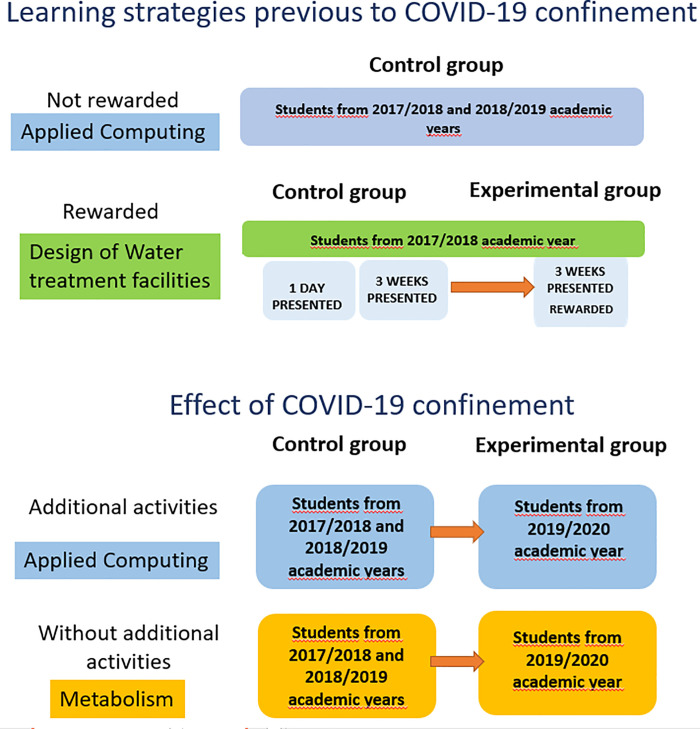
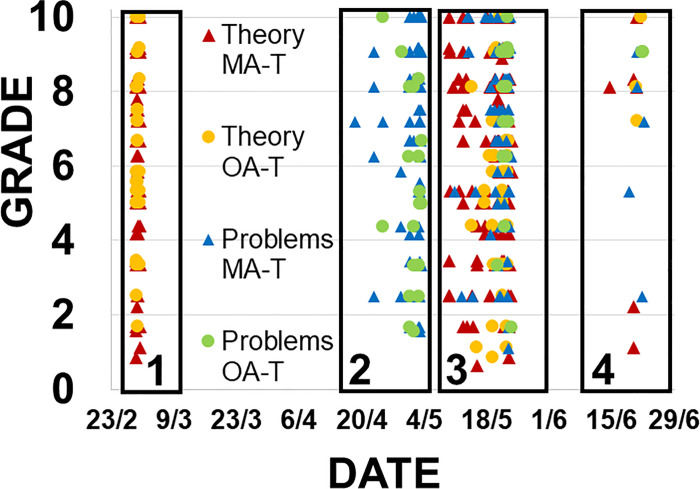
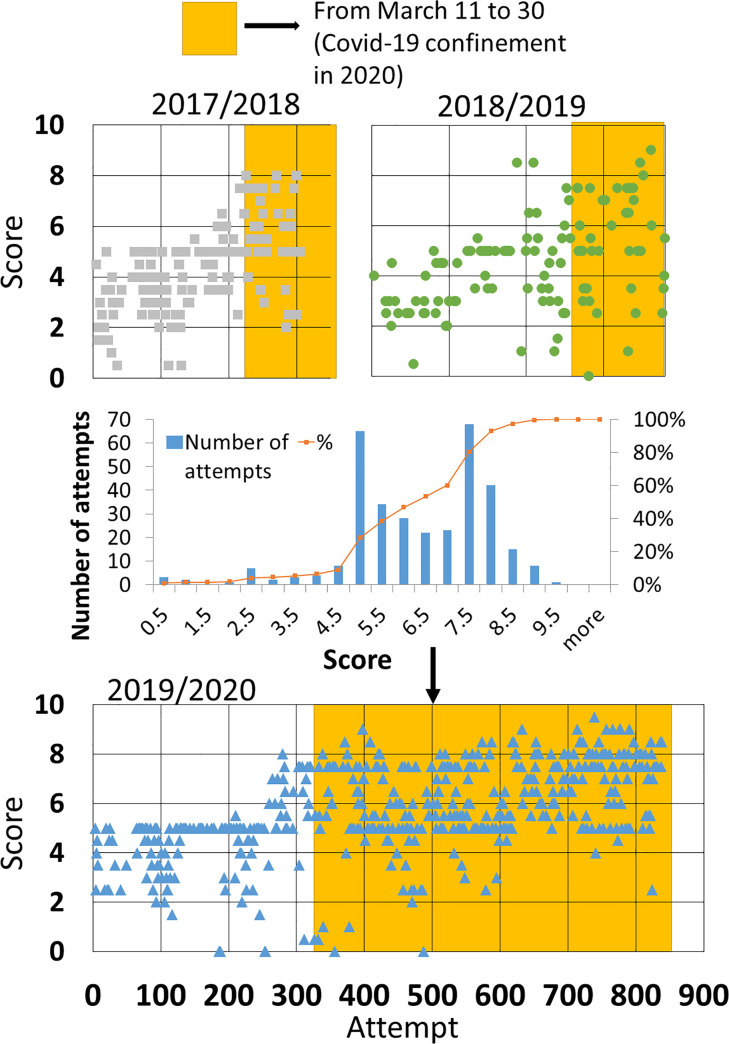
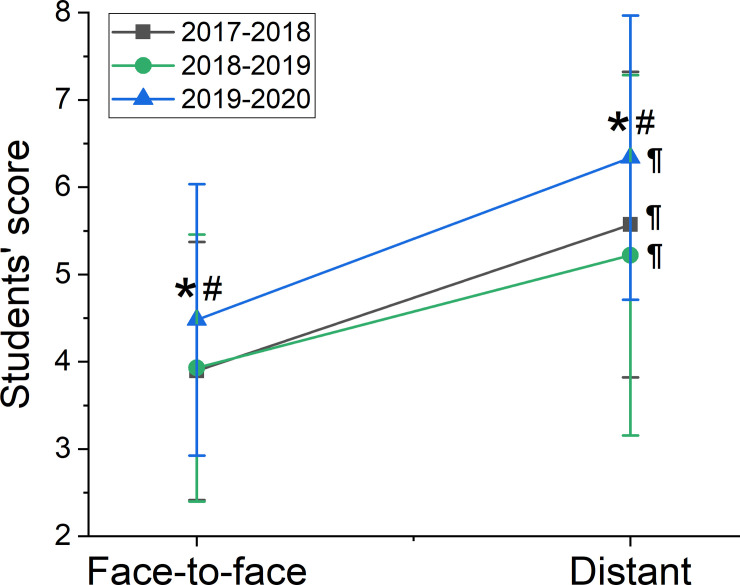
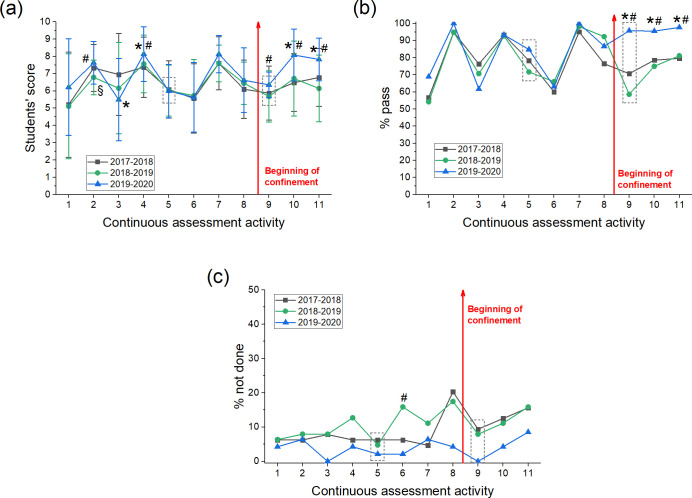
This study analyzes the effects of COVID-19 confinement on the autonomous learning performance of students in higher education. Using a field experiment with 458 students from three different subjects at Universidad Autónoma de Madrid (Spain), we study the differences in assessments by dividing students into two groups. The first group (control) corresponds to academic years 2017/2018 and 2018/2019. The second group (experimental) corresponds to students from 2019/2020, which is the group of students that had their face-to-face activities interrupted because of the confinement. The results show that there is a significant positive effect of the COVID-19 confinement on students' performance. This effect is also significant in activities that did not change their format when performed after the confinement. We find that this effect is significant both in subjects that increased the number of assessment activities and subjects that did not change the student workload. Additionally, an analysis of students' learning strategies before confinement shows that students did not study on a continuous basis. Based on these results, we conclude that COVID-19 confinement changed students' learning strategies to a more continuous habit, improving their efficiency. For these reasons, better scores in students' assessment are expected due to COVID-19 confinement that can be explained by an improvement in their learning performance.
Overview
The claims and statistics of this paper haven’t been checked yet.
Run the check — free, no account needed. It reads the open-access text and checks the sources it cites.
Integrity signals
Registry
Cites
Statistics
Figures
Verification
Claims the paper makes
The claims and statistics of this paper haven’t been checked yet.
Run the check — free, no account needed. It reads the open-access text and checks the sources it cites.
Claims other papers make about this one
Each is checked against this paper’s own text: does it say what the citing paper says it does?
In the citing paper
“Our results then seem to confirm, at a larger scale, those of Gonzalez et al. (2020) in a different university in Madrid.”
From Emergency remote teaching and students’ academic performance in higher education during the COVID-19 pandemic: A case study (2021) · cites this paper as Gonzalez et al., 2020
In the citing paper
“As mentioned in Section 6, while counter-intuitive, this result confirms, across a larger number of courses, the findings of Gonzalez et al. (2020) in a very similar albeit smaller context.”
From Emergency remote teaching and students’ academic performance in higher education during the COVID-19 pandemic: A case study (2021) · cites this paper as Gonzalez et al. (2020)
In the citing paper
“At the university level, in a single university, for 458 students in STEM faculties, learning outcomes actually improved (Gonzalez et al., 2020).”
From Learning loss during Covid-19: An early systematic review (2022) · cites this paper as Gonzalez et al. (2020)
Self-check
Percentages, sums and reported differences re-computed from the paper’s own numbers.
The self-check needs the paper’s full text.
Citations
Cites
On a Test of Whether one of Two Random Variables is Stochastically Larger than the Other
Mann, H. B., & Whitney, D. R. (1947) · The Annals of Mathematical Statistics · doi:10.1214/aoms/1177730491 · Cited by 14,320 · cited 1×
“Means were compared by a Kruskal-Wallis test [46] and, when differences were found, by a Mann-Whitney post hoc test [47] to determine which pairs of means were different.”
MethodUse of Ranks in One-Criterion Variance Analysis
Kruskal, W. H., & Wallis, W. A. (1952) · Journal of the American Statistical Association · doi:10.1080/01621459.1952.10483441 · Cited by 13,912 · cited 1×
“Means were compared by a Kruskal-Wallis test [46] and, when differences were found, by a Mann-Whitney post hoc test [47] to determine which pairs of means were different.”
MethodZimmerman, B. J. (2008) · American Educational Research Journal · doi:10.3102/0002831207312909 · Cited by 3,735 · cited 1×
“Related to autonomous learning, many studies have been performed regarding the concept of self-regulated learning (SRL), in which students are active and responsible for their own learning process [18, 19] as well as being knowledgeable, self-aware and able to select their own approach to learning [20, 21].”
BackgroundFundamentals of item response theory
(1992) · Choice Reviews Online · doi:10.5860/choice.29-4185 · Cited by 3,420
Zimmerman, B. J., & Martinez-Pons, M. (1990) · Journal of Educational Psychology · doi:10.1037/0022-0663.82.1.51 · Cited by 1,825 · cited 1×
“Related to autonomous learning, many studies have been performed regarding the concept of self-regulated learning (SRL), in which students are active and responsible for their own learning process [18, 19] as well as being knowledgeable, self-aware and able to select their own approach to learning [20, 21].”
BackgroundComputerized Adaptive Testing: A Primer
Wainer, H., Dorans, N. J., Flaugher, R. L., Green, B. F., & Mislevy, R. J. (1990) · Medical Entomology and Zoology · Cited by 1,169
La evaluación online en la educación superior en tiempos de la COVID-19
García‐Peñalvo, F. J., Corell, A., García, V. A., & de Prado, M. G. (2020) · Education in the Knowledge Society (EKS) · doi:10.14201/eks.23086 · Cited by 866
The MOOC model for digital practice
McAuley, A. B. T., Stewart, B. E., Siemens, G., & Cormier, D. (2010) · Cited by 698
Comparing online and blended learner's self-regulated learning strategies and academic performance
Broadbent, J. (2017) · The Internet and Higher Education · doi:10.1016/j.iheduc.2017.01.004 · Cited by 679
Wainer, H., Dorans, N. J., Flaugher, R. L., Green, B. F., & Mislevy, R. J. (2000) · Routledge eBooks · doi:10.4324/9781410605931 · Cited by 659
Research works printed but not linked: 2
- FJ García-Peñalvo, 2020, Online Assessment in Higher Education in the Time of COVID-19, Education in the Knowledge Society, 21, 12
- FM Lord, 1980, Applications of item response theory to practical problems
Cited by
Sorted by citations
College students’ use and acceptance of emergency online learning due to COVID-19
Patricia Aguilera-Hermida, A. (2020) · International Journal of Educational Research Open · doi:10.1016/j.ijedro.2020.100011 · Cited by 1,286
Kapasia, N., Paul, P., Roy, A., Saha, J., Zaveri, A., Mallick, R., Barman, B., Das, P., & Chouhan, P. (2020) · Children and Youth Services Review · doi:10.1016/j.childyouth.2020.105194 · Cited by 845
Barrot, J. S., Llenares, I. I., & del Rosario, L. S. (2021) · Education and Information Technologies · doi:10.1007/s10639-021-10589-x · Cited by 764
Iglesias-Pradas, S., Hernández-García, Á., Chaparro-Peláez, J., & Prieto, J. L. (2021) · Computers in Human Behavior · doi:10.1016/j.chb.2021.106713 · Cited by 693
“As mentioned in Section 6, while counterintuitive, this result confirms, across a larger number of courses, the findings of Gonzalez et al. (2020) in a very similar albeit smaller context.”
ResultTurnbull, D., Chugh, R., & Luck, J. (2021) · Education and Information Technologies · doi:10.1007/s10639-021-10633-w · Cited by 529
Emergency remote teaching in higher education: mapping the first global online semester
Bond, M., Bedenlier, S., Marín, V. I., & Händel, M. (2021) · International Journal of Educational Technology in Higher Education · doi:10.1186/s41239-021-00282-x · Cited by 527
Learning loss during Covid-19: An early systematic review
Donnelly, R., & Patrinos, H. A. (2022) · PROSPECTS · doi:10.1007/s11125-021-09582-6 · Cited by 445
“Gore et al. (2021) found Year 3 students studying math in low ICSEA (Index of Community Socio-Educational Advantage) schools in Australia to be two months behind the progress students made in 2019.”
BackgroundTransition to online learning during the COVID-19 pandemic
Lemay, D. J., Bazelais, P., & Doleck, T. (2021) · Computers in Human Behavior Reports · doi:10.1016/j.chbr.2021.100130 · Cited by 381
Students Satisfaction with Online Learning Experiences during the COVID-19 Pandemic
Almusharraf, N., & Khahro, S. H. (2020) · International Journal of Emerging Technologies in Learning (iJET) · doi:10.3991/ijet.v15i21.15647 · Cited by 323
Online-Learning due to COVID-19 Improved Mental Health Among Medical Students
Bolatov, A. K., Seisembekov, T. Z., Askarova, A. Z., Baikanova, R. K., Smailova, D. S., & Fabbro, E. (2021) · Medical Science Educator · doi:10.1007/s40670-020-01165-y · Cited by 235
Challenges in Distance Education During the (Covid-19) Pandemic Period
Sarı, T., & Nayır, F. (2020) · Qualitative Research in Education · doi:10.17583/qre.2020.5872 · Cited by 241
Baltà‐Salvador, R., Torre, N. O., Peña, M., & Davids, A. I. R. (2021) · Education and Information Technologies · doi:10.1007/s10639-021-10593-1 · Cited by 253
Hattar, S. N., AlHadidi, A., Sawair, F., Alraheam, I. A., El‐Ma'aita, A., & Wahab, F. K. (2021) · BMC Medical Education · doi:10.1186/s12909-021-02584-0 · Cited by 193
Camilleri, M. A., & Camilleri, A. C. (2021) · Technology Knowledge and Learning · doi:10.1007/s10758-021-09561-y · Cited by 211
“Yet, to date, there are just a few rigorous studies, that examined the utilization of synchronous video conferencing technologies, in addition to conventional, asynchronous content, like LMS, in the context of higher education (Aguilera-Hermida, 2020; Gonzalez et al., 2020).”
BackgroundWut, T. M., & Xu, J. B. (2021) · Asia Pacific Education Review · doi:10.1007/s12564-021-09673-1 · Cited by 223
Impact of COVID-19 on academic activities and way forward in Indian Optometry
Rajhans, V., Memon, U., Patil, V., & Goyal, A. (2020) · Journal of Optometry · doi:10.1016/j.optom.2020.06.002 · Cited by 159
Realyvásquez-Vargas, A., Maldonado-Macías, A. A., Arredondo-Soto, K. C., Baez-Lopez, Y., Carrillo-Gutiérrez, T., & Hernández-Escobedo, G. (2020) · Sustainability · doi:10.3390/su12219194 · Cited by 154
“[31] found that this confinement had a significant positive effect on the academic performance of students, which helped to improve students’ learning strategies to a more continuous habit, improving their efficiency.”
BackgroundPrevalence of Anxiety in University Students during the COVID-19 Pandemic: A Systematic Review
Liyanage, S., Saqib, K., Khan, A. F., Thobani, T. R., Tang, W., Chiarot, C. B., AlShurman, B. A., & Butt, Z. A. (2021) · International Journal of Environmental Research and Public Health · doi:10.3390/ijerph19010062 · Cited by 186
“The pandemic had a significant impact on higher education students’ practices regarding academic work and life, including the switch to online learning, closed libraries, altered communication channels for teachers’ and administrative support, new assessment methods, different workloads, and performance levels [14].”
BackgroundAguilera-Hermida, A. P., Quiroga-Garza, A., Gómez-Mendoza, S., Villanueva, C. A. D. R., Avolio, B., & Avcı, D. (2021) · Education and Information Technologies · doi:10.1007/s10639-021-10473-8 · Cited by 165
Spitzer, M. W. H., & Musslick, S. (2021) · PLOS ONE · doi:10.1371/journal.pone.0255629 · Cited by 138
“For instance, Gonzalez and colleagues (2020) [33] analyzed the performance of students on weekly examinations in an online learning class on metabolism and found that students performed better during the shutdown of their University, relative to two cohorts of students who took the same online class in the preceding t…”
BackgroundFlores, M. A., Barros, A., Simão, A. M. V., Pereira, D., Flores, P., Fernandes, E. L., Costa, L., & Ferreira, P. C. (2021) · Higher Education · doi:10.1007/s10734-021-00748-x · Cited by 138
Giusti, L., Mammarella, S., Salza, A., Vecchio, S. D., Ussorio, D., CASACCHIA, M., & Roncone, R. (2021) · BMC Psychology · doi:10.1186/s40359-021-00649-9 · Cited by 171
The impact of COVID-19 pandemic on students’ learning in higher education in Afghanistan
Noori, A. Q. (2021) · Heliyon · doi:10.1016/j.heliyon.2021.e08113 · Cited by 132
Sharp increase in inequality in education in times of the COVID-19-pandemic
Haelermans, C., Korthals, R. A., Jacobs, M., de Leeuw, S. G., Vermeulen, S., van Vugt, L., Aarts, B., Prokic‐Breuer, T., van der Velden, R., van Wetten, S., et al. (2022) · PLoS ONE · doi:10.1371/journal.pone.0261114 · Cited by 125
“For higher education, the results are less consistent: some find negative effects [17] while others indicate that distance learning might have made students more efficient [18] or see little effects [19].”
ResultESL Teachers’ Challenges in Implementing E-learning during COVID-19
Lukas, B. A., & Yunus, M. M. (2021) · International Journal of Learning Teaching and Educational Research · doi:10.26803/ijlter.20.2.18 · Cited by 112
Iqbal, J., Qureshi, N., Ashraf, M. A., Rasool, S. F., & Asghar, M. Z. (2021) · Psychology Research and Behavior Management · doi:10.2147/prbm.s316664 · Cited by 137
Basheti, I. A., Mhaidat, Q. N., & Mhaidat, H. N. (2021) · PLoS ONE · doi:10.1371/journal.pone.0249716 · Cited by 113
Chu, H., Liu, Z., Ji, T., Yang, C., & Xu, N. (2024) · Applied Thermal Engineering · doi:10.1016/j.applthermaleng.2024.123591 · Cited by 104
Academic Procrastination and Online Learning During the COVID-19 Pandemic
Melgaard, J., Monir, R., Lasrado, L. A., & Fagerstrøm, A. (2022) · Procedia Computer Science · doi:10.1016/j.procs.2021.11.080 · Cited by 132
“In the case of the current coronavirus situation, social distancing and isolation have become new norms and while some initial studies [3; 18; 24] have reported that a shift to online learning has been well accepted, many others [5; 38; 40] have highlighted the challenges many students face like poor time management […”
BackgroundLi, J., & Che, W. (2022) · Sustainable Cities and Society · doi:10.1016/j.scs.2022.103958 · Cited by 103
Rethinking mobility of international university students during COVID-19 pandemic
Yıldırım, S., Bostancı, S. H., Yıldırım, D. Ç., & Erdoğan, F. (2021) · Higher Education Evaluation and Development · doi:10.1108/heed-01-2021-0014 · Cited by 100
“Especially, both of policy makers and academicians focus on investigating the effects of pandemic on higher education area (Nicola et al. , 2020; Gonzalez et al. , 2020) due to huge break in student mobility.”
BackgroundA systematic review of health sciences students’ online learning during the COVID-19 pandemic
Mutalib, A. A. A., Akim, A. M., & Jaafar, M. H. (2022) · BMC Medical Education · doi:10.1186/s12909-022-03579-1 · Cited by 112
“(2020), during the pandemic, more students started to pass their courses and more students finished their assignments than in prior years [102].”
BackgroundImpacts of the Covid‐19 pandemic on the health of university students
Ihm, L., Zhang, H., van Vijfeijken, A., & Waugh, M. G. (2021) · The International Journal of Health Planning and Management · doi:10.1002/hpm.3145 · Cited by 98
Rahimi, R. A., & Oh, G. S. (2024) · Journal of Marketing Analytics · doi:10.1057/s41270-024-00303-4 · Cited by 90
“Moodle served as the primary platform for asynchronous learning activities in studies examining the use of online tools within specific courses and programs (Davies et al. 2020; Gonzalez et al. 2020; Lassoued et al. 2020; Rizun and Strzelecki 2020; Terenko and Ogienko 2020; Wang et al. 2020).”
Warfvinge, P. G., Lofgreen, J. E., Andersson, K., Roxå, T., & Åkerman, C. (2021) · European Journal of Engineering Education · doi:10.1080/03043797.2021.1942794 · Cited by 95
“Finally, Gonzalez et al. (2020) were able to actually compare students’ academic performance in 2019/20 to corresponding cohorts in the two previous academic years, as a way of examining the effects that the disruption of campus learning and shift to online learning had on students’ learning.”
ResultTalsma, K., Robertson, K., Thomas, C., & Norris, K. (2021) · Frontiers in Psychology · doi:10.3389/fpsyg.2021.643408 · Cited by 105
Hashemi, A. (2021) · Cogent Arts and Humanities · doi:10.1080/23311983.2021.1933684 · Cited by 84
Learning Loss During COVID-19: An Early Systematic ReviewPreprint
Patrinos, H. A., & Donnelly, R. (2021) · Research Square · doi:10.21203/rs.3.rs-518655/v1 · Cited by 82
Williams, L., Rollins, L., Young, D., Fleming, L., Grealy, M., Janssen, X., Kirk, A. F., MacDonald, B., & Flowers, P. (2021) · PLoS ONE · doi:10.1371/journal.pone.0244873 · Cited by 81
“Broader impacts on family functioning [13], loss of economic productivity [14], and education [15], including the gendered burden of home schooling have also been reported [16].”
BackgroundStress adaptation and resilience of academics in higher education
Ross, P. M., Scanes, E., & Locke, W. (2023) · Asia Pacific Education Review · doi:10.1007/s12564-023-09829-1 · Cited by 128
“Opportunities for change in the curriculum and in teaching approaches are being widely discussed (Bryson & Andres, 2020; Dietrich et al., 2020; Gonzalez et al., 2020; Kay et al., 2020; Kedraka & Kaltsidis, 2020; Lyons et al., 2020; Peters et al., 2020; Rapanta et al., 2020).”
Bawa, P. (2020) · Computers and Education Open · doi:10.1016/j.caeo.2020.100016 · Cited by 90
Kóris, R., Díaz, F. J. M., & Nanclares, N. H. (2021) · European Educational Research Journal · doi:10.1177/14749041211021247 · Cited by 76
“However, the increased intensity of virtual learning has a positive impact on students’ satisfaction (Suleri, 2020), as well as their study habits and performance (Gonzalez et al., 2020).”
BackgroundEffect of COVID-19 pandemic on grade inflation in higher education in Turkey
Karadağ, E. (2021) · PLoS ONE · doi:10.1371/journal.pone.0256688 · Cited by 76
Gherghel, C., Yasuda, S., & Kita, Y. (2023) · Computers & Education · doi:10.1016/j.compedu.2023.104795 · Cited by 115
Ela, M. Z., Shohel, T. A., Shovo, T.-E.-A., Khan, L., Jahan, N., Hossain, M. T., & Islam, M. N. (2021) · Heliyon · doi:10.1016/j.heliyon.2021.e06263 · Cited by 84
Limone, P., Toto, G. A., & Messina, G. (2022) · Frontiers in Psychiatry · doi:10.3389/fpsyt.2022.1081013 · Cited by 73
“Interruptions in school calendars; the introduction of virtual learning; changes in communication channels and workloads; infections; and the death of peers, faculty, family, and friends are some COVID-19-related outcomes that increase stress and mental distress (5).”
BackgroundYeh, C.-Y., & Tsai, C. (2022) · Frontiers in Psychology · doi:10.3389/fpsyg.2022.928717 · Cited by 108
“All stakeholders need to keep up with many uncertainties of the pandemic, including policymakers, educators, parents, and learners will now have to quickly respond to teaching, learning, and collaborating online through different online learning platforms and tools (Gonzalez et al., 2020; Junus et al., 2021).”
BackgroundBruggeman, B., Garone, A., Struyven, K., Pynoo, B., & Tondeur, J. (2022) · Computers and Education Open · doi:10.1016/j.caeo.2022.100095 · Cited by 88
“Researchers have been focusing on emergency remote teaching (e.g. [6]), on students ’ experiences with online education (e.g. [18,35]), on technological facilitators or barriers for online education (e. g. [11]), or on challenges for university teachers (e.g. [1]).”
BackgroundHistorically Underrepresented Graduate Students' Experiences During the COVID ‐19 Pandemic
Walsh, B. A., Woodliff, T. A., Lucero, J. E., Harvey, S., Burnham, M. M., Bowser, T. L., Aguirre, M., & Zeh, D. W. (2021) · Family Relations · doi:10.1111/fare.12574 · Cited by 69
On enhancing students’ cognitive abilities in online learning using brain activity and eye movements
Jamil, N., Belkacem, A. N., & Lakas, A. (2022) · Education and Information Technologies · doi:10.1007/s10639-022-11372-2 · Cited by 68
“Technology influences the interaction between students and teachers, and the design of learning environments may have a significant impact on learning results (Bower, 2019; Gonzalez et al., 2020).”
BackgroundA Survey Study on U.S. College Students’ Learning Experience in COVID-19
Zhou, J., & Zhang, Q. (2021) · Education Sciences · doi:10.3390/educsci11050248 · Cited by 63
“[25], they reported a significant positive effect of the COVID-19 confinement on students’ performance in Spain.”
BackgroundLin, T. (2021) · The Asia-Pacific Education Researcher · doi:10.1007/s40299-021-00553-1 · Cited by 64
Plummer, L. S., Kaygısız, B. B., Kuehner, C. P., Gore, S., Mercuro, R., Chatiwala, N., & Naidoo, K. (2021) · Education Sciences · doi:10.3390/educsci11030130 · Cited by 57
“Despite the faculty workload and new technology skills required for this transition to online learning, research in higher education during the pandemic has focused primarily on the student experience [17,19,20,22,23] and the effectiveness of virtual formats for student learning [16,18,21].”
BackgroundAlarifi, B. N., & Song, S. (2024) · Humanities and Social Sciences Communications · doi:10.1057/s41599-023-02590-1 · Cited by 55
Higher Education in the First Year of COVID-19: Thoughts and Perspectives for the Future
Cesco, S., Zara, V., Toni, A. F. D., Lugli, P., Betta, G., Evans, A. C. O., & Orzes, G. (2021) · International Journal of Higher Education · doi:10.5430/ijhe.v10n3p285 · Cited by 55
Tortella, G., Seabra, A. B., Padrão, J., & Juan, R. D.-S. (2021) · Brain Sciences · doi:10.3390/brainsci11050552 · Cited by 66
Weidlich, J., & Kalz, M. (2021) · International Journal of Educational Technology in Higher Education · doi:10.1186/s41239-021-00278-7 · Cited by 72
Freyhofer, S., Ziegler, N., de Jong, E. M., & Schippers, M. C. (2021) · Frontiers in Psychology · doi:10.3389/fpsyg.2021.682684 · Cited by 52
Natarajan, J., & Joseph, M. A. (2021) · Nursing Forum · doi:10.1111/nuf.12649 · Cited by 60
“Studies have shown that when technology is used in an effective way, it will enable students and faculty to have better engagement and collaboration.(10) However, nursing students’ engagement in online learning might differ from that of ERT.”
BackgroundSharaievska, I., McAnirlin, O., Browning, M. H. E. M., Larson, L. R., Mullenbach, L. E., Rigolon, A., D’Antonio, A., Cloutier, S. A., Thomsen, J. M., Metcalf, E. C., et al. (2022) · Higher Education · doi:10.1007/s10734-022-00843-7 · Cited by 61
“Similarly, a study by Gonzalez et al. (2020) posited that some students’ academic performance improved during the pandemic as a result of changes in learning strategies and formation of new habits.”
Alshaikh, K., Maasher, S. Y., Bayazed, A., Saleem, F., Badri, S. K., & Fakieh, B. (2021) · Sustainability · doi:10.3390/su13137103 · Cited by 56
“It provides the student more time to review subjects and work on the projects and assignments required, which helps to improve the student’s academic performance; the research in [34] also found similar results.”
BackgroundResultInfluentialCOVID-19 Lockdown-Related Changes in Mood, Health and Academic Functioning
Hendriksen, P. A., Garssen, J., Bijlsma, E. Y., Engels, F., Bruce, G., & Verster, J. C. (2021) · European Journal of Investigation in Health Psychology and Education · doi:10.3390/ejihpe11040103 · Cited by 48
“This effect was not only seen for courses that changed to an online format but also for teaching activities that continued in a face-to-face format [22].”
BackgroundRemote Teaching Due to COVID-19: An Exploration of Its Effectiveness and Issues
Kawasaki, H., Yamasaki, S., Masuoka, Y., Iwasa, M., Fukita, S., & Matsuyama, R. (2021) · International Journal of Environmental Research and Public Health · doi:10.3390/ijerph18052672 · Cited by 53
Wilhelm, J., Mattingly, S. G., & González, V. H. (2021) · Anatomical Sciences Education · doi:10.1002/ase.2161 · Cited by 51
Drašler, V., Bertoncelj, J., Korošec, M., Žontar, T. P., Ulrih, N. P., & Cigić, B. (2021) · Sustainability · doi:10.3390/su13095118 · Cited by 44
Supriya, K., Mead, C., Anbar, A. D., Caulkins, J. L., Collins, J. P., Cooper, K. M., LePore, P. C., Lewis, T., Pate, A., Scott, R. A., et al. (2021) · Frontiers in Education · doi:10.3389/feduc.2021.759624 · Cited by 56
“The slight increase in average student grades in Spring 2020 compared to previous semesters is consistent with other studies that have examined student grades in Spring 2020 at other institutions (Gonzalez et al., 2020; Loton et al., 2020; Bawa, 2021).”
ResultExploring Coping Strategies of Different Generations of Students Starting University
Takács, R., Takács, S., Kárász, J. T., Horváth, Z., & Oláh, A. (2021) · Frontiers in Psychology · doi:10.3389/fpsyg.2021.740569 · Cited by 42
Khanal, P., Bento, F., & Tagliabue, M. (2021) · Education Sciences · doi:10.3390/educsci11030115 · Cited by 41
“While this area of inquiry reaches beyond the aims of the present work, we hypothesize that there may be implications in terms of the effectiveness and the efficiency of pupils’ learning performance and of teachers’ teaching performance (see also [54,55]).”
BackgroundStudent vulnerabilities and confidence in learning in the context of the COVID-19 pandemic
Bartolic, S. K., Matzat, U., Tai, J., Burgess, J.-L., Boud, D. J., Craig, H., Archibald, A., Jaeger, A. D., Kaplan‐Rakowski, R., Lutze-Mann, L. H., et al. (2022) · Studies in Higher Education · doi:10.1080/03075079.2022.2081679 · Cited by 48
“We understand learning confidence as akin to ‘self- efficacy,’ a factor well known to affect learning processes and stimulate academic performance (Galla et al. 2014; Panadero, Jonsson, and Botella 2017; see also Gonzalez et al. 2020).”
BackgroundAzizan, S. N., Lee, A., Crosling, G., Atherton, G., Arulanandam, B. V., Lee, C. E., & Rahim, R. B. A. (2022) · International Journal of Emerging Technologies in Learning (iJET) · doi:10.3991/ijet.v17i03.24871 · Cited by 39
Recent advances in fluorinated superhydrophobic materials: Preparation and diverse applications
Yang, Q., Li, X., Xue, Y., Peng, H., Bai, Y., Li, W., & Zheng, W. (2025) · Chemical Engineering Journal · doi:10.1016/j.cej.2025.168236 · Cited by 39
Elçi, A., & Abubakar, A. M. (2021) · Education and Information Technologies · doi:10.1007/s10639-021-10580-6 · Cited by 45
Osipov, A. Y., Ratmanskaya, T. I., Zemba, E. A., Potop, V., Kudryavtsev, M. D., & Nagovitsyn, R. S. (2021) · Physical Education of Students · doi:10.15561/20755279.2021.0103 · Cited by 38
“For this reason, better scores in students’ assessment are expected due to COVID-19 confinement that can be explained by an improvement in their academic performance [29].”
BackgroundRaja, R., Jian-fu, M., Zhang, M., Li, X. Y., Almutairi, N. S., & Almutairi, A. H. (2023) · Frontiers in Psychology · doi:10.3389/fpsyg.2023.994411 · Cited by 43
“Higher education institutes have experienced substantial challenges such as switching to online lectures/tutorials, closing libraries, changing contact channels for instructors and administrative support, new evaluation methods, varying workloads and performance levels (Bezerra, 2020; Cao et al., 2020; Gallego et al.,…”
BackgroundAlsuraihi, A. A. (2022) · BMC Medical Education · doi:10.1186/s12909-022-03211-2 · Cited by 36
“Moreover, another study by Gonzalez et al. [46] conducted on Spanish university students showed a significant improvement in students’ performance during the COVID-19 pandemic, despite the teaching model changes.”
BackgroundAl-Husban, N. A., Alkhayat, A., Aljweesri, M., Alharbi, R., Aljazzaf, Z., Al-Husban, N., Muhtaseb, M. S. E., Oweidat, K. A., & Obeidat, N. A. (2021) · Annals of Medicine and Surgery · doi:10.1016/j.amsu.2021.102466 · Cited by 35
“On the other hand, in October 2020, a field experiment of 458 students at Universidad Autónoma de Madrid (Spain) showed that COVID19 confinement changed students’ learning strategies to a more continuous habit, improving their efficiency, and better scores in students’ assessment are expected due to COVID-19 confineme…”
E-learning challenge studying the COVID-19 pandemic
Kamysbayeva, A., Koryakov, A., Garnova, N., Glushkov, S., & Klimenkova, S. (2021) · International Journal of Educational Management · doi:10.1108/ijem-06-2021-0257 · Cited by 35
Christensen, M. K., Nielsen, K.-J. S., & O’Neill, L. D. (2022) · Advances in Health Sciences Education · doi:10.1007/s10459-022-10102-0 · Cited by 38
“Even so, studies on the effects of the Covid-19 pandemic have largely and understandably focused on students’ learning and well-being (Asbury et al., 2020; Aucejo et al., 2020; Cao et al., 2020; Colao et al., 2020; Gonzalez et al., 2020; Kim & Asbury, 2020; Son et al., 2020).”
BackgroundAssessment practices in Saudi higher education during the COVID-19 pandemic
Almossa, S. Y., & Alzahrani, S. M. (2022) · Humanities and Social Sciences Communications · doi:10.1057/s41599-021-01025-z · Cited by 35
“Several studies have been conducted to investigate the impact of the COVID-19 pandemic on the experiences of students and faculty members in higher education (Al-Mohair and Alwahaishi, 2020; Almossa, 2021; Aristovnik et al., 2020; Bisht et al., 2020; Gonzalez et al., 2020; Sasere and Makhasane, 2020).”
BackgroundLearners’ Satisfaction and Commitment Towards Online Learning During COVID-19: A Concept Paper
Ranadewa, D. U. N., Gregory, T. Y., Boralugoda, D. N., Silva, J. A. H. T., & Jayasuriya, N. (2021) · Vision The Journal of Business Perspective · doi:10.1177/09722629211056705 · Cited by 34
“Worldwide, a sudden increase in the introduction of new online learning platforms occurred, facilitating students to attend lectures during the COVID-19 pandemic (Gonzalez et al., 2020).”
BackgroundAnalyzing students’ e-learning usage and post-usage outcomes in higher education
Ullah, M. S., Hoque, M. R., Aziz, M. A., & Islam, M. (2023) · Computers and Education Open · doi:10.1016/j.caeo.2023.100146 · Cited by 45
Guppy, N., Boud, D. J., Heap, T., Verpoorten, D., Matzat, U., Tai, J., Lutze-Mann, L. H., Roth, M., Polly, P., Burgess, J.-L., et al. (2021) · Higher Education · doi:10.1007/s10734-021-00781-w · Cited by 36
Why Did Students Report Lower Test Anxiety during the COVID-19 Pandemic?
Ewell, S. N., Josefson, C. C., & Ballen, C. J. (2022) · Journal of Microbiology and Biology Education · doi:10.1128/jmbe.00282-21 · Cited by 40
“However, despite these difficulties, some students experienced increases in academic performance (37, 38).”
BackgroundAlam, S. S., Masukujjaman, M., Ahmad, M. G., & Jaffor, R. (2022) · Education and Information Technologies · doi:10.1007/s10639-022-11533-3 · Cited by 40
“COVID-19 students performed better than students from the prior year, according to Gonzalez et al. (2020).”
BackgroundHow COVID-19 impacted soft skills development: The views of software engineering students
Brennan, A., Dempsey, M., McAvoy, J., O’Dea, M., O’Leary, S., & Prendergast, M. (2023) · Cogent Education · doi:10.1080/2331186x.2023.2171621 · Cited by 33
“Using a combination of video streaming and virtual classrooms for synchronous and asynchronous delivery (Gonzalez et al., 2020), this rapid transition to online learning forced many HEIs to re-strategize (Shiohira & Keevy, 2020) and drove many academics into “unfamiliar terrain” as they made…”
BackgroundDigital Innovation in Times of Emergency: Reactions from a School of Management in Italy
Agasisti, T., Frattini, F., & Soncin, M. (2020) · Sustainability · doi:10.3390/su122410312 · Cited by 42
“The current emergency, in particular, has put at the centre the open issue of the effectiveness of digital technologies for education, fuelling the debate on the topic [4,13].”
BackgroundMekhemar, M. K., Attia, S., Dörfer, C. E., & Conrad, J. (2021) · Biology · doi:10.3390/biology10070611 · Cited by 37
Doush, I. A., Al-Jarrah, A., Alajarmeh, N. S., & Alnfiai, M. M. (2022) · Universal Access in the Information Society · doi:10.1007/s10209-022-00917-4 · Cited by 36
“[47] collects responses from teachers and students about online learning in Pakistani institutions after they switched to distance learning because of the COVID-19 pandemic.”
BackgroundInfluentialZhu, Y., Geng, G. H., Disney, L., & Pan, Z. (2022) · Education and Information Technologies · doi:10.1007/s10639-022-11320-0 · Cited by 43
“…(Adnan & Anwar, 2020; Baber, 2021; McPartlan et al., 2021) • students’ course satisfaction (Saxena et al., 2020) • students’ online learning outcomes (Adnan & Anwar, 2020; Gonzalez et al., 2020) • students’ online learning attitude or intention (Aguilera-Hermida, 2020; Baber, 2021; George,…”
Thematic learning during the pandemic: CIPP evaluation study
Pujiastuti, P., Herwin, H., & Firdaus, F. M. (2021) · Cypriot Journal of Educational Sciences · doi:10.18844/cjes.v16i6.6481 · Cited by 31
The impacts of the COVID-19 pandemic on higher education students in New Zealand
Cameron, M. P., Fogarty-Perry, B., & Piercy, G. L. (2022) · Journal of Open Flexible and Distance Learning · doi:10.61468/jofdl.v26i1.515 · Cited by 31
Ögeyik, M. C. (2022) · Education and Information Technologies · doi:10.1007/s10639-022-11064-x · Cited by 31
“The findings of another study conducted by González et al. (2020) displayed that distance education has positively affected student success thanks to new learning methodologies.”
ResultImpacts of Emergency Remote Teaching on College Students Amid COVID-19 in the UAE
El-Sakran, A., Salman, R., & Alzaatreh, A. (2022) · International Journal of Environmental Research and Public Health · doi:10.3390/ijerph19052979 · Cited by 39
“Although these dimensions were commonly used to determine the success of standard online learning environments, recent studies identified their value in evaluating ERT during COVID-19 [53].”
BackgroundDima, A. M., Bușu, M., & Vargas, V. M. (2022) · Oeconomia Copernicana · doi:10.24136/oc.2022.036 · Cited by 30
Online learning and blended learning: new practices derived from the pandemic-driven disruption
Cheung, S. K. S., Wang, F. L., & Kwok, L. F. (2023) · Journal of Computing in Higher Education · doi:10.1007/s12528-023-09350-9 · Cited by 30
“Students’ learning styles and behaviours were changed, such as on learning strategy and study planning (Gonzalez, et al., 2020), learning engagement (El-Sayad, et al., 2021), learning motivation (Jereb, et al., 2022), learning anxiety (Arribathi et al., 2021), and use of open online resources…”
BackgroundBaruth, O., Gabbay, H., Cohen, A., Bronshtein, A., & Ezra, O. (2021) · Journal of Computer Assisted Learning · doi:10.1111/jcal.12612 · Cited by 34
College students’ self-regulation in asynchronous online courses during COVID-19
Han, J., DiGiacomo, D. K., & Usher, E. L. (2023) · Studies in Higher Education · doi:10.1080/03075079.2023.2201608 · Cited by 32
“In March 2020, the United States experienced the onset of a global pandemic caused by the COVID19 virus, which led to immediate and lasting changes to postsecondary learning environments.”
BackgroundInfluentialVargas-Ramos, J. C., Lerma, C., Saldaña, R. M. E. G., Lerma, A., Bosques-Brugada, L. E., & Fragoso, C. G. (2021) · International Journal of Environmental Research and Public Health · doi:10.3390/ijerph19010365 · Cited by 29
“Theoretically, this student perception and attitude can affect negatively the academic performance [3,4,6]; nevertheless, not all the students show a decrease in their academic performance, and some even seem to benefit from this modality [24].”
BackgroundGarcía‐Peñalvo, F. J., García-Holgado, A., Vázquez‐Ingelmo, A., & Sánchez‐Prieto, J. C. (2021) · RIED Revista Iberoamericana de Educación a Distancia · doi:10.5944/ried.24.2.27689 · Cited by 28
Zhang, T., Taub, M., & Chen, Z. (2021) · International Conference on Learning Analytics and Knowledge (LAK) · doi:10.1145/3448139.3448150 · Cited by 28
Metadata
- Authors
- Gonzalez, T., de la Rubia, M. A., Hincz, K. P., Comas-Lopez, M., Subirats, L., Fort, S., & Sacha, G. M.
- Affiliations
- Universidad Autónoma de Madrid (ES)
- Universitat Oberta de Catalunya (ES)
- EURECAT Centre Tecnològic de Catalunya (ES)
- Corresponding author
- Sacha, G. M.
- Venue
- PLOS ONE
- Publisher
- Public Library of Science (PLoS)
- Published
- 2020-10-09
- Volume
- 15
- Issue
- 10
- Pages
- e0239490
- ISSN
- 1932-6203 (ISSN-L)
- PMC
- PMC7546684
- OpenAlex
- W3091995338
- Cited by
- 743
- References
- 45
- Citations by year
- 2026: 23 · 2025: 52 · 2024: 71 · 2023: 142 · 2022: 203 · 2021: 230 · 2020: 22
- FWCI
- 226.20
- Type
- journal article
- Language
- en
- Open access
- gold
- doi.org
- Licence
- Locations
- PLoS ONE (publishedVersion, cc-by)
- PubMed Central (publishedVersion, cc-by)
- PubMed (publishedVersion)
- RePEc: Research Papers in Economics (submittedVersion)
- DOAJ (DOAJ: Directory of Open Access Journals) (submittedVersion, cc-by-sa)
- Hispana (submittedVersion)
- Biblos-e Archivo (Universidad Autónoma de Madrid) (submittedVersion, public-domain)
- Funders
- Erasmus+ Program (2017-1-ES01-KA203-038266)
- Topics
- Social Sciences › Education › Education during COVID-19 pandemic
- Social Sciences › Education › Educational Outcomes and Influences
- Social Sciences › Education › E-Learning and COVID-19
- Keywords
- COVID-19 lockdown, university students, student performance, self-directed learning, learning strategies, assessment performance, student workload, Universidad Autónoma de Madrid
- MeSH terms
- Betacoronavirus, COVID-19, SARS-CoV-2, Adult, Educational Measurement, Female, Humans, Male, Models, Theoretical, Pneumonia, Viral, Spain, Students, Medical, Coronavirus Infections, Education, Distance, Young Adult, Pandemics
About these checks
Registry, retraction, Cites and statistics results are computed, not judged, with one exception: a printed reference that no index lists is read once by a model before it counts as a citation error. Claims are extracted by a model and kept only when their quote appears verbatim in the text; each cited source is then checked, with a model’s help, for whether it says what the claim relies on. Those verdicts can be wrong — read the claim’s quote and the cited source before relying on one.
Statistics and arithmetic are recomputed, not judged.
Confidence bands are shown only for fields calibrated on our annotated test set. None is calibrated yet, so no band is shown.
What counts as a claim ›How we measure confidence ›How we check this ›
Are you an author, or do you see a problem with this page? Request a review
