

The DOI matches its Crossref record; 44 of the 45 references it cites were found in a registry or an index.
Influence of COVID-19 confinement on students’ performance in higher education
Open accessAbstract
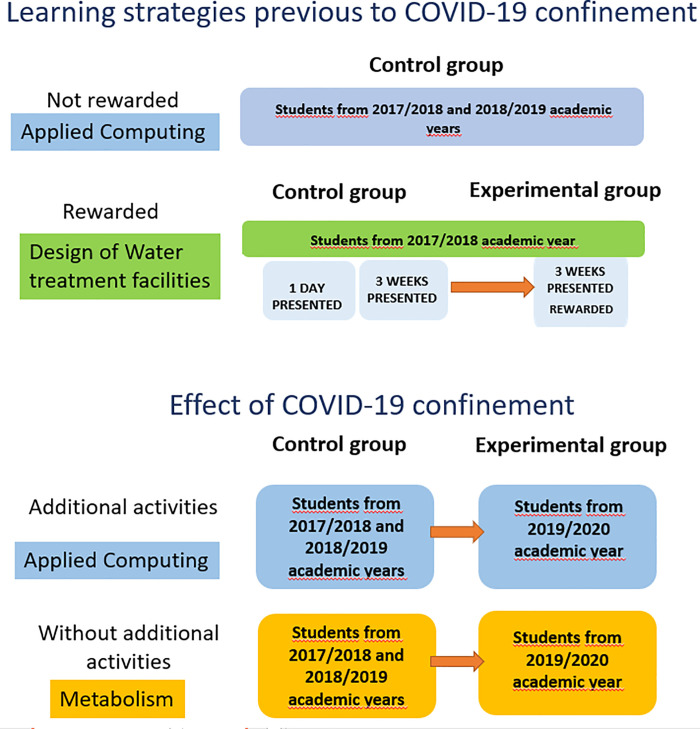
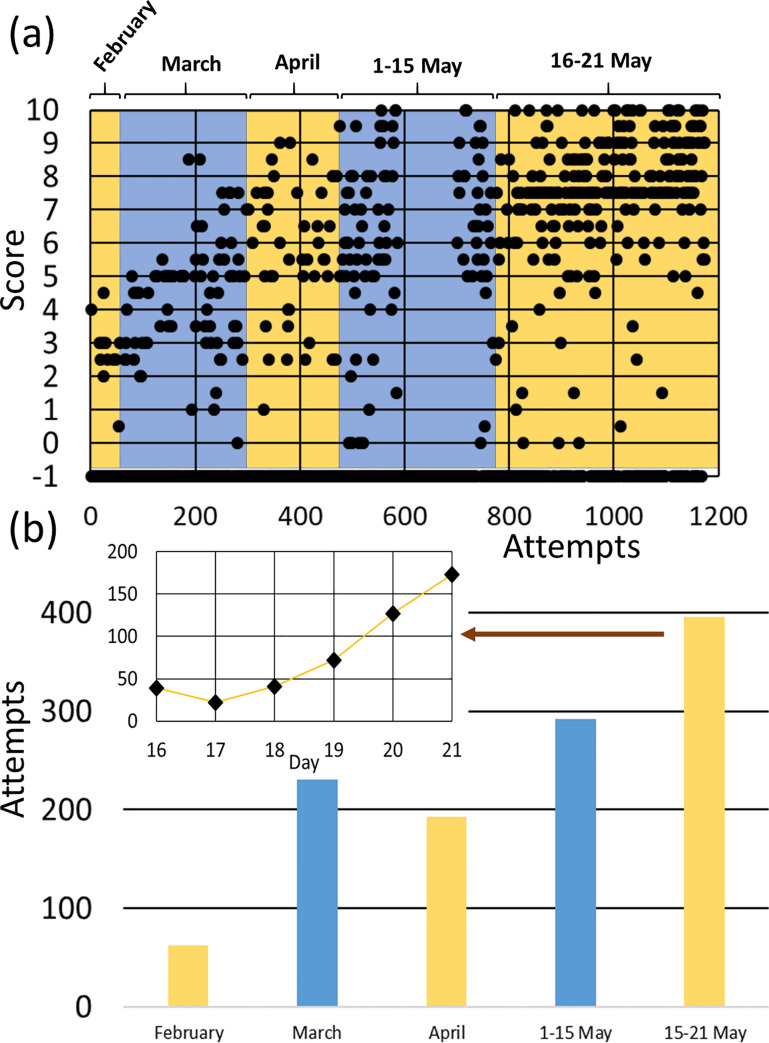
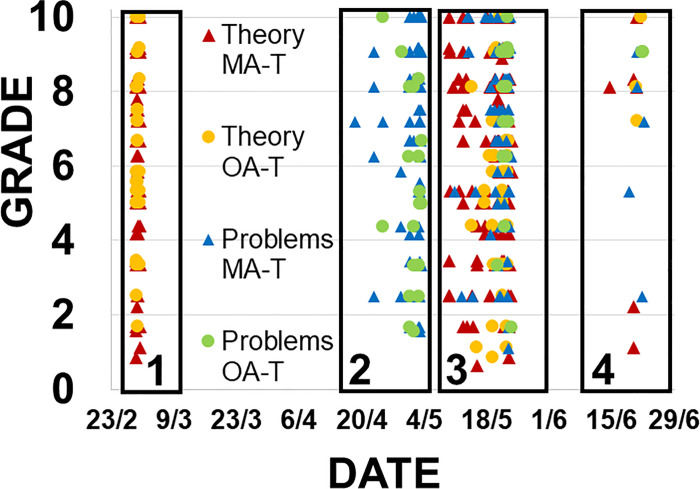
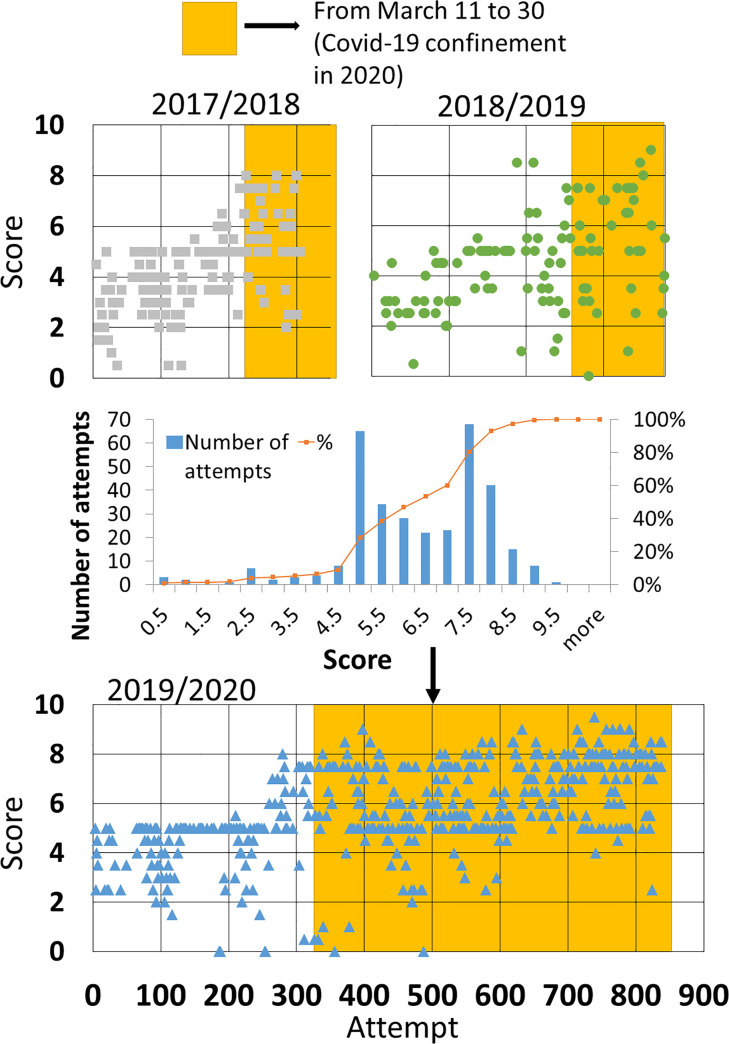
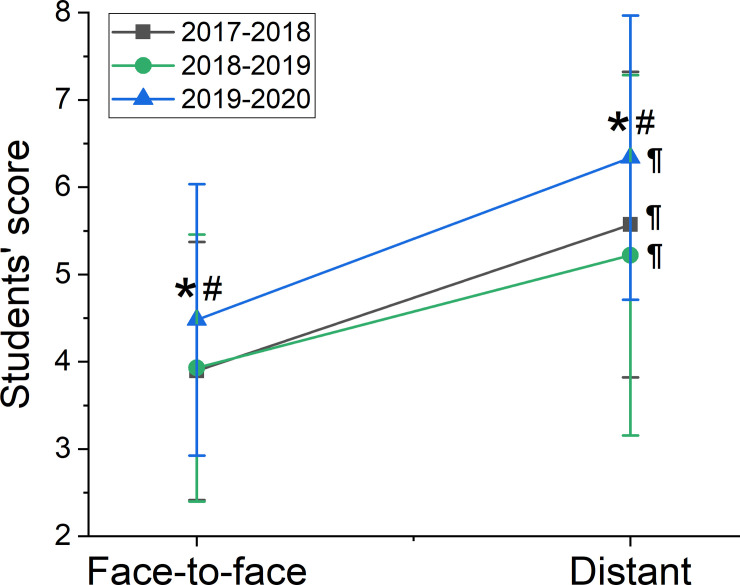
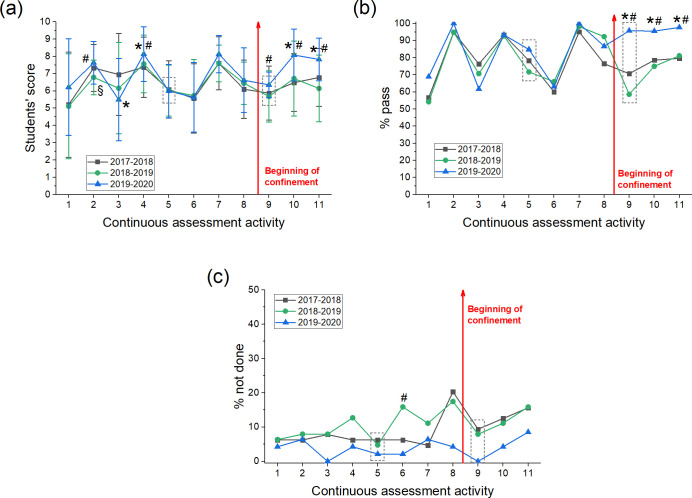
This study analyzes the effects of COVID-19 confinement on the autonomous learning performance of students in higher education. Using a field experiment with 458 students from three different subjects at Universidad Autónoma de Madrid (Spain), we study the differences in assessments by dividing students into two groups. The first group (control) corresponds to academic years 2017/2018 and 2018/2019. The second group (experimental) corresponds to students from 2019/2020, which is the group of students that had their face-to-face activities interrupted because of the confinement. The results show that there is a significant positive effect of the COVID-19 confinement on students' performance. This effect is also significant in activities that did not change their format when performed after the confinement. We find that this effect is significant both in subjects that increased the number of assessment activities and subjects that did not change the student workload. Additionally, an analysis of students' learning strategies before confinement shows that students did not study on a continuous basis. Based on these results, we conclude that COVID-19 confinement changed students' learning strategies to a more continuous habit, improving their efficiency. For these reasons, better scores in students' assessment are expected due to COVID-19 confinement that can be explained by an improvement in their learning performance.
Overview
The claims and statistics of this paper haven’t been checked yet.
Run the check — free, no account needed. It reads the open-access text and checks the sources it cites.
Integrity signals
Registry
Cites
Statistics
Figures
Verification
Claims the paper makes
The claims and statistics of this paper haven’t been checked yet.
Run the check — free, no account needed. It reads the open-access text and checks the sources it cites.
Claims other papers make about this one
Each is checked against this paper’s own text: does it say what the citing paper says it does?
In the citing paper
“Our results then seem to confirm, at a larger scale, those of Gonzalez et al. (2020) in a different university in Madrid.”
From Emergency remote teaching and students’ academic performance in higher education during the COVID-19 pandemic: A case study (2021) · cites this paper as Gonzalez et al., 2020
In the citing paper
“As mentioned in Section 6, while counter-intuitive, this result confirms, across a larger number of courses, the findings of Gonzalez et al. (2020) in a very similar albeit smaller context.”
From Emergency remote teaching and students’ academic performance in higher education during the COVID-19 pandemic: A case study (2021) · cites this paper as Gonzalez et al. (2020)
In the citing paper
“At the university level, in a single university, for 458 students in STEM faculties, learning outcomes actually improved (Gonzalez et al., 2020).”
From Learning loss during Covid-19: An early systematic review (2022) · cites this paper as Gonzalez et al. (2020)
Self-check
Percentages, sums and reported differences re-computed from the paper’s own numbers.
The self-check needs the paper’s full text.
Citations
Cites
On a Test of Whether one of Two Random Variables is Stochastically Larger than the Other
Mann, H. B., & Whitney, D. R. (1947) · The Annals of Mathematical Statistics · doi:10.1214/aoms/1177730491 · Cited by 14,320 · cited 1×
“Means were compared by a Kruskal-Wallis test [46] and, when differences were found, by a Mann-Whitney post hoc test [47] to determine which pairs of means were different.”
MethodUse of Ranks in One-Criterion Variance Analysis
Kruskal, W. H., & Wallis, W. A. (1952) · Journal of the American Statistical Association · doi:10.1080/01621459.1952.10483441 · Cited by 13,912 · cited 1×
“Means were compared by a Kruskal-Wallis test [46] and, when differences were found, by a Mann-Whitney post hoc test [47] to determine which pairs of means were different.”
MethodZimmerman, B. J. (2008) · American Educational Research Journal · doi:10.3102/0002831207312909 · Cited by 3,735 · cited 1×
“Related to autonomous learning, many studies have been performed regarding the concept of self-regulated learning (SRL), in which students are active and responsible for their own learning process [18, 19] as well as being knowledgeable, self-aware and able to select their own approach to learning [20, 21].”
BackgroundFundamentals of item response theory
(1992) · Choice Reviews Online · doi:10.5860/choice.29-4185 · Cited by 3,420
Zimmerman, B. J., & Martinez-Pons, M. (1990) · Journal of Educational Psychology · doi:10.1037/0022-0663.82.1.51 · Cited by 1,825 · cited 1×
“Related to autonomous learning, many studies have been performed regarding the concept of self-regulated learning (SRL), in which students are active and responsible for their own learning process [18, 19] as well as being knowledgeable, self-aware and able to select their own approach to learning [20, 21].”
BackgroundComputerized Adaptive Testing: A Primer
Wainer, H., Dorans, N. J., Flaugher, R. L., Green, B. F., & Mislevy, R. J. (1990) · Medical Entomology and Zoology · Cited by 1,169
La evaluación online en la educación superior en tiempos de la COVID-19
García‐Peñalvo, F. J., Corell, A., García, V. A., & de Prado, M. G. (2020) · Education in the Knowledge Society (EKS) · doi:10.14201/eks.23086 · Cited by 866
The MOOC model for digital practice
McAuley, A. B. T., Stewart, B. E., Siemens, G., & Cormier, D. (2010) · Cited by 698
Comparing online and blended learner's self-regulated learning strategies and academic performance
Broadbent, J. (2017) · The Internet and Higher Education · doi:10.1016/j.iheduc.2017.01.004 · Cited by 679
Wainer, H., Dorans, N. J., Flaugher, R. L., Green, B. F., & Mislevy, R. J. (2000) · Routledge eBooks · doi:10.4324/9781410605931 · Cited by 659
Research works printed but not linked: 2
- FJ García-Peñalvo, 2020, Online Assessment in Higher Education in the Time of COVID-19, Education in the Knowledge Society, 21, 12
- FM Lord, 1980, Applications of item response theory to practical problems
Cited by
Sorted by citations
Items 201–300 of 744
Juriševič, M., Lavrih, L., Lišić, A., Podlogar, N., & Žerak, U. (2021) · Center for Educational Policy Studies Journal · doi:10.26529/cepsj.1147 · Cited by 23
Mostafa, S. A., Cousins-Cooper, K., Tankersley, B., Burns, S., & Tang, G. (2022) · PLoS ONE · doi:10.1371/journal.pone.0264947 · Cited by 12
COVID-19 and Distance Education: Evaluation in the Context of Twenty-first Century Skills
BOZGÜN, K., Özaşkın-Arslan, A. G., & Sağır, Ş. U. (2022) · The Asia-Pacific Education Researcher · doi:10.1007/s40299-022-00663-4 · Cited by 12
Impact of COVID-19 pandemic on learning status of student in Nepal
Chaudhary, G. P., Khadka, R. B., Lamichhane, A., Dhakal, B., Das, N., Tharu, N. S., Karki, K., & Pandey, J. (2022) · Journal of Education and Health Promotion · doi:10.4103/jehp.jehp_354_22 · Cited by 15
The impact of the first wave of COVID-19 on students’ attainment, analysed by IRT modelling method
Takács, R., Takács, S., Kárász, J. T., Oláh, A., & Horváth, Z. (2023) · Humanities and Social Sciences Communications · doi:10.1057/s41599-023-01613-1 · Cited by 12
“Gonzalez et al. (2020) predicted better results during online education than in the case of on-campus education.”
BackgroundInfluentialAdam, M., Urbančič-Rak, T., & Crnić, T. (2021) · Acta Stomatologica Croatica · doi:10.15644/asc55/2/8 · Cited by 12
Navickienė, V., Dagienė, V., Jasutė, E., Butkienė, R., & Gudonienė, D. (2021) · Sustainability · doi:10.3390/su13179887 · Cited by 12
“COVID-19 confinement changed students’ learning strategies to a more continuous habit, improving their efficiency as well as enhanced their inner responsibility [55].”
BackgroundStudents’ perceptions of online lecture delivery: An empirical mixed-methods investigation
Harris, R., Blundell–, B. P., Ed, S., & Madeleine, P. (2021) · Psychology Teaching Review · doi:10.53841/bpsptr.2021.27.1.69 · Cited by 12
Ferreira, M. V. N., Marin, K. A., Abrão, R. K., de Oliveira, L. F. C., Bandeira, A. C., Sousa, P. S., de Sousa, J. M., Cardoso, A. G. D. A., da Silva, L. C. C., Rosa, A. C. A., et al. (2022) · Frontiers in Epidemiology · doi:10.3389/fepid.2022.1010832 · Cited by 12
“Governmental actions have adopted restrictives measures for reducing the spread of the coronavirus in this context, such as limiting social contact, suspending face-to-face teaching, and implementing online solutions wherever practicable (14).”
BackgroundHaelermans, C., Jacobs, M., van Vugt, L., Aarts, B., Abbink, H., Smeets, C., van der Velden, R., & van Wetten, S. (2021) · doi:10.31219/osf.io/78fje · Cited by 12
Paola, M. D., Gioia, F., & Scoppa, V. (2022) · Social Science Research Network · doi:10.2139/ssrn.4114561 · Cited by 15
Student performance in online learning higher education: A preliminary research
Prabowo, H., Ikhsan, R. B., & Yuniarty, Y. (2022) · Frontiers in Education · doi:10.3389/feduc.2022.916721 · Cited by 19
Vicario, C. M., Mucciardi, M., Perconti, P., Lucifora, C., Nitsche, M. A., & Avenanti, A. (2024) · Frontiers in Psychology · doi:10.3389/fpsyg.2023.1299136 · Cited by 11
“This can help to explain the mixed results provided by the literature in the field (e.g., Gonzalez et al., 2020; Giusti et al., 2021; Keržiˇc et al., 2021).”
ResultEnhancement of Stay-at-Home Learning for the Biomechanics Laboratory Course During COVID-19 Pandemic
Lee, C., Liu, Y., Moore, M. C., Ge, X., & Siddique, Z. (2020) · Biomedical Engineering Education · doi:10.1007/s43683-020-00025-w · Cited by 11
Empirical Effect: Flipped Classroom-Based E-Learning to Face Learning on Covid-19 Pandemic
Sakti, R. H., & Sukardi, S. (2021) · Jurnal Pendidikan dan Pengajaran · doi:10.23887/jpp.v54i1.31645 · Cited by 11
Aaraj, S., Farooqui, F., Saeed, N., & Khan, S. A. (2021) · Pakistan Journal of Medical Sciences · doi:10.12669/pjms.38.1.4645 · Cited by 11
Başaran, B., & Yalman, M. (2022) · Education and Information Technologies · doi:10.1007/s10639-022-10910-2 · Cited by 11
Online Learning: How Does It Impact on Students’ Mathematical Literacy in Elementary School?
Fauzi, I., & Chano, J. (2022) · Journal of Education and Learning · doi:10.5539/jel.v11n4p220 · Cited by 11
Student confidence in learning during the COVID-19 pandemic: what helped and what hindered?
Guppy, N., Matzat, U., Agapito, J., Archibald, A., Jaeger, A. D., Heap, T., Moreno, M. M. L., Rodrigo, M. M. T., & Bartolic, S. K. (2022) · Higher Education Research & Development · doi:10.1080/07294360.2022.2119372 · Cited by 11
“(2020) stress the notion of ‘autonomous learner’, showing that students most capable of maintaining learning as a continuous process, or ‘habit’ in their language, enhanced their learning efficiency”
BackgroundResultInfluentialAwareness of electronic crimes related to E-learning among students at the University of Jordan
Ayyoub, H. Y., AlAhmad, A. A., Al‐Serhan, A., Al-Abdallat, M., Al-Muheisen, E., Boshmaf, H., Abu-Taleb, Y. A., Alqudah, Y. O., & Alshamaila, Y. (2022) · Heliyon · doi:10.1016/j.heliyon.2022.e10897 · Cited by 11
Learning engagement; nursing students' experiences in an online environment at a university
Munangatire, T., & Indjamba, L. (2022) · Nursing Open · doi:10.1002/nop2.1564 · Cited by 11
“With good engagement, students have a better chance of learning effectively and attaining the desired learning outcomes (Gonzalez et al., 2020; Natarajan & Joseph, 2022).”
BackgroundVirtual classrooms engagement among Jordanian EFL students during the pandemic of COVID-19 period
Al-khresheh, M. H. (2023) · Cogent Education · doi:10.1080/2331186x.2023.2188989 · Cited by 18
“…is typically characterised as the level of cognitive, emotional, and behavioural communication between students and their learning environment (Alghamdi et al., 2020; Cents-Boonstra et al., 2020; Gonzalez et al., 2020), but it is seen as essential for students’ future success (Quin, 2017).”
BackgroundResultCasalone, G., Michelangeli, A., Östh, J., & Türk, U. (2023) · Heliyon · doi:10.1016/j.heliyon.2023.e16464 · Cited by 17
“Other studies find a positive effect [21].”
Raveau, M. P., Goñi, J., Rodríguez, J. F., Paiva-Mack, I., Barriga, F., Hermosilla, M., Fuentes-Bravo, C., & Eyheramendy, S. (2023) · npj Mental Health Research · doi:10.1038/s44184-023-00039-6 · Cited by 11
Graduate Education during COVID-19 Pandemic: Inputs to Policy Formulation in the New Normal
Ancho, I. (2020) · Recoletos Multidisciplinary Research Journal · doi:10.32871/rmrj2008.02.07 · Cited by 11
Students’ Self-Efficacy and Motivation in Emergency Remote Learning
Косычева, М. А., & Тихонова, Е. В. (2021) · International Conference on e-Education, e-Business, e-Management and e-Learning · doi:10.1145/3450148.3450207 · Cited by 11
Research Contribution to the Progress of Digital Learning in India
Gavinolla, M. R., Swain, S. K., & Līviņa, A. (2021) · Lecture notes in educational technology · doi:10.1007/978-981-16-1784-3_8 · Cited by 14
Simeon, A. N., Aremu, A. B., Abiodun, N. L., Olu, R. O., & Emem, A. I. (2022) · Advances in Medical Education and Practice · doi:10.2147/amep.s357677 · Cited by 10
Peceño, B., Molins, L. L., Bonilla, E., Bakit, J., & Cortés, N. (2022) · Journal of Technology and Science Education · doi:10.3926/jotse.1692 · Cited by 10
Online veterinary anatomy education during Covid‐19 pandemic in Iran: Challenges and opportunities
Sadeghinezhad, J. (2023) · Veterinary Medicine and Science · doi:10.1002/vms3.1123 · Cited by 11
Alesi, M., Giordano, G., Gentile, A., & Caci, B. (2023) · International Journal of Environmental Research and Public Health · doi:10.3390/ijerph20075255 · Cited by 10
Crisis-driven digitalization and academic success across disciplines
Tinjić, D., & Nordén, A. (2024) · PLoS ONE · doi:10.1371/journal.pone.0293588 · Cited by 17
Khan, Z., Ali, A., Khan, D. M., & Aldahmani, S. (2024) · Scientific Reports · doi:10.1038/s41598-024-66894-1 · Cited by 15
Wang, Y., Zhang, Y., Wang, J., Ge, W., Wang, L., Jia, N., Li, S., & Li, D. (2024) · BMC Public Health · doi:10.1186/s12889-024-19744-8 · Cited by 10
“These factors can positively influence students’ future lifestyles and learning outcomes [27, 28].”
BackgroundUsing ExamView to Create Questionnaires for Online Evaluation in VLEs
López-Chila, R., Llerena-Izquierdo, J., & Nacipucha, N. A. S. (2021) · International Conference on Information Systems and Software Technologies (ICI2ST) · doi:10.1109/ici2st51859.2021.00009 · Cited by 10
Al-Duroobi, H., Vadde, K. K., Phan, D., Moghadam, S. V., Jafarzadeh, A., Matta, A., Giacomoni, M. H., & Kapoor, V. J. (2023) · Environmental Science Advances · doi:10.1039/d3va00015j · Cited by 10
Saliba, R. (2024) · Social Sciences & Humanities Open · doi:10.1016/j.ssaho.2024.100823 · Cited by 15
Online learning, perceived difficulty and the role of feedback in COVID-19 times
Flores, M. A., Simão, A. M. V., Ferreira, P. C., Pereira, D., Barros, A., Flores, P., Fernandes, E. L., & Costa, L. (2024) · Research in Post-Compulsory Education · doi:10.1080/13596748.2024.2330784 · Cited by 10
“Difficulties involving failure to adapt to the new assessment formats (Gonzalez et al. 2020) and in assessing practical knowledge (OECD 2020) have been identified.”
BackgroundConde, M. Á., Rodríguez‐Sedano, F. J., Hernández-García, Á., Gutiérrez-Fernández, A., & Guerrero‐Higueras, Á. M. (2021) · International Journal of Interactive Multimedia and Artificial Intelligence · doi:10.9781/ijimai.2021.05.007 · Cited by 10
Políticas públicas educativas durante la pandemia: Estudio comparativo México y Ecuador
Torres-Toukoumidis, Á., González-Moreno, S. E., Pesántez-Avilés, F., Tapia, J. A. C., & Baca, H. G. V. (2021) · Education Policy Analysis Archives · doi:10.14507/epaa.29.6362 · Cited by 10
(2021) · International Journal of Advanced Trends in Computer Science and Engineering · doi:10.30534/ijatcse/2021/081022021 · Cited by 10
Patil, P., Pawar, A. M., Wahjuningrum, D. A., Luke, A. M., Reda, R., & Testarelli, L. (2023) · Journal of Multidisciplinary Healthcare · doi:10.2147/jmdh.s430973 · Cited by 11
“Dental students use social media for a variety of objectives, including communication, professional education (teaching and learning dentistry), and dental practice publicity (promoting oral health care and selling dental services), according to research by Gonzalez et al. 20 This demonstrates the wide variety of appl…”
InfluentialPérez, M. A., Tiemann, P., & Urrejola-Contreras, G. P. (2023) · Educación Médica · doi:10.1016/j.edumed.2023.100801 · Cited by 10
“This finding correlates with (13) that online learning increased the students’ performance.”
ResultGoyal, N., Abdulahad, A. I., Privett, J. A., Verma, A., Foroozesh, M., & Coston, T. S. (2022) · Education Sciences · doi:10.3390/educsci12030226 · Cited by 9
“[26] noted in their study that the isolation and confinement resulting from the pandemic improved student performance.”
BackgroundMendiola, M. S., Manzano-Patiño, A. P., García-Minjares, M., Casanova, E. R. B., Penilla, C. J. H., Goytia-Rodríguez, K., & Martínez-González, A. (2023) · Educational Assessment Evaluation and Accountability · doi:10.1007/s11092-023-09410-9 · Cited by 12
“These data are compatible with the findings of Gonzalez et al. (2020) at the Universidad Autónoma de Madrid, who analyzed the effects of pandemic confinement on autonomous learning performance of 458 higher education students in courses related to “Applied Computing,” “Metabolism,” and “Design of…”
InfluentialLiu, Z. (2023) · SAGE Open · doi:10.1177/21582440231218114 · Cited by 16
“…previous studies which report a positive effect of online instruction on learning outcomes (Bourelle et al., 2016; Clark et al., 2021; T. Gonzalez et al., 2020; Means et al., 2009; Spitzer & Musslick, 2021) and contradicts studies which reported a better academic achievement in…”
BackgroundResultInfluentialA comparative study of language learners’ ICT attitudes and behavior pre- and post-COVID-19
Habók, A., & Nguyen, L. A. T. (2024) · Scientific Reports · doi:10.1038/s41598-023-50872-0 · Cited by 13
Marotta, J., & van de Laar, M. (2024) · Journal of Public Affairs Education · doi:10.1080/15236803.2024.2388919 · Cited by 9
“The study proposes that this might be due to increased motivation and a change in learning strategies by students (Gonzalez et al., 2020).”
Qi, C. (2025) · Scientific Reports · doi:10.1038/s41598-025-91542-7 · Cited by 23
Rathi, S., Chakrabarti, A. S., Chatterjee, C., & Hegde, A. (2022) · Review of Development Economics · doi:10.1111/rode.12909 · Cited by 8
“A similar design using the comparison of the treatment group and the control group across the year of COVID-19 and the year before has been utilized by recent work (Gonzalez et al., 2020; Leslie et al., 2020; Ravindran & Shah, 2020).”
MethodButum, L. C., Nicolescu, L., & Stan, S. O. (2022) · Sustainability · doi:10.3390/su142114581 · Cited by 9
Post Covid-19 pandemic and library users' education: Impact on examination and survey
Adetayo, A. J. (2023) · The Journal of Academic Librarianship · doi:10.1016/j.acalib.2023.102695 · Cited by 9
Cao, Y. (2023) · Asia Pacific Journal of Education · doi:10.1080/02188791.2023.2206548 · Cited by 13
“Different from previous studies that viewed confinement as a contributing factor to improve students’ academic performance (Barrot, Llenares, & Del Rosario, 2021; Gonzalez et al., 2020), our findings showed that stringent confinement policy adversely affected online learning.”
From the Paper Textbook to the Online Screen: A Smart Strategy to Survive as an Online Learner
Berrada, K., Ahmad, H. A. S., Margoum, S., Kharki, K. E., Machwate, S., Bendaoud, R., & Burgos, D. (2020) · Lecture notes in educational technology · doi:10.1007/978-981-15-7869-4_13 · Cited by 9
Pérez, N. R., & Heinsch, B. (2021) · RELATEC Revista Latinoamericana de Tecnología Educativa · doi:10.17398/1695-288x.20.1.71 · Cited by 9
Packmohr, S., & Brink, H. (2021) · Lecture notes in business information processing · doi:10.1007/978-3-030-87205-2_1 · Cited by 12
The effect of emergency remote teaching on the university students’ end-of-term achievement
YAKAR, L. (2021) · Journal of Educational Technology and Online Learning · doi:10.31681/jetol.957433 · Cited by 11
Rodríguez, J. M. R., Lucena, F. J. H., Díaz, I. A., & García, G. G. (2022) · RIED Revista Iberoamericana de Educación a Distancia · doi:10.5944/ried.25.2.32660 · Cited by 26
Carcaiso, V., & Grilli, L. (2022) · Statistical Methods & Applications · doi:10.1007/s10260-022-00661-2 · Cited by 9
Eseadi, C. (2023) · Innoeduca International Journal of Technology and Educational Innovation · doi:10.24310/innoeduca.2023.v9i1.15503 · Cited by 9
The Impact of SARS-CoV-2 on Engineering Education: Student Perceptions from Three Countries
Åhag, P., Hsu, Y.-J., Olsson, L., & Sundberg, L. (2020) · doi:10.1109/ieem45057.2020.9309900 · Cited by 9
Sarid, M., & Lipka, O. (2023) · Frontiers in Psychology · doi:10.3389/fpsyg.2023.1172771 · Cited by 8
Alesi, M., Giordano, G., Gentile, A., Roccella, M., Costanza, C., & Caci, B. (2024) · Frontiers in Education · doi:10.3389/feduc.2023.1339211 · Cited by 8
Cabras, E., Pozo, P., Suárez-Falcón, J. C., Caprara, M., & Felipe, A. C. (2024) · European Journal of Psychology of Education · doi:10.1007/s10212-024-00871-0 · Cited by 19
“Enhanced academic performance of students has been reported during the pandemic, for example, among a sample of Spanish students who performed better during the spread of COVID-19 than those in an earlier cohort (González et al., 2020).”
Tahura, S. S., Shabur, M. A., & Nuva, T. J. (2025) · Discover Sustainability · doi:10.1007/s43621-025-00879-6 · Cited by 8
“In contrast, traditional offline education provides a structured and interactive environment that can foster better engagement and practical experiences but often comes with higher costs and less flexibility [6].”
InfluentialLearning physics online or face-to-face: A case study of STEM and non-STEM students
AlZohbi, G., Pilotti, M., Abdelsalam, H., & El-Moussa, O. J. (2022) · Frontiers in Psychology · doi:10.3389/fpsyg.2022.1041187 · Cited by 8
“As such, it may come with the adoption of a more continuous engagement in learning activities (Gonzalez et al., 2020).”
BackgroundFaggiano, M. P., & Fasanella, A. (2022) · Frontiers in Sociology · doi:10.3389/fsoc.2022.1101124 · Cited by 8
“All the latest studies on online education, see the efficient use of digital technologies for educational purposes combined with meticulous planning and preparation groundwork, aimed at engaging students and holding their attention, a collaborative working style of a reciprocal nature, along with the production of qua…”
BackgroundGamifying Teacher Students’ Learning Platform
Nousiainen, T., Vesisenaho, M., Ahlström, E., Peltonen, M., Fort, S., & Gómez, S. (2020) · Ninth International Conference on Technological Ecosystems for Enhancing Multiculturality (TEEM'21) · doi:10.1145/3434780.3436659 · Cited by 8
“The increased emphasis on independent studying on online platforms calls for novel, yet relatively easily implementable solutions and techniques for making online learning experiences motivating and effective for all students [9].”
BackgroundSelf-citationOrganizing for collaboration in simulation-based environments: An affordance perspective
Lainema, K., Syynimaa, K., Lainema, T., & Hämäläinen, R. (2021) · Journal of Research on Technology in Education · doi:10.1080/15391523.2021.1962451 · Cited by 8
“How the application of distant learning and different learning technologies during confinement has contributed to or hindered learning results is yet unknown (Gonzalez et al., 2020).”
BackgroundSubirats, L., Fort, S., Atrio, S., & Sacha, G. M. (2021) · Applied Sciences · doi:10.3390/app11219923 · Cited by 8
“The influence of the COVID-19 pandemic has induced a huge change in students’ habits when studying at home [31].”
BackgroundSelf-citationEffect of the Sudden Shift to E-Learning during COVID 19 Pandemic on Student Engagement
Alla, N. D. (2021) · International Journal Of Pharmaceutical Research And Allied Sciences · doi:10.51847/lhkp2cx1cf · Cited by 7
Synchronous Online Learning in Higher Education: Vietnamese University Students’ Perspectives
Vu, N. T., & Tran, M. H. N. (2022) · Journal of Ethnic and Cultural Studies · doi:10.29333/ejecs/970 · Cited by 10
Ullah, H., Shoaib, M., Ali, N., & Ullah, R. (2022) · Journal of Electronic Resources Librarianship · doi:10.1080/1941126x.2022.2064118 · Cited by 8
Technological Transition in Higher Education Institution in the Time of Covid-19
Al-Badi, A. H., & Khan, A. I. (2022) · Procedia Computer Science · doi:10.1016/j.procs.2022.07.022 · Cited by 8
“[46] found improvement in the learners’ performance and improved habit of continuous learning due to Covid-91 lockdowns besides 100% attendance [12].”
BackgroundUniversity students' perspectives on emergency online GIS learning amid the Covid‐19 pandemic
Yan, Y., Cai, F., Feng, C., & Chen, Y. (2022) · Transactions in GIS · doi:10.1111/tgis.12977 · Cited by 8
“On the contrary, Gonzalez et al. (2020) found that the students of Universidad Auto'noma de Madrid, Spain, performed better with the EOL during the Covid-19 pandemic.”
BackgroundCheah, I., & Shimul, A. S. (2023) · Springer eBooks · doi:10.1007/978-981-19-7299-7_6 · Cited by 8
Subirats, L., Corral, A. P., Perez-Ruiz, S., Fort, S., & Sacha, G. M. (2023) · PLoS ONE · doi:10.1371/journal.pone.0282306 · Cited by 8
Self-citationHelaluddin*, D., Fitriyyah, D., Vonny, S., Tulak, H., Maria, S., & Wijaya, H. (2023) · International Journal of Educational Methodology · doi:10.12973/ijem.9.2.423 · Cited by 13
Supriya, K., Mead, C., Anbar, A. D., Caulkins, J. L., Collins, J. P., Cooper, K. M., LePore, P. C., Lewis, T., Pate, A., Scott, R. A., et al. (2021) · bioRxiv (Cold Spring Harbor Laboratory) · doi:10.1101/2021.03.29.437480 · Cited by 8
François, M., & Witte, K. D. (2025) · British Educational Research Journal · doi:10.1002/berj.4172 · Cited by 7
Bingimlas, K. A. (2021) · Revista Amazonia Investiga · doi:10.34069/ai/2021.37.01.5 · Cited by 9
Mukherjee, M., & Maity, C. (2022) · AAOU Journal/AAOU journal · doi:10.1108/aaouj-03-2022-0042 · Cited by 7
Durham, M. F., Colclasure, B. C., & Brooks, T. D. (2022) · CBE—Life Sciences Education · doi:10.1187/cbe.22-03-0049 · Cited by 9
“However, less is known about how teaching practices changed during the shift to ERT (Gonçalves and Capucha, 2020; Gonzalez et al. , 2020; Sunasee, 2020; Tartavulea et al. , 2020).”
Ongoing effects of pandemic-imposed learning environment disruption on student attitudes
Hynninen, T., Pesonen, H., Lintu, O., & Paturi, P. (2023) · Physical Review Physics Education Research · doi:10.1103/physrevphyseducres.19.010101 · Cited by 9
The Use of Meaningful Learning in Distance Learning
Lestari, N., Winarsih, M., & Kusumawardani, D. (2023) · JTP - Jurnal Teknologi Pendidikan · doi:10.21009/jtp.v25i1.33701 · Cited by 7
Pishchukhina, O., Gordieieva, D., & Rainer, A. (2024) · Journal of Systems and Software · doi:10.1016/j.jss.2024.111959 · Cited by 13
Ragni, A., Ippolito, D., & Masci, C. (2024) · Socio-Economic Planning Sciences · doi:10.1016/j.seps.2024.101824 · Cited by 13
Barbour, N., Abdel-Aty, M. A., & Mannering, F. (2024) · International Journal of Sustainable Transportation · doi:10.1080/15568318.2024.2317754 · Cited by 7
“Past research suggests that the COVID-19 pandemic changed students’ learning strategies and, in some cases, improved their efficiency (Gonzalez et al., 2020).”
BackgroundAgrawal, J. (2021) · Innovare Journal of Education · doi:10.22159/ijoe.2021v9i3.41647 · Cited by 7
Teaching Software Engineering During Covid-19 Constraint or Opportunity?
Fitoussi, R., & Chassidim, H. S. (2021) · IEEE Global Engineering Education Conference (EDUCON) · doi:10.1109/educon46332.2021.9453896 · Cited by 7
Narratives of Crisis: Female Saudi Students and the Covid-19 Pandemic
Winkel, C., McNally, B., & Aamir, S. (2021) · Illness Crisis & Loss · doi:10.1177/10541373211029079 · Cited by 7
“Consequently, the adverse economic and academic impact of the pandemic has and continues to cause distress for many students (Gonzalez et al., 2020).”
BackgroundConcepciones del proceso de evaluación del profesorado colombiano en tiempos de pandemia
Figueredo, Ó. R. B., Rodríguez, D. F. B., & García, H. A. R. (2021) · Formación universitaria · doi:10.4067/s0718-50062021000400143 · Cited by 7
İDE, D., & GÜNDÜZ, T. (2021) · Ergonomi · doi:10.33439/ergonomi.935728 · Cited by 7
Reliability and Validity Evidence of Two Distance Education Learning Environments Scales
Brown, T., Robinson, L., Gledhill, K., Yu, M., Isbel, S. T., & Greber, C. (2022) · American Journal of Distance Education · doi:10.1080/08923647.2022.2065147 · Cited by 7
“One significant impact of the Covid-19 pandemic was the rapid and large-scale transition of the delivery of university curriculum to online learning (Dhawan, 2020; Gonzalez et al., 2020; Rapanta et al., 2020).”
BackgroundWhat is behind the gender gap in economics distance education: Age, work-life balance and COVID-19
Castellanos‐Serrano, C., Escribano, G., Gázquez, J. D. P., & González, E. S. M. (2022) · PLoS ONE · doi:10.1371/journal.pone.0272341 · Cited by 9
Meiyi, Z., & Liu, Y. (2022) · Frontiers in Public Health · doi:10.3389/fpubh.2022.967125 · Cited by 8
“Contrarily, some of the students have shown improvement in their academic performance and seem to have felt comfortable with the new and advanced methods of learning (29).”
Development and Validation of Module in Physical Education 4: Team Sports
Prevandos, F. G., & Martin, J. T. (2022) · International journal of human movement and sports sciences · doi:10.13189/saj.2022.100624 · Cited by 7
Nasrat, N., Khamosh, A., & Lavangnananda, K. (2020) · International Conference on Informatics, Multimedia, Cyber and Information System (ICIMCIS) · doi:10.1109/icimcis51567.2020.9354313 · Cited by 7
Change in Gap Perception within Current Practices in Assessing Students Learning Mathematics
Bocăneț, V., Brown, K. W., Uukkivi, A., Soares, F., Lopes, A. P., Cellmer, A., Serrat, C., Feniser, C., Șerdean, F., Safiulina, E., et al. (2021) · Sustainability · doi:10.3390/su13084495 · Cited by 7
Howshigan, S., & Thevanes, N. (2021) · Asian Journal of Economics Business and Accounting · doi:10.9734/ajeba/2021/v21i830411 · Cited by 7
Metadata
- Authors
- Gonzalez, T., de la Rubia, M. A., Hincz, K. P., Comas-Lopez, M., Subirats, L., Fort, S., & Sacha, G. M.
- Affiliations
- Universidad Autónoma de Madrid (ES)
- Universitat Oberta de Catalunya (ES)
- EURECAT Centre Tecnològic de Catalunya (ES)
- Corresponding author
- Sacha, G. M.
- Venue
- PLOS ONE
- Publisher
- Public Library of Science (PLoS)
- Published
- 2020-10-09
- Volume
- 15
- Issue
- 10
- Pages
- e0239490
- ISSN
- 1932-6203 (ISSN-L)
- PMC
- PMC7546684
- OpenAlex
- W3091995338
- Cited by
- 743
- References
- 45
- Citations by year
- 2026: 23 · 2025: 52 · 2024: 71 · 2023: 142 · 2022: 203 · 2021: 230 · 2020: 22
- FWCI
- 226.20
- Type
- journal article
- Language
- en
- Open access
- gold
- doi.org
- Licence
- Locations
- PLoS ONE (publishedVersion, cc-by)
- PubMed Central (publishedVersion, cc-by)
- PubMed (publishedVersion)
- RePEc: Research Papers in Economics (submittedVersion)
- DOAJ (DOAJ: Directory of Open Access Journals) (submittedVersion, cc-by-sa)
- Hispana (submittedVersion)
- Biblos-e Archivo (Universidad Autónoma de Madrid) (submittedVersion, public-domain)
- Funders
- Erasmus+ Program (2017-1-ES01-KA203-038266)
- Topics
- Social Sciences › Education › Education during COVID-19 pandemic
- Social Sciences › Education › Educational Outcomes and Influences
- Social Sciences › Education › E-Learning and COVID-19
- Keywords
- COVID-19 lockdown, university students, student performance, self-directed learning, learning strategies, assessment performance, student workload, Universidad Autónoma de Madrid
- MeSH terms
- Betacoronavirus, COVID-19, SARS-CoV-2, Adult, Educational Measurement, Female, Humans, Male, Models, Theoretical, Pneumonia, Viral, Spain, Students, Medical, Coronavirus Infections, Education, Distance, Young Adult, Pandemics
About these checks
Registry, retraction, Cites and statistics results are computed, not judged, with one exception: a printed reference that no index lists is read once by a model before it counts as a citation error. Claims are extracted by a model and kept only when their quote appears verbatim in the text; each cited source is then checked, with a model’s help, for whether it says what the claim relies on. Those verdicts can be wrong — read the claim’s quote and the cited source before relying on one.
Statistics and arithmetic are recomputed, not judged.
Confidence bands are shown only for fields calibrated on our annotated test set. None is calibrated yet, so no band is shown.
What counts as a claim ›How we measure confidence ›How we check this ›
Are you an author, or do you see a problem with this page? Request a review
