

The Candida albicans Histone Acetyltransferase Hat1 Regulates Stress Resistance and Virulence via Distinct Chromatin Assembly Pathways
Open accessThe DOI matches its Crossref record; 119 of the 120 references it cites were found in a registry or an index.
Abstract
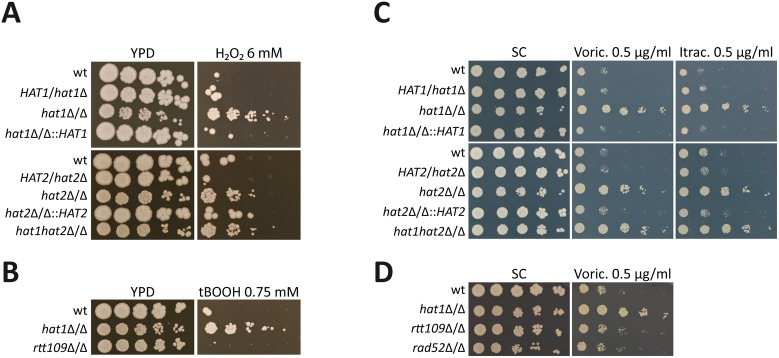
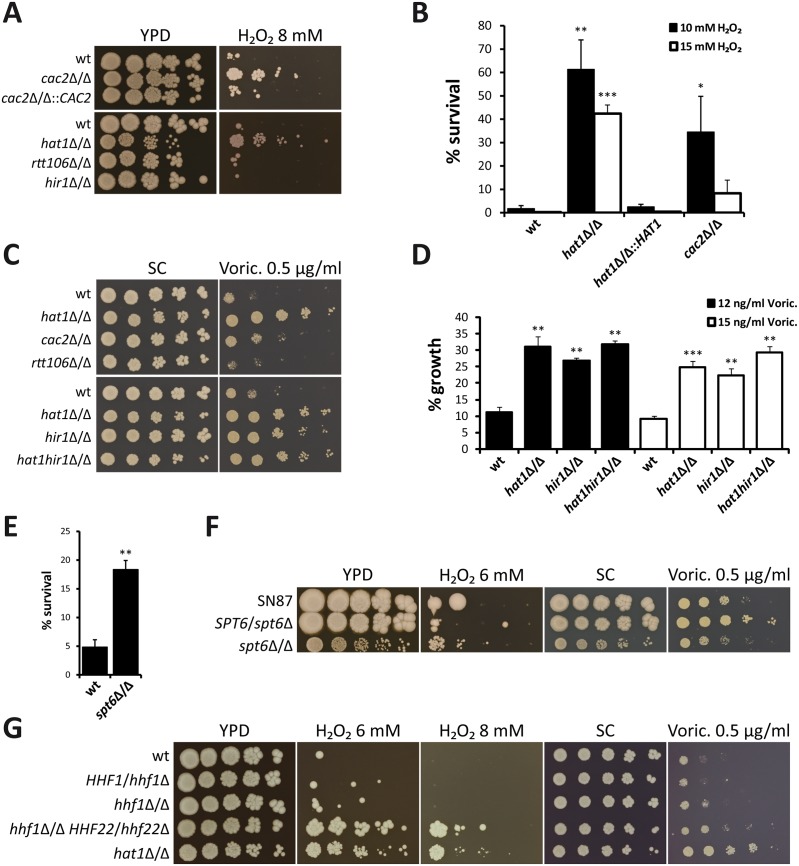
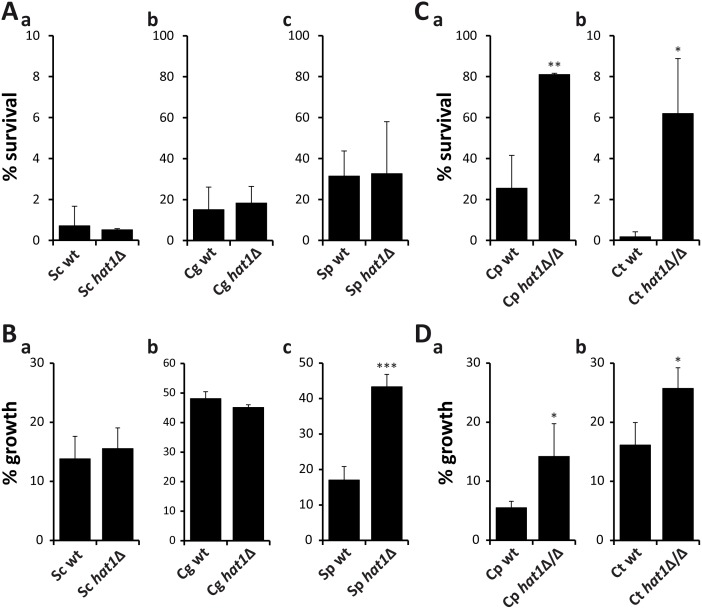
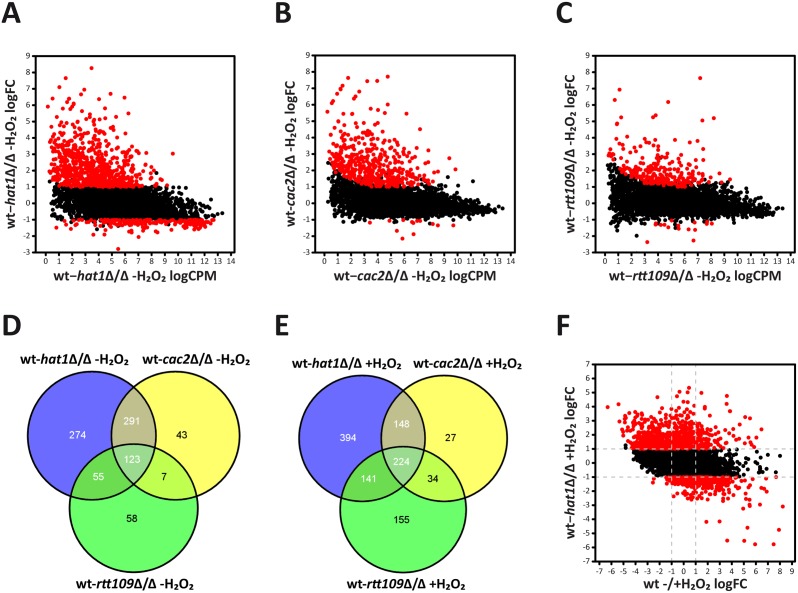
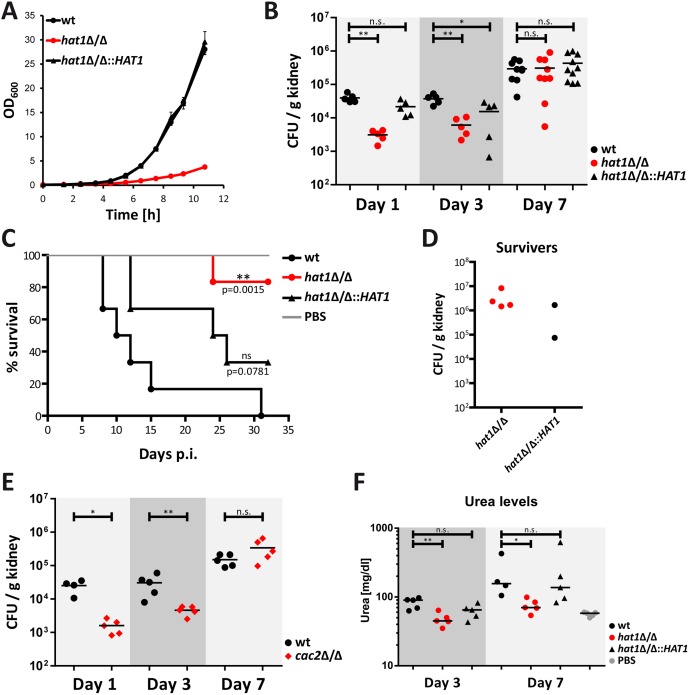
Human fungal pathogens like Candida albicans respond to host immune surveillance by rapidly adapting their transcriptional programs. Chromatin assembly factors are involved in the regulation of stress genes by modulating the histone density at these loci. Here, we report a novel role for the chromatin assembly-associated histone acetyltransferase complex NuB4 in regulating oxidative stress resistance, antifungal drug tolerance and virulence in C. albicans. Strikingly, depletion of the NuB4 catalytic subunit, the histone acetyltransferase Hat1, markedly increases resistance to oxidative stress and tolerance to azole antifungals. Hydrogen peroxide resistance in cells lacking Hat1 results from higher induction rates of oxidative stress gene expression, accompanied by reduced histone density as well as subsequent increased RNA polymerase recruitment. Furthermore, hat1Δ/Δ cells, despite showing growth defects in vitro, display reduced susceptibility to reactive oxygen-mediated killing by innate immune cells. Thus, clearance from infected mice is delayed although cells lacking Hat1 are severely compromised in killing the host. Interestingly, increased oxidative stress resistance and azole tolerance are phenocopied by the loss of histone chaperone complexes CAF-1 and HIR, respectively, suggesting a central role for NuB4 in the delivery of histones destined for chromatin assembly via distinct pathways. Remarkably, the oxidative stress phenotype of hat1Δ/Δ cells is a species-specific trait only found in C. albicans and members of the CTG clade. The reduced azole susceptibility appears to be conserved in a wider range of fungi. Thus, our work demonstrates how highly conserved chromatin assembly pathways can acquire new functions in pathogenic fungi during coevolution with the host.
Overview
The claims and statistics of this paper haven’t been checked yet.
Free: it reads the open-access text and checks the first 5 claims that cite a source we can check. Create a free account to check every claim.
Integrity signals
Registry
Cites
Statistics
Figures
Verification
Claims the paper makes
The claims and statistics of this paper haven’t been checked yet.
Free: it reads the open-access text and checks the first 5 claims that cite a source we can check. Create a free account to check every claim.
Claims other papers make about this one
Each is checked against this paper’s own text: does it say what the citing paper says it does?
The cited source says what the claim attributes to it.
In the citing paper
“The correct genomic integration of the deletion construct and the loss of the target gene were verified by colony PCR (92).”
From Transcriptomics and Phenotyping Define Genetic Signatures Associated with Echinocandin Resistance in Candida auris (2022) · cites this paper as [92]
Self-check
Percentages, sums and reported differences re-computed from the paper’s own numbers.
The self-check needs the paper’s full text.
Citations
Cites
Controlling the False Discovery Rate: A Practical and Powerful Approach to Multiple Testing
Benjamini, Y., & Hochberg, Y. (1995) · Journal of the Royal Statistical Society Series B: Statistical Methodology · doi:10.1111/j.2517-6161.1995.tb02031.x · Cited by 109,482 · cited 1×
“Benjamini-Hochberg adjusted p-values were used to determine differentially regulated genes [115].”
MethodRobinson, M. D., McCarthy, D. J., & Smyth, G. K. (2010) · Bioinformatics · doi:10.1093/bioinformatics/btp616 · Cited by 41,364
HTSeq—a Python framework to work with high-throughput sequencing data
Anders, S., Pyl, P. T., & Huber, W. (2015) · Bioinformatics · doi:10.1093/bioinformatics/btu638 · Cited by 21,464
Crystal structure of the nucleosome core particle at 2.8 Å resolution
Luger, K., Mäder, A. W., Richmond, R. K., Sargent, D. F., & Richmond, T. J. (1997) · Nature · doi:10.1038/38444 · Cited by 9,466 · cited 1×
“Eukaryotic chromatin is densely packed with the nucleosome being its basic repeating unit [1].”
BackgroundSherman, F., Fink, G. R., & Hicks, J. B. (1979) · Cold Spring Harbor Laboratory eBooks · Cited by 7,430
Genomic Expression Programs in the Response of Yeast Cells to Environmental Changes
Gasch, A. P., Spellman, P. T., Kao, C. M., Carmel-Harel, O., Eisen, M. B., Storz, G., Botstein, D., & Brown, P. O. (2000) · Molecular Biology of the Cell · doi:10.1091/mbc.11.12.4241 · Cited by 4,815 · cited 1×
“A possible explanation is that many stress conditions in fungi, including oxidative stress or osmostress, follow a stress-specific and often transient regulation [90], which may result in difficulties choosing the correct timing for collecting data points in hat1Δ/Δ and wild-type cells.”
BackgroundEpidemiology of Invasive Candidiasis: a Persistent Public Health Problem
Pfaller, M. A., & Diekema, D. J. (2007) · Clinical Microbiology Reviews · doi:10.1128/cmr.00029-06 · Cited by 4,174 · cited 2×
“glabrata, the second-most prevalent human fungal pathogen [24], does not result in similar phenotypes.”
BackgroundMethods in Yeast Genetics: A Laboratory Course Manual
Rose, M. D., Winston, F., & Hieter, P. (1990) · Medical Entomology and Zoology · Cited by 1,894
Yeast/E. coli shuttle vectors with multiple unique restriction sites
Hill, J. E., Myers, A. M., Koerner, T. J., & Tzagoloff, A. (1986) · Yeast · doi:10.1002/yea.320020304 · Cited by 1,382
Gillum, A. M., Tsay, E. Y. H., & Kirsch, D. R. (1984) · Molecular and General Genetics MGG · doi:10.1007/bf00328721 · Cited by 1,251 · cited 3×
“All C. albicans strains constructed in this work were derived from the clinical isolate SC5314 [104].”
BackgroundInfluential
Cited by
Fungicide Resistance: Progress in Understanding Mechanism, Monitoring, and Management
Yin, Y., Miao, J., Shao, W., Liu, X., Zhao, Y., & Ma, Z. (2023) · Phytopathology® · doi:10.1094/phyto-10-22-0370-kd · Cited by 279
Rosenberg, A., Ene, I. V., Bibi, M., Zakin, S., Segal, E. S., Ziv, N., Dahan, A. M., Colombo, A. L., Bennett, R. J., & Berman, J. (2018) · Nature Communications · doi:10.1038/s41467-018-04926-x · Cited by 270
Robinett, N. G., Peterson, R. L., & Culotta, V. (2017) · Journal of Biological Chemistry · doi:10.1074/jbc.tm117.000182 · Cited by 135
“albicans from the superoxide burst of macrophages and neutrophils (63,67-69).”
BackgroundYin, Z., Chen, C., Yang, J., Feng, W., Liu, X., Zuo, R., Wang, J., Yang, L., Zhong, K., Gao, C., et al. (2019) · Autophagy · doi:10.1080/15548627.2019.1580104 · Cited by 118
“In Candida albicans, the Hat1 homolog is involved in stress resistance and virulence [70].”
BackgroundZhang, S., Liang, M., Naqvi, N. I., Lin, C., Qian, W., Zhang, L., & Deng, Y. (2017) · Autophagy · doi:10.1080/15548627.2017.1327103 · Cited by 91
“Recently, it has been reported that Hat1 regulates the stress response and virulence in Candida albicans.(44) The GCN5 ortholog is involved in morphological transition and virulence in C.”
BackgroundHistone Deacetylases and Their Inhibition in Candida Species
Garnaud, C., Champleboux, M., Maubon, D., Cornet, M., & Govin, J. (2016) · Frontiers in Microbiology · doi:10.3389/fmicb.2016.01238 · Cited by 81
“…such as acetylation, methylation, and phosphorylation have been shown to play a role in regulating stress responses, antifungal tolerance and virulence in C. albicans and C. glabrata (Liu et al., 2005; Rai et al., 2012; Stevenson and Liu, 2013; Kim et al., 2015; Tscherner et al., 2015).”
BackgroundEpigenetic mechanisms of drug resistance in fungi
Chang, Z., Yadav, V., Lee, S. C., & Heitman, J. (2019) · Fungal Genetics and Biology · doi:10.1016/j.fgb.2019.103253 · Cited by 92
Riedelberger, M., Penninger, P., Tscherner, M., Seifert, M., Jenull, S., Brunnhofer, C., Scheidl, B., Tsymala, I., Bourgeois, C., Petryshyn, A., et al. (2020) · Cell Host & Microbe · doi:10.1016/j.chom.2020.01.023 · Cited by 64
Self-citationRegulatory mechanisms controlling morphology and pathogenesis in Candida albicans
Kadosh, D. (2019) · Current Opinion in Microbiology · doi:10.1016/j.mib.2019.04.005 · Cited by 79
Shivarathri, R., Jenull, S., Stoiber, A., Chauhan, M., Mazumdar, R., Singh, A., Nogueira, F., Kuchler, K., Chowdhary, A., & Chauhan, N. (2020) · mSphere · doi:10.1128/msphere.00973-20 · Cited by 59
“The dominant marker NAT1 was amplified from the plasmid pSFS3b (72) using the primers NAT1_fwd_U1 and NAT1_rev_D1 covering constant complementary 20-bp sequences U1 and D1.”
MethodSelf-citationShivarathri, R., Tscherner, M., Zwolanek, F., Singh, N. K., Chauhan, N., & Kuchler, K. (2019) · Scientific Reports · doi:10.1038/s41598-019-45817-5 · Cited by 58
Self-citationComparative Transcriptomics Reveal Possible Mechanisms of Amphotericin B Resistance in Candida auris
Shivarathri, R., Jenull, S., Chauhan, M., Singh, A., Mazumdar, R., Chowdhary, A., Kuchler, K., & Chauhan, N. (2022) · Antimicrobial Agents and Chemotherapy · doi:10.1128/aac.02276-21 · Cited by 41
Self-citationFungal KATs/KDACs: A New Highway to Better Antifungal Drugs?
Kuchler, K., Jenull, S., Shivarathri, R., & Chauhan, N. (2016) · PLOS Pathogens · doi:10.1371/journal.ppat.1005938 · Cited by 40
Self-citationHistone Acetylation/Deacetylation in Candida Albicans and their Potential as Antifungal Targets
Su, S., Li, X., Yang, X., Li, Y., Chen, X., Sun, S., & Jia, S. (2020) · Future Microbiology · doi:10.2217/fmb-2019-0343 · Cited by 36
Protein Acetylation/Deacetylation: A Potential Strategy for Fungal Infection Control
Chen, J.-Z., Liu, Q., Zeng, L., & Huang, X. (2020) · Frontiers in Microbiology · doi:10.3389/fmicb.2020.574736 · Cited by 38
Jenull, S., Shivarathri, R., Tsymala, I., Penninger, P., Trinh, P.-C., Nogueira, F., Chauhan, M., Singh, A., Petryshyn, A., Stoiber, A., et al. (2022) · mBio · doi:10.1128/mbio.00799-22 · Cited by 32
“C. auris gene deletion mutants were constructed using a fusion PCR strategy exactly as described previously (43).”
BackgroundInfluentialSelf-citationTranscriptome Signatures Predict Phenotypic Variations of Candida auris
Jenull, S., Tscherner, M., Kashko, N., Shivarathri, R., Stoiber, A., Chauhan, M., Petryshyn, A., Chauhan, N., & Kuchler, K. (2021) · Frontiers in Cellular and Infection Microbiology · doi:10.3389/fcimb.2021.662563 · Cited by 32
Self-citationEpigenetic Regulation of Antifungal Drug Resistance
Patra, S., Raney, M., Pareek, A., & Kaur, R. (2022) · Journal of Fungi · doi:10.3390/jof8080875 · Cited by 38
“The deletion of HAT1 or HAT2, which code for regulatory subunits of the chromatin assembly associated acetyltransferase complex NuB4, led to voriconazole and itraconazole resistance [41], suggesting opposite roles for Hat1 in regulating azole and echinocandin resistance.”
BackgroundERG11 couples oxidative stress adaptation, hyphal elongation and virulence in Candida albicans
Wu, Y., Wu, M., Wang, Y., Chen, Y., Gao, J. Q., & Ying, C. (2018) · FEMS Yeast Research · doi:10.1093/femsyr/foy057 · Cited by 36
A Synthetic System That Senses Candida albicans and Inhibits Virulence Factors
Tscherner, M., Giessen, T. W., Markey, L., Kumamoto, C. A., & Silver, P. A. (2019) · ACS Synthetic Biology · doi:10.1021/acssynbio.8b00457 · Cited by 33
Self-citationLiang, M., Zhang, S., Dong, L., Kou, Y., Lin, C., Dai, W., Zhang, L., & Deng, Y. (2018) · mSystems · doi:10.1128/msystems.00270-18 · Cited by 34
Jenull, S., Tscherner, M., Gulati, M., Nobile, C. J., Chauhan, N., & Kuchler, K. (2017) · Scientific Reports · doi:10.1038/s41598-017-08239-9 · Cited by 28
Self-citationModulation of the Fungal-Host Interaction by the Intra-Species Diversity of C. albicans
Braunsdorf, C., & LeibundGut‐Landmann, S. (2018) · Pathogens · doi:10.3390/pathogens7010011 · Cited by 31
Sodium butyrate inhibits planktonic cells and biofilms of Trichosporon spp.
Cordeiro, R. D. A., Aguiar, A. L. R., Pereira, V. S., Pereira, L. M. G., Portela, F. V. M., Brilhante, R. S. N., Camargo, Z. P. D., Sidrim, J. J. C., Castelo‐Branco, D. D. S. C. M., & Rocha, M. F. G. (2019) · Microbial Pathogenesis · doi:10.1016/j.micpath.2019.03.013 · Cited by 26
Jenull, S., Tscherner, M., Mair, T., & Kuchler, K. (2020) · Journal of Fungi · doi:10.3390/jof6030182 · Cited by 23
“albicans challenged with hydrogen peroxide (H2O2) and genome-wide binding data of the oxidative stress transcriptional regulator Cap1 are available [16,45], which we combined with the present ATAC-seq data for C.”
BackgroundMethodInfluentialSelf-citationMoirangthem, R., Kumar, K., & Kaur, R. (2021) · Antimicrobial Agents and Chemotherapy · doi:10.1128/aac.02415-20 · Cited by 20
“(58), while the loss of the lysine acetyltransferase Gcn5 (catalytic subunit of the SAGA,”
BackgroundProline catabolism is a key factor facilitating Candida albicans pathogenicity
Silao, F. G. S., Jiang, T., Bereczky-Veress, B., Kühbacher, A., Ryman, K., Uwamohoro, N., Jenull, S., Nogueira, F., Ward, M., Lion, T., et al. (2023) · PLoS Pathogens · doi:10.1371/journal.ppat.1011677 · Cited by 24
“The following primer pairs were used for routine PCR verification: C . glabrata PUT1 (CAGL0M04499g) and PUT2 (CAGL0M04499g) gene deletion were done in the ATCC2001 (CBS138) background strain using the modified SAT1 flipper technique [93, 94].”
MethodSelf-citationJenull, S., Mair, T., Tscherner, M., Penninger, P., Zwolanek, F., Silao, F. G. S., Vicente, K. M. D. S., Riedelberger, M., Bandari, N. C., Shivarathri, R., et al. (2021) · Cell Reports · doi:10.1016/j.celrep.2021.109406 · Cited by 20
“Correct genomic integration of the deletion constructs, gene complementation cassettes, tagging cassettes and the loss of the target gene were verified via colony PCR as described earlier (Tscherner et al., 2015).”
InfluentialSelf-citationLü, Y., Luo, F., Zhou, A., Yi, C., Chen, H., Li, J., Guo, Y., Xie, Y., Zhang, W., Lin, D., et al. (2024) · GigaScience · doi:10.1093/gigascience/giae064 · Cited by 23
“5A; Supplementary Table S9), as well as the Map2k4 [40] and HAT1 [41] in the SEA populations (ranked among the top 3 genes, Fig.”
Chromatin Structure and Drug Resistance in Candida spp.
O’Kane, C. J., Weild, R., & M. Hyland, E. (2020) · Journal of Fungi · doi:10.3390/jof6030121 · Cited by 18
Chromatin modification factors in plant pathogenic fungi: Insights from Ustilago maydis
Elías-Villalobos, A., Barrales, R. R., & Ibeas, J. I. (2019) · Fungal Genetics and Biology · doi:10.1016/j.fgb.2019.04.006 · Cited by 24
The challenges of the genome-based identification of antifungal resistance in the clinical routine
Alastruey‐Izquierdo, A., & Martín-Galiano, A. J. (2023) · Frontiers in Microbiology · doi:10.3389/fmicb.2023.1134755 · Cited by 20
“, 2010); and (iv) LOF mutations of lysine-acetylation enzymes of histones via epigenetic chromatin modification (Orta-Zavalza et al., 2013; Tscherner et al., 2015).”
BackgroundTranscriptomic meta-analysis to identify potential antifungal targets in Candida albicans
Hefny, Z. A., Ji, B., Elsemman, I. E., Nielsen, J., & Dijck, P. V. (2024) · BMC Microbiology · doi:10.1186/s12866-024-03213-8 · Cited by 18
“Furthermore, Tscherner et al. [80] focused on the role of histone acetyltransferases (HATs) in oxidative stress resistance.”
BackgroundInfluentialA Histone Acetyltransferase Inhibitor with Antifungal Activity against CTG clade Candida Species
Tscherner, M., & Kuchler, K. (2019) · Microorganisms · doi:10.3390/microorganisms7070201 · Cited by 19
Self-citationThe SAGA and NuA4 component Tra1 regulates Candida albicans drug resistance and pathogenesis
Razzaq, I., Berg, M. D., Jiang, Y., Genereaux, J. L., Uthayakumar, D., Kim, G. H., Agyare-Tabbi, M. R., Halder, V., Brandl, C. J., Lajoie, P., et al. (2021) · Genetics · doi:10.1093/genetics/iyab131 · Cited by 11
Bartelli, T. F., Bruno, D. D. C. F., & Briones, M. R. S. (2018) · Frontiers in Genetics · doi:10.3389/fgene.2018.00166 · Cited by 14
“albicans epigenetic plasticity as an adaptive mechanism (Zordan et al., 2006; Lopes da Rosa and Kaufman, 2012; Tscherner et al., 2015; Freire-Benéitez et al., 2016).”
BackgroundHDAC1 fine-tunes Th17 polarization in vivo to restrain tissue damage in fungal infections
Penninger, P., Brezovec, H., Tsymala, I., Teufl, M., Phan-Canh, T., Bitencourt, T. A., Brinkmann, M., Glaser, W., Ellmeier, W., Bonelli, M. M., et al. (2024) · Cell Reports · doi:10.1016/j.celrep.2024.114993 · Cited by 10
Self-citationLee, G., Min, C. W., Jang, J. W., Wang, Y., Jeon, J., Gupta, R., & Kim, S. T. (2023) · Journal of Proteomics · doi:10.1016/j.jprot.2023.104970 · Cited by 11
LÜ, W.-Y., Yang, N., Xu, Z., Han, D. A. I., Shuai, T. A. N. G., & Wang, Z. (2020) · Journal of Integrative Agriculture · doi:10.1016/s2095-3119(19)62819-4 · Cited by 9
Zhang, L., Xiao, J., Du, M., Lei, W., Yang, W., & Xue, X. (2023) · Frontiers in Immunology · doi:10.3389/fimmu.2023.1148681 · Cited by 8
Post-transcriptional control of antifungal resistance in human fungal pathogens
Sharma, C., & Kadosh, D. (2023) · Critical Reviews in Microbiology · doi:10.1080/1040841x.2022.2080527 · Cited by 6
“Tscherner et al. demonstrated a role for the chromatin assembly-associated histone acetyltransferase complex NuB4 in regulating oxidative stress resistance, antifungal drug tolerance, and virulence in C. albicans (Tscherner et al. 2015).”
BackgroundYoung, T. J., Cui, Y., Pfeffer, C. M., Hobbs, E., Liu, W., Irudayaraj, J., & Kirchmaier, A. L. (2020) · PLoS Genetics · doi:10.1371/journal.pgen.1009226 · Cited by 6
Yu, P., Ye, S., Zhou, M., Zhang, L., Zhang, Z., Sun, X., Li, S., & Hu, C. (2024) · mSphere · doi:10.1128/msphere.00703-24 · Cited by 5
Gómez-Casanova, N., Bellido, A., Texis, A. P. E., Cueva, R., Ciudad, T., & Larriba, G. (2017) · Microbial Drug Resistance · doi:10.1089/mdr.2017.0253 · Cited by 4
“21 Therefore, allelic variation of the HAT complex genes in C. tropicalis could be responsible for the observed variability in susceptibility to H 2 O 2 .”
Horianopoulos, L. C., Lee, C. W. J., Schmitt, K., Valerius, O., Hu, G., Caza, M., Braus, G. H., & Kronstad, J. W. (2021) · mBio · doi:10.1128/mbio.03273-21 · Cited by 4
“also play roles in fungal virulence (8, 9).”
BackgroundPiao, Y., Qi, Y., Zhang, H., Han, L., Zhong, X., & Liu, Q. (2023) · Journal of Human Genetics · doi:10.1038/s10038-022-01107-z · Cited by 4
“Similarly, a growing number of studies have suggested that RSL24D1 and HAT1 are immune genes involved in the immunoregulation [18, 19].”
BackgroundSingha, R., Aggarwal, R., & Sanyal, K. (2023) · Molecular Microbiology · doi:10.1111/mmi.15050 · Cited by 3
“…were compared for common genes that are altered both in null mutants of histone H3, H3VCTG (hht1/hht1) (Rai et al., 2019) and the CAF1 chaperone subunit CAC2 (cac2/cac2) (Tscherner et al., 2015) in planktonic growth conditions (green and blue circles, respectively) and represented as Venn diagrams.”
BackgroundMethodInfluentialOxidative Stress in Candida albicans Infection
Palchaudhuri, S., & Chattopadhyay, D. (2019) · Springer eBooks · doi:10.1007/978-981-13-8763-0_21 · Cited by 2
Bartelli, T. F., Bruno, D. D. C. F., Lichtenstein, F., & Briones, M. R. S. (2017) · bioRxiv (Cold Spring Harbor Laboratory) · doi:10.1101/167338 · Cited by 1
“Besides genetic diversity, few studies indicate the distribution and significance of C. albicans epigenetic plasticity as an adaptive mechanism (Freire-Benéitez et al., 2016; Lopes da Rosa and Kaufman, 2012; Tscherner et al., 2015; Zordan et al., 2006).”
BackgroundNouraei, H., Yousefi, Z., Zareshahrabadi, Z., Amirzadeh, N., Rajabi, S. Z., & Pakshir, K. (2026) · BMC Microbiology · doi:10.1186/s12866-026-05214-1 · Cited by 2
“These results suggest that intrinsic genetic or epigenetic backgrounds predispose specific clinical strains to increased plasticity, an observation consistent with long-established principles of C. albicans biology [20–22].”
Seifert-Gorzycki, J., Muñoz, D., Ciampossin, L., Lizarraga, A., Bhanvadia, S., Iriarte, L. S., Elikaee, S., Cóceres, V. M., Johnson, P. J., Roch, K. G. L., et al. (2025) · bioRxiv (Cold Spring Harbor Laboratory) · doi:10.1101/2025.01.07.631743 · Cited by 1
“Consistently, the removal of the Histone Acetyltransferase Hat1 achieves the reverse, increasing C. albican ’s azole resistance [58].”
Rsc1 DNA-binding bromodomain drives RSC activity at A-rich promotersPreprint
Sayou, C., Viravaux, O., Lyonnet, J., Lucas, J., Dupeyron, R., Thévenon, E., Marais, J., Adrait, A., Couté, Y., Parcy, F., et al. (2025) · bioRxiv (Cold Spring Harbor Laboratory) · doi:10.1101/2025.03.24.644971
“To evaluate whether motif density correlates with gene expression levels, we used publicly available RNA-seq data (47,48) and ranked genes by transcript abundance (quantified in Fragments Per Kilobase Million or FPKM).”
Joshi, A., Brahmandam, G., Kannan, H., Roy, S. C., Subramanian, S., Sanyal, A., & Ghosh, S. K. (2026) · mSphere · doi:10.1128/msphere.00084-26
“Moreover, they show a KT organization defect, impaired spindle morphology, and altered chromatin compaction.”
Etude fonctionnelle et inhibition de la protéine Bdf1 chez Candida albicans
Champleboux, M. (2016) · theses.fr (ABES) · doi:10.70675/07079ce8z25e3z45dfz98e6ze8e3ccbc6182 · Cited by 1
Antifungal resistance: from classical mechanisms to the expanding role of acetyltransferases
Werneck, S. M. C., Gouveia‐Eufrásio, L., de Freitas, G. J. C., de Carvalho, D. S., César, I. C., Rossato, L. L., Bastos, R. W., Peres, N. T. A., & Santos, D. A. (2026) · Journal of Biomedical Science · doi:10.1186/s12929-026-01273-8
Implications of oxidative stress on microbial evolution
Kumari, A., & Singh, K. (2026) · Elsevier eBooks · doi:10.1016/b978-0-443-42857-9.00015-3
Metadata
- Authors
- Tscherner, M., Zwolanek, F., Jenull, S., Sedlazeck, F. J., Petryshyn, A., Frohner, I. E., Mavrianos, J., Chauhan, N., von Haeseler, A., & Kuchler, K.
- Affiliations
- Max Perutz Labs (AT)
- University of Vienna (AT)
- Rutgers, The State University of New Jersey (US)
- Corresponding author
- Kuchler, Karl
- ORCID
- Venue
- PLOS Pathogens
- Publisher
- Public Library of Science (PLoS)
- Published
- 2015-10-16
- Volume
- 11
- Issue
- 10
- Pages
- e1005218
- ISSN
- 1553-7366 (ISSN-L)
- 1553-7374
- PMC
- PMC4608838
- OpenAlex
- W2157150183
- Cited by
- 57
- References
- 120
- Citations by year
- 2026: 4 · 2025: 2 · 2024: 4 · 2023: 7 · 2022: 4 · 2021: 5 · 2020: 8 · 2019: 9 · 2018: 6 · 2017: 5 · 2016: 3
- FWCI
- 2.03
- Type
- journal article
- Language
- en
- Open access
- gold
- doi.org
- Licence
- Locations
- PLoS Pathogens (publishedVersion, cc-by)
- Europe PMC (PubMed Central) (publishedVersion, cc-by)
- PubMed Central (publishedVersion, cc-by)
- PubMed (publishedVersion)
- Cold Spring Harbor Laboratory Institutional Repository (Cold Spring Harbor Laboratory) (acceptedVersion)
- Rutgers University Community Repository (Rutgers University) (submittedVersion)
- DOAJ (DOAJ: Directory of Open Access Journals) (submittedVersion, cc-by-sa)
- Figshare (submittedVersion, cc-by)
- Funders
- Alexander von Humboldt-Stiftung
- Austrian Science Fund (P25333)
- Universität Wien
- Medizinische Universität Wien
- National Institutes of Health
- National Institute of Allergy and Infectious Diseases (R01AI046223, R01AI46223)
- Topics
- Life Sciences › Biochemistry, Genetics and Molecular Biology › Molecular Biology › Fungal and yeast genetics research
- Life Sciences › Biochemistry, Genetics and Molecular Biology › Molecular Biology › Genomics and Chromatin Dynamics
- Health Sciences › Medicine › Infectious Diseases › Antifungal resistance and susceptibility
- Keywords
- Candida albicans, HAT1, histone acetyltransferase, chromatin assembly, histone chaperone complex, CAF-1, oxidative stress resistance, hydrogen peroxide resistance, virulence, RNA polymerase recruitment, host-pathogen coevolution
- MeSH terms
- Adaptation, Physiological, Animals, Candida albicans, Candidiasis, Mice, Inbred C57BL, Mass Spectrometry, Virulence, Immunoblotting, Polymerase Chain Reaction, Oxidative Stress, Chromatin Assembly and Disassembly, Chromatin Immunoprecipitation, Mice, Histone Acetyltransferases
About these checks
Registry, retraction, Cites and statistics results are computed, not judged, with one exception: a printed reference that no index lists is read once by a model before it counts as a citation error. Claims are extracted by a model and kept only when their quote appears verbatim in the text; each cited source is then checked, with a model’s help, for whether it says what the claim relies on. Those verdicts can be wrong — read the claim’s quote and the cited source before relying on one.
Statistics and arithmetic are recomputed, not judged.
Confidence bands are shown only for fields calibrated on our annotated test set. None is calibrated yet, so no band is shown.
What counts as a claim ›How we measure confidence ›How we check this ›
Are you an author, or do you see a problem with this page? Request a review
Data sources
Bibliographic data: Semantic Scholar, OpenAlex, Crossref.
Contains information from the Semantic Scholar Academic Graph Datasets, made available under the ODC Attribution License (ODC-BY 1.0).
Semantic Scholar’s data is described in: Kinney, R., et al. (2023). The Semantic Scholar Open Data Platform. arXiv:2301.10140.
