

The Candida albicans Histone Acetyltransferase Hat1 Regulates Stress Resistance and Virulence via Distinct Chromatin Assembly Pathways
Open accessThe DOI matches its Crossref record; 119 of the 120 references it cites were found in a registry or an index.
Abstract
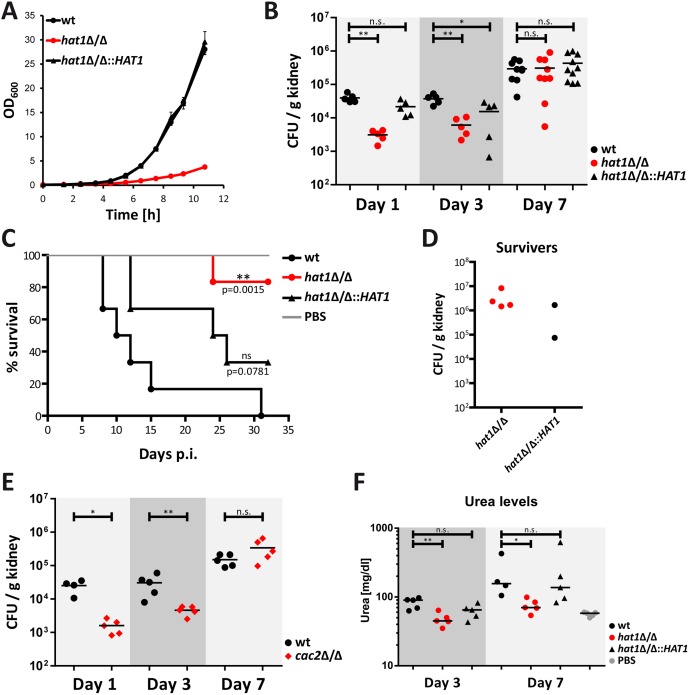
Human fungal pathogens like Candida albicans respond to host immune surveillance by rapidly adapting their transcriptional programs. Chromatin assembly factors are involved in the regulation of stress genes by modulating the histone density at these loci. Here, we report a novel role for the chromatin assembly-associated histone acetyltransferase complex NuB4 in regulating oxidative stress resistance, antifungal drug tolerance and virulence in C. albicans. Strikingly, depletion of the NuB4 catalytic subunit, the histone acetyltransferase Hat1, markedly increases resistance to oxidative stress and tolerance to azole antifungals. Hydrogen peroxide resistance in cells lacking Hat1 results from higher induction rates of oxidative stress gene expression, accompanied by reduced histone density as well as subsequent increased RNA polymerase recruitment. Furthermore, hat1Δ/Δ cells, despite showing growth defects in vitro, display reduced susceptibility to reactive oxygen-mediated killing by innate immune cells. Thus, clearance from infected mice is delayed although cells lacking Hat1 are severely compromised in killing the host. Interestingly, increased oxidative stress resistance and azole tolerance are phenocopied by the loss of histone chaperone complexes CAF-1 and HIR, respectively, suggesting a central role for NuB4 in the delivery of histones destined for chromatin assembly via distinct pathways. Remarkably, the oxidative stress phenotype of hat1Δ/Δ cells is a species-specific trait only found in C. albicans and members of the CTG clade. The reduced azole susceptibility appears to be conserved in a wider range of fungi. Thus, our work demonstrates how highly conserved chromatin assembly pathways can acquire new functions in pathogenic fungi during coevolution with the host.
Overview
The claims and statistics of this paper haven’t been checked yet.
Free: it reads the open-access text and checks the first 5 claims that cite a source we can check. Create a free account to check every claim.
Integrity signals
Registry
Cites
Statistics
Figures
Verification
Claims the paper makes
The claims and statistics of this paper haven’t been checked yet.
Free: it reads the open-access text and checks the first 5 claims that cite a source we can check. Create a free account to check every claim.
Claims other papers make about this one
Each is checked against this paper’s own text: does it say what the citing paper says it does?
The cited source says what the claim attributes to it.
In the citing paper
“The correct genomic integration of the deletion construct and the loss of the target gene were verified by colony PCR (92).”
From Transcriptomics and Phenotyping Define Genetic Signatures Associated with Echinocandin Resistance in Candida auris (2022) · cites this paper as [92]
Self-check
Percentages, sums and reported differences re-computed from the paper’s own numbers.
The self-check needs the paper’s full text.
Citations
Cites
Controlling the False Discovery Rate: A Practical and Powerful Approach to Multiple Testing
Benjamini, Y., & Hochberg, Y. (1995) · Journal of the Royal Statistical Society Series B: Statistical Methodology · doi:10.1111/j.2517-6161.1995.tb02031.x · Cited by 109,482 · cited 1×
“Benjamini-Hochberg adjusted p-values were used to determine differentially regulated genes [115].”
MethodRobinson, M. D., McCarthy, D. J., & Smyth, G. K. (2010) · Bioinformatics · doi:10.1093/bioinformatics/btp616 · Cited by 41,364
HTSeq—a Python framework to work with high-throughput sequencing data
Anders, S., Pyl, P. T., & Huber, W. (2015) · Bioinformatics · doi:10.1093/bioinformatics/btu638 · Cited by 21,464
Crystal structure of the nucleosome core particle at 2.8 Å resolution
Luger, K., Mäder, A. W., Richmond, R. K., Sargent, D. F., & Richmond, T. J. (1997) · Nature · doi:10.1038/38444 · Cited by 9,466 · cited 1×
“Eukaryotic chromatin is densely packed with the nucleosome being its basic repeating unit [1].”
BackgroundSherman, F., Fink, G. R., & Hicks, J. B. (1979) · Cold Spring Harbor Laboratory eBooks · Cited by 7,430
Genomic Expression Programs in the Response of Yeast Cells to Environmental Changes
Gasch, A. P., Spellman, P. T., Kao, C. M., Carmel-Harel, O., Eisen, M. B., Storz, G., Botstein, D., & Brown, P. O. (2000) · Molecular Biology of the Cell · doi:10.1091/mbc.11.12.4241 · Cited by 4,815 · cited 1×
“A possible explanation is that many stress conditions in fungi, including oxidative stress or osmostress, follow a stress-specific and often transient regulation [90], which may result in difficulties choosing the correct timing for collecting data points in hat1Δ/Δ and wild-type cells.”
BackgroundEpidemiology of Invasive Candidiasis: a Persistent Public Health Problem
Pfaller, M. A., & Diekema, D. J. (2007) · Clinical Microbiology Reviews · doi:10.1128/cmr.00029-06 · Cited by 4,174 · cited 2×
“glabrata, the second-most prevalent human fungal pathogen [24], does not result in similar phenotypes.”
BackgroundMethods in Yeast Genetics: A Laboratory Course Manual
Rose, M. D., Winston, F., & Hieter, P. (1990) · Medical Entomology and Zoology · Cited by 1,894
Yeast/E. coli shuttle vectors with multiple unique restriction sites
Hill, J. E., Myers, A. M., Koerner, T. J., & Tzagoloff, A. (1986) · Yeast · doi:10.1002/yea.320020304 · Cited by 1,382
Gillum, A. M., Tsay, E. Y. H., & Kirsch, D. R. (1984) · Molecular and General Genetics MGG · doi:10.1007/bf00328721 · Cited by 1,251 · cited 3×
“All C. albicans strains constructed in this work were derived from the clinical isolate SC5314 [104].”
BackgroundInfluentialLee, E.-C., Yu, D., Martinez de Velasco, J., Tessarollo, L., Swing, D. A., Court, D. L., Jenkins, N. A., & Copeland, N. G. (2001) · Genomics · doi:10.1006/geno.2000.6451 · Cited by 1,178
Sanglard, D., Kuchler, K., Ischer, F., Pagani, J. L., Monod, M., & Bille, J. (1995) · Antimicrobial Agents and Chemotherapy · doi:10.1128/aac.39.11.2378 · Cited by 815
Self-citationThe SAT1 flipper, an optimized tool for gene disruption in Candida albicans
Reuß, O., Vik, Å., Kolter, R., & Morschhäuser, J. (2004) · Gene · doi:10.1016/j.gene.2004.06.021 · Cited by 742
Replication-Dependent Marking of DNA by PCNA Facilitates CAF-1-Coupled Inheritance of Chromatin
Shibahara, K.-I., & Stillman, B. (1999) · Cell · doi:10.1016/s0092-8674(00)80661-3 · Cited by 692 · cited 2×
“While the HIR complex functions in replication-independent chromatin assembly, CAF-1 is thought to mediate replication-coupled histone deposition [21,44,72].”
BackgroundNucleosome Assembly by a Complex of CAF-1 and Acetylated Histones H3/H4
Verreault, A., Kaufman, P. D., Kobayashi, R., & Stillman, B. (1996) · Cell · doi:10.1016/s0092-8674(00)81326-4 · Cited by 639
Sanglard, D., Ischer, F., Monod, M., & Bille, J. (1997) · Microbiology · doi:10.1099/00221287-143-2-405 · Cited by 587
Transcription Elongation Factors Repress Transcription Initiation from Cryptic Sites
Kaplan, C. D., Laprade, L., & Winston, F. (2003) · Science · doi:10.1126/science.1087374 · Cited by 585
Prasad, R., De Wergifosse, P., Goffeau, A., & Balzi, E. (1995) · Current Genetics · doi:10.1007/bf00352101 · Cited by 486
Perea, S., López-Ribot, J. L., Kirkpatrick, W. R., McAtee, R. K., Santillán, R. A., Martı́nez, M., Calabrese, D., Sanglard, D., & Patterson, T. F. (2001) · Antimicrobial Agents and Chemotherapy · doi:10.1128/aac.45.10.2676-2684.2001 · Cited by 470 · cited 1×
“Whereas only CDR2 was slightly upregulated in hat1Δ/Δ cells, the major facilitator superfamily transporter Mdr1, which is also induced upon oxidative stress and confers azole resistance [77,81], is significantly upregulated in the hat1Δ/Δmutant upon treatment with H2O2 (S1 Table).”
BackgroundFradin, C., De Groot, P., MacCallum, D., Schaller, M., Klis, F., Odds, F. C., & Hube, B. (2005) · Molecular Microbiology · doi:10.1111/j.1365-2958.2005.04557.x · Cited by 455
NRG1 represses yeast–hypha morphogenesis and hypha‐specific gene expression in Candida albicans
Murad, A. M. A., Leng, P., Straffon, M., Wishart, J., Macaskill, S., MacCallum, D., Schnell, N., Talibi, D., Marechal, D., Tekaia, F., et al. (2001) · The EMBO Journal · doi:10.1093/emboj/20.17.4742 · Cited by 452
Parthun, M. R., Widom, J., & Gottschling, D. E. (1996) · Cell · doi:10.1016/s0092-8674(00)81325-2 · Cited by 442 · cited 2×
“Together with the Hat2 subunit (RbAp46/48 in higher eukaryotes), Hat1 acetylates histone H4 at lysine 5 and 12 in Saccharomyces cerevisiae and Candida albicans [9,10].”
BackgroundNextGenMap: fast and accurate read mapping in highly polymorphic genomes
Sedlazeck, F. J., Rescheneder, P., & von Haeseler, A. (2013) · Bioinformatics · doi:10.1093/bioinformatics/btt468 · Cited by 442
Self-citationYeast Rtt109 Promotes Genome Stability by Acetylating Histone H3 on Lysine 56
Driscoll, R., Hudson, A., & Jackson, S. P. (2007) · Science · doi:10.1126/science.1135862 · Cited by 439 · cited 1×
“Rtt109 is another fungal-specific Type B HAT involved in DNA damage repair and associated histone deposition by acetylating free histone H3 at lysine 56 [2,13].”
BackgroundChromatin remodelling at a DNA double-strand break site in Saccharomyces cerevisiae
Tsukuda, T., Fleming, A. B., Nickoloff, J. A., & Osley, M. A. (2005) · Nature · doi:10.1038/nature04148 · Cited by 425
Chen, C.-C., Carson, J. J., Feser, J., Tamburini, B., Zabaronick, S., Linger, J., & Tyler, J. K. (2008) · Cell · doi:10.1016/j.cell.2008.06.035 · Cited by 425 · cited 2×
“Disassembly and reassembly of histones is required for efficient repair of DNA damage [2,7].”
BackgroundRay-Gallet, D., Woolfe, A., Vassias, I., Pellentz, C., Lacoste, N., Puri, A., Schultz, D. C., Pchelintsev, N. A., Adams, P. D., Jansen, L. E. T., et al. (2011) · Molecular Cell · doi:10.1016/j.molcel.2011.12.006 · Cited by 387 · cited 1×
“Although, the CAF-1 complex can assemble histones in a replication-coupled manner, it can also influence the rate of replication-independent histone incorporation and transcription [22,82,83].”
BackgroundSchwabish, M. A., & Struhl, K. (2004) · Molecular and Cellular Biology · doi:10.1128/mcb.24.23.10111-10117.2004 · Cited by 358 · cited 2×
“This explains the increased induction rate in the mutant, since nucleosomes represent a physical barrier for RNA polymerase II (RNAPII) and reduced nucleosome density can facilitate transcription [6,35,57].”
BackgroundNADPH oxidase controls phagosomal pH and antigen cross-presentation in human dendritic cells
Mantegazza, A. R., Savina, A., Vermeulen, M., Pérez, L., Geffner, J., Hermine, O., Rosenzweig, S. D., Faure, F., & Amigorena, S. (2008) · Blood · doi:10.1182/blood-2008-01-134791 · Cited by 329 · cited 1×
“Finally, ROS is also known as a signaling molecule during infections and reduced levels upon challenge with the hat1Δ/Δmutant might impact the immune response [95].”
BackgroundZordan, R. E., Galgoczy, D. J., & Johnson, A. D. (2006) · Proceedings of the National Academy of Sciences · doi:10.1073/pnas.0605138103 · Cited by 304 · cited 3×
“All other RT-qPCRs were normalized to PAT1 [110].”
MethodInfluentialOrgan-Specific Innate Immune Responses in a Mouse Model of Invasive Candidiasis
Lionakis, M. S., Lim, J. K., Lee, C.-C. R., & Murphy, P. M. (2011) · Journal of Innate Immunity · doi:10.1159/000321157 · Cited by 302 · cited 1×
“Since kidney failure is the primary cause of death in this particular mouse infection model [64,65] we determined the degree of kidney injury or function in infected mice by measuring serum urea levels.”
BackgroundAdkins, M. W., Howar, S. R., & Tyler, J. K. (2004) · Molecular Cell · doi:10.1016/j.molcel.2004.05.016 · Cited by 294
Tracking FACT and the RNA Polymerase II Elongation Complex Through Chromatin in Vivo
Saunders, A., Werner, J., Andrulis, E. D., Nakayama, T., Hirose, S., Reinberg, D., & Lis, J. T. (2003) · Science · doi:10.1126/science.1085712 · Cited by 289
The program for processing newly synthesized histones H3.1 and H4
Campos, E. I., Fillingham, J., Li, G., Zheng, H., Voigt, P., Kuo, W.-H. W., Seepany, H., Gao, Z., Day, L. A., Greenblatt, J. F., et al. (2010) · Nature Structural & Molecular Biology · doi:10.1038/nsmb.1911 · Cited by 267
Frohner, I. E., Bourgeois, C., Yatsyk, K., Majer, O., & Kuchler, K. (2009) · Molecular Microbiology · doi:10.1111/j.1365-2958.2008.06528.x · Cited by 266 · cited 6×
“albicans with bone marrow-derived murine macrophages and bone marrow neutrophils was determined by measuring luminol dependent chemiluminescence [26].”
BackgroundMethodSelf-citationChromatin assembly during SV40 DNA replication in vitro
Stillman, B. (1986) · Cell · doi:10.1016/0092-8674(86)90287-4 · Cited by 260 · cited 1×
“While the HIR complex functions in replication-independent chromatin assembly, CAF-1 is thought to mediate replication-coupled histone deposition [21,44,72].”
BackgroundSriskandan, S., & Altmann, D. (2008) · The Journal of Pathology · doi:10.1002/path.2274 · Cited by 248 · cited 1×
“This may also result in reduced tissue damage, since reactive oxygen species originating from innate immune response are harming both the pathogen and the host due to increasing inflammation [92,93].”
BackgroundReplication-Independent Histone Deposition by the HIR Complex and Asf1
Green, E. M., Antczak, A. J., Bailey, A. O., Franco, A. A., Wu, K. J., Yates, J. R., & Kaufman, P. D. (2005) · Current Biology · doi:10.1016/j.cub.2005.10.053 · Cited by 219 · cited 1×
“While the HIR complex functions in replication-independent chromatin assembly, CAF-1 is thought to mediate replication-coupled histone deposition [21,44,72].”
BackgroundDe Backer, M. D., Ilyina, T., Ma, X.-J., Vandoninck, S., Luyten, W. H. M. L., & Vanden Bossche, H. (2001) · Antimicrobial Agents and Chemotherapy · doi:10.1128/aac.45.6.1660-1670.2001 · Cited by 211 · cited 1×
“albicans cells treated with itraconazole, implying a function for Hat1 in the regulation of azole susceptibility [73].”
BackgroundShingu-Vazquez, M., & Traven, A. (2011) · Eukaryotic Cell · doi:10.1128/ec.05184-11 · Cited by 209
Hat1: the emerging cellular roles of a type B histone acetyltransferase
Parthun, M. R. (2007) · Oncogene · doi:10.1038/sj.onc.1210602 · Cited by 207 · cited 1×
“After binding of an additional subunit in the nucleus, the so-called NuB4 complex is formed, which is responsible for histone deposition at sites of DNA damage [11,12].”
BackgroundCloning and Sequencing of a Candida albicans Catalase Gene and Effects of Disruption of This Gene
Wysong, D. R., Christin, L., Sugar, A. M., Robbins, P. W., & Diamond, R. D. (1998) · Infection and Immunity · doi:10.1128/iai.66.5.1953-1961.1998 · Cited by 201 · cited 1×
“Both mutants displayed elevated transcriptional levels of CAT1 encoding catalase, which is responsible for the decay of H2O2 [54].”
BackgroundSignalling and oxidant adaptation in Candida albicans and Aspergillus fumigatus
Chauhan, N., Latge, J.-P., & Calderone, R. (2006) · Nature Reviews Microbiology · doi:10.1038/nrmicro1426 · Cited by 199 · cited 1×
“Nevertheless, we speculate that the Hat1-mediated oxidative stress regulation may relate to host infection conditions, where severe oxidative stress is a major immune defense during phagocytosis of fungal pathogens [26,91].”
BackgroundSelf-citationChaperone Control of the Activity and Specificity of the Histone H3 Acetyltransferase Rtt109
Fillingham, J., Recht, J., Silva, A. C., Suter, B., Emili, A., Stagljar, I., Krogan, N. J., Allis, C. D., Keogh, M.-C., & Greenblatt, J. F. (2008) · Molecular and Cellular Biology · doi:10.1128/mcb.00182-08 · Cited by 190
The histone shuffle: histone chaperones in an energetic dance
Das, C., Tyler, J. K., & Churchill, M. E. A. (2010) · Trends in Biochemical Sciences · doi:10.1016/j.tibs.2010.04.001 · Cited by 186 · cited 1×
“This class of proteins is able to bind histones thereby avoiding unspecific interactions with DNA and facilitating correct incorporation into nucleosomes [19].”
BackgroundDavis, D. A., Bruno, V. M., Loza, L., Filler, S. G., & Mitchell, A. P. (2002) · Genetics · doi:10.1093/genetics/162.4.1573 · Cited by 184
Efflux pump proteins in antifungal resistance
Prasad, R., & Rawal, M. K. (2014) · Frontiers in Pharmacology · doi:10.3389/fphar.2014.00202 · Cited by 173 · cited 1×
“Another mechanism mediating the increased azole tolerance could be the upregulation of multidrug transporters [75,76].”
BackgroundEvidence for distinct mechanisms facilitating transcript elongation through chromatin in vivo
Kristjuhan, A., & Svejstrup, J. Q. (2004) · The EMBO Journal · doi:10.1038/sj.emboj.7600433 · Cited by 173 · cited 1×
“For instance, incorporation of histones into chromatin is particularly important for efficient gene repression, as the increase of histone density impairs binding of activators and inhibits RNA polymerase progression [6,39,40].”
BackgroundDynamic nucleosomes and gene transcription
MELLOR, J. (2006) · Trends in Genetics · doi:10.1016/j.tig.2006.03.008 · Cited by 168 · cited 1×
“For instance, incorporation of histones into chromatin is particularly important for efficient gene repression, as the increase of histone density impairs binding of activators and inhibits RNA polymerase progression [6,39,40].”
BackgroundAdkins, M. W., & Tyler, J. K. (2006) · Molecular Cell · doi:10.1016/j.molcel.2005.12.010 · Cited by 162 · cited 1×
“This explains the increased induction rate in the mutant, since nucleosomes represent a physical barrier for RNA polymerase II (RNAPII) and reduced nucleosome density can facilitate transcription [6,35,57].”
BackgroundVeal, E. A., Toone, W. M., Jones, N., & Morgan, B. A. (2002) · Journal of Biological Chemistry · doi:10.1074/jbc.m111548200 · Cited by 157 · cited 2×
“Glutathione peroxidase assays were performed as previously described [118] using some modifications.”
MethodSpt6 enhances the elongation rate of RNA polymerase II in vivo
Ardehali, M. B., Yao, J., Adelman, K., Fuda, N. J., Petesch, S. J., Webb, W. W., & Lis, J. T. (2009) · The EMBO Journal · doi:10.1038/emboj.2009.56 · Cited by 157 · cited 1×
“This explains the increased induction rate in the mutant, since nucleosomes represent a physical barrier for RNA polymerase II (RNAPII) and reduced nucleosome density can facilitate transcription [6,35,57].”
BackgroundModulation of histone H3 lysine 56 acetylation as an antifungal therapeutic strategy
Wurtele, H., Tsao, S., Lépine, G., Mullick, A., Tremblay, J., Drogaris, P., Lee, E.-H., Thibault, P., Verreault, A., & Raymond, M. (2010) · Nature Medicine · doi:10.1038/nm.2175 · Cited by 157
Majer, O., Bourgeois, C., Zwolanek, F., Lassnig, C., Kerjaschki, D., Mack, M., Müller, M., & Kuchler, K. (2012) · PLoS Pathogens · doi:10.1371/journal.ppat.1002811 · Cited by 156 · cited 5×
“albicans survival assays were performed as described earlier [65].”
BackgroundMethodSelf-citationSmith, W. L., & Edlind, T. D. (2002) · Antimicrobial Agents and Chemotherapy · doi:10.1128/aac.46.11.3532-3539.2002 · Cited by 147
Shivaswamy, S., & Iyer, V. R. (2008) · Molecular and Cellular Biology · doi:10.1128/mcb.01659-07 · Cited by 139
Franco, A. A., Lam, W. M., Burgers, P. M., & Kaufman, P. D. (2005) · Genes & Development · doi:10.1101/gad.1305005 · Cited by 136
Spector, M. S., Raff, A., DeSilva, H., Lee, K., & Osley, M. A. (1997) · Molecular and Cellular Biology · doi:10.1128/mcb.17.2.545 · Cited by 135 · cited 1×
“In contrast, HIR is involved in replication-independent chromatin assembly and acts as a repressor of histone genes outside of S-phase [23].”
BackgroundHistone acetyltransferase Rtt109 is required for Candida albicans pathogenesis
Lopes da Rosa, J., Boyartchuk, V. L., Zhu, L. J., & Kaufman, P. D. (2010) · Proceedings of the National Academy of Sciences · doi:10.1073/pnas.0912427107 · Cited by 132 · cited 6×
“As expected, we also detected a large overlap between the hat1Δ/Δ and the rtt109Δ/Δ strain, since both mutants share functions in DNA damage repair and cell morphology [10,30].”
BackgroundInfluentialTierney, L., Linde, J., Müller, S., Brunke, S., Molina, J. C., Hube, B., Schöck, U., Guthke, R., & Kuchler, K. (2012) · Frontiers in Microbiology · doi:10.3389/fmicb.2012.00085 · Cited by 131
Self-citationRtt106p is a histone chaperone involved in heterochromatin-mediated silencing
Huang, S., Zhou, H., Katzmann, D., Hochstrasser, M., Atanasova, E., & Zhang, Z. (2005) · Proceedings of the National Academy of Sciences · doi:10.1073/pnas.0506176102 · Cited by 130
Pfaller, M. A., Andes, D., Arendrup, M. C., Diekema, D. J., Espinel-Ingroff, A., Alexander, B. D., Brown, S. D., Chaturvedi, V., Fowler, C. L., Ghannoum, M. A., et al. (2011) · Diagnostic Microbiology and Infectious Disease · doi:10.1016/j.diagmicrobio.2011.03.002 · Cited by 130 · cited 1×
“Furthermore, treatment with antifungal agents such as azoles, which inhibit fungal ergosterol biosynthesis and are commonly used to treat Candida infections, also represents severe stress to the pathogen [27].”
BackgroundType B Histone Acetyltransferase Hat1p Participates in Telomeric Silencing
Kelly, T. J., Qin, S., Gottschling, D. E., & Parthun, M. R. (2000) · Molecular and Cellular Biology · doi:10.1128/mcb.20.19.7051-7058.2000 · Cited by 126 · cited 1×
“cerevisiae and Schizosaccharomyces pombe hat1Δmutants [14,15].”
Hnisz, D., Majer, O., Frohner, I. E., Komnenovic, V., & Kuchler, K. (2010) · PLoS Pathogens · doi:10.1371/journal.ppat.1000889 · Cited by 124 · cited 1×
“For RT-qPCRs shown in Fig 8A, RIP1 was used as reference gene [99].”
MethodSelf-citationLamarre, C., LeMay, J.-D., Deslauriers, N., & Bourbonnais, Y. (2001) · Journal of Biological Chemistry · doi:10.1074/jbc.m108095200 · Cited by 123
Hif1 Is a Component of Yeast Histone Acetyltransferase B, a Complex Mainly Localized in the Nucleus
Poveda, A., Pamblanco, M., Tafrov, S., Tordera, V., Sternglanz, R., & Sendra, R. (2004) · Journal of Biological Chemistry · doi:10.1074/jbc.m314228200 · Cited by 117 · cited 1×
“After binding of an additional subunit in the nucleus, the so-called NuB4 complex is formed, which is responsible for histone deposition at sites of DNA damage [11,12].”
BackgroundBourgeois, C., Majer, O., Frohner, I. E., Lesiak-Markowicz, I., Hildering, K.-S., Glaser, W., Stockinger, S., Decker, T., Akira, S., Müller, M., et al. (2011) · The Journal of Immunology · doi:10.4049/jimmunol.1002599 · Cited by 116 · cited 2×
“Sample preparation and western blot analysis were essentially carried out as described previously [119].”
MethodSelf-citationIdentification of the Candida albicans Cap1p Regulon
Znaidi, S., Barker, K. S., Weber, S., Alarco, A.-M., Liu, T. T., Boucher, G., Rogers, P. D., & Raymond, M. (2009) · Eukaryotic Cell · doi:10.1128/ec.00002-09 · Cited by 115 · cited 1×
“Whereas only CDR2 was slightly upregulated in hat1Δ/Δ cells, the major facilitator superfamily transporter Mdr1, which is also induced upon oxidative stress and confers azole resistance [77,81], is significantly upregulated in the hat1Δ/Δmutant upon treatment with H2O2 (S1 Table).”
BackgroundYang, X., Li, L., Liang, J., Shi, L., Yang, J., Yi, X., Zhang, D., Han, X., Yu, N., & Shang, Y. (2013) · Journal of Biological Chemistry · doi:10.1074/jbc.m113.473199 · Cited by 112 · cited 1×
“Of note, Hat1 was found in complexes together with CAF-1 or HIR, thus suggesting a central role in the delivery of newly synthesized histones for incorporation via distinct pathways [16,18].”
BackgroundThe genetic code of the fungal CTG clade
Santos, M. A. S., Gomes, A. C., Santos, M. C., Carreto, L. C., & Moura, G. R. (2011) · Comptes Rendus. Biologies · doi:10.1016/j.crvi.2011.05.008 · Cited by 110 · cited 1×
“albicans belongs to the CTG clade, a group of closely related species which translate the CUG codon as serine instead of leucine [25].”
BackgroundThomas, E., Roman, E., Claypool, S., Manzoor, N., Pla, J., & Panwar, S. L. (2013) · Antimicrobial Agents and Chemotherapy · doi:10.1128/aac.00889-13 · Cited by 105 · cited 1×
“However, depletion of Fzo1, which is involved in mitochondrial fusion, and Goa1, a protein localizing to mitochondria upon oxidant treatment [87,88], decreases azole and Hat1 Regulates Stress Resistance”
BackgroundHnisz, D., Bardet, A. F., Nobile, C. J., Petryshyn, A., Glaser, W., Schöck, U., Stark, A., & Kuchler, K. (2012) · PLoS Genetics · doi:10.1371/journal.pgen.1003118 · Cited by 100
Self-citationBambach, A., Fernandes, M. P., Ghosh, A., Kruppa, M., Alex, D., Li, D., Fonzi, W. A., Chauhan, N., Sun, N., Agrellos, O. A., et al. (2009) · Eukaryotic Cell · doi:10.1128/ec.00066-09 · Cited by 95 · cited 1×
“However, depletion of Fzo1, which is involved in mitochondrial fusion, and Goa1, a protein localizing to mitochondria upon oxidant treatment [87,88], decreases azole and Hat1 Regulates Stress Resistance”
BackgroundSelf-citationHistone acetyltransferase 1: More than just an enzyme?
Parthun, M. R. (2012) · Biochimica et Biophysica Acta (BBA) - Gene Regulatory Mechanisms · doi:10.1016/j.bbagrm.2011.07.006 · Cited by 95 · cited 1×
“Hat1 was the first type B HAT identified and was found conserved throughout the eukaryotic kingdom [8,9].”
A novel role for histone chaperones CAF‐1 and Rtt106p in heterochromatin silencing
Huang, S., Zhou, H., Tarara, J., & Zhang, Z. (2007) · The EMBO Journal · doi:10.1038/sj.emboj.7601670 · Cited by 93
Molecular Mechanism of Oxidative Stress Perception by the Orp1 Protein
Ma, L., Takanishi, C. L., & Wood, M. J. (2007) · Journal of Biological Chemistry · doi:10.1074/jbc.m705953200 · Cited by 91
Barman, H. K., Takami, Y., Ono, T., Nishijima, H., Sanematsu, F., Shibahara, K., & Nakayama, T. (2006) · Biochemical and Biophysical Research Communications · doi:10.1016/j.bbrc.2006.05.079 · Cited by 90 · cited 1×
“Hence, in addition to an evolutionary conserved role of Hat1 in DNA damage repair [10,41,66,67] our data demonstrate a novel function for Hat1 in regulating the response to oxidative stress and azole treatment.”
BackgroundMarheineke, K., & Krude, T. (1998) · Journal of Biological Chemistry · doi:10.1074/jbc.273.24.15279 · Cited by 89
Schulz, L. L., & Tyler, J. K. (2006) · The FASEB Journal · doi:10.1096/fj.05-5020fje · Cited by 88 · cited 1×
“pombe and Drosophila melanogaster [69,70], implying increased functional redundancy in histone chaperone functions in S.”
BackgroundNuclear Localization Destabilizes the Stress-regulated Transcription Factor Msn2
Durchschlag, E., Reiter, W., Ammerer, G., & Schüller, C. (2004) · Journal of Biological Chemistry · doi:10.1074/jbc.m407264200 · Cited by 87 · cited 1×
“Catalase activity was calculated in μMH2O2 per minute per mg of whole cell extract as described previously [117] (ε = 43.”
MethodH4 replication-dependent diacetylation and Hat1 promote S-phase chromatin assembly in vivo
Ejlassi-Lassallette, A., Mocquard, E., Arnaud, M., & Thiriet, C. (2010) · Molecular Biology of the Cell · doi:10.1091/mbc.e10-07-0633 · Cited by 78
MacCallum, D. M., Castillo, L., Brown, A. J. P., Gow, N. A. R., & Odds, F. C. (2009) · PLoS ONE · doi:10.1371/journal.pone.0006420 · Cited by 76 · cited 1×
“This may also result in reduced tissue damage, since reactive oxygen species originating from innate immune response are harming both the pathogen and the host due to increasing inflammation [92,93].”
BackgroundSsn6, an important factor of morphological conversion and virulence in Candida albicans
Hwang, C., Oh, J., Huh, W., Yim, H., & Kang, S. (2003) · Molecular Microbiology · doi:10.1046/j.1365-2958.2003.03353.x · Cited by 73
Function and subcellular localization of Gcn5, a histone acetyltransferase in Candida albicans.
Chang, P., Fan, X., & Chen, J. (2015) · Fungal Genetics and Biology · doi:10.1016/j.fgb.2015.01.011 · Cited by 73
Qin, S., & Parthun, M. R. (2006) · Molecular and Cellular Biology · doi:10.1128/mcb.26.9.3649-3658.2006 · Cited by 72
Andaluz, E., Ciudad, T., Gómez‐Raja, J., Calderone, R., & Larriba, G. (2006) · Molecular Microbiology · doi:10.1111/j.1365-2958.2005.05038.x · Cited by 69 · cited 1×
“Deletion of RAD52 or RTT109 also causes pseudohyphal cell morphology and strong virulence defects in mouse models of systemic candidiasis [28,30,96].”
BackgroundPolyanionic stretch‐deleted histone chaperone cia1/Asf1p is functional both in vivo and in vitro
Umehara, T., Chimura, T., Ichikawa, N., & Horikoshi, M. (2002) · Genes to Cells · doi:10.1046/j.1356-9597.2001.00493.x · Cited by 67 · cited 1×
“pombe and Drosophila melanogaster [69,70], implying increased functional redundancy in histone chaperone functions in S.”
BackgroundBaek, Y.-U., Kim, Y.-R., Yim, H.-S., & Kang, S.-O. (2004) · FEBS Letters · doi:10.1016/s0014-5793(03)01363-2 · Cited by 64 · cited 1×
“albicans leading to glutathione auxotrophy and to increase oxidative stress sensitivity [58,59].”
BackgroundKlopf, E., Paskova, L., Solé, C., Mas, G., Petryshyn, A., Posas, F., Wintersberger, U., Ammerer, G., & Schüller, C. (2009) · Molecular and Cellular Biology · doi:10.1128/mcb.01858-08 · Cited by 63 · cited 1×
“cerevisiae negatively regulates catalase expression in response to H2O2 together with Asf1 via histone deposition, whereby lack of Asf1 or Rtt109 increases RNAPII recruitment [33].”
BackgroundSelf-citationSilva, A. C., Xu, X., Kim, H.-S., Fillingham, J., Kislinger, T., Mennella, T. A., & Keogh, M.-C. (2012) · Journal of Biological Chemistry · doi:10.1074/jbc.m111.316489 · Cited by 60
Pathogenesis and Antifungal Drug Resistance of the Human Fungal Pathogen Candida glabrata
Tscherner, M., Schwarzmüller, T., & Kuchler, K. (2011) · Pharmaceuticals · doi:10.3390/ph4010169 · Cited by 59
Self-citationHistone deacetylase inhibitors may reduce pathogenicity and virulence in Candida albicans
Simonetti, G., Passariello, C., Rotili, D., Mai, A., Garaci, E., & Palamara, A. T. (2007) · FEMS Yeast Research · doi:10.1111/j.1567-1364.2007.00276.x · Cited by 57
Properties of the Type B Histone Acetyltransferase Hat1
Benson, L. J., Phillips, J. A., Gu, Y., Parthun, M. R., Hoffman, C. S., & Annunziato, A. T. (2007) · Journal of Biological Chemistry · doi:10.1074/jbc.m607464200 · Cited by 57 · cited 1×
“Hence, in addition to an evolutionary conserved role of Hat1 in DNA damage repair [10,41,66,67] our data demonstrate a novel function for Hat1 in regulating the response to oxidative stress and azole treatment.”
BackgroundTscherner, M., Stappler, E., Hnisz, D., & Kuchler, K. (2012) · Molecular Microbiology · doi:10.1111/mmi.12051 · Cited by 53 · cited 10×
“Furthermore, loss of Hat1 and Cac2 also impairs DNA damage repair and thus promotes genome instability [10,71].”
BackgroundMethodSelf-citationNuclear Hat1p Complex (NuB4) Components Participate in DNA Repair-linked Chromatin Reassembly
Ge, Z., Wang, H., & Parthun, M. R. (2011) · Journal of Biological Chemistry · doi:10.1074/jbc.m110.216846 · Cited by 53 · cited 1×
“Hence, in addition to an evolutionary conserved role of Hat1 in DNA damage repair [10,41,66,67] our data demonstrate a novel function for Hat1 in regulating the response to oxidative stress and azole treatment.”
BackgroundZabaronick, S. R., & Tyler, J. K. (2005) · Molecular and Cellular Biology · doi:10.1128/mcb.25.2.652-660.2005 · Cited by 53
Suter, B., Pogoutse, O., Guo, X., Krogan, N. J., Lewis, P. N., Greenblatt, J. F., Rine, J., & Emili, A. (2007) · BMC Biology · doi:10.1186/1741-7007-5-38 · Cited by 52 · cited 1×
“One explanation for a possible synthetic lethality of hat1Δ/Δ cac2Δ/Δ double mutants may be that both are associated with essential DNA replication [21,84,85].”
BackgroundShared epigenetic mechanisms control virulence factors in protozoan parasites
Lopez-Rubio, J.-J., Rivière, L., & Scherf, A. (2007) · Current Opinion in Microbiology · doi:10.1016/j.mib.2007.10.003 · Cited by 52 · cited 1×
“The regulation of virulence-associated traits by chromatin modification has been reported for several pathogens and it is now generally accepted that the chromatin status affects virulence [97,98].”
BackgroundMiyazaki, T., Miyazaki, Y., Izumikawa, K., Kakeya, H., Miyakoshi, S., Bennett, J. E., & Kohno, S. (2006) · Antimicrobial Agents and Chemotherapy · doi:10.1128/aac.50.2.580-586.2006 · Cited by 49 · cited 1×
“Furthermore, our RNA-Seq data demonstrate a downregulation of ergosterol biosynthesis genes in the hat1Δ/Δ strain, including ERG3 whose lack confers pronounced azole resistance [74].”
Hao, B., Clancy, C. J., Cheng, S., Raman, S. B., Iczkowski, K. A., & Nguyen, M. H. (2009) · Eukaryotic Cell · doi:10.1128/ec.00246-08 · Cited by 48
New Clox Systems for Rapid and Efficient Gene Disruption in Candida albicans
Shahana, S., Childers, D. S., Ballou, E. R., Bohovych, I., Odds, F. C., Gow, N. A. R., & Brown, A. J. P. (2014) · PLoS ONE · doi:10.1371/journal.pone.0100390 · Cited by 43 · cited 1×
“albicans leading to glutathione auxotrophy and to increase oxidative stress sensitivity [58,59].”
BackgroundZwolanek, F., Riedelberger, M., Stolz, V., Jenull, S., Istel, F., Köprülü, A. D., Ellmeier, W., & Kuchler, K. (2014) · PLoS Pathogens · doi:10.1371/journal.ppat.1004525 · Cited by 43 · cited 1×
“Indeed, a downmodulation of the inflammatory immune response can be beneficial for the host during invasive Candida albicans infections [65,94].”
BackgroundSelf-citationZhang, H., Han, J., Kang, B., Burgess, R. J., & Zhang, Z. (2012) · Journal of Biological Chemistry · doi:10.1074/jbc.m111.312637 · Cited by 42
Histone acetyltransferase-1 regulates integrity of cytosolic histone H3–H4 containing complex
Barman, H. K., Takami, Y., Nishijima, H., Shibahara, K., Sanematsu, F., & Nakayama, T. (2008) · Biochemical and Biophysical Research Communications · doi:10.1016/j.bbrc.2008.06.100 · Cited by 42 · cited 1×
“Of note, Hat1 was found in complexes together with CAF-1 or HIR, thus suggesting a central role in the delivery of newly synthesized histones for incorporation via distinct pathways [16,18].”
BackgroundDirect transformation of a clinical isolate ofCandida parapsilosisusing a dominant selection marker
Gácser, A., Salomon, S., & Schäfer, W. (2005) · FEMS Microbiology Letters · doi:10.1016/j.femsle.2005.02.035 · Cited by 38 · cited 1×
“parapsilosis the clinical isolate GA1 was used [105].”
MethodChromatin-mediated Candida albicans virulence
Lopes da Rosa, J., & Kaufman, P. D. (2012) · Biochimica et Biophysica Acta (BBA) - Gene Regulatory Mechanisms · doi:10.1016/j.bbagrm.2011.08.007 · Cited by 37 · cited 1×
“The regulation of virulence-associated traits by chromatin modification has been reported for several pathogens and it is now generally accepted that the chromatin status affects virulence [97,98].”
BackgroundStevenson, J. S., & Liu, H. (2013) · Eukaryotic Cell · doi:10.1128/ec.00334-12 · Cited by 35 · cited 1×
“Furthermore, loss of Hat1 and Cac2 also impairs DNA damage repair and thus promotes genome instability [10,71].”
BackgroundChauhan, N., Ciudad, T., Rodríguez-Alejandre, A., Larriba, G., Calderone, R., & Andaluz, E. (2005) · Infection and Immunity · doi:10.1128/iai.73.12.8069-8078.2005 · Cited by 31 · cited 2×
“Deletion of RAD52 or RTT109 also causes pseudohyphal cell morphology and strong virulence defects in mouse models of systemic candidiasis [28,30,96].”
BackgroundSelf-citationYu, Z., Wu, H., Chen, H., Wang, R., Liang, X., Liu, J., Li, C., Deng, W., & Jiao, R. (2013) · Development · doi:10.1242/dev.094599 · Cited by 30 · cited 1×
“Although, the CAF-1 complex can assemble histones in a replication-coupled manner, it can also influence the rate of replication-independent histone incorporation and transcription [22,82,83].”
BackgroundSsn6 has dual roles in Candida albicans filament development through the interaction with Rpd31
Lee, J.-E., Oh, J.-H., Ku, M., Kim, J., Lee, J.-S., & Kang, S.-O. (2015) · FEBS Letters · doi:10.1016/j.febslet.2015.01.011 · Cited by 27
Tong, K., Keller, T. L., Hoffman, C. S., & Annunziato, A. T. (2012) · Eukaryotic Cell · doi:10.1128/ec.00123-12 · Cited by 25 · cited 1×
“cerevisiae and Schizosaccharomyces pombe hat1Δmutants [14,15].”
Krauke, Y., & Sychrová, H. (2010) · FEMS Yeast Research · doi:10.1111/j.1567-1364.2010.00686.x · Cited by 24 · cited 1×
“cerevisiae exactly as described previously [107].”
Zunder, R. M., & Rine, J. (2012) · Molecular and Cellular Biology · doi:10.1128/mcb.00871-12 · Cited by 22
Lin, L.-J., & Schultz, M. C. (2011) · Proceedings of the National Academy of Sciences · doi:10.1073/pnas.1111501108 · Cited by 19 · cited 1×
“cerevisiae together with Asf1 under repressing conditions [86].”
BackgroundInvolvement of Hat1p (Kat1p) Catalytic Activity and Subcellular Localization in Telomeric Silencing
Mersfelder, E. L., & Parthun, M. R. (2008) · Journal of Biological Chemistry · doi:10.1074/jbc.m802564200 · Cited by 18
Deletion of Candida albicans SPT6 is not lethal but results in defective hyphal growth
Al-Rawi, N., Laforce‐Nesbitt, S. S., & Bliss, J. M. (2010) · Fungal Genetics and Biology · doi:10.1016/j.fgb.2010.01.001 · Cited by 14 · cited 5×
“albicans mutant lacking the histone chaperone Spt6 [53].”
BackgroundInfluentialPotential role of the histone chaperone, CAF-1, in transcription
Kim, H., Seol, J.-H., & Cho, E. (2009) · BMB Reports · doi:10.5483/bmbrep.2009.42.4.227 · Cited by 9 · cited 1×
“Although, the CAF-1 complex can assemble histones in a replication-coupled manner, it can also influence the rate of replication-independent histone incorporation and transcription [22,82,83].”
BackgroundGenetic interactions between POB3 and the acetylation of newly synthesized histones
Nair, D. M., Ge, Z., Mersfelder, E. L., & Parthun, M. R. (2011) · Current Genetics · doi:10.1007/s00294-011-0347-1 · Cited by 9
Validation of Cdc68p as a novel antifungal target
Buurman, E. T., Jiang, W., McCoy, M., Averett, D. R., Thompson, C., & Wobbe, R. (2002) · Archives of Microbiology · doi:10.1007/s00203-002-0470-y · Cited by 5 · cited 1×
“Unfortunately, we and others were unable to construct homozygous deletion mutants for ASF1 and SPT16, indicating that they might be essential [51,52].”
Background
Cited by
Fungicide Resistance: Progress in Understanding Mechanism, Monitoring, and Management
Yin, Y., Miao, J., Shao, W., Liu, X., Zhao, Y., & Ma, Z. (2023) · Phytopathology® · doi:10.1094/phyto-10-22-0370-kd · Cited by 279
Rosenberg, A., Ene, I. V., Bibi, M., Zakin, S., Segal, E. S., Ziv, N., Dahan, A. M., Colombo, A. L., Bennett, R. J., & Berman, J. (2018) · Nature Communications · doi:10.1038/s41467-018-04926-x · Cited by 270
Robinett, N. G., Peterson, R. L., & Culotta, V. (2017) · Journal of Biological Chemistry · doi:10.1074/jbc.tm117.000182 · Cited by 135
“albicans from the superoxide burst of macrophages and neutrophils (63,67-69).”
BackgroundYin, Z., Chen, C., Yang, J., Feng, W., Liu, X., Zuo, R., Wang, J., Yang, L., Zhong, K., Gao, C., et al. (2019) · Autophagy · doi:10.1080/15548627.2019.1580104 · Cited by 118
“In Candida albicans, the Hat1 homolog is involved in stress resistance and virulence [70].”
BackgroundZhang, S., Liang, M., Naqvi, N. I., Lin, C., Qian, W., Zhang, L., & Deng, Y. (2017) · Autophagy · doi:10.1080/15548627.2017.1327103 · Cited by 91
“Recently, it has been reported that Hat1 regulates the stress response and virulence in Candida albicans.(44) The GCN5 ortholog is involved in morphological transition and virulence in C.”
Background
Metadata
- Authors
- Tscherner, M., Zwolanek, F., Jenull, S., Sedlazeck, F. J., Petryshyn, A., Frohner, I. E., Mavrianos, J., Chauhan, N., von Haeseler, A., & Kuchler, K.
- Affiliations
- Max Perutz Labs (AT)
- University of Vienna (AT)
- Rutgers, The State University of New Jersey (US)
- Corresponding author
- Kuchler, Karl
- ORCID
- Venue
- PLOS Pathogens
- Publisher
- Public Library of Science (PLoS)
- Published
- 2015-10-16
- Volume
- 11
- Issue
- 10
- Pages
- e1005218
- ISSN
- 1553-7366 (ISSN-L)
- 1553-7374
- PMC
- PMC4608838
- OpenAlex
- W2157150183
- Cited by
- 57
- References
- 120
- Citations by year
- 2026: 4 · 2025: 2 · 2024: 4 · 2023: 7 · 2022: 4 · 2021: 5 · 2020: 8 · 2019: 9 · 2018: 6 · 2017: 5 · 2016: 3
- FWCI
- 2.03
- Type
- journal article
- Language
- en
- Open access
- gold
- doi.org
- Licence
- Locations
- PLoS Pathogens (publishedVersion, cc-by)
- Europe PMC (PubMed Central) (publishedVersion, cc-by)
- PubMed Central (publishedVersion, cc-by)
- PubMed (publishedVersion)
- Cold Spring Harbor Laboratory Institutional Repository (Cold Spring Harbor Laboratory) (acceptedVersion)
- Rutgers University Community Repository (Rutgers University) (submittedVersion)
- DOAJ (DOAJ: Directory of Open Access Journals) (submittedVersion, cc-by-sa)
- Figshare (submittedVersion, cc-by)
- Funders
- Alexander von Humboldt-Stiftung
- Austrian Science Fund (P25333)
- Universität Wien
- Medizinische Universität Wien
- National Institutes of Health
- National Institute of Allergy and Infectious Diseases (R01AI046223, R01AI46223)
- Topics
- Life Sciences › Biochemistry, Genetics and Molecular Biology › Molecular Biology › Fungal and yeast genetics research
- Life Sciences › Biochemistry, Genetics and Molecular Biology › Molecular Biology › Genomics and Chromatin Dynamics
- Health Sciences › Medicine › Infectious Diseases › Antifungal resistance and susceptibility
- Keywords
- Candida albicans, HAT1, histone acetyltransferase, chromatin assembly, histone chaperone complex, CAF-1, oxidative stress resistance, hydrogen peroxide resistance, virulence, RNA polymerase recruitment, host-pathogen coevolution
- MeSH terms
- Adaptation, Physiological, Animals, Candida albicans, Candidiasis, Mice, Inbred C57BL, Mass Spectrometry, Virulence, Immunoblotting, Polymerase Chain Reaction, Oxidative Stress, Chromatin Assembly and Disassembly, Chromatin Immunoprecipitation, Mice, Histone Acetyltransferases
About these checks
Registry, retraction, Cites and statistics results are computed, not judged, with one exception: a printed reference that no index lists is read once by a model before it counts as a citation error. Claims are extracted by a model and kept only when their quote appears verbatim in the text; each cited source is then checked, with a model’s help, for whether it says what the claim relies on. Those verdicts can be wrong — read the claim’s quote and the cited source before relying on one.
Statistics and arithmetic are recomputed, not judged.
Confidence bands are shown only for fields calibrated on our annotated test set. None is calibrated yet, so no band is shown.
What counts as a claim ›How we measure confidence ›How we check this ›
Are you an author, or do you see a problem with this page? Request a review
Data sources
Bibliographic data: Semantic Scholar, OpenAlex, Crossref.
Contains information from the Semantic Scholar Academic Graph Datasets, made available under the ODC Attribution License (ODC-BY 1.0).
Semantic Scholar’s data is described in: Kinney, R., et al. (2023). The Semantic Scholar Open Data Platform. arXiv:2301.10140.
